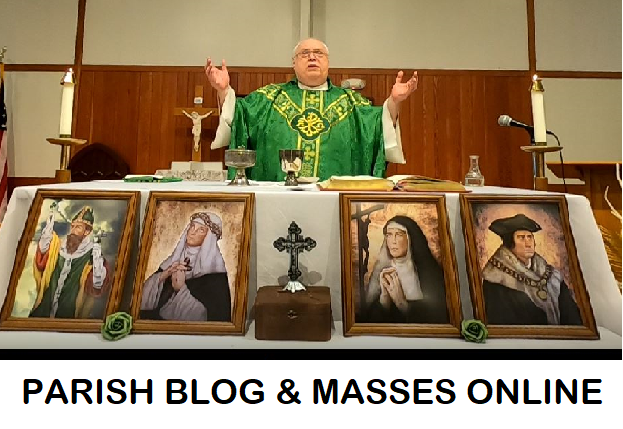


• Our Blogger

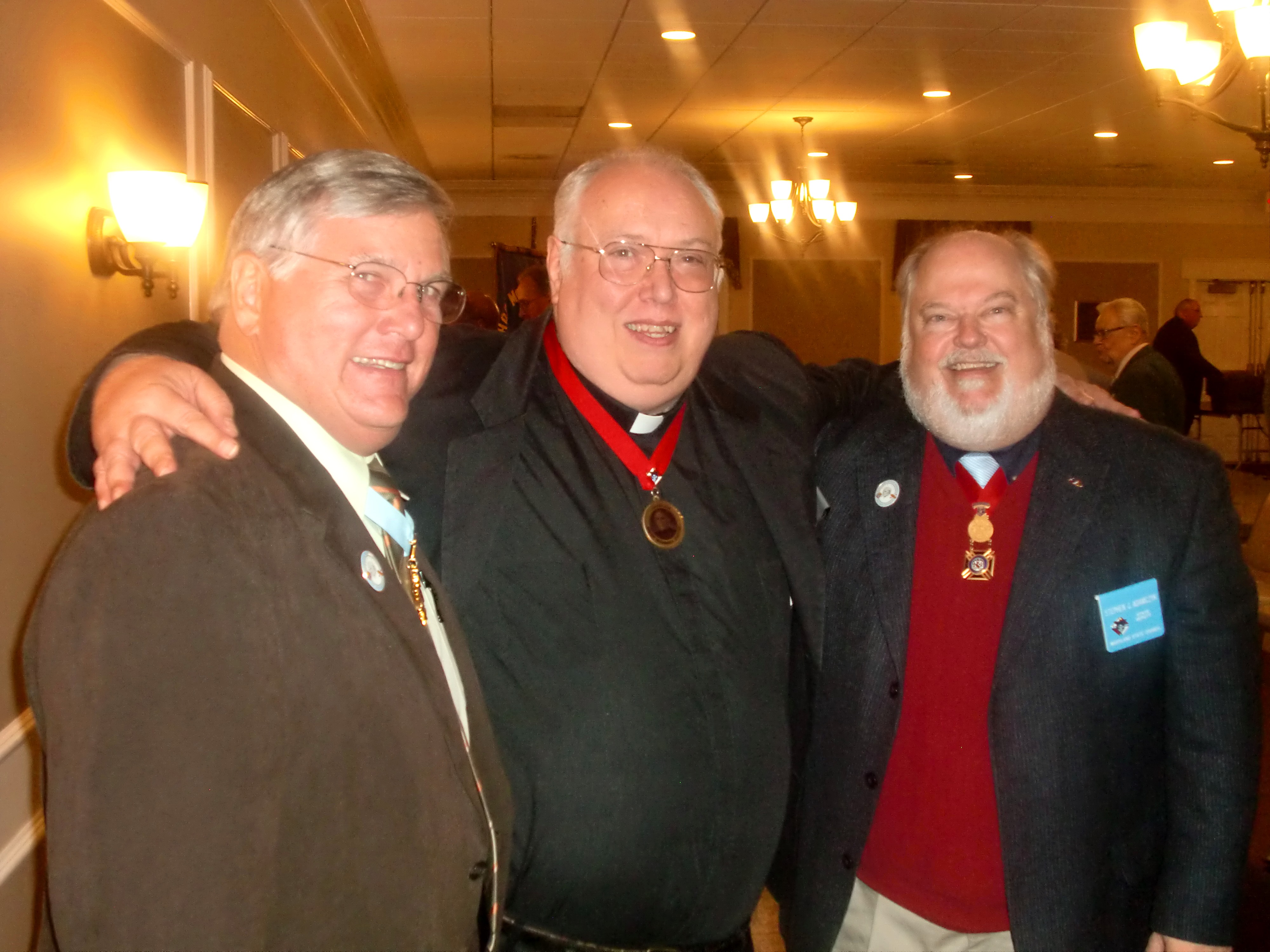
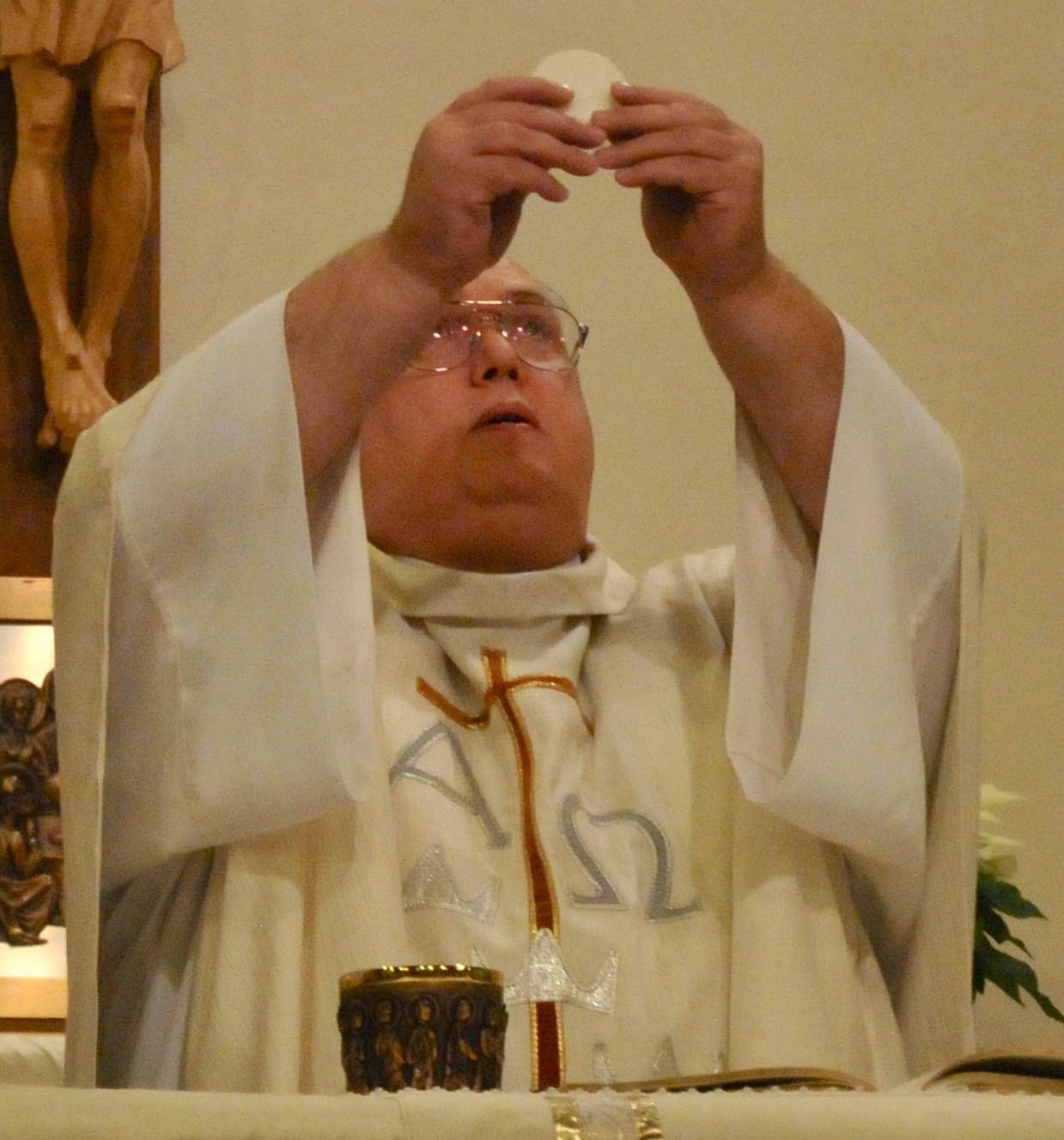
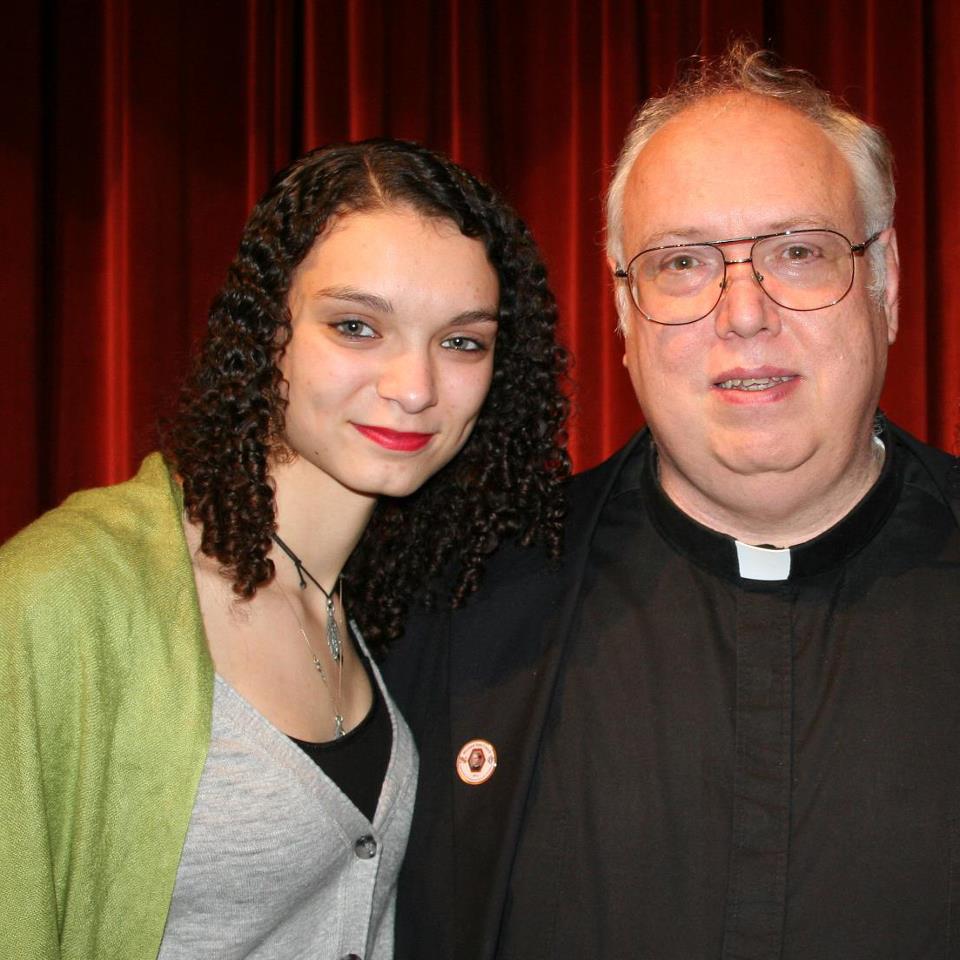
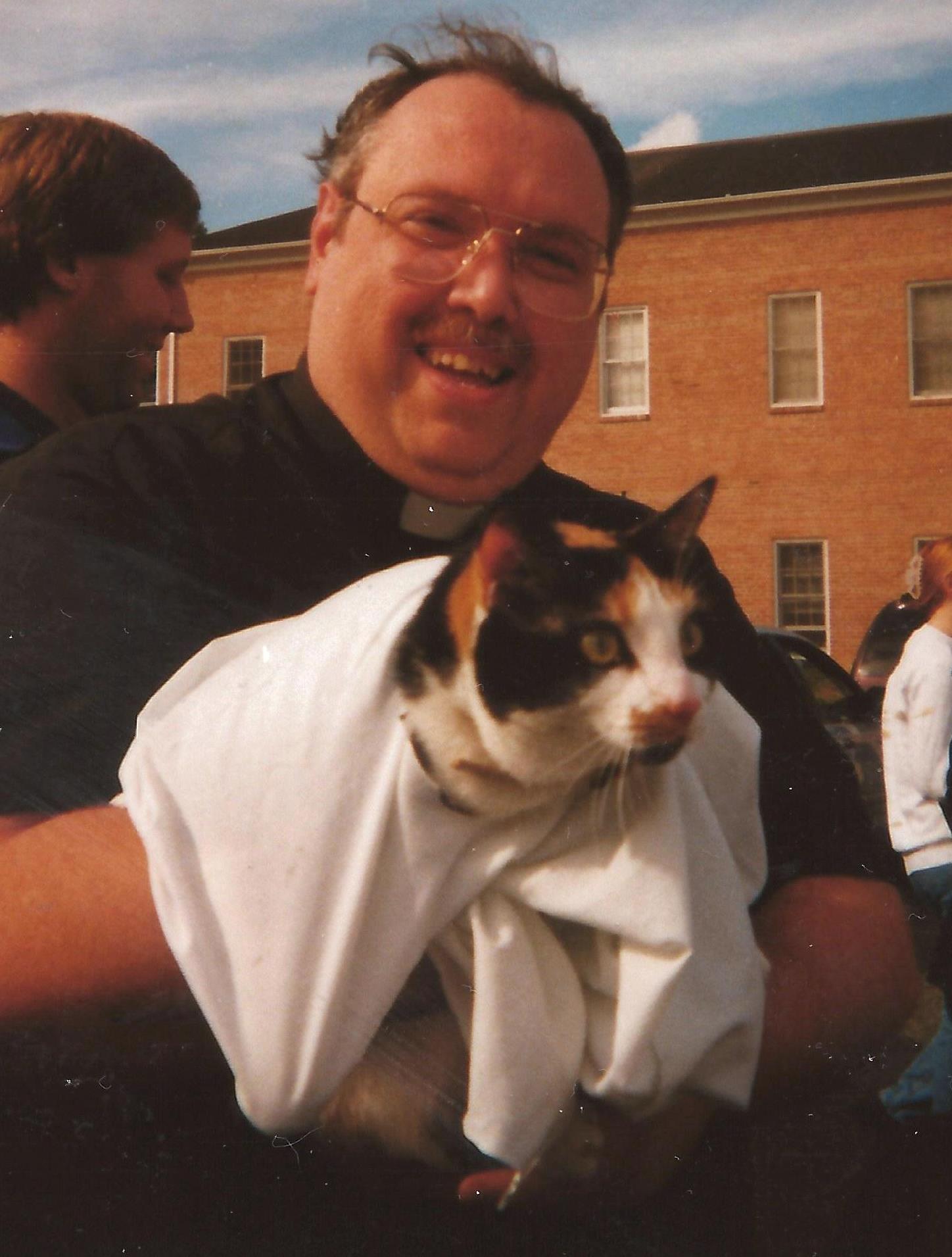
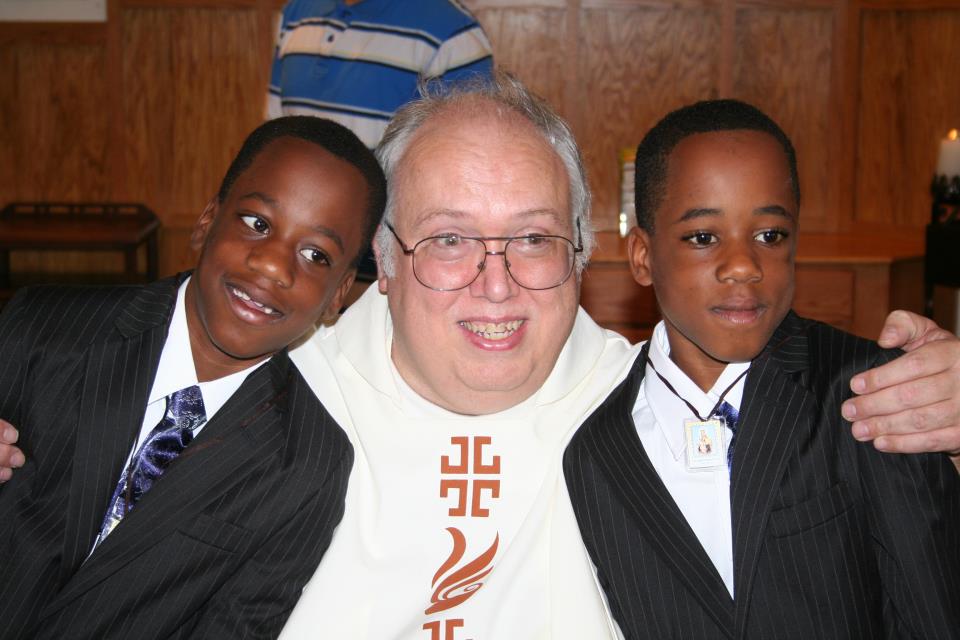
    Fr. Joseph Jenkins

  • The blog header depicts an important and yet mis-understood New Testament scene, Jesus flogging the money-changers out of the temple. I selected it because the faith that gives us consolation can also make us very uncomfortable. Both Divine Mercy and Divine Justice meet in Jesus. Priests are ministers of reconciliation, but never at the cost of truth. In or out of season, we must be courageous in preaching and living out the Gospel of Life. The title of my blog is a play on words, not Flogger Priest but Blogger Priest.

  • Archives

  • Categories

  • Recent Posts

  • Recent Comments

    Anonymous's avatarAnonymous on Ask a Priest
    Michael J's avatarMichael J on Ask a Priest
    Jeremy Kok's avatarJeremy Kok on Ask a Priest
    Mike Zias's avatarMike Zias on Ask a Priest
    Jeremy Kok's avatarJeremy Kok on Ask a Priest

The Church’s Stance to the LGBT Community

thBUDHL29UContinuing this discussion as to how we approach homosexuals in the Church, I would agree that we must acknowledge the whole person. We should resist the temptation, even if they encourage it, of defining them by their disorientation. People can hide behind labels. It is also easier to ridicule and cast aside people who are labeled. We see this in racial slurs and in the language for the enemy in wars. The Church would stand against anything that dehumanizes people or compromises upon the uniqueness of personhood. Everyone is loved. Signs or billboards that say God hates this or that people constitute a false propaganda against the kingdom of Christ. Everyone is someone’s son or daughter, brother or sister. They might suffer from a genetic disorientation, or from trauma or from the manipulation of others— but right or wrong or just confused, they possess an immeasurable value in the eyes of God. If they should return our love with venom in language and deeds, we must maintain the heart and mind of God on their behalf. We cannot accept or excuse sin. If we did we might become an accomplice and a collaborator in the sin of others. But we can love them, even as our views are attacked as prejudice and our words as “hate-speech.”

Pope Francis purportedly told the reporter for La Civiltá Cattolica this about gays: “When I meet a gay person, I have to distinguish between their being gay and being part of a lobby. If they accept the Lord and have goodwill, who am I to judge them? They shouldn’t be marginalized. The tendency [to homosexuality] is not the problem … they’re our brothers.” Many would take this to mean that a blind eye can be turned to the homosexual lifestyle. However, I think not. It is neither meritorious nor neutral. It is objectively disordered. Homosexual acts are morally wrong. I have spoken before about the distinction between evil acts and the conditions for sin. Only God can know our standing before him.

My priest friend has really surprised me with his vocal dissent on behalf of those living a homosexual lifestyle. Is he inviting intervention from diocesan authorities. He says that all are welcome at his parish and that includes lesbian, gay, bi-sexual and transgendered persons. He announced that they make no distinctions in their activities (for them or for their children).

He is right that we have no window into people’s bedrooms. But we are confessors and we have eyes and ears for what people promote in public. If same-sex partners kiss each other in church, wear the symbolic rainbow colors, sport tee-shirts and hats that promote an agenda… then I would say we know what is going on. It is disingenuous to say otherwise. It is true that we are all sinners. But the Gospel proclamation comes with an admonishment TO REPENT. We need to live our lives in accordance with the moral law. Jesus says that if we love him then we will obey God. The commandments and the moral law are not optional.

He questioned the MARRIAGE MATTERS campaign that was promoted by the Maryland Catholic Conference. I would not go as far, but also suggested that marriage has been in trouble for a long time, given no-fault divorce and rampant cohabitation.  He insists that heterosexual marriage is not threatened by same-sex civil marriages. Would he quietly bless these unions? I do not know. Part of me does not want to know.

There has been a push, first coming from associates of Bai Macfarlane, that the Church should disassociate herself entirely from civil marriages.  They claim it demeans true marriage as a lasting covenant in Christ.  The argument here is that what a secular society understands by marriage is radically different from the Church; thus, we should not confuse them by allowing priests and deacons to officiate or witness marriages as magistrates for the state.  Various countries require two ceremonies, one at the courthouse and another at the church.  Is this the direction in which we want to go?  It is true that same-sex unions and no fault divorce have seriously compromised the matrimonial institution.  I have another priest friend who suggests that we get out of the marrying business entirely.  Since couples marry themselves, he suggests that we let them get to it without involvement or duplication from the Church.  I disagreed.  It seemed to me that something of the understanding of marriage as a sacrament was at stake.

While we have some control over parish facilities, legal challenges have made matters extremely complicated for our Knights of Columbus halls.  Legally, they may be obliged to host receptions for gay marriages.  External symbols associating these buildings with the Knights of Columbus are being removed.  So-called gay marriages cannot be performed in Catholic churches.  We continue to teach in religious education and from the pulpit that marriage is a bond between a man and a woman.

My priest friend blesses homes as I do.  When I do so, I bring a plaque or picture of the Sacred Heart and we consecrate the home to the Lord.  I bless each room, carrying holy water and a crucifix.  I pray that the devil will have no place to hide, either in their lives or in their house.  My associate blesses homes where the residents may be cohabitating or in same-sex relationships.  Here again I have a grievance.  Priests should do nothing to condone sin.  It would do no good to bless such homes because the lifestyles are not conducive to the graces invoked.  This comes very close to blessing the couples themselves.  A house where the matter of mortal sin is regularly practiced stands more under a curse than a blessing.  Every house blessing is a type of minor exorcism.  The home will really be blessed by the faith and good works of the inhabitants.

Some of us wonder if the whole gay marriage movement might be a sham.  I read recently that a number of the first couples who took advantage of law changes in certain states have already filed for divorce.  Homosexuality is renowned for its transitive nature and multiple partners.  Will the Church and bishops change in how we regard it?  I cannot foresee how.

I am not an ogre.  We have homosexuals who struggle with their weaknesses and who display sacrificial love.  They attend Mass and regularly ask for God’s mercy.  I have seen them care for a beloved friend and for their parents in times of sickness and approaching death.  How do we remain resolute to our teachings and not hurt them?  How do we balance orthodoxy with ministerial compassion?  We have our work cut out for us.

The Price of Compromising on Homosexuality

thKID0AXT3A priest friend recently announced that he saw the Church’s way of speaking of those with same-sex attractions as wildly exaggerated, harsh and inaccurate. His assertion deeply bothered me. I am well aware that people have taken offense and even left the Church over the assessment that homosexuals and lesbians are sexually “disordered.” Often the response to this issue or individual revelations, even from pulpits, is a deafening silence. Homosexuality is joining contraception as one of those issues rarely raised from the pulpit. Privately, people increasing accept and love their friends, regardless. Young people not only accept it but see those who do not as bigoted. Older people are generally more judgmental, but often suspend this judgment when the gay person is someone close to them. Silence is no real answer and a fire-and-brimstone sermon will arouse anger and hurt. But the truth is the truth, is it not? My priest friend argues in a way that makes my head hurt. Often I think he is more like the Episcopalians, suggesting compromise on contraception, divorce and remarriage, and now homosexuality. As for myself, I have no desire to cause pain for others; however, I was ordained to speak for Christ and his Church, not for myself. The Bible and the traditions of the Church give a negative verdict to same-sex attraction and activity. While the orientation is problematical, sin only enters the picture with wrongful fantasies and immoral actions.

My priest colleague insists that I am very wrong. There is the unspoken insinuation that he thinks I am slow or a bit dull-witted. He wonders why I cannot see things his way. He argues that we all want to be faithful to Jesus and Jesus was all about bringing the outcast home. He indicts me as doing the opposite, behaving more like a Pharisee. He raises his voice, “Show me even one place in the Gospels where Jesus teaches anything about homosexuality! If it is so important, then why is Jesus absolutely silent about it?” He laments that our Lord spoke forcibly against divorce, but points out that there is nothing on this issue. My mind works differently from his. The Bible is more than the Gospels.  The writings of St. Paul are also part of the New Testament. The whole book is the inspired Word of God. The apostle mentions homosexuality as one of a whole grocery list of sins that would forfeit the kingdom. This is serious language. If this is a sin that can land a person in hell; then how can we truly love them and either permit it or exhibit silence? He spoke as the kids do— “But they love each other! How can love ever be wrong?” Love can be plenty wrong. This was not just love, but physical and sexual behavior. This can be added to love, or express love, but love can be very wrong. You have no right to love another man’s wife. A priest has no right to love and keep a mistress. A man has no right to take another man to bed. The same goes for women with women. They can love as parent and child, as siblings, and as dear platonic friends— but erotic and genital love takes it where has no right to go. My priest friend came right out and said it, throwing aside recent papal teaching and the universal catechism, “As long as the gay couple is living in a loving and committed relationship, there is no sin, nothing is disordered.” This was not a new opinion. I heard it from one of my old professors some thirty years ago, Fr. Charles Curran. This was one of the dissenting views that cost him his license and position at the Catholic University of America.

My position is very different. I would side with my late cousin, Fr. John Harvey, the founder of an organization called COURAGE. These faithful sons and daughters deal with their disorder not by acting out but by embracing a life of celibate love, prayerful meditation and service to the community. We should not pretend that vice is virtue. Rather, we should call our brothers to repentance, conversion and heroic discipleship.

It is true that a person should not be judged by one element of his life. However, the activists themselves are the ones who raise their orientation as the singular marker for their identity. An orientation and lifestyle is redrafted as a basic expression of who they are and as something protected by civil rights laws. When you say “hate the sin” but “love the sinner,” they get mad and take it personally. They make no demarcation between their sexuality and how they are accepted as persons. They are wrong to do this but it has become an effective tool for manipulating people and institutions in our society. When it comes to the Catholic Church, though, they bust their heads against a stone wall. Everyone else is giving in, but the Church still says that “what they do” is wrong. What they hear from the Church is “who you are” is wrong. I suspect my brother priest left his guard down to this sort of control tactic. They seek to turn the guilt back on us so that the Church will give in. While we can show special compassion to individuals, I see no way for Catholicism to backtrack on this.

Archie Takes a Bullet & Dies? What’s Next?

Archie Andrews, star of the long-running Archie Comics universe, will take a bullet on Wednesday in a fearless leap to save his gay friend from an assassination attempt. The 73-year-old character’s impending death was first announced in April when Jon Goldwater, co-CEO of Archie Comics Publications Inc., said in an interview with CNN that Riverdale’s famous ginger will go out a hero in “Life with Archie,” which explores Archie’s life as an adult.

archiedead
This is ridiculous! Everyone does know it is fiction, right? Does everything have to be politicized and twisted to what someone feels is a righteous cause? What can we expect next?

“Casper the Friendly Ghost Reveals that He was Abused & Murdered as a Child”

“Donald Duck Arrested for Indecent Exposure”

“Olive Oil Dies from Chronic Anorexia, Popeye Ate All the Spinach!”

“Scooby Doo Put Down from Drug Overdose, Shaggy Arrested”

“Garfield Run Over in Hit-&-Run, Keep Your Pets Leashed!”

“Little Lulu Comes Out as Lesbian, Says Stop the Hate!”

“Little Ol’ Lady Who Lived in a Shoe Demands Obama Care Contraceptives”

“Wilma Flintstone Leaves Fred Over Affair & Too Many Yabba-Dabba-Doo Times!”

Baptizing the Babies of Same-Sex Couples

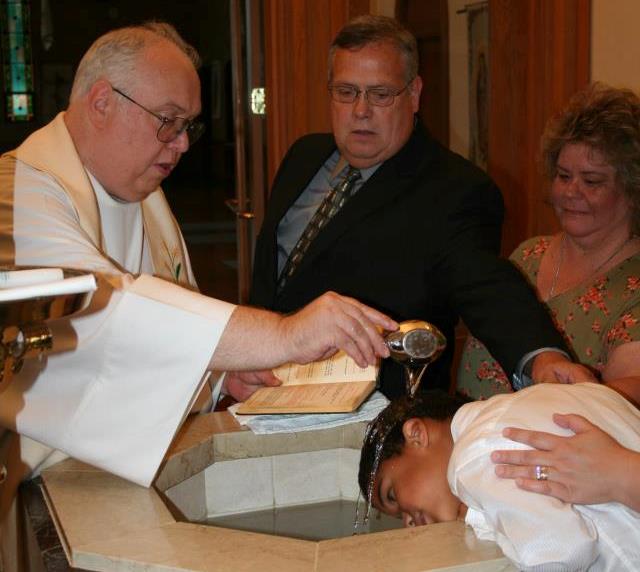
How should the pastor proceed when a same-sex couple comes forward, wanting their child to be baptized?

baptism

It is already the case that we get many heterosexual couples wanting their children baptized, even though they are married outside the Church or even cohabitating. In these situations, I will not absolutely forbid baptisms, but I will beseech the couples to do what they can to regularize the relationship. Of course, if the couples have broken up or were only casual with which to begin, then it would be madness to insist upon them marrying. The child should be the fruit of a bond that has blossomed, not an element to manipulate in favor of a marriage that would otherwise never occur. These couples sacramentally married or not, still signify bonds that are in accordance with natural law.

Same-sex unions violate both divine positive law and our understanding of what is and is not “according to nature.” There is no way to make it right unless the couple separate. I had a situation of this sort back in the 1990’s. The grandfather came to see me quite upset because his daughter and her female lover had asked to have their child baptized and the priest said no. They did not know where to turn. The grandfather begged that something might be done. I asked that he send his daughter “and her friend” to see me. I had to disguise the revulsion I felt in hearing their story. They wanted a child and so made an appeal to a gay man. He masturbated into a spoon and then the lesbian couple used the semen to amateurishly inseminate the willing partner. As it turned out, she conceived and they had a little boy. Sometime later I heard there was legal wrangling with the homosexual neighbor who wanted his rights as the biological father. It is my understanding that today many lesbian couples do not even know the source of the seed and the insemination is accomplished through fertility clinics.

Both of the ladies who came to see me were raised in the Church and had attended Catholic schools. The grandfather of the mother had told me that he would do all in his power to make sure the child received a Catholic upbringing. I was blunt with the women, but no one was in the dark about how difficult a situation this was. I asked them point blank, “Can you promise me that despite your relationship you will raise this child as a Catholic, teaching him his prayers and taking him to Mass? They were both polite and agreeable. They both promised. It was not a compromise with which I was happy, but the alternative would punish the child for the sins of others. It seemed to me there was sufficient hope that the child would be raised as a practicing Catholic. I ended up baptizing the child. A person’s salvation might be at stake. In retrospect, I cannot recall what was written in the baptismal registry. I think only the name of the mother was inserted. I did tell them that the choice they made would be difficult. Because of their union, they would not be welcome to receive the Eucharist themselves. Nevertheless, they were adamant that they would still go to Mass and make sure their boy would receive all his sacraments. I recommended that they quietly live their lives, respecting the moral teaching of the Church even though they felt unable to realize it in their relationship. Here too they were agreeable. They felt no need to make their baby the poster child for a cause. I instructed them about how baptism makes the child an inheritor of the kingdom of heaven, a member of the Church, an adopted son or daughter of the Father, kin to Christ and a temple of the Holy Spirit. I added that baptism washes away original sin and invokes saving grace.

Despite their dissent and self-imposed alienation from the Church because of their lifestyle, I urged the couple to pray daily, placing their needs and weakness before the Lord for healing. I wanted them to know that while I disagreed about their personal lifestyle choices; God still loved them and that the Church would not turn her back on them. While their living together was a public statement against Church teaching, it did not have to be a deafening announcement. I urged them to do all they could to avoid scandal, both for themselves and the Church. I felt they had been truthful with me. Otherwise, it is doubtful that I would have offered the sacrament. The godparents were Catholics who were living their lives wholly in accordance with the commandments and precepts of the Church. While always important, here it was absolutely crucial.

  • Today the situation is evidently becoming more common. Either through insemination or adoption, lesbians and homosexuals are becoming parents. Despite their battles with the Church, some still feel an attraction to her message of salvation and sacraments. They want to share this with their children. This is no longer a singular aberration. How do we proceed?
  • Do we have Archdiocesan policies to deal with these situations? Should the Chancery be consulted on each and every case that comes forward? I know the local policies in Washington stipulate that there should be two godparents and that they should be representative of each gender.
  • Can a same-sex family structure constitute a true family?
  • Can parents perpetually in a state of mortal sin genuinely witness to the faith and Gospel?
  • Given the canon law problems, should registries list only one partner or can both be acknowledged?
  • It would be easy enough to list the mother alone but in adoption, there is the claim of two mothers. Should one be listed in the side annotation?
  • We were recently informed to stop listing children as legitimate or not legitimate. Should there not be remarks about a same-sex union?
  • As for liturgical adaptation, will we need a special liturgy to get around the language of a mother/wife and father/husband?
  • Priests will routinely omit the blessing over the mother and father when couples are not married in the Church. Is this justified and should the blessing be omitted over same-sex couples? I would think so.
  • While it is probably good to seek out Archdiocesan consultation, would priests need higher permission to perform such baptisms?
  • Do we have programs in place to offer pastoral care to these children and households after baptism?
  • Would these children be welcome in our Catholic schools?

I can well understand that one answer would not fit all. There might sometimes be little or no hopeful sign that the responsibilities that come along with baptism would be fulfilled. Some treat baptism like magic or as an empty cultural rite of passage. Activists might even exploit a request for baptism to ridicule the Church or to make a political statement. This is where it becomes all the more problematical.

Priests are supposed to be good stewards of the sacraments. And yet, many of us are fearful that we cannot even safeguard the Eucharist at Mass because of policies that place a greater weight on public scandal than actual spiritual readiness and ecclesial unity. Here too, there may be times that being a good steward will mean saying no and facing repercussions. Is it a passive capitulation to just throw up our hands and leave it to God to straighten out?  I suspect so.

Capital Punishment & Heresy

ASSERTION (PJ):

Proposition condemned: “That heretics be burned is against the will of the Spirit.” (Exsurge Domine). Self-defense of a Catholic community especially is protected by this, not sure about aggression. Capital punishment for heresy is not contrary to Catholicism.

RESPONSE:

It would certainly be contrary to notions about freedom of conscience and religious liberty taught since Vatican II. Even prior to that, many theologians seriously questioned any use of force that was contrary to human dignity and the rights of the individual. The view once held by certain Protestants and Catholics was that physical intimidation and even the prospect of death could be used to compel conversion. The idea, even reckoned by Sir Thomas More, who would face execution himself, was that the one who threatened or murdered the soul was more dangerous than the villain who could destroy the body. Today, capital punishment is generally rejected since it perpetuates a culture of death and there are other reliable ways to punish criminals.

Pope Leo X released his papal bull on June 15, 1520. A somewhat confused or hastily drawn up document, it listed 41 propositions that Martin Luther was commanded to retract under pain of excommunication. Dr. Johann Maier von Eck and a committee assembled the document and the Pope released it as his own. Cardinal Cajetan was concerned about the lack of theological reflection and that minor matters were lumped together with more serious ones. Luther argued against the burning of heretics although other Protestants and even princes that favored his views also resorted to the death penalty. The Pope was also a secular ruler at that time and churchmen resisted the notion that such a penalty could not be exercised. However, the fact that just authority may have such authority is a separate question from whether or not it should be exercised. Today the consensus, even among the Catholic hierarchy, is closer to Luther than Eck or Pope Leo X. Luther cites St. Jerome and the bull makes no reference to it. But of course, this was one question, and one that was disputed even in orthodox circles. The tragedy is that the tone of this document closed the door to any further dialogue with Luther, a man whose temperament needed few excuses to argue and ridicule. He declared the Pope to be the antichrist. The Reformation split had begun.

In any case, a censure of something scandalous like this does not fall under the protection of papal infallibility. Popes can require religious assent even of propositions that have yet to be proven as absolutely true. This would certainly have been the Pope’s right toward an Augustinian priest who had pledged obedience. There are a number of factual mistakes in the bull where caricatures of Luther’s teachings are presented but they fall short of the mark. In retrospect, the Church probably should have taken more time to research the dissenter’s idea. Of course, it was a political climate inhospitable to civil and rational debate. They probably felt they had to act quickly.

Can a Priest Deny Sacraments to a Gay Man in the Hospital?

The news was on fire this morning about a DC priest who purportedly refused to give Last Rights to a gay heart-attack patient at the Washington Hospital Center.

Oh boy, here we go again! This man condemns the priest but we only have his side of the story.

I suspect there is a lot more to the story than what we are hearing.  A priest was requested and Father Brian Coelho came to the bedside of the patient, Ronald Plishka.  The priest followed the ritual by offering the Sacrament of Penance prior to the Anointing of the Sick and Holy Communion.  If a patient is unconscious, the priest will often presume contrition and a desire for the sacraments, giving absolution even without auricular confession.  In this case, the patient was alert and responsive.  The patient seemed to want to make small talk and remarked about how as a homosexual person he was so happy that the Pope was accepting of gay people.  But he next asked if this admission bothered the priest, almost as if he were baiting him.  The priest said it did not but offered to pray with him.  Nothing more was said about Extreme Unction and Viaticum.  While left unsaid in the article, this intimates that this dialogue took place as part of a Confession.

Because the disagreement probably happened during Confession, the priest is silenced by the seal and cannot share his side of the story. Indeed, he would face automatic excommunication if he says anything… something I hope that Church authorities appreciate. Even they cannot question the priest.

Instead of a civil conversation, the patient rejects the offer of prayer and tells the priest “to get the [deleted] out of here!”  That in itself probably demonstrates an improper disposition for God’s mercy.  Then the doctors came in to calm him down.

We should pray for all the parties involved. 

Question 2 – Extraordinary Synod on the Family

2. Marriage according to the Natural Law

a) What place does the idea of the natural law have in the cultural areas of society: in institutions, education, academic circles and among the people at large? What anthropological ideas underlie the discussion on the natural basis of the family?

It has been replaced by juridical fiction. Man has made himself the “almighty” master of his relationships and God is allowed no say. Same-sex unions immediately imply that the male-female scenario is no longer viewed as absolute. Natural law implies intelligent design and order. Such runs smack into the face of modern subjectivism and relativism. We still hear parodies of the natural law as when Christians find humour in saying that God made “Adam and Eve” not “Adam and Steve.” But there is not much depth to arguments.  Certain academics will appeal to natural law; indeed Supreme Court Justice Clarence Thomas once wrote a brilliant paper showing how natural law invalidated claims on behalf of slavery. However, the accolades he won were lost when he showed how the same principles could be applied to the personhood of the unborn against abortion. Anthropologists are now quick to point to past aberrations of homosexuality to show a degree or normalcy that does not really exist. They will also argue that one worldview should not be given preference over another and despise the work of Christian missionaries in changing the values and practices of indigenous societies. This would even include attempts to stamp out polygamy.

b) Is the idea of the natural law in the union between a man and a woman commonly accepted as such by the baptized in general?

Heterosexuals still see the immediacy of natural law with their unions and offspring. However, even here they are compromised by the rampant use of artificial contraception. The marital act is separated from its natural ends. The argument is that women are no longer restricted or in bondage to their biology.

c) How is the theory and practice of natural law in the union between man and woman challenged in light of the formation of a family? How is it proposed and developed in civil and Church institutions?

We can talk about such matters in the context of past history but the current trajectory of these questions is something else entirely. The family unit was a building block to a stable society and crucial for civilization. Some experts speak from a type of pragmatism, saying that large families were only desirable when there were high mortality rates or when children become free employment in family businesses. Such reasoning would contend that small families are now the ideal, for population control or environmental issues. Church and society at large safeguarded the traditional family. Today the notion of family is so elastic that it is hard to define. Indeed, it is still evolving. Obviously the nuclear family is not the same as the extended families of Jesus’ day. But now households increasingly have one parent (usually the mother) or two men playing father or two women playing mother. While polygamy is currently against the law, as is pederasty, both are being challenged in the courts. In practice, without benefit of a contract, multiple men and women are already living together in partnerships that cross all gender lines without limits. I suspect we shall see unions of three or more people in civil marriages within the near future. Islam already permits such unions, at least for a man with several wives.

d) In cases where non-practicing Catholics or declared non-believers request the celebration of marriage, describe how this pastoral challenge is dealt with?

Non-Catholics cannot be married before a priest or deacon. There must be at least one practicing Catholic for a marriage, or at least a Catholic who is willing to reform. It would make no sense to witness the marriages of Catholics who have committed apostasy and would otherwise want no part of the Church. While such a scenario might be judged unlikely, it does come up. The pressure from parents and the beauty of a church building are enticements for such a request. When the priest says no, the upset is incalculable. But sometimes you have to say no. Nine times out of ten they will also refuse to take part in the marriage preparation. They will then ask if they can rent the church and bring in the local priestess from the Church of the Real Absence down the street. Again, the answer is no. They can repent and reform their lives or they can continue on their way.

Question 5 – Extraordinary Synod on the Family

5. On Unions of Persons of the Same Sex

a) Is there a law in your country recognizing civil unions for people of the same-sex and equating it in some way to marriage?

Yes, such is the case in many states and the Bishops and the Maryland Catholic Conference lost the fight in Maryland despite an aggressive Marriage Matters campaign.

b) What is the attitude of the local and particular Churches towards both the State as the promoter of civil unions between persons of the same sex and the people involved in this type of union?

There is a real culture war and increased tension between conservative and liberal churches. Prince George’s is heavily Democratic and yet the voters just barely opposed the same-sex legislation. However, the high numbers in favour in other areas like Baltimore and Montgomery County carried the day for those proposing same-sex marriages. The Black churches leaned against the proposal while the liberal white churches and reformed synagogues were in favour. The Episcopal churches also largely supported the change.

c) What pastoral attention can be given to people who have chosen to live in these types of union?

That is the question right now, is it not? The Pope’s assertion about who is he to judge has fuelled speculation of a shift in attitude in the Catholic Church toward homosexuals. My late cousin (Fr. John Harvey) was the founder of COURAGE, an organization that urged homosexuals to embrace celibate love, service to others and prayer. He took a great deal of ridicule from the renegade DIGNITY group that argued for the acceptance of homosexual acts. We can urge them to go regularly to confession and Mass. But it seems to me that we cannot rubberstamp sin. Complicating the issue, homosexuals identify themselves chiefly by their orientation. Thus they reject the “hate the sin but love the sinner” scenario. They contend that if you judge “how they love” then you judge them and that this is hate speech.

d) In the case of unions of persons of the same sex who have adopted children, what can be done pastorally in light of transmitting the faith?

Boston and Washington, DC shut down their adoption services. What else can we do? I fail to see how we might deliberately place children into homosexual and lesbian households. There may be no pastoral answer that suffices. Having said this, other organizations are going to make this happen. Lesbians are also going to get themselves inseminated (they often abort male children). If they come to us it seems that we should reach out to them with compassion and understanding of human weakness and the need for love. Life is messy and we may have to get our hands dirty. Some situations are going to defy correction or fixing. News stories of parochial schools firing lesbian teachers or expelling children with “two daddies or two mommies” only seems to make matters worse. But how should we proceed?

Question 7 – Extraordinary Synod on the Family

7. The Openness of the Married Couple to Life

a) What knowledge do Christians have today of the teachings of Humanae vitae on responsible parenthood? Are they aware of how morally to evaluate the different methods of family planning? Could any insights be suggested in this regard pastorally?

When was the last time the average Catholic heard a homily on Humanae vitae? We had a Dominican priest speak about it here at Holy Family Parish a few years ago and I got a letter of complaint and another one went to the Archdiocese. The dissenters count on silence and threaten to hold back financial support otherwise. Many priests also dissent (although they are an aging group) and one told me to my face that he assured penitents that taking the pill was responsible parenthood and not a sin. I chastised him in private and when he refused to change his errant ways I reported him to the Archdiocese. What happened? Nothing, he remained in place with a good size parish and school until he died a year ago. All most people know about the teaching is what the news media and biased family and friends tell them. Kids often stop taking catechesis in eighth grade and the more complicated topics like birth control are not age appropriate. Do our marriage preparation efforts bring it up? Humanae vitae requires a basic shared appreciation of Christian anthropology: the nature and purpose of the conjugal act, a respect for the dignity of persons, acknowledgment for the design of the Creator and his providence, and the inseparability of union and an openness to procreation. A general shallowness makes it difficult or impossible for many people to comprehend the Church’s argument. While fidelity was once procured because of a profound sense of duty and obedience; such comes across today as arbitrary and overly complicated. We cannot blindly trust in a deontology toward authority when Church leadership has been compromised and maligned. High school and young adult catechesis has to be broadened and made attractive. There is just no way to communicate a cohesive understanding of human personhood and values to children and disinterested adolescents. A grade-school catechesis does not prepare Catholic adults for responding as people of faith in the modern world.

b) Is this moral teaching accepted? What aspects pose the most difficulties in a large majority of couple’s accepting this teaching?

Do we even have to ask this question? The teaching is broadly rejected. Contraception is the easy way out and now with the HHS Mandate, it is free. Ours society takes pills for everything. We are conditioned to be pill takers. NFP would demand a degree of responsibility and abstinence that some find difficult. Not only are we dealing with sexual addiction, but there is a basic disconnect between the marital act and having babies. Fertility is increasing looked upon as a disease and pregnancy is the expensive curse that results. Contraception permits irresponsibility and the treatment of bodies as toys for recreation. The dignity of the human person is undermined.

c) What natural methods are promoted by the particular Churches to help spouses put into practice the teachings of Humanae vitae?

Various forms of NFP are promoted. Critics often confuse them with the older form of Rhythm which often failed because it wrongly treated all female cycles as the same.

d) What is your experience on this subject in the practice of the Sacrament of Penance and participation at the Eucharist?

Some would throw in my face that Father So-&-So said it was okay. At one time there was some debate. However, now it is almost never mentioned. They have been told that it is all up to their consciences. Of course, the clergy who told them this neglected to mention the need for a properly formed conscience. I doubt that many would even understand the meaning of a dynamic Christian conscience. It needs to be formed in such a way that any judgment made conforms to the truth and respects the Church. The same can be said about the Eucharist. Almost everyone receives, even those in bad marriages and in serious sin.

e) What differences are seen in this regard between the Church’s teaching and civic education?

The Church still generally teaches the orthodox position, but not everywhere. I know one girls’ high school where the religious sister said that she could not formally teach them about contraception but she could pass around a picture book (for educational purposes) with all the available forms of birth control imaged. Civic education is at least more honest, even if more hostile to the faith. Not only is artificial contraception taught, but condoms and similar services are rendered to students. Indeed, my public high school (Suitland, MD) regularly had the school nurse walking kids down to the local abortion clinic during our one hour lunch break. There is also disagreement on other topics like homosexuality and what constitutes tolerance.

f) How can a more open attitude towards having children be fostered? How can an increase in births be promoted?

Such can only be promoted if Catholics themselves are willing to be a real sign of contradiction. I know one couple with five or six children who are even harassed by parents and siblings for having “too many children.” They argue the economic issue and a lifestyle they are sacrificing. They speak about the environment and accuse them of being selfish for placing such an increased burden upon an already crowded world. Instead of converting the world, Catholics are increasingly trying to live traditional values within a self-imposed ghetto of like-minded “home-schooling” friends. Meanwhile, pressure is building to force them and others to conform to the contemporary hedonism. Benefits are being stripped from those who refuse to attend traditional schools. This has often landed families and home-schooling organizations in the courts. Some jurisdictions have attempted to outlaw home-schooling or to interfere with the curriculum. Is there a way to encourage larger and more faithful families without resorting to an isolation that might later make us more vulnerable to a hostile society? It seems to me that proper formation must come along with an aggressive evangelization. The Catholic/Christian message must be given its place in the public forum. That would also include the usage of all the modern technological ways that people communicate, today.

Phil Robertson & St. Paul Banned from A&E Network

A&E says it is a supporter of the LGBT community and will not tolerate a negative view about homosexuality.  Because of this, Phil Robertson is no longer welcome on the show “Duck Dynasty” and has been cast out from his television family.  But what the network is really saying is that upon this issue there can be no freedom of speech and that while gays are welcome, traditional Christians are NOT.

ph

We should not go out of our way to be mean-spirited or hateful; but the issue here is with inspired Scripture and Christianity.  The faith and God’s Word might challenge us on many subjects.  We might personally have hoped that Scripture or Church teaching were different on this or that subject.  But the creature cannot dictate to the Creator what should or should not be.

What the article should have been labeled is this:  “St. Paul Banned from A&E for His Homophobic Remarks!” Or, to take it one step forward,

MSN News – ‘Duck Dynasty’ star suspended over anti-gay comments

The Raw Story –  Conservatives rally around suspended ‘Duck Dynasty’ star

FOX News – A&E suspends ‘Duck Dynasty’s’ Phil Robertson

NBC – Catholic Governor Defends Robertson

“Duck Dynasty” star Phil Robertson has been suspended from the A&E reality series, following anti-gay remarks he made in an interview with GQ magazine.

Robertson caused controversy with his comments, in which he grouped gays with “drunks” and “terrorists,” and said that they won’t “inherit the kingdom of God.”

Asked what he considered sinful, Robertson told the magazine, “Everything is blurred on what’s right and what’s wrong. Sin becomes fine,” he said in the interview. “Start with homosexual behavior and just morph out from there. Bestiality, sleeping around with this woman and that woman and that woman and those men.”

New American Bible (Catholic Translation):

1 Corinthians 6:9-10

“Do you not know that the unjust will not inherit the kingdom of God? Do not be deceived; neither fornicators nor idolaters nor adulterers nor boy prostitutes nor sodomites nor thieves nor the greedy nor drunkards nor slanderers nor robbers will inherit the kingdom of God.”

Romans 1:26-27

“Therefore, God handed them over to degrading passions. Their females exchanged natural relations for unnatural, and the males likewise gave up natural relations with females and burned with lust for one another. Males did shameful things with males and thus received in their own persons the due penalty for their perversity.”

1 Timothy 1:8-11

“We know that the law is good, provided that one uses it as law, with the understanding that law is meant not for a righteous person but for the lawless and unruly, the godless and sinful, the unholy and profane, those who kill their fathers or mothers, murderers, the unchaste, sodomites, kidnapers, liars, perjurers, and whatever else is opposed to sound teaching, according to the glorious gospel of the blessed God, with which I have been entrusted.”