The blog header depicts an important and yet mis-understood New Testament scene, Jesus flogging the money-changers out of the temple. I selected it because the faith that gives us consolation can also make us very uncomfortable. Both Divine Mercy and Divine Justice meet in Jesus. Priests are ministers of reconciliation, but never at the cost of truth. In or out of season, we must be courageous in preaching and living out the Gospel of Life. The title of my blog is a play on words, not Flogger Priest but Blogger Priest.
4. Pastoral Care in Certain Difficult Marital Situations
a) Is cohabitation ad experimentum a pastoral reality in your particular Church? Can you approximate a percentage?
Not only is it a reality, the practice is reaching beyond “ad experimentum” in becoming a state of life all its own. Sure, there are couples who “shack up” to see if they are meant to live together, but many cohabitate for years without getting married or even intending to get married. Society, itself, is unsure how to deal with the phenomena. For instance, laws for common law marriages are falling by the wayside. It created situations where couples were regarded as legally married while they, themselves, thought they were not. I suspect that some of these couples suffer from ambivalence about marriage or a fear of the lasting commitment. Of course, the epidemic of divorce may also be a catalyst. I have heard couples say that they want to be sure and that they do not become another negative statistic. Ironically, those who cohabitate before marriage do not seem to fare as well as those couples who are virginal and/or chaste; why is this? I would submit that cohabitation grants none of the spiritual safeguards for marriage and thus is not analogous. There are no graces from the sacrament; indeed, the couple are most probably living in a state of mortal sin. Such cohabitation presumes that the couple are engaged in sexual activity or fornication. Indeed, some couples live together because it makes sexual congress easier. Others live together because they take refuge in each other within an increasingly cold and disconnected world. Men and women are lonely and afraid. Even though they are not married, they cling to each other for support and companionship. Unfortunately, mortal sin is no adequate preparation for a grace-filled marriage. Couples say they love each other… but not enough to wait and not enough to preserve the holiness of the beloved. This selfishness and mind-set is a terminal kernel.
I should add that when these couples come to the priest and ask for marriage, they are frequently treated the same as chaste couples trying to do right by God, the Church and themselves. A girl can be pregnant but she wants to wear white. But if she is living with her boyfriend and having sex, it becomes a broken sign. We can recommend separation but sometimes the length of the relationships and the logistics (including finances) of cohabitation would make this difficult. I have them stay apart the night before the wedding and require them to go to Confession. I would recommend that we marry such couples but do so in a way that minimizes the scandal. They could offer their vows in a chapel of the rectory or in a small service with less than a dozen friends. We could let couples know that cohabitation would cost them the marriage ceremony of their dreams. These are precisely the people who need to ponder more the inner realities of marriage and less the external trappings.
b) Do unions which are not recognized either religiously or civilly exist? Are reliable statistics available?
Is this question for real? Of course, they exist. Indeed, this year for the first time in the United States there are more couples cohabitating than married.
“About a quarter of women move in with a romantic partner before the age of 20, and more women than ever live with a partner before they get married, according to a new report by the National Center for Health Statistics. Nearly half of women (48 percent) between the ages of 15 and 44 lived with a partner before getting married between the years of 2006 and 2010, an 11 percent jump since 2002 and a 41 percent jump since 1995. Less than a quarter of so-called “first unions”—meaning a first marriage or first cohabitation—were marriages during that span. In 2002, 30 percent of “first unions” were marriages. According to the report, 1-in-5 women became pregnant during their first year of premarital cohabitation, 40 percent of first marital cohabitations transitioned to marriage within three years, and 27 percent dissolved within five years. People are also prolonging marriage for longer after moving in together, according to the report. In 1995, the average length of a cohabitation that transitioned into marriage was 14 months—between 2006 and 2010, it was 21 months.”
c) Are separated couples and those divorced and remarried a pastoral reality in your particular Church? Can you approximate a percentage? How do you deal with this situation in appropriate pastoral programs?
Again, of course this is a reality here in the U.S. and the Archdiocese of Washington. It was hoped that the six-month waiting period before marriage, and the accompanying preparation, might help. But the divorce issue still plagues us. The problem’s answer is shared Catholic faith and values. If couples worship and pray together, a Gallup poll shows that all but 2% stay together. And even that 2% might be an aberration from false responses. Couples that do not pray face a 50% plus divorce rate. This truth speaks for itself. If a couple practices sacrificial love and places their marriage into God’s hands, then his grace will sustain them. If they ignore his help, they are more liable to fail. As for percentages in the parish, I cannot say. Many no longer even tell the priest. This includes those who have remarried outside the Church. This complicates matters and makes for embarrassing situations among volunteers for parish service or for membership in fraternal organizations like the Knights of St. John and the Knights of Columbus. Like most priests, I have no specific parish program to deal with this issue. The priest will offer counselling if they come forward and assist in an annulment and/or subsequent convalidation. The issue is delicate and sometimes frightfully complicated. I had a situation of a couple that wanted to get married in the Church. They were both Catholic but the man was previously married outside the Church in a civil court. The Church would not recognize that bond but it lasted some years and they had children. The man procured a Declaration of Nullity Because of Lack of Canonical Form. There was nothing really stopping the second (true) marriage. However, as the priest I felt corrupted by the situation. He had abandoned his prior spouse and the girl he wanted to marry was “the other woman” who bragged about stealing him from his civilly married spouse. Married or not, it was a sickening situation!
I know that there are programs in the Archdiocese to assist troubled marriages, like Retrouvaille. There is also Marriage Encounter.
d) In all the above cases, how do the baptized live in this irregular situation? Are they aware of it? Are they simply indifferent? Do they feel marginalized or suffer from the impossibility of receiving the sacraments?
Some drop out regarding religious practice. Others act as if it is no big deal. Those who take Church teaching seriously feel guilt but there is resentment that they cannot receive absolution and the Eucharist. They frequently want to be treated as regularized when they are not. Some priests have told them that it is up to their conscience as to receive Holy Communion or not. They might even shop around for priests tolerant on this point. Of course, guidelines in the Archdiocese of Washington are currently rather permissive and priests are generally not allowed to withhold the sacrament. (Although many of us regularly substitute a quick blessing gesture, something in itself which is not proper to the communion line but which helps to avoid a negative confrontation.) I have encountered a few over the years who were unaware of Catholic marriage law, but only a few. There has also been the wrinkle of renegade rent-a-priests who posture as clergy in good standing and witness marriages without faculties. I have encountered two cases of this in the last two years.
e) What questions do divorced and remarried people pose to the Church concerning the Sacraments of the Eucharist and of Reconciliation? Among those persons who find themselves in these situations, how many ask for these sacraments?
They all pretty much ask for the sacraments or are upset when they discover that they should refrain. That is why they see the priest. The majority drop out and probably do not care. They will not make the effort to talk to a priest. Unfortunately, everyone who goes to Mass these days takes the sacrament. Ushers have to be careful not to intimidate such people to come up so as to avoid shame.
f) Could a simplification of canonical practice in recognizing a declaration of nullity of the marriage bond provide a positive contribution to solving the problems of the persons involved? If yes, what form would it take?
There has already been criticism of the many annulments granted in the United States. I suspect simplification would make the problem worse. Annulments must always be in conformity to the truth. There are some situations that cannot be fixed.
g) Does a ministry exist to attend to these cases? Describe this pastoral ministry? Do such programs exist on the national and diocesan levels? How is God’s mercy proclaimed to separated couples and those divorced and remarried and how does the Church put into practice her support for them in their journey of faith?
I think we need to do more to emphasize the value of the person who is not married or who through no fault of his or her own must now live as a single person after a failed marriage. Couples are not made up of two halfs that are made whole. We are complete unto ourselves. Not all stories in this world end happily. It is then we seek solidarity and consolation in Christ’s saving Cross.
Although not always conveniently located, there are also groups for Divorced and Separated Catholics. However, I am not certain that these always constitute the proper pastoral response. I have known divorced people becoming romantically inclined with people who share their hurts and disappointments. Instead of encouraging separated Catholics to mend fences, it makes the breaks permanent. Couples start dating when in the eyes of the Church they still belong to their lawful spouse. The Church, after all, does not recognize divorce and the person or persons who precipitate the break commit sin. This last point is either glossed over or denied, even by some assisting clergy. Are we encouraging fornication, cohabitation and adultery with our support groups for separated and divorced Catholics? Why is it that we do not encourage them to be chaste and content on their own? Do we really want a breeding ground for romance for this group?
a) Is there a law in your country recognizing civil unions for people of the same-sex and equating it in some way to marriage?
Yes, such is the case in many states and the Bishops and the Maryland Catholic Conference lost the fight in Maryland despite an aggressive Marriage Matters campaign.
b) What is the attitude of the local and particular Churches towards both the State as the promoter of civil unions between persons of the same sex and the people involved in this type of union?
There is a real culture war and increased tension between conservative and liberal churches. Prince George’s is heavily Democratic and yet the voters just barely opposed the same-sex legislation. However, the high numbers in favour in other areas like Baltimore and Montgomery County carried the day for those proposing same-sex marriages. The Black churches leaned against the proposal while the liberal white churches and reformed synagogues were in favour. The Episcopal churches also largely supported the change.
c) What pastoral attention can be given to people who have chosen to live in these types of union?
That is the question right now, is it not? The Pope’s assertion about who is he to judge has fuelled speculation of a shift in attitude in the Catholic Church toward homosexuals. My late cousin (Fr. John Harvey) was the founder of COURAGE, an organization that urged homosexuals to embrace celibate love, service to others and prayer. He took a great deal of ridicule from the renegade DIGNITY group that argued for the acceptance of homosexual acts. We can urge them to go regularly to confession and Mass. But it seems to me that we cannot rubberstamp sin. Complicating the issue, homosexuals identify themselves chiefly by their orientation. Thus they reject the “hate the sin but love the sinner” scenario. They contend that if you judge “how they love” then you judge them and that this is hate speech.
d) In the case of unions of persons of the same sex who have adopted children, what can be done pastorally in light of transmitting the faith?
Boston and Washington, DC shut down their adoption services. What else can we do? I fail to see how we might deliberately place children into homosexual and lesbian households. There may be no pastoral answer that suffices. Having said this, other organizations are going to make this happen. Lesbians are also going to get themselves inseminated (they often abort male children). If they come to us it seems that we should reach out to them with compassion and understanding of human weakness and the need for love. Life is messy and we may have to get our hands dirty. Some situations are going to defy correction or fixing. News stories of parochial schools firing lesbian teachers or expelling children with “two daddies or two mommies” only seems to make matters worse. But how should we proceed?
6. The Education of Children in Irregular Marriages
a) What is the estimated proportion of children and adolescents in these cases, as regards children who are born and raised in regularly constituted families?
This is essentially a census question. “Married straight couples with families now make up less than half of U.S. households, marking the first time the group has dropped below 50 percent since census data on families was first collected in 1940.” This is quite a jump. Out of the additional 11 million households since 2000, traditional husband-wife family households now comprise just 48 percent. The majority of homes have a single head, nonrelated persons and solitary residents. While other groupings have gone up, husband-wife homes went down by 5 percent.
Women are increasing leading households and/or living alone. The number of unmarried women heads among black Americans was 30 percent, three times higher than other ethnic groups. “Unmarried straight couples living together increased by 40.2 percent between 2000 and 2010, four times the national average. That’s still no comparison to the rise in the number of same-sex couples living together, which grew 80.4 percent over the same period.”
Today more couples cohabitate than are married and over 40 percent of all births are illegitimate. Many children are also being raised by one parent. The incidence of single African-American mothers is so high it has become a stereotype.
b) How do parents in these situations approach the Church? What do they ask? Do they request the sacraments only or do they also want catechesis and the general teaching of religion?
There are many children not receiving the sacraments or catechesis. Priests are not always receptive to such families when they request the sacraments for their children. I know priests who refuse to baptize babies if the parents are not married in the Church. It has angered them that I will do so. I admonish the family to get married and to live a Christian life. I tell them that baptism is not the end of something but the beginning. They are urged to witness and to share the faith. If they promise to try, and only God knows if they lie, then I will baptize the child. However, I will not baptize an illegitimate child at Mass, only in a separate service. Sometimes there is a residual faith that moves them to make the request. There might also be guilt. Grandparents might also be exerting pressure. This can become complicated when parents do not share the Catholic faith. What do you do when a Jewish or Moslem father threatens legal action should the mother get the child baptized or bring him to Mass for first communion? I took some heat a few years ago for baptizing a child who belonged to a lesbian couple. A homosexual neighbour donated the semen for one of the party’s insemination. This little girl was being raised with “two mommies.” The grandparents begged me to help. I talked to the ladies and made it clear that the Church could not and would not recognize their lifestyle. I then asked if they would pledge themselves to regular Sunday Mass attendance (without taking Holy Communion) and to raising their little girl in the Catholic faith? They said YES and the grandparents assisted. I did not want to punish the child for the parents’ sins. I baptized her. She has since attended Catholic schools, although the grandfather has passed away.
There are way too many cases where children attend catechesis simply so that they might get the sacraments. There is even a joke about it. “Confirmation is the sacrament you receive before leaving the Church.” The kids can be blunt about it. They want to get over with it. How do we set parents and youth afire with love for Christ?
c) How do the particular Churches attempt to meet the needs of the parents of these children to provide them with a Christian education?
Like so many questions in this survey, any answer given must stretch or correct the question. First, many parents are no longer even asking the basic questions of meaning, do not identify with any institutional church and are not concerned about the religious instruction of children. Second, those who are interested frequently want to minimize the impact and time involved with any religious formation. Everything else takes priority. Third, since only a very few Catholic students might be given entry into parochial schools, one would think that the emphasis would be upon parish catechesis. However, the opposite is true. Catholic school children are treated as the elite and the rest are the poor step-children. Millions of dollars go to the schools and scraps are given to parish programs. The Church does not invest proportional time, money or resources to children outside our parochial schools. Sacramental schedules follow the school year regardless of children who must get along with an hour a week of religion. We confirm children in eighth grade because that is when they leave Catholic grammar schools; and yet, the process is mostly mechanical regardless of preparedness. Efforts to raise the age for confirmation to tenth grade are struck down because such would take jurisdiction away from the Catholic school system and place it back in parish programs open to all children. Catholic schools are valuable but are becoming too expensive for many poor and immigrant Catholic families. This is causing an irony where well-to-do non-Catholics are attending parochial schools to bypass a failing public school system while Catholic children are excluded for financial reasons. This compromises the basic mission of our parishes and schools.
d) What is the sacramental practice in these cases: preparation, administration of the sacrament and the accompaniment?
Children from school and parish-based programs are lumped together for sacraments. No reconciliation is made of the fact that some get religion five days a week and the rest only once a week for an hour. As soon as the child reaches a certain age and grade they are given first communion or confirmation. Children get first confession and Holy Communion but then drop from religious education programs until junior high years. Young teens get confirmed and then, along with parents, disappear from the pews. I know this sounds terribly cynical but it is the common experience to which many pastors and catechists can attest.
Efforts that focus upon collaboration with parents suffer from the poor formation of adults who are neither informed nor motivated to assist with religious studies and homework.
a) What knowledge do Christians have today of the teachings of Humanae vitae on responsible parenthood? Are they aware of how morally to evaluate the different methods of family planning? Could any insights be suggested in this regard pastorally?
When was the last time the average Catholic heard a homily on Humanae vitae? We had a Dominican priest speak about it here at Holy Family Parish a few years ago and I got a letter of complaint and another one went to the Archdiocese. The dissenters count on silence and threaten to hold back financial support otherwise. Many priests also dissent (although they are an aging group) and one told me to my face that he assured penitents that taking the pill was responsible parenthood and not a sin. I chastised him in private and when he refused to change his errant ways I reported him to the Archdiocese. What happened? Nothing, he remained in place with a good size parish and school until he died a year ago. All most people know about the teaching is what the news media and biased family and friends tell them. Kids often stop taking catechesis in eighth grade and the more complicated topics like birth control are not age appropriate. Do our marriage preparation efforts bring it up? Humanae vitae requires a basic shared appreciation of Christian anthropology: the nature and purpose of the conjugal act, a respect for the dignity of persons, acknowledgment for the design of the Creator and his providence, and the inseparability of union and an openness to procreation. A general shallowness makes it difficult or impossible for many people to comprehend the Church’s argument. While fidelity was once procured because of a profound sense of duty and obedience; such comes across today as arbitrary and overly complicated. We cannot blindly trust in a deontology toward authority when Church leadership has been compromised and maligned. High school and young adult catechesis has to be broadened and made attractive. There is just no way to communicate a cohesive understanding of human personhood and values to children and disinterested adolescents. A grade-school catechesis does not prepare Catholic adults for responding as people of faith in the modern world.
b) Is this moral teaching accepted? What aspects pose the most difficulties in a large majority of couple’s accepting this teaching?
Do we even have to ask this question? The teaching is broadly rejected. Contraception is the easy way out and now with the HHS Mandate, it is free. Ours society takes pills for everything. We are conditioned to be pill takers. NFP would demand a degree of responsibility and abstinence that some find difficult. Not only are we dealing with sexual addiction, but there is a basic disconnect between the marital act and having babies. Fertility is increasing looked upon as a disease and pregnancy is the expensive curse that results. Contraception permits irresponsibility and the treatment of bodies as toys for recreation. The dignity of the human person is undermined.
c) What natural methods are promoted by the particular Churches to help spouses put into practice the teachings of Humanae vitae?
Various forms of NFP are promoted. Critics often confuse them with the older form of Rhythm which often failed because it wrongly treated all female cycles as the same.
d) What is your experience on this subject in the practice of the Sacrament of Penance and participation at the Eucharist?
Some would throw in my face that Father So-&-So said it was okay. At one time there was some debate. However, now it is almost never mentioned. They have been told that it is all up to their consciences. Of course, the clergy who told them this neglected to mention the need for a properly formed conscience. I doubt that many would even understand the meaning of a dynamic Christian conscience. It needs to be formed in such a way that any judgment made conforms to the truth and respects the Church. The same can be said about the Eucharist. Almost everyone receives, even those in bad marriages and in serious sin.
e) What differences are seen in this regard between the Church’s teaching and civic education?
The Church still generally teaches the orthodox position, but not everywhere. I know one girls’ high school where the religious sister said that she could not formally teach them about contraception but she could pass around a picture book (for educational purposes) with all the available forms of birth control imaged. Civic education is at least more honest, even if more hostile to the faith. Not only is artificial contraception taught, but condoms and similar services are rendered to students. Indeed, my public high school (Suitland, MD) regularly had the school nurse walking kids down to the local abortion clinic during our one hour lunch break. There is also disagreement on other topics like homosexuality and what constitutes tolerance.
f) How can a more open attitude towards having children be fostered? How can an increase in births be promoted?
Such can only be promoted if Catholics themselves are willing to be a real sign of contradiction. I know one couple with five or six children who are even harassed by parents and siblings for having “too many children.” They argue the economic issue and a lifestyle they are sacrificing. They speak about the environment and accuse them of being selfish for placing such an increased burden upon an already crowded world. Instead of converting the world, Catholics are increasingly trying to live traditional values within a self-imposed ghetto of like-minded “home-schooling” friends. Meanwhile, pressure is building to force them and others to conform to the contemporary hedonism. Benefits are being stripped from those who refuse to attend traditional schools. This has often landed families and home-schooling organizations in the courts. Some jurisdictions have attempted to outlaw home-schooling or to interfere with the curriculum. Is there a way to encourage larger and more faithful families without resorting to an isolation that might later make us more vulnerable to a hostile society? It seems to me that proper formation must come along with an aggressive evangelization. The Catholic/Christian message must be given its place in the public forum. That would also include the usage of all the modern technological ways that people communicate, today.
I was recently involved with a FACEBOOK discussion on the topic of Halloween. A college student was challenged by his roommate that the celebration was “evil.” His friend was a “born again” Christian. He asked friends to shed light on the question.
A Catholic Reflection on Halloween
Halloween in a pluralistic society means various things to different people. Indeed, given the contemporary fascination with vampires, werewolves, witches, ghosts and zombies, it might seem that Halloween is now a year-long celebration. But the question at hand is a narrow one, does Halloween place superstition above authentic faith? The dialogue is not only between Christians but must confront the values and meanings imposed by a liberal secular humanism and the emergence of modern paganism.
Questions of sectarian faith aside, we have also connected Halloween to the fall harvests, thus the symbols of pumpkins, apple bobbing, corn mazes, hay rides, scarecrows, owls, etc. Such a feast provides a fun dress up for children and the giving of candy, which reinforces the joy of childhood and the solidarity of the community in caring for them.
The Tension over Halloween
Certain reformed Protestants often object to Halloween because of its apparent preoccupation with the dead and their souls. Remember, such believers reject purgatory and prayers for the dead. Other groups deny even the soul and hell, like Seventh-day Adventists. Obviously, as Catholics, we cannot play along with arguments focused against our holy faith. While we might regard ghosts as souls in purgatory, in their estimation the whole business is either a fantasy or a devilish deception. Since Christ has destroyed death, any preoccupation with it is negatively judged as “popery.” But Catholicism stresses both a personal and a corporate faith. The saints live in a communion with Christ and one another. The souls in purgatory are still part of the Church. We pray for the poor souls just as we ask the heavenly saints to pray for and with us. The bond of our unity is Christ, himself.
The so-called pagan foundation of Halloween (as in Samhain) is a modern exaggeration. The roots are actually Christian, or Catholic. The name Halloween is a derivation of All Hallows’ Evening or Eve. Neo-pagan religion, perverse occultists, and New Age believers would attempt to make it something else. Catholic immigrants from countries like Mexico are also introducing the similar “Dia de los Muerto.”
Some have the peculiar notion that All Hallows’ Eve is a night where spirits or ghosts enact violence. This is nonsense! It is the made-up stuff of the occult and/or horror movies. It probably has roots in the pranks played by juveniles while dressed up and moving from house to house.
Puritans and/or Calvinists associated prayers for the dead with witchcraft and necromancy. Their religious descendants are still among us. Today when we think of Puritans, the legacy of Plymouth Rock is tarnished by the legendary Salem Witch Trials. Religious hysteria brought about the condemnation and execution of innocent women. Each year witches, real and imaginary, pilgrimage to Salem, Massachusetts. Tourism soars as revelers come to celebrate the holiday. This has even precipitated seasonal tension between Wicca or naturalistic pagans and those who perpetuate the caricature of witches on brooms. I recall that the Salem Knights of Columbus hall had to cancel contracts when they realized that renters were using their facility for genuine witchcraft, not the make-believe variety. It is precisely because of such fears that a number of Christian communities have now utterly rejected Halloween. Of course, certain Christian cults reject any holiday or special day that is not clearly scripturally based. Others object just to be different from Catholics or to illustrate their disdain for Rome’s authority. That means that a number of these faith communities do not celebrate Christmas, Easter or the Sunday Observance.
The fundamentalist Christian critic insists that Halloween is a capitulation of the Christian commission. This seems to be a bit of a stretch, at least in terms of boys dressed as cowboys and girls as princesses. My only regret is that I would have children yearn for Holy Communion as much as they race to fill their Halloween bags with candy.
While some Protestants politely agree to disagree with Catholicism and about the celebration of Halloween; other Christian groups condemn the festive day as devilish and pass out anti-Catholic “Chick Tracts” to the trick-or-treaters. Still other Christians, like most Catholics, see nothing inherently wrong with children dressing up and collecting candy. Certain Catholics and Protestants will pass out alternative treats, like crosses, prayer books, religious stickers, etc. Concerned about the direction that Halloween is taking, a number of Catholic families and churches urge the children to dress up as saints. I recall one little boy who was quite upset when Sister at school told him that he could not dress as a monster. When Halloween came she pulled him aside, angry with his costume. She lamented, “I thought I told you that you had to be a saint?” He answered, “I am a saint, Sister— I’m John the Baptist… after the beheading!”
The weekend of our Halloween Party at Holy Family Parish, a lady rebuked me after Mass for celebrating the “devil’s holiday.” If such were true then Christians could have no part of it. But the case cannot currently be made. Baptist and Catholic churches both have Halloween parties and trunk-or-treat activities in their parking lots. As Christians our strength is in the Lord. The children of light are in conflict with the darkness. But the game is fixed. There may be casualties who reject the Lord but the victory over sin and death is already accomplished. We need no longer be the devil’s property. We have been redeemed or purchased at a great price. Jesus dies that we might live. Prayer and the life of charity are the essential ways that we confront darkness. God made the pumpkins, the spiders, the bats, the owls and us. He made candy sweet and gave innocence to children. God gave us the day and the night. Halloween belongs to God.
The negative critic feels that Halloween gives the devil a foothold in the lives and hearts of Christians. However, as in our recent parish Halloween party, I saw selfless volunteers running games, cooking, and distributing goodies to children out of a Christian love for youth and their families. The devil will have nothing to do with real love.
A Christian Understanding of the Symbols of Halloween
Some authorities trace the carved pumpkin to Irish folklore about a drunk who trapped the devil in a tree and carved a cross upon it. Having made a deal with the devil never to be tempted again by drink, Jack was denied entry into heaven. He was given a cinder of fire in a turnip for light. Supposedly the turnip became a pumpkin in America. The jack-o’-lantern became a visible against compromise with the devil. It also serves the same function as the gargoyles on the Gothic cathedrals of Europe. They became a type of sacramental to invoke divine protection.
Scary costumes, like the carved pumpkins, fulfill a similar purpose. These were cultural or folkloric ways in which simple people sought to ward off evil. While it may be a bit silly, the notion that people had was that evil or dark spirits would be encouraged to pass over their homes and leave their communities undisturbed. The assumption was that the demons might be fooled by the caricatures of themselves (kids in costume) into supposing that the area was already infested or occupied. There is no real doctrinal weight to such a practice… just a desire to be holy and not molested by evil. Today most people just dress up for fun.
The practice of trick-or-treating probably finds its roots in All Souls Day. There used to be processions or parades on November 2nd. Christians would beseech “soul cakes” (dried raisin/square bread) in return for saying prayers for dead family members. They were mostly collected by children and the poor. Each cake represented a soul being released from purgatory. Dressing up and singing was often parting of “souling” from house to house.
Some Christians are unhappy with the symbolism of Halloween. I recall one person angrily upset about skulls or skeletons. However, this prejudice fails to appreciate that the skull is embraced by Catholicism as both an immediate sign of death and of our dependence upon God. It is used by the Knights of Columbus, in depictions of the crucifixion and even decorates certain European churches. We do not worship death but are ever mindful of the price paid for our redemption. Further, our time in this world is short. The theme of death or mortality is one to which we return on Ash Wednesday. “Remember, O man that thou art dust and unto dust thou shalt return.”
It is unfortunate that venerable Christian symbols should be confused by the ignorant and bigoted as satanic. I was in one parish where a shrine to St. Peter was vandalized, not by crazy kids or occultists, but by Christian fundamentalists. They ripped the inverted cross from the ground and argued that it was a sign of Satan and of the antichrist. You still hear such foolishness about the upside-down cross on the back of the papal chair. But the bigots misinterpret an ancient symbol of martyrdom. St. Peter did not feel worthy to die like his Lord so he asked his executioners to crucify him with his feet in the air and his head toward the ground. Critics make a mockery of an inspiring witness to Christ.
Catholics also venerate the relics of the holy dead, wear medals and scapulars, carry and say rosaries and use holy water. These are not talismans or the accidentals for magic. Rather, they are visible signs of our faith in the incarnate God, the God made visible in Jesus Christ.
Keep Christ in Halloween
We read in Philippians 4:8-9: “Finally, brothers, whatever is true, whatever is honorable, whatever is just, whatever is pure, whatever is lovely, whatever is gracious, if there is any excellence and if there is anything worthy of praise, think about these things. Keep on doing what you have learned and received and heard and seen in me. Then the God of peace will be with you.” Christians are committed to the pure and the good.
This might make us reflective of the spiritual elements attached to the secular commemoration of Halloween. We cannot buy the entire package. However, it may yet be reclaimed for Christ. The Christian effort is to Christianize the world, not to run away or hide in a spiritual ghetto. Certainly, there is innocence about children dressing up and finding delight in sweets. My growing reservation is about where adults are taking the festivity. Catholics and significant numbers of other Christians offer alternatives to trick-or-treat and spend All Hallows’ Eve at church worshipping God and recalling the witness of the saints in Christ. I agree with the criticism that there are sinister undercurrents that are seeking to hijack the expanding season of Halloween. As a child I dressed as a clown, a cowboy, an astronaut and as a superhero. It troubles me to see children attired today as characters from “R” rated horror movies. Why do they even know anything about these murderous and blasphemous characters? I am repulsed “personally” by the sleazy costumes that cast derision upon priests and nuns. Adult costumes, especially for females, increasingly celebrate vulgarity and eroticism. If Christians cannot redirect the fun away from these elements then it is true (I would agree) we might have to opt out entirely. It may be that Halloween is escalating in the direction of the occult and vulgarity. Maybe we as good Catholics and Knights need to campaign for Halloween as we would for Christmas? We also need to keep Christ in Halloween. All Saints’ assures us that we can have a share in Christ’s life and in the kingdom. All Souls’ reminds us that while we are sinners, God is infinitely merciful. What he has started in us, he will finish.
MARTA: How long has Catholicism been around? Why confess sin to a priest? How does Catholicism differ from Christianity?
FATHER JOE:
The Catholic Church is the “church” established by Jesus. All the bishops and priests are direct successors of the original apostles. Jesus gave the Church and his apostles the power to forgive sins. Since priests cannot read minds and hearts, people confess to them so that the priests can give proper counsel and penance along with their absolution. Catholicism is the original and most complete form of Christianity. East and West were one for a thousand years. Protestant churches only go back four or five centuries.
LILIANA: With respect, I think what you say is contradictory; we should address God “directly” in prayer in the name of Jesus. The Bible doesn’t say we need saints. God doesn’t need secretaries. Everything is possible for him and he can listen to millions of people anytime.
FATHER JOE:
There is nothing contradictory about it. Such comes from an understanding of the Church as the new People of God and our relationship with one another and Christ. Those who discount the sacramental meaning of the Church and our corporate faith tend to make religion overly individualistic. We pray together, and for each other, as Jesus admonished; but we do not exclude the communion of the saints from our prayer. The Queen of the saints is Mary.
You really miss the point. It has nothing to do with what God needs, but about what we need as human beings and as a social people.
QUESTION:Why must Mary intercede? And what if she doesn’t want to? Does that mean your prayers are not heard by Jesus? I guess this question goes for praying to all the Saints.
Why? How can she not? If you are watching a football game and the receiver gets the ball, are you not rooting him on to victory? The crowd becomes like one unified whole— shouting, singing, doing the wave, etc. This analogy offers but a pale point of reference to the role of Mary and the saints. We are all in this together— the journey from mortal to eternal life. The very definition of a saint makes what the division you suggest impossible. The sanctity of heaven implies the utter transformation of one into a new Christ— of one mind and will with our Lord. What he wants, they want. A little girl in church was asked one time for the definition of a saint. She looked at the figures in the stained-glass windows and replied, “Saints are those who allow the light to shine through.” Quite right! And the Light of the World is Christ, dispelling the darkness of ignorance, sin, and death. This process of conversion begins in this life; we can and should be perfected in holiness by the grace of God. We can be ever remade into Christ’s image. Heaven simply brings this development to its full conclusion. People who knew Mother Teresa said that to be near her was almost like being in the presence of Jesus— so fully did she manifest the living Christ in her faith and life. We can also become saints if we allow God to so work in our lives. We need to seek a restoration of all things in Christ, including ourselves. The question about division between the saints and Jesus says less about the heavenly hosts than about ourselves— our own brokenness and bondage to sin— our own refusal to fully embrace the Gospel of Life. Sometimes selfishness and hatred invade our prayers; such is never the case for Mary and the Saints. They are immaculate windows to the divine. Further, they are a part of us. The Church in Glory is inextricably united to the earthly Church in Glory and the Church in Purgation. The Mystical Body (Eph. 1:23; 1 Cor. 12:27) remains intact. The saints intercede for us precisely as perfectly conformed elements in this wondrous union. Death is not the end of love. This is at the heart of Christ’s resurrection— his Father’s Love (the Holy Spirit no less) restored him back to life. The family of God in heaven has not forgotten those of us still facing the trial. Love compels them to remember us and to pray for us.
Statement of Archdiocese of Washington in Response to the Finalization of the HHS Mandate
June 28, 2013 – After almost two years and over 400,000 public comments, the government today finalized the HHS mandate. We have begun to review the 110-page final rule to determine whether or not it addresses our longstanding concerns. Our review and analysis of the complex rule should help us answer important questions concerning who determines which institutions are religious and, therefore, exempt, who is forced to have this coverage, and who must provide it. The new regulations are being closely studied and a more comprehensive statement will follow at a later date.
Timothy Cardinal Dolan: “Although the Conference has not completed its analysis of the final rule, some basic elements of the final rule have already come into focus.” He said the U.S. Conference of Bishops “has not discovered any new change that eliminates the need to continue defending our rights in Congress and the courts.” He argues that the HH Mandate still threatens the Church’s ability “to carry out the mission and ministry of Jesus Christ.”
A FEW PERSONAL COMMENTS
We are still waiting anxiously for the response of the U.S. Bishops to the latest accommodations in the HHS Mandate from the Obama administration. The deadline of August is rapidly coming upon us and what happens next could be devastating to our hospitals, schools and charity works. It troubles me that the Catholic Health Association acts unilaterally without regard to the decisions of the USCCB. The latest version of the mandate exemption is being studied by our shepherds and yet the CHA has already come out in support of the measure. This is not new given that they supported it even when the bishops did not a year ago. I am just a poor priest, but my reading of the mandate makes me think that this latest revision is merely another round of the shell game we suffered before. There is still nothing on the table for commercial operations that have a mission paralleling the Church’s. Individual Catholics and those having businesses must participate. There is the plight of notable Catholic organizations like EWTN and the Knights of Columbus. The administration staunchly insists that employees MUST have free birth control pills and coverage for abortifacients and sterilization. When it comes to the question as to who will pay, the government is creative but consistent: whoever pays, it will NEVER be the person who wants sex but not pregnancy. The administration will officially redefine the meaning of the marital act, bloodying the hands of all with the sacrifice of innocent children. Saying that we will not have “to contract, provide, pay or refer for contraceptive coverage” is a legal fiction.
Distinctions are being made that are somewhat hard to follow. First, there is FULL EXEMPTION from the contraceptive mandate. This is in regard to Internal Revenue Code, Section 6033(a)(3)(A)(i) or (iii), which “refers to churches, their integrated auxiliaries, and conventions or associations of churches, as well as to the exclusively religious activities of any religious order.” Second, there is the NON-EXEMPTION in reference to non-profit faith-based groups not directly affiliated with the Church, such as certain hospitals, schools and charities. These groups are being offered an “accommodation.” Third, there is NON-EXEMPTION with no accommodation. This would include large apologetic efforts, television, radio stations, and even small operations like a privately own Catholic gift shop. This group would be treated as any secular operation and would have to fully comply with the mandate.
It is thrown into the faces of the bishops that most Catholic women have used or are using artificial contraception. In other words, the administration is saying that Catholic women are more in sync with President Obama and HHS Secretary Sebelius than with their bishops. How can the bishops then speak on their behalf? The bishops counter that even if all lay Catholics dissented, they would still be obliged to uphold Christian faith and morals. The Affordable Care Act will deliver contraceptive services, including those prescribed by a medical provider, “without charging cost sharing, like a co-pay, co-insurance, or a deductible.” Organizations like Planned Parenthood must view this as the ultimate anti-Christmas; instead of a special birth, they will celebrate the avoidance of birth with a fortune in free-bees. Of course, nothing is really free. Someone always pays. Already the agenda of the HHS on behalf of so-called reproductive or preventative services, as well as gay, lesbian, bi-sexual and transgendered health issues, is costing the American tax-payer billions of dollars. The 2013 HHS budget is $80.1 billion!
The HHS has not budged an inch. It is dedicated to the promulgation of free contraceptive services without cost-sharing while posturing that concessions have been made to non-profit religious organizations. But saying it does not make entirely it so. Even if it were completely true and reserved to non-profits, it would demand that those who operate for-profit religious operations must forfeit their religious liberty and rights of conscience. That is a dangerous and despicable double or even triple-standard. Churches are fully exempt, other non-profit religious organizations have an accommodation and for-profit companies (even religious ones) have no protection at all. The Church should speak out for her rights and for those of others, both organizations and individuals. Concessions from tyrants when others suffer, as we have seen in Latin and Central America, can taint the witness of the Church and make us bedfellows with the oppressor.
In any case, reserving ourselves to religious non-profits, we are told that churches that object to contraceptive coverage on religious grounds would “not have to contract, arrange, pay, or refer for such coverage for their employees or students.” This sounds good. Similarly, we are told that the definition of a religious employer no longer insists upon the following details: (1) Have the inculcation of religious values as its purpose; (2) Primarily employ persons who share its religious tenets; and (3) Primarily serve persons who share its religious tenets. This seems to answer many of the concerns of Cardinal Dolan and Wuerl. But wait a minute, then are the contraceptive services still available and who pays? Is this administration really going to sit back and allow a large number of Church employees to go without contraceptive coverage? I suspect that soon after the mandate takes effect, select people who work for the Church in various capacities will come forward in a staged manner to demand the “same rights” that are given other Americans. The convoluted and unclear language will be exploited and the Church will be further painted as anti-woman and anti-choice.
When speaking about non-exempt non-profit religious organizations, we are told: “Under an accommodation, an eligible organization does not have to contract, arrange, pay or refer for contraceptive coverage. At the same time, separate payments for contraceptive services are available for women in the health plan of the organization, at no cost to the women or to the organization.” Who makes these separate payments? Is it the insurance carrier itself? These self-certified groups must notify the health insurance issuer and these plans “must then provide separate payments for contraceptive services for the women in the health plan of the organization, at no cost to the women or to the organization. As explained in the final rules, issuers will find that providing such payments is cost-neutral.” Cost neutral, are they serious? If such were really the case then we could have all insurance carriers supply contraceptives with no business, government and employee co-pay. But it is not true. Insurance companies are already starting to complain. In any case, some religious non-profits are self-insured. This issue remains unsettled. What insurance carrier is going to come forward and just take upon itself the financial burden of contraceptives without other more traditional coverage and money from health plans? It makes absolutely no business sense!
Money from the religious employer and payments from the employees fund the various health insurance plans. It goes into a single pot. There is a string of probable culpability: money is passed from the Church employer (matched by the employee) to the insurance carrier to the supplier of the offensive services. I suspect that churchmen are arguing about the question of remote culpability. However, this still seems very immediate to me. Even if the funds come only from the employee’s matching contribution— that money originated with the salary/benefits of the employer. Does government expect insurance carriers to come forward and to offer such services without payment or contract selection from the non-profit religious organization? I doubt that will happen. Compliance is literally getting someone else to do the dirty work for us. Cardinal Dolan sees the problem when he states that the revision “seems intended to strengthen the claim that objectionable items will not ultimately be paid for by the employer’s premium dollars,” and yet it remains “unclear whether the proposal succeeds in identifying a source of funds that is genuinely separate from the objecting employer, and if so, whether it is workable to draw from that separate source.” If there is only one plan, then nothing has changed: the religious employer will be funding abortion inducing drugs and contraception. Groups that think this is acceptable are guilty of muddled thinking. Segregating the funds in the books is merely an accounting trick. The moral problem remains.
Self-insured operations will have a “third party administrator” to “provide or arrange separate payments for contraceptive services for the women in the health plan of the organization, at no cost to the women or to the organization. The costs of such payments can be offset by adjustments in Federally-facilitated Exchange user fees paid by a health insurance issuer with which the third party administration has an arrangement.” Okay, we are back to the days of “voodoo economics.” It is argued that no reimbursement is necessary because the decreased pregnancy and birthing expenses will offset the benefits from contraception. Contraceptives may be cheap and yet when that gal from Georgetown paraded her fake $300 plus dollars a month bill for contraception, the administration was cheerleading how expensive it was! They want it both ways and I doubt “for-profit” insurance companies are going to give away anything for free. The money will be moved around, but someone else is going to pay for it. It might be called “administrative fees” or some other euphemism, but it will still be money trading hands for immoral services. Back in 2012, a national survey of pharmacists found that most thought this idea was ridiculous and would not work. The government is going to take fees (a tax) from the insurance issuer which it will return to pay for the contraception, abortifacients and sterilization. They are going to pay them with their own money! Congratulations to the Obama administration, it has invented the perpetual motion machine! But wait a minute, it never worked before, why will it work now? Making payments to one insurance carrier and pretending that magical money will come down from another to pay for the objectionable coverage is ridiculous. It is utterly detached from reality.
Further, who pays the third party administrator who acquires outside coverage? Does that not make him or her part of the religious operation? Is this person not operating for the religious entity or in the Church’s name? The problem of self-insured entities is not cleanly resolved by the change in the mandate. If the insurance agent pays out, even if selected by a third party, is the religious employer still guilty of enabling immoral services?
While not necessarily under the direct supervision of a bishop or religious order, the non-exempt non-profit organizations are an integral element of the Church. The formal dedication of a “third party” administrator to handle the claims for contraception is still a bad solution. It is like someone hiring a hit man and saying, “Take care of the problem but spare me the details. If you are caught, I will deny even knowing you.” We would be hiring someone to sin on our behalf, to maintain clean consciences.
The Church cannot preach and teach one message from the pulpit and in our schools and then do the opposite on such an important matter. Such hypocrisy would bring down any such house of cards. I suspect that some in the government administration precisely want this to come about. They have tried one tactic and now here is another. Throughout there has been one common thread: the redefinition of the Church. The administration wants to redefine the Church as something akin to HHS itself. It wants to compromise our voice and moral witness, converting us to the cause of a secular humanistic modernity. Already, the administration is counting on the fact that most Catholics currently regard the Church as outdated and out-of-touch. This is a test after many years of moral and political passivity.
Speaking about the multiple standards of full exemption, an accommodation and no protection at all, Cardinal Dolan said that the bishops “are concerned as pastors with the freedom of the Church as a whole – not just for the full range of its institutional forms, but also for the faithful in their daily lives – to carry out the mission and ministry of Jesus Christ.” We are still dealing with the very definition of what constitutes the Church. The Church is not merely a house of worship or our hospitals, schools and affiliated charities. Most of the Church consists of the laity. They are the main ones who seek to evangelize and live out their Christian discipleship in the world. The Pharisees in Christ’s time took for granted that they could satisfy the demands of the Law while the average believer because of the demands of the state and his need for bread could not. Bishops and priests would share the same posture if they preached something that they knew that the government would not allow our Catholic “business” men and women to live out. The laity are also part of the Church, and the largest part at that.
The administration will not allow employees to opt-out of the program. The CHA does not seem to understand this fact. Maybe they do not want to admit it? However, even if such were permitted, it bypasses an important objection, that such a “reproductive choice” is offensive in itself and we do not want it covered for any employee, the spouse or teenaged children. You can say that you “opt-out” but can change your mind at any time. There is one plan and it still includes the offensive services. This opens up several frightful possibilities. Even if the employee is a faithful Catholic, his or her family covered by the family plan remains eligible for the immoral services. With or without parental consent, the employee’s daughters could get free abortion pills or get sterilized under the new plan. I suspect schools will now be able to pass the condom costs, with the addition of birth control pills, to the insurance providers of parents or guardians.
Everything about this provision in the mandate speaks to our hedonistic culture of death. If we really cared about women and families, the emphasis would be upon prenatal care and helping parents with the rising costs of child delivery and health. But it is deemed cheaper to kill children in the womb. Ours is a world that worships the barren womb and medicates against the child as if the baby were a disease. The administration would have people mutilate themselves and take poison to murder the unborn. Instead of rewarding sacrifice and genuine responsibility, we enable selfishness and moral degeneracy.
There has been much talk about the rights and choices of women under the HHS Mandate. Less discussed is the fact that it covers men as well. Male contraceptives are not as readily available, given trust issues, but the word is that more are coming. Further, there is the issue of men having vasectomies. This whole topic just gets more complicated and serious with scrutiny.
The only really good solution would be for the Obama administration to scrap the provision for what they call “preventative” services. If people wanted they could shop around and get coverage in private plans; I suppose the government could subsidize these. Unfortunately, that would mean that tax dollars would continue to be used for offensive services. As soon as morality clauses in religious-based contracts were enforced with firings over revealed abortifacient use or involvement in condom campaigns, I am sure we would be back in the courts. While we do not and cannot police the lives of people who work for us; nevertheless, they parade their sins on Facebook. Returning to the matter at hand, real exemption means that the bishops and Church organizations should have no involvement whatsoever with insurance bookkeeping gimmicks or third party administrators. But the government has a decadent culture on its side and will not bend. Strangely, even some religious people who disagree with the Church on contraception also feel that this is an important religious liberty battle. I have heard the elderly complain that there is not enough money for their life-saving prescriptions; they wonder, how then can the government find money to give compromised women free birth control pills! They cannot believe it. Admittedly, it is quite bizarre. The administration does not even want co-pay with the delivered contraceptives and abortifacients, something one must still do for blood pressure and heart medicine. This illustrates the moral sickness and sex-on-the-brain attitude of the HHS and this administration.
I regularly follow the wisdom on Msgr. Charlie Pope’s blog for the Archdiocese of Washington. Recently, he posted on the following question: “In the wake of the Supreme Court decisions of this week, are we coming to a point where we should consider dropping our use of the word “marriage?” A number of Catholic voices are arguing that we should disengage ourselves both with the word “marriage” and from allowing clergy to function as civil magistrates in witnessing them for the state. Certainly I am sympathetic with what they hope to accomplish. However, I am already on the record, from past discussions, as opposed to such a retreat. Both sides can play word-games. Towards the end, he poses a second question, “Should the Catholic Bishops disassociate Catholic clergy from civil ‘marriage’ licenses?” Again, I appreciate the underlying reasoning; we want to avoid guilt by association and giving apparent approbation. My fear is that any such move would be contrary to a well-ordered or structured society (which is a good in itself). It would also constitute a retreat that opponents in the public forum would exploit. It seems to me that our laity would bear the blunt of the suffering and challenge that would come from such a move.
I am not blind to the dire crisis we face. It is true that marriage as an institution has been largely redefined by our society. The movement on behalf of same-sex unions is a case in point; of course, if left unchecked it will not stop there. Next we will see the return of polygamy. Despite the many scandals faced by the Church, there are even depraved people pushing for pedophilia and pederasty. There is already a bizarre effort in Australia for a man to marry his pet goat, the degradation of bestiality. The U.S. bishops reminded us in their failed initiative that marriage is in trouble. While I am hesitant to criticize our holy shepherds; the fact is that marriage has been in trouble for some time now and we were largely silent. Contraception nullifies the consummation of the marital act. Millions of abortions seek to erase through murder the fruit of marital love. No-fault divorce allows for quick separations and remarriages. Prenuptial Agreements insert doubt against the vows and a lack of trust from the very beginning, thus making those marriages null-and–void. Couples fornicate and cohabitate, essentially saying that you do not have to be married to have sex. Well, when you separate sex and marriage, you also set the stage for infidelity and adultery. Once sex is disconnected from marriage it is very hard to reattach it with any kind of necessity. Our society is saturated by an erotic and pornographic media that destroys courtship and sexualizes relationships. This dilemma is so pervasive that the inner person has lost any sense of propriety or decency. Viagra gives the old stamina to neglect their coming judgment and condoms give the young license under the illusion of protection. Wedding dresses that once expressed modesty and femininity are increasing replaced with skimpy gowns akin to those on television dance contests. Ours is the generation where all rights, even the right to life, are supplanted by the emerging and absolute right to have sex with anyone regardless of promises and unions. The children are caught up in the middle of this whirlwind. This is so much so that we even dress our little girls like the prostitutes that walk the street.
Much Ado about a Word
Msgr. Pope makes the accurate observation that the Church and society-at-large mean very different things by the word, “marriage.” Of course, this is also the situation with many other terms as well. While language is fluid and hard to control; it can certainly be manipulated. Look at the word GAY. This expression for joy or happiness has become the source for giggling when used in old songs. It has now been exclusively usurped by the homosexual community. Another word in peril is RELATIONSHIP. When we hear teens or young adults use it these days, they generally mean a sexual friendship with a certain degree of exclusivity. The word that most troubles and saddens me today is LOVE. What precisely does it mean anymore? We do not want to cast it off and so the dictionary definition gets longer and longer. Look at how we use it. “I love my car. I love my dog. I love my job. I love my house. I love donuts. I love strippers. I love my wife. I love my children. I love God.” Then we have expressions like, “Let’s make love,” a euphemism for sex. We give it so many meanings that the word begins to mean nothing.
What does the word MARRIAGE mean? Is it just a civil contract to make having sex easier or more convenient? If that is all it is, it is no wonder that couples are cohabitating without it. Some states have argued for different types of marriage contracts, one more easily dissolved than the other. There was even an effort to impose marriage licenses with term limits. If after five years, if the spouses were unhappy, they could opt not to renew. The marriages would then automatically expire. The divorce epidemic, something which Protestant churches pamper by their failure to enforce Christ’s command in Matthew against divorce, has given us what is essentially serial or progressive polygamy, one spouse after another. Proponents of “open” marriages suggest that couples should still be able to have sex with others outside their bond. I know one instance where a man lives with both his wife and his mistress in the same house. The girls share him. Largely gone is the Catholic-Christian equation that marriage is an exclusive relationship between one man and one woman who are called to be faithful to each other until the death of one of the spouses. Marriages are rightly directed toward the good of the spouses and the generation of new human beings, children. Stripping marriage of its propagative element is to make marriage wholly something else. Even infertile couples must express their union in that act which by nature is directed to the generation of new human life. That is why something like condomistic intercourse is intrinsically evil, even in marriage, yes, even among older infertile couples. Too many couples feign the marital act and live in relationships that are not true marriages. The large cases of annulments are cases in point. People can share their bodies like cats and dogs but they are ignorant of the true parameters of marital love and union. Although a natural right, they have made themselves ill-disposed to the sacrament. Required six-month waiting periods and marriage preparation are attempts to remedy the dark situation. However, couples frequently go through the motions and tell the moderators and clergy what they want to hear. I recall one priest praising a couple he was working with for doing all the right things before marriage. On the way out one evening, I overheard the prospective groom tell his girl, “What a jerk!” Later I found out from parishioners that they had been cohabitating the whole time and only went to the priest’s Masses once-in-a-while to fool him about their religiosity. They spent a fortune on the wedding and we never saw them again. I heard a few years later they divorced because “they grew apart.” When Catholics marry outside the Church, in the eyes of God they do not get married at all. However, Catholics who marry in the Church might also start their unions with deception. Planting lies today often leads to weeds tomorrow.
I will echo Msgr. Pope in giving the definition of MARRIAGE from the universal catechism:
[CCC 1601] The matrimonial covenant, by which a man and a woman establish between themselves a partnership of the whole of life, is by its nature ordered toward the good of the spouses and the procreation and education of offspring; this covenant between baptized persons has been raised by Christ the Lord to the dignity of a sacrament.
What are we to do when the definition given to marriage in no way parallel’s the understanding of the Church?
Msgr. Pope proposes that we stop using the word “marriage” and substitute instead, “holy matrimony.” He explains:
“The word ‘matrimony’ also emphasizes two aspects of marriage: procreation and heterosexual complementarity. The word comes from Latin and old French roots. Matri = ‘mother’ and ‘mony,’ a suffix indicating ‘action, state, or condition.’ Hence Holy Matrimony refers to that that holy Sacrament wherein a woman enters the state that inaugurates an openness to motherhood. Hence the Biblical and Ecclesial definition of Holy Matrimony as heterosexual and procreative is reaffirmed by the term itself. Calling it HOLY Matrimony distinguishes it from secular muddle that has ‘marriage’ for its nomen.”
He readily admits that there are problems with trying to regulate language in such ways. If I recall correctly, I was among those unconvinced and “perturbed that we were handing over our vocabulary to the libertines.”
We can play word games but our opponents are not fools. They were not happy with the notion of “civil unions” and wanted “marriage.” Don’t be surprised that they will also be speaking of their bonds in terms of “holy matrimony.”
Marriage is a natural right. Opting to use another word is not going to change this fact. Homosexuals and lesbians can feign marriage and the state might recognize it; but, in truth such unions are a violation of the natural law. The debate or argument is best sustained by retention of the vocabulary. We must insist that same-sex marriage is a fiction. Surrendering the word would only grant them the false sense that they had succeeded in making their argument.
If we cannot even defend a word like “marriage,” then how can we defend all the ideas behind it? This conflict is not just about marriage; it is a fight over the hearts and minds of people. So-called same sex-marriage is just one weapon in the enemy’s arsenal. The goal of our critics is to redefine the Church out of existence. The government administration wants to become the sole arbiter of marriage; but more than this— it views Catholic Charities, Catholic schools, and Catholic hospitals as standing in its way. Threats to close would only make them nationalize these institutions and they would argue that such is a “necessity” for “the public good.” This is the goal of our antagonists. If American society is to be remade then the Church must either change to insignificance or be destroyed. This is the fight we face.
Ministers of the State or of the Church
My initial sentiments emerged as an aside to the courageous crusade of Bai Macfarlane against No-Fault Divorce. The question arose as to whether clergy compromised themselves by acting as witnesses for the state, signing the marriage licenses and returning them to the courts. Msgr. Pope continues to sign them, he says, out of holy obedience to the Archbishop. Speaking for myself, I think we would forfeit too much by surrendering this privilege to the state. I suspect that problems might escalate instead of get better. Further, if the Church should opt out, would not our couples still have to get their civil licenses before Church weddings? He seems to think not, arguing that they should “in no way consider themselves as wed, due to a (meaningless) piece of paper from a secular state that reflects only confusion and darkness rather than clarity and Christian light.” I recall arguing with a hippie years ago who regarded the marriage license as just a piece of paper. In response, I cited that it came along with the Church sacrament and that it also respected the state’s right to regulate marriages as an integral building block to society. The state is taking a wrong turn with these same sex unions but we should still take advantage of our rights as citizens. That piece of paper says that as a member of society, I still have a voice and that marriage is an institution that must be acknowledged, regardless as to whether others are given such acknowledgment wrongly (in the past because of divorce and today also because of same-sex unions). Opting out will undermine a structured society, its institutions, and the protections and rights we take for granted.
I have immigrants in my parish from Asia and Africa. Their home nations do not give the privilege that our clergy enjoy in being able to witness marriages. Some of them have only known tribal weddings. Others have licenses from a judge or notary public. While they should have immediately had their marriages solemnized by a priest, they put the process off. Children were conceived. Time went by, maybe years, and now they all need Church convalidations. Would we reduce all marriages in the Church to convalidations?
If we attempt to marry people in Church who are not legally married; we will be facing all sorts of headaches. We would be opening the door to rampant bigamy where people would be civilly married to one person and married in the Church to another— without the recourse to the legal fiction of divorce. At present the state recognizes all Church unions even though the Church does not acknowledge every civil union. The last thing we should want is to segregate the Church into her own private ghetto where there are “us” and “them.” We have every right to a place in the public forum and should fight for it. Our married couples have every right to the protections insured by law (tax incentives, inheriting property, healthcare and insurance, custodial issues with offspring, hospital visitation and the right to make medical decisions for a sick spouse, and sharing a name). Marrying couples without civil licenses would once have opened our couples to prosecution for cohabitation. Even if this is a bygone concern, there is still the prospect of scandal. Some will view “married in the Church” but “not in the state” as NOT being married at all. The children from such unions could be labeled as “bastards” by our critics.
The Church has a responsibility to be fully integrated into civil society as a constitutive part. There will be conflicts but accommodations will have to be made that will not compromise our message and mission. Maybe there is a need for different types of licenses from the state for religious weddings, distinguishing them from civil ones? Indeed, there are different theologies between the churches. Some view the clergy person as the one who performs the marriage. Catholics view the spouses as the ministers of the sacrament to which the priest witnesses. Episcopalians and others will probably even allow and celebrate same-sex unions. We may become a minority voice in this society but we should not allow that voice to be silenced. Taking our toys and going home angry will not fix the situation. The retreat of the Church would be precisely what our enemies want. I fear that it would further erode the foundations of our civilization. Caesar’s empire might be pagan, but the Christian and the Church still have obligations to maintain a society that would protect our rights and freedoms.
I would maintain the status-quo with priests witnessing marriages for the state. However, there may come a day when that is taken away from us. We can cope with that when it comes. Civil disobedience might then take many forms, some of which could be extremely bizarre. One priest suggested that all our religious houses claim same-sex unions so as to get the marriage benefits and healthcare. I know one case already where a married couple got divorced but still live together so as to have better retirement benefits. I suspect that laws will be passed to force couples and the Church to behave. How far do we want to press it? Speaking for myself, I really hate retreating.
The Larger Challenge
It is my hope that we will have courageous shepherds and a supportive flock. I foresee priests facing fines and jail time for hate-speech in regard to teaching and preaching against homosexuality. After all, the Church’s language about marriage in the recent Supreme Court case was appraised as bigotry. Hum, we might have to take priests entirely out of the marriage scenario if all our clergy are locked up. Already, while the Church is currently protected, and we cannot be forced to marry homosexuals, organizations like the Knights of Columbus are not safeguarded. At this writing the free-standing Knights of Columbus halls in Maryland have been notified that due to their state charters they must rent for the wedding receptions of homosexuals and lesbians. The pressure is already on.
Our public schools are teaching that any reservation about homosexuality is discrimination. What will our children then think of their churches? Must we extract all our children from the public schools? Who will pay to place them into Catholic institutions? Homeschooling is an option for some but not for all. Where are we going from here? If the government and the media are more successful than the Church in forming consciences and teaching values; then what avenues are left? The issue is far more complex than any nomenclature of marriage or whether priests are authorized as civil magistrates. The question is how does the Church function and survive in a non-Christian society?
Catholics did not unanimously support the U.S. bishops in the Marriage Matters campaign. Indeed, large numbers were vocal in opposition. We hesitate to name names and are always fearful of our tax-exemption status. But if we are going to be shunned in a matter similar to racists over the issue of homosexual acceptance; then we will no doubt forfeit such benefits in the days ahead. I know I sound pessimistic and cynical. But that is what I see coming. The Church waited too long to find her teeth. She is an old dog grown weak from inactivity and abandoned by her pups. There are wolves coming. They want the Church out of the way. Look at the various initiatives of the current administration. Starting with appointments in religious churches and schools, then forcing churches to violate their basic principles and next pressing upon us what was once an unthinkable depravity— all these are attempts to redefine the Church out of existence. The president’s view of religion is seen through the prism of secular humanism. Anything else is judged as extraneous and must go.
There are some who are pawns to those who hate the Church. Others actually think that they are catalysts for positive change in the Church and society. Look at all the Catholic politicians who oppose the U.S. bishops and who dissent on Church teaching. The chief advocates in Maryland and in Washington are baptized Catholics. Like Msgr. Pope, I have my opinions; and like him, in obedience we both defer to the Archbishop and the national shepherds of our Church. We share our ideas, pray for courage and know that God will not abandon his children.
The news is abuzz about Jimmy Carter’s TIME interview remarks with Elizabeth Dias promoting the conference, “Mobilizing Faith for Women: Engaging the Power of Religion and Belief to Advance Human Rights and Dignity” at the Carter Center in Atlanta, Georgia. It will be held from June 27 to June 29. Carter and the United Nations High Commissioner for Human Rights are bringing together representatives from around the world to speak about women’s rights. At least this is what they project; in truth they also are inviting radical feminists like Elisabeth Schussler Fiorenza and liberal voices to give a distorted understanding of women’s rights and to attack the religious views of others. Indeed, while Catholicism has often been a lone voice crying out on behalf of human rights, especially about issues like poverty, repressive regimes, and the unborn; it was associated here with the most repressive Islamic movements and terrorists.
Carter focused on the Catholic rejection of priestesses; but the motivation goes far deeper. The Church opposes so-called Choice and the lie that abortion is a woman’s right even as it strips the unborn child of all rights, starting with life. Just picking one participant at ransom, there is Susan Thistlethwaite, a Senior Fellow with the Center for American Progress and who writes for The Washington Post. American Progress promotes gay, lesbian, bi-sexual and transgendered rights. It has lobbied for same-sex marriages. It wholeheartedly supports contraceptive and abortifacients provisions in Obama’s Healthcare plan over the religious liberty of the Catholic Church. It is on the record as pro-abortion. They even oppose chastity education over free condom giveaways and safe-sex education. It is also on the side of what it calls “progressive” religion and women’s ordination. The deck is fixed and more neutral and opposing voices are not invited.
Jimmy Carter regards the exclusion of women from the priesthood as a human rights abuse? This makes absolutely no sense to me. Ordination to the priesthood is not a natural right. It is a spiritual calling and a divine gift. It cannot be merited. No one deserves it. By definition it cannot be associated with any social justice agenda. People might debate the subject and others might request it; but no one can demand it. It is a sacrament of the Church. The Church has every right to regulate her sacraments as she sees fit. The Church has made great overtures in empowering women. They minister as pastoral associates, chancellors, office managers, directors of religious education and catechists, music directors, readers, extraordinary ministers of Holy Communion, religious sisters, lay missionaries, principals and teachers, and the greatest vocation of all, as mothers.
Instead of dictating to the churches and other religions; Carter should have encouraged them to find new avenues for inclusion and service for women. It is not his place to dictate “theology” which conflicts with the settled doctrine of other faith communities. If we are going to respect religious liberties then we have to paint in broad strokes and allow them the freedom and ingenuity to find ways to heal gender inequality. Not everyone looks at the world through the lenses of liberal Protestantism. Catholicism has its Magisterium and Sacred Tradition. Conservative Protestantism has its strict reliance upon a literal understanding of Scripture. Islam is a religion of “the Book” and “the Law.” Judaism is the religion of “the Promise.” Unless we are going to respect each other than there can be no true dialogue. It seems that his conference will host only those on the fringes of religious communities; not the genuine leaders who can make a difference. Dissenters condemned by lawful authority will not bring change to their religions, only more division. As for Catholics, maybe the issue is not that women are not allowed to be priests? Perhaps the real issue is that many fail to appreciate the nature of the priesthood and the many ways that women already have to serve in the Church?
The priest acts at the altar as an “alter Christus” or “in persona Christi” (in the person of Christ), the head of the Church. The priest at the altar speaks Christ’s words in the first person. He is a living icon for Christ. While men and women share their human nature; men and women are not the same. Our Lord had many affiliations with women. He made the Samaritan woman at the well into a prophetess for her people. Mary Magdalene would be at the Cross and the empty tomb. Lazarus’ sisters, Martha and Mary took the posture of disciples. Mary was his Mother and the Immaculate Conception. She cooperated with the saving work of her Son like no other human being. However, not one of these women was ordained into the priesthood of Christ’s Church. Jesus broke all sorts of stereotypes, but not about this. Might it be that there is something constitutive or singular and important about the male identification of his priests with him? If so, then it would be foolhardy to attempt any change in this apostolic tradition that goes all the way back to Christ. Baptists have no such view of their ministers and do not believe that their bread and grape juice is God come down from heaven. Catholics believe that the sacred elements are transformed (transubstantiation) into the body and blood, soul and divinity, of Jesus Christ. We participate in an unbloody or clean way at the oblation of Calvary. Catholics are given the Risen Christ in Holy Communion. As an educated man, I would have hoped that Carter would have known better; evidently, he is ignorant of Catholic doctrine and thus made a fool of himself in trying to dictate to the Church.
No woman will ever be an authentic priest. As offensive as it might sound, their history is more related to that of priestesses in ancient pagan religions than in Christianity. The excommunicated Catholic women who attempted ordination are not real priests. Most of the men and all of the women in the Episcopal Church are not priests and certainly not bishops. However, none of this means that women are demeaned or looked down upon. Cardinal O’Boyle’s homilies at ordinations often sounded like Mother’s Day sermons. He thanked the women for giving the Church their sons; he promised the Church would always look after their boys; and he explained that they would always be the most special women in their lives. Priests are men but they are also sons. They love their mothers, as well as their sisters. They are thankful for the wonderful ladies in the parishes who breathe life into our communities and do so much of the work. The priest is the servant of all but especially to them. They see something of their mothers in all the women around them. They are faithful sons. The priesthood is no guarantee of personal holiness. No one has to be a priest to be saved. Indeed, the priesthood might bring a harsher judgment upon a man because the more one has been given the more one will be held accountable. Most men will never be priests. Women will never be priests. But all benefit from the priesthood and it is a sacrament that touches the whole Church. It makes possible the forgiveness of sins in the sacrament of Penance. It grants us all a share of the bread of life and the chalice of salvation.
Carter’s increasing modernist views forced him to separate from the Southern Baptist Convention. He states in a 2000 press release that he could only associate with other Baptists “who continue to share such beliefs as separation of church and state, servanthood and not domination of pastors, local church autonomy, a free religious press and equality of women.” While there are areas of legitimate rights, anti-Catholic remarks were placed in the mix, and Catholic teaching demonized by their association with genuine wrongs. The issue of women’s ordination is a far cry from subjects like female castration, violence against women, human trafficking in terms of slavery and prostitution, and denying the rights of women to education and to full participation in the governing structures of society.
Am I exaggerating about the extent of this assault upon Catholic discipline and doctrine? Look at what the former president said in the interview:
“Well, religion can be, and I think there’s a slow, very slow, move around the world to give women equal rights in the eyes of God. What has been the case for many centuries is that the great religions, the major religions, have discriminated against women in a very abusive fashion and set an example for the rest of society to treat women as secondary citizens. In a marriage or in the workplace or wherever, they are discriminated against. And I think the great religions have set the example for that, by ordaining, in effect, that women are not equal to men in the eyes of God.”
Notice that he is lumping together Christianity with other world religions as if there is no distinction. This seems surprising given that he is a deacon in the Baptist church! Of course, he has issues with his own denomination and left the more conservative branch of his denomination for an “anything goes” version, where his wife has also been made a deacon. How could he sanely compare the treatment of women in the Church with the repression we see in Islam? There are Islamic societies where women must clothe their entire bodies, even their faces, from the outside world. Their bodies are mutilated and they are regarded as property. Radical Islam and it has yet to be proven that this is the minority view, grants them only the most elementary education and no leadership roles. Catholicism, on the other hand, argues for the full dignity of women, which includes “motherhood,” a bad word to some of the liberal dissenters! Catholicism would grant them education, civil leadership, and participation in the workforce. Catholic women serve as the chancellors of dioceses, office managers of churches, principals and teachers of parochial schools, physicians and nurses in our hospitals, and are counted among the great saints and doctors of the Church! Indeed, the greatest of God’s creatures is “the Woman” or New Eve, the Blessed Virgin Mary!
While the priesthood is reserved to men, such is because we are restricted to the model given us by Christ and it is not subject to social reinterpretation. The equality for which Catholicism argues is one of complementarity, not egalitarianism. Men and women are coheirs in grace and equal in dignity. But men and women are not the same. Those who argue otherwise logically have no problem with homosexual and lesbian unions. Such is the plight of those who make gender utterly insignificant. It is a deception against nature and the God of nature. Just as only women can be mothers; only men can be priests. Women conceive and give birth to new life from their wombs. Priests consecrate the real presence of Christ upon our altars and make possible new life from the womb of the Church.
Carter becomes as bad a fiend as the current administration in dictating to the Church what should be doctrine and morals. Has there been collaboration in this? It is in this light that the bizarre recent Supreme Court case becomes clearer. Why would the administration want authority over the staffing of churches and seminaries? It would insure that only the people who thought as they do would have positions of influence and teaching. Note also President Obama’s recent words in Ireland:
“There are still wounds [in Northern Ireland] that haven’t healed and communities where tensions and mistrust hangs in the air… If towns remain divided – if Catholics have their schools and buildings, and Protestants have theirs – if we can’t see ourselves in one another, if fear or resentment are allowed to harden, that encourages division. It discourages cooperation.”
No matter how you try to spin it, the fact is this comes across as an effort to shut down or maybe even to nationalize Catholic schools— and taking God out of public schools much as we have in the United States. Brian Burch, president of the group Catholic Vote, offered this pointed correction: “Catholic schools educate children without regard for race, class, sex, origin, or even religious faith. The work of Catholic education is a response to the Gospel call to serve, not divide.”
One could argue that through Catholic Relief Services and Catholic Charities, through our parochial school system and universities, etc., Catholics have been at the forefront of the battle for human rights. Back when Jimmy Carter’s church was urging segregation and espousing racism, the Catholic Church was already desegregating its schools and had priests marching with Martin Luther King. There was no greater defender of labor unions and worker’s rights as the late Msgr. Higgins. Today, we are at the forefront of the fight against abortion and the defense of the sanctity of life, something which Carter and other humanists have betrayed. He and his compatriots no longer have sufficient moral standing to critique the Catholic faith.
Carter has his doctorate in physics, but what does he really know of Catholic doctrine and moral teaching? Has he read Pope John Paul II’s apostolic letter, Mulieris Dignitatem on the Dignity and Vocation of Women? Pope John Paul II, who argued infallibly that only men can be ordained as priests, wrote this:
“Therefore the Church gives thanks for each and every woman: for mothers, for sisters, for wives; for women consecrated to God in virginity; for women dedicated to the many human beings who await the gratuitous love of another person; for women who watch over the human persons in the family, which is the fundamental sign of the human community; for women who work professionally, and who at times are burdened by a great social responsibility; for ‘perfect’ women and for ‘weak’ women – for all women as they have come forth from the heart of God in all the beauty and richness of their femininity; as they have been embraced by his eternal love; as, together with men, they are pilgrims on this earth, which is the temporal ‘homeland’ of all people and is transformed sometimes into a ‘valley of tears’; as they assume, together with men, a common responsibility for the destiny of humanity according to daily necessities and according to that definitive destiny which the human family has in God himself, in the bosom of the ineffable Trinity. / The Church gives thanks for all the manifestations of the feminine ‘genius’ which have appeared in the course of history, in the midst of all peoples and nations; she gives thanks for all the charisms which the Holy Spirit distributes to women in the history of the People of God, for all the victories which she owes to their faith, hope and charity: she gives thanks for all the fruits of feminine holiness. / The Church asks at the same time that these invaluable ‘manifestations of the Spirit’ (cf. 1 Cor 12:4ff.), which with great generosity are poured forth upon the ‘daughters’ of the eternal Jerusalem, may be attentively recognized and appreciated so that they may return for the common good of the Church and of humanity, especially in our times. Meditating on the biblical mystery of the ‘woman’, the Church prays that in this mystery all women may discover themselves and their ‘supreme vocation’.”
Women would do better to subscribe to the Holy Father’s view of women over the distorted and impoverished version promoted by our society and by the former president.
Clinton understands neither Christian anthropology and womanhood nor the sacramental nature or reality of the priesthood. Of course, how could he understand? As a Baptist, he rejects the identification of the ordained man with the high priesthood of Jesus Christ. Priests are not the same as ministers. Indeed, his version of ministry would even strip Catholic ministers of their pastoral authority and make them pawns of trustees like himself.
Carter enumerates upon his view of Catholic discrimination:
“This has been done and still is done by the Catholic Church ever since the third century, when the Catholic Church ordained that a woman cannot be a priest for instance but a man can. A woman can be a nurse or a teacher but she can’t be a priest. This is wrong, I think. As you may or may not know, the Southern Baptist Convention back now about 13 years ago in Orlando, voted that women were inferior and had to be subservient to their husbands, and ordained that a woman could not be a deacon or a pastor or a chaplain or even a teacher in a classroom in some seminaries where men are in the classroom, boys are in the classroom. So my wife and I withdrew from the Southern Baptist Convention primarily because of that.”
The truth be said, the pattern was established by Christ that only men could be ordained. The Council of Nicea would forbid the placing of hands upon the head of a woman for ordination but this was not because there was a debate in Catholic circles. There were false Christians or Gnostics who regarded matter as evil and contended that Jesus was a spiritual being who only pretended to be human and to die on the Cross. They had priestesses because of this basic rejection of the incarnation. Gender is not an accidental but touches the core identity of the person. The Church, then and now, felt compelled to follow the pattern of Christ and the apostles. As Pope John Paul II explained, the Church does not have the authority to change this pattern. If we were to do so anyway, and such was in contravention of the divine will, we would forfeit forever both the priesthood and the Eucharist. In other words, the Church, herself, would come to an end. Remember, while Protestants have ecclesial communities, theologically speaking a “church” requires an authentic priesthood and the Eucharist (Christ’s real presence and the unbloody re-presentation of Calvary). Baptists have neither of these already. Carter wants the Catholic Church to become a variation of liberal Protestantism!
Carter continues:
“But I now go to a more moderate church in Plains, a small church, it’s part of the Cooperative Baptist fellowship, and we have a male and a female pastor, and we have women and have men who are deacons. My wife happens to be one of the deacons. So some of the Baptists are making progress, along with Methodists. For instance the other large church in Plains is a Methodist church, and they have a man for the last eight years and the next pastor they get will be a woman. They’ve had a woman pastor before, before the Baptists did. And of course the Episcopalians and other denominations that are Protestant do permit women or encourage women to be bishops, as you know, and pastors.”
Okay, so he bases his entirely opinion to change 2,000 years of Catholic practice and holy orders upon a handful of Protestant churches in his hometown! As for the Episcopalians, they also allow divorced and gay clergy. Would he argue for these concessions as well?
He concludes by speaking about the status of women under Islam, as if there is any real comparison. Even here he contends that strict laws against women are due to “misquoting the major points of the Qur’an.” Evidently, he now counts himself not only an expert on Catholic sacraments and administration as well as Islamic teaching and laws. Please, this is ridiculous. He is fearful of offending the Moslem world by saying that the Qur’an is wrong for teaching such things.
Clinton ignores Sacred Scripture and Sacred Tradition entirely by condemning Catholic practices. Catholicism would allow women to serve in virtually any occupation they want except the priesthood. Nothing is said about the powerful and saintly women who served selflessly and courageously in our religious orders. Nevertheless, he associates such a prohibition with Islam forcing “ten year old girls” to “marry against their wishes,” “that women can be treated as slaves in a marriage,” “that a woman can’t drive an automobile,” and that “some countries don’t let women vote, like Saudi Arabia.” He neglects to tell us that Christianity is virtually outlawed in Saudi Arabia. The rights of women have emerged and have been protected in Christian and Catholic nations. There is no comparison, although he forces one upon us.
It saddens me that this proposed conference is so slanted to the left. Where are the more sober voices? He states, “But anyway, I say that the emphasis of condoning of violence on the general population, and the denigration of women as inferior, those are the two things we are going to address in this conference.” The topic is good but I am fearful that his targeting is way off.
The topic of women’s ordination in the Catholic Church is permanently off the table. Dissenters and busy-bodies from other denominations will just have to get used to it. As Pope John Paul II declared:
“Wherefore, in order that all doubt may be removed regarding a matter of great importance, a matter which pertains to the Church’s divine constitution itself, in virtue of my ministry of confirming the brethren (cf. Luke 22:32) I declare that the Church has no authority whatsoever to confer priestly ordination on women and that this judgment is to be definitively held by all the Church’s faithful.”
As if ignorant Catholics giving a distorted witness were not bad enough, now we have a Baptist deacon and former president trying to tell the Church its business and what it should do. It is unbelievable. How many Catholic priests or deacons would argue for the reform of the Baptist denomination so that it would conform to the structure of historic Catholicism? We might invite them to become Catholics but we would not proselytize or seek control over the internal structures of their churches. Today, the executive administration of our country and dissenters are seeking just that in regard to Catholicism, the overthrow of the Church and the severing of ties to the Pope and traditional Christianity. It sickens me and is ample evidence that all the talk about tolerance and mutual understanding is a smokescreen for just the opposite. Religious liberty does not mean that we can change the Church into whatever we want. Rather, it means that churches, temples and synagogues have a right to exist on their own terms and not to have doctrine changed or imposed by either government or radical fringe groups. If liberal Catholics want birth-control, abortion, euthanasia, same-sex unions, sexual cohabitation, no-fault divorce with legalized adultery, and women priests— then they should make up their own “church” with their counterfeit Jesus, leaving the rest of us to the truth. Or they could just join the “anything goes” Episcopalians with their charade liturgies and “real absence” communion sacrament.
This is the home of the AWALT PAPERS, the posting of various pieces of wisdom salvaged from the writings, teachings and sermons of the late Msgr. William J. Awalt.

























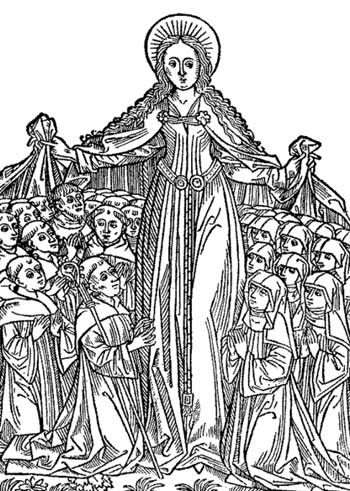

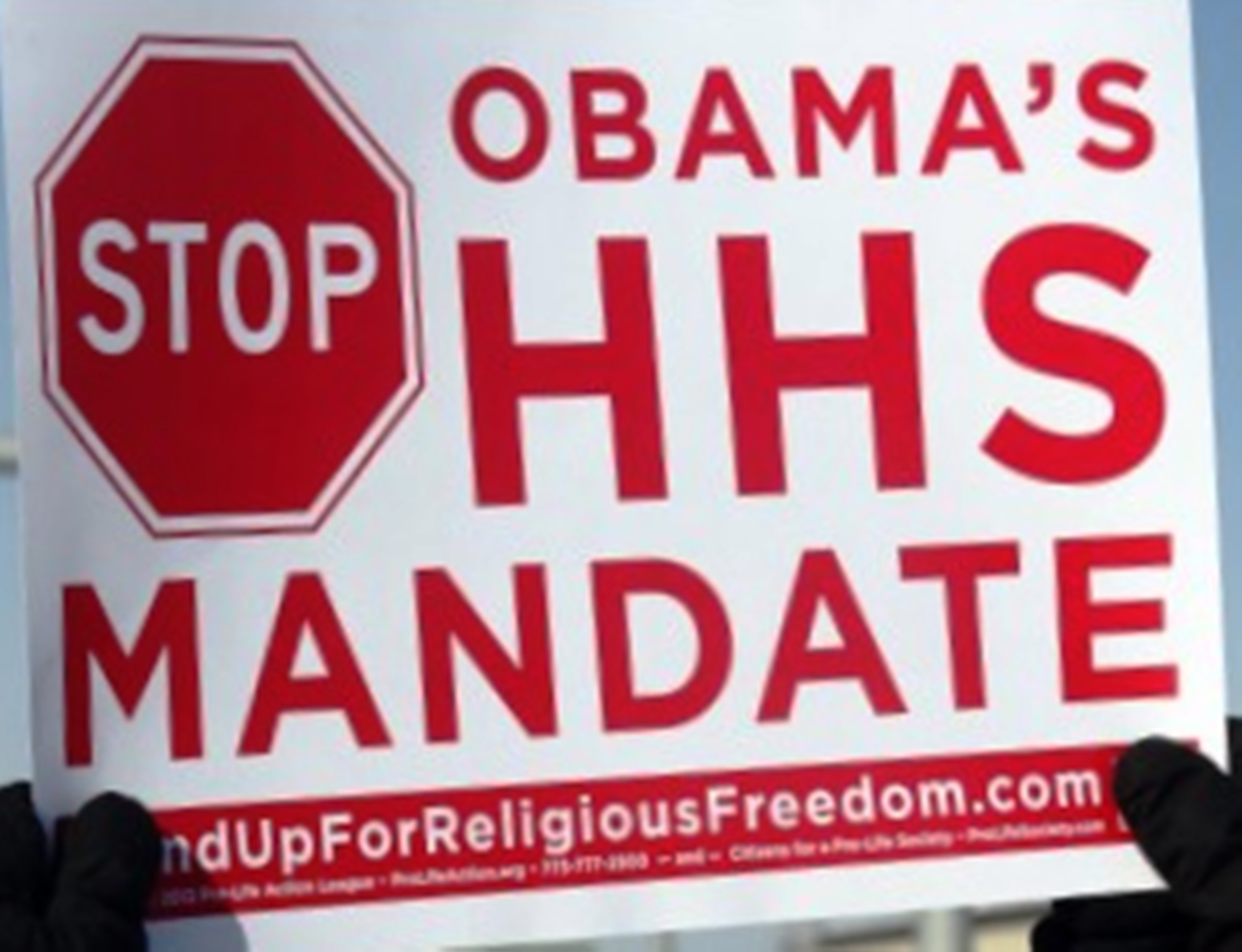























 Blogger Priest