• Our Blogger

    Fr. Joseph Jenkins

  • The blog header depicts an important and yet mis-understood New Testament scene, Jesus flogging the money-changers out of the temple. I selected it because the faith that gives us consolation can also make us very uncomfortable. Both Divine Mercy and Divine Justice meet in Jesus. Priests are ministers of reconciliation, but never at the cost of truth. In or out of season, we must be courageous in preaching and living out the Gospel of Life. The title of my blog is a play on words, not Flogger Priest but Blogger Priest.

  • Archives

  • Categories

  • Recent Posts

  • Recent Comments

    Barbara King's avatarBarbara King on Ask a Priest
    Ben Kirk's avatarBen Kirk on Ask a Priest
    Jeremy Kok's avatarJeremy Kok on Ask a Priest
    Barbara's avatarBarbara on Ask a Priest
    forsamuraimarket's avatarforsamuraimarket on Ask a Priest

Baptizing the Babies of Same-Sex Couples

How should the pastor proceed when a same-sex couple comes forward, wanting their child to be baptized?

baptism

It is already the case that we get many heterosexual couples wanting their children baptized, even though they are married outside the Church or even cohabitating. In these situations, I will not absolutely forbid baptisms, but I will beseech the couples to do what they can to regularize the relationship. Of course, if the couples have broken up or were only casual with which to begin, then it would be madness to insist upon them marrying. The child should be the fruit of a bond that has blossomed, not an element to manipulate in favor of a marriage that would otherwise never occur. These couples sacramentally married or not, still signify bonds that are in accordance with natural law.

Same-sex unions violate both divine positive law and our understanding of what is and is not “according to nature.” There is no way to make it right unless the couple separate. I had a situation of this sort back in the 1990’s. The grandfather came to see me quite upset because his daughter and her female lover had asked to have their child baptized and the priest said no. They did not know where to turn. The grandfather begged that something might be done. I asked that he send his daughter “and her friend” to see me. I had to disguise the revulsion I felt in hearing their story. They wanted a child and so made an appeal to a gay man. He masturbated into a spoon and then the lesbian couple used the semen to amateurishly inseminate the willing partner. As it turned out, she conceived and they had a little boy. Sometime later I heard there was legal wrangling with the homosexual neighbor who wanted his rights as the biological father. It is my understanding that today many lesbian couples do not even know the source of the seed and the insemination is accomplished through fertility clinics.

Both of the ladies who came to see me were raised in the Church and had attended Catholic schools. The grandfather of the mother had told me that he would do all in his power to make sure the child received a Catholic upbringing. I was blunt with the women, but no one was in the dark about how difficult a situation this was. I asked them point blank, “Can you promise me that despite your relationship you will raise this child as a Catholic, teaching him his prayers and taking him to Mass? They were both polite and agreeable. They both promised. It was not a compromise with which I was happy, but the alternative would punish the child for the sins of others. It seemed to me there was sufficient hope that the child would be raised as a practicing Catholic. I ended up baptizing the child. A person’s salvation might be at stake. In retrospect, I cannot recall what was written in the baptismal registry. I think only the name of the mother was inserted. I did tell them that the choice they made would be difficult. Because of their union, they would not be welcome to receive the Eucharist themselves. Nevertheless, they were adamant that they would still go to Mass and make sure their boy would receive all his sacraments. I recommended that they quietly live their lives, respecting the moral teaching of the Church even though they felt unable to realize it in their relationship. Here too they were agreeable. They felt no need to make their baby the poster child for a cause. I instructed them about how baptism makes the child an inheritor of the kingdom of heaven, a member of the Church, an adopted son or daughter of the Father, kin to Christ and a temple of the Holy Spirit. I added that baptism washes away original sin and invokes saving grace.

Despite their dissent and self-imposed alienation from the Church because of their lifestyle, I urged the couple to pray daily, placing their needs and weakness before the Lord for healing. I wanted them to know that while I disagreed about their personal lifestyle choices; God still loved them and that the Church would not turn her back on them. While their living together was a public statement against Church teaching, it did not have to be a deafening announcement. I urged them to do all they could to avoid scandal, both for themselves and the Church. I felt they had been truthful with me. Otherwise, it is doubtful that I would have offered the sacrament. The godparents were Catholics who were living their lives wholly in accordance with the commandments and precepts of the Church. While always important, here it was absolutely crucial.

  • Today the situation is evidently becoming more common. Either through insemination or adoption, lesbians and homosexuals are becoming parents. Despite their battles with the Church, some still feel an attraction to her message of salvation and sacraments. They want to share this with their children. This is no longer a singular aberration. How do we proceed?
  • Do we have Archdiocesan policies to deal with these situations? Should the Chancery be consulted on each and every case that comes forward? I know the local policies in Washington stipulate that there should be two godparents and that they should be representative of each gender.
  • Can a same-sex family structure constitute a true family?
  • Can parents perpetually in a state of mortal sin genuinely witness to the faith and Gospel?
  • Given the canon law problems, should registries list only one partner or can both be acknowledged?
  • It would be easy enough to list the mother alone but in adoption, there is the claim of two mothers. Should one be listed in the side annotation?
  • We were recently informed to stop listing children as legitimate or not legitimate. Should there not be remarks about a same-sex union?
  • As for liturgical adaptation, will we need a special liturgy to get around the language of a mother/wife and father/husband?
  • Priests will routinely omit the blessing over the mother and father when couples are not married in the Church. Is this justified and should the blessing be omitted over same-sex couples? I would think so.
  • While it is probably good to seek out Archdiocesan consultation, would priests need higher permission to perform such baptisms?
  • Do we have programs in place to offer pastoral care to these children and households after baptism?
  • Would these children be welcome in our Catholic schools?

I can well understand that one answer would not fit all. There might sometimes be little or no hopeful sign that the responsibilities that come along with baptism would be fulfilled. Some treat baptism like magic or as an empty cultural rite of passage. Activists might even exploit a request for baptism to ridicule the Church or to make a political statement. This is where it becomes all the more problematical.

Priests are supposed to be good stewards of the sacraments. And yet, many of us are fearful that we cannot even safeguard the Eucharist at Mass because of policies that place a greater weight on public scandal than actual spiritual readiness and ecclesial unity. Here too, there may be times that being a good steward will mean saying no and facing repercussions. Is it a passive capitulation to just throw up our hands and leave it to God to straighten out?  I suspect so.

Another Fake Priestess Becomes a Fake Bishop

14036376739246b

The National Catholic Reporter never gets things right because its basic agenda is to get things wrong, in other words, dissent. Such is again the case this week with the news headline, “Roman Catholic Womenpriests ordains first bishop from Indiana.” It is silliness because these women have stopped being Catholic and are excommunicates from the Church. They are now their own religion or sect but not Catholic and definitely not Roman. Rome has spoken. Women cannot be ordained. Priestesses are not priests in the New Covenant of Christ.

The article chronicles the life of Nancy Meyer, from a Catholic Franciscan sister to a renegade priest wannabe in 2010. This past Sunday she took her charade to the next level, pretending to be a bishop. She speaks of her call, but it came from other expelled discontents— not from the true Church. This is a free country and she certainly has the right to minister in her faith community; however, it is grossly wrong to identify it with Roman Catholicism. They argue the validity of their orders because of the involvement of a number of male bishops. However, I suspect this is a fiction in that they refuse to identify this so-called pedigree. But it would not matter anyway. “You can’t make apple juice with oranges.” The Church does not have the authority or power to ordain women. The priest is an icon for Christ, the groom to his bride, the Church. There is no sacramental lesbianism, bride relating to the bride. The maleness of Christ is a constitutive element of his identity and his priesthood. The pagans had priestesses, but Catholicism has priests (a male noun). The simulation of sacraments is a crime in the Church and all those involved with the attempted ordination of women are excommunicated. They are no longer members of the Church. I shudder to imagine what this does to grace and the issue of salvation.

Note that the event could only squeeze 150 attendees from all of ten countries. That is pretty sad. The event was held at Calvary United Methodist Church in Brownsburg. Would that not make them more Methodist than Catholic? But I guess they only rented the worship space, it is a whole lot prettier than Fr. Brown’s barn or the local bowling alley. The infamous Christine Mayr-Lumetzberger was among the seven pseudo-bishops present to do the deed. It is interesting that wannabe bishop Christy admits that most Catholic women disparage women who want to be priests. I suppose that is because most women have some sense. She laments that they are not supported in their calls, but this begs the issue of authenticating a calling. Christ calls us through the mechanism of his Church. There is no religious vocation that sidesteps this pattern.

They do provide a close-up view of the development of a cult. A tiny offshoot from Catholicism, they view themselves as the Church and regard worldwide Roman Catholicism as in the wrong. They have established their own clergy. The feminist paradigm is the measure of everything they believe and even affects how they dress. They have no qualms about re-writing the liturgy to reflect their views. Many of them view holy orders as more a power grab than as an opportunity for humble service. They want to be classified as Catholic and yet they would redefine its meaning beyond recognition. While it sounds pejorative, many of the adherents of the Womenpriests movement come across as somewhat unhinged.

These girls are all dress up and show but there is nothing real about what they are doing. They are counterfeit priests. It is really quite tragic and I feel sorry for them. They have made of themselves a laughing stock and embarrassment to Catholic women everywhere.

Mass Attendance & Catholic Identity

Are any of us really surprised by decreasing Mass attendance? While I would not want to fall prey to any kind of faithless cynicism, I am often more astonished about why people continue to practice their faith. We are suffering from several generations of poor catechetical formation and Catholics who have lost a sense of their faith identity. The Ordinaries of the Archdiocese of Washington have honestly faced the problem.  Offering remedies, I am reminded of Cardinal McCarrick’s vibrant preaching and Cardinal Wuerl’s effectiveness as a teacher of faith.  They have prescribed what they could to help: breaking open the Scriptures, stirring the people to holiness, and showing how the faith has meaning and importance in their lives. Priests have sought to imitate this pattern in their religious education programs and in the messages from the pulpit.

However, there are many baptized Catholics who rarely or no longer attend Mass. Some shop around and find religious meaning in other churches. Many, perhaps the larger share, drop out entirely. Children might go to Catholic schools, but the majority is missing from the pews on Sunday. When I was at St. Mary’s in Upper Marlboro, MD, in the 1990’s, I polled the sixth grade about their Mass attendance. One week only two kids out of thirty-five had gone to church— and everyone was from a home with at least one Catholic parent. Of these two, one had gone to the Evangelical church of her father. Only one went to Sunday Mass. I am making no exaggeration. This is the state of affairs and things have worsened in light of the scandals. Those upon whom we had only a tenuous hold are escaping the grasp of the Church.

I recall being party to a group of priests discussing the situation.  What could we do to turn matters around?  A number of the guys mentioned accidentals: music, welcoming, fellowship, good preaching, etc. We seemed to forget that the exodus escalated back in the 1960’s when the ancient form of the liturgy with its ritual beauty and religious chant was shelved for experimental forms. Faithful Catholics remained with the Church despite bland prayers and trite music. However, as that generation has aged and died off, younger people found Catholic worship to be a poor imitation of what Protestants can offer. Even our small African-American churches with their Gospel Masses have borrowed the music and style of the Protestant Black churches. If our accent is simply upon such accidentals and entertainment, we are bound to fail. The new mega-churches put on a much better show and without the restraints of Catholic ritual or the appeals to a moral code that has been rejected out-of-hand. One of these local Protestant churches can hold 10,000 people and the number of annual converts dwarfed what the entire Archdiocese brought in through the RCIA.  Of course, we have more than a “come-on-down” attitude.  We require months of study and reflection.  Some say that we make it too hard to be a Catholic.  And yet, others like the fact that we insure people know what they are embracing.

While certainly we should make our churches welcoming places where the liturgies are well done and the preaching is moving and authentic, we will have to find new and more aggressive ways of reaching the hearts and minds of people who no longer enter our doors. If people truly believe that every Mass is a sacramental encounter with the living Christ, then we would not have the current decline in participation. People do not understand the Eucharist at the heart of our faith. It is here where we find Jesus most present, the one who gives meaning to our lives as well as mercy and healing. We need to rediscover our own evangelistic spirit and promote in every forum possible a genuine Christian formation. A corrective will be truly holy priests who offer reverent liturgies where we discover and celebrate the mystery of God. The corrected translation of the prayers is a great help.  The poison of dissent and spiritual laziness, even among priests, must be rooted out. When the tides of change, indifference and pain assault us all, the ark of Peter is the only sure refuge.  Shepherds must make a courageous stand for the Gospel of Life, without compromise, so as to compel people to make a choice for Christ’s kingdom or for the secular castles in the sand. Priests must also inform and empower the laity to render a credible witness.  They can reach people where the clergy are unable to go.  Our Lord, himself, sent out the seventy to spread the saving Word.

Discussion on the Post

AMBER:

Your entry brought to mind my thankfulness for my Protestant beginnings. I “get it” (so to speak) and will work diligently to be sure my children are properly taught the faith. I do not want them to grow up and become complacent.  I think, while the Church should play a role in this, the parents are the key to ensuring that our children continue in the faith when they are no longer under our roof.

The parish I attend is wonderful in many ways but the music is seriously lacking and I very much miss the music from my Protestant church. How I would love to attend a Mass in which we have the richness of classical baroque… something that moves the soul to a deeper meeting with God.

Unfortunately, many Protestant churches have replaced the altar for a stage and communion for a sermon… and they are missing the essentials of worship… to meet our Lord in the Eucharist… and to be in His presence.

I could never go back.

COLOSSUS:

Father Joe, you say a lot here that has been on my mind lately. I’m 42, a lifelong Catholic, and am only now beginning to realize how central the faith is to everything.

“Poor catechetical formation,” that says just about everything. I am going through reading the actual Catechism (the JP II revision) and find that it offers a coherent, well-reasoned, and deep view of the world. I am exploring the Tridentine Mass and daily/nightly prayer in both English and Latin.

It is as if I have lived my whole life inside a bank and have been complaining of poverty, without ever having asked “By the way, what’s in the vaults?”

I am enjoying your site, too!

CLIFF:

Part of the problem lies in some of standards of our CCD instruction. In our parish I would venture to say that more than half don’t even know their basic prayers or even how to say a rosary. The other thing is what they learn (or do not learn) from their parents.  If they don’t attend Mass or practice their faith, what can you expect from their children?

MARY:

I served as an extraordinary minister for several years at our church. When you have to prepare the hosts for Mass you really notice the attendance dropping. We have over 50 ministries at our church and are considered a “thriving” parish. However I have noticed that the “wine was running short.” I asked the pastor, of all the groups that get together at the parish, are there any who pray for the people of the parish? He said no. This disturbed me greatly. Nothing happens without prayer. God wants to pour out his grace on His people. He gave us the free will to choose. All we have to do is ask. I

We see in God’s creation an example of how the enemy robs our life from us. Many plants that are edible have poisonous look-alikes. One is life giving and one brings only death.

For a long time I have been walking around in a “false humility and a false spirit of poverty.” In the spiritual world these things misrepresent true humility and truly being poor in spirit. One is life giving the other brings only death. Just like the plants. God is not as concerned about the people who do not attend church. He is more concerned about the ones that do, and consider themselves to be righteous. Like I use to.

The Catechism of the Catholic Church lists four reasons why God became man:

  • To reconcile human beings to God the Father
  • That we might know God’s love
  • To be our Model of holiness
  • To make us partakers of the Divine nature

Jesus had to die so that He could be resurrected so that we can share in that divine nature.

You never know that Jesus is all you need until Jesus is all you have. I had to lose everything before I realized that. I lost my son, my sanity, my job, even my husband for a time. How many others are out there walking around like me? I seemed alright on the outside, but on the inside I was dying. My son’s body was the seed that had to be planted in the ground so that new life could spring up in me. For me it is not the end of the story…it is only the beginning.

Maybe the people who are not attending church are doing so because they see this in the people who do?  Which brings me back to the original question I asked the pastor… who prays for the people of this parish?

FATHER JOE:

The pastor prays daily for his parishioners and each Sunday at Mass for the people of the parish. Many are included in the petitions of the General Intercessions. Some parishes have special prayer groups. We should all pray for each other.

BRETT:

No, it is not in the Eucharist where we find Jesus most present. It is in the soup kitchens, the palliative care wards, the prisons and the refugee camps where He walks tall through the actions of those who may never darken a church’s door but live out the word of God through their daily lives. Feeding the hungry, clothing the homeless and visiting the lonely— THAT is where Jesus is most present.

FATHER JOE:

Such a reductionist view of Christianity might satisfy the horizontal litmus test of the Obama administration; however, it would not exhaust the vertical mystery of faith that true Christians maintain.  Our intervention in the world is not our starting point.  It begins with a personal and corporate faith in Jesus Christ.  The love of God always precedes the love of neighbor.  We are to love and worship the Lord with our whole hearts, minds and souls.  Only then can we love neighbor as we should.  Christianity and our relationship with Jesus cannot be reduced to social work.  Our love for God spills over into our love of neighbor.  Look at the late Mother Teresa.  She was dedicated to the poor, the sick and the oppressed.  And yet, they also spent hours before the Blessed Sacrament and participated at daily Mass.  She writes:  “I encourage you to make your Holy Hour through Mary, the cause of our joy, and you may discover that nowhere on earth are you more welcomed, nowhere on earth are you more loved, than by Jesus, living and truly present in the Most Blessed Sacrament. The time you spend with Jesus in the Blessed Sacrament is the best time that you will spend on earth. Each moment that you spend with Jesus will deepen your union with Him and make you soul everlastingly more glorious and beautiful in Heaven, and will help bring about an everlasting peace on earth.”

The Sad Case of the Fatima Priest

gruner2QUESTION: 

What is wrong with Fr. Nicholas Gruner and The Fatima Crusader magazine?  He seems to be very holy, intelligent, and sincere–not anything like the “nut” people make him out to be. His main message seems to be that the consecration of Russia requested at Fatima was never performed properly and that humanity could be headed for a chastisement.

RESPONSE:

Compliance with a request to consecrate Russia and/or the world remains with the judgment of the Holy See. Such has been done and it can be repeated. However, it does not rest with Fr. Gruner or with you and me. We can certainly dedicate ourselves to the Immaculate Heart of Mary and the Sacred Heart of Jesus, but such also demands fidelity in our state of life, as well as respect to the Church and the Pope. Fr. Gruner proposes to direct what is best for the world and the Church while he cannot even get his own house in order. The Soviet Union fell and many nations knew freedom. But faith is not magic. Sin still exists in Russia (just ask the Ukraine), around the world and here in the U.S. where our religious liberty is threatened by the current administration and a culture of death. Any utopian view or interpretation of Fatima and its fruits are arguably not in sync with Catholic or Christian eschatology.

Fr. Gruner has not had proper priestly faculties for much of his priesthood. He argues that we must prove otherwise but that is not how the process works. He must present signed faculties from his bishop to the diocesan officials of any local church he visits. He cannot do this because he is not in good standing. Thus, he is not welcome by true Catholic authorities anywhere in the United States. His censure was reaffirmed by the Congregation for the Clergy. Priests are not the same as the laity. We are not our own men. We belong to the Church and our bishops. The problem with the priest is simply this… he disobeyed and continues to disobey his legitimate bishop. He says “public” Mass even though he is forbidden to do so. He cannot even “lawfully” hear Confessions. He is closer today to the schismatic SSPX than the Roman Catholic Church.

[No other bishop can extend him faculties or give him permission to minister while he is suspended. No other bishop could even adopt him unless he were formally released by his home bishop. He has never been released.]

I am told that when the late Sr. Lucia took issue with him, he accused her of lying. Similarly he has directly attacked the popes and questioned the honesty of the Vatican. How is any of this meritorious? Sorry, I can well appreciate that his manner is very disarming. While critics accuse him of being a self-serving scam artist, he seems quite pious and sincere. But it remains true that he brings in plenty of money from donations and has no one, not even a Catholic bishop, to oversee him.

As a diocesan priest, he can only function as an extension of his bishop. But what happens when a priest will allow no one to tell him what to do? Disobedient priests are by definition, bad priests. This is a rule that I take seriously to protect my own priesthood. Many of the renegade clergy know the code-words to get people on their side. Particularly troubling is that to justify himself and his standing, Fr. Gruner wrote a book that distorts the truth of his situation and conflicts with Catholic ecclesiology. I would simply ask him, who and where is your bishop? Have you obeyed him? His defense fails before it begins. Catholicism is a mediated religion. We do not follow God directly but through his appointed authority. He cannot claim fidelity to Jesus and Mary while ignoring the summons of his bishop or by defaming the Holy See as deceptive or satanic.

Fr. Gruner’s claims not only lack substantiation; nothing that he has done can be justified. It is said that he has become increasingly traditional (at least externally) because, as has been observed, he seeks kindred bedfellows and follows the money trail. And yet, certain traditionalists mock him as a false priest because he was ordained within the reformed ordination ritual after Vatican II, which they reject.

Does he have any legitimate convictions? Might he be more delusional than fraudulent? I cannot say. But he should not be supported. Catholics should urge him to be humble and to submit as a priest to the lawful authority to which HE PROMISED OBEDIENCE. A priest that breaks his promise of obedience to his bishop is as bad as a priest who breeches celibacy. Again, do not be fooled. His name and organization does not appear in the official directory of institutions and clergy in the U.S or Canada.  He does not work for the Catholic Church in any capacity whatsoever. He is independent. In that sense, he has fabricated his own church.

The appeal letters that he sends out include the signatures of other renegade clergy. I was surprised some years ago to discover that the names included that of an old retired priest who purportedly went senile and another priest who was long dead. I have not checked the current names. Again, he wants to give himself a false credibility.

While I would urge against material support, I would recommend that everyone should pray for Father Gruner and that he will know repentance and humbly accept the guidance of his bishop under holy obedience. I suspect that this is what would most please our Lord and the Blessed Mother. Let us never forget that the devil likes to fool us, making the darkness look like light. Pray for him and all priests.

  • 1976 – Bishop Pasquale Venezia ordained Fr. Gruner. He refused to serve the diocese of Avellino and left for Canada without permission.
  • 1978 – Bishop Venezia sent Gruner a letter saying that he could remain in Canada if a local bishop incardinated him. None did and no applications were made.
  • Bishop Gerardo Pierro ordered him to return to his diocese. Fr. Gruner did not answer his letter.
  • Cardinal Innocenti, Prefect of the Congregation for the Clergy, wrote to him and ordered him to return to Italy and his bishop. Fr. Gruner refused.
  • 1989 – Bishop Gerardo Pierro again sent Gruner a letter ordering him to return or find another bishop in 30 days.
  • 1990 – Fr. Gruner went to Avellino and met with Bishop Pierro to give him time to seek incardination. This was granted but two years later he still had not started the process or found a receptive bishop.
  • 1992 – Cardinal Sanchez and Archbishop Sepe stated in L’Osservatore Romano that Fr. Gruner and his Apostolate had not been approved by the competent ecclesiastical authorities (October 14, 1992).
  • 1994 – The new bishop of Avellino issued a decree declaring Fr. Gruner a vagus priest. Such priests have no faculties and cannot publicly offer the sacraments.

INFORMATIVE LINKS:

http://www.catholicculture.org/culture/library/view.cfm?id=3441

http://www.catholicculture.org/culture/library/view.cfm?recnum=4086

http://www.ewtn.com/expert/answers/fr_gruner_old.htm

http://www.ewtn.com/expert/answers/fr_gruner.htm

http://www.staycatholic.com/fr__nicholas_gruner.htm

Can a Priest Deny Sacraments to a Gay Man in the Hospital?

The news was on fire this morning about a DC priest who purportedly refused to give Last Rights to a gay heart-attack patient at the Washington Hospital Center.

Oh boy, here we go again! This man condemns the priest but we only have his side of the story.

I suspect there is a lot more to the story than what we are hearing.  A priest was requested and Father Brian Coelho came to the bedside of the patient, Ronald Plishka.  The priest followed the ritual by offering the Sacrament of Penance prior to the Anointing of the Sick and Holy Communion.  If a patient is unconscious, the priest will often presume contrition and a desire for the sacraments, giving absolution even without auricular confession.  In this case, the patient was alert and responsive.  The patient seemed to want to make small talk and remarked about how as a homosexual person he was so happy that the Pope was accepting of gay people.  But he next asked if this admission bothered the priest, almost as if he were baiting him.  The priest said it did not but offered to pray with him.  Nothing more was said about Extreme Unction and Viaticum.  While left unsaid in the article, this intimates that this dialogue took place as part of a Confession.

Because the disagreement probably happened during Confession, the priest is silenced by the seal and cannot share his side of the story. Indeed, he would face automatic excommunication if he says anything… something I hope that Church authorities appreciate. Even they cannot question the priest.

Instead of a civil conversation, the patient rejects the offer of prayer and tells the priest “to get the [deleted] out of here!”  That in itself probably demonstrates an improper disposition for God’s mercy.  Then the doctors came in to calm him down.

We should pray for all the parties involved. 

Re-established Parish Council at Holy Family

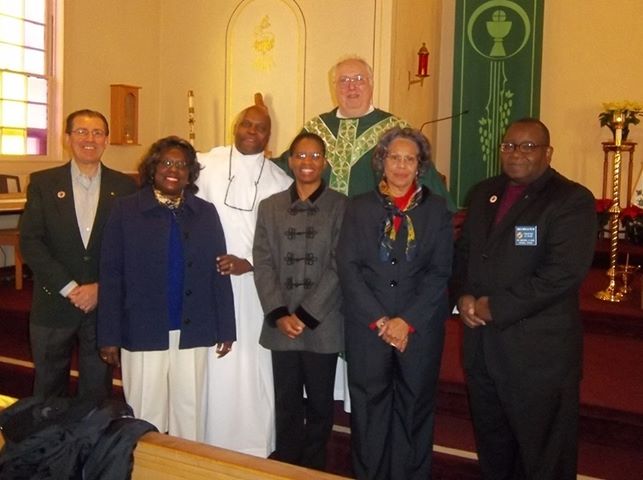
The following are the members of the re-established Pastoral Council here at Holy Family: Mrs. Ida Belinky, Miss Cheryl Blake, Mrs. Cynthia Bowie, Mrs. Eleonora Foronda, Mrs. Marsha Hansen, Mr. Joseph Hebron, Mrs. Melissa Hicks, Mrs. Laurel McDonald, Mr. James Murry, Mr. Andres Padilla, Mr. Brian Payne, Mrs. Janet Renze, Mrs. Monette Roxas, and Mr. Michael Turner. This is the maximum number of members permitted by the new Archdiocesan guidelines (15 counting the pastor). The presentation and installation of members was held on Sunday Mass at 9:30 AM on January 26, 2014. Absent on Sunday were Ida, Ellie, Marsha and Joe.

150805_10151922266953435_535483866_n

Pictured here with me after Mass are Andres, Cheryl, Brian, Melissa, Laurel, and Jim.

Holy Family Hosted Student Marchers for Life

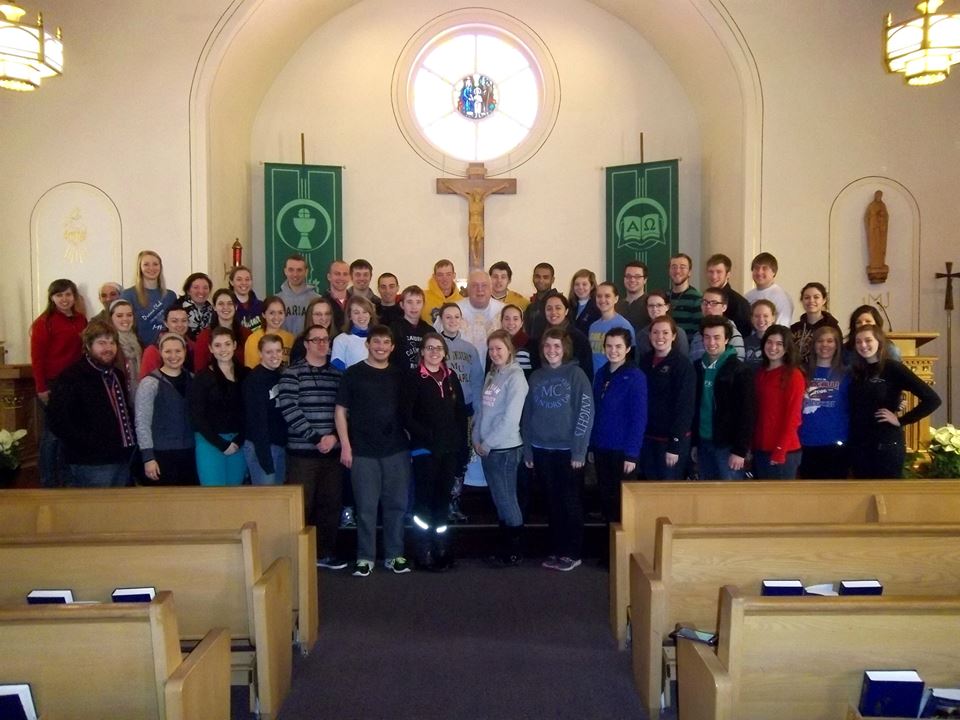
About a hundred students stayed with us from Purdue, Butler and Marian Universities.

1604756_10151915305738435_1005483426_n

We had a pro-life Mass on Wednesday morning before the March. The students from Marian were largely in attendance.

1506494_10151915306588435_1967602046_n

Here are some of the Purdue and Butler students posing before our Cemetery of the Innocents.

God bless these pro-life champions. They braved freezing cold and snow to make a difference.

Communion in Orthodox Churches? Same Catholic Faith?

QUESTION:  As a Catholic can I receive Communion in an Orthodox Church? Aren’t our beliefs essentially the same?

ANSWER:

You cannot generally receive Holy Communion in an Orthodox church. The only exception is when it is physically impossible for you to participate at a liturgy in a Roman Catholic or Eastern rite in union with the Holy See. However, please note, that not all Orthodox churches would want Latin rite Christians taking the sacrament from them, either. We should also try to respect their laws. Having said all this, we recognize the validity of the seven sacraments in the Orthodox churches.

The Orthodox churches are national churches and Roman Catholicism has always been in tension with such embodiments of faith communities. This is true in the East and West. Gallicanism placed great stress upon the unity of the Church in France just as Anglicanism signified a juridical breech. Political reasons related to Church authority are still very much part of the problem that must be resolved. What is the extent of papal power and the unity under the Petrine see? This brings with it the debate over the status of the small Eastern rite churches in union with Rome. The Orthodox churches tend to look down upon them as traitors. The Orthodox churches regard the Pope as “the first among equals.” Such is not how we regard the universal see.

Besides ecclesiology, there are also some doctrinal interpretations which divide us. The most famous of these is the Filioque debate in the Nicene Creed: both the authority of the Pope to add to the profession of faith and the understanding of the eternal generations or relations of the divine Persons in the Blessed Trinity. Given pressure from worldly monarchs, Protestant influence and secularism, the second or penitential marriages of divorced persons is also a divide. We cannot readily forgive that for which we were willing to allow the entire English church to slip away— a marriage that is no marriage but adultery. Orthodox churches transplanted into the West are increasingly adopting elements of Lutheranism (emphasis upon Scripture over tradition and the value of faith over works) but these eccentricities are also placing stress upon their loose inner unity worldwide. Indeed, some communities have split as have several of the Russian Orthodox over the fragmentation of the old U.S.S.R. and what was seen as complicity with communism. Indeed, it appears that some prelates might have been KGB plants. Indeed, the recent news has detailed a public rift between the Orthodox patriarchs in Russian and the Ukraine.

Heated Conversation Over Annulment Article

wedding125

This morning I was alerted on Facebook to a commotion on the Internet regarding an article by a brother priest of the Archdiocese of Washington.  Another priest, Msgr. Charles Pope, who authors the Archdiocesan blog noted:

“I was saddened to see that a priest of my Archdiocese wrote a rather harsh article on Church Marriage teaching. I do think we need to look to clarify the annulment process but I guess I would reform it in very different ways than Fr. Peter Daly says. Anyway, Ed Peters does a pretty good job here of answering my brother priest.”

I said my prayers, offered Mass and then tracked down the article and Dr. Peters’ response.  CATHOLIC WORLD REPORT aligned itself with Dr. Ed Peters as did Father John Zuhlsdorf on his blog.

Doctor Peters versus Father Daly

The first thing that Google found was the site for the canonist Dr. Edward Peters.  He offered a stinging rebuke to Fr. Peter Daly’s NATIONAL CATHOLIC REPORTER article on reforming annulments.  While the issues at stake were vitally important, saying that it was harsh would be an understatement.  Castigating my brother priest as sarcastic and childish, he critiqued Father Daly’s article, saying:

  • He violates the “heart of Church teaching on the permanence of marriage.”
  • He is “repackaging common historical errors, irrelevant platitudes and bad theology.”
  • His dismissals of the juridical are “complaints about Christ’s economy of salvation.”
  • Fr. Daly does not want reform of annulments but their “abandonment.”

Wow, regular readers are aware that I routinely struggle with a pugnacious manner of my own, but goodness, Dr. Peters certainly pulled no punches!

I guess I was going about this backwards.  What did my priest friend say that merited such rebuke?  I tracked down Fr. Daly’s article at the newspaper site.

Oh boy, what can I say?  As another parish priest, I will share my (personal) position, hopefully with an ample supply of charity.   So what did he write to cause all the Internet chatter?  The article is entitled, “Pope Francis Should Consider the Church’s Outdated Annulment Process” (January 13, 2014) by Fr. Peter Daly.

True Sensus Fidelium

He admits that the catalyst for the article was the recent request from the Holy See for input in the upcoming special Synod on the Family.  Along with many others, he is excited by the apparent new openness of the Magisterium to hear from the rest of the Church, the rank-and-file priests in the trenches and the laity in the pews.  (Some critics are arguing that the survey was only addressed to the bishops but this is not strictly true.  The bishops sent the questions to priests and the faithful for collaboration.  Several dioceses placed the questions online for quick electronic responses.  Deadlines were give clergy and laity as to when to send in their answers.)  He stamps this change of direction as a miracle and writes:

“In our top-down hierarchical church, the concept of the sensus fidelium has been pretty much a dead letter since the Second Vatican Council. Usually Rome talks and we listen. But now he wants to hear from us. Thank you.”

Certainly, there is much to be said about listening, but we all still have different roles to play and ultimately the response of sheep to a shepherd is that of obedience.  As for the sense of the faithful, we must be wary of the fact that many if not most today are formed more by a secular, hedonistic and materialistic world than by the Gospel.  Only those believers who maintain the core truths, worship, and conscientiously live out their discipleship are truly agents of sensus fidelium.  You cannot transmit or develop what you really do not have.  I would suggest that fallen-away uncatechized Catholics and the majority of dissenters do not qualify despite the fact that someone spilled water over their heads decades ago to appease aging grandparents.

The Protestant Practice & the Orthodox Model Fall Short

Father Daly takes the survey from Rome and narrows his focus to the question of annulments.  His response is blunt:  “scrap our current annulment process and look east to see what our Orthodox brothers and sisters are doing.”  As a priest in good standing, he rightly asserts that Jesus did not approve of divorce and remarriage.  (I have often been amazed at the mental gymnastics that certain Protestant churches must employ to get around this restrictive teaching, especially in the Gospel of Matthew.  They make wiggle-room where there really is none.  But is Father Daly trying to force wiggle-room?)  He also knows full well that the current annulment process is an effort to respect this teaching while showing compassion to our people.

He brings up the Orthodox churches of the East which allow second Penitential Marriages as a possible solution.  But many of us fault it as a negative symptom of national churches.  Remember that Roman Catholicism was willing to allow the entire English church to slip away over the issue of marital permanence and King Henry VIII.  Would we now backtrack and say we were just kidding about the gravity of this issue?  Neither Sir Thomas More nor Bishop John Fisher can be given back their heads; and neither can we really turn back the clock on licit and valid marriages.  Along with certain Protestant notions about faith, authority and Scripture that are trying to get a foothold in the Eastern churches, especially those transplanted into the West, this issue of second marriages may be a greater hurdle to ecclesial reunion than either the Filioque Clause or Papal Primacy.

The annulment process might need to be reworked, but I do not believe the Orthodox provide a viable alternative.  Although not as shallow as our Anglican friends, the Orthodox might hide a false caricature of marriage behind elaborate ceremony and the pretension of sorrow.  True contrition means reform or change of life.  The so-called Penitential Marriages just give the couple their own way while feigning some degree of anxiety in conscience about it.  Father Daly insists that the matter should rest entirely with one man, the priest on the ground.  But he and I know that priests are not the same and there are some who may wrongly replace the Gospel with their own opinions and sentiment.  The Tribunal seeks an objective reality.  Is the prior bond a true or false marriage?  There are the judges, an advocate and the defender of the bond.  Beyond these five or more people, the judgment rendered will be reviewed again by another Church court.  They study the facts of the case and hopefully are neither susceptible to the manipulation of money nor to a false compassion.

I must admit that I am devilishly amused by Father Daly’s Episcopal priest-friend finding delight that the Catholic Church’s stand on divorce and remarriage will always give cause for the “Episcopal church.”  The shadow of the reformation still falls upon us.  His friend may be right.  Indeed, I would add (perhaps without charity) that until the final judgment, there will be a place for the Episcopalian church so long as sinners cling to a counterfeit priesthood and Mass, the fantasy of priestesses, the blessing of same-sex unions, the promotion of contraception and tolerance for abortion, the marrying of adulterous couples and the reception of renegade Catholic priests who want to bed their paramours.  Goodness me, I really have to work harder on my ecumenism!  But I would rather be a member of the Church that goes to heaven than the “church of anything-goes.”

The Pastoral versus the Legal?

Father Daly writes:

“The problem with the process in the Roman Catholic church is that it takes what ought to be a pastoral matter and turns it into a legal one. It is complicated, often unfair, and frequently unintelligible to the participants. Some tribunals are easy. Some are hard. It can be very capricious.”

(Is the use of the small “c” in Church an editorial liberty taken by his newspaper?)  As a civil lawyer, Father Daly has a point.  The subjective elements in how many cases are handled can be very worrisome.  Although I would usually be cold water to Father Daly’s hot, we agree upon this much.  The annulment process is not easy.  Formal cases require people to revisit all the pain and betrayal that poisoned their unions.  Adequate grounds have to be discerned in the muddle of mutual allegations and tears.  Witnesses are gathered.  Interviews are given.  Essays are written.  Then a thousand dollars and a year later a verdict hopefully emerges from the backlogged Tribunal.  That verdict is then reviewed by a second court that can approve or send it back.  Most applicants I have assisted seem to get declarations of nullity, but not all.  Sometimes I have to scratch my own head about the grounds.  But I am not a canon lawyer and would not want to be.  I pray for those who must spend so much of their lives and ministry ruminating over the dark side of life and marriages gone sour.

Father Daly desperately wants to be welcoming to those attracted to Catholicism.  While I have serious disagreements with him, he obviously cares and grieves about those estranged by marriages gone bad and new bonds that are not recognized.  My heart also bleeds for the few who wanted to save their marriages— angry and weeping daily at what they see as complicity in allowing their spouses to marry again in the Church.  Annulments are very staggering in principle and practice.  We are saying that couples previously regarded as married, even before a priest in Church, are not really married and that there is no sacrament.  Some defect invalidated the meaning of their marital act (sleeping together, i.e. sexual congress), having children and living a common life.  They said in their vows before God and to each other that they would forever be faithful and endure all hardships for each other.  But now we hear that someone lied or was incapable of living out the vocation or was mentally ill or had no intention of being faithful or practiced deceit or really did not understand what he or she was doing (after a six month wait and pre-Cana instruction).  One or both of the spouses want out.  It may be a year or twenty years later, but they feel entitled to start over.  Father Daly and I both help such people to begin again, although I am left troubled in conscience by many cases.  People even joke these days, “Promises are made to be broken.”  However, I was raised to believe that vows were made to be kept— in marriage and in the priesthood— even unto the Cross.

I certainly understand the RCIA dilemma for divorced and remarried candidates but there is no good way around it.  Fr. Daly argues that “All the annulment process does is put a road block in their way to entering the church.”  I would contend instead, that the barrier is their failed marriage and their attempt to bypass divine law in marrying again.  The annulment is the Church’s way of respecting the indissolubility of the sacrament while trying to help a couple out of the mess of their own making.  The process has its faults and is not perfect.  But, we would have them authentically married and delivered from the bondage of grievous sin.  It is not just or charitable to ignore a problem that damages their relationship with God and his Church.  They may not subjectively be aware of how much they need this healing.  We should not side-track or halt this process.

Speaking about non-Catholics having to get annulments before entering the Church, he writes that the process is “painful and pointless.”  I have to admit that this use of the word “pointless” makes me cringe.  It may be that the good Father is employing a degree of hyperbole.  He writes:

“They have to find witnesses, get records, take statements, dig up old contacts, and open old wounds. All of our language is legal, not pastoral. We speak of petitions, tribunals, witnesses, advocates, petitioners, defendants and evidence. It is Kafkaesque. It turns pastors into bureaucrats, to no purpose.”

I certainly appreciate his frustration and empathy for the people he serves.  But I would not say it is pointless or lacking purpose.  How else might we make something that is wrong into something right?  It is a difficult business but life is hard and frequently a real mess.  There was a time when divorce was illegal and annulments were rarely or not granted.  I am sure that Father Daly would not have us backtrack.  At least we are trying.

Father Daly says that he has taken “the pastoral route” for the elderly and terminally ill— in other words, he has invoked internal forum.  I have no comment about this.  It is the business of the confessional.  As long as a couple is not engaging in sexual congress and there is no danger of scandal, the priest may have certain discretion.  But I would be very careful about how far I would stretch this pastoral stratagem.  Dr. Edward Peters seems to read more into it; he wonders what he means and warns that if he married such people then these rites are “gravely illicit” (Canon 1085 § 2), “possibly invalid” (Canon 1085 § 1) and/or “sacrilegious” (Canon 1379).  He states that it would be an “abuse of ecclesiastical power” (Canon 1389).  I suspect that all Fr. Daly is doing is helping sick and elderly people to face their last days in right relationship with God.  I would not make more of it than that.

God Opposes Divorce & Remarriage

While all must follow natural and divine positive law, only Catholics are obliged to follow “man-made” Church laws.  (Of course, some Church laws reflect God’s explicit providence and cannot be abrogated.)  Heterosexual marriages between Protestants are acknowledged as sacraments, no matter if witnessed before a minister or civil magistrate.  Marriages with those not baptized are natural bonds but are also generally regarded as fully binding (with the possible exception of referral to the Pauline and Petrine privileges).  Homosexual unions between anyone, anywhere, are not true marriages.  A Catholic must pledge his or her marriage vows before a priest or deacon.  This law could change but it is unlikely and probably unwise to tamper with it.  Divorce is forbidden by Jesus (Matthew 19:3-9):

Some Pharisees approached him, and tested him, saying, “Is it lawful for a man to divorce his wife for any cause whatever?” He said in reply, “Have you not read that from the beginning the Creator ‘made them male and female’ and said, ‘For this reason a man shall leave his father and mother and be joined to his wife, and the two shall become one flesh’? So they are no longer two, but one flesh. Therefore, what God has joined together, no human being must separate.” They said to him, “Then why did Moses command that the man give the woman a bill of divorce and dismiss [her]?” He said to them, “Because of the hardness of your hearts Moses allowed you to divorce your wives, but from the beginning it was not so. I say to you, whoever divorces his wife (unless the marriage is unlawful) and marries another commits adultery.”

Nevertheless, there is the irony that no Church annulment case can precede until after a civil divorce.  While some authorities, even clergy, would wrongly argue against the view that divorce is a sin— such is the case, at least for the party or parties who damage the bond and force the separation.  Spouses have vocational obligations or responsibilities toward one another.  Separation does not immediately dispense culpability for marital duties.  Divorced persons should not date.  Rather they should live chastely with no corner given to possible adultery.  Nevertheless, in practice, most annulments come after couples are civilly married and are sexually intimate.  The mess can get messier.

The husband as head of the home expects a certain level of obedience.  That is why he is also regarded as the final authority when it comes to the discipline of children.  The wife must be respected as the heart of the home.  I tell every man who gets married, that his primary duty in life is to make his wife happy.  I tell the ladies that their devotion to the husband must be that of a best friend, and that she is literally his home.  Together they are responsible for their common life, with all its struggles, joys, sorrows, affection, accomplishments and failures.  They are ordered by nature and their vocation to give intimate friendship to one another where there is the satisfaction of sexual passion and openness to procreation.  It is the duty of a husband and wife to become lovers and parents.  The husband is commanded to treat his wife in a generous and honorable way.  They must work together as partners in insuring the goods of the family, materially, emotionally and spiritually.  Husbands and wives are called to be help-mates to one another.  It is grievously wrong to steal the affection and support owed to a spouse and to give it to another.  Mutual respect and esteem should properly be realized.  Indeed, if there is a separation, one of the duties is not to get married again.  A man who walks out on his wife deprives her of his support and a possible family.  Many such women in the time of Jesus were then forced into adultery to find a means of taking care of themselves.  A woman who abandons her husband will deprive him of the friendship owed him, including the physical intimacy to which men are strongly oriented.  How many stories have we heard about men who turned to mistresses when their wives became to their overtures?  Women who use sex (deprivation) against innocent husbands sin mortally.  This would also apply the other way around.  A woman neglected by her husband might be tempted to fulfill her yearning for affection and friendship elsewhere.  Divorce is not recognized by the Church.  Neither separation nor divorce exonerates or frees the spouse from the various inherent duties of marriage.  While extending marital benefits to the spouse would become impossible or absurd in breakups; still no such recourse can be made to others to procure or to offer these benefits.  Doing so is the commission of adultery, even if tender and loving.

An Administrative Law of the Church for Good Order

The “loophole” for Catholics is really nothing of the kind.  Catholics married outside the Church are not married.  That is why a declaration of nullity is short paperwork.  When convalidations take place we are at pains to emphasize that the new ceremony is not a renewal of promises previously made before a Justice of the Peace.  Instead, even if only five people are in the chapel, this convalidation is the true marriage— not the big expensive affair at the rented mansion or before the judge at the seaside garden of a rich friend.

Fr. Daly laments that these quick annulments or declarations seem unjust.  I can top this.  A couple came to me where the bride-to-be was the “other woman.”  She joked that she stole the Catholic boy from a life of sin so that he could marry in the Church.  This woman deliberately made a play for the civil husband of another woman.  Now she justified it in light of the quick declaration of nullity from the Archdiocese. Her attitude sickened me.  I felt compromised by my association with them.

The priestly critic sees no sense in Church legalities about marriage.  But it is not silly.  The Church has a right to regulate her sacraments.  Given that society and the Church no longer share a common vision of marriage, it seems to me that the Church’s legal appreciation of marriage is more important than ever before.  The pastoral cannot trump objective truth.  The priest might want to give the couple a second chance but it is not for him to decide.

The canonist is not dealing with law like a civil lawyer.  Society today deems law as capricious and open to constant revision.  The Church lawyer must acknowledge laws for the good order of the Church, divine positive law and natural law.  The Church could remove the requirement that Catholics must be married before a priest or deacon.  However, it would only complicate the question about true and false marriages.  But the Church cannot dissolve marriages simply on the say-so of forgiving and caring priests.  The priest has the power to absolve sin.  He does not have the authority to redefine right and wrong in marrying people who are already married, divorce decree or no decree.  If God has made a couple one flesh, and it is fully a sacramental reality, then neither a parish priest nor the Pope has the authority to say otherwise.  The priest is a servant of the Gospel, not its master.  We stand under God’s Word, not above it.  When it comes to marriage we must not by the lie that annulment is a Catholic divorce.  The only reality akin to divorce in regard to the Catholic understanding of marriage is death.  Couples are married,  “until death do they part.”  Annulments are simply a limited means of intervening in cases where a prior bond is determined in justice not to be fully real and binding.  If genuine, no act of charity and compassion could intervene.  It is here that Dr. Peters would interpret Fr. Daly’s argument as one against marital permanence.  The good priest acknowledged Christ’s teaching and the understanding of the Church; however, his solution would utterly compromise the doctrine of marriage.

The Plight that Faces Us

Father Daly writes:

“Nobody is deterred from getting divorced and remarried by our annulment process. But many people are deterred from coming into or back to the church by our annulment process. It is spiritually counterproductive.”

The numbers may be few but I would not say “nobody.”  I have known people who broke off relationships because they loved the Lord and his Church more than a romantic entanglement.  Admittedly I am confused by some of my brother priest’s opinions.  People may not understand the annulment process but all we are doing is asking people to keep their promises.  Everyone on their marriage day thinks with the Catholic Church and they vow to be faithful to each other, for better or worse, for richer or poorer, until death do they part.  It is only later when something goes wrong that people want out.  If we close our eyes and mouths to believers who marry outside the Church then do we become accomplices in their sin?  We need to invite them into seeing the annulment process as a stage of healing.  We must also invoke courage and strength when no annulment is possible and any second or third marriage attempt is a form of adultery.  Filling our churches with couples locked into lives of mortal sin is not the answer and would also be “spiritually counterproductive.”

Closing Thoughts

I have long since lost the argument in the Archdiocese about withholding communion, particularly to the enablers of abortion.  I have personally wept over the sacrilege against the sacrament and the prospect of bringing the full weight of judgment to communicants ill-disposed to receive our Lord.  Father Daly writes:  “To our faithful, the real scandal is not the fact that divorced and remarried people might receive Communion, but that sincere people who really desire the Eucharist are kept from it by a legalistic, complicated, capricious and alienating annulment process.”  I think the world of this priest, and I could never challenge his legal knowledge and writing skills.  He was ordained a month after me back in 1986.  He is a beloved and successful pastor.  Family members attend his church and adore him.  He remains in my daily prayers.  I see many of the problems and issues he sees; but I cannot agree in all his assessments and proposed solutions.  I am a parish priest and would not trust myself to write off a command from the mouth of Christ.  I could not do it.  As for Holy Communion, I urge everyone to go to Mass; however, I also ask that each of us reflect upon our worthiness for the Eucharist.  If we are living in an objectively immoral situation and mortal sin, it would be sacrilege to take the sacrament.

The Mass is also a testimony to a marriage banquet.  Christ is the groom and the Church is his bride.  Jesus will never break his promises to his bride.  We should keep our promises.  Christ who is ever faithful was brought to his Cross by all our broken promises.  Yes, even in the face of abuse, betrayal and abandonment, we should remain faithful.  I suspect that the answer for which we are looking in this debate rests with an imitation of Christ and a deeper awareness and resolve to practice sacrificial love.

Question 3 – Extraordinary Synod on the Family

3. The Pastoral Care of the Family in Evangelization

a) What experiences have emerged in recent decades regarding marriage preparation? What efforts are there to stimulate the task of evangelization of the couple and of the family? How can an awareness of the family as the “domestic Church” be promoted?

It seems to me that marriage preparation is frequently too little too late. The class or classes become streamlined so that an obligation might be checked off the list. It seems to me that a successful program would cover basic Christian anthropology and would be so challenging that some couples would even decide not to get married or to continue relationships. We do not want to rubberstamp bad choices or assist people in going through the motions. There is already too much of this with our children. The Archdiocese has standards for catechesis but the guidelines have no teeth and are not binding for advancement. 60% was regarded as passing and yet in my book that rates a failing grade. Are we doing the same with marriage preparation programs? Many dioceses are also pushing off the responsibility to external groups or to individual parishes. But there is no mandated accreditation for these efforts. Some even seem to cloud the truth. For instance, methods of NFP might be taught. However, even NFP is immoral if practiced to avoid pregnancy. It can only be permitted for the spacing of births or to get pregnant. The exclusion of openness to procreation in the marital act is wrong and sinful. Do our couples know this? Are they getting NFP instruction? And is that instruction trustworthy? Hopefully the Theology of the Body plays a large part of such efforts. Catholics should appreciate the sacramental nature of marriage as a covenant established and renewed between themselves and the Lord. A love and passion for persons should be given preference over disorientation or the poison of lust and selfishness. They need to see the family as the little church.

Beyond content, I am also worried about timing. Instruction about marriage and moral human sexuality (not just a biology class) must begin early enough so that mistakes will not be blindly embraced in the dating scene. Courtship should be taught over the popular dating efforts in modern society. The truth that sex belongs only to marriage should be emphasized and witnessed by others. Catholics should also be encouraged to reserve their courtship to Catholics. When a Catholic dates a non-Catholic, we should not hesitate or be embarrassed to emphasize the faith and the joy of conversion to the truth. Such marriages still require dispensations.  Maybe we should require RCIA for mixed marriages and require a year or more waiting period?  If the husband and father is head of the home, it is only fitting that he should be the religious head. If he is not a Catholic, then this is compromised. Similarly the mother and wife should have a Catholic sense taken from the model of the Blessed Mother. A non-believer would not have this benefit. Marriages to Protestants might sometimes be tolerated. Marriages to Jews and especially Moslems should be strenuously discouraged. It is best not to date such persons. I am not arguing for an absolute prohibition but there should be a clear mutual agreement that the children will be raised as Catholics.  Such is for the good of faith, for the Catholic party and the children. I really think we have to rethink how we do things in our secular and diverse culture.

b) How successful have you been in proposing a manner of praying within the family which can withstand life’s complexities and today’s culture?

What is the measure of such success? People do not always share the intimacies of their spiritual lives. I have urged that we talk with God and that if we love someone then we want to know as much as possible about them. Prayer is a two-way communication that enhances and makes real our personal and corporate relationship with Jesus. I put together a small book for parishioners which speaks briefly about the meaning and variety of prayer; I list important devotional works that are part of our Catholic heritage; and I reproduce some traditional prayers. We live in a busy age, but we must make time for prayer, even if only short aspirations. Parishioners asked for and took the little book. Hopefully, along with my pastoral teaching it made some small difference. We instigated the Traveling Madonna (to pray for marriages and the right to life) and the Traveling Chalice (to pray for priests and vocations). I have urged families to set up prayer spaces or shrines in their homes; to consecrate their homes to the Sacred Heat and to have house blessings. I have suggested that couples have a pattern of prayer into which they can later introduce their children. Hopefully, they have taken all this to heart. Trying to transmit our faith and values can be frustrating.  One sometimes wonders if any difference was made.  But God does not demand that we be successful, only faithful.

c) In the current generational crisis, how have Christian families been able to fulfil their vocation of transmitting the faith?

You cannot give what you do not possess. The leaders of the Church played the part of the ostrich with its head in the sand. It was pretended that everything was going well while the house of cards was collapsing all around us. Many only became alert to the problem in the face of an aging demographic and a shortage of funds. If 75% of our people no longer participate at Sunday Mass, I think it is safe to say that the faith is not being transmitted to the next generation. Many are baptized and remain uncatechised. We can no longer count Catholics on the basis of sacraments received. Even among those practicing their faith, it is hard to light a fire for the faith. Parents are supposed to be the chief religious educators of their children, but practicing Catholics increasingly relinquish this role to the schools or to once-a-week catechesis. It just does not work. Past poor catechesis from the 1960’s and 70’s still haunts us. Adults cannot pass on or transmit what they do not have. There are several lost generations. Every Catholic family, no matter whether they use a parochial school or parish-based program, should be in essence a home-schooling family when it comes to our Catholic religion. It is not enough to do homework and count on others.  Religious faith and values should be studied every night without exception. Indeed, the habit of study should remain with our people so that as adults they will continue to explore the depths of our holy faith. But such is right now rarely the case.

d) In what way have the local Churches and movements on family spirituality been able to create ways of acting which are exemplary?

I think such efforts are few and far between. Certainly young adults and teen groups are sometimes the source of religious education, prayer and worship. Small faith-sharing groups were once popular, but some authorities became concerned about the quality of materials and what was being taught. The Rosary remains a staple and the Stations of the Cross are important during Lent. Parishes offer Eucharistic Adoration. Charismatic prayer groups still exist although they seem less prevalent than a few years ago. They also suffered from too much dependence on lay prayer leaders, some of whom became overly intrusive into the personal lives of members. I would encourage the restoration of traditional efforts like the Holy Name Society, Sodalities, and the spiritual works of fraternal organizations like the Knights of Columbus.

e) What specific contribution can couples and families make to spreading a credible and holistic idea of the couple and the Christian family today?

First, we must resist the modern temptation to clericalize the laity with all sorts of Church ministries. Second, everything should be done to foster family life and values. (Catholics and other Christians should refrain from shopping on Sundays and spend time at home. This will also allow believers to be with their families and to be able to worship instead of working. We need to safeguard the Lord’s Day better than we have lately. Third, priests should consecrate the homes of couples in faithful marriages, reinforcing the sanctity of the home and urging them to keep negative elements outside their doors. Fourth, couples should stay together despite the obstacles and treat their fertility as a great blessing to be fulfilled with joy. In other words, love each other, have babies, work hard, and go to Mass. It really is no secret.

f) What pastoral care has the Church provided in supporting couples in formation and couples in crisis situations?

I will speak more about this in later questions, but feel that marriage preparation should be more than a quick Pre-Cana class. Marriage is a life-time commitment. Maybe it needs something more akin to the RCIA? Too often halls are rented and gowns are bought before the couple calls the priest. We need to turn this agenda around. While there are special programs to help hurting marriages; we also need a pool of professional counsellors who would be on call at modest cost to assist couples in struggling marriages. These counsellors should have the mind of the Church. Secular counsellors often see little or no value in permanence and quickly urge clients to separate and terminate relationships.