• Our Blogger

    Fr. Joseph Jenkins

  • The blog header depicts an important and yet mis-understood New Testament scene, Jesus flogging the money-changers out of the temple. I selected it because the faith that gives us consolation can also make us very uncomfortable. Both Divine Mercy and Divine Justice meet in Jesus. Priests are ministers of reconciliation, but never at the cost of truth. In or out of season, we must be courageous in preaching and living out the Gospel of Life. The title of my blog is a play on words, not Flogger Priest but Blogger Priest.

  • Archives

  • Categories

  • Recent Posts

  • Recent Comments

    Jeremy Kok's avatarJeremy Kok on Ask a Priest
    Gary Joseph's avatarGary Joseph on Old Mass or New, Does It …
    Barbara's avatarBarbara on Ask a Priest
    Anonymous's avatarAnonymous on Ask a Priest
    forsamuraimarket's avatarforsamuraimarket on Ask a Priest

Pope Francis Presents a Rosary to Mary

12045492_10153193440053435_1377249926146882169_o

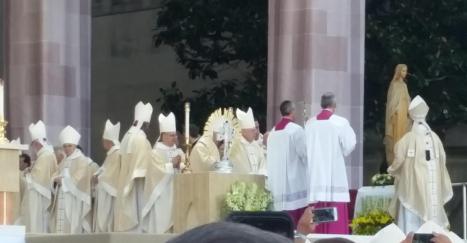
I took this picture at the end of the canonization Mass at the Shrine last week. Pope Francis is presenting a rosary to a statue of the Blessed Mother. I had a good seat with the other priests but got a mean sunburn for the effort. Nevertheless, the weather was pleasant.

The Church’s Stance to the LGBT Community

thBUDHL29UContinuing this discussion as to how we approach homosexuals in the Church, I would agree that we must acknowledge the whole person. We should resist the temptation, even if they encourage it, of defining them by their disorientation. People can hide behind labels. It is also easier to ridicule and cast aside people who are labeled. We see this in racial slurs and in the language for the enemy in wars. The Church would stand against anything that dehumanizes people or compromises upon the uniqueness of personhood. Everyone is loved. Signs or billboards that say God hates this or that people constitute a false propaganda against the kingdom of Christ. Everyone is someone’s son or daughter, brother or sister. They might suffer from a genetic disorientation, or from trauma or from the manipulation of others— but right or wrong or just confused, they possess an immeasurable value in the eyes of God. If they should return our love with venom in language and deeds, we must maintain the heart and mind of God on their behalf. We cannot accept or excuse sin. If we did we might become an accomplice and a collaborator in the sin of others. But we can love them, even as our views are attacked as prejudice and our words as “hate-speech.”

Pope Francis purportedly told the reporter for La Civiltá Cattolica this about gays: “When I meet a gay person, I have to distinguish between their being gay and being part of a lobby. If they accept the Lord and have goodwill, who am I to judge them? They shouldn’t be marginalized. The tendency [to homosexuality] is not the problem … they’re our brothers.” Many would take this to mean that a blind eye can be turned to the homosexual lifestyle. However, I think not. It is neither meritorious nor neutral. It is objectively disordered. Homosexual acts are morally wrong. I have spoken before about the distinction between evil acts and the conditions for sin. Only God can know our standing before him.

My priest friend has really surprised me with his vocal dissent on behalf of those living a homosexual lifestyle. Is he inviting intervention from diocesan authorities. He says that all are welcome at his parish and that includes lesbian, gay, bi-sexual and transgendered persons. He announced that they make no distinctions in their activities (for them or for their children).

He is right that we have no window into people’s bedrooms. But we are confessors and we have eyes and ears for what people promote in public. If same-sex partners kiss each other in church, wear the symbolic rainbow colors, sport tee-shirts and hats that promote an agenda… then I would say we know what is going on. It is disingenuous to say otherwise. It is true that we are all sinners. But the Gospel proclamation comes with an admonishment TO REPENT. We need to live our lives in accordance with the moral law. Jesus says that if we love him then we will obey God. The commandments and the moral law are not optional.

He questioned the MARRIAGE MATTERS campaign that was promoted by the Maryland Catholic Conference. I would not go as far, but also suggested that marriage has been in trouble for a long time, given no-fault divorce and rampant cohabitation.  He insists that heterosexual marriage is not threatened by same-sex civil marriages. Would he quietly bless these unions? I do not know. Part of me does not want to know.

There has been a push, first coming from associates of Bai Macfarlane, that the Church should disassociate herself entirely from civil marriages.  They claim it demeans true marriage as a lasting covenant in Christ.  The argument here is that what a secular society understands by marriage is radically different from the Church; thus, we should not confuse them by allowing priests and deacons to officiate or witness marriages as magistrates for the state.  Various countries require two ceremonies, one at the courthouse and another at the church.  Is this the direction in which we want to go?  It is true that same-sex unions and no fault divorce have seriously compromised the matrimonial institution.  I have another priest friend who suggests that we get out of the marrying business entirely.  Since couples marry themselves, he suggests that we let them get to it without involvement or duplication from the Church.  I disagreed.  It seemed to me that something of the understanding of marriage as a sacrament was at stake.

While we have some control over parish facilities, legal challenges have made matters extremely complicated for our Knights of Columbus halls.  Legally, they may be obliged to host receptions for gay marriages.  External symbols associating these buildings with the Knights of Columbus are being removed.  So-called gay marriages cannot be performed in Catholic churches.  We continue to teach in religious education and from the pulpit that marriage is a bond between a man and a woman.

My priest friend blesses homes as I do.  When I do so, I bring a plaque or picture of the Sacred Heart and we consecrate the home to the Lord.  I bless each room, carrying holy water and a crucifix.  I pray that the devil will have no place to hide, either in their lives or in their house.  My associate blesses homes where the residents may be cohabitating or in same-sex relationships.  Here again I have a grievance.  Priests should do nothing to condone sin.  It would do no good to bless such homes because the lifestyles are not conducive to the graces invoked.  This comes very close to blessing the couples themselves.  A house where the matter of mortal sin is regularly practiced stands more under a curse than a blessing.  Every house blessing is a type of minor exorcism.  The home will really be blessed by the faith and good works of the inhabitants.

Some of us wonder if the whole gay marriage movement might be a sham.  I read recently that a number of the first couples who took advantage of law changes in certain states have already filed for divorce.  Homosexuality is renowned for its transitive nature and multiple partners.  Will the Church and bishops change in how we regard it?  I cannot foresee how.

I am not an ogre.  We have homosexuals who struggle with their weaknesses and who display sacrificial love.  They attend Mass and regularly ask for God’s mercy.  I have seen them care for a beloved friend and for their parents in times of sickness and approaching death.  How do we remain resolute to our teachings and not hurt them?  How do we balance orthodoxy with ministerial compassion?  We have our work cut out for us.

The Price of Compromising on Homosexuality

thKID0AXT3A priest friend recently announced that he saw the Church’s way of speaking of those with same-sex attractions as wildly exaggerated, harsh and inaccurate. His assertion deeply bothered me. I am well aware that people have taken offense and even left the Church over the assessment that homosexuals and lesbians are sexually “disordered.” Often the response to this issue or individual revelations, even from pulpits, is a deafening silence. Homosexuality is joining contraception as one of those issues rarely raised from the pulpit. Privately, people increasing accept and love their friends, regardless. Young people not only accept it but see those who do not as bigoted. Older people are generally more judgmental, but often suspend this judgment when the gay person is someone close to them. Silence is no real answer and a fire-and-brimstone sermon will arouse anger and hurt. But the truth is the truth, is it not? My priest friend argues in a way that makes my head hurt. Often I think he is more like the Episcopalians, suggesting compromise on contraception, divorce and remarriage, and now homosexuality. As for myself, I have no desire to cause pain for others; however, I was ordained to speak for Christ and his Church, not for myself. The Bible and the traditions of the Church give a negative verdict to same-sex attraction and activity. While the orientation is problematical, sin only enters the picture with wrongful fantasies and immoral actions.

My priest colleague insists that I am very wrong. There is the unspoken insinuation that he thinks I am slow or a bit dull-witted. He wonders why I cannot see things his way. He argues that we all want to be faithful to Jesus and Jesus was all about bringing the outcast home. He indicts me as doing the opposite, behaving more like a Pharisee. He raises his voice, “Show me even one place in the Gospels where Jesus teaches anything about homosexuality! If it is so important, then why is Jesus absolutely silent about it?” He laments that our Lord spoke forcibly against divorce, but points out that there is nothing on this issue. My mind works differently from his. The Bible is more than the Gospels.  The writings of St. Paul are also part of the New Testament. The whole book is the inspired Word of God. The apostle mentions homosexuality as one of a whole grocery list of sins that would forfeit the kingdom. This is serious language. If this is a sin that can land a person in hell; then how can we truly love them and either permit it or exhibit silence? He spoke as the kids do— “But they love each other! How can love ever be wrong?” Love can be plenty wrong. This was not just love, but physical and sexual behavior. This can be added to love, or express love, but love can be very wrong. You have no right to love another man’s wife. A priest has no right to love and keep a mistress. A man has no right to take another man to bed. The same goes for women with women. They can love as parent and child, as siblings, and as dear platonic friends— but erotic and genital love takes it where has no right to go. My priest friend came right out and said it, throwing aside recent papal teaching and the universal catechism, “As long as the gay couple is living in a loving and committed relationship, there is no sin, nothing is disordered.” This was not a new opinion. I heard it from one of my old professors some thirty years ago, Fr. Charles Curran. This was one of the dissenting views that cost him his license and position at the Catholic University of America.

My position is very different. I would side with my late cousin, Fr. John Harvey, the founder of an organization called COURAGE. These faithful sons and daughters deal with their disorder not by acting out but by embracing a life of celibate love, prayerful meditation and service to the community. We should not pretend that vice is virtue. Rather, we should call our brothers to repentance, conversion and heroic discipleship.

It is true that a person should not be judged by one element of his life. However, the activists themselves are the ones who raise their orientation as the singular marker for their identity. An orientation and lifestyle is redrafted as a basic expression of who they are and as something protected by civil rights laws. When you say “hate the sin” but “love the sinner,” they get mad and take it personally. They make no demarcation between their sexuality and how they are accepted as persons. They are wrong to do this but it has become an effective tool for manipulating people and institutions in our society. When it comes to the Catholic Church, though, they bust their heads against a stone wall. Everyone else is giving in, but the Church still says that “what they do” is wrong. What they hear from the Church is “who you are” is wrong. I suspect my brother priest left his guard down to this sort of control tactic. They seek to turn the guilt back on us so that the Church will give in. While we can show special compassion to individuals, I see no way for Catholicism to backtrack on this.

Baptizing the Babies of Same-Sex Couples

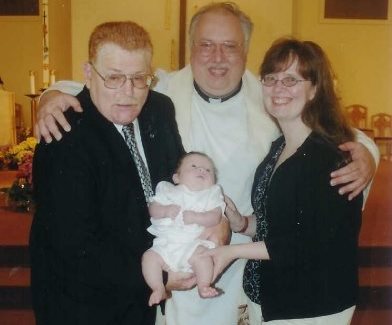
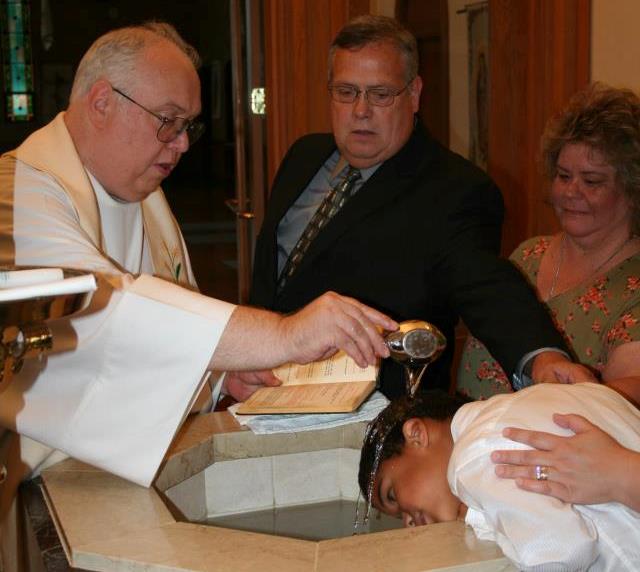
How should the pastor proceed when a same-sex couple comes forward, wanting their child to be baptized?

baptism

It is already the case that we get many heterosexual couples wanting their children baptized, even though they are married outside the Church or even cohabitating. In these situations, I will not absolutely forbid baptisms, but I will beseech the couples to do what they can to regularize the relationship. Of course, if the couples have broken up or were only casual with which to begin, then it would be madness to insist upon them marrying. The child should be the fruit of a bond that has blossomed, not an element to manipulate in favor of a marriage that would otherwise never occur. These couples sacramentally married or not, still signify bonds that are in accordance with natural law.

Same-sex unions violate both divine positive law and our understanding of what is and is not “according to nature.” There is no way to make it right unless the couple separate. I had a situation of this sort back in the 1990’s. The grandfather came to see me quite upset because his daughter and her female lover had asked to have their child baptized and the priest said no. They did not know where to turn. The grandfather begged that something might be done. I asked that he send his daughter “and her friend” to see me. I had to disguise the revulsion I felt in hearing their story. They wanted a child and so made an appeal to a gay man. He masturbated into a spoon and then the lesbian couple used the semen to amateurishly inseminate the willing partner. As it turned out, she conceived and they had a little boy. Sometime later I heard there was legal wrangling with the homosexual neighbor who wanted his rights as the biological father. It is my understanding that today many lesbian couples do not even know the source of the seed and the insemination is accomplished through fertility clinics.

Both of the ladies who came to see me were raised in the Church and had attended Catholic schools. The grandfather of the mother had told me that he would do all in his power to make sure the child received a Catholic upbringing. I was blunt with the women, but no one was in the dark about how difficult a situation this was. I asked them point blank, “Can you promise me that despite your relationship you will raise this child as a Catholic, teaching him his prayers and taking him to Mass? They were both polite and agreeable. They both promised. It was not a compromise with which I was happy, but the alternative would punish the child for the sins of others. It seemed to me there was sufficient hope that the child would be raised as a practicing Catholic. I ended up baptizing the child. A person’s salvation might be at stake. In retrospect, I cannot recall what was written in the baptismal registry. I think only the name of the mother was inserted. I did tell them that the choice they made would be difficult. Because of their union, they would not be welcome to receive the Eucharist themselves. Nevertheless, they were adamant that they would still go to Mass and make sure their boy would receive all his sacraments. I recommended that they quietly live their lives, respecting the moral teaching of the Church even though they felt unable to realize it in their relationship. Here too they were agreeable. They felt no need to make their baby the poster child for a cause. I instructed them about how baptism makes the child an inheritor of the kingdom of heaven, a member of the Church, an adopted son or daughter of the Father, kin to Christ and a temple of the Holy Spirit. I added that baptism washes away original sin and invokes saving grace.

Despite their dissent and self-imposed alienation from the Church because of their lifestyle, I urged the couple to pray daily, placing their needs and weakness before the Lord for healing. I wanted them to know that while I disagreed about their personal lifestyle choices; God still loved them and that the Church would not turn her back on them. While their living together was a public statement against Church teaching, it did not have to be a deafening announcement. I urged them to do all they could to avoid scandal, both for themselves and the Church. I felt they had been truthful with me. Otherwise, it is doubtful that I would have offered the sacrament. The godparents were Catholics who were living their lives wholly in accordance with the commandments and precepts of the Church. While always important, here it was absolutely crucial.

  • Today the situation is evidently becoming more common. Either through insemination or adoption, lesbians and homosexuals are becoming parents. Despite their battles with the Church, some still feel an attraction to her message of salvation and sacraments. They want to share this with their children. This is no longer a singular aberration. How do we proceed?
  • Do we have Archdiocesan policies to deal with these situations? Should the Chancery be consulted on each and every case that comes forward? I know the local policies in Washington stipulate that there should be two godparents and that they should be representative of each gender.
  • Can a same-sex family structure constitute a true family?
  • Can parents perpetually in a state of mortal sin genuinely witness to the faith and Gospel?
  • Given the canon law problems, should registries list only one partner or can both be acknowledged?
  • It would be easy enough to list the mother alone but in adoption, there is the claim of two mothers. Should one be listed in the side annotation?
  • We were recently informed to stop listing children as legitimate or not legitimate. Should there not be remarks about a same-sex union?
  • As for liturgical adaptation, will we need a special liturgy to get around the language of a mother/wife and father/husband?
  • Priests will routinely omit the blessing over the mother and father when couples are not married in the Church. Is this justified and should the blessing be omitted over same-sex couples? I would think so.
  • While it is probably good to seek out Archdiocesan consultation, would priests need higher permission to perform such baptisms?
  • Do we have programs in place to offer pastoral care to these children and households after baptism?
  • Would these children be welcome in our Catholic schools?

I can well understand that one answer would not fit all. There might sometimes be little or no hopeful sign that the responsibilities that come along with baptism would be fulfilled. Some treat baptism like magic or as an empty cultural rite of passage. Activists might even exploit a request for baptism to ridicule the Church or to make a political statement. This is where it becomes all the more problematical.

Priests are supposed to be good stewards of the sacraments. And yet, many of us are fearful that we cannot even safeguard the Eucharist at Mass because of policies that place a greater weight on public scandal than actual spiritual readiness and ecclesial unity. Here too, there may be times that being a good steward will mean saying no and facing repercussions. Is it a passive capitulation to just throw up our hands and leave it to God to straighten out?  I suspect so.

Can a Priest Deny Sacraments to a Gay Man in the Hospital?

The news was on fire this morning about a DC priest who purportedly refused to give Last Rights to a gay heart-attack patient at the Washington Hospital Center.

Oh boy, here we go again! This man condemns the priest but we only have his side of the story.

I suspect there is a lot more to the story than what we are hearing.  A priest was requested and Father Brian Coelho came to the bedside of the patient, Ronald Plishka.  The priest followed the ritual by offering the Sacrament of Penance prior to the Anointing of the Sick and Holy Communion.  If a patient is unconscious, the priest will often presume contrition and a desire for the sacraments, giving absolution even without auricular confession.  In this case, the patient was alert and responsive.  The patient seemed to want to make small talk and remarked about how as a homosexual person he was so happy that the Pope was accepting of gay people.  But he next asked if this admission bothered the priest, almost as if he were baiting him.  The priest said it did not but offered to pray with him.  Nothing more was said about Extreme Unction and Viaticum.  While left unsaid in the article, this intimates that this dialogue took place as part of a Confession.

Because the disagreement probably happened during Confession, the priest is silenced by the seal and cannot share his side of the story. Indeed, he would face automatic excommunication if he says anything… something I hope that Church authorities appreciate. Even they cannot question the priest.

Instead of a civil conversation, the patient rejects the offer of prayer and tells the priest “to get the [deleted] out of here!”  That in itself probably demonstrates an improper disposition for God’s mercy.  Then the doctors came in to calm him down.

We should pray for all the parties involved. 

Re-established Parish Council at Holy Family

The following are the members of the re-established Pastoral Council here at Holy Family: Mrs. Ida Belinky, Miss Cheryl Blake, Mrs. Cynthia Bowie, Mrs. Eleonora Foronda, Mrs. Marsha Hansen, Mr. Joseph Hebron, Mrs. Melissa Hicks, Mrs. Laurel McDonald, Mr. James Murry, Mr. Andres Padilla, Mr. Brian Payne, Mrs. Janet Renze, Mrs. Monette Roxas, and Mr. Michael Turner. This is the maximum number of members permitted by the new Archdiocesan guidelines (15 counting the pastor). The presentation and installation of members was held on Sunday Mass at 9:30 AM on January 26, 2014. Absent on Sunday were Ida, Ellie, Marsha and Joe.

150805_10151922266953435_535483866_n

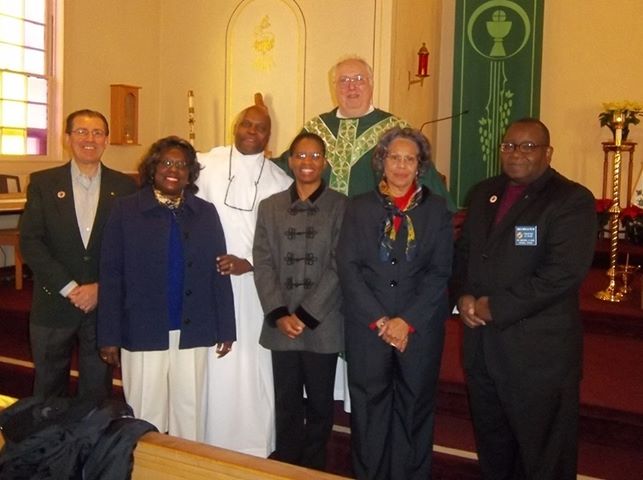
Pictured here with me after Mass are Andres, Cheryl, Brian, Melissa, Laurel, and Jim.

Heated Conversation Over Annulment Article

wedding125

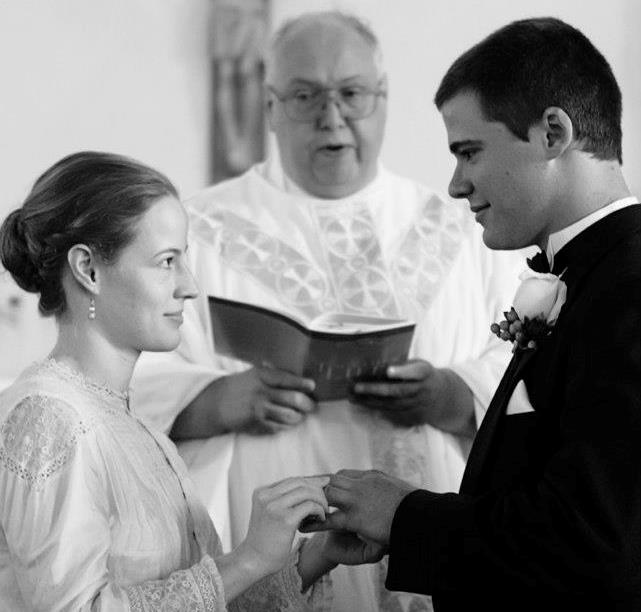
This morning I was alerted on Facebook to a commotion on the Internet regarding an article by a brother priest of the Archdiocese of Washington.  Another priest, Msgr. Charles Pope, who authors the Archdiocesan blog noted:

“I was saddened to see that a priest of my Archdiocese wrote a rather harsh article on Church Marriage teaching. I do think we need to look to clarify the annulment process but I guess I would reform it in very different ways than Fr. Peter Daly says. Anyway, Ed Peters does a pretty good job here of answering my brother priest.”

I said my prayers, offered Mass and then tracked down the article and Dr. Peters’ response.  CATHOLIC WORLD REPORT aligned itself with Dr. Ed Peters as did Father John Zuhlsdorf on his blog.

Doctor Peters versus Father Daly

The first thing that Google found was the site for the canonist Dr. Edward Peters.  He offered a stinging rebuke to Fr. Peter Daly’s NATIONAL CATHOLIC REPORTER article on reforming annulments.  While the issues at stake were vitally important, saying that it was harsh would be an understatement.  Castigating my brother priest as sarcastic and childish, he critiqued Father Daly’s article, saying:

  • He violates the “heart of Church teaching on the permanence of marriage.”
  • He is “repackaging common historical errors, irrelevant platitudes and bad theology.”
  • His dismissals of the juridical are “complaints about Christ’s economy of salvation.”
  • Fr. Daly does not want reform of annulments but their “abandonment.”

Wow, regular readers are aware that I routinely struggle with a pugnacious manner of my own, but goodness, Dr. Peters certainly pulled no punches!

I guess I was going about this backwards.  What did my priest friend say that merited such rebuke?  I tracked down Fr. Daly’s article at the newspaper site.

Oh boy, what can I say?  As another parish priest, I will share my (personal) position, hopefully with an ample supply of charity.   So what did he write to cause all the Internet chatter?  The article is entitled, “Pope Francis Should Consider the Church’s Outdated Annulment Process” (January 13, 2014) by Fr. Peter Daly.

True Sensus Fidelium

He admits that the catalyst for the article was the recent request from the Holy See for input in the upcoming special Synod on the Family.  Along with many others, he is excited by the apparent new openness of the Magisterium to hear from the rest of the Church, the rank-and-file priests in the trenches and the laity in the pews.  (Some critics are arguing that the survey was only addressed to the bishops but this is not strictly true.  The bishops sent the questions to priests and the faithful for collaboration.  Several dioceses placed the questions online for quick electronic responses.  Deadlines were give clergy and laity as to when to send in their answers.)  He stamps this change of direction as a miracle and writes:

“In our top-down hierarchical church, the concept of the sensus fidelium has been pretty much a dead letter since the Second Vatican Council. Usually Rome talks and we listen. But now he wants to hear from us. Thank you.”

Certainly, there is much to be said about listening, but we all still have different roles to play and ultimately the response of sheep to a shepherd is that of obedience.  As for the sense of the faithful, we must be wary of the fact that many if not most today are formed more by a secular, hedonistic and materialistic world than by the Gospel.  Only those believers who maintain the core truths, worship, and conscientiously live out their discipleship are truly agents of sensus fidelium.  You cannot transmit or develop what you really do not have.  I would suggest that fallen-away uncatechized Catholics and the majority of dissenters do not qualify despite the fact that someone spilled water over their heads decades ago to appease aging grandparents.

The Protestant Practice & the Orthodox Model Fall Short

Father Daly takes the survey from Rome and narrows his focus to the question of annulments.  His response is blunt:  “scrap our current annulment process and look east to see what our Orthodox brothers and sisters are doing.”  As a priest in good standing, he rightly asserts that Jesus did not approve of divorce and remarriage.  (I have often been amazed at the mental gymnastics that certain Protestant churches must employ to get around this restrictive teaching, especially in the Gospel of Matthew.  They make wiggle-room where there really is none.  But is Father Daly trying to force wiggle-room?)  He also knows full well that the current annulment process is an effort to respect this teaching while showing compassion to our people.

He brings up the Orthodox churches of the East which allow second Penitential Marriages as a possible solution.  But many of us fault it as a negative symptom of national churches.  Remember that Roman Catholicism was willing to allow the entire English church to slip away over the issue of marital permanence and King Henry VIII.  Would we now backtrack and say we were just kidding about the gravity of this issue?  Neither Sir Thomas More nor Bishop John Fisher can be given back their heads; and neither can we really turn back the clock on licit and valid marriages.  Along with certain Protestant notions about faith, authority and Scripture that are trying to get a foothold in the Eastern churches, especially those transplanted into the West, this issue of second marriages may be a greater hurdle to ecclesial reunion than either the Filioque Clause or Papal Primacy.

The annulment process might need to be reworked, but I do not believe the Orthodox provide a viable alternative.  Although not as shallow as our Anglican friends, the Orthodox might hide a false caricature of marriage behind elaborate ceremony and the pretension of sorrow.  True contrition means reform or change of life.  The so-called Penitential Marriages just give the couple their own way while feigning some degree of anxiety in conscience about it.  Father Daly insists that the matter should rest entirely with one man, the priest on the ground.  But he and I know that priests are not the same and there are some who may wrongly replace the Gospel with their own opinions and sentiment.  The Tribunal seeks an objective reality.  Is the prior bond a true or false marriage?  There are the judges, an advocate and the defender of the bond.  Beyond these five or more people, the judgment rendered will be reviewed again by another Church court.  They study the facts of the case and hopefully are neither susceptible to the manipulation of money nor to a false compassion.

I must admit that I am devilishly amused by Father Daly’s Episcopal priest-friend finding delight that the Catholic Church’s stand on divorce and remarriage will always give cause for the “Episcopal church.”  The shadow of the reformation still falls upon us.  His friend may be right.  Indeed, I would add (perhaps without charity) that until the final judgment, there will be a place for the Episcopalian church so long as sinners cling to a counterfeit priesthood and Mass, the fantasy of priestesses, the blessing of same-sex unions, the promotion of contraception and tolerance for abortion, the marrying of adulterous couples and the reception of renegade Catholic priests who want to bed their paramours.  Goodness me, I really have to work harder on my ecumenism!  But I would rather be a member of the Church that goes to heaven than the “church of anything-goes.”

The Pastoral versus the Legal?

Father Daly writes:

“The problem with the process in the Roman Catholic church is that it takes what ought to be a pastoral matter and turns it into a legal one. It is complicated, often unfair, and frequently unintelligible to the participants. Some tribunals are easy. Some are hard. It can be very capricious.”

(Is the use of the small “c” in Church an editorial liberty taken by his newspaper?)  As a civil lawyer, Father Daly has a point.  The subjective elements in how many cases are handled can be very worrisome.  Although I would usually be cold water to Father Daly’s hot, we agree upon this much.  The annulment process is not easy.  Formal cases require people to revisit all the pain and betrayal that poisoned their unions.  Adequate grounds have to be discerned in the muddle of mutual allegations and tears.  Witnesses are gathered.  Interviews are given.  Essays are written.  Then a thousand dollars and a year later a verdict hopefully emerges from the backlogged Tribunal.  That verdict is then reviewed by a second court that can approve or send it back.  Most applicants I have assisted seem to get declarations of nullity, but not all.  Sometimes I have to scratch my own head about the grounds.  But I am not a canon lawyer and would not want to be.  I pray for those who must spend so much of their lives and ministry ruminating over the dark side of life and marriages gone sour.

Father Daly desperately wants to be welcoming to those attracted to Catholicism.  While I have serious disagreements with him, he obviously cares and grieves about those estranged by marriages gone bad and new bonds that are not recognized.  My heart also bleeds for the few who wanted to save their marriages— angry and weeping daily at what they see as complicity in allowing their spouses to marry again in the Church.  Annulments are very staggering in principle and practice.  We are saying that couples previously regarded as married, even before a priest in Church, are not really married and that there is no sacrament.  Some defect invalidated the meaning of their marital act (sleeping together, i.e. sexual congress), having children and living a common life.  They said in their vows before God and to each other that they would forever be faithful and endure all hardships for each other.  But now we hear that someone lied or was incapable of living out the vocation or was mentally ill or had no intention of being faithful or practiced deceit or really did not understand what he or she was doing (after a six month wait and pre-Cana instruction).  One or both of the spouses want out.  It may be a year or twenty years later, but they feel entitled to start over.  Father Daly and I both help such people to begin again, although I am left troubled in conscience by many cases.  People even joke these days, “Promises are made to be broken.”  However, I was raised to believe that vows were made to be kept— in marriage and in the priesthood— even unto the Cross.

I certainly understand the RCIA dilemma for divorced and remarried candidates but there is no good way around it.  Fr. Daly argues that “All the annulment process does is put a road block in their way to entering the church.”  I would contend instead, that the barrier is their failed marriage and their attempt to bypass divine law in marrying again.  The annulment is the Church’s way of respecting the indissolubility of the sacrament while trying to help a couple out of the mess of their own making.  The process has its faults and is not perfect.  But, we would have them authentically married and delivered from the bondage of grievous sin.  It is not just or charitable to ignore a problem that damages their relationship with God and his Church.  They may not subjectively be aware of how much they need this healing.  We should not side-track or halt this process.

Speaking about non-Catholics having to get annulments before entering the Church, he writes that the process is “painful and pointless.”  I have to admit that this use of the word “pointless” makes me cringe.  It may be that the good Father is employing a degree of hyperbole.  He writes:

“They have to find witnesses, get records, take statements, dig up old contacts, and open old wounds. All of our language is legal, not pastoral. We speak of petitions, tribunals, witnesses, advocates, petitioners, defendants and evidence. It is Kafkaesque. It turns pastors into bureaucrats, to no purpose.”

I certainly appreciate his frustration and empathy for the people he serves.  But I would not say it is pointless or lacking purpose.  How else might we make something that is wrong into something right?  It is a difficult business but life is hard and frequently a real mess.  There was a time when divorce was illegal and annulments were rarely or not granted.  I am sure that Father Daly would not have us backtrack.  At least we are trying.

Father Daly says that he has taken “the pastoral route” for the elderly and terminally ill— in other words, he has invoked internal forum.  I have no comment about this.  It is the business of the confessional.  As long as a couple is not engaging in sexual congress and there is no danger of scandal, the priest may have certain discretion.  But I would be very careful about how far I would stretch this pastoral stratagem.  Dr. Edward Peters seems to read more into it; he wonders what he means and warns that if he married such people then these rites are “gravely illicit” (Canon 1085 § 2), “possibly invalid” (Canon 1085 § 1) and/or “sacrilegious” (Canon 1379).  He states that it would be an “abuse of ecclesiastical power” (Canon 1389).  I suspect that all Fr. Daly is doing is helping sick and elderly people to face their last days in right relationship with God.  I would not make more of it than that.

God Opposes Divorce & Remarriage

While all must follow natural and divine positive law, only Catholics are obliged to follow “man-made” Church laws.  (Of course, some Church laws reflect God’s explicit providence and cannot be abrogated.)  Heterosexual marriages between Protestants are acknowledged as sacraments, no matter if witnessed before a minister or civil magistrate.  Marriages with those not baptized are natural bonds but are also generally regarded as fully binding (with the possible exception of referral to the Pauline and Petrine privileges).  Homosexual unions between anyone, anywhere, are not true marriages.  A Catholic must pledge his or her marriage vows before a priest or deacon.  This law could change but it is unlikely and probably unwise to tamper with it.  Divorce is forbidden by Jesus (Matthew 19:3-9):

Some Pharisees approached him, and tested him, saying, “Is it lawful for a man to divorce his wife for any cause whatever?” He said in reply, “Have you not read that from the beginning the Creator ‘made them male and female’ and said, ‘For this reason a man shall leave his father and mother and be joined to his wife, and the two shall become one flesh’? So they are no longer two, but one flesh. Therefore, what God has joined together, no human being must separate.” They said to him, “Then why did Moses command that the man give the woman a bill of divorce and dismiss [her]?” He said to them, “Because of the hardness of your hearts Moses allowed you to divorce your wives, but from the beginning it was not so. I say to you, whoever divorces his wife (unless the marriage is unlawful) and marries another commits adultery.”

Nevertheless, there is the irony that no Church annulment case can precede until after a civil divorce.  While some authorities, even clergy, would wrongly argue against the view that divorce is a sin— such is the case, at least for the party or parties who damage the bond and force the separation.  Spouses have vocational obligations or responsibilities toward one another.  Separation does not immediately dispense culpability for marital duties.  Divorced persons should not date.  Rather they should live chastely with no corner given to possible adultery.  Nevertheless, in practice, most annulments come after couples are civilly married and are sexually intimate.  The mess can get messier.

The husband as head of the home expects a certain level of obedience.  That is why he is also regarded as the final authority when it comes to the discipline of children.  The wife must be respected as the heart of the home.  I tell every man who gets married, that his primary duty in life is to make his wife happy.  I tell the ladies that their devotion to the husband must be that of a best friend, and that she is literally his home.  Together they are responsible for their common life, with all its struggles, joys, sorrows, affection, accomplishments and failures.  They are ordered by nature and their vocation to give intimate friendship to one another where there is the satisfaction of sexual passion and openness to procreation.  It is the duty of a husband and wife to become lovers and parents.  The husband is commanded to treat his wife in a generous and honorable way.  They must work together as partners in insuring the goods of the family, materially, emotionally and spiritually.  Husbands and wives are called to be help-mates to one another.  It is grievously wrong to steal the affection and support owed to a spouse and to give it to another.  Mutual respect and esteem should properly be realized.  Indeed, if there is a separation, one of the duties is not to get married again.  A man who walks out on his wife deprives her of his support and a possible family.  Many such women in the time of Jesus were then forced into adultery to find a means of taking care of themselves.  A woman who abandons her husband will deprive him of the friendship owed him, including the physical intimacy to which men are strongly oriented.  How many stories have we heard about men who turned to mistresses when their wives became to their overtures?  Women who use sex (deprivation) against innocent husbands sin mortally.  This would also apply the other way around.  A woman neglected by her husband might be tempted to fulfill her yearning for affection and friendship elsewhere.  Divorce is not recognized by the Church.  Neither separation nor divorce exonerates or frees the spouse from the various inherent duties of marriage.  While extending marital benefits to the spouse would become impossible or absurd in breakups; still no such recourse can be made to others to procure or to offer these benefits.  Doing so is the commission of adultery, even if tender and loving.

An Administrative Law of the Church for Good Order

The “loophole” for Catholics is really nothing of the kind.  Catholics married outside the Church are not married.  That is why a declaration of nullity is short paperwork.  When convalidations take place we are at pains to emphasize that the new ceremony is not a renewal of promises previously made before a Justice of the Peace.  Instead, even if only five people are in the chapel, this convalidation is the true marriage— not the big expensive affair at the rented mansion or before the judge at the seaside garden of a rich friend.

Fr. Daly laments that these quick annulments or declarations seem unjust.  I can top this.  A couple came to me where the bride-to-be was the “other woman.”  She joked that she stole the Catholic boy from a life of sin so that he could marry in the Church.  This woman deliberately made a play for the civil husband of another woman.  Now she justified it in light of the quick declaration of nullity from the Archdiocese. Her attitude sickened me.  I felt compromised by my association with them.

The priestly critic sees no sense in Church legalities about marriage.  But it is not silly.  The Church has a right to regulate her sacraments.  Given that society and the Church no longer share a common vision of marriage, it seems to me that the Church’s legal appreciation of marriage is more important than ever before.  The pastoral cannot trump objective truth.  The priest might want to give the couple a second chance but it is not for him to decide.

The canonist is not dealing with law like a civil lawyer.  Society today deems law as capricious and open to constant revision.  The Church lawyer must acknowledge laws for the good order of the Church, divine positive law and natural law.  The Church could remove the requirement that Catholics must be married before a priest or deacon.  However, it would only complicate the question about true and false marriages.  But the Church cannot dissolve marriages simply on the say-so of forgiving and caring priests.  The priest has the power to absolve sin.  He does not have the authority to redefine right and wrong in marrying people who are already married, divorce decree or no decree.  If God has made a couple one flesh, and it is fully a sacramental reality, then neither a parish priest nor the Pope has the authority to say otherwise.  The priest is a servant of the Gospel, not its master.  We stand under God’s Word, not above it.  When it comes to marriage we must not by the lie that annulment is a Catholic divorce.  The only reality akin to divorce in regard to the Catholic understanding of marriage is death.  Couples are married,  “until death do they part.”  Annulments are simply a limited means of intervening in cases where a prior bond is determined in justice not to be fully real and binding.  If genuine, no act of charity and compassion could intervene.  It is here that Dr. Peters would interpret Fr. Daly’s argument as one against marital permanence.  The good priest acknowledged Christ’s teaching and the understanding of the Church; however, his solution would utterly compromise the doctrine of marriage.

The Plight that Faces Us

Father Daly writes:

“Nobody is deterred from getting divorced and remarried by our annulment process. But many people are deterred from coming into or back to the church by our annulment process. It is spiritually counterproductive.”

The numbers may be few but I would not say “nobody.”  I have known people who broke off relationships because they loved the Lord and his Church more than a romantic entanglement.  Admittedly I am confused by some of my brother priest’s opinions.  People may not understand the annulment process but all we are doing is asking people to keep their promises.  Everyone on their marriage day thinks with the Catholic Church and they vow to be faithful to each other, for better or worse, for richer or poorer, until death do they part.  It is only later when something goes wrong that people want out.  If we close our eyes and mouths to believers who marry outside the Church then do we become accomplices in their sin?  We need to invite them into seeing the annulment process as a stage of healing.  We must also invoke courage and strength when no annulment is possible and any second or third marriage attempt is a form of adultery.  Filling our churches with couples locked into lives of mortal sin is not the answer and would also be “spiritually counterproductive.”

Closing Thoughts

I have long since lost the argument in the Archdiocese about withholding communion, particularly to the enablers of abortion.  I have personally wept over the sacrilege against the sacrament and the prospect of bringing the full weight of judgment to communicants ill-disposed to receive our Lord.  Father Daly writes:  “To our faithful, the real scandal is not the fact that divorced and remarried people might receive Communion, but that sincere people who really desire the Eucharist are kept from it by a legalistic, complicated, capricious and alienating annulment process.”  I think the world of this priest, and I could never challenge his legal knowledge and writing skills.  He was ordained a month after me back in 1986.  He is a beloved and successful pastor.  Family members attend his church and adore him.  He remains in my daily prayers.  I see many of the problems and issues he sees; but I cannot agree in all his assessments and proposed solutions.  I am a parish priest and would not trust myself to write off a command from the mouth of Christ.  I could not do it.  As for Holy Communion, I urge everyone to go to Mass; however, I also ask that each of us reflect upon our worthiness for the Eucharist.  If we are living in an objectively immoral situation and mortal sin, it would be sacrilege to take the sacrament.

The Mass is also a testimony to a marriage banquet.  Christ is the groom and the Church is his bride.  Jesus will never break his promises to his bride.  We should keep our promises.  Christ who is ever faithful was brought to his Cross by all our broken promises.  Yes, even in the face of abuse, betrayal and abandonment, we should remain faithful.  I suspect that the answer for which we are looking in this debate rests with an imitation of Christ and a deeper awareness and resolve to practice sacrificial love.

Question 4 – Extraordinary Synod on the Family

4. Pastoral Care in Certain Difficult Marital Situations

a) Is cohabitation ad experimentum a pastoral reality in your particular Church? Can you approximate a percentage?

Not only is it a reality, the practice is reaching beyond “ad experimentum” in becoming a state of life all its own. Sure, there are couples who “shack up” to see if they are meant to live together, but many cohabitate for years without getting married or even intending to get married. Society, itself, is unsure how to deal with the phenomena. For instance, laws for common law marriages are falling by the wayside. It created situations where couples were regarded as legally married while they, themselves, thought they were not. I suspect that some of these couples suffer from ambivalence about marriage or a fear of the lasting commitment. Of course, the epidemic of divorce may also be a catalyst. I have heard couples say that they want to be sure and that they do not become another negative statistic. Ironically, those who cohabitate before marriage do not seem to fare as well as those couples who are virginal and/or chaste; why is this? I would submit that cohabitation grants none of the spiritual safeguards for marriage and thus is not analogous. There are no graces from the sacrament; indeed, the couple are most probably living in a state of mortal sin. Such cohabitation presumes that the couple are engaged in sexual activity or fornication. Indeed, some couples live together because it makes sexual congress easier. Others live together because they take refuge in each other within an increasingly cold and disconnected world. Men and women are lonely and afraid. Even though they are not married, they cling to each other for support and companionship. Unfortunately, mortal sin is no adequate preparation for a grace-filled marriage. Couples say they love each other… but not enough to wait and not enough to preserve the holiness of the beloved. This selfishness and mind-set is a terminal kernel.

I should add that when these couples come to the priest and ask for marriage, they are frequently treated the same as chaste couples trying to do right by God, the Church and themselves.  A girl can be pregnant but she wants to wear white.  But if she is living with her boyfriend and having sex, it becomes a broken sign.  We can recommend separation but sometimes the length of the relationships and the logistics (including finances) of cohabitation would make this difficult.  I have them stay apart the night before the wedding and require them to go to Confession.  I would recommend that we marry such couples but do so in a way that minimizes the scandal.  They could offer their vows in a chapel of the rectory or in a small service with less than a dozen friends.  We could let couples know that cohabitation would cost them the marriage ceremony of their dreams.  These are precisely the people who need to ponder more the inner realities of marriage and less the external trappings.

b) Do unions which are not recognized either religiously or civilly exist? Are reliable statistics available?

Is this question for real? Of course, they exist. Indeed, this year for the first time in the United States there are more couples cohabitating than married.

“About a quarter of women move in with a romantic partner before the age of 20, and more women than ever live with a partner before they get married, according to a new report by the National Center for Health Statistics. Nearly half of women (48 percent) between the ages of 15 and 44 lived with a partner before getting married between the years of 2006 and 2010, an 11 percent jump since 2002 and a 41 percent jump since 1995. Less than a quarter of so-called “first unions”—meaning a first marriage or first cohabitation—were marriages during that span. In 2002, 30 percent of “first unions” were marriages. According to the report, 1-in-5 women became pregnant during their first year of premarital cohabitation, 40 percent of first marital cohabitations transitioned to marriage within three years, and 27 percent dissolved within five years. People are also prolonging marriage for longer after moving in together, according to the report. In 1995, the average length of a cohabitation that transitioned into marriage was 14 months—between 2006 and 2010, it was 21 months.”

c) Are separated couples and those divorced and remarried a pastoral reality in your particular Church? Can you approximate a percentage? How do you deal with this situation in appropriate pastoral programs?

Again, of course this is a reality here in the U.S. and the Archdiocese of Washington. It was hoped that the six-month waiting period before marriage, and the accompanying preparation, might help. But the divorce issue still plagues us. The problem’s answer is shared Catholic faith and values. If couples worship and pray together, a Gallup poll shows that all but 2% stay together. And even that 2% might be an aberration from false responses. Couples that do not pray face a 50% plus divorce rate. This truth speaks for itself. If a couple practices sacrificial love and places their marriage into God’s hands, then his grace will sustain them. If they ignore his help, they are more liable to fail. As for percentages in the parish, I cannot say. Many no longer even tell the priest. This includes those who have remarried outside the Church. This complicates matters and makes for embarrassing situations among volunteers for parish service or for membership in fraternal organizations like the Knights of St. John and the Knights of Columbus. Like most priests, I have no specific parish program to deal with this issue. The priest will offer counselling if they come forward and assist in an annulment and/or subsequent convalidation. The issue is delicate and sometimes frightfully complicated. I had a situation of a couple that wanted to get married in the Church. They were both Catholic but the man was previously married outside the Church in a civil court. The Church would not recognize that bond but it lasted some years and they had children. The man procured a Declaration of Nullity Because of Lack of Canonical Form. There was nothing really stopping the second (true) marriage. However, as the priest I felt corrupted by the situation. He had abandoned his prior spouse and the girl he wanted to marry was “the other woman” who bragged about stealing him from his civilly married spouse. Married or not, it was a sickening situation!

I know that there are programs in the Archdiocese to assist troubled marriages, like Retrouvaille. There is also Marriage Encounter.

d) In all the above cases, how do the baptized live in this irregular situation? Are they aware of it? Are they simply indifferent? Do they feel marginalized or suffer from the impossibility of receiving the sacraments?

Some drop out regarding religious practice. Others act as if it is no big deal. Those who take Church teaching seriously feel guilt but there is resentment that they cannot receive absolution and the Eucharist. They frequently want to be treated as regularized when they are not. Some priests have told them that it is up to their conscience as to receive Holy Communion or not. They might even shop around for priests tolerant on this point. Of course, guidelines in the Archdiocese of Washington are currently rather permissive and priests are generally not allowed to withhold the sacrament. (Although many of us regularly substitute a quick blessing gesture, something in itself which is not proper to the communion line but which helps to avoid a negative confrontation.) I have encountered a few over the years who were unaware of Catholic marriage law, but only a few. There has also been the wrinkle of renegade rent-a-priests who posture as clergy in good standing and witness marriages without faculties. I have encountered two cases of this in the last two years.

e) What questions do divorced and remarried people pose to the Church concerning the Sacraments of the Eucharist and of Reconciliation? Among those persons who find themselves in these situations, how many ask for these sacraments?

They all pretty much ask for the sacraments or are upset when they discover that they should refrain. That is why they see the priest. The majority drop out and probably do not care. They will not make the effort to talk to a priest. Unfortunately, everyone who goes to Mass these days takes the sacrament. Ushers have to be careful not to intimidate such people to come up so as to avoid shame.

f) Could a simplification of canonical practice in recognizing a declaration of nullity of the marriage bond provide a positive contribution to solving the problems of the persons involved? If yes, what form would it take?

There has already been criticism of the many annulments granted in the United States. I suspect simplification would make the problem worse. Annulments must always be in conformity to the truth. There are some situations that cannot be fixed.

g) Does a ministry exist to attend to these cases? Describe this pastoral ministry? Do such programs exist on the national and diocesan levels? How is God’s mercy proclaimed to separated couples and those divorced and remarried and how does the Church put into practice her support for them in their journey of faith?

I think we need to do more to emphasize the value of the person who is not married or who through no fault of his or her own must now live as a single person after a failed marriage. Couples are not made up of two halfs that are made whole. We are complete unto ourselves. Not all stories in this world end happily. It is then we seek solidarity and consolation in Christ’s saving Cross.

Although not always conveniently located, there are also groups for Divorced and Separated Catholics. However, I am not certain that these always constitute the proper pastoral response. I have known divorced people becoming romantically inclined with people who share their hurts and disappointments. Instead of encouraging separated Catholics to mend fences, it makes the breaks permanent. Couples start dating when in the eyes of the Church they still belong to their lawful spouse. The Church, after all, does not recognize divorce and the person or persons who precipitate the break commit sin. This last point is either glossed over or denied, even by some assisting clergy. Are we encouraging fornication, cohabitation and adultery with our support groups for separated and divorced Catholics? Why is it that we do not encourage them to be chaste and content on their own?  Do we really want a breeding ground for romance for this group?

Nothing of Immaculata HS is Left

See article: Demolition in Full Swing at AU Tenley Campus

Dunblane, built as a private estate in the first half of the 19th century, was home to a hunt club in the late 1880s and later an elementary school in the 20th century. Capital Hall was the former site of the Immaculata Seminary, established in 1905 by the Sisters of Providence. It subsequently became Immaculata Preparatory School and then Immaculata High School, which closed in 1986.

The sisters were in a terrible situation. They sold the place for a couple million and the president told us at a dinner afterwards that he felt bad they took the first offer. American University was prepared to pay ten times as much. The religious community had not seen a vocation from the school in a dozen years. I think we could have saved the school. Alumni and families could have purchased it. Moving the campus under new management to Maryland was a farce. The tradition was broken. Poor Msgr. Boland (the Chancellor now a retired bishop) took a lot of heat. An angry person took an ice pick to his car. He was hardly in the loop. The sisters were determined to sell. Many were sick and aging. A great high school died that could have been salvaged. It still saddens me. I recall the last graduation at St. Ann’s next door. Now even the shell is gone.

The Marriage Crisis

I regularly follow the wisdom on Msgr. Charlie Pope’s blog for the Archdiocese of Washington.  Recently, he posted on the following question:  “In the wake of the Supreme Court decisions of this week, are we coming to a point where we should consider dropping our use of the word “marriage?”  A number of Catholic voices are arguing that we should disengage ourselves both with the word “marriage” and from allowing clergy to function as civil magistrates in witnessing them for the state.  Certainly I am sympathetic with what they hope to accomplish.  However, I am already on the record, from past discussions, as opposed to such a retreat.  Both sides can play word-games.  Towards the end, he poses a second question, “Should the Catholic Bishops disassociate Catholic clergy from civil ‘marriage’ licenses?”  Again, I appreciate the underlying reasoning; we want to avoid guilt by association and giving apparent approbation.  My fear is that any such move would be contrary to a well-ordered or structured society (which is a good in itself).  It would also constitute a retreat that opponents in the public forum would exploit.  It seems to me that our laity would bear the blunt of the suffering and challenge that would come from such a move.

thCAB3DHYP

I am not blind to the dire crisis we face.  It is true that marriage as an institution has been largely redefined by our society.  The movement on behalf of same-sex unions is a case in point; of course, if left unchecked it will not stop there.  Next we will see the return of polygamy.  Despite the many scandals faced by the Church, there are even depraved people pushing for pedophilia and pederasty.  There is already a bizarre effort in Australia for a man to marry his pet goat, the degradation of bestiality.  The U.S. bishops reminded us in their failed initiative that marriage is in trouble.  While I am hesitant to criticize our holy shepherds; the fact is that marriage has been in trouble for some time now and we were largely silent.  Contraception nullifies the consummation of the marital act.  Millions of abortions seek to erase through murder the fruit of marital love.  No-fault divorce allows for quick separations and remarriages.  Prenuptial Agreements insert doubt against the vows and a lack of trust from the very beginning, thus making those marriages null-and–void.  Couples fornicate and cohabitate, essentially saying that you do not have to be married to have sex.  Well, when you separate sex and marriage, you also set the stage for infidelity and adultery.  Once sex is disconnected from marriage it is very hard to reattach it with any kind of necessity.  Our society is saturated by an erotic and pornographic media that destroys courtship and sexualizes relationships.  This dilemma is so pervasive that the inner person has lost any sense of propriety or decency.  Viagra gives the old stamina to neglect their coming judgment and condoms give the young license under the illusion of protection.  Wedding dresses that once expressed modesty and femininity are increasing replaced with skimpy gowns akin to those on television dance contests.  Ours is the generation where all rights, even the right to life, are supplanted by the emerging and absolute right to have sex with anyone regardless of promises and unions.  The children are caught up in the middle of this whirlwind.  This is so much so that we even dress our little girls like the prostitutes that walk the street.

Much Ado about a Word

Msgr. Pope makes the accurate observation that the Church and society-at-large mean very different things by the word, “marriage.”  Of course, this is also the situation with many other terms as well.  While language is fluid and hard to control; it can certainly be manipulated.  Look at the word GAY.  This expression for joy or happiness has become the source for giggling when used in old songs.  It has now been exclusively usurped by the homosexual community.  Another word in peril is RELATIONSHIP.  When we hear teens or young adults use it these days, they generally mean a sexual friendship with a certain degree of exclusivity.    The word that most troubles and saddens me today is LOVE.  What precisely does it mean anymore?  We do not want to cast it off and so the dictionary definition gets longer and longer.  Look at how we use it.  “I love my car.  I love my dog.  I love my job.  I love my house.  I love donuts.  I love strippers.  I love my wife.  I love my children.  I love God.”  Then we have expressions like, “Let’s make love,” a euphemism for sex.  We give it so many meanings that the word begins to mean nothing.

What does the word MARRIAGE mean?  Is it just a civil contract to make having sex easier or more convenient?  If that is all it is, it is no wonder that couples are cohabitating without it.  Some states have argued for different types of marriage contracts, one more easily dissolved than the other.  There was even an effort to impose marriage licenses with term limits.  If after five years, if the spouses were unhappy, they could opt not to renew.  The marriages would then automatically expire.  The divorce epidemic, something which Protestant churches pamper by their failure to enforce Christ’s command in Matthew against divorce, has given us what is essentially serial or progressive polygamy, one spouse after another.  Proponents of “open” marriages suggest that couples should still be able to have sex with others outside their bond.  I know one instance where a man lives with both his wife and his mistress in the same house.  The girls share him.  Largely gone is the Catholic-Christian equation that marriage is an exclusive relationship between one man and one woman who are called to be faithful to each other until the death of one of the spouses.  Marriages are rightly directed toward the good of the spouses and the generation of new human beings, children.  Stripping marriage of its propagative element is to make marriage wholly something else.  Even infertile couples must express their union in that act which by nature is directed to the generation of new human life.  That is why something like condomistic intercourse is intrinsically evil, even in marriage, yes, even among older infertile couples.  Too many couples feign the marital act and live in relationships that are not true marriages.  The large cases of annulments are cases in point.  People can share their bodies like cats and dogs but they are ignorant of the true parameters of marital love and union.  Although a natural right, they have made themselves ill-disposed to the sacrament.  Required six-month waiting periods and marriage preparation are attempts to remedy the dark situation.  However, couples frequently go through the motions and tell the moderators and clergy what they want to hear.  I recall one priest praising a couple he was working with for doing all the right things before marriage.  On the way out one evening, I overheard the prospective groom tell his girl, “What a jerk!”  Later I found out from parishioners that they had been cohabitating the whole time and only went to the priest’s Masses once-in-a-while to fool him about their religiosity.  They spent a fortune on the wedding and we never saw them again.  I heard a few years later they divorced because “they grew apart.”  When Catholics marry outside the Church, in the eyes of God they do not get married at all.  However, Catholics who marry in the Church might also start their unions with deception.  Planting lies today often leads to weeds tomorrow.

I will echo Msgr. Pope in giving the definition of MARRIAGE from the universal catechism:

[CCC 1601]  The matrimonial covenant, by which a man and a woman establish between themselves a partnership of the whole of life, is by its nature ordered toward the good of the spouses and the procreation and education of offspring; this covenant between baptized persons has been raised by Christ the Lord to the dignity of a sacrament.

What are we to do when the definition given to marriage in no way parallel’s the understanding of the Church?

Msgr. Pope proposes that we stop using the word “marriage” and substitute instead, “holy matrimony.”  He explains:

“The word ‘matrimony’ also emphasizes two aspects of marriage: procreation and heterosexual complementarity. The word comes from Latin and old French roots. Matri = ‘mother’ and ‘mony,’ a suffix indicating ‘action, state, or condition.’ Hence Holy Matrimony refers to that that holy Sacrament wherein a woman enters the state that inaugurates an openness to motherhood. Hence the Biblical and Ecclesial definition of Holy Matrimony as heterosexual and procreative is reaffirmed by the term itself. Calling it HOLY Matrimony distinguishes it from secular muddle that has ‘marriage’ for its nomen.”

He readily admits that there are problems with trying to regulate language in such ways.  If I recall correctly, I was among those unconvinced and “perturbed that we were handing over our vocabulary to the libertines.”

We can play word games but our opponents are not fools.  They were not happy with the notion of “civil unions” and wanted “marriage.”  Don’t be surprised that they will also be speaking of their bonds in terms of “holy matrimony.”

Marriage is a natural right.  Opting to use another word is not going to change this fact.  Homosexuals and lesbians can feign marriage and the state might recognize it; but, in truth such unions are a violation of the natural law.  The debate or argument is best sustained by retention of the vocabulary.  We must insist that same-sex marriage is a fiction.  Surrendering the word would only grant them the false sense that they had succeeded in making their argument.

If we cannot even defend a word like “marriage,” then how can we defend all the ideas behind it?  This conflict is not just about marriage; it is a fight over the hearts and minds of people.  So-called same sex-marriage is just one weapon in the enemy’s arsenal.  The goal of our critics is to redefine the Church out of existence.  The government administration wants to become the sole arbiter of marriage; but more than this— it views Catholic Charities, Catholic schools, and Catholic hospitals as standing in its way.  Threats to close would only make them nationalize these institutions and they would argue that such is a “necessity” for “the public good.”  This is the goal of our antagonists.  If American society is to be remade then the Church must either change to insignificance or be destroyed.  This is the fight we face.

Ministers of the State or of the Church

My initial sentiments emerged as an aside to the courageous crusade of Bai Macfarlane against No-Fault Divorce.  The question arose as to whether clergy compromised themselves by acting as witnesses for the state, signing the marriage licenses and returning them to the courts.  Msgr. Pope continues to sign them, he says, out of holy obedience to the Archbishop.  Speaking for myself, I think we would forfeit too much by surrendering this privilege to the state.  I suspect that problems might escalate instead of get better.  Further, if the Church should opt out, would not our couples still have to get their civil licenses before Church weddings? He seems to think not, arguing that they should “in no way consider themselves as wed, due to a (meaningless) piece of paper from a secular state that reflects only confusion and darkness rather than clarity and Christian light.”  I recall arguing with a hippie years ago who regarded the marriage license as just a piece of paper.  In response, I cited that it came along with the Church sacrament and that it also respected the state’s right to regulate marriages as an integral building block to society.  The state is taking a wrong turn with these same sex unions but we should still take advantage of our rights as citizens.  That piece of paper says that as a member of society, I still have a voice and that marriage is an institution that must be acknowledged, regardless as to whether others are given such acknowledgment wrongly (in the past because of divorce and today also because of same-sex unions).  Opting out will undermine a structured society, its institutions, and the protections and rights we take for granted.

I have immigrants in my parish from Asia and Africa.  Their home nations do not give the privilege that our clergy enjoy in being able to witness marriages.  Some of them have only known tribal weddings.  Others have licenses from a judge or notary public.  While they should have immediately had their marriages solemnized by a priest, they put the process off.  Children were conceived.  Time went by, maybe years, and now they all need Church convalidations.  Would we reduce all marriages in the Church to convalidations?

If we attempt to marry people in Church who are not legally married; we will be facing all sorts of headaches.  We would be opening the door to rampant bigamy where people would be civilly married to one person and married in the Church to another— without the recourse to the legal fiction of divorce.  At present the state recognizes all Church unions even though the Church does not acknowledge every civil union.  The last thing we should want is to segregate the Church into her own private ghetto where there are “us” and “them.”  We have every right to a place in the public forum and should fight for it.  Our married couples have every right to the protections insured by law (tax incentives, inheriting property, healthcare and insurance, custodial issues with offspring, hospital visitation and the right to make medical decisions for a sick spouse, and sharing a name).  Marrying couples without civil licenses would once have opened our couples to prosecution for cohabitation.  Even if this is a bygone concern, there is still the prospect of scandal.  Some will view “married in the Church” but “not in the state” as NOT being married at all.  The children from such unions could be labeled as “bastards” by our critics.

The Church has a responsibility to be fully integrated into civil society as a constitutive part.  There will be conflicts but accommodations will have to be made that will not compromise our message and mission.  Maybe there is a need for different types of licenses from the state for religious weddings, distinguishing them from civil ones?  Indeed, there are different theologies between the churches.  Some view the clergy person as the one who performs the marriage.  Catholics view the spouses as the ministers of the sacrament to which the priest witnesses.  Episcopalians and others will probably even allow and celebrate same-sex unions.  We may become a minority voice in this society but we should not allow that voice to be silenced.  Taking our toys and going home angry will not fix the situation.  The retreat of the Church would be precisely what our enemies want.  I fear that it would further erode the foundations of our civilization.  Caesar’s empire might be pagan, but the Christian and the Church still have obligations to maintain a society that would protect our rights and freedoms.

I would maintain the status-quo with priests witnessing marriages for the state.  However, there may come a day when that is taken away from us.  We can cope with that when it comes.  Civil disobedience might then take many forms, some of which could be extremely bizarre.  One priest suggested that all our religious houses claim same-sex unions so as to get the marriage benefits and healthcare.  I know one case already where a married couple got divorced but still live together so as to have better retirement benefits.  I suspect that laws will be passed to force couples and the Church to behave.  How far do we want to press it?  Speaking for myself, I really hate retreating.

The Larger Challenge

It is my hope that we will have courageous shepherds and a supportive flock.  I foresee priests facing fines and jail time for hate-speech in regard to teaching and preaching against homosexuality.  After all, the Church’s language about marriage in the recent Supreme Court case was appraised as bigotry.  Hum, we might have to take priests entirely out of the marriage scenario if all our clergy are locked up.  Already, while the Church is currently protected, and we cannot be forced to marry homosexuals, organizations like the Knights of Columbus are not safeguarded.  At this writing the free-standing Knights of Columbus halls in Maryland have been notified that due to their state charters they must rent for the wedding receptions of homosexuals and lesbians.  The pressure is already on.

Our public schools are teaching that any reservation about homosexuality is discrimination.  What will our children then think of their churches?  Must we extract all our children from the public schools?  Who will pay to place them into Catholic institutions?  Homeschooling is an option for some but not for all.  Where are we going from here?  If the government and the media are more successful than the Church in forming consciences and teaching values; then what avenues are left?  The issue is far more complex than any nomenclature of marriage or whether priests are authorized as civil magistrates.  The question is how does the Church function and survive in a non-Christian society?

Catholics did not unanimously support the U.S. bishops in the Marriage Matters campaign.  Indeed, large numbers were vocal in opposition.  We hesitate to name names and are always fearful of our tax-exemption status.  But if we are going to be shunned in a matter similar to racists over the issue of homosexual acceptance; then we will no doubt forfeit such benefits in the days ahead.  I know I sound pessimistic and cynical.  But that is what I see coming.  The Church waited too long to find her teeth.  She is an old dog grown weak from inactivity and abandoned by her pups.  There are wolves coming.  They want the Church out of the way.  Look at the various initiatives of the current administration.  Starting with appointments in religious churches and schools, then forcing churches to violate their basic principles and next pressing upon us what was once an unthinkable depravity— all these are attempts to redefine the Church out of existence.  The president’s view of religion is seen through the prism of secular humanism.  Anything else is judged as extraneous and must go.

There are some who are pawns to those who hate the Church.  Others actually think that they are catalysts for positive change in the Church and society.  Look at all the Catholic politicians who oppose the U.S. bishops and who dissent on Church teaching.  The chief advocates in Maryland and in Washington are baptized Catholics.  Like Msgr. Pope, I have my opinions; and like him, in obedience we both defer to the Archbishop and the national shepherds of our Church.  We share our ideas, pray for courage and know that God will not abandon his children.