• Our Blogger

    Fr. Joseph Jenkins

  • The blog header depicts an important and yet mis-understood New Testament scene, Jesus flogging the money-changers out of the temple. I selected it because the faith that gives us consolation can also make us very uncomfortable. Both Divine Mercy and Divine Justice meet in Jesus. Priests are ministers of reconciliation, but never at the cost of truth. In or out of season, we must be courageous in preaching and living out the Gospel of Life. The title of my blog is a play on words, not Flogger Priest but Blogger Priest.

  • Archives

  • Categories

  • Recent Posts

  • Recent Comments

    Barbara King's avatarBarbara King on Ask a Priest
    Ben Kirk's avatarBen Kirk on Ask a Priest
    Jeremy Kok's avatarJeremy Kok on Ask a Priest
    Barbara's avatarBarbara on Ask a Priest
    forsamuraimarket's avatarforsamuraimarket on Ask a Priest

Christmas Oratorio at Holy Family Parish

Pass the word. Holy Family Parish will be the only venue where the PG Choral Society will be performing for Christmas. Support the arts. Enjoy traditional music. Make the season a time of special remembrance.

R-2541364-1289644657b

Trust the Power of the Mass for Healing

154090764894273935

I was reminded of the “Healing Your Family Tree” phenomenon among certain Charismatics and Exorcists while reading about Msgr. Clement Machado and watching a few of his YouTube EWTN videos.  He claims to have had visions of the Blessed Mother and St. Patrick.  I am skeptical… but who knows?  The Church has many saints and seers.  The children of Fatima were given a vision of hell so as to pray more fervently for souls.

While Catholicism certainly encourages prayers for the souls of the dead, this idea of targeting sins and woundedness in past generations for current problems faced by believers goes back to the ancient Jews.  They believed that punishment for the sins of one’s fathers could be visited upon the children.  Our notion of Original Sin is an extension of this.  However, at least as a routine source of particular ailments, Jesus seems to dismiss this notion.

“As he passed by he saw a man blind from birth. His disciples asked him, ‘Rabbi, who sinned, this man or his parents, that he was born blind?’ Jesus answered, ‘Neither he nor his parents sinned; it is so that the works of God might be made visible through him. We have to do the works of the one who sent me while it is day. Night is coming when no one can work. While I am in the world, I am the light of the world’” (John 9:1-5).

While we would not deny our connection with those who have gone before us, if taken too far, we might fall into superstition or the occult.  The sacrifice of the Mass makes possible atonement but it is a sacrament that conveys grace and mercy.  It is not sorcery or magic.  Further, we cannot purely blame our problems on deceased family members.  We live in a broken world and sometimes we are our own worst enemies.  It may be that certain maladies are placed before us so that we might demonstrate or witness to a courageous faith.  Catholicism does not run away from all sickness and pain but often seeks to transform the dark realities.  They are opportunities for us to take up our crosses in following Jesus. There is already too much of a “victim mentality” inflicting our society— regarding ethnicity, gender, orientation and social status.  I am worried that such ideas as healing the family tree may often be misunderstood in this light.

We are all aware of the excesses of popular Protestant ministers who put on a big show in conducting “purported” healings.  Many pagans and so-called demonologists dangerously tinker with exorcisms.  Returning to the Catholic camp, there is a temptation, especially among the rising celebrity priests, to emphasize what they can do over what Jesus can do.  While the Church needs exorcists, it is best that the ministry be imposed upon the priest rather than enthusiastically embraced outside of an episcopal summons.  Indeed, while any priest can offer absolution and deliverance prayer, full exorcisms require the authorization of the immediate bishop.  (When I think about this issue my mind quickly recalls Fr. Thomas J. Euteneuer, a wonderful defender of human life who fumbled in this area.)

Sharing information is fine, but sensationalism about the devil, exorcism and obsession can pose a real danger.  After the release of popular horror movies, chanceries are bombarded by phone calls of people who all think they are possessed.  While we battle powers and principalities, much sin finds its origin in the world of men and many who imagine they are spiritually afflicted are in actuality mentally disturbed.

During November there is a special emphasis upon prayers for the dead.  Yes, we can claim spiritual benefits for the dead and the living.  There is a two-fold action— uniting and breaking off.  A funeral Mass offered for the dead brings grace and we commend the deceased, particularly the souls in purgatory, to the mercy of God.  They are sped on their way.  We invoke the purification of God’s love, a fire that heals. Our prayer also joins us to the communion of the saints.  Simultaneously, if there are any negative spiritual elements, as with those who have rejected God’s love, then that bond is severed with the living.  The expression “rest in peace” can apply to the living just as well as to the dead.  But ultimate judgment is left to almighty God.  While there might be little or no fanfare, Catholics need to trust the sacraments, especially the Mass.  We need to encourage the offering of Masses for the dead and for healing in times of trauma.  This is the most effective and resolute manner of healing “the family tree.”

My late father back in the 1950’s spent time as a Trappist monk at Holy Cross Monastery in Berryville, VA.  He firmly believed that his life of work and prayer there, combined with the sacrifice of the Holy Mass, facilitated the translation of all our family ancestors from purgatory to heaven.  The emphasis should NOT be upon how links to the dead can plague us.  Rather, recalling that the poor souls are now helpless, we should intercede on their behalf.  As we prepare to celebrate All Souls Day, we should all recommit ourselves to praying for the dead.

Mass at Mother Seton Shrine

44961141_10156022376323435_3236456985104744448_o

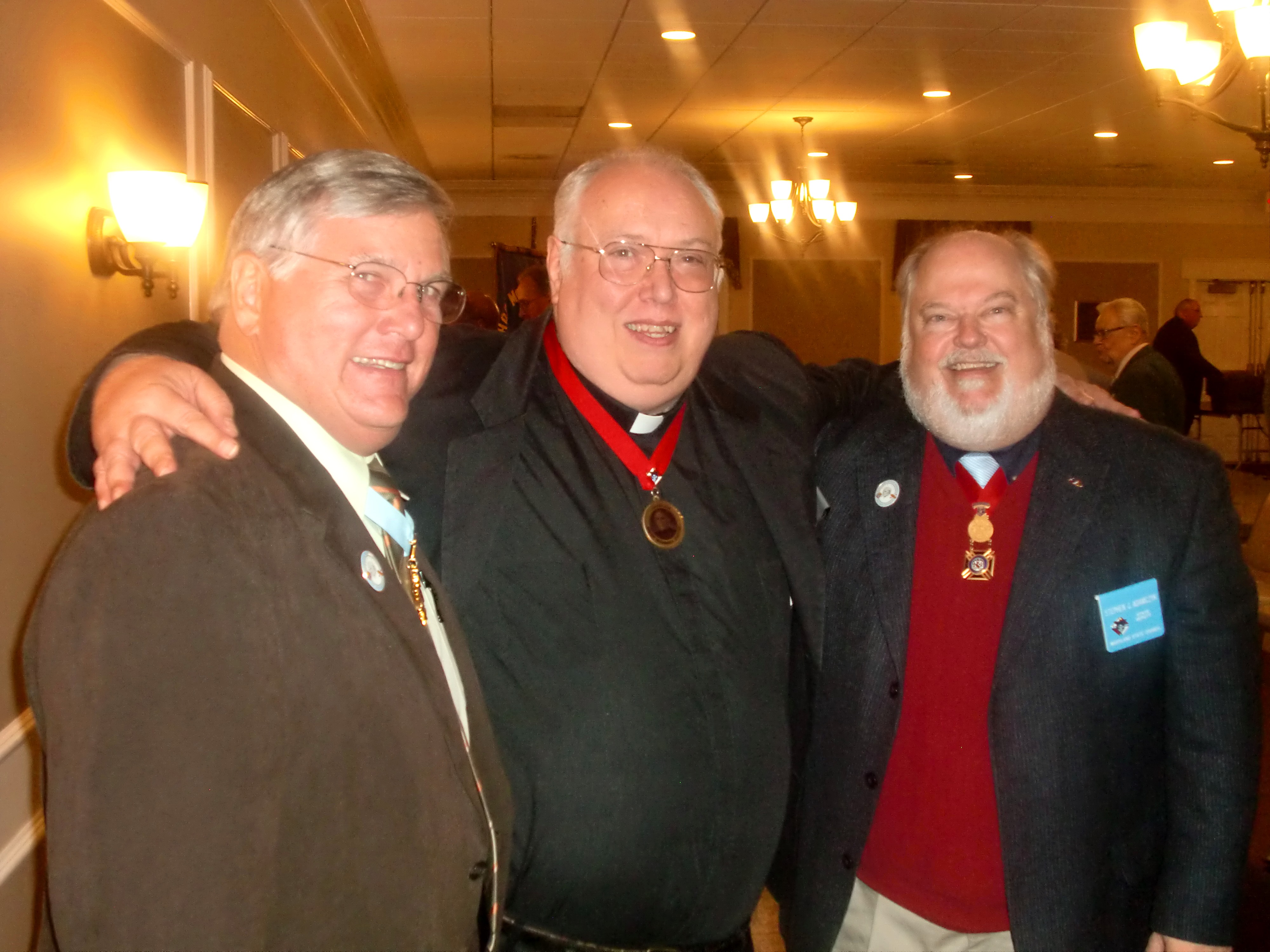
The deacons and I took a photo together after the 4:00 PM Saturday Mass at the Mother Seton Shrine in Emmitsburg. It was the Fall Meeting for the MD State Knights of Columbus.

October 28, 2018

[149] Thirtieth Sunday in Ordinary Time

1 Jeremiah  31:7-9 / Psalm 126 / 2 Hebrews 5:1-6 / Mark 10:46-52

God’s people from the Northern Kingdom are returning home from their exile imposed first under the Assyrians.  The Lord has appeared to them on their return and the scene is reminiscent of the Mosaic exodus.  The prophecy of Isaiah is fulfilled and Jeremiah shares with them their joy from God.  He tells them to praise God saying, “The LORD has delivered his people, the remnant of Israel.”

The Lord also calls to his children in the Church.  We are summoned as his new People of God from “the ends of the world.”  The apostles would preach the kingdom into the lands of the diaspora and the Gentiles.  We are made a new nation of prophets.  Just as Jesus went out to poor and the oppressed, healing the blind and the crippled; the Church is also commissioned to “console and guide them.” The Church is the New Israel. While the responsorial carries this theme of joyous restoration, in the Church it is so much more.  It is both a consummation and a new beginning.

Our fundamentalist friends often equate the New Zion with the institution of the current political state of Israel.  However, the Catholic Church sees herself as the New Jerusalem or Zion to which God calls his people.  Instead of liberation from the Egyptians or the Assyrians or the Babylonians or the Romans, God’s people are delivered from bondage to suffering, sin and death.  We are no longer the devil’s property but have been redeemed by Christ, the long-awaited Jewish Messiah and the Savior of the world.

While the only crown Jesus would wear in mortal life was one of thorns, it is in the Lord that the earthly or Davidic kingdom is united to Christ’s eternal or divine kingdom.  We are invited into this kingdom through faith and baptism.  More than simple subjects, we are anointed as a royal household— adopted sons and daughters of the Father, kin to Christ and with Mary as our Queen Mother.

The Christian ceremony of baptism for children has us anointed into Christ as “priest, prophet and king.”  The house of Jesus is a priestly one where we are called to take up our crosses and to follow the Lord.  Priests offer oblation.  It is within our baptismal priesthood that we render loving sacrifices to God and for others.  We join ourselves with the successors of the apostles, the ordained priests, so as to offer ourselves with the Lord at Mass to the Father as an acceptable sacrifice.  We seek to be transformed in surrendering ourselves with the eternal Lamb of God.

Paul’s letter to the Hebrews compares the Jewish priesthood with the priesthood of Christ.  It is clear that an old order passes away in favor of the new.  “You are a priest forever according to the order of Melchizedek.” Jesus is our true high priest before God and he offers the sacrifice of his very self for our sins.  This new People of God will have its own leadership and order.  The authority given to the apostles is quickly understood to have a sacerdotal dimension; they and their successors are sharers in the one priesthood of Christ.

The blind beggar calls Jesus by a messianic title, “Son of David.” The crowd is embarrassed by him and tries to silence the poor man.  He refuses to shut up.  Jesus stops and tells them to call him.  Their posture changes and they are suddenly supportive of Bartimaeus, saying, “Take courage; get up, Jesus is calling you.” Notice what he does— he threw his cloak aside and proceeded to Jesus.  This in itself demonstrates faith in the person of Jesus.  He trusts that he will be able to see so as to retrieve his cloak.  What Jesus does next might sound absurd.  He asks, “What do you want me to do for you?”  Was it not obvious? The man says, “Master, I want to see.”  Why did Jesus ask such a question? We must remember that the many miracles of Jesus always pointed to deeper realities.  Everyone healed would become ill in the future and die.  I suspect he was looking for a more profound response— like “I want to be holy” or “I want to follow you” or “I want to be saved.” Yes, the beggar immediately receives his sight; but again, we must notice the words of Jesus.  He says, “Go your way; your faith has saved you.” This man not only received a healing but absolution.  Light came to his eyes and his soul is also enlightened.  Jesus confirms his faith, even though he may have hoped for a more profound response.  Look at the text.  Jesus tells him to go on his way and we are next told that the beggar “followed him on the way.”

The expression “way” would come to mean the way of faith as a Christian, literally our Lord’s summons to take up our crosses and to follow him.  This walking with Christ is our participation in the new exodus of Jesus… as children redeemed to walk in the freedom of Christ.  We are called to leave our old lives behind and trust that Jesus will open our eyes to follow him in the Christian life.  Our saving faith in Jesus Christ is not simply a profession of faith but is one of transformative unity with the Lord.

The theme of exodus has the subjects both leaving something and moving toward something.  The elements of exodus are uttered in the cry, “Repent and believe.”  We move away from our former life of sin and move toward a new life of faith and obedience to God.  Every time the priest gives absolution to a soul that was in mortal sin, there is an exodus from bondage to freedom— from death to life.  This pattern is true for groupings of people and for individuals.  Missionary endeavors seek to bring the Gospel to whole classes of people.  The spiritual life focuses on a personal exodus experience for individuals.

It should also be noted that we are sometimes reluctant to participate in an exodus.  The Israelite community grumbled against Moses and Aaron: “If only we had died at the LORD’s hand in the land of Egypt, as we sat by our kettles of meat and ate our fill of bread! But you have led us into this wilderness to make this whole assembly die of famine!” (Exodus 16:3). Unhappy with the struggle of their journey, many wished they had never left Egypt.  Similarly, at the time of the restoration, many of the Jews refused to return to Jerusalem as they had integrated into their Babylonian exile and lived comfortable lives.  Indeed, some remained but sent resources with departing Hebrews so that they could rebuild. We can face similar struggles and temptations in the spiritual life.  People can become comfortable with their sins.  Bad habits or vices can direct lives and make it difficult for grace and virtue to change direction.  An important point is at play.  God makes possible the exodus, but you have to want to go.  This is not unlike the old anecdote, “You can lead a horse to water but you can’t make him drink.”  It is an unfortunate truth that some prefer bondage to freedom and thirst to the cup of salvation.

  • Are there things holding you back from being a true companion with Christ and his people “on the journey”?
  • The story of the exodus became an important part of the Seder celebration for the Jewish people. What is your own exodus and Passover story?
  • Unlike the people of Judah, the other Jews of the diaspora and exile were never formally given an opportunity to return to Jerusalem. Are there people or forces that would keep you in bondage and in exile from God?
  • As a sharer in Christ’s priestly love, what are the chief sacrifices that you have made for the kingdom of Christ?
  • As a member of the royal household of God, do you see yourself and others with God’s eyes— as having an “incommensurate” value in terms of human dignity and life?
  • Have you been faithful to the great commission as a prophet of Good News, witnessing for Christ and his Church? (Often this translates as practicing the faith and raising one’s family in the Church and in union with parish faith formation programs.)

Shocked by Bishop Holley’s Forced Retirement

154047720237661021

Installed in October 19 of 2016, Bishop Holley generated controversy soon after arriving in Memphis when he ordered the transfer of about 75 percent of the diocese’s pastors, an unprecedented move. The Diocese of Memphis has about 65,000 Catholics and 42 parishes. There was no set policy on assignment times when Bishop Holley arrived and many had spent inordinately long periods in certain parishes, accruing strong followings. Successful pastors at the more lucrative parishes were also frequently allowed certain autonomy. Bishop Holley wanted to impose a policy that was followed in the Archdiocese of Washington. Bishop Holley decided to appoint pastors for six-year terms, with a possible renewal of the term for six more years.

As a response to the change, it was subsequently reported that morale among priests was low, and that parish collections and contributions to the annual diocesan appeal had declined significantly. Many parishioners became very vocal and labeled the bishop as unresponsive. Parishioners followed pastors to new assignments and left their prior churches.  It was said that as many as a quarter of one church’s membership defected.  Others stopped attending entirely.  The Holy See sent Archbishop Wilton Gregory of Atlanta and Archbishop Bernard Hebda of St. Paul-Minneapolis to visit and respond to the complaints. They met with as many as 50 priests and disgruntled laity of the Memphis Diocese during their visit.

The verdict came out on October 24, 2018 with Pope Francis removing Bishop Martin Holley from the pastoral governance of the diocese of Memphis, Tennessee. The Pope has named as apostolic administrator, Archbishop Joseph Kurtz of Louisville, Kentucky. Archbishop Kurtz stated: “I humbly accept the appointment of our Holy Father, Pope Francis, to serve as the apostolic administrator of the Diocese of Memphis, while remaining archbishop of Louisville. I am eager to work with the priests, curia and faithful of the Diocese of Memphis to promote stability, peace and healing until Pope Francis appoints a new bishop.”

What message does this removal send? Can parishioners make so much noise about the transfer of priests that bishops can get sanctioned and removed? This is ridiculous. There must be more to this. Bishops have the authority to assign their priests and to close and consolidate parishes and schools, especially if they are failing. It seems he did all this. Where is his crime demanding dismissal? One parishioner noted: “Bishop Holley doesn’t kowtow to the powers that be here. There’s a lot of people who really love Bishop Holley. He’s a really holy man. He doesn’t pander to egos. The majority is really thankful he moved the pastors around. It was past due.”

The impression is given that the USCCB and the Holy Father capitulated to financial blackmail from laity manipulated by a few disobedient clergy angry about their transfers. I suspect that Bishop Holley saw the seeds for such a dangerous situation (threatening trusteeism) and decided to break it up, supposing that the Holy See would support him. [Very few of the pastors gave television news interviews and I suspect that most of the presbyterate were good men hurt by the transfers but unable themselves to reign in the forces of upset and retaliation around them.]

As for the school closures, we are told that they had exhausted available funds and that few if any of the children were Catholic. While we seek to help the poor of any denomination, we must not do so at the expense of the needs and faith formation of our own children.

It seems to me that Bishop Holley essentially followed patterns he witnessed in the Archdiocese of Washington where pastors are given six year assignments (renewable) and where the Inner City Consortium was necessarily reduced in size and scope. As far as I can recall canonical regulations about “immovable pastors” do not exist in the current Code of Canon Law. This may be cause for many other bishops to be fearful, as such a move by the Pope over administrative matters is virtually unprecedented.

The visitation from two archbishops and the papal sanction signals the end of episcopal sovereignty from the intrusive authority of bishops’ conferences. Indeed, the Pope as the bishop of Rome has traditionally respected the governance of other bishops within their (arch)dioceses as long as the faith and morals of the Church were promoted. This is no longer insured.

Bishop Holley is known to be a shepherd faithful to Church teaching and devotion. While centered on the Eucharist, he has personally witnessed to a deep devotion to the Blessed Mother and daily says his rosary. He is a dear friend and I was told that his intervention here in Washington made possible my current assignment. He remains a bishop and as one of our Lord’s priests, I pray that he will be permitted to continue in ministering the sacraments and Christ’s healing mercy to others. Knowing him as a personable and caring person, I cannot help but feel that those who derided him were the ones who closed the doors to friendship and failed to give him a real chance to make a positive difference in Memphis.

I am deeply distressed by his removal by the Pope. He is a man deeply concerned about the faith, needs and rights of all of God’s children. I cannot help but think that there has been a terrible misjudgment and injustice committed in his regard. Whatever has happened, he remains in my prayers and in my heart.

ADDENDUM

hol

No matter where one might stand in the Church, the bishop is right that there must be due process and a legitimate transparency. We damage our own moral authority if we do not proceed in a manner that ensures fairness and justice (for all parties).

The Proper Response to Scandal is Not Defection

ARTICLE: “Want to leave the Catholic Church? Officially you can’t” by Dan Waidelich.

SOURCE & DATE:  Washington Post – October 22, 2018.

REFLECTION:

The reporter notes that Mary Combs left the Church 15 years ago over the clergy sexual abuse scandals in Boston.  We are told that she looked at “the collection basket, imagining the money paying off victims.”

While one can readily appreciate how terribly she was disheartened, there was nothing particularly noble or heroic about her personal defection.  While such scandals, then and now, should make the laity angry— the proper response is not to run away but to stick it out and fight.  It may be that the clergy are overly identified with the faith; but the laity constitutes the largest segment of the Church.  She should have looked at that collection basket and realized that “there” in the purse strings is power to compel reform.  This is not blackmail.  The laity as a matter of justice can demand that the resources they share go to building up the kingdom and not be squandered in covering up for sin or for appeasing greed and ambition.

Unfortunately, anger spoke louder than her own calling or mission as a disciple.  Indeed, it also eclipsed the many needs that emerge from charity toward the poor and the hurting.  Despite the presence of evil in her ministerial ranks, the Church still does much good for the disadvantaged and the oppressed. Indeed, Catholic Charities is the largest and most active social outreach organization, just behind the U.S. government. Mary Combs walked away from that element of her discipleship in the Church because she was upset by weak and sinful men.

Judas signified one-twelfth of the world’s bishop-priests in 33 AD.  He betrayed Christ and later committed suicide.  Did everyone who had followed Christ leave the Church because of his sin?  No.  They realized that despite human iniquity, Jesus was indeed their Messiah, Savior and Lord.  Peter, the first of many popes of the Church, fearfully denied even knowing Christ when Jesus was being tried.  Nevertheless, our resurrected Lord would respond to his affirmations of love by restoring his authority as the visible head of the Church.  Just as we shake our heads today at the clericalism of our priests and how ambition sometimes overshadows servanthood, we can also recall James and John asking for a special place at Christ’s right and left.  Similarly, the apostles argue among themselves as to who is the greatest.  And yet, when the going got tough, all but John ran and went into hiding.  At the Last Supper they had each been given the authority sacramentally to re-present the mystery of Christ’s paschal mystery and his saving oblation in “memory” of him.  But when they had the opportunity to walk physically with Christ to Calvary, there was only one apostle who accompanied him to the Cross so as to witness the mystery firsthand.

“Now there’s this Pennsylvania scandal,” Combs said. “Hundreds of priests abusing thousands of parishioners and a coverup that went all the way to the Vatican — again.” We are told that she now attends Grace Lutheran Church in Virginia. This is no solution either.  Once a Catholic, always a Catholic.  While even Protestant churches have their own scandals, they are historically also breakaway institutions from Catholic unity.  They may possess certain saving elements which they took with them from Catholicism, i.e. the Scriptures, faith in Christ and baptism.  Sadly, they have also forfeited a genuine priesthood and Eucharist.  This signals that her defection is rooted, not just in a repugnance to clerical scandal, but in a lack of a true and complete Christian faith.  We are told that she took comfort when the Pennsylvania stories broke, in knowing that she was done with Catholicism.  Unfortunately, while we leave judgment to God, he will judge her not as a Lutheran but as a Catholic.

The current scandals should not confirm Mary Combs and those like her in their defection.  Indeed, it should be a clarion call for all to come back and to make right that which has gone wrong.  Those who have courageously stayed with the Church must demand a full accounting of past misdeeds, transparency in the future and a purging of those persons from ministry who can no longer be trusted.  There needs to be a genuine purification and reform.  This must be done by those who have remained faithful and those who have repented of their own failures or defection so as not to be part of the problem but of the solution.

Jesus instituted the Church and gave us ministers and sacraments so as to provide for his people.  He did not say that the Church would always be perfect, only that he would sustain her and that she would be made holy by the bridegroom, Christ.  The devil has had a hand in the corruption of churchmen.  Violations of priestly celibacy as with other sins can be healed by our merciful Lord and even forgiven by God’s faithful people; however, those who have harmed minors and those who have engaged in same-sex acts have no place in the priesthood.

The Washington Post article, while heavily focused on the issue of clergy abuse, actually targeted the question as to whether one could technically leave the Catholic Church. Rev. Thomas Ferguson, vicar general of the Catholic Diocese of Arlington, Va., affirmed what Catholics should already know that it is impossible to defect from the Catholic Church. Our affiliation with the Catholic faith is stamped upon our souls at baptism.  It is the Church directly instituted by Christ.  Any movement away from that Church distances us from our Lord.

The original Protestant churches were regarded as groupings of fallen-away or lapsed Catholics.  Over time, many were born and raised in these communities, never juridically united or formed within the fullness of the Catholic faith community.  What might merit them through ignorance will not satisfy for Catholics who should know better.

Church Scandal & the Devil

153909379810533151 (1)

Those who hate the Catholic Church are falling over themselves in blaming pedophile clergy for the abuse and scandals.  They absolutely refuse to acknowledge that the majority of cases are instances of homosexual pederasty.  These critics, that include major newspapers and other news outlets, are in collusion with churchmen who want to protect or hide “gay” priests in the Church and promote the growing acceptance of homosexuality in secular culture.  The devil as the great deceiver has not only corrupted some in the Church but many in our secular society.

When Pope Francis targeted Satan as the primary culprit of the crisis, many public officials, journalists and others roundly ridiculed him.  Article headers around the world heralded a distorted view of his remarks: “Pope Blames Satan Instead of Pedophile Priests!” A spiritual view was derided as a political deflection.  Given that many critics of the Church are also inimical to any and all religious affiliations, this should not surprise us— atheists neither believe in God nor a devil. Nevertheless, the devil is real and if it seems that he is spending an inordinate amount of time and energy attacking the Catholic Church the reason is that she is the house that Jesus built.  However, if he is present in the Church as an interloper, he is alive and well in modern society as a welcomed guest, or at least this is so in terms of his distorted values.  He wants to take ownership of the world and is willing to hide as the ghost in the machine.

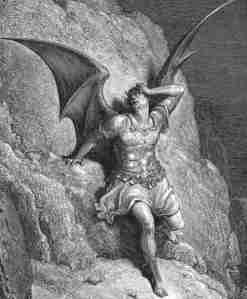
Satan_Gustave_Dore_paradise_lost_the_devil_cast_out_of_heavenThe Pope warns us: “We should not think of the devil as a myth, a representation, a symbol, a figure of speech or an idea. This mistake would lead us to let down our guard, to grow careless and end up more vulnerable.” While other confessions broke away from Catholic unity, the legacy of the Catholic Church goes back to Jesus and the first bishop-priests, his apostles.  The devil hates the Church because she is the present-day realization of the incarnation in the world.  Christ is the head and his Church is his Mystical Body.  There is a profound unity.  Given that none are saved apart from Christ, the same can be said about the Church.  As the Mystical Body of our Lord, she is the great sacrament of encounter with Christ.  Even as the Church is composed of sinners and invites others by divine command, the Church remains holy because Christ is holy.  Our Lord’s redemptive work won the victory over sin and death.  However, the consequences must be unraveled throughout subsequent human history.  The devil has lost the war but he still seeks to steal individual souls.  Given the importance of the priesthood and the Eucharist as at the heart of the Church, the devil attacks where he can cause the most damage and scandal.  Just as he can numb the consciences of mothers about the tragic abortion of their children; he deadens the souls of renegade priests to their heinous acts against God’s children, making a sacrilege of their role at the altar and in the confessional.

None of this mitigates the priest’s own culpability for his sins.  Similarly the bishops have an obligation to insure a priesthood that is sanctified by grace and devoted to a service realized in sacrificial love.  They must be new Christs.  We can accept nothing less as it would come from the evil one.  Bishops and priests are called as ministers of mercy or reconciliation.  It is in this regard that we should not dismiss Satan’s efforts to tempt and corrupt priests.  We are not Donatists and the powers of the priesthood are not dependent upon personal holiness.  However, bad priests do not readily invite others to repentance and holiness of life.  Our Lord abhors duplicity.  Compromise the truth and few will listen to our preaching and teaching.

When the devil targets priests, he uses their own loneliness and brokenness against them.  He sows weeds from the beginning in secret.  Things that needed to be said were not said.  Weaknesses were not acknowledged or treated.  Truth was the victim throughout— in the psychological evaluation, in the acceptance into seminary, in the regular reviews of candidates and even as they prostrated themselves before the altar. Men who were afraid thought they could hide their cowardice and defects within the priesthood even though our Lord had admonished his apostles not to be afraid. Men who were not committed to celibate love came forward with divided hearts to be ordained.  Men who were not humbled by a call of service knelt before the bishop with princely dreams instead.  Men who pledged obedience became infected by the poison of Milton’s Satan who cried, “Better to reign in Hell than to serve in Heaven.” Did any of the rogues possess a genuine conviction to answer a calling from God? If so, what was it that changed their trajectory?  While some of these men deceived themselves; others were given help.

Most priests are good men who seek to realize the holiness of God and the forgiveness of sins, in their lives and in the lives of those to whom they minister.  But it only takes a few bad men to hurt many.  It only takes a moment of passivity or weakness or silence to become complicit in their crimes.

Pope Francis has asked God’s people to pray the rosary every day in October so as to repel the satanic attacks and to exorcise the demonic presence from the Church.  Of course, we should always pray for good and holy priests.  Pope Francis tells us: “The Church must be saved from the attacks of the malignant one, the great accuser, and at the same time be made ever more aware of her guilt— her mistakes— with the abuses committed in the present and the past.”

The Pope has asked us to add to the rosary the traditional intercessory prayer to St. Michael:

“St. Michael the Archangel, defend us in battle. Be our defense against the wickedness and snares of the devil. May God rebuke him, we humbly pray, and do thou, O Prince of heavenly hosts, by the power of God, thrust into hell Satan, and all evil spirits, who prowl about the world seeking the ruin of souls.”

The Ascendant Laity & Reform

153901311384687144 (1)

There is increased tension about the role of laity on review boards and in taking leadership efforts to stem abuse of the young and corruption in the Church.  On one side, many traditionalists do not want clergy conceding authority of any sort to the laity.  However, given that the clergy, and particularly bishops, currently have very little moral standing among God’s people, they really have no choice— not if they want the Church to return to good health.  The other side opposes an increased role of “certain” laity, and here I would agree, albeit from the opposite pole of fidelity.  The laity must be a genuine “sensus fidelium” and not one populated by dissenters who would create an entirely new church.  The progressive voices want more than an overhaul; they want a full-blown revolution where the doors would be opened to married priests, women clergy, lay trustee ownership of all Church properties, full acceptance of divorce and subsequent unions, of homosexuals and other emerging sexualities, and a communion table open to all.  It is this group that is fearful of orthodox laity.  While the clergy can be manipulated in labeling the crisis as one of pedophilia, it would be much more difficult to compromise faithful laity into being silent about the true malady which is a homosexuality infestation of Church leadership.

153901311384687144

The faithful laity has the will and the money to get to the root of the Church’s problems, and many (clergy and dissenting laity) want those roots to remain safely hidden in the ground.  Which is preferable, to allow investigations to remain exclusively in the hands of secular or civil authorities who often have a negative animus or real hatred toward the Church; or to allow orthodox laity who love the Church an opportunity to expose the truth about the current scandal so that there might be a necessary purification, restoration and healing?  We want men and women committed both to the faith and to the truth, regardless of the immediate consequences.  Bishops have shown that they cannot police themselves.  Lower ranked clergy too easily become passive pawns to authority.  We should not underestimate the fear that many priests feel.  Their priesthood is not a job but their identity.  Their ordinaries or bishops can easily make or break them— giving them opportunities for rewarding ministries or locking them away with meaningless closeted assignments or sending them to real hell holes where they will be ill-equipped to survive.  Most laity respect their bishops but they are not under their thumbs.  They have sufficient autonomy to act.

The dissenters, among the bishops and the laity, are quick to reject investigative efforts from the orthodox laity.  Even prior to any such work, they are already accusing them of gay-bashing.  They mock them as hardliners obsessed by sex.  But this issue is precisely about sex, more directly, about the homosexual acts between clergy and other men or teenagers.  This is well over 90% of the actual problem.  The dissenters would have us dismiss this and focus on the 2% or less that deals with children and possibly girls.  The orthodox faithful and clergy are not Puritans or Jansenists.  They acknowledge the beautiful teachings on the Theology of the Body that come from St. John Paul II.  There is no derision of the marriage bed between men and women.  But sex outside of marriage is a sin.  Homosexual acts are always outside of marriage and the attraction is a grave disorder.  It is not neutral.  We are called to love and respect our “gay” brothers and sisters.  As with the priesthood, we would urge them to embrace an authentic and faithful celibate manner of loving.  Because of the danger of scandal brought to ministry, the Church should exclude from priesthood all homosexuals who have had sexual encounters.  This is not bigoted hate-speech but the necessary bottom line.  These critics who argue otherwise must not be given their way as they offer no solutions and are part of the problem, itself.

The liberal critics are infuriated that a priest who violates his vows must be expelled from the priesthood.  They employ an analogy in regard to marriage.  They would ask, “Would we insist upon the end of a marriage when a man sins against his matrimonial vows?”  They have a point here, but only to a point.  Much depends on how the vows are broken, the level of contrition and amendment of life and the willingness of the spouse to forgive.  As to the manner of violation, there is voyeurism, pornography, prostitution, adultery (with another woman), homosexually disordered acts and incest.  A union might come to a practical end because it is a sham or dehumanizing to the spouse or a threat to her and the children.  As for a priest, an infidelity with a woman might indeed be forgiven, particularly after a period of counsel and spiritual reflection.  His bride the Church is very merciful, even though it would be best to restart his ministry somewhere else far from the person of temptation.

However, if his vows are broken through an abusive act, particularly of a minor or child,  he can never be restored to ministry.  We do not want rapists of any sort in our active priesthood.  The safety of God’s people must always come first.  If the violation was a homosexual one, even with a consenting male, then he must also be stripped of his faculties and laicized. We cannot risk predation upon altar boys, seminarians or young priests.  A priest must have a certain moral standing and there are certain acts that are so depraved that it is impossible to restore his full sacerdotal dignity and moral authority.   Such a priest must go.

The Nomination of Judge Brett Kavanaugh & Facebook

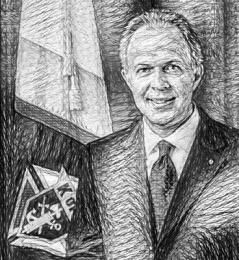
153814159378034468I had two posts on Facebook about the nomination and proceedings around Judge Brett Kavanaugh.  The first began simply as a posting of a letter from Supreme Knight Carl A. Anderson urging the members of the Knights of Columbus to contact their senators in support of a potential Justice who believes in interpreting the Constitution as it was originally written.  Given the escalating controversy, and not wanting to bring any embarrassment upon the Order, I removed the letter.

Along with this letter there was a CNS news report wherein Msgr. John Enzler (the president and CEO of Catholic Charities of the Archdiocese of Washington) acclaimed the virtues of a man he had known since Kavanaugh was 12 years old.  Kavanaugh was one of his altar boys at Little Flower in Bethesda, MD. He thinks he may have baptized his two daughters, he still sees him monthly at his evening Mass, and he works with him at St. Maria’s Meals (a program that serves meals to low-income individuals and families).  He belongs to the Catholic John Carroll Society and helps out with other lawyers and professionals.  Kavanaugh also coaches the girls’ basketball team at his parish and tutors at the Washington Jesuit Academy and J.O. Wilson Elementary School. “His faith really shines through in who he is,” Enzler said. In addition to his volunteer work, Kavanaugh also reads as a lector at his church, the Shrine of the Most Blessed Sacrament in Washington.  After his nomination, he stated, “members of the vibrant Catholic community in the D.C. area disagree about many things, but we are united in our commitment to serve.”  Msgr. Enzler praised him as a man: “This is your neighbor next door. He’s a great husband, a wonderful father to his daughters, and has lots and lots of friends. He’s very intellectual, of course, but you wouldn’t know it by his demeanor.”

153815243296950393

After the allegations of assault were made, Msgr. Enzler did not back off from his recommendation:  “I know Brett Kavanaugh to be a man of honesty and integrity. My opinion of him is based upon a 40-year relationship in which he’s never given me any reason to doubt his veracity and character. Hopefully the facts concerning the recent allegations will bear out my trust in him.”

One of the few civil comments of disagreement to the endorsement from Supreme came from my dear friend Robert White.  He wrote:

“Fr. Joe, I can’t do that. I think that this is the wrong man for the bench not because of the sexual allegations against him but because I believe that he is coming to the bench with a predetermined mind on other issues relating to the powers of the executive branch of government which will have far lasting negative impact on our freedoms. ‘Those who would give up essential liberty, to purchase a little temporary safety, deserve neither liberty nor safety.’ Benjamin Franklin (1706-1790).”

15382396499043188

My response followed:

“(I have to admit that I was a bit surprised by the letter from Supreme.) I have no issue with those who have their own logical and concrete reasons for opposing the nomination although I think every potential Justice has a view of some sort about the separation of powers. My preference is for one that fully respects the demarcation of powers and jurisdiction between the Judiciary, Legislative and Executive branches of government. I think we have seen the alternating expansion of the Executive and Judicial branches due to the unfortunate ineffectiveness of the Senate and Congress to get things done. The Justices should neither create laws nor ‘trump’ those already passed and the President should not rule as a king or despot.”

It was an agreeable exchange.

Next there was a link to a recent television news story with a dear friend and teen that I knew from St. Ann’s in NW DC back in the 1980’s and 90’s.  I thought it was a good interview.  Bettina asserts that whatever the vote, the role of women in the public forum, their presence, rights and needs are in ascendancy and that we are going to have to take more seriously the treatment of women. I may disagree with her about many important issues of the day but none of that takes away from the fact that she is one smart lady. Bettina also notes that this is a lesson or wakeup call for teens that what they do now in high school (and I would add in college) will have lasting repercussions in the days ahead.

https://www.wusa9.com/video/opinion/editorials/off-script/local-women-react-to-brett-kavanaugh/65-8265062

I also posted a link about the Jesuit magazine AMERICA retracting its endorsement for the judge.

https://townhall.com/tipsheet/cortneyobrien/2018/09/28/catholic-jesuit-paper-rescinds-its-endorsement-of-kavanaugh-n2523399

Partisanship and the “party first” mentality, regardless of which side of the aisle, is toxic.
153818999257476767

Turning to the second deleted post, I tried to be creative and used an analogy or story of two children playing in a sandbox where one child throws a bucket at the other.  I was soon thereafter told that I was making light of rape.  Indeed, the initial comment was particularly vicious. Knowing that I was a priest one offered the slur that my remarks were typical since the bishops were hiding boy-rapists. This remark pained me terribly, not only given the recent scandals, but because it was written by someone I care about.  I do not see him very often but I could not love him more if he were my own son.  I deleted the comment.  But it did not take away the sense of pain and betrayal I felt.

I had deliberately tried to steer clear of sexual connotations and was instead focusing upon the issue of timeliness.  The question I was hoping people would ask was how far back do we search to find incriminating evidence for present allegations of wrong doing?  A dangerous precedent was being set.  Allegations without evidence from any moment in a person’s developmental trajectory (even childhood) might suffice to discredit a person’s good name and a lifetime of credible and worthwhile service.  One person commented with a joke about the time of birth.  I took it even further where the unborn child is sometimes wrongly accused as an unjust aggressor.  (It is still my conviction that the ultimate abuse of women is abortion.) A few critics were utterly incensed by the post and comments.

It grieved me that I could be so thoroughly misunderstood.  Both posts and my accompanying comments were about treating people (everyone) with respect. I did poke fun at the investigation into the judge’s youth and yearbook, as well as the somewhat odd but fortuitous keeping of a calendar-diary. But people hear or read what they want hear. I accept blame for a failure to communicate more clearly.  I am saddened more than I can say, especially by the “ad hominem” attacks against me.  President Trump may be the master of that manner of debate, but his critics on the other side of the political divide are also quickly mastering this manner of attack— targeting persons instead of ideas.  Ideas are frequently not discussed; the winner is deemed to be the one who interrupts and shouts the loudest.

In any case, the second Facebook post on Judge Kavanaugh is gone because I got tired of misunderstandings and personal attacks. If I erred in my remarks, I apologize. It was never my intention to hurt anyone or to trivialize either the fear that women feel or the personal violation that is signified by assault.  I would have hoped that people for whom I care and love would have privately messaged me their concerns instead of publicly threatening and condemning me.  (Note that in return I will not share their names here.) I do not have words for how I feel.  I guess that is one of the crosses that come with real love— the pain of discovering that loving and caring is not returned.  The message that some communicate is this, if you disagree with me then you are a bigot, that you are mean and hateful, that you are insensitive, and then may come alienation and disassociation.

It was within the second post that a fellow Knight and I were criticized (should I say condemned) as “middle-aged white males” as if our maturity, gender and ethnicity were crimes. My motives were questioned and emotionally it challenged my own Christian civility. I want to apologize to my brother in the Knights of Columbus for the treatment he received.

It seems to me that sometimes a few words or a posting might touch something deeper and unseen.  It still seems to me that much of what was written in the post and comments was fairly innocuous and cautiously circumspect.  Again, there was no intention or real effort to be offensive or hurtful. There was never any assertion that Christine Ford was lying, just as there was no possible certitude either way about Judge Kavanaugh.  However, it should ultimately matter if an error might bring about the destruction of a person’s good name.  Calumny is still a sin and the possibility of any crime does not negate the wrong of hurting innocent people.  That is what makes this situation so very complicated.  While some critics view the issue of the abuse of women as the only important matter; in truth, we must have a commensurate perspective of the situation.  One of my Facebook friends actually argues that the allegation alone is enough to have the nomination dismissed.  This is not dissimilar from the situation faced by innocent clergy in the face of false charges.  While we want to protect our children and women, are we willing to do so by destroying the innocent along with the guilty?  One of my friends was in the newspapers and she seemed to apply the argument of guilt by association.  In other words, since such parties did happen and boys did misbehave then all boys are probably guilty.  This is not good reasoning.

There was nothing in my post or comments about “sweeping the issue under the rug.”  It was here that a critic cited the bad witness of the Catholic Church.  I guess at this point I was supposed to shut up because given the scandals, priests are presumed by many as no longer having any moral authority whatsoever.

It is true that one of the persons making a comment (man or woman) did make a joke about the culpability of a naked boy baby in a room of nurses.  But that was not my comment.  I did however reference it to speak about the very real bias that some have about men, even from the womb.  Here is what I wrote precisely: “Planned Parenthood could top that, literally arguing that before he was born he was violating a woman’s body as a fetus and thus caused her to question her right to choose. But critics rarely consider that abortion is the most prevalent abuse of women. This mentality is no joke. There was a NOW advocate back in the 1990’s who stated in a rally on the DC Mall that sex between a man and woman was always rape and that to give birth to a male child was to be raped again. As a militant lesbian, she promoted abortion so that male children could be terminated.” This perspective is an extreme, but it is real.  Further, this mentality is just as heinous as the disproportionate numbers of aborted female children in India so as to avoid paying a dowry.

My Knights of Columbus friend and I were singled-out as “middle-aged white males” who because we did not have the worries of women, especially about rape and kidnapping, could not possibly understand.  I wanted to scream, “How dare you— how dare you?”  The post and comment are gone but I was wounded and furious.  “My friend has a family and daughter for which he would lay down his life.  Do you think he never worries about her?  I bought the mace for my goddaughter when she went to college.  I prayed and worried about her every day.  Were you there when I spent the night crying with and counseling a young woman assaulted by her boss?  Were you there when a woman sobbed in my arms after being beaten by her husband?  Were you in the courtroom when I stood by a mother’s side for support as she tried to insure punishment of a man that had abducted her daughter?  Were you there when I held hands with a husband and wife in prayer when we learned that her therapist had taken advantage of the wife?” Were you there when I tried to reaffirm a woman’s self-worth when she equated her boyfriend walking away and not wanting sex with her as rejection as worthless?  Were you there when I received a call after midnight from young teenage girls under the influence of alcohol (after one of those nefarious parties) and needing a ride to get home safely?  Were you there when a man threatened to kill me unless I told him where I had sent his wife and child for shelter against his drunken abuse?  No you were not.  But you think you can judge me.”

Women seemingly have a heightened religious sense.  Priests are surrounded by women.  If I were utterly insensitive to their needs, they would quickly let me know.  During my priesthood I have counseled and aided many women who were mistreated by boyfriends and husbands. I have fought for both the sanctity of life and the dignity of persons. Balancing both compassion and justice, no one should make light of charges of assault or rape, but neither should we presume guilt without evidence. The fact that a senator dissected the meaning of innocuous high school yearbook posts struck me as beyond ridiculous and misplaced. That was the catalyst for the attempt at satire with children playing in a sandbox.

While the posts were still active, I have had to delete a few comments. I reserve the right to do so toward anything that I feel is malignant toward me and/or to the Church. I must ask forgiveness for the deletion of supportive comments in the missing posts. (The upset was ironic as I have never personally expressed either support or opposition for the nominee.)

It is true that I made fun of the wayward process and what I viewed as unfair treatment toward the judge. However, as a pastor of souls I also feel for women who have suffered at the hands of men and who sympathize with his accuser over her allegations. She came across as quite convincing. The judge said that he had no reason to doubt her sincerity in that something happened to her; however, he maintained throughout that it did not involve him. Unless one can read souls, we have no way of knowing for sure. These “he said, she said” debates are often quite hard to resolve. I would urge fairness and justice to all parties. Just as the judge’s little girl urged prayer for her dad’s accuser, we as believers should pray for all involved. Senator John Kennedy had some forceful words for his colleagues, a day after he asked Kavanaugh to “swear to god” that he did not commit the assault against Dr. Ford. “There were no winners in this room,” he said. “All I saw were two people, two human beings in pain.” Very true, but I suspect that if he could see beyond the room, he would also see a whole nation in pain.

ALLEGATIONS

  • Julie Swetnick issued a statement in which she claimed she’d observed Kavanaugh at alcohol-fueled parties where women were mistreated.
  • Deborah Ramirez told The New Yorker that Kavanaugh exposed himself to her during a drunken dorm party 35 years ago at Yale.
  • Christine Blasey Ford made against Kavanaugh related to a period when she and the judge were in high school. She told The Washington Post that a drunken Kavanaugh pinned her to a bed during a party and put his hand over her mouth to stifle her screams as he tried to take off her clothes.

The Church & Tactics of Deception

153676726048592070

This questioning comment was recently posted:

Dear Fr. Joe,

I am a political activist and I am trying to see what tactics I can use that would still be considered moral under Catholic teaching. What I seek to accomplish may appear quite odd and perhaps even sinister to many who are not acquainted with the nature of politics. Nonetheless, I simply wish to spread views that support Catholic social teaching and to make enemies of the faith look bad through the manipulation of public opinion and perspective. The most effective way to do this is a duel tactic involving evangelizing those who have a chance to convert and to make the enemy look bad through the usage of sock puppet accounts and Astroturfing.

What I wish to ask is if Online Sock Puppetry, Astroturfing, False Flagging, and overall Psychological Operations and Covert Actions are sinful?

Sock Puppetry is when I make an alternative account online that either spreads my views or is a strawman of my ideological opponents without people knowing it is me using this alternative account. Astroturfing is when I pay people to protest or support me in a way to make it appear my belief system is more popular than it actually is without them knowing they are paid protesters. False flagging is if an operation or action is done in which observers blame someone who didn’t do it because the action implied that it came from them, most often an outright verbal lie is never told as people assume who the perpetrator is. (Imagine someone drawing a swastika on a Synagogue and people assume a Nazi drew it instead of another person attempting to get attention and sympathy for Jews there).

For all of these I know they appear bad and deceptive, but why I am asking this is due to the fact that I never see the Church ever condemn these actions, especially if they are done by many corporations and government intelligence agencies. A person told me that though misleading, these actions are not intrinsically the same as the sin of lying as many of them can be pulled off without necessarily telling someone a falsehood but simply through concealment it leads people to incorrect conclusions in matters not critical to the faith.

With all Due Respect,
Romanicus

FATHER JOE:

Wikipedia definitions:

“Astroturfing is the practice of masking the sponsors of a message or organization (e.g., political, advertising, religious or public relations) to make it appear as though it originates from and is supported by grassroots participants.”

“A sockpuppet is an online identity used for purposes of deception. The term, a reference to the manipulation of a simple hand puppet made from a sock, originally referred to a false identity assumed by a member of an Internet community who spoke to, or about, themselves while pretending to be another person.”

First of all, any who would be political activists should do so under their own names and not under any form of alias.

Second, we do not need pro-faith vigilantes (with secret identities) distorting or manipulating messages within the public forum.

The first might be criticized as a capitulation to fear. The latter lacks transparency and does a disservice to the truth. The manipulation of persons is from the evil one. The Gospel of Christ and our values must be witnessed in the light of day. Yes, that makes one an easy target for the enemies of the Church. But that cannot be helped. It makes a person into a genuine sign of contradiction within a non-Christian culture. Our Lord knew this and commanded us to take up our crosses and follow him.

The faith is a gift freely given and it must be freely received. We transmit our holy religion and its values both through our witness and in our proclamation.

A Scandal that Calls for a New Reformation

153508226949038595

“Christ himself, the model of priests, taught first by the example of his deeds and then by his words: Jesus began to do and then to teach. Likewise, a priest who neglects his own sanctification can never be the salt of the earth; what is corrupt and contaminated is utterly incapable of preserving from corruption; where sanctity is lacking, there corruption will inevitably find its way.”

– St. Pius X

We are taught as Catholics that the Church is holy because Christ is holy.  This is what gives truth value to the second mark of the Church mentioned every time we recite the Creed at Sunday Mass.  The Church is holy and it is by means of the teachings of faith and the sacraments that we can be made holy by grace.  This is what we believe and yet has there ever been a time when it was so very hard to believe? The Church is also composed of sinners; indeed, we are all sinners needing a Savior.  But when it comes to our priests and bishops, we like to imagine that they have a direct line to heaven.  They make little money, forsake a spouse and family and are at the immediate beck-and-call of their flocks.  The lesson that Jesus gives his apostles with the Holy Thursday foot washing is that the greater they would become, the more they would have to humiliate themselves as the servants of all.

Catholicism insists that both bishops and priests should remain celibate— placing the love of the Mystical Body or the Church ahead of all other loves.  At a time when most churches compromise on the moral teachings of Christ; the Catholic faith remains resolute about purity prior to marriage, about the permanence of marriage, about marriage as only a relationship between a man and a woman, about the nature of the marital act as open to the generation of children, and about the sanctity of human life.  The loftier the moral message, the further the messenger might fall when he is exposed as duplicitous.

Our priests witness the marriages of couples in love, consecrating unions with the favor of God and of his Church.  They baptize babies, transforming them from mere creatures of God into adopted sons and daughters of our heavenly Father.  They absolve penitents from their sins, literally stealing the damned from the devil. At Mass they celebrate the sacrifice of Calvary so that we might offer ourselves with Jesus, the Lamb of God, as an acceptable oblation to the Father.  They give us Holy Communion, rations from that promised shore to which we travel as spiritual pilgrims.  Along with bishops, they offer confirmation, completing our baptisms so that we might be enriched by the gifts of the Spirit and made living temples of God.  They anoint the sick, perpetuating the ministry of Jesus in bringing healing to the hurting among us.  They bury the dead, preaching a message of hope that in Jesus love is stronger than death and victorious over the grave.  The priest is at the center of everything Catholic.  That is what makes the current scandal especially devastating.  The faithful are rightly disappointed and upset. Our shepherds are facing a crisis in holiness.

Contagious Scandal & the Loss of Reputation

Any one priest signifies every priest.  This collective appreciation has made the present crisis a damning one.  When the laity look at their priests, they immediately wonder, “Could he be one of those priests?” While regarding only a few, these dark revelations of sin and crime are sufficient in damaging overall trust.

Men presumed as truthful revealed as duplicitous liars.

These are the same men appointed as preachers of the Gospel.  The priest and pastor is the chief catechist of every parish and is entrusted with the faith formation of his people.  What becomes of the message or the Good News when the messenger becomes a witness of bad or scandalous news?  What becomes of his credibility when the mouthpiece of God not only stumbles in his witness but is unveiled as an agent of the devil’s anti-gospel? How can such a man speak to us about the truth when he has failed to put on the mind of Christ?

Men presumed as merciful exposed as sources for sin.

These are the men chosen to give flesh to the Divine Mercy in the ministry of the church.  Who would want to go to confession to such rogues?  Many might think that their sins pale in comparison to such reprobates.  While the efficacy of the sacraments is assured; it is understandable that the faithful would feel stained or polluted by association with these men.  Is it all just empty words and gestures? Compounding the problem, they sometimes substitute malice for mercy and draw others as accomplices into their lives of sin.  How can such men draw us into the love of God when they do not have the heart of Christ?

Men presumed as healers caught as sadistic destroyers.

Jesus condemned the pharisees for placing unnecessary burdens upon good people.  As an antidote he delivered the freedom and healing that belongs to the children of God.  Priests were called to mend souls and to give hope, not to breach their victims from the family of God or to give them cause for despair.  The miscreants in the news destroyed innocence and purposely misdirected the faith trajectory of people’s lives.  They placed their own sexual gratification over sacred promises and the good of persons.  How could they live with themselves, exchanging the joy of right relationship with God for a cruel transitory delight toward others?  Even if there were a failure to love, did they not fear God?

Men presumed as pure are brought to light as defiled.

Priests are commissioned as eschatological signs of Christ’s kingdom.  This is a basic premise behind the promise or vow of celibacy.  Celibacy is not the same as chastity or virginity.  Rather, it is a wondrous way of loving others.  We are corporeal-spiritual composites, creatures of spirit and flesh.  The purity of the body is supposed to immediately signify the virtuous nature of the soul, the existential resolution as one who loves the Lord so tremendously that it spills over in concern for the neighbor.  As opposed to the pattern of the rich man going away sad because of his many possessions, it is the follower of Jesus who seeks to abandon earthly satisfaction so as to be rich in Christ.  What happened to this singleness of purpose in these men?  How is it that they could be satisfied with the carnal man when they were pledged to something greater, the one who lives in the Spirit?

Men presumed as holy are divulged as devils.

We are all called to be saints.  That is our fundamental purpose in life.  Christ as the new Adam comes into the world to restore an innocence that was lost by sin.  The priest is charged as an instrument of the Lord to dispense the divine mysteries in making this objective possible.  His ministrations allow us to enter in the saving paschal mystery.  Here is where the sins of these men become a kind of blasphemy against all that is holy and good.  Instead of realizing their role as sharers in Christ’s priesthood and extending his saving works, they look to the wimpish failure of the first Adam; indeed, worse than this, they play the role of the serpent.  Do they not see how they have been thoroughly soiled as slaves to the devil?  Have they stopped believing entirely?

We are told that a priest, even in mortal sin, can validly administer the sacraments.  This is one of the great absurdities of faith and yet one necessary to insure the efficacy of the sacraments in the life of God’s people.  Of course, while a bad priest might do some good, his bad character often sours the milk and corrupts or tears down what is built up.  This dissimulation probably constitutes a special wound in the Sacred Heart of Jesus.  Our Lord is pained by the priest who is a cheat or hypocrite, even as he is supposed to be “another Christ” at the altar.

It remains a conundrum that a priest might take his people to the very gates of heaven but himself be unable to enter.  While we might think that the graces of priesthood would make it easier for him to go to heaven; certain authorities have argued that it makes the prospect of hell more pressing and dangerous.  Why?  The more one is given, the more for which one will be held accountable.  The priest knows better and cannot claim ignorance.  Everything needed for salvation is immediately available.  That makes any neglect inexcusable.  Further, because he has been configured to Christ by his ordination, the devil targets him for every temptation and assault.  At his altar, at his desk, in his car and in his bed he is always in the midst of a fierce battle with the prince demon of perdition.  Priests who forget this will immediately stumble.  The senses are especially targeted.  The scandals of late all appeal to the flesh and sexuality.  The sins committed are virtually unimaginable.  Minds are clouded.  Hearts are hardened.  The devil will take any crack he can find to pierce the priest’s soul— smoking, drunkenness, gluttony, sloth, anger, jealousy, whatever.  The devil may have failed in his temptation of Christ; but starting with his apostles and coming down through history to his priests and bishops of today, he has found men who sometimes falter and even become his property.  Judas may not be the only bishop-priest in hell.

It is a terrible business when the weak link of faith is the shepherd. The weapons to hurt souls and to attack the Church then come from the very hands of the priest— hands that were consecrated for the chalice and the host.  We as Catholics become our own worst enemies.  It is at such times that we must remember that our faith is placed ultimately not in men but in God.  We should also recall the saints, for theirs is the true legacy of the Church.  Instead of running away, it becomes all the more imperative for God’s people to keep the faith and to demand fidelity and holiness of their priests.  All sins might be forgiven, but the sins against innocence must not be forgotten.  A reform of the Church will mean that some higher churchmen will have to step down, certain priests will have to be removed from ministry and others will have to embrace a heroic apostolate of penance and sanctity.  This is not a time for window dressing but of a true moral reform, to deal both with a hostile secular modernity and a rigid clericalism that makes careerism and a fear of scandal into higher imperatives than protecting God’s flock from the robber and the wolf.

If we enter into the light (not afraid of what will be unmasked) and not in the darkness (where the roaches of sin hide), then we will truly walk with Christ.  As opposed to the clamoring enemies of the Church who see the current scandal as the death knell for Catholicism, maybe it is an unavoidable summons to “grow up” and to become a more effective and genuine witness for Christ in the modern world?  Divine providence is most unfathomable when God draws something of the good from the misdirected evil of men.