An important theme for this blog is the scene in the New Testament where Jesus can be found FLOGGING the money-changers out of the temple. My header above depicts a priest FLOGGING the devils that distort the faith and assault believers. The faith that gives us consolation can and should also make us very uncomfortable. Both Divine Mercy and Divine Justice meet in Jesus. Priests are ministers of reconciliation, but never at the cost of truth. In or out of season, we must be courageous in preaching and living out the Gospel of Life. The title of my blog is a play on words, not Flogger Priest but Blogger Priest.
A priest friend recently announced that he saw the Church’s way of speaking of those with same-sex attractions as wildly exaggerated, harsh and inaccurate. His assertion deeply bothered me. I am well aware that people have taken offense and even left the Church over the assessment that homosexuals and lesbians are sexually “disordered.” Often the response to this issue or individual revelations, even from pulpits, is a deafening silence. Homosexuality is joining contraception as one of those issues rarely raised from the pulpit. Privately, people increasing accept and love their friends, regardless. Young people not only accept it but see those who do not as bigoted. Older people are generally more judgmental, but often suspend this judgment when the gay person is someone close to them. Silence is no real answer and a fire-and-brimstone sermon will arouse anger and hurt. But the truth is the truth, is it not? My priest friend argues in a way that makes my head hurt. Often I think he is more like the Episcopalians, suggesting compromise on contraception, divorce and remarriage, and now homosexuality. As for myself, I have no desire to cause pain for others; however, I was ordained to speak for Christ and his Church, not for myself. The Bible and the traditions of the Church give a negative verdict to same-sex attraction and activity. While the orientation is problematical, sin only enters the picture with wrongful fantasies and immoral actions.
My priest colleague insists that I am very wrong. There is the unspoken insinuation that he thinks I am slow or a bit dull-witted. He wonders why I cannot see things his way. He argues that we all want to be faithful to Jesus and Jesus was all about bringing the outcast home. He indicts me as doing the opposite, behaving more like a Pharisee. He raises his voice, “Show me even one place in the Gospels where Jesus teaches anything about homosexuality! If it is so important, then why is Jesus absolutely silent about it?” He laments that our Lord spoke forcibly against divorce, but points out that there is nothing on this issue. My mind works differently from his. The Bible is more than the Gospels. The writings of St. Paul are also part of the New Testament. The whole book is the inspired Word of God. The apostle mentions homosexuality as one of a whole grocery list of sins that would forfeit the kingdom. This is serious language. If this is a sin that can land a person in hell; then how can we truly love them and either permit it or exhibit silence? He spoke as the kids do— “But they love each other! How can love ever be wrong?” Love can be plenty wrong. This was not just love, but physical and sexual behavior. This can be added to love, or express love, but love can be very wrong. You have no right to love another man’s wife. A priest has no right to love and keep a mistress. A man has no right to take another man to bed. The same goes for women with women. They can love as parent and child, as siblings, and as dear platonic friends— but erotic and genital love takes it where has no right to go. My priest friend came right out and said it, throwing aside recent papal teaching and the universal catechism, “As long as the gay couple is living in a loving and committed relationship, there is no sin, nothing is disordered.” This was not a new opinion. I heard it from one of my old professors some thirty years ago, Fr. Charles Curran. This was one of the dissenting views that cost him his license and position at the Catholic University of America.
My position is very different. I would side with my late cousin, Fr. John Harvey, the founder of an organization called COURAGE. These faithful sons and daughters deal with their disorder not by acting out but by embracing a life of celibate love, prayerful meditation and service to the community. We should not pretend that vice is virtue. Rather, we should call our brothers to repentance, conversion and heroic discipleship.
It is true that a person should not be judged by one element of his life. However, the activists themselves are the ones who raise their orientation as the singular marker for their identity. An orientation and lifestyle is redrafted as a basic expression of who they are and as something protected by civil rights laws. When you say “hate the sin” but “love the sinner,” they get mad and take it personally. They make no demarcation between their sexuality and how they are accepted as persons. They are wrong to do this but it has become an effective tool for manipulating people and institutions in our society. When it comes to the Catholic Church, though, they bust their heads against a stone wall. Everyone else is giving in, but the Church still says that “what they do” is wrong. What they hear from the Church is “who you are” is wrong. I suspect my brother priest left his guard down to this sort of control tactic. They seek to turn the guilt back on us so that the Church will give in. While we can show special compassion to individuals, I see no way for Catholicism to backtrack on this.
The General Synod of the Church of England voted on Monday to consecrate priestesses as women bishops. Well, there’s the nail to the coffin for the home of Anglicanism. Ecumenism with them will be restricted to soup kitchens, sharing contributions from C.S, Lewis, and appreciation for perfecting the English language. The bridges have been burned to most else. Since women cannot be ordained in truth, this makes arguments about their Masses and the Eucharist mute. Fake priests can only give you a counterfeit Holy Communion. When it came to morality, our ships passed in the night a long time ago. They disregard both Sacred Scripture and Sacred Tradition, wrongly approving homosexuality and dismissing the indissolubility of marriage. Abortion is reduced to a personal choice, far from the Catholic stance that sees it as an assault upon the heart of the Gospel of Life. Their last convention in the States could only agree about how terrible landmines were, as if that is a big issue in suburbia. This is what happens when morality collapses and an “everything goes” mentality takes over. Public opinion and modernity is given preference over divine revelation. Instead of obedience to God, the human becomes the measure of all things— and people are fickle and frequently wrong. The Orthodox churches are lamenting that years of work toward a common faith and even levels of recognition have been thrown upon the garbage heap. Anglicanism, except as a small group received by the Holy See, is destined not to be counted as a branch of the apostolic and “catholic” family of churches. The “reapproachment” with them since Vatican II is now a dismal failure because the Anglicanism of even half a century ago no longer exists. It has been replaced by a mutated structure that will continue to devolve and crumble. Australian Anglicans are arguing that priests might be optional and that the laity can offer the Mass. Fragmented, one segment fights with another, and there is no contemporary pretense of a world Anglican order. Certain traditionalists among them refused the offer of Pope Benedict XVI, hoping to rebuild with a union of conservative African bishops. But how long will it be until modernity will invade that new structure? Ironically, some of them attack the Anglicans who accepted the special offer from the Pope in becoming Catholics. They still buy the prejudices against Rome which were initially an element of their split. Catholicism has its dissenters; but they will have no official weight in the practice of our sacraments and doctrines. The accidentals may change, as with language, but the deposit of faith is safe and sound. As for the Anglicans, could they even agree as to what this deposit consists?
The Anglicans feel that immutable doctrine can be changed by ballot. Here is the vote approving women bishops:
House of Bishops: 37 to 2 with 1 abstention
House of Clergy: 162 to 25 with 4 abstentions
House of Laity: 52 to 45 with 5 abstentions
This move goes against the teachings and pattern passed down from Jesus. There was no woman among the twelve apostles. Jesus did not worry about stereotypes. But this one, he did not break. It was God’s will. Anglicans no longer care. I guess they would say that Jesus was wrong. Of course, this change was anticipated. A long time in the mix, the first ingredient was added back in 1994 when they began ordaining women as priestesses (women priests). Error breeds error. The United States made a woman its chief Episcopalian bishop some years ago, Katharine Jefferts Schori. Before her they elected their first gay bishop. Australian, New Zealand, and Canada also have women bishops. The show continues but it no longer matters. They can wear their pointy hats and play-act all they want— these women are neither true priests nor bishops. Both Orthodoxy and Catholicism are in agreement here. There is no third tier to the Church. Without a valid hierarchy, there can be no true priests. If there is no priesthood, then there can be no Eucharist (sacrifice of propitiation and real presence). If there is no Eucharist, the ecclesial community is not really a CHURCH. End of Story
How should the pastor proceed when a same-sex couple comes forward, wanting their child to be baptized?
It is already the case that we get many heterosexual couples wanting their children baptized, even though they are married outside the Church or even cohabitating. In these situations, I will not absolutely forbid baptisms, but I will beseech the couples to do what they can to regularize the relationship. Of course, if the couples have broken up or were only casual with which to begin, then it would be madness to insist upon them marrying. The child should be the fruit of a bond that has blossomed, not an element to manipulate in favor of a marriage that would otherwise never occur. These couples sacramentally married or not, still signify bonds that are in accordance with natural law.
Same-sex unions violate both divine positive law and our understanding of what is and is not “according to nature.” There is no way to make it right unless the couple separate. I had a situation of this sort back in the 1990’s. The grandfather came to see me quite upset because his daughter and her female lover had asked to have their child baptized and the priest said no. They did not know where to turn. The grandfather begged that something might be done. I asked that he send his daughter “and her friend” to see me. I had to disguise the revulsion I felt in hearing their story. They wanted a child and so made an appeal to a gay man. He masturbated into a spoon and then the lesbian couple used the semen to amateurishly inseminate the willing partner. As it turned out, she conceived and they had a little boy. Sometime later I heard there was legal wrangling with the homosexual neighbor who wanted his rights as the biological father. It is my understanding that today many lesbian couples do not even know the source of the seed and the insemination is accomplished through fertility clinics.
Both of the ladies who came to see me were raised in the Church and had attended Catholic schools. The grandfather of the mother had told me that he would do all in his power to make sure the child received a Catholic upbringing. I was blunt with the women, but no one was in the dark about how difficult a situation this was. I asked them point blank, “Can you promise me that despite your relationship you will raise this child as a Catholic, teaching him his prayers and taking him to Mass? They were both polite and agreeable. They both promised. It was not a compromise with which I was happy, but the alternative would punish the child for the sins of others. It seemed to me there was sufficient hope that the child would be raised as a practicing Catholic. I ended up baptizing the child. A person’s salvation might be at stake. In retrospect, I cannot recall what was written in the baptismal registry. I think only the name of the mother was inserted. I did tell them that the choice they made would be difficult. Because of their union, they would not be welcome to receive the Eucharist themselves. Nevertheless, they were adamant that they would still go to Mass and make sure their boy would receive all his sacraments. I recommended that they quietly live their lives, respecting the moral teaching of the Church even though they felt unable to realize it in their relationship. Here too they were agreeable. They felt no need to make their baby the poster child for a cause. I instructed them about how baptism makes the child an inheritor of the kingdom of heaven, a member of the Church, an adopted son or daughter of the Father, kin to Christ and a temple of the Holy Spirit. I added that baptism washes away original sin and invokes saving grace.
Despite their dissent and self-imposed alienation from the Church because of their lifestyle, I urged the couple to pray daily, placing their needs and weakness before the Lord for healing. I wanted them to know that while I disagreed about their personal lifestyle choices; God still loved them and that the Church would not turn her back on them. While their living together was a public statement against Church teaching, it did not have to be a deafening announcement. I urged them to do all they could to avoid scandal, both for themselves and the Church. I felt they had been truthful with me. Otherwise, it is doubtful that I would have offered the sacrament. The godparents were Catholics who were living their lives wholly in accordance with the commandments and precepts of the Church. While always important, here it was absolutely crucial.
Today the situation is evidently becoming more common. Either through insemination or adoption, lesbians and homosexuals are becoming parents. Despite their battles with the Church, some still feel an attraction to her message of salvation and sacraments. They want to share this with their children. This is no longer a singular aberration. How do we proceed?
Do we have Archdiocesan policies to deal with these situations? Should the Chancery be consulted on each and every case that comes forward? I know the local policies in Washington stipulate that there should be two godparents and that they should be representative of each gender.
Can a same-sex family structure constitute a true family?
Can parents perpetually in a state of mortal sin genuinely witness to the faith and Gospel?
Given the canon law problems, should registries list only one partner or can both be acknowledged?
It would be easy enough to list the mother alone but in adoption, there is the claim of two mothers. Should one be listed in the side annotation?
We were recently informed to stop listing children as legitimate or not legitimate. Should there not be remarks about a same-sex union?
As for liturgical adaptation, will we need a special liturgy to get around the language of a mother/wife and father/husband?
Priests will routinely omit the blessing over the mother and father when couples are not married in the Church. Is this justified and should the blessing be omitted over same-sex couples? I would think so.
While it is probably good to seek out Archdiocesan consultation, would priests need higher permission to perform such baptisms?
Do we have programs in place to offer pastoral care to these children and households after baptism?
Would these children be welcome in our Catholic schools?
I can well understand that one answer would not fit all. There might sometimes be little or no hopeful sign that the responsibilities that come along with baptism would be fulfilled. Some treat baptism like magic or as an empty cultural rite of passage. Activists might even exploit a request for baptism to ridicule the Church or to make a political statement. This is where it becomes all the more problematical.
Priests are supposed to be good stewards of the sacraments. And yet, many of us are fearful that we cannot even safeguard the Eucharist at Mass because of policies that place a greater weight on public scandal than actual spiritual readiness and ecclesial unity. Here too, there may be times that being a good steward will mean saying no and facing repercussions. Is it a passive capitulation to just throw up our hands and leave it to God to straighten out? I suspect so.
1. Demanding We Eat His Flesh & Drink His Blood (John 6:41-44;51-69)
The Jews murmured about him because he said, “I am the bread that came down from heaven,” and they said, “Is this not Jesus, the son of Joseph? Do we not know his father and mother? Then how can he say, ‘I have come down from heaven’?” Jesus answered and said to them, “Stop murmuring among yourselves. No one can come to me unless the Father who sent me draw him, and I will raise him on the last day. / “I am the living bread that came down from heaven; whoever eats this bread will live forever; and the bread that I will give is my flesh for the life of the world.” The Jews quarreled among themselves, saying, “How can this man give us his flesh to eat?” Jesus said to them, “Amen, amen, I say to you, unless you eat the flesh of the Son of Man and drink his blood, you do not have life within you. Whoever eats my flesh and drinks my blood has eternal life, and I will raise him on the last day. For my flesh is true food, and my blood is true drink. Whoever eats my flesh and drinks my blood remains in me and I in him. Just as the living Father sent me and I have life because of the Father, so also the one who feeds on me will have life because of me. This is the bread that came down from heaven. Unlike your ancestors who ate and still died, whoever eats this bread will live forever.” These things he said while teaching in the synagogue in Capernaum. Then many of his disciples who were listening said, “This saying is hard; who can accept it?” Since Jesus knew that his disciples were murmuring about this, he said to them, “Does this shock you? What if you were to see the Son of Man ascending to where he was before? It is the spirit that gives life, while the flesh is of no avail. The words I have spoken to you are spirit and life. But there are some of you who do not believe.” Jesus knew from the beginning the ones who would not believe and the one who would betray him. And he said, “For this reason I have told you that no one can come to me unless it is granted him by my Father.” As a result of this, many of his disciples returned to their former way of life and no longer accompanied him. Jesus then said to the Twelve, “Do you also want to leave?” Simon Peter answered him, “Master, to whom shall we go? You have the words of eternal life. We have come to believe and are convinced that you are the Holy One of God.”
2. Condemned for Forgiving Sins (Mark 2:7-12)
When Jesus returned to Capernaum after some days, it became known that he was at home. Many gathered together so that there was no longer room for them, not even around the door, and he preached the word to them. They came bringing to him a paralytic carried by four men. Unable to get near Jesus because of the crowd, they opened up the roof above him. After they had broken through, they let down the mat on which the paralytic was lying. When Jesus saw their faith, he said to the paralytic, “Child, your sins are forgiven.” Now some of the scribes were sitting there asking themselves, “Why does this man speak that way? He is blaspheming. Who but God alone can forgive sins?” Jesus immediately knew in his mind what they were thinking to themselves, so he said, “Why are you thinking such things in your hearts? Which is easier, to say to the paralytic, ‘Your sins are forgiven,’ or to say, ‘Rise, pick up your mat and walk’? But that you may know that the Son of Man has authority to forgive sins on earth”— he said to the paralytic, “I say to you, rise, pick up your mat, and go home.” He rose, picked up his mat at once, and went away in the sight of everyone. They were all astounded and glorified God, saying, “We have never seen anything like this.”
Some Pharisees approached him, and tested him, saying, “Is it lawful for a man to divorce his wife for any cause whatever?” He said in reply, “Have you not read that from the beginning the Creator ‘made them male and female’ and said, ‘For this reason a man shall leave his father and mother and be joined to his wife, and the two shall become one flesh’? So they are no longer two, but one flesh. Therefore, what God has joined together, no human being must separate.” They said to him, “Then why did Moses command that the man give the woman a bill of divorce and dismiss her?” He said to them, “Because of the hardness of your hearts Moses allowed you to divorce your wives, but from the beginning it was not so. I say to you, whoever divorces his wife (unless the marriage is unlawful) and marries another commits adultery.” His disciples said to him, “If that is the case of a man with his wife, it is better not to marry.” He answered, “Not all can accept this word, but only those to whom that is granted. Some are incapable of marriage because they were born so; some, because they were made so by others; some, because they have renounced marriage for the sake of the kingdom of heaven. Whoever can accept this ought to accept it.”
4. Commending the Unclean Woman Who Touched Him (Luke 8:42-48)
As he went, the crowds almost crushed him. And a woman afflicted with hemorrhages for twelve years, who had spent her whole livelihood on doctors and was unable to be cured by anyone, came up behind him and touched the tassel on his cloak. Immediately her bleeding stopped. Jesus then asked, “Who touched me?” While all were denying it, Peter said, “Master, the crowds are pushing and pressing in upon you.” But Jesus said, “Someone has touched me; for I know that power has gone out from me.” When the woman realized that she had not escaped notice, she came forward trembling. Falling down before him, she explained in the presence of all the people why she had touched him and how she had been healed immediately. He said to her, “Daughter, your faith has saved you; go in peace.”
5. Charged with Consorting with Demons (Matthew 12:22-32)
Then they brought to him a demoniac who was blind and mute. He cured the mute person so that he could speak and see. All the crowd was astounded, and said, “Could this perhaps be the Son of David?” But when the Pharisees heard this, they said, “This man drives out demons only by the power of Beelzebul, the prince of demons.” But he knew what they were thinking and said to them, “Every kingdom divided against itself will be laid waste, and no town or house divided against itself will stand. And if Satan drives out Satan, he is divided against himself; how, then, will his kingdom stand? And if I drive out demons by Beelzebul, by whom do your own people drive them out? Therefore they will be your judges. But if it is by the Spirit of God that I drive out demons, then the kingdom of God has come upon you. How can anyone enter a strong man’s house and steal his property, unless he first ties up the strong man? Then he can plunder his house. Whoever is not with me is against me, and whoever does not gather with me scatters. Therefore, I say to you, every sin and blasphemy will be forgiven people, but blasphemy against the Spirit will not be forgiven. And whoever speaks a word against the Son of Man will be forgiven; but whoever speaks against the holy Spirit will not be forgiven, either in this age or in the age to come.
“What if money didn’t matter?” But the truth is— it does matter. Human work is ideally self-expressive but it is also a basic given of human existence and survival. Even if money did not exist and we returned to a bartering society, we would still have to work (and often in what we do not enjoy doing).
“For you know how one must imitate us. For we did not act in a disorderly way among you, nor did we eat food received free from anyone. On the contrary, in toil and drudgery, night and day we worked, so as not to burden any of you. Not that we do not have the right. Rather, we wanted to present ourselves as a model for you, so that you might imitate us. In fact, when we were with you, we instructed you that if anyone was unwilling to work, neither should that one eat” (2 Thessalonians 3:7-10).
Alan Watts (the narrator) was an Episcopalian priest who popularized Zen Buddhism for the West. Hidden in the perspective here is a rejection of any Catholic absolute morality. He favored certain drug usage as consciousness changing. However, he did admit to a social responsibility, particularly in regards to environmentalism. Ultimately, his philosophy was pantheistic and not compatible with true Christianity. While the presentation seems to imply a radical individualism, in actuality, he saw each and every living and non-living thing as an element of a forgetful universe coming to know itself. He died in 1973 after an excessive bout with alcoholism. He was married three times and his son, Mark Watts, is responsible for the promotion of his audio, video and films.
What he really asks is this: what would you like to do if you could avoid responsibility? We must often sacrifice and do what is hard so that we can pay bills and support our families. It is wonderful if we can live our dreams and pursue what we desire, but such must reflect positive values (like honesty, truthfulness, self-control, etc.) and the reality of the existence given to us. I might desire to be a ballerina, but such is ill-conceived or ludicrous if I am a man built like a sumo wrestler. I might want to write bad poetry all day but such is both impractical and immoral if my family should then go homeless and my children starve. Do not be taken in by the British accent (as if that can change foolishness into wisdom) and the hollow play to modern selfishness.
You cannot do whatever you want. Instead, the question for Christians is what would God have me do? The evangelical pursuit of poverty is to seek spiritual perfection, not personal gratification. That is where the video message goes wrong. The message is very seductive. But its application could become destructive to society and to the individual. It might even be judged as demonic and an application of the moral code of that arch-Satanist Aleister Crowley, “Do What Thou Wilt.”
Are any of us really surprised by decreasing Mass attendance? While I would not want to fall prey to any kind of faithless cynicism, I am often more astonished about why people continue to practice their faith. We are suffering from several generations of poor catechetical formation and Catholics who have lost a sense of their faith identity. The Ordinaries of the Archdiocese of Washington have honestly faced the problem. Offering remedies, I am reminded of Cardinal McCarrick’s vibrant preaching and Cardinal Wuerl’s effectiveness as a teacher of faith. They have prescribed what they could to help: breaking open the Scriptures, stirring the people to holiness, and showing how the faith has meaning and importance in their lives. Priests have sought to imitate this pattern in their religious education programs and in the messages from the pulpit.
However, there are many baptized Catholics who rarely or no longer attend Mass. Some shop around and find religious meaning in other churches. Many, perhaps the larger share, drop out entirely. Children might go to Catholic schools, but the majority is missing from the pews on Sunday. When I was at St. Mary’s in Upper Marlboro, MD, in the 1990’s, I polled the sixth grade about their Mass attendance. One week only two kids out of thirty-five had gone to church— and everyone was from a home with at least one Catholic parent. Of these two, one had gone to the Evangelical church of her father. Only one went to Sunday Mass. I am making no exaggeration. This is the state of affairs and things have worsened in light of the scandals. Those upon whom we had only a tenuous hold are escaping the grasp of the Church.
I recall being party to a group of priests discussing the situation. What could we do to turn matters around? A number of the guys mentioned accidentals: music, welcoming, fellowship, good preaching, etc. We seemed to forget that the exodus escalated back in the 1960’s when the ancient form of the liturgy with its ritual beauty and religious chant was shelved for experimental forms. Faithful Catholics remained with the Church despite bland prayers and trite music. However, as that generation has aged and died off, younger people found Catholic worship to be a poor imitation of what Protestants can offer. Even our small African-American churches with their Gospel Masses have borrowed the music and style of the Protestant Black churches. If our accent is simply upon such accidentals and entertainment, we are bound to fail. The new mega-churches put on a much better show and without the restraints of Catholic ritual or the appeals to a moral code that has been rejected out-of-hand. One of these local Protestant churches can hold 10,000 people and the number of annual converts dwarfed what the entire Archdiocese brought in through the RCIA. Of course, we have more than a “come-on-down” attitude. We require months of study and reflection. Some say that we make it too hard to be a Catholic. And yet, others like the fact that we insure people know what they are embracing.
While certainly we should make our churches welcoming places where the liturgies are well done and the preaching is moving and authentic, we will have to find new and more aggressive ways of reaching the hearts and minds of people who no longer enter our doors. If people truly believe that every Mass is a sacramental encounter with the living Christ, then we would not have the current decline in participation. People do not understand the Eucharist at the heart of our faith. It is here where we find Jesus most present, the one who gives meaning to our lives as well as mercy and healing. We need to rediscover our own evangelistic spirit and promote in every forum possible a genuine Christian formation. A corrective will be truly holy priests who offer reverent liturgies where we discover and celebrate the mystery of God. The corrected translation of the prayers is a great help. The poison of dissent and spiritual laziness, even among priests, must be rooted out. When the tides of change, indifference and pain assault us all, the ark of Peter is the only sure refuge. Shepherds must make a courageous stand for the Gospel of Life, without compromise, so as to compel people to make a choice for Christ’s kingdom or for the secular castles in the sand. Priests must also inform and empower the laity to render a credible witness. They can reach people where the clergy are unable to go. Our Lord, himself, sent out the seventy to spread the saving Word.
Discussion on the Post
AMBER:
Your entry brought to mind my thankfulness for my Protestant beginnings. I “get it” (so to speak) and will work diligently to be sure my children are properly taught the faith. I do not want them to grow up and become complacent. I think, while the Church should play a role in this, the parents are the key to ensuring that our children continue in the faith when they are no longer under our roof.
The parish I attend is wonderful in many ways but the music is seriously lacking and I very much miss the music from my Protestant church. How I would love to attend a Mass in which we have the richness of classical baroque… something that moves the soul to a deeper meeting with God.
Unfortunately, many Protestant churches have replaced the altar for a stage and communion for a sermon… and they are missing the essentials of worship… to meet our Lord in the Eucharist… and to be in His presence.
I could never go back.
COLOSSUS:
Father Joe, you say a lot here that has been on my mind lately. I’m 42, a lifelong Catholic, and am only now beginning to realize how central the faith is to everything.
“Poor catechetical formation,” that says just about everything. I am going through reading the actual Catechism (the JP II revision) and find that it offers a coherent, well-reasoned, and deep view of the world. I am exploring the Tridentine Mass and daily/nightly prayer in both English and Latin.
It is as if I have lived my whole life inside a bank and have been complaining of poverty, without ever having asked “By the way, what’s in the vaults?”
I am enjoying your site, too!
CLIFF:
Part of the problem lies in some of standards of our CCD instruction. In our parish I would venture to say that more than half don’t even know their basic prayers or even how to say a rosary. The other thing is what they learn (or do not learn) from their parents. If they don’t attend Mass or practice their faith, what can you expect from their children?
MARY:
I served as an extraordinary minister for several years at our church. When you have to prepare the hosts for Mass you really notice the attendance dropping. We have over 50 ministries at our church and are considered a “thriving” parish. However I have noticed that the “wine was running short.” I asked the pastor, of all the groups that get together at the parish, are there any who pray for the people of the parish? He said no. This disturbed me greatly. Nothing happens without prayer. God wants to pour out his grace on His people. He gave us the free will to choose. All we have to do is ask. I
We see in God’s creation an example of how the enemy robs our life from us. Many plants that are edible have poisonous look-alikes. One is life giving and one brings only death.
For a long time I have been walking around in a “false humility and a false spirit of poverty.” In the spiritual world these things misrepresent true humility and truly being poor in spirit. One is life giving the other brings only death. Just like the plants. God is not as concerned about the people who do not attend church. He is more concerned about the ones that do, and consider themselves to be righteous. Like I use to.
The Catechism of the Catholic Church lists four reasons why God became man:
To reconcile human beings to God the Father
That we might know God’s love
To be our Model of holiness
To make us partakers of the Divine nature
Jesus had to die so that He could be resurrected so that we can share in that divine nature.
You never know that Jesus is all you need until Jesus is all you have. I had to lose everything before I realized that. I lost my son, my sanity, my job, even my husband for a time. How many others are out there walking around like me? I seemed alright on the outside, but on the inside I was dying. My son’s body was the seed that had to be planted in the ground so that new life could spring up in me. For me it is not the end of the story…it is only the beginning.
Maybe the people who are not attending church are doing so because they see this in the people who do? Which brings me back to the original question I asked the pastor… who prays for the people of this parish?
FATHER JOE:
The pastor prays daily for his parishioners and each Sunday at Mass for the people of the parish. Many are included in the petitions of the General Intercessions. Some parishes have special prayer groups. We should all pray for each other.
BRETT:
No, it is not in the Eucharist where we find Jesus most present. It is in the soup kitchens, the palliative care wards, the prisons and the refugee camps where He walks tall through the actions of those who may never darken a church’s door but live out the word of God through their daily lives. Feeding the hungry, clothing the homeless and visiting the lonely— THAT is where Jesus is most present.
FATHER JOE:
Such a reductionist view of Christianity might satisfy the horizontal litmus test of the Obama administration; however, it would not exhaust the vertical mystery of faith that true Christians maintain. Our intervention in the world is not our starting point. It begins with a personal and corporate faith in Jesus Christ. The love of God always precedes the love of neighbor. We are to love and worship the Lord with our whole hearts, minds and souls. Only then can we love neighbor as we should. Christianity and our relationship with Jesus cannot be reduced to social work. Our love for God spills over into our love of neighbor. Look at the late Mother Teresa. She was dedicated to the poor, the sick and the oppressed. And yet, they also spent hours before the Blessed Sacrament and participated at daily Mass. She writes: “I encourage you to make your Holy Hour through Mary, the cause of our joy, and you may discover that nowhere on earth are you more welcomed, nowhere on earth are you more loved, than by Jesus, living and truly present in the Most Blessed Sacrament. The time you spend with Jesus in the Blessed Sacrament is the best time that you will spend on earth. Each moment that you spend with Jesus will deepen your union with Him and make you soul everlastingly more glorious and beautiful in Heaven, and will help bring about an everlasting peace on earth.”
I would like to preface my comments by saying that I was raised Catholic. I was baptized, received communion and was confirmed. I am confused on the Church’s stance on fertility treatments to conceive a child. Why is it not okay to use fertility treatments to “artificially” create life but it is strictly enforced to use “modern medicine” and any means necessary to artificially pro-long life, i.e. feeding tubes, ventilators etc.?
RESPONSE:
First, certain fertility treatments are permitted by the Church. This would include medications to induce ovulation, increase sperm count, etc. Second, it is judged wrong to manipulate the elements of life through artificial insemination or in vitro technologies to create new human persons. The reasoning for the prohibition has to do with the meaning of the marital act and the dignity of human persons. The child should never be reduced to a commodity. Further, the Church views every fertilized embryo as a human person with an immortal soul. The freezing of human beings and/or the mass destruction of embryos that are part of this process is judged as the killing of persons.
You make the false presumption that the Church would agree without qualification about technologies that keep people alive. Pope Paul VI established that we are not morally obliged to use every extraordinary means to prolong human life. What the Church would insist on is that we provide necessary hydration and nutrition. Also, we should not employ “active” euthanasia as in suffocating someone with a pillow or injecting them with a deadly poison. Feeding tubes should not be judged as medicinal; however, the stomach can reach a point where because of swelling and infection, such processes of feeding will no longer work. A person may also suffer great discomfort and pain, making such a procedure difficult or impossible to employ. Painkillers like morphine might also inadvertently speed up death, but are permissible as long as out immediate intent is to relieve suffering or pain. The rule about ventilators is also not absolute, especially if there has been liquefaction of the brain. Although, I must say, there is a serious debate among ethicists as to what signifies true death of the human being. The late Pope John Paul II resisted extraordinary means at the end of his life. The Church has no issue with a terminally ill person who wants to die at home or in their own bed. While the Church has important ethical principles, each case varies from another and needs specific attention.
Proposition condemned: “That heretics be burned is against the will of the Spirit.” (Exsurge Domine). Self-defense of a Catholic community especially is protected by this, not sure about aggression. Capital punishment for heresy is not contrary to Catholicism.
RESPONSE:
It would certainly be contrary to notions about freedom of conscience and religious liberty taught since Vatican II. Even prior to that, many theologians seriously questioned any use of force that was contrary to human dignity and the rights of the individual. The view once held by certain Protestants and Catholics was that physical intimidation and even the prospect of death could be used to compel conversion. The idea, even reckoned by Sir Thomas More, who would face execution himself, was that the one who threatened or murdered the soul was more dangerous than the villain who could destroy the body. Today, capital punishment is generally rejected since it perpetuates a culture of death and there are other reliable ways to punish criminals.
Pope Leo X released his papal bull on June 15, 1520. A somewhat confused or hastily drawn up document, it listed 41 propositions that Martin Luther was commanded to retract under pain of excommunication. Dr. Johann Maier von Eck and a committee assembled the document and the Pope released it as his own. Cardinal Cajetan was concerned about the lack of theological reflection and that minor matters were lumped together with more serious ones. Luther argued against the burning of heretics although other Protestants and even princes that favored his views also resorted to the death penalty. The Pope was also a secular ruler at that time and churchmen resisted the notion that such a penalty could not be exercised. However, the fact that just authority may have such authority is a separate question from whether or not it should be exercised. Today the consensus, even among the Catholic hierarchy, is closer to Luther than Eck or Pope Leo X. Luther cites St. Jerome and the bull makes no reference to it. But of course, this was one question, and one that was disputed even in orthodox circles. The tragedy is that the tone of this document closed the door to any further dialogue with Luther, a man whose temperament needed few excuses to argue and ridicule. He declared the Pope to be the antichrist. The Reformation split had begun.
In any case, a censure of something scandalous like this does not fall under the protection of papal infallibility. Popes can require religious assent even of propositions that have yet to be proven as absolutely true. This would certainly have been the Pope’s right toward an Augustinian priest who had pledged obedience. There are a number of factual mistakes in the bull where caricatures of Luther’s teachings are presented but they fall short of the mark. In retrospect, the Church probably should have taken more time to research the dissenter’s idea. Of course, it was a political climate inhospitable to civil and rational debate. They probably felt they had to act quickly.
This ad brings to the fore a concern that I have sought earnestly to expose. Couples say they are in love and yet they treat each other as disposable commodities. They have sex and cohabitate, treating the beloved like a used car taken out for a test drive. What a terrible way to treat persons!
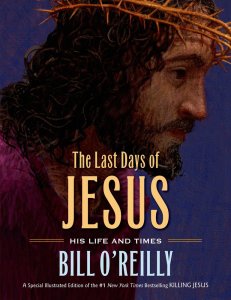
Let me begin by saying that I admire Bill O’Reilly and often enjoy his program on FOX News. One can also tell in his writings, especially about Lincoln and Kennedy, that he was probably a first class high-school history teacher. Having said this, I fear that writing about Jesus may have placed him somewhat at a disadvantage. Jesus was a man but so much more. When we miss that element of more, history itself becomes falsified or distorted. Like any good researcher, he relies heavily upon sources. And yet, religion more than any other field, is subject to a vast range of opinion and much of it unreliable or biased. Of course, his task from the very beginning may have been handicapped. Can people of faith ever approach Jesus as if that faith does not matter and does not speak to the truth?
The book for young readers, The Last Days of Jesus by Bill O’Reilly alternately embraces a biblical literalism as with the Nativity narratives, harkens to pious tradition as with the association of Mary Magdalene with the prostitute, and is permeated with a modern agnostic historical-criticism as with the avoidance of the miracles and resurrection of Christ. The book often reads like a disjointed commentary on various biblical texts. O’Reilly connects Mary Magdalen with the prostitute or sinner woman in Scripture. This is a correlation disputed by many modern exegetes and even by the authorities he cites in the back of the book. (He recommends these sources for further reading but they are not written for young readers.)
This work is the offspring to the adult book, Killing Jesus: A History. The difficulty in the focus upon our Lord in the former work is transplanted into the latter. The emphasis is placed upon “the man” Jesus of Nazareth and not upon Jesus as the Christ, Messiah or Savior. Taken too far and this ushers us back to the ancient heresy of Nestorianism where the divine unity is shattered and we begin to speak of two sons, Jesus the Man and Christ the God. Nestorius was condemned for preferring the Marian titles “Mother of the Christ” and “Mother of the Man” to the label, “Mother of God.” Subtracting his godhood entirely would restore the ancient heresy of Arianism. Any history that subtracts the divinity and its attributes becomes a falsification of the past. Those who would utterly restrict themselves to Christ as a human creature have already adopted a methodical atheism. In his usual gentle way, Raymond Arroyo brought this up on his television EWTN interview with O’Reilly. O’Reilly elaborated with him, too, that he purported to give a historical accounting of Jesus, not a spiritual one. My concern as a priest is simple: is such a rendering really possible and does it not malign the spiritual as if it is somehow unreal? (I do not question or doubt O’Reilly’s word that he remains a Catholic and a believer.)
When speaking about the incident where our Lord as a boy is teaching the teachers in the Temple, we must be careful not to speculate too much about what Jesus knows and feels (see page 36). There is a real debate about the psychology of Jesus. While he has human experiential knowledge, he is reckoned by the Church as a divine person. Thus, he knows what he needs to know. While he might pocket elements of his divine knowledge, it is always there. Even for ourselves, as human beings, we do not focus upon everything we know at any given moment. Further, when Jesus had disappeared from the caravan, he was puzzled that they had to search and did not know that he had to be in his “Father’s house.” Notice in the conversation between Jesus and Mary that Joseph is silent. He well appreciates that as the foster father of Christ, his role is reserved to protector or guardian of the Holy Family. He is already beginning to decrease and will never appear again in the Gospels. Christ will be obedient to them but given his true identity, such is by choice and not necessity.
We cannot know for sure why Jesus does all that he does. We cannot begin to imagine how infused science might have impacted upon Jesus’ knowing. But the question keeps arising, what did Jesus know and feel? Did Jesus know only “a little Hebrew”? Jesus seemed very learned and probably spoke to Pilate in Latin. Greek was also a popular language. We know our Lord spoke Aramaic. He was raised as a Jew in a Jewish community. It is true that he had experiential knowledge, but it would be wrong to infer that he had nothing of the divine. Ours is not an amnesiac deity. He always knows who he is.
Does O’Reilly come close to heresy? If so it is probably inadvertent and has to do with the selection of words. I am troubled how he speaks about the agony in the garden. We all know what our Lord does and says but O’Reilly writes, “It is a moment of anguish and despair” (page 190). Anguish, yes, but despair, no! Despair is a sin against hope and such would be impossible for the God-Man. As with the temptations, our Lord could be tempted but he could not fall. God cannot be placed in opposition to himself. There is no historical Jesus or strictly human Jesus that has ever existed. He is an exegetical fiction. His angst is not despair but the genuine sign that the incarnation was real. No human being in his right mind wants to be tortured and murdered. Our human nature rebels at the prospect and that is what happens here. Nevertheless, in the face of this sorrow, he reaffirms the mission given him by his Father. This is more than asking for strength. Jesus is not going to run away. He knows what is coming. He demonstrates what true fidelity means. He shows us the true face of courage.
It was not so much that Christians were embarrassed by the Cross (see page 258); rather, the difficulty had to do with a Greek philosophical bias against such vulnerability, especially from one purported to be divine. It was a stumbling block to conversions. Christians were aware that the Cross was a sign of contradiction and yet the symbol of Christ’s role as our sin-offering; he dies on our behalf. As we see in the Good Friday liturgy, the Cross appeared to be Christ’s defeat and yet it becomes a sign of his victory. It is precisely this demarcation in the text between the so-called historical Jesus and the Christ of faith that skews a proper understanding of what Jesus is about. Of course, such falls in line with the atheistic agenda of the Jesus Seminar (which the book recommends as a source).
The author writes, “But Jesus has committed a grave offense—he interrupted the flow of funds from the temple to Rome when he flipped over the money changer’s tables” (page 197). I am not sure that there is much evidence for such a financial collusion. The text infers at this point that the financial pressure and greed from the Pharisees is what brought Jesus to trial. However, later on the text rightly narrates it as blasphemy. Does O’Reilly view the allegation of blasphemy as a trumped charge to indict Jesus? Again, I think a narrow vision damages the full truth. The Pharisees and scribes are true believers and zealots. Yes, they do not want anyone to erode their authority. Yes, the turning over of the money-changing tables did not win him friends among them. However, they were also appalled by his healings on the Sabbath and references to him as God’s Son. Monotheism and the Law were principal elements of their religion and they failed to see how Jesus could fit into this picture.
I seriously doubt that this book will find a place in parish catechesis programs. Too much is missing. Even if one were to restrict an evaluation to our Lord’s social mission, the outreach of Christ to the poor, the sick, the oppressed, the weak and to women, is largely neglected. And yet, it was precisely this preferential option for the poor, the suffering and sinners that made the religious leadership hate Jesus all the more. They may have been afraid of an uprising but they also resented that he was winning the hearts of the people, especially the rabble. God did not only bless the religious elite or the rich and powerful. God also loved those who were lost, afraid and weak. We would not want to cast Jesus as an Obama-like social worker; but neither would we image him as a modern-day Republican hardliner or fiscal conservative.
The Lord’s Supper is essentially reduced to an interchange about Judas and the betrayal. Totally absent is how Jesus will take the Seder and change the rubrics to refer to himself as the new sacrificial Lamb of God. I find this odd because he immediately connects this meal with the coming ordeal of the Cross. I suspect it is subtracted because it refers to sectarian topics like the priesthood and the Mass. However, it also removes the sense that Jesus will not simply have his life taken from him; rather, he will lay it down.
As with the Pharisees, the principal motivation for Judas is depicted as greed and yet many biblical authorities suggest that it was far more complex. It may be that Judas was impatient and wanted to force Jesus’ hand— to compel him to act as the Messiah and bring about insurrection. This other element is breeched quickly on page 177.
The incident of the tax and the coin is reduced to Jesus not offending Rome but giving it deference. Here too the situation is far more complex. Yes, it is a trap but a question is asked. Often the more liberal voices will speak about how this supports dividing our loyalties between Caesar and God. This is the thinking of politicians who claim to be good Catholics but enable the murder of children through the administration’s reproductive services policies. The fact is that Jesus neither falls for the trap nor answers the question. He never really says one should pay the tax. If he says not to pay then he can be painted as an enemy of Rome. If he says pay, then he can be judged as a traitor to his own people. All he does is point to a coin with the emperor’s face on it and says give to God what belongs to God and give to Caesar what belongs to Caesar. In truth, everything belongs to God. The Scriptures are clear, ours is a jealous God.
Is Jesus “a revolutionary with a band of disciples and growing legion of followers” (page 162)? The text itself admits that Jesus did not intend to establish a new government or overthrow the Romans. He often steers away from the title of Messiah because it is so generally misinterpreted in military terms. Nevertheless, our Lord did come to establish a new People of God or a Church. This theme is generally omitted from the text. Note that when Jesus asks the question about his identity, he applauds Peter for seeing the truth, “You are the Messiah, the Son of the living God” (page 127). However, absent in the text is the Lord’s offer of a new identity upon Peter as ROCK and that upon this ROCK he would build his Church. (A brief mention of the renaming appears on page 97 but minus the connection to the Church.) Our Lord next prophesies his coming passion and death. He will die for the Church. He will pass on something of this authority to the Church. Without this appreciation, a major theme that leads to his sacrifice is omitted. Certain religious revisionists propose that references to the Church were later written into the biblical accounts; however, the teaching Church would argue that such reflected the mind of Christ and were part of these events.
When it comes to the miracles, the text speaks of “stories” of Jesus doing so (page 119) and that he “apparently” healed a man’s withered hand. The miracles are viewed by Christianity as proofs to Christ’s divinity and mission. Along with the resurrection, their subtraction or reduction to conjecture immediately eliminates any arguable profession of divinity. Except for how Jesus has been “used” by people in history, the assessment of our Lord would be that he was a failed prophet who was executed as a criminal and later had his body stolen and probably destroyed. O’Reilly never says this, and as a Catholic would probably not hold such a view, however, it is what the text tends to communicate. While Jesus does use “logic and words of Scripture to upend” the arguments of the Pharisees, the primary mode of communication is through stories and actions. He tells parables and he works miracles. Much of his attraction comes down to these two operations. They are elements largely missing from the book’s overall assessment of Christ.
The Afterword itself, after mentioning the story of the Jewish leadership that Jesus’ body was stolen, gives the various views about our Lord held by Christians, Jews, Buddhists, Hindus, and Muslims. The implication within this religious indifferentism is that all the interpretations might be fanciful. Of course, restricting oneself to the natural elements throughout would seem to invalidate the supernatural altogether. It ends with the empty tomb and the simple line, “To this day, the body of Jesus of Nazareth has never been found.” While we have a curt ending in the Gospel of Mark, the Christian testimony is far richer. I have serious reservations about an agnostic or atheistic retelling of the story of Jesus that subtracts the miraculous. Who is to say that these things are not based upon real history?
This is the home of the AWALT PAPERS, the posting of various pieces of wisdom salvaged from the writings, teachings and sermons of the late Msgr. William J. Awalt.





















 A priest friend recently announced that he saw the Church’s way of speaking of those with same-sex attractions as wildly exaggerated, harsh and inaccurate. His assertion deeply bothered me. I am well aware that people have taken offense and even left the Church over the assessment that homosexuals and lesbians are sexually “disordered.” Often the response to this issue or individual revelations, even from pulpits, is a deafening silence. Homosexuality is joining contraception as one of those issues rarely raised from the pulpit. Privately, people increasing accept and love their friends, regardless. Young people not only accept it but see those who do not as bigoted. Older people are generally more judgmental, but often suspend this judgment when the gay person is someone close to them. Silence is no real answer and a fire-and-brimstone sermon will arouse anger and hurt. But the truth is the truth, is it not? My priest friend argues in a way that makes my head hurt. Often I think he is more like the Episcopalians, suggesting compromise on contraception, divorce and remarriage, and now homosexuality. As for myself, I have no desire to cause pain for others; however, I was ordained to speak for Christ and his Church, not for myself. The Bible and the traditions of the Church give a negative verdict to same-sex attraction and activity. While the orientation is problematical, sin only enters the picture with wrongful fantasies and immoral actions.