The blog header depicts an important and yet mis-understood New Testament scene, Jesus flogging the money-changers out of the temple. I selected it because the faith that gives us consolation can also make us very uncomfortable. Both Divine Mercy and Divine Justice meet in Jesus. Priests are ministers of reconciliation, but never at the cost of truth. In or out of season, we must be courageous in preaching and living out the Gospel of Life. The title of my blog is a play on words, not Flogger Priest but Blogger Priest.
Once upon a time there was a church founded on God’s entering into human history in order to give humanity a path to eternal life and happiness with him. The Savior that God sent, his only-begotten Son, did not write a book but founded a community, a church, upon the witness and ministry of twelve apostles. He sent this church the gift of the Holy Spirit, the spirit of love between Father and Son, the Spirit of the truth that God had revealed about himself and humanity by breaking into the history of human sinfulness.
This church, a hierarchical communion, continued through history, living among different peoples and cultures, filled with sinners, but always guided in the essentials of her life and teaching by the Holy Spirit. She called herself “Catholic” because her purpose was to preach a universal faith and a universal morality, encompassing all peoples and cultures. This claim often invited conflict with the ruling classes of many countries. About 1,800 years into her often stormy history, this church found herself as a very small group in a new country in Eastern North America that promised to respect all religions because the State would not be confessional; it would not try to play the role of a religion.
This church knew that it was far from socially acceptable in this new country. One of the reasons the country was established was to protest the king of England’s permitting the public celebration of the Catholic Mass on the soil of the British Empire in the newly conquered Catholic territories of Canada. He had betrayed his coronation oath to combat Catholicism, defined as “America’s greatest enemy,” and protect Protestantism, bringing the pure religion of the colonists into danger and giving them the moral right to revolt and reject his rule.
Nonetheless, many Catholics in the American colonies thought their life might be better in the new country than under a regime whose ruling class had penalized and persecuted them since the mid-16th century. They made this new country their own and served her loyally. The social history was often contentious, but the State basically kept its promise to protect all religions and not become a rival to them, a fake church. Until recent years.
There was always a quasi-religious element in the public creed of the country. It lived off the myth of human progress, which had little place for dependence on divine providence. It tended to exploit the religiosity of the ordinary people by using religious language to co-opt them into the purposes of the ruling class. Forms of anti-Catholicism were part of its social DNA. It had encouraged its citizens to think of themselves as the creators of world history and the managers of nature, so that no source of truth outside of themselves needed to be consulted to check their collective purposes and desires. But it had never explicitly taken upon itself the mantle of a religion and officially told its citizens what they must personally think or what “values” they must personalize in order to deserve to be part of the country. Until recent years.
In recent years, society has brought social and legislative approval to all types of sexual relationships that used to be considered “sinful.” Since the biblical vision of what it means to be human tells us that not every friendship or love can be expressed in sexual relations, the church’s teaching on these issues is now evidence of intolerance for what the civil law upholds and even imposes. What was once a request to live and let live has now become a demand for approval. The “ruling class,” those who shape public opinion in politics, in education, in communications, in entertainment, is using the civil law to impose its own form of morality on everyone. We are told that, even in marriage itself, there is no difference between men and women, although nature and our very bodies clearly evidence that men and women are not interchangeable at will in forming a family. Nevertheless, those who do not conform to the official religion, we are warned, place their citizenship in danger.
When the recent case about religious objection to one provision of the Health Care Act was decided against the State religion, the Huffington Post (June 30, 2014) raised “concerns about the compatibility between being a Catholic and being a good citizen.” This is not the voice of the nativists who first fought against Catholic immigration in the 1830s. Nor is it the voice of those who burned convents and churches in Boston and Philadelphia a decade later. Neither is it the voice of the Know-Nothing Party of the 1840s and 1850s, nor of the Ku Klux Klan, which burned crosses before Catholic churches in the Midwest after the civil war. It is a voice more sophisticated than that of the American Protective Association, whose members promised never to vote for a Catholic for public office. This is, rather, the selfrighteous voice of some members of the American establishment today who regard themselves as “progressive” and “enlightened.”
The inevitable result is a crisis of belief for many Catholics. Throughout history, when Catholics and other believers in revealed religion have been forced to choose between being taught by God or instructed by politicians, professors, editors of major newspapers and entertainers, many have opted to go along with the powers that be. This reduces a great tension in their lives, although it also brings with it the worship of a false god. It takes no moral courage to conform to government and social pressure. It takes a deep faith to “swim against the tide,” as Pope Francis recently encouraged young people to do at last summer’s World Youth Day.
Swimming against the tide means limiting one’s access to positions of prestige and power in society. It means that those who choose to live by the Catholic faith will not be welcomed as political candidates to national office, will not sit on editorial boards of major newspapers, will not be at home on most university faculties, will not have successful careers as actors and entertainers. Nor will their children, who will also be suspect. Since all public institutions, no matter who owns or operates them, will be agents of the government and conform their activities to the demands of the official religion, the practice of medicine and law will become more difficult for faithful Catholics. It already means in some States that those who run businesses must conform their activities to the official religion or be fined, as Christians and Jews are fined for their religion in countries governed by Sharia law.
A reader of the tale of two churches, an outside observer, might note that American civil law has done much to weaken and destroy what is the basic unit of every human society, the family. With the weakening of the internal restraints that healthy family life teaches, the State will need to impose more and more external restraints on everyone’s activities. An outside observer might also note that the official religion’s imposing whatever its proponents currently desire on all citizens and even on the world at large inevitably generates resentment. An outside observer might point out that class plays a large role in determining the tenets of the official State religion. “Same-sex marriage,” as a case in point, is not an issue for the poor or those on the margins of society.
How does the tale end? We don’t know. The actual situation is, of course, far more complex than a story plot, and there are many actors and characters, even among the ruling class, who do not want their beloved country to transform itself into a fake church. It would be wrong to lose hope, since there are so many good and faithful people.
Catholics do know, with the certainty of faith, that, when Christ returns in glory to judge the living and the dead, the church, in some recognizable shape or form that is both Catholic and Apostolic, will be there to meet him. There is no such divine guarantee for any country, culture or society of this or any age.
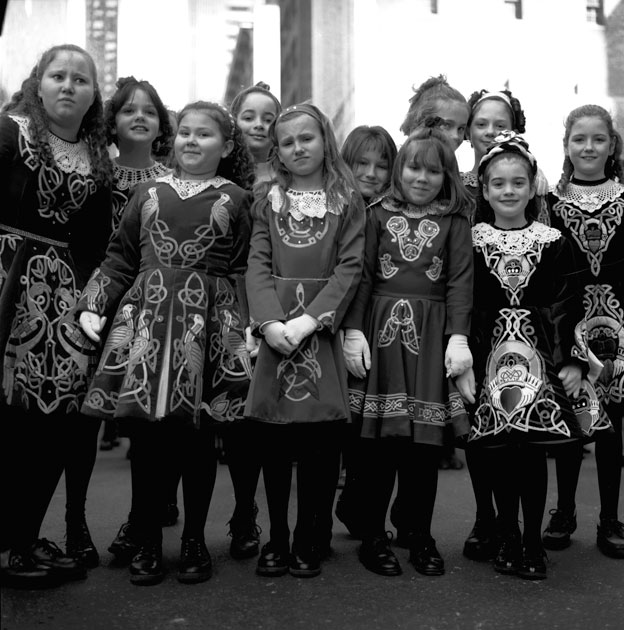
What are your thoughts, Father Joe? The blogosphere is in a terrible commotion, for and against the inclusion of a LGBT contingent in the parade. There is a lot of name-calling and other voices are remaining strangely silent.
FATHER JOE:
At a time when Catholics are dying for Christ, is this issue worth the attention it is getting?
But okay, I am not sure what to think or say but I will try.
As a preamble to my thoughts, it is too bad that many critics have lost the art of civil discourse. As with politics, when people disagree with each other these days they end up demonizing the other side. Our nation and Church are being ripped asunder by polemics and ad hominem attacks. It resolves nothing but makes fellow citizens into hardened enemies and threatens the Church with a virtual schism. I know what the Church teaches, but of course, as the good Pope tells us, this must be measured with charity.
Like many conservative voices, by temperament I would also like to strike out and keep Catholic events pure; but as I get older, I worry that a lack of tact could alienate souls that might yet be saved. There is a tension in balancing our witness to the truth with the forgiveness of sins. I can exhort, condemn, and correct— at least addressing sins if not sinners; but maybe time and space is needed for certain sinners to reflect, know mercy and find healing? I have serious misgivings about the decision in New York, but beyond this parade I have long had concerns about the association of St. Patrick’s Day with ribald antics and public drunkenness. It seems like a terribly poor manner to remember a great saint of the Church.
MICHAEL:
Time for healing? Am I hearing right? Have you been seduced by the “Church of Nice”? These dissenters are not interested in healing. They get angry when you call them sinners. They want acceptance and they want to change the Church. Some of them would like to see the Church disappear. We cannot compromise with them. There is no such thing as a partial Catholic. You are either in the boat or out. It is scandalous that a Cardinal of the Church should assert that homosexuality is no big deal. These [words deleted] are headed straight for hell and those who pamper them will risk going with them.
FATHER JOE:
Is the scenario you present entirely the case? When Catholic voices are demanding separation and asylum from such public events, are they not giving our enemies precisely what they want? A dead Church or a Church in hiding is still a win scenario for those who hate her and want the Church gone. Cardinal Dolan insists that we must find a new language and/or way of dealing with the advocates of homosexuality, divorce-and-remarried persons, users of contraception and even those who wrongly accent freedom over the sanctity of human life. When asked about how one might both affirm gays and still oppose so-called same-sex marriages, he honestly replied that he did not know yet. It seems to me that he is grasping for a new hermeneutic that would not betray our core principles. I cannot say for sure if it is possible. Personally, I doubt that accommodation will work and fear it will make matters worse. But he is still a successor of the apostles and must be given the respect as such. We may suggest that there is a disconnect between the new praxis and the enunciated principles; but it would be wrong to suggest any formal detraction from Catholic moral teaching. Like the Pope, the Cardinal is Catholic.
MICHAEL:
We need more courage from our shepherds. Priests should speak out!
FATHER JOE:
Priests are men of the Church. Years ago I was told that strong words of mine hurt and embarrassed one of our important shepherds. I am wounded by this memory. Priests, in particular, owe their bishops both RESPECT and obedience. The Church must speak with a unified voice. While seeking to avoid scandal, we should support our pastors and bishops, even when we fail to see things entirely their way. There has to be confidence that the Holy Spirit still guides our shepherds and protects the Church. This struggle to be faithful and respectful is often hard. The matter of pro-abortion politicians routinely taking Holy Communion have many times brought me to tears during prayer. I have long agonized over what I personally feel we should do (withhold the sacrament) over what we are directed to do by just authority. But as I wrote before, priests are men of the Church. They pledge respect and obedience, not only to God but to their bishops and their successors. They must do and say as they are told. The late Cardinal Hickey was very clear about this and he spoke about how we are extensions of the bishop’s ministry. While this can be taken too far, his assertion was theological sound. The laity have a certain latitude that ordained men do not. However, even they should not breech themselves from their shepherds. We must all be faithful to the teaching Church; conservatives (to use a political term) have generally been better at this than the more liberal or progressive voices. But once the lawful Magisterium is attacked, one is no better than the other.
I am sickened by the recent negativity focused upon Cardinal Dolan and how certain voices on the right harshly ridicule Pope Francis. We do not get to pick our Popes. And, as I tell my traditionalist friends, we immediately follow living Popes, not dead ones. Our support for Church leadership means respectful and civil dialogue, and never recourse to fearful muted criticism or caustic public ridicule
MICHAEL:
I think you are being naïve. Truth is truth and sin is sin. If church leaders compromise themselves and the saving message then the laity should call them out. You never used to mince words! You’re not the Father Joe I used to know.
FATHER JOE:
Did you ever know me? I am a faithful son of the Church. I took a promise to obey my bishop and his successors. I will be judged as to how I keep that pledge. As for you and the laity, be careful that you do not forget yourselves. You can no more tell Church leaders their business than can the liberal dissenters. Have you forgotten your place? You are not the Magisterium. You cannot defend Catholicism by discarding a major element of her hierarchical nature. This is a common mistake these days, from critics on the right and left. It damages the harmony and good order of the Church.
SEAMUS:
There may be a lot about this parade business to which we are not privy. It is easy to criticize when the weight of such decisions rests on the shoulders of others. The planners and the Archbishop may be in a situation where no decision will please everybody.
This parade is older than the United States and its continuation is in jeopardy. No one wants to be labeled as the person who killed it. The planners’ concession admits that the parade mimics the messiness of our world and society.
FATHER JOE:
Sinners and saints are mixed together. People and relationships are broken. Dreams are made and others are left unrealized. Is it enough to witness within this “messiness” or do we circle the wagons and refuse to associate with the world around us? Jesus went out to the poor, the oppressed, the sick and hurting.
SEAMUS:
He associated with tax-collectors and sinners, even prostitutes. While we must never forget our message and the truths of faith— might this be an opportunity to draw prodigals home?
MICHAEL:
Jesus also called the hypocritical Jewish leadership, “blind guides” and “dead men’s bones.” He refused to even speak with Herod. When Jesus related to the rabble it was always for purposes of bringing them to repentance and conversion. Where is that here? This “who am I to judge” nonsense from Pope Francis is like an Ebola epidemic spreading throughout the Church. How can we condone activity that will cast souls into hell? It is a lie to perpetrators and an enticement to others to join the procession, or in this case the parade, marching into the mouth of Satan.
FATHER JOE:
There will always be some who will exploit and reject our faith message. While we might argue about a prudential decision here; there is no evil intent from the organizers, Hibernians or the Archbishop. There is no denial of Church doctrine. The Church has been clear and consistent about her teachings in the public forum on human sexuality. I doubt people will forget this any time soon. The mechanisms of authority and truth will protect her from going in the direction of our confused Episcopalian brothers and sisters.
Our Lord saw many new faces following him after the multiplication of the bread and fish. Not all followed for the right reason, but he did not stop them. He lamented that some were only interested in the free food. When the real demands of his preaching were voiced, they abandoned him. It will not be the presence of sinners that will destroy the parade, not as long as we make it clear what is right and wrong. If we remain resolute, those unhappy about the overall Catholic message will eventually fall away on their own initiative.
MICHAEL:
No doubt some of those who abandoned Jesus were among the crowd that shouted, “Crucify him! Crucify him! We have no king but Caesar!”
FATHER JOE:
Yes, I suspect so, but that is the chance you take.
SEAMUS:
We are still battling with Caesar. As individuals and as a Church we may face further recrimination and abuse. But that seems to me to be part of the package Jesus gives to his followers.
FATHER JOE:
Returning to basics, what does it mean to be Irish? Some treat being Irish as if it automatically makes one a member of the Catholic club. But those days are over, both here at home and back in the ancient homeland itself. The nation that converted much of the world is now closing seminaries and being ministered to by priests from Nigeria. Scandal and secularism have destroyed in a decade or two what centuries-old British persecution was never able to accomplish.
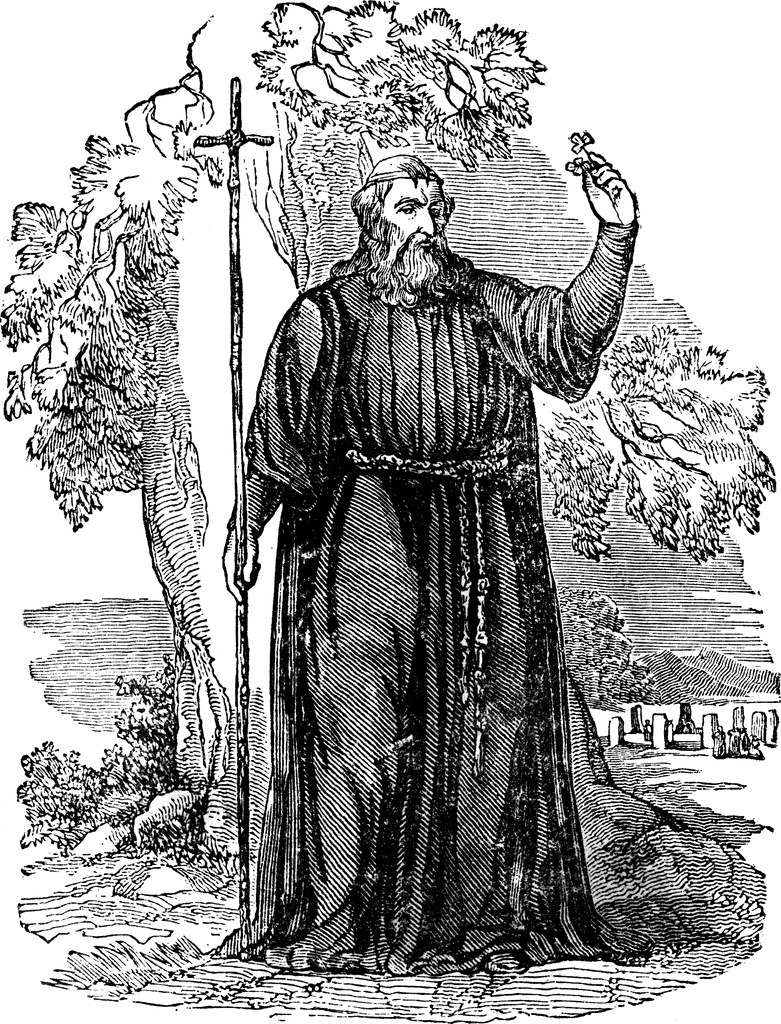
I like parades, and I would not mind tripping up a leprechaun and making a wish upon his gold at the rainbow’s end, but as with Santa Claus and the Easter Bunny, my emphasis would always be upon Christ and his saints. There is nothing wrong with a pint of green beer. But it does bother me that these accidentals to St. Patrick’s Day should displace going to Mass, seeking God’s mercy and receiving (with the proper disposition) the Blessed Sacrament. St. Patrick was a slave who found his freedom and then came back to the Emerald Isle so that those in slavery to sin might know true freedom. Those who ignorantly worshipped trees would now come to the dead tree of the Cross and adore the one who laid down his life to redeem us. The Irish suffered the destruction of their monasteries and saw their priests humiliated, hunted and murdered; and yet, they still held on to the faith. They suffered starvation and dire poverty, coming to this nation for a new start. Signs advertised, “No Irish Wanted,” and yet they endured prejudice and worked hard to be good citizens and Christians. They had babies and Irish families were large and happy. It may be that traditions of family are among the greatest gifts they brought to this land. Remembering their past, they worked for a better tomorrow for their children. Folklore says that St. Patrick drove out the snakes from Ireland. May we never compromise ourselves with the serpent that began the woes of men in the primordial Garden.
MICHAEL:
Here in the States, many of the Irish have lost their sense of guilt over sin and have increasingly replaced the substance of faith with green beer and fancies about leprechauns, rainbows, pots of gold and wearing the green.
SEAMUS:
How closely have you both followed the news in New York? There have been a lot of “fighting words” over the decision by the organizers to allow a gay contingent under their own banner into the St. Patrick’s Day Parade.
MICHAEL:
This had long been resisted as incompatible with the Catholic faith.
FATHER JOE:
Actually, it was initially denied because of a conflict with public morals and decency. Today the winds of public opinion have evidently changed direction.
SEAMUS:
But it remains a celebration named after a saint. Is this not a kind of blasphemy? Does it mean that the faith is no longer regarded by the organizers as an intrinsic element of Irish identity?
MICHAEL:
Precisely!
FATHER JOE:
I am no mind-reader but I take the organizers for their word that the issue of faith is still important. It might simply be an overture of peace to Irish men and women who struggle with their gender identity and yet still want to celebrate their ethnic roots. At least I hope so. But admittedly, I am fearful that a goodwill gesture will be turned against us.
SEAMUS:
The parade committee stated that its “change of tone and expanded inclusiveness is a gesture of goodwill to the LGBT community in our continuing effort to keep the parade above politics.” The statement also reiterated that the event was “remaining loyal to Church teachings.”
MICHAEL:
Empty words— that is all they are.
FATHER JOE:
No, I think they mean what they say. Cardinal Timothy Dolan, the incoming Grand Marshal, acknowledged that the parade committee “continues to have my confidence and support.” He apparently agrees that a measure to keep the peace and to preserve the city parade does not signal religious dissent on the part of the Hibernians or the parade organizers. However, it may not bode well for future negotiations with the more radical groups. A rash conciliation today could lead to a more severe divide tomorrow.
MICHAEL:
That last remark is quite an understatement.
SEAMUS:
Right now, one somewhat moderate gay group affiliated with the media that broadcasts the parade is involved: OUT@NBCUniversal. They will march under their own banner. The expectation is that they merely want inclusion to celebrate Irish ethnicity and heritage.
MICHAEL:
Don’t be fooled!
FATHER JOE:
Hopefully this will be given a greater weight than any promotion of same-sex attraction; however, I suspect much of the talk and media attention will focus on their homosexuality. It has the potential to kidnap the meaning of the parade.
SEAMUS:
I suppose so, if not this time around then possibly in years to follow.
FATHER JOE:
It is my hope that pages will be taken from the late Cardinal John O’Connor’s book. He was a strong defender of Church teaching on sexual morality and yet he was a compassionate man. He volunteered to clean bedpans at an AIDS hospice. He suffered with calm and composure having a gay activist spit the consecrated host into his face. He regularly had supper with his Jewish friend, Mayor Ed Koch, on the other side of the divide upon many issues. We can be strong and still work with one another. He also knew that some might never come to the truth unless strong stands are made. Cardinal O’Connor explained his opposition to allowing groups identified as gay from marching in the parade, “Irish Catholics have been persecuted for the sole reason that they have refused to compromise Church teaching. What others may call bigotry, Irish Catholics call principle.”
MICHAEL:
It was admitted that other gay groups would be permitted in the future. What if there should be dozens of gay applicants, each demanding its inclusion? What if participants should become increasingly brazen and vulgar? Will there be a forum to vet costumes, gestures, signs and float designs? Would such be judged as censorship? Will opposing groups get to march, carrying signs and banners for traditional marriage? Once a group that defines itself chiefly by its sexual orientation is permitted, then what about future scenarios where advocates for polygamy, bestiality and pederasty will want their place in the line up? Do I exaggerate?
FATHER JOE:
You do, indeed, paint a nightmare picture of escalating corruption of the parade and its basic meaning. I pray that some semblance of control can be maintained but what was once regarded as unthinkable is realized every day. It is sometimes joked, “Expect the worse and you will never be surprised or disappointed.”
SEAMUS:
I guess I would have less a problem with the concession if past lewdness and/or belligerence were not so often displayed by protesters with their explicit banners, gestures and decorated floats.
MICHAEL:
Evil is incapable of controlling itself.
FATHER JOE:
Such images can torment the conservative mind. Gays were always free to march as individuals, but not under banners that advertised their disorientation. The fear was this would politicize the event. Unfortunately, their exclusion did the very same thing.
MICHAEL:
I bet other more militant gay organizations will not be satisfied. They may even interpret the small concession to one group as an insult. Their angry agenda will not be appeased until the basic meaning of the parade is transformed beyond recognition. Like the Red Army parading its soldiers and missiles, they want to see their victorious legions marching in drag while shocking the crowds with public passion.
Proof for what I say: https://www.youtube.com/watch?v=l3XjSsqd1rM
FATHER JOE:
I recall a NOW rally on the Mall many years ago which included such visual and vocal expressions of foul gay exhibitionism that the liberal Washington Post press took offense and CSPAN refused to repeat the program, at least during the family hour. You are correct, we have seen poor displays of manners and it even embarrasses the more civil and family-minded homosexuals. When a gay activist several years ago spat the consecrated host back into Cardinal O’Connor’s face, several came to me with utter shame to be associated with such reprobates. They were members of COURAGE, started by my cousin, the late Fr. John Harvey. They embrace a life of celibate love, prayer and service. I wonder why they have no contingent in the parade, given that they abide by Catholic moral discipline?
MIKE:
Unfortunately these men and women have a very low profile compared to most. Stereotypes are realized and literally thrown into the faces of others: “Accept us or else!” When it comes to these militant gays, theirs is not a celebration of faith and heritage, because many of them hate the Church.
FATHER JOE:
I have read already that some of them think OUT@NBCUniversal is a rouse to keep them quiet and to restore the beer sponsors. I had never heard of it but it seems to be a small amalgamation of gays and straights that share basic values and want to keep the parade a family show.
MICHAEL:
Evil is evil. They are painted in the same sickening colors.
SEAMUS:
Still, I think it hardly compares at all with a number of other groups biting at the bit to participate, like the so-called Irish Queers.
FATHER JOE:
Even there name is wrong and offensive. None of them can begin to compare to a group of faithful sons of the Church like the Ancient Order of Hibernians. The AOH is “the oldest Catholic lay organization in America and is dedicated to Friendship, Unity, and Christian Charity.” The statement was released: “Organizers (no longer strictly AOH) have diligently worked to keep politics – of any kind – out of the parade in order to preserve it as a single and unified cultural event. Paradoxically, that ended up politicizing the parade.” While we can individually question the prudence of the current decision, I could certainly see how it fits into its appreciation of Christian charity. The problem will remain that others will view it as a matter of obligatory justice, at least as understood by a secular society.
SEAMUS:
Cardinal Dolan referenced the second theme by saying that he hoped the parade would be “a source of unity for all of us.” I pray that it will be so, but I fail to see how it will not be a strained unity.
MICHAEL:
How can we have unity with devils? Mortal sin breeches any viable communion between us.
FATHER JOE:
Timothy Cardinal Dolan has caught a lot of flak for his involvement and support of the organizers. But he knows too the hearts of the good men among the organizers and of the AOH. We live in a society where we must live together despite ever widening divergences of beliefs and moral practices. The dynamics to this are complicated. Do we retreat to the ghetto so as to be untainted by the world or do we throw ourselves into the mix as a living ingredient of the melting pot? The former would minimize our voice in the public forum, the latter might risk our deformation. The answers are not as easy as some make out.
Cardinal Dolan has responded to the controversy on his blog:
However, the most important question I had to ask myself was this: does the new policy violate Catholic faith or morals? If it does, then the Committee has compromised the integrity of the Parade, and I must object and refuse to participate or support it.
From my review, it does not. Catholic teaching is clear: “being Gay” is not a sin, nor contrary to God’s revealed morals. Homosexual actions are—as are any sexual relations outside of the lifelong, faithful, loving, lifegiving bond of a man and woman in marriage—a moral teaching grounded in the Bible, reflected in nature, and faithfully taught by the Church.
So, while actions are immoral, identity is not! In fact, as the Catechism of the Catholic Church reminds us, people with same-sex attraction are God’s children, deserving dignity and respect, never to be treated with discrimination or injustice.
To the point: the committee’s decision allows a group to publicize its identity, not promote actions contrary to the values of the Church that are such an essential part of Irish culture. I have been assured that the new group marching is not promoting an agenda contrary to Church teaching, but simply identifying themselves as “Gay people of Irish ancestry.”
MICHAEL:
I think the matter is black-and-white clear. But the “Church of Nice” is too far gone to see it. Liberality and pacifism rule the day. Those who would speak the truth cower to intimidation. If it is OUR parade then we should just tell the gays to stick to their own. Must they own two New York parades? The mayor can march for them and they can keep the beer and television rights, too. Must everything Catholic be spoiled?
SEAMUS:
The Cardinal states, “Neither my predecessors as Archbishop of New York nor I have ever determined who would or would not march in this parade… but have always appreciated the cooperation of parade organizers in keeping the parade close to its Catholic heritage.”
FATHER JOE:
Honestly, I must acknowledge that I find the expression “Catholic heritage” a tad weak. Many colleges advertise their Catholic “heritage” and “tradition” long after abandoning the Church and any emphasis upon sacraments and holiness. Is a Catholic heritage the most for which we can hope in this broken world? My hope would be, as ridiculous and unlikely as it might sound, that events like the St. Patrick’s Parade would be an overwhelming expression of Christian faith, winning converts and praising God as it proceeds under the massive skyscrapers.
MICHAEL:
Good luck on that one! It may remain a cultural event but the religious significance has been killed.
FATHER JOE:
I understand where you are coming from and I sympathize, but let me finish. Personally, I would like to see the nature of the parade restored to its religious roots. Our desire for inclusion and the benefits from commercial sponsorship (as with beer companies) has escalated the secularization of the celebration. I suspect that if it returned to its pious foundations, the parade would be much smaller and many dissenting groups would want no part of it. The problem we face would largely take care of itself.
What would I like to see? Like the processions of old, in my mind’s eye, I can imagine a brilliant monstrance carried down the thoroughfare with believers falling to their knees as it passes. Next we would witness relics of hundreds of saints carried in procession and finally a beautiful float with the Blessed Mother, adorned with flowers. Hymns and chants to Christ and Mary would fill the air. Altar servers in vesture would stretch the length of the parade. Priests and people, mindful of what they really celebrate, would enter St. Patrick’s for Mass and all the other churches would be filled as well. Large screens throughout the city would televise the procession and liturgy. Millions of people would honor the great patron saint and proclaim that Jesus is Lord.
MICHAEL:
And they say I am detached from reality. A secular world knows that New York is a godless city. Radical Islamists have attacked what they judge as the home of the Great Satan. I wish things were different, but yours is a silly dream, detached from any semblance of reality.
FATHER JOE:
I know it is not the city we know now, but how about tomorrow? I still believe in the God of miracles. He can heal bodies, change minds and convert hearts.
St. Patrick, do not forget your spiritual children!
A decade ago when I challenged giving Holy Communion to pro-abortion politicians, I was told that we needed these men and women for other important issues and should not burn our bridges. Of course, when push came to shove, these politicians largely abandoned the Church anyway: forcing us to shut-down adoption services because of homosexual inclusion, redefining marriage as something other than one man and one woman, requiring contraceptive and abortifacient coverage to healthcare plans, and tightening the screws on our tax exemption.
Democrats have frequently been demonized for promoting every type of liberality that spurns traditional morality. Republicans have been castigated as uncaring or insensitive to the poor. In truth, both parties are often opportunistic. Republicans liked Pope Benedict. Democrats liked Pope Francis. But both parties play with slogans and listen to lobbyists more than operating from incontrovertible convictions. Real Catholics should know that we belong to Christ more than to any political party. Real Catholics should place the teachings of the faith above the fickle fads and fashions of men. Today the attitude is if it is civilly recognized or law then it is morally okay. This is ridiculous. Catholics must be a sign of contradiction to the world, not an enabler for evil and not a deaf ear.
Are our Catholic people on the same page with the teaching Church? Here is where we find our crisis. Many are not. Many of the political enemies of the Church are self-professed Catholics. Back in 2004, 48 Catholic Democratic members of Congress signed a letter to Cardinal McCarrick in Washington, complaining that the bishops’ statements were counterproductive and “miring the Church in partisan politics.” In other words, the Church was told to shut its mouth! The religious liberty battle stems from this attitude. The Catholic card is played at election time, but once elected they are more likely to follow the money than scruples about fundamental human rights. This often leads to a re-prioritizing of what these rights actually are. As for the rest of us, we can be as Catholic as we want inside the church doors; but once outside the church building, we are expected to surrender to Caesar.
How can we play with any of them when they do not play fair? But what would happen to us if we collect our chips and cards and go home? Would we forfeit any say? Could matters be made worse?
Second, the purpose of youth ministry is to ENABLE, not to entertain. It seems to me that much of youth ministry these days seeks to entertain; and yet, too much of their lives are already consumed by pursuing pleasure and gratification. Various synonyms for entertainment are telling: “beguile,” “distract,” “gratify,” “divert” and “indulge.” We do not want to beguile or fool our young people, but to have them encounter the truth. The last thing we want is any additional distraction when they need to be focused on the Lord. While there is a certain satisfaction with being in right relationship with God, this is a far cry from seeking pleasure for its own sake or selfishly losing ourselves in a contrived stupor, spiritual or otherwise. We need to work with our natural longing for purpose and meaning. It is here that we can share the compass setting toward Christ and the kingdom. We were made for God; nothing should divert us from this primary orientation.
Rather than wasting our time and resources on replicating worldly distractions; we should enable or equip or empower our young people with the power and promise of the Gospel. How do we translate these noble sentiments to the youth if we are not authentic and on fire? The youth minister or catechist is not properly an entertainer. Even if he or she is popular or a cult figure, what happens when he is no longer around? Some teachers try very hard to be hip. They will try to entice children with rewards for good behavior and for doing well on lessons. These teachers are also very quick to reprimand when students fail to respond to favors. Many teachers desire to be liked, a few would be satisfied with being feared, and yet the best ones imitate the posture of John the Baptizer, decreasing so that Christ might increase. We want to be successful, but it is by far more important that we be faithful. The true religious mentor witnesses the faith in word and action. He or she shares the faith in the hope that it will be contagious. We are all sinners needing God’s mercy. The ancient cry of the Church is echoed, “Repent and believe!” Youth may or may not like us; more importantly, they should be transformed ever more and more into the likeness of Christ. The good teacher wants his charges to know God’s grace and salvation. The devil could recite from memory the entire catechism— but he would spurn the love that God had for him. We want our charges to know the Lord and fall ever deeper in love with him. If we forget this part of the process, then we have missed the whole point. We seek to make the ground fertile for a saving encounter. God makes the offer; we hope that our youth will accept it. While only the Lord can save us; family, catechists and pastors have a part to play. God would have us be his instruments.
I recall a religion teacher many years ago who was considered dull and “not with it” by many of his fellow teachers. They thought for sure that he would be ineffective and would quickly quit. Instead of being wary of their own shortcomings, they gossiped about him. Later I took delight in their general shock when they noticed his pupils always talking about him in a positive light. Some of the youth saw their attitude and instead of joining in their critique or wanting him replaced, actually defended him. One child even said, “Those teachers always talk down about us, too; but he speaks to us as if every one of us matters.” Yes, he told corny jokes and spoke in a monotone voice, but the young people also recognized that he was authentic. He cared about them and did not pretend to be something he was not. When a couple of the boys were caught parodying his manner or style, he joined the laughter of their classmates. He knew how he was but what was important was sharing the saving faith. The kids began each class by reading about the important saints of the day or week. They took turns leading the class in prayer. They came to appreciate that they were also called to a relationship with Christ and to a holiness of life.
Youth ministry should not fall upon the shoulders of one or two volunteers. Rather, whole parishes with their pastors, catechists, families, and volunteers should engage the youth and others with the saving kerygma. Parishioners are urged to pass out our RCIA flyers for adults who might want to become Catholic or for Catholics missing sacraments. Parishioners are reminded of their need to catechize their children and to share this need with family and friends. I have heard people say that they do not want to nag others about their religious faith and responsibilities. Certainly, while we do not want to turn people off to religious faith, I suspect that a person who escapes hell and enjoys the bliss of heaven will be very thankful for a little well-meaning and needed nagging. We are all to proclaim the Good News. A failure to share the Gospel is a failure to love. If Jesus and the Church matter to us, then why would we not want to invite others to have what we have? Unlike other possessions, one can only hold on to a saving faith by giving it away to others.
Instead of always talking down to youth, we need to welcome and prepare them for full membership in our faith communities. We should not make Christianity easy or excuse opportunities for witness or service. Rather, we must make serious demands for discipleship. Yes, this would include activities and ministries like serving at the altar, reading from the pulpit, welcoming people at the church door, helping out at soup kitchens, volunteering to assist with the Special Olympics, tutoring kids who need help with their school work, cleaning up local streets, shopping for the elderly or doing other chores, visiting nursing homes, etc. It means shining with the LIGHT OF CHRIST in all the many ordinary things of life at home, at play, at school, at work and at church.
Is a reevaluation in order? Are we really thinking with the mind of Christ when it comes to expectations for our youth? While knowledge plays a part, passing tests and good behavior are not immediately reflective of one’s spiritual status. How do Jesus and the teachings of faith inform the daily life and preoccupations of our youth? When kids can neither name the commandments nor the beatitudes then how can they live them out? If they have trouble understanding that Jesus is a divine person who becomes a human being to save us, then what exactly makes them a Christian? A believer (over the age of reason) must know who the Lord is and what he does for us. Jesus suffers and dies that we might be forgiven, healed and have a share in his life. We cannot save ourselves. Everything we have is gift and Jesus is the greatest gratuity of all. Are our youth in regular prayerful communication with him? Have we helped them in knowing how to pray and how to discern God’s will in their lives? Are we where we should be in the spiritual life?
Our Lord wants us on fire with the faith. The Scriptures do not recommend any form of nominal Christianity. We read in Revelation 3:15-16:
“I know your works; I know that you are neither cold nor hot. I wish you were either cold or hot. So, because you are lukewarm, neither hot nor cold, I will spit you out of my mouth.”
Fanaticism is only really wrong when it violates charity. One cannot be too Christian or overly converted. And yet, adults and youth alike temper their Christianity as something that can be departmentalized or restrained by secular good manners. Christianity, at its very heart, is intolerant to sin, hypocrisy and error. We would not know this from the many ways that faith is compromised or hidden today. It is as if we are ashamed to be Christians. Young people face this temptation all the time, particularly in contemporary language, music, dance, clothing and relationships. It is easier or convenient to forget one’s Christianity when it gets in the way or calls for witness. We treat the faith like a hat that can be removed or exchanged; instead, it should be like the skin that goes with us wherever we go.
Our ministry with youth should be as fire seeking to ignite a candle. This fire is not an empty emotionalism or a pretense at youthfulness. We do not seek to be buddies with them but sentinels to the great lover of souls. The fire illumines Christ and communicates that we should encounter Christ. There is urgency to the Gospel that Jesus constantly referenced and which is pertinent to the work we do. We will only have the children for a short while. We must make the best of the time and resources we have. We need to help them to know and to love the Lord. We must give them the tools to proclaim the Gospel and witness to the faith. The faith is only real when it is being spread. When we keep it to ourselves, it begins to die— no, more than this— we begin to die.
We often catechize the youth to parrot back the right words regarding faith; more importantly, we want them to embrace the faith in an evangelistic manner. Our youth will face far more tensions and opposition than previous generations. They must be enabled to defend the faith with an apologetics based upon a spirit of ecumenism that never compromises the truth. Each according to his or her vocation, we are a priestly people and recipients of the great commission:
“Consequently, from now on we regard no one according to the flesh; even if we once knew Christ according to the flesh, yet now we know him so no longer. So whoever is in Christ is a new creation: the old things have passed away; behold, new things have come. And all this is from God, who has reconciled us to himself through Christ and given us the ministry of reconciliation, namely, God was reconciling the world to himself in Christ, not counting their trespasses against them and entrusting to us the message of reconciliation. So we are ambassadors for Christ, as if God were appealing through us. We implore you on behalf of Christ, be reconciled to God. For our sake he made him to be sin who did not know sin, so that we might become the righteousness of God in him” (2 Corinthians 5:16-21).
I was privileged to see something of this fire in college teens that walked down the east coast as Crusaders for Life. They well understood that the Gospel of Life means that every child is a reflection of the Christ Child. All life is sacred and there is no pro-abortion Christianity. Abortion attacks the very heart of the faith, the incarnation of Jesus Christ. One cannot rightly say AMEN to Jesus in the Blessed Sacrament while we deny the one made in his image within the womb. Sponsored by the American Life League, they were young and dedicated to this truth— so much so that they were attacked by angry politicians as fanatics and avoided by certain embarrassed churchmen who preferred to play things safe. But Christianity is not a safe religion. Jesus defended the dignity of women, called the children to him, ate with tax collectors and sinners, etc. He healed bodies and forgave souls their sins. He did “good” and that got him betrayed, libeled, scourged and crucified. We must prepare our children as Saint John Paul beseeched us. He told the youth at one of the World Youth Days that he saw blood and martyrdom in their future. In other words, he echoed Jesus who said that any who would come after him must take up his cross and follow. All this is a testimony to the quality of faith, not simply as a mental deliberation or as a verbal expression, but as a profound obedience to Christ and the mandate of love. We are beckoned to be signs of contradiction, loving our enemies and forgiving those who hurt us.
We need to pray with and for our youth. I have recommended in the past that youth compose their own prayers— writing them down and then delivering them. There is a tendency in certain programs for clergy or catechists or youth ministers to do all the praying. This is a mistake. While we need to study the mechanics of liturgy and the ABC’s of faith; inroads must be made for the Holy Spirit to touch our children. The Word of God should be made pertinent to their lives. God’s saving intervention is not locked in past history. Rather, the story of redemption needs to intersect all our personal stories. God is present. God is active. God loves us. When a person is touched by God, he or she will never be the same again. This is all so much deeper than worrying about youth group attendance or frustration that youth are not where we want them spiritually. The pertinent concern must be, instead, where they are now and how God can reach them. We must accept the youth we are given, good, bad and indifferent, and concentrate upon how we can facilitate an awakening to God’s presence and love. Nothing and no one benefits from imagining how different things might be if we only had different or better kids.
The defection from faith is an important issue and why for the past two years I invited a young FOCUS missionary named Katie to give her appeal in the parish. Along with other young adults, FOCUS ministers to our youth on college campuses. The statistics are frightful. Some 80% of our youth fall way while at college. These young adults put their careers and much about their personal lives on hold so that they might make a difference for others.
I think in truth the issues began long before our teens headed off for college or entered the work force. Minimally Catholic kids suddenly find that they do not have the watchful eyes of parents upon them. Quickly, they are influenced by peers who have no quarter in their lives for organized religion or traditional values. Liberal faculties deride Christianity and mock the sacraments as the domain of ignorance. Professor Paul Zachary Myers is the most blatant on this list, urging college students to steal consecrated hosts so that he can document on the Internet his desecration of the Eucharist. This is not representative of a civil debate about belief; rather, it is an emotional and militant attack upon people of faith.
College campuses will sometimes have Newman Centers and/or Catholic Student Associations. But many of the Catholic students fail to get involved. The attendance of Catholic students at Mass, even at Catholic schools is often pathetic. The best numbers I have heard are at places like St. Francis in Steubenville, Ohio and Ave Maria in Florida. I know one school where the chaplain schedules Masses at midnight so that students will have less competition for their time. One is more likely to see lewd photos on Facebook than posts about religious epiphanies and retreats or time before the Blessed Sacrament. Of course, many parents might not know because they are quickly blocked from seeing what is actually going on.
I am not saying that efforts to evangelize in college are in vain. Rather, I am suggesting that more could have been done (or done differently) earlier to minimize the damage later on. Catholic schools could also be more proactive with single-sex dorms, expectations about participation at Mass, and an uncompromised message about fidelity to the faith and the living out of the commandments. However, we have a problem— when honors are granted to those who seek to strip the Church of her religious liberty— when organizations that promote a homosexual agenda and lifestyle are given funds and recognition— when health service referrals include artificial contraception and abortions— and when crucifixes are removed from classroom walls so as not to offend— then we have become our own worst enemy.
Why does it make sense to baptize a child who doesn’t know what is happening, or what about forced baptism over the centuries? Why does either have an effect? In one case the baby knows nothing and int he other you have an unwilling “convert” who wants nothing to do with the Catholic faith? Thanks!
Response from Father Joe:
We do not force baptisms upon adults. Missionaries often endured great hardships and even suffered martyrdom in bringing the faith to others around the world. Unwilling converts cannot be validly baptized or received into the Church. This has always been the case. The situation with children depends upon several points:
1. The apostolic and patristic tradition of baptizing whole households, including the children of believers.
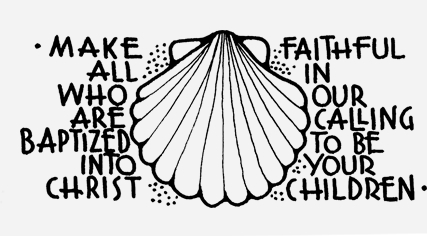
2. While a child has not yet reached the age of reason, parents may profess faith on behalf of a child with the expectation that they will raise the child in the faith and insure the sacraments of penance, holy communion and confirmation. There are three sacraments of initiation, not one: BAPTISM, EUCHARIST, and CONFIRMATION. At confirmation that person will make for himself the profession and promises made by parents at baptism.
3. The Church is the sacrament of salvation. Catholics are called both to a CORPORATE faith in Jesus as well as a PERSONAL one. This corporate element, linked to the communion of the saints, is why parents can profess faith for a child. We do not come to the Lord alone.
4. After the age of reason, an unbaptized child must take catechesis and make the baptismal promises himself.
5. The sacraments, including baptism, do what they are intended to do. They were instituted by Christ for his Church.
6. Baptism is more than an acknowledgment or affirmation of saving faith, it accomplished the following:
Makes one a temple of the Holy Spirit;
Accesses sanctifying grace;
Conforms a person to the likeness of Christ;
Washes away sin (original sin);
A person is spiritually adopted as a son or daughter of our heavenly Father;
I’m in a dilemma and need some guidance. I have a friend whom I’ve known practically my whole life. He is more of a brother to me than my actual brothers. He is gay, and I do accept that, even if I don’t necessarily agree with it. Anyway, we live in a state where same sex marriage is legal and he and his partner have decided to go to the court house to “make it legal.” He has asked me (as his best friend) to be his witness at the ceremony. If I support my friend, is it a sin? He really does not have anyone else in his life other than his partner and me. I do want to help him. Thank you.
FATHER JOE:
A sense of brotherhood is a special gift of friendship and this is commendable. But given that the Church does not recognize same-sex unions, it would be difficult for you to take an active part in the ceremony without compromising yourself. The very nature of a witness is to signify that a true marriage did indeed take place. Catholics would struggle with several points of the scenario you mention:
1. While a Catholic could witness to a heterosexual marriage between two non-Catholics (not married before) before a civil magistrate; it would be problematical if there is a prior bond or if one or both are Catholics. (Catholics must be married before a priest or deacon).
2. The Church would not recognize a same-sex marriage as valid. Does it give scandal if a Catholic witnesses something which the Church would judge as invalid and sinful?
I suspect it is point two that brings you to ask the question here. Is there a way to let your friend know that you love him even if you cannot publicly affirm his lifestyle and bond? Would he judge that as a personal renunciation? Could you explain that you have wrestled with the issue and feel that it would call into question certain moral values of your own?
There is probably no good answer. The best response might be to say, that as much as you would like to do so, you are unable to participate. Certainly you would not want to be hurtful. But evidently you are a practicing Catholic and this might give public scandal (giving recognition) and/or be interpreted as formal dissent from Church teaching.
Allow me to make reference to the Old Testament and sin offering. A sinner would go to the Jewish priest with a lamb without blemish. He MUST lay his hand on the lamb. This signified a transferring of sin to the lamb and acquiring the lamb’s innocence. The lamb had to die. Sin must DIE. Under the New Covenant, Jesus is the Lamb of God. The Messiah is our offering. HOWEVER, one cannot physically lay hands on the lamb of God. This is how one lays hands on Jesus and acquires His righteousness: whoever BELIEVES/FAITH that He is the son of God becomes righteous. This is unmistakably the most fundamental building block of Christianity!
When a believer in faith bows down in prayer they have instant access to God, justified by Jesus. When I ask someone else to intercede, I have downplayed the biggest sacrifice; the very reason God became man. It was so that whoever believed should not perish. Otherwise, I have put my FAITH in something other than His dying for my sins. In effect, I have said that even though Christ did die for my sins and I am justified before God. It is still not good enough. So stop going to saint Mary! Worthless are cries of please intercede! JESUS said “I AM THE WAY THE TRUTH AND LIFE NO ONE COMES TO THE FATHER EXCEPT BY ME.” That truth was absolute. There is no negotiating it. When He said on the Cross “IT IS FINISHED,” He meant just that.
FATHER JOE:
You call into question the following:
1. The manner in which Jesus offers a sacrifice of propitiation as the Lamb of God.
2. The extension of the paschal mystery into the life of the Church and the sacraments.
3. The participation in the one-time suffering and death of Jesus.
4. The definition of saving faith as combined with obedience (works) and accessed first through baptism.
5. The inner unity of Jesus as a divine Person but made fully human.
6. The significance of the Church, communion of the saints and intercessory prayer.
What you initially discuss is an appreciation of substitution. The blood of the lamb is sacrificed so that the believer might be spared, as with the Jews when the first born of Egypt suffered the angel of death.
You assert that with Jesus as “the Lamb of God,” no one could physically lay hands upon him. This is false and calls into question the graphic truth of the incarnation. It is a variation upon the heresy of the Nestorians. The Second Person of the Trinity takes to himself human flesh, he becomes Man. Thus he is able to lay down his life, enduring the indignity of the scourging and crucifixion. Jesus really did die on the Cross. The Mass is an unbloody but real re-presentation of this saving mystery. We are born again by water and the spirit. As God’s people, we come back again and again to the Lord so that our sins might be washed away and that we might be filled with grace. There is a spiritual operation here connected to Calvary, the last Supper and the sacraments.
Faith and baptism allows us to be engaged by the Paschal Mystery of Christ, his suffering, dying, rising and ascension. Our belief or faith is equivalent to obedience. God’s response is the gift of salvation for the redeemed. Christ is obedient to the Father even unto the Cross. He calls us to imitate his fidelity by taking up our crosses and following him.
Intercession to saints or to the Church is an acknowledgement that ours is both a personal and a corporate Lord and Savior. We gather to pray as the Church and our Lord tells us that he is present. There is no competition or downplaying the oblation of the Cross. Far from it, our unity with each other is expressive of the reality of the Church that Jesus instituted. You deny this truth from God’s Word and embrace a Baptist tradition that denies the ongoing nature of faith, obedience and the need for communion with the Church. You short-change revelation and deprive yourself of the full benefits of Christ oblation. You say you are justified before the Lord and yet this too may be a sinful presumption. You cannot save yourself. Only God can save you. Many will cry, “Lord, Lord,” and Jesus will respond, “I tell you, I do not know you.” The Church is the Body of Christ. If you attack the Church, you assault Jesus.
Mary intercedes, but by always beseeching us to follow her Son. She beckons that we might know and love him. All prayer, even intercessory, finds God as its proper object. The saints pray with and for us. We are not alone.
The saving work of Jesus is accomplished in that Jesus will never suffer and die again. But the saving power and effects of his work are still being realized in the lives of believers. It is in this sense that it will not be finished or over until the consummation of the world to Christ. The story of salvation is still being told in our lives.
A priest friend recently announced that he saw the Church’s way of speaking of those with same-sex attractions as wildly exaggerated, harsh and inaccurate. His assertion deeply bothered me. I am well aware that people have taken offense and even left the Church over the assessment that homosexuals and lesbians are sexually “disordered.” Often the response to this issue or individual revelations, even from pulpits, is a deafening silence. Homosexuality is joining contraception as one of those issues rarely raised from the pulpit. Privately, people increasing accept and love their friends, regardless. Young people not only accept it but see those who do not as bigoted. Older people are generally more judgmental, but often suspend this judgment when the gay person is someone close to them. Silence is no real answer and a fire-and-brimstone sermon will arouse anger and hurt. But the truth is the truth, is it not? My priest friend argues in a way that makes my head hurt. Often I think he is more like the Episcopalians, suggesting compromise on contraception, divorce and remarriage, and now homosexuality. As for myself, I have no desire to cause pain for others; however, I was ordained to speak for Christ and his Church, not for myself. The Bible and the traditions of the Church give a negative verdict to same-sex attraction and activity. While the orientation is problematical, sin only enters the picture with wrongful fantasies and immoral actions.
My priest colleague insists that I am very wrong. There is the unspoken insinuation that he thinks I am slow or a bit dull-witted. He wonders why I cannot see things his way. He argues that we all want to be faithful to Jesus and Jesus was all about bringing the outcast home. He indicts me as doing the opposite, behaving more like a Pharisee. He raises his voice, “Show me even one place in the Gospels where Jesus teaches anything about homosexuality! If it is so important, then why is Jesus absolutely silent about it?” He laments that our Lord spoke forcibly against divorce, but points out that there is nothing on this issue. My mind works differently from his. The Bible is more than the Gospels. The writings of St. Paul are also part of the New Testament. The whole book is the inspired Word of God. The apostle mentions homosexuality as one of a whole grocery list of sins that would forfeit the kingdom. This is serious language. If this is a sin that can land a person in hell; then how can we truly love them and either permit it or exhibit silence? He spoke as the kids do— “But they love each other! How can love ever be wrong?” Love can be plenty wrong. This was not just love, but physical and sexual behavior. This can be added to love, or express love, but love can be very wrong. You have no right to love another man’s wife. A priest has no right to love and keep a mistress. A man has no right to take another man to bed. The same goes for women with women. They can love as parent and child, as siblings, and as dear platonic friends— but erotic and genital love takes it where has no right to go. My priest friend came right out and said it, throwing aside recent papal teaching and the universal catechism, “As long as the gay couple is living in a loving and committed relationship, there is no sin, nothing is disordered.” This was not a new opinion. I heard it from one of my old professors some thirty years ago, Fr. Charles Curran. This was one of the dissenting views that cost him his license and position at the Catholic University of America.
My position is very different. I would side with my late cousin, Fr. John Harvey, the founder of an organization called COURAGE. These faithful sons and daughters deal with their disorder not by acting out but by embracing a life of celibate love, prayerful meditation and service to the community. We should not pretend that vice is virtue. Rather, we should call our brothers to repentance, conversion and heroic discipleship.
It is true that a person should not be judged by one element of his life. However, the activists themselves are the ones who raise their orientation as the singular marker for their identity. An orientation and lifestyle is redrafted as a basic expression of who they are and as something protected by civil rights laws. When you say “hate the sin” but “love the sinner,” they get mad and take it personally. They make no demarcation between their sexuality and how they are accepted as persons. They are wrong to do this but it has become an effective tool for manipulating people and institutions in our society. When it comes to the Catholic Church, though, they bust their heads against a stone wall. Everyone else is giving in, but the Church still says that “what they do” is wrong. What they hear from the Church is “who you are” is wrong. I suspect my brother priest left his guard down to this sort of control tactic. They seek to turn the guilt back on us so that the Church will give in. While we can show special compassion to individuals, I see no way for Catholicism to backtrack on this.
The General Synod of the Church of England voted on Monday to consecrate priestesses as women bishops. Well, there’s the nail to the coffin for the home of Anglicanism. Ecumenism with them will be restricted to soup kitchens, sharing contributions from C.S, Lewis, and appreciation for perfecting the English language. The bridges have been burned to most else. Since women cannot be ordained in truth, this makes arguments about their Masses and the Eucharist mute. Fake priests can only give you a counterfeit Holy Communion. When it came to morality, our ships passed in the night a long time ago. They disregard both Sacred Scripture and Sacred Tradition, wrongly approving homosexuality and dismissing the indissolubility of marriage. Abortion is reduced to a personal choice, far from the Catholic stance that sees it as an assault upon the heart of the Gospel of Life. Their last convention in the States could only agree about how terrible landmines were, as if that is a big issue in suburbia. This is what happens when morality collapses and an “everything goes” mentality takes over. Public opinion and modernity is given preference over divine revelation. Instead of obedience to God, the human becomes the measure of all things— and people are fickle and frequently wrong. The Orthodox churches are lamenting that years of work toward a common faith and even levels of recognition have been thrown upon the garbage heap. Anglicanism, except as a small group received by the Holy See, is destined not to be counted as a branch of the apostolic and “catholic” family of churches. The “reapproachment” with them since Vatican II is now a dismal failure because the Anglicanism of even half a century ago no longer exists. It has been replaced by a mutated structure that will continue to devolve and crumble. Australian Anglicans are arguing that priests might be optional and that the laity can offer the Mass. Fragmented, one segment fights with another, and there is no contemporary pretense of a world Anglican order. Certain traditionalists among them refused the offer of Pope Benedict XVI, hoping to rebuild with a union of conservative African bishops. But how long will it be until modernity will invade that new structure? Ironically, some of them attack the Anglicans who accepted the special offer from the Pope in becoming Catholics. They still buy the prejudices against Rome which were initially an element of their split. Catholicism has its dissenters; but they will have no official weight in the practice of our sacraments and doctrines. The accidentals may change, as with language, but the deposit of faith is safe and sound. As for the Anglicans, could they even agree as to what this deposit consists?
The Anglicans feel that immutable doctrine can be changed by ballot. Here is the vote approving women bishops:
House of Bishops: 37 to 2 with 1 abstention
House of Clergy: 162 to 25 with 4 abstentions
House of Laity: 52 to 45 with 5 abstentions
This move goes against the teachings and pattern passed down from Jesus. There was no woman among the twelve apostles. Jesus did not worry about stereotypes. But this one, he did not break. It was God’s will. Anglicans no longer care. I guess they would say that Jesus was wrong. Of course, this change was anticipated. A long time in the mix, the first ingredient was added back in 1994 when they began ordaining women as priestesses (women priests). Error breeds error. The United States made a woman its chief Episcopalian bishop some years ago, Katharine Jefferts Schori. Before her they elected their first gay bishop. Australian, New Zealand, and Canada also have women bishops. The show continues but it no longer matters. They can wear their pointy hats and play-act all they want— these women are neither true priests nor bishops. Both Orthodoxy and Catholicism are in agreement here. There is no third tier to the Church. Without a valid hierarchy, there can be no true priests. If there is no priesthood, then there can be no Eucharist (sacrifice of propitiation and real presence). If there is no Eucharist, the ecclesial community is not really a CHURCH. End of Story
This is the home of the AWALT PAPERS, the posting of various pieces of wisdom salvaged from the writings, teachings and sermons of the late Msgr. William J. Awalt.
























 Once upon a time there was a church founded on God’s entering into human history in order to give humanity a path to eternal life and happiness with him. The Savior that God sent, his only-begotten Son, did not write a book but founded a community, a church, upon the witness and ministry of twelve apostles. He sent this church the gift of the Holy Spirit, the spirit of love between Father and Son, the Spirit of the truth that God had revealed about himself and humanity by breaking into the history of human sinfulness.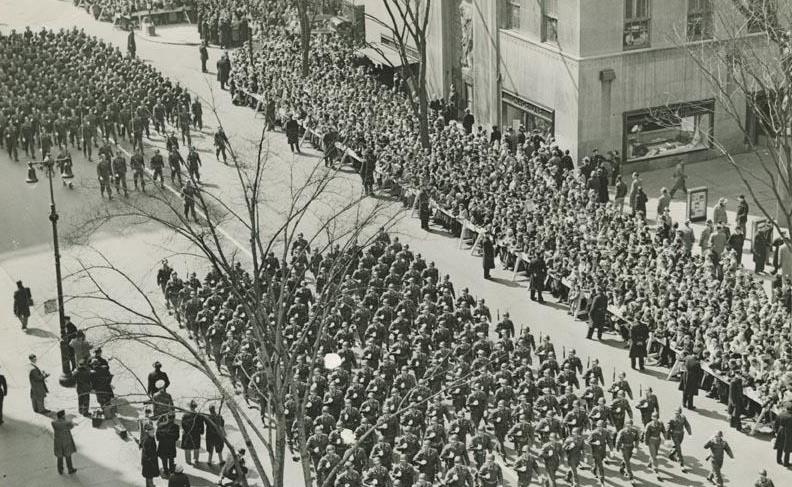
























 Blogger Priest