• Our Blogger

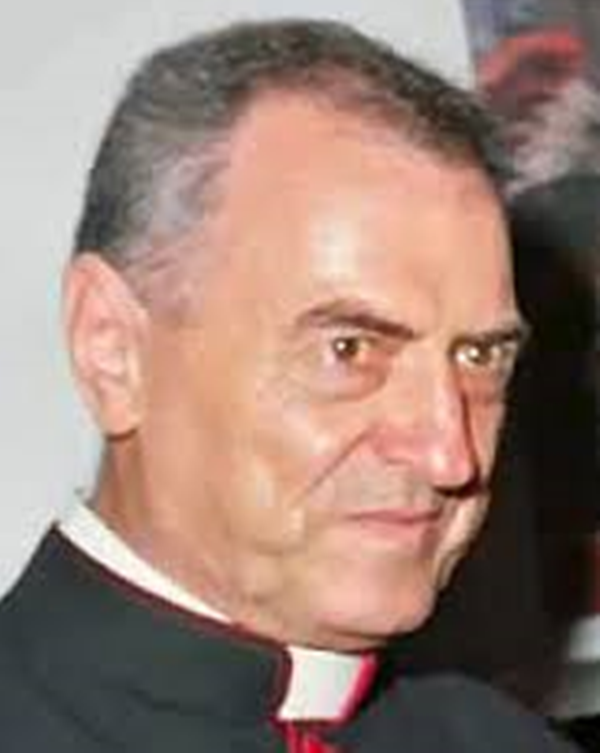
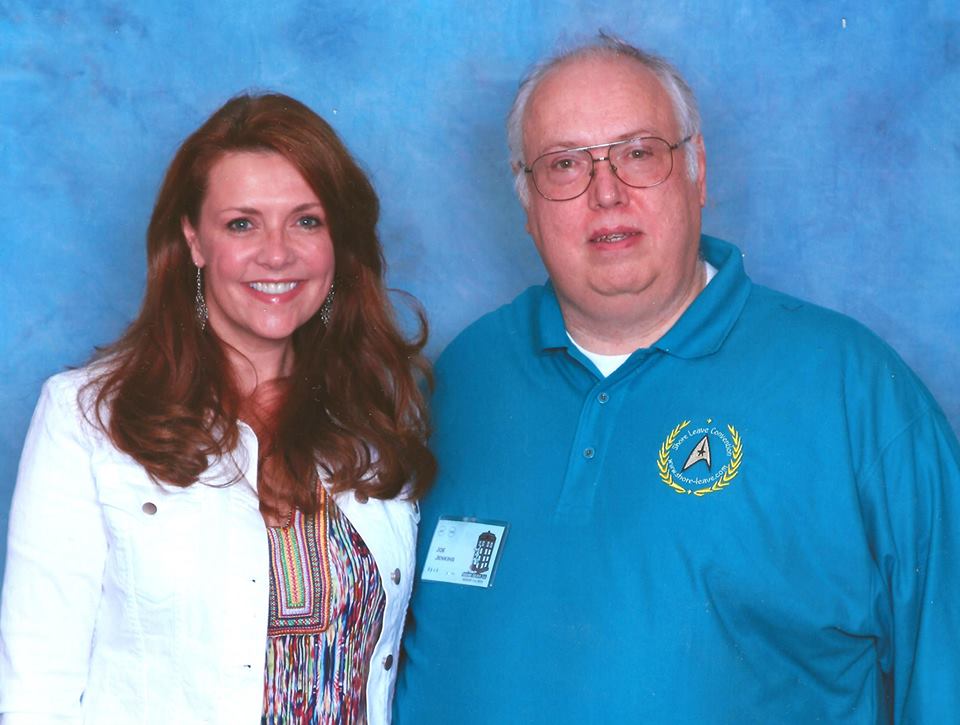
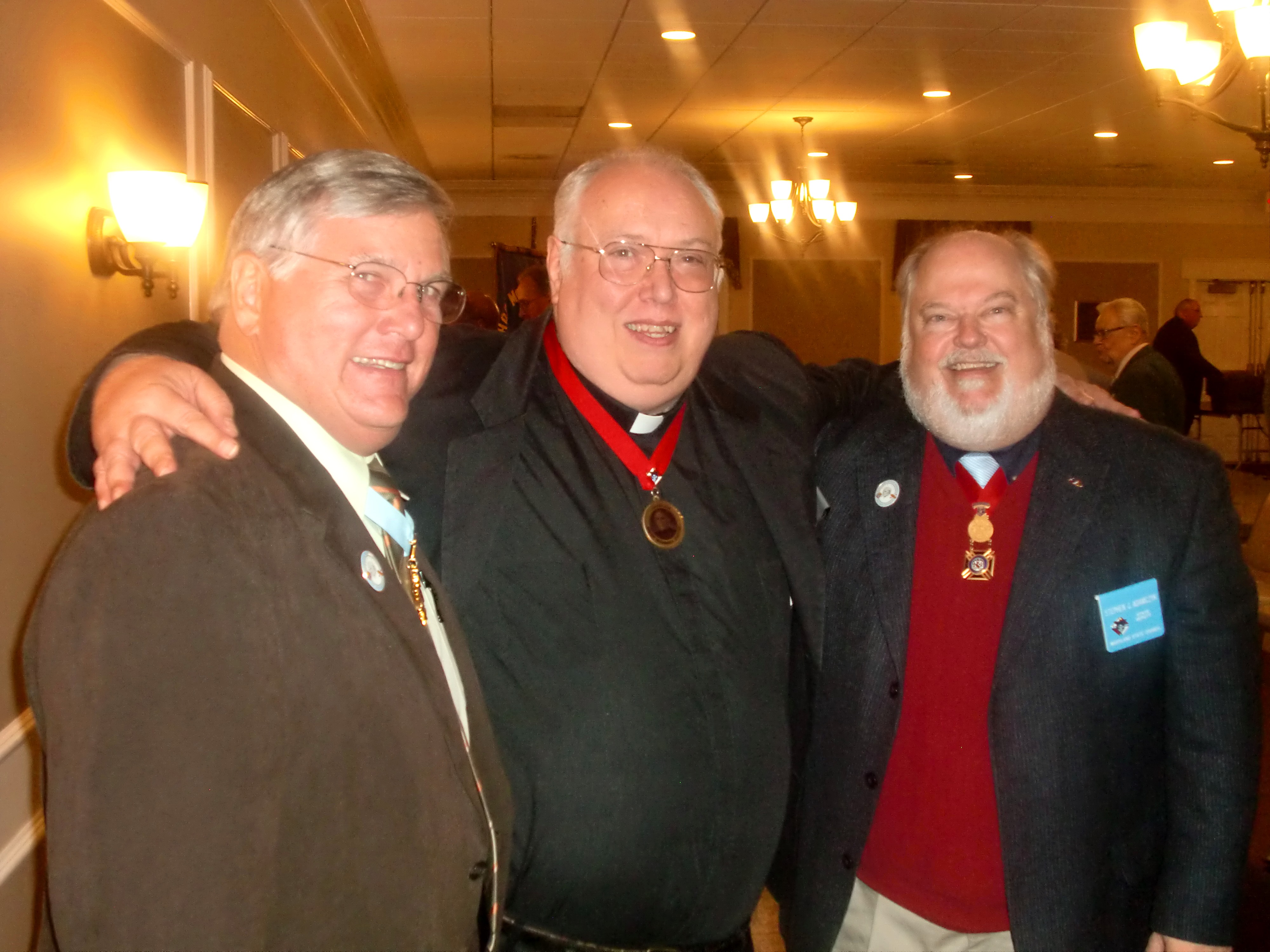
    Fr. Joseph Jenkins

  • The blog header depicts an important and yet mis-understood New Testament scene, Jesus flogging the money-changers out of the temple. I selected it because the faith that gives us consolation can also make us very uncomfortable. Both Divine Mercy and Divine Justice meet in Jesus. Priests are ministers of reconciliation, but never at the cost of truth. In or out of season, we must be courageous in preaching and living out the Gospel of Life. The title of my blog is a play on words, not Flogger Priest but Blogger Priest.

  • Archives

  • Categories

  • Recent Posts

  • Recent Comments

    Josh's avatarJosh on Mixed Signals about Homosexual…
    gjmc90249's avatargjmc90249 on Marian Titles & the Mantle…
    Jeremy Kok's avatarJeremy Kok on Ask a Priest
    Anonymous's avatarAnonymous on Ask a Priest
    forsamuraimarket's avatarforsamuraimarket on Ask a Priest

Commission to Reform Annulment Process

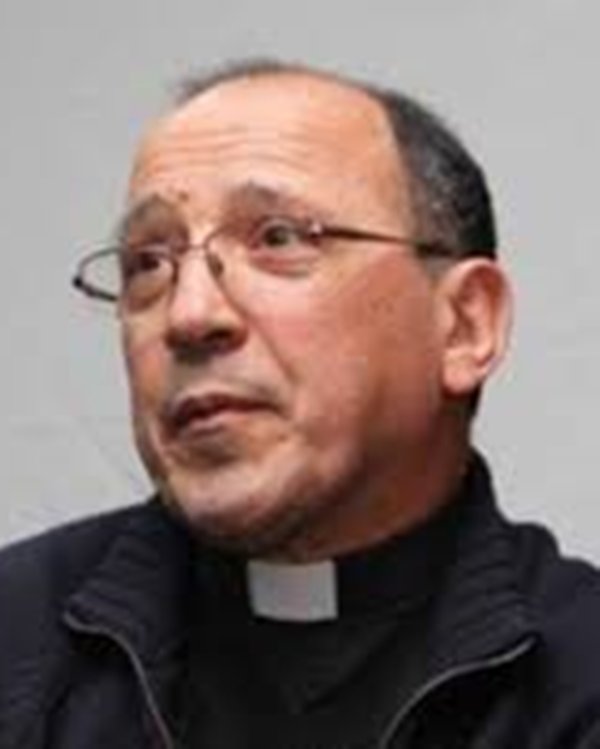
Alejandro W. Bunge Archbishop Luis  Francisco Ladaria Ferrer, SJ Bishop Dimitri Salachas

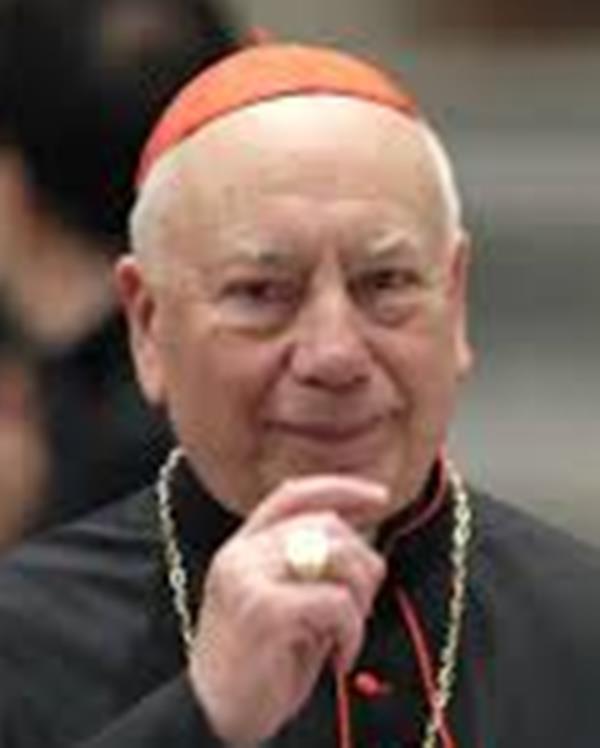
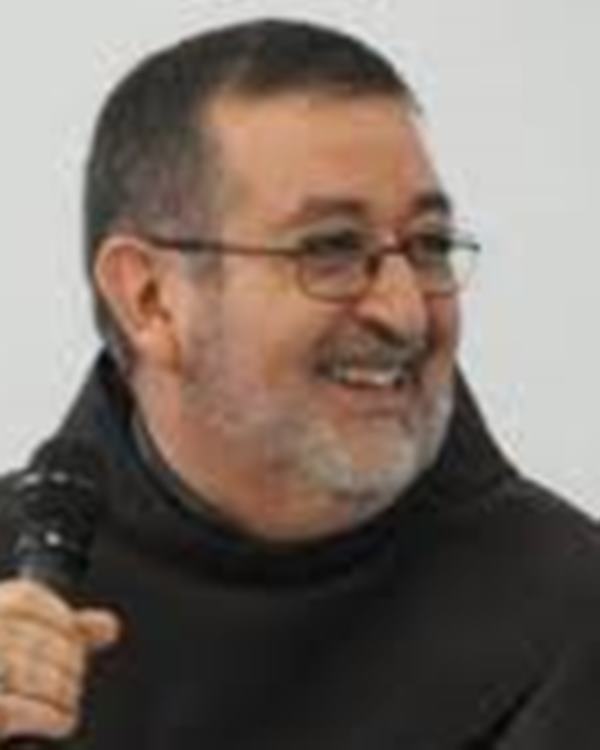
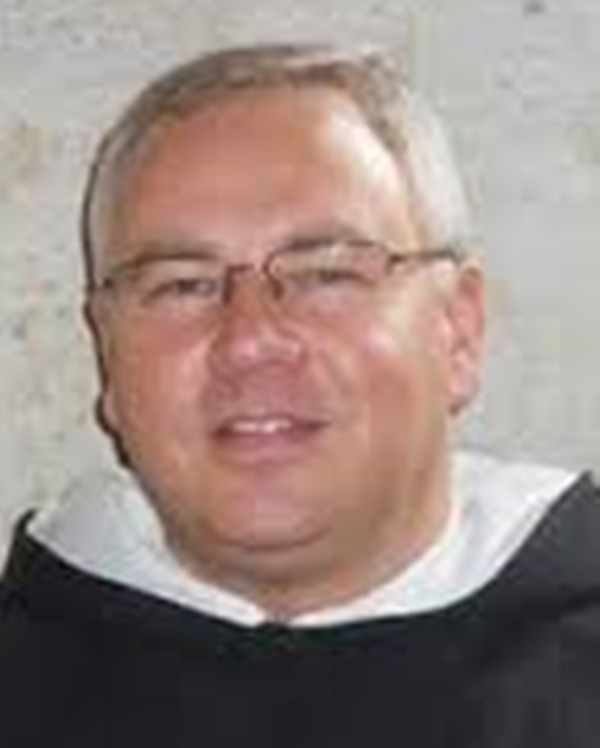
Cardinal Francesco Coccopalmerio Fr. Jorge Horta Espinoza, O.F.M. Konštanc Miroslav Adam, O.P.

Leo Xavier Michael Arokiaraj Msgr. Pio Vito Pinto Msgrs. Maurice Monier

 Nikolaus Schöch, O.F.M. Prof. Paolo Moneta

FROM LEFT TO RIGHT  (Notice they are mostly clerics and no women.)

Row 1 – Msgr. Alejandro W. Bunge / Archbishop Luis  Francisco Ladaria Ferrer, SJ / Bishop Dimitri Salachas

Row 2 – Cardinal Francesco Coccopalmerio / Fr. Jorge Horta Espinoza, O.F.M. / Fr. Konštanc Miroslav Adam, O.P.

Row 3 – Msgr. Leo Xavier Michael Arokiaraj /  Msgr. Pio Vito Pinto / Msgr. Maurice Monier

Row 4 – Rev. Fr.  Nikolaus Schöch, O.F.M. / Prof. Paolo Moneta

Pope Francis Establishes Commission to Reform Marriage Annulment Process

(Vatican Radio) The Holy See Press Office on Saturday announced Pope Francis has decided to establish a Special Commission  for the study of the reform of the matrimonial processes in canon law. The decision was made on August 2, 2014.

This Committee will be chaired by Msgr. Pio Vito Pinto, Dean of the Roman Rota.  The other members are:  and will be composed of the following members: Cardinal Francesco Coccopalmerio, President of the Pontifical Council for Legislative Texts; Archbishop Luis  Francisco Ladaria Ferrer, SJ, secretary of the Congregation for the Doctrine of the Faith; Bishop Dimitri Salachas, Apostolic Exarch of the Greek Byzantine Catholic Church; Msgrs. Maurice Monier, Leo Xavier Michael Arokiaraj and Alejandro W. Bunge, Prelate Auditors of the Tribunal of the Roman Rota; the Rev. Fr.  Nikolaus Schöch, O.F.M., Substitute Promotor of Justice of the Supreme Tribunal of the Apostolic Signatura; Fr. Konštanc Miroslav Adam, O.P., Rector of the Pontifical University of Saint Thomas Aquinas (Angelicum); Fr. Jorge Horta Espinoza, O.F.M., Dean of the Faculty of Canon Law of the Pontifical University Antoniamum; and Prof. Paolo Moneta, formerly professor of Canon Law at the University of Pisa.

The work of the Commission will start as soon as possible and will have as its goal to prepare a proposal of reform of the matrimonial process, with the objective of simplifying its procedure, making it more streamlined, and safeguarding the principle of the indissolubility of matrimony.

The Special Synod Faces Serious Issues

We all know that there are many people who come up for Holy Communion while ill-disposed for the sacrament. This is a deeper question than the plight of divorced-and-remarried Catholics.  There is regular scandal about pro-abortion politicians taking the sacrament.  All hell broke loose when a priest denied the Eucharist to a lesbian woman at her mother’s funeral.  This does not even take into account the many communicants (unknown to the priest) who are ill-disposed by various mortal sins and lack of prayerful preparation.  There is also the question of non-Catholic participation, and their sense of alienation and not being welcome when Holy Communion is distributed.  Given these many scenarios, it seems that part of the special synod must be on the nature of the Eucharist, its reception and how we might deal with the growing tension.

Outside of Mass attendance, the special synod will necessarily have to discuss the evolving changes in the makeup of family units: one-spouse homes, broken families, children raised by grandparents, foster and adoptive parents, families with unmarried couples and illegitimate children and same-sex unions.  There are even bizarre situations, as when I had two women and a man come see me to prepare for the baptism of two children.  One belonged to the man’s wife and the other to his girlfriend or mistress.  They all lived under the same roof.  These things are less and less rare.  They make my head hurt.  How can it be fixed?  Must we live with the messiness?

Bishop Tobin on Remarried Couples & the Eucharist

pptobin280409Has anyone else read Bishop Thomas Tobin’s letter posted on the Providence Diocese’s website?  He invites discussion.  Thus, with all due respect, I would like to share my concerns.  The bishop writes:

In my personal reflection on this dilemma, I turn to the incident in the Gospels in which Jesus and His followers were walking through a field of grain on the Sabbath and because they were hungry, began to pick and eat the grain, a clear violation of an important Mosaic Law. The offense was roundly condemned by the religious experts, the Pharisees. But in response, Jesus said, “The Sabbath was made for man, not man for the Sabbath” (Mk 2:23-28).  In other words, while not denying the validity of the law, our Lord clearly placed it in a “pastoral context,” exempting its enforcement due to the human needs of the moment. Could we not take a similar approach to marriage law today?

One cannot really compare the issue of divorced-and-remarried Catholics being allowed to receive Holy Communion with the incident where our Lord’s apostles are charged with violation of the Sabbath by picking and eating the heads of grain (Mk 2:23-28).  The first is in regard to spiritual disposition and the sacrilege of taking Holy Communion while in mortal sin.  The latter simply focuses upon a pharisaical interpretation of the commandment demanding rest.  The apostles were not in any grievously sinful state.  Jesus excuses them, as a foretaste of the freedom that comes with his dispensation.  But, more than this, Jesus is God.  The lawgiver can excuse whatever laws he wills.  The Church can also make modifications, as with our keeping the Sunday Observance over the traditional Hebrew Sabbath.  However, such authority is not absolute and this juridical rendering is a far cry from trying to circumnavigate around basic objective moral norms.  The Church and the Pope do not have the authority to authorize sin and sacrilege.

What constitutes a genuine pastoral approach?  Excusing or enabling serious sin is no favor to anyone.  While we may be troubled by exclusion and feelings of hurt; how can these compare to the fires of hell and the loss of God’s friendship.  The pastoral cannot be so focused on the external situation or appearances that we neglect the internal reality.  The corollary to the assertion that “matrimony is made for man, not man for matrimony” does not find its solution in feigned second marriages but in a chaste celibacy.  Promises are made to be kept.  If the first marriage is authentic, then as long as one spouse lives, any attempted second marriage is a fiction.  That is the long-and-short of it.  There is no viable solution out of this conundrum.  This is more than “the lofty demands of the law,” but the enduring truth that the two become one flesh.  Affections might stray but one spouse continues to belong to the other.  Infidelity is stealing what is the spouse’s due and giving it to another.  There is no way that the Church could rubber-stamp such a scenario.

The bishop writes,

But at the same time, the Church has taught the pre-eminent value of receiving the Holy Eucharist, and I keep hearing the words of Jesus about the Eucharist, words that are just as valid and important as His words about marriage: “Unless you eat the flesh of the Son of Man and drink his blood, you do not have life within you” (John 6:53).

Missing from this assessment is the ancient teaching, recited in the sequence for Corpus Christi, that the same sacrament which brings life to one, brings judgment to another.  Purposely giving Holy Communion to those who are in an adulterous situation would invite condemnation upon them and ridicule upon a hypocritical Church.

Bishop Thomas Tobin states:

And I know that I would much rather give Holy Communion to these long-suffering souls (divorced-and-remarried couples) than to pseudo-Catholic politicians who parade up the aisle every Sunday for Holy Communion and then return to their legislative chambers to defy the teachings of the Church by championing same-sex marriage and abortion.

The bishop means well and he says, honestly, that he does not know the answer to the predicament; however, sympathy for small devils while castigating large ones is no answer at all.  A man can jump from one ledge to another.  If he misses by a foot or an inch, it makes no difference.  He is still just as dead.  This is the appropriate analogy here.

Bishop Tobin echoes an article in the National Catholic Reporter by Fr. Peter Daly who suggested that annulments be simplified by handling the situations entirely at the local level.  The bishop writes:

Can we eliminate the necessity of having detailed personal interviews, hefty fees, testimony from witnesses, psychological exams, and automatic appeals to other tribunals?  In lieu of this formal court-like process, which some participants have found intimidating, can we rely more on the conscientious personal judgment of spouses about the history of their marriage (after all, they are the ministers and recipients of the sacrament!) and their worthiness to receive Holy Communion?

The true Sensus Fidelium is that collection of the laity that keeps our moral laws and regularly goes to Mass.  They would be critical of this proposed solution.  The grounds for annulments often rests in ignorance, deceit, lack of proper discretion, inability to fulfill the obligations of marriage, mental problems, prior addiction, etc.  People are often blind to their own faults and shortcomings; but here the bishop is literally saying, “Physician, heal thyself!”  Would this apply for only the second marriage?  What about the third?  What part would “the other woman” play when marriages were deliberately destroyed?  Such a measure would play into the hands of selfishness.  Many of them do not understand the difference between an annulment and a divorce.  If the bishop’s notion were adopted, there would be no difference— and a basic command from Christ would be explicitly violated.

This is all quite serious.  The marriage analogy plays a crucial part in our understanding of the Church’s relationship to Christ and the sacrament of Holy Orders.  Weaken one and we hurt the others— the dominoes will begin to fall.

Conflict Between Homosexuality & Catholicism

Msgr. Pope followed up his post on fornication and cohabitation with one on homosexuality. This is a real hotbed issue (no pun intended) and I suspect that in the face of growing political and social acceptance, many preachers and religious leaders are hesitant to take it on in a critical fashion. Given curt responses from Pope Francis and Cardinal Dolan which were quickly misconstrued, many are wrongly anticipating a change in the Church’s stance toward homosexual acts. This just is not going to happen. Our respect for natural law and for the authority of Scripture and Tradition make any compromise absolutely impossible on this issue. The mechanisms in place that safeguard the deposit of faith will allow no repudiation of basic moral truths— what befell the Episcopalian churches can never happen in the Catholic Church.

141114182030239

Men and women are their bodies. They are ordered toward marital union and propagation. Same-sex unions are inherently disordered and closed to biological fruitfulness. That is one of the reasons why the first element of the faith attacked was our adoption services. The Boston and Washington Archdioceses had to shut down their programs because of legal insistence that children be adopted by homosexual and lesbian couples. We could not do it. The Church cannot deliberately participate in an act that would cooperate with moral evil or place children into a position of suffering spiritual harm. Homosexual acts neither further the end of procreation nor foster genuine fidelity or union between spouses. Homosexual marriage is regarded by the Church as an empty secular legal construct which is, in fact, an outright deception or fiction. Both natural bonds and sacramental unions require the proper matter of men and women… their whole selves and bodies.

Msgr. Pope is quite right that both the Old and the New Testaments reject homosexual activity. Indeed, some contend that just quoting Old Testament sanctions for homosexuality would constitute a hate crime. St. Paul is clear; it is in conflict with the values of Christ’s kingdom. While certain revisionist churches come straight out and criticize God’s Word as wrong (culturally conditioned stereotypes over immutable objective truths), there are also biblical authorities who engage in fanciful exegetical gymnastics to make provision for such acts despite black-and-white condemnations. They point to their credentials or alphabet soup after their names as if that makes them a suitable parallel magisterium. Desperate to find loopholes, they propose theories and speculation as if they are fact. They insist that only a homosexuality, really a pederasty that targeted children was condemned— not consensual relationships between adults. They argue that the divine prohibition only targeted lustful promiscuity— not faithful monogamous and loving relationships. They would have us take their word on this, as neither the “letter” nor the “spirit” of God’s Word makes such strained distinctions. It is a contemporary reading into Scripture what is not there. It is much like a loose constructionist arguing for rights or interpretations in the U.S. Constitution which the framers never imagined. They would do for faith what politically motivated judges would do for the laws of our land. Redefinitions of marriage are an instance where both secular law and religious truth are corrupted.

Jesus is not recorded as having explicitly condemned homosexuality, but this works against the revisionists in that he did clearly override the Mosaic writ of divorce. Silence can only be interpreted to mean affirmation of the traditional opposition. Further, the living Word is manifest both with the incarnation and the Gospels and with the entirety of inspired Scripture. The teachings of St. Paul, St. Peter, St. Timothy and St. Luke are also the teachings of Christ! That which is objectively true does not lose its binding force. We stand under God’s Word, not above it. The Pope and the bishops pass on the saving deposit; they cannot revoke or utterly change it. As much as they might want it to be otherwise, they do not have the authority to make homosexual acts good or acceptable before almighty God.

The Church has made an ardent appeal to natural law, especially to those who do not share our faith. We have seen this in reference to racial and ethnic inequality, artificial contraception, abortion and now homosexuality. Dissenting revisionists would have us do to our bodies what we would never do to our automobiles— there is a refusal to acknowledge the specifications of human design as that of two complementary genders. Men and women are made for each other. Homosexual sex would be like trying to run your car on molasses instead of gasoline. You are not going to get very far. Homosexual unions are not going to generate children. Cars filled with molasses are not going to be speeding down the highway— they will be stopped alongside the road, ruined for the purpose for which they were really made. Same sex unions often damage their bodies and health, resorting to parodies of the marital act, a feigned intercourse. Like jigsaw puzzles, the pieces are damaged and do not fit no matter how frustrated people try to force them.

Msgr. Pope rightly writes, “Whatever pressures many may wish to place on the Church to conform; however they may wish to ‘shame’ us into compliance by labeling us with adjectives such as bigoted, homophobic, or intolerant— we cannot comply with their demands.”

The civil rights won for ethnicity and gender would now be wrongly extended or ascribed to sexual orientation. Opposition of any form will be counted as discrimination. Within only a few generations, homosexuality has gone from being criminalized to being a “right” protected under law. Indeed, now the criminals would be those who oppose it. Do they see this as “pay-back” time? Here we find the bottom line and we must be prepared to pay a heavy price for any non-compliance. Try as we must to make a distinction between orientation and activity; the truth be said, gays increasingly spurn with impunity any such delineation. They argue, “Can you hate black skin without hating the black man? Can you view males as superior to females without belittling the gifts of women? Then how can you say that you hate the sin of homosexual sex while loving the person who defines himself by such intimacy?” We must be ready and careful in how we answer.

My priest friend cites the universal catechism:

[CCC 2357] Basing itself on Sacred Scripture, which presents homosexual acts as acts of grave depravity, tradition has always declared that “homosexual acts are intrinsically disordered.” They are contrary to the natural law. They close the sexual act to the gift of life. They do not proceed from a genuine affective and sexual complementarity. Under no circumstances can they be approved.

[CCC 2358] The number of men and women who have deep-seated homosexual tendencies is not negligible. This inclination, which is objectively disordered, constitutes for most of them a trial. They must be accepted with respect, compassion, and sensitivity. Every sign of unjust discrimination in their regard should be avoided. These persons are called to fulfill God’s will in their lives and, if they are Christians, to unite to the sacrifice of the Lord’s Cross the difficulties they may encounter from their condition.

[CCC 2359] Homosexual persons are called to chastity. By the virtues of self-mastery that teach them inner freedom, at times by the support of disinterested friendship, by prayer and sacramental grace, they can and should gradually and resolutely approach Christian perfection.

It is probable that there are many in the Church who wishes that our doctrine on human sexuality was different. However, we are constrained by Scripture, Tradition and the Natural Law. We must not usurp God’s authority. Illustrative of how want to play God on this issue, medical research has gone into how lesbians might clone or mix DNA through clinical intervention. It has been speculated that homosexual men might be augmented to allow them to carry a child in the linings of the stomach. Already, they seek adoption of children and IVF is routinely used for surrogates and lesbian insemination. Proponents are feverishly striving to make right that which is blatantly wrong.

As Christians we must accept the fact that marriage is between one man and one woman. It is a relationship that is to endure until the natural death of one of the spouses. The marital act which they share must always further the oneness of their union, promoting the fidelity of the spouses and (in type) open to procreation. Sexual congress outside of marriage is morally wrong and sinful. Thus, by definition, acts of masturbation, fornication and homosexuality are wrong and sinful. All sexual sin is serious, but certain sins are worse than others. Obviously, when another person is dragged down with us, the sin takes in the accomplice. Men and women who have sex outside of marriage do wrong, but as according to nature. Homosexual acts are not only wrong, but are counted as contrary to properly oriented human nature. Men and women who are not married are called to live chaste and virginal lives. Exceptions are NOT made for heterosexual couples planning to get married or for homosexuals who want to take platonic friendships to the so-called next level.

We should not hate homosexuals. We should avoid various forms of discrimination against them as persons. However, we can do nothing to support or enable a homosexual lifestyle. This is where we find the clash today. Oppose homosexuality and you are stamped as bigoted and hateful. There may even come a time when we will face hefty fines and even imprisonment. There have already been cases where people have been legally compelled to take re-education or sensitivity classes.

I have known a number of heroic homosexuals who embraced celibacy, living out their need for intimacy in the COURAGE community in terms of daily prayer, meditation and Christian service. We all need both to love and to be loved. COURAGE is an affiliation established by my cousin the late Fr. John Harvey. These men and women are wonderful witnesses and signs of contradiction to our hedonistic times. Sadly, they are ruthlessly attacked by other homosexuals. Despite negative charges, they do not betray who they are; rather, they affirm their identity and struggles while placing the weight on their Christian discipleship and obedience. They have not been abandoned by God or his Church. God’s grace can empower all who are disposed to his goodness and presence. We are all broken. We are all sinners. It is in Jesus that we find the beginnings of healing and our ultimate salvation.

If one would like to pursue an instructive bible study on this question, Msgr. Pope directs the reader to the following texts:

  • Genesis 19
  • Leviticus 18:22; 20:13
  • Romans 1:18, 21
  • Matthew 15:19-20
  • 1 Corinthians 6:9-20
  • Galatians 5:16-21
  • Ephesians 5:5-7
  • Colossians 3:5-6
  • 1 Thessalonians 4:1-8
  • 1 Timothy 1:8-11
  • Hebrews 13:4
  • Revelation 21:5-8; 22:14-16

Installation of the Bishop Walsh Chapter of the K of C

10702233_814882058543448_7678891977108036348_n

Marriage Still Matters

wedding_16Numbness in conscience inflicts many of the members of our modern society. It is as if people have lost the capacity to distinguish between right and wrong. The values of traditional faith and Scripture are not taken into consideration as credible when moral decisions are made. Further, there is a rupture between our nature and the laws that can be discerned by reason. This leads to a profound disconnect from objective reality. Instead, the notion that man is the measure of all things is extended to a fanciful absurdity. The unborn child in the womb is denied the personhood that comes along with his very presence. The purpose of the marital act is reduced to recreation with the reproductive ends subtracted by contraception. The bodies of men and women are complementary and yet same-sex attraction is made into a legal right even though it is a fiction and not fact. The aberration is counted as normal and any emphasis upon genuine normalcy is discounted as intolerance. The institution of marriage is bombarded by all sorts of threats: divorce, adultery, fornication, cohabitation, etc. Any stigma or embarrassment for having children outside of wedlock is measured as insensitive and mean-spirited. Marriage is regarded as a mere piece of paper, even by Catholics who were taught that it was a sacrament to give grace.

What a mess with which we are living!

Msgr. Pope rightly laments on his blog that many regard “living” in sin as “no big deal.” The misnomer here is that one does not really LIVE in sin; instead, one begins to DIE in sin. Sin by its very definition brings forth suffering and death. It alienates us from the one who created us and from the life present in the soul.

Pastors are challenged when they preach about sin and punishment. They are challenged for stressing judgment when our Lord was apparently all about mercy and love. However, the dispensation of Christ is neither magic nor capricious. You have to love in return. You have to want to be forgiven. Too many live as if there will be no judgment and no hell. While the catechism teaches about the universal call to salvation, this is not the heresy of universalism. God’s gifts can be ignored or rejected. Using a medical analogy, a doctor might be able to treat you but you must be willing to seek him out. The divine physician would heal our souls, but millions prefer the spiritual sickness that comes with hedonism, greed or a spiritual ennui.

I like straight talk and yet such is almost always found offensive by someone. People these days do not like to be told their business. There is an arrogance to sin today that has smothered the guilt that once brought contrition and repentance. Do you want proof? Tell a couple who are having sex outside of marriage that unless they repent they will go to hell. See how they respond. “What we do is none of your business! Who are you to talk to us that way? You can go to hell, yourself! Who are you to judge? We love each other, what is so wrong with that? Who is being hurt by what we do?” The fact that it violates God’s Word is given little or no measure in their evaluation. What they are really saying is this: “No one can tell us what to do, not you and NOT God!”

Msgr. Pope gives us a list of Scriptures that we would do well to review.  If we believe that the Bible is God’s Word, then we should take to heart the saving message:

  • Matthew 5:27-30; 15:19-20
  • Mark 7:21
  • 1 Corinthians 6:9-11, 15-20
  • Galatians 5:16-21
  • Ephesians 5:3-7
  • Colossians 3:5-6
  • 1 Thessalonians 4:1-8
  • 1 Timothy 1:8-11
  • Hebrews 13:4
  • Revelation 21:5-8; 22:14-16

Holy Family Teens Preparing for Confirmation

We celebrated Spirit Day here yesterday for our teens!

conf2014 b

Catechetical Sunday – A New Year!

10698425_10152357230508435_8902553103826501785_n

Last Sunday we commissioned the catechists at the 9:30 AM Mass for Catechetical Sunday.

10671387_10152356770643435_2526679632511085765_n

We are so very fortunate to have the volunteers at Holy Family to teach the faith.

10687104_10152356770908435_1034906355562737757_n

Religious Subterfuge & Dissent Against Rome

Today the Huffington Post ran the headline, “Nuns Blast Catholic Church’s ‘Doctrine of Discovery’ That Justified Indigenous Oppression.” Eyebrows were raised. What the devil were the sisters talking about? These prudential views went out with the ancient notions concerning the divine right of kings. Do the sisters understand it is 2014 and not the 1600’s?

lcwr 3The challenge to the Vatican came from Sister Maureen Fieldler. This, in itself, was an immediate bad sign that something was up. She is a widely known radical feminist and dissenter on a number of issues, such as so-called abortion rights, liberation theology, women’s ordination, religious indifferentism, etc. Given that she is disobedient to the Vatican at every turn, it was the height of arrogance that she demanded renunciation of 15th-century documents.  The LCWR would have you think that they speak for the angels, but not all angels come from heaven.  The devil can also appear as an angel of light.

The Church has already spoken to abuses in the past and the late Pope John Paul II included the rights of indigenous persons in his famous apologias. This seems sufficient. Of course, the Church would not want to renounce the courageous missionary efforts of saints or the unique value of our saving Catholic faith. These modern sisters would be oddly less celebratory of this saving inheritance.  Like secular anthropologists, they would stress the retention of isolated New World pre-Christian cultural and religious associations from the unique value of the Gospel that came with explorers from the Old World. Along these lines, the Leadership Conference of Women Religious has repeatedly compromised itself by engaging in pagan, New Age and various native spiritualties during its conferences and retreats. Indeed, along with their demand to the Pope, they are insisting that he participate in “a sacred ceremony of reconciliation.” You can bet all your donuts that these girls do not mean the Sacrament of Confession. Sorry, while they might pray to the four winds, true Catholics place their confidence in the Holy Spirit and the Church Jesus founded. Christ commanded that we take this faith to the entire world and to baptize in the name of the Trinity. We cannot and must not apologize for the command of Christ at the end of Matthew’s Gospel. It is true that colonization brought with it oppression and disease; but it also gave a new people the saving Gospel and Western civilization. We should not be so quick to idolize a multiculturalism that would utterly discount our rich history and the benefits of colonization. Would Sister Fieldler, her Loretto religious community and the LCWR have preferred that the saving faith were never proclaimed and that the missionaries had stayed at home? While the ancient Church decrees are summarized to sound like one had to convert or die, it was actually much more complex.  While Western countries sought new resources, the Church saw in civilization the opportunity to bring the true faith to the New World. While the soldiers and conquerors did not always abide by the Church’s admonitions to respect human dignity; the sword was also used to protect the colonists and those native peoples who were ordinarily endangered by more violent neighbors. In any case, the issues around this partnership of the Church and state have long been mute.

Vaguely analogous notions of intervention today are not the same as that which included the promulgation of the Gospel in days of old. Even American “Manifest Destiny'” had less to do with the Church and more about a non-denominational American sense of providence and the call to greatness.  The sisters are experts at the jargon that wins a secular modernity to its side. But when one scratches the surface, it becomes clear that there is a peculiar eccentricity to them. For instance, they would attach the anachronistic appeal to the Pope with the effort to strip the Washington football team from using the name Redskins. I suspect few reasonable people see any connection.  The Holy See has no lands of its own and no longer even makes reference to doctrines of discovery. By contrast, there are already plenty of papal declarations which speak to the rights and dignities of indigenous peoples. But the sisters are merely flexing their muscle. If they were serious, they would be reproaching secular governments and struggles in the present, as with the conflict between Russia and the Ukraine. Here at home they conveniently disguise the absurd ramifications of their stance. They want to get even with the Holy See, not a secular nation.  Remember, if one must apologize for the past then one must make restitution. Along these lines the proposal was made years ago that all whites should be taxed in the U.S. so that monetary reparations might be paid the descendants of slaves. The argument was rightly made that you cannot fault the living for the crimes of the dead. Would the United States give back all lands and territories that belonged to Native Americans, including Manhattan? Would we surrender Texas to the Mexicans? Would we hand over our territories and Hawaii to the native population as new sovereign countries? We bought Alaska from the Russians but they had essentially claimed it through colonization. Would we give it back to the Eskimos (along with the oil) and go home? And given that most of us are the sons and daughters of immigrants, where would home be? The repercussions would become rather silly. But silliness is not something new for the Loretto religious community or this organization of sisters.

Something is rotten about this business. This overture is not really about renouncing the oppression of indigenous peoples. It is payback for being put into their place by Rome. They want to show that they (the Leadership Conference of Women Religious) have the true moral high ground. This is all about politics and not at all about justice. Once we see the truth about it, the organization and its leadership are exposed as utterly pathetic and without contrition for their disobedience and heresies.

It is sick and twisted that the LCWR resolution targets the Pope. No organization has done more to make a positive difference in the lives of indigenous peoples than the Church. This effort is to take our attention away from their own shortcomings and sins. Indeed, by speaking of these ancient policies as doctrines, these dissenters can then point to the modern doctrinal debates and argue that the Church has the authority to evolve or change other teachings of faith… particularly in those doctrinal conflicts where the LCWR is on the other side. This is a measure to undermine the continuity and permanence of Catholic teachings.

The Vatican in 2012 was critical of the LCWR on a host of issues: particularly their silence on the right to life and their dissent on the nature of the family and human sexuality. These are not the sisters we fondly remember in nostalgia.  They largely refuse to wear their habits and veils, even though the late Pope John Paul II told them to do so.  They have watered down their traditionally prescribed prayer life and often do not live in community.  The feminist agenda has poisoned their hearts and minds.  Many demand that women be ordained priests and condemn what they call a patriarchal Church.  This past April, Cardinal Gerhard Ludwig Müller chastised them for failing to comply with Rome’s correctives. They even purposely honored Sister Elizabeth Johnson who was faulted by the U.S. bishops for her Christology and other teachings. [She heavily employs weak metaphors over analogies, compromising or revising the objective truth value of certain Catholic doctrines.  She was my professor at CUA and I recall that she got upset about our usage of JESUS and CHRIST.  She taught that the JESUS of history (minus miracles and messianic claims) was different from the CHRIST of faith (which is what the Church had fashioned him).  It seemed to me that this fell back into the old “two Sons” heresy.  Also, the impression was given that the human JESUS was real and that CHRIST was more symbolic of the Church’s kerygma.  We see many biblical exegetes who use similar language in their analysis of the Scriptures.]  Pope Francis backed the rebuke of the rebellious LCWR. Instead of obedience to Rome’s demands, they now seek to make demands of Rome.

The sisters of this sort are quickly dying out. The Church will probably be better off when they are gone. They will be replaced by a small but growing number of women who practice the traditional disciplines and know that humility and orthodoxy is how we approach the Magisterium and abide with the Church.  Pray for vocations… of the right kind.

Cardinal George: A Tale of Two Churches

This is a reprint of the September 7, 2014 article by Francis Cardinal George, O.M.I.
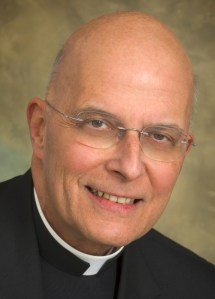
cgeorgeOnce upon a time there was a church founded on God’s entering into human history in order to give humanity a path to eternal life and happiness with him. The Savior that God sent, his only-begotten Son, did not write a book but founded a community, a church, upon the witness and ministry of twelve apostles. He sent this church the gift of the Holy Spirit, the spirit of love between Father and Son, the Spirit of the truth that God had revealed about himself and humanity by breaking into the history of human sinfulness.

This church, a hierarchical communion, continued through history, living among different peoples and cultures, filled with sinners, but always guided in the essentials of her life and teaching by the Holy Spirit. She called herself “Catholic” because her purpose was to preach a universal faith and a universal morality, encompassing all peoples and cultures. This claim often invited conflict with the ruling classes of many countries. About 1,800 years into her often stormy history, this church found herself as a very small group in a new country in Eastern North America that promised to respect all religions because the State would not be confessional; it would not try to play the role of a religion.

This church knew that it was far from socially acceptable in this new country. One of the reasons the country was established was to protest the king of England’s permitting the public celebration of the Catholic Mass on the soil of the British Empire in the newly conquered Catholic territories of Canada. He had betrayed his coronation oath to combat Catholicism, defined as “America’s greatest enemy,” and protect Protestantism, bringing the pure religion of the colonists into danger and giving them the moral right to revolt and reject his rule.

Nonetheless, many Catholics in the American colonies thought their life might be better in the new country than under a regime whose ruling class had penalized and persecuted them since the mid-16th century. They made this new country their own and served her loyally. The social history was often contentious, but the State basically kept its promise to protect all religions and not become a rival to them, a fake church. Until recent years.

There was always a quasi-religious element in the public creed of the country. It lived off the myth of human progress, which had little place for dependence on divine providence. It tended to exploit the religiosity of the ordinary people by using religious language to co-opt them into the purposes of the ruling class. Forms of anti-Catholicism were part of its social DNA. It had encouraged its citizens to think of themselves as the creators of world history and the managers of nature, so that no source of truth outside of themselves needed to be consulted to check their collective purposes and desires. But it had never explicitly taken upon itself the mantle of a religion and officially told its citizens what they must personally think or what “values” they must personalize in order to deserve to be part of the country. Until recent years.

In recent years, society has brought social and legislative approval to all types of sexual relationships that used to be considered “sinful.” Since the biblical vision of what it means to be human tells us that not every friendship or love can be expressed in sexual relations, the church’s teaching on these issues is now evidence of intolerance for what the civil law upholds and even imposes. What was once a request to live and let live has now become a demand for approval. The “ruling class,” those who shape public opinion in politics, in education, in communications, in entertainment, is using the civil law to impose its own form of morality on everyone. We are told that, even in marriage itself, there is no difference between men and women, although nature and our very bodies clearly evidence that men and women are not interchangeable at will in forming a family. Nevertheless, those who do not conform to the official religion, we are warned, place their citizenship in danger.

When the recent case about religious objection to one provision of the Health Care Act was decided against the State religion, the Huffington Post (June 30, 2014) raised “concerns about the compatibility between being a Catholic and being a good citizen.” This is not the voice of the nativists who first fought against Catholic immigration in the 1830s. Nor is it the voice of those who burned convents and churches in Boston and Philadelphia a decade later. Neither is it the voice of the Know-Nothing Party of the 1840s and 1850s, nor of the Ku Klux Klan, which burned crosses before Catholic churches in the Midwest after the civil war. It is a voice more sophisticated than that of the American Protective Association, whose members promised never to vote for a Catholic for public office. This is, rather, the selfrighteous voice of some members of the American establishment today who regard themselves as “progressive” and “enlightened.”

The inevitable result is a crisis of belief for many Catholics. Throughout history, when Catholics and other believers in revealed religion have been forced to choose between being taught by God or instructed by politicians, professors, editors of major newspapers and entertainers, many have opted to go along with the powers that be. This reduces a great tension in their lives, although it also brings with it the worship of a false god. It takes no moral courage to conform to government and social pressure. It takes a deep faith to “swim against the tide,” as Pope Francis recently encouraged young people to do at last summer’s World Youth Day.

Swimming against the tide means limiting one’s access to positions of prestige and power in society. It means that those who choose to live by the Catholic faith will not be welcomed as political candidates to national office, will not sit on editorial boards of major newspapers, will not be at home on most university faculties, will not have successful careers as actors and entertainers. Nor will their children, who will also be suspect. Since all public institutions, no matter who owns or operates them, will be agents of the government and conform their activities to the demands of the official religion, the practice of medicine and law will become more difficult for faithful Catholics. It already means in some States that those who run businesses must conform their activities to the official religion or be fined, as Christians and Jews are fined for their religion in countries governed by Sharia law.

A reader of the tale of two churches, an outside observer, might note that American civil law has done much to weaken and destroy what is the basic unit of every human society, the family. With the weakening of the internal restraints that healthy family life teaches, the State will need to impose more and more external restraints on everyone’s activities. An outside observer might also note that the official religion’s imposing whatever its proponents currently desire on all citizens and even on the world at large inevitably generates resentment. An outside observer might point out that class plays a large role in determining the tenets of the official State religion. “Same-sex marriage,” as a case in point, is not an issue for the poor or those on the margins of society.

How does the tale end? We don’t know. The actual situation is, of course, far more complex than a story plot, and there are many actors and characters, even among the ruling class, who do not want their beloved country to transform itself into a fake church. It would be wrong to lose hope, since there are so many good and faithful people.

Catholics do know, with the certainty of faith, that, when Christ returns in glory to judge the living and the dead, the church, in some recognizable shape or form that is both Catholic and Apostolic, will be there to meet him. There is no such divine guarantee for any country, culture or society of this or any age.