• Our Blogger

    Fr. Joseph Jenkins

  • The blog header depicts an important and yet mis-understood New Testament scene, Jesus flogging the money-changers out of the temple. I selected it because the faith that gives us consolation can also make us very uncomfortable. Both Divine Mercy and Divine Justice meet in Jesus. Priests are ministers of reconciliation, but never at the cost of truth. In or out of season, we must be courageous in preaching and living out the Gospel of Life. The title of my blog is a play on words, not Flogger Priest but Blogger Priest.

  • Archives

  • Categories

  • Recent Posts

  • Recent Comments

    Barbara King's avatarBarbara King on Ask a Priest
    Ben Kirk's avatarBen Kirk on Ask a Priest
    Jeremy Kok's avatarJeremy Kok on Ask a Priest
    Barbara's avatarBarbara on Ask a Priest
    forsamuraimarket's avatarforsamuraimarket on Ask a Priest

Toleration vs. Missionary Witness & Martyrs

157333249285949947 (1)

Seemingly in contradiction to the “Document on Human Fraternity,” (focusing on Catholic-Muslim relations) did not the Catholic Church and/or the leaders of Catholic states seek to impose the true faith in the lands discovered in the New World? Here at home I think about the North American Martyrs, Jesuits like the Holy Father, but men who did not hesitate to proclaim Catholicism to the most bloodthirsty among the natives of America and Canada. I think of the saints that died trying to bring the faith to the nations of Asia. Are we now to belittle their contribution? While certain elements of the faith might be enculturated; nevertheless, the kerygma brings about both individual and communal transformation. Idols are destroyed. Pagan rituals are replaced with the Mass. The immorality of non-Christian orgies is rejected and prayer and processions with the sacrament or statues to holy personages are substituted. Magic and superstition comes to an end or is suppressed. True faith and worship is given its place. The values of the Gospel will utterly transform and give a new meaning to the culture. Despite what this document says, many of us are proud of what Christianity has achieved and would make no apologies. This document seems to say that we are sorry for converting people and trying to change the world.

When speaking of good relations between the East and the West, it is stated that the Christian West can find in the Muslim East remedies for the “spiritual and religious maladies” of materialism. Given that we are speaking here about false religion, how would Islam help Christians to return to orthodoxy and the salvation of their souls? We certainly would not want to reduce the developed nations of the West to the status of third world countries. While Christians need the faith set aflame, I doubt the fanaticism of Islam is something that many Christians would want to embrace. Note while materialism is listed as the one fault of the West, it is compared to the “weakness, division, conflict and scientific, technical and cultural decline” of the East. Given all these faults, how is it that the East is supposed to help the West?

See also DOCUMENT ON HUMAN FRATERNITY.

Divine Wisdom Insures Oneness in Faith

157333249285949947 (2)

Often omitted in critiques of the “Document on Human Fraternity” (February 4, 2019) is the part about divine wisdom as the “source” to be “different” in what one believes. When individuals are labeled “different” it usually implies that the person is “touched” or somewhat out of sync with reality. Real faith or belief brings a profound unity with God and with the world he has made.  God has given us various avenues for truth. Speaking for myself, I cannot hold that God is the author of sloppy thinking, denial of proven scientific discoveries and an assortment of religions that disagree with each other more than finding any consensus. It seems to me that God gave us philosophy and logic so that we might rationally consider the ultimate questions. God gave us science and experimentation so that we might understand something of his creation and the objective or real world. God gave us a definite religious faith so that we would appreciate that we are not cosmic accidents but children of a loving and omnipotent Father.

As a Catholic I believe without question that God established covenants and led his people through the patriarchs and prophets. God sent his Son so that he might reveal his face to mankind and save us from our sins. Christianity has an answer that satisfies the soul. The message of Christian faith might be denied or distorted but it makes sense in a way that no religion can except possibly for Judaism. The Christian faith is a narrative that interacts with the stories of each and every man and woman. Here we are talking about the definite story of salvation. Revelation comes to the Church through the movement and inspiration of the Holy Spirit. The truths of God are entrusted to the Catholic Church.  What God gives her, she dispenses to the children.

The document comes very close to mouthing the sentiments of Pilate.  He was loyal to the emperor and respectful toward the pagan deities of Rome, yes even when he placed no faith in them.  He had seen too much.  Cynicism had taken ahold of his soul.  All these different nations and people he encountered each claimed that their religion was the true one.  The Jews went so far as to fight among themselves.  The situation with Jesus took him by surprise.  His wife had dreamed about this man and she begged him not to have anything to do with his condemnation.

“So Pilate said to him, ‘Then you are a king?’ Jesus answered, ‘You say I am a king. For this I was born and for this I came into the world, to testify to the truth. Everyone who belongs to the truth listens to my voice.’ Pilate said to him, ‘What is truth?’” (John 18:37-38).

The truth of Christ would break through a world of lies.  Pilate, himself, is touched by this mystery.  However, he was afraid of the crowd.  Maybe on some level he understood that if he allowed the truth of Christ to penetrate his soul then nothing would ever be the same?  The acceptance of Christ always shines a light upon the confusion and deception that surrounds us.  Christianity refused to compromise with pagan Rome and so the age of the martyrs began.  Christianity was not a religion tolerant of others.  The truth is what it is.  You cannot be a Christian and eat the meat of idols!  Ours is a jealous God!  Jesus is the SAVING NAME.  “There is no salvation through anyone else, nor is there any other name under heaven given to the human race by which we are to be saved” (Acts 4:12).

See also DOCUMENT ON HUMAN FRATERNITY.

Does God will a Plurality of Religions?

157333249285949947 (3)

Back in February, the Catholic Pope Francis and the Sunni Muslim Sheik Ahmed el-Tayeb signed the “Document on Human Fraternity” in the hope of improving interfaith relations. Hopefully, we are all for fraternity and peace in the family of man. However, this does not mean that we must sidestep or renounce basic tenets of the Catholic faith. Our approach to Islam should not be to become less Catholic but rather to be more Catholic. It is here where a problem arises in the document. It states:

“Freedom is a right of every person: each individual enjoys the freedom of belief, thought, expression and action. The pluralism and the diversity of religions, colour, sex, race and language are willed by God in His wisdom, through which He created human beings. This divine wisdom is the source from which the right to freedom of belief and the freedom to be different derives. Therefore, the fact that people are forced to adhere to a certain religion or culture must be rejected, as too the imposition of a cultural way of life that others do not accept.”

We might certainly say that the elements of color, gender, race and even language enrich humanity and find their source in God. This last element would include the value of Latin which so many progressives renounce for a one-sided adulation of the vernacular in worship. However, there is a problem when one says that God desires a “pluralism” and “diversity” of religions. I am reminded of the Protestant reformer Martin Luther on his deathbed. Instead of a reform of Catholicism there had been a widespread revolution and defection. While it may be mythical, it is purported that he said, “My God, my God, what have I done? There are now as many religions as there are heads!” The plurality of religions is not from the active will of God. Instead, it is a consequence of original sin. It is a diversity that is affirmed by obstinacy toward the true God.

The German princes and the King of England did not break from Rome because of doctrine, at least not at first, but for purposes of enhancing wealth and power. The division expanded through ignorance, prejudice, and a selfish egoism. When it came to non-Christians, Mohammad was rejected by the Eastern monks as intellectually ill-equipped to benefit from their teaching and spirituality. Their lack of charity fueled his anger and drove him to create a new religion to challenge Christianity. He deliberately amalgamated the teachings of the Jews, Christians and the local tribal cults. His purported revelations in the Quran often corrupted these elements or misconstrued the purloined doctrines.

An instance of this is his rejection of the Christian Trinity as the Father, the Son (Jesus) and the Virgin Mary. Not only did he wrongly substitute the Blessed Mother for the Holy Spirit, he fails to understand the Church’s teaching that there is ONE divine Nature but THREE divine Persons. God cannot be the source of error and here is a factual error in faith. Mary is a blessed creature of God (not divine) and Jesus is indeed the second Person of the Blessed Trinity.

While Islam went through an intellectual period, it ultimately became a religion that made converts not by persuasive arguments but by sharpened swords. The Muslims were correct that there was one God. A number of the popes have assumed that this was the same God of the Jews and Christians. Many of us have remained unsure.

Are they really children of Abraham? I pray it might be so but it seems to me that their origins are from a man more than from the living God. God does not teach error. God does not will religious division. We should never forget what Jesus said to the Father:

“Consecrate them in the truth. Your word is truth. As you sent me into the world, so I sent them into the world. And I consecrate myself for them, so that they also may be consecrated in truth. ‘I pray not only for them, but also for those who will believe in me through their word, so that they may all be one, as you, Father, are in me and I in you, that they also may be in us, that the world may believe that you sent me. And I have given them the glory you gave me, so that they may be one, as we are one, I in them and you in me, that they may be brought to perfection as one, that the world may know that you sent me, and that you loved them even as you loved me’” (John 17:17-23).

Continuing my reflection upon the “Document on Human Fraternity,” the Church can speak of “justice based on mercy,” but Islam understands justice only within the framework of sharia law. Again, I think the East and West may be speaking at cross-purposes. The document should have included a dictionary.

The dialogue for tolerance and peaceful coexistence implies that we are on the same page when it comes to definitions. What does the word “peace” actually mean? Does it mean the peace that comes with unity in Christ? Does it mean an end to violence between people who either hate or feel threatened by one another? Does it mean a truce from violence until one or the other has the upper hand? Does it signify what is defined by the very word, “Islam”— submission to Allah as taught by Muhammad the prophet? The ultimate peace, in this context, mandates the rule of Islam and the supremacy of their religion, deity and laws. I am reminded that Pope Benedict XVI was rewarded with death threats from millions when he asserted that Muslims had to disavow “holy war” or the sword as a means to this Islamic “peace.”

The dialogue among believers presumes that all the religion understand and aim for the same moral virtues. I am not sure this is the case. I am not saying that faithful Catholics are always the victims or the peacemakers. We have often taken up the sword instead of the cross as Jesus commanded. The martyrs of faith, and notable among these are the missionaries, are a testimony of how devoted we should be to the TRUE faith. Here is the whole point. The Roman Catholic Church is the house that Jesus built. Jesus is God come down from heaven to save us. He enters the human family to do so and thus he elevates and graces our humanity. The apostles are sent out to the whole world to proclaim the faith and to baptize in the name of the Trinity. Ours is a supernatural faith. The religion of the Jews is established by God and has a special standing; however it remains a natural faith. All other religions, including Islam, may have facets of the truth but they are intermingled with many errors. False religion may reflect how we are wired for God. There is an innate yearning for the transcendent. However, this is not sufficient to lend them absolute legitimacy. We must accept that in the world millions upon millions of people are spiritually formed by lies. It is only in the Catholic Church where we are molded by the truth. We express that truth every time we come to Mass and recite (as a community) the Creed.

God’s providence allows for the consequences of sin which includes the many false religions and the fracturing of Christianity. But, God does NOT directly will this plurality in faith. Such a view would conflict with the very first laws of the Decalogue:

“I am the LORD your God, who brought you out of the land of Egypt, out of the house of bondage. You shall have no other gods before me. You shall not make for yourself a graven image, or any likeness of anything that is in heaven above, or that is in the earth beneath, or that is in the water under the earth; you shall not bow down to them or serve them” (Exodus 20:2-5; cf. Deuteronomy 5:6-9).

This law is so central that we find it in the Gospels when Jesus is tempted by Satan. Jesus rebukes the devil: “Get away, Satan! It is written: ‘The Lord, your God, shall you worship and him alone shall you serve’” (Matthew 4:10).

The document goes to speak about the freedom of religion as a basic human right but while such toleration is exhibited in the West, it is often absent in many if not most countries with Muslim majorities. Beyond toleration, the document goes on to say that Christians and Muslims should acknowledge the other’s religion as “willed by God in his wisdom.” If we are speaking of what God wills to allow or permit, then yes; however, God is not the author of error and sin. Abraham is the common father in faith for Christians and Jews, but outside of this historical intervention by God it cannot be said that God truly spoke to Muhammad or that he willed the multiple deities of the Hindus or any of the lesser cults. This emerged as a point of conflict at the recent Amazonian Synod.

The Holy Father (Pope Francis) who is regarded by critics as the master of confusion, has offered the “possible” corrective that “. . . from the Catholic point of view, the document does not deviate one millimeter from Vatican II.” The Second Vatican Council teaches:

“The Catholic Church rejects nothing that is true and holy in these religions. She regards with sincere reverence those ways of conduct and of life, those precepts and teachings which, though differing in many aspects from the ones she holds and sets forth, nonetheless often reflect a ray of that Truth which enlightens all men. Indeed, she proclaims, and ever must proclaim Christ ‘the way, the truth, and the life’ (John 14:6), in whom men may find the fullness of religious life, in whom God has reconciled all things to Himself” (Nostra Aetate 2).

Notice that the compliment toward non-Christian religions is limited or somewhat back-handed. Obviously the Catholic Church would not reject anything that is “true and holy” wherever it is found. An analogy would be a thief who swallowed a diamond. The diamond still has value and is precious even if one has to finger through the manure pile to find it. Another analogy would be the separation of the wheat from the chaff. That which is the true bread must be winnowed from that which has no value.

See also DOCUMENT ON HUMAN FRATERNITY.

A Dark Flipside to Religious Liberty?

157333249285949947 (5)

Alongside an atheistic secular humanism we are challenged to coexist with a diverse plurality of religions and denominations. We must pray that our own promulgation and defense of religious liberty will not come back to haunt us. Few are asking whether this liberty should be without boundaries. Is it possible that such freedom might follow a peculiar circular evolution or devolution? Is it possible that this liberty might set the stage for later repression of the very ones that first promoted it as an ideal? Look at the history of the thirteen colonies in early America. Maryland was established as a haven for English Catholics to celebrate their faith and to live their lives in peace. An Anglican and a Catholic priest came to this new land as friends who respected each other. The goodwill shared between believers led to the Edict of Toleration 1649. It mandated liberty for all true Christians (believing in the Trinitarian God). When it was observed that Protestant Puritans in Virginia were being persecuted; the Catholics of Maryland invited them into the Maryland colony. Within a short time, the Protestants seized power and penal laws were enacted to repress the Catholic faith and to persecute believers. Good intentions do not always insure beneficial results.

The Rise of a False Ecumenism

157333249285949947 (6)

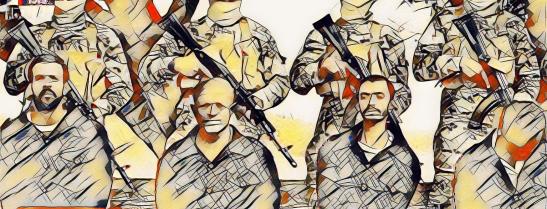
I have to scratch my head in confusion and disbelief when I hear or read much about what is happening in the Church, today. Certain traditionalists have long warned us about the dangers of ecumenism and we dismissed their concerns. We argued that a true ecumenism spoke from the heart and not with a stick so that separated brethren might come home to Catholicism. We have seen some returnees, but more so from those who intellectualize their faith than those who “feel” their religion and enjoy fellowship. When it came to non-Christian religions, the attitude was one of peace or seeking understanding or working together for a better and more humane world. Despite arguments that Islam was a religion of peace, extremists have used violence to suppress the Christian faith and to persecute Christian minorities. Will any of us ever forget the photo of brave Christian men standing loyal to the Lord even as Muslim extremists held knives to their throats? But, alas, we are quick to forget and to forgive— even when there is no sign of contrition or sorrow. A Europe that has renounced her Christian roots will stand no chance against the invasion of Muhammad’s followers.

See also DOCUMENT ON HUMAN FRATERNITY.

Unwanted Babies: Adoption or Abortion?

157166625419740491 (7)I cannot remember ever NOT being pro-life. Maybe that is why the reasoning of abortion advocates seems so very foreign and peculiar to me? Or maybe it is a matter of my Christian formation and ability to reason what is right and wrong?  Immediately after ordination, I spoke with a pregnant woman who was contemplating abortion. As far as I could figure, her selfishness had blinded her to the truth. She argued: “I could never adopt my baby out to strangers. I could not do that to him! If I can’t raise him, no one will have him!” The twisted reasoning hurt my brain.  It made no sense.  How was the killing of a baby better than adopting him out to a good family who would love and care for him?
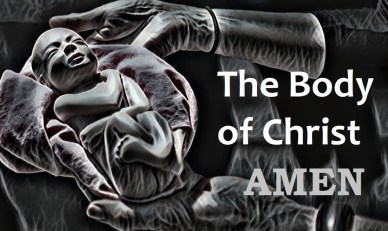
She made up all sorts of nightmare scenarios. “What if they abused him? What if they were mean to him?” Eventually she aborted, not once but seven times. Today she mourns that she has neither a husband nor a family. Doctors tell her that she will never conceive again. She weeps and there is no consoling her. She came too late to the truth about her actions. She had murdered her children.

Posted here is a clip of the song, SANDMAN’S COMING. The song comes from the musical, FAUST, by Randy Newman. Linda Ronstadt plays the part of a distraught mother who despairs and kills her child. The Sandman is death. The musical piece speaks to choices and consequences.  Ideally a woman, along with the child’s father, should raise a child. But sometimes, especially when a young immature girl gets pregnant, the best solution is probably adoption. Abortion is never an answer. Once conceived, that child is a human person with an eternal destiny. That child has an inherent God-given right to life that is greater than any sense of shame.  The child is not a commodity or thing.  I know one woman who gave up her children because her new boyfriend said that he did not want another man’s brats in his home.

I have known mothers who were drug addicts. Their children were born already addicted and would go through terrible withdrawal. I recall a girl at school when I was young who gave birth in the bathroom and left her baby there. We have all heard stories about infants left in dumpsters. How could people do such things? We medicate against fertility as if it is a disease. Millions of babies are aborted as if they are simply tumors. After all this, we can still ask how mothers can so fail their babies? We have enabled the situation where mothers (and fathers) run away from their responsibilities.

Might babies be awaiting their mothers in heaven?

Denying Biden Communion

157166625419740491 (2)

The Breaking News Story

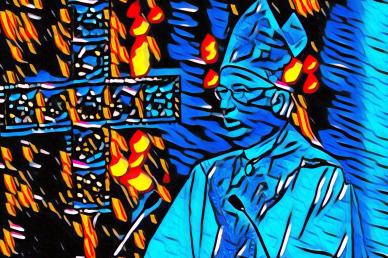
A lot has been reported about former Vice President Joe Biden being refused Holy Communion at St. Anthony Catholic Church in Florence, South Carolina on Sunday because of his permissive public stance toward the aborting of unborn children.  Such liturgical matters are preferably left private between a person and his church.  However, the priest fulfilled his moral duty precisely because Biden is a celebrity and such matters are immediately reported by the media.  If he were an ordinary churchgoer in the parish it is likely the priest would not know his stance against human life and he would have received the sacrament; yes, even though it would have convicted him secretly and spiritually before Christ.  Similarly, if his views were only known to his priest confessor, that priest would have been required to give him the Eucharist so as not to violate the seal of confession.  But given this situation, as a politician he not only adds his votes among others but is an active enabler for the murder of human beings (a truth which he supposedly believes in “personally”).  More monstrous than those who deny the humanity of the unborn are those like Biden that straddle the fence.  On one hand he says that he agrees with Church teaching and personally opposes abortion; on the other he refuses to impose his moral views upon others and politically enables what he evidently understands to be the murder of human beings.  Really, many of us have a hard time believing this?  Like the famous video of so-called “Catholic” politicians in New York laughing and applauding legislation to allow nine-month pregnant women to abort their babies— any faith they say they have is feigned, soured, not real— you cannot serve two masters.  You should not make yourself available to receive the bread of life while eagerly helping to feed children to demons.

He does not have to respond to reporters about the incident because his actions and kowtowing to Planned Parenthood speaks volumes. Rev. Robert Morey said afterwards, “Sadly, this past Sunday, I had to refuse Holy Communion to former Vice President Joe Biden. Holy Communion signifies we are one with God, each other and the Church. Our actions should reflect that. Any public figure who advocates for abortion places himself or herself outside of Church teaching. As a priest, it is my responsibility to minister to those souls entrusted to my care, and I must do so even in the most difficult situations. I will keep Mr. Biden in my prayers.”

157166625419740491 (5)

The priest denied him the sacrament because he knew that it would bring down God’s judgment upon him.  The priest acted out of love, not enmity.  He also knew that the occasion had been politicized.  Every photo of Biden receiving Holy Communion falsely advertised that he was a good Catholic and that he and his views had the endorsement of the Church.

What Does the Church have to Say?

The following three citations have been heavily informative to my approach to the question of politicians and the reception of Holy Communion.

Canon 915 states: “Those upon whom the penalty of excommunication or interdict has been imposed or declared, and others who obstinately persist in manifest grave sin, are not to be admitted to Holy Communion.”

Cardinal Ratzinger wrote in 2002:  “Regarding the grave sin of abortion or euthanasia, when a person’s formal cooperation becomes manifest (understood, in the case of a Catholic politician, as his consistently campaigning and voting for permissive abortion and euthanasia laws), his Pastor should meet with him, instructing him about the Church’s teaching, informing him that he is not to present himself for Holy Communion until he brings to an end the objective situation of sin, and warning him that he will otherwise be denied the Eucharist.”

Cardinal Francis Arinze stated in 2004:  “The norm of the church is clear, the church exists in the United States— there are bishops there, let them interpret it.”  When asked if a priest should withhold communion to an “unambiguously pro-abortion” politician, he answered, “Yes.”  “If the person should not receive communion, then he should not be given it.”

Priests under Pressure

Priests who are commanded by their Ordinaries never to withhold the sacrament are being told not to love as they should and to be silent in the face of the “holocaust” of innocents.  Indeed, they are censured for making comparisons or allusions to other forms of mass murder or genocide.  Policies, written and verbal, instruct parish priests that they must NEVER refer to one politician as pro-abortion and another as pro-life in homilies.  They came speak generally about values but not to make matters personal.  The impression is that we do not want to upset people.  We do not want to appear as partisan. We do not want to see an attendance drop or loss in revenue.  The subject is far deeper than what canon law stipulates.  The passivity and silence of bishops on this matter of giving communion to pro-abortion politicians is systemic of the same malaise that condones silence and ineffective action against active homosexuals and pedophiles among the priests and bishops.  When we should be champions of the truth; we hide behind lawyers and employ the verbiage of misdirection.  We have made ourselves hypocrites when we should be sentinels for Christ.  Called to a courageous faith and to take up crosses in following Jesus; too many are afraid and seek to play it safe.  Priests are intimidated and threatened to be quiet and not to act.  There are even rumors that despite the encouragement of Pope Emeritus Benedict XVI, policies are being assembled that will further restrict the actions of good priests but will also erase their proclamations on social media. Most dioceses stipulate that priests cannot give media interviews and must relay requests to chanceries.  I suspect some of these fearful upper Church authorities were those that looked the other way when it came to the ravaging upheaval of rogue bishops like McCarrick, Bransfield and others.  Claiming to respect the sanctity of life and then shutting down practical initiatives to save babies will not wash with God and will one day be condemned by those who judge the wrongs of history.  There will be no hiding.

What is a True Disciple of Christ?

Biden has stated, “I’m a practicing Catholic. I practice my faith, but I’ve never let my religious beliefs, which I accept based on Church doctrine . . . impose . . .  on other people.”  This is essentially nonsensical.  Although supported in the past, he has now denounced even the Hyde amendment.  Catholic faith must always be lived out in obedience to the law of God and in a love of the Lord that is realized in charity.  Christianity is not tolerant of immorality or sin.  Freedom is not license but fidelity to the truth.  Faithfulness is more than sitting oneself in a pew once a week; it is also taking the Christian kerygma or Good News in mission to the world around us.  Pope John Paul II defined this message as the Gospel of Life.  We are to convert the world, not to allow the world to convert us.  We are to bring Christ’s light to the culture of death where we find ourselves.  A believer is to be a person of strong character.  His faith and values has importance in the lives of others; compromise is a failure to truly believe and definitely to love others. While the sanctity of life is constitutive of the Gospel, the issue of abortion is more than a sectarian issue; it is a human rights concern . . . none of us has the liberty to kill or to enable the termination of innocent human beings. How can we say AMEN to the hidden presence of Jesus in the Eucharist when we deny the hidden presence of the child in the womb made in his image?

Facing Ambiguity and Opposition

Those who possibly think differently on this matter have also been reported in the news.

Pope Francis, has attacked abortion in the harshest terms, equating efforts at abortion to mobs “hiring a hit man.” He is clearly defining it as murder.  However, he has also intimated that communion should not be withheld from practicing Catholics based on what they do and do not believe.  He wrote in 2013, “The Eucharist  . . . is not a prize for the perfect but a powerful medicine and nourishment for the weak.”  What he gives, he takes away.  The Holy Father’s efforts at ambiguity continue.

Cardinal Wuerl stated years ago in reference to Speaker Pelosi that he disagreed with holding back communion to manifestly pro-abortion politicians which he equated as “Communion wielded as a weapon.”  “We never – the Church just didn’t use Communion this way. It wasn’t a part of the way we do things, and it wasn’t a way we convinced Catholic politicians to appropriate the faith and live it and apply it; the challenge has always been to convince people.  There’s a question about whether this canon [915] was ever intended to be used.”  He stated:  “I stand with the great majority of American bishops and bishops around the world in saying this canon was never intended to be used this way.” Back in 2009, Cardinal Wuerl said that he thought “we’ve been making progress” in conveying the pro-life message to the Democratic Party and that “There was just a setback with the distraction of Communion.” However, today the party’s pro-life representation in national government is now all but extinguished.  This essentially continued the policy of Cardinal McCarrick in Washington.  We may remember the infamous memo presented to the USCCB by Cardinal McCarrick which essentially falsified and reversed the message from Cardinal Ratzinger.

Cardinal Cupich bluntly dismisses the mandate of canon 915 in a rather defeatist manner, “I think it would be counterproductive to impose sanctions, simply because they don’t change anybody’s minds.”

Past USCCB advisor John Carr asserted that “it’s a big loss for our faith and for our church, either way, when the Eucharist becomes a source of division instead of unity. In my view, denying communion to people for their public stances is bad theology, bad pastoral practice and bad politics.”

Faithful America is an organization demanding that Fr. Morey’s bishop force him to apologize to Biden and immediately direct all other priests not to deny communion based on politics. “When hate groups purport to speak for Christianity, we act. We challenge the Catholic hierarchy in the United States to live up to the inspiring words of Pope Francis and we stick up for courageous Christian voices for fairness and freedom in every denomination.”  (But is the killing of children just a political issue or is it a HUMAN RIGHTS issue?)

A Reflection on the Lord’s Prayer

157079977383306002 (1)

Having celebrated this morning the memorial Mass for St. Francis of Assisi, I am inspired by the votive Gospel reading (Matthew 11:25-30) to reflect upon the Our Father. This may seem a bit odd as the reading was not about the Lord’s Prayer, per se, but rather a different albeit neglected oration with similar attributes. Jesus announces, “I give praise to you, Father, Lord of heaven and earth, for although you have hidden these things from the wise and the learned you have revealed them to the childlike. Yes, Father, such has been your gracious will.” This much, any of us as believers could recite. However, unlike the Our Father, this was Jesus’ personal prayer. There was no request to teach the gathering how to pray. The Lord’s Prayer is given to us as one that reflects the human condition of weakness and sinfulness. Like us, Jesus will be tempted in his humanity; unlike us, he will surrender himself into the hands of the evil one so that we might be delivered. The prayer here speaks of his unique identity as the divine Son of God: “All things have been handed over to me by my Father. No one knows who the Son is except the Father, and who the Father is except the Son and anyone to whom the Son wishes to reveal him.”

Note that it begins much as does the Lord’s Prayer as an oration of praise addressed to the Father. Heaven is also mentioned although here it is clear that he has lordship over both heaven and earth. We are given a quick glimpse of our Lord’s relationship as “the Son” to the Father. This is not figurative language or pure analogy. It is expressive of his very identity. (Note that at his baptism in the Jordan the identity of Christ as the beloved only Son of God is revealed; when it comes to our baptism, our identity is changed— we become adopted sons and daughters to the Father.) We are summoned as “children” to trust God in our communication with him and in the life of faith. Ours is not a detached or malicious deity. He loves us and wants the best for us, which is union with him. Suffering and death come into the world through sin. While the dark mysteries are not immediately brushed aside, we have in Christ one who is in solidarity with us. Indeed, by enduring the price of sin, he redeems us. A distinction must be made between the active and passive will of God. The Father did not send his Son into the world because he directly willed for him to be tortured and murdered. That would image God as monstrous. The reason or motivation for his coming is made clear in the reading: “Yes, Father, such has been your gracious will.” The mission of Christ is to be faithful to his Father’s will— to do whatever it takes to fulfill the divine saving plan. Both here and in the Our Father, the providence of God is accentuated, “thy will be done.” The reading continues: “All things have been handed over to me by my Father. No one knows the Son except the Father, and no one knows the Father except the Son and anyone to whom the Son wishes to reveal him.” We know that his situation is not entirely comparable to our relationship with the Father because we are purely human and Jesus is the second person of the Holy Trinity. He is God made man. Nevertheless, he gives us something of his relationship as our own.

Interestingly, this prayer in Matthew appears in the Gospel again tomorrow (Saturday, the 26th Week of the Year, Cycle 1) albeit from Luke 10:17-24. Prior to the prayer, the text states: “At that very moment he rejoiced in the Holy Spirit . . .” This is an important lesson for us as the great Christian revelation is that of the Trinity. Jesus reveals to us the face of God. He patterns for us how we are to pray to the Father, through the Son and by the Holy Spirit. Our Lord prays in the Spirit. Saturday’s text from Luke also precedes the prayer of Jesus with the return of the seventy-two disciples sent out by the Lord. We are told they come back rejoicing and say, “Lord, even the demons are subject to us because of your name.” Jesus responds, “I have observed Satan fall like lightning from the sky.” A link can be drawn between this and the ending words of the Our Father where we pray “deliver us from (the) evil (one).” Ours is a jealous God. He will not share us. If we belong to him then the devil can have no part of us!

More than any other prayer, the oration that is held in common by all Christians is the Lord’s Prayer or the Our Father. While there are a few variant English translations, we all recognize it and it is a staple in our liturgies. It is the one prayer that we have memorized. Until recent times, most Catholics could also recite the Our Father in Latin, something which the Vatican still promotes so that visitors to Rome from around the globe can recite this prayer in unison. Note that the prayer for peace and its sign is placed immediately after the Lord’s Prayer in the Mass. This is no accident as both the ritual and the prayer from the lips of Christ immediately signifies the unity of the believing community in Christ. We should exhibit caution that while it is memorized, we should never say it mindlessly or mechanically. We would not want to lose sight of the treasury of prayer types that make up the whole. It has been called the perfect prayer. Our Lord gives it to us as both as a prayer to be said and as a formula for other prayers. These are words that we must make our own if it is to be a true dialogue with God. It is the one prayer that is essential to a person’s daily prayer and spiritual life as a Christian.

During the Sermon on the Mount, our Lord introduces the Our Father. “In praying, do not babble like the pagans, who think that they will be heard because of their many words. Do not be like them. Your Father knows what you need before you ask him” (Matthew 6:7-8). Why did the ancient pagans babble with many needless words? First, they were speaking to a false deity. As such they were really talking to themselves, trying to convince themselves, despite their frustration that someone was listening. Nevertheless, there was no response— no intervention— just a painful silence. Second, some of the pagans believed that if they could stumble upon the true name of God then all their wishes would be granted. They literally babbled long strings of nonsense words for this purpose. This was no genuine speaking in tongues, but a one-sided and deliberate effort at magic or sorcery so as to manipulate the deity. It was not intelligent conversation just fruitless gibberish. Nothing came from it. Third, some sought to pamper God just as they did people of power or high station or wealth. They were moved not by a desire as creatures to give praise to the Creator; no, this was simply an effort to ingratiate themselves so as to court favor. Such people were often very weak and fearful in character. The more anxious they became the more they talked and talked and talked. Fourth, the pagan priests in particular would often shout and repeat their petitions— almost as if their deity were deaf or had to be convinced to respond. This stood in stark conflict with the intimate union that Jesus shared with us by giving “his” Father to us as “our” Father and suggesting a back room, hidden away, as the best place to privately pray.

Note that those who know each other often need few words. I have known long-term spouses that can communicate to each other with a look or a nod. God knows us better than we know ourselves. He knows what we want. More importantly, he knows what we need. He hears all prayer, even that which is said in a whisper while we are alone. We do not have to make a big show about prayer and faith. The main thing is that it remains real. The Lord’s Prayer helps us to render true prayer.

Certain anti-Catholic critics will use our Lord’s spurning of the babbling prayers of the pagans to attack upon our recitation of the rosary. But such an argument collapses as there is definite content to the rosary, i.e. the mysteries of faith. Others, particularly the “once saved, always saved” apologists will argue against persistence in prayer. This latter view crumbles because we are urged to pray always. Note the story about the mistreated widow in Luke 18 who prevails against an unjust judge because of her persistence in wanting justice. Jesus commends her to his listeners. If she can find justice from a bad judge, just imagine how well our petitions will fare given that the divine judge is all good and loving. Our Lord tells his listeners not to lose heart when they pray and that it is a “necessity for them to pray always without becoming weary” (Luke 18:1). Patience and persistence is really more for our sake than for God’s. While the Christian will humbly acknowledge divine providence, our petition prayers ideally express what we really want, the desires of our hearts. This speaks immediately to our relationship with the Lord. Is Christ our true treasure? Do our hearts belong to him? What do we really want? God knows what we really need. It has been said that God answers all prayer. A catechist friend teaches, “Sometimes the answer is yes, sometimes no and sometimes not now.” I would add that often the asking itself is the true answer as it breeds a sense of dependence upon the divine. When the answer does come it is often a gift unexpected but what we really need.

I think part of the answer for which we are looking is hidden in the Catholic mystery of purgatory. We are taught that this purification rightfully begins in this world. Often we pursue penance and various mortifications. But we are also purified and transformed in our daily life of prayer. The response of God and his timing brings us to a continual conversion or changing by grace. This is also expressed in the Our Father, to put on Christ, to have the will of the Father. Any questioning experiences a reversal. Those least enlightened and transformed will ask, “Why doesn’t God give me right now what I want?” The person who has walked with the Lord for a while will ask, “Why is it that I am still restless and fail to want what God wants in my life?”

Christianity is not sorcery and the Our Father is not a magical incantation. Christianity is the end to magic and superstition. The words of the Lord’s Prayer are precious but they also constitute a formula to assist us in putting together our own personal words when we pray. Further, prayer is a back-and-forth operation. We talk to God and then we pause and find quiet in ourselves to listen for God’s whispering to our souls. This is not self-deception. It is something wondrous and real. The conversation with God must be authentic if it be constitutive of a worthwhile and personal relationship in faith. Remember that Catholic-Christianity is not a book religion or one of philosophy and rules. At its very heart, Christianity is a personal and communal relationship with a person, with the saving Lord. It is Jesus who draws us into the mystery of the Trinity. He is our mediator to the Father. Remember, our orations are made to the Father, through the Son and by the Holy Spirit.

How are we to pray?

“Our Father in heaven, hallowed be your name, your kingdom come, your will be done, on earth as in heaven. Give us today our daily bread; and forgive us our debts, as we forgive our debtors; and do not subject us to the final test, but deliver us from the evil one” (Matthew 6:7-13).

1. To Whom is Our Prayer Addressed?

As mentioned before, we address the Father as a people who have been brought into a more intimate relationship with God. We are not merely creatures appealing to the Creator but adopted sons and daughters to our heavenly Father, kin to Christ and children of our Queen Mother Mary. We are invited into the family of God. The Holy Spirit makes possible this saving faith. Otherwise, neither believing nor prayer would be possible. While we are naturally wired for God as demonstrated by all the efforts at sacrifice and worship toward a deity around the world and throughout human history; the God of the Jews is revealed as a loving Father. He is the Abba or “papa.” We are his little children. It is this God who surrenders his only Son so that we might be saved from our sins. Jesus is conceived by the Holy Spirit. He works his miracles by the Holy Spirit. He raises himself from the dead by his own power, the Holy Spirit. The Spirit of God is extended to us in faith and baptism. We become temples of the Holy Spirit— a people regenerated or “born again.”

Our posture as we approach the Father in prayer is not comparable to the oppression humanity endured as the devil’s property. Redeemed or bought at great price, we are no longer slaves but sons and daughters.

“For those who are led by the Spirit of God are children of God. For you did not receive a spirit of slavery to fall back into fear, but you received a spirit of adoption, through which we cry, ‘Abba, Father!’ The Spirit itself bears witness with our spirit that we are children of God, and if children, then heirs, heirs of God and joint heirs with Christ, if only we suffer with him so that we may also be glorified with him” (Romans 8:14-17).

Note that we address God by denoting that he is in heaven. Heaven is by definition where God is. One might even say that God is heaven. Those who would live in heaven must live in God. The Trinity will be our eternal home.

“As proof that you are children, God sent the spirit of his Son into our hearts, crying out, ‘Abba, Father!’ So you are no longer a slave but a child, and if a child then also an heir, through God” (Galatians 4:6-7).

We are literally heirs to the kingdom of heaven. It is in Christ and by grace that we will be divinized— members of the family of God.

2. Summoned to Give Glory to God with the Angelic Hosts.

The angels of God always keep their sights upon God and give him eternal glory. We are invited into this chorus of praise. Our rejoicing comes with the acknowledgment of God’s holiness, “. . . hallowed be thy name!” At Mass we have the Sanctus where we cry, “Holy, Holy, Holy.” Holiness is more than a description of God or a divine attribute. One might regard it as a name. Indeed, the Trinity is intimated by the Sanctus, the triune holy God; he is three co-equal divine persons in one God or divine nature. What is holiness? It signifies something of the divine otherness. When possessed by men they are transformed into the likeness of Christ. Saints are not self-made and it is so much more than being good. Foremost, a saint is a sinner that has been forgiven. God extends something of his own mystery and plants himself into the souls of men. We become temples of the Holy Spirit and new Christs for a world that still needs to encounter Jesus.

The pattern when praying is always to begin with praise. It conveys the basic posture of the creature to the Creator and the Son to the Father. Other forms of prayer will eventually pass away. Giving glory and praise to God is not only foundational to the spiritual life but to the order of creation. The sung praises of the heavenly hosts is the symphony or music of all rightly disposed creation. If there is a discordant note or break in the harmony, such is reserved for the devil and his indentured pawns. Those who keep faith with Christ have every reason for their “sure and certain” hope. The righteous man or woman (not self-righteous) knows joy even before crossing the threshold from this world into the next. He or she already carries something of eternal life.

The Mass gives us the Gloria, a wonderful expression of praise which ushers forth a real sense of the Church in pilgrimage giving praise in unison with the Church in heavenly glory:

Glory to God in the highest,
and on earth peace to people of good will.
We praise you,
we bless you,
we adore you,
we glorify you,
we give you thanks for your great glory,
Lord God, heavenly King,
O God, almighty Father.
Lord Jesus Christ, Only Begotten Son,
Lord God, Lamb of God, Son of the Father,
you take away the sins of the world, have mercy on us;
you take away the sins of the world, receive our prayer;
you are seated at the right hand of the Father, have mercy on us.
For you alone are the Holy One,
you alone are the Lord,
you alone are the Most High,
Jesus Christ,
with the Holy Spirit,
in the glory of God the Father. Amen.

It is a peculiar but authentic side-effect in the spiritual life that when the creature (the lesser) gives glory to the Creator (the greater) that something of the divine shines back upon the one rendering praise. We laud God as holy and thus make ourselves into recipients of his holiness. That which is praised, is shared or reflected back. We can only be saints because we participate in the holiness or divine otherness that is God. The one human person that supremely participates in this holiness is the Virgin Mary. She is preserved from sin and made holy because the All Holy One enters the world through her. She becomes an exemplar for God’s other children as to how we can be transformed by grace. Note the humble posture of Mary in Scripture. The pattern of praise that Jesus sets for us is realized in his first disciple. The Church echoes her daily in the Magnificat when reciting the Liturgy of the Hours: “My soul proclaims the greatness of the Lord, my spirit rejoices in God my Savior for he has looked with favor on his lowly servant.”

3. It is in Giving that We Receive.

The liturgy, our prayers and even the life of charity consist of elements of giving and receiving. “Thy kingdom come, thy will be done, on earth as it is in heaven.” The pattern is clear. The kingdom breaks into the world through the person of Christ. Then we respond by taking up our crosses and following him. The obedience of those on earth should mirror the fidelity found in heaven. The back-and-forth and the many prayer types in the Our Father also find witness in the great prayer of worship, the Mass. We encounter the Lord in his Word and we respond with praise and alleluia. The Gospel is proclaimed and we respond with affirming the Creed and petitions. God has given us the grain of the field and the grapes of the vine. We take them and make them into bread and wine. Next, we offer them to God that they might become the body and blood of Christ. Given to us again, we offer the Lord to the Father as the one acceptable sacrifice. He gives it back once more for Holy Communion. We take what we have been given and then give it to others as a people sent on mission. We cooperate with God but the initiative remains with God. We would have nothing to offer— we would be nothing— apart from the movement of God and his gifts to us. While we are called to obedience and to be sentinels of the kingdom, the kingdom of God breaks into the world according to his providence and not by human labor and whim.

This reception requires reflecting upon what the Lord says and does for us. Otherwise, we would be hard-pressed to know his will in our lives. Many people think they are good but, separated from the Lord they do not know how to be good. A son or daughter might advocate euthanasia for a parent suffering pain. A husband might urge contraception to his wife because of pressing financial worries. A friend might suggest to another teen an abortion because of unplanned pregnancy. They might all think they are doing right; however, they are easily led astray when separated from the Church and the content of the Good News (the Gospel of Life).  Formation in the faith, along with prayer and reflection, give us divine guideposts as to how we should live and act.  Otherwise, genuine love is replaced by a terrible and false compassion.

We must all be alert to the danger of devaluing prayer from a dialogue to a soliloquy. Are we communicating with God and allowing him to speak to us? Are we talking to ourselves and simply mimicking God with what we want to hear? While obedience plays an important part in Catholic discipleship, we are not mindless robots or soulless ants. The hands of the soul must be outstretched to receive what the living Word would give us. Indeed, the true disciple hungers for the truth that God wants us to receive and to know. Disposition and appropriation are vital. We must be ready for what God wants us to have. We must make what God offers our own, before any selfish desires or human fears. The pain at the end of a person’s life might be the means of a final purification so as to see God. The self-donation of spouses in the marital act may give their union it’s most precious gift and preserve their union. The unborn child regarded as an inconvenience or an accident may prove to be the person who most loves us in return and makes a positive difference in what would otherwise be a lonely life filled with regret. We have to know God’s will, even in the face of sin, and then trust God’s will in a childlike manner.

Christians should regularly open the Scriptures. It is God’s inspired Word. When we read or hear the Word of God there is a human-divine encounter. Every meeting with God changes us— if we are open— if we want to be in right relationship with God. Catholics should also know their catechism and look up all the attached Scripture passages. There is also utility in following the daily readings of the Mass as well as looking at the prayers. We are people called to both a personal and a corporate faith. We pray alone, among a few friends or family and with the community of faith at the Lord’s Supper (the Mass). The Mass is a participation in the marriage banquet of heaven. Christ is the groom and the Lamb of God. The Church is his bride. Christ instituted the Church so that we would have each other and to insure that his truths and sacraments would not be lost in the passage of time. The kingdom of God breaks into the world, first through the person of Christ and now through the Church, his mystical body.

4. Supplication Emerges from Our Dependence upon God

“Give us this day, our daily bread.” The first prayer that we learn as children is one that comes naturally— intercession and petition. A child asks his mother for a cookie. We make a request of God for a favor. We pray for ourselves and for others. There are some who reduce all prayer to petition. This phenomenon was manifested after the 9-11 terrorist attacks. There was a short while when millions seemed to return to religion. They had lost control. They were desperate and afraid. A year later many of them had fallen away again. Their faith was shallow. They could ask God for things; but, they were ill-equipped spiritually to give. Where was the praise? Where was the thanksgiving? Too often when it comes to “gimme” prayers, there is a lack of balance or focus. If the person does not get what he or she wants, then the person gets angry and stops praying. They are quick to tell God his business but slow to listen.

While prayers of petition might be the most elementary and readily distorted; God indeed wants his children to turn to him. However, we must do so with a profound humility and acceptance of God’s will. The Lord’s Prayer has us pray for our daily bread, that which sustains our life. Yes, this first may be the food for our bellies but it is so much more as well. We are also fed from the table of the Word and from that of the Eucharist. Jesus teaches, “It is written: ‘One does not live by bread alone, but by every word that comes forth from the mouth of God’” (Matthew 4:4). Given how Jesus does not run away from his mission; we must also pray for strength and courage. This was lacking when Peter denied knowing Jesus and the apostles were in the locked upper room hiding. The risen Lord would appear to them and along the beach to heal Peter. We cannot escape the Lord and we should face the challenges that come to us with a witness that celebrates Christ’s victory over sin and death. Whatever this world takes away from us, we know that Christ can give back many times over.

The Bidding Prayers or General Intercessions at Mass constitute a wonderful model for petition prayers. We pray for many needs: the Church, our country and the larger world, for the oppressed or those facing injustice, for the suffering or the sick, and for those who have died as well as for those who mourn them. A number of us regularly pray for an increase of vocations as well as for good and holy priests. Given the tragedy of abortion, most faithful Catholics pray daily for the unborn child, the right to life and that parents will have hearts welcoming toward their children. We can pray about anything— safety, health, solvency, security, belonging, love, etc. A mark of our Christianity is our willingness to pray on behalf of those who hate and seek to hurt us. This is a great measure to the authenticity of our faith and our willingness to imitate Jesus.

Having said all this, such supplications should not be reduced to crass and ineffective magic or superstition. The believer trusts that God knows best. It is not like rubbing Aladdin’s lamp and wishing for a million dollars in small bills. I would also doubt that an angel will come down from heaven with the winning lottery numbers. My credulity is also strained by those who pray during sporting events. While it is okay to pray for a fair match and the safety of players, I am doubtful that God would intervene so that the Redskins football team would beat the Cowboys, even if the devil does have a contract with the athletes from Texas. Countries might pray for victory and for peace during times of upheaval and war; however, I think God is more on the side of justice over oppression. Historically both sides often pray to the same God. I am reminded of the unofficial truce of 1914 during World War One. The leadership of the warring countries refused a papal petition for a hiatus in violence. Nevertheless, the soldiers in the trenches declared their own unofficial Christmas truce. It was said that one could hear the hymn Silent Night simultaneously being sung in the different languages of the combatants. Many visited the enemy camps. Food and drink was shared. The dead were exchanged. Small gifts were given. The peace did not last very long but it was a teaching moment about human brotherhood that still haunts us in a divided world.

Watching the news on television or reading about tragedies in the newspapers often leaves us unmoved. This should not be the case. We have access to news unlike any generation before us. This should become an occasion for prayer, not voyeurism seeking the sensational. We may not personally know the victims of violence or natural disasters but they are still people like us. They need to be remembered in our prayers to God. When possible we can add our donations to those prayers to assist people in a material way, too.

The worse the people, the more we should feel compelled to pray for them. Who knows, a believer may find out when he meets the Lord at judgment that his were the solitary prayers for some poor soul who had no one to care enough to remember him to God. Many will rightfully pray for victims, but how many of us pray for the victimizers? The most they usually receive is the venom of curses elicited from hatred. Over time many poor souls are forgotten. We should pray for those who need jobs and for those who sell themselves and are exploited to make ends meet or to care for children and those who need them. We should pray for those living on the street and eating out of dumpsters; we should also pray for the callous who walk around them each day uncaring. Many have made bad decisions and are locked into destructive behaviors and addiction. We can lend a helping hand and keep them in our hearts and their needs upon our lips. Such prayer can be effective. It is also transformative for the person who is praying and interceding for others. Do we invite others to know Christ as we do? Do we ask them to pray with us? Have we ever asked a friend or neighbor to join us at Sunday Mass? Prayers of supplication are a demonstration of compassion.

5. The Proclamation of the Gospel Begins with the Cry to Repent and to Believe.

“Forgive us our trespasses as we forgive those who trespass against us, and lead us not into temptation but deliver us from evil.” Our Lord came into the world to make possible the forgiveness of sins. Here is the root of my vocation as a priest.  Every priest is a minister of reconciliation ordained to extend the saving work of Christ. Repentance makes the ground fertile for faith. We have to let go of what a fallen world offers if our hands are to be free to accept the gift of Christ. (Years ago I remember reading a book by a Pentecostal minister who explained this clause of the Our Father as a bargaining with God: if you forgave others then God would give you mercy in return.) No, there is no such deal.  It does not work that way. We have nothing with which to bargain with God. He holds all the cards. The Lord’s Prayer is not offering us a deal as might be imagined between gangsters; no, rather the prayer is pointing to imitation and how this furthers our new creation in Christ. If we forgive as Christ forgives then we are imitating the Lord. If we love and forgive like Christ then the Father will see something of his Son in us and give us a share in his Son’s reward. The reference to temptation is an acknowledgment of human weakness. It is okay to ask God to avoid certain challenges which might be too much for us. Of course, when empowered by grace, people are often surprised by how much they can endure as a disciple. The deliverance from evil or from the evil one is indicative of the whole meaning of Christ’s redemptive Cross. Original sin made us the devil’s property. Christ redeems us and makes us free.

We want our personal sins forgiven or remitted. We also want true liberation or the lease broken from the house that sin built— the various injustices, sources of hatred and manipulation— indeed, any and all of the framework of sin that would bring us back into demonic bondage. Christ reached out to those who were oppressed, hated, scapegoated, and cast aside. He let them know that they were important and loved. He also healed the sick, forgave sins, exorcised demons and raised the dead. These were the acts by which he gave us a powerful example of counteracting the presence of sin or evil among us. When facing the effects of evil, we all need deliverance prayer and heartfelt contrition. Our sins placed Christ on his Cross. He died for each of us by name. He said from the Cross, “Father, forgive them, they know not what they do” (Luke 23:34). The war is over and Christ is the victor. But the devil is spiteful. He fights his small skirmishes for individual souls. We must still battle powers and principalities. Between this world and the next saints will certainly be made perfect but on the way saints are sinners who know they have been forgiven.


Trust & a Corporate Sole Church

156780875895068094 (16)

Many Catholic parishioners assume the each parish is a legal and economic entity all to itself.  Those most faithful who give regular support may even imagine that they as a community own the church they attend.  However, in truth most churches belong to the local ordinary or bishop.  It is for this reason that those bishops who are ordinaries, not associate or helping bishops, are generally forbidden to drive cars.  One accident on the road could cost the whole diocese.  Yes, everything is owned by one man.  When a new bishop comes in, all the appropriate papers are signed, and there is a transfer, not just of spiritual jurisdiction, but of property, investments, other resources and money.  During the colonial and early days of the Catholic Church in the United States we followed the pattern of having trustees or a board own each church or school.  This is a pattern that we find with many Episcopal churches.  The problem we quickly discovered is that it watered-down the bishop’s authority.  Parishes would sometimes refuse to accept priests that were assigned to them.  The bishop could not close parishes and often did not have the resources to build new ones.  Catholics would even invoke civil laws to fight the decisions of their bishops.  Ethnic groups would frequently send back to Europe, hiring their own clergy.  Vagrant clergy traveling from place to place would find work in parishes even though they had not been vetted by the bishop.  The Old World sent many of its more troublesome priests to America.

Trusteeism died out as the American bishops increasing asserted their authority under canon law and national legislation passed in councils or gatherings at the primatial see, Baltimore.  Lay parish leadership in administering parishes was crushed.  It seemed that the problem was solved.

However, the days of rapid church growth are behind us and the model of corporate sole is becoming increasingly controversial if not problematical.  Churches have been consolidated, especially as populations have moved and ethnic groups have intermarried.  National churches are rapidly disappearing.  While the cause is sometimes espoused as being that of the priest shortage, viable parishes have suffered, too.  The priest abuse scandals have required that some bishops sell off church properties in order to pay settlements.  The faithful in the pews are made victims to sick men in priestly collars, bishops afraid of exposure, the hurting that want first justice and then revenge, and lawyers possessed by greed.

I recall a meeting years ago where the priests learned that funds earmarked for the care of sick and elderly retired clergy had almost been exhausted in the maintenance of priest abusers and settlements.  We were essentially told that should we need long-term care that we would be on our own.  A three-person board would be established for what little remained.  We were told this would protect the money from litigation and/or the whim of future bishops.  Nevertheless, a promise echoed since the days of Cardinal O’Boyle had been broken.  Parents were anxious about the future of the men who became priests. They would have no spouse or children to care for them in later years.  Mothers were told at ordinations, “Don’t worry about your boys; the Church will always take care of your sons.”  Ah, but we live in a world of broken promises— what is one more?

The Church is still wary of lay leadership in parish administration.  So much of the scandal could have been avoided.  Counselors and psychologists might tell a bishop that a priest abuser is healed and could be returned to ministry (which we know now is untrue); however, I doubt that an advisory board of laity (including parents) would have agreed to having such men returned to their churches.  The answer would have been, “Hell no!”  One strike and you are out— a man might be forgiven, but the wrong cannot be forgotten— the risk is too great.

It is my understanding that one diocese in California deliberately broke itself up into many smaller corporations sole.  However, the problem with trust remains.  We are required to keep confidence with an episcopacy that has sometimes violated this trust; indeed, the entire set up communicates that the bishops do not trust their own people. Given the recent exposure of Bishop Michael Bransfield in West Virginia, who knows how widespread an abuse there may be of the corporation sole model?  Schools were closed and charities suffered; nevertheless, the bishop could spend $2.4 million on private planes, luxury hotel rooms, limos, fine dining and even jewelry.

Here is precisely a case where the triangle needs to be turned onto its point.  The top part is the largest, the laity among the People of God.  Below this would be the religious, the priests, then the bishops and finally the pope.  Priests and bishops are not princes or rulers but servants; indeed, they are ideally the slaves of God’s people.  The pope is “servant of the servants of God.”  Bishops that live in expensive penthouses and mansions are confused about their station.  Even the popes live in modest apartments in a structure made for worship or as one pope suggested, that sometimes feels like a museum.

If there is a problem with clericalism then I suspect it has infected the corporate sole model of church administration and governance. The concentration of power in individuals is an incredible temptation.  Often it is accompanied hand-in-hand with a desire for secrecy and a lack of genuine transparency.  Notice that the revised standards for child protection still places bishops over bishops instead of independent lay boards.

I cannot say that I have all the answers. But it seems to me that there are pertinent questions that need to be asked.  Otherwise, how can we move forward?

The Holy Father & His Sons

156780875895068094 (13)

I posted some time back that I was distressed that the Holy Father would constantly bombard with insults men who earnestly struggled to be good and faithful priests. It was my hope that the pendulum was finally and decisively moving to the other side with the papal letter to priests on the 160th anniversary of the death of the Curé of Ars. Indeed, I even printed a copy for myself feeling that these encouraging words from the heart of Pope Francis were long overdue. But I guess old ways are hard to change.

Why would Pope Francis admit in public that he feels it is an honor to be attacked by Americans, when the most critical voices profess genuine loyalty to him and only beseech clarity and orthodoxy from the Holy See? Does he not understand that he has disparaged a church that has endured vile bigotry, fought back dissent, defended the sanctity of life even against her own, and is even now in a knock down fight with a modernity that has already vanquished much of Europe? Unmatched by any other entity except for maybe the U.S. government, the Knights of Columbus and Catholic Charities reaches out a helping hand in charity and proclaims a message of freedom— not asking for thanks— but deserving at the very least a certain level of recognition and respect. The Vatican would be in a shambles and there would be no “Peter’s Pence” if Americans did not shove money into the papal pockets as fast as the Pope took it out.

American Catholics love the Holy Father.  While many of our brethren have fallen away, there are still millions of us who keep the faith even when it takes us to the cross.  As for the priesthood, we have our share of sinners and saints, but most of our men daily lay down their lives for their flocks.  They try to help people while not compromising the Gospel.  This is not rigidity but an effort at humble service rooted in charity and in truth.  We preach both repentance and the forgiveness of sins.  If we pamper sin we might make friends and even fill a few more pews, but the lie would deny salvation to souls and make us accomplices in sin.  This is not the form of accompaniment demanded by Christ.

My priest colleague and old friend, Msgr. Charles Pope has an ever widening media footprint and he has taken some negative feedback recently for saying that which needs to be said. Knowing him and his profound loyalty to Christ and to the holy pontiff, it must have been the most painful statement of his life.

The Holy Father stated:

“I would like to emphasize an attitude that I do not like, because it does not come from God: rigidity. Today it is fashionable, I do not know about here, but in other parts of the world it is fashionable, to find rigid people. Young, rigid priests, who want to save with rigidity, perhaps, I don’t know, but they take this attitude of rigidity and sometimes – excuse me – from the museum. They are afraid of everything, they are rigid. Be careful, and know that under any rigidity there are serious problems.”

Monsignor Charles Pope wrote on social media:

“Santo Padre, I’m not feeling the love here, I don’t feel accompanied by you. Make room in your heart for me and others like me. I am not a young priest, but I know you don’t like my type of priesthood. Further I am an American and this mere fact seems to also make me troublesome in your eyes. I am not afraid of everything as you state, but I do have concerns for the ambiguity of some of your teachings and severity of some of your actions. Yet when we, your less favored sons, ask you questions, you will not answer or clarify. In all this I am still your son and share the priesthood of Jesus with you. I await the solicitude and gentle care from you that you say I, and others like me, lack. Meanwhile I must honestly and painfully say that I am wearied from being scorned and demonized by you. Respectfully, Carlo.”

If there should be any backlash for such courageous honesty, I hope it will be measured by justice and respect for the truth. The saints are weeping.

A Priest Trying to Understand the Pope

Pope Urges an End to Insults… YES!