An important theme for this blog is the scene in the New Testament where Jesus can be found FLOGGING the money-changers out of the temple. My header above depicts a priest FLOGGING the devils that distort the faith and assault believers. The faith that gives us consolation can and should also make us very uncomfortable. Both Divine Mercy and Divine Justice meet in Jesus. Priests are ministers of reconciliation, but never at the cost of truth. In or out of season, we must be courageous in preaching and living out the Gospel of Life. The title of my blog is a play on words, not Flogger Priest but Blogger Priest.
A priest friend recently announced that he saw the Church’s way of speaking of those with same-sex attractions as wildly exaggerated, harsh and inaccurate. His assertion deeply bothered me. I am well aware that people have taken offense and even left the Church over the assessment that homosexuals and lesbians are sexually “disordered.” Often the response to this issue or individual revelations, even from pulpits, is a deafening silence. Homosexuality is joining contraception as one of those issues rarely raised from the pulpit. Privately, people increasing accept and love their friends, regardless. Young people not only accept it but see those who do not as bigoted. Older people are generally more judgmental, but often suspend this judgment when the gay person is someone close to them. Silence is no real answer and a fire-and-brimstone sermon will arouse anger and hurt. But the truth is the truth, is it not? My priest friend argues in a way that makes my head hurt. Often I think he is more like the Episcopalians, suggesting compromise on contraception, divorce and remarriage, and now homosexuality. As for myself, I have no desire to cause pain for others; however, I was ordained to speak for Christ and his Church, not for myself. The Bible and the traditions of the Church give a negative verdict to same-sex attraction and activity. While the orientation is problematical, sin only enters the picture with wrongful fantasies and immoral actions.
My priest colleague insists that I am very wrong. There is the unspoken insinuation that he thinks I am slow or a bit dull-witted. He wonders why I cannot see things his way. He argues that we all want to be faithful to Jesus and Jesus was all about bringing the outcast home. He indicts me as doing the opposite, behaving more like a Pharisee. He raises his voice, “Show me even one place in the Gospels where Jesus teaches anything about homosexuality! If it is so important, then why is Jesus absolutely silent about it?” He laments that our Lord spoke forcibly against divorce, but points out that there is nothing on this issue. My mind works differently from his. The Bible is more than the Gospels. The writings of St. Paul are also part of the New Testament. The whole book is the inspired Word of God. The apostle mentions homosexuality as one of a whole grocery list of sins that would forfeit the kingdom. This is serious language. If this is a sin that can land a person in hell; then how can we truly love them and either permit it or exhibit silence? He spoke as the kids do— “But they love each other! How can love ever be wrong?” Love can be plenty wrong. This was not just love, but physical and sexual behavior. This can be added to love, or express love, but love can be very wrong. You have no right to love another man’s wife. A priest has no right to love and keep a mistress. A man has no right to take another man to bed. The same goes for women with women. They can love as parent and child, as siblings, and as dear platonic friends— but erotic and genital love takes it where has no right to go. My priest friend came right out and said it, throwing aside recent papal teaching and the universal catechism, “As long as the gay couple is living in a loving and committed relationship, there is no sin, nothing is disordered.” This was not a new opinion. I heard it from one of my old professors some thirty years ago, Fr. Charles Curran. This was one of the dissenting views that cost him his license and position at the Catholic University of America.
My position is very different. I would side with my late cousin, Fr. John Harvey, the founder of an organization called COURAGE. These faithful sons and daughters deal with their disorder not by acting out but by embracing a life of celibate love, prayerful meditation and service to the community. We should not pretend that vice is virtue. Rather, we should call our brothers to repentance, conversion and heroic discipleship.
It is true that a person should not be judged by one element of his life. However, the activists themselves are the ones who raise their orientation as the singular marker for their identity. An orientation and lifestyle is redrafted as a basic expression of who they are and as something protected by civil rights laws. When you say “hate the sin” but “love the sinner,” they get mad and take it personally. They make no demarcation between their sexuality and how they are accepted as persons. They are wrong to do this but it has become an effective tool for manipulating people and institutions in our society. When it comes to the Catholic Church, though, they bust their heads against a stone wall. Everyone else is giving in, but the Church still says that “what they do” is wrong. What they hear from the Church is “who you are” is wrong. I suspect my brother priest left his guard down to this sort of control tactic. They seek to turn the guilt back on us so that the Church will give in. While we can show special compassion to individuals, I see no way for Catholicism to backtrack on this.
Pope Sixtus IV financed his wars by selling church offices to the highest bidders. He used the papacy to enrich himself and his family, for no less than eight cardinals were his nephews, some being given the position of cardinal even as a boy.
My response:
Francesco della Rovere was born of poor parents in 1414. Destined from his you for the Franciscans, he showed great success at his philosophical and theological studies. A scholar, he was made a cardinal in 1467. The conclave assembled on the death of Pope Paul II elected him pope under the name Sixtus IV.
The wars mentioned in the quote were to win back the Eastern churches of Turkey. However, he could not enkindle sufficient interest in a new crusade. There continued tension with France where papal decrees could only be promulgated with royal consent.
Problems emerged, as the quote suggests, with nepotism. The Pope’s nephew, Cardinal Rafael Riario, sought to overthrow the Medici of Florence. To his credit, he placed Florence under interdict for the assasinations of Giuliano de’ Medici. A two year war erupted with Florence. Ferrara found allies among the Italian princes and they forced the pope to make peace.
The ramifications of favors for family stained his legacy as pope. Despite the deference given to personal family members, he made 23 cardinals representative of the many important families: Giuliano della Rovere, Stefano Nardini, Pedro Gonsalvez de Mendoza, Giovanni Battista Cybo (later Pope Innocent VIII), Giovanni Arcimboldi, Philibert Hugonet, Giorgio da Costa, Charles de Bourbon l’ancien, Pierre de Foix le jeune, Girolamo Basso della Rovere, Gabriele Rangoni, Pietro Foscari, Juan of Aragon, Raffaele Sansoni Riario, Domenico della Rovere, Paolo Fregoso, Giovanni Battista Savelli, Giovanni Colonna, Giovanni Conti, Juan Moles de Margarit, Giovanni Giacomo Sclafenati, Giovanni Battista Orsini and Ascanio Maria Sforza-Viscon.
However, again as evidence as how God can use weak instruments for his will, Pope Sixtus IV suppressed the abuses of the Inquisition. A patron of the arts, he had the famous Sistine Chapel built and he renovated the library. The living conditions of Rome improved. The Pope was blameless in his private life despite the charges of his enemies. He enriched the Church for the ages.
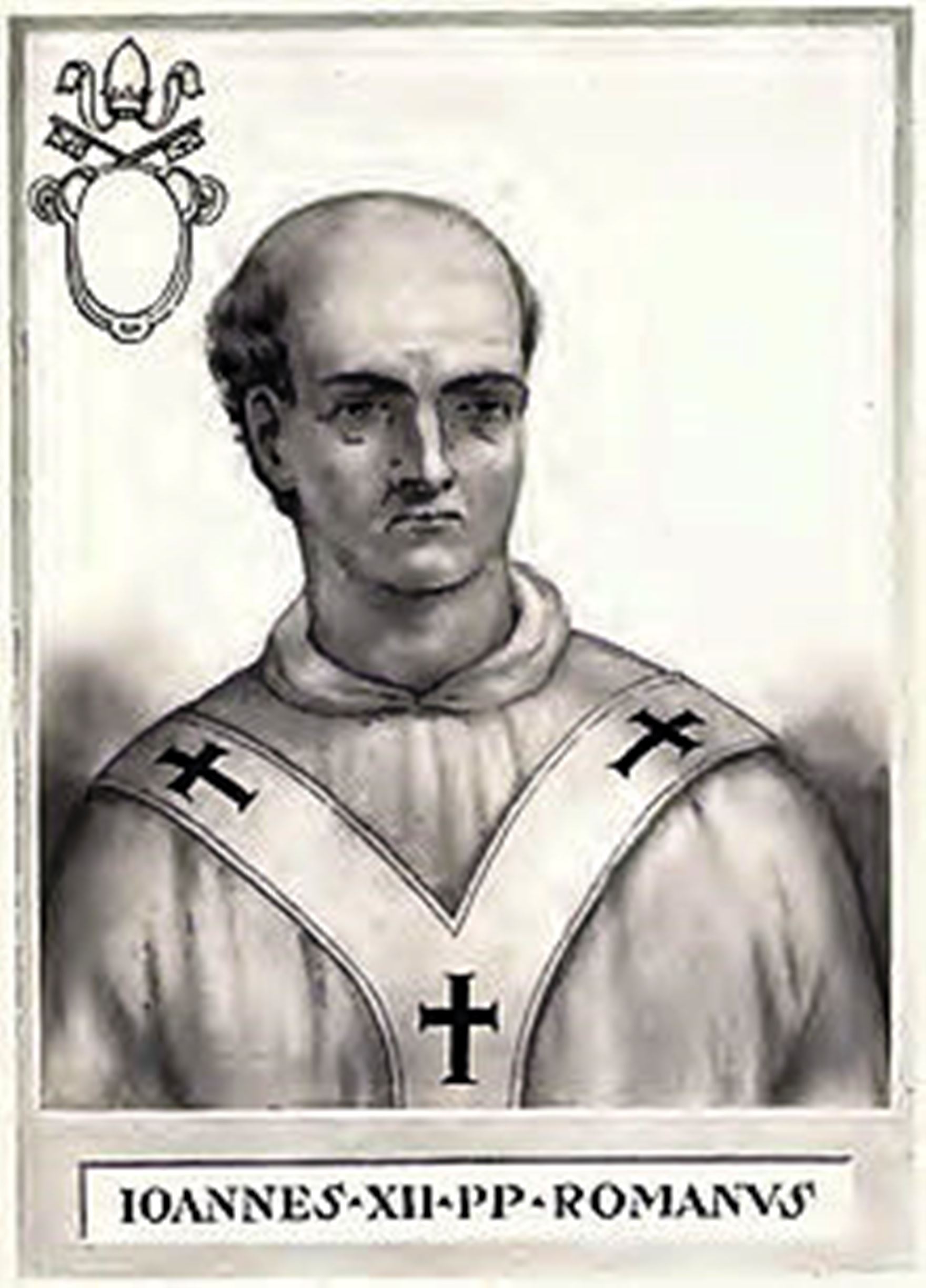
Pope John XII was an immoral man and whose palace was likened to a brothel. The bishop of Cremona, Luitprand said, “No honest lady dared to show herself in public, for Pope John had no respect either for single girls, married women, or widows – they were sure to be defiled by him, even on the tombs of the holy apostles, Peter and Paul.” Pope John XXII was said to have seduced and violated three hundred nuns. He must have had a strong and insatiable libido for he kept a harem of no less than two hundred girls. He was called “the most depraved criminal who ever sat on the papal throne.” A Vatican record says this about him, “His lordship, Pope John, committed perversity with the wife of his brother, incest with holy nuns, intercourse with virgins, adultery with the married, and all sorts of sex crimes… wholly given to sleep and other carnal desires, totally adverse to the life and teaching of Christ… he was publicly called the Devil incarnate.”
My response:
The younger Alberic was the absolute ruler at Rome and he made the Roman nobles promise that upon the next vacancy they would elect his son, Octavius to the papacy. He took office in 955 at the age of 18. This reunited the spiritual and temporal authority of Rome in one person. It is true that he was a coarse and immoral man. The Ecclesiastical States were occupied and war erupted with Pope John XII allied with the German King Otto I (made emperor). However, he later sought to betray the emperor. Bishop Liutprand of Cremona (quoted above) was part of the emperor’s entourage. The Roman nobles promised that no future pope would be elected or consecrated without the emperor’s consent. A synod of fifty Italian and German bishops was convened at St. Peter’s to censure Pope John XII. The Pope was accused of sacrilege, simony, perjury, murder, adultery, and incest, and was summoned in writing to defend himself. The pope refused to meet with them or to recognize their authority. The emperor exposed the pope’s betrayal of their alliance and the synod deposed him. A layman was elected, ordained and consecrated as Pope Leo VIII. However, canons were violated and most regarded his pontificate as invalid. Insurrection broke out and the new Leo VIII fled. Pope John XII retaliated against the churchmen who opposed him. Many good Catholic bishops suffered greatly to bring healing to the Church. In 964 there was another synod at St. Peter’s where Pope Leo VIII was declared invalid and he and all who elected him were excommunicated. The emperor had defeated Berengarius and was going to re-enter Rome when Pope John XII died (May 14, 964).
Both the civil authorities and churchmen did what they could against a bad man who had taken the papacy. However, note that as bad as he was personally, no heretical teachings were introduced against the deposit of faith. We are told that he acted as if he were not a churchman at all and had little concern for spiritual or religious affairs. The Holy Spirit protected the Church, yes even when the worse of men were given roles as shepherds. Such situations as this is why the conclave system with cardinals was created, to have a more organized selection and to take it away from the control of the Roman nobility or other civil authorities.
Pope Sergius III obtained the papal office by murder. He lived openly with a woman who bore him several illegitimate children. His reign began a period known as “the rule of the harlots.”
My response:
The allegation here goes beyond the certain facts. Consecrated in 904 and died in 911, most of what we know comes from the bias reports of his adversaries. Put forward for the papacy in 898, he failed to get elected and went into retirement. Unhappy that Christopher had taken the papacy by violence; the Romans imprisoned him and asked Sergius to take his place. He declared the ordinations by Formosus as null. Allegations that Sergius placed his two predecessors (Leo V and Christopher) to death or that he had relations with Marozia resulting in an illegitimate son (Pope John XI) are very dubious. The last charge was not made until fifty years after the death of the Pope. Such lies were told to damage his legacy and stand in conflict with what his trusted contemporaries said of him. He expanded the Church in England, defended the Filioque clause against errors of the Eastern churches and restored the Lateran Basilica. The so-called “rule of the harlots” had to do with the emergence of strong or influential women upon the world scene (Theodora, and her daughter Marozia, the mother of Pope John XI). This was viewed by a chauvinistic world as a reversal of the natural order.
Proposition condemned: “That heretics be burned is against the will of the Spirit.” (Exsurge Domine). Self-defense of a Catholic community especially is protected by this, not sure about aggression. Capital punishment for heresy is not contrary to Catholicism.
RESPONSE:
It would certainly be contrary to notions about freedom of conscience and religious liberty taught since Vatican II. Even prior to that, many theologians seriously questioned any use of force that was contrary to human dignity and the rights of the individual. The view once held by certain Protestants and Catholics was that physical intimidation and even the prospect of death could be used to compel conversion. The idea, even reckoned by Sir Thomas More, who would face execution himself, was that the one who threatened or murdered the soul was more dangerous than the villain who could destroy the body. Today, capital punishment is generally rejected since it perpetuates a culture of death and there are other reliable ways to punish criminals.
Pope Leo X released his papal bull on June 15, 1520. A somewhat confused or hastily drawn up document, it listed 41 propositions that Martin Luther was commanded to retract under pain of excommunication. Dr. Johann Maier von Eck and a committee assembled the document and the Pope released it as his own. Cardinal Cajetan was concerned about the lack of theological reflection and that minor matters were lumped together with more serious ones. Luther argued against the burning of heretics although other Protestants and even princes that favored his views also resorted to the death penalty. The Pope was also a secular ruler at that time and churchmen resisted the notion that such a penalty could not be exercised. However, the fact that just authority may have such authority is a separate question from whether or not it should be exercised. Today the consensus, even among the Catholic hierarchy, is closer to Luther than Eck or Pope Leo X. Luther cites St. Jerome and the bull makes no reference to it. But of course, this was one question, and one that was disputed even in orthodox circles. The tragedy is that the tone of this document closed the door to any further dialogue with Luther, a man whose temperament needed few excuses to argue and ridicule. He declared the Pope to be the antichrist. The Reformation split had begun.
In any case, a censure of something scandalous like this does not fall under the protection of papal infallibility. Popes can require religious assent even of propositions that have yet to be proven as absolutely true. This would certainly have been the Pope’s right toward an Augustinian priest who had pledged obedience. There are a number of factual mistakes in the bull where caricatures of Luther’s teachings are presented but they fall short of the mark. In retrospect, the Church probably should have taken more time to research the dissenter’s idea. Of course, it was a political climate inhospitable to civil and rational debate. They probably felt they had to act quickly.
QUESTION: As a Catholic can I receive Communion in an Orthodox Church? Aren’t our beliefs essentially the same?
ANSWER:
You cannot generally receive Holy Communion in an Orthodox church. The only exception is when it is physically impossible for you to participate at a liturgy in a Roman Catholic or Eastern rite in union with the Holy See. However, please note, that not all Orthodox churches would want Latin rite Christians taking the sacrament from them, either. We should also try to respect their laws. Having said all this, we recognize the validity of the seven sacraments in the Orthodox churches.
The Orthodox churches are national churches and Roman Catholicism has always been in tension with such embodiments of faith communities. This is true in the East and West. Gallicanism placed great stress upon the unity of the Church in France just as Anglicanism signified a juridical breech. Political reasons related to Church authority are still very much part of the problem that must be resolved. What is the extent of papal power and the unity under the Petrine see? This brings with it the debate over the status of the small Eastern rite churches in union with Rome. The Orthodox churches tend to look down upon them as traitors. The Orthodox churches regard the Pope as “the first among equals.” Such is not how we regard the universal see.
Besides ecclesiology, there are also some doctrinal interpretations which divide us. The most famous of these is the Filioque debate in the Nicene Creed: both the authority of the Pope to add to the profession of faith and the understanding of the eternal generations or relations of the divine Persons in the Blessed Trinity. Given pressure from worldly monarchs, Protestant influence and secularism, the second or penitential marriages of divorced persons is also a divide. We cannot readily forgive that for which we were willing to allow the entire English church to slip away— a marriage that is no marriage but adultery. Orthodox churches transplanted into the West are increasingly adopting elements of Lutheranism (emphasis upon Scripture over tradition and the value of faith over works) but these eccentricities are also placing stress upon their loose inner unity worldwide. Indeed, some communities have split as have several of the Russian Orthodox over the fragmentation of the old U.S.S.R. and what was seen as complicity with communism. Indeed, it appears that some prelates might have been KGB plants. Indeed, the recent news has detailed a public rift between the Orthodox patriarchs in Russian and the Ukraine.
“The root of this possibility of doing good – that we all have – is in creation. The Lord created us in His image and likeness, and we are the image of the Lord, and He does good and all of us have this commandment at heart: do good and do not do evil. All of us.”
“‘But, Father, this is not Catholic! He cannot do good.’ Yes, he can. He must. Not can — must! Because he has this commandment within him.”
“The Lord has redeemed all of us, all of us, with the blood of Christ. All of us, not just Catholics. Everyone!”
“‘Father, the atheists?’ Even the atheists. Everyone! And this blood makes us children of God of the first class! We are created children in the likeness of God and the blood of Christ has redeemed us all!”
It is well understood that Pope Francis is struggling to speak and do things on a level that most people might grasp. But something is getting lost in the translation. I am getting so very tired of orthodox bloggers, conservative news sources and Vatican facts checkers bending over backwards to explain that what the Pope said was not really what he said. (Am I doing that here?) Pope Benedict XVI was careful to nuance his teachings so that only dissenters could take exception. But the free-form of Pope Francis seems to allow for a certain degree of ambiguity which is exploited by progressives. I blame in part an intoxicating atmosphere for change which is based more on minor symbolic externals and disjointed phrases than upon anything really substantive. Let us look at the whole business in a sober way. What has happened to feed this feeding frenzy in the media for religious liberals?
1. It is reported that back in his home archdiocese, he was not very forthcoming about permitting the Tridentine Mass. This along with the life-sized puppet-Mass gave the SSPX people a stroke. But, of the course, the Eucharist is still the Eucharist: sacrifice, real presence and all.
2. He purportedly saw little reason for the special provision permitting Anglicans to retain their traditions and become Catholic, or so he purportedly told an Anglican bishop. This is suspect because Anglican orders are judged as null-and-void. He has lately been more accommodating than his predecessor. Recently there was a commotion from a homily interpreted as saying atheists and non-Christians could get into heaven apart from Christ. But I really doubt the Holy Father embraces either religious indifferentism or salvific-universalism. The Vatican clarified the homily by quoting the catechism. As soon as the clarification was offered, Jewish critics decried the intolerance of saying that there was no way into heaven apart from Jesus. (Of course, take Jesus out of the equation and there is no more Catholic Christianity or Church. That is not going to happen!)
3. Although the law of the Church specifies that only the feet of men can be washed on Holy Thursday, he washed the feet of men and women (actually youth at a detention home). The ceremonial was always traditionally associated with the apostles and the institution of the priesthood. As with the altar girl business a number of years ago, this damaged the credibility of priests who abided by the rules, even in the face of much recrimination. Nevertheless, this is the stuff of discipline and not strict doctrine. The Pope evidently connects the foot washing more with the baptismal priesthood of believers:
“For through faith you are all children of God in Christ Jesus. For all of you who were baptized into Christ have clothed yourselves with Christ. There is neither Jew nor Greek, there is neither slave nor free person, there is not male and female; for you are all one in Christ Jesus” (Galatians 3:26-28).
4. His Secretary of State was quoted by a newspaper as saying that celibacy was not of divine law and so it could theoretically be abrogated to “reflect the democratic spirit of the times.” Just because something can be done does not mean that it will or needs to be done. I am betting that the discipline will be renewed and expanded.
The reference to doing “good” is in relation to the natural order. Popes have long appealed to believers and men of good will. It is here where we meet and many an atheist was moved to faith by the shared work with figures like the late Mother Teresa. As for redemption, the Church does not teach that all will be saved (universalism) but rather there is a universal call to salvation. We need to respond to the redemptive work of Christ. It is that response, accepting Christ as our personal and corporate Savior, affiliation with the Church and sacraments, and obedience lived out in charity that merits salvation or eternal life. On a natural level we are all created by God and in that sense we are his children. However, according to a spiritual level or sense, we are made adoptive sons and daughters of the Father through the regeneration of baptism. I personally like to make a distinction between the words “image” and “likeness.” We were all made in the image of God (we have souls composed of mind and will). Grace restores us to the likeness of God (holiness/right relationship) that was forfeit through original sin. None are saved apart from Christ. Since the Church is the Mystical Body of Christ, none are saved apart from the Church. The Church takes care of her own but also intercedes for the world: unbelievers, Protestants, Jews, Moslems, Hindus, etc. We pray for them and leave the question of individual salvation to God. This is what the Pope means when he talks about not judging.
A wonderful corrective to the confusion evidenced in last week’s headlines is today’s second reading at Mass:
1 Timothy 2:1-8
Beloved:
First of all, I ask that supplications, prayers,
petitions, and thanksgivings be offered for everyone,
for kings and for all in authority,
that we may lead a quiet and tranquil life
in all devotion and dignity.
This is good and pleasing to God our savior,
who wills everyone to be saved
and to come to knowledge of the truth.
For there is one God.
There is also one mediator between God and men,
the man Christ Jesus,
who gave himself as ransom for all.
This was the testimony at the proper time.
For this I was appointed preacher and apostle
— I am speaking the truth, I am not lying —,
teacher of the Gentiles in faith and truth.
It is my wish, then, that in every place the men should pray,
lifting up holy hands, without anger or argument.
What about the Holy Father’s statements on homosexuals? I will devote a short post on that alone, later. But do not jump to the wrong conclusions. Precision of formulation is important and I suspect we will see more of an effort in this regard. The deposit of faith is safe. The faith is secure. The Holy Spirit will not let us down.
Regarding the first council of the Church in Jerusalem, note that after the debate about ritual circumcision, it is Peter who resolves the matter. The mere fact that Paul and Barnabas had come to Jerusalem illustrated their confidence in the apostolic authority there. As in any council, there was debate and dialogue; however, in the end it was Peter who stood up and supported Paul in his refusal to impose the Mosaic Law upon the Gentiles– they would not have to become Jews before becoming Christians. Citing the work of God’s Spirit in Cornelius and his household, whom they knew and accepted, Peter summarizes the core proclamation of salvation: “My brothers, you are well aware that from early days God made his choice among you that through my mouth the Gentiles would hear the word of the gospel and believe. And God, who knows the heart, bore witness by granting them the Holy Spirit just as he did us. He made no distinction between us and them, for by faith he purified their hearts. Why, then, are you now putting God to the test by placing on the shoulders of the disciples a yoke that neither our ancestors nor we have been able to bear? On the contrary, we believe that we are saved through the grace of the Lord Jesus, in the same way as they” (Acts 15:7-11). We are told that the whole assembly was reduced to silence. The issue was resolved. Paul and Barnabas then enthusiastically recounted how God had used them as instruments to reach the Gentiles.
Many distinctions need to be made about Peter. He is certainly much altered after the Christ has suffered, died, and risen. The Holy Spirit on Pentecost grants him a special charism of authority and infallibility. This did not mean that either Peter or his successors would be impeccable and unable to sin. The miraculous truth in the long history of the Church is that even weak and sinful men have seemed changed by the office of Peter. Without such an authority, we would suffer from the same endless fragmentation and deviation from Gospel truth that other religious communities experience. We believe we have Christ’s Rock to preserve and protect the deposit of faith. Given to Peter, this gift of infallibility is for the entire Church. This forum demands brevity, but we see it observed when the Holy Father makes a formal proclamation of dogma as the universal shepherd (the Vicar of Christ) on a matter of faith or morals. Neither the Pope, nor the bishops, nor an ecumenical council can manufacture new beliefs– they define something which has always been taught and believed, but reformulate it in a more concise and solemn way. A papal declaration along these terms is an exercise of his Universal Extraordinary Magisterium.
The unanimous teaching of all the world’s bishops in union with the Pope is called the Universal Ordinary Magisterium. This latter expression of infallibility is much more common. The laity and the religious of the Church also enter into this mystery. The Sensus Fidelium (sense of the faithful) among Catholics who have informed their consciences according to Church teaching and who live out the faith also touch upon this mystery of faith. (Admittedly this latter aspect is usually only mentioned by dissenters these days; however, they cite people who have largely rejected the deposit of faith and the Christian life– the ones to whom it does not really apply.)
The question arises, what is the significance of James’ input? As the bishop of the Jerusalem Church, he rose after Peter and directed that a letter be written and promulgated to the other churches. While a special charge is recorded as given to Peter, the apostolic community also respected the familial relationship of John and James to Jesus. James, John and Peter accompanied our Lord when Jesus raised Jairus’ daughter from the dead. These three also witnessed the Transfiguration. These “sons of thunder” remained close to Jesus in the Garden of Gethsemane. Peter’s unique authority was real and yet the structure by which authority was exercised was much more fluid during the apostolic period. Peter did not remain with the Jerusalem church but traveled elsewhere in exercise of his universal charge. James remained with the Jewish community in Jerusalem and became its bishop. Jerusalem is viewed as the Mother Church and James operated the council since it was within his jurisdiction.
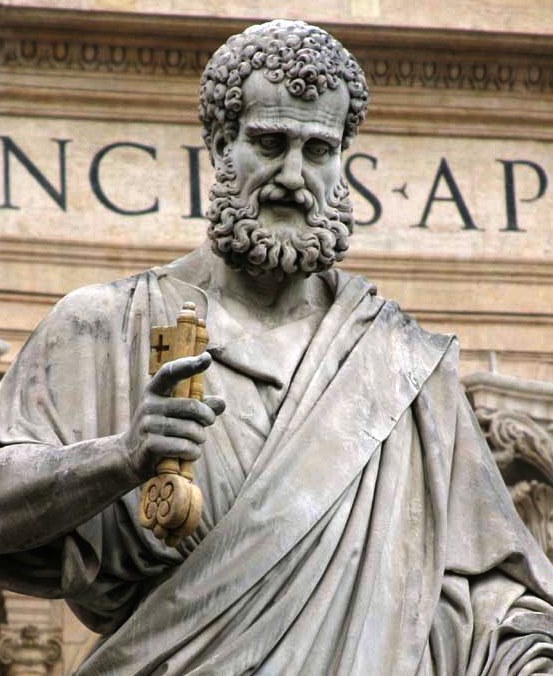
Peter is listed as first among the apostles; he is given the new name Rock and our Lord said that he would build his Church upon this Rock; and he is named the chief shepherd by name. Jesus prays for him by name in order that his “faith may not fail” and that in turn he might “strengthen your brethren” (Luke 22:32).
The news is abuzz about Jimmy Carter’s TIME interview remarks with Elizabeth Dias promoting the conference, “Mobilizing Faith for Women: Engaging the Power of Religion and Belief to Advance Human Rights and Dignity” at the Carter Center in Atlanta, Georgia. It will be held from June 27 to June 29. Carter and the United Nations High Commissioner for Human Rights are bringing together representatives from around the world to speak about women’s rights. At least this is what they project; in truth they also are inviting radical feminists like Elisabeth Schussler Fiorenza and liberal voices to give a distorted understanding of women’s rights and to attack the religious views of others. Indeed, while Catholicism has often been a lone voice crying out on behalf of human rights, especially about issues like poverty, repressive regimes, and the unborn; it was associated here with the most repressive Islamic movements and terrorists.
Carter focused on the Catholic rejection of priestesses; but the motivation goes far deeper. The Church opposes so-called Choice and the lie that abortion is a woman’s right even as it strips the unborn child of all rights, starting with life. Just picking one participant at ransom, there is Susan Thistlethwaite, a Senior Fellow with the Center for American Progress and who writes for The Washington Post. American Progress promotes gay, lesbian, bi-sexual and transgendered rights. It has lobbied for same-sex marriages. It wholeheartedly supports contraceptive and abortifacients provisions in Obama’s Healthcare plan over the religious liberty of the Catholic Church. It is on the record as pro-abortion. They even oppose chastity education over free condom giveaways and safe-sex education. It is also on the side of what it calls “progressive” religion and women’s ordination. The deck is fixed and more neutral and opposing voices are not invited.
Jimmy Carter regards the exclusion of women from the priesthood as a human rights abuse? This makes absolutely no sense to me. Ordination to the priesthood is not a natural right. It is a spiritual calling and a divine gift. It cannot be merited. No one deserves it. By definition it cannot be associated with any social justice agenda. People might debate the subject and others might request it; but no one can demand it. It is a sacrament of the Church. The Church has every right to regulate her sacraments as she sees fit. The Church has made great overtures in empowering women. They minister as pastoral associates, chancellors, office managers, directors of religious education and catechists, music directors, readers, extraordinary ministers of Holy Communion, religious sisters, lay missionaries, principals and teachers, and the greatest vocation of all, as mothers.
Instead of dictating to the churches and other religions; Carter should have encouraged them to find new avenues for inclusion and service for women. It is not his place to dictate “theology” which conflicts with the settled doctrine of other faith communities. If we are going to respect religious liberties then we have to paint in broad strokes and allow them the freedom and ingenuity to find ways to heal gender inequality. Not everyone looks at the world through the lenses of liberal Protestantism. Catholicism has its Magisterium and Sacred Tradition. Conservative Protestantism has its strict reliance upon a literal understanding of Scripture. Islam is a religion of “the Book” and “the Law.” Judaism is the religion of “the Promise.” Unless we are going to respect each other than there can be no true dialogue. It seems that his conference will host only those on the fringes of religious communities; not the genuine leaders who can make a difference. Dissenters condemned by lawful authority will not bring change to their religions, only more division. As for Catholics, maybe the issue is not that women are not allowed to be priests? Perhaps the real issue is that many fail to appreciate the nature of the priesthood and the many ways that women already have to serve in the Church?
The priest acts at the altar as an “alter Christus” or “in persona Christi” (in the person of Christ), the head of the Church. The priest at the altar speaks Christ’s words in the first person. He is a living icon for Christ. While men and women share their human nature; men and women are not the same. Our Lord had many affiliations with women. He made the Samaritan woman at the well into a prophetess for her people. Mary Magdalene would be at the Cross and the empty tomb. Lazarus’ sisters, Martha and Mary took the posture of disciples. Mary was his Mother and the Immaculate Conception. She cooperated with the saving work of her Son like no other human being. However, not one of these women was ordained into the priesthood of Christ’s Church. Jesus broke all sorts of stereotypes, but not about this. Might it be that there is something constitutive or singular and important about the male identification of his priests with him? If so, then it would be foolhardy to attempt any change in this apostolic tradition that goes all the way back to Christ. Baptists have no such view of their ministers and do not believe that their bread and grape juice is God come down from heaven. Catholics believe that the sacred elements are transformed (transubstantiation) into the body and blood, soul and divinity, of Jesus Christ. We participate in an unbloody or clean way at the oblation of Calvary. Catholics are given the Risen Christ in Holy Communion. As an educated man, I would have hoped that Carter would have known better; evidently, he is ignorant of Catholic doctrine and thus made a fool of himself in trying to dictate to the Church.
No woman will ever be an authentic priest. As offensive as it might sound, their history is more related to that of priestesses in ancient pagan religions than in Christianity. The excommunicated Catholic women who attempted ordination are not real priests. Most of the men and all of the women in the Episcopal Church are not priests and certainly not bishops. However, none of this means that women are demeaned or looked down upon. Cardinal O’Boyle’s homilies at ordinations often sounded like Mother’s Day sermons. He thanked the women for giving the Church their sons; he promised the Church would always look after their boys; and he explained that they would always be the most special women in their lives. Priests are men but they are also sons. They love their mothers, as well as their sisters. They are thankful for the wonderful ladies in the parishes who breathe life into our communities and do so much of the work. The priest is the servant of all but especially to them. They see something of their mothers in all the women around them. They are faithful sons. The priesthood is no guarantee of personal holiness. No one has to be a priest to be saved. Indeed, the priesthood might bring a harsher judgment upon a man because the more one has been given the more one will be held accountable. Most men will never be priests. Women will never be priests. But all benefit from the priesthood and it is a sacrament that touches the whole Church. It makes possible the forgiveness of sins in the sacrament of Penance. It grants us all a share of the bread of life and the chalice of salvation.
Carter’s increasing modernist views forced him to separate from the Southern Baptist Convention. He states in a 2000 press release that he could only associate with other Baptists “who continue to share such beliefs as separation of church and state, servanthood and not domination of pastors, local church autonomy, a free religious press and equality of women.” While there are areas of legitimate rights, anti-Catholic remarks were placed in the mix, and Catholic teaching demonized by their association with genuine wrongs. The issue of women’s ordination is a far cry from subjects like female castration, violence against women, human trafficking in terms of slavery and prostitution, and denying the rights of women to education and to full participation in the governing structures of society.
Am I exaggerating about the extent of this assault upon Catholic discipline and doctrine? Look at what the former president said in the interview:
“Well, religion can be, and I think there’s a slow, very slow, move around the world to give women equal rights in the eyes of God. What has been the case for many centuries is that the great religions, the major religions, have discriminated against women in a very abusive fashion and set an example for the rest of society to treat women as secondary citizens. In a marriage or in the workplace or wherever, they are discriminated against. And I think the great religions have set the example for that, by ordaining, in effect, that women are not equal to men in the eyes of God.”
Notice that he is lumping together Christianity with other world religions as if there is no distinction. This seems surprising given that he is a deacon in the Baptist church! Of course, he has issues with his own denomination and left the more conservative branch of his denomination for an “anything goes” version, where his wife has also been made a deacon. How could he sanely compare the treatment of women in the Church with the repression we see in Islam? There are Islamic societies where women must clothe their entire bodies, even their faces, from the outside world. Their bodies are mutilated and they are regarded as property. Radical Islam and it has yet to be proven that this is the minority view, grants them only the most elementary education and no leadership roles. Catholicism, on the other hand, argues for the full dignity of women, which includes “motherhood,” a bad word to some of the liberal dissenters! Catholicism would grant them education, civil leadership, and participation in the workforce. Catholic women serve as the chancellors of dioceses, office managers of churches, principals and teachers of parochial schools, physicians and nurses in our hospitals, and are counted among the great saints and doctors of the Church! Indeed, the greatest of God’s creatures is “the Woman” or New Eve, the Blessed Virgin Mary!
While the priesthood is reserved to men, such is because we are restricted to the model given us by Christ and it is not subject to social reinterpretation. The equality for which Catholicism argues is one of complementarity, not egalitarianism. Men and women are coheirs in grace and equal in dignity. But men and women are not the same. Those who argue otherwise logically have no problem with homosexual and lesbian unions. Such is the plight of those who make gender utterly insignificant. It is a deception against nature and the God of nature. Just as only women can be mothers; only men can be priests. Women conceive and give birth to new life from their wombs. Priests consecrate the real presence of Christ upon our altars and make possible new life from the womb of the Church.
Carter becomes as bad a fiend as the current administration in dictating to the Church what should be doctrine and morals. Has there been collaboration in this? It is in this light that the bizarre recent Supreme Court case becomes clearer. Why would the administration want authority over the staffing of churches and seminaries? It would insure that only the people who thought as they do would have positions of influence and teaching. Note also President Obama’s recent words in Ireland:
“There are still wounds [in Northern Ireland] that haven’t healed and communities where tensions and mistrust hangs in the air… If towns remain divided – if Catholics have their schools and buildings, and Protestants have theirs – if we can’t see ourselves in one another, if fear or resentment are allowed to harden, that encourages division. It discourages cooperation.”
No matter how you try to spin it, the fact is this comes across as an effort to shut down or maybe even to nationalize Catholic schools— and taking God out of public schools much as we have in the United States. Brian Burch, president of the group Catholic Vote, offered this pointed correction: “Catholic schools educate children without regard for race, class, sex, origin, or even religious faith. The work of Catholic education is a response to the Gospel call to serve, not divide.”
One could argue that through Catholic Relief Services and Catholic Charities, through our parochial school system and universities, etc., Catholics have been at the forefront of the battle for human rights. Back when Jimmy Carter’s church was urging segregation and espousing racism, the Catholic Church was already desegregating its schools and had priests marching with Martin Luther King. There was no greater defender of labor unions and worker’s rights as the late Msgr. Higgins. Today, we are at the forefront of the fight against abortion and the defense of the sanctity of life, something which Carter and other humanists have betrayed. He and his compatriots no longer have sufficient moral standing to critique the Catholic faith.
Carter has his doctorate in physics, but what does he really know of Catholic doctrine and moral teaching? Has he read Pope John Paul II’s apostolic letter, Mulieris Dignitatem on the Dignity and Vocation of Women? Pope John Paul II, who argued infallibly that only men can be ordained as priests, wrote this:
“Therefore the Church gives thanks for each and every woman: for mothers, for sisters, for wives; for women consecrated to God in virginity; for women dedicated to the many human beings who await the gratuitous love of another person; for women who watch over the human persons in the family, which is the fundamental sign of the human community; for women who work professionally, and who at times are burdened by a great social responsibility; for ‘perfect’ women and for ‘weak’ women – for all women as they have come forth from the heart of God in all the beauty and richness of their femininity; as they have been embraced by his eternal love; as, together with men, they are pilgrims on this earth, which is the temporal ‘homeland’ of all people and is transformed sometimes into a ‘valley of tears’; as they assume, together with men, a common responsibility for the destiny of humanity according to daily necessities and according to that definitive destiny which the human family has in God himself, in the bosom of the ineffable Trinity. / The Church gives thanks for all the manifestations of the feminine ‘genius’ which have appeared in the course of history, in the midst of all peoples and nations; she gives thanks for all the charisms which the Holy Spirit distributes to women in the history of the People of God, for all the victories which she owes to their faith, hope and charity: she gives thanks for all the fruits of feminine holiness. / The Church asks at the same time that these invaluable ‘manifestations of the Spirit’ (cf. 1 Cor 12:4ff.), which with great generosity are poured forth upon the ‘daughters’ of the eternal Jerusalem, may be attentively recognized and appreciated so that they may return for the common good of the Church and of humanity, especially in our times. Meditating on the biblical mystery of the ‘woman’, the Church prays that in this mystery all women may discover themselves and their ‘supreme vocation’.”
Women would do better to subscribe to the Holy Father’s view of women over the distorted and impoverished version promoted by our society and by the former president.
Clinton understands neither Christian anthropology and womanhood nor the sacramental nature or reality of the priesthood. Of course, how could he understand? As a Baptist, he rejects the identification of the ordained man with the high priesthood of Jesus Christ. Priests are not the same as ministers. Indeed, his version of ministry would even strip Catholic ministers of their pastoral authority and make them pawns of trustees like himself.
Carter enumerates upon his view of Catholic discrimination:
“This has been done and still is done by the Catholic Church ever since the third century, when the Catholic Church ordained that a woman cannot be a priest for instance but a man can. A woman can be a nurse or a teacher but she can’t be a priest. This is wrong, I think. As you may or may not know, the Southern Baptist Convention back now about 13 years ago in Orlando, voted that women were inferior and had to be subservient to their husbands, and ordained that a woman could not be a deacon or a pastor or a chaplain or even a teacher in a classroom in some seminaries where men are in the classroom, boys are in the classroom. So my wife and I withdrew from the Southern Baptist Convention primarily because of that.”
The truth be said, the pattern was established by Christ that only men could be ordained. The Council of Nicea would forbid the placing of hands upon the head of a woman for ordination but this was not because there was a debate in Catholic circles. There were false Christians or Gnostics who regarded matter as evil and contended that Jesus was a spiritual being who only pretended to be human and to die on the Cross. They had priestesses because of this basic rejection of the incarnation. Gender is not an accidental but touches the core identity of the person. The Church, then and now, felt compelled to follow the pattern of Christ and the apostles. As Pope John Paul II explained, the Church does not have the authority to change this pattern. If we were to do so anyway, and such was in contravention of the divine will, we would forfeit forever both the priesthood and the Eucharist. In other words, the Church, herself, would come to an end. Remember, while Protestants have ecclesial communities, theologically speaking a “church” requires an authentic priesthood and the Eucharist (Christ’s real presence and the unbloody re-presentation of Calvary). Baptists have neither of these already. Carter wants the Catholic Church to become a variation of liberal Protestantism!
Carter continues:
“But I now go to a more moderate church in Plains, a small church, it’s part of the Cooperative Baptist fellowship, and we have a male and a female pastor, and we have women and have men who are deacons. My wife happens to be one of the deacons. So some of the Baptists are making progress, along with Methodists. For instance the other large church in Plains is a Methodist church, and they have a man for the last eight years and the next pastor they get will be a woman. They’ve had a woman pastor before, before the Baptists did. And of course the Episcopalians and other denominations that are Protestant do permit women or encourage women to be bishops, as you know, and pastors.”
Okay, so he bases his entirely opinion to change 2,000 years of Catholic practice and holy orders upon a handful of Protestant churches in his hometown! As for the Episcopalians, they also allow divorced and gay clergy. Would he argue for these concessions as well?
He concludes by speaking about the status of women under Islam, as if there is any real comparison. Even here he contends that strict laws against women are due to “misquoting the major points of the Qur’an.” Evidently, he now counts himself not only an expert on Catholic sacraments and administration as well as Islamic teaching and laws. Please, this is ridiculous. He is fearful of offending the Moslem world by saying that the Qur’an is wrong for teaching such things.
Clinton ignores Sacred Scripture and Sacred Tradition entirely by condemning Catholic practices. Catholicism would allow women to serve in virtually any occupation they want except the priesthood. Nothing is said about the powerful and saintly women who served selflessly and courageously in our religious orders. Nevertheless, he associates such a prohibition with Islam forcing “ten year old girls” to “marry against their wishes,” “that women can be treated as slaves in a marriage,” “that a woman can’t drive an automobile,” and that “some countries don’t let women vote, like Saudi Arabia.” He neglects to tell us that Christianity is virtually outlawed in Saudi Arabia. The rights of women have emerged and have been protected in Christian and Catholic nations. There is no comparison, although he forces one upon us.
It saddens me that this proposed conference is so slanted to the left. Where are the more sober voices? He states, “But anyway, I say that the emphasis of condoning of violence on the general population, and the denigration of women as inferior, those are the two things we are going to address in this conference.” The topic is good but I am fearful that his targeting is way off.
The topic of women’s ordination in the Catholic Church is permanently off the table. Dissenters and busy-bodies from other denominations will just have to get used to it. As Pope John Paul II declared:
“Wherefore, in order that all doubt may be removed regarding a matter of great importance, a matter which pertains to the Church’s divine constitution itself, in virtue of my ministry of confirming the brethren (cf. Luke 22:32) I declare that the Church has no authority whatsoever to confer priestly ordination on women and that this judgment is to be definitively held by all the Church’s faithful.”
As if ignorant Catholics giving a distorted witness were not bad enough, now we have a Baptist deacon and former president trying to tell the Church its business and what it should do. It is unbelievable. How many Catholic priests or deacons would argue for the reform of the Baptist denomination so that it would conform to the structure of historic Catholicism? We might invite them to become Catholics but we would not proselytize or seek control over the internal structures of their churches. Today, the executive administration of our country and dissenters are seeking just that in regard to Catholicism, the overthrow of the Church and the severing of ties to the Pope and traditional Christianity. It sickens me and is ample evidence that all the talk about tolerance and mutual understanding is a smokescreen for just the opposite. Religious liberty does not mean that we can change the Church into whatever we want. Rather, it means that churches, temples and synagogues have a right to exist on their own terms and not to have doctrine changed or imposed by either government or radical fringe groups. If liberal Catholics want birth-control, abortion, euthanasia, same-sex unions, sexual cohabitation, no-fault divorce with legalized adultery, and women priests— then they should make up their own “church” with their counterfeit Jesus, leaving the rest of us to the truth. Or they could just join the “anything goes” Episcopalians with their charade liturgies and “real absence” communion sacrament.
Cathy feels very strongly that the Church should allow priests to marry. I took exception to her opinion.
CATHY: It is impossible to make the assumption that having a wife and children would be distraction to priests, bishops, cardinals and the pope when they were never allowed to have a family in the first place and many have fooled around anyway.
FATHER JOE: You are presumptuous that many priests have “fooled around.” Most Catholic priests are faithful to their promises and to the commitment of obedience and celibacy. Priests are normal men who grew up in families. We also deal with the marriages and families of others. Many married people who have come to understand what priesthood entails have themselves told me that celibacy is the best way. The Catholic preference is that the priest’s wife and family is his parish— he belongs to them, 24 hours a day, 7 days a week, 365 days a year (or 366 in leap year). I am not saying that we do not have some good and holy married priests. We do. But the daily character of their priesthood and personal life is very different. It has to be or they would not be good and faithful husbands and fathers. Even things that are usually reckoned as good can be distractions to the priest. Here I speak not just about activity but about the donation or surrender of himself and of his heart.
CATHY: To make people choose against a holy sacrament of marriage is to break the first commandment in the bible which is to be fruitful and multiply.
FATHER JOE: First, the sacrament of marriage comes with the Christian dispensation; all that comes before belongs to the natural covenant of marriage. Second, the mention of fruitfulness comes not as a command in itself but rather as part of man’s stewardship over creation. Third, what we are dealing with here is a divine benediction or blessing. We read: “God blessed them and God said to them: Be fertile and multiply; fill the earth and subdue it. Have dominion over the fish of the sea, the birds of the air, and all the living things that crawl on the earth. (Genesis 1:28). Fourth, it is a generalized matter for the whole human race and not a particular command to individuals. You personally cannot fill the earth and subdue it. You personally do not have mastery over all the animals. There is no commandment that says that men and women MUST get married. Choosing celibacy is not simply opting never to get married; rather, it is the decision to love in another way. Marriage is regarded by the Church as a natural right. However, the man called to priesthood or religious life opts not to exert this right. Yes, it does signify sacrificial love but so does marriage. What makes it a higher form of love is that it is the road less traveled. It points in a unique fashion to the coming kingdom where there will neither be marriage nor the giving in marriage. This is what theologians mean when they speak of priestly celibacy as an eschatological sign.
CATHY: You would take away some of the supposed scandal from the church if you would allow for men and women (nuns) to serve and be married.
FATHER JOE: Are you so sure? Have you noticed the divorce and remarriage rates among Lutheran clergy? Child abuse rates are higher in marriages than among celibate clergy. No, you are very wrong about this. The Church could make the discipline of celibacy optional; however, it will neither be because of scandals nor because genital sexual expression has become a modern necessity.
CATHY: How can ministers of the word even begin to identify with parishioners if they have not lived through some of their circumstances, especially since ministry begins in the home?
FATHER JOE: Again, you pile one false presupposition upon another. Priests do not come from distant Pluto. We have grown up in families, some good and a few that were dysfunctional. Priests prepare couples for marriage, give counseling, interact regularly with families, and know all the blessings and malignancies that can plague the home. It comes first through our pastoral training and then in our daily association with the people we serve. I would suspect in all this that priestly experience is far beyond yours or that of many married people. This is precisely an area where celibacy frees the priest so that he can be available to his parishioners. Otherwise, the cares and tribulations of his own home would have to come first.
CATHY: Sex is not vile if done within marriage. It is a God sanctioned act.
FATHER JOE: Did I ever say that sex was vile? Please do not put words into my mouth. The marital act consummates the marital union and it regularly renews the covenant of the spouses with each other and with God. Marital love and family are great treasures; but celibate love is a still greater gift. You do not prize it. You do not understand. This is the tragedy of the modern age. We agree with St. Paul, that the single-hearted love of God (celibacy) is the better way. But, it is not the only way. God will give the gift of celibacy to any man truly called to the priesthood. I firmly believe this. We see it realized in the lives of thousands upon thousands of priests.
CATHY: This not being married is a man sanctioned decree.
FATHER JOE: There are doctrinal components, but yes it is what the Church terms a discipline. Remember that the Church is both a human and a divine institution. While the Church has charge over such disciplines, it is the mind of the Church that celibacy pleases God and that such reflects his providential will over the orders of the Church.
CATHY: Every prophet and most of the apostles including St. Peter were married.
FATHER JOE: So what? We still have married clergy, a few priests and many deacons. And they are permitted to exercise their marital prerogatives. However, many married clergy in the early Church opted after their ordinations to live like Joseph and Mary. They may have had children before ordination but then practiced perfect and perpetual continence just as the Jewish priests practiced temporary abstention during their terms of service.
CATHY: Their trials were due to the times they were living in. Now, unless you are living in pagan or atheist parts of the world, no one is trying to burn or stone you for being Catholic.
FATHER JOE: What you say here is not entirely topical to this discussion. But, your gullibility frightens me. Have you missed all the uproar this past year about religious liberty? I have a parish with members from Asia and Africa. They have seen their priests killed and churches at home destroyed. I know priests here at home who have suffered the prison cell for peacefully protesting evils in our society like abortion. I suspect the day will soon come when declaring homosexual acts as sinful from the pulpit will be equated as hate-speech. When that happens, we will see many more priests behind bars. A priest-friend was murdered in his bedroom just a few years ago by a madman unhappy with him. We had several priests up north killed by a homeless man who beat their brains out with the very soup can with which these holy men sought to give the beggar nourishment. The family of married priests, as with ministers, can become the ground for manipulation and the cause for passivity in the face of evil. How is that? The celibate priest has only himself. The married man thinks first of his wife and children. He needs an income to provide for them. He needs a home to shelter them. The world plays hardball all the time. How many ministers have shut their mouths on certain issues for fear of alienating parishioners and forfeiting lucrative positions? We have some incredibly poor parishes. We already have men who can barely pay their small salaries. Could you raise a family on a thousand or fifteen hundred dollars a month? When all the assessments are paid there is not much left. Sometimes there is nothing left. The Church’s resources go back into our care for the poor, our schools, hospitals, and churches. As I said, we belong to the people we serve.
This is the home of the AWALT PAPERS, the posting of various pieces of wisdom salvaged from the writings, teachings and sermons of the late Msgr. William J. Awalt.























 A priest friend recently announced that he saw the Church’s way of speaking of those with same-sex attractions as wildly exaggerated, harsh and inaccurate. His assertion deeply bothered me. I am well aware that people have taken offense and even left the Church over the assessment that homosexuals and lesbians are sexually “disordered.” Often the response to this issue or individual revelations, even from pulpits, is a deafening silence. Homosexuality is joining contraception as one of those issues rarely raised from the pulpit. Privately, people increasing accept and love their friends, regardless. Young people not only accept it but see those who do not as bigoted. Older people are generally more judgmental, but often suspend this judgment when the gay person is someone close to them. Silence is no real answer and a fire-and-brimstone sermon will arouse anger and hurt. But the truth is the truth, is it not? My priest friend argues in a way that makes my head hurt. Often I think he is more like the Episcopalians, suggesting compromise on contraception, divorce and remarriage, and now homosexuality. As for myself, I have no desire to cause pain for others; however, I was ordained to speak for Christ and his Church, not for myself. The Bible and the traditions of the Church give a negative verdict to same-sex attraction and activity. While the orientation is problematical, sin only enters the picture with wrongful fantasies and immoral actions.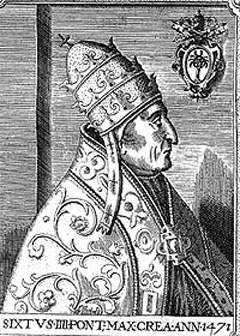






















 Blogger Priest