• Our Blogger

    Fr. Joseph Jenkins

  • The blog header depicts an important and yet mis-understood New Testament scene, Jesus flogging the money-changers out of the temple. I selected it because the faith that gives us consolation can also make us very uncomfortable. Both Divine Mercy and Divine Justice meet in Jesus. Priests are ministers of reconciliation, but never at the cost of truth. In or out of season, we must be courageous in preaching and living out the Gospel of Life. The title of my blog is a play on words, not Flogger Priest but Blogger Priest.

  • Archives

  • Categories

  • Recent Posts

  • Recent Comments

    Barbara King's avatarBarbara King on Ask a Priest
    Ben Kirk's avatarBen Kirk on Ask a Priest
    Jeremy Kok's avatarJeremy Kok on Ask a Priest
    Barbara's avatarBarbara on Ask a Priest
    forsamuraimarket's avatarforsamuraimarket on Ask a Priest

Question 3 – Extraordinary Synod on the Family

3. The Pastoral Care of the Family in Evangelization

a) What experiences have emerged in recent decades regarding marriage preparation? What efforts are there to stimulate the task of evangelization of the couple and of the family? How can an awareness of the family as the “domestic Church” be promoted?

It seems to me that marriage preparation is frequently too little too late. The class or classes become streamlined so that an obligation might be checked off the list. It seems to me that a successful program would cover basic Christian anthropology and would be so challenging that some couples would even decide not to get married or to continue relationships. We do not want to rubberstamp bad choices or assist people in going through the motions. There is already too much of this with our children. The Archdiocese has standards for catechesis but the guidelines have no teeth and are not binding for advancement. 60% was regarded as passing and yet in my book that rates a failing grade. Are we doing the same with marriage preparation programs? Many dioceses are also pushing off the responsibility to external groups or to individual parishes. But there is no mandated accreditation for these efforts. Some even seem to cloud the truth. For instance, methods of NFP might be taught. However, even NFP is immoral if practiced to avoid pregnancy. It can only be permitted for the spacing of births or to get pregnant. The exclusion of openness to procreation in the marital act is wrong and sinful. Do our couples know this? Are they getting NFP instruction? And is that instruction trustworthy? Hopefully the Theology of the Body plays a large part of such efforts. Catholics should appreciate the sacramental nature of marriage as a covenant established and renewed between themselves and the Lord. A love and passion for persons should be given preference over disorientation or the poison of lust and selfishness. They need to see the family as the little church.

Beyond content, I am also worried about timing. Instruction about marriage and moral human sexuality (not just a biology class) must begin early enough so that mistakes will not be blindly embraced in the dating scene. Courtship should be taught over the popular dating efforts in modern society. The truth that sex belongs only to marriage should be emphasized and witnessed by others. Catholics should also be encouraged to reserve their courtship to Catholics. When a Catholic dates a non-Catholic, we should not hesitate or be embarrassed to emphasize the faith and the joy of conversion to the truth. Such marriages still require dispensations.  Maybe we should require RCIA for mixed marriages and require a year or more waiting period?  If the husband and father is head of the home, it is only fitting that he should be the religious head. If he is not a Catholic, then this is compromised. Similarly the mother and wife should have a Catholic sense taken from the model of the Blessed Mother. A non-believer would not have this benefit. Marriages to Protestants might sometimes be tolerated. Marriages to Jews and especially Moslems should be strenuously discouraged. It is best not to date such persons. I am not arguing for an absolute prohibition but there should be a clear mutual agreement that the children will be raised as Catholics.  Such is for the good of faith, for the Catholic party and the children. I really think we have to rethink how we do things in our secular and diverse culture.

b) How successful have you been in proposing a manner of praying within the family which can withstand life’s complexities and today’s culture?

What is the measure of such success? People do not always share the intimacies of their spiritual lives. I have urged that we talk with God and that if we love someone then we want to know as much as possible about them. Prayer is a two-way communication that enhances and makes real our personal and corporate relationship with Jesus. I put together a small book for parishioners which speaks briefly about the meaning and variety of prayer; I list important devotional works that are part of our Catholic heritage; and I reproduce some traditional prayers. We live in a busy age, but we must make time for prayer, even if only short aspirations. Parishioners asked for and took the little book. Hopefully, along with my pastoral teaching it made some small difference. We instigated the Traveling Madonna (to pray for marriages and the right to life) and the Traveling Chalice (to pray for priests and vocations). I have urged families to set up prayer spaces or shrines in their homes; to consecrate their homes to the Sacred Heat and to have house blessings. I have suggested that couples have a pattern of prayer into which they can later introduce their children. Hopefully, they have taken all this to heart. Trying to transmit our faith and values can be frustrating.  One sometimes wonders if any difference was made.  But God does not demand that we be successful, only faithful.

c) In the current generational crisis, how have Christian families been able to fulfil their vocation of transmitting the faith?

You cannot give what you do not possess. The leaders of the Church played the part of the ostrich with its head in the sand. It was pretended that everything was going well while the house of cards was collapsing all around us. Many only became alert to the problem in the face of an aging demographic and a shortage of funds. If 75% of our people no longer participate at Sunday Mass, I think it is safe to say that the faith is not being transmitted to the next generation. Many are baptized and remain uncatechised. We can no longer count Catholics on the basis of sacraments received. Even among those practicing their faith, it is hard to light a fire for the faith. Parents are supposed to be the chief religious educators of their children, but practicing Catholics increasingly relinquish this role to the schools or to once-a-week catechesis. It just does not work. Past poor catechesis from the 1960’s and 70’s still haunts us. Adults cannot pass on or transmit what they do not have. There are several lost generations. Every Catholic family, no matter whether they use a parochial school or parish-based program, should be in essence a home-schooling family when it comes to our Catholic religion. It is not enough to do homework and count on others.  Religious faith and values should be studied every night without exception. Indeed, the habit of study should remain with our people so that as adults they will continue to explore the depths of our holy faith. But such is right now rarely the case.

d) In what way have the local Churches and movements on family spirituality been able to create ways of acting which are exemplary?

I think such efforts are few and far between. Certainly young adults and teen groups are sometimes the source of religious education, prayer and worship. Small faith-sharing groups were once popular, but some authorities became concerned about the quality of materials and what was being taught. The Rosary remains a staple and the Stations of the Cross are important during Lent. Parishes offer Eucharistic Adoration. Charismatic prayer groups still exist although they seem less prevalent than a few years ago. They also suffered from too much dependence on lay prayer leaders, some of whom became overly intrusive into the personal lives of members. I would encourage the restoration of traditional efforts like the Holy Name Society, Sodalities, and the spiritual works of fraternal organizations like the Knights of Columbus.

e) What specific contribution can couples and families make to spreading a credible and holistic idea of the couple and the Christian family today?

First, we must resist the modern temptation to clericalize the laity with all sorts of Church ministries. Second, everything should be done to foster family life and values. (Catholics and other Christians should refrain from shopping on Sundays and spend time at home. This will also allow believers to be with their families and to be able to worship instead of working. We need to safeguard the Lord’s Day better than we have lately. Third, priests should consecrate the homes of couples in faithful marriages, reinforcing the sanctity of the home and urging them to keep negative elements outside their doors. Fourth, couples should stay together despite the obstacles and treat their fertility as a great blessing to be fulfilled with joy. In other words, love each other, have babies, work hard, and go to Mass. It really is no secret.

f) What pastoral care has the Church provided in supporting couples in formation and couples in crisis situations?

I will speak more about this in later questions, but feel that marriage preparation should be more than a quick Pre-Cana class. Marriage is a life-time commitment. Maybe it needs something more akin to the RCIA? Too often halls are rented and gowns are bought before the couple calls the priest. We need to turn this agenda around. While there are special programs to help hurting marriages; we also need a pool of professional counsellors who would be on call at modest cost to assist couples in struggling marriages. These counsellors should have the mind of the Church. Secular counsellors often see little or no value in permanence and quickly urge clients to separate and terminate relationships.

Question 4 – Extraordinary Synod on the Family

4. Pastoral Care in Certain Difficult Marital Situations

a) Is cohabitation ad experimentum a pastoral reality in your particular Church? Can you approximate a percentage?

Not only is it a reality, the practice is reaching beyond “ad experimentum” in becoming a state of life all its own. Sure, there are couples who “shack up” to see if they are meant to live together, but many cohabitate for years without getting married or even intending to get married. Society, itself, is unsure how to deal with the phenomena. For instance, laws for common law marriages are falling by the wayside. It created situations where couples were regarded as legally married while they, themselves, thought they were not. I suspect that some of these couples suffer from ambivalence about marriage or a fear of the lasting commitment. Of course, the epidemic of divorce may also be a catalyst. I have heard couples say that they want to be sure and that they do not become another negative statistic. Ironically, those who cohabitate before marriage do not seem to fare as well as those couples who are virginal and/or chaste; why is this? I would submit that cohabitation grants none of the spiritual safeguards for marriage and thus is not analogous. There are no graces from the sacrament; indeed, the couple are most probably living in a state of mortal sin. Such cohabitation presumes that the couple are engaged in sexual activity or fornication. Indeed, some couples live together because it makes sexual congress easier. Others live together because they take refuge in each other within an increasingly cold and disconnected world. Men and women are lonely and afraid. Even though they are not married, they cling to each other for support and companionship. Unfortunately, mortal sin is no adequate preparation for a grace-filled marriage. Couples say they love each other… but not enough to wait and not enough to preserve the holiness of the beloved. This selfishness and mind-set is a terminal kernel.

I should add that when these couples come to the priest and ask for marriage, they are frequently treated the same as chaste couples trying to do right by God, the Church and themselves.  A girl can be pregnant but she wants to wear white.  But if she is living with her boyfriend and having sex, it becomes a broken sign.  We can recommend separation but sometimes the length of the relationships and the logistics (including finances) of cohabitation would make this difficult.  I have them stay apart the night before the wedding and require them to go to Confession.  I would recommend that we marry such couples but do so in a way that minimizes the scandal.  They could offer their vows in a chapel of the rectory or in a small service with less than a dozen friends.  We could let couples know that cohabitation would cost them the marriage ceremony of their dreams.  These are precisely the people who need to ponder more the inner realities of marriage and less the external trappings.

b) Do unions which are not recognized either religiously or civilly exist? Are reliable statistics available?

Is this question for real? Of course, they exist. Indeed, this year for the first time in the United States there are more couples cohabitating than married.

“About a quarter of women move in with a romantic partner before the age of 20, and more women than ever live with a partner before they get married, according to a new report by the National Center for Health Statistics. Nearly half of women (48 percent) between the ages of 15 and 44 lived with a partner before getting married between the years of 2006 and 2010, an 11 percent jump since 2002 and a 41 percent jump since 1995. Less than a quarter of so-called “first unions”—meaning a first marriage or first cohabitation—were marriages during that span. In 2002, 30 percent of “first unions” were marriages. According to the report, 1-in-5 women became pregnant during their first year of premarital cohabitation, 40 percent of first marital cohabitations transitioned to marriage within three years, and 27 percent dissolved within five years. People are also prolonging marriage for longer after moving in together, according to the report. In 1995, the average length of a cohabitation that transitioned into marriage was 14 months—between 2006 and 2010, it was 21 months.”

c) Are separated couples and those divorced and remarried a pastoral reality in your particular Church? Can you approximate a percentage? How do you deal with this situation in appropriate pastoral programs?

Again, of course this is a reality here in the U.S. and the Archdiocese of Washington. It was hoped that the six-month waiting period before marriage, and the accompanying preparation, might help. But the divorce issue still plagues us. The problem’s answer is shared Catholic faith and values. If couples worship and pray together, a Gallup poll shows that all but 2% stay together. And even that 2% might be an aberration from false responses. Couples that do not pray face a 50% plus divorce rate. This truth speaks for itself. If a couple practices sacrificial love and places their marriage into God’s hands, then his grace will sustain them. If they ignore his help, they are more liable to fail. As for percentages in the parish, I cannot say. Many no longer even tell the priest. This includes those who have remarried outside the Church. This complicates matters and makes for embarrassing situations among volunteers for parish service or for membership in fraternal organizations like the Knights of St. John and the Knights of Columbus. Like most priests, I have no specific parish program to deal with this issue. The priest will offer counselling if they come forward and assist in an annulment and/or subsequent convalidation. The issue is delicate and sometimes frightfully complicated. I had a situation of a couple that wanted to get married in the Church. They were both Catholic but the man was previously married outside the Church in a civil court. The Church would not recognize that bond but it lasted some years and they had children. The man procured a Declaration of Nullity Because of Lack of Canonical Form. There was nothing really stopping the second (true) marriage. However, as the priest I felt corrupted by the situation. He had abandoned his prior spouse and the girl he wanted to marry was “the other woman” who bragged about stealing him from his civilly married spouse. Married or not, it was a sickening situation!

I know that there are programs in the Archdiocese to assist troubled marriages, like Retrouvaille. There is also Marriage Encounter.

d) In all the above cases, how do the baptized live in this irregular situation? Are they aware of it? Are they simply indifferent? Do they feel marginalized or suffer from the impossibility of receiving the sacraments?

Some drop out regarding religious practice. Others act as if it is no big deal. Those who take Church teaching seriously feel guilt but there is resentment that they cannot receive absolution and the Eucharist. They frequently want to be treated as regularized when they are not. Some priests have told them that it is up to their conscience as to receive Holy Communion or not. They might even shop around for priests tolerant on this point. Of course, guidelines in the Archdiocese of Washington are currently rather permissive and priests are generally not allowed to withhold the sacrament. (Although many of us regularly substitute a quick blessing gesture, something in itself which is not proper to the communion line but which helps to avoid a negative confrontation.) I have encountered a few over the years who were unaware of Catholic marriage law, but only a few. There has also been the wrinkle of renegade rent-a-priests who posture as clergy in good standing and witness marriages without faculties. I have encountered two cases of this in the last two years.

e) What questions do divorced and remarried people pose to the Church concerning the Sacraments of the Eucharist and of Reconciliation? Among those persons who find themselves in these situations, how many ask for these sacraments?

They all pretty much ask for the sacraments or are upset when they discover that they should refrain. That is why they see the priest. The majority drop out and probably do not care. They will not make the effort to talk to a priest. Unfortunately, everyone who goes to Mass these days takes the sacrament. Ushers have to be careful not to intimidate such people to come up so as to avoid shame.

f) Could a simplification of canonical practice in recognizing a declaration of nullity of the marriage bond provide a positive contribution to solving the problems of the persons involved? If yes, what form would it take?

There has already been criticism of the many annulments granted in the United States. I suspect simplification would make the problem worse. Annulments must always be in conformity to the truth. There are some situations that cannot be fixed.

g) Does a ministry exist to attend to these cases? Describe this pastoral ministry? Do such programs exist on the national and diocesan levels? How is God’s mercy proclaimed to separated couples and those divorced and remarried and how does the Church put into practice her support for them in their journey of faith?

I think we need to do more to emphasize the value of the person who is not married or who through no fault of his or her own must now live as a single person after a failed marriage. Couples are not made up of two halfs that are made whole. We are complete unto ourselves. Not all stories in this world end happily. It is then we seek solidarity and consolation in Christ’s saving Cross.

Although not always conveniently located, there are also groups for Divorced and Separated Catholics. However, I am not certain that these always constitute the proper pastoral response. I have known divorced people becoming romantically inclined with people who share their hurts and disappointments. Instead of encouraging separated Catholics to mend fences, it makes the breaks permanent. Couples start dating when in the eyes of the Church they still belong to their lawful spouse. The Church, after all, does not recognize divorce and the person or persons who precipitate the break commit sin. This last point is either glossed over or denied, even by some assisting clergy. Are we encouraging fornication, cohabitation and adultery with our support groups for separated and divorced Catholics? Why is it that we do not encourage them to be chaste and content on their own?  Do we really want a breeding ground for romance for this group?

Question 5 – Extraordinary Synod on the Family

5. On Unions of Persons of the Same Sex

a) Is there a law in your country recognizing civil unions for people of the same-sex and equating it in some way to marriage?

Yes, such is the case in many states and the Bishops and the Maryland Catholic Conference lost the fight in Maryland despite an aggressive Marriage Matters campaign.

b) What is the attitude of the local and particular Churches towards both the State as the promoter of civil unions between persons of the same sex and the people involved in this type of union?

There is a real culture war and increased tension between conservative and liberal churches. Prince George’s is heavily Democratic and yet the voters just barely opposed the same-sex legislation. However, the high numbers in favour in other areas like Baltimore and Montgomery County carried the day for those proposing same-sex marriages. The Black churches leaned against the proposal while the liberal white churches and reformed synagogues were in favour. The Episcopal churches also largely supported the change.

c) What pastoral attention can be given to people who have chosen to live in these types of union?

That is the question right now, is it not? The Pope’s assertion about who is he to judge has fuelled speculation of a shift in attitude in the Catholic Church toward homosexuals. My late cousin (Fr. John Harvey) was the founder of COURAGE, an organization that urged homosexuals to embrace celibate love, service to others and prayer. He took a great deal of ridicule from the renegade DIGNITY group that argued for the acceptance of homosexual acts. We can urge them to go regularly to confession and Mass. But it seems to me that we cannot rubberstamp sin. Complicating the issue, homosexuals identify themselves chiefly by their orientation. Thus they reject the “hate the sin but love the sinner” scenario. They contend that if you judge “how they love” then you judge them and that this is hate speech.

d) In the case of unions of persons of the same sex who have adopted children, what can be done pastorally in light of transmitting the faith?

Boston and Washington, DC shut down their adoption services. What else can we do? I fail to see how we might deliberately place children into homosexual and lesbian households. There may be no pastoral answer that suffices. Having said this, other organizations are going to make this happen. Lesbians are also going to get themselves inseminated (they often abort male children). If they come to us it seems that we should reach out to them with compassion and understanding of human weakness and the need for love. Life is messy and we may have to get our hands dirty. Some situations are going to defy correction or fixing. News stories of parochial schools firing lesbian teachers or expelling children with “two daddies or two mommies” only seems to make matters worse. But how should we proceed?

Priestly Celibacy – Sex, Death & Homosexuals

Is there any reality about which we have as many mixed feelings as sex? There may be one– death. It is a consequence of sin and yet the death of Christ merits for us eternal life. We fight death with drugs, surgery and diets; at the same time, death is the doorway through which we must pass to see the Lord and enter into the heavenly kingdom. Just as our faith stamps sacredness upon marriage and the conjugal act, this same faith gives us hope and anticipation as we confront the dark mystery of death. The presence of sex and death permeate our world. Sex usually brings to mind the beginnings of life; but a contraceptive/abortive mentality is causing a collision between the themes of sex and death. Pregnancy is reckoned a curse and the child is regarded as a disease. They were traditionally viewed as blessing and gift.

The contemporary voyeurism runs against the stream of how human sexuality is usually treated and/or exercised.  The gay rights movement has also altered the scenario, with a segment of the population making sexual orientation the chief marker for their identity.  Most men and women do not parade around the fact that they are heterosexual.  It was just taken for granted.  This is no longer the case.  Also, while homosexuals can announce that they are gay, such announcements from heterosexuals are seen as offensive; they are viewed as a repudiation of any link to homosexuality. Since the celibate lives quietly without any external expression of orientation, it is in this environment that certain critics assume he has something to hide and that this something is likely homosexuality.  I think this is quite an illogical leap; but made up statistics about the numbers of gay clergy are routinely drawn from the invisible ether.  These same critics contend that the Church has emasculated her ministers to preserve discipline and to protect Church resources.  Their view of priestly sexuality is wholly one of denial, suppression, humiliation and ambiguity.  It is noted that while many women in hospitals will cover up when a man enters the room, even for a doctor; they will often remain exposed and ignore the priest as if he has no gender at all.  He is counted as different or less than a man.  Again, there are critics who interpret the priest as a gay man who hides his sexuality because he is ashamed and hates himself.  Behind the discipline of celibacy he can pretend to be like other men.  I cannot say there are no men like this; however, it is still my contention that most priests are heterosexuals who do not hate themselves and who are in touch with their sexual identity.  They remain true to the promise of celibacy and would expect those suffering from a disorientation to do the same.

Priestly Celibacy – Adam, Standing Before God

What is wrong? Why is there this persistent bias or negativity against sexuality and its expression, in marriage or not, across religious lines, around the globe and throughout human history? Okay, I am well aware of the modern-day hedonism and about such practices in pagan Rome; but there as well there were rules for conduct and marriage was a regulated institution.  People of faith pray and hope that this slide into decadence will be aberrational and temporary.  In any case, ancient Rome also had its vestal virgins, priestesses who dedicated their lives to maintaining the fire at Vesta’s temple.  Why this emphasis upon virginity at all?  Why this anxiety about human sexuality, even in marriage?  Could it be that we are afraid should the beast in humanity return and that the order of civilization might be lost?  Promiscuity is associated with anarchy and chaos.  The devil, himself, is sometimes labeled simply as “the beast.”  The Scriptures make the distinction between the Lord of the world and Christ with his kingdom.  My suspicion is that the bias or wariness about sexual union and passion reflects something primordial, reflective of original sin and our developmental roots. The Church does not buy completely into Darwin and there is no evolution of the human spirit. But, when God had prepared a body for the first man and woman, he infused an immortal soul. Despite this tremendous honor, he was still very much like the primates around him, primitive and acting largely by instinct. It has been speculated that the sin of Adam was his refusal to step forward as a man. Suddenly, upon the world scene there was a conscious creature intensely aware of himself and of the God who made him. He was called to respond to God in kind, knowing and loving him in return. This awareness, this rationality, this “being” with self-reflective knowledge was presented with the challenge of his great dignity and calling. He stands on two feet as the human steward of creation, given the tremendous duty of representing all material creation before the throne of God. But it is too much, too hard, and he is afraid. He falls back upon all fours. The way of the mindless beast is easier. Of course, he could not so easily escape his moral obligation and authority. His fall damages him. His vision is blurred. There will be no immediate consummation. He forfeits preternatural gifts. Suffering and death enters the human world when God had promised so much more. It is this memory, buried but still present as a trace in every man and woman, that sours the milk of human sexuality. We know what it should be. But it is easier to be an animal, and so we pretend to be less than what we really are. We settle upon lesser gratuities, gifts that are damaged as we take them out of the box. What do animals do? They eat and drink. They relieve themselves. They copulate when in heat. This is the way of the animal. This is the way of men and women who have ruined themselves with debase lusts and wayward appetites. Sexual abandon brings us back to that moment after the fall. We embrace the carnal and deny the spiritual component of our nature. There are few sins that can so terribly tarnish human dignity like sexual depravity. Unfortunately, even married couples struggle to preserve the sacredness of their sexuality when their fallen nature and an erotic world conspire to bring them down.

When our Lord admonishes his listeners in the Gospel about divorce, he sternly tells them that this was not the way it was supposed to be. The Mosaic writ of divorce was tolerated because of the hardness of their hearts. Divorce is a deception that allows successive polygamy. He cites Genesis and tells them that the pledge of a man and woman in the matrimonial bond is until death do they part. When followers express surprise, it is remarked that it might be better not to marry (not to have sexual congress) at all. Jesus acknowledges that not all have this great gift of celibate love. Both celibate love and monogamous marriage between a man and woman, harken back to Genesis and the ideal or paradigm of the created order, before it all went wrong.

Marriage is both a natural institution and a sacrament.  It began in holiness.  We remember when the first Adam stood alongside Eve, one who was like him and yet different, one in whom he could see himself looking back from her eyes. She was a great gift.  They were God’s gift to each other.  As a married couple before the fall, Adam and Eve were living in friendship with each other and with God. But then sin enters the picture and chaos ensues with only the promise of God to give hope. Fidelity in marriage and in the promise of celibacy are what hold back the floodgates of wild abandon and decadence. Today, the dam is leaking and the very pillars of both discipleship and civilization are compromised.

Where is the celibate priest in all this? Genesis and the Gospels harken to us.  It all began with just one solitary man, complete in himself, living harmoniously in the garden, standing before God in right relationship. Unfortunately, he would not stand for long. The celibate priest is a symbol of this early Adam. He is unfettered by the needs of a wife and family. He is a mediator or emissary before God. Although the priest is a sinner, he brings to mind when the entire human race in one man stood before God as a saint. He also reminds us of the Christ, the second Adam, who restores what was lost. He acts in the person of Christ, our new Adam.  Reason and will take precedence over the instincts and appetites of the beast. Our challenge today is to keep hope alive and not to despair.  Just when Church teaching offers the most sublime and moving depiction of marriage, human sexuality and the theology of the body; we are shocked by the purveyors of flesh and secretly wonder if maybe the Manicheans were right, after all.

Priestly Celibacy – Purity is No Perversion

Kids can be vulgar in their attitudes toward virginity. But adults and professionals can also be condescending regarding this great sacrificial gift of self.  I mention it for several reasons. First, it is a personal witness that I later incorporated into my promise of celibacy made to the Archbishop. Second, while the critique becomes more sophisticated, there remains a prejudice or bigotry against the virgin as if he or she has forfeited a certain essential human experience. Employing the modern and heavily manipulated science of psychology, that will insist that there can be no satisfied maturity without experience of the full gamut of corporeal achievements and sensations. In opposition, I vigorously object to the idea that unless a man or woman has sexual intercourse, he or she is not a full adult or that development becomes precarious. It is precisely this devaluing of virginity that undermines consecrated celibacy in the popular mind. Especially with the acceptance of older candidates, it is probable that many of them have had various romantic relationships and sexual encounters. Sex outside of marriage is neither neutral nor spiritually advantageous. It is a sin and a serious one at that. Of course, the Church is all about forgiveness. Such a man might receive absolution, and once reforming his life, find acceptance as a candidate for holy orders. He will have particular struggles, notably with habit (vice) and with memory. Many men caught up in fornication are later haunted by the bodies and faces of their liaisons…something that plagues their thoughts in marriage and pursues, even tormenting, them into the priesthood. Many psychologists are quiet about this and instead attack the virgin who comes to priestly celibacy. They argue that he is prone to all sorts of neuroses and likely suffers from a distorted or even a mutilated personality. Instead of appreciating virginity as a gift given to God and assumed into priestly celibacy; they categorize it as a perversion. I find this all very dubious and outright dishonest, especially for those mental experts who are Christian. Given that the American Psychiatric Association no longer considers homosexuality as mental illness, these clinicians would judge homosexual acts as preferable to perpetual virginity. Such a claim undermines the professionalism and objective value of the psychological profession. When bishops use psychologists to evaluate candidates; they should first interview the researchers so that they can root out those who are not sympathetic toward celibacy or who do not have the mind of the Church.

Priestly Celibacy – Mortal Sin Prerequisite for Ordination?

Priests are not all the same. While there are constants in religious formation and later in ministry; there are incidents that set us apart and which remain in memory. I was a first-year philosophy student, away from home for the first time. I was surprise by the range of ages and various life-experiences of men around me. There were good days and bad days. Maybe it was my anxious nature, but I especially recall the matters which upset me. An upper classmate wanted the staff to send me home. I shared with him a confidence and he used it against me. It was my presumption that all of us were chaste and pure. He could not believe it and made a scene. He verbally assaulted me for all to hear, “You’re a virgin! If I had my way no one would be allowed into the seminary unless he had first [expletive deleted] a few girls! What do you know about real life?” This guy was getting ready for theology. How dare he argue that mortal sin is a prerequisite for priesthood! I had thought this prejudice was something I had left behind me in a public high school. If a boy was a “virgin” then he was judged as abnormal or accused of being “queer.” [Forgive the slur, it is a label that should not be used against any human being.]  There were opportunities for moral trespass but I refused to take them. There were plenty of pretty female teens around my age. One flaunted the fact that she would make a man out of me and that she was “hot” for me. I was normal, I kept telling myself. Part of me wanted what many regarded as an act of becoming, but it was wrong. As far back as I can remember I had a strong moral sense. Lust was a poor substitute for love. I told one girl to have some respect for herself. She was more than a piece of meat. One girl got mad at what she interpreted as my rejection and threw herself at another boy. She would have an abortion before leaving high school. Another girl regularly confided in me. Her boyfriend abused her. She said I was the only boy with whom she could talk; the others she could not trust. She was happy to have a friend, not just another boy trying to land her in bed. Don’t get me wrong, I had the same feelings and drives of the other boys. But when it came to the girls, I refused to be mastered by my passion. I felt protective of the girls. Many of them were smart and attractive. Their dignity was important to me. I was pained by the prospect of leading any of them into sin or hurting them. My father’s values were my values and he was a strict Catholic. I wanted to be a vehicle for forgiveness and healing, not for sin and pain. My peers and I were young with little education and no money. Acting out sexually was foolish. I can still hear my father’s voice. “Sex outside of marriage is wrong. Marriage is for life! Marriage or priesthood, that’s your choice. Better to die than to ever betray your Catholic religion.” Already I had a sense of a calling, not just to priesthood but more primarily to live out my baptism as a Christian gentleman.

Waiting on the HHS Mandate & the Church

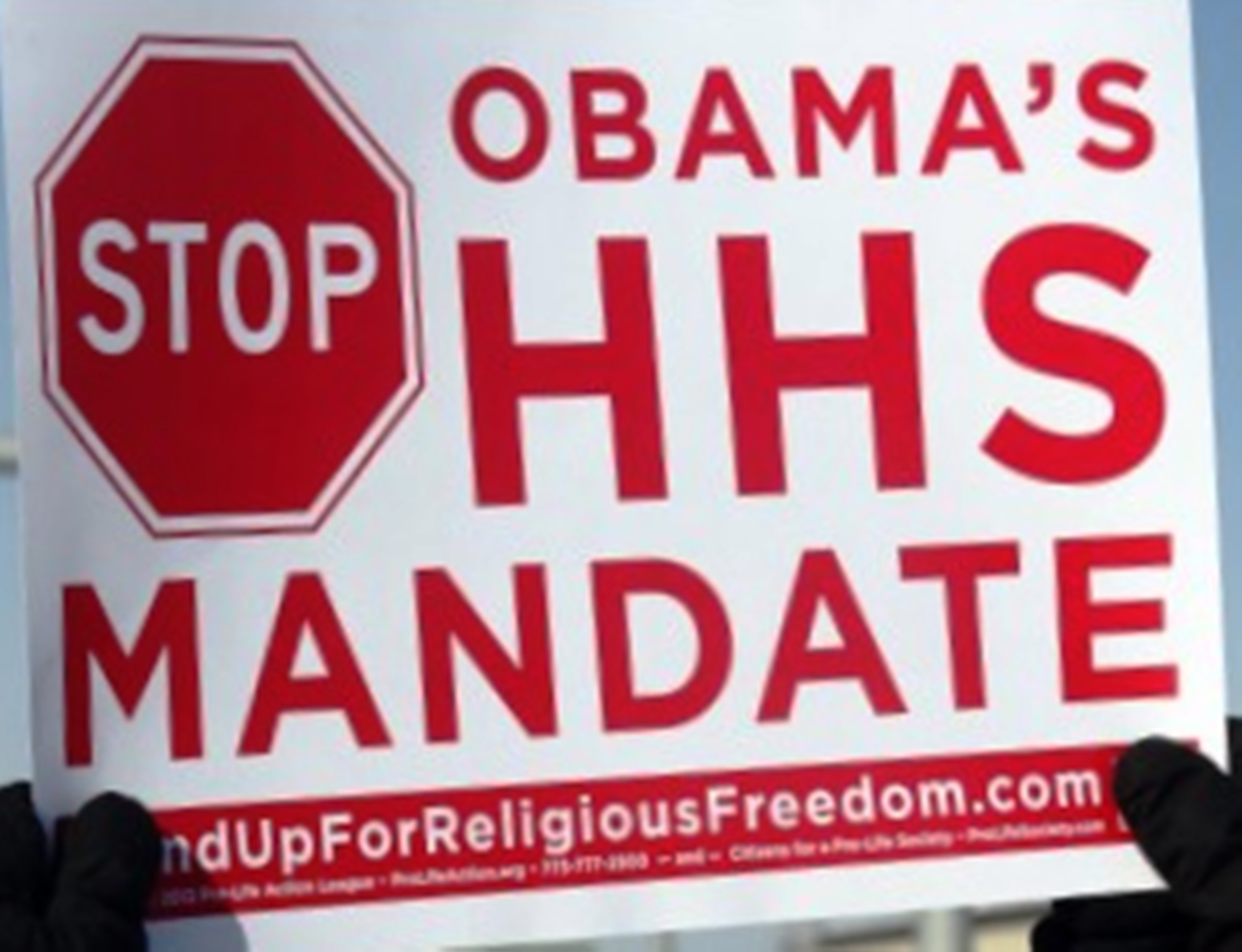
Obama's HHS Mandate

Statement of Archdiocese of Washington
in Response to the Finalization of the HHS Mandate

June 28, 2013 – After almost two years and over 400,000 public comments, the government today finalized the HHS mandate. We have begun to review the 110-page final rule to determine whether or not it addresses our longstanding concerns. Our review and analysis of the complex rule should help us answer important questions concerning who determines which institutions are religious and, therefore, exempt, who is forced to have this coverage, and who must provide it. The new regulations are being closely studied and a more comprehensive statement will follow at a later date.

Timothy Cardinal Dolan:  “Although the Conference has not completed its analysis of the final rule, some basic elements of the final rule have already come into focus.”  He said the U.S. Conference of Bishops “has not discovered any new change that eliminates the need to continue defending our rights in Congress and the courts.”  He argues that the HH Mandate still threatens the Church’s ability “to carry out the mission and ministry of Jesus Christ.” 

A FEW PERSONAL COMMENTS

We are still waiting anxiously for the response of the U.S. Bishops to the latest accommodations in the HHS Mandate from the Obama administration.  The deadline of August is rapidly coming upon us and what happens next could be devastating to our hospitals, schools and charity works.  It troubles me that the Catholic Health Association acts unilaterally without regard to the decisions of the USCCB.  The latest version of the mandate exemption is being studied by our shepherds and yet the CHA has already come out in support of the measure.  This is not new given that they supported it even when the bishops did not a year ago.  I am just a poor priest, but my reading of the mandate makes me think that this latest revision is merely another round of the shell game we suffered before.  There is still nothing on the table for commercial operations that have a mission paralleling the Church’s.  Individual Catholics and those having businesses must participate.  There is the plight of notable Catholic organizations like EWTN and the Knights of Columbus.  The administration staunchly insists that employees MUST have free birth control pills and coverage for abortifacients and sterilization.  When it comes to the question as to who will pay, the government is creative but consistent:  whoever pays, it will NEVER be the person who wants sex but not pregnancy.  The administration will officially redefine the meaning of the marital act, bloodying the hands of all with the sacrifice of innocent children.  Saying that we will not have “to contract, provide, pay or refer for contraceptive coverage” is a legal fiction.

Distinctions are being made that are somewhat hard to follow.  First, there is FULL EXEMPTION from the contraceptive mandate.  This is in regard to Internal Revenue Code, Section 6033(a)(3)(A)(i) or (iii), which “refers to churches, their integrated auxiliaries, and conventions or associations of churches, as well as to the exclusively religious activities of any religious order.”  Second, there is the NON-EXEMPTION in reference to non-profit faith-based groups not directly affiliated with the Church, such as certain hospitals, schools and charities.  These groups are being offered an “accommodation.”  Third, there is NON-EXEMPTION with no accommodation.  This would include large apologetic efforts, television, radio stations, and even small operations like a privately own Catholic gift shop.  This group would be treated as any secular operation and would have to fully comply with the mandate.

It is thrown into the faces of the bishops that most Catholic women have used or are using artificial contraception.  In other words, the administration is saying that Catholic women are more in sync with President Obama and HHS Secretary Sebelius than with their bishops.  How can the bishops then speak on their behalf?  The bishops counter that even if all lay Catholics dissented, they would still be obliged to uphold Christian faith and morals.  The Affordable Care Act will deliver contraceptive services, including those prescribed by a medical provider, “without charging cost sharing, like a co-pay, co-insurance, or a deductible.”  Organizations like Planned Parenthood must view this as the ultimate anti-Christmas; instead of a special birth, they will celebrate the avoidance of birth with a fortune in free-bees.  Of course, nothing is really free.  Someone always pays.  Already the agenda of the HHS on behalf of so-called reproductive or preventative services, as well as gay, lesbian, bi-sexual and transgendered health issues, is costing the American tax-payer billions of dollars. The 2013 HHS budget is $80.1 billion!

The HHS has not budged an inch.  It is dedicated to the promulgation of free contraceptive services without cost-sharing while posturing that concessions have been made to non-profit religious organizations.  But saying it does not make entirely it so.  Even if it were completely true and reserved to non-profits, it would demand that those who operate for-profit religious operations must forfeit their religious liberty and rights of conscience.  That is a dangerous and despicable double or even triple-standard.  Churches are fully exempt, other non-profit religious organizations have an accommodation and for-profit companies (even religious ones) have no protection at all.  The Church should speak out for her rights and for those of others, both organizations and individuals.  Concessions from tyrants when others suffer, as we have seen in Latin and Central America, can taint the witness of the Church and make us bedfellows with the oppressor.

In any case, reserving ourselves to religious non-profits, we are told that churches that object to contraceptive coverage on religious grounds would “not have to contract, arrange, pay, or refer for such coverage for their employees or students.”  This sounds good. Similarly, we are told that the definition of a religious employer no longer insists upon the following details:  (1) Have the inculcation of religious values as its purpose; (2) Primarily employ persons who share its religious tenets; and (3) Primarily serve persons who share its religious tenets.  This seems to answer many of the concerns of Cardinal Dolan and Wuerl.  But wait a minute, then are the contraceptive services still available and who pays?  Is this administration really going to sit back and allow a large number of Church employees to go without contraceptive coverage?  I suspect that soon after the mandate takes effect, select people who work for the Church in various capacities will come forward in a staged manner to demand the “same rights” that are given other Americans.  The convoluted and unclear language will be exploited and the Church will be further painted as anti-woman and anti-choice.

When speaking about non-exempt non-profit religious organizations, we are told:  “Under an accommodation, an eligible organization does not have to contract, arrange, pay or refer for contraceptive coverage.  At the same time, separate payments for contraceptive services are available for women in the health plan of the organization, at no cost to the women or to the organization.”  Who makes these separate payments?  Is it the insurance carrier itself?  These self-certified groups must notify the health insurance issuer and these plans “must then provide separate payments for contraceptive services for the women in the health plan of the organization, at no cost to the women or to the organization. As explained in the final rules, issuers will find that providing such payments is cost-neutral.”  Cost neutral, are they serious?  If such were really the case then we could have all insurance carriers supply contraceptives with no business, government and employee co-pay.  But it is not true.  Insurance companies are already starting to complain.  In any case, some religious non-profits are self-insured.  This issue remains unsettled.  What insurance carrier is going to come forward and just take upon itself the financial burden of contraceptives without other more traditional coverage and money from health plans?  It makes absolutely no business sense!

Money from the religious employer and payments from the employees fund the various health insurance plans.  It goes into a single pot.  There is a string of probable culpability:  money is passed from the Church employer (matched by the employee) to the insurance carrier to the supplier of the offensive services.  I suspect that churchmen are arguing about the question of remote culpability.  However, this still seems very immediate to me.  Even if the funds come only from the employee’s matching contribution— that money originated with the salary/benefits of the employer.  Does government expect insurance carriers to come forward and to offer such services without payment or contract selection from the non-profit religious organization?  I doubt that will happen.  Compliance is literally getting someone else to do the dirty work for us.  Cardinal Dolan sees the problem when he states that the revision “seems intended to strengthen the claim that objectionable items will not ultimately be paid for by the employer’s premium dollars,” and yet it remains “unclear whether the proposal succeeds in identifying a source of funds that is genuinely separate from the objecting employer, and if so, whether it is workable to draw from that separate source.”  If there is only one plan, then nothing has changed:  the religious employer will be funding abortion inducing drugs and contraception.  Groups that think this is acceptable are guilty of muddled thinking.  Segregating the funds in the books is merely an accounting trick.  The moral problem remains.

Self-insured operations will have a “third party administrator” to “provide or arrange separate payments for contraceptive services for the women in the health plan of the organization, at no cost to the women or to the organization. The costs of such payments can be offset by adjustments in Federally-facilitated Exchange user fees paid by a health insurance issuer with which the third party administration has an arrangement.”  Okay, we are back to the days of “voodoo economics.”   It is argued that no reimbursement is necessary because the decreased pregnancy and birthing expenses will offset the benefits from contraception.  Contraceptives may be cheap and yet when that gal from Georgetown paraded her fake $300 plus dollars a month bill for contraception, the administration was cheerleading how expensive it was!  They want it both ways and I doubt “for-profit” insurance companies are going to give away anything for free.  The money will be moved around, but someone else is going to pay for it.  It might be called “administrative fees” or some other euphemism, but it will still be money trading hands for immoral services.  Back in 2012, a national survey of pharmacists found that most thought this idea was ridiculous and would not work.  The government is going to take fees (a tax) from the insurance issuer which it will return to pay for the contraception, abortifacients and sterilization.  They are going to pay them with their own money!  Congratulations to the Obama administration, it has invented the perpetual motion machine!  But wait a minute, it never worked before, why will it work now?  Making payments to one insurance carrier and pretending that magical money will come down from another to pay for the objectionable coverage is ridiculous.  It is utterly detached from reality.

Further, who pays the third party administrator who acquires outside coverage?  Does that not make him or her part of the religious operation?  Is this person not operating for the religious entity or in the Church’s name?    The problem of self-insured entities is not cleanly resolved by the change in the mandate.  If the insurance agent pays out, even if selected by a third party, is the religious employer still guilty of enabling immoral services?

While not necessarily under the direct supervision of a bishop or religious order, the non-exempt non-profit organizations are an integral element of the Church.  The formal dedication of a “third party” administrator to handle the claims for contraception is still a bad solution. It is like someone hiring a hit man and saying, “Take care of the problem but spare me the details.  If you are caught, I will deny even knowing you.”  We would be hiring someone to sin on our behalf, to maintain clean consciences.

The Church cannot preach and teach one message from the pulpit and in our schools and then do the opposite on such an important matter.  Such hypocrisy would bring down any such house of cards.  I suspect that some in the government administration precisely want this to come about.  They have tried one tactic and now here is another.  Throughout there has been one common thread:  the redefinition of the Church.  The administration wants to redefine the Church as something akin to HHS itself.  It wants to compromise our voice and moral witness, converting us to the cause of a secular humanistic modernity.  Already, the administration is counting on the fact that most Catholics currently regard the Church as outdated and out-of-touch.  This is a test after many years of moral and political passivity.

Speaking about the multiple standards of full exemption, an accommodation and no protection at all, Cardinal Dolan said that the bishops “are concerned as pastors with the freedom of the Church as a whole – not just for the full range of its institutional forms, but also for the faithful in their daily lives – to carry out the mission and ministry of Jesus Christ.”  We are still dealing with the very definition of what constitutes the Church.  The Church is not merely a house of worship or our hospitals, schools and affiliated charities.  Most of the Church consists of the laity.  They are the main ones who seek to evangelize and live out their Christian discipleship in the world.  The Pharisees in Christ’s time took for granted that they could satisfy the demands of the Law while the average believer because of the demands of the state and his need for bread could not.  Bishops and priests would share the same posture if they preached something that they knew that the government would not allow our Catholic “business” men and women to live out.  The laity are also part of the Church, and the largest part at that.

The administration will not allow employees to opt-out of the program.  The CHA does not seem to understand this fact.  Maybe they do not want to admit it?  However, even if such were permitted, it bypasses an important objection, that such a “reproductive choice” is offensive in itself and we do not want it covered for any employee, the spouse or teenaged children.  You can say that you “opt-out” but can change your mind at any time.  There is one plan and it still includes the offensive services.  This opens up several frightful possibilities.  Even if the employee is a faithful Catholic, his or her family covered by the family plan remains eligible for the immoral services.  With or without parental consent, the employee’s daughters could get free abortion pills or get sterilized under the new plan.  I suspect schools will now be able to pass the condom costs, with the addition of birth control pills, to the insurance providers of parents or guardians.

Everything about this provision in the mandate speaks to our hedonistic culture of death.  If we really cared about women and families, the emphasis would be upon prenatal care and helping parents with the rising costs of child delivery and health.  But it is deemed cheaper to kill children in the womb.  Ours is a world that worships the barren womb and medicates against the child as if the baby were a disease.  The administration would have people mutilate themselves and take poison to murder the unborn.  Instead of rewarding sacrifice and genuine responsibility, we enable selfishness and moral degeneracy.

There has been much talk about the rights and choices of women under the HHS Mandate.  Less discussed is the fact that it covers men as well.  Male contraceptives are not as readily available, given trust issues, but the word is that more are coming.  Further, there is the issue of men having vasectomies.  This whole topic just gets more complicated and serious with scrutiny.

The only really good solution would be for the Obama administration to scrap the provision for what they call “preventative” services.  If people wanted they could shop around and get coverage in private plans; I suppose the government could subsidize these.  Unfortunately, that would mean that tax dollars would continue to be used for offensive services.  As soon as morality clauses in religious-based contracts were enforced with firings over revealed abortifacient use or involvement in condom campaigns, I am sure we would be back in the courts.  While we do not and cannot police the lives of people who work for us; nevertheless, they parade their sins on Facebook.  Returning to the matter at hand, real exemption means that the bishops and Church organizations should have no involvement whatsoever with insurance bookkeeping gimmicks or third party administrators.  But the government has a decadent culture on its side and will not bend. Strangely, even some religious people who disagree with the Church on contraception also feel that this is an important religious liberty battle.  I have heard the elderly complain that there is not enough money for their life-saving prescriptions; they wonder, how then can the government find money to give compromised women free birth control pills!  They cannot believe it.  Admittedly, it is quite bizarre.  The administration does not even want co-pay with the delivered contraceptives and abortifacients, something one must still do for blood pressure and heart medicine.  This illustrates the moral sickness and sex-on-the-brain attitude of the HHS and this administration.

The Marriage Crisis: A Few Personal Suggestions

How might we handle the marriage crisis in the Church?  Here are a few of my suggestions:

1.  There should be a Pre-Cana preparation program that parallels RCIA instructions.  Couples can meet weekly in their parishes with a team that will help them to appreciate the sacrament, the moral obligations, and how this union fits into their Christian discipleship (openness to human life, avoidance of pornography, etc.).

2.  Couples without children that are cohabitating should be urged to separate during the time of preparation prior to the wedding.  If there are children or this is just not practical, then they should be urged to live as brother and sister until the marriage.

3.  Couples that continue to cohabitate and/or have attempted marriage before a civil magistrate or non-Catholic minister still have the natural right to marriage; however, the scandal they have caused should not be amplified by a full-blown church-wedding.  Convalidations or ceremonies for such couples might be very small, without rehearsal, with no less than two witnesses and no more than perhaps a dozen people.  There should be no flowers, no music, no fancy dresses and no reception on parish property.  There would be the reading of Scripture, a brief homily, the exchange of vows, the bidding prayers and the closing blessings.  The service should take no more than 30 minutes.

4.  The nuptial Mass is properly reserved to Catholic couples who are faithful to each other and to the Church, honestly struggling to be chaste and participating in the pre-marital preparation.  A wedding without the Mass can be celebrated for a faithful Catholic marrying a non-Catholic who respects the spouse’s faith and has agreed to have the children raised as Catholics.  These couples would also be eligible for parish receptions.

5.  The dress for the bridal party and the bride should be feminine and beautiful, but not skimpy and erotic.  Bosoms should have ample coverage and legs should not be excessively exposed.

6.  Music for the liturgical celebration must be exclusively religious.  Popular and/or romantic songs should be saved for the reception.  There should be an air of gravity, not flippancy at the wedding.  Exaggerated walking, dancing down the aisle and props like fake noses or full costumes are best avoided.

7.  Receptions for Catholic weddings should include nothing that is profane in language, music, dance or actions.  The practice of extracting the bride’s garter should be forbidden as lewd and undermining to the woman’s dignity.  Her body belongs to her husband and is not the object for leering and jokes from male guests.

8.  It should be understood that bachelor parties and parties for the bride with the girls must be sober and pure.  Strippers and pornographic videos are no way for couples to spiritually prepare for marriage.  Like the knights of old, the night before their great journey and life together should be spent in prayer and reflection.

I know, a few of you are shaking your heads, and mumbling, “That Father Jenkins is crazy!”

Faith & Values in the News

Religious Banners Removed at Catholic School

God forbid that young people at school events should get a taste of traditional American liberties, like freedom of religion and freedom of speech… NOT!  Schools can teach science and the faith of atheism but are to make no mention a Creator.  Schools can teach safe “promiscuous” sex and give away condoms, but not a penny is available for abstinence education.  Schools are forbidden to teach the 10 Commandments and then wonder why youth misbehave and get in trouble with the law.  All manner of vulgarity is tolerated but not a bible verse on a sheet… yep, these girls are real trouble-makers, but the right kind.  When Islamic religious fanatics burn the flag, destroy property and commit murder… we target our sights upon peaceful Christian cheerleaders at a school football game.  Ah, the world is insane!

Muslim Prayer Room Opens at Catholic High School

How many Catholic chapels are there in Islamic schools?  Where does courtesy end and religious indifferentism begin?  How does one reconcile this with the insistence that “Catholic identity” is not at risk in our parochial schools?  Do the Jewish children get their private prayer space as well?  What about the Wiccans and Satanists?  Do they get chapels to honor the goddess and/or the horned beast?  Certainly, we would not want to discriminate or be judgmental… would we?  Ah, the plight of radical tolerance!

7-Election 2012

It does not look good for Romney… vote with a cup of coffee.  The trouble is that the Tea Party is into another type of drink!

Ex-Priest Sues the Catholic Church to Clear His Name

If what he says is true, I really feel sorry for this guy and there needs to be justice.

The New York Times Remembers Sister Mary Rose

Rest in peace, Sister, and many thanks for saving children and Covenant House.

Children Freak When Disney Channel Cartoon is Interrupted by Porn

If trash television were not trasmitted at all then such accidents would not happen.  The truth is that our children are exposed to unhealthy and vulgar images all the time.  We cannot trust television to babysit our children.  It is a compromised media.  The providers are more interested in making money, even with virtual prostitution, then in helping parents to raise kids of good moral character and virtue.  In any case, if adults are themselves corrupted by this media, then how can they pass on anything of value without the poison of hypocrisy?