

• Our Blogger

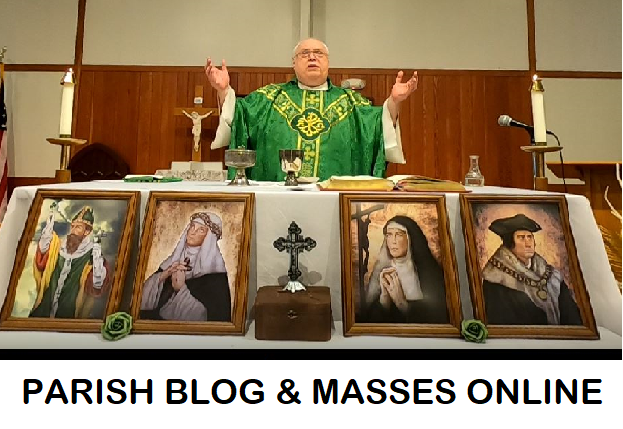
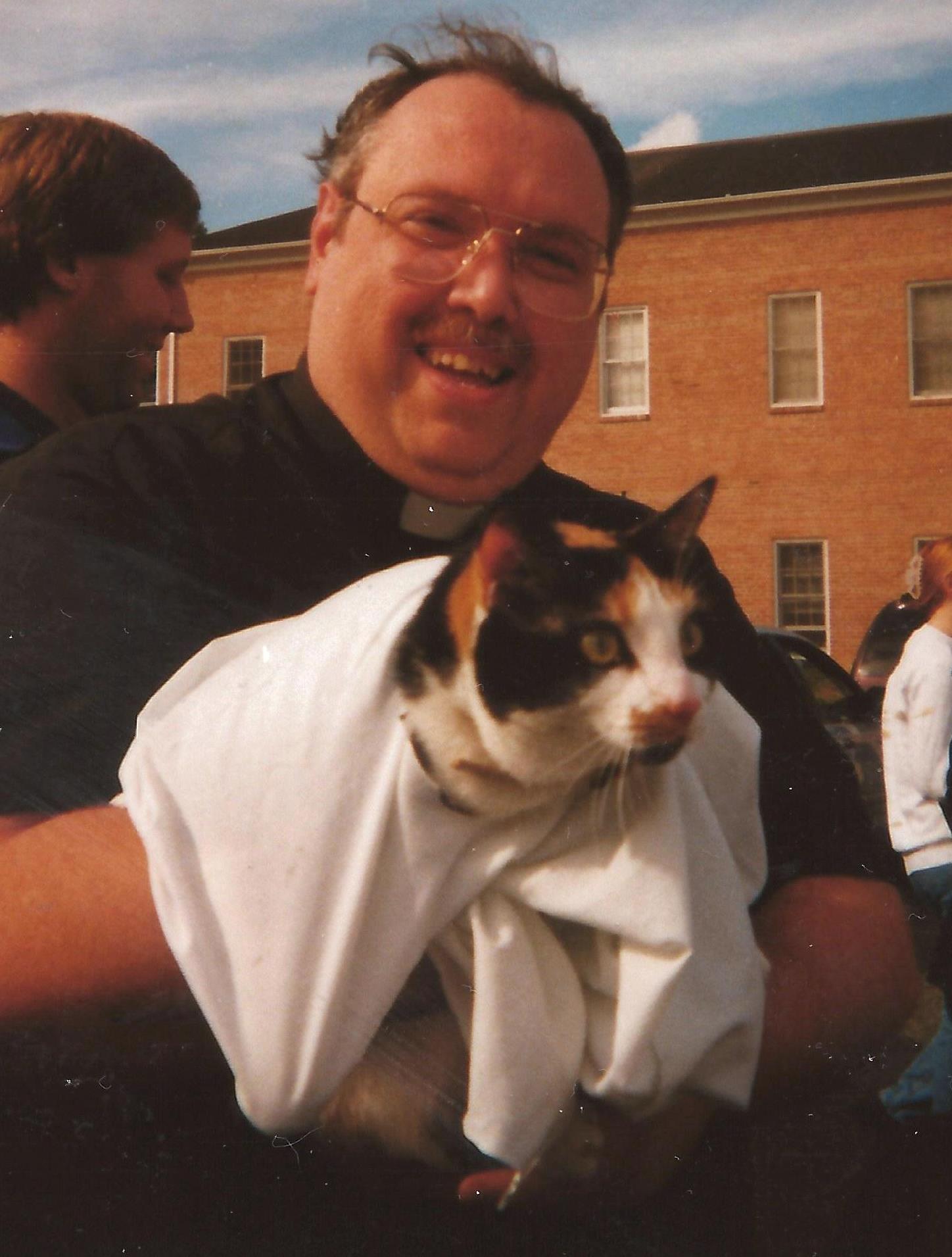
    Fr. Joseph Jenkins

  • The blog header depicts an important and yet mis-understood New Testament scene, Jesus flogging the money-changers out of the temple. I selected it because the faith that gives us consolation can also make us very uncomfortable. Both Divine Mercy and Divine Justice meet in Jesus. Priests are ministers of reconciliation, but never at the cost of truth. In or out of season, we must be courageous in preaching and living out the Gospel of Life. The title of my blog is a play on words, not Flogger Priest but Blogger Priest.

  • Archives

  • Categories

  • Recent Posts

  • Recent Comments

    Anonymous's avatarAnonymous on Ask a Priest
    Michael J's avatarMichael J on Ask a Priest
    Jeremy Kok's avatarJeremy Kok on Ask a Priest
    Mike Zias's avatarMike Zias on Ask a Priest
    Jeremy Kok's avatarJeremy Kok on Ask a Priest

A Few Thoughts about the Synod Relatio & Debates

My head is spinning about some of the things that are being seriously argued at the Vatican’s Synod on the Family. I am already concerned that a Commission was established to look at streamlining the process for annulments even prior to the start of the Synod. It seems to me that if such were a concern then the bishops would then request the Holy See to do so. Will the documents which will be formulated reflect the majority view and Catholic tradition or will there be attempts to steal the show for the minority progressives?

synod-of-bishops

What is it about this new Synod document that has critics saying it signals a revolutionary shift in favor of same-sex couples? It is acknowledged that this “relatio” urges clergy to make “fraternal space” for homosexuals. But what does it say? We read:

“Homosexuals have gifts and qualities to offer the Christian community: are we capable of welcoming these people, guaranteeing to them a further space in our communities? Often they wish to encounter a Church that offers them a welcoming home. Are our communities capable of proving that, accepting and valuing their sexual orientation, without compromising Catholic doctrine on the family and matrimony?”

Are we reading the same document? All I see are questions. Hopefully they are not rhetorical. Do we eject gay brothers and sisters from our churches? No we do not. Can we invite them forward for Holy Communion? Yes, provided that they maintain chaste and celibate lives. Can we affirm or value their sexual orientation? No, we cannot do so. Such would devalue the true meaning of marriage and human sexuality. We cannot move away from the assessment of disorientation or that same-sex carnality is mortal sin.

As a so-called case-in-point of past intolerance, the news contrasted this development with the story of Barb Webb who was fired from a Catholic school when she and her partner announced her pregnancy. Similarly, her partner, Kristen Moore was asked to resign from her post as a music director at a Catholic parish. The secular media glossed entirely over the moral issues that extend beyond same sex unions, like the freezing of embryos, donated semen and IVF technologies. All these elements are reckoned as moral evils and sinful.

This relatio is being interpreted precisely as Cardinal Kasper would suggest. The doctrinal truth is eclipsed, if it remains, for the sake of a pastoral provision or slackening of discipline. The same reasoning he uses for divorced and remarried couples is being applied to active homosexuals. I find this reckoning very disturbing. Discipline can be distinguished from doctrine but discipline is always at the service of doctrine. There are doctrinal elements that cannot be ignored. It is contradictory to say that gay acts are sinful and then to value, in any way, homosexuality. It is contradictory to say that marriage is a lifelong institution and that divorce is a sin, while inviting couples to receive Holy Communion who are living in adultery. The truths of Scripture are clear and we must always be at the service of the truth on every level: doctrinally, canonically and pastorally.

The document recognizes that same-sex couples live lives where they render “mutual aid to the point of sacrifice [which] constitutes a precious support in the life of the partners.” Critics are saying that this is a crack in the door that may one day lead to full acceptance. I would say that this is not the case. The statement is one that reflects the immediate horizontal human condition but says nothing about the vertical supernatural dimension. It is a mere statement of fact that these couples support each other in their day-to-day lives. However, this does not mean that they are in right standing before God. Mortal sin is still mortal sin. I suspect that there are many “nice and pleasant” people who make good neighbors and yet will suffer damnation and hellfire. We are not saved by simply being nice but by being faithful and obedient to God. The Church can relax certain disciplines but she cannot change divine positive law. My fear is that tolerant language might enable or encourage more sinners to remain within their sins. The Church must be a place for saving truth and grace. She should never be an enabler for sinful lifestyles or blasphemous acts like receiving the Eucharist while ill-disposed or in mortal sin. This document does NOT acknowledge the “holiness” of such couples as was suggested in the Huffington Post article by Antonia Blumberg (1/13/14). It simply asks if we might tolerate with passivity and silence the situation of people living in sin.

I cannot buy this application of any “law of graduality.” No matter how slow might be the movement to holiness; the Church should never compromise on the fullness of truth. Confessors can exhibit great understanding and compassion for married couples who use artificial contraception, with the hope that they will eventually come around to the Church’s understanding of human dignity and the full value of the marital act. It is here that I can well appreciate “graduality.” However, this is not the same as cohabitating, adulterous and same-sex couples. They have no right to a shared bed.  In their regard, where there is neither contrition nor amendment of life, absolution must be withheld. Similarly, while they should attend weekly Sunday Mass, they should abstain from taking Holy Communion. The priest will not usually embarrass people in public but he fails his sacerdotal charge if he does not challenge such couples in private.

This law or better yet, theory of graduality was very much the rationale for the “open table” of Anglicanism. It was hoped that this welcoming to receive the Eucharist would draw others into greater unity. Contrastingly, the “closed table” of Catholicism sees Holy Communion as an expression of an ecclesial unity that is already realized. This is representative of the ancient tradition wherein heretics and grievous sinners were denied the sacrament or even excommunicated. The Church’s censure of interdict would also illustrate this posture. One had to be properly disposed and graced to receive the sacrament. Anything less was judged as blasphemous and scandalous. One should not pretend there is a union that is not truly there. This resonates with the current debate about divorced and remarried couples as well as with active homosexuals. We cannot allow a false compassion to tolerate normalization for the sake of public acceptance while the pastoral accommodation is deceptive to the doctrinal truth and the spiritual state of souls before God. We can move away from using pejorative biblical terms like “sodomites” and “adulterers,” but the underlying reality will remain the same. Does this really serve the summons to repent and believe?

If we change the discipline for those in serious sin and the intrinsically disordered, would we not logically have to open up Holy Communion to others (particularly Christians) who might be in ignorance of the full ecclesial reality but who live moral lives? It is a real can of worms and I would prefer to leave it closed. But that is my opinion.

Racism, Semen & the Designer Child

The article entitled “White woman sues sperm bank after she mistakenly gets black donor’s sperm,” by Lindsey Bever ran on October 2, 2014 in THE WASHINGTON POST about a white lesbian couple litigating against the sperm bank that gave them semen from a black donor when they had specifically asked for white only.

johnny_automatic_young_lady

Jennifer is all upset about the mix-up. She lives in a white Ohio neighborhood and says that she does not want her daughter to face the discrimination she has suffered. The little girl conceived is now two years old. She is suing the sperm bank for “wrongful birth and breach of warranty and economic damage.” Her money was refunded and she was given an apology, but this is not enough for her.

She seems blind to her own initial prejudice and how the whole process reduced a child to property or a commodity. Every child conceived (even if in sin) is a unique individual. Different semen would have meant that a different child would have entered their lives. Instead of prizing the child they have been given, the couple are lamenting the loss of a child they might have had. This is petty and sickening.

Would they look this little black (or bi-racial) girl in the eyes and tell her that they would rather trade her in for a straight haired, blue-eyed white child? Probably not, but in a fashion that is what the lawsuit is doing as they project their anger and disappointment upon the sperm bank. Such places should not exist so I would shed no tears if they should have to close. But I have no sympathy for this couple either. My sadness is for this child.

Instead of rejoicing in the miracle of her child, the article says the mother wept about the mistake. “All of the thought, care and planning that she and Amanda had undertaken to control their baby’s parentage had been rendered meaningless. In an instant, Jennifer’s excitement and anticipation of her pregnancy was replaced with anger, disappointment and fear.”

We are told that not all her friends and families are “racially sensitive.” In other words, her circle is composed of racial bigots. It sounds to me that this couple was not “sensitive” either. They are saying that they wish they could do it over again. Where is the gratitude in this? Would they trade her in for a white child? There is an old saying, “Birds of a feather flock together.” One is known by his or her friends. The problem is not the child, but the people with whom the couple associates.

The fact remains that same-sex couples cannot naturally have children. They must conceive either through heterosexual fornication or immoral medical intervention. There is no actual sharing of DNA even if they find donors of the same race. In this vein, there is a fiction or personal deception that taints this situation. The silliness of the upset is amplified when the mother talks about problems in finding hair care for an “African American girl.” Did she imagine brushing the blond hair of her pasty white girl with curls? Now she wants to hold others accountable when in my estimation they are all guilty, that is everyone but the child.

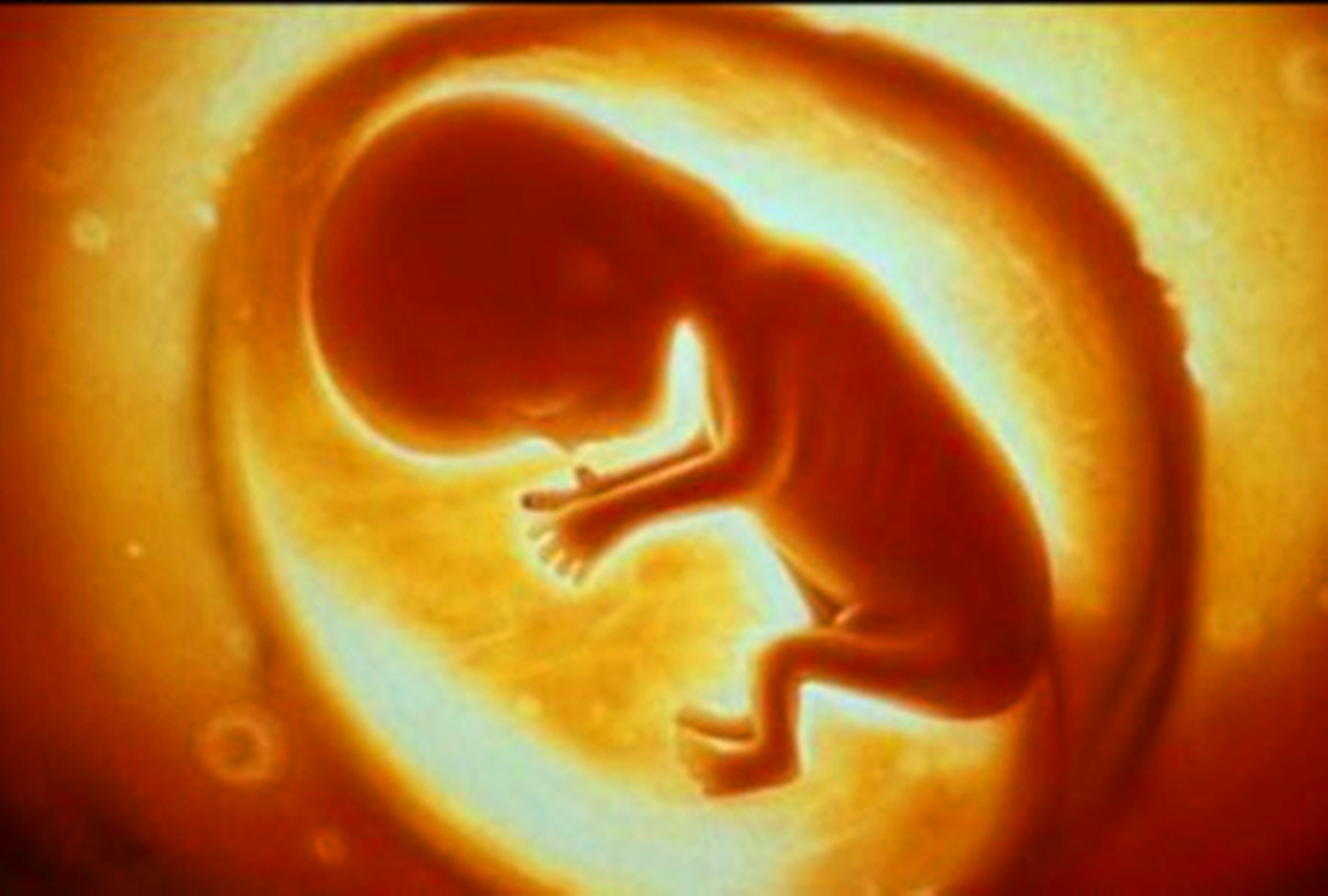
This is just the beginnings of a moral issue that will grow worse in the years to come, especially with increased DNA manipulation. The issue is human selfishness and the desire for designer children. Would she have aborted the child had it been a boy? Were boy fetuses aborted?

Conflict Between Homosexuality & Catholicism

Msgr. Pope followed up his post on fornication and cohabitation with one on homosexuality. This is a real hotbed issue (no pun intended) and I suspect that in the face of growing political and social acceptance, many preachers and religious leaders are hesitant to take it on in a critical fashion. Given curt responses from Pope Francis and Cardinal Dolan which were quickly misconstrued, many are wrongly anticipating a change in the Church’s stance toward homosexual acts. This just is not going to happen. Our respect for natural law and for the authority of Scripture and Tradition make any compromise absolutely impossible on this issue. The mechanisms in place that safeguard the deposit of faith will allow no repudiation of basic moral truths— what befell the Episcopalian churches can never happen in the Catholic Church.

141114182030239

Men and women are their bodies. They are ordered toward marital union and propagation. Same-sex unions are inherently disordered and closed to biological fruitfulness. That is one of the reasons why the first element of the faith attacked was our adoption services. The Boston and Washington Archdioceses had to shut down their programs because of legal insistence that children be adopted by homosexual and lesbian couples. We could not do it. The Church cannot deliberately participate in an act that would cooperate with moral evil or place children into a position of suffering spiritual harm. Homosexual acts neither further the end of procreation nor foster genuine fidelity or union between spouses. Homosexual marriage is regarded by the Church as an empty secular legal construct which is, in fact, an outright deception or fiction. Both natural bonds and sacramental unions require the proper matter of men and women… their whole selves and bodies.

Msgr. Pope is quite right that both the Old and the New Testaments reject homosexual activity. Indeed, some contend that just quoting Old Testament sanctions for homosexuality would constitute a hate crime. St. Paul is clear; it is in conflict with the values of Christ’s kingdom. While certain revisionist churches come straight out and criticize God’s Word as wrong (culturally conditioned stereotypes over immutable objective truths), there are also biblical authorities who engage in fanciful exegetical gymnastics to make provision for such acts despite black-and-white condemnations. They point to their credentials or alphabet soup after their names as if that makes them a suitable parallel magisterium. Desperate to find loopholes, they propose theories and speculation as if they are fact. They insist that only a homosexuality, really a pederasty that targeted children was condemned— not consensual relationships between adults. They argue that the divine prohibition only targeted lustful promiscuity— not faithful monogamous and loving relationships. They would have us take their word on this, as neither the “letter” nor the “spirit” of God’s Word makes such strained distinctions. It is a contemporary reading into Scripture what is not there. It is much like a loose constructionist arguing for rights or interpretations in the U.S. Constitution which the framers never imagined. They would do for faith what politically motivated judges would do for the laws of our land. Redefinitions of marriage are an instance where both secular law and religious truth are corrupted.

Jesus is not recorded as having explicitly condemned homosexuality, but this works against the revisionists in that he did clearly override the Mosaic writ of divorce. Silence can only be interpreted to mean affirmation of the traditional opposition. Further, the living Word is manifest both with the incarnation and the Gospels and with the entirety of inspired Scripture. The teachings of St. Paul, St. Peter, St. Timothy and St. Luke are also the teachings of Christ! That which is objectively true does not lose its binding force. We stand under God’s Word, not above it. The Pope and the bishops pass on the saving deposit; they cannot revoke or utterly change it. As much as they might want it to be otherwise, they do not have the authority to make homosexual acts good or acceptable before almighty God.

The Church has made an ardent appeal to natural law, especially to those who do not share our faith. We have seen this in reference to racial and ethnic inequality, artificial contraception, abortion and now homosexuality. Dissenting revisionists would have us do to our bodies what we would never do to our automobiles— there is a refusal to acknowledge the specifications of human design as that of two complementary genders. Men and women are made for each other. Homosexual sex would be like trying to run your car on molasses instead of gasoline. You are not going to get very far. Homosexual unions are not going to generate children. Cars filled with molasses are not going to be speeding down the highway— they will be stopped alongside the road, ruined for the purpose for which they were really made. Same sex unions often damage their bodies and health, resorting to parodies of the marital act, a feigned intercourse. Like jigsaw puzzles, the pieces are damaged and do not fit no matter how frustrated people try to force them.

Msgr. Pope rightly writes, “Whatever pressures many may wish to place on the Church to conform; however they may wish to ‘shame’ us into compliance by labeling us with adjectives such as bigoted, homophobic, or intolerant— we cannot comply with their demands.”

The civil rights won for ethnicity and gender would now be wrongly extended or ascribed to sexual orientation. Opposition of any form will be counted as discrimination. Within only a few generations, homosexuality has gone from being criminalized to being a “right” protected under law. Indeed, now the criminals would be those who oppose it. Do they see this as “pay-back” time? Here we find the bottom line and we must be prepared to pay a heavy price for any non-compliance. Try as we must to make a distinction between orientation and activity; the truth be said, gays increasingly spurn with impunity any such delineation. They argue, “Can you hate black skin without hating the black man? Can you view males as superior to females without belittling the gifts of women? Then how can you say that you hate the sin of homosexual sex while loving the person who defines himself by such intimacy?” We must be ready and careful in how we answer.

My priest friend cites the universal catechism:

[CCC 2357] Basing itself on Sacred Scripture, which presents homosexual acts as acts of grave depravity, tradition has always declared that “homosexual acts are intrinsically disordered.” They are contrary to the natural law. They close the sexual act to the gift of life. They do not proceed from a genuine affective and sexual complementarity. Under no circumstances can they be approved.

[CCC 2358] The number of men and women who have deep-seated homosexual tendencies is not negligible. This inclination, which is objectively disordered, constitutes for most of them a trial. They must be accepted with respect, compassion, and sensitivity. Every sign of unjust discrimination in their regard should be avoided. These persons are called to fulfill God’s will in their lives and, if they are Christians, to unite to the sacrifice of the Lord’s Cross the difficulties they may encounter from their condition.

[CCC 2359] Homosexual persons are called to chastity. By the virtues of self-mastery that teach them inner freedom, at times by the support of disinterested friendship, by prayer and sacramental grace, they can and should gradually and resolutely approach Christian perfection.

It is probable that there are many in the Church who wishes that our doctrine on human sexuality was different. However, we are constrained by Scripture, Tradition and the Natural Law. We must not usurp God’s authority. Illustrative of how want to play God on this issue, medical research has gone into how lesbians might clone or mix DNA through clinical intervention. It has been speculated that homosexual men might be augmented to allow them to carry a child in the linings of the stomach. Already, they seek adoption of children and IVF is routinely used for surrogates and lesbian insemination. Proponents are feverishly striving to make right that which is blatantly wrong.

As Christians we must accept the fact that marriage is between one man and one woman. It is a relationship that is to endure until the natural death of one of the spouses. The marital act which they share must always further the oneness of their union, promoting the fidelity of the spouses and (in type) open to procreation. Sexual congress outside of marriage is morally wrong and sinful. Thus, by definition, acts of masturbation, fornication and homosexuality are wrong and sinful. All sexual sin is serious, but certain sins are worse than others. Obviously, when another person is dragged down with us, the sin takes in the accomplice. Men and women who have sex outside of marriage do wrong, but as according to nature. Homosexual acts are not only wrong, but are counted as contrary to properly oriented human nature. Men and women who are not married are called to live chaste and virginal lives. Exceptions are NOT made for heterosexual couples planning to get married or for homosexuals who want to take platonic friendships to the so-called next level.

We should not hate homosexuals. We should avoid various forms of discrimination against them as persons. However, we can do nothing to support or enable a homosexual lifestyle. This is where we find the clash today. Oppose homosexuality and you are stamped as bigoted and hateful. There may even come a time when we will face hefty fines and even imprisonment. There have already been cases where people have been legally compelled to take re-education or sensitivity classes.

I have known a number of heroic homosexuals who embraced celibacy, living out their need for intimacy in the COURAGE community in terms of daily prayer, meditation and Christian service. We all need both to love and to be loved. COURAGE is an affiliation established by my cousin the late Fr. John Harvey. These men and women are wonderful witnesses and signs of contradiction to our hedonistic times. Sadly, they are ruthlessly attacked by other homosexuals. Despite negative charges, they do not betray who they are; rather, they affirm their identity and struggles while placing the weight on their Christian discipleship and obedience. They have not been abandoned by God or his Church. God’s grace can empower all who are disposed to his goodness and presence. We are all broken. We are all sinners. It is in Jesus that we find the beginnings of healing and our ultimate salvation.

If one would like to pursue an instructive bible study on this question, Msgr. Pope directs the reader to the following texts:

  • Genesis 19
  • Leviticus 18:22; 20:13
  • Romans 1:18, 21
  • Matthew 15:19-20
  • 1 Corinthians 6:9-20
  • Galatians 5:16-21
  • Ephesians 5:5-7
  • Colossians 3:5-6
  • 1 Thessalonians 4:1-8
  • 1 Timothy 1:8-11
  • Hebrews 13:4
  • Revelation 21:5-8; 22:14-16

Marriage Still Matters

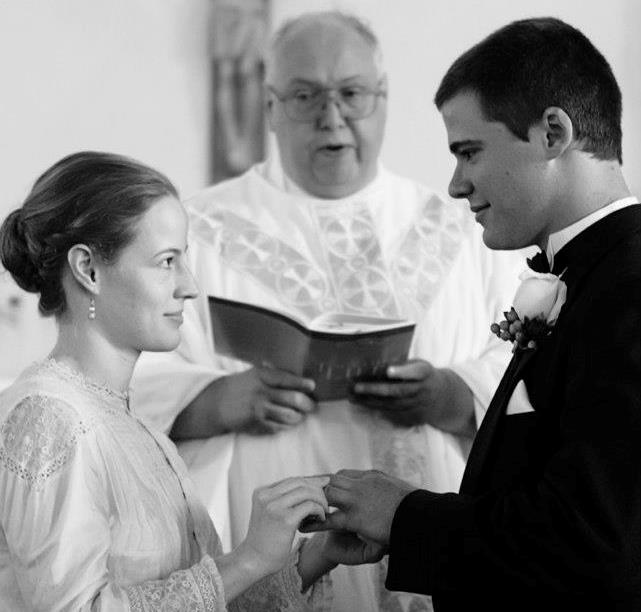
wedding_16Numbness in conscience inflicts many of the members of our modern society. It is as if people have lost the capacity to distinguish between right and wrong. The values of traditional faith and Scripture are not taken into consideration as credible when moral decisions are made. Further, there is a rupture between our nature and the laws that can be discerned by reason. This leads to a profound disconnect from objective reality. Instead, the notion that man is the measure of all things is extended to a fanciful absurdity. The unborn child in the womb is denied the personhood that comes along with his very presence. The purpose of the marital act is reduced to recreation with the reproductive ends subtracted by contraception. The bodies of men and women are complementary and yet same-sex attraction is made into a legal right even though it is a fiction and not fact. The aberration is counted as normal and any emphasis upon genuine normalcy is discounted as intolerance. The institution of marriage is bombarded by all sorts of threats: divorce, adultery, fornication, cohabitation, etc. Any stigma or embarrassment for having children outside of wedlock is measured as insensitive and mean-spirited. Marriage is regarded as a mere piece of paper, even by Catholics who were taught that it was a sacrament to give grace.

What a mess with which we are living!

Msgr. Pope rightly laments on his blog that many regard “living” in sin as “no big deal.” The misnomer here is that one does not really LIVE in sin; instead, one begins to DIE in sin. Sin by its very definition brings forth suffering and death. It alienates us from the one who created us and from the life present in the soul.

Pastors are challenged when they preach about sin and punishment. They are challenged for stressing judgment when our Lord was apparently all about mercy and love. However, the dispensation of Christ is neither magic nor capricious. You have to love in return. You have to want to be forgiven. Too many live as if there will be no judgment and no hell. While the catechism teaches about the universal call to salvation, this is not the heresy of universalism. God’s gifts can be ignored or rejected. Using a medical analogy, a doctor might be able to treat you but you must be willing to seek him out. The divine physician would heal our souls, but millions prefer the spiritual sickness that comes with hedonism, greed or a spiritual ennui.

I like straight talk and yet such is almost always found offensive by someone. People these days do not like to be told their business. There is an arrogance to sin today that has smothered the guilt that once brought contrition and repentance. Do you want proof? Tell a couple who are having sex outside of marriage that unless they repent they will go to hell. See how they respond. “What we do is none of your business! Who are you to talk to us that way? You can go to hell, yourself! Who are you to judge? We love each other, what is so wrong with that? Who is being hurt by what we do?” The fact that it violates God’s Word is given little or no measure in their evaluation. What they are really saying is this: “No one can tell us what to do, not you and NOT God!”

Msgr. Pope gives us a list of Scriptures that we would do well to review.  If we believe that the Bible is God’s Word, then we should take to heart the saving message:

  • Matthew 5:27-30; 15:19-20
  • Mark 7:21
  • 1 Corinthians 6:9-11, 15-20
  • Galatians 5:16-21
  • Ephesians 5:3-7
  • Colossians 3:5-6
  • 1 Thessalonians 4:1-8
  • 1 Timothy 1:8-11
  • Hebrews 13:4
  • Revelation 21:5-8; 22:14-16

No Where to Run, the Church & the World

It is argued that the Catholic Church has lost the contraception fight and now must move on. Similarly, I am today hearing the same said about other issues. Pope Francis is asked about homosexuals and he says, “Who am I to judge?” Critics rashly interpret this as a change in the Church’s stance and a leading gay magazine names the Pope as “Man of the Year.” A special synod is called on the family and revisionists suggest a coming change regarding the reception of Holy Communion by divorced and remarried Catholics. But the Pope is still Catholic and I think the dissenters are in for a big surprise. It may be that we cannot judge the souls of individuals, but we can make moral distinctions between right and wrong. Those who commit serious sin are not in a proper disposition for the sacraments. The Pope is the servant of the Word, not its master. He cannot invalidate either divine positive law or natural law. Of course, what might happen is that many Catholics will become accustomed to an ever permeating silence— about birth control, about gay relationships, about invalid marriages, and God-forbid, even about the murder of unborn children. Here again with this last point, too many make too much of papal remarks about there being other moral concerns beyond abortion. The fact is the Church is facing conflict from every angle, including the martyrdom of Christians by ISIS swords.

An essential thrust to Vatican II was a dialogue with the world, not so that the Church might be converted to the world but that the world might be more receptive of Christ’s kingdom. Many of us feel that this remains an important mission for the Church. However, critics can rightly point at instances of impotency and weakness toward a hostile world that seems to be more successful than we are at winning hearts and minds. The Church faces a mocking atheistic secular modernity on one hand and a radical militant Islamic extremism on the other. The Church is not only caught in the middle but old friends have changed alliances.

Can the Church engage cultures that feign courtesy when we are on the same side of its agenda but otherwise find ourselves targeted for extinction? Fight against the death penalty for the guilty and we are applauded; but then we are commanded to lay down our arms in the battle against aborting children and euthanizing the sick and elderly. The bishops are praised for supporting healthcare but condemned for not wanting to provide free contraception and abortifacients. The Church was once rendered accolades for her orphanages and adoption services; but today is shut down for refusing adoptions to homosexuals and lesbians. The Islamic world once protected Christian minorities, and utilized them in government and in schools of higher learning; after all, they were the one minority that was so small it would never be a threat to the ruling powers. But today, fanatics will not rest until every drop of Christian blood is spilt or the men are converted. From the Islamic East to the Secular West, there is nowhere to run and no place to hide. It is for this reason that I fear silence. Peace today will only lead to worse wars tomorrow. Silence will be interpreted as assent, or worse still, retreat.

We Awaken to the Problem

The defection from faith is an important issue and why for the past two years I invited a young FOCUS missionary named Katie to give her appeal in the parish. Along with other young adults, FOCUS ministers to our youth on college campuses. The statistics are frightful. Some 80% of our youth fall way while at college. These young adults put their careers and much about their personal lives on hold so that they might make a difference for others.

students

I think in truth the issues began long before our teens headed off for college or entered the work force. Minimally Catholic kids suddenly find that they do not have the watchful eyes of parents upon them. Quickly, they are influenced by peers who have no quarter in their lives for organized religion or traditional values. Liberal faculties deride Christianity and mock the sacraments as the domain of ignorance. Professor Paul Zachary Myers is the most blatant on this list, urging college students to steal consecrated hosts so that he can document on the Internet his desecration of the Eucharist. This is not representative of a civil debate about belief; rather, it is an emotional and militant attack upon people of faith.

College campuses will sometimes have Newman Centers and/or Catholic Student Associations. But many of the Catholic students fail to get involved. The attendance of Catholic students at Mass, even at Catholic schools is often pathetic. The best numbers I have heard are at places like St. Francis in Steubenville, Ohio and Ave Maria in Florida. I know one school where the chaplain schedules Masses at midnight so that students will have less competition for their time. One is more likely to see lewd photos on Facebook than posts about religious epiphanies and retreats or time before the Blessed Sacrament. Of course, many parents might not know because they are quickly blocked from seeing what is actually going on.

I am not saying that efforts to evangelize in college are in vain. Rather, I am suggesting that more could have been done (or done differently) earlier to minimize the damage later on. Catholic schools could also be more proactive with single-sex dorms, expectations about participation at Mass, and an uncompromised message about fidelity to the faith and the living out of the commandments. However, we have a problem— when honors are granted to those who seek to strip the Church of her religious liberty— when organizations that promote a homosexual agenda and lifestyle are given funds and recognition— when health service referrals include artificial contraception and abortions— and when crucifixes are removed from classroom walls so as not to offend— then we have become our own worst enemy.

The Price of Compromising on Homosexuality

thKID0AXT3A priest friend recently announced that he saw the Church’s way of speaking of those with same-sex attractions as wildly exaggerated, harsh and inaccurate. His assertion deeply bothered me. I am well aware that people have taken offense and even left the Church over the assessment that homosexuals and lesbians are sexually “disordered.” Often the response to this issue or individual revelations, even from pulpits, is a deafening silence. Homosexuality is joining contraception as one of those issues rarely raised from the pulpit. Privately, people increasing accept and love their friends, regardless. Young people not only accept it but see those who do not as bigoted. Older people are generally more judgmental, but often suspend this judgment when the gay person is someone close to them. Silence is no real answer and a fire-and-brimstone sermon will arouse anger and hurt. But the truth is the truth, is it not? My priest friend argues in a way that makes my head hurt. Often I think he is more like the Episcopalians, suggesting compromise on contraception, divorce and remarriage, and now homosexuality. As for myself, I have no desire to cause pain for others; however, I was ordained to speak for Christ and his Church, not for myself. The Bible and the traditions of the Church give a negative verdict to same-sex attraction and activity. While the orientation is problematical, sin only enters the picture with wrongful fantasies and immoral actions.

My priest colleague insists that I am very wrong. There is the unspoken insinuation that he thinks I am slow or a bit dull-witted. He wonders why I cannot see things his way. He argues that we all want to be faithful to Jesus and Jesus was all about bringing the outcast home. He indicts me as doing the opposite, behaving more like a Pharisee. He raises his voice, “Show me even one place in the Gospels where Jesus teaches anything about homosexuality! If it is so important, then why is Jesus absolutely silent about it?” He laments that our Lord spoke forcibly against divorce, but points out that there is nothing on this issue. My mind works differently from his. The Bible is more than the Gospels.  The writings of St. Paul are also part of the New Testament. The whole book is the inspired Word of God. The apostle mentions homosexuality as one of a whole grocery list of sins that would forfeit the kingdom. This is serious language. If this is a sin that can land a person in hell; then how can we truly love them and either permit it or exhibit silence? He spoke as the kids do— “But they love each other! How can love ever be wrong?” Love can be plenty wrong. This was not just love, but physical and sexual behavior. This can be added to love, or express love, but love can be very wrong. You have no right to love another man’s wife. A priest has no right to love and keep a mistress. A man has no right to take another man to bed. The same goes for women with women. They can love as parent and child, as siblings, and as dear platonic friends— but erotic and genital love takes it where has no right to go. My priest friend came right out and said it, throwing aside recent papal teaching and the universal catechism, “As long as the gay couple is living in a loving and committed relationship, there is no sin, nothing is disordered.” This was not a new opinion. I heard it from one of my old professors some thirty years ago, Fr. Charles Curran. This was one of the dissenting views that cost him his license and position at the Catholic University of America.

My position is very different. I would side with my late cousin, Fr. John Harvey, the founder of an organization called COURAGE. These faithful sons and daughters deal with their disorder not by acting out but by embracing a life of celibate love, prayerful meditation and service to the community. We should not pretend that vice is virtue. Rather, we should call our brothers to repentance, conversion and heroic discipleship.

It is true that a person should not be judged by one element of his life. However, the activists themselves are the ones who raise their orientation as the singular marker for their identity. An orientation and lifestyle is redrafted as a basic expression of who they are and as something protected by civil rights laws. When you say “hate the sin” but “love the sinner,” they get mad and take it personally. They make no demarcation between their sexuality and how they are accepted as persons. They are wrong to do this but it has become an effective tool for manipulating people and institutions in our society. When it comes to the Catholic Church, though, they bust their heads against a stone wall. Everyone else is giving in, but the Church still says that “what they do” is wrong. What they hear from the Church is “who you are” is wrong. I suspect my brother priest left his guard down to this sort of control tactic. They seek to turn the guilt back on us so that the Church will give in. While we can show special compassion to individuals, I see no way for Catholicism to backtrack on this.

No Such Thing as Trial Marriages

This ad brings to the fore a concern that I have sought earnestly to expose. Couples say they are in love and yet they treat each other as disposable commodities. They have sex and cohabitate, treating the beloved like a used car taken out for a test drive. What a terrible way to treat persons!

Can We Tolerate Civil Marriage over a Church Wedding?

QUESTION: Dear Father, I am seeking for advice that comes from my religion. I am a Catholic and a Filipino. I want to get married but my girlfriend and I don’t have enough money budgeted for a church wedding. We are looking for a civil wedding but based on our faith, this wedding doesn’t have a blessing from our Lord God. Is it possible that we can get married through a civil wedding and after that go to our parish priest to bless us as a couple? Can we have our honeymoon then? Please give me advice. Thank you and God bless.

ANSWER:

You seem to already know the answer.  I cannot tell you anything different.  It might sound harsh, but I will keep you both in prayer. 

Some countries require a dual ceremony, even Italy, since priests do not function as magistrates of the state. In the United States, parish priests are authorized to witness weddings that are recognized both by the Church and by the state. You are right that the Church gives no weight to a strictly civil wedding. It must be witnessed by a priest and at least two witnesses.

I have heard your plight before and I am not very sympathetic. You could still have a church wedding because the sacraments are free. You do not need the expensive window dressing. My father got married in his blue suit, the only suit he owned. My mother wore her prettiest dress. The family had a picnic afterwards. They lived happily as man and wife until my father died 40 some years later. They had seven children and went to Mass every Sunday.

Get your priorities straight. Marriage outside the Church would place your beloved in serious sin and cut you both off from absolution in Confession and the reception of Holy Communion. A fancy gown and reception is not worth your immortal soul. Any children conceived deserve a mother and mother who are truly married in the eyes of God. Otherwise, what would it make you?

A priest could con-validate a civil wedding, but this does NOT bless the prior secular bond. The con-validation would be your true wedding. What came before was play-acting. You would have to repent, receive marriage preparation and receive the sacrament of Penance before the con-validation. Many priests today refuse to give large church weddings for couples civilly married and/or with children. Instead, they insist upon small con-validations with a few family and no music and no Mass. The reason for this is simple, so that other couples would not imitate such shameful and sinful acts. It is a proper punishment and/or penance for couples who are more interested in “show” and “money” then in “truth” and “virtue.”

God gives helping graces to couples who share the sacrament of marriage.  Believers who reject the covenant of marriage for a secular contract forfeit divine help, cause scandal, and threaten each other with the prospect of perdition.  That does NOT say love in my book.

Question 2 – Extraordinary Synod on the Family

2. Marriage according to the Natural Law

a) What place does the idea of the natural law have in the cultural areas of society: in institutions, education, academic circles and among the people at large? What anthropological ideas underlie the discussion on the natural basis of the family?

It has been replaced by juridical fiction. Man has made himself the “almighty” master of his relationships and God is allowed no say. Same-sex unions immediately imply that the male-female scenario is no longer viewed as absolute. Natural law implies intelligent design and order. Such runs smack into the face of modern subjectivism and relativism. We still hear parodies of the natural law as when Christians find humour in saying that God made “Adam and Eve” not “Adam and Steve.” But there is not much depth to arguments.  Certain academics will appeal to natural law; indeed Supreme Court Justice Clarence Thomas once wrote a brilliant paper showing how natural law invalidated claims on behalf of slavery. However, the accolades he won were lost when he showed how the same principles could be applied to the personhood of the unborn against abortion. Anthropologists are now quick to point to past aberrations of homosexuality to show a degree or normalcy that does not really exist. They will also argue that one worldview should not be given preference over another and despise the work of Christian missionaries in changing the values and practices of indigenous societies. This would even include attempts to stamp out polygamy.

b) Is the idea of the natural law in the union between a man and a woman commonly accepted as such by the baptized in general?

Heterosexuals still see the immediacy of natural law with their unions and offspring. However, even here they are compromised by the rampant use of artificial contraception. The marital act is separated from its natural ends. The argument is that women are no longer restricted or in bondage to their biology.

c) How is the theory and practice of natural law in the union between man and woman challenged in light of the formation of a family? How is it proposed and developed in civil and Church institutions?

We can talk about such matters in the context of past history but the current trajectory of these questions is something else entirely. The family unit was a building block to a stable society and crucial for civilization. Some experts speak from a type of pragmatism, saying that large families were only desirable when there were high mortality rates or when children become free employment in family businesses. Such reasoning would contend that small families are now the ideal, for population control or environmental issues. Church and society at large safeguarded the traditional family. Today the notion of family is so elastic that it is hard to define. Indeed, it is still evolving. Obviously the nuclear family is not the same as the extended families of Jesus’ day. But now households increasingly have one parent (usually the mother) or two men playing father or two women playing mother. While polygamy is currently against the law, as is pederasty, both are being challenged in the courts. In practice, without benefit of a contract, multiple men and women are already living together in partnerships that cross all gender lines without limits. I suspect we shall see unions of three or more people in civil marriages within the near future. Islam already permits such unions, at least for a man with several wives.

d) In cases where non-practicing Catholics or declared non-believers request the celebration of marriage, describe how this pastoral challenge is dealt with?

Non-Catholics cannot be married before a priest or deacon. There must be at least one practicing Catholic for a marriage, or at least a Catholic who is willing to reform. It would make no sense to witness the marriages of Catholics who have committed apostasy and would otherwise want no part of the Church. While such a scenario might be judged unlikely, it does come up. The pressure from parents and the beauty of a church building are enticements for such a request. When the priest says no, the upset is incalculable. But sometimes you have to say no. Nine times out of ten they will also refuse to take part in the marriage preparation. They will then ask if they can rent the church and bring in the local priestess from the Church of the Real Absence down the street. Again, the answer is no. They can repent and reform their lives or they can continue on their way.