• Our Blogger

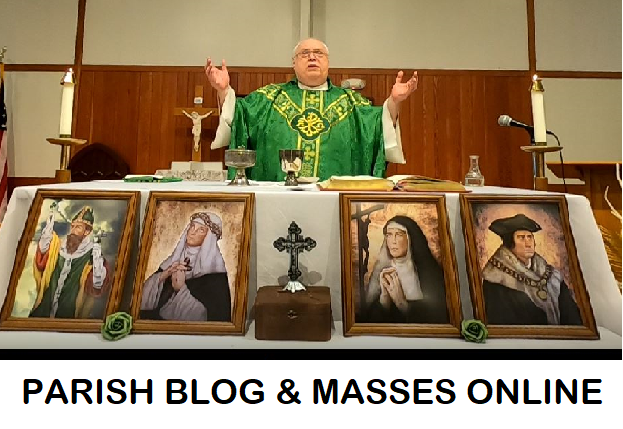
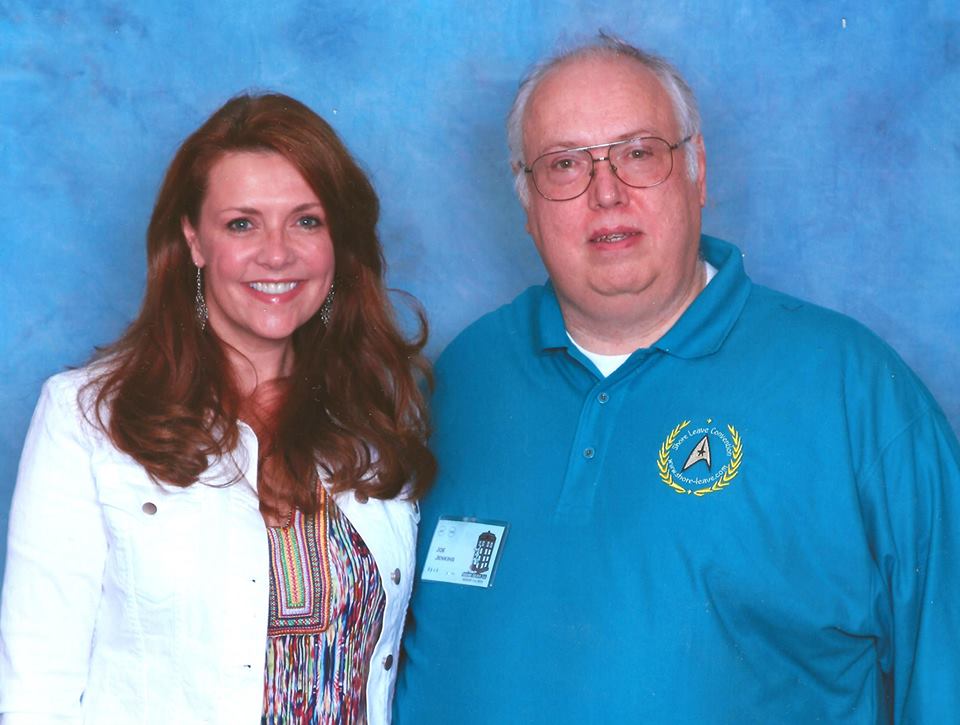
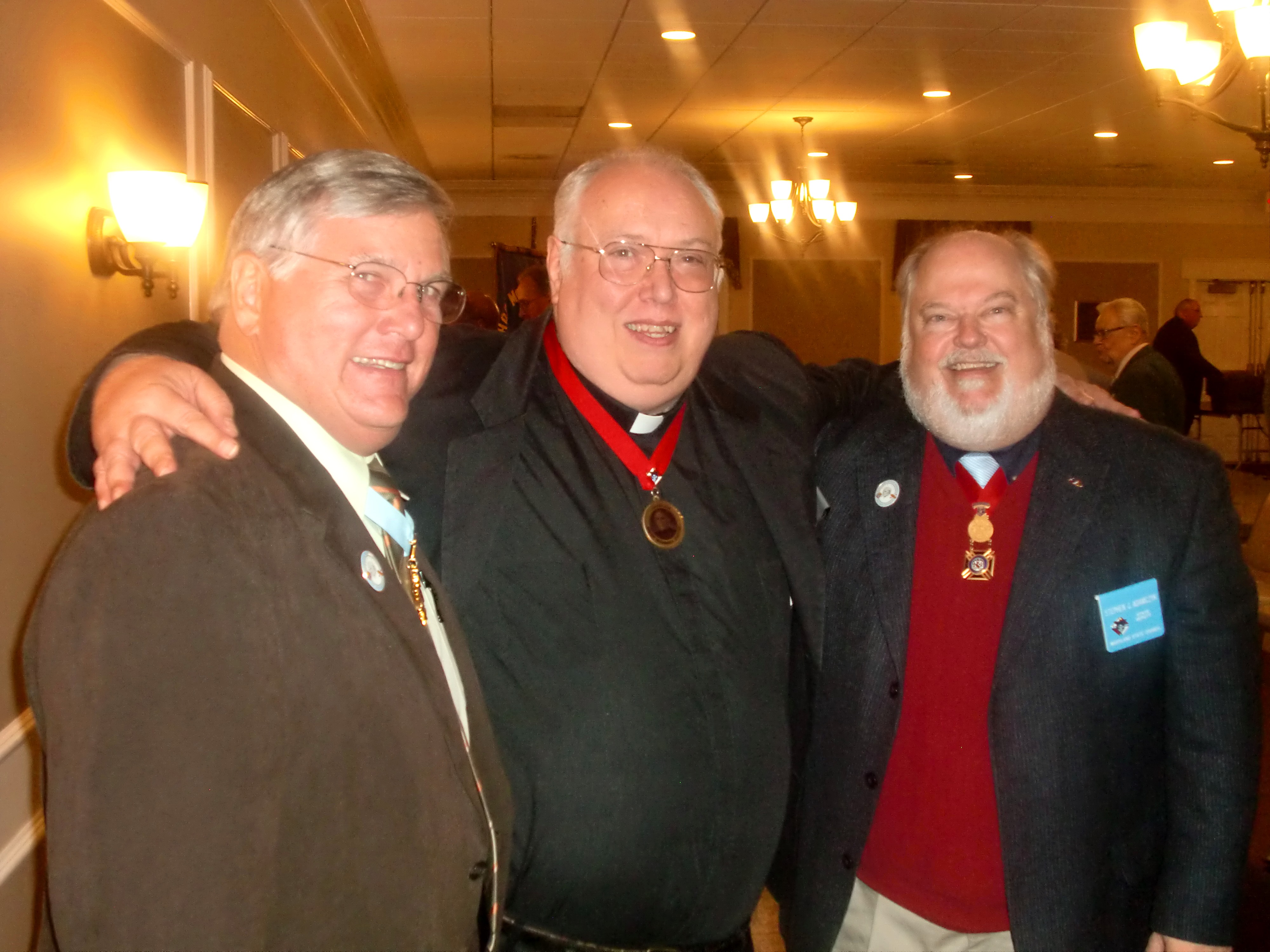
    Fr. Joseph Jenkins

  • The blog header depicts an important and yet mis-understood New Testament scene, Jesus flogging the money-changers out of the temple. I selected it because the faith that gives us consolation can also make us very uncomfortable. Both Divine Mercy and Divine Justice meet in Jesus. Priests are ministers of reconciliation, but never at the cost of truth. In or out of season, we must be courageous in preaching and living out the Gospel of Life. The title of my blog is a play on words, not Flogger Priest but Blogger Priest.

  • Archives

  • Categories

  • Recent Posts

  • Recent Comments

    Jeremykwanhong Kok's avatarJeremykwanhong Kok on Ask a Priest
    Maria's avatarMaria on Ask a Priest
    Diana's avatarDiana on Ask a Priest
    gjmc90249's avatargjmc90249 on Honey, You’re Not a Cath…
    Jeremy Kok's avatarJeremy Kok on Ask a Priest

Fr. Eberhard Schockenhoff

98610170

The moral theologian Fr. Eberhard Schockenhoff is said to be the mastermind behind the challenge to Church teachings by the German bishops. He is deeply involved with the Synod on the Family. He is on the record as an opponent to Humanae Vitae and the Church’s prohibition against artificial contraception. He is an apologist for gay clergy and wants an overhaul of Catholic sexual ethics. He has argued that the “permanence” and “solidarity” in same-sex relationships is “ethically valuable” as is its growing public acceptance. He would discard or “liberate” Catholic teaching from an association with natural law, emphasizing the subjective experiences of the faithful. He would also openly readmit remarried divorcees to take Holy Communion, adultery or not. How is such a man counted as an expert? What even makes him a Catholic?

Infiltrated Vatican set to accept Same Sex Unions??

ATHEIST COMMANDMENT 9

“There is no one right way to live.”

Eye-3372-largeAnd what is this supposed to mean? Would the atheist tolerate a radical Islam that covered a woman’s face and body, reducing her to property, denying her an education and life outside the home? Would they turn a blind eye to a pre-civil war south where slavery allowed a genteel life for some and one of brutal servitude for others? This so-called commandment is actually nonsense. The truth is that while there are many different states of life and a certain cultural diversity; nevertheless, there are ways of living that countermand human decency and the laws of God. Keeping harems or same-sex partners would also fall within prohibited acts; however, I suspect the atheist critic wants to make room for deviancy. Once more there is a problem with specificity. Who decides what an appropriate lifestyle is and is not? Failure to make any judgment will lend legitimacy to anything and everything.

The Christian would argue that there is a right way to live and that is to live in right relationship with God and man. Sex outside of heterosexual marriage is a sin. A lifestyle that depends upon the oppression of others is a sin. A life that is addicted to booze and drugs is one that faces imminent destruction. Commercialism and materialism will ultimately fail to satisfy the longing of the soul. We live in such a way, in accordance with our nature, so that we can draw out the best that makes us human. We are social creatures which need to interact with each other in a manner that both preserves human freedom and insures the healthy functioning of society. Putting it bluntly, there are right “ways” of living and there are wrong ways, too.

I am somewhat surprised that that a man who promotes science would suggest this dictum. The Mythbusters devote each episode at dispelling myths and trying to ascertain the truth. There is little truth in this so-called new commandment. As with the proper fuel for a car a protocol before a dangerous experiment or explosion— there is a right way and a wrong or dangerous way to proceed.

This new law is really just an excuse for liberality and unhampered toleration. Not that I think he really means it because I suspect there are elements to the Christian life that he would find personally objectionable. In other words, the rule here is biased with unspoken exceptions. He would stretch the definition of marriage and family. Marriage, itself, might be viewed as an unnecessary human construct. Obviously, the atheist critic would not interpret it as a sacrament configured to give grace.

Man is not the final arbiter of right and wrong. The rejection of this truth is at the heart of many contemporary problems. Everything is politicized, even human behavior. If the law says something is right, many presume that it must be okay. The war against drugs goes badly, so advocates argue for their legalization and taxation. When the prostitution situation resists resolution, there is a lobby that suggests making it legal with defined health or safety standards. Assault against children, even in the womb was reckoned as manslaughter and a war crime but now it is regarded as a right of women to choose. Within living memory homosexuality goes from being criminalized to being protected and promoted as a basic civil right. No matter what the issue or behavior, people no longer turn to ministers or philosophers but to lawyers and politicians.

This process promotes a lie… about human nature, about God and his commandments… and about our sphere of influence. The subjective eclipses the objective. The relative dominates over point of permanence. The end result is that we damage ourselves and all our associations. Not only is there a loss of a sense of sin but also of any concrete definition.

ATHEIST COMMANDMENT 4

“Every person has the right to control over their body.”

baby-girl-5683-large

This modern commandment is directly connected to the issue of legalized abortion. Atheists deny the existence of a soul. Thus it is easy for many of them to discount the embryonic as human with rights. Despite a human developmental trajectory, the unborn (at least at early stages) is judged as no more than tissue or at most, only a human being “in potency.” This commandment would have more credibility if there were respect for the body and/or the separate but dependent integrity of the unborn child. Frequently language games will be employed to avoid the truth about the child’s humanity in the womb. When it comes to issues like partial birth infanticide an irrationality takes hold. It is argued that it would be cruel to adopt a child out to strangers; and yet, with adoption they would become a loving family. The blindness of selfishness is heinous. If there be a physical defect, a strained comeback might point to a dubious or difficult quality of life. Frequently there is an appeal to overall viability although medical science is saving the lives of increasing premature babies. Certain ethicists have noted that young children (up to maybe three years of age) are not really viable without constant adult intervention. They just do not know how to care for themselves. That is why a few rogues are proposing “post-birth abortion.” Beyond the logical inconsistencies, the pro-abortion position gives rights to some and strips them entirely from other persons. The definition of a baby becomes shallow: “it is only a baby if you want it.”

pretty-girl-9917-large

Life issues are often interconnected. A consequence of this maxim would also be assisted suicide. If the person has absolute dominion over the body then he or she can terminate the life of that body whenever he or she deems to do so. With God extracted from the equation, he no longer has sovereignty and out goes the fifth commandment: “Thou shalt not kill.” Turning to lesser matters, it would also permit all sorts of bizarre tattoos and piercings. Indeed, one could turn his or her body into a for-profit advertising banner if so desired. This is really a monstrous commandment and points out that separated from God; we really do not know how to be good. Since we are our bodies, this permissive commandment would also open the door to all sorts of distortions in sexual behavior, way beyond the evils of artificial contraception and fornication. The Christian would argue that personal control of the body is not absolute. We must respect that all life belongs to God and the plan of nature by which we are made. We must also respect others, including the little people who start out in the womb.

Letter to the Editor: By Their Fruits You Will Know Them…

Letter to the Editor
May 15, 1992

I perceive that some of you may be discouraged or disheartened by the so-called march for pro-choice or abortion that occurred here in Washington a few weeks ago. Numbers do not make right, even if correctly reported. Take a look at what the media gave little or no coverage to:

At one point in the march a lesbian, self-proclaimed, asked the marchers how many of you are lesbians? The video tape shows nearly half of the marchers in view raised their hands. Their leader has gone on record as saying that if she ever by chance became pregnant and found her “child” male, she would kill it because she hates all males.

In the crowd of marchers there were those who accused the Church of murdering Pope John Paul I. Others portrayed Pope John Paul II in drag. This is a reminder of the ones who in St. Patrick’s Cathedral spit in the face of Cardinal O’Connor at Communion time and desecrated the Blessed Sacrament.

Others would prohibit the husband being told by the wife that she intended to have an abortion thereby denigrating the role of fatherhood and reducing him to a stud. So much for family life!

There were the strange people, by most standards, the Jane Fondas and the Mayor Kellys and the Jesse Jacksons chose to march with. As Ms. Tyler said so descriptively they were the sexual masochists, transvestites and trans-sexuals, etc. and the cry was today join together as one.

Then there was our shadow senator who said on one occasion “what happens to the mind of a person and to the moral fabric of a nation that accepts the aborting of the life of a baby without pain of conscience? What kind of person – what kind of society will we have twenty years hence if life can be taken so casually?” Jesse Jackson 1977. Today he could answer that question for he is pro-abortion and marched with the crowd at the April 5 rally.

We were all shocked at the beating of a man captured on film at Los Angeles. In that same city thousands of unborn children are mutilated every day in the pay-as-you-go abortion clinics. The politicians looking for votes wring their hands at the Los Angeles beating but vote yes for the million-plus killed in our “society” each year.

The CRISIS Magazine, May 1992, page 10, reports that The Washington Post (mirabile dictu) polled 881 marchers and compared the answers to the views of the rest of the nation. The differences were as large as 80% to 5%. They were rich, young, white, childless, left-wing, non-Catholics, Northeastern activists.

The pro-abortion crowd in the game of numbers had 500,000 marching in April in the world’s capital. The Question is the one posed by the new abortion convert, Jesse Jackson, what kind of people are doing the marching and who were supporting them by their presence and their words. By their fruits you will know them.

A Courageous or Timid Church?

Msgr. Pope touches a cord on the Archdiocesan Blog that is very dear to my heart, the fact that a “timid” Church is in contradiction to its very nature as a sign of contradiction in the world.

Msgr. Pope speaks of the new secularized faith as “Sad, pathetic, wrong, and cowardly—hardly the revolutionary faith that got Paul arrested. . . . We have got to rediscover how revolutionary our Catholic faith truly is to this world gone mad. And as we proclaim healing and an allegiance to something other than this world, we will become increasingly obnoxious to the world around us. . . . No tame, domesticated Christianity will threaten or change this world. When Paul preached, the people rioted. Modern preaching too often incites only yawns and indifference.”

St. Paul and the other apostles did not qualify the Gospel and so they faced arrest, torture and martyrdom. The early Church was persecuted precisely because the truths of Christ allowed for no compromise or tolerance for participation in false worship. Even a pinch of incense to the Roman gods or to the so-called divine emperor was too much. Today’s world misconstrues the incident of the Roman coin and the likeness of the emperor. When Jesus said give to God what belongs to God and to Caesar what belongs to Caesar, he was avoiding a trick to have him either arrested by the authorities or to be rejected by the crowds as a traitor. Ours is a jealous God. What belongs to him? The answer is everything, even Caesar! Many in contemporary society play games with their Christianity. They create a false image of Christ to follow, one that would have fit in nicely with the pantheon of ancient pagan deities. Indeed, the battle over religious liberty is a symptom of this— as if believers could restrict their faith and values to the inside walls of churches and during Mass. And yet, the dismissal at the end of Mass echoes our commission to take the Good News out into the world. The ideal is not co-existence with the world or evil but rather to plant the seeds for repentance and conversion. Today many Catholics are silent upon important issues. A candidate for the office of governor in Maryland is a “practicing Catholic” and yet he is on the record as pro-abortion, yes even for allowing partial-birth infanticide. How can we reconcile this with the faith? The issues continue to mount: no fault divorce and remarriage, same-sex marriages, lack of support for parochial schools, contraception giveaways in public schools, free contraception, abortion on demand and growing sympathies for euthanasia. Sins are counted as rights and Catholics and their Church are expected to fall in line. Wimpish silence satisfied in the past, and that was bad enough, but today complicity is demanded.

St. Paul would exorcize the demonic, not try to accommodate it. Too often we hear from churchmen that we do not want to alienate politicians on “other issues” that are important to us, like the status of immigrants, or just employment, or the dismissal of capital punishment, or tax breaks for churches, etc. We cower to the power of the secular world when we should bring the authority of Christ to bear on the challenges of our day.

Christianity was persecuted by the Roman Empire precisely because it was viewed as intolerant. Today, much of the faith has lost its teeth. The enablers for the murder of children are invited without sanction to take Holy Communion. Even high level shepherds hypothesize ways to get around or to turn a blind eye to homosexuality, adultery and fornication. We are urged to find a new language, removed from that used in Scripture, so that no one might get their feelings hurt. The fact that these activities might cost people the kingdom and their share in everlasting life does not seem to measure up anymore. Who are we to judge? We are the people given the gift of the Holy Spirit and who follow the Light of the World, dispelling the darkness. What is saving faith? It is courageous obedience to God, qualified by charity. That’s who we are and what we are about!

Counseling for Catholic Marriages

Catholics with marital problems should have readily available avenues within the Church for professional counseling in the hopes of salvaging their marriages.

More can be done to prepare priests for this kind of work but I think there is also a need for full-time professionals with training in psychology and intervention-counseling. These counselors should be well-versed with the Catholic faith. If they are not on the same page with us about human sexuality and the value of marriage, then they can escalate a problem instead of being part of the solution.

  • When red lights appear in the Pre-Cana preparation, referrals can be made before marriages in the Church.
  • When problems develop within marriages, referrals can be made to facilitate healing or reconciliation.
  • When questions arise about sexual identity and remaining in good standing with the Church, referrals might be made to assist people in coping and to counteract bias from non-Catholic sources.

While there are good independent counselors who charge fees, I would also recommend that there be professionals hired directly by the Church. Their salaries might be shared between parishes as within deaneries. They would work closely with pastors, while preserving confidentiality, to either prevent bad marriages or to salvage troubled ones. Such staffing should be viewed as serious as religious education directors, office managers and bookkeepers. In any case, a public list of counselors vetted by the Archdiocese should be readily available to pastors and the people they serve.

Catholic marriage counseling is necessarily different from that which is offered by those who do not share our understanding of marriage or our views about human sexuality. These counselors need to discern how a troubled Catholic marriage might be fixed. The truths of faith are integrated into our appreciation of psychology. The goal is to have couples living a daily vocation where there is both joy and sacrificial love. Marriage is viewed as a covenant and as a permanent union. Too many quickly jump to divorce as the answer. Catholics should see that as an option generally taken off the table.

Instead of urging an immediate divorce, a separation might be promoted so as to further the conversation or to prevent verbal and/or physical abuse. If a marriage has terminal problems and cannot be salvaged, then the counselor might suggest an annulment. That is where the pastor and/or the officials on a Church Tribunal would enter the picture. However, this is inherently always a sad or tragic situation. It means that avenues to save a marriage have failed.

Right now we have noble efforts like Retrouvaille but there is a pressing need for something more clinical.

A Few Thoughts about the Synod Relatio & Debates

My head is spinning about some of the things that are being seriously argued at the Vatican’s Synod on the Family. I am already concerned that a Commission was established to look at streamlining the process for annulments even prior to the start of the Synod. It seems to me that if such were a concern then the bishops would then request the Holy See to do so. Will the documents which will be formulated reflect the majority view and Catholic tradition or will there be attempts to steal the show for the minority progressives?

synod-of-bishops

What is it about this new Synod document that has critics saying it signals a revolutionary shift in favor of same-sex couples? It is acknowledged that this “relatio” urges clergy to make “fraternal space” for homosexuals. But what does it say? We read:

“Homosexuals have gifts and qualities to offer the Christian community: are we capable of welcoming these people, guaranteeing to them a further space in our communities? Often they wish to encounter a Church that offers them a welcoming home. Are our communities capable of proving that, accepting and valuing their sexual orientation, without compromising Catholic doctrine on the family and matrimony?”

Are we reading the same document? All I see are questions. Hopefully they are not rhetorical. Do we eject gay brothers and sisters from our churches? No we do not. Can we invite them forward for Holy Communion? Yes, provided that they maintain chaste and celibate lives. Can we affirm or value their sexual orientation? No, we cannot do so. Such would devalue the true meaning of marriage and human sexuality. We cannot move away from the assessment of disorientation or that same-sex carnality is mortal sin.

As a so-called case-in-point of past intolerance, the news contrasted this development with the story of Barb Webb who was fired from a Catholic school when she and her partner announced her pregnancy. Similarly, her partner, Kristen Moore was asked to resign from her post as a music director at a Catholic parish. The secular media glossed entirely over the moral issues that extend beyond same sex unions, like the freezing of embryos, donated semen and IVF technologies. All these elements are reckoned as moral evils and sinful.

This relatio is being interpreted precisely as Cardinal Kasper would suggest. The doctrinal truth is eclipsed, if it remains, for the sake of a pastoral provision or slackening of discipline. The same reasoning he uses for divorced and remarried couples is being applied to active homosexuals. I find this reckoning very disturbing. Discipline can be distinguished from doctrine but discipline is always at the service of doctrine. There are doctrinal elements that cannot be ignored. It is contradictory to say that gay acts are sinful and then to value, in any way, homosexuality. It is contradictory to say that marriage is a lifelong institution and that divorce is a sin, while inviting couples to receive Holy Communion who are living in adultery. The truths of Scripture are clear and we must always be at the service of the truth on every level: doctrinally, canonically and pastorally.

The document recognizes that same-sex couples live lives where they render “mutual aid to the point of sacrifice [which] constitutes a precious support in the life of the partners.” Critics are saying that this is a crack in the door that may one day lead to full acceptance. I would say that this is not the case. The statement is one that reflects the immediate horizontal human condition but says nothing about the vertical supernatural dimension. It is a mere statement of fact that these couples support each other in their day-to-day lives. However, this does not mean that they are in right standing before God. Mortal sin is still mortal sin. I suspect that there are many “nice and pleasant” people who make good neighbors and yet will suffer damnation and hellfire. We are not saved by simply being nice but by being faithful and obedient to God. The Church can relax certain disciplines but she cannot change divine positive law. My fear is that tolerant language might enable or encourage more sinners to remain within their sins. The Church must be a place for saving truth and grace. She should never be an enabler for sinful lifestyles or blasphemous acts like receiving the Eucharist while ill-disposed or in mortal sin. This document does NOT acknowledge the “holiness” of such couples as was suggested in the Huffington Post article by Antonia Blumberg (1/13/14). It simply asks if we might tolerate with passivity and silence the situation of people living in sin.

I cannot buy this application of any “law of graduality.” No matter how slow might be the movement to holiness; the Church should never compromise on the fullness of truth. Confessors can exhibit great understanding and compassion for married couples who use artificial contraception, with the hope that they will eventually come around to the Church’s understanding of human dignity and the full value of the marital act. It is here that I can well appreciate “graduality.” However, this is not the same as cohabitating, adulterous and same-sex couples. They have no right to a shared bed.  In their regard, where there is neither contrition nor amendment of life, absolution must be withheld. Similarly, while they should attend weekly Sunday Mass, they should abstain from taking Holy Communion. The priest will not usually embarrass people in public but he fails his sacerdotal charge if he does not challenge such couples in private.

This law or better yet, theory of graduality was very much the rationale for the “open table” of Anglicanism. It was hoped that this welcoming to receive the Eucharist would draw others into greater unity. Contrastingly, the “closed table” of Catholicism sees Holy Communion as an expression of an ecclesial unity that is already realized. This is representative of the ancient tradition wherein heretics and grievous sinners were denied the sacrament or even excommunicated. The Church’s censure of interdict would also illustrate this posture. One had to be properly disposed and graced to receive the sacrament. Anything less was judged as blasphemous and scandalous. One should not pretend there is a union that is not truly there. This resonates with the current debate about divorced and remarried couples as well as with active homosexuals. We cannot allow a false compassion to tolerate normalization for the sake of public acceptance while the pastoral accommodation is deceptive to the doctrinal truth and the spiritual state of souls before God. We can move away from using pejorative biblical terms like “sodomites” and “adulterers,” but the underlying reality will remain the same. Does this really serve the summons to repent and believe?

If we change the discipline for those in serious sin and the intrinsically disordered, would we not logically have to open up Holy Communion to others (particularly Christians) who might be in ignorance of the full ecclesial reality but who live moral lives? It is a real can of worms and I would prefer to leave it closed. But that is my opinion.

Relationship between Discipline & Doctrine

It is unusual to hear a debate between bishops aired in the press and public forum. Continue to pray for all the participants in the Vatican Synod of the Family.

Cardinal+Walter+Kasper-300x229

Cardinal Kasper:

“Nobody denies the indissolubility of marriage. I do not, nor do I know any bishop who denies it. But discipline can be changed. Discipline wants to apply a doctrine to concrete situations, which are contingent and can change.”

archbishop_wuerl_elect

Cardinal Wuerl:

“The reception of Communion is not a doctrinal position. It’s a pastoral application of the doctrine of the Church. We have to repeat the doctrine, but the pastoral practice is what we are talking about. That’s why we are having a synod. Just to repeat the practice of the past without trying to find a new direction today is no longer tenable.”

“That’s going to be the challenge, and I think that’s what the Holy Father is calling us to do. He’s saying, we know this, we believe this, this is what is at the heart of our teaching. But how do you meet people where they are? And bring them as much of that as they can take, and help them get closer?”

235148-cardinal-timothy-dolan

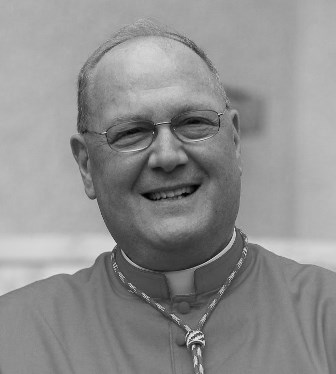
Cardinal Dolan:

“When we talk about some time of renewal and reform of our vocabulary, we don’t mean to soften or to dilute our teaching, but to make it more credible and cogent,” he said. “It’s not a code word for sidestepping tough things; it’s more a methodology.“

Cardinal_Burke

Cardinal Burke:

“There can’t be in the Church a discipline which is not at the service of doctrine.”

“The reformers were saying: ‘Oh, we’re not questioning the indissolubility of marriage at all. We’re just going to make it easy for people to receive a declaration of nullity of marriage so that they can receive the sacraments.’ But that, is a very deceptive line of argument which I’ve been hearing more now in this whole debate.”

cardinal_pell

Cardinal Pell:

“As Christians, we follow Christ. Some may wish Jesus might have been a little softer on divorce, but he wasn’t. And I’m sticking with him.”

“We’ve got to be intellectually coherent and consistent.  Catholics are people of tradition, and we believe in the development of doctrine, but not doctrinal backflips.”

“Communion for the divorced and remarried is for some — very few, certainly not the majority of synod fathers — it’s only the tip of the iceberg, it’s a stalking horse. They want wider changes, recognition of civil unions, recognition of homosexual unions. The church cannot go in that direction. It would be a capitulation from the beauties and strengths of the Catholic tradition, where people sacrificed themselves for hundreds, for thousands of years to do this.”

muller_CNS

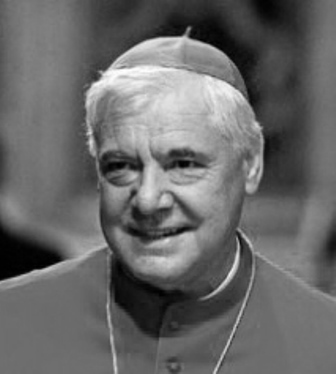
Cardinal Müller:

“One cannot declare a marriage to be extinct on the pretext that the love between the spouses is ‘dead.’  Indissolubility does not depend on human sentiments, whether permanent or transitory. This property of marriage is intended by God himself. The Lord is involved in marriage between man and woman, which is why the bond exists and has its origin in God. This is the difference.”

Racism, Semen & the Designer Child

The article entitled “White woman sues sperm bank after she mistakenly gets black donor’s sperm,” by Lindsey Bever ran on October 2, 2014 in THE WASHINGTON POST about a white lesbian couple litigating against the sperm bank that gave them semen from a black donor when they had specifically asked for white only.

johnny_automatic_young_lady

Jennifer is all upset about the mix-up. She lives in a white Ohio neighborhood and says that she does not want her daughter to face the discrimination she has suffered. The little girl conceived is now two years old. She is suing the sperm bank for “wrongful birth and breach of warranty and economic damage.” Her money was refunded and she was given an apology, but this is not enough for her.

She seems blind to her own initial prejudice and how the whole process reduced a child to property or a commodity. Every child conceived (even if in sin) is a unique individual. Different semen would have meant that a different child would have entered their lives. Instead of prizing the child they have been given, the couple are lamenting the loss of a child they might have had. This is petty and sickening.

Would they look this little black (or bi-racial) girl in the eyes and tell her that they would rather trade her in for a straight haired, blue-eyed white child? Probably not, but in a fashion that is what the lawsuit is doing as they project their anger and disappointment upon the sperm bank. Such places should not exist so I would shed no tears if they should have to close. But I have no sympathy for this couple either. My sadness is for this child.

Instead of rejoicing in the miracle of her child, the article says the mother wept about the mistake. “All of the thought, care and planning that she and Amanda had undertaken to control their baby’s parentage had been rendered meaningless. In an instant, Jennifer’s excitement and anticipation of her pregnancy was replaced with anger, disappointment and fear.”

We are told that not all her friends and families are “racially sensitive.” In other words, her circle is composed of racial bigots. It sounds to me that this couple was not “sensitive” either. They are saying that they wish they could do it over again. Where is the gratitude in this? Would they trade her in for a white child? There is an old saying, “Birds of a feather flock together.” One is known by his or her friends. The problem is not the child, but the people with whom the couple associates.

The fact remains that same-sex couples cannot naturally have children. They must conceive either through heterosexual fornication or immoral medical intervention. There is no actual sharing of DNA even if they find donors of the same race. In this vein, there is a fiction or personal deception that taints this situation. The silliness of the upset is amplified when the mother talks about problems in finding hair care for an “African American girl.” Did she imagine brushing the blond hair of her pasty white girl with curls? Now she wants to hold others accountable when in my estimation they are all guilty, that is everyone but the child.

This is just the beginnings of a moral issue that will grow worse in the years to come, especially with increased DNA manipulation. The issue is human selfishness and the desire for designer children. Would she have aborted the child had it been a boy? Were boy fetuses aborted?

The Special Synod Faces Serious Issues

We all know that there are many people who come up for Holy Communion while ill-disposed for the sacrament. This is a deeper question than the plight of divorced-and-remarried Catholics.  There is regular scandal about pro-abortion politicians taking the sacrament.  All hell broke loose when a priest denied the Eucharist to a lesbian woman at her mother’s funeral.  This does not even take into account the many communicants (unknown to the priest) who are ill-disposed by various mortal sins and lack of prayerful preparation.  There is also the question of non-Catholic participation, and their sense of alienation and not being welcome when Holy Communion is distributed.  Given these many scenarios, it seems that part of the special synod must be on the nature of the Eucharist, its reception and how we might deal with the growing tension.

Outside of Mass attendance, the special synod will necessarily have to discuss the evolving changes in the makeup of family units: one-spouse homes, broken families, children raised by grandparents, foster and adoptive parents, families with unmarried couples and illegitimate children and same-sex unions.  There are even bizarre situations, as when I had two women and a man come see me to prepare for the baptism of two children.  One belonged to the man’s wife and the other to his girlfriend or mistress.  They all lived under the same roof.  These things are less and less rare.  They make my head hurt.  How can it be fixed?  Must we live with the messiness?