• Our Blogger

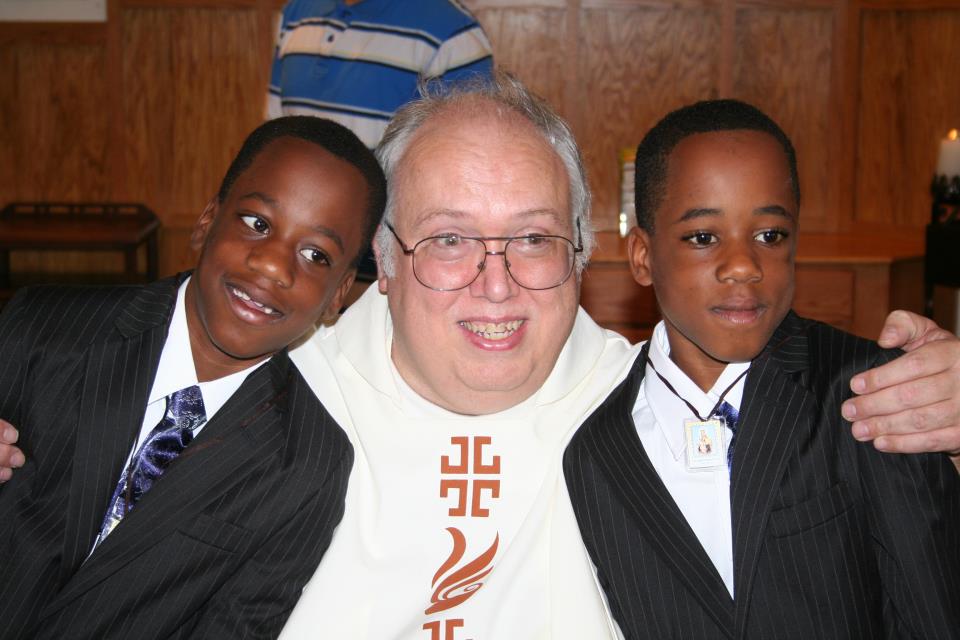
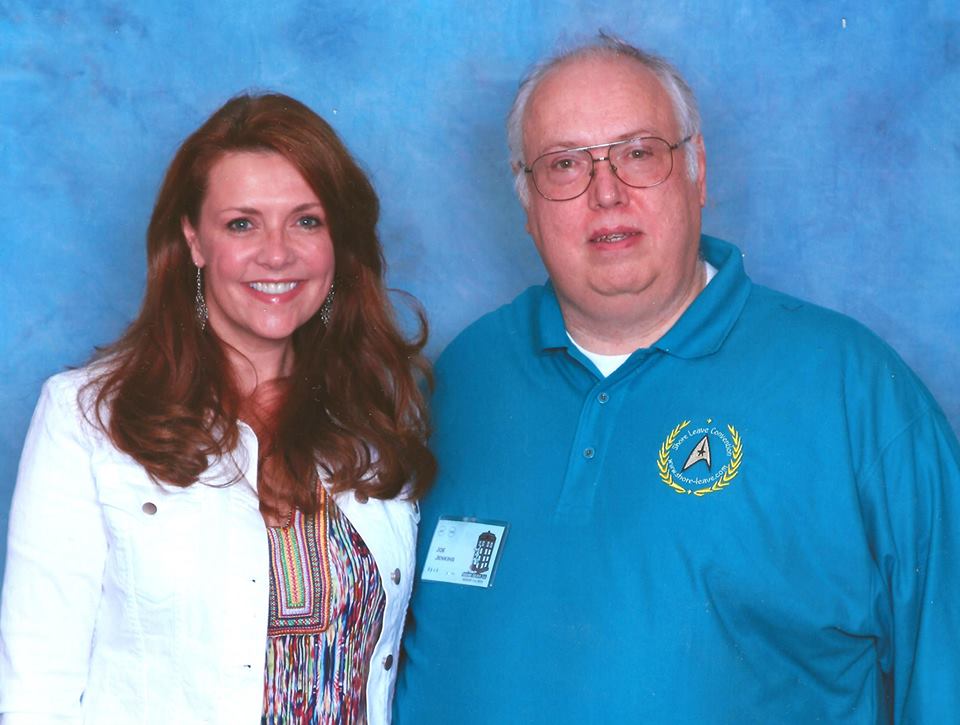
    Fr. Joseph Jenkins

  • The blog header depicts an important and yet mis-understood New Testament scene, Jesus flogging the money-changers out of the temple. I selected it because the faith that gives us consolation can also make us very uncomfortable. Both Divine Mercy and Divine Justice meet in Jesus. Priests are ministers of reconciliation, but never at the cost of truth. In or out of season, we must be courageous in preaching and living out the Gospel of Life. The title of my blog is a play on words, not Flogger Priest but Blogger Priest.

  • Archives

  • Categories

  • Recent Posts

  • Recent Comments

    Barbara King's avatarBarbara King on Ask a Priest
    Ben Kirk's avatarBen Kirk on Ask a Priest
    Jeremy Kok's avatarJeremy Kok on Ask a Priest
    Barbara's avatarBarbara on Ask a Priest
    forsamuraimarket's avatarforsamuraimarket on Ask a Priest

Counseling for Catholic Marriages

Catholics with marital problems should have readily available avenues within the Church for professional counseling in the hopes of salvaging their marriages.

More can be done to prepare priests for this kind of work but I think there is also a need for full-time professionals with training in psychology and intervention-counseling. These counselors should be well-versed with the Catholic faith. If they are not on the same page with us about human sexuality and the value of marriage, then they can escalate a problem instead of being part of the solution.

  • When red lights appear in the Pre-Cana preparation, referrals can be made before marriages in the Church.
  • When problems develop within marriages, referrals can be made to facilitate healing or reconciliation.
  • When questions arise about sexual identity and remaining in good standing with the Church, referrals might be made to assist people in coping and to counteract bias from non-Catholic sources.

While there are good independent counselors who charge fees, I would also recommend that there be professionals hired directly by the Church. Their salaries might be shared between parishes as within deaneries. They would work closely with pastors, while preserving confidentiality, to either prevent bad marriages or to salvage troubled ones. Such staffing should be viewed as serious as religious education directors, office managers and bookkeepers. In any case, a public list of counselors vetted by the Archdiocese should be readily available to pastors and the people they serve.

Catholic marriage counseling is necessarily different from that which is offered by those who do not share our understanding of marriage or our views about human sexuality. These counselors need to discern how a troubled Catholic marriage might be fixed. The truths of faith are integrated into our appreciation of psychology. The goal is to have couples living a daily vocation where there is both joy and sacrificial love. Marriage is viewed as a covenant and as a permanent union. Too many quickly jump to divorce as the answer. Catholics should see that as an option generally taken off the table.

Instead of urging an immediate divorce, a separation might be promoted so as to further the conversation or to prevent verbal and/or physical abuse. If a marriage has terminal problems and cannot be salvaged, then the counselor might suggest an annulment. That is where the pastor and/or the officials on a Church Tribunal would enter the picture. However, this is inherently always a sad or tragic situation. It means that avenues to save a marriage have failed.

Right now we have noble efforts like Retrouvaille but there is a pressing need for something more clinical.

A Few Thoughts about the Synod Relatio & Debates

My head is spinning about some of the things that are being seriously argued at the Vatican’s Synod on the Family. I am already concerned that a Commission was established to look at streamlining the process for annulments even prior to the start of the Synod. It seems to me that if such were a concern then the bishops would then request the Holy See to do so. Will the documents which will be formulated reflect the majority view and Catholic tradition or will there be attempts to steal the show for the minority progressives?

synod-of-bishops

What is it about this new Synod document that has critics saying it signals a revolutionary shift in favor of same-sex couples? It is acknowledged that this “relatio” urges clergy to make “fraternal space” for homosexuals. But what does it say? We read:

“Homosexuals have gifts and qualities to offer the Christian community: are we capable of welcoming these people, guaranteeing to them a further space in our communities? Often they wish to encounter a Church that offers them a welcoming home. Are our communities capable of proving that, accepting and valuing their sexual orientation, without compromising Catholic doctrine on the family and matrimony?”

Are we reading the same document? All I see are questions. Hopefully they are not rhetorical. Do we eject gay brothers and sisters from our churches? No we do not. Can we invite them forward for Holy Communion? Yes, provided that they maintain chaste and celibate lives. Can we affirm or value their sexual orientation? No, we cannot do so. Such would devalue the true meaning of marriage and human sexuality. We cannot move away from the assessment of disorientation or that same-sex carnality is mortal sin.

As a so-called case-in-point of past intolerance, the news contrasted this development with the story of Barb Webb who was fired from a Catholic school when she and her partner announced her pregnancy. Similarly, her partner, Kristen Moore was asked to resign from her post as a music director at a Catholic parish. The secular media glossed entirely over the moral issues that extend beyond same sex unions, like the freezing of embryos, donated semen and IVF technologies. All these elements are reckoned as moral evils and sinful.

This relatio is being interpreted precisely as Cardinal Kasper would suggest. The doctrinal truth is eclipsed, if it remains, for the sake of a pastoral provision or slackening of discipline. The same reasoning he uses for divorced and remarried couples is being applied to active homosexuals. I find this reckoning very disturbing. Discipline can be distinguished from doctrine but discipline is always at the service of doctrine. There are doctrinal elements that cannot be ignored. It is contradictory to say that gay acts are sinful and then to value, in any way, homosexuality. It is contradictory to say that marriage is a lifelong institution and that divorce is a sin, while inviting couples to receive Holy Communion who are living in adultery. The truths of Scripture are clear and we must always be at the service of the truth on every level: doctrinally, canonically and pastorally.

The document recognizes that same-sex couples live lives where they render “mutual aid to the point of sacrifice [which] constitutes a precious support in the life of the partners.” Critics are saying that this is a crack in the door that may one day lead to full acceptance. I would say that this is not the case. The statement is one that reflects the immediate horizontal human condition but says nothing about the vertical supernatural dimension. It is a mere statement of fact that these couples support each other in their day-to-day lives. However, this does not mean that they are in right standing before God. Mortal sin is still mortal sin. I suspect that there are many “nice and pleasant” people who make good neighbors and yet will suffer damnation and hellfire. We are not saved by simply being nice but by being faithful and obedient to God. The Church can relax certain disciplines but she cannot change divine positive law. My fear is that tolerant language might enable or encourage more sinners to remain within their sins. The Church must be a place for saving truth and grace. She should never be an enabler for sinful lifestyles or blasphemous acts like receiving the Eucharist while ill-disposed or in mortal sin. This document does NOT acknowledge the “holiness” of such couples as was suggested in the Huffington Post article by Antonia Blumberg (1/13/14). It simply asks if we might tolerate with passivity and silence the situation of people living in sin.

I cannot buy this application of any “law of graduality.” No matter how slow might be the movement to holiness; the Church should never compromise on the fullness of truth. Confessors can exhibit great understanding and compassion for married couples who use artificial contraception, with the hope that they will eventually come around to the Church’s understanding of human dignity and the full value of the marital act. It is here that I can well appreciate “graduality.” However, this is not the same as cohabitating, adulterous and same-sex couples. They have no right to a shared bed.  In their regard, where there is neither contrition nor amendment of life, absolution must be withheld. Similarly, while they should attend weekly Sunday Mass, they should abstain from taking Holy Communion. The priest will not usually embarrass people in public but he fails his sacerdotal charge if he does not challenge such couples in private.

This law or better yet, theory of graduality was very much the rationale for the “open table” of Anglicanism. It was hoped that this welcoming to receive the Eucharist would draw others into greater unity. Contrastingly, the “closed table” of Catholicism sees Holy Communion as an expression of an ecclesial unity that is already realized. This is representative of the ancient tradition wherein heretics and grievous sinners were denied the sacrament or even excommunicated. The Church’s censure of interdict would also illustrate this posture. One had to be properly disposed and graced to receive the sacrament. Anything less was judged as blasphemous and scandalous. One should not pretend there is a union that is not truly there. This resonates with the current debate about divorced and remarried couples as well as with active homosexuals. We cannot allow a false compassion to tolerate normalization for the sake of public acceptance while the pastoral accommodation is deceptive to the doctrinal truth and the spiritual state of souls before God. We can move away from using pejorative biblical terms like “sodomites” and “adulterers,” but the underlying reality will remain the same. Does this really serve the summons to repent and believe?

If we change the discipline for those in serious sin and the intrinsically disordered, would we not logically have to open up Holy Communion to others (particularly Christians) who might be in ignorance of the full ecclesial reality but who live moral lives? It is a real can of worms and I would prefer to leave it closed. But that is my opinion.

Relationship between Discipline & Doctrine

It is unusual to hear a debate between bishops aired in the press and public forum. Continue to pray for all the participants in the Vatican Synod of the Family.

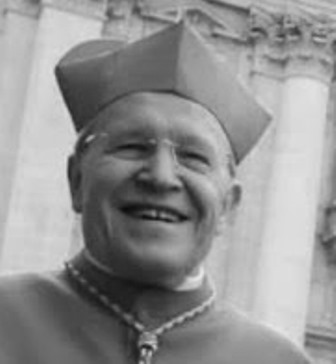
Cardinal+Walter+Kasper-300x229

Cardinal Kasper:

“Nobody denies the indissolubility of marriage. I do not, nor do I know any bishop who denies it. But discipline can be changed. Discipline wants to apply a doctrine to concrete situations, which are contingent and can change.”

archbishop_wuerl_elect

Cardinal Wuerl:

“The reception of Communion is not a doctrinal position. It’s a pastoral application of the doctrine of the Church. We have to repeat the doctrine, but the pastoral practice is what we are talking about. That’s why we are having a synod. Just to repeat the practice of the past without trying to find a new direction today is no longer tenable.”

“That’s going to be the challenge, and I think that’s what the Holy Father is calling us to do. He’s saying, we know this, we believe this, this is what is at the heart of our teaching. But how do you meet people where they are? And bring them as much of that as they can take, and help them get closer?”

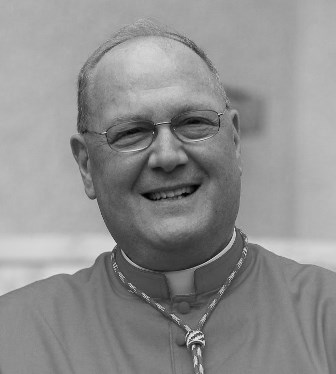
235148-cardinal-timothy-dolan

Cardinal Dolan:

“When we talk about some time of renewal and reform of our vocabulary, we don’t mean to soften or to dilute our teaching, but to make it more credible and cogent,” he said. “It’s not a code word for sidestepping tough things; it’s more a methodology.“

Cardinal_Burke

Cardinal Burke:

“There can’t be in the Church a discipline which is not at the service of doctrine.”

“The reformers were saying: ‘Oh, we’re not questioning the indissolubility of marriage at all. We’re just going to make it easy for people to receive a declaration of nullity of marriage so that they can receive the sacraments.’ But that, is a very deceptive line of argument which I’ve been hearing more now in this whole debate.”

cardinal_pell

Cardinal Pell:

“As Christians, we follow Christ. Some may wish Jesus might have been a little softer on divorce, but he wasn’t. And I’m sticking with him.”

“We’ve got to be intellectually coherent and consistent.  Catholics are people of tradition, and we believe in the development of doctrine, but not doctrinal backflips.”

“Communion for the divorced and remarried is for some — very few, certainly not the majority of synod fathers — it’s only the tip of the iceberg, it’s a stalking horse. They want wider changes, recognition of civil unions, recognition of homosexual unions. The church cannot go in that direction. It would be a capitulation from the beauties and strengths of the Catholic tradition, where people sacrificed themselves for hundreds, for thousands of years to do this.”

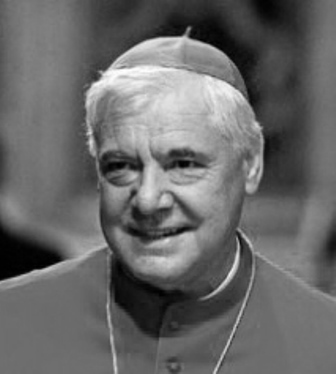
muller_CNS

Cardinal Müller:

“One cannot declare a marriage to be extinct on the pretext that the love between the spouses is ‘dead.’  Indissolubility does not depend on human sentiments, whether permanent or transitory. This property of marriage is intended by God himself. The Lord is involved in marriage between man and woman, which is why the bond exists and has its origin in God. This is the difference.”

The Special Synod Faces Serious Issues

We all know that there are many people who come up for Holy Communion while ill-disposed for the sacrament. This is a deeper question than the plight of divorced-and-remarried Catholics.  There is regular scandal about pro-abortion politicians taking the sacrament.  All hell broke loose when a priest denied the Eucharist to a lesbian woman at her mother’s funeral.  This does not even take into account the many communicants (unknown to the priest) who are ill-disposed by various mortal sins and lack of prayerful preparation.  There is also the question of non-Catholic participation, and their sense of alienation and not being welcome when Holy Communion is distributed.  Given these many scenarios, it seems that part of the special synod must be on the nature of the Eucharist, its reception and how we might deal with the growing tension.

Outside of Mass attendance, the special synod will necessarily have to discuss the evolving changes in the makeup of family units: one-spouse homes, broken families, children raised by grandparents, foster and adoptive parents, families with unmarried couples and illegitimate children and same-sex unions.  There are even bizarre situations, as when I had two women and a man come see me to prepare for the baptism of two children.  One belonged to the man’s wife and the other to his girlfriend or mistress.  They all lived under the same roof.  These things are less and less rare.  They make my head hurt.  How can it be fixed?  Must we live with the messiness?

Bishop Tobin on Remarried Couples & the Eucharist

pptobin280409Has anyone else read Bishop Thomas Tobin’s letter posted on the Providence Diocese’s website?  He invites discussion.  Thus, with all due respect, I would like to share my concerns.  The bishop writes:

In my personal reflection on this dilemma, I turn to the incident in the Gospels in which Jesus and His followers were walking through a field of grain on the Sabbath and because they were hungry, began to pick and eat the grain, a clear violation of an important Mosaic Law. The offense was roundly condemned by the religious experts, the Pharisees. But in response, Jesus said, “The Sabbath was made for man, not man for the Sabbath” (Mk 2:23-28).  In other words, while not denying the validity of the law, our Lord clearly placed it in a “pastoral context,” exempting its enforcement due to the human needs of the moment. Could we not take a similar approach to marriage law today?

One cannot really compare the issue of divorced-and-remarried Catholics being allowed to receive Holy Communion with the incident where our Lord’s apostles are charged with violation of the Sabbath by picking and eating the heads of grain (Mk 2:23-28).  The first is in regard to spiritual disposition and the sacrilege of taking Holy Communion while in mortal sin.  The latter simply focuses upon a pharisaical interpretation of the commandment demanding rest.  The apostles were not in any grievously sinful state.  Jesus excuses them, as a foretaste of the freedom that comes with his dispensation.  But, more than this, Jesus is God.  The lawgiver can excuse whatever laws he wills.  The Church can also make modifications, as with our keeping the Sunday Observance over the traditional Hebrew Sabbath.  However, such authority is not absolute and this juridical rendering is a far cry from trying to circumnavigate around basic objective moral norms.  The Church and the Pope do not have the authority to authorize sin and sacrilege.

What constitutes a genuine pastoral approach?  Excusing or enabling serious sin is no favor to anyone.  While we may be troubled by exclusion and feelings of hurt; how can these compare to the fires of hell and the loss of God’s friendship.  The pastoral cannot be so focused on the external situation or appearances that we neglect the internal reality.  The corollary to the assertion that “matrimony is made for man, not man for matrimony” does not find its solution in feigned second marriages but in a chaste celibacy.  Promises are made to be kept.  If the first marriage is authentic, then as long as one spouse lives, any attempted second marriage is a fiction.  That is the long-and-short of it.  There is no viable solution out of this conundrum.  This is more than “the lofty demands of the law,” but the enduring truth that the two become one flesh.  Affections might stray but one spouse continues to belong to the other.  Infidelity is stealing what is the spouse’s due and giving it to another.  There is no way that the Church could rubber-stamp such a scenario.

The bishop writes,

But at the same time, the Church has taught the pre-eminent value of receiving the Holy Eucharist, and I keep hearing the words of Jesus about the Eucharist, words that are just as valid and important as His words about marriage: “Unless you eat the flesh of the Son of Man and drink his blood, you do not have life within you” (John 6:53).

Missing from this assessment is the ancient teaching, recited in the sequence for Corpus Christi, that the same sacrament which brings life to one, brings judgment to another.  Purposely giving Holy Communion to those who are in an adulterous situation would invite condemnation upon them and ridicule upon a hypocritical Church.

Bishop Thomas Tobin states:

And I know that I would much rather give Holy Communion to these long-suffering souls (divorced-and-remarried couples) than to pseudo-Catholic politicians who parade up the aisle every Sunday for Holy Communion and then return to their legislative chambers to defy the teachings of the Church by championing same-sex marriage and abortion.

The bishop means well and he says, honestly, that he does not know the answer to the predicament; however, sympathy for small devils while castigating large ones is no answer at all.  A man can jump from one ledge to another.  If he misses by a foot or an inch, it makes no difference.  He is still just as dead.  This is the appropriate analogy here.

Bishop Tobin echoes an article in the National Catholic Reporter by Fr. Peter Daly who suggested that annulments be simplified by handling the situations entirely at the local level.  The bishop writes:

Can we eliminate the necessity of having detailed personal interviews, hefty fees, testimony from witnesses, psychological exams, and automatic appeals to other tribunals?  In lieu of this formal court-like process, which some participants have found intimidating, can we rely more on the conscientious personal judgment of spouses about the history of their marriage (after all, they are the ministers and recipients of the sacrament!) and their worthiness to receive Holy Communion?

The true Sensus Fidelium is that collection of the laity that keeps our moral laws and regularly goes to Mass.  They would be critical of this proposed solution.  The grounds for annulments often rests in ignorance, deceit, lack of proper discretion, inability to fulfill the obligations of marriage, mental problems, prior addiction, etc.  People are often blind to their own faults and shortcomings; but here the bishop is literally saying, “Physician, heal thyself!”  Would this apply for only the second marriage?  What about the third?  What part would “the other woman” play when marriages were deliberately destroyed?  Such a measure would play into the hands of selfishness.  Many of them do not understand the difference between an annulment and a divorce.  If the bishop’s notion were adopted, there would be no difference— and a basic command from Christ would be explicitly violated.

This is all quite serious.  The marriage analogy plays a crucial part in our understanding of the Church’s relationship to Christ and the sacrament of Holy Orders.  Weaken one and we hurt the others— the dominoes will begin to fall.

Heated Conversation Over Annulment Article

wedding125

This morning I was alerted on Facebook to a commotion on the Internet regarding an article by a brother priest of the Archdiocese of Washington.  Another priest, Msgr. Charles Pope, who authors the Archdiocesan blog noted:

“I was saddened to see that a priest of my Archdiocese wrote a rather harsh article on Church Marriage teaching. I do think we need to look to clarify the annulment process but I guess I would reform it in very different ways than Fr. Peter Daly says. Anyway, Ed Peters does a pretty good job here of answering my brother priest.”

I said my prayers, offered Mass and then tracked down the article and Dr. Peters’ response.  CATHOLIC WORLD REPORT aligned itself with Dr. Ed Peters as did Father John Zuhlsdorf on his blog.

Doctor Peters versus Father Daly

The first thing that Google found was the site for the canonist Dr. Edward Peters.  He offered a stinging rebuke to Fr. Peter Daly’s NATIONAL CATHOLIC REPORTER article on reforming annulments.  While the issues at stake were vitally important, saying that it was harsh would be an understatement.  Castigating my brother priest as sarcastic and childish, he critiqued Father Daly’s article, saying:

  • He violates the “heart of Church teaching on the permanence of marriage.”
  • He is “repackaging common historical errors, irrelevant platitudes and bad theology.”
  • His dismissals of the juridical are “complaints about Christ’s economy of salvation.”
  • Fr. Daly does not want reform of annulments but their “abandonment.”

Wow, regular readers are aware that I routinely struggle with a pugnacious manner of my own, but goodness, Dr. Peters certainly pulled no punches!

I guess I was going about this backwards.  What did my priest friend say that merited such rebuke?  I tracked down Fr. Daly’s article at the newspaper site.

Oh boy, what can I say?  As another parish priest, I will share my (personal) position, hopefully with an ample supply of charity.   So what did he write to cause all the Internet chatter?  The article is entitled, “Pope Francis Should Consider the Church’s Outdated Annulment Process” (January 13, 2014) by Fr. Peter Daly.

True Sensus Fidelium

He admits that the catalyst for the article was the recent request from the Holy See for input in the upcoming special Synod on the Family.  Along with many others, he is excited by the apparent new openness of the Magisterium to hear from the rest of the Church, the rank-and-file priests in the trenches and the laity in the pews.  (Some critics are arguing that the survey was only addressed to the bishops but this is not strictly true.  The bishops sent the questions to priests and the faithful for collaboration.  Several dioceses placed the questions online for quick electronic responses.  Deadlines were give clergy and laity as to when to send in their answers.)  He stamps this change of direction as a miracle and writes:

“In our top-down hierarchical church, the concept of the sensus fidelium has been pretty much a dead letter since the Second Vatican Council. Usually Rome talks and we listen. But now he wants to hear from us. Thank you.”

Certainly, there is much to be said about listening, but we all still have different roles to play and ultimately the response of sheep to a shepherd is that of obedience.  As for the sense of the faithful, we must be wary of the fact that many if not most today are formed more by a secular, hedonistic and materialistic world than by the Gospel.  Only those believers who maintain the core truths, worship, and conscientiously live out their discipleship are truly agents of sensus fidelium.  You cannot transmit or develop what you really do not have.  I would suggest that fallen-away uncatechized Catholics and the majority of dissenters do not qualify despite the fact that someone spilled water over their heads decades ago to appease aging grandparents.

The Protestant Practice & the Orthodox Model Fall Short

Father Daly takes the survey from Rome and narrows his focus to the question of annulments.  His response is blunt:  “scrap our current annulment process and look east to see what our Orthodox brothers and sisters are doing.”  As a priest in good standing, he rightly asserts that Jesus did not approve of divorce and remarriage.  (I have often been amazed at the mental gymnastics that certain Protestant churches must employ to get around this restrictive teaching, especially in the Gospel of Matthew.  They make wiggle-room where there really is none.  But is Father Daly trying to force wiggle-room?)  He also knows full well that the current annulment process is an effort to respect this teaching while showing compassion to our people.

He brings up the Orthodox churches of the East which allow second Penitential Marriages as a possible solution.  But many of us fault it as a negative symptom of national churches.  Remember that Roman Catholicism was willing to allow the entire English church to slip away over the issue of marital permanence and King Henry VIII.  Would we now backtrack and say we were just kidding about the gravity of this issue?  Neither Sir Thomas More nor Bishop John Fisher can be given back their heads; and neither can we really turn back the clock on licit and valid marriages.  Along with certain Protestant notions about faith, authority and Scripture that are trying to get a foothold in the Eastern churches, especially those transplanted into the West, this issue of second marriages may be a greater hurdle to ecclesial reunion than either the Filioque Clause or Papal Primacy.

The annulment process might need to be reworked, but I do not believe the Orthodox provide a viable alternative.  Although not as shallow as our Anglican friends, the Orthodox might hide a false caricature of marriage behind elaborate ceremony and the pretension of sorrow.  True contrition means reform or change of life.  The so-called Penitential Marriages just give the couple their own way while feigning some degree of anxiety in conscience about it.  Father Daly insists that the matter should rest entirely with one man, the priest on the ground.  But he and I know that priests are not the same and there are some who may wrongly replace the Gospel with their own opinions and sentiment.  The Tribunal seeks an objective reality.  Is the prior bond a true or false marriage?  There are the judges, an advocate and the defender of the bond.  Beyond these five or more people, the judgment rendered will be reviewed again by another Church court.  They study the facts of the case and hopefully are neither susceptible to the manipulation of money nor to a false compassion.

I must admit that I am devilishly amused by Father Daly’s Episcopal priest-friend finding delight that the Catholic Church’s stand on divorce and remarriage will always give cause for the “Episcopal church.”  The shadow of the reformation still falls upon us.  His friend may be right.  Indeed, I would add (perhaps without charity) that until the final judgment, there will be a place for the Episcopalian church so long as sinners cling to a counterfeit priesthood and Mass, the fantasy of priestesses, the blessing of same-sex unions, the promotion of contraception and tolerance for abortion, the marrying of adulterous couples and the reception of renegade Catholic priests who want to bed their paramours.  Goodness me, I really have to work harder on my ecumenism!  But I would rather be a member of the Church that goes to heaven than the “church of anything-goes.”

The Pastoral versus the Legal?

Father Daly writes:

“The problem with the process in the Roman Catholic church is that it takes what ought to be a pastoral matter and turns it into a legal one. It is complicated, often unfair, and frequently unintelligible to the participants. Some tribunals are easy. Some are hard. It can be very capricious.”

(Is the use of the small “c” in Church an editorial liberty taken by his newspaper?)  As a civil lawyer, Father Daly has a point.  The subjective elements in how many cases are handled can be very worrisome.  Although I would usually be cold water to Father Daly’s hot, we agree upon this much.  The annulment process is not easy.  Formal cases require people to revisit all the pain and betrayal that poisoned their unions.  Adequate grounds have to be discerned in the muddle of mutual allegations and tears.  Witnesses are gathered.  Interviews are given.  Essays are written.  Then a thousand dollars and a year later a verdict hopefully emerges from the backlogged Tribunal.  That verdict is then reviewed by a second court that can approve or send it back.  Most applicants I have assisted seem to get declarations of nullity, but not all.  Sometimes I have to scratch my own head about the grounds.  But I am not a canon lawyer and would not want to be.  I pray for those who must spend so much of their lives and ministry ruminating over the dark side of life and marriages gone sour.

Father Daly desperately wants to be welcoming to those attracted to Catholicism.  While I have serious disagreements with him, he obviously cares and grieves about those estranged by marriages gone bad and new bonds that are not recognized.  My heart also bleeds for the few who wanted to save their marriages— angry and weeping daily at what they see as complicity in allowing their spouses to marry again in the Church.  Annulments are very staggering in principle and practice.  We are saying that couples previously regarded as married, even before a priest in Church, are not really married and that there is no sacrament.  Some defect invalidated the meaning of their marital act (sleeping together, i.e. sexual congress), having children and living a common life.  They said in their vows before God and to each other that they would forever be faithful and endure all hardships for each other.  But now we hear that someone lied or was incapable of living out the vocation or was mentally ill or had no intention of being faithful or practiced deceit or really did not understand what he or she was doing (after a six month wait and pre-Cana instruction).  One or both of the spouses want out.  It may be a year or twenty years later, but they feel entitled to start over.  Father Daly and I both help such people to begin again, although I am left troubled in conscience by many cases.  People even joke these days, “Promises are made to be broken.”  However, I was raised to believe that vows were made to be kept— in marriage and in the priesthood— even unto the Cross.

I certainly understand the RCIA dilemma for divorced and remarried candidates but there is no good way around it.  Fr. Daly argues that “All the annulment process does is put a road block in their way to entering the church.”  I would contend instead, that the barrier is their failed marriage and their attempt to bypass divine law in marrying again.  The annulment is the Church’s way of respecting the indissolubility of the sacrament while trying to help a couple out of the mess of their own making.  The process has its faults and is not perfect.  But, we would have them authentically married and delivered from the bondage of grievous sin.  It is not just or charitable to ignore a problem that damages their relationship with God and his Church.  They may not subjectively be aware of how much they need this healing.  We should not side-track or halt this process.

Speaking about non-Catholics having to get annulments before entering the Church, he writes that the process is “painful and pointless.”  I have to admit that this use of the word “pointless” makes me cringe.  It may be that the good Father is employing a degree of hyperbole.  He writes:

“They have to find witnesses, get records, take statements, dig up old contacts, and open old wounds. All of our language is legal, not pastoral. We speak of petitions, tribunals, witnesses, advocates, petitioners, defendants and evidence. It is Kafkaesque. It turns pastors into bureaucrats, to no purpose.”

I certainly appreciate his frustration and empathy for the people he serves.  But I would not say it is pointless or lacking purpose.  How else might we make something that is wrong into something right?  It is a difficult business but life is hard and frequently a real mess.  There was a time when divorce was illegal and annulments were rarely or not granted.  I am sure that Father Daly would not have us backtrack.  At least we are trying.

Father Daly says that he has taken “the pastoral route” for the elderly and terminally ill— in other words, he has invoked internal forum.  I have no comment about this.  It is the business of the confessional.  As long as a couple is not engaging in sexual congress and there is no danger of scandal, the priest may have certain discretion.  But I would be very careful about how far I would stretch this pastoral stratagem.  Dr. Edward Peters seems to read more into it; he wonders what he means and warns that if he married such people then these rites are “gravely illicit” (Canon 1085 § 2), “possibly invalid” (Canon 1085 § 1) and/or “sacrilegious” (Canon 1379).  He states that it would be an “abuse of ecclesiastical power” (Canon 1389).  I suspect that all Fr. Daly is doing is helping sick and elderly people to face their last days in right relationship with God.  I would not make more of it than that.

God Opposes Divorce & Remarriage

While all must follow natural and divine positive law, only Catholics are obliged to follow “man-made” Church laws.  (Of course, some Church laws reflect God’s explicit providence and cannot be abrogated.)  Heterosexual marriages between Protestants are acknowledged as sacraments, no matter if witnessed before a minister or civil magistrate.  Marriages with those not baptized are natural bonds but are also generally regarded as fully binding (with the possible exception of referral to the Pauline and Petrine privileges).  Homosexual unions between anyone, anywhere, are not true marriages.  A Catholic must pledge his or her marriage vows before a priest or deacon.  This law could change but it is unlikely and probably unwise to tamper with it.  Divorce is forbidden by Jesus (Matthew 19:3-9):

Some Pharisees approached him, and tested him, saying, “Is it lawful for a man to divorce his wife for any cause whatever?” He said in reply, “Have you not read that from the beginning the Creator ‘made them male and female’ and said, ‘For this reason a man shall leave his father and mother and be joined to his wife, and the two shall become one flesh’? So they are no longer two, but one flesh. Therefore, what God has joined together, no human being must separate.” They said to him, “Then why did Moses command that the man give the woman a bill of divorce and dismiss [her]?” He said to them, “Because of the hardness of your hearts Moses allowed you to divorce your wives, but from the beginning it was not so. I say to you, whoever divorces his wife (unless the marriage is unlawful) and marries another commits adultery.”

Nevertheless, there is the irony that no Church annulment case can precede until after a civil divorce.  While some authorities, even clergy, would wrongly argue against the view that divorce is a sin— such is the case, at least for the party or parties who damage the bond and force the separation.  Spouses have vocational obligations or responsibilities toward one another.  Separation does not immediately dispense culpability for marital duties.  Divorced persons should not date.  Rather they should live chastely with no corner given to possible adultery.  Nevertheless, in practice, most annulments come after couples are civilly married and are sexually intimate.  The mess can get messier.

The husband as head of the home expects a certain level of obedience.  That is why he is also regarded as the final authority when it comes to the discipline of children.  The wife must be respected as the heart of the home.  I tell every man who gets married, that his primary duty in life is to make his wife happy.  I tell the ladies that their devotion to the husband must be that of a best friend, and that she is literally his home.  Together they are responsible for their common life, with all its struggles, joys, sorrows, affection, accomplishments and failures.  They are ordered by nature and their vocation to give intimate friendship to one another where there is the satisfaction of sexual passion and openness to procreation.  It is the duty of a husband and wife to become lovers and parents.  The husband is commanded to treat his wife in a generous and honorable way.  They must work together as partners in insuring the goods of the family, materially, emotionally and spiritually.  Husbands and wives are called to be help-mates to one another.  It is grievously wrong to steal the affection and support owed to a spouse and to give it to another.  Mutual respect and esteem should properly be realized.  Indeed, if there is a separation, one of the duties is not to get married again.  A man who walks out on his wife deprives her of his support and a possible family.  Many such women in the time of Jesus were then forced into adultery to find a means of taking care of themselves.  A woman who abandons her husband will deprive him of the friendship owed him, including the physical intimacy to which men are strongly oriented.  How many stories have we heard about men who turned to mistresses when their wives became to their overtures?  Women who use sex (deprivation) against innocent husbands sin mortally.  This would also apply the other way around.  A woman neglected by her husband might be tempted to fulfill her yearning for affection and friendship elsewhere.  Divorce is not recognized by the Church.  Neither separation nor divorce exonerates or frees the spouse from the various inherent duties of marriage.  While extending marital benefits to the spouse would become impossible or absurd in breakups; still no such recourse can be made to others to procure or to offer these benefits.  Doing so is the commission of adultery, even if tender and loving.

An Administrative Law of the Church for Good Order

The “loophole” for Catholics is really nothing of the kind.  Catholics married outside the Church are not married.  That is why a declaration of nullity is short paperwork.  When convalidations take place we are at pains to emphasize that the new ceremony is not a renewal of promises previously made before a Justice of the Peace.  Instead, even if only five people are in the chapel, this convalidation is the true marriage— not the big expensive affair at the rented mansion or before the judge at the seaside garden of a rich friend.

Fr. Daly laments that these quick annulments or declarations seem unjust.  I can top this.  A couple came to me where the bride-to-be was the “other woman.”  She joked that she stole the Catholic boy from a life of sin so that he could marry in the Church.  This woman deliberately made a play for the civil husband of another woman.  Now she justified it in light of the quick declaration of nullity from the Archdiocese. Her attitude sickened me.  I felt compromised by my association with them.

The priestly critic sees no sense in Church legalities about marriage.  But it is not silly.  The Church has a right to regulate her sacraments.  Given that society and the Church no longer share a common vision of marriage, it seems to me that the Church’s legal appreciation of marriage is more important than ever before.  The pastoral cannot trump objective truth.  The priest might want to give the couple a second chance but it is not for him to decide.

The canonist is not dealing with law like a civil lawyer.  Society today deems law as capricious and open to constant revision.  The Church lawyer must acknowledge laws for the good order of the Church, divine positive law and natural law.  The Church could remove the requirement that Catholics must be married before a priest or deacon.  However, it would only complicate the question about true and false marriages.  But the Church cannot dissolve marriages simply on the say-so of forgiving and caring priests.  The priest has the power to absolve sin.  He does not have the authority to redefine right and wrong in marrying people who are already married, divorce decree or no decree.  If God has made a couple one flesh, and it is fully a sacramental reality, then neither a parish priest nor the Pope has the authority to say otherwise.  The priest is a servant of the Gospel, not its master.  We stand under God’s Word, not above it.  When it comes to marriage we must not by the lie that annulment is a Catholic divorce.  The only reality akin to divorce in regard to the Catholic understanding of marriage is death.  Couples are married,  “until death do they part.”  Annulments are simply a limited means of intervening in cases where a prior bond is determined in justice not to be fully real and binding.  If genuine, no act of charity and compassion could intervene.  It is here that Dr. Peters would interpret Fr. Daly’s argument as one against marital permanence.  The good priest acknowledged Christ’s teaching and the understanding of the Church; however, his solution would utterly compromise the doctrine of marriage.

The Plight that Faces Us

Father Daly writes:

“Nobody is deterred from getting divorced and remarried by our annulment process. But many people are deterred from coming into or back to the church by our annulment process. It is spiritually counterproductive.”

The numbers may be few but I would not say “nobody.”  I have known people who broke off relationships because they loved the Lord and his Church more than a romantic entanglement.  Admittedly I am confused by some of my brother priest’s opinions.  People may not understand the annulment process but all we are doing is asking people to keep their promises.  Everyone on their marriage day thinks with the Catholic Church and they vow to be faithful to each other, for better or worse, for richer or poorer, until death do they part.  It is only later when something goes wrong that people want out.  If we close our eyes and mouths to believers who marry outside the Church then do we become accomplices in their sin?  We need to invite them into seeing the annulment process as a stage of healing.  We must also invoke courage and strength when no annulment is possible and any second or third marriage attempt is a form of adultery.  Filling our churches with couples locked into lives of mortal sin is not the answer and would also be “spiritually counterproductive.”

Closing Thoughts

I have long since lost the argument in the Archdiocese about withholding communion, particularly to the enablers of abortion.  I have personally wept over the sacrilege against the sacrament and the prospect of bringing the full weight of judgment to communicants ill-disposed to receive our Lord.  Father Daly writes:  “To our faithful, the real scandal is not the fact that divorced and remarried people might receive Communion, but that sincere people who really desire the Eucharist are kept from it by a legalistic, complicated, capricious and alienating annulment process.”  I think the world of this priest, and I could never challenge his legal knowledge and writing skills.  He was ordained a month after me back in 1986.  He is a beloved and successful pastor.  Family members attend his church and adore him.  He remains in my daily prayers.  I see many of the problems and issues he sees; but I cannot agree in all his assessments and proposed solutions.  I am a parish priest and would not trust myself to write off a command from the mouth of Christ.  I could not do it.  As for Holy Communion, I urge everyone to go to Mass; however, I also ask that each of us reflect upon our worthiness for the Eucharist.  If we are living in an objectively immoral situation and mortal sin, it would be sacrilege to take the sacrament.

The Mass is also a testimony to a marriage banquet.  Christ is the groom and the Church is his bride.  Jesus will never break his promises to his bride.  We should keep our promises.  Christ who is ever faithful was brought to his Cross by all our broken promises.  Yes, even in the face of abuse, betrayal and abandonment, we should remain faithful.  I suspect that the answer for which we are looking in this debate rests with an imitation of Christ and a deeper awareness and resolve to practice sacrificial love.

Priestly Celibacy – Eschatological Sign

When speaking about celibacy, St. Paul often becomes the point man in the argument. Nevertheless, the Gospels also give us much food for spiritual reflection.

Matthew 19:9-12 – “I say to you, whoever divorces his wife (unless the marriage is unlawful) and marries another commits adultery.” [His] disciples said to him, “If that is the case of a man with his wife, it is better not to marry.” He answered, “Not all can accept [this] word, but only those to whom that is granted. Some are incapable of marriage because they were born so; some, because they were made so by others; some, because they have renounced marriage for the sake of the kingdom of heaven. Whoever can accept this ought to accept it.”

Jesus explains that many misunderstand the true meaning of marriage. Next he talks about those who were born eunuchs, those made so by men, and those who embraced such a life for “the kingdom of heaven.” We hear angry debates these days about homosexuals and whether they were born with the disorientation or it was inflicted by others through trauma or seduction. At least for the so-called eunuch, both scenarios are true. Jesus is acknowledging that some men are naturally inclined to a negligible sexual drive. Some critics contend that he actually includes homosexuals in this category of eunuch since by nature or intervention, they can only live a moral or holy life if they abstain from improper sexual relations. Slaves who watched over harems were sometimes made into physical eunuchs by the removal of their testicles. A similar practice existed in the Western world where young boys were castrated to preserve their high pitched singing voices. Such a practice would rightfully be condemned today as a form of mutilation. Jesus did not approve of such procedures; he merely acknowledged that these interventions happened. His real emphasis was upon the spiritual eunuch or virgin or celibate. The celibate is a living and visible sign of what we shall become when this world passes away and sacramental signs make way for the beatific vision and divine unity.

Matthew 22:30 – “At the resurrection they neither marry nor are given in marriage but are like the angels in heaven.”

While we shall rise from the dead, like the angels, we will find our completion and union directly in God. There will be no more marriage or giving in marriage. We see this teaching also in Mark and Luke.

Mark 12:25 – When they rise from the dead, they neither marry nor are given in marriage, but they are like the angels in heaven.”

Luke 20:34-36 – Jesus said to them, “The children of this age marry and are given in marriage; but those who are deemed worthy to attain to the coming age and to the resurrection of the dead neither marry nor are given in marriage. They can no longer die, for they are like angels; and they are the children of God because they are the ones who will rise.”

Right now, in the mortal world, we must have children to insure the survival of the race. However, in the world to come there will be no more death. Like the angels, the number of men and women will be fixed. There will be no more propagation and thus no need for marriage. The celibate priest seeks a spiritual propagation through the conversion of souls. He finds his joy in the regeneration of new sons and daughters to the heavenly Father through spiritual adoption. Men and women will not become a homogeneous humanity in the risen life of the kingdom and neither shall we be strictly angels or ghosts. We shall share characteristics with angelic beings, no more suffering or death, friendship with God, etc.  But we shall be restored in body and soul.  Angels, properly speaking, were never born and have no physical bodies.  Just as not all angels are the same and they are ranked; it is my thought that maleness and femaleness will be ingredients in our demarcation. Of course, our matter has also been informed by our earthly life, our experiences, choices and perception. In other words, we will still have gender and our real selves will be resurrected; but it will be apart from marriage, the sexual drive and the generation of children. That plainly makes it all very different from how we currently understand, employ and struggle as physical-sexual ensouled beings. We count it as true because Christ has revealed it to us. Nevertheless, how it can be true and what it shall make of gender currently remains a puzzle to us. This is a far cry from the graphic and carnal afterlife imagined by many Moslem men in light of promises from the Koran. This makes the Catholic view one that is “in media res,” between a purely spiritual existence and one that merely mirrors, with some amplification, what we currently experience in the body.

Priesty Celibacy – Qualified to Speak on Marriage

No doubt due to the extensive infection of secular humanism, neither Christian marriage nor celibacy is popularly understood or lived out. People think they understand marriage and human sexuality when they actually do not. A person condemns celibacy because the lover left and he or she was forced to abstain. Celibacy is judged in light of their personal experience of abandonment, loneliness and sexual frustration. But, of course, what they endured was not true Christian celibacy. It is as upon the subject of spiritual poverty.  A materially rich person may live simply and exhibit tremendous generosity.  A poor person might be green with envy, dreaming dreams of wealth and a life of luxury.  His heart is troubled because he is only poor by accident or laziness.  This is all very different from a person who deliberately embraces poverty.  Celibacy can be similarly compromised.  There should be a harmony in desire and in action.

Moving on, a person might claim expertise in sexual matters, not because of any philosophical or ethical awareness, but because he has become practically proficient in the mechanics of “love-making.” I recall a person arguing that I was not qualified to prepare couples for marriage because I was not married. “What do you know?” she asked pointedly, “You have never been in love!”  She was presumptuous about my heart.  As she continued, her illogic both shocked and made me shake my head when she said, “I know all I need to know about marriage; after all, I was married three times before!” She must have thought that practice made perfect. Unfortunately, a history of failed marriages testified that she had not learned from her mistakes. It would be funny if it were not so sad.  If anyone needed the full regimen of counseling, she did.

The Marriage Crisis

I regularly follow the wisdom on Msgr. Charlie Pope’s blog for the Archdiocese of Washington.  Recently, he posted on the following question:  “In the wake of the Supreme Court decisions of this week, are we coming to a point where we should consider dropping our use of the word “marriage?”  A number of Catholic voices are arguing that we should disengage ourselves both with the word “marriage” and from allowing clergy to function as civil magistrates in witnessing them for the state.  Certainly I am sympathetic with what they hope to accomplish.  However, I am already on the record, from past discussions, as opposed to such a retreat.  Both sides can play word-games.  Towards the end, he poses a second question, “Should the Catholic Bishops disassociate Catholic clergy from civil ‘marriage’ licenses?”  Again, I appreciate the underlying reasoning; we want to avoid guilt by association and giving apparent approbation.  My fear is that any such move would be contrary to a well-ordered or structured society (which is a good in itself).  It would also constitute a retreat that opponents in the public forum would exploit.  It seems to me that our laity would bear the blunt of the suffering and challenge that would come from such a move.

thCAB3DHYP

I am not blind to the dire crisis we face.  It is true that marriage as an institution has been largely redefined by our society.  The movement on behalf of same-sex unions is a case in point; of course, if left unchecked it will not stop there.  Next we will see the return of polygamy.  Despite the many scandals faced by the Church, there are even depraved people pushing for pedophilia and pederasty.  There is already a bizarre effort in Australia for a man to marry his pet goat, the degradation of bestiality.  The U.S. bishops reminded us in their failed initiative that marriage is in trouble.  While I am hesitant to criticize our holy shepherds; the fact is that marriage has been in trouble for some time now and we were largely silent.  Contraception nullifies the consummation of the marital act.  Millions of abortions seek to erase through murder the fruit of marital love.  No-fault divorce allows for quick separations and remarriages.  Prenuptial Agreements insert doubt against the vows and a lack of trust from the very beginning, thus making those marriages null-and–void.  Couples fornicate and cohabitate, essentially saying that you do not have to be married to have sex.  Well, when you separate sex and marriage, you also set the stage for infidelity and adultery.  Once sex is disconnected from marriage it is very hard to reattach it with any kind of necessity.  Our society is saturated by an erotic and pornographic media that destroys courtship and sexualizes relationships.  This dilemma is so pervasive that the inner person has lost any sense of propriety or decency.  Viagra gives the old stamina to neglect their coming judgment and condoms give the young license under the illusion of protection.  Wedding dresses that once expressed modesty and femininity are increasing replaced with skimpy gowns akin to those on television dance contests.  Ours is the generation where all rights, even the right to life, are supplanted by the emerging and absolute right to have sex with anyone regardless of promises and unions.  The children are caught up in the middle of this whirlwind.  This is so much so that we even dress our little girls like the prostitutes that walk the street.

Much Ado about a Word

Msgr. Pope makes the accurate observation that the Church and society-at-large mean very different things by the word, “marriage.”  Of course, this is also the situation with many other terms as well.  While language is fluid and hard to control; it can certainly be manipulated.  Look at the word GAY.  This expression for joy or happiness has become the source for giggling when used in old songs.  It has now been exclusively usurped by the homosexual community.  Another word in peril is RELATIONSHIP.  When we hear teens or young adults use it these days, they generally mean a sexual friendship with a certain degree of exclusivity.    The word that most troubles and saddens me today is LOVE.  What precisely does it mean anymore?  We do not want to cast it off and so the dictionary definition gets longer and longer.  Look at how we use it.  “I love my car.  I love my dog.  I love my job.  I love my house.  I love donuts.  I love strippers.  I love my wife.  I love my children.  I love God.”  Then we have expressions like, “Let’s make love,” a euphemism for sex.  We give it so many meanings that the word begins to mean nothing.

What does the word MARRIAGE mean?  Is it just a civil contract to make having sex easier or more convenient?  If that is all it is, it is no wonder that couples are cohabitating without it.  Some states have argued for different types of marriage contracts, one more easily dissolved than the other.  There was even an effort to impose marriage licenses with term limits.  If after five years, if the spouses were unhappy, they could opt not to renew.  The marriages would then automatically expire.  The divorce epidemic, something which Protestant churches pamper by their failure to enforce Christ’s command in Matthew against divorce, has given us what is essentially serial or progressive polygamy, one spouse after another.  Proponents of “open” marriages suggest that couples should still be able to have sex with others outside their bond.  I know one instance where a man lives with both his wife and his mistress in the same house.  The girls share him.  Largely gone is the Catholic-Christian equation that marriage is an exclusive relationship between one man and one woman who are called to be faithful to each other until the death of one of the spouses.  Marriages are rightly directed toward the good of the spouses and the generation of new human beings, children.  Stripping marriage of its propagative element is to make marriage wholly something else.  Even infertile couples must express their union in that act which by nature is directed to the generation of new human life.  That is why something like condomistic intercourse is intrinsically evil, even in marriage, yes, even among older infertile couples.  Too many couples feign the marital act and live in relationships that are not true marriages.  The large cases of annulments are cases in point.  People can share their bodies like cats and dogs but they are ignorant of the true parameters of marital love and union.  Although a natural right, they have made themselves ill-disposed to the sacrament.  Required six-month waiting periods and marriage preparation are attempts to remedy the dark situation.  However, couples frequently go through the motions and tell the moderators and clergy what they want to hear.  I recall one priest praising a couple he was working with for doing all the right things before marriage.  On the way out one evening, I overheard the prospective groom tell his girl, “What a jerk!”  Later I found out from parishioners that they had been cohabitating the whole time and only went to the priest’s Masses once-in-a-while to fool him about their religiosity.  They spent a fortune on the wedding and we never saw them again.  I heard a few years later they divorced because “they grew apart.”  When Catholics marry outside the Church, in the eyes of God they do not get married at all.  However, Catholics who marry in the Church might also start their unions with deception.  Planting lies today often leads to weeds tomorrow.

I will echo Msgr. Pope in giving the definition of MARRIAGE from the universal catechism:

[CCC 1601]  The matrimonial covenant, by which a man and a woman establish between themselves a partnership of the whole of life, is by its nature ordered toward the good of the spouses and the procreation and education of offspring; this covenant between baptized persons has been raised by Christ the Lord to the dignity of a sacrament.

What are we to do when the definition given to marriage in no way parallel’s the understanding of the Church?

Msgr. Pope proposes that we stop using the word “marriage” and substitute instead, “holy matrimony.”  He explains:

“The word ‘matrimony’ also emphasizes two aspects of marriage: procreation and heterosexual complementarity. The word comes from Latin and old French roots. Matri = ‘mother’ and ‘mony,’ a suffix indicating ‘action, state, or condition.’ Hence Holy Matrimony refers to that that holy Sacrament wherein a woman enters the state that inaugurates an openness to motherhood. Hence the Biblical and Ecclesial definition of Holy Matrimony as heterosexual and procreative is reaffirmed by the term itself. Calling it HOLY Matrimony distinguishes it from secular muddle that has ‘marriage’ for its nomen.”

He readily admits that there are problems with trying to regulate language in such ways.  If I recall correctly, I was among those unconvinced and “perturbed that we were handing over our vocabulary to the libertines.”

We can play word games but our opponents are not fools.  They were not happy with the notion of “civil unions” and wanted “marriage.”  Don’t be surprised that they will also be speaking of their bonds in terms of “holy matrimony.”

Marriage is a natural right.  Opting to use another word is not going to change this fact.  Homosexuals and lesbians can feign marriage and the state might recognize it; but, in truth such unions are a violation of the natural law.  The debate or argument is best sustained by retention of the vocabulary.  We must insist that same-sex marriage is a fiction.  Surrendering the word would only grant them the false sense that they had succeeded in making their argument.

If we cannot even defend a word like “marriage,” then how can we defend all the ideas behind it?  This conflict is not just about marriage; it is a fight over the hearts and minds of people.  So-called same sex-marriage is just one weapon in the enemy’s arsenal.  The goal of our critics is to redefine the Church out of existence.  The government administration wants to become the sole arbiter of marriage; but more than this— it views Catholic Charities, Catholic schools, and Catholic hospitals as standing in its way.  Threats to close would only make them nationalize these institutions and they would argue that such is a “necessity” for “the public good.”  This is the goal of our antagonists.  If American society is to be remade then the Church must either change to insignificance or be destroyed.  This is the fight we face.

Ministers of the State or of the Church

My initial sentiments emerged as an aside to the courageous crusade of Bai Macfarlane against No-Fault Divorce.  The question arose as to whether clergy compromised themselves by acting as witnesses for the state, signing the marriage licenses and returning them to the courts.  Msgr. Pope continues to sign them, he says, out of holy obedience to the Archbishop.  Speaking for myself, I think we would forfeit too much by surrendering this privilege to the state.  I suspect that problems might escalate instead of get better.  Further, if the Church should opt out, would not our couples still have to get their civil licenses before Church weddings? He seems to think not, arguing that they should “in no way consider themselves as wed, due to a (meaningless) piece of paper from a secular state that reflects only confusion and darkness rather than clarity and Christian light.”  I recall arguing with a hippie years ago who regarded the marriage license as just a piece of paper.  In response, I cited that it came along with the Church sacrament and that it also respected the state’s right to regulate marriages as an integral building block to society.  The state is taking a wrong turn with these same sex unions but we should still take advantage of our rights as citizens.  That piece of paper says that as a member of society, I still have a voice and that marriage is an institution that must be acknowledged, regardless as to whether others are given such acknowledgment wrongly (in the past because of divorce and today also because of same-sex unions).  Opting out will undermine a structured society, its institutions, and the protections and rights we take for granted.

I have immigrants in my parish from Asia and Africa.  Their home nations do not give the privilege that our clergy enjoy in being able to witness marriages.  Some of them have only known tribal weddings.  Others have licenses from a judge or notary public.  While they should have immediately had their marriages solemnized by a priest, they put the process off.  Children were conceived.  Time went by, maybe years, and now they all need Church convalidations.  Would we reduce all marriages in the Church to convalidations?

If we attempt to marry people in Church who are not legally married; we will be facing all sorts of headaches.  We would be opening the door to rampant bigamy where people would be civilly married to one person and married in the Church to another— without the recourse to the legal fiction of divorce.  At present the state recognizes all Church unions even though the Church does not acknowledge every civil union.  The last thing we should want is to segregate the Church into her own private ghetto where there are “us” and “them.”  We have every right to a place in the public forum and should fight for it.  Our married couples have every right to the protections insured by law (tax incentives, inheriting property, healthcare and insurance, custodial issues with offspring, hospital visitation and the right to make medical decisions for a sick spouse, and sharing a name).  Marrying couples without civil licenses would once have opened our couples to prosecution for cohabitation.  Even if this is a bygone concern, there is still the prospect of scandal.  Some will view “married in the Church” but “not in the state” as NOT being married at all.  The children from such unions could be labeled as “bastards” by our critics.

The Church has a responsibility to be fully integrated into civil society as a constitutive part.  There will be conflicts but accommodations will have to be made that will not compromise our message and mission.  Maybe there is a need for different types of licenses from the state for religious weddings, distinguishing them from civil ones?  Indeed, there are different theologies between the churches.  Some view the clergy person as the one who performs the marriage.  Catholics view the spouses as the ministers of the sacrament to which the priest witnesses.  Episcopalians and others will probably even allow and celebrate same-sex unions.  We may become a minority voice in this society but we should not allow that voice to be silenced.  Taking our toys and going home angry will not fix the situation.  The retreat of the Church would be precisely what our enemies want.  I fear that it would further erode the foundations of our civilization.  Caesar’s empire might be pagan, but the Christian and the Church still have obligations to maintain a society that would protect our rights and freedoms.

I would maintain the status-quo with priests witnessing marriages for the state.  However, there may come a day when that is taken away from us.  We can cope with that when it comes.  Civil disobedience might then take many forms, some of which could be extremely bizarre.  One priest suggested that all our religious houses claim same-sex unions so as to get the marriage benefits and healthcare.  I know one case already where a married couple got divorced but still live together so as to have better retirement benefits.  I suspect that laws will be passed to force couples and the Church to behave.  How far do we want to press it?  Speaking for myself, I really hate retreating.

The Larger Challenge

It is my hope that we will have courageous shepherds and a supportive flock.  I foresee priests facing fines and jail time for hate-speech in regard to teaching and preaching against homosexuality.  After all, the Church’s language about marriage in the recent Supreme Court case was appraised as bigotry.  Hum, we might have to take priests entirely out of the marriage scenario if all our clergy are locked up.  Already, while the Church is currently protected, and we cannot be forced to marry homosexuals, organizations like the Knights of Columbus are not safeguarded.  At this writing the free-standing Knights of Columbus halls in Maryland have been notified that due to their state charters they must rent for the wedding receptions of homosexuals and lesbians.  The pressure is already on.

Our public schools are teaching that any reservation about homosexuality is discrimination.  What will our children then think of their churches?  Must we extract all our children from the public schools?  Who will pay to place them into Catholic institutions?  Homeschooling is an option for some but not for all.  Where are we going from here?  If the government and the media are more successful than the Church in forming consciences and teaching values; then what avenues are left?  The issue is far more complex than any nomenclature of marriage or whether priests are authorized as civil magistrates.  The question is how does the Church function and survive in a non-Christian society?

Catholics did not unanimously support the U.S. bishops in the Marriage Matters campaign.  Indeed, large numbers were vocal in opposition.  We hesitate to name names and are always fearful of our tax-exemption status.  But if we are going to be shunned in a matter similar to racists over the issue of homosexual acceptance; then we will no doubt forfeit such benefits in the days ahead.  I know I sound pessimistic and cynical.  But that is what I see coming.  The Church waited too long to find her teeth.  She is an old dog grown weak from inactivity and abandoned by her pups.  There are wolves coming.  They want the Church out of the way.  Look at the various initiatives of the current administration.  Starting with appointments in religious churches and schools, then forcing churches to violate their basic principles and next pressing upon us what was once an unthinkable depravity— all these are attempts to redefine the Church out of existence.  The president’s view of religion is seen through the prism of secular humanism.  Anything else is judged as extraneous and must go.

There are some who are pawns to those who hate the Church.  Others actually think that they are catalysts for positive change in the Church and society.  Look at all the Catholic politicians who oppose the U.S. bishops and who dissent on Church teaching.  The chief advocates in Maryland and in Washington are baptized Catholics.  Like Msgr. Pope, I have my opinions; and like him, in obedience we both defer to the Archbishop and the national shepherds of our Church.  We share our ideas, pray for courage and know that God will not abandon his children.

Married Out of the Church

MARIA:

I would like to know if a person married in civil rites to a non-Catholic 40 years ago, then separated after five years of marriage and with 3 children needs an absolution from the Pope even if the person after separating confessed her sin and received absolution from a priest?

FATHER JOE:

It may be that you are confusing “absolution” with “annulment” but in either instance the Pope would not normally enter the picture. Given that the person who married a non-Catholic is a Catholic, the civil marriage ceremony would have no standing in the Church. A simple declaration of nullity would be all that is required should that person want to marry in the Church. The amount of time that has passed since the attempted marriage and separation, even the instance and number of children, would be inconsequential to the ecclesiastical grounds against it being licit. Church law requires that Catholics have their marriages witnessed by a deacon or priest unless the appropriate dispensations have been granted. The absolution of a priest after a divorce or separation is a separate matter; however, if a Catholic should cohabitate with a civil law spouse, absolution could not be given.

If the person who married a non-Catholic were also a non-Catholic at the time of the civil ceremony, then the Church would consider that marriage as lawful and binding. If there were a divorce and either party wanted to marry in the Catholic Church, a formal annulment case would have to be entered and adjudicated by a Church Tribunal to determine the true validity of the prior bond. If the first marriage is shown to be binding and genuine, no second marriage could be permitted until the death of one of the spouses.

MARIA:

Further to my question, since you said that the Catholic/non-Catholic couple who entered into marriage through civil rites and have separated, only requires nullification, who will perform this then? The Catholic woman has no intentions of getting married but is guilty of the mortal sin she committed against God so wants to have an absolution from the Pope if possible.

FATHER JOE:

A declaration of nullity comes from the Tribunal and the Bishop. The application and supporting documentation is sent to the Chancery. A copy of the civil license, divorce decree and the baptismal certificate is part of the package. There is little other documentation because a civil union of a Catholic outside the Church is NO MARRIAGE. The declaration of nullity is NOT an annulment strictly speaking. A formal case ANNULMENT regards a bond that fulfills the external norms of the law: two witnesses, before a priest and deacon, proper dispensations, and jurisdiction. If a Catholic marries in the Church then the presumption is that the marriage is genuine. A formal case requires testimony by people who saw problems early on and an essay by the petitioner.

If the person you are talking about does not intend to get married (again), she should simply see a priest and receive absolution. The Pope has nothing to do with her case. There is nothing more to be done. As for the previous marriage, if it were out of the Church, then forget about it. As far as the Church is concerned, it never happened… sacramentally, that is.

MATT:

Indeed Father Joe is correct, making a good confession and receiving absolution is all that is required. Sure, it would be great to see the Holy Father, but make that trip after you have seen your parish priest. Make it a joyous trip rather than an act of penance. See a priest, make a good confession and allow the joy and peace of Christ to return to your heart. Know too that my prayers are with you.

JULIA:

Father Joe, thanks for your insights.

I am dealing with a marriage related situation, too, but not of me.

My sister is being married at 54 for the first time. She has cohabitated with the gentleman she is marrying (whom I know) for about 15 years. They even bought a house together about 7 years ago. The man is divorced. No decree of nullity is being sought. They are being married at a facility which has set ups for both a wedding ceremony and a reception. A minister (not sure who or the denomination or if they are of a mainline denomination or one of the more flexible type) is presiding. To top it all off the whole matter is happening on Holy Saturday. They consider themselves proud to be Catholic but not in agreement with all parts of the Church’s law. For example, they are as outraged as are the majority of us re: the President’s ongoing smackdown on religious freedoms. I love my sister, but am really torn. There are so many situations here where I feel I will be witnessing to illegality if I go to the ceremony or the reception. “Keeping the peace” is not my main concern, as there are many young nieces and nephews whom I feel are subtly “taught” in this situation (that one just does what one wants). Do you have thoughts on this matter? Ugh, to put it colloquially!

FATHER JOE:

I have sometimes urged participation for family peace. But there are way too many elements that are wrong in this situation. She is not proud enough to be a Catholic given that she spurns basic Catholic values and practice. Marriages are NOT permitted on Holy Saturday. Of course, her attempted marriage will not be in the Church. Let us call the situation what it really is: after years of fornication, cohabitation and adultery, she now wants a piece of worthless paper to say they are married. Tell her you love her but let her know that you are exercising your RELIGIOUS LIBERTY in not participating in such a farce.