


• Our Blogger

    Fr. Joseph Jenkins

  • The blog header depicts an important and yet mis-understood New Testament scene, Jesus flogging the money-changers out of the temple. I selected it because the faith that gives us consolation can also make us very uncomfortable. Both Divine Mercy and Divine Justice meet in Jesus. Priests are ministers of reconciliation, but never at the cost of truth. In or out of season, we must be courageous in preaching and living out the Gospel of Life. The title of my blog is a play on words, not Flogger Priest but Blogger Priest.

  • Archives

  • Categories

  • Recent Posts

  • Recent Comments

    Barbara King's avatarBarbara King on Ask a Priest
    Ben Kirk's avatarBen Kirk on Ask a Priest
    Jeremy Kok's avatarJeremy Kok on Ask a Priest
    Barbara's avatarBarbara on Ask a Priest
    forsamuraimarket's avatarforsamuraimarket on Ask a Priest

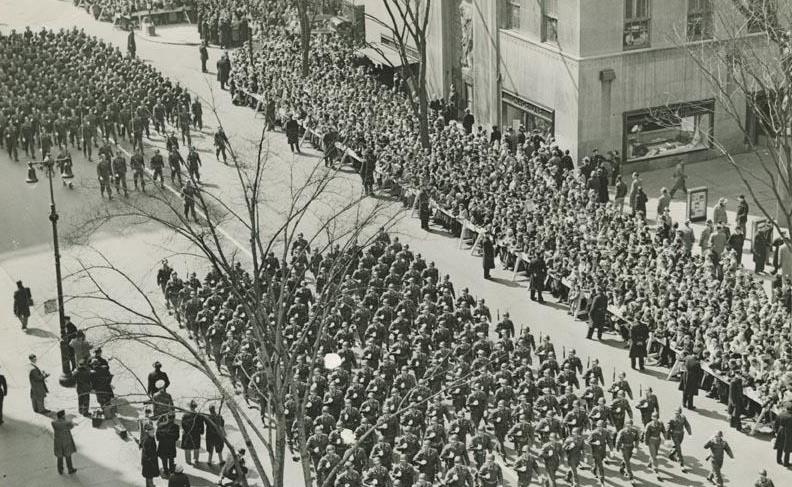
Discussion: Saint Patrick’s Day Parade & Controversy


sold2

Links for information and the news:

The New York City Saint Patrick’s Day Parade
Gay Groups to March in St. Patrick’s Day Parade as a Ban Falls
St. Patrick’s Day Parade Announcement Isn’t Progress — It’s an Insult to NY’s Irish LGBT Community
When Catholic Leaders Abandon the Faithful
NY archdiocese should sever ties with St. Patrick’s Day parade
Gays, Jesus and St. Patrick’s Day

Cardinal Dolan Responds to Controversy on His Blog

SEAMUS:

What are your thoughts, Father Joe? The blogosphere is in a terrible commotion, for and against the inclusion of a LGBT contingent in the parade. There is a lot of name-calling and other voices are remaining strangely silent.

FATHER JOE:

At a time when Catholics are dying for Christ, is this issue worth the attention it is getting?

But okay, I am not sure what to think or say but I will try.

As a preamble to my thoughts, it is too bad that many critics have lost the art of civil discourse.  As with politics, when people disagree with each other these days they end up demonizing the other side. Our nation and Church are being ripped asunder by polemics and ad hominem attacks.  It resolves nothing but makes fellow citizens into hardened enemies and threatens the Church with a virtual schism.  I know what the Church teaches, but of course, as the good Pope tells us, this must be measured with charity.

Like many conservative voices, by temperament I would also like to strike out and keep Catholic events pure; but as I get older, I worry that a lack of tact could alienate souls that might yet be saved. There is a tension in balancing our witness to the truth with the forgiveness of sins. I can exhort, condemn, and correct— at least addressing sins if not sinners; but maybe time and space is needed for certain sinners to reflect, know mercy and find healing?  I have serious misgivings about the decision in New York, but beyond this parade I have long had concerns about the association of St. Patrick’s Day with ribald antics and public drunkenness.  It seems like a terribly poor manner to remember a great saint of the Church.

MICHAEL:

Time for healing? Am I hearing right? Have you been seduced by the “Church of Nice”? These dissenters are not interested in healing. They get angry when you call them sinners. They want acceptance and they want to change the Church. Some of them would like to see the Church disappear.  We cannot compromise with them.  There is no such thing as a partial Catholic.  You are either in the boat or out.  It is scandalous that a Cardinal of the Church should assert that homosexuality is no big deal.  These [words deleted] are headed straight for hell and those who pamper them will risk going with them.

FATHER JOE:

Is the scenario you present entirely the case?  When Catholic voices are demanding separation and asylum from such public events, are they not giving our enemies precisely what they want?  A dead Church or a Church in hiding is still a win scenario for those who hate her and want the Church gone.  Cardinal Dolan insists that we must find a new language and/or way of dealing with the advocates of homosexuality, divorce-and-remarried persons, users of contraception and even those who wrongly accent freedom over the sanctity of human life.  When asked about how one might both affirm gays and still oppose so-called same-sex marriages, he honestly replied that he did not know yet.  It seems to me that he is grasping for a new hermeneutic that would not betray our core principles.  I cannot say for sure if it is possible.  Personally, I doubt that accommodation will work and fear it will make matters worse.  But he is still a successor of the apostles and must be given the respect as such.  We may suggest that there is a disconnect between the new praxis and the enunciated principles; but it would be wrong to suggest any formal detraction from Catholic moral teaching.  Like the Pope, the Cardinal is Catholic.

MICHAEL:

We need more courage from our shepherds. Priests should speak out!

FATHER JOE:

Priests are men of the Church. Years ago I was told that strong words of mine hurt and embarrassed one of our important shepherds. I am wounded by this memory. Priests, in particular, owe their bishops both RESPECT and obedience. The Church must speak with a unified voice. While seeking to avoid scandal, we should support our pastors and bishops, even when we fail to see things entirely their way. There has to be confidence that the Holy Spirit still guides our shepherds and protects the Church.  This struggle to be faithful and respectful is often hard.  The matter of pro-abortion politicians routinely taking Holy Communion have many times brought me to tears during prayer.  I have long agonized over what I personally feel we should do (withhold the sacrament) over what we are directed to do by just authority.  But as I wrote before, priests are men of the Church.  They pledge respect and obedience, not only to God but to their bishops and their successors.  They must do and say as they are told.  The late Cardinal Hickey was very clear about this and he spoke about how we are extensions of the bishop’s ministry.  While this can be taken too far, his assertion was theological sound.  The laity have a certain latitude that ordained men do not.  However, even they should not breech themselves from their shepherds.  We must all be faithful to the teaching Church; conservatives (to use a political term) have generally been better at this than the more liberal or progressive voices.  But once the lawful Magisterium is attacked, one is no better than the other.

I am sickened by the recent negativity focused upon Cardinal Dolan and how certain voices on the right harshly ridicule Pope Francis. We do not get to pick our Popes. And, as I tell my traditionalist friends, we immediately follow living Popes, not dead ones.  Our support for Church leadership means respectful and civil dialogue, and never recourse to fearful muted criticism or caustic public ridicule

MICHAEL:

I think you are being naïve. Truth is truth and sin is sin. If church leaders compromise themselves and the saving message then the laity should call them out. You never used to mince words!  You’re not the Father Joe I used to know.

FATHER JOE:

Did you ever know me? I am a faithful son of the Church. I took a promise to obey my bishop and his successors. I will be judged as to how I keep that pledge. As for you and the laity, be careful that you do not forget yourselves. You can no more tell Church leaders their business than can the liberal dissenters. Have you forgotten your place? You are not the Magisterium. You cannot defend Catholicism by discarding a major element of her hierarchical nature. This is a common mistake these days, from critics on the right and left. It damages the harmony and good order of the Church.

SEAMUS:

There may be a lot about this parade business to which we are not privy. It is easy to criticize when the weight of such decisions rests on the shoulders of others. The planners and the Archbishop may be in a situation where no decision will please everybody.

This parade is older than the United States and its continuation is in jeopardy. No one wants to be labeled as the person who killed it. The planners’ concession admits that the parade mimics the messiness of our world and society.

FATHER JOE:

Sinners and saints are mixed together. People and relationships are broken. Dreams are made and others are left unrealized. Is it enough to witness within this “messiness” or do we circle the wagons and refuse to associate with the world around us? Jesus went out to the poor, the oppressed, the sick and hurting.

SEAMUS:

He associated with tax-collectors and sinners, even prostitutes. While we must never forget our message and the truths of faith— might this be an opportunity to draw prodigals home?

MICHAEL:

Jesus also called the hypocritical Jewish leadership, “blind guides” and “dead men’s bones.” He refused to even speak with Herod.  When Jesus related to the rabble it was always for purposes of bringing them to repentance and conversion. Where is that here? This “who am I to judge” nonsense from Pope Francis is like an Ebola epidemic spreading throughout the Church. How can we condone activity that will cast souls into hell? It is a lie to perpetrators and an enticement to others to join the procession, or in this case the parade, marching into the mouth of Satan.

FATHER JOE:

There will always be some who will exploit and reject our faith message. While we might argue about a prudential decision here; there is no evil intent from the organizers, Hibernians or the Archbishop. There is no denial of Church doctrine. The Church has been clear and consistent about her teachings in the public forum on human sexuality.  I doubt people will forget this any time soon.  The mechanisms of authority and truth will protect her from going in the direction of our confused Episcopalian brothers and sisters.

Our Lord saw many new faces following him after the multiplication of the bread and fish. Not all followed for the right reason, but he did not stop them. He lamented that some were only interested in the free food. When the real demands of his preaching were voiced, they abandoned him.  It will not be the presence of sinners that will destroy the parade, not as long as we make it clear what is right and wrong.  If we remain resolute, those unhappy about the overall Catholic message will eventually fall away on their own initiative.

MICHAEL:

No doubt some of those who abandoned Jesus were among the crowd that shouted, “Crucify him! Crucify him! We have no king but Caesar!”

FATHER JOE:

Yes, I suspect so, but that is the chance you take.

SEAMUS:

We are still battling with Caesar. As individuals and as a Church we may face further recrimination and abuse. But that seems to me to be part of the package Jesus gives to his followers.

FATHER JOE:

Returning to basics, what does it mean to be Irish? Some treat being Irish as if it automatically makes one a member of the Catholic club. But those days are over, both here at home and back in the ancient homeland itself. The nation that converted much of the world is now closing seminaries and being ministered to by priests from Nigeria. Scandal and secularism have destroyed in a decade or two what centuries-old British persecution was never able to accomplish.
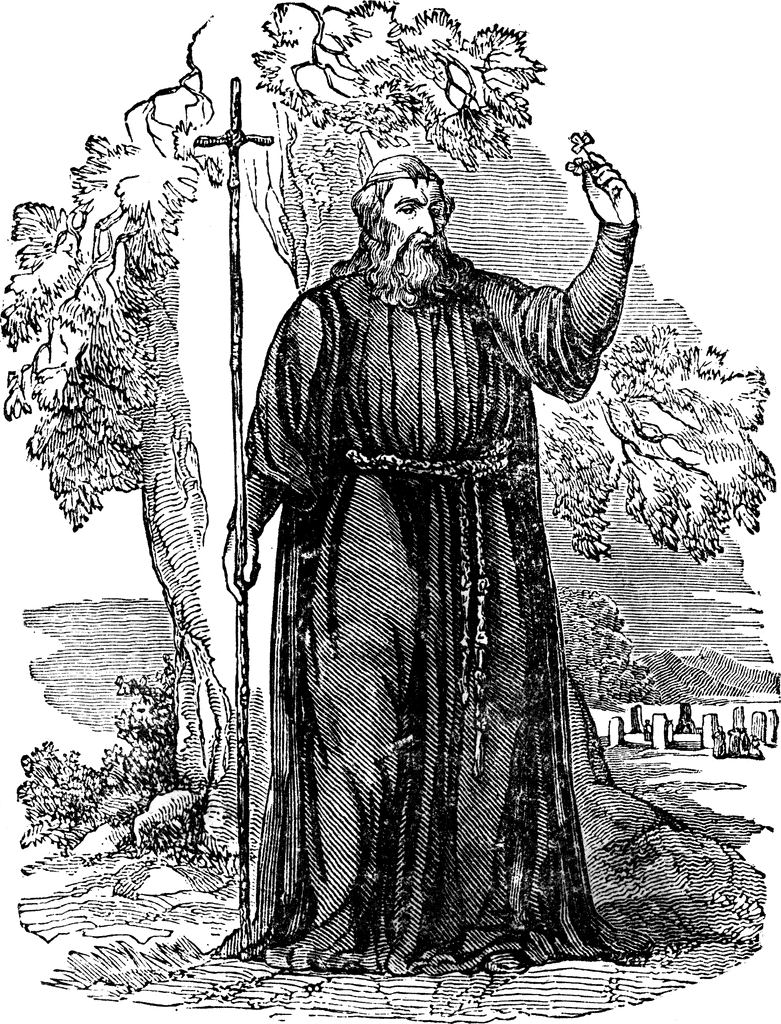
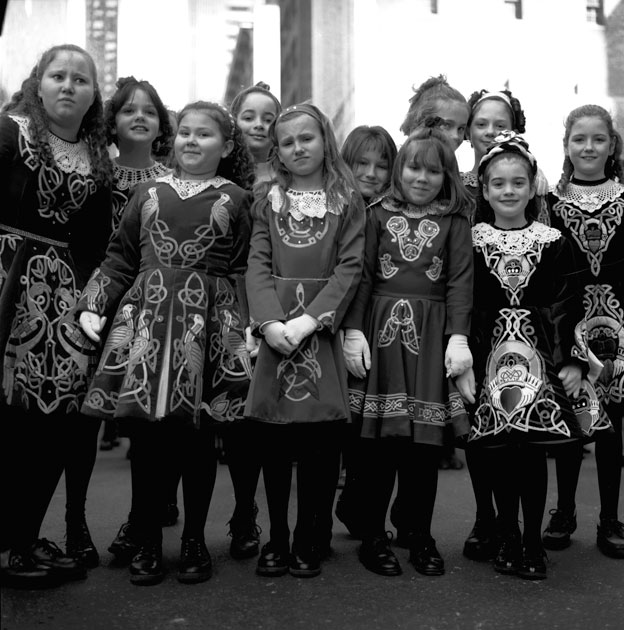
st_patrick_19646_lgI like parades, and I would not mind tripping up a leprechaun and making a wish upon his gold at the rainbow’s end, but as with Santa Claus and the Easter Bunny, my emphasis would always be upon Christ and his saints. There is nothing wrong with a pint of green beer. But it does bother me that these accidentals to St. Patrick’s Day should displace going to Mass, seeking God’s mercy and receiving (with the proper disposition) the Blessed Sacrament. St. Patrick was a slave who found his freedom and then came back to the Emerald Isle so that those in slavery to sin might know true freedom. Those who ignorantly worshipped trees would now come to the dead tree of the Cross and adore the one who laid down his life to redeem us. The Irish suffered the destruction of their monasteries and saw their priests humiliated, hunted and murdered; and yet, they still held on to the faith. They suffered starvation and dire poverty, coming to this nation for a new start. Signs advertised, “No Irish Wanted,” and yet they endured prejudice and worked hard to be good citizens and Christians. They had babies and Irish families were large and happy. It may be that traditions of family are among the greatest gifts they brought to this land. Remembering their past, they worked for a better tomorrow for their children. Folklore says that St. Patrick drove out the snakes from Ireland. May we never compromise ourselves with the serpent that began the woes of men in the primordial Garden.

MICHAEL:

Here in the States, many of the Irish have lost their sense of guilt over sin and have increasingly replaced the substance of faith with green beer and fancies about leprechauns, rainbows, pots of gold and wearing the green.

SEAMUS:

How closely have you both followed the news in New York? There have been a lot of “fighting words” over the decision by the organizers to allow a gay contingent under their own banner into the St. Patrick’s Day Parade.

MICHAEL:

This had long been resisted as incompatible with the Catholic faith.

FATHER JOE:

Actually, it was initially denied because of a conflict with public morals and decency. Today the winds of public opinion have evidently changed direction.

SEAMUS:

But it remains a celebration named after a saint. Is this not a kind of blasphemy? Does it mean that the faith is no longer regarded by the organizers as an intrinsic element of Irish identity?

MICHAEL:

Precisely!

FATHER JOE:

I am no mind-reader but I take the organizers for their word that the issue of faith is still important.  It might simply be an overture of peace to Irish men and women who struggle with their gender identity and yet still want to celebrate their ethnic roots. At least I hope so. But admittedly, I am fearful that a goodwill gesture will be turned against us.

SEAMUS:

The parade committee stated that its “change of tone and expanded inclusiveness is a gesture of goodwill to the LGBT community in our continuing effort to keep the parade above politics.” The statement also reiterated that the event was “remaining loyal to Church teachings.”

MICHAEL:

Empty words— that is all they are.

1698acc0

FATHER JOE:

No, I think they mean what they say.  Cardinal Timothy Dolan, the incoming Grand Marshal, acknowledged that the parade committee “continues to have my confidence and support.” He apparently agrees that a measure to keep the peace and to preserve the city parade does not signal religious dissent on the part of the Hibernians or the parade organizers. However, it may not bode well for future negotiations with the more radical groups.  A rash conciliation today could lead to a more severe divide tomorrow.

MICHAEL:

That last remark is quite an understatement.

SEAMUS:

Right now, one somewhat moderate gay group affiliated with the media that broadcasts the parade is involved: OUT@NBCUniversal. They will march under their own banner. The expectation is that they merely want inclusion to celebrate Irish ethnicity and heritage.

MICHAEL:

Don’t be fooled!

FATHER JOE:

Hopefully this will be given a greater weight than any promotion of same-sex attraction; however, I suspect much of the talk and media attention will focus on their homosexuality. It has the potential to kidnap the meaning of the parade.

SEAMUS:

I suppose so, if not this time around then possibly in years to follow.

FATHER JOE:

It is my hope that pages will be taken from the late Cardinal John O’Connor’s book.  He was a strong defender of Church teaching on sexual morality and yet he was a compassionate man.  He volunteered to clean bedpans at an AIDS hospice.  He suffered with calm and composure having a gay activist spit the consecrated host into his face.  He regularly had supper with his Jewish friend, Mayor Ed Koch, on the other side of the divide upon many issues.  We can be strong and still work with one another.  He also knew that some might never come to the truth unless strong stands are made.  Cardinal O’Connor explained his opposition to allowing groups identified as gay from marching in the parade, “Irish Catholics have been persecuted for the sole reason that they have refused to compromise Church teaching. What others may call bigotry, Irish Catholics call principle.”

MICHAEL:

It was admitted that other gay groups would be permitted in the future. What if there should be dozens of gay applicants, each demanding its inclusion? What if participants should become increasingly brazen and vulgar? Will there be a forum to vet costumes, gestures, signs and float designs? Would such be judged as censorship? Will opposing groups get to march, carrying signs and banners for traditional marriage? Once a group that defines itself chiefly by its sexual orientation is permitted, then what about future scenarios where advocates for polygamy, bestiality and pederasty will want their place in the line up? Do I exaggerate?

FATHER JOE:

You do, indeed, paint a nightmare picture of escalating corruption of the parade and its basic meaning. I pray that some semblance of control can be maintained but what was once regarded as unthinkable is realized every day. It is sometimes joked, “Expect the worse and you will never be surprised or disappointed.”

SEAMUS:

I guess I would have less a problem with the concession if past lewdness and/or belligerence were not so often displayed by protesters with their explicit banners, gestures and decorated floats.

MICHAEL:

Evil is incapable of controlling itself.

FATHER JOE:

Such images can torment the conservative mind. Gays were always free to march as individuals, but not under banners that advertised their disorientation. The fear was this would politicize the event. Unfortunately, their exclusion did the very same thing.

MICHAEL:

I bet other more militant gay organizations will not be satisfied. They may even interpret the small concession to one group as an insult. Their angry agenda will not be appeased until the basic meaning of the parade is transformed beyond recognition. Like the Red Army parading its soldiers and missiles, they want to see their victorious legions marching in drag while shocking the crowds with public passion.

Proof for what I say:   https://www.youtube.com/watch?v=l3XjSsqd1rM

FATHER JOE:

I recall a NOW rally on the Mall many years ago which included such visual and vocal expressions of foul gay exhibitionism that the liberal Washington Post press took offense and CSPAN refused to repeat the program, at least during the family hour. You are correct, we have seen poor displays of manners and it even embarrasses the more civil and family-minded homosexuals. When a gay activist several years ago spat the consecrated host back into Cardinal O’Connor’s face, several came to me with utter shame to be associated with such reprobates. They were members of COURAGE, started by my cousin, the late Fr. John Harvey. They embrace a life of celibate love, prayer and service.  I wonder why they have no contingent in the parade, given that they abide by Catholic moral discipline?

MIKE:

Unfortunately these men and women have a very low profile compared to most. Stereotypes are realized and literally thrown into the faces of others: “Accept us or else!” When it comes to these militant gays, theirs is not a celebration of faith and heritage, because many of them hate the Church.

FATHER JOE:

I have read already that some of them think OUT@NBCUniversal is a rouse to keep them quiet and to restore the beer sponsors. I had never heard of it but it seems to be a small amalgamation of gays and straights that share basic values and want to keep the parade a family show.

MICHAEL:

Evil is evil. They are painted in the same sickening colors.

SEAMUS:

Still, I think it hardly compares at all with a number of other groups biting at the bit to participate, like the so-called Irish Queers.

FATHER JOE:

Even there name is wrong and offensive. None of them can begin to compare to a group of faithful sons of the Church like the Ancient Order of Hibernians. The AOH is “the oldest Catholic lay organization in America and is dedicated to Friendship, Unity, and Christian Charity.” The statement was released: “Organizers (no longer strictly AOH) have diligently worked to keep politics – of any kind – out of the parade in order to preserve it as a single and unified cultural event. Paradoxically, that ended up politicizing the parade.” While we can individually question the prudence of the current decision, I could certainly see how it fits into its appreciation of Christian charity. The problem will remain that others will view it as a matter of obligatory justice, at least as understood by a secular society.

SEAMUS:

Cardinal Dolan referenced the second theme by saying that he hoped the parade would be “a source of unity for all of us.” I pray that it will be so, but I fail to see how it will not be a strained unity.

MICHAEL:

How can we have unity with devils? Mortal sin breeches any viable communion between us.
St-Patricks-Day-Beckman1

FATHER JOE:

Timothy Cardinal Dolan has caught a lot of flak for his involvement and support of the organizers. But he knows too the hearts of the good men among the organizers and of the AOH. We live in a society where we must live together despite ever widening divergences of beliefs and moral practices. The dynamics to this are complicated. Do we retreat to the ghetto so as to be untainted by the world or do we throw ourselves into the mix as a living ingredient of the melting pot? The former would minimize our voice in the public forum, the latter might risk our deformation.  The answers are not as easy as some make out.

Cardinal Dolan has responded to the controversy on his blog:

However, the most important question I had to ask myself was this: does the new policy violate Catholic faith or morals? If it does, then the Committee has compromised the integrity of the Parade, and I must object and refuse to participate or support it.

From my review, it does not. Catholic teaching is clear: “being Gay” is not a sin, nor contrary to God’s revealed morals. Homosexual actions are—as are any sexual relations outside of the lifelong, faithful, loving, lifegiving bond of a man and woman in marriage—a moral teaching grounded in the Bible, reflected in nature, and faithfully taught by the Church.

So, while actions are immoral, identity is not! In fact, as the Catechism of the Catholic Church reminds us, people with same-sex attraction are God’s children, deserving dignity and respect, never to be treated with discrimination or injustice.

To the point: the committee’s decision allows a group to publicize its identity, not promote actions contrary to the values of the Church that are such an essential part of Irish culture. I have been assured that the new group marching is not promoting an agenda contrary to Church teaching, but simply identifying themselves as “Gay people of Irish ancestry.”

MICHAEL:

I think the matter is black-and-white clear. But the “Church of Nice” is too far gone to see it. Liberality and pacifism rule the day. Those who would speak the truth cower to intimidation. If it is OUR parade then we should just tell the gays to stick to their own. Must they own two New York parades? The mayor can march for them and they can keep the beer and television rights, too. Must everything Catholic be spoiled?

SEAMUS:

The Cardinal states, “Neither my predecessors as Archbishop of New York nor I have ever determined who would or would not march in this parade… but have always appreciated the cooperation of parade organizers in keeping the parade close to its Catholic heritage.”

FATHER JOE:

Honestly, I must acknowledge that I find the expression “Catholic heritage” a tad weak. Many colleges advertise their Catholic “heritage” and “tradition” long after abandoning the Church and any emphasis upon sacraments and holiness. Is a Catholic heritage the most for which we can hope in this broken world? My hope would be, as ridiculous and unlikely as it might sound, that events like the St. Patrick’s Parade would be an overwhelming expression of Christian faith, winning converts and praising God as it proceeds under the massive skyscrapers.

MICHAEL:

Good luck on that one!  It may remain a cultural event but the religious significance has been killed.

FATHER JOE:

I understand where you are coming from and I sympathize, but let me finish. Personally, I would like to see the nature of the parade restored to its religious roots.  Our desire for inclusion and the benefits from commercial sponsorship (as with beer companies) has escalated the secularization of the celebration.  I suspect that if it returned to its pious foundations, the parade would be much smaller and many dissenting groups would want no part of it.  The problem we face would largely take care of itself.

What would I like to see?  Like the processions of old, in my mind’s eye, I can imagine a brilliant monstrance carried down the thoroughfare with believers falling to their knees as it passes. Next we would witness relics of hundreds of saints carried in procession and finally a beautiful float with the Blessed Mother, adorned with flowers. Hymns and chants to Christ and Mary would fill the air. Altar servers in vesture would stretch the length of the parade. Priests and people, mindful of what they really celebrate, would enter St. Patrick’s for Mass and all the other churches would be filled as well. Large screens throughout the city would televise the procession and liturgy. Millions of people would honor the great patron saint and proclaim that Jesus is Lord.

MICHAEL:

And they say I am detached from reality. A secular world knows that New York is a godless city. Radical Islamists have attacked what they judge as the home of the Great Satan. I wish things were different, but yours is a silly dream, detached from any semblance of reality.

FATHER JOE:

I know it is not the city we know now, but how about tomorrow? I still believe in the God of miracles. He can heal bodies, change minds and convert hearts.

St. Patrick, do not forget your spiritual children!

O blessed Archbishop Sheen, intercede for us!

Faith Challenged By Scripture

angrycrowd

A person who is struggling with faith wrote the following:

I was raised “catholic” but now I am considering leaving “catholicism” along with belief in “god.” I honestly cannot come to believe in “god” anymore. I used to be such a fervent believer in him but I have come to the realization that I no longer believe in him. The more I read the “bible” and verses like the ones below the more I become disillusioned with Christianity.

Deuteronomy 25:11-12 / Genesis 38:8-10 / Deuteronomy 21:18-21 / Exodus 35:2 / Leviticus 20:13 / Isaiah 13:13-16 / Exodus 21:20-21 / 1 Timothy 2:11-12 / Colossians 3:22-23 / Luke 14:26 / Deuteronomy 22:13-21 / Isaiah 40:8

This does not seem like the “word of god” to me— of a being who is supposed to be all knowing and perfect. Rather it is the work of an individual with a primitive way of thinking. Many times I tried to convince myself that the “god” of the Old Testament was different but sadly that is not the case since most Christians believe that “god” is eternally unchanging as is expected of a perfect ‘know it all’ being. I have many more problems with the “bible,” including inconsistencies with history and science. I also don’t like the fact that everything in the “bible” has to be watered down especially the negative portions. Why can’t I just read it for what it is, why does it have to be read metaphorically. When Jesus said that we should love our neighbors as we love ourselves I understood the message loud and clear. So why are other portions, which are just so ridiculous, have to be read symbolically or metaphorically? I honestly cannot believe in “god” anymore. I tried but I just can’t bring myself to honestly and sincerely believe anymore. I don’t consider myself an evil person but the more “scripture” I read the less I believe.

Here is my response:

First, the Bible is not dictated word for word in a manner that invalidates the learning and life experiences of the human authors. The nature of the instruments (as human beings) has to be respected. Anything more controlling would be a form of possession, and that devilish business undermines human dignity. We are men and women, not pencils. The light of God’s truth shines through but as through the prism of the human condition. We see this ultimately with the incarnation and the one who is the Light of the World. Consequently, the coarseness and cruelty that upsets us in the Old Testament says more about mankind and sin than it does about God. The passion and death of Jesus is his confrontation with such a mindset. What was tolerated before is now challenged so that it might be healed and perfected.

Second, we must acknowledge that the Bible was written by many authors, exhibiting many styles, over a great deal of time and in many places. The oldest books may go back as far as the 16th and 12th century BC. The Scriptures also contain many forms of literature: histories, speeches, prophecies, legal codes, parable stories and mythology, poetry and hymns, etc. One must understand what one is reading if it is to be interpreted correctly. Jesus gave us a Church so that the truths of faith might be faithfully transmitted without dilution or corruption. While it is inspired by the Holy Spirit, this same Spirit in the Church preserves the truth. The Holy Spirit also grants us the gift of faith. The Bible is not a manual on how to live your life. The Bible is not a science book. It is a library of books that chronicles God’s activity in salvation history and our response. You should not make the Bible out to be something it is not. If you want an easy listing of moral certainties then pick up the universal catechism of the Church.

God as a perfect Spirit is unchanging and has within himself all perfections: knowledge, power, goodness, holiness, eternal, etc. But God must communicate with us in time. All we know is change. One day we are a child and the next we look into the mirror and see wrinkles and white hair. God enters the human family: the Word becomes Flesh. He suffers and dies for you and me. Jesus is the ultimate revelation of the Father. He lowers himself to our level so that we might better know and love him. While you like his words about love, you are ready to renounce Jesus as a divine Person and his real presence in the Eucharist. Why are you more willing to see mankind as a cosmic accident than as a providential creation with an eternal destiny? That is not much of a trade-off.

Old heresies often raise their ugly heads. Marcionism was a dualism insisting that the “harsh” and “bloodthirsty” deity of the Old Testament could not be the same as the “loving” Father of Jesus. This view was rightly condemned by the Church. Jesus is the long-promised Messiah and even our Lord says that “salvation comes through the Jews.”

I would like to say that man’s capacity to understand grows but I am often amazed at the depth of ignorance and error, even in the modern world. The deity of ISIS Islamic extremists is a throwback to the view of God as one of law over love, of forced conversions, and of espousing death to infidels. By contrast, the God of truth, justice and mercy is reflected in the courageous men and women who are tortured and beheaded for their Catholic faith and for the love of Jesus. While you reject God because your interpretation will allow no clash in models; the Christian martyrs witness to the truth with courage. They embrace in their agony what you throw away in your leisure.

Genesis 38:8-10

Then Judah said to Onan, “Have intercourse with your brother’s wife, in fulfillment of your duty as brother-in-law, and thus preserve your brother’s line.” Onan, however, knew that the offspring would not be his; so whenever he had intercourse with his brother’s wife, he wasted his seed on the ground, to avoid giving offspring to his brother. What he did greatly offended the LORD, and the LORD took his life too.

Often cited against the sin of masturbation and/or coitus interruptus, the situation again reflects an ancient code (pagan and Jewish) about raising a child up for one’s dead brother. Onan has no problem with enjoying the sexual act, but his selfishness will not allow a child to be conceived. If there is no progeny then no inheritance will have to be shared with his brother’s family. While Christians do not follow this legal code, and would object to such an understanding of the marriage bed, we can see in the story a divine negative verdict against those who would separate the conjugal act from its natural fertility. In any case, Onan is disobedient to what he perceives as his obligation under the law. Disobedience always invokes a reckoning. Given that he acts against life, his life is demanded of him. Remember that God is the author of life. We belong to him. If he should demand our life, it is his right.

Exodus 21:20-21

When someone strikes his male or female slave with a rod so that the slave dies under his hand, the act shall certainly be avenged. 

If, however, the slave survives for a day or two, he is not to be punished, since the slave is his own property.

The ancient world kept slaves. These rules here were to make the masters of men accountable. While we disagree about such bondage, we can appreciate the yearning for justice. There is still slavery in certain parts of the world. The seed of freedom planted in the New Covenant would take a while to germinate and grow. Christians were urged to treat slaves as brothers and sisters in Christ. Later slavery was tolerated until that time that debts were paid off or savages were civilized and given the true faith. Popes condemned slavery in the 1600’s and yet it would remain an institution in the United States until 1865. Dissent is not something new, as today the full humanity of the unborn is compromised. It became ever clearer that in Christ all are given grace and regarded the same— Jew or Gentile, free or slave, man or woman— all possess a precious dignity. Freedom is our birthright as children of God and everyone has natural rights. Here is one of the clearest instances of the organic development of doctrine.

Exodus 35:2

On six days work may be done, but the seventh day shall be holy to you as the sabbath of complete rest to the LORD. Anyone who does work on that day shall be put to death.

This is part of the Decalogue, although later Jews and Christians would not have any part of a death threat. Ancient peoples often attached the death penalty to matters they wanted obeyed— Canaanites did this, the Egyptians, the Babylonians, and of course, the Romans, etc. The preference would be to imitate God because we want to be like him or because we love him. This particular law also reflects the human condition. Men need rest just as they require work. This law would prevent men from being forced to labor without a day of rest where they could worship God and find their leisure. Today we have forgotten this and poor people are sometimes forced to work seven days a week to put food on their tables and to care for their families. We live in a world which no longer either loves God or fears him.

Leviticus 20:13

If a man lies with a male as with a woman, they have committed an abomination; the two of them shall be put to death; their bloodguilt is upon them.

We should not get caught up with the death penalties enacted by the ancient peoples. While we find it abhorrent, the emphasis is on the accompanying value, not the censure. When you do not have jails and are desperate to keep an organized society, societies typically enact harsh measures. This proposition here comes as part of a much longer list, each with a similar penalty: occult worship (6), dishonoring parents (9), adultery (10), incest (11 & 12), and bestiality (15). Here the prohibition is against the sin of homosexuality. Are you upset because the Scriptures and the Church teaches against homosexuality? Catholicism would say it also conflicts with the natural law. We must love our disoriented brothers and sisters; but we cannot give our approbation for immoral behavior. Those who are truly homosexual are called to lives of celibate love and service. How do you feel about the other sins listed? They have their advocates just as homosexuality did. During my lifetime there has been a major paradigm shift. That which was almost universally regarded as abhorrent and criminalized is now esteemed by our secular humanistic society as a basic right. The Church cannot dismiss objective truths so easily or because of the changing fads and fashions of the day. Doctrine can develop, but a reversal here would be in stark conflict with what came before. The accidentals of faith can sometimes change, the substance cannot.

Deuteronomy 21:18-21

If someone has a stubborn and rebellious son who will not listen to his father or mother, and will not listen to them even though they discipline him, his father and mother shall take hold of him and bring him out to the elders at the gate of his home city, where they shall say to the elders of the city, “This son of ours is a stubborn and rebellious fellow who will not listen to us; he is a glutton and a drunkard.” Then all his fellow citizens shall stone him to death. Thus shall you purge the evil from your midst, and all Israel will hear and be afraid.

Again, note that we are not under the many Hebraic laws but saved by faith and the Lord’s gift of grace. These dictums do not apply to Christians. The ancient society to which they applied no longer exists. While capital punishment clashes with the Church’s ethic for life, what was it that the people of old were seeking to foster? First, this passage is not in reference to a small child but to an adult (man). Second, his rebelliousness is not over minor issues. He is self-preoccupied to the extent of neglecting his parents and the community. He is abusive and dangerous. The stakes were high, life and death. It may be that the threat of ultimate punishment turned many of these men around. The law here was connected to a religious society. They did not make a distinction between secular or civil law and religious tenets.

Deuteronomy 22:13-21

If a man, after marrying a woman and having relations with her, comes to dislike her, and accuses her of misconduct and slanders her by saying, “I married this woman, but when I approached her I did not find evidence of her virginity,” the father and mother of the young woman shall take the evidence of her virginity and bring it to the elders at the city gate. There the father of the young woman shall say to the elders, “I gave my daughter to this man in marriage, but he has come to dislike her, and now accuses her of misconduct, saying: ‘I did not find evidence of your daughter’s virginity.’ But here is the evidence of my daughter’s virginity!” And they shall spread out the cloth before the elders of the city. Then these city elders shall take the man and discipline him, and fine him one hundred silver shekels, which they shall give to the young woman’s father, because the man slandered a virgin in Israel. She shall remain his wife, and he may not divorce her as long as he lives. But if this charge is true, and evidence of the young woman’s virginity is not found, they shall bring the young woman to the entrance of her father’s house and there the men of her town shall stone her to death, because she committed a shameful crime in Israel by prostituting herself in her father’s house. Thus shall you purge the evil from your midst.

Do you not remember the story of the woman caught in adultery and how Jesus challenged the angry crowd? He said, “Let him who is without sin cast the first stone.” They all walked away. Jesus came to bring mercy, even when the woman was guilty. He also preached against divorce, something that is affirmed here. You wrongly get caught up in the graphic elements. All these things must now be viewed in light of Christ. How is it then that these elements of ancient Judaism would cause you to dismiss your faith in Jesus Christ? Either you have not thought this through, or this whole comment with citations is a ploy from a non-believer to ridicule the faith.

Deuteronomy 25:11-12

When two men are fighting and the wife of one intervenes to save her husband from the blows of his opponent, if she stretches out her hand and seizes the latter by his genitals, you shall chop off her hand; show no pity.

And how often do you suppose this actually happened? The religious gravity is not cruelty but upon the gift of fertility and respect for manhood. Destruction of a person’s faculty in the transmission of human life was regarded as a serious crime. It robbed a man of his posterity and remembrance. Remember, the early Jews had a poor understanding of an afterlife. They placed the emphasis upon children and property. This is one of many civil laws that were not unique to the people called by God. It is merely an ancient legal code. God calls us from where we are with all our ignorance or sophistication. Notice the law that follows it forbids carrying different weights in your traveling bag, so that men might not cheat each other when scales are used in purchases. The code that proceeded about marriage would mandate marriage within a family to carry on a brother’s name and linage. As with the Mosaic code on divorce, this would conflict with Christ’s teachings on the nature of marriage. Jesus would speak about their hardness of hearts. God’s passive will tolerates certain weaknesses and sins because of the freedom he gives us. We are not ants or robots. Not everything in the Old Testament reflects God’s direct will. The Bible is not a manual or rule book. It is a chronicle of salvation history. You have to read it as such and place the emphasis upon Christ and the teachings of his Church. God shows us his face and his will over time. While the deposit of faith is now fixed, it develops through our reflection and deepening understanding.

Isaiah 13:13-16

For this I will make the heavens tremble and the earth shall be shaken from its place, at the wrath of the LORD of hosts on the day of his burning anger. Like a hunted gazelle, or a flock that no one gathers, they shall turn each to their own people and flee each to their own land. Everyone who is taken shall be run through; and everyone who is caught shall fall by the sword. Their infants shall be dashed to pieces in their sight; their houses shall be plundered and their wives ravished.

This is part of a collection of oracles from various sources that focus upon foreign nations. While God’s people were indeed guilty of barbarism (we even see this in the psalms), the point here is divine retribution and judgment. The emphasis is that death will overtake everyone. There was also the appreciation that this existence is messy. There is violence and death awaiting us in a fallen world. Our life belongs to the Lord. Because of sin, we deserve to die. Jesus would fail to come as this kind of military Messiah. Rather, he brought mercy and not the sword. However, at the final consummation, he will be the true Pantocrator— the Lord of Judgment. Those who love the Lord need not fear. Those who disobey him have every right to be afraid. It does not mean that God directly desires child murder and rape.

Isaiah 40:8

“The grass withers, the flower wilts, but the word of our God stands forever.”

What do you find objectionable about this? It means that God’s Word does not forfeit its binding force. God keeps his promises. Did you write the wrong citation?

It is at this stage that you turn your disdain to the New Testament. Are you really a Christian? Were you ever?

Luke 14:26

“If any one comes to me without hating his father and mother, wife and children, brothers and sisters, and even his own life, he cannot be my disciple.”

This is an example of Hebraic hyperbole. It is an artifact of language. There is no exclamation point for emphasis. Jesus does not mean that we should literally hate our parents and family. That would be absurd. Jesus uses similar hyperbole when he says let the dead bury the dead or to pluck out your eye or cut off your hand. Jesus is actually saying that there is urgency to embracing the kingdom. Now is the appointed time. We should not delay or even allow familial relations to inhibit our acceptance of the Gospel. Jesus takes the family, our most prized human institution, and says that even that should not get in the way of following him. Note that Peter and Andrew left everything to follow Jesus. The boats would have to be used by other family members or friends for fishing. Jesus was making his apostles into fishers of men. It must also be said that in the early days of the Church, pagan families often opposed and tried to block the conversion of members. The words of our Lord would urge strength in the face to opposition and even betrayal.

Colossians 3:22-23

Slaves, obey your human masters in everything, not only when being watched, as currying favor, but in simplicity of heart, fearing the Lord. Whatever you do, do from the heart, as for the Lord and not for others, knowing that you will receive from the Lord the due payment of the inheritance; be slaves of the Lord Christ.

Paul did not invent the institution of slavery but Christianity was altering it. Master and slave have the same dignity. This must be measured with verse three: “Here there is not Greek and Jew, circumcision and uncircumcision, barbarian, Scythian, slave, free; but Christ is all and in all.” Read God’s word in a contextual way. Often slaves had to work off just debts for their freedom. It was quite different from the tyranny of slavery in America. But as I said before, Paul’s words about our equality in Christ would eventually bring such subservience to an end. Here Paul is sharing his hierarchical view— one that still influences the constitution of Christ’s Church: wives subordinate to husbands (18), husbands love your wives (19), children obey your parents (20), and fathers do not provoke children (21). The mention of slavery falls within such a schema. We are all called to service. We are all servants or slaves of God. Even the Pope is called “the Servant of the Servants of God.” He is literally a slave for the Gospel and the Church. He lives not for himself, but for Christ and his people.

1 Timothy 2:11-12

A woman must receive instruction silently and under complete control. I do not permit a woman to teach or to have authority over a man. She must be quiet.

While it is doctrine that priests must be male, and I would cite this as apostolic evidence that such male leadership reflects the divine will, it probably refers to an immediate accidental about worship in the time of Paul. Not everything in Scripture and Tradition is unalterable doctrine. There are certain disciplines, even apostolic ones that can be abrogated. I think here about women’s dress or the mantilla veils that were once popular with women in church. Of course, today women are permitted to read the Old Testament and New Testament epistles in church. The citation here was principally concerning pagans or Gentiles who had recently converted. Women oracles and prophetesses (often possessed by demons) were a problem that Paul did not want to see translated to the churches. They would swoon, speak gibberish and cryptic remarks. Paul saw this as distracting from the truth of Christ. It may be that such women were seeking to wrestle authority away from the men who functioned as the legitimate shepherds.

You want a simplified or literal Bible and yet why should revelation be absolute baby talk? The things of God are far more complex than the inside of a car or computer. To reduce their repair manuals to what you would make the Bible would leave everything broken. It is past time to grow up. God’s Word is not broken, you are. We all are as sinners, me too. But in Jesus there is healing and salvation.

Inviting the Youth to Join and Supersede Us

jesu7

Second, the purpose of youth ministry is to ENABLE, not to entertain. It seems to me that much of youth ministry these days seeks to entertain; and yet, too much of their lives are already consumed by pursuing pleasure and gratification. Various synonyms for entertainment are telling: “beguile,” “distract,” “gratify,” “divert” and “indulge.” We do not want to beguile or fool our young people, but to have them encounter the truth. The last thing we want is any additional distraction when they need to be focused on the Lord. While there is a certain satisfaction with being in right relationship with God, this is a far cry from seeking pleasure for its own sake or selfishly losing ourselves in a contrived stupor, spiritual or otherwise. We need to work with our natural longing for purpose and meaning. It is here that we can share the compass setting toward Christ and the kingdom. We were made for God; nothing should divert us from this primary orientation.

Rather than wasting our time and resources on replicating worldly distractions; we should enable or equip or empower our young people with the power and promise of the Gospel. How do we translate these noble sentiments to the youth if we are not authentic and on fire? The youth minister or catechist is not properly an entertainer. Even if he or she is popular or a cult figure, what happens when he is no longer around? Some teachers try very hard to be hip. They will try to entice children with rewards for good behavior and for doing well on lessons. These teachers are also very quick to reprimand when students fail to respond to favors. Many teachers desire to be liked, a few would be satisfied with being feared, and yet the best ones imitate the posture of John the Baptizer, decreasing so that Christ might increase. We want to be successful, but it is by far more important that we be faithful. The true religious mentor witnesses the faith in word and action. He or she shares the faith in the hope that it will be contagious. We are all sinners needing God’s mercy. The ancient cry of the Church is echoed, “Repent and believe!” Youth may or may not like us; more importantly, they should be transformed ever more and more into the likeness of Christ. The good teacher wants his charges to know God’s grace and salvation. The devil could recite from memory the entire catechism— but he would spurn the love that God had for him. We want our charges to know the Lord and fall ever deeper in love with him. If we forget this part of the process, then we have missed the whole point. We seek to make the ground fertile for a saving encounter. God makes the offer; we hope that our youth will accept it. While only the Lord can save us; family, catechists and pastors have a part to play. God would have us be his instruments.

I recall a religion teacher many years ago who was considered dull and “not with it” by many of his fellow teachers. They thought for sure that he would be ineffective and would quickly quit. Instead of being wary of their own shortcomings, they gossiped about him. Later I took delight in their general shock when they noticed his pupils always talking about him in a positive light. Some of the youth saw their attitude and instead of joining in their critique or wanting him replaced, actually defended him. One child even said, “Those teachers always talk down about us, too; but he speaks to us as if every one of us matters.” Yes, he told corny jokes and spoke in a monotone voice, but the young people also recognized that he was authentic. He cared about them and did not pretend to be something he was not. When a couple of the boys were caught parodying his manner or style, he joined the laughter of their classmates. He knew how he was but what was important was sharing the saving faith. The kids began each class by reading about the important saints of the day or week. They took turns leading the class in prayer. They came to appreciate that they were also called to a relationship with Christ and to a holiness of life.

Youth ministry should not fall upon the shoulders of one or two volunteers. Rather, whole parishes with their pastors, catechists, families, and volunteers should engage the youth and others with the saving kerygma. Parishioners are urged to pass out our RCIA flyers for adults who might want to become Catholic or for Catholics missing sacraments. Parishioners are reminded of their need to catechize their children and to share this need with family and friends. I have heard people say that they do not want to nag others about their religious faith and responsibilities. Certainly, while we do not want to turn people off to religious faith, I suspect that a person who escapes hell and enjoys the bliss of heaven will be very thankful for a little well-meaning and needed nagging. We are all to proclaim the Good News. A failure to share the Gospel is a failure to love. If Jesus and the Church matter to us, then why would we not want to invite others to have what we have? Unlike other possessions, one can only hold on to a saving faith by giving it away to others.

Instead of always talking down to youth, we need to welcome and prepare them for full membership in our faith communities. We should not make Christianity easy or excuse opportunities for witness or service. Rather, we must make serious demands for discipleship. Yes, this would include activities and ministries like serving at the altar, reading from the pulpit, welcoming people at the church door, helping out at soup kitchens, volunteering to assist with the Special Olympics, tutoring kids who need help with their school work, cleaning up local streets, shopping for the elderly or doing other chores, visiting nursing homes, etc. It means shining with the LIGHT OF CHRIST in all the many ordinary things of life at home, at play, at school, at work and at church.

Is a reevaluation in order?  Are we really thinking with the mind of Christ when it comes to expectations for our youth? While knowledge plays a part, passing tests and good behavior are not immediately reflective of one’s spiritual status. How do Jesus and the teachings of faith inform the daily life and preoccupations of our youth? When kids can neither name the commandments nor the beatitudes then how can they live them out? If they have trouble understanding that Jesus is a divine person who becomes a human being to save us, then what exactly makes them a Christian? A believer (over the age of reason) must know who the Lord is and what he does for us. Jesus suffers and dies that we might be forgiven, healed and have a share in his life. We cannot save ourselves. Everything we have is gift and Jesus is the greatest gratuity of all.  Are our youth in regular prayerful communication with him?  Have we helped them in knowing how to pray and how to discern God’s will in their lives?  Are we where we should be in the spiritual life?

Our Lord wants us on fire with the faith. The Scriptures do not recommend any form of nominal Christianity. We read in Revelation 3:15-16:

“I know your works; I know that you are neither cold nor hot. I wish you were either cold or hot. So, because you are lukewarm, neither hot nor cold, I will spit you out of my mouth.”

Fanaticism is only really wrong when it violates charity. One cannot be too Christian or overly converted. And yet, adults and youth alike temper their Christianity as something that can be departmentalized or restrained by secular good manners. Christianity, at its very heart, is intolerant to sin, hypocrisy and error. We would not know this from the many ways that faith is compromised or hidden today. It is as if we are ashamed to be Christians. Young people face this temptation all the time, particularly in contemporary language, music, dance, clothing and relationships. It is easier or convenient to forget one’s Christianity when it gets in the way or calls for witness. We treat the faith like a hat that can be removed or exchanged; instead, it should be like the skin that goes with us wherever we go.

Our ministry with youth should be as fire seeking to ignite a candle. This fire is not an empty emotionalism or a pretense at youthfulness. We do not seek to be buddies with them but sentinels to the great lover of souls. The fire illumines Christ and communicates that we should encounter Christ. There is urgency to the Gospel that Jesus constantly referenced and which is pertinent to the work we do. We will only have the children for a short while. We must make the best of the time and resources we have. We need to help them to know and to love the Lord. We must give them the tools to proclaim the Gospel and witness to the faith. The faith is only real when it is being spread. When we keep it to ourselves, it begins to die— no, more than this— we begin to die.

We often catechize the youth to parrot back the right words regarding faith; more importantly, we want them to embrace the faith in an evangelistic manner. Our youth will face far more tensions and opposition than previous generations. They must be enabled to defend the faith with an apologetics based upon a spirit of ecumenism that never compromises the truth. Each according to his or her vocation, we are a priestly people and recipients of the great commission:

“Consequently, from now on we regard no one according to the flesh; even if we once knew Christ according to the flesh, yet now we know him so no longer. So whoever is in Christ is a new creation: the old things have passed away; behold, new things have come. And all this is from God, who has reconciled us to himself through Christ and given us the ministry of reconciliation, namely, God was reconciling the world to himself in Christ, not counting their trespasses against them and entrusting to us the message of reconciliation. So we are ambassadors for Christ, as if God were appealing through us. We implore you on behalf of Christ, be reconciled to God. For our sake he made him to be sin who did not know sin, so that we might become the righteousness of God in him” (2 Corinthians 5:16-21).

I was privileged to see something of this fire in college teens that walked down the east coast as Crusaders for Life. They well understood that the Gospel of Life means that every child is a reflection of the Christ Child. All life is sacred and there is no pro-abortion Christianity. Abortion attacks the very heart of the faith, the incarnation of Jesus Christ. One cannot rightly say AMEN to Jesus in the Blessed Sacrament while we deny the one made in his image within the womb. Sponsored by the American Life League, they were young and dedicated to this truth— so much so that they were attacked by angry politicians as fanatics and avoided by certain embarrassed churchmen who preferred to play things safe. But Christianity is not a safe religion. Jesus defended the dignity of women, called the children to him, ate with tax collectors and sinners, etc. He healed bodies and forgave souls their sins. He did “good” and that got him betrayed, libeled, scourged and crucified. We must prepare our children as Saint John Paul beseeched us. He told the youth at one of the World Youth Days that he saw blood and martyrdom in their future. In other words, he echoed Jesus who said that any who would come after him must take up his cross and follow. All this is a testimony to the quality of faith, not simply as a mental deliberation or as a verbal expression, but as a profound obedience to Christ and the mandate of love. We are beckoned to be signs of contradiction, loving our enemies and forgiving those who hurt us.

We need to pray with and for our youth. I have recommended in the past that youth compose their own prayers— writing them down and then delivering them. There is a tendency in certain programs for clergy or catechists or youth ministers to do all the praying. This is a mistake. While we need to study the mechanics of liturgy and the ABC’s of faith; inroads must be made for the Holy Spirit to touch our children. The Word of God should be made pertinent to their lives. God’s saving intervention is not locked in past history. Rather, the story of redemption needs to intersect all our personal stories. God is present. God is active. God loves us. When a person is touched by God, he or she will never be the same again. This is all so much deeper than worrying about youth group attendance or frustration that youth are not where we want them spiritually. The pertinent concern must be, instead, where they are now and how God can reach them. We must accept the youth we are given, good, bad and indifferent, and concentrate upon how we can facilitate an awakening to God’s presence and love. Nothing and no one benefits from imagining how different things might be if we only had different or better kids.

God’s Intervention: Conversion

When it comes to parental guidance and faith formation there is no perfect formula. Children from the same household often include both fervent believers and backsliders. The young person has to make choices for him- or herself. All we can do is give them the best witness and tools. Having said this, there are some families who have not done all they could. Sacraments were haphazard and Mass participation was poor. For them we recall the Scripture that says, “Make no mistake: God is not mocked, for a person will reap only what he sows” (Galatians 6:7).

What are my general thoughts about the issue? Certain important points come to mind.

14_to_aFirst, just because a child was baptized as a baby, we must never omit the need for CONVERSION. There is the real need to take the faith that is given us and to make it our own. Catholics might not accept the notion of “once saved, always saved,” but we still treat membership in the Church as a “done deal” that needs little in the way of affirmation or verification. This point often muddies the waters when news reporters and poll-takers ask questions of Catholics. People who have not stepped foot in a church for many years will still identify themselves as Catholics. Their perspective on issues often is more reflective of a secular humanism than Christianity. Catholicism is reduced to a club which refuses to throw you out even when you fail to pay the required dues. In actual fact, while they remain juridically Catholics, many of these people are in practice Protestant or even atheists. They may live as if there is no God.

Many catechists are often disheartened when a child has reached Confirmation age in eighth grade, and he or she still struggles from a glaring ignorance of our religion. We know they were given all the content but it is as if it leaked out. Good Catholic kids go on to high school or college and fall away from the practice of their faith. At a time when the Christians of Mosul are facing expulsion and extermination for their faith; these kids surrender it without the whimper of a battle. As an old billboard used to advertise, a crucial question comes to mind, “If Christianity were a crime, would there be enough evidence to convict you?” Apparently Christian kids begin to talk and act as if there is no God.

The problem comes to a head as the youth matures; however, the seed was damaged from the beginning or hindered throughout. It is choked by weeds or has fallen on poor and rocky soil. There has been little or no watering. Despite all that parents, catechists and pastors did (or did not do); the simple fact remains that the youth may never have had an intimate and reciprocal friendship with Christ. Praying should be like breathing. We do not last long otherwise. We begin to die when we neglect the Lord.

We tend to speak about the “issues” that our children face or the difficulties they create. We need to stop thinking about “issues” and turn to dealing with “persons.” How do we facilitate an evangelical turning or metanoia to the Lord? Must we create a spiritual ghetto around our children, blocking out the distractions from peers, public schools and the media? How do we move religion from information to be memorized to a person we must encounter?

While I like youth groups and activities where young men and women can dialogue and come to a better understanding, as well as mutual respect, it also seems to me that there should be gender-based formation. Young women, mentored by faithful and mature females, can answer questions and speak to concerns that might never be mentioned in a mixed setting. Similarly, in a society that preaches a false equivalence, young men need mentoring by Christian gentlemen who know and practice the values of true manhood. Every young man should look upon the girls as potential spouses and the mothers of their children. Each young woman should seek out men who demonstrate strength of character and responsibility for their actions. While I prefer courtship to dating; young people should not feel coerced into romantic relationships prior to the time that they are ready or able to make genuine commitments. I also think that young men and women should be given a witness for the religious vocations to which God may call them. Do we have priests and brothers speaking to our boys about their callings and the satisfaction they receive in serving God? Do we have religious sisters giving presentations in youth groups and parishes about what it means to be a bride of Christ? I think we could do more in these areas. I lament that the archdiocese no longer has its own order of religious sisters. The fact that we had them seemed almost like a secret. If we want vocations for men and women, then they have to be visible and the word must be shared. They must also be happy. No one wants to join a group of angry old bachelors or cat-fighting spinsters.

I would also suggest the witness of proven Christian laity who live in the world and still belong to Christ. We have many god people who witness the faith to co-workers, family and friends. They volunteer to help the poor, to save and nurture babies, to bring care to the sick and dying, and to pass on the faith to the next generation. Along with the saints of heaven, these must be our role models— not the coarse basketball player or music personality preoccupied with money, fame and sex.

When it comes to youth group gatherings, we sometimes merely want to get a meeting over and satisfy the young people on a superficial level. But every gathering should go beyond entertaining with sports, music, games, movies or free pizza. We do not want to bribe our youth to attend. Youth ministers can make a number of honest mistakes. I recall a fellow years ago who gave a presentation about ministry that focused entirely on himself. He told us again and again that he received great personal satisfaction from the work. If that is simply the case, then we might become parasitical to the very youth we hope to help. But in contradiction, we do not do this work for what we can get out of it. The youth might put us through hell and yet in the end it could produce fruit if we persevere.

Ephesians 4:11-16 gives us our marching orders, both for catechesis and youth ministry:

“And he gave some as apostles, others as prophets, others as evangelists, others as pastors and teachers, to equip the holy ones for the work of ministry, for building up the body of Christ, until we all attain to the unity of faith and knowledge of the Son of God, to mature manhood, to the extent of the full stature of Christ, so that we may no longer be infants, tossed by waves and swept along by every wind of teaching arising from human trickery, from their cunning in the interests of deceitful scheming. Rather, living the truth in love, we should grow in every way into him who is the head, Christ, from whom the whole body, joined and held together by every supporting ligament, with the proper functioning of each part, brings about the body’s growth and builds itself up in love.”

There are too many persons and things that would exploit our youth; we must illustrate the highest integrity in equipping young “saints.” We make ready the soil and pray that God will rain down with his grace. After doing all that we can, we beseech God for the conversion of our charges. If our youth do not open the Scriptures, say their prayers, participate at Mass, and help the poor then what exactly would make them Christian? They should be growing daily in the knowledge and love of Jesus. Mindful of the Pharisees, we must be careful of any hypocrisy. The youth will see this immediately and any movement to Christ would likely be stunted.

There are a number of poor models that poison youth work and evangelization. Making demands from authority turns people off and when there is sufficient distance or no longer any stick held over heads, the young people rebel and walk. Similarly bribing falls short when nothing that we can offer comes anywhere near to competing with popular music, large screen televisions, video games or the other stuff that youth and families accumulate. We try placing our message on computers and television, but talking heads and the Mass for Shut-ins just is not attractive or compelling to many. We get all excited about the Internet but then find that there are few hits and no one is reading or watching our materials. We pour money into solutions that really solve nothing and become just another element for critics to ridicule. The universal Church gets caught up in this as well. Are we really making converts or calling souls home with Twitter? I doubt it.

We do not need religious robots. No, instead we want faithful youth who are fully converted and see evangelization as a crucial factor in their lived discipleship. That is one of the reasons why I feel that adult moderators should encourage youth to develop their own programs and activities. This way, when they head off for college, it will no longer matter if parents and pastors are unable to look down their backs. Without any prodding, they will gather their own bible sharing and prayer groups. We want them to form “church” with a graced spontaneity. They need to be self-actuated in their discipleship. They will look around them and develop activities to respond to the needs of the community where they find themselves. All this is to say, that while we have them, we should be thinking… how can we empower these persons to be self-actuated leaders: teaching and serving others? Is this prospect even on our radar?

We Awaken to the Problem

The defection from faith is an important issue and why for the past two years I invited a young FOCUS missionary named Katie to give her appeal in the parish. Along with other young adults, FOCUS ministers to our youth on college campuses. The statistics are frightful. Some 80% of our youth fall way while at college. These young adults put their careers and much about their personal lives on hold so that they might make a difference for others.

students

I think in truth the issues began long before our teens headed off for college or entered the work force. Minimally Catholic kids suddenly find that they do not have the watchful eyes of parents upon them. Quickly, they are influenced by peers who have no quarter in their lives for organized religion or traditional values. Liberal faculties deride Christianity and mock the sacraments as the domain of ignorance. Professor Paul Zachary Myers is the most blatant on this list, urging college students to steal consecrated hosts so that he can document on the Internet his desecration of the Eucharist. This is not representative of a civil debate about belief; rather, it is an emotional and militant attack upon people of faith.

College campuses will sometimes have Newman Centers and/or Catholic Student Associations. But many of the Catholic students fail to get involved. The attendance of Catholic students at Mass, even at Catholic schools is often pathetic. The best numbers I have heard are at places like St. Francis in Steubenville, Ohio and Ave Maria in Florida. I know one school where the chaplain schedules Masses at midnight so that students will have less competition for their time. One is more likely to see lewd photos on Facebook than posts about religious epiphanies and retreats or time before the Blessed Sacrament. Of course, many parents might not know because they are quickly blocked from seeing what is actually going on.

I am not saying that efforts to evangelize in college are in vain. Rather, I am suggesting that more could have been done (or done differently) earlier to minimize the damage later on. Catholic schools could also be more proactive with single-sex dorms, expectations about participation at Mass, and an uncompromised message about fidelity to the faith and the living out of the commandments. However, we have a problem— when honors are granted to those who seek to strip the Church of her religious liberty— when organizations that promote a homosexual agenda and lifestyle are given funds and recognition— when health service referrals include artificial contraception and abortions— and when crucifixes are removed from classroom walls so as not to offend— then we have become our own worst enemy.

Infant Baptism & Coerced Baptism

baptism-clipart-with-bkgrnd

Questions from Dina:

Why does it make sense to baptize a child who doesn’t know what is happening, or what about forced baptism over the centuries? Why does either have an effect? In one case the baby knows nothing and int he other you have an unwilling “convert” who wants nothing to do with the Catholic faith?  Thanks!

Response from Father Joe:

We do not force baptisms upon adults. Missionaries often endured great hardships and even suffered martyrdom in bringing the faith to others around the world. Unwilling converts cannot be validly baptized or received into the Church. This has always been the case. The situation with children depends upon several points:

1. The apostolic and patristic tradition of baptizing whole households, including the children of believers.

2. While a child has not yet reached the age of reason, parents may profess faith on behalf of a child with the expectation that they will raise the child in the faith and insure the sacraments of penance, holy communion and confirmation. There are three sacraments of initiation, not one: BAPTISM, EUCHARIST, and CONFIRMATION. At confirmation that person will make for himself the profession and promises made by parents at baptism.

3. The Church is the sacrament of salvation. Catholics are called both to a CORPORATE faith in Jesus as well as a PERSONAL one. This corporate element, linked to the communion of the saints, is why parents can profess faith for a child. We do not come to the Lord alone.

4. After the age of reason, an unbaptized child must take catechesis and make the baptismal promises himself.

5. The sacraments, including baptism, do what they are intended to do. They were instituted by Christ for his Church.

6. Baptism is more than an acknowledgment or affirmation of saving faith, it accomplished the following:

  • Makes one a temple of the Holy Spirit;
  • Accesses sanctifying grace;
  • Conforms a person to the likeness of Christ;
  • Washes away sin (original sin);
  • A person is spiritually adopted as a son or daughter of our heavenly Father;
  • Incorporates us into the Catholic Church;
  • We become a Christian; and
  • We enter the doorway to the sacramental life.


The Church’s Stance to the LGBT Community

thBUDHL29UContinuing this discussion as to how we approach homosexuals in the Church, I would agree that we must acknowledge the whole person. We should resist the temptation, even if they encourage it, of defining them by their disorientation. People can hide behind labels. It is also easier to ridicule and cast aside people who are labeled. We see this in racial slurs and in the language for the enemy in wars. The Church would stand against anything that dehumanizes people or compromises upon the uniqueness of personhood. Everyone is loved. Signs or billboards that say God hates this or that people constitute a false propaganda against the kingdom of Christ. Everyone is someone’s son or daughter, brother or sister. They might suffer from a genetic disorientation, or from trauma or from the manipulation of others— but right or wrong or just confused, they possess an immeasurable value in the eyes of God. If they should return our love with venom in language and deeds, we must maintain the heart and mind of God on their behalf. We cannot accept or excuse sin. If we did we might become an accomplice and a collaborator in the sin of others. But we can love them, even as our views are attacked as prejudice and our words as “hate-speech.”

Pope Francis purportedly told the reporter for La Civiltá Cattolica this about gays: “When I meet a gay person, I have to distinguish between their being gay and being part of a lobby. If they accept the Lord and have goodwill, who am I to judge them? They shouldn’t be marginalized. The tendency [to homosexuality] is not the problem … they’re our brothers.” Many would take this to mean that a blind eye can be turned to the homosexual lifestyle. However, I think not. It is neither meritorious nor neutral. It is objectively disordered. Homosexual acts are morally wrong. I have spoken before about the distinction between evil acts and the conditions for sin. Only God can know our standing before him.

My priest friend has really surprised me with his vocal dissent on behalf of those living a homosexual lifestyle. Is he inviting intervention from diocesan authorities. He says that all are welcome at his parish and that includes lesbian, gay, bi-sexual and transgendered persons. He announced that they make no distinctions in their activities (for them or for their children).

He is right that we have no window into people’s bedrooms. But we are confessors and we have eyes and ears for what people promote in public. If same-sex partners kiss each other in church, wear the symbolic rainbow colors, sport tee-shirts and hats that promote an agenda… then I would say we know what is going on. It is disingenuous to say otherwise. It is true that we are all sinners. But the Gospel proclamation comes with an admonishment TO REPENT. We need to live our lives in accordance with the moral law. Jesus says that if we love him then we will obey God. The commandments and the moral law are not optional.

He questioned the MARRIAGE MATTERS campaign that was promoted by the Maryland Catholic Conference. I would not go as far, but also suggested that marriage has been in trouble for a long time, given no-fault divorce and rampant cohabitation.  He insists that heterosexual marriage is not threatened by same-sex civil marriages. Would he quietly bless these unions? I do not know. Part of me does not want to know.

There has been a push, first coming from associates of Bai Macfarlane, that the Church should disassociate herself entirely from civil marriages.  They claim it demeans true marriage as a lasting covenant in Christ.  The argument here is that what a secular society understands by marriage is radically different from the Church; thus, we should not confuse them by allowing priests and deacons to officiate or witness marriages as magistrates for the state.  Various countries require two ceremonies, one at the courthouse and another at the church.  Is this the direction in which we want to go?  It is true that same-sex unions and no fault divorce have seriously compromised the matrimonial institution.  I have another priest friend who suggests that we get out of the marrying business entirely.  Since couples marry themselves, he suggests that we let them get to it without involvement or duplication from the Church.  I disagreed.  It seemed to me that something of the understanding of marriage as a sacrament was at stake.

While we have some control over parish facilities, legal challenges have made matters extremely complicated for our Knights of Columbus halls.  Legally, they may be obliged to host receptions for gay marriages.  External symbols associating these buildings with the Knights of Columbus are being removed.  So-called gay marriages cannot be performed in Catholic churches.  We continue to teach in religious education and from the pulpit that marriage is a bond between a man and a woman.

My priest friend blesses homes as I do.  When I do so, I bring a plaque or picture of the Sacred Heart and we consecrate the home to the Lord.  I bless each room, carrying holy water and a crucifix.  I pray that the devil will have no place to hide, either in their lives or in their house.  My associate blesses homes where the residents may be cohabitating or in same-sex relationships.  Here again I have a grievance.  Priests should do nothing to condone sin.  It would do no good to bless such homes because the lifestyles are not conducive to the graces invoked.  This comes very close to blessing the couples themselves.  A house where the matter of mortal sin is regularly practiced stands more under a curse than a blessing.  Every house blessing is a type of minor exorcism.  The home will really be blessed by the faith and good works of the inhabitants.

Some of us wonder if the whole gay marriage movement might be a sham.  I read recently that a number of the first couples who took advantage of law changes in certain states have already filed for divorce.  Homosexuality is renowned for its transitive nature and multiple partners.  Will the Church and bishops change in how we regard it?  I cannot foresee how.

I am not an ogre.  We have homosexuals who struggle with their weaknesses and who display sacrificial love.  They attend Mass and regularly ask for God’s mercy.  I have seen them care for a beloved friend and for their parents in times of sickness and approaching death.  How do we remain resolute to our teachings and not hurt them?  How do we balance orthodoxy with ministerial compassion?  We have our work cut out for us.

The Price of Compromising on Homosexuality

thKID0AXT3A priest friend recently announced that he saw the Church’s way of speaking of those with same-sex attractions as wildly exaggerated, harsh and inaccurate. His assertion deeply bothered me. I am well aware that people have taken offense and even left the Church over the assessment that homosexuals and lesbians are sexually “disordered.” Often the response to this issue or individual revelations, even from pulpits, is a deafening silence. Homosexuality is joining contraception as one of those issues rarely raised from the pulpit. Privately, people increasing accept and love their friends, regardless. Young people not only accept it but see those who do not as bigoted. Older people are generally more judgmental, but often suspend this judgment when the gay person is someone close to them. Silence is no real answer and a fire-and-brimstone sermon will arouse anger and hurt. But the truth is the truth, is it not? My priest friend argues in a way that makes my head hurt. Often I think he is more like the Episcopalians, suggesting compromise on contraception, divorce and remarriage, and now homosexuality. As for myself, I have no desire to cause pain for others; however, I was ordained to speak for Christ and his Church, not for myself. The Bible and the traditions of the Church give a negative verdict to same-sex attraction and activity. While the orientation is problematical, sin only enters the picture with wrongful fantasies and immoral actions.

My priest colleague insists that I am very wrong. There is the unspoken insinuation that he thinks I am slow or a bit dull-witted. He wonders why I cannot see things his way. He argues that we all want to be faithful to Jesus and Jesus was all about bringing the outcast home. He indicts me as doing the opposite, behaving more like a Pharisee. He raises his voice, “Show me even one place in the Gospels where Jesus teaches anything about homosexuality! If it is so important, then why is Jesus absolutely silent about it?” He laments that our Lord spoke forcibly against divorce, but points out that there is nothing on this issue. My mind works differently from his. The Bible is more than the Gospels.  The writings of St. Paul are also part of the New Testament. The whole book is the inspired Word of God. The apostle mentions homosexuality as one of a whole grocery list of sins that would forfeit the kingdom. This is serious language. If this is a sin that can land a person in hell; then how can we truly love them and either permit it or exhibit silence? He spoke as the kids do— “But they love each other! How can love ever be wrong?” Love can be plenty wrong. This was not just love, but physical and sexual behavior. This can be added to love, or express love, but love can be very wrong. You have no right to love another man’s wife. A priest has no right to love and keep a mistress. A man has no right to take another man to bed. The same goes for women with women. They can love as parent and child, as siblings, and as dear platonic friends— but erotic and genital love takes it where has no right to go. My priest friend came right out and said it, throwing aside recent papal teaching and the universal catechism, “As long as the gay couple is living in a loving and committed relationship, there is no sin, nothing is disordered.” This was not a new opinion. I heard it from one of my old professors some thirty years ago, Fr. Charles Curran. This was one of the dissenting views that cost him his license and position at the Catholic University of America.

My position is very different. I would side with my late cousin, Fr. John Harvey, the founder of an organization called COURAGE. These faithful sons and daughters deal with their disorder not by acting out but by embracing a life of celibate love, prayerful meditation and service to the community. We should not pretend that vice is virtue. Rather, we should call our brothers to repentance, conversion and heroic discipleship.

It is true that a person should not be judged by one element of his life. However, the activists themselves are the ones who raise their orientation as the singular marker for their identity. An orientation and lifestyle is redrafted as a basic expression of who they are and as something protected by civil rights laws. When you say “hate the sin” but “love the sinner,” they get mad and take it personally. They make no demarcation between their sexuality and how they are accepted as persons. They are wrong to do this but it has become an effective tool for manipulating people and institutions in our society. When it comes to the Catholic Church, though, they bust their heads against a stone wall. Everyone else is giving in, but the Church still says that “what they do” is wrong. What they hear from the Church is “who you are” is wrong. I suspect my brother priest left his guard down to this sort of control tactic. They seek to turn the guilt back on us so that the Church will give in. While we can show special compassion to individuals, I see no way for Catholicism to backtrack on this.

Baptizing the Babies of Same-Sex Couples

How should the pastor proceed when a same-sex couple comes forward, wanting their child to be baptized?

baptism

It is already the case that we get many heterosexual couples wanting their children baptized, even though they are married outside the Church or even cohabitating. In these situations, I will not absolutely forbid baptisms, but I will beseech the couples to do what they can to regularize the relationship. Of course, if the couples have broken up or were only casual with which to begin, then it would be madness to insist upon them marrying. The child should be the fruit of a bond that has blossomed, not an element to manipulate in favor of a marriage that would otherwise never occur. These couples sacramentally married or not, still signify bonds that are in accordance with natural law.

Same-sex unions violate both divine positive law and our understanding of what is and is not “according to nature.” There is no way to make it right unless the couple separate. I had a situation of this sort back in the 1990’s. The grandfather came to see me quite upset because his daughter and her female lover had asked to have their child baptized and the priest said no. They did not know where to turn. The grandfather begged that something might be done. I asked that he send his daughter “and her friend” to see me. I had to disguise the revulsion I felt in hearing their story. They wanted a child and so made an appeal to a gay man. He masturbated into a spoon and then the lesbian couple used the semen to amateurishly inseminate the willing partner. As it turned out, she conceived and they had a little boy. Sometime later I heard there was legal wrangling with the homosexual neighbor who wanted his rights as the biological father. It is my understanding that today many lesbian couples do not even know the source of the seed and the insemination is accomplished through fertility clinics.

Both of the ladies who came to see me were raised in the Church and had attended Catholic schools. The grandfather of the mother had told me that he would do all in his power to make sure the child received a Catholic upbringing. I was blunt with the women, but no one was in the dark about how difficult a situation this was. I asked them point blank, “Can you promise me that despite your relationship you will raise this child as a Catholic, teaching him his prayers and taking him to Mass? They were both polite and agreeable. They both promised. It was not a compromise with which I was happy, but the alternative would punish the child for the sins of others. It seemed to me there was sufficient hope that the child would be raised as a practicing Catholic. I ended up baptizing the child. A person’s salvation might be at stake. In retrospect, I cannot recall what was written in the baptismal registry. I think only the name of the mother was inserted. I did tell them that the choice they made would be difficult. Because of their union, they would not be welcome to receive the Eucharist themselves. Nevertheless, they were adamant that they would still go to Mass and make sure their boy would receive all his sacraments. I recommended that they quietly live their lives, respecting the moral teaching of the Church even though they felt unable to realize it in their relationship. Here too they were agreeable. They felt no need to make their baby the poster child for a cause. I instructed them about how baptism makes the child an inheritor of the kingdom of heaven, a member of the Church, an adopted son or daughter of the Father, kin to Christ and a temple of the Holy Spirit. I added that baptism washes away original sin and invokes saving grace.

Despite their dissent and self-imposed alienation from the Church because of their lifestyle, I urged the couple to pray daily, placing their needs and weakness before the Lord for healing. I wanted them to know that while I disagreed about their personal lifestyle choices; God still loved them and that the Church would not turn her back on them. While their living together was a public statement against Church teaching, it did not have to be a deafening announcement. I urged them to do all they could to avoid scandal, both for themselves and the Church. I felt they had been truthful with me. Otherwise, it is doubtful that I would have offered the sacrament. The godparents were Catholics who were living their lives wholly in accordance with the commandments and precepts of the Church. While always important, here it was absolutely crucial.

  • Today the situation is evidently becoming more common. Either through insemination or adoption, lesbians and homosexuals are becoming parents. Despite their battles with the Church, some still feel an attraction to her message of salvation and sacraments. They want to share this with their children. This is no longer a singular aberration. How do we proceed?
  • Do we have Archdiocesan policies to deal with these situations? Should the Chancery be consulted on each and every case that comes forward? I know the local policies in Washington stipulate that there should be two godparents and that they should be representative of each gender.
  • Can a same-sex family structure constitute a true family?
  • Can parents perpetually in a state of mortal sin genuinely witness to the faith and Gospel?
  • Given the canon law problems, should registries list only one partner or can both be acknowledged?
  • It would be easy enough to list the mother alone but in adoption, there is the claim of two mothers. Should one be listed in the side annotation?
  • We were recently informed to stop listing children as legitimate or not legitimate. Should there not be remarks about a same-sex union?
  • As for liturgical adaptation, will we need a special liturgy to get around the language of a mother/wife and father/husband?
  • Priests will routinely omit the blessing over the mother and father when couples are not married in the Church. Is this justified and should the blessing be omitted over same-sex couples? I would think so.
  • While it is probably good to seek out Archdiocesan consultation, would priests need higher permission to perform such baptisms?
  • Do we have programs in place to offer pastoral care to these children and households after baptism?
  • Would these children be welcome in our Catholic schools?

I can well understand that one answer would not fit all. There might sometimes be little or no hopeful sign that the responsibilities that come along with baptism would be fulfilled. Some treat baptism like magic or as an empty cultural rite of passage. Activists might even exploit a request for baptism to ridicule the Church or to make a political statement. This is where it becomes all the more problematical.

Priests are supposed to be good stewards of the sacraments. And yet, many of us are fearful that we cannot even safeguard the Eucharist at Mass because of policies that place a greater weight on public scandal than actual spiritual readiness and ecclesial unity. Here too, there may be times that being a good steward will mean saying no and facing repercussions. Is it a passive capitulation to just throw up our hands and leave it to God to straighten out?  I suspect so.

What If Money Didn’t Matter? But It Does Matter!

“What if money didn’t matter?” But the truth is— it does matter. Human work is ideally self-expressive but it is also a basic given of human existence and survival. Even if money did not exist and we returned to a bartering society, we would still have to work (and often in what we do not enjoy doing).

“For you know how one must imitate us. For we did not act in a disorderly way among you, nor did we eat food received free from anyone. On the contrary, in toil and drudgery, night and day we worked, so as not to burden any of you. Not that we do not have the right. Rather, we wanted to present ourselves as a model for you, so that you might imitate us. In fact, when we were with you, we instructed you that if anyone was unwilling to work, neither should that one eat” (2 Thessalonians 3:7-10).

Alan Watts (the narrator) was an Episcopalian priest who popularized Zen Buddhism for the West. Hidden in the perspective here is a rejection of any Catholic absolute morality. He favored certain drug usage as consciousness changing. However, he did admit to a social responsibility, particularly in regards to environmentalism. Ultimately, his philosophy was pantheistic and not compatible with true Christianity. While the presentation seems to imply a radical individualism, in actuality, he saw each and every living and non-living thing as an element of a forgetful universe coming to know itself. He died in 1973 after an excessive bout with alcoholism. He was married three times and his son, Mark Watts, is responsible for the promotion of his audio, video and films.

What he really asks is this:  what would you like to do if you could avoid responsibility? We must often sacrifice and do what is hard so that we can pay bills and support our families. It is wonderful if we can live our dreams and pursue what we desire, but such must reflect positive values (like honesty, truthfulness, self-control, etc.) and the reality of the existence given to us. I might desire to be a ballerina, but such is ill-conceived or ludicrous if I am a man built like a sumo wrestler. I might want to write bad poetry all day but such is both impractical and immoral if my family should then go homeless and my children starve. Do not be taken in by the British accent (as if that can change foolishness into wisdom) and the hollow play to modern selfishness.

You cannot do whatever you want. Instead, the question for Christians is what would God have me do? The evangelical pursuit of poverty is to seek spiritual perfection, not personal gratification. That is where the video message goes wrong. The message is very seductive. But its application could become destructive to society and to the individual. It might even be judged as demonic and an application of the moral code of that arch-Satanist Aleister Crowley, “Do What Thou Wilt.”