
• Our Blogger

    Fr. Joseph Jenkins

  • The blog header depicts an important and yet mis-understood New Testament scene, Jesus flogging the money-changers out of the temple. I selected it because the faith that gives us consolation can also make us very uncomfortable. Both Divine Mercy and Divine Justice meet in Jesus. Priests are ministers of reconciliation, but never at the cost of truth. In or out of season, we must be courageous in preaching and living out the Gospel of Life. The title of my blog is a play on words, not Flogger Priest but Blogger Priest.

  • Archives

  • Categories

  • Recent Posts

  • Recent Comments

    Barbara King's avatarBarbara King on Ask a Priest
    Ben Kirk's avatarBen Kirk on Ask a Priest
    Jeremy Kok's avatarJeremy Kok on Ask a Priest
    Barbara's avatarBarbara on Ask a Priest
    forsamuraimarket's avatarforsamuraimarket on Ask a Priest

Community, Intercession & Apostolic Men

candid1

CHARLES:

You are simply ridiculous!

Only God can forgive sin. The only way a person can get God to forgive his sins is through God’s Son and perfect sacrifice, Jesus. The way to the Father is through the Son. There is nowhere is Scripture that says priests can forgive sin. It is quite clear when Jesus healed the paralytic that only God and the Son could forgive sin.

FATHER JOE:

Yes, since sin is an offense against almighty God, it belongs to God to forgive sin. This is not contended. Where we disagree is about how goes about pouring his mercy upon us. The incarnation is a theme that runs through Catholic doctrine. God is made present in Jesus Christ. Jesus who is God is made present in his Word. Jesus who is God is made present in his Church. Jesus who is God is active in his ministers or priests. Jesus who is God is present and saving in his sacraments. The Mass offered by ordained priests is understood as a re-presentation of the saving oblation of Jesus. The ordained presbyter participates in the one (high) priesthood of Jesus Christ.

Christ is the center of everything. He is the divine pontifex or bridge to the Father. There is no way to the Father except through the Son. All this is Catholic teaching. None are saved apart from Christ. Your assertion that the Scriptures do not support the ministry of reconciliation cannot be substantiated. Indeed, it would make no sense for Jesus to establish a Church and then to make her impotent to extend his forgiveness. The work of Jesus is the work of the Church— the forgiveness of sins and the salvation of souls.

Here are some pertinent Scriptures:

Matthew 16:19 – “I will give you the keys to the kingdom of heaven. Whatever you bind on earth shall be bound in heaven; and whatever you loose on earth shall be loosed in heaven.”

John 20:23 – Jesus said to them again, “Peace be with you. As the Father has sent me, so I send you.” And when he had said this, he breathed on them and said to them, “Receive the holy Spirit. Whose sins you forgive are forgiven them, and whose sins you retain are retained.”

2 Corinthians 5:17-20 – So whoever is in Christ is a new creation: the old things have passed away; behold, new things have come. And all this is from God, who has reconciled us to himself through Christ and given us the ministry of reconciliation, namely, God was reconciling the world to himself in Christ, not counting their trespasses against them and entrusting to us the message of reconciliation. So we are ambassadors for Christ, as if God were appealing through us. We implore you on behalf of Christ, be reconciled to God.

James 5: 16 – Therefore, confess your sins to one another and pray for one another, that you may be healed. The fervent prayer of a righteous person is very powerful.

James 5: 19-20 – My brothers, if anyone among you should stray from the truth and someone bring him back, he should know that whoever brings back a sinner from the error of his way will save his soul from death and will cover a multitude of sins.

CHARLES:

In Mark 2:5-12, with the healing of the paralytic, Jesus did not correct the scribes because there was nothing to correct. No one but God and the Son can forgive sin.

FATHER JOE:

Twice you have made a distinction between “God and the Son.” You do understand that Jesus is God, right? God in Jesus Christ is revealed as “Father, Son and Holy Spirit.”

Actually, the scribes are questioned for their “reasoning about these things” in their “hearts.” They are not only desperately trying not to believe but not to love. Jesus heals the paralytic to prove that he has the power to both heal and forgive. The physical operation points to the spiritual. We will later see similar miracles in the ministry of his apostles. They will be imbued with Christ’s power and something of his authority.

CHARLES:

Secondly in John 20:23, Jesus was not speaking about priests. He was speaking about Apostles and their special authority that was given to them. Nothing in Scripture says “Apostle Authority” can be passed down, e.g. the authority to forgive sin and to write Scripture. However it does mention appointing elders. Priests are being ordained as elders not as Apostles. They did not inherit any special “Apostle Authority” and frankly there is nothing to suggest they did.

FATHER JOE:

Actually, it was only with the reformation some 1,500 years later that this succession in authority and transmission of power was questioned. The Apostles would lay hands upon their successors, the Episcopoi or Bishops and they in turn would ordain Presbyters (Priests) and Deacons. We find this truth fully realized in the early Church, especially during the Patristic Period. You speak from a severe ignorance of history. Indeed, even within the period of the Acts of the Apostles, the numbers of apostles expands beyond the dozen that followed Christ. Christ established a Church and gave men to shepherd in his name. It would make no sense to do so and then strip that Church of his saving presence and power.

CHARLES:

The simple fact of the matter is the Catholic Church is corrupt and “gave” itself the “authority” to forgive sin in order to fund its coffers through indulgences and encourage men to sign up for the Crusades and go to Heaven.

FATHER JOE:

There is no fact here at all, just a bigoted opinion. Our Lord called sinners to himself and the Church does the same. The Church is holy because Christ is holy. Indulgences were abused by some but reflected our sense of communion with the saints. The merits of Christ have lasting value, both those performed by him and those made possible with him in others. As for the Crusades, they were an attempt to keep the Holy Land open to pilgrims and to defend the Christian faith. Again, there were abuses, but this was the central thrust. The Western world is again threatened by a radical militant Islam; but this time will there be any Christian Knights to defend it?

CHARLES:

Since only God can forgive sin, praying to God is all the matters. Priests, the saints or Mary are not needed as intermediaries. Thinking of them in any such way (besides people whose actions should be emulated) clouds the direct link between people, God, and the forgiveness of sin through his Son.

FATHER JOE:

Your religion collapses under numerous contradictions. You deny the Church any legitimacy, and along with it reject true fellowship in Christ, the communion of the saints, priestly ministry, and the sacraments. You would not even have a Bible were it not for the Church that collected the books, translated the texts and transmitted it down through the centuries. Christ said that he came to establish a Church and yet you seem to miss that important biblical truth. Just as the Jews needed each other and even made atonement for the dead; so do Catholic Christians. Devotion goes way beyond hero worship or simple imitation. We are bonded to them in love and love is always active. Love always has a role. When our Lord tells us to abide in LOVE, this is precisely what he means. Love is more than sentiment or empty words. Love is always realized in prayerful intercession and acts of charity. Otherwise, it is not really love. It is foolish and arrogant to think otherwise.

CHARLES:

Also praying to God doesn’t change anything except for forgiveness from sin. God is perfect and as such never changes his mind. How could we trust a covenant with Him if he changed his mind? God may use prayers as a mechanism of miracles but they did not “convince” God to do anything. He was already planning on doing it. So intercession from a horde of saints and Mary has no effect. This isn’t a democracy. More or less voices in support a person don’t change anything. Praying to saints doesn’t make it more or less likely that a miracle will happen.

FATHER JOE:

You miss the whole point. Prayer is never about changing God but about transforming us. God is the source and the fruit of our prayer. The Holy Spirit gives us faith and makes prayer possible. God is perfect but we are sinners. While the Scriptures speak in an anthropomorphic way about God, Catholicism appreciates the philosophical concept of God as the Unmoved Mover. In other words, in God as Spirit there is no potency. It is peculiar that you have borrowed these Catholic principles given that they are not clearly found in Scripture but rather in Church tradition and philosophy.

God knows what we need and yet he wants us to call upon him. It may seem that he anticipates our requests, because from our perspective he answers— God always answers. Prayer or dialogue with God is not about changing God’s mind but about conforming our own hearts and minds more closely with Christ’s. It is in Christ, a divine Person incarnate, that we experience the revelation of God that makes a supernatural faith possible. If we pray with faith, we are told that trees can be uprooted and mountains moved. Would you deny the Bible on this? We can join with one another in our prayers— both the living in pilgrimage on earth and the living in glory within heaven. Prayer like sacraments have efficacy because the Spirit of God has power. Catholics do not view God as a genie in a lamp upon which we can press our wishes. When we pray to God it is always approach from the posture of humility. The Catholic stance always echoes, “Thy will be done.”

CHARLES:

Prayer is meant to form a more personal relationship with God and for people to find forgiveness with God. By praying to Mary or Saints this goal is obscured and misconceptions regarding the truth of forgiveness and salvation are formed. This is why Protestants don’t do it. The only way to salvation is through the Son. All this other hogwash is just obscuring and confusing this fact.

FATHER JOE:

Your reductionism of prayer is pathetic. Before you would try to teach others, you need to be better informed. Otherwise, the blind will lead the blind. I know informed Protestants who would be embarrassed by your caricatures of Catholicism and by statements that conflict with teachings in their own denominations.

As I said before, Christ and his redemptive work opens the gates of heaven to us. He makes possible our approach to the Father. This is Catholic and Protestant belief. Protestants disagree (in some cases) about intercessory prayer because of views about justification or the status of the saints in heaven. How would I as a Catholic priest explain prayer?

Prayer, at its heart, is communication with God. All true prayer, even intercessory prayer, has as its proper object— almighty God. Prayer is both personal and communal. We approach God as individuals and as members of a faith family. The prayer we first learn as children is the GIMME prayer. Some adults never learn any other type of prayer. This is sad, even tragic. It can make us selfish, concerned with “self” instead of with “other.”

There is nothing wrong with petition but it is not sufficient by itself. We submit our needs before God knowing that he loves us and will provide for us. All prayer acknowledges the basic dependence of the creature upon the Creator.
The most important oration is that of the saints and angels. It should also be ours— the prayer of praise or adoration. We honor God just for being God. He is the source of our existence. Something of his majesty shines back to us through the order and beauty of creation. We praise God, yes even if nothing should be received in return. He is all perfect, all knowing, all loving, and all good. Glory be to God! Hosanna in the Highest! Alleluia!

There are also prayers of contrition where we approach God with sorrow over sin, desiring his mercy. Imperfect contrition would have us fear the loss of heaven and the pains of hell; perfect contrition would have us grieve in love over how our sins afflicted the Sacred Heart, literally the source for our Lord’s Passion and Death. It saddens us that we have offended God when we should have loved him above all things. Christ, have mercy! Lord, have mercy!

There is also a place for Thanksgiving. Indeed, the word EUCHARIST means to give thanks. Catholics thank the Lord in their morning offerings and evening prayers. We thank God before meals. We thank him at the Eucharist or Mass, the great communal prayer that has within it all the forms of prayer.

The Eucharist is viewed as our opportunity to enter into the prayer or saving action of Christ. It is are-presentation of Calvary. We encounter both the saving REAL PRESENCE of Christ in Holy Communion, but also his oblation that makes true atonement for all the sins of the world. It is a command performance. The Lord told his apostles at the Last Supper to “do this in remembrance of me.” The word that helps us to understand here is “amnesis,” meaning that which is remembered is made present. Jesus refers to himself at the Supper as the Lamb of God. He shares the cup of his covenant. A covenant cannot be established with fake blood— only real blood. There is a great mystery given believers. Lamb of God who takes away the sins of the word, have mercy on us! Grant us peace!

CHARLES:

The “Church” is rotten to the core: centuries of corruption, war, theft, distortion of Scripture, and the covering up of sexual abuse of children. Continually chanting that “the Catholic Church” is the only true Church changes nothing. I can safely say Jesus would be disgusted by the Pope sitting on his golden throne as children starve across the world and lack basic education and medicine.

FATHER JOE:

The Church was instituted by Christ and preserved by the Holy Spirit. Condemnation of the Church is blasphemy against God’s handiwork. Your criticism also trespasses into the area of sinful calumny. It is one thing to be critical; it is another to be prejudiced. You are the latter. The history of the Church is the history of the world. The legacy of the Church is the testimony and witness of the saints. We still live in a world of corruption, war and greed. Often the Church is the one voice which speaks out for healing, peace and charity. You would silence this voice; or worse yet, to allow the sins of a few to negate the blessings and miracles she has brought into the world. The Catholic Church is the Mother of the Bible. The distortion belongs to those who dismiss her life you. You define yourself by your hatred of all things Catholic. The Catholic Church has done more to protect children and to care for the world’s poor than any other non-governmental institution. I bet you have done little or nothing for the poor and hurting, either at home or around the world. We run thousands of schools and hospitals and yet you condemn the Church for leaving people in ignorance and sickness. Hypocrite, deal with the plank in your own eye before condemning the Church and others for the splinter in theirs!

QUESTIONS About St. Peter’s Family

thMT2TCHFI

Lee writes:

I know St. Peter had a wife. Was she Jewish or Gentile? St. Peter had a daughter, St. Patronilis. I believe St. Peter had other children. Please tell me all about St. Peter’s family— the real inside story.

Father Joe responds:

Yes, the Scriptures attest to the fact that St. Peter was married. While we are told that he is the brother of St. Andrew and the son of Jonah, we are not given other names or details. There is the tradition that his wife became a martyr for the faith. I think attestations of her name as either Perpetua or Concordia are dubious.

There is the tradition or legend that suggests a daughter, St. Petronilla, but this might have been a spiritual kinship only. She is venerated as a virgin martyr of the early Church.

King Henry VIII is Guilty as Charged

142712494785399

P. MCCOY: Catholics should quit telling the lie that Henry VIII wanted a divorce; he wanted an annulment because he WAS married to his sister Catherine.

FATHER JOE: Since an annulment was not possible, what you are arguing is semantics. The fact remains that he put her aside and many others as well in his search for a fertile mate that would give him an heir and satisfy his lusts. Further, she was not his sister but the widowed wife of his brother Prince Arthur (he died five months into the marriage).  In other words, she was his former sister-in-law.

P. MCCOY: It doesn’t matter what she said; people have all kinds of reasons to lie-hers was a unhealthy fondness for her brother-in-law. You had an unscrupulous Pope giving her a dispensation to marrying her brother instead of persuading her to return to Spain and marry a non-relative, live as an lay widow, or enter the monastic life.

FATHER JOE: Actually, it was a marriage that the British crown initially wanted as it shored up tensions with Spain. Catherine was more the pawn here. The fact remains that the King wanted a male heir and that he wanted to advance the standing of his mistress Anne Boleyn and the rights of succession to any sons she might give him.

P. MCCOY: The Pope who refused the annulment request did out of fear of being slaughtered by Catherine’s nephew Emperor Charles V than having the courage to correct a prior mistake.

FATHER JOE: Annulments can be given or withheld for many reasons, but in this case fear or no fear, the Church acted rightly. Catherine was his wife. This was more a matter of divine than Church law. The case made was deemed insufficient for an annulment and no one deserves such Church intervention. In this case, it would have corrupted Church authority and sent Catholicism down the slippery of slope of scandal with all the so-called wives or paramours of Henry VIII.

P. MCCOY: But had Henry VII been more assertive, he would have sent his daughter-in-law on the first ship back to Spain right after Prince Arthur’s funeral. He would have then immediately arranged for a marry by proxy for Henry with a princess from various Catholic kingdoms: German city/ provincial states, choices of the Italian city states (a Medici or a d’Este would have made excellent English Queens!), Norway, Denmark or Sweden-OR, in a tribute to the illustrious Henry V, he could have married a French princess of the House that England was having friction with at the time. A Navarre princess could have made a good union too.

FATHER JOE: Science fiction might have us delight in alternative histories, but such armchair speculation really has little meaning in objective reality. It is like saying that Judas might have made a great saint had he repented instead of despairing and committing suicide. It makes for a quaint aside but the errant apostle is none the better and the fires of hell remain just as hot. No matter what prospects the reign had in Henry VIII’s regard, the trajectory of history remains unchanged: he became increasingly self-obsessed, exploitive of resources and Satan’s minion against the monasteries and the true Church.

P. MCCOY: Without the threat of incest gad flying him and realizing that he was not “god”, Henry VIII probably would have accepted the idea of a Queen ruling England after him. The Medici line would have raised up an exceptionally savvy and politically experienced and well supported by her Medici relatives English Queen!

FATHER JOE: Henry VIII had a contemptable view of women and would never have been satisfied with a woman on the throne. His life readily illustrates that females were merely a means to an ends— to satisfy the lust of his loins and to act as hens for his eggs. When the chicken failed to put out, he deemed it was time to have its head removed.

ATHEIST COMMANDMENT 7

“Treat others as you would want them to treat you, and can reasonably expect them to want to be treated. Think about their perspective.”

creepy-guy-pointing-6790-largeEarlier I spoke about how there is a certain Christian spillage into the non-theistic environment. There is no table rasa for the atheist in the creation of his godless Decalogue. Here he has essentially borrowed THE GOLDEN RULE from Jesus: “Do to others whatever you would have them do to you. This is the law and the prophets” (Matthew 7:12). Stripped from the commandment is the underpinning of a divine imperative. Also missing is the unique appreciation of sacrificial love espoused by Christ. Our Lord tells us to lend without expecting repayment. He urges us to love those who hate us. He says we must forgive those who hurt and persecute us. This means that we would treat others with compassion and generosity and not measure the cost. Without this appreciation, the Golden Rule might be interpreted as a quid pro quo situation: you rub my back and I will rub yours. There is no bartering when it comes to the quality of love. Once again, there is an element of uncertainty. What can we “reasonably” expect? We might want someone to show us charity and mercy, but in earthly terms are they obliged to do so? Similarly, how far do we put ourselves out for others? Each of us has his own problems and debts. I have heard hard men say, “I ask nothing of others and in return I would like to be left alone by all the panhandlers!” In a cold and cruel way this might be applied to the rule here. I have also heard people say, “Nobody ever gave me a free lunch so why should I have to buy for everyone else?” This reductionism can reach a level where the rule is no more than this: “Don’t try to kill me and I won’t kill you!” The rule is echoed in many cultures and among many religions. However, the full meaning and truth comes clear within the Christian dispensation. God has been good and generous to us. We need to extend this generosity to others.  The matter is deeper than “their perspective” but rather how does God see it?

ATHEIST COMMANDMENT 4

“Every person has the right to control over their body.”

baby-girl-5683-large

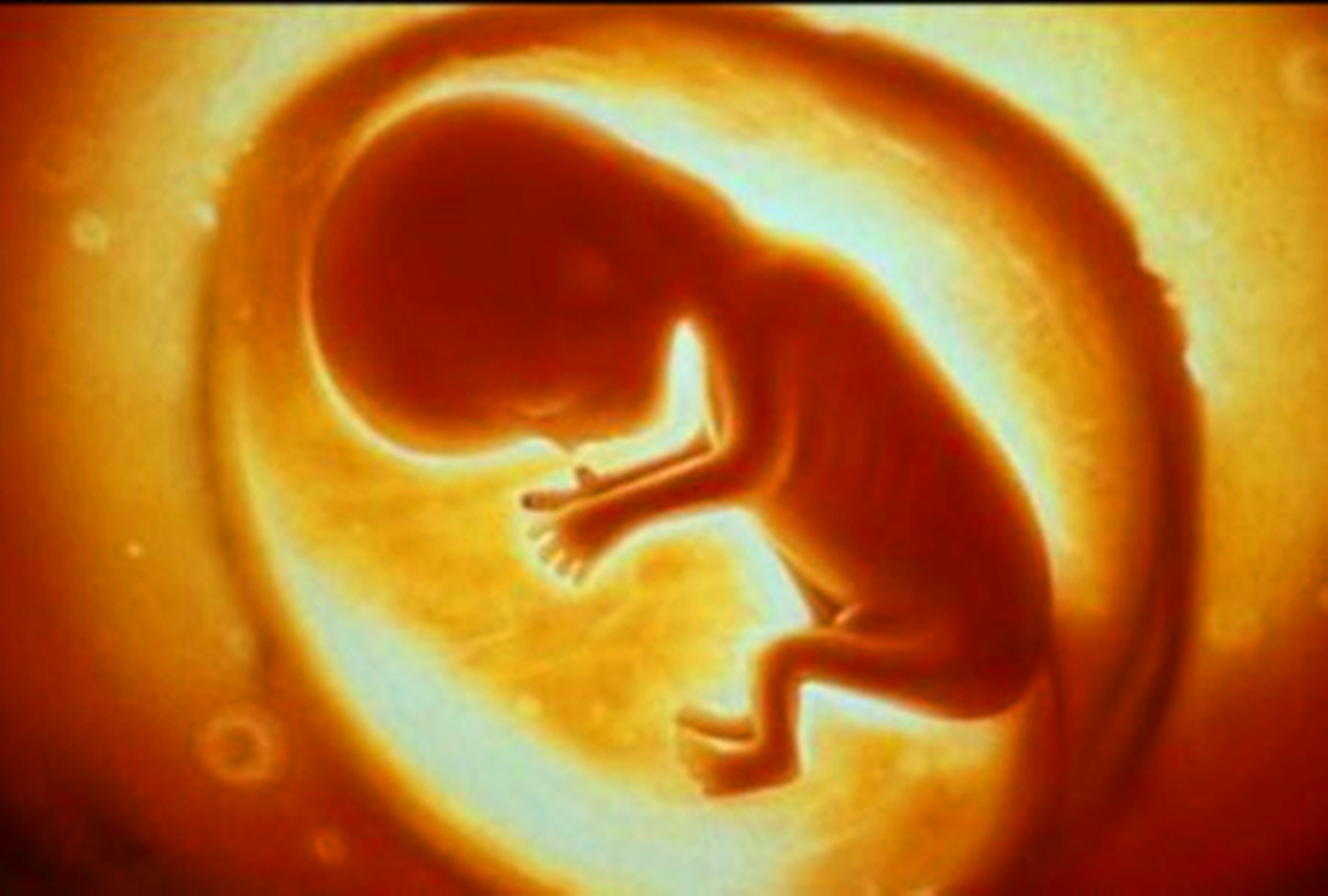
This modern commandment is directly connected to the issue of legalized abortion. Atheists deny the existence of a soul. Thus it is easy for many of them to discount the embryonic as human with rights. Despite a human developmental trajectory, the unborn (at least at early stages) is judged as no more than tissue or at most, only a human being “in potency.” This commandment would have more credibility if there were respect for the body and/or the separate but dependent integrity of the unborn child. Frequently language games will be employed to avoid the truth about the child’s humanity in the womb. When it comes to issues like partial birth infanticide an irrationality takes hold. It is argued that it would be cruel to adopt a child out to strangers; and yet, with adoption they would become a loving family. The blindness of selfishness is heinous. If there be a physical defect, a strained comeback might point to a dubious or difficult quality of life. Frequently there is an appeal to overall viability although medical science is saving the lives of increasing premature babies. Certain ethicists have noted that young children (up to maybe three years of age) are not really viable without constant adult intervention. They just do not know how to care for themselves. That is why a few rogues are proposing “post-birth abortion.” Beyond the logical inconsistencies, the pro-abortion position gives rights to some and strips them entirely from other persons. The definition of a baby becomes shallow: “it is only a baby if you want it.”

pretty-girl-9917-large

Life issues are often interconnected. A consequence of this maxim would also be assisted suicide. If the person has absolute dominion over the body then he or she can terminate the life of that body whenever he or she deems to do so. With God extracted from the equation, he no longer has sovereignty and out goes the fifth commandment: “Thou shalt not kill.” Turning to lesser matters, it would also permit all sorts of bizarre tattoos and piercings. Indeed, one could turn his or her body into a for-profit advertising banner if so desired. This is really a monstrous commandment and points out that separated from God; we really do not know how to be good. Since we are our bodies, this permissive commandment would also open the door to all sorts of distortions in sexual behavior, way beyond the evils of artificial contraception and fornication. The Christian would argue that personal control of the body is not absolute. We must respect that all life belongs to God and the plan of nature by which we are made. We must also respect others, including the little people who start out in the womb.

ATHEIST COMMANDMENT 2

“Strive to understand what is most likely to be true, not to believe what you wish to be true.”
man-enthusiastic-arms-15696-large

What seems “likely true” might not always be the case. The pagan worldview had to surrender to the Judeo-Christian. Many presumed that the world was flat, that the earth was central with a revolving sun, etc. The majority held a view that was challenged by Copernicus and later by Galileo, both Catholics and the former, a monk. When science widely advocated spontaneous generation, Louis Pasteur discerned a small invisible world where contamination and vaccination was possible. When science took for granted a Newtonian view of the world, modern physics would largely rewrite the book. We strive to understand what is true, but that which is most likely can shift and change.

I am not convinced that all atheists are so objective. It seems to me that some of them fervently resist any and all assaults against their denial of a God and/or Creator. In other words, while they would applaud the rejection of God by believers; they would not permit any data on their radar that would imply his existence. Science is a wonderful area of investigation and knowledge; but scientists (religious and atheists) can and do battle with each other over what they “believe” and “wish” to be true. Indeed, these arguments can become very passionate: everything from a closed to an open universe to warm-bloodied dinosaurs over cold reptilian. Data is interpreted in a way that favors their views or hypotheses.

Nevertheless, Catholic believers are also called to be rationalists. We do not subscribe to the faulty proposition held by certain Protestants of a “blind faith” or “faith over reason.” Indeed, it is because of this philosophical demarcation that certain Fundamentalists hate and attack Catholicism. Catholicism proposes “faith seeking understanding.” While the fundamentalist argues for a literal six days of creation and a world that is six thousand years old; Catholicism accepts the reckoning of time from archeologists and physicists, unperturbed at the prospect of millions of years of evolution and a cosmos that is 13.8 billion years old, as long as one might posit intelligent design. The difference with the atheist is that the informed Catholic has a profound respect for divine revelation and refuses to invalidate his subjective experience of a relationship with a living God. Indeed, he feels that we are wired for God and have an inherent capacity to acknowledge the divine transcendent… a reality he tries to convey not only in Scripture and ritual but in poetry and art. I suppose we would argue that there is something measured here that is just as real as in the scientist’s mathematical formulae and in Hubble’s distant astronomical images. There is a sense of awe which many of us refuse to associate with chaos or chance but rather see the finger of God and providence. The proposition here seems to imply that it is a matter of “either/or” while the Catholic Christian would say it is a matter of “and.” Catholicism is the religion of the “great and.” It is not faith alone or the Bible alone or Jesus alone or even empirical science alone. Catholicism is the religion that speaks to faith and works; the Bible and sacred tradition; Jesus and Mary and the saints, etc. She is the religion that fostered great scientists, even as she stumbled sometimes to see the tapestry where science might be interwoven with faith. She embraces all that is good and true and claims it for her own. That is why the Church has the Vatican Advanced Technology Telescope (VATT) on top of Mount Graham in Arizona. That is why our universities foster some of the best scientific research in the world. That is why the Pontifical Academy of Sciences includes believers and non-believers alike who further the advancement of the mathematical, physical and natural sciences and the study of related epistemological problems.

I suppose we need that child-like faith which trusts that what we believe can also be true. Atheists sometimes witness to this truth in their romantic liaisons and families. Cold science might argue for finding the optimum physical specimen for reproduction. However, most fall in love and embrace a mystery with their hearts even as their heads insist it is all just chemistry and sparking synapses. I suspect the transcendent shows itself even as certain critics contend that it cannot exist.

A Courageous or Timid Church?

Msgr. Pope touches a cord on the Archdiocesan Blog that is very dear to my heart, the fact that a “timid” Church is in contradiction to its very nature as a sign of contradiction in the world.

Msgr. Pope speaks of the new secularized faith as “Sad, pathetic, wrong, and cowardly—hardly the revolutionary faith that got Paul arrested. . . . We have got to rediscover how revolutionary our Catholic faith truly is to this world gone mad. And as we proclaim healing and an allegiance to something other than this world, we will become increasingly obnoxious to the world around us. . . . No tame, domesticated Christianity will threaten or change this world. When Paul preached, the people rioted. Modern preaching too often incites only yawns and indifference.”

St. Paul and the other apostles did not qualify the Gospel and so they faced arrest, torture and martyrdom. The early Church was persecuted precisely because the truths of Christ allowed for no compromise or tolerance for participation in false worship. Even a pinch of incense to the Roman gods or to the so-called divine emperor was too much. Today’s world misconstrues the incident of the Roman coin and the likeness of the emperor. When Jesus said give to God what belongs to God and to Caesar what belongs to Caesar, he was avoiding a trick to have him either arrested by the authorities or to be rejected by the crowds as a traitor. Ours is a jealous God. What belongs to him? The answer is everything, even Caesar! Many in contemporary society play games with their Christianity. They create a false image of Christ to follow, one that would have fit in nicely with the pantheon of ancient pagan deities. Indeed, the battle over religious liberty is a symptom of this— as if believers could restrict their faith and values to the inside walls of churches and during Mass. And yet, the dismissal at the end of Mass echoes our commission to take the Good News out into the world. The ideal is not co-existence with the world or evil but rather to plant the seeds for repentance and conversion. Today many Catholics are silent upon important issues. A candidate for the office of governor in Maryland is a “practicing Catholic” and yet he is on the record as pro-abortion, yes even for allowing partial-birth infanticide. How can we reconcile this with the faith? The issues continue to mount: no fault divorce and remarriage, same-sex marriages, lack of support for parochial schools, contraception giveaways in public schools, free contraception, abortion on demand and growing sympathies for euthanasia. Sins are counted as rights and Catholics and their Church are expected to fall in line. Wimpish silence satisfied in the past, and that was bad enough, but today complicity is demanded.

St. Paul would exorcize the demonic, not try to accommodate it. Too often we hear from churchmen that we do not want to alienate politicians on “other issues” that are important to us, like the status of immigrants, or just employment, or the dismissal of capital punishment, or tax breaks for churches, etc. We cower to the power of the secular world when we should bring the authority of Christ to bear on the challenges of our day.

Christianity was persecuted by the Roman Empire precisely because it was viewed as intolerant. Today, much of the faith has lost its teeth. The enablers for the murder of children are invited without sanction to take Holy Communion. Even high level shepherds hypothesize ways to get around or to turn a blind eye to homosexuality, adultery and fornication. We are urged to find a new language, removed from that used in Scripture, so that no one might get their feelings hurt. The fact that these activities might cost people the kingdom and their share in everlasting life does not seem to measure up anymore. Who are we to judge? We are the people given the gift of the Holy Spirit and who follow the Light of the World, dispelling the darkness. What is saving faith? It is courageous obedience to God, qualified by charity. That’s who we are and what we are about!

A Few Thoughts about the Synod Relatio & Debates

My head is spinning about some of the things that are being seriously argued at the Vatican’s Synod on the Family. I am already concerned that a Commission was established to look at streamlining the process for annulments even prior to the start of the Synod. It seems to me that if such were a concern then the bishops would then request the Holy See to do so. Will the documents which will be formulated reflect the majority view and Catholic tradition or will there be attempts to steal the show for the minority progressives?

synod-of-bishops

What is it about this new Synod document that has critics saying it signals a revolutionary shift in favor of same-sex couples? It is acknowledged that this “relatio” urges clergy to make “fraternal space” for homosexuals. But what does it say? We read:

“Homosexuals have gifts and qualities to offer the Christian community: are we capable of welcoming these people, guaranteeing to them a further space in our communities? Often they wish to encounter a Church that offers them a welcoming home. Are our communities capable of proving that, accepting and valuing their sexual orientation, without compromising Catholic doctrine on the family and matrimony?”

Are we reading the same document? All I see are questions. Hopefully they are not rhetorical. Do we eject gay brothers and sisters from our churches? No we do not. Can we invite them forward for Holy Communion? Yes, provided that they maintain chaste and celibate lives. Can we affirm or value their sexual orientation? No, we cannot do so. Such would devalue the true meaning of marriage and human sexuality. We cannot move away from the assessment of disorientation or that same-sex carnality is mortal sin.

As a so-called case-in-point of past intolerance, the news contrasted this development with the story of Barb Webb who was fired from a Catholic school when she and her partner announced her pregnancy. Similarly, her partner, Kristen Moore was asked to resign from her post as a music director at a Catholic parish. The secular media glossed entirely over the moral issues that extend beyond same sex unions, like the freezing of embryos, donated semen and IVF technologies. All these elements are reckoned as moral evils and sinful.

This relatio is being interpreted precisely as Cardinal Kasper would suggest. The doctrinal truth is eclipsed, if it remains, for the sake of a pastoral provision or slackening of discipline. The same reasoning he uses for divorced and remarried couples is being applied to active homosexuals. I find this reckoning very disturbing. Discipline can be distinguished from doctrine but discipline is always at the service of doctrine. There are doctrinal elements that cannot be ignored. It is contradictory to say that gay acts are sinful and then to value, in any way, homosexuality. It is contradictory to say that marriage is a lifelong institution and that divorce is a sin, while inviting couples to receive Holy Communion who are living in adultery. The truths of Scripture are clear and we must always be at the service of the truth on every level: doctrinally, canonically and pastorally.

The document recognizes that same-sex couples live lives where they render “mutual aid to the point of sacrifice [which] constitutes a precious support in the life of the partners.” Critics are saying that this is a crack in the door that may one day lead to full acceptance. I would say that this is not the case. The statement is one that reflects the immediate horizontal human condition but says nothing about the vertical supernatural dimension. It is a mere statement of fact that these couples support each other in their day-to-day lives. However, this does not mean that they are in right standing before God. Mortal sin is still mortal sin. I suspect that there are many “nice and pleasant” people who make good neighbors and yet will suffer damnation and hellfire. We are not saved by simply being nice but by being faithful and obedient to God. The Church can relax certain disciplines but she cannot change divine positive law. My fear is that tolerant language might enable or encourage more sinners to remain within their sins. The Church must be a place for saving truth and grace. She should never be an enabler for sinful lifestyles or blasphemous acts like receiving the Eucharist while ill-disposed or in mortal sin. This document does NOT acknowledge the “holiness” of such couples as was suggested in the Huffington Post article by Antonia Blumberg (1/13/14). It simply asks if we might tolerate with passivity and silence the situation of people living in sin.

I cannot buy this application of any “law of graduality.” No matter how slow might be the movement to holiness; the Church should never compromise on the fullness of truth. Confessors can exhibit great understanding and compassion for married couples who use artificial contraception, with the hope that they will eventually come around to the Church’s understanding of human dignity and the full value of the marital act. It is here that I can well appreciate “graduality.” However, this is not the same as cohabitating, adulterous and same-sex couples. They have no right to a shared bed.  In their regard, where there is neither contrition nor amendment of life, absolution must be withheld. Similarly, while they should attend weekly Sunday Mass, they should abstain from taking Holy Communion. The priest will not usually embarrass people in public but he fails his sacerdotal charge if he does not challenge such couples in private.

This law or better yet, theory of graduality was very much the rationale for the “open table” of Anglicanism. It was hoped that this welcoming to receive the Eucharist would draw others into greater unity. Contrastingly, the “closed table” of Catholicism sees Holy Communion as an expression of an ecclesial unity that is already realized. This is representative of the ancient tradition wherein heretics and grievous sinners were denied the sacrament or even excommunicated. The Church’s censure of interdict would also illustrate this posture. One had to be properly disposed and graced to receive the sacrament. Anything less was judged as blasphemous and scandalous. One should not pretend there is a union that is not truly there. This resonates with the current debate about divorced and remarried couples as well as with active homosexuals. We cannot allow a false compassion to tolerate normalization for the sake of public acceptance while the pastoral accommodation is deceptive to the doctrinal truth and the spiritual state of souls before God. We can move away from using pejorative biblical terms like “sodomites” and “adulterers,” but the underlying reality will remain the same. Does this really serve the summons to repent and believe?

If we change the discipline for those in serious sin and the intrinsically disordered, would we not logically have to open up Holy Communion to others (particularly Christians) who might be in ignorance of the full ecclesial reality but who live moral lives? It is a real can of worms and I would prefer to leave it closed. But that is my opinion.

Commission to Reform Annulment Process

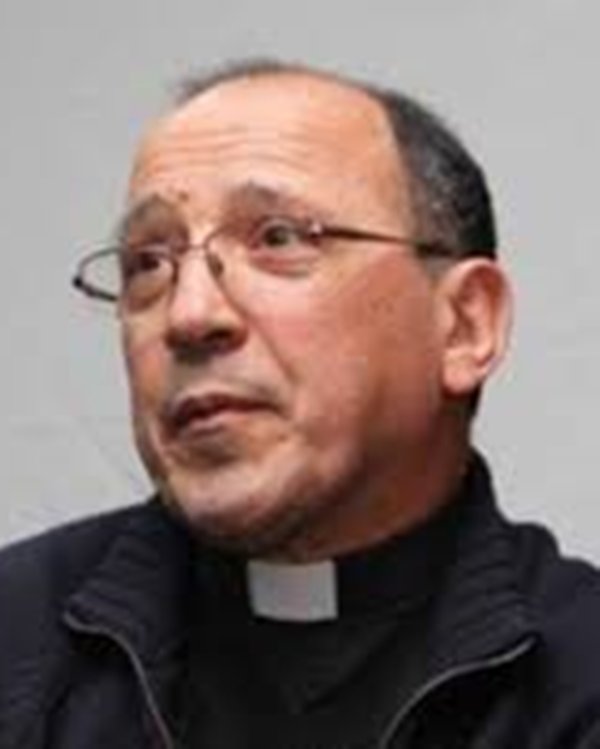
Alejandro W. Bunge Archbishop Luis  Francisco Ladaria Ferrer, SJ Bishop Dimitri Salachas

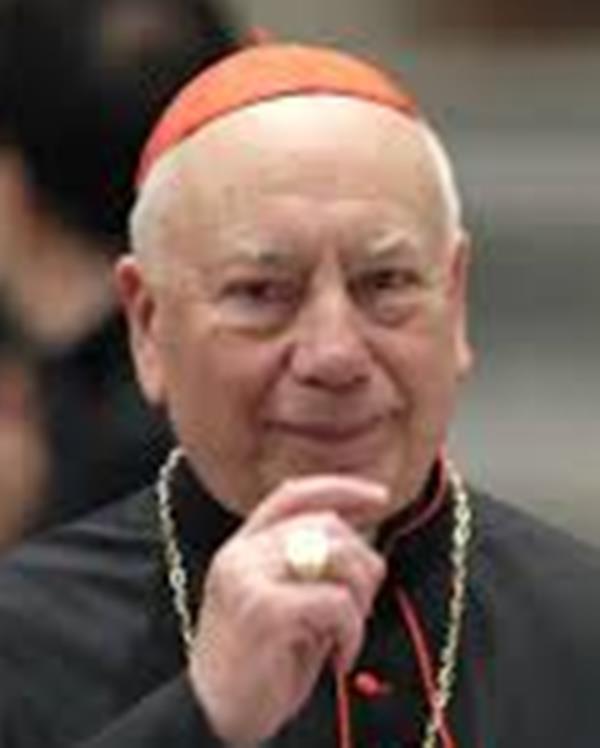
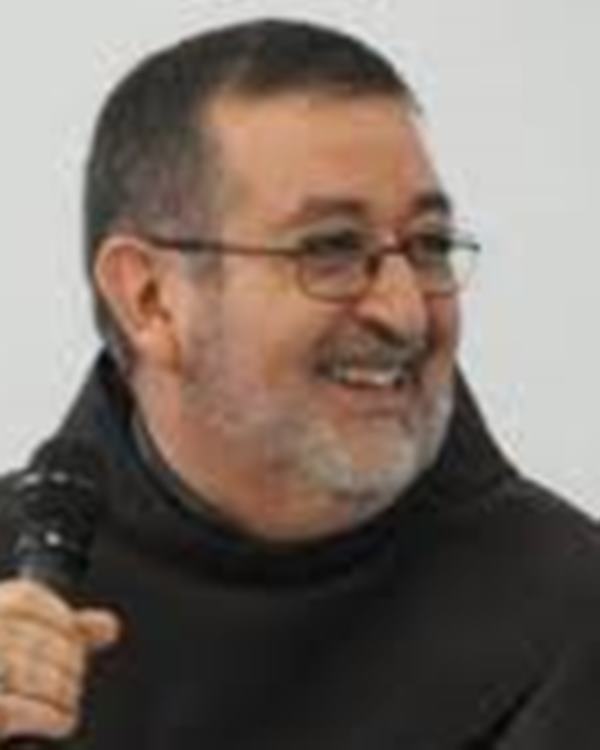
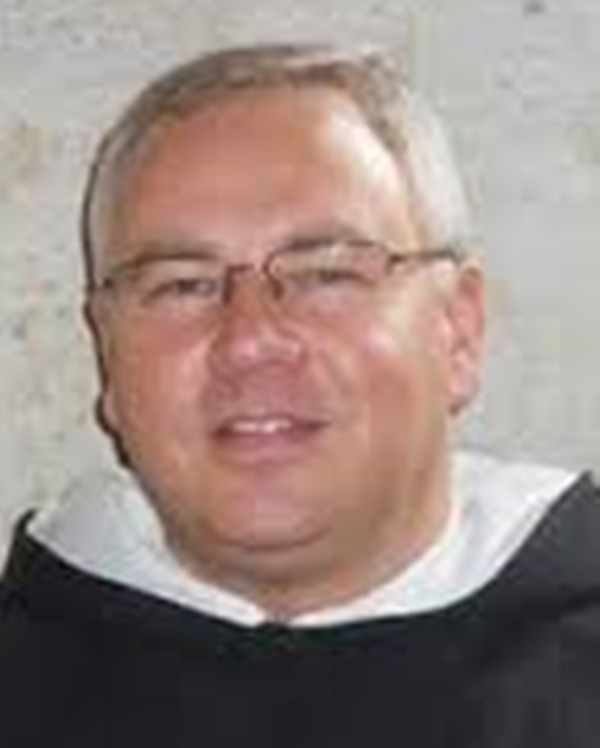
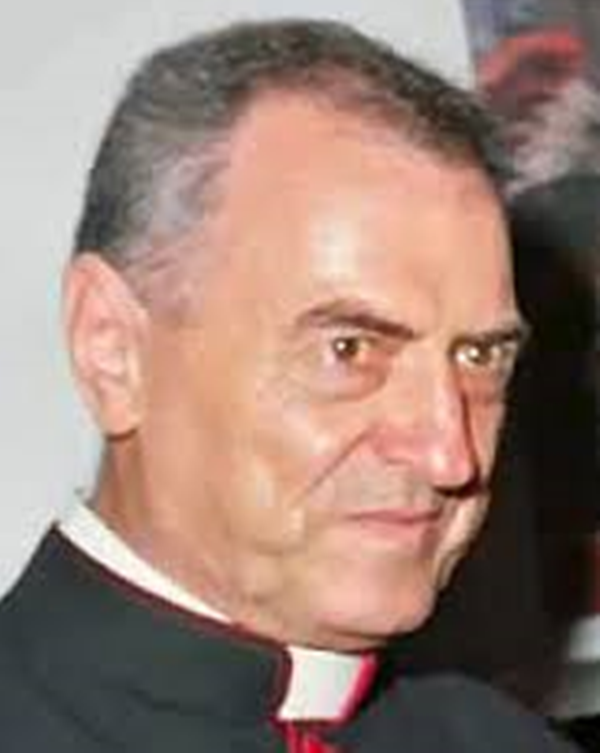
Cardinal Francesco Coccopalmerio Fr. Jorge Horta Espinoza, O.F.M. Konštanc Miroslav Adam, O.P.

Leo Xavier Michael Arokiaraj Msgr. Pio Vito Pinto Msgrs. Maurice Monier

 Nikolaus Schöch, O.F.M. Prof. Paolo Moneta

FROM LEFT TO RIGHT  (Notice they are mostly clerics and no women.)

Row 1 – Msgr. Alejandro W. Bunge / Archbishop Luis  Francisco Ladaria Ferrer, SJ / Bishop Dimitri Salachas

Row 2 – Cardinal Francesco Coccopalmerio / Fr. Jorge Horta Espinoza, O.F.M. / Fr. Konštanc Miroslav Adam, O.P.

Row 3 – Msgr. Leo Xavier Michael Arokiaraj /  Msgr. Pio Vito Pinto / Msgr. Maurice Monier

Row 4 – Rev. Fr.  Nikolaus Schöch, O.F.M. / Prof. Paolo Moneta

Pope Francis Establishes Commission to Reform Marriage Annulment Process

(Vatican Radio) The Holy See Press Office on Saturday announced Pope Francis has decided to establish a Special Commission  for the study of the reform of the matrimonial processes in canon law. The decision was made on August 2, 2014.

This Committee will be chaired by Msgr. Pio Vito Pinto, Dean of the Roman Rota.  The other members are:  and will be composed of the following members: Cardinal Francesco Coccopalmerio, President of the Pontifical Council for Legislative Texts; Archbishop Luis  Francisco Ladaria Ferrer, SJ, secretary of the Congregation for the Doctrine of the Faith; Bishop Dimitri Salachas, Apostolic Exarch of the Greek Byzantine Catholic Church; Msgrs. Maurice Monier, Leo Xavier Michael Arokiaraj and Alejandro W. Bunge, Prelate Auditors of the Tribunal of the Roman Rota; the Rev. Fr.  Nikolaus Schöch, O.F.M., Substitute Promotor of Justice of the Supreme Tribunal of the Apostolic Signatura; Fr. Konštanc Miroslav Adam, O.P., Rector of the Pontifical University of Saint Thomas Aquinas (Angelicum); Fr. Jorge Horta Espinoza, O.F.M., Dean of the Faculty of Canon Law of the Pontifical University Antoniamum; and Prof. Paolo Moneta, formerly professor of Canon Law at the University of Pisa.

The work of the Commission will start as soon as possible and will have as its goal to prepare a proposal of reform of the matrimonial process, with the objective of simplifying its procedure, making it more streamlined, and safeguarding the principle of the indissolubility of matrimony.

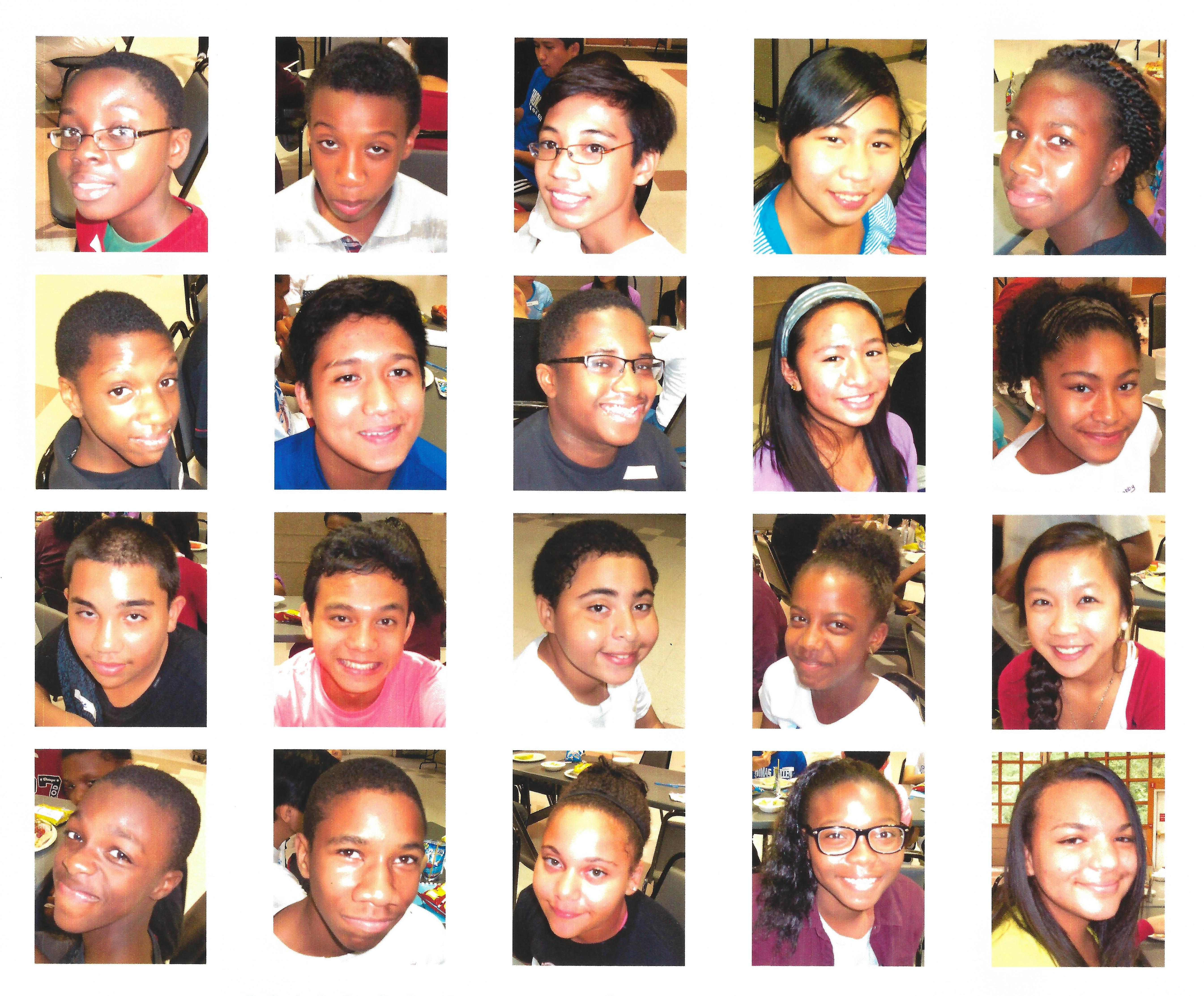
Holy Family Teens Preparing for Confirmation

We celebrated Spirit Day here yesterday for our teens!

conf2014 b