• Our Blogger

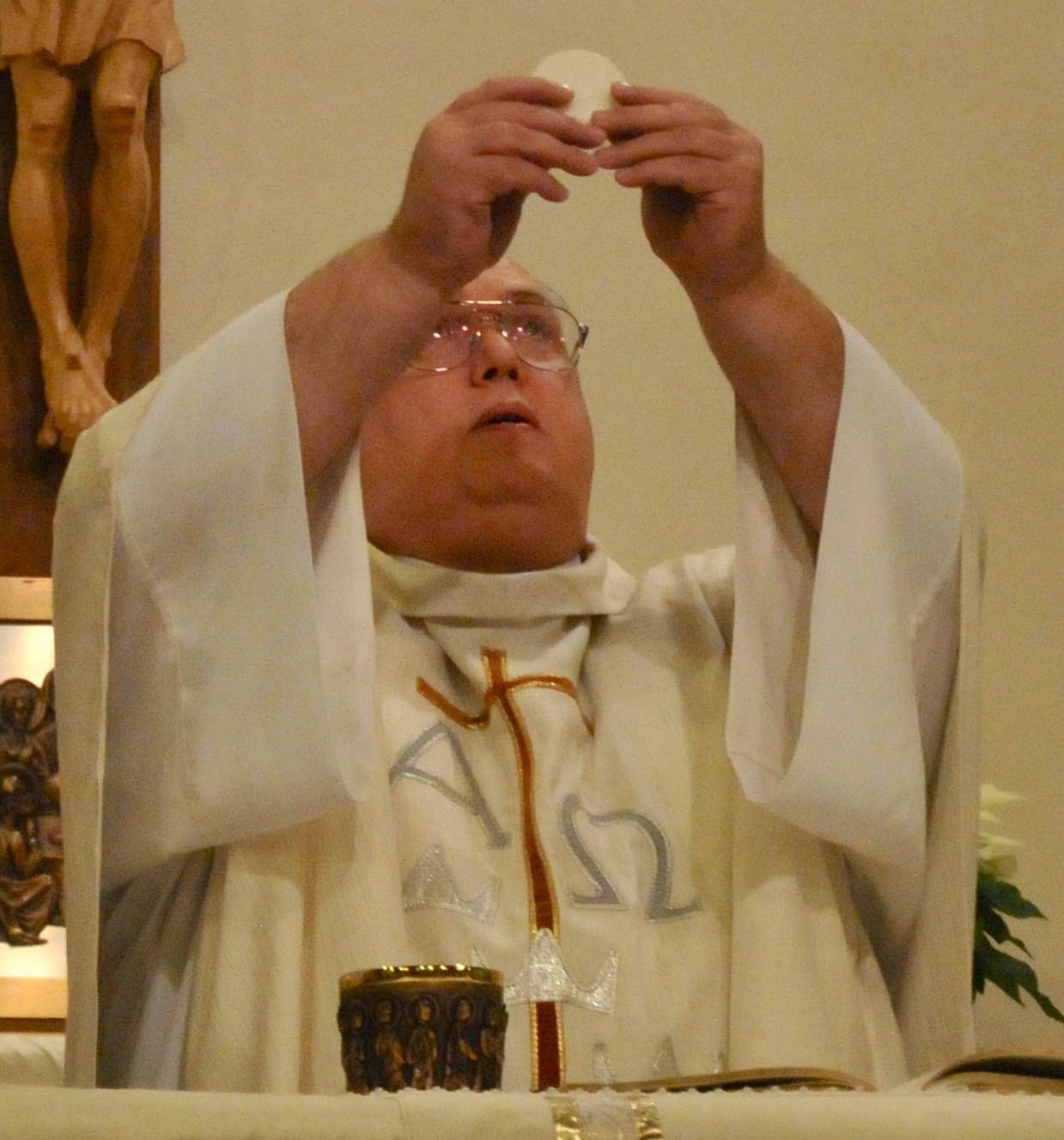
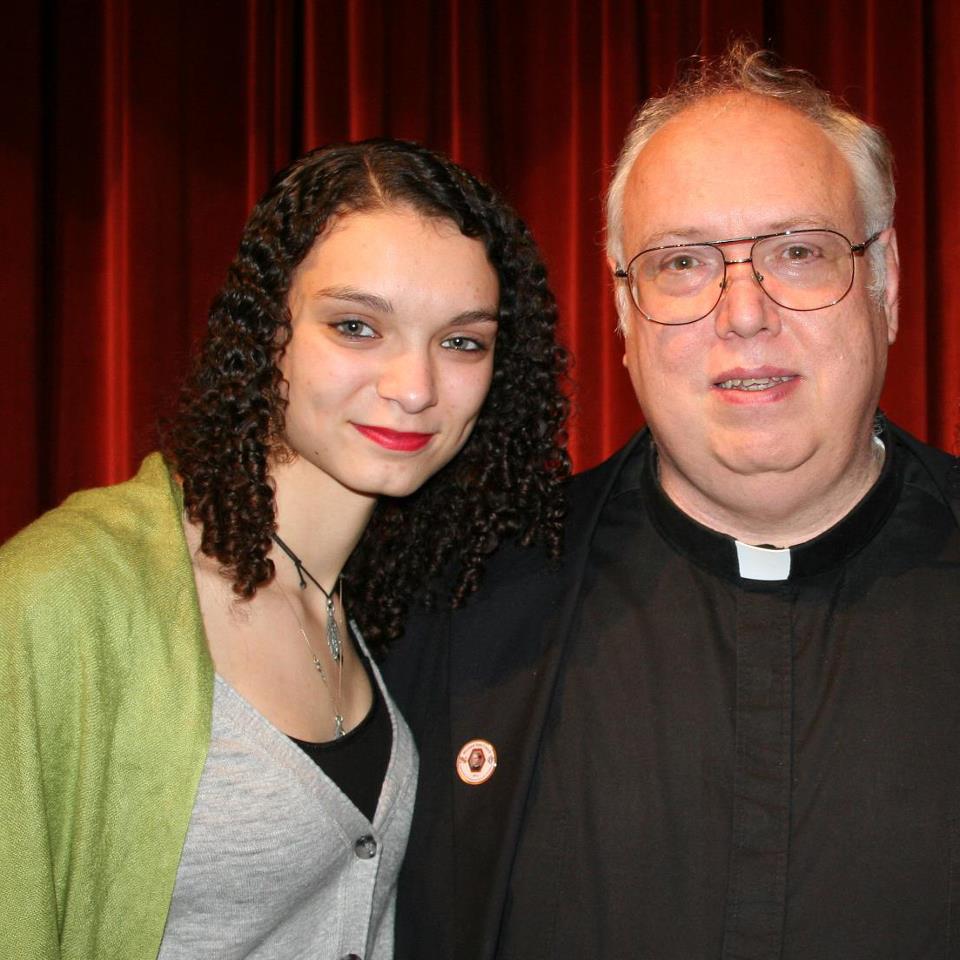
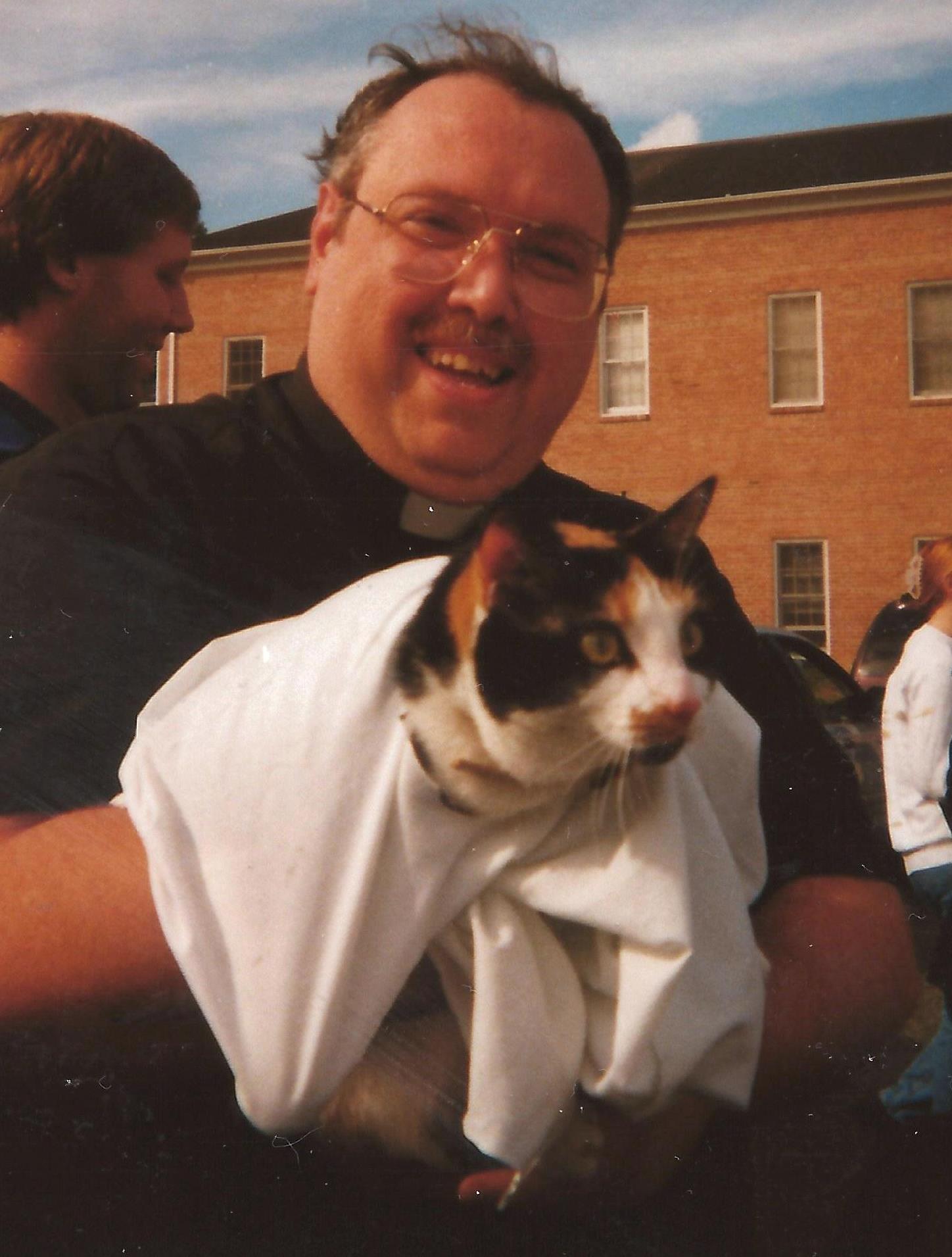
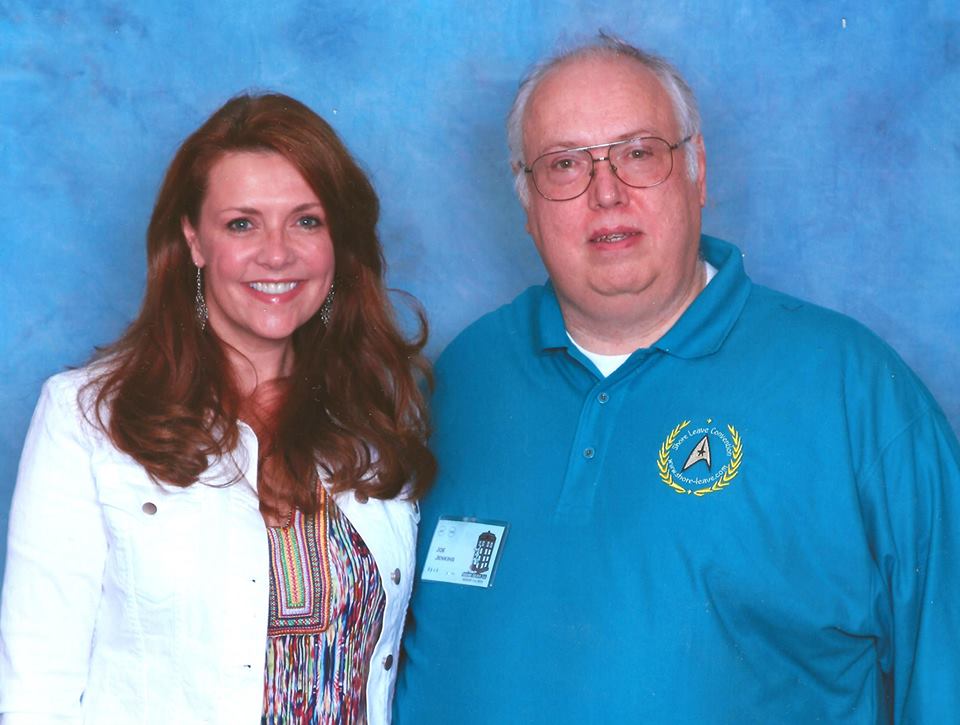
    Fr. Joseph Jenkins

  • The blog header depicts an important and yet mis-understood New Testament scene, Jesus flogging the money-changers out of the temple. I selected it because the faith that gives us consolation can also make us very uncomfortable. Both Divine Mercy and Divine Justice meet in Jesus. Priests are ministers of reconciliation, but never at the cost of truth. In or out of season, we must be courageous in preaching and living out the Gospel of Life. The title of my blog is a play on words, not Flogger Priest but Blogger Priest.

  • Archives

  • Categories

  • Recent Posts

  • Recent Comments

    Jeremy Kok's avatarJeremy Kok on Ask a Priest
    Barbara's avatarBarbara on Ask a Priest
    Josh's avatarJosh on Mixed Signals about Homosexual…
    gjmc90249's avatargjmc90249 on Marian Titles & the Mantle…
    Jeremy Kok's avatarJeremy Kok on Ask a Priest

No More Lay Preachers in Rochester

The march toward great orthodoxy and unity in the Church continues. After some 40 years of violating Church law, the diocese of Rochester will no longer allow the laity to usurp priests and deacons in preaching homilies at Mass. The thanks goes out to Bishop Salvatore Matano for insisting that canon and liturgical law be followed. He stated, “It is not a policy shift as regards to the universal law of the church. I am trying to help the faithful understand what is the universal law of the Church and how important it is that in the celebration of Mass, we do what the Church asks of us.”

I well remember Bishop Matthew Clark who started the deviation. He was regularly invited to give talks by the progressive or liberal staff at CUA when I was a student many years ago. He even gave us a retreat where he speculated about women priests and about how a priestly calling might be a temporary vocation and that God might later call some men to other things. I was young but shocked by the statement.

In any case, it looks like the compass in Rochester is returning to the proper settings of the universal Church. Now comes the hard work, not just of correcting abuses, but reforming hearts and minds. People will be hurt and disappointed, especially the women who made up the majority of the lay homilists. But where one door closes, others are opened. Hopefully these women will not feel discarded or alienated. Inclusion and empowerment was never dependent upon the clericalization of the laity. I have confidence that the bishop will find a way to involve these women, with their theology degrees and gifts, in the building up of the Church. God forbid that they should walk away from the Church that has always been their home.

The Church’s Stance to the LGBT Community

thBUDHL29UContinuing this discussion as to how we approach homosexuals in the Church, I would agree that we must acknowledge the whole person. We should resist the temptation, even if they encourage it, of defining them by their disorientation. People can hide behind labels. It is also easier to ridicule and cast aside people who are labeled. We see this in racial slurs and in the language for the enemy in wars. The Church would stand against anything that dehumanizes people or compromises upon the uniqueness of personhood. Everyone is loved. Signs or billboards that say God hates this or that people constitute a false propaganda against the kingdom of Christ. Everyone is someone’s son or daughter, brother or sister. They might suffer from a genetic disorientation, or from trauma or from the manipulation of others— but right or wrong or just confused, they possess an immeasurable value in the eyes of God. If they should return our love with venom in language and deeds, we must maintain the heart and mind of God on their behalf. We cannot accept or excuse sin. If we did we might become an accomplice and a collaborator in the sin of others. But we can love them, even as our views are attacked as prejudice and our words as “hate-speech.”

Pope Francis purportedly told the reporter for La Civiltá Cattolica this about gays: “When I meet a gay person, I have to distinguish between their being gay and being part of a lobby. If they accept the Lord and have goodwill, who am I to judge them? They shouldn’t be marginalized. The tendency [to homosexuality] is not the problem … they’re our brothers.” Many would take this to mean that a blind eye can be turned to the homosexual lifestyle. However, I think not. It is neither meritorious nor neutral. It is objectively disordered. Homosexual acts are morally wrong. I have spoken before about the distinction between evil acts and the conditions for sin. Only God can know our standing before him.

My priest friend has really surprised me with his vocal dissent on behalf of those living a homosexual lifestyle. Is he inviting intervention from diocesan authorities. He says that all are welcome at his parish and that includes lesbian, gay, bi-sexual and transgendered persons. He announced that they make no distinctions in their activities (for them or for their children).

He is right that we have no window into people’s bedrooms. But we are confessors and we have eyes and ears for what people promote in public. If same-sex partners kiss each other in church, wear the symbolic rainbow colors, sport tee-shirts and hats that promote an agenda… then I would say we know what is going on. It is disingenuous to say otherwise. It is true that we are all sinners. But the Gospel proclamation comes with an admonishment TO REPENT. We need to live our lives in accordance with the moral law. Jesus says that if we love him then we will obey God. The commandments and the moral law are not optional.

He questioned the MARRIAGE MATTERS campaign that was promoted by the Maryland Catholic Conference. I would not go as far, but also suggested that marriage has been in trouble for a long time, given no-fault divorce and rampant cohabitation.  He insists that heterosexual marriage is not threatened by same-sex civil marriages. Would he quietly bless these unions? I do not know. Part of me does not want to know.

There has been a push, first coming from associates of Bai Macfarlane, that the Church should disassociate herself entirely from civil marriages.  They claim it demeans true marriage as a lasting covenant in Christ.  The argument here is that what a secular society understands by marriage is radically different from the Church; thus, we should not confuse them by allowing priests and deacons to officiate or witness marriages as magistrates for the state.  Various countries require two ceremonies, one at the courthouse and another at the church.  Is this the direction in which we want to go?  It is true that same-sex unions and no fault divorce have seriously compromised the matrimonial institution.  I have another priest friend who suggests that we get out of the marrying business entirely.  Since couples marry themselves, he suggests that we let them get to it without involvement or duplication from the Church.  I disagreed.  It seemed to me that something of the understanding of marriage as a sacrament was at stake.

While we have some control over parish facilities, legal challenges have made matters extremely complicated for our Knights of Columbus halls.  Legally, they may be obliged to host receptions for gay marriages.  External symbols associating these buildings with the Knights of Columbus are being removed.  So-called gay marriages cannot be performed in Catholic churches.  We continue to teach in religious education and from the pulpit that marriage is a bond between a man and a woman.

My priest friend blesses homes as I do.  When I do so, I bring a plaque or picture of the Sacred Heart and we consecrate the home to the Lord.  I bless each room, carrying holy water and a crucifix.  I pray that the devil will have no place to hide, either in their lives or in their house.  My associate blesses homes where the residents may be cohabitating or in same-sex relationships.  Here again I have a grievance.  Priests should do nothing to condone sin.  It would do no good to bless such homes because the lifestyles are not conducive to the graces invoked.  This comes very close to blessing the couples themselves.  A house where the matter of mortal sin is regularly practiced stands more under a curse than a blessing.  Every house blessing is a type of minor exorcism.  The home will really be blessed by the faith and good works of the inhabitants.

Some of us wonder if the whole gay marriage movement might be a sham.  I read recently that a number of the first couples who took advantage of law changes in certain states have already filed for divorce.  Homosexuality is renowned for its transitive nature and multiple partners.  Will the Church and bishops change in how we regard it?  I cannot foresee how.

I am not an ogre.  We have homosexuals who struggle with their weaknesses and who display sacrificial love.  They attend Mass and regularly ask for God’s mercy.  I have seen them care for a beloved friend and for their parents in times of sickness and approaching death.  How do we remain resolute to our teachings and not hurt them?  How do we balance orthodoxy with ministerial compassion?  We have our work cut out for us.

The Price of Compromising on Homosexuality

thKID0AXT3A priest friend recently announced that he saw the Church’s way of speaking of those with same-sex attractions as wildly exaggerated, harsh and inaccurate. His assertion deeply bothered me. I am well aware that people have taken offense and even left the Church over the assessment that homosexuals and lesbians are sexually “disordered.” Often the response to this issue or individual revelations, even from pulpits, is a deafening silence. Homosexuality is joining contraception as one of those issues rarely raised from the pulpit. Privately, people increasing accept and love their friends, regardless. Young people not only accept it but see those who do not as bigoted. Older people are generally more judgmental, but often suspend this judgment when the gay person is someone close to them. Silence is no real answer and a fire-and-brimstone sermon will arouse anger and hurt. But the truth is the truth, is it not? My priest friend argues in a way that makes my head hurt. Often I think he is more like the Episcopalians, suggesting compromise on contraception, divorce and remarriage, and now homosexuality. As for myself, I have no desire to cause pain for others; however, I was ordained to speak for Christ and his Church, not for myself. The Bible and the traditions of the Church give a negative verdict to same-sex attraction and activity. While the orientation is problematical, sin only enters the picture with wrongful fantasies and immoral actions.

My priest colleague insists that I am very wrong. There is the unspoken insinuation that he thinks I am slow or a bit dull-witted. He wonders why I cannot see things his way. He argues that we all want to be faithful to Jesus and Jesus was all about bringing the outcast home. He indicts me as doing the opposite, behaving more like a Pharisee. He raises his voice, “Show me even one place in the Gospels where Jesus teaches anything about homosexuality! If it is so important, then why is Jesus absolutely silent about it?” He laments that our Lord spoke forcibly against divorce, but points out that there is nothing on this issue. My mind works differently from his. The Bible is more than the Gospels.  The writings of St. Paul are also part of the New Testament. The whole book is the inspired Word of God. The apostle mentions homosexuality as one of a whole grocery list of sins that would forfeit the kingdom. This is serious language. If this is a sin that can land a person in hell; then how can we truly love them and either permit it or exhibit silence? He spoke as the kids do— “But they love each other! How can love ever be wrong?” Love can be plenty wrong. This was not just love, but physical and sexual behavior. This can be added to love, or express love, but love can be very wrong. You have no right to love another man’s wife. A priest has no right to love and keep a mistress. A man has no right to take another man to bed. The same goes for women with women. They can love as parent and child, as siblings, and as dear platonic friends— but erotic and genital love takes it where has no right to go. My priest friend came right out and said it, throwing aside recent papal teaching and the universal catechism, “As long as the gay couple is living in a loving and committed relationship, there is no sin, nothing is disordered.” This was not a new opinion. I heard it from one of my old professors some thirty years ago, Fr. Charles Curran. This was one of the dissenting views that cost him his license and position at the Catholic University of America.

My position is very different. I would side with my late cousin, Fr. John Harvey, the founder of an organization called COURAGE. These faithful sons and daughters deal with their disorder not by acting out but by embracing a life of celibate love, prayerful meditation and service to the community. We should not pretend that vice is virtue. Rather, we should call our brothers to repentance, conversion and heroic discipleship.

It is true that a person should not be judged by one element of his life. However, the activists themselves are the ones who raise their orientation as the singular marker for their identity. An orientation and lifestyle is redrafted as a basic expression of who they are and as something protected by civil rights laws. When you say “hate the sin” but “love the sinner,” they get mad and take it personally. They make no demarcation between their sexuality and how they are accepted as persons. They are wrong to do this but it has become an effective tool for manipulating people and institutions in our society. When it comes to the Catholic Church, though, they bust their heads against a stone wall. Everyone else is giving in, but the Church still says that “what they do” is wrong. What they hear from the Church is “who you are” is wrong. I suspect my brother priest left his guard down to this sort of control tactic. They seek to turn the guilt back on us so that the Church will give in. While we can show special compassion to individuals, I see no way for Catholicism to backtrack on this.

Women Bishops – The Lights Go Out for Anglicanism

5f0c3e5657ed3b8229685eac8a081987The General Synod of the Church of England voted on Monday to consecrate priestesses as women bishops. Well, there’s the nail to the coffin for the home of Anglicanism. Ecumenism with them will be restricted to soup kitchens, sharing contributions from C.S, Lewis, and appreciation for perfecting the English language. The bridges have been burned to most else. Since women cannot be ordained in truth, this makes arguments about their Masses and the Eucharist mute. Fake priests can only give you a counterfeit Holy Communion. When it came to morality, our ships passed in the night a long time ago. They disregard both Sacred Scripture and Sacred Tradition, wrongly approving homosexuality and dismissing the indissolubility of marriage. Abortion is reduced to a personal choice, far from the Catholic stance that sees it as an assault upon the heart of the Gospel of Life. Their last convention in the States could only agree about how terrible landmines were, as if that is a big issue in suburbia. This is what happens when morality collapses and an “everything goes” mentality takes over. Public opinion and modernity is given preference over divine revelation. Instead of obedience to God, the human becomes the measure of all things— and people are fickle and frequently wrong. The Orthodox churches are lamenting that years of work toward a common faith and even levels of recognition have been thrown upon the garbage heap. Anglicanism, except as a small group received by the Holy See, is destined not to be counted as a branch of the apostolic and “catholic” family of churches. The “reapproachment” with them since Vatican II is now a dismal failure because the Anglicanism of even half a century ago no longer exists. It has been replaced by a mutated structure that will continue to devolve and crumble. Australian Anglicans are arguing that priests might be optional and that the laity can offer the Mass. Fragmented, one segment fights with another, and there is no contemporary pretense of a world Anglican order. Certain traditionalists among them refused the offer of Pope Benedict XVI, hoping to rebuild with a union of conservative African bishops. But how long will it be until modernity will invade that new structure? Ironically, some of them attack the Anglicans who accepted the special offer from the Pope in becoming Catholics. They still buy the prejudices against Rome which were initially an element of their split. Catholicism has its dissenters; but they will have no official weight in the practice of our sacraments and doctrines. The accidentals may change, as with language, but the deposit of faith is safe and sound. As for the Anglicans, could they even agree as to what this deposit consists?

The Anglicans feel that immutable doctrine can be changed by ballot. Here is the vote approving women bishops:

  • House of Bishops: 37 to 2 with 1 abstention
  • House of Clergy: 162 to 25 with 4 abstentions
  • House of Laity: 52 to 45 with 5 abstentions

This move goes against the teachings and pattern passed down from Jesus. There was no woman among the twelve apostles. Jesus did not worry about stereotypes. But this one, he did not break. It was God’s will. Anglicans no longer care. I guess they would say that Jesus was wrong. Of course, this change was anticipated. A long time in the mix, the first ingredient was added back in 1994 when they began ordaining women as priestesses (women priests). Error breeds error. The United States made a woman its chief Episcopalian bishop some years ago, Katharine Jefferts Schori. Before her they elected their first gay bishop. Australian, New Zealand, and Canada also have women bishops. The show continues but it no longer matters. They can wear their pointy hats and play-act all they want— these women are neither true priests nor bishops. Both Orthodoxy and Catholicism are in agreement here. There is no third tier to the Church. Without a valid hierarchy, there can be no true priests. If there is no priesthood, then there can be no Eucharist (sacrifice of propitiation and real presence). If there is no Eucharist, the ecclesial community is not really a CHURCH.  End of Story

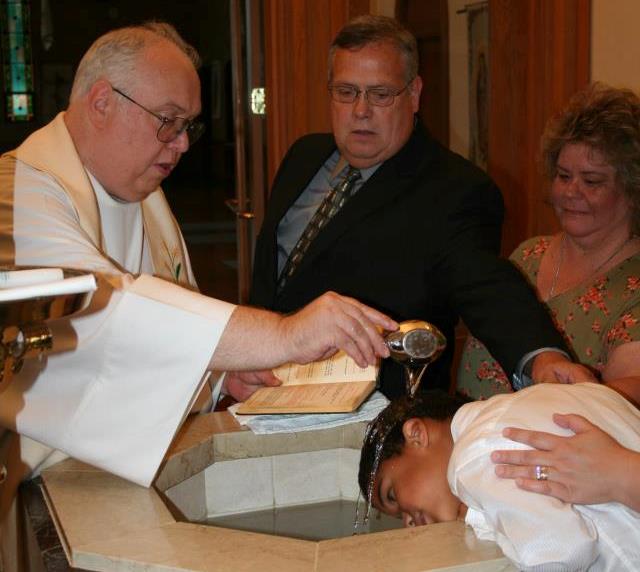
Baptizing the Babies of Same-Sex Couples

How should the pastor proceed when a same-sex couple comes forward, wanting their child to be baptized?

baptism

It is already the case that we get many heterosexual couples wanting their children baptized, even though they are married outside the Church or even cohabitating. In these situations, I will not absolutely forbid baptisms, but I will beseech the couples to do what they can to regularize the relationship. Of course, if the couples have broken up or were only casual with which to begin, then it would be madness to insist upon them marrying. The child should be the fruit of a bond that has blossomed, not an element to manipulate in favor of a marriage that would otherwise never occur. These couples sacramentally married or not, still signify bonds that are in accordance with natural law.

Same-sex unions violate both divine positive law and our understanding of what is and is not “according to nature.” There is no way to make it right unless the couple separate. I had a situation of this sort back in the 1990’s. The grandfather came to see me quite upset because his daughter and her female lover had asked to have their child baptized and the priest said no. They did not know where to turn. The grandfather begged that something might be done. I asked that he send his daughter “and her friend” to see me. I had to disguise the revulsion I felt in hearing their story. They wanted a child and so made an appeal to a gay man. He masturbated into a spoon and then the lesbian couple used the semen to amateurishly inseminate the willing partner. As it turned out, she conceived and they had a little boy. Sometime later I heard there was legal wrangling with the homosexual neighbor who wanted his rights as the biological father. It is my understanding that today many lesbian couples do not even know the source of the seed and the insemination is accomplished through fertility clinics.

Both of the ladies who came to see me were raised in the Church and had attended Catholic schools. The grandfather of the mother had told me that he would do all in his power to make sure the child received a Catholic upbringing. I was blunt with the women, but no one was in the dark about how difficult a situation this was. I asked them point blank, “Can you promise me that despite your relationship you will raise this child as a Catholic, teaching him his prayers and taking him to Mass? They were both polite and agreeable. They both promised. It was not a compromise with which I was happy, but the alternative would punish the child for the sins of others. It seemed to me there was sufficient hope that the child would be raised as a practicing Catholic. I ended up baptizing the child. A person’s salvation might be at stake. In retrospect, I cannot recall what was written in the baptismal registry. I think only the name of the mother was inserted. I did tell them that the choice they made would be difficult. Because of their union, they would not be welcome to receive the Eucharist themselves. Nevertheless, they were adamant that they would still go to Mass and make sure their boy would receive all his sacraments. I recommended that they quietly live their lives, respecting the moral teaching of the Church even though they felt unable to realize it in their relationship. Here too they were agreeable. They felt no need to make their baby the poster child for a cause. I instructed them about how baptism makes the child an inheritor of the kingdom of heaven, a member of the Church, an adopted son or daughter of the Father, kin to Christ and a temple of the Holy Spirit. I added that baptism washes away original sin and invokes saving grace.

Despite their dissent and self-imposed alienation from the Church because of their lifestyle, I urged the couple to pray daily, placing their needs and weakness before the Lord for healing. I wanted them to know that while I disagreed about their personal lifestyle choices; God still loved them and that the Church would not turn her back on them. While their living together was a public statement against Church teaching, it did not have to be a deafening announcement. I urged them to do all they could to avoid scandal, both for themselves and the Church. I felt they had been truthful with me. Otherwise, it is doubtful that I would have offered the sacrament. The godparents were Catholics who were living their lives wholly in accordance with the commandments and precepts of the Church. While always important, here it was absolutely crucial.

  • Today the situation is evidently becoming more common. Either through insemination or adoption, lesbians and homosexuals are becoming parents. Despite their battles with the Church, some still feel an attraction to her message of salvation and sacraments. They want to share this with their children. This is no longer a singular aberration. How do we proceed?
  • Do we have Archdiocesan policies to deal with these situations? Should the Chancery be consulted on each and every case that comes forward? I know the local policies in Washington stipulate that there should be two godparents and that they should be representative of each gender.
  • Can a same-sex family structure constitute a true family?
  • Can parents perpetually in a state of mortal sin genuinely witness to the faith and Gospel?
  • Given the canon law problems, should registries list only one partner or can both be acknowledged?
  • It would be easy enough to list the mother alone but in adoption, there is the claim of two mothers. Should one be listed in the side annotation?
  • We were recently informed to stop listing children as legitimate or not legitimate. Should there not be remarks about a same-sex union?
  • As for liturgical adaptation, will we need a special liturgy to get around the language of a mother/wife and father/husband?
  • Priests will routinely omit the blessing over the mother and father when couples are not married in the Church. Is this justified and should the blessing be omitted over same-sex couples? I would think so.
  • While it is probably good to seek out Archdiocesan consultation, would priests need higher permission to perform such baptisms?
  • Do we have programs in place to offer pastoral care to these children and households after baptism?
  • Would these children be welcome in our Catholic schools?

I can well understand that one answer would not fit all. There might sometimes be little or no hopeful sign that the responsibilities that come along with baptism would be fulfilled. Some treat baptism like magic or as an empty cultural rite of passage. Activists might even exploit a request for baptism to ridicule the Church or to make a political statement. This is where it becomes all the more problematical.

Priests are supposed to be good stewards of the sacraments. And yet, many of us are fearful that we cannot even safeguard the Eucharist at Mass because of policies that place a greater weight on public scandal than actual spiritual readiness and ecclesial unity. Here too, there may be times that being a good steward will mean saying no and facing repercussions. Is it a passive capitulation to just throw up our hands and leave it to God to straighten out?  I suspect so.

The Pope, Pedophiles & a Newspaper with an Agenda

francis2

Why are we suffering again with this “he said” and “he did not say” business? Did no one learn a lesson from the earlier confused ramblings of this aging atheist who interviewed the Pope soon after the election? Does no one keep reliable transcripts or recordings? I had hoped the Vatican would learn now that the left-leaning publications are not to be trusted. They want scandal and will spin anything if it gets what they want, in other words, a diminished Church and lots of publicity and sales. I can appreciate that the Pope would call sexual abuse “leprosy in our house.” That is not surprising. But did he really say there were abusers among the cardinals? I really doubt it. They would have been expunged by now. It would signify the worse possible self-recrimination. Already the Vatican is saying the statement was inaccurate. In other words, the newspaper La Repubblica is LYING! Let us call it what it is. This being the case, why should we regard any of the rest as a reliable interview with Pope Francis?

Of course the damage does not end there. The paper’s founder Eugenio Scalfari offers the article as a “reconstruction” of his one-hour conversation with the Pope. This is the day of digital recording; why must we suffer inaccurate and controversial reconstructions? The Pope is quoted as saying, “Many of my collaborators who fight with me (against pedophilia) reassure me with reliable statistics that say that the level of pedophilia in the Church is about two percent. This data should hearten me but I tell you that it does not hearten me at all. In fact, I think that it is very grave.” The world press grabbed this statement and headlines blasted across the globe that two percent of priests were pedophiles or child molesters! While he probably meant throughout the whole Church, not just the ministries, what is the basis for such an assessment? Is it the statistical average in the world population, Catholic or not? I do not recall any polling or phone calls asking about orientation or perversions. Are these just made-up numbers? Again, if we knew for sure we had potential child molesters in the ranks of the priests, why have they not been removed? Are we just guessing that they might be there given past misconduct?

People are doing the math. As of 2012, if there are some 414,000 priests then at 2%, how many pedophiles does that make? The answer is 8,280! I do not believe it. I think the figures are mere conjecture. Seminary formation would have prevented many such men from being ordained. Others have already been ousted. I would contend that most priests today are no threat to children or other people at risk.

Again the Vatican issued a warning statement that Scalfari has a habit of reconstructing interviews from memory, not recording or taking notes. Why he is one of Italy’s best known Italian journalists is beyond me. It seems to me that he is highly unreliable. The Vatican is telling us that the newspaper is seeking to “manipulate naïve readers.” If that is the case, then why talk to this anti-Catholic newspaper, anyway? It makes no sense to me. These are not our friends. Indeed, it seems that both the Church and the truth are casualties to such interviews.

When recently talking to the victims of abuse, the Holy Father rightly spoke about this as a cause for weeping and how there was a real need for reparation. He compared predator priests to the evil of cults and black Masses. He vowed zero tolerance and that bishops would be held accountable for how the dealt with charges and situations. I would add that we must also be careful not to scapegoat the Church’s ministers as wicked and dangerous men. This would do a disservice to the many saints who sacrifice everything for God and his people.

SLATE: Pope Francis Interview on Pedophilia and Celibacy in the Church

WASHINGTON POST: Did Pope Francis Really Tell a 90 Year Old Atheist Journalist that 1 in 5 Priests are Pedophiles?

Another Fake Priestess Becomes a Fake Bishop

14036376739246b

The National Catholic Reporter never gets things right because its basic agenda is to get things wrong, in other words, dissent. Such is again the case this week with the news headline, “Roman Catholic Womenpriests ordains first bishop from Indiana.” It is silliness because these women have stopped being Catholic and are excommunicates from the Church. They are now their own religion or sect but not Catholic and definitely not Roman. Rome has spoken. Women cannot be ordained. Priestesses are not priests in the New Covenant of Christ.

The article chronicles the life of Nancy Meyer, from a Catholic Franciscan sister to a renegade priest wannabe in 2010. This past Sunday she took her charade to the next level, pretending to be a bishop. She speaks of her call, but it came from other expelled discontents— not from the true Church. This is a free country and she certainly has the right to minister in her faith community; however, it is grossly wrong to identify it with Roman Catholicism. They argue the validity of their orders because of the involvement of a number of male bishops. However, I suspect this is a fiction in that they refuse to identify this so-called pedigree. But it would not matter anyway. “You can’t make apple juice with oranges.” The Church does not have the authority or power to ordain women. The priest is an icon for Christ, the groom to his bride, the Church. There is no sacramental lesbianism, bride relating to the bride. The maleness of Christ is a constitutive element of his identity and his priesthood. The pagans had priestesses, but Catholicism has priests (a male noun). The simulation of sacraments is a crime in the Church and all those involved with the attempted ordination of women are excommunicated. They are no longer members of the Church. I shudder to imagine what this does to grace and the issue of salvation.

Note that the event could only squeeze 150 attendees from all of ten countries. That is pretty sad. The event was held at Calvary United Methodist Church in Brownsburg. Would that not make them more Methodist than Catholic? But I guess they only rented the worship space, it is a whole lot prettier than Fr. Brown’s barn or the local bowling alley. The infamous Christine Mayr-Lumetzberger was among the seven pseudo-bishops present to do the deed. It is interesting that wannabe bishop Christy admits that most Catholic women disparage women who want to be priests. I suppose that is because most women have some sense. She laments that they are not supported in their calls, but this begs the issue of authenticating a calling. Christ calls us through the mechanism of his Church. There is no religious vocation that sidesteps this pattern.

They do provide a close-up view of the development of a cult. A tiny offshoot from Catholicism, they view themselves as the Church and regard worldwide Roman Catholicism as in the wrong. They have established their own clergy. The feminist paradigm is the measure of everything they believe and even affects how they dress. They have no qualms about re-writing the liturgy to reflect their views. Many of them view holy orders as more a power grab than as an opportunity for humble service. They want to be classified as Catholic and yet they would redefine its meaning beyond recognition. While it sounds pejorative, many of the adherents of the Womenpriests movement come across as somewhat unhinged.

These girls are all dress up and show but there is nothing real about what they are doing. They are counterfeit priests. It is really quite tragic and I feel sorry for them. They have made of themselves a laughing stock and embarrassment to Catholic women everywhere.

The Scurrilous Mysteries

rosaries_06

1. Demanding We Eat His Flesh & Drink His Blood (John 6:41-44;51-69)

The Jews murmured about him because he said, “I am the bread that came down from heaven,” and they said, “Is this not Jesus, the son of Joseph? Do we not know his father and mother? Then how can he say, ‘I have come down from heaven’?” Jesus answered and said to them, “Stop murmuring among yourselves. No one can come to me unless the Father who sent me draw him, and I will raise him on the last day. / “I am the living bread that came down from heaven; whoever eats this bread will live forever; and the bread that I will give is my flesh for the life of the world.” The Jews quarreled among themselves, saying, “How can this man give us his flesh to eat?” Jesus said to them, “Amen, amen, I say to you, unless you eat the flesh of the Son of Man and drink his blood, you do not have life within you. Whoever eats my flesh and drinks my blood has eternal life, and I will raise him on the last day. For my flesh is true food, and my blood is true drink. Whoever eats my flesh and drinks my blood remains in me and I in him. Just as the living Father sent me and I have life because of the Father, so also the one who feeds on me will have life because of me. This is the bread that came down from heaven. Unlike your ancestors who ate and still died, whoever eats this bread will live forever.” These things he said while teaching in the synagogue in Capernaum. Then many of his disciples who were listening said, “This saying is hard; who can accept it?” Since Jesus knew that his disciples were murmuring about this, he said to them, “Does this shock you? What if you were to see the Son of Man ascending to where he was before? It is the spirit that gives life, while the flesh is of no avail. The words I have spoken to you are spirit and life. But there are some of you who do not believe.” Jesus knew from the beginning the ones who would not believe and the one who would betray him. And he said, “For this reason I have told you that no one can come to me unless it is granted him by my Father.” As a result of this, many of his disciples returned to their former way of life and no longer accompanied him. Jesus then said to the Twelve, “Do you also want to leave?” Simon Peter answered him, “Master, to whom shall we go? You have the words of eternal life. We have come to believe and are convinced that you are the Holy One of God.”

2. Condemned for Forgiving Sins (Mark 2:7-12)

When Jesus returned to Capernaum after some days, it became known that he was at home. Many gathered together so that there was no longer room for them, not even around the door, and he preached the word to them. They came bringing to him a paralytic carried by four men. Unable to get near Jesus because of the crowd, they opened up the roof above him. After they had broken through, they let down the mat on which the paralytic was lying. When Jesus saw their faith, he said to the paralytic, “Child, your sins are forgiven.” Now some of the scribes were sitting there asking themselves, “Why does this man speak that way? He is blaspheming. Who but God alone can forgive sins?” Jesus immediately knew in his mind what they were thinking to themselves, so he said, “Why are you thinking such things in your hearts? Which is easier, to say to the paralytic, ‘Your sins are forgiven,’ or to say, ‘Rise, pick up your mat and walk’? But that you may know that the Son of Man has authority to forgive sins on earth”— he said to the paralytic, “I say to you, rise, pick up your mat, and go home.” He rose, picked up his mat at once, and went away in the sight of everyone. They were all astounded and glorified God, saying, “We have never seen anything like this.”

3. Forbidding Divorce & Adultery (Matthew 19:3-12)

Some Pharisees approached him, and tested him, saying, “Is it lawful for a man to divorce his wife for any cause whatever?” He said in reply, “Have you not read that from the beginning the Creator ‘made them male and female’ and said, ‘For this reason a man shall leave his father and mother and be joined to his wife, and the two shall become one flesh’? So they are no longer two, but one flesh. Therefore, what God has joined together, no human being must separate.” They said to him, “Then why did Moses command that the man give the woman a bill of divorce and dismiss her?” He said to them, “Because of the hardness of your hearts Moses allowed you to divorce your wives, but from the beginning it was not so. I say to you, whoever divorces his wife (unless the marriage is unlawful) and marries another commits adultery.” His disciples said to him, “If that is the case of a man with his wife, it is better not to marry.” He answered, “Not all can accept this word, but only those to whom that is granted. Some are incapable of marriage because they were born so; some, because they were made so by others; some, because they have renounced marriage for the sake of the kingdom of heaven. Whoever can accept this ought to accept it.”

4. Commending the Unclean Woman Who Touched Him (Luke 8:42-48)

As he went, the crowds almost crushed him. And a woman afflicted with hemorrhages for twelve years, who had spent her whole livelihood on doctors and was unable to be cured by anyone, came up behind him and touched the tassel on his cloak. Immediately her bleeding stopped. Jesus then asked, “Who touched me?” While all were denying it, Peter said, “Master, the crowds are pushing and pressing in upon you.” But Jesus said, “Someone has touched me; for I know that power has gone out from me.” When the woman realized that she had not escaped notice, she came forward trembling. Falling down before him, she explained in the presence of all the people why she had touched him and how she had been healed immediately. He said to her, “Daughter, your faith has saved you; go in peace.”

5. Charged with Consorting with Demons (Matthew 12:22-32)

Then they brought to him a demoniac who was blind and mute. He cured the mute person so that he could speak and see. All the crowd was astounded, and said, “Could this perhaps be the Son of David?” But when the Pharisees heard this, they said, “This man drives out demons only by the power of Beelzebul, the prince of demons.” But he knew what they were thinking and said to them, “Every kingdom divided against itself will be laid waste, and no town or house divided against itself will stand. And if Satan drives out Satan, he is divided against himself; how, then, will his kingdom stand? And if I drive out demons by Beelzebul, by whom do your own people drive them out? Therefore they will be your judges. But if it is by the Spirit of God that I drive out demons, then the kingdom of God has come upon you. How can anyone enter a strong man’s house and steal his property, unless he first ties up the strong man? Then he can plunder his house. Whoever is not with me is against me, and whoever does not gather with me scatters. Therefore, I say to you, every sin and blasphemy will be forgiven people, but blasphemy against the Spirit will not be forgiven. And whoever speaks a word against the Son of Man will be forgiven; but whoever speaks against the holy Spirit will not be forgiven, either in this age or in the age to come.

The Scandalous Mysteries

rosaries_061. Meeting the Samaritan Woman at the Well (John 4:4-30;39-42)

He had to pass through Samaria. So he came to a town of Samaria called Sychar, near the plot of land that Jacob had given to his son Joseph. Jacob’s well was there. Jesus, tired from his journey, sat down there at the well. It was about noon. A woman of Samaria came to draw water. Jesus said to her, “Give me a drink.” His disciples had gone into the town to buy food. The Samaritan woman said to him, “How can you, a Jew, ask me, a Samaritan woman, for a drink?” (For Jews use nothing in common with Samaritans.) Jesus answered and said to her, “If you knew the gift of God and who is saying to you, ‘Give me a drink,’ you would have asked him and he would have given you living water.” The woman said to him, “Sir, you do not even have a bucket and the cistern is deep; where then can you get this living water? Are you greater than our father Jacob, who gave us this cistern and drank from it himself with his children and his flocks? Jesus answered and said to her, “Everyone who drinks this water will be thirsty again; but whoever drinks the water I shall give will never thirst; the water I shall give will become in him a spring of water welling up to eternal life.” The woman said to him, “Sir, give me this water, so that I may not be thirsty or have to keep coming here to draw water.” Jesus said to her, “Go call your husband and come back.” The woman answered and said to him, “I do not have a husband.” Jesus answered her, “You are right in saying, ‘I do not have a husband.’ For you have had five husbands, and the one you have now is not your husband. What you have said is true.” The woman said to him, “Sir, I can see that you are a prophet. Our ancestors worshiped on this mountain; but you people say that the place to worship is in Jerusalem.” Jesus said to her, “Believe me, woman, the hour is coming when you will worship the Father neither on this mountain nor in Jerusalem. You people worship what you do not understand; we worship what we understand, because salvation is from the Jews. But the hour is coming, and is now here, when true worshipers will worship the Father in Spirit and truth; and indeed the Father seeks such people to worship him. God is Spirit, and those who worship him must worship in Spirit and truth.” The woman said to him, “I know that the Messiah is coming, the one called the Anointed; when he comes, he will tell us everything.” Jesus said to her, “I am he, the one who is speaking with you.” At that moment his disciples returned, and were amazed that he was talking with a woman, but still no one said, “What are you looking for?” or “Why are you talking with her?” The woman left her water jar and went into the town and said to the people, “Come see a man who told me everything I have done. Could he possibly be the Messiah?” They went out of the town and came to him. / Many of the Samaritans of that town began to believe in him because of the word of the woman who testified, “He told me everything I have done.” When the Samaritans came to him, they invited him to stay with them; and he stayed there two days. Many more began to believe in him because of his word, and they said to the woman, “We no longer believe because of your word; for we have heard for ourselves, and we know that this is truly the savior of the world.”

2. Eating with Tax Collectors & Sinners (Mark 2:13-17)

Once again he went out along the sea. All the crowd came to him and he taught them. As he passed by, he saw Levi, son of Alphaeus, sitting at the customs post. He said to him, “Follow me.” And he got up and followed him. While he was at table in his house,* many tax collectors and sinners sat with Jesus and his disciples; for there were many who followed him. Some scribes who were Pharisees saw that he was eating with sinners and tax collectors and said to his disciples, “Why does he eat with tax collectors and sinners?” Jesus heard this and said to them that, “Those who are well do not need a physician, but the sick do. I did not come to call the righteous but sinners.”

3. Fraternizing with the Roman Enemy (Matthew 8:5-13)

When he entered Capernaum, a centurion approached him and appealed to him, saying, “Lord, my servant is lying at home paralyzed, suffering dreadfully.” He said to him, “I will come and cure him.” The centurion said in reply, “Lord, I am not worthy to have you enter under my roof; only say the word and my servant will be healed. For I too am a person subject to authority, with soldiers subject to me. And I say to one, ‘Go,’ and he goes; and to another, ‘Come here,’ and he comes; and to my slave, ‘Do this,’ and he does it.” When Jesus heard this, he was amazed and said to those following him, “Amen, I say to you, in no one in Israel have I found such faith. I say to you, many will come from the east and the west, and will recline with Abraham, Isaac, and Jacob at the banquet in the kingdom of heaven, but the children of the kingdom will be driven out into the outer darkness, where there will be wailing and grinding of teeth.” And Jesus said to the centurion, “You may go; as you have believed, let it be done for you.” And at that very hour his servant was healed.

4. Dismissing the Woman Caught in Adultery (John 7:53-8:11)

Then each went to his own house, while Jesus went to the Mount of Olives. But early in the morning he arrived again in the temple area, and all the people started coming to him, and he sat down and taught them. Then the scribes and the Pharisees brought a woman who had been caught in adultery and made her stand in the middle. They said to him, “Teacher, this woman was caught in the very act of committing adultery. Now in the law, Moses commanded us to stone such women. So what do you say?” They said this to test him, so that they could have some charge to bring against him. Jesus bent down and began to write on the ground with his finger. But when they continued asking him, he straightened up and said to them, “Let the one among you who is without sin be the first to throw a stone at her.” Again he bent down and wrote on the ground. And in response, they went away one by one, beginning with the elders. So he was left alone with the woman before him. Then Jesus straightened up and said to her, “Woman, where are they? Has no one condemned you?” She replied, “No one, sir.” Then Jesus said, “Neither do I condemn you. Go, and from now on do not sin anymore.”

5. Allowing the Sinner Woman to Anoint Him (Luke 7:36-50)

A Pharisee invited him to dine with him, and he entered the Pharisee’s house and reclined at table. Now there was a sinful woman in the city who learned that he was at table in the house of the Pharisee. Bringing an alabaster flask of ointment, she stood behind him at his feet weeping and began to bathe his feet with her tears. Then she wiped them with her hair, kissed them, and anointed them with the ointment. When the Pharisee who had invited him saw this he said to himself, “If this man were a prophet, he would know who and what sort of woman this is who is touching him, that she is a sinner.” Jesus said to him in reply, “Simon, I have something to say to you.” “Tell me, teacher,” he said. “Two people were in debt to a certain creditor; one owed five hundred days’ wages and the other owed fifty. Since they were unable to repay the debt, he forgave it for both. Which of them will love him more?” Simon said in reply, “The one, I suppose, whose larger debt was forgiven.” He said to him, “You have judged rightly.” Then he turned to the woman and said to Simon, “Do you see this woman? When I entered your house, you did not give me water for my feet, but she has bathed them with her tears and wiped them with her hair. You did not give me a kiss, but she has not ceased kissing my feet since the time I entered. You did not anoint my head with oil, but she anointed my feet with ointment. So I tell you, her many sins have been forgiven; hence, she has shown great love. But the one to whom little is forgiven, loves little.” He said to her, “Your sins are forgiven.” The others at table said to themselves, “Who is this who even forgives sins?” But he said to the woman, “Your faith has saved you; go in peace.”

The Notorious Mysteries

rosaries_06

1. Whipping the Money Changers (John 2:13-22)

Since the Passover of the Jews was near, Jesus went up to Jerusalem. He found in the temple area those who sold oxen, sheep, and doves, as well as the money-changers seated there. He made a whip out of cords and drove them all out of the temple area, with the sheep and oxen, and spilled the coins of the money-changers and overturned their tables, and to those who sold doves he said, “Take these out of here, and stop making my Father’s house a marketplace.” His disciples recalled the words of scripture, “Zeal for your house will consume me.” At this the Jews answered and said to him, “What sign can you show us for doing this?” Jesus answered and said to them, “Destroy this temple and in three days I will raise it up.” The Jews said, “This temple has been under construction for forty-six years, and you will raise it up in three days?” But he was speaking about the temple of his body. Therefore, when he was raised from the dead, his disciples remembered that he had said this, and they came to believe the scripture and the word Jesus had spoken.

2. Violating the Sabbath (Matthew 12:1-14)

At that time Jesus was going through a field of grain on the sabbath. His disciples were hungry and began to pick the heads of grain and eat them. When the Pharisees saw this, they said to him, “See, your disciples are doing what is unlawful to do on the sabbath.” He said to them, “Have you not read what David did when he and his companions were hungry, how he went into the house of God and ate the bread of offering, which neither he nor his companions but only the priests could lawfully eat? Or have you not read in the law that on the sabbath the priests serving in the temple violate the sabbath and are innocent? I say to you, something greater than the temple is here. If you knew what this meant, ‘I desire mercy, not sacrifice,’ you would not have condemned these innocent men. For the Son of Man is Lord of the sabbath.” Moving on from there, he went into their synagogue. And behold, there was a man there who had a withered hand. They questioned him, “Is it lawful to cure on the sabbath?” so that they might accuse him. He said to them, “Which one of you who has a sheep that falls into a pit on the sabbath will not take hold of it and lift it out? How much more valuable a person is than a sheep. So it is lawful to do good on the sabbath.” Then he said to the man, “Stretch out your hand.” He stretched it out, and it was restored as sound as the other. But the Pharisees went out and took counsel against him to put him to death.

3. Castigating the Jewish Leadership (Matthew 23:1-7;13-17;23-33)

Then Jesus spoke to the crowds and to his disciples, saying, “The scribes and the Pharisees have taken their seat on the chair of Moses. Therefore, do and observe all things whatsoever they tell you, but do not follow their example. For they preach but they do not practice. They tie up heavy burdens hard to carry and lay them on people’s shoulders, but they will not lift a finger to move them. All their works are performed to be seen. They widen their phylacteries and lengthen their tassels. They love places of honor at banquets, seats of honor in synagogues, greetings in marketplaces, and the salutation ‘Rabbi.’ / Woe to you, scribes and Pharisees, you hypocrites. You lock the kingdom of heaven before human beings. You do not enter yourselves, nor do you allow entrance to those trying to enter. “Woe to you, scribes and Pharisees, you hypocrites. You traverse sea and land to make one convert, and when that happens you make him a child of Gehenna twice as much as yourselves. Woe to you, blind guides, who say, ‘If one swears by the temple, it means nothing, but if one swears by the gold of the temple, one is obligated.’ Blind fools, which is greater, the gold, or the temple that made the gold sacred? / “Woe to you, scribes and Pharisees, you hypocrites. You pay tithes of mint and dill and cummin, and have neglected the weightier things of the law: judgment and mercy and fidelity. [But] these you should have done, without neglecting the others. Blind guides, who strain out the gnat and swallow the camel! “Woe to you, scribes and Pharisees, you hypocrites. You cleanse the outside of cup and dish, but inside they are full of plunder and self-indulgence. Blind Pharisee, cleanse first the inside of the cup, so that the outside also may be clean. “Woe to you, scribes and Pharisees, you hypocrites. You are like whitewashed tombs, which appear beautiful on the outside, but inside are full of dead men’s bones and every kind of filth. Even so, on the outside you appear righteous, but inside you are filled with hypocrisy and evildoing. “Woe to you, scribes and Pharisees, you hypocrites. You build the tombs of the prophets and adorn the memorials of the righteous, and you say, ‘If we had lived in the days of our ancestors, we would not have joined them in shedding the prophets’ blood.’ Thus you bear witness against yourselves that you are the children of those who murdered the prophets; now fill up what your ancestors measured out! You serpents, you brood of vipers, how can you flee from the judgment of Gehenna?

4. Permitting the Eating of Unclean Foods (Mark 7:14-23)

He summoned the crowd again and said to them, “Hear me, all of you, and understand. Nothing that enters one from outside can defile that person; but the things that come out from within are what defile.” When he got home away from the crowd his disciples questioned him about the parable. He said to them, “Are even you likewise without understanding? Do you not realize that everything that goes into a person from outside cannot defile, since it enters not the heart but the stomach and passes out into the latrine?” (Thus he declared all foods clean.) “But what comes out of a person, that is what defiles. From within people, from their hearts, come evil thoughts, unchastity, theft, murder, adultery, greed, malice, deceit, licentiousness, envy, blasphemy, arrogance, folly. All these evils come from within and they defile.”

5. Disowned for Making Himself God’s Son (Luke 22:66-71; Matthew 26:65-67)

When day came the council of elders of the people met, both chief priests and scribes, and they brought him before their Sanhedrin. They said, “If you are the Messiah, tell us,” but he replied to them, “If I tell you, you will not believe, and if I question, you will not respond. But from this time on the Son of Man will be seated at the right hand of the power of God.” They all asked, “Are you then the Son of God?” He replied to them, “You say that I am.” Then they said, “What further need have we for testimony? We have heard it from his own mouth.” / Then the high priest tore his robes and said, “He has blasphemed! What further need have we of witnesses? You have now heard the blasphemy; what is your opinion?” They said in reply, “He deserves to die!” Then they spat in his face and struck him, while some slapped him…