• Our Blogger

    Fr. Joseph Jenkins

  • The blog header depicts an important and yet mis-understood New Testament scene, Jesus flogging the money-changers out of the temple. I selected it because the faith that gives us consolation can also make us very uncomfortable. Both Divine Mercy and Divine Justice meet in Jesus. Priests are ministers of reconciliation, but never at the cost of truth. In or out of season, we must be courageous in preaching and living out the Gospel of Life. The title of my blog is a play on words, not Flogger Priest but Blogger Priest.

  • Archives

  • Categories

  • Recent Posts

  • Recent Comments

    Josh's avatarJosh on Mixed Signals about Homosexual…
    gjmc90249's avatargjmc90249 on Marian Titles & the Mantle…
    Jeremy Kok's avatarJeremy Kok on Ask a Priest
    Anonymous's avatarAnonymous on Ask a Priest
    forsamuraimarket's avatarforsamuraimarket on Ask a Priest

[65] Second Sunday of Ordinary Time

Readings: 1 Samuel 3:3-10, 19 / Psalm 40 / 1 Cor. 6:13-15, 17-20 / John 1:35-42

151603719451959562

The first reading can be divided into three segments: (1) the triple call of Samuel; (2) God reveals his presence in response to Samuel’s readiness; and (3) Samuel would proclaim what he had heard, “…not permitting any word of his to be without effect.” (The liturgical selection skips where he informs Eli of God’s message.) We find this same pattern in our vocation as believers.  Three times Samuel is called and he fails to recognize that the source is not Eli but almighty God.  Eli has to assist him and tells him to respond, on the fourth time, “Speak, LORD, for your servant is listening.” Every Christian believer is summoned to be a prophet and that requires that we too might discern the voice of God.  Against the loud noise of the world, that divine voice might come across as a whisper.  As such we must be attentive and listen closely.  Also, like Samuel we might get confused between the call of God and that of men.  We need to know the difference lest we find ourselves seduced by the world and listening to the wrong voices.  These voices appeal to selfishness and sin.  What do they tell us? “If it feels good then do it.  You owe nothing to anyone.  No one can tell you what to do.  Life is short so always make yourself number one.  Get what you can no matter who it hurts.” The voice of God by contrast is barely audible.  What does God say? “Love one another as I have loved you. There is no greater love than to lay down your life for your friends.  If you desire perfection than sell all you have, give to the poor and then follow me.  Forgive all wrongs. Love those who hate you.”  I suspect that many of us sometimes listen to the wrong voices.  But ours is a jealous God and he does not want to share us.

Note also that Samuel kept going back to sleep.  Our Lord speaks about such sleep as the weakness of a fallen nature.  “The spirit is willing but the flesh is weak.” As prophets we are beckoned as sentinels or watchmen for the Lord.  We are called to be awake so as to hear the Lord and to be attentive when he comes.  God reveals his presence to Samuel.  As prophets who await the second coming, we also discern the presence of God. We draw others to the presence and saving activity of Christ in the proclaimed Word and in the sacraments, especially the Eucharist.  What we receive from the Lord, we must share with others.  As Christians, formed within the body of Christ by the saving truths of Scripture and Tradition, we must proclaim our faith and values to others both inside and outside the Church.  As the second reading reminds us, we “are not [our] own, [we] have been purchased at a price,” and while in the flesh or the body mimic the angels in glorifying God.

The psalm reiterates our divine calling. God takes the initiative and sows the seed of faith within us.  God places the “new song” upon our lips, giving us his mind and the words to say.  God is the one who opens our ears so that we might hear and obey him. God has planted his “law within [our] hearts.”  All this must be appreciated in the context of gift.  It is not enough to encounter God.  Rather, we must have a relationship with him.  We cannot speak his Good News if we do not know him.  Of course, faith is about more than knowing the catechism. God wants our hearts.  Any who would be counted a disciple must love the Lord.  This is what transforms fidelity from an arduous and reluctant duty to an eager and joyous service.  We should not grumble in our fidelity, rather it should by an expression of adamant praise.

Just as Eli alerted Samuel to the calling and presence of God. John the Baptizer points Jesus out to his disciples as “the Lamb of God.” They immediately follow him. Andrew brings his brother Simon to Jesus, telling him, “We have found the Messiah.” When Jesus asks as to what they are seeking, they merely ask where he is staying. Jesus responds, “Come, and you will see.” Our Lord gives the same summons to you and me.  We are invited into the story of Jesus, the very story of salvation.  He wants us to walk with him and to listen to him.  He reveals himself in the Scriptures, the teachings of the Church and in the quiet whisper we hear at prayer. A whisper is a quiet or breathy way of talking.  Breathing is intimately connected to life.  Stop breathing and you die.  The breath of God brings forth creation itself in the book of Genesis.  The breath of Christ makes possible forgiveness, healing and eternal life.  Note that in the liturgy the priest breathes into the chalice as the wine will be transformed into the saving blood or presence of Christ.  The whisper of God is literally God breathing his life into us.

Notice in the Gospel reading that Jesus immediately gives Simon a new name, Cephas or Peter or Rock.  While it says something singular about this apostle, we can also infer something about ourselves. Any who would respond to the calling of God are not left unchanged.  This is a truth we see again and again in Scripture. One of the most striking examples is Moses when he comes down the mountain after conversing with the Almighty: “As Moses came down from Mount Sinai with the two tablets of the covenant in his hands, he did not know that the skin of his face had become radiant while he spoke with the LORD. When Aaron, then, and the other Israelites saw Moses and noticed how radiant the skin of his face had become, they were afraid to come near him” (Exodus 34:29-30). Particularly in our faith and baptism we are born again—no longer just creatures of God but adopted sons and daughters to the Father, temples of the Holy Spirit, filled with sanctifying grace and transformed into the likeness of Christ.

  • Do we take time each day to pray and quietly listen for the Lord?
  • Have we made our lives too busy for God to reach us?
  • Are we truly prophets of the Lord or do we belong to the world?
  • Do we take guidance from our pastors and other faithful believers?
  • When was the last time that we witnessed for Christ and his Church?
  • Do we see our obedience to the commandments as a joy or as a burden?

[20] The Epiphany of the Lord

Readings: 1 Isaiah 60:1-6 / Psalm 72 / Ephesians 3:2-3, 5-6 / Matthew 2:1-12

151533419237291466

We are fascinated by the story of the three wise men that came to pay homage to Christ, the newborn king.  Just as shepherds symbolized the Jewish people who had long awaited the coming of the Messiah; the magi represented the Gentiles, who would be included within the saving intervention of the Christ.  The healing of a broken world would begin.  The three magi have been called astrologers and later tradition referred them as kings.  All earthly kings would be called to imitate the magi in bending the knee to the Christ Child.

We know little to nothing about the magi.  They are men cloaked in mystery.  Learned scribes, they have interpreted the ancient scrolls and prophecy.  They follow a star and come to the scene of the nativity.  Their benevolence is proven when by night they steal their way out of Bethlehem, suspicious of the intentions of the elder Herod.  The warning they receive would be verified when Herod, fearful of being displaced by the newborn king, orders the massacre of the Holy Innocents. The gifts they bring were the typical offerings made to royalty or even to a deity.  Just as today, gold was a precious metal.  Frankincense was also employed by royalty and increasingly in worship as incense. Kings were typically anointed and myrrh was oil frequently used for this purpose.  Isaiah’s prophesy would be fulfilled:  “Caravans of camels shall fill you, dromedaries from Midian and Ephah; all from Sheba shall come bearing gold and frankincense, and proclaiming the praises of the LORD.”

The magi came guided by a star, but the one who would one day be called the Star of the Sea, and who always summoned her children to Christ, was the Blessed Virgin Mary.  They first visited Herod, and while he did not know where the promised one might be, it was apparent that he was familiar with the ancient foretelling.  However, he was more a political animal than a man of faith.  He allowed himself to be a dupe for Rome so as to maintain his kingdom; there was no way that he was going to allow his precarious situation to be disturbed by a new born king, especially not one augured to topple their enemies and to restore the Davidic kingdom. Note the odd disparity, these three foreigners had spent several years seeking the child of promise; and yet old Herod, a member of God’s chosen people, neither sought nor wanted any part of him.  This would remain the situation three decades later with another Herod and a crowd that would shout to the Roman procurator, “We have no God but Caesar!”

The telling intrigues us; but we do much to fill in the gaps.  The Scriptures do not define the visitors as kings.  Indeed, we are not given a number. Nevertheless, the legacy of tradition and imagination gives us three magi, even giving them names.  Melchior of Persia carries the valuable gold. Gaspar (or Kaspar) of India offers frankincense. Balthasar of Arabia brings the myrrh.  If the shepherds represent the Jewish poor, these men signify the Gentile rich. Traditionally, a spiritual meaning is given to the gifts.  Gold represents Christ’s royal identity.  He will combine the Davidic kingship with the royal household of heaven.  Frankincense is connected to priestly sacrifice.  Christ would be the one true priest who would offer not the grain of the field or animals but his very self as the victim to atone for sin.  While oil is used both to anoint kings and those called to priestly service, myrrh may have also prefigured Christ’s death and the anointing of the body. It is argued that the anointing comes with the birth because Jesus is born to die for you and me.  It is also conjectured that the myrrh and anointing would have to come early in the story of Christ because there is no opportunity at the end when he rises from the dead.  Similarly he is anointed in Bethany just prior to his betrayal by Judas.  After his death, we read the following: “When the sabbath was over, Mary Magdalene, Mary, the mother of James, and Salome bought spices so that they might go and anoint him. Very early when the sun had risen, on the first day of the week, they came to the tomb. They were saying to one another, ‘Who will roll back the stone for us from the entrance to the tomb?’ When they looked up, they saw that the stone had been rolled back; it was very large. On entering the tomb they saw a young man sitting on the right side, clothed in a white robe, and they were utterly amazed. He said to them, ‘Do not be amazed! You seek Jesus of Nazareth, the crucified. He has been raised; he is not here. Behold, the place where they laid him.’” Our Lord begins his life in the stable of the nativity, little more than a cave on the side of the hill.  He rises to eternal life in another cave, a tomb that could not contain him.  As a vulnerable and dependent child others came to him.  As the immortal and risen Christ he will go out to the entire world in Word and Sacrament.  Present to all who would receive him in faith and grace, he would no longer appear to us face-to-face; however, we will never be orphaned and he promises to come again in glory.

What happened to the gifts? We do not know. While it is probably more representative of human fancy than historical truth, certain stories are told.  One tale was that Joseph used the gold at the time of their flight into Egypt, both for the expense of the journey and to pay off or bribe one of the soldiers involved with the martyrdom of the Holy Innocents.  If they treasured the frankincense or incense, they may have presented it as a gift to the priest at the temple when Jesus was twelve years old.  As for the myrrh, it would seem likely that it was used to anoint Joseph’s body for burial. His calling as the Lord’s earthly foster father had come to an end. Joseph was a good man but even good men might sometimes get in the way, especially the one who was the protector of the Holy Family.  He would have to leave the world before our Lord could begin his three years of ministry, a final journey that would take him to the Cross.  Celebrating the Epiphany, I have a few questions we might reflect upon:

  • Do we seek Christ and always answer the summons to worship him at Mass?
  • Angels and then shepherds announced the Good News; have we done our part to transmit our saving faith to others?
  • We gave and received gifts at Christmas; what (if anything) did we give Jesus?
  • Would we let go of everything to possess Christ as our treasure, or are there things we would be unwilling to surrender?
  • Old Herod placed his politics and self over faith and the Lord; where do we place the priority in our own lives?
  • Do we discern the presence of Christ in the likeness of others, especially children, born and unborn?
  • Are men inspired by Joseph to be responsible for their actions, faithful to their duties and respectful of women as he was to Mary?
  • Do women realize their high calling in emulating Mary’s assent to God and her maternal love?

The Heat & Controversy Continues…

threebishops

The three bishops essentially cite Pope John Paul II. The argument seems more and more with the historical Magisterium itself and settled doctrine. Here is one instance:

“The other principle is that of truth and consistency, whereby the church does not agree to call good evil and evil good. Basing herself on these two complementary principles, the church can only invite her children who find themselves in these painful situations to approach the divine mercy by other ways, not however through the sacraments of penance and the eucharist until such time as they have attained the required dispositions” (John Paul II, Apostolic Exhortation Reconciliatio et Paenitentia, 34).

When it comes to the “ordinary magisterium” and opinions that conflict with settled doctrine, filial correction is an act of loyalty. Indeed, silence would be the act of betrayal.

While annulments are now free (they used to cost a thousand dollars or more) this is the first year in the Archdiocese of Washington (so I am told) that we have not had a backlog of cases. Many couples in irregular unions now feel that annulments are unnecessary and that they can freely return to the sacraments. I have had several people in my parish drop writing their cases while citing news about the Pope and “changes that are coming.” Misunderstandings abound… but there is also legitimate confusion where there should be clarity.

There are a number of voices that interpret any criticism or request for clarification as disloyalty to the Pope and as dissent.  However, one cannot be a dissenter when he or she stands with the long-standing and immutable doctrines of the Catholic faith.  One critic said that we should immediately discount the remarks of these “no name” bishops.  But note that they quote the saintly Pope John Paul II of living memory!  Further, Bishop Athanasius Schneider is not a “no name” bishop. He is a man dedicated to Catholic truth and one who has paid his dues in terms of faith witness. Although he is German, his family was sent to a gulag by Stalin. His mother was imprisoned and martyred in 1963 for helping and sheltering other Christians and a Ukrainian priest. He grew up in the outlawed underground Catholic Church and took his early sacraments in secret. He is the auxiliary bishop of Astana, Kazakhstan and titular bishop of Celerina. He has added his voice to many others in regard to the interpretation of Amoris Laetitia. While whole conferences of bishops have offered correctives, as in Poland, there are notable names daily added to the list as having serious concerns. The names (to name a few) include Cardinal Burke, Archbishop Chaput, Archbishop Sample, the Confraternity of Catholic Clergy, and two respected Catholic philosophers, John Finnis and Germain Grisez.

Popes can interpret but they cannot reverse or make up new Church teachings. The case must be made, as Cardinal Wuerl suggests, that Church praxis and discipline can change without altering Church doctrine. However, it has not yet been made and many of us cannot imagine how it might be done. One cannot legitimately silence a debate or discussion with ecclesial authority when the overwhelming gravity seems entirely with traditional and perpetual teaching. Those who claim to be following the Holy Father are suggesting that we can invite those in adulterous unions to receive the sacraments, including both the Eucharist and confessional absolution. A number of priests feel, as I do, that this would make us accomplices in the mortal sin of others (who are neither contrite nor who have a firm purpose of amendment).

Marco Tosatti’s sensational blog, in my estimation goes too far. He writes:

“La mia fonte in Vaticano mi ha confidato che ieri sera Bergoglio si è trattenuto a Santa Marta con diversi ‘addetti stampa’ vaticani e ‘consiglieri’ vari per una riunione sul come affrontare questo nuovo ‘imprevisto’ della Correzione dei Vescovi di Astana. La fonte mi ha detto che Omissis era furibondo. E’ andato su tutte le furie. Perchè non sopporta nessuna opposizione. Lo hanno sentito urlare: ‘Se ne pentiranno! Se ne pentiranno amaramente!’. Riferito ovviamente ai coraggiosi Vescovi che hanno ‘osato’ contraddire il neovangelo della neochiesa: l’Amoris Laetitia.”

This is really more gossip and possible calumny than information that furthers the discussion. I just cannot imagine the vindictiveness that the blogger suggests. Absent is the charity exhibited by the many bishops and priests wanting clarification while rightly professing fidelity and respect to the Holy See.

The best posture is to pray for the Holy Father and for faithful and loyal clergy who are trying to safeguard the truth while showing real compassion to sinners. Pray for the couples and families as well… many of us want to bring them spiritual medicine, not placebos.

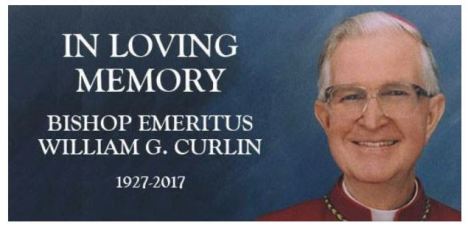
Bishop William Curlin Dies: Rest in Peace

curlin

Bishop Emeritus William G. Curlin, the third bishop of the Diocese of Charlotte, passed away Dec. 23:

The reception of the body and a vigil prayer service will take place at St. Gabriel Church, 3016 Providence Road in Charlotte, at 7 p.m. Monday, Jan. 1. The Mass of Christian Burial will be celebrated at 11 a.m. Tuesday, Jan. 2, also at St. Gabriel Church. Following the funeral Mass, Bishop Curlin will be buried at Belmont Abbey in Belmont.

Bishop, then Msgr. Curlin was our Vocations Director for Washington. He was the pastor of Old St. Mary’s in Chinatown. He accepted me into the seminary back in 1978. God bless him.

Eternal rest, grant unto him, O Lord, and let perpetual light shine upon him.

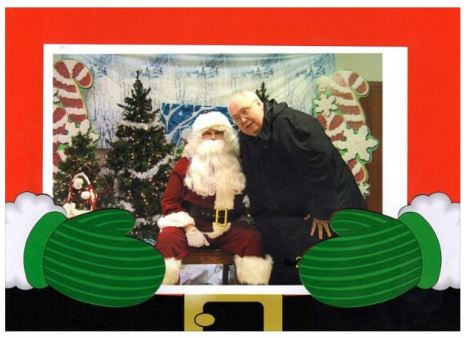
Merry Christmas!

christmas

Lunch with Santa 2017

Is There a Pressing Need to Change the Our Father?

ourfather

The Greek verb is εἰσφέρω which is usually rendered as “lead into” or “bring in.” While I see no serious problem with the proposed revised translation, “do not let us fall into temptation,” I am at a loss to any pressing need for dismissal of the traditional rendering. The word “lead” acknowledges the mystery of divine providence and election. God writes his straight lines with our crooked ones. God never intends evil, but the fact that we live in a broken world means that we face many temptations and must take up our crosses to follow Jesus. We can ask that God might excuse or protect us from being brought before temptations that we might find too terrible to bear. But the Pope’s translation might be inferred as divine intervention or as an imposed moral restraint that would violate the person’s human will and freedom. I would suggest an in depth catechesis upon the Lord’s Prayer before any change in the traditional English rendering.

Given all the issues that face us, do we really want to open this can of worms?

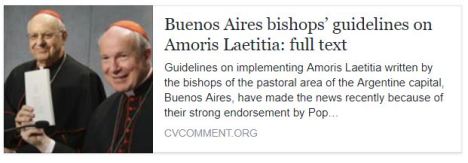
Not the Clarification for Which Many Were Waiting

alsedis

CLICK THE PICTURE ABOVE FOR LINK

Last year the Buenos Aires bishops interpreted the pope’s apostolic exhortation Amoris Laetitia so as to permit those sexually active in invalid unions to receive Holy Communion (in certain cases). The Holy Father praised their interpretation in a private letter (September 5, 2016) to Bishop Sergio Alfredo Fenoy, the Delegate of the Buenos Aires Pastoral Region of the Bishops’ Conference of Argentina. He wrote, “El escrito es muy bueno y explicita cabalmente el sentido del capitulo VIII de Amoris laetitia. No hay otras interpretaciones.” (Translation: The document is very good and clearly explains the meaning of Chapter VIII of Amoris Laetitia. There are no other interpretations). On June 5, 2017 by order of a papal rescript, both the Criteria or Interpretation of the Buenos Aires bishops and the papal letter were published in the Acta Apostolicae Sedis, purportedly making this the position of the Church’s “authentic Magisterium.” This seems to conflict with the teaching of Pope John Paul II and with the current Code of Canon Law (canon 752). It would affect our discipline about Holy Communion and even Confessional Absolution. Cardinal Wuerl insists that the doctrine has not changed, just the pastoral discipline. I think I will go back to praying on my knees for awhile on this one.

Who are the Real Dissenters?

article 1

It pains me to see the Church fighting herself and the lengths to which some will go to attack a faithful priest who loves the Church.

Why is This Even a Question?

article 2

But the late priest’s writings cannot be reconciled with Catholic teaching… so the warning should remain, right?

Welcome to the Brace New World!

article 3

We just fell off the proverbial “slippery slope.”