• Our Blogger

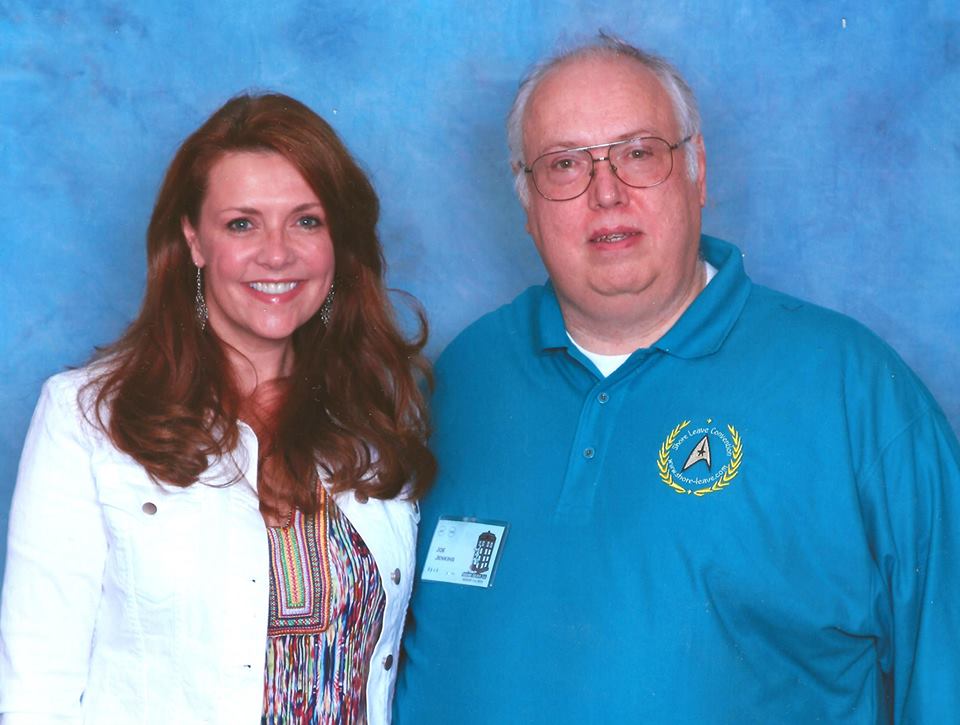
    Fr. Joseph Jenkins

  • The blog header depicts an important and yet mis-understood New Testament scene, Jesus flogging the money-changers out of the temple. I selected it because the faith that gives us consolation can also make us very uncomfortable. Both Divine Mercy and Divine Justice meet in Jesus. Priests are ministers of reconciliation, but never at the cost of truth. In or out of season, we must be courageous in preaching and living out the Gospel of Life. The title of my blog is a play on words, not Flogger Priest but Blogger Priest.

  • Archives

  • Categories

  • Recent Posts

  • Recent Comments

    Barbara King's avatarBarbara King on Ask a Priest
    Ben Kirk's avatarBen Kirk on Ask a Priest
    Jeremy Kok's avatarJeremy Kok on Ask a Priest
    Barbara's avatarBarbara on Ask a Priest
    forsamuraimarket's avatarforsamuraimarket on Ask a Priest

Once Saved, Always Saved?

KATHLEEN:

Hello, I am a “catholic.” I firmly believe that through my faith in Jesus he has saved me. I, along with everyone else who believes in Jesus already has salvation. We are not going to hell. So my question is why would a “catholic” want or need to wear a scapular? How can one save what is already saved? And isn’t their belief in Jesus enough for salvation?  Thank you for input.

FATHER JOE:

You may be a Catholic, but your assessment of “blessed assurance” is representative of a Protestant view. Indeed, it is the sin of presumption for a Catholic to view himself as irrevocably saved. Certain evangelicals believe in the “once saved, always saved” interpretation that emerged from Martin Luther’s teaching of juridical justification through imputation. Simply put it means that after a faith profession in Christ one is saved regardless of personal sins and weaknesses. Supposedly, we are masked by Christ when the Father looks upon us. The Catholic understanding is different. The ancient Catholic truth has to do with being born again as a new creation. We must be transformed. Faith and baptism makes us members of God’s people, but just as faith can grow, it can sour. The Evangelical would say that if a person becomes a grievous sinner that their earlier faith was counterfeit. Catholics would not nullify or doubt such faith. Instead, we argue that we must grow in the life of grace.

Your view would dismiss a lot more than scapulars. If you are already saved then you would need no sacraments, no Mass, no Eucharist and no Church. That is why those who hold such ideas reject the divine mysteries and reduce the “Church” to a place for fellowship and making converts. Catholicism is the true Bible Church and views salvation in terms of faith and obedient works in charity.

I would recommend that you attend a Parish RCIA program and relearn your Catholic faith.

Catholics live in the sure and certain HOPE of their salvation in Christ. Salvation is God’s free gift to us. But faith is defined as more than believing with our heads. The apostles understood faith as something lived out in faith and obedience. It is in this manner, and the reception of the sacraments, that the life of grace grows within us. The spiritual life is not stagnant but dynamic. We must always be properly disposed to God’s mercy and strength.

Here are some passages for spiritual reflection:

Matthew 7:21 – “Not everyone who says to me, ‘Lord, Lord,’ will enter the kingdom of heaven, but only the one who does the will of my Father in heaven.

John 5:28-29 – Do not be amazed at this, because the hour is coming in which all who are in the tombs will hear his voices and will come out, those who have done good deeds to the resurrection of life, but those who have done wicked deeds to the resurrection of condemnation.

Philippians 2:12 – So then, my beloved, obedient as you have always been, not only when I am present but all the more now when I am absent, work out your salvation with fear and trembling.

Hebrews 5: 7-10 – In the days when he was in the flesh, he offered prayers and supplications with loud cries and tears to the one who was able to save him from death, and he was heard because of his reverence. Son though he was, he learned obedience from what he suffered; and when he was made perfect, he became the source of eternal salvation for all who obey him, declared by God high priest according to the order of Melchizedek.

Hebrews 10:26-27 – If we sin deliberately after receiving knowledge of the truth, there no longer remains sacrifice for sins but a fearful prospect of judgment and a flaming fire that is going to consume the adversaries.

James 2: 17-24 – So also faith of itself, if it does not have works, is dead. Indeed someone might say, “You have faith and I have works.” Demonstrate your faith to me without works, and I will demonstrate my faith to you from my works. You believe that God is one. You do well. Even the demons believe that and tremble. Do you want proof, you ignoramus, that faith without works is useless? Was not Abraham our father justified by works when he offered his son Isaac upon the altar? You see that faith was active along with his works, and faith was completed by the works. Thus the scripture was fulfilled that says, “Abraham believed God, and it was credited to him as righteousness,” and he was called “the friend of God.” See how a person is justified by works and not by faith alone. So faith by itself, if it has no works, is dead….You see that a man is justified by works and not by faith alone.

A Response to Marriage, Divorce, Remarriage & Defection

dev

RUFUS:

I am (was??) a Catholic. I am now divorced and in a second relationship. I have no idea what God has in store for me, whether I am going to roast in Hell or simmer in Purgatory; but I am done with the double standards and hypocrisy of the Catholic church.  I still love God and believe in Jesus but I think it is ridiculous to attend church and not have communion; either you are or are not in good grace… there is no middle ground… Hell or Heaven.

FATHER JOE:

It seems the issue is more than a disagreement about the perpetuity of marriage as a sacrament; you quarrel about basic Catholic soteriology. Like many Protestants you would reject the notion of Purgatory and yet this teaching is reflective of divine mercy and the tradition of praying for the dead that we inherited from the Jews of Christ’s time. We must be perfected by grace if we are to enter fully into the kingdom and the heavenly presence of God. Protestants get around this conundrum by positing a juridical imputation over any kind of actual transformation into the likeness of Christ. Thus, people might remain sinful worms but as long as they have faith they can enter heaven because Christ conceals them from divine justice. Catholics believe that all will be unveiled. Unless there is a true conversion and perfection, we could not bear to stand in the divine presence. A process of purgation heals the soul that belongs to God so that it might be purged of the last remnants of selfishness and venial sin. Saints already perfected would indeed rush into heaven. Those who die in mortal sin would be cast into hell. The damned are damned because they place their own will above that of God and his commands. Such souls might say they love God and believe in Jesus, but they fashion for themselves a counterfeit Christ that cannot save them. Hypocrisy is immediately implied with sinfulness from believers; but the Church, while composed of sinners, is holy because Christ is holy. Our Lord called sinners to himself and so the Church must do the same, even if it sometimes compromises her witness. You should have remained with the Church. One more sinful hypocrite would have made little difference— and you had everything to gain from abiding in the house established by Jesus Christ.

As for participation at Mass, this is a fulfillment of the command to keep holy the Lord’s Day. Every Mass is a re-presentation of the oblation of Christ on the Cross, albeit in an unbloody manner. Here too your faith was evidently defective. The reception of Holy Communion is a great gift and the ideal, but you closed that door because of a weakness of the flesh and a heart that loved, not too much, but too little. The prohibition about divorce and remarriage is clearly taught by our Lord in the Gospel of Matthew. Only since the reformation and particularly in the modern era has this teaching been called into question by dissenters. Short of an annulment, the Church’s hands are tied. Jesus is unapologetic, we are talking here about adultery, no matter how one might “feel” about it.

Matthew 5: 31-32

“It was also said, ‘Whoever divorces his wife must give her a bill of divorce.’ But I say to you, whoever divorces his wife (unless the marriage is unlawful) causes her to commit adultery, and whoever marries a divorced woman commits adultery.”

Matthew 19: 3-12

Some Pharisees approached him, and tested him, saying, “Is it lawful for a man to divorce his wife for any cause whatever?” He said in reply, “Have you not read that from the beginning the Creator ‘made them male and female’ and said, ‘For this reason a man shall leave his father and mother and be joined to his wife, and the two shall become one flesh’? So they are no longer two, but one flesh. Therefore, what God has joined together, no human being must separate.” They said to him, “Then why did Moses command that the man give the woman a bill of divorce and dismiss her?” He said to them, “Because of the hardness of your hearts Moses allowed you to divorce your wives, but from the beginning it was not so. I say to you, whoever divorces his wife (unless the marriage is unlawful) and marries another commits adultery.” His disciples said to him, “If that is the case of a man with his wife, it is better not to marry.” He answered, “Not all can accept this word, but only those to whom that is granted. Some are incapable of marriage because they were born so; some, because they were made so by others; some, because they have renounced marriage for the sake of the kingdom of heaven. Whoever can accept this ought to accept it.”

If an annulment can ascertain that a union is “unlawful,” then one might be free to enter into a true marriage. But if the marriage is real then it endures until the death of a spouse.

RUFUS: 

The bottom line is this, if you are Catholic and marry and the marriage, for whatever reason, your fault or not, ends in divorce then if you start another relationship (because God gave us the power of love and the will to use this most beautiful gift), whether a marriage or not, the Catholic church teaches you will go to hell unless you sincerely repent, i.e.. end the relationship and live the rest of your life alone.

FATHER JOE:

Do you think people only hate themselves into hell? I perceive plenty of hate in your words, but you fail to note that love can be disordered or distorted. We can love the wrong things. Ultimately, we are to love God above all else and that means following his commandments. If you love yourself or even another person in a way that is not in sync with divine love, then you manufacture a type of idolatry. True husbands and wives are to see Christ in the beloved. That makes the defection from a marriage into an abandonment of Christ who is signified in the sacramental covenant and union. Note that here you only think about yourself. If you trusted Christ’s words (not just the Church’s rules), then you would have been wary of risking the soul of the person with whom you committed adultery. If you really loved her than you should sooner die than do anything that would place at risk her share in eternal life. Resentful for yourself, you enter into a tirade against the Church. I suppose this is an attempt at self-justification. Instead of facing or even struggling with your guilt, you castigate the Church. Mass attendance would have exposed you to God’s grace, even if you were not fully receptive toward it. Did you attempt an annulment? Or did you just run away? If you go to hell, and we leave that judgment to God, it will be because of your closed disposition to his grace and gift of mercy— not because you fled a Church that was both faithful to God’s law and desiring to show you compassion. The way you talk about “repentance,” you make it sound like a dirty word. The problem here is yours.

RUFUS:

Thinking you can get away with this until you are on a your deathbed and repent at the last minute doesn’t count as such repentance is insincere, as if planned.

FATHER JOE:

No one is saying that you had only the deathbed for which to look forward. That is you speaking. Such cynicism is poison to the hope that should be the life’s blood of every believer. No one would urge you to wait until close proximity to death to repent. However, neither should you malign the sincerity of such conversions at the end of mortal life. Not only do you blaspheme against divine mercy; such an attitude would negate the value of contrition, perfect and imperfect, as displayed by the good thief on the Cross who steals heaven. Ideally we should be sorry because we love God.  Nevertheless, God’s forgiveness will even reach out to us if our faith be largely grounded on the fear of losing heaven and suffering the pains of hell.

RUFUS:

Of course, you could die in a road accident, in which case, you have no time to repent and are going to go straight to hell. So the choice for a divorced Catholic who cannot get an anulment is bleak; spend the rest of your life alone or accept that you are going to hell anyway, so you might as well eat, drink, be merry, whore to your heart’s content, and break just about every commandment in the book. This is ridiculous.

FATHER JOE:

Sin is sin. A mountain climber might miss a footing or a ledge by an inch or by a yard, it is all the same. He would be just as dead. You cannot make one sin an excuse for others. I bet no priest ever told you that you were going to hell. It may be that God faced you with this prospect in your life and you refused to acknowledge your fault. Your problem is not so much with the Church and her catechism but with God and his living Word. I cannot say if you would have gotten an annulment, but if you walked with the Lord then you would never really be alone. Am I supposed to feel sorry for you? I freely embraced a celibate life. There were wonderful girls I knew in my youth who would have made incredible wives and mothers; but I dedicated my life to Jesus and his Church. The trouble with you is that you did not trust and love God enough. Now all you can share with others is venom or poison.

RUFUS:

There is nothing in the bible that unambiguously states this and the outmoded catechism needs to be thrown out and rewritten. This, and good marketing is the only way the catholic church will save itself from the extinction it is suffering.

FATHER JOE:

Does it make you feel better to attack the Church? God’s laws and truths are timeless but you would have us subscribe to the fads and fashions of a fallen world that parades its broken promises. Christ keeps his promise to us. We must keep our promises to him and to each other. Faithfulness still matters. I would call you back to fidelity and the safe harbor of faith. You need not join the world’s chorus in forsaking the Church and Christ. Yes, the Church is increasingly a sign of contradiction. Yes, religious liberty is threatened and faith is attacked. But believers have everything to gain in being fools for Christ. The folly of the world leads only to death and despair. Have faith— have courage— embrace sacrificial love— and come home.

ATHEIST COMMANDMENT 5

“God is not necessary to be a good person or to live a full and meaningful life.”

priest-10214-largeWhat does it mean to be a good person? What makes life meaningful or worth living? It seems to me that God is like the paper upon which we write. Without him we do not even have the tools or perspective to answer satisfactory either question. The atheist critic contends that the believer is greedy and wants a better deal than the universe gives. Unhappy with a broken world, he argues that theists imagine another world where there is a God who cares and an order that will make sense of the present mess. Karl Marx made much of this “pie-in-the-sky” interpretation of religion. These critics contend that eternal life and the joys of heaven are imaginary rewards fabricated to placate those who are currently suffering or doing without. Note that the rise of American atheism has followed the fall of Soviet communism and the red threat. Many Americans once viewed socialist leanings and atheism as stripes belonging to the same animal. In contradiction, we still find a lingering merger of faith to patriotism. It is almost always the atheist or secularist who throws down the gauntlet: challenging “under God” in the pledge, public prayer, the Bible in schools, the teaching of intelligent design along with evolution and civic toleration of religious symbols.

It is true that sinners and the godless can know good fortune and a level of earthly happiness. But what happens when things do not go our way? The believer finds consolation in his faith, particularly in the face of disappointments, suffering and struggle. Other than taking a mood pill, what does the atheist do when he is facing the prospect of failure, pain and death? What is the meaning of life when everything must be defined in terms of limited mortality? Apart from God, do we even know what it means to be a good person? Why be charitable or self-sacrificing when it costs us and this is the only life we will ever know? Are fornication and homosexuality good? Is adultery only bad when you are caught? Is it okay to steal if you think you can get away with it and there will be no negative consequences? If life gets too hard is it good to take an overdose of pills and end it all? If drugs make you happy then should it not be a personal decision to take them? Is it good to help a scared girl to have an abortion even if believers contend it is the murder of a child? Christians are confused about such matters, too. Many think that simply being good will save them or that following their conscience, even an erroneous one, absolutely frees them from culpability. It does not.

People who reject God might stumble upon being good persons, and there are such things as natural virtues, but I suspect it is usually because they have been touched or “contaminated” by the faith of people around them. It is hard to argue for supernatural virtue or ethical principles or defined commandments when there is no belief in God. It strips the law of any genuine imperative. Precepts become arbitrary or capricious. We see this with the current transition of homosexuality from a crime and defect to a right and gift. Instead of civil laws backing up the laws of God, the laws of men become the final authority and they can change at any moment with the current fads and fashions. Politicians become the new priests and prophets, demanding that vice be regarded as virtue and that moral evil be rendered as good. Morality becomes a matter for vote and legislation, not something imposed by a God in Scripture or from a principal agent behind nature and creation.

Liberalism might rule the day at present, but views can change and we may see an atheistic secular world fighting itself over what is right and wrong. A person might tolerate sodomy but condemn pederasty. The pederast or pedophile might object to bestiality. The bar is increasingly lowered but not every atheist may find he can bend so low in reference to certain indignities. Killing the child in the womb might earn his or her remarks of gratitude as a feminist for women’s rights; but kill a three year old that no one wants might make the same critic puke in disgust. Such is the brave new world we are creating. What we have forgotten is that even Hitler and his Nazis thought they were good persons doing good work with eugenics and holocaust. Today we would stamp them as evil although many of their stratagems against the innocent have been put back into place. I will say it again and again. Without God, we do not know how to be good. Of course, this is a different question than, are Christians actually good? The believer acknowledges that he is a sinner who has fallen short. We need the mercy of Jesus. While God’s grace can make us saints; his law reveals how much we have fallen short and how much conversion we still require. If there is no God then there is no sin and no need for forgiveness. We must also then face a universe that could not care less about us. We can live for a few seconds of a hundred years, but eventually the world will get its way and we will die. We are children of nature and we are destined to die. A fallen world will kill us. We will get cancer or diabetes or heart trouble or something else. The atheist says he is not afraid to live and die. I suppose those who feel they have achieved something might feel this way. But what if you are a “nobody” with nothing going right in your life? Suppose you think that nobody loves you. No one wants you. You might conclude, “I would be better off dead,” and if the atheists are right then you would probably be right. In any case, you will get your wish. You will die. We all do. The atheist has to face the prospect that he will be forgotten. It will be as if he never were. Nothing he did will have any permanent significance. How can one be really happy when the transitory is all that one believes to exist? The story of Job was in response to such concerns. The ancient Jews gave little thought to an afterlife. They saw God’s reward in earthly success: wealth, property and family. But what if evil men should flourish and good or innocent people should suffer? Where is the justice in that? Here is the conundrum and it leaves us with one of two possibilities. Either there is no God or at least none that cares a damn for us or there is a good God who will balance the scales in another life where some will be rewarded and others punished. The former argues that we live in a universe where ultimately there is neither justice nor mercy— a prospect that many of us find too terrible to conceive. The latter claims that there is more to reality than we know and that a just God has given us an innate desire for life and happiness that he will satisfy— not in this world but in the kingdom of Christ.

A Few Thoughts about the Synod Relatio & Debates

My head is spinning about some of the things that are being seriously argued at the Vatican’s Synod on the Family. I am already concerned that a Commission was established to look at streamlining the process for annulments even prior to the start of the Synod. It seems to me that if such were a concern then the bishops would then request the Holy See to do so. Will the documents which will be formulated reflect the majority view and Catholic tradition or will there be attempts to steal the show for the minority progressives?

synod-of-bishops

What is it about this new Synod document that has critics saying it signals a revolutionary shift in favor of same-sex couples? It is acknowledged that this “relatio” urges clergy to make “fraternal space” for homosexuals. But what does it say? We read:

“Homosexuals have gifts and qualities to offer the Christian community: are we capable of welcoming these people, guaranteeing to them a further space in our communities? Often they wish to encounter a Church that offers them a welcoming home. Are our communities capable of proving that, accepting and valuing their sexual orientation, without compromising Catholic doctrine on the family and matrimony?”

Are we reading the same document? All I see are questions. Hopefully they are not rhetorical. Do we eject gay brothers and sisters from our churches? No we do not. Can we invite them forward for Holy Communion? Yes, provided that they maintain chaste and celibate lives. Can we affirm or value their sexual orientation? No, we cannot do so. Such would devalue the true meaning of marriage and human sexuality. We cannot move away from the assessment of disorientation or that same-sex carnality is mortal sin.

As a so-called case-in-point of past intolerance, the news contrasted this development with the story of Barb Webb who was fired from a Catholic school when she and her partner announced her pregnancy. Similarly, her partner, Kristen Moore was asked to resign from her post as a music director at a Catholic parish. The secular media glossed entirely over the moral issues that extend beyond same sex unions, like the freezing of embryos, donated semen and IVF technologies. All these elements are reckoned as moral evils and sinful.

This relatio is being interpreted precisely as Cardinal Kasper would suggest. The doctrinal truth is eclipsed, if it remains, for the sake of a pastoral provision or slackening of discipline. The same reasoning he uses for divorced and remarried couples is being applied to active homosexuals. I find this reckoning very disturbing. Discipline can be distinguished from doctrine but discipline is always at the service of doctrine. There are doctrinal elements that cannot be ignored. It is contradictory to say that gay acts are sinful and then to value, in any way, homosexuality. It is contradictory to say that marriage is a lifelong institution and that divorce is a sin, while inviting couples to receive Holy Communion who are living in adultery. The truths of Scripture are clear and we must always be at the service of the truth on every level: doctrinally, canonically and pastorally.

The document recognizes that same-sex couples live lives where they render “mutual aid to the point of sacrifice [which] constitutes a precious support in the life of the partners.” Critics are saying that this is a crack in the door that may one day lead to full acceptance. I would say that this is not the case. The statement is one that reflects the immediate horizontal human condition but says nothing about the vertical supernatural dimension. It is a mere statement of fact that these couples support each other in their day-to-day lives. However, this does not mean that they are in right standing before God. Mortal sin is still mortal sin. I suspect that there are many “nice and pleasant” people who make good neighbors and yet will suffer damnation and hellfire. We are not saved by simply being nice but by being faithful and obedient to God. The Church can relax certain disciplines but she cannot change divine positive law. My fear is that tolerant language might enable or encourage more sinners to remain within their sins. The Church must be a place for saving truth and grace. She should never be an enabler for sinful lifestyles or blasphemous acts like receiving the Eucharist while ill-disposed or in mortal sin. This document does NOT acknowledge the “holiness” of such couples as was suggested in the Huffington Post article by Antonia Blumberg (1/13/14). It simply asks if we might tolerate with passivity and silence the situation of people living in sin.

I cannot buy this application of any “law of graduality.” No matter how slow might be the movement to holiness; the Church should never compromise on the fullness of truth. Confessors can exhibit great understanding and compassion for married couples who use artificial contraception, with the hope that they will eventually come around to the Church’s understanding of human dignity and the full value of the marital act. It is here that I can well appreciate “graduality.” However, this is not the same as cohabitating, adulterous and same-sex couples. They have no right to a shared bed.  In their regard, where there is neither contrition nor amendment of life, absolution must be withheld. Similarly, while they should attend weekly Sunday Mass, they should abstain from taking Holy Communion. The priest will not usually embarrass people in public but he fails his sacerdotal charge if he does not challenge such couples in private.

This law or better yet, theory of graduality was very much the rationale for the “open table” of Anglicanism. It was hoped that this welcoming to receive the Eucharist would draw others into greater unity. Contrastingly, the “closed table” of Catholicism sees Holy Communion as an expression of an ecclesial unity that is already realized. This is representative of the ancient tradition wherein heretics and grievous sinners were denied the sacrament or even excommunicated. The Church’s censure of interdict would also illustrate this posture. One had to be properly disposed and graced to receive the sacrament. Anything less was judged as blasphemous and scandalous. One should not pretend there is a union that is not truly there. This resonates with the current debate about divorced and remarried couples as well as with active homosexuals. We cannot allow a false compassion to tolerate normalization for the sake of public acceptance while the pastoral accommodation is deceptive to the doctrinal truth and the spiritual state of souls before God. We can move away from using pejorative biblical terms like “sodomites” and “adulterers,” but the underlying reality will remain the same. Does this really serve the summons to repent and believe?

If we change the discipline for those in serious sin and the intrinsically disordered, would we not logically have to open up Holy Communion to others (particularly Christians) who might be in ignorance of the full ecclesial reality but who live moral lives? It is a real can of worms and I would prefer to leave it closed. But that is my opinion.

Bishop Tobin on Remarried Couples & the Eucharist

pptobin280409Has anyone else read Bishop Thomas Tobin’s letter posted on the Providence Diocese’s website?  He invites discussion.  Thus, with all due respect, I would like to share my concerns.  The bishop writes:

In my personal reflection on this dilemma, I turn to the incident in the Gospels in which Jesus and His followers were walking through a field of grain on the Sabbath and because they were hungry, began to pick and eat the grain, a clear violation of an important Mosaic Law. The offense was roundly condemned by the religious experts, the Pharisees. But in response, Jesus said, “The Sabbath was made for man, not man for the Sabbath” (Mk 2:23-28).  In other words, while not denying the validity of the law, our Lord clearly placed it in a “pastoral context,” exempting its enforcement due to the human needs of the moment. Could we not take a similar approach to marriage law today?

One cannot really compare the issue of divorced-and-remarried Catholics being allowed to receive Holy Communion with the incident where our Lord’s apostles are charged with violation of the Sabbath by picking and eating the heads of grain (Mk 2:23-28).  The first is in regard to spiritual disposition and the sacrilege of taking Holy Communion while in mortal sin.  The latter simply focuses upon a pharisaical interpretation of the commandment demanding rest.  The apostles were not in any grievously sinful state.  Jesus excuses them, as a foretaste of the freedom that comes with his dispensation.  But, more than this, Jesus is God.  The lawgiver can excuse whatever laws he wills.  The Church can also make modifications, as with our keeping the Sunday Observance over the traditional Hebrew Sabbath.  However, such authority is not absolute and this juridical rendering is a far cry from trying to circumnavigate around basic objective moral norms.  The Church and the Pope do not have the authority to authorize sin and sacrilege.

What constitutes a genuine pastoral approach?  Excusing or enabling serious sin is no favor to anyone.  While we may be troubled by exclusion and feelings of hurt; how can these compare to the fires of hell and the loss of God’s friendship.  The pastoral cannot be so focused on the external situation or appearances that we neglect the internal reality.  The corollary to the assertion that “matrimony is made for man, not man for matrimony” does not find its solution in feigned second marriages but in a chaste celibacy.  Promises are made to be kept.  If the first marriage is authentic, then as long as one spouse lives, any attempted second marriage is a fiction.  That is the long-and-short of it.  There is no viable solution out of this conundrum.  This is more than “the lofty demands of the law,” but the enduring truth that the two become one flesh.  Affections might stray but one spouse continues to belong to the other.  Infidelity is stealing what is the spouse’s due and giving it to another.  There is no way that the Church could rubber-stamp such a scenario.

The bishop writes,

But at the same time, the Church has taught the pre-eminent value of receiving the Holy Eucharist, and I keep hearing the words of Jesus about the Eucharist, words that are just as valid and important as His words about marriage: “Unless you eat the flesh of the Son of Man and drink his blood, you do not have life within you” (John 6:53).

Missing from this assessment is the ancient teaching, recited in the sequence for Corpus Christi, that the same sacrament which brings life to one, brings judgment to another.  Purposely giving Holy Communion to those who are in an adulterous situation would invite condemnation upon them and ridicule upon a hypocritical Church.

Bishop Thomas Tobin states:

And I know that I would much rather give Holy Communion to these long-suffering souls (divorced-and-remarried couples) than to pseudo-Catholic politicians who parade up the aisle every Sunday for Holy Communion and then return to their legislative chambers to defy the teachings of the Church by championing same-sex marriage and abortion.

The bishop means well and he says, honestly, that he does not know the answer to the predicament; however, sympathy for small devils while castigating large ones is no answer at all.  A man can jump from one ledge to another.  If he misses by a foot or an inch, it makes no difference.  He is still just as dead.  This is the appropriate analogy here.

Bishop Tobin echoes an article in the National Catholic Reporter by Fr. Peter Daly who suggested that annulments be simplified by handling the situations entirely at the local level.  The bishop writes:

Can we eliminate the necessity of having detailed personal interviews, hefty fees, testimony from witnesses, psychological exams, and automatic appeals to other tribunals?  In lieu of this formal court-like process, which some participants have found intimidating, can we rely more on the conscientious personal judgment of spouses about the history of their marriage (after all, they are the ministers and recipients of the sacrament!) and their worthiness to receive Holy Communion?

The true Sensus Fidelium is that collection of the laity that keeps our moral laws and regularly goes to Mass.  They would be critical of this proposed solution.  The grounds for annulments often rests in ignorance, deceit, lack of proper discretion, inability to fulfill the obligations of marriage, mental problems, prior addiction, etc.  People are often blind to their own faults and shortcomings; but here the bishop is literally saying, “Physician, heal thyself!”  Would this apply for only the second marriage?  What about the third?  What part would “the other woman” play when marriages were deliberately destroyed?  Such a measure would play into the hands of selfishness.  Many of them do not understand the difference between an annulment and a divorce.  If the bishop’s notion were adopted, there would be no difference— and a basic command from Christ would be explicitly violated.

This is all quite serious.  The marriage analogy plays a crucial part in our understanding of the Church’s relationship to Christ and the sacrament of Holy Orders.  Weaken one and we hurt the others— the dominoes will begin to fall.

Conflict Between Homosexuality & Catholicism

Msgr. Pope followed up his post on fornication and cohabitation with one on homosexuality. This is a real hotbed issue (no pun intended) and I suspect that in the face of growing political and social acceptance, many preachers and religious leaders are hesitant to take it on in a critical fashion. Given curt responses from Pope Francis and Cardinal Dolan which were quickly misconstrued, many are wrongly anticipating a change in the Church’s stance toward homosexual acts. This just is not going to happen. Our respect for natural law and for the authority of Scripture and Tradition make any compromise absolutely impossible on this issue. The mechanisms in place that safeguard the deposit of faith will allow no repudiation of basic moral truths— what befell the Episcopalian churches can never happen in the Catholic Church.

141114182030239

Men and women are their bodies. They are ordered toward marital union and propagation. Same-sex unions are inherently disordered and closed to biological fruitfulness. That is one of the reasons why the first element of the faith attacked was our adoption services. The Boston and Washington Archdioceses had to shut down their programs because of legal insistence that children be adopted by homosexual and lesbian couples. We could not do it. The Church cannot deliberately participate in an act that would cooperate with moral evil or place children into a position of suffering spiritual harm. Homosexual acts neither further the end of procreation nor foster genuine fidelity or union between spouses. Homosexual marriage is regarded by the Church as an empty secular legal construct which is, in fact, an outright deception or fiction. Both natural bonds and sacramental unions require the proper matter of men and women… their whole selves and bodies.

Msgr. Pope is quite right that both the Old and the New Testaments reject homosexual activity. Indeed, some contend that just quoting Old Testament sanctions for homosexuality would constitute a hate crime. St. Paul is clear; it is in conflict with the values of Christ’s kingdom. While certain revisionist churches come straight out and criticize God’s Word as wrong (culturally conditioned stereotypes over immutable objective truths), there are also biblical authorities who engage in fanciful exegetical gymnastics to make provision for such acts despite black-and-white condemnations. They point to their credentials or alphabet soup after their names as if that makes them a suitable parallel magisterium. Desperate to find loopholes, they propose theories and speculation as if they are fact. They insist that only a homosexuality, really a pederasty that targeted children was condemned— not consensual relationships between adults. They argue that the divine prohibition only targeted lustful promiscuity— not faithful monogamous and loving relationships. They would have us take their word on this, as neither the “letter” nor the “spirit” of God’s Word makes such strained distinctions. It is a contemporary reading into Scripture what is not there. It is much like a loose constructionist arguing for rights or interpretations in the U.S. Constitution which the framers never imagined. They would do for faith what politically motivated judges would do for the laws of our land. Redefinitions of marriage are an instance where both secular law and religious truth are corrupted.

Jesus is not recorded as having explicitly condemned homosexuality, but this works against the revisionists in that he did clearly override the Mosaic writ of divorce. Silence can only be interpreted to mean affirmation of the traditional opposition. Further, the living Word is manifest both with the incarnation and the Gospels and with the entirety of inspired Scripture. The teachings of St. Paul, St. Peter, St. Timothy and St. Luke are also the teachings of Christ! That which is objectively true does not lose its binding force. We stand under God’s Word, not above it. The Pope and the bishops pass on the saving deposit; they cannot revoke or utterly change it. As much as they might want it to be otherwise, they do not have the authority to make homosexual acts good or acceptable before almighty God.

The Church has made an ardent appeal to natural law, especially to those who do not share our faith. We have seen this in reference to racial and ethnic inequality, artificial contraception, abortion and now homosexuality. Dissenting revisionists would have us do to our bodies what we would never do to our automobiles— there is a refusal to acknowledge the specifications of human design as that of two complementary genders. Men and women are made for each other. Homosexual sex would be like trying to run your car on molasses instead of gasoline. You are not going to get very far. Homosexual unions are not going to generate children. Cars filled with molasses are not going to be speeding down the highway— they will be stopped alongside the road, ruined for the purpose for which they were really made. Same sex unions often damage their bodies and health, resorting to parodies of the marital act, a feigned intercourse. Like jigsaw puzzles, the pieces are damaged and do not fit no matter how frustrated people try to force them.

Msgr. Pope rightly writes, “Whatever pressures many may wish to place on the Church to conform; however they may wish to ‘shame’ us into compliance by labeling us with adjectives such as bigoted, homophobic, or intolerant— we cannot comply with their demands.”

The civil rights won for ethnicity and gender would now be wrongly extended or ascribed to sexual orientation. Opposition of any form will be counted as discrimination. Within only a few generations, homosexuality has gone from being criminalized to being a “right” protected under law. Indeed, now the criminals would be those who oppose it. Do they see this as “pay-back” time? Here we find the bottom line and we must be prepared to pay a heavy price for any non-compliance. Try as we must to make a distinction between orientation and activity; the truth be said, gays increasingly spurn with impunity any such delineation. They argue, “Can you hate black skin without hating the black man? Can you view males as superior to females without belittling the gifts of women? Then how can you say that you hate the sin of homosexual sex while loving the person who defines himself by such intimacy?” We must be ready and careful in how we answer.

My priest friend cites the universal catechism:

[CCC 2357] Basing itself on Sacred Scripture, which presents homosexual acts as acts of grave depravity, tradition has always declared that “homosexual acts are intrinsically disordered.” They are contrary to the natural law. They close the sexual act to the gift of life. They do not proceed from a genuine affective and sexual complementarity. Under no circumstances can they be approved.

[CCC 2358] The number of men and women who have deep-seated homosexual tendencies is not negligible. This inclination, which is objectively disordered, constitutes for most of them a trial. They must be accepted with respect, compassion, and sensitivity. Every sign of unjust discrimination in their regard should be avoided. These persons are called to fulfill God’s will in their lives and, if they are Christians, to unite to the sacrifice of the Lord’s Cross the difficulties they may encounter from their condition.

[CCC 2359] Homosexual persons are called to chastity. By the virtues of self-mastery that teach them inner freedom, at times by the support of disinterested friendship, by prayer and sacramental grace, they can and should gradually and resolutely approach Christian perfection.

It is probable that there are many in the Church who wishes that our doctrine on human sexuality was different. However, we are constrained by Scripture, Tradition and the Natural Law. We must not usurp God’s authority. Illustrative of how want to play God on this issue, medical research has gone into how lesbians might clone or mix DNA through clinical intervention. It has been speculated that homosexual men might be augmented to allow them to carry a child in the linings of the stomach. Already, they seek adoption of children and IVF is routinely used for surrogates and lesbian insemination. Proponents are feverishly striving to make right that which is blatantly wrong.

As Christians we must accept the fact that marriage is between one man and one woman. It is a relationship that is to endure until the natural death of one of the spouses. The marital act which they share must always further the oneness of their union, promoting the fidelity of the spouses and (in type) open to procreation. Sexual congress outside of marriage is morally wrong and sinful. Thus, by definition, acts of masturbation, fornication and homosexuality are wrong and sinful. All sexual sin is serious, but certain sins are worse than others. Obviously, when another person is dragged down with us, the sin takes in the accomplice. Men and women who have sex outside of marriage do wrong, but as according to nature. Homosexual acts are not only wrong, but are counted as contrary to properly oriented human nature. Men and women who are not married are called to live chaste and virginal lives. Exceptions are NOT made for heterosexual couples planning to get married or for homosexuals who want to take platonic friendships to the so-called next level.

We should not hate homosexuals. We should avoid various forms of discrimination against them as persons. However, we can do nothing to support or enable a homosexual lifestyle. This is where we find the clash today. Oppose homosexuality and you are stamped as bigoted and hateful. There may even come a time when we will face hefty fines and even imprisonment. There have already been cases where people have been legally compelled to take re-education or sensitivity classes.

I have known a number of heroic homosexuals who embraced celibacy, living out their need for intimacy in the COURAGE community in terms of daily prayer, meditation and Christian service. We all need both to love and to be loved. COURAGE is an affiliation established by my cousin the late Fr. John Harvey. These men and women are wonderful witnesses and signs of contradiction to our hedonistic times. Sadly, they are ruthlessly attacked by other homosexuals. Despite negative charges, they do not betray who they are; rather, they affirm their identity and struggles while placing the weight on their Christian discipleship and obedience. They have not been abandoned by God or his Church. God’s grace can empower all who are disposed to his goodness and presence. We are all broken. We are all sinners. It is in Jesus that we find the beginnings of healing and our ultimate salvation.

If one would like to pursue an instructive bible study on this question, Msgr. Pope directs the reader to the following texts:

  • Genesis 19
  • Leviticus 18:22; 20:13
  • Romans 1:18, 21
  • Matthew 15:19-20
  • 1 Corinthians 6:9-20
  • Galatians 5:16-21
  • Ephesians 5:5-7
  • Colossians 3:5-6
  • 1 Thessalonians 4:1-8
  • 1 Timothy 1:8-11
  • Hebrews 13:4
  • Revelation 21:5-8; 22:14-16

Marriage Still Matters

wedding_16Numbness in conscience inflicts many of the members of our modern society. It is as if people have lost the capacity to distinguish between right and wrong. The values of traditional faith and Scripture are not taken into consideration as credible when moral decisions are made. Further, there is a rupture between our nature and the laws that can be discerned by reason. This leads to a profound disconnect from objective reality. Instead, the notion that man is the measure of all things is extended to a fanciful absurdity. The unborn child in the womb is denied the personhood that comes along with his very presence. The purpose of the marital act is reduced to recreation with the reproductive ends subtracted by contraception. The bodies of men and women are complementary and yet same-sex attraction is made into a legal right even though it is a fiction and not fact. The aberration is counted as normal and any emphasis upon genuine normalcy is discounted as intolerance. The institution of marriage is bombarded by all sorts of threats: divorce, adultery, fornication, cohabitation, etc. Any stigma or embarrassment for having children outside of wedlock is measured as insensitive and mean-spirited. Marriage is regarded as a mere piece of paper, even by Catholics who were taught that it was a sacrament to give grace.

What a mess with which we are living!

Msgr. Pope rightly laments on his blog that many regard “living” in sin as “no big deal.” The misnomer here is that one does not really LIVE in sin; instead, one begins to DIE in sin. Sin by its very definition brings forth suffering and death. It alienates us from the one who created us and from the life present in the soul.

Pastors are challenged when they preach about sin and punishment. They are challenged for stressing judgment when our Lord was apparently all about mercy and love. However, the dispensation of Christ is neither magic nor capricious. You have to love in return. You have to want to be forgiven. Too many live as if there will be no judgment and no hell. While the catechism teaches about the universal call to salvation, this is not the heresy of universalism. God’s gifts can be ignored or rejected. Using a medical analogy, a doctor might be able to treat you but you must be willing to seek him out. The divine physician would heal our souls, but millions prefer the spiritual sickness that comes with hedonism, greed or a spiritual ennui.

I like straight talk and yet such is almost always found offensive by someone. People these days do not like to be told their business. There is an arrogance to sin today that has smothered the guilt that once brought contrition and repentance. Do you want proof? Tell a couple who are having sex outside of marriage that unless they repent they will go to hell. See how they respond. “What we do is none of your business! Who are you to talk to us that way? You can go to hell, yourself! Who are you to judge? We love each other, what is so wrong with that? Who is being hurt by what we do?” The fact that it violates God’s Word is given little or no measure in their evaluation. What they are really saying is this: “No one can tell us what to do, not you and NOT God!”

Msgr. Pope gives us a list of Scriptures that we would do well to review.  If we believe that the Bible is God’s Word, then we should take to heart the saving message:

  • Matthew 5:27-30; 15:19-20
  • Mark 7:21
  • 1 Corinthians 6:9-11, 15-20
  • Galatians 5:16-21
  • Ephesians 5:3-7
  • Colossians 3:5-6
  • 1 Thessalonians 4:1-8
  • 1 Timothy 1:8-11
  • Hebrews 13:4
  • Revelation 21:5-8; 22:14-16

Faith Challenged By Scripture

angrycrowd

A person who is struggling with faith wrote the following:

I was raised “catholic” but now I am considering leaving “catholicism” along with belief in “god.” I honestly cannot come to believe in “god” anymore. I used to be such a fervent believer in him but I have come to the realization that I no longer believe in him. The more I read the “bible” and verses like the ones below the more I become disillusioned with Christianity.

Deuteronomy 25:11-12 / Genesis 38:8-10 / Deuteronomy 21:18-21 / Exodus 35:2 / Leviticus 20:13 / Isaiah 13:13-16 / Exodus 21:20-21 / 1 Timothy 2:11-12 / Colossians 3:22-23 / Luke 14:26 / Deuteronomy 22:13-21 / Isaiah 40:8

This does not seem like the “word of god” to me— of a being who is supposed to be all knowing and perfect. Rather it is the work of an individual with a primitive way of thinking. Many times I tried to convince myself that the “god” of the Old Testament was different but sadly that is not the case since most Christians believe that “god” is eternally unchanging as is expected of a perfect ‘know it all’ being. I have many more problems with the “bible,” including inconsistencies with history and science. I also don’t like the fact that everything in the “bible” has to be watered down especially the negative portions. Why can’t I just read it for what it is, why does it have to be read metaphorically. When Jesus said that we should love our neighbors as we love ourselves I understood the message loud and clear. So why are other portions, which are just so ridiculous, have to be read symbolically or metaphorically? I honestly cannot believe in “god” anymore. I tried but I just can’t bring myself to honestly and sincerely believe anymore. I don’t consider myself an evil person but the more “scripture” I read the less I believe.

Here is my response:

First, the Bible is not dictated word for word in a manner that invalidates the learning and life experiences of the human authors. The nature of the instruments (as human beings) has to be respected. Anything more controlling would be a form of possession, and that devilish business undermines human dignity. We are men and women, not pencils. The light of God’s truth shines through but as through the prism of the human condition. We see this ultimately with the incarnation and the one who is the Light of the World. Consequently, the coarseness and cruelty that upsets us in the Old Testament says more about mankind and sin than it does about God. The passion and death of Jesus is his confrontation with such a mindset. What was tolerated before is now challenged so that it might be healed and perfected.

Second, we must acknowledge that the Bible was written by many authors, exhibiting many styles, over a great deal of time and in many places. The oldest books may go back as far as the 16th and 12th century BC. The Scriptures also contain many forms of literature: histories, speeches, prophecies, legal codes, parable stories and mythology, poetry and hymns, etc. One must understand what one is reading if it is to be interpreted correctly. Jesus gave us a Church so that the truths of faith might be faithfully transmitted without dilution or corruption. While it is inspired by the Holy Spirit, this same Spirit in the Church preserves the truth. The Holy Spirit also grants us the gift of faith. The Bible is not a manual on how to live your life. The Bible is not a science book. It is a library of books that chronicles God’s activity in salvation history and our response. You should not make the Bible out to be something it is not. If you want an easy listing of moral certainties then pick up the universal catechism of the Church.

God as a perfect Spirit is unchanging and has within himself all perfections: knowledge, power, goodness, holiness, eternal, etc. But God must communicate with us in time. All we know is change. One day we are a child and the next we look into the mirror and see wrinkles and white hair. God enters the human family: the Word becomes Flesh. He suffers and dies for you and me. Jesus is the ultimate revelation of the Father. He lowers himself to our level so that we might better know and love him. While you like his words about love, you are ready to renounce Jesus as a divine Person and his real presence in the Eucharist. Why are you more willing to see mankind as a cosmic accident than as a providential creation with an eternal destiny? That is not much of a trade-off.

Old heresies often raise their ugly heads. Marcionism was a dualism insisting that the “harsh” and “bloodthirsty” deity of the Old Testament could not be the same as the “loving” Father of Jesus. This view was rightly condemned by the Church. Jesus is the long-promised Messiah and even our Lord says that “salvation comes through the Jews.”

I would like to say that man’s capacity to understand grows but I am often amazed at the depth of ignorance and error, even in the modern world. The deity of ISIS Islamic extremists is a throwback to the view of God as one of law over love, of forced conversions, and of espousing death to infidels. By contrast, the God of truth, justice and mercy is reflected in the courageous men and women who are tortured and beheaded for their Catholic faith and for the love of Jesus. While you reject God because your interpretation will allow no clash in models; the Christian martyrs witness to the truth with courage. They embrace in their agony what you throw away in your leisure.

Genesis 38:8-10

Then Judah said to Onan, “Have intercourse with your brother’s wife, in fulfillment of your duty as brother-in-law, and thus preserve your brother’s line.” Onan, however, knew that the offspring would not be his; so whenever he had intercourse with his brother’s wife, he wasted his seed on the ground, to avoid giving offspring to his brother. What he did greatly offended the LORD, and the LORD took his life too.

Often cited against the sin of masturbation and/or coitus interruptus, the situation again reflects an ancient code (pagan and Jewish) about raising a child up for one’s dead brother. Onan has no problem with enjoying the sexual act, but his selfishness will not allow a child to be conceived. If there is no progeny then no inheritance will have to be shared with his brother’s family. While Christians do not follow this legal code, and would object to such an understanding of the marriage bed, we can see in the story a divine negative verdict against those who would separate the conjugal act from its natural fertility. In any case, Onan is disobedient to what he perceives as his obligation under the law. Disobedience always invokes a reckoning. Given that he acts against life, his life is demanded of him. Remember that God is the author of life. We belong to him. If he should demand our life, it is his right.

Exodus 21:20-21

When someone strikes his male or female slave with a rod so that the slave dies under his hand, the act shall certainly be avenged. 

If, however, the slave survives for a day or two, he is not to be punished, since the slave is his own property.

The ancient world kept slaves. These rules here were to make the masters of men accountable. While we disagree about such bondage, we can appreciate the yearning for justice. There is still slavery in certain parts of the world. The seed of freedom planted in the New Covenant would take a while to germinate and grow. Christians were urged to treat slaves as brothers and sisters in Christ. Later slavery was tolerated until that time that debts were paid off or savages were civilized and given the true faith. Popes condemned slavery in the 1600’s and yet it would remain an institution in the United States until 1865. Dissent is not something new, as today the full humanity of the unborn is compromised. It became ever clearer that in Christ all are given grace and regarded the same— Jew or Gentile, free or slave, man or woman— all possess a precious dignity. Freedom is our birthright as children of God and everyone has natural rights. Here is one of the clearest instances of the organic development of doctrine.

Exodus 35:2

On six days work may be done, but the seventh day shall be holy to you as the sabbath of complete rest to the LORD. Anyone who does work on that day shall be put to death.

This is part of the Decalogue, although later Jews and Christians would not have any part of a death threat. Ancient peoples often attached the death penalty to matters they wanted obeyed— Canaanites did this, the Egyptians, the Babylonians, and of course, the Romans, etc. The preference would be to imitate God because we want to be like him or because we love him. This particular law also reflects the human condition. Men need rest just as they require work. This law would prevent men from being forced to labor without a day of rest where they could worship God and find their leisure. Today we have forgotten this and poor people are sometimes forced to work seven days a week to put food on their tables and to care for their families. We live in a world which no longer either loves God or fears him.

Leviticus 20:13

If a man lies with a male as with a woman, they have committed an abomination; the two of them shall be put to death; their bloodguilt is upon them.

We should not get caught up with the death penalties enacted by the ancient peoples. While we find it abhorrent, the emphasis is on the accompanying value, not the censure. When you do not have jails and are desperate to keep an organized society, societies typically enact harsh measures. This proposition here comes as part of a much longer list, each with a similar penalty: occult worship (6), dishonoring parents (9), adultery (10), incest (11 & 12), and bestiality (15). Here the prohibition is against the sin of homosexuality. Are you upset because the Scriptures and the Church teaches against homosexuality? Catholicism would say it also conflicts with the natural law. We must love our disoriented brothers and sisters; but we cannot give our approbation for immoral behavior. Those who are truly homosexual are called to lives of celibate love and service. How do you feel about the other sins listed? They have their advocates just as homosexuality did. During my lifetime there has been a major paradigm shift. That which was almost universally regarded as abhorrent and criminalized is now esteemed by our secular humanistic society as a basic right. The Church cannot dismiss objective truths so easily or because of the changing fads and fashions of the day. Doctrine can develop, but a reversal here would be in stark conflict with what came before. The accidentals of faith can sometimes change, the substance cannot.

Deuteronomy 21:18-21

If someone has a stubborn and rebellious son who will not listen to his father or mother, and will not listen to them even though they discipline him, his father and mother shall take hold of him and bring him out to the elders at the gate of his home city, where they shall say to the elders of the city, “This son of ours is a stubborn and rebellious fellow who will not listen to us; he is a glutton and a drunkard.” Then all his fellow citizens shall stone him to death. Thus shall you purge the evil from your midst, and all Israel will hear and be afraid.

Again, note that we are not under the many Hebraic laws but saved by faith and the Lord’s gift of grace. These dictums do not apply to Christians. The ancient society to which they applied no longer exists. While capital punishment clashes with the Church’s ethic for life, what was it that the people of old were seeking to foster? First, this passage is not in reference to a small child but to an adult (man). Second, his rebelliousness is not over minor issues. He is self-preoccupied to the extent of neglecting his parents and the community. He is abusive and dangerous. The stakes were high, life and death. It may be that the threat of ultimate punishment turned many of these men around. The law here was connected to a religious society. They did not make a distinction between secular or civil law and religious tenets.

Deuteronomy 22:13-21

If a man, after marrying a woman and having relations with her, comes to dislike her, and accuses her of misconduct and slanders her by saying, “I married this woman, but when I approached her I did not find evidence of her virginity,” the father and mother of the young woman shall take the evidence of her virginity and bring it to the elders at the city gate. There the father of the young woman shall say to the elders, “I gave my daughter to this man in marriage, but he has come to dislike her, and now accuses her of misconduct, saying: ‘I did not find evidence of your daughter’s virginity.’ But here is the evidence of my daughter’s virginity!” And they shall spread out the cloth before the elders of the city. Then these city elders shall take the man and discipline him, and fine him one hundred silver shekels, which they shall give to the young woman’s father, because the man slandered a virgin in Israel. She shall remain his wife, and he may not divorce her as long as he lives. But if this charge is true, and evidence of the young woman’s virginity is not found, they shall bring the young woman to the entrance of her father’s house and there the men of her town shall stone her to death, because she committed a shameful crime in Israel by prostituting herself in her father’s house. Thus shall you purge the evil from your midst.

Do you not remember the story of the woman caught in adultery and how Jesus challenged the angry crowd? He said, “Let him who is without sin cast the first stone.” They all walked away. Jesus came to bring mercy, even when the woman was guilty. He also preached against divorce, something that is affirmed here. You wrongly get caught up in the graphic elements. All these things must now be viewed in light of Christ. How is it then that these elements of ancient Judaism would cause you to dismiss your faith in Jesus Christ? Either you have not thought this through, or this whole comment with citations is a ploy from a non-believer to ridicule the faith.

Deuteronomy 25:11-12

When two men are fighting and the wife of one intervenes to save her husband from the blows of his opponent, if she stretches out her hand and seizes the latter by his genitals, you shall chop off her hand; show no pity.

And how often do you suppose this actually happened? The religious gravity is not cruelty but upon the gift of fertility and respect for manhood. Destruction of a person’s faculty in the transmission of human life was regarded as a serious crime. It robbed a man of his posterity and remembrance. Remember, the early Jews had a poor understanding of an afterlife. They placed the emphasis upon children and property. This is one of many civil laws that were not unique to the people called by God. It is merely an ancient legal code. God calls us from where we are with all our ignorance or sophistication. Notice the law that follows it forbids carrying different weights in your traveling bag, so that men might not cheat each other when scales are used in purchases. The code that proceeded about marriage would mandate marriage within a family to carry on a brother’s name and linage. As with the Mosaic code on divorce, this would conflict with Christ’s teachings on the nature of marriage. Jesus would speak about their hardness of hearts. God’s passive will tolerates certain weaknesses and sins because of the freedom he gives us. We are not ants or robots. Not everything in the Old Testament reflects God’s direct will. The Bible is not a manual or rule book. It is a chronicle of salvation history. You have to read it as such and place the emphasis upon Christ and the teachings of his Church. God shows us his face and his will over time. While the deposit of faith is now fixed, it develops through our reflection and deepening understanding.

Isaiah 13:13-16

For this I will make the heavens tremble and the earth shall be shaken from its place, at the wrath of the LORD of hosts on the day of his burning anger. Like a hunted gazelle, or a flock that no one gathers, they shall turn each to their own people and flee each to their own land. Everyone who is taken shall be run through; and everyone who is caught shall fall by the sword. Their infants shall be dashed to pieces in their sight; their houses shall be plundered and their wives ravished.

This is part of a collection of oracles from various sources that focus upon foreign nations. While God’s people were indeed guilty of barbarism (we even see this in the psalms), the point here is divine retribution and judgment. The emphasis is that death will overtake everyone. There was also the appreciation that this existence is messy. There is violence and death awaiting us in a fallen world. Our life belongs to the Lord. Because of sin, we deserve to die. Jesus would fail to come as this kind of military Messiah. Rather, he brought mercy and not the sword. However, at the final consummation, he will be the true Pantocrator— the Lord of Judgment. Those who love the Lord need not fear. Those who disobey him have every right to be afraid. It does not mean that God directly desires child murder and rape.

Isaiah 40:8

“The grass withers, the flower wilts, but the word of our God stands forever.”

What do you find objectionable about this? It means that God’s Word does not forfeit its binding force. God keeps his promises. Did you write the wrong citation?

It is at this stage that you turn your disdain to the New Testament. Are you really a Christian? Were you ever?

Luke 14:26

“If any one comes to me without hating his father and mother, wife and children, brothers and sisters, and even his own life, he cannot be my disciple.”

This is an example of Hebraic hyperbole. It is an artifact of language. There is no exclamation point for emphasis. Jesus does not mean that we should literally hate our parents and family. That would be absurd. Jesus uses similar hyperbole when he says let the dead bury the dead or to pluck out your eye or cut off your hand. Jesus is actually saying that there is urgency to embracing the kingdom. Now is the appointed time. We should not delay or even allow familial relations to inhibit our acceptance of the Gospel. Jesus takes the family, our most prized human institution, and says that even that should not get in the way of following him. Note that Peter and Andrew left everything to follow Jesus. The boats would have to be used by other family members or friends for fishing. Jesus was making his apostles into fishers of men. It must also be said that in the early days of the Church, pagan families often opposed and tried to block the conversion of members. The words of our Lord would urge strength in the face to opposition and even betrayal.

Colossians 3:22-23

Slaves, obey your human masters in everything, not only when being watched, as currying favor, but in simplicity of heart, fearing the Lord. Whatever you do, do from the heart, as for the Lord and not for others, knowing that you will receive from the Lord the due payment of the inheritance; be slaves of the Lord Christ.

Paul did not invent the institution of slavery but Christianity was altering it. Master and slave have the same dignity. This must be measured with verse three: “Here there is not Greek and Jew, circumcision and uncircumcision, barbarian, Scythian, slave, free; but Christ is all and in all.” Read God’s word in a contextual way. Often slaves had to work off just debts for their freedom. It was quite different from the tyranny of slavery in America. But as I said before, Paul’s words about our equality in Christ would eventually bring such subservience to an end. Here Paul is sharing his hierarchical view— one that still influences the constitution of Christ’s Church: wives subordinate to husbands (18), husbands love your wives (19), children obey your parents (20), and fathers do not provoke children (21). The mention of slavery falls within such a schema. We are all called to service. We are all servants or slaves of God. Even the Pope is called “the Servant of the Servants of God.” He is literally a slave for the Gospel and the Church. He lives not for himself, but for Christ and his people.

1 Timothy 2:11-12

A woman must receive instruction silently and under complete control. I do not permit a woman to teach or to have authority over a man. She must be quiet.

While it is doctrine that priests must be male, and I would cite this as apostolic evidence that such male leadership reflects the divine will, it probably refers to an immediate accidental about worship in the time of Paul. Not everything in Scripture and Tradition is unalterable doctrine. There are certain disciplines, even apostolic ones that can be abrogated. I think here about women’s dress or the mantilla veils that were once popular with women in church. Of course, today women are permitted to read the Old Testament and New Testament epistles in church. The citation here was principally concerning pagans or Gentiles who had recently converted. Women oracles and prophetesses (often possessed by demons) were a problem that Paul did not want to see translated to the churches. They would swoon, speak gibberish and cryptic remarks. Paul saw this as distracting from the truth of Christ. It may be that such women were seeking to wrestle authority away from the men who functioned as the legitimate shepherds.

You want a simplified or literal Bible and yet why should revelation be absolute baby talk? The things of God are far more complex than the inside of a car or computer. To reduce their repair manuals to what you would make the Bible would leave everything broken. It is past time to grow up. God’s Word is not broken, you are. We all are as sinners, me too. But in Jesus there is healing and salvation.

God’s Intervention: Conversion

When it comes to parental guidance and faith formation there is no perfect formula. Children from the same household often include both fervent believers and backsliders. The young person has to make choices for him- or herself. All we can do is give them the best witness and tools. Having said this, there are some families who have not done all they could. Sacraments were haphazard and Mass participation was poor. For them we recall the Scripture that says, “Make no mistake: God is not mocked, for a person will reap only what he sows” (Galatians 6:7).

What are my general thoughts about the issue? Certain important points come to mind.

14_to_aFirst, just because a child was baptized as a baby, we must never omit the need for CONVERSION. There is the real need to take the faith that is given us and to make it our own. Catholics might not accept the notion of “once saved, always saved,” but we still treat membership in the Church as a “done deal” that needs little in the way of affirmation or verification. This point often muddies the waters when news reporters and poll-takers ask questions of Catholics. People who have not stepped foot in a church for many years will still identify themselves as Catholics. Their perspective on issues often is more reflective of a secular humanism than Christianity. Catholicism is reduced to a club which refuses to throw you out even when you fail to pay the required dues. In actual fact, while they remain juridically Catholics, many of these people are in practice Protestant or even atheists. They may live as if there is no God.

Many catechists are often disheartened when a child has reached Confirmation age in eighth grade, and he or she still struggles from a glaring ignorance of our religion. We know they were given all the content but it is as if it leaked out. Good Catholic kids go on to high school or college and fall away from the practice of their faith. At a time when the Christians of Mosul are facing expulsion and extermination for their faith; these kids surrender it without the whimper of a battle. As an old billboard used to advertise, a crucial question comes to mind, “If Christianity were a crime, would there be enough evidence to convict you?” Apparently Christian kids begin to talk and act as if there is no God.

The problem comes to a head as the youth matures; however, the seed was damaged from the beginning or hindered throughout. It is choked by weeds or has fallen on poor and rocky soil. There has been little or no watering. Despite all that parents, catechists and pastors did (or did not do); the simple fact remains that the youth may never have had an intimate and reciprocal friendship with Christ. Praying should be like breathing. We do not last long otherwise. We begin to die when we neglect the Lord.

We tend to speak about the “issues” that our children face or the difficulties they create. We need to stop thinking about “issues” and turn to dealing with “persons.” How do we facilitate an evangelical turning or metanoia to the Lord? Must we create a spiritual ghetto around our children, blocking out the distractions from peers, public schools and the media? How do we move religion from information to be memorized to a person we must encounter?

While I like youth groups and activities where young men and women can dialogue and come to a better understanding, as well as mutual respect, it also seems to me that there should be gender-based formation. Young women, mentored by faithful and mature females, can answer questions and speak to concerns that might never be mentioned in a mixed setting. Similarly, in a society that preaches a false equivalence, young men need mentoring by Christian gentlemen who know and practice the values of true manhood. Every young man should look upon the girls as potential spouses and the mothers of their children. Each young woman should seek out men who demonstrate strength of character and responsibility for their actions. While I prefer courtship to dating; young people should not feel coerced into romantic relationships prior to the time that they are ready or able to make genuine commitments. I also think that young men and women should be given a witness for the religious vocations to which God may call them. Do we have priests and brothers speaking to our boys about their callings and the satisfaction they receive in serving God? Do we have religious sisters giving presentations in youth groups and parishes about what it means to be a bride of Christ? I think we could do more in these areas. I lament that the archdiocese no longer has its own order of religious sisters. The fact that we had them seemed almost like a secret. If we want vocations for men and women, then they have to be visible and the word must be shared. They must also be happy. No one wants to join a group of angry old bachelors or cat-fighting spinsters.

I would also suggest the witness of proven Christian laity who live in the world and still belong to Christ. We have many god people who witness the faith to co-workers, family and friends. They volunteer to help the poor, to save and nurture babies, to bring care to the sick and dying, and to pass on the faith to the next generation. Along with the saints of heaven, these must be our role models— not the coarse basketball player or music personality preoccupied with money, fame and sex.

When it comes to youth group gatherings, we sometimes merely want to get a meeting over and satisfy the young people on a superficial level. But every gathering should go beyond entertaining with sports, music, games, movies or free pizza. We do not want to bribe our youth to attend. Youth ministers can make a number of honest mistakes. I recall a fellow years ago who gave a presentation about ministry that focused entirely on himself. He told us again and again that he received great personal satisfaction from the work. If that is simply the case, then we might become parasitical to the very youth we hope to help. But in contradiction, we do not do this work for what we can get out of it. The youth might put us through hell and yet in the end it could produce fruit if we persevere.

Ephesians 4:11-16 gives us our marching orders, both for catechesis and youth ministry:

“And he gave some as apostles, others as prophets, others as evangelists, others as pastors and teachers, to equip the holy ones for the work of ministry, for building up the body of Christ, until we all attain to the unity of faith and knowledge of the Son of God, to mature manhood, to the extent of the full stature of Christ, so that we may no longer be infants, tossed by waves and swept along by every wind of teaching arising from human trickery, from their cunning in the interests of deceitful scheming. Rather, living the truth in love, we should grow in every way into him who is the head, Christ, from whom the whole body, joined and held together by every supporting ligament, with the proper functioning of each part, brings about the body’s growth and builds itself up in love.”

There are too many persons and things that would exploit our youth; we must illustrate the highest integrity in equipping young “saints.” We make ready the soil and pray that God will rain down with his grace. After doing all that we can, we beseech God for the conversion of our charges. If our youth do not open the Scriptures, say their prayers, participate at Mass, and help the poor then what exactly would make them Christian? They should be growing daily in the knowledge and love of Jesus. Mindful of the Pharisees, we must be careful of any hypocrisy. The youth will see this immediately and any movement to Christ would likely be stunted.

There are a number of poor models that poison youth work and evangelization. Making demands from authority turns people off and when there is sufficient distance or no longer any stick held over heads, the young people rebel and walk. Similarly bribing falls short when nothing that we can offer comes anywhere near to competing with popular music, large screen televisions, video games or the other stuff that youth and families accumulate. We try placing our message on computers and television, but talking heads and the Mass for Shut-ins just is not attractive or compelling to many. We get all excited about the Internet but then find that there are few hits and no one is reading or watching our materials. We pour money into solutions that really solve nothing and become just another element for critics to ridicule. The universal Church gets caught up in this as well. Are we really making converts or calling souls home with Twitter? I doubt it.

We do not need religious robots. No, instead we want faithful youth who are fully converted and see evangelization as a crucial factor in their lived discipleship. That is one of the reasons why I feel that adult moderators should encourage youth to develop their own programs and activities. This way, when they head off for college, it will no longer matter if parents and pastors are unable to look down their backs. Without any prodding, they will gather their own bible sharing and prayer groups. We want them to form “church” with a graced spontaneity. They need to be self-actuated in their discipleship. They will look around them and develop activities to respond to the needs of the community where they find themselves. All this is to say, that while we have them, we should be thinking… how can we empower these persons to be self-actuated leaders: teaching and serving others? Is this prospect even on our radar?

A Response to Grace on Faith, Jesus & Salvation

GRACE:

Allow me to make reference to the Old Testament and sin offering. A sinner would go to the Jewish priest with a lamb without blemish. He MUST lay his hand on the lamb. This signified a transferring of sin to the lamb and acquiring the lamb’s innocence. The lamb had to die. Sin must DIE. Under the New Covenant, Jesus is the Lamb of God. The Messiah is our offering. HOWEVER, one cannot physically lay hands on the lamb of God. This is how one lays hands on Jesus and acquires His righteousness: whoever BELIEVES/FAITH that He is the son of God becomes righteous. This is unmistakably the most fundamental building block of Christianity!

When a believer in faith bows down in prayer they have instant access to God, justified by Jesus. When I ask someone else to intercede, I have downplayed the biggest sacrifice; the very reason God became man. It was so that whoever believed should not perish. Otherwise, I have put my FAITH in something other than His dying for my sins. In effect, I have said that even though Christ did die for my sins and I am justified before God. It is still not good enough. So stop going to saint Mary! Worthless are cries of please intercede! JESUS said “I AM THE WAY THE TRUTH AND LIFE NO ONE COMES TO THE FATHER EXCEPT BY ME.” That truth was absolute. There is no negotiating it. When He said on the Cross “IT IS FINISHED,” He meant just that.

FATHER JOE:

You call into question the following:

1.  The manner in which Jesus offers a sacrifice of propitiation as the Lamb of God.

2.  The extension of the paschal mystery into the life of the Church and the sacraments.

3.  The participation in the one-time suffering and death of Jesus.

4.  The definition of saving faith as combined with obedience (works) and accessed first through baptism.

5.  The inner unity of Jesus as a divine Person but made fully human.

6.  The significance of the Church, communion of the saints and intercessory prayer.

What you initially discuss is an appreciation of substitution. The blood of the lamb is sacrificed so that the believer might be spared, as with the Jews when the first born of Egypt suffered the angel of death.

You assert that with Jesus as “the Lamb of God,” no one could physically lay hands upon him. This is false and calls into question the graphic truth of the incarnation. It is a variation upon the heresy of the Nestorians.  The Second Person of the Trinity takes to himself human flesh, he becomes Man. Thus he is able to lay down his life, enduring the indignity of the scourging and crucifixion. Jesus really did die on the Cross. The Mass is an unbloody but real re-presentation of this saving mystery. We are born again by water and the spirit. As God’s people, we come back again and again to the Lord so that our sins might be washed away and that we might be filled with grace. There is a spiritual operation here connected to Calvary, the last Supper and the sacraments.

Faith and baptism allows us to be engaged by the Paschal Mystery of Christ, his suffering, dying, rising and ascension. Our belief or faith is equivalent to obedience. God’s response is the gift of salvation for the redeemed. Christ is obedient to the Father even unto the Cross. He calls us to imitate his fidelity by taking up our crosses and following him.

Intercession to saints or to the Church is an acknowledgement that ours is both a personal and a corporate Lord and Savior. We gather to pray as the Church and our Lord tells us that he is present. There is no competition or downplaying the oblation of the Cross. Far from it, our unity with each other is expressive of the reality of the Church that Jesus instituted. You deny this truth from God’s Word and embrace a Baptist tradition that denies the ongoing nature of faith, obedience and the need for communion with the Church. You short-change revelation and deprive yourself of the full benefits of Christ oblation. You say you are justified before the Lord and yet this too may be a sinful presumption. You cannot save yourself. Only God can save you. Many will cry, “Lord, Lord,” and Jesus will respond, “I tell you, I do not know you.” The Church is the Body of Christ. If you attack the Church, you assault Jesus.

Mary intercedes, but by always beseeching us to follow her Son. She beckons that we might know and love him. All prayer, even intercessory, finds God as its proper object. The saints pray with and for us. We are not alone.

The saving work of Jesus is accomplished in that Jesus will never suffer and die again. But the saving power and effects of his work are still being realized in the lives of believers. It is in this sense that it will not be finished or over until the consummation of the world to Christ. The story of salvation is still being told in our lives.