• Our Blogger

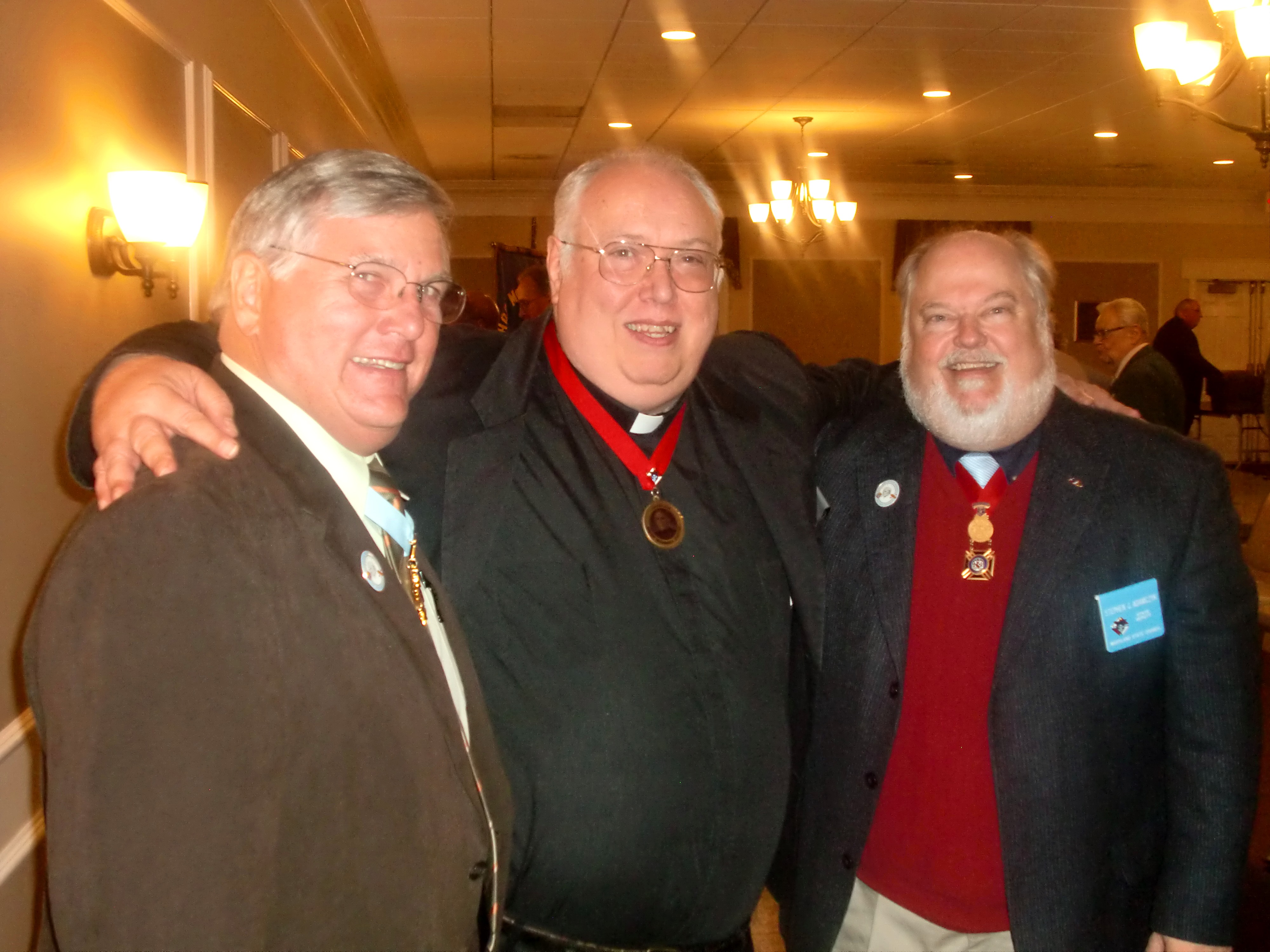
    Fr. Joseph Jenkins

  • The blog header depicts an important and yet mis-understood New Testament scene, Jesus flogging the money-changers out of the temple. I selected it because the faith that gives us consolation can also make us very uncomfortable. Both Divine Mercy and Divine Justice meet in Jesus. Priests are ministers of reconciliation, but never at the cost of truth. In or out of season, we must be courageous in preaching and living out the Gospel of Life. The title of my blog is a play on words, not Flogger Priest but Blogger Priest.

  • Archives

  • Categories

  • Recent Posts

  • Recent Comments

    Barbara King's avatarBarbara King on Ask a Priest
    Ben Kirk's avatarBen Kirk on Ask a Priest
    Jeremy Kok's avatarJeremy Kok on Ask a Priest
    Barbara's avatarBarbara on Ask a Priest
    forsamuraimarket's avatarforsamuraimarket on Ask a Priest

The Scandal of Father Bob Pierson

STEPHEN:

Father Joe, what is your take on Father Bob Pierson?


FATHER JOE:

I had heard of him but had not followed the recent business about his ten minute statement that went viral attacking the initiative supported by the U.S. bishops in opposition to so-called same-sex marriages.

What the priest fails to appreciate is that conscience must be properly informed. Freedom of conscience is not relative moral license. Otherwise, the cause of conscience could be rallied not only for homosexuality but also for other evils like polygamy, bestiality and pederasty. Rather, true liberty comes with an orientation to that which is true and good. Obedience to divine positive law (as revealed in the Church through Sacred Scripture and Sacred Tradition) and natural law (as ascertained through the right use of reason to the objective order) makes us truly free. The commission of sin and immoral acts brings not freedom but spiritual bondage.

The priest in the video takes statements from the Church and churchmen out of context, much as a fundamentalist minister might from the Bible to support his claims. Cardinal Ratzinger, i.e. the Pope, has certainly always taught about the obligation in following conscience; however, he has likewise insisted that homosexuality is a serious sexual disorientation and that the commission of genital acts associated with it are intrinsically immoral.

Notice that he quotes Cardinal Hume who wrote, “Love between two persons, whether of the same sex or of a different sex, is to be treasured and respected.” His quote came in the context of a larger statement in the UK on the homosexual question. While it is certainly permissible to exhibit fraternal and platonic love, as in most friendships, it would be wrong to equate these words with sexual activity and or anal or oral sex. This is another instance where the priest’s remarks are deliberately deceptive. He is well educated and knows what he is doing. This makes him all the more culpable.

Father Pierson is selective in his quotes from the universal catechism. Note that he does not read from CCC #1601: “The matrimonial covenant, by which a man and a woman establish between themselves a partnership of the whole of life, is by its nature ordered toward the good of the spouses and the procreation and education of offspring; this covenant between baptized persons has been raised by Christ the Lord to the dignity of a sacrament.”

Although he attempts to bracket off sacramental marriage in the Church from civilly recognized marriages, such is only a shallow ploy to avoid personal censure and to elicit support from normally orthodox Catholics. The way that society views marriage informs and spills over into how the faithful understand the sacrament of marriage. Indeed, he, himself, is a staff member in an organization where a Protestant minister and an ex-Catholic bless same-sex unions. Understood in this light, Father Pierson is not only promoting immorality but is taking a heretical position toward one of the seven sacraments of the Church.

The speaker acknowledges that Pope Benedict XVI has declared that homosexuals should not be accepted as candidates for the priesthood. Father Pierson has “come out” that he is a homosexual who opposes Church teaching. We can only hope that he has kept his promise of celibacy. Regardless, he now ridicules the Holy Father and takes a scandalous position against the U.S. bishops and the Marriage Matters campaign. I should add, however, that marriage was threatened long before this issue of so-called same-sex marriage. Marriage was imperiled by growing rates of promiscuity, cohabitation, contraception, adultery, divorce (especially the no-fault variety), and remarriage outside the Church.

Father Pierson had resigned from his post as director of campus ministry after the Vatican officially barred men with “deep-seated homosexual tendencies” from ordination, and because of associated issues in the Church’s faith and moral teaching. “Because I can no longer honestly represent, explain and defend the Church’s teaching on homosexuality, I feel I must resign,” he said. It was also rumored that he was forced out, as he should have been, to avoid further intervention from higher-ups.

His local bishop, Archbishop John Nienstedt of St. Paul and Minneapolis has strenuously promoted the amendment in opposition to so-called same-sex marriage. He required parishioners in the archdiocese to recite A Prayer for Marriage as part of the General Intercessions at Masses. The U.S. bishops have been very clear in their opposition. Marriage is only genuine if it is between a MAN and a WOMAN.

Back in 1986, Cardinal Ratzinger, writing for the Vatican, made a statement for correction and support of a letter promulgated by the American bishops. Father Pierson selectively quoted him, but strangely and dishonestly, not this statement which speaks to the question at hand.

Follow this link for the statement:

Letter to the Bishops of the Catholic Church on the Pastoral Care of Homosexual Persons 

ON THE PASTORAL CARE OF HOMOSEXUAL PERSONS

“Although the particular inclination of the homosexual person is not a sin, it is a more or less strong tendency ordered toward an intrinsic moral evil; and thus the inclination itself must be seen as an objective disorder…. It is only in the marital relationship that the use of the sexual faculty can be morally good. A person engaging in homosexual behavior therefore acts immorally.”

“To choose someone of the same sex for one’s sexual activity is to annul the rich symbolism and meaning, not to mention the goals, of the Creator’s sexual design. Homosexual activity is not a complementary union, able to transmit life; and so it thwarts the call to a life of that form of self-giving which the Gospel says is the essence of Christian living. This does not mean that homosexual persons are not often generous and giving of themselves; but when they engage in homosexual activity they confirm within themselves a disordered sexual inclination which is essentially self-indulgent….”

“It is deplorable that homosexual persons have been and are the object of violent malice in speech or in action. Such treatment deserves condemnation from the Church’s pastors wherever it occurs. It reveals a kind of disregard for others which endangers the most fundamental principles of a healthy society. The intrinsic dignity of each person must always be respected in word, in action and in law.”

“But the proper reaction to crimes committed against homosexual persons should not be to claim that the homosexual condition is not disordered. When such a claim is made and when homosexual activity is consequently condoned, or when civil legislation is introduced to protect behavior to which no one has any conceivable right, neither the Church nor society at large should be surprised when other distorted notions and practices gain ground, and irrational and violent reactions increase.”

Father Bob Pierson, O.S.B. should be disciplined by his Benedictine order. He has caused scandal and given rise to public dissent from the Church. His faculties to function as a priest should be revoked or curtailed. As a man under ecclesial obedience, he should either publicly recant his dissent or face immediate dismissal. A priest who recommends mortal sin is no longer aligned with Christ. Even if he should be demented or ignorant, he is now on the side of the evil one.

STEPHEN:

Father Joe, I agree with everything you said, albeit except for maybe one small clarification. You write, “Understood in this light, Father Pierson is not only promoting immorality but is taking a heretical position toward one of the seven sacraments of the Church.” Father Bob would disagree as he was careful to differentiate between civil marriages, which are all “outside the Church” and the Church does not recognize anyway and “sacramental” marriages within the Church. Thus, Father Bob would argue that his voting NO on banning same sex “marriage” has nothing to do with Church teaching on sacramental marriage.

I completely agree this priest should be disciplined severely. But will he be? Almost certainly not, and this is the primary reason for our current crisis. Dietrich Von Hildebrand called it the “Lethargy of the Guardians” as far back as the 70’s. We have suffered under the complete unwillingness of ecclesiastical authority since Vatican II to discipline clerics and bishops for egregious sins against doctrine and the faith. What makes it worse is that the same ecclesiastical authority DOES discipline and bring the hammer down for breaking procedural rules/canon laws that have nothing to do with heresy or doctrine. This sets up a practice which lessens the credibility of the bishops who selectively punish lesser offenses while allowing the most egregious publicly scandalous statements from dissenting priests to go unpunished.

I would dare say it is a sin for this man’s bishop or superior not to discipline him in some way, including at minimum, silencing him on this issue to at least minimize further scandal. Will it happen? I’m willing to bet you a shiny nickel it will not. And it is a slap in the face to you and other good priests who would be punished in a second if you did something like deny Holy Communion to a practicing Lesbian Buddhist who introduced you to her “lover” in the sacristy before Mass.

FATHER JOE:

The priest has a track record beyond the video. (I have not directly linked the video, only a strong critique. Those who want to see it can Google the liberal propaganda.)

He recognizes same-sex marriages as valid, both civilly and in the eyes of God. What confuses the issue is that he denies that there has to be concurrence or approbation from the “institutional” Church. I do not have proof, but like some of his Episcopalian liberals, he would love to bless (and maybe has) these unions. He is a regular speaker at gay-lesbian conventions. Remember, too, that priests are only allowed to witness marriages in the U.S. that are also civilly recognized. We function as both civil magistrates and as ministers of the Church. This is not the case in many countries where Catholic couples are required to endure two ceremonies. Such only happens in the U.S. when there is a convalidation.

I should add, that the Church generally recognizes civil marriages between spouses who are not Catholic. If they are legitimately baptized, then there may be a sacramental character as well. Indeed, if there is a divorce and a desire to marry a Catholic, they would have to pursue a formal case annulment with no guarantees of success. Now we will further have to clarify that we do not recognize adulterous marriages or feigned same-sex marriages. I suspect, given the pressure from the Obama administration, that clergy will eventually have to forfeit their civil authority over marriages in order to distinguish the sacramental covenant from the civil legal contract. Once the definition of marriage diverges, we cannot be party to something in which we do not believe. This may already be happening in light of no fault divorce. I would also not be surprised if the government should seek to compel clergy to witness same-sex marriages. The rights of the Church are very much threatened. I pray that our bishops and priests will have the courage to face fines and imprisonment. The latter is quite possible, if the Church’s stand against homosexuality should be judged as a violation of civil rights laws and as hate-speech.

Further, the priest has been involved in the Catholic gay, lesbian, bi-sexual, transsexual community. He knows full well the canonical restraints upon Catholics and does not care. All this is to say that the video is deceptive propaganda. He is a liar. Even when he throws out crumbs of feigned respect to Church discipline, they are lies. If you are familiar with his work in Collegeville, then you would know that he also rejects the “proles” (open to human generation) element that is essential to the covenant of marriage. He literally believes that anal intercourse consummates the bond. It is in light of all this that I said that he is a heretic regarding the sacrament of marriage.

In regards to disciplinary measures, they may actually be in the works. Had he been a secular or diocesan priest matters might have been easier. The Benedictines tend to protect their own and have a rather progressive track record in his particular community. One of them (Fr. Anthony Ruff, OSB) recently attacked the corrected translation of the Mass at the national Call to Action convention. They also honored the Lesbian Buddhist-Catholic you mentioned and the pro-abortion Catholic Maryland governor was also in attendance. There are a lot of trouble-makers to go around these days.

Orthodox and traditional churchmen have a higher capacity for suffering in that they love the Church and seek to be obedient while the other side really does not care; liberal breakaway groups, as with Archbishop Milingo and Washington’s own Father George Stallings, were also censured and even faced excommunication. In this sense, there is some parallel. I suspect that many in the Church find the contemporary situation almost overwhelming given the pervasive dissent. During this silent and not so silent schism, there is also the worry that the wrong action might lead the ignorant or weak of faith out of the Church. You are right, not all shepherds are to be trusted. But we must also be careful NOT to spread calumny and to hurt good men who are doing their best.

Pope Benedict XVI seems to be hoping that attrition and orthodox replacements among the clergy might hold the answer. My worry is that he, himself, is not a young man. I have found an almost uncharitable delight in how Archbishop Salvatore Cordileone, the new Ordinary for San Francisco is making the gay establishment squirm and fret. They were pouting the other day because he outlawed drag queens at fundraisers! Really?

Again, do not be fooled. He might say that “…for committed, same-sex couples is not the Sacrament of Matrimony,” but he really does see it as analogous. Remember, sexual activity outside of marriage is a mortal sin. There is nothing equivalent to it. As a priest he knows this. He is talking out of both sides of his mouth. The Bishops are right on this one. So-called same-sex marriages are indeed a threat to the genuine covenant of marriage, natural or sacramental. There is no loop-hole or escape clause that would allow Catholics to support institutional sodomy.

STEPHEN: 

Thanks for the background. In this video he seems to take the stance of…”who cares what the state of MN deems as ‘marriage’ since the Church only recognizes sacramental marriages anyway?” He argues the flip side of religious freedom by stating that the Church should not dictate to the state how it defines “marriage” as civil and Church marriages are separate entities and (in his mind) serve different purposes.

FATHER JOE:

The secular sphere in the public forum would not appreciate marriage as a sacrament. Rather, the point of intersection between the Church and state is the traditional view of marriage as a “natural bond.” The growing division between the Church’s view of marriage, as well as that of natural law, is the reason why someone like Bai Macfarlane has campaigned heavily for traditional marriage and against no fault divorce. Some of her supporters would claim that the conflict or opposition between the civil and ecclesial view of marriage has reached a breaking point, in both the heterosexual orientation and its permanence. They argue that clergy should opt out entirely from working within the system. They suggest that the priest who witnesses any marriage for the state has corrupted (by association) the Catholic understanding. This argument becomes even more defensible if society should formally equate same-sex unions with heterosexual marriages. While priests will not officiate at the feigned marriages of homosexuals and lesbians; will the truth be compromised by our continuing partnership with government in witnessing marriages and signing civil licenses? But what is the alternative? Priests in Europe and Asia often find that in the dual ceremony-system, couples tend to cohabitate if there is any extended duration between the vows before a judge and those before a priest.

The priest errs seriously, by his own admission, for failing to fault the homosexual lifestyle as sinful. Indeed, he seems to praise and to encourage the commission of evil. People of the same gender can be friends but they cannot be spouses. A legal fiction will not make it so.

Transformation from Modern to Traditional Altar

FSSP transform a modernistic free-standing altar into a very beautiful High Altar. The church that this took place in is in France and is now operated by the Fraternity of St. Peter. The complete time for this “Altar-ation” was just about 15 minutes!

A number of years ago, I posted this simple video of an ugly modern communion table being transformed into a visible altar of sacrifice. The posting was a whim, a small aside. The discussion that followed floored me. This was much more important to believers than I had thought. This is all for the good.

Here is the Discussion

MARY O: Deo Gratias!

GERRY L: Amazing! That’s how it should be.

ANNA MARIA: To Mary O— A big “Amen” to your comment. I couldn’t say it better. To Father Joe— Thanks for posting this! Where there is a will there is a way. I hope we see more of this Stateside!

JOHN S: Next stop improve the music!

KAY: Amen!!!!

KRISTIE: Beautiful! And I agree; that is how it should be! Wouldn’t it be wonderful if it spread State side? Thanks Father Joe! You are awesome!

VICTORIA: Reverent…one aspect of many of the beauty of Catholicism. (I didn’t witness this reverence in the Baptist, Unitarian, Nondenominational, or Methodist churches.) I’m sooo happy I’m Home.

BOB: John S— Sanctus fumus! More Palestrina, that’s what wants here!

LADY GODLESS: Well, that was nice! It looked too much like a lethal injection gurney before.

REGINA: Fr. Joe, this is why women are not priests…I spent an hour reading your blog and it reminds me of something I already know— men have a thick skin. They are tougher than us women. I heard a caller to a secular radio station say that the gates of hell referred to in the bible would not prevail against the Church, which, as the caller pointed out, was a battering ram. I loved this insight— you are a battering ram! Keep battering those gates Father! I pray for you.

ANITA MOORE OPL: One of these days, the change will be permanent. We can look at the cost as a penance for having wrecked the old furnishings in the first place. Is it possible there are some bishops who will not get out of Purgatory until the wreckovations they ordered are undone? If so, that makes the restoration of the Churches even more urgent.

HIDDEN ONE: I know a few altars that could use that kind of treatment… at least one of which a renovation group could sneak into, remodel, and leave, likely without being noticed. *sigh*

MR. FLAPTRAP: This is the installation of the new altar at my parish, St. Raphael’s in Rockville, Md. The old altar was similar in style to the original one in this video (four round concrete legs and a slab.) The base on the new one features the three archangels named in the Bible.

FATHER JOE: Yes, I remember the before and after. There are also shots of the late Father Bill Finch who died after Mass on Holy Thursday 2009. Rest in Peace. Thank you for sharing the video.

BILL C:

I recently joined a parish where altar, tabernacle, and crucifix are in a traditional vertical line of worship as in the video. Sadly, I am aware of only a few churches in the archdiocese of Cincinnati that are configured with the tabernacle placed at the altar. I must drive farther to my new parish, but the trip is well worth it because I now experience a much deeper sense of worship, adoration, and reverence for the Eucharist.

I pray our new archbishop will institute a uniform policy to place the tabernacle at the altar in all parish churches in the archdiocese. This would be a huge achievement for the catechesis of young and old on Christ’s Eucharistic presence.

Pope Pius XII, in his 1956 Address on the Liturgy, addressed with prophetic insight what would happen only a decade later shortly after Vatican II by warning: “To separate tabernacle from altar is to separate two things which by their origin and their nature should remain united.” Indeed, Church tradition for seven centuries — from mid-thirteenth century until after Vatican II — had placed the tabernacle at the altar. Surely the Holy Spirit inspired the holy union of tabernacle and altar over so many centuries.

This is a really informative website. Keep up the good work, Fr. Joe! God bless.

JOHN: The problem today is that the priests have been formed to think that they are pastors first and the Mass means very little.

FATHER JOE: That was not my experience. Most priests I know would argue with you. The Eucharist is the center of our lives.

JOHN:

If you look at the new Code of Canon Law promulgated in 1983 by Pope John Paul II, take a look at Canon 276. This canon directly addresses the question of how Catholic priests are to pursue holiness. It lists:

First, the obligation to ‘faithfully and untiringly….fulfill the duties of pastoral ministry’; Second, the obligation to Sacred Scripture and the celebration of the Eucharist; Third, reading the breviary.

FATHER JOE: Are you being purposely deceptive? The code begins by saying, “In leading their lives, clerics are bound in a special way to pursue holiness since, having been consecrated to God by a new title in the reception of orders, they are dispensers of the mysteries of God in the service of His people.” The initial statement of the canon stresses “the mysteries of God” and the chief among these are the Eucharist and the Sacrament of Penance. Priests have been empowered by Christ to offer the sacrifice of the Mass and to forgive sins. I suspect that you have a watered down appreciation of the pastoral ministry. A man is not ordained chiefly for his own salvation but for that of others. Jesus washed the feet of his apostles and told his followers to do so for one another. The priest is the servant of God who lays down his life for others. A pastor serves God by sacrificing his life for his flock. Only priests can offer the Mass and forgive sins. This has not changed since Vatican II.

JOHN: Canon 276 sets forth a weird priority of obligations. For years Catholics (including priests) have been taught that because the Eucharist is the centre of the Church the obligation to celebrate Mass was far and away the most important in priestly life. In fact, this principle was often demonstrated by the famous example that a priest will still celebrate Mass even though there is no one in attendance.

FATHER JOE: I suspect you are not appreciating the language of the Code. It is still recommending that priests celebrate daily Mass. Most if not all priests I know do precisely that. Indeed, many of us offer the Mass several times a day.

JOHN: The obligation of all priests to pastoral duties also undermines the life of any priest living the contemplative life.

FATHER JOE: There are different codes for pastors and monks. It is a different life. Many religious priests in monasteries regularly concelebrate. Most diocesan priests are the only priest present at their liturgies. Some groups like the Trappists only ordain enough priests to care for the community. The other monks remain religious brothers. The old code also placed a pastor-priest’s salvation on the line in how he fulfilled his pastoral duties: not neglecting the needs of his people for the Eucharist and Confession and Extreme Unction. The transmission of the true faith, especially to the children is crucial in both codes. Failure to give adequate care to this would constitute mortal sin.

JOHN: Although the canon refers to all priests (not merely diocesan), one wonders how it can be applied to the many priests living in a monastery.

FATHER JOE: Particular rules of life in orders approved by the Holy See and the codes on religious take precedence since it is seen as a higher vocation.

JOHN: In fact, it is very difficult, if not impossible, to see how monks can be said to have any priestly obligation to pastoral ministry. It would also not be exaggeration to say that the Vatican II theology of the priesthood, which makes pastoral obligations intrinsic to the Sacrament of Holy Orders, undermines the life of the monk-priest.

FATHER JOE: Such ministry is in regard to the religious community. Similarly priests were sometimes given charge of a convent. Their flock would be the nuns. Pastoral ministry always exists in some form, even if it is just Mass for the dead. The word “pastoral” is a reference to the role of a priest as a shepherd. He cares for the sheep and does so according to the powers and authority given him. You are making a false case. Accidentals have changed in some cases, but the priesthood is as it has always been. The old code was even more concerned about accidentals to ministry, like tonsure and clerical property and certain rights.

JOHN:

This approach seems little else that an attempted synthesis between the Catholic diocesan priesthood and the Lutheran ministry. Further, it is a change so radical that it can be safely said that the Catholic priesthood has been turned upside-down.

On October 24, 1995, Cardinal Joseph Ratzinger, in a speech given on the thirtieth anniversary of Presbyterorum Ordinis, said that Vatican II attempted to broaden the classical image of the priesthood and to satisfy the demands proposed by the Reformation, by critical exegesis, and by modern life but from the reading of Canon 276 it seems more likely that the Council, in its ecumenical effort, embraced the Protestant ideas of ministry but unfortunately loosened its grasp of the core of the Catholic priesthood. The consequence was that Vatican II produced a document which at its core is little else than a warmed-over version of the Protestant ministry.

FATHER JOE: You mean well, but your hatred of the Church after Vatican II colors your reasoning. Catholic priests are not defined as one would Lutheran ministers. Many Lutherans believe that ordination can expire. The priesthood is forever. Catholic priests offer daily Mass. Many Lutherans do not and are only part-time ministers. Catholic priests offer a propitiatory sacrifice of the Mass (a true re-presentation of Calvary) and offer us the risen Christ in the Blessed Sacrament. Protestants have occasional communion services and give out bread and juice. Catholic priests claim to have the power to forgive sins. No Lutheran minister would say that. Look at the catechism, which is far more revelatory about the priesthood than the Code on the rights and responsibilities of the clerical state.

JOHN: These liturgical changes, which were introduced over forty years ago, can now be seen as part of the larger picture. It is no secret that vernacular liturgy, the concept of Eucharist as-meal (implicit in the Mass of Paul VI), and the use of a table in the sanctuary (rather than an altar) were applauded by most Protestant sects. In fact these liturgical changes were the companion of very serious changes to the Catholic priesthood— all under the influence of Protestant theology.

FATHER JOE: Abuses happened, but the liturgical reform and a movement to a vernacular liturgy were being explored even in the 1930′s. We saw the development of the dialogue Mass prior to Vatican II. There is no denial of sacrifice by regarding the altar as also a table. There need be no either/or. As for Protestant sects, we came to appreciate a common love for Jesus, but most of them still reject the Mass and the priesthood. The sacraments are still wholly Catholic and neither the priesthood nor the Mass has lost that spiritual efficacy given them by Christ.

JOHN: And I continue to find it so amusing how everyone thinks of Pope JPII as being so conservative where it was he who introduced a new Code of Canon Law, new Catholic Catechism, new translations of the Bible (USCCB and NAB but approved on the Vatican website and explained as such), proudly proclaimed ecumenism as the cornerstone of his pontificate and participated in false worship that in infallible councils and in encyclical after encyclical proclaimed any Catholic let alone a Pope who would do such was excommunicated.

FATHER JOE: The Old Catholics broke away from the true Church prior to Vatican II. Many Anglicans practice ancient rituals. However, like so many Latin Traditionalists, their fight over ecclesiology and the authority of the Pope makes them the REAL PROTESTANTS. You can offer the Tridentine Mass and still be a heretic, schismatic, excommunicant, and a PROTESTANT. Unlike certain churches of the East locked into a stagnant tradition; the Catholic Church has a Magisterium that is protected by the Holy Spirit. We have a teaching authority centered upon the Pope which along with the world’s bishops (in and out of council) guides the Church. A few renegade bishops and priests have no such divine protection.

JOHN: This mess will take generations to clean up and millions of souls will be lost because of those who were entrusted to save souls.

FATHER JOE: And some of the lost souls will follow the guidance of illicit bishops who deny the Jewish holocaust and who rebuke the authority of Christ’s Vicar on Earth.

ANNE W. PALMER: I cried and cried when I saw the video. Thanks be to God! I grew up with the traditional years ago. There is such a difference in realization of the sacredness of our precious Lord in the Eucharist. Vatican II was so misinterpreted, adding things that were never there in the first place. I will never understand how that happened. The video makes it so plain. Thank you for posting it. I will share it with as many as possible. By the way, the music was awesome too. I would like to know from where it came? Music also denotes the sacred and that was sacred.

JOHN: Why is my comment still awaiting moderation? [I had to find time to respond in the original discussion.] Is it that difficult or do you not want to acknowledge the new form of the priesthood, which after Vatican II saw thousands leave and starting with the late 1950′s, the “wandering eye” priest (not to be accepted as good) give way to the pedophile, gay, liberal priest who has led millions of souls to hell?

FATHER JOE: There is no new form of priesthood. That is the lie promulgated by those who misrepresent the teachings of the present-day Catholic Church under Peter’s successor. Those who give greater weight to accidentals over substance or essentials fall into grievous error, particularly in regard to ecclesiology and juridical authority. You might not like the current reformed rituals, but the sacraments are intact and the Church endures. As for pedophile priests, many of the lawsuits regard clergy who were formed by the old Latin regime. What is the old saying about people living in glass houses throwing stones?

JOHN: Our Sermon today at the SSPV chapel in Oyster Bay was just that, how the priesthood right before and after Vatican II with its changes in its form as well as intent as I have stated above, is more concerned about being “liked” and knowing the bible than about saving souls and leading those astray to find Christ.

FATHER JOE: You belong to a splinter group of a splinter group, a schism of a schism? You are being deceived. I will pray that you will return to the one holy “Catholic” and apostolic CHURCH.

BILL C:

I’m surprised more people have not responded to this topic and I would really like to know what you think. I’m 62 years old. Although I’m happy to have recently joined a parish with the tabernacle at the main altar, it makes me downright angry that so many parishes in my archdiocese displace the tabernacle. Let me give you a few examples. The parish where I grew up removed the tabernacle from the altar sometime after Vatican II and placed it in a side wing near the choir. They put the baptismal font at the altar where the tabernacle once stood.

Another parish I attended for several years was an older church with a beautiful altar having a built-in tabernacle. When it was remodeled, they put the tabernacle at a side altar outside the sanctuary, and “boarded up” the hole at the main altar with an ornamental cross display.

The last parish I attended for several years before joining my present one actually had the tabernacle as a small wall-closet outside the sanctuary. I finally had my fill of this nonsense and was delighted to find a traditional parish with the tabernacle at the main altar.

Call me “old fashioned” if you like, but to my way of thinking, Christ’s Eucharistic presence is either real or make-believe. If make-believe, then it really doesn’t matter where we put the tabernacle or whether anyone genuflects before it. But if Christ’s Eucharistic presence is real, then where on earth would you even think about placing the tabernacle — other than at the main altar.

As I pointed out in my earlier comment, Catholic tradition placed the tabernacle at the altar for 7 centuries — from mid-13th century until shortly after Vatican II. And contrary to what some Catholics mistakenly believe, Vatican II did NOT mandate or encourage the removal of the tabernacle from the altar. This nonsense resulted from liturgists who used the reform momentum of Vatican II as an excuse to radically redesign churches with the consent of some bishops who frankly were “asleep at the wheel.”

And where has this nonsense led. My observation is that most people do not genuflect when the tabernacle is absent from the altar, and if they do it’s often not even in the direction of the tabernacle. There is also a lot more talking in the pews before and after Mass. In short, reverence for the Eucharist is lacking to some extent and Mass seems more a “communal meal” and less an act of divine worship. At least, that’s my personal experience.

And, what about catechesis on Christ’s Eucharistic presence? What does it say to young and old alike when the baptismal font replaces the tabernacle at the altar, or when the tabernacle is placed at a side altar like a saint’s statue, or when the tabernacle is a wall closet outside the sanctuary?

Eucharistic adoration doesn’t make a lot of sense to me in churches where the tabernacle is displaced. After all, what is the sense of placing the Eucharist in a monstrance on the main altar when the tabernacle is not afforded the same position of honor? Isn’t the same Eucharist inside the tabernacle or am I missing something?

To reiterate the words of Pope Pius XII in my earlier post above: “To separate tabernacle from altar is to separate two things which by their origin and their nature should remain united.” Also, I think it’s hard to argue with 7 centuries of Church tradition that placed the tabernacle at the altar. Certainly, the Holy Spirit inspired the holy union of tabernacle and altar over so many centuries.
Okay, Father Joe, what do you think about all this? It troubles me spiritually to see such disconnect between my belief about the Eucharist and the placement of the tabernacle in so many churches?

FATHER JOE: In regard to our parish churches, tabernacles are best placed in the center, along with the altar. We pretty much agree. My last parish had a side tabernacle (built in 1971). I moved it to the center where it belonged.

MARY O: “I moved it to the center where it belonged.” God bless you for that, Father Joe.

Fake Priests for Show in Japan

marriedstiffs.jpg

I find this story somewhat difficult to figure out. Christian-style weddings are all the vogue in Japan and Westerners are making lots of money pretending to be priests at these services.

Mark Kelly from the UK explained,

“I was living in Sapporo, studying Japanese, and I needed the money. It’s far better paid than teaching in a language school. Being a fake priest is big business in Japan – I’ve done a TV commercial for one company. In Sapporo, there are five agencies employing about 20 fake priests. In a city like Tokyo, there must be hundreds.”

Read more in the article at BBC News:
http://news.bbc.co.uk/2/hi/middle_east/6067002.stm

Since the weddings have no legal force, the couples must also go to civil magistrates. It is truly bizarre because while only about 1% of the Japanese are Christian, 90% of weddings are performed in a Christian way. I am not talking about the content of the prayers, but rather the borrowed ritual and festivities. Prayers are often perloined from many sources. The old Shinto chapels are gathering dust and Christian ones are doing a booming business!

Of course, it is all about externals. These wedding chapels have flowing fountains, plastic cherub angels, flowers and special lighting. They are popping up everywhere, even in shopping malls.

The article says that the Japanese priests are not happy, but the problem is that there are not enough priests to satisfy the demand. The article and the Japanese are both missing the point.

The real priests in Japan have every right to be angry. It is admitted that many people do not know that fake priests are performing the ceremonies. Impostering a cleric is illegal in many nations and such should be the case in the Orient, too.

Is no one using this fascination with Christian marriage ceremonials for evangelistic and catechetical purposes? It is a tragedy that people are attracted to the externals and yet unable to appreciate the meat-and-potatoes of what Christian faith and the sacraments are about.

Does not the presence of fake priests pose a real danger that a few actual believers might get conned by them and think they are married when really they are not?

Real Catholic priests are generally forbidden to marry couples where neither is a member of the Church. Thus, the dilemma is more than a priest shortage.

Are there any ex-priests or laicized priests among these so-called fake priests? It all reminds me of the local problem with Rent-a-Priests. There are no checks on their abuses. If you pay, they will pray.

This story might seem like only a harmless oddity, but I would disagree. A fake priest and a ceremony for show, empty of substantial meaning or faith constitutes a deceit or fraud. Marriage implies promises being made where honesty and truth are paramount. A counterfeit priest and service undermines the truth with lies.

Biblical Principles of Marriage

On Saturday, March 24, I gave a talk on the Biblical Foundations of Marriage at the PreCana Classes held at St. Mary of the Assumption in Upper Marlboro, MD. Some of the notes are give in the immediately previous posts. There is a joke that if you get two ministers in a room, you will get three different interpretations of Scripture. Given that biblical interpretation is so volatile these days, I first gave the gathering my five basic presuppositions. Next, I gave the ten basic principles of marriage from Scripture.

Presuppositions As we Begin

1. The Scriptures are inspired by God and teach truth.

2. We must have the mind of the Church in how Scripture is interpreted.

3. The Bible is not a marriage manual.

4. Better understanding of Scriptural truth comes through a contextual approach.

5. The truth about marriage in the Bible is revealed in a progressive way, culminating in the New Testament.

A Few Basic Biblical Principles

While the Bible is not a manual for marriage, there are some basic principles we can derive from God’s inspired Word. Here are a few:

1. Men and women were made for each other. Most men and women are called to marriage.

2. Marriage is a covenant between a man and a woman. They pledge themselves to each other in vows made in the sight of God.

3. The husband is the head of the home and the wife is its heart.

4. While the Bible speaks of the wife’s submission to her husband, there is mutuality in this surrender since the husband is commanded to practice sacrificial love for her, even offering his life as Christ did on the Cross.

5. The husband and wife are dependent co-creators with God.

6. The spouses are called to be helpmates to one another in grace and holiness.

7. Marriage is a vocation that takes precedence over other preoccupations. Your attention and energies must first be focused toward one another.

8. Marriage is a sexually intimate relationship between a man and woman.

9. Christian marriage infers a third in the marriage, Christ. Couples enter into the mystery of Christ and his Church. Our Lord identifies himself with the beloved.

10. Couples should come to the marriage bed undefiled. All sexual activity outside of marriage was regarded by the Jews as a violation of the commandment against adultery.

A Hierarchy of Love in the Home

Given that one sees a hierarchy in marriage; neither spouse should lead the other into sin. Similarly, parents can rightfully demand honor and obedience from children, but they must be worthy of such honor. Many things might be excused to preserve the peace of a home; but once a husband starts ordering his wife and children around as slaves, it will not be a happy home. When there is abuse, cruelty and sin; an offending spouse is stripped of authority by the one who is the source for all authority. The message of the Gospel is to embrace a sacrificial love. Jesus pours himself out on the Cross. If this is to be realized in marriage, then it must be mutual. The husband pours his hopes and dreams and life into his wife. Conversely, she pours all her longings and love into her husband. When there is this mutual self-donation, a couple may always be filled and whole. Indeed, their love may bear the wonderful and mysterious gift of children wherein God makes them co-creators with himself. When one gives and the other only takes, the one finds him or herself empty and the other caged in selfishness. Such a mentality is at the root of cold marriages, adultery and the culture of death.
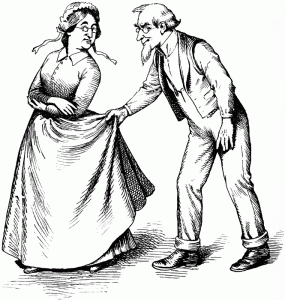
Men and women are both made in the divine image; they have a need for mercy and a capacity for grace. The Scriptures make it very clear that they are called to be helpmates in becoming holy. Marriage comes down from our first parents to the present as an institution to bring fidelity and fruitfulness to the loneliness of the human condition.

Jesus Elevates the Dignity of Women

While always regarded as something more than a man’s land and livestock, the Mosaic writ of divorce and cataloguing women along with property, tended to undermine something of the woman’s personal worth and her role as a companion in marriage. Jesus seeks to correct this by stressing the primordial union and elevating the value of women whom he encountered. The woman caught in adultery was threatened with stoning. His challenge to the crowd saves her. But he tells her to avoid this sin in the future. She was singled out for condemnation by the mob, but where was the man with whom she sinned? A double-standard was at work. The Samaritan woman at the well is told her past by Christ, who knows all her infidelities, and he offers her saving water. She too did not sin alone and who knows what dire circumstances pressed her into many transitory unions? She becomes a prophetess for her people. He forbids divorce as something that was never supposed to be, but tolerated before his coming because of the hardness of their hearts. Women deserve better treatment and should not be cast off.
Then there is the Mother of Christ. At the wedding feast of Cana she tells him that the wine has run out. He says to her, what business is this to me, woman? Joseph is gone and now Jesus is the head of her little household. Nevertheless, she tells the stewards to do as he says and he changes water into wine. The heart of the home will always have a lot of influence and meaning. Jesus preserves the joy of the marriage banquet. Similarly when located in the temple, the boy Jesus challenges her. And yet, we are told that he “immediately” came along with her and the good St. Joseph and was obedient to them. Mary was “the woman,” and according to the fathers of the Church, “the new Eve.” She would be the spiritual Mother of the many adopted sons and daughters of God. Although his physical Mother, she would also prefigure the Church as the spiritual and spotless bride of Christ. Her model for womanhood would always be with Jesus. Our Lord saw in her the great dignity and immeasurable value of all women, and their inherent potential for holiness.

The Complementary Role of Husband and Wife

A major source of discussion these days is the notion of a husband’s headship. Largely because of the sexual revolution, many take serious exception to it. However, I suspect that it is largely misunderstood. While isolated verses would seem to place all the gravity with the husband, the Catholic “contextual” approach would weigh it with references to the role and value of the wife. There is equality between the spouses and yet this should not be interpreted in any egalitarian manner. Each spouse has his or her complementary role to play. Notice in the life of the Holy Family, Joseph is understood as their great defender. And yet, it is Mary who is focused upon as the parent at the Presentation in the Temple. Similarly, when the boy Jesus is found in the Temple, the recorded conversation is between Jesus and Mary. Joseph is the foster father of Christ. He is entrusted with his family’s care. But respecting Mary’s motherhood and her deep faith, he steps back and allows her to do the talking. This does not destroy his headship. Instead, he had a good enough head to appreciate Mary’s strength, gifts and calling.

As a boy my family always respected my father as the head of the home. Daddy would work hard, cash his check and give mother all the money to pay the bills. She would take out two dollars and put it back into his wallet saying, “A man should always have money in his wallet.” She did so many things that he found difficult. They worked together. They lived out a real partnership. At the same time, my mother always gave my father the deepest respect. We were a poor family but my dear father worked from 5:30 AM to 6:00 PM six days a week so that we could have a roof over our heads and food on the table. Mother was a stay-at-home Mom, but she worked just as hard or harder in caring for the home and seven children. She would have been the first to say that Daddy was the head of our family; but by the same token, mother was the heart of our home. Which is more important, the head or the heart? Take away either one, and a body dies.

St. Paul speaks about the headship of the husband and father but also insists that they be subject to one another as to the Lord (Ephesians 5:21). There is a profound unity between the husband and wife going back to Genesis. The two become one flesh (Genesis 2:24). Jesus will also stress this unity (Matthew 19:4-6; Mark 10:7-9). It signifies a definite spiritual bond or connection between the spouses. Given its ecclesial significance, Christ raises this union to the level of a sacrament.

Ephesians 5: 21-33

Colossians 3:18–21

Titus 2:3-8

1 Peter 3:1–7

The Practicality of St. Paul

St. Paul is the Jew’s Jew.  He draws from the Old Testament relation of marriage between the Chosen People and God to speak analogously of Christ as the divine bride groom and the Church as his bride.  Paul is also very practical.  While he has a preference for single-hearted or celibate discipleship, he acknowledges that not everyone has that gift.

1 Corinthians 7: 1-16

Permanency of Marriage

Jesus raises the bar on marriage, taking sides in the debate about divorce. Jewish men might write a writ of divorce, leaving the women vulnerable and destitute in their society. Our Lord would have none of it. Citing creation itself (Genesis 1:27 and 5:2), he asserts that men and women were made for each other and that God intended their union to last throughout life. This position in favor of permanence reflected the school of Shammai. An opposing view was espoused by the rabbinic school of Hillel, which permitted men to divorce their wives, even capriciously. This would be similar to the idea of no-fault divorce today.
Matthew 19:1-12

Mark 10:1-12

Jesus saw husbands and wives both culpable for failed marriages. The two in one flesh did not permit any wiggle room or escape clause. Both monogamy and marital permanence become traits of Christian marriages. Divorce would generally disappear from Christian circles until the Protestant Reformation.

While St. Paul would speak about celibacy as an eschatological sign of the kingdom, our Lord also associates his kingdom with marriage. His very first miraculous sign in his public ministry will be at the wedding feast of Cana. While some might suppose that Jesus only lightens the burdens placed upon people by the Pharisees, he actually adds to their weight. The reason why he seems more gentle and tolerant is because of his generosity in offering the mercy of heaven and divine grace. Remember that Jesus has taken away the option for divorce and says things like love those who hate you and forgive those who persecute you. He says that just to hate your brother is to violate the commandment against killing. Returning to this topic, at the Sermon on the Mount, he commands that even to look at a woman lustfully is the commission of adultery. The Mosaic Law, often referenced by St. Paul as burdensome, permitted a writ of divorce. Instead, Jesus substitutes an absolute prohibition, except for what is sometimes translated as “sexual immorality” or “adulterous.” These words fail to appreciate the magnitude of what Jesus is saying. The actual word used is PORNEA and in this context the New American renders it politely as “unlawful marriage,” but it probably means INCEST. Such marriages are not true marriages, the reason why the Church grants annulments, such unions are not sanctioned by God. However, if a marriage is genuine, then it will endure until the death of one of the spouses. Given the fact that it was a patriarchal society, divorce forced women to seek a new protector and source of support. In this sense, not only the man, but the woman was forced into adultery.

The Old Testament Witness of Marriage

The Old Testament offered various marriages as symbolic of God’s relationship with his Chosen People (as with Hosea and Gomer). While Israel was constantly unfaithful, he would bring her forgiveness and seek to woo her back to himself. This understanding becomes more serious in the New Testament in that marriage signifies the relationship between Christ and his Church. It is not for man to redefine marriage or its parameters. It is entirely of God’s design (see Genesis). It points to something beyond itself. Catholics would appreciate this mystery as a sacrament.

There are a number of significant marriages detailed in the Old Testament:

  • Adam and Eve;
  • Abraham, Sarah and Hagar;
  • Isaac and Rebekah;
  • Jacob, Rachel and Leah;
  • Boaz and Ruth;
  • David, Michal, Ahinoam, Abigail, Maachah, Haggith, Abital, Eglah and Bathsheba; and
  • Hosea and Gomer the harlot.

Polygamy was sometimes practiced early in the Old Testament but as with the Muslims today it was probably rarely practiced due to the expense. The Jews practiced a two-tiered marriage, as with see with Mary and Joseph. Jesse Jackson got into some trouble years ago for saying at a Democratic Convention that Mary was an unwed mother. According to Jewish law, however, she was married already. The first stage was betrothal and the second was when the woman came to live in the husband’s house. A dowry was paid to a woman’s father making her his property. The problem with this set up was that it might bypass the woman’s consent. When the man brought the woman to his house, there will be a big celebration or feast in the community.

The Song of Songs celebrates the joys of physical love. Following a terrible curse, we have the poignant night prayer of Tobiah and Sarah. From profane to profound, we see the whole gambit of human love. The old marriage prayers stressed the married life was among the greatest joys not forfeited by original sin or washed away by the flood. The joy and fruitfulness of married life was deemed as a sign pointing to God’s favor and the promise of redemption. A good marriage was thus a taste of heaven.

The new dispensation of Christ would build upon God’s plan seen in Genesis and creation. Further, since the Church was the new People of God, the marriage analogy would refer to Christ and his Church.