GH: (initial statement)
The Church has brainwashed you and you are a mere puppet of this institution! It is like a cult, if you do not OBEY or agree with every belief and precept 100%, you are OUT!
I walked away from the church after 25 years of trying to be a good Catholic because all I witnessed were MANY priests leaving to get married. (I knew of 12— that’s a LOT in such a time period!) Several others stayed and had women on the side. Oh yeah, these guys heard my confessions too and had the power to take my sins away— what a joke!
I suppose you think that when they die they will burn in hell, the ones who left and were laicized, I mean. Is this a loving reaction, BANISH them forever? (Their love is disordered, unholy and they all end up divorced, too.)
You wrote that there were only a FEW rascals? You sir are deluded! You try to maintain a facade of good and holy priests; I do not doubt there are some, and in fact pray there are, as we need them. Sadly, I think that it is the exception and not the norm.
You blame the individual men themselves (who left to get married). They wanted to serve God but perhaps after a while felt their heartstrings pulled one time too many? Or maybe they just gave into what you regard as the great sin of falling in love and wanting to be with a woman. Therein rests the conflict of wanting to serve God and wanting to love one of his creations. Why does there have to be a choice and why is the punishment from the church so final and damning?
But there is something wrong with a church hierarchy that claims to have the only true pipeline to God and to the truth while insisting on celibacy that apparently so few can truly live out.
FATHER JOE: (immediate response)
You might like to think that people like me are brainwashed, but nothing could be further from the truth. I was a public school kid. I was even kicked out of Sunday high school CCD. No, I was not stupid; rather, my teacher said I knew too much. It was embarrassing my slower classmates. Actually, I think it was correcting my teacher a few times that was the last straw! Because of ill health and asthma, I read a great deal on my own. Religion fascinated me, but I was no one’s robot. I became convinced of the Church’s claims and tried to appreciate them, not simply from authority but from my reasoning.
If people do not clearly understand their faith, we do not kick them out of the Church. We invite them to read the catechism, adult formation classes, and bible study.
If you left the Church because of hypocrisy then you placed greater faith in men than in God. It is no wonder you defected. You are just making excuses for yourself. You could have stayed in the Church and supported those priests who were faithful to their promises. Instead, you joined the crowd of bad priests and womanizers. How can you complain about them when you aligned yourself with them against the Church and her faithful ministers? You join the chorus of those who mock Catholic priests and their ministry of reconciliation. You should be ashamed.
You are another one presuming that priests like me damn the defectors and others to perdition. Where do you get such ideas? We preach about the mercy of Jesus and yes, about his justice. But God will judge you and me. We are all sinners. The posture of any good priest is to pray for others, especially for those who leave the Catholic fold.
I am not deluded, I am a priest and I know my brother priests. Most are good and holy men. While you falsely depict me as damning others; you have judged me and my brother priests. A few have disgraced themselves and have made headlines. The most publicity many of us will ever have will be our obituaries.
You have been away from the Church and yet you think you know the truth about her priests. You should not sin by such presumption.
Promises are made to be kept. No one forced their hand. I am responsible for my priesthood and so are they for theirs.
Would you excuse a married man who fell in love and left his wife for another woman? I can well understand sinfulness, weakness and passion. All priests over time have their heartstrings tugged; but that is when we embrace celibacy as a true sacrifice.
But what punishment is so final and damning for those who leave? A priest who wants to get married may eventually get laicized. He leaves ministry. However, if he marries in the Church then he can return to the sacraments. He can form his children in the Church. He remains a priest forever but in practice is reduced to the lay state. No one says that he must be consigned to hell.
The deposit of faith is made permanent with the death of the last apostle. No new doctrines are invented although there is organic development. Jesus institutes the Catholic Church and establishes a teaching authority. These are the facts as the Church sees them. Anyone can encounter our Lord in Scripture, prayer and in the Church. The hierarchy shepherd the Church and the Magisterium has a charism to preserve the truth in every generation. Over the centuries, the Church discerned that a celibate priesthood best served the needs of God’s people. I believe this is still the case and I trust God’s grace to help priests in being faithful to their commitments. Yes, there have been some bad apples. But you wrong many good priests. About this you should be ashamed and ask pardon.
I will pray for the healing of your hurt and anger. God bless you!
Subsequent Dialogue
GH: That is the Catholic way, to put shame and guilt on people. I should be ashamed?
FATHER JOE: I do not know what you did. If you did something wrong, then yes, you should feel guilty and ashamed of yourself. Feeling guilty is not a bad thing, when you are guilty. Such remorse moves a person to repentance and to reforming his or her life. The trouble today is that many people no longer know shame and people tolerate all sorts of nonsense. Children and young women dress immodestly. People use bad language without so much as saying they are sorry. Couples cohabitate and fornicate and then get mad when the priest challenges them to either separate or get married. Yes, such people should be ashamed of themselves, not simply because they have destroyed their reputations, but because they have dishonored God by their disobedience.
GH: The ones that should be ashamed are those priests I speak of— I have seen repeated sin and hypocrisy and men masquerading as true priests; they are the ones who MOCK the sacrament of reconciliation, Father, not me.
FATHER JOE: Hopefully bad priests do feel sorry for their poor witness. But there are also good priests who should not have their faithfulness mocked or their ministry invalidated by the failures of others. In any case, we are all sinners; there is enough blame to go around. Just because the shepherds sometimes fall short is no license for the sheep to get lost as well.
GH: Yet they will not leave because they are afraid to; so they live a double life.
FATHER JOE: If you know of priests living double-lives then tell the authorities. They will put an end to it. If this is too drastic, then tell a good priest in confidence and ask him to talk to a rascal in the ranks. I have read the riot act to men and some will listen. But as I said, most priests I know are faithful to their promises and ministry.
GH: I am not wronging the good priests. Where did I say that?
FATHER JOE: Look at your words. You lump us all together and contend that there are more bad apples than good. Such has not been my experience and I have been an active priest for 25 years and in the seminary for 8 years before that. On top of it all, you said that the poor witness of priests caused you to leave the Church. That means you saw nothing worthwhile enough in the work and character of good priests to remain in the fold of Christ’s Church.
GH: I said that there are some true and holy priests, yourself one indeed, but I feel they are in the minority.
FATHER JOE: And, while I appreciate the commendation, I sincerely believe good priests are in the majority. Sure the Church went through some hard times. Many priests defected in the 1960′s and 70′s. Some had trouble with the reformed liturgy. Others thought the rule of celibacy was going to be relaxed and they wrongly got ordained with this false expectation. The 1980′s and 90′s brought the almost unbelievable scandal of child abuse. Homeschoolers and other die-hard Catholics kept the faith and now their children are entering the seminaries in droves. This new generation of clergy is very traditional and serious about their commitments. They are joining ministry with those who remained faithful and steadfast in priestly work. Yes, there were some womanizers and misbehaving homosexuals hiding in the ranks; but as they have been identified they have also been expelled from the active presbyterate. Some men with problems, as with a woman or alcohol, have sought counseling, reconciliation and moral reform. This deserves mention in any evaluation of the Church, too. There are real signs of hope, today.
GH: Yes, this is sad. Perhaps, I have been unfortunate enough to have been exposed to far too many of the so called “few bad apples”?
FATHER JOE: This may be the case. Not every diocese is the same and some formation programs were more successful than others.
GH: I don’t see a long line of potential men answering the call either. Why do you suppose that is? There has been much damage done and a great need for healing in the Church. I unfortunately am one of the casualties.
FATHER JOE: I am not sure how you would see the new men coming forward for priestly ministry, given that you have exiled yourself from the Church. Numbers could be better and worldwide; many missionaries are coming from the Third World to reconvert Europe and the West. The dissenting and progressive Catholic families either had no children or a few who were secular and uninterested in vocations. Our more traditional homes are having large families and encouraging their children to be priests and nuns. This is where the next generation of vocations is emerging. The dissenters have contracepted and aborted themselves out of existence. The youth symbolized by the thousands that celebrate World Youth Day with the Pope are serious about their faith. Indeed, they seem more fervent than their parents. The Holy Spirit is not done with the Catholic Church, yet!
GH: I have read in other topics on your blog that you feel such men are “risking their soul to hell.”..You may as well say they will go there.
FATHER JOE: All mortal sin is risking hell. You cannot fault me for a basic teaching of the catechism. But God will be their judge. He will also be the judge of you and me.
GH: It is all semantics and how you word things.
FATHER JOE: No, such should not be the appreciation of Christians. After all, we follow the living Word and his testimony should never be regarded as confusing semantics. Do not be like Pilate who said back to Jesus, “What is truth?” Jesus is the WAY and the TRUTH and the LIFE. It is still the message and person and saving activity of Christ that is proclaimed and made manifest in the Church. The ministry of priests who participate in his high priesthood is still essential to this Good News.
GH: Then you try to put even more Catholic guilt on me because I have walked away from an institution that makes no sense to me anymore. I have not walked away from God, only the Catholic Church. And we all know that the Catholic Church feels those who do that are also— you got it— “risking their souls to hell.”
FATHER JOE: Jesus established his Church as the living sacrament of salvation. It is a new People of God. Our personal salvation comes within this community of faith. That is why Jesus gave us the sacraments. He extends his work through the ministry of priests. I am sorry if I increase your unhappiness. While I cannot control what you would do, my hope is that you would come home to the safe harbor of faith. If anyone hurt or abused you, I am truly sorry. But that is not what the priesthood and the Church are really about. My work as a priest centers upon teaching the truth, celebrating the Eucharist and bringing healing to others. I would have you seek the sacrament of penance and absolution. You would still have a right to be upset with those priests or churchmen who disgraced themselves. But if they were about the work of the devil then who wins if you should be forever alienated from Christ’s Church? Don’t let the devil win in your life. You say that you still have faith in Jesus; then seek out a good priest. Share your whole story and even your anger with him. Return to the sacraments. You might even think that the discipline of compulsory celibacy should be reviewed. But we need humility and acceptance about such things. We need good people to build the Church up again. Maybe God wants you to be one of those people?
GH: The church exerts her absolute power over her priests that leave… even the ones who are laicized; they are not even permitted to read God’s word or act as any type of lay minister. This to me is unjust punishment.
FATHER JOE: Were you a priest? The priesthood is a ministry that belongs to the Church. She has the right and the authority to regulate it as she sees fit. No man was forced to become a priest. Every man who made a perpetual promise of celibacy had six or eight or twelve years of formation to think about it. I believe that God would give the good candidate all the graces he needs to live out this promise. But we are sinners. A few fail. Often they were remiss in their prayer-life and various duties. One person began to mean more to them than the many over which they were given charge. All the Church asks is that we keep our promises. Laicization is the best that the Church can do. It allows a man to rebuild his life while protecting the ministries of the Church from further scandal. The men themselves often ask for it, particularly if they want to remain within the bosom of Mother Church. The restrictions also help to protect the good name and the authority of the priests who keep their promises and remain on the job.
GH: A priest who leaves is a disgrace and an anathema in the eyes of the church. I said the eyes of the Church, NOT God.
FATHER JOE: Here I would disagree. Such a priest made promises or solemn vows. Yes, they were made to the bishop or superior, but also to Almighty God. Breaking our promises to God is a genuine tragedy. God is the one who gives the initial call. The Church later affirms that divine summons.
GH: The analogy that priests are wed to the church is also overused and makes no sense if the church does not in turn use that same analogy with regards to divorce when priests are laicized.
FATHER JOE: Analogies are not exact, but the comparison of things that share some likeness. The marriage analogy would not make married priests impossible. After all, we have some licitly married priests already. The marriage analogy flows from the meaning of the Eucharist. It participates and manifests something of the marriage banquet of heaven. It is not the same as an earthly and carnal marriage which is dissolved by death. The priest participates in the priesthood of Christ who is the groom to his bride, the Church. This relationship is eternal. The new laicization process makes the laicization stages similar to a Church annulment. However, he remains a priest. He does have to argue that he should never have been ordained. Just as the Church does not recognize divorce between married couples, Jesus will never divorce himself from his Church. The laicized priest will always be a priest, even if he can no longer function. A laicized priest who wanted to get married and have sexual relations would still require a permissorial releasing him from his promises.
GH: True, they may receive the sacraments, but why are they not permitted to be a lector or EMC? Divorced people who had their marriages annulled are permitted to be such lay ministers, but laicized priests are not? Again the church exercises her authority with a heavy hand.
FATHER JOE: There is always a scandal when a priest leaves ministry to get married. It advertises hypocrisy and a double-life. A man should not be rewarded for his sins and for breaking his promises. Allowing such a man to continue some form of ministry is also an insult to good men who did what they were supposed to do. Our actions have consequences. If there is any man who should know better, it is the priest! He is held to a higher standard and must pay a more severe price for disobedience. (Having said this, Church law does sometimes permit laicized clergy to function as teachers of religion, although usually in another diocese where their former priestly ministry is not known. Such is up the local bishop’s discretion.)
GH: And the Church wonders why so many Catholics are disgruntled, confused, hurt and angry? We don’t have enough priests to serve anymore because no one wants to join— churches are closing and the remaining priests are burnt out. Something has to give somewhere.
FATHER JOE: You would be ill served by flooding the ranks of the clergy with disobedient priests. The faithful remnant support and love their priests. My little church is filled with such wonderful and happy people. Many of the Masses are so packed that I have people standing up in the back and along the walls. We may not be wealthy, but the faith is alive. I hope and pray that you will know healing and find this joy once more. God bless you!
GH: Father Joe, I want to wish you the very best in your ministry as a priest of the Most High God. I am wounded and confused. I keep in touch with many Catholic friends and read our local Catholic newspapers and unfortunately still am privy to stories of those priests who have left or caused scandal. Sadly it continues. I know there are good and true apostles of our Lord and I will continue to pray for more. God bless you!
Filed under: Anti-Catholicism, Catholic, Marriage, Priests, Sacraments, Sexuality, Sin | 2 Comments »









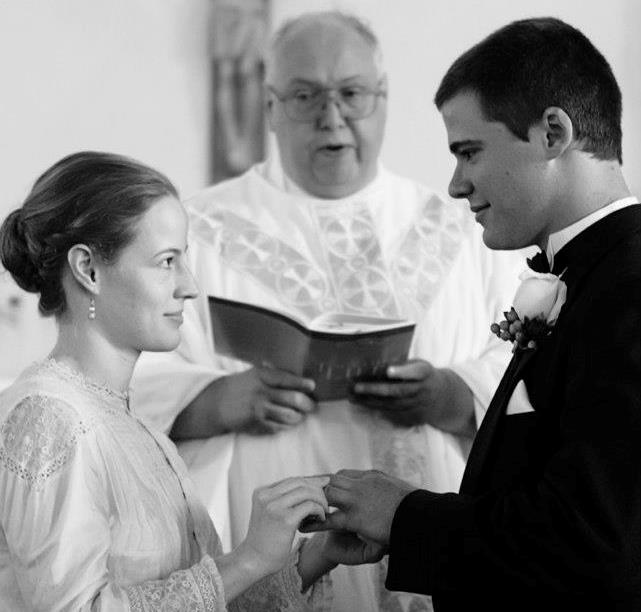


 Marriage is a natural right. However, the Church reasonably asks couples to refrain from this right until they have obtained adequate psychological maturation. This coming-of-age is indicated by comprehending marriage as a life-long, complete commitment between a man and woman. They would also have to understand that this relationship is orientated toward mutual love and help (fidelity) and to the procreation and education of children. The background to this awareness is a realistic appreciation of the various difficulties in marriage and how they might handle them. They must be free from coercion in making this promise of a shared life and possess integrity of intention or will, resolved to endure any hardship.
 Many younger men shared the Pauline preference for both celibacy and the single life. They were distinguished from the married men upon whom special rules were given. One might wonder as well if Paul did not already infer something of his marriage analogy in the life of celibate ministers. Christ was the bridegroom and the Church was his bride. The man ordained to Christ’s priesthood was called to regard the Church as his spouse. He embraced our Lord’s spousal love. He had to be willing as was our Lord to lay down his life for her (see 2 Corinthians 11:2 and Ephesians 5:22-32). Over time, there was a tendency to see a priest’s wife as “the other woman.” While it was not strictly the case, the Western Catholic sentiment came to regard the priest with an earthly wife as living in spiritual adultery. One must be very careful about promoting such views today in that they unfairly malign good married priests in the East and Anglican returnees in the West.
 Some have assumed, usually those desirous of a change today in discipline, that priestly celibacy was only of later manufacture by the Church. Despite growing evidence to the contrary, they still resist the fact that it is of apostolic origin. Legislation in its favor appears in the fourth century; but, this merely confirmed or codified what was a practice and growing preference in ministry. Hebrew priests of the Old Covenant embraced a periodic celibacy or abstinence during the time of their service. Given that the office and service of New Covenant priests is permanent and perpetual, it would logically make sense that their celibate lifestyle should also never know compromise. This hints to a practice in biblical and patristic times that critics in our sexually addicted society might find unfathomable: that many if not most married Christian priests practiced perpetual continence. As they sought to be new Christs for their communities, they imitated the chaste (dare I say virginal) love of Joseph and Mary. Two themes permeate the Catholic appreciation of celibacy: first, that it is an eschatological sign for the sake of the kingdom (Matthew 19:22) and two, that it should allow us an undivided joyful heart (1 Corinthians 7:32-35).
 Dissenters, arguing for priestesses (women priests), will contend that their exclusion is a violation of justice and that qualified women deserve and must demand ordination. Besides such inclusion being deemed impossible by the late Pope John Paul II, neither men nor women “deserve” to be ordained. It is not an item on a social justice or equality agenda that anyone can merit. It is a divine gift. The Church discerns as genuine or false the vocations to which people feel called. The priesthood is given to a few but in terms of service, the whole Church benefits. Jesus chose men to be his apostles and in turn they ordained bishops, priests and deacons to follow them. The Church follows the pattern of Christ and never felt directed or free to ordain women. However, while no women are called to priestly service, very few men are given this gift from God. The priest is sacramentally “another Christ” and he is an icon of Christ the bridegroom to his bride the Church at Mass. Our most precious sacraments and gifts of salvation come from the mediation of priests. A number of our Anglican or Episcopalian brothers and sisters are coming to Catholicism because they are sick of seeing vocations demeaned to purely human terms. A radical feminism led to women Episcopal priests and bishops. Now a radical homosexual movement forces gay and lesbian clergy into their ranks. Error builds upon error. The reality of the sacraments is forfeited. Human whim and fancy replaces Scripture and a living tradition. I am reminded of the reprimand that our Lord gave poor Peter, and immediately after his great profession of Christ’s identity no less. Unable to understand Jesus’ reference to his coming passion, our Lord says to him, “Get out of my sight, you Satan, you are not judging by God’s standards but by man’s” (Matthew 16:23).
 The vocation of priesthood is not like other occupations. Many people have jobs to put food on the table and a roof over their heads, but their employment does not define them. The priestly ministry, on the other hand, quantifies the man called to holy orders. It is for this reason that I always thought the current practice of having pastors retire was rather peculiar. One does not quit from priestly work. Even the infirmed clergyman in a hospital bed prays for the Church and may offer private Mass for the salvation of souls. Retired priests often still live in rectories and work in parishes. The priest literally works until he drops. The Church assures us that the mark or character distinguishing a man as a priest is also taken into the life to come. He is a priest, forever.
 Vatican II is often made a scapegoat for the many problems facing the Church. Certain traditionalists will deride priests ordained after the liturgical changes and condemn them as a class— of incompetence, heresy and a lack of fidelity. While such charges are quite unfair, as the original Modernists were ordained before the changes and celebrated the Tridentine Mass, it must be said that Satan and a secular modernity has targeted the priesthood, today. Concurring with the assessment of Pope Benedict XVI, we lament the scandals and the many ways that the desired fruits of Vatican II failed to materialize. There is hope in the new crop of vocations. The grace of God is manifesting itself, after years of turmoil. Truth is returning where a nebulous spirit of the council was often allowed to supplant what was intended by the council fathers. Those who would argue that both the tree and the fruit were rotten must face the fact of corrective truths espoused by Vatican II and imbedded in many conciliar and post-conciliar documents. Oddly they are sometimes ignored by both revisionists and traditionalists. Regarding the priesthood and its importance, we read: “The Council is fully aware that the desired renewal of the Church depends in great part upon a priestly ministry animated by the spirit of Christ” (Optatam Totius 1). This was true then, before and now. Our ministry is not our own. Christ must be alive, present and active in his ministers.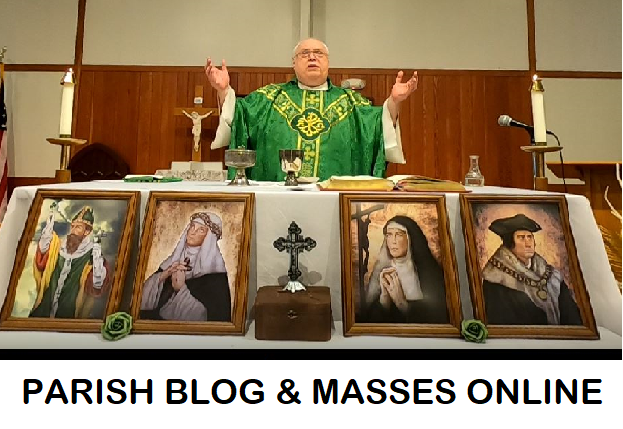











 Blogger Priest