























Installed in October 19 of 2016, Bishop Holley generated controversy soon after arriving in Memphis when he ordered the transfer of about 75 percent of the diocese’s pastors, an unprecedented move. The Diocese of Memphis has about 65,000 Catholics and 42 parishes. There was no set policy on assignment times when Bishop Holley arrived and many had spent inordinately long periods in certain parishes, accruing strong followings. Successful pastors at the more lucrative parishes were also frequently allowed certain autonomy. Bishop Holley wanted to impose a policy that was followed in the Archdiocese of Washington. Bishop Holley decided to appoint pastors for six-year terms, with a possible renewal of the term for six more years.
As a response to the change, it was subsequently reported that morale among priests was low, and that parish collections and contributions to the annual diocesan appeal had declined significantly. Many parishioners became very vocal and labeled the bishop as unresponsive. Parishioners followed pastors to new assignments and left their prior churches. It was said that as many as a quarter of one church’s membership defected. Others stopped attending entirely. The Holy See sent Archbishop Wilton Gregory of Atlanta and Archbishop Bernard Hebda of St. Paul-Minneapolis to visit and respond to the complaints. They met with as many as 50 priests and disgruntled laity of the Memphis Diocese during their visit.
The verdict came out on October 24, 2018 with Pope Francis removing Bishop Martin Holley from the pastoral governance of the diocese of Memphis, Tennessee. The Pope has named as apostolic administrator, Archbishop Joseph Kurtz of Louisville, Kentucky. Archbishop Kurtz stated: “I humbly accept the appointment of our Holy Father, Pope Francis, to serve as the apostolic administrator of the Diocese of Memphis, while remaining archbishop of Louisville. I am eager to work with the priests, curia and faithful of the Diocese of Memphis to promote stability, peace and healing until Pope Francis appoints a new bishop.”
What message does this removal send? Can parishioners make so much noise about the transfer of priests that bishops can get sanctioned and removed? This is ridiculous. There must be more to this. Bishops have the authority to assign their priests and to close and consolidate parishes and schools, especially if they are failing. It seems he did all this. Where is his crime demanding dismissal? One parishioner noted: “Bishop Holley doesn’t kowtow to the powers that be here. There’s a lot of people who really love Bishop Holley. He’s a really holy man. He doesn’t pander to egos. The majority is really thankful he moved the pastors around. It was past due.”
The impression is given that the USCCB and the Holy Father capitulated to financial blackmail from laity manipulated by a few disobedient clergy angry about their transfers. I suspect that Bishop Holley saw the seeds for such a dangerous situation (threatening trusteeism) and decided to break it up, supposing that the Holy See would support him. [Very few of the pastors gave television news interviews and I suspect that most of the presbyterate were good men hurt by the transfers but unable themselves to reign in the forces of upset and retaliation around them.]
As for the school closures, we are told that they had exhausted available funds and that few if any of the children were Catholic. While we seek to help the poor of any denomination, we must not do so at the expense of the needs and faith formation of our own children.
It seems to me that Bishop Holley essentially followed patterns he witnessed in the Archdiocese of Washington where pastors are given six year assignments (renewable) and where the Inner City Consortium was necessarily reduced in size and scope. As far as I can recall canonical regulations about “immovable pastors” do not exist in the current Code of Canon Law. This may be cause for many other bishops to be fearful, as such a move by the Pope over administrative matters is virtually unprecedented.
The visitation from two archbishops and the papal sanction signals the end of episcopal sovereignty from the intrusive authority of bishops’ conferences. Indeed, the Pope as the bishop of Rome has traditionally respected the governance of other bishops within their (arch)dioceses as long as the faith and morals of the Church were promoted. This is no longer insured.
Bishop Holley is known to be a shepherd faithful to Church teaching and devotion. While centered on the Eucharist, he has personally witnessed to a deep devotion to the Blessed Mother and daily says his rosary. He is a dear friend and I was told that his intervention here in Washington made possible my current assignment. He remains a bishop and as one of our Lord’s priests, I pray that he will be permitted to continue in ministering the sacraments and Christ’s healing mercy to others. Knowing him as a personable and caring person, I cannot help but feel that those who derided him were the ones who closed the doors to friendship and failed to give him a real chance to make a positive difference in Memphis.
I am deeply distressed by his removal by the Pope. He is a man deeply concerned about the faith, needs and rights of all of God’s children. I cannot help but think that there has been a terrible misjudgment and injustice committed in his regard. Whatever has happened, he remains in my prayers and in my heart.
ADDENDUM

No matter where one might stand in the Church, the bishop is right that there must be due process and a legitimate transparency. We damage our own moral authority if we do not proceed in a manner that ensures fairness and justice (for all parties).
Filed under: Bishops, Catholic, Church, Politics, Pope, Religion | 11 Comments »

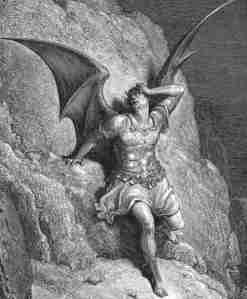 The Pope warns us: “We should not think of the devil as a myth, a representation, a symbol, a figure of speech or an idea. This mistake would lead us to let down our guard, to grow careless and end up more vulnerable.” While other confessions broke away from Catholic unity, the legacy of the Catholic Church goes back to Jesus and the first bishop-priests, his apostles. The devil hates the Church because she is the present-day realization of the incarnation in the world. Christ is the head and his Church is his Mystical Body. There is a profound unity. Given that none are saved apart from Christ, the same can be said about the Church. As the Mystical Body of our Lord, she is the great sacrament of encounter with Christ. Even as the Church is composed of sinners and invites others by divine command, the Church remains holy because Christ is holy. Our Lord’s redemptive work won the victory over sin and death. However, the consequences must be unraveled throughout subsequent human history. The devil has lost the war but he still seeks to steal individual souls. Given the importance of the priesthood and the Eucharist as at the heart of the Church, the devil attacks where he can cause the most damage and scandal. Just as he can numb the consciences of mothers about the tragic abortion of their children; he deadens the souls of renegade priests to their heinous acts against God’s children, making a sacrilege of their role at the altar and in the confessional.






















 Blogger Priest