• Our Blogger

    Fr. Joseph Jenkins

  • The blog header depicts an important and yet mis-understood New Testament scene, Jesus flogging the money-changers out of the temple. I selected it because the faith that gives us consolation can also make us very uncomfortable. Both Divine Mercy and Divine Justice meet in Jesus. Priests are ministers of reconciliation, but never at the cost of truth. In or out of season, we must be courageous in preaching and living out the Gospel of Life. The title of my blog is a play on words, not Flogger Priest but Blogger Priest.

  • Archives

  • Categories

  • Recent Posts

  • Recent Comments

    Anonymous's avatarAnonymous on Ask a Priest
    Michael J's avatarMichael J on Ask a Priest
    Jeremy Kok's avatarJeremy Kok on Ask a Priest
    Mike Zias's avatarMike Zias on Ask a Priest
    Jeremy Kok's avatarJeremy Kok on Ask a Priest

Good Seminarians Expelled, Say It Isn’t So!

sem

Malta’s Archbishop: Seminarians Can Leave if They Don’t Agree With Pope Francis

I never thought I would see the day when men of true faith and obedience, and yet struggling to understand the interpretation of a “progressive” pope, would be shown the door.

In a World of Violence the Holy Father Targets Texting?

popetext

Pope Francis Warns Young People: Texting During Meals Is the ‘Start of War’

Huh? Rude yes, but the start of war? The stronger case would be made by Mother Teresa, and not about texting, but about abortion. She stated: “Any country that accepts abortion is not teaching its people to love, but to use any violence to get what they want.” Similarly, she told us, “The greatest destroyer of peace today is abortion, because it is a war against the child.”

There are many disconnects that I fail to follow. Large scale Islamic terrorism is denied and yet impolite kids texting at the table is critiqued as threatening war. Greater gravity is apparently given to theories of ecology and global warming than to the perennial praxis of the Church in support of Christ’s commands about fidelity in marriage. If the news is to be believed (and that is a major assumption) then orthodox churchmen are being censured while dissenters are promoted and leniency is shown reprobates, notorious sinners and the hardened enemies of the Church.

I love the Holy Father and the Church… but he has to make a clearer and more coherent case.

Battling Churchmen, Confusion & a Seismic Shift in the Church

muller

Cardinal Müller: Communion for the remarried is against God’s law

Cardinal Müller, German bishops clash on interpretation of Amoris Laetitia

Cardinal Müller stands up for the truth! “For us marriage is the expression of participation in the unity between Christ the bridegroom and the Church his bride. This is not, as some said during the Synod, a simple vague analogy. No! This is the substance of the sacrament, and no power in heaven or on earth, neither an angel, nor the pope, nor a council, nor a law of the bishops, has the faculty to change it.”

comp

Vatican’s top legal aide says divorced-and-remarried may receive Communion

Cardinal Müller and Cardinal Coccopalmerio seem diametrically opposed. Do we need further proof of confusion?

I am increasingly disheartened about this. It makes me want to run to a monastery and turn my back on the whole business. I am sorry but I cannot see how such convenient semantics can possibly serve the truth that comes from Christ’s lips. Is it not a slap in the face to heroic Catholics who embraced the moral life despite great sacrifice and loss? I feel Muller is right but will he win the day? The interpretation of this cardinal directly clashes with Muller and is light years away from Cardinal Burke. He points to paragraph 301 of Amoris Laetitia: “it can no longer simply be said that all those in any ‘irregular’ situation are living in a state of mortal sin and are deprived of sanctifying grace.” How can this be? Human nature has not changed… Christ has not revoked his words about divorce and adultery. Did we needlessly allow King Henry VIII to walk away with a whole nation on this point? We can say the doctrine is unchanged but the shift in praxis threatens to distort the teaching beyond recognition. How is this not a surrender to modernity?

Are other priests troubled in conscience about this? Have I taught people wrong for 30 years? No, I will not believe it.  I am too young to retire and not yet sick enough to die. We all better keep praying about this!

Finding Hope & Not Despair in the Synod

I am troubled that otherwise orthodox Catholic critics are suggesting that the Synod on the Family in Rome will signal a fall into apostasy.  While there may be a number of wrong-thinking priests and bishops, I have confidence that nothing of the Church’s doctrinal integrity will be sacrificed to pastoral expediency.

While the deposit of faith is both fixed and develops, there can be no revocation of objective truths.  Those couples living in second marriages or irregular unions cannot be uncritically invited to receive Holy Communion.  They may come up without our invitation; but we cannot encourage people to commit either mortal sin or sacrilege against the Eucharist.  No degree of penance would suffice unless there is genuine repentance and a firm amendment of life.  Any projected change in discipline or a so-called pastoral provision cannot justify regularizing church life for recalcitrant adulterers.

Despite the derision by angry critics that many priests are spineless wimps, most men in ministry are dedicated and courageous in their service.  Priests who seem to turn a blind eye to scandalous behavior are often in the dark or uncertain about the marital status of others.  The opposite may also be true.  Their apparent passivity may consist of knowing too many facts about which they are duty bound to keep within professional secrecy and/or the seal of Confession.  A priest may do nothing by word or gesture or intimation based upon what he learns in the sacrament of Penance.  This is the case even when absolution is withheld.  Such a predicament does not prevent others from condemning faithful priests who are already suffering when they must treat adulterers, active homosexuals and child-murderers as if they are Catholics in perfectly good standing.

Of course, it is no wonder that many of the laity might expect churchmen to invite blasphemy against the Eucharist when ministers are generally forbidden by their bishops to refuse the sacrament to others for fear of negative publicity or scandal.  We have witnessed for many years the tension of various pro-life groups with certain U.S. Bishops demanding that they turn away from the altar pro-abortion politicians and others who enable the murder of the unborn.  This conflict has yet to be resolved and continues to alienate those who should be on the same side and working together.  In any case, there is a vast difference between a general passivity and a universal invitation.

The Holy See and the Church are servants of the Word, not its master.  The words of St. Paul about fornicators, homosexuals and adulterers cannot be stripped from Scripture or from the constant tradition of the Church.  Similarly, the notion of the “closed-table” finds it roots in St. Paul and the censures of the early Church:  “And therefore, if anyone eats this bread or drinks this cup of the Lord unworthily, he will be held to account for the Lord’s body and blood. A man must examine himself first, and then eat of that bread and drink of that cup; he is eating and drinking damnation to himself if he eats and drinks unworthily, not recognizing the Lord’s body for what it is” (1 Cor. 11:27-29).  While there are different theologies in the Church, they must speak to the same doctrinal truths.  Disciplines and pastoral practices are not geared to circumvent doctrine but to help express and realize them.

What can we expect from the Synod on the Family in Rome?  Compromise would precipitate acceleration in the breakdown of marriages.  I foresee a reaffirmation of the timeless faith with suggestions to redouble our efforts to welcome and bring healing into the lives of our people.  Let us trust our bishops.  Let us work with our people and not against them.  Let us put aside the silly sensationalism in the news and give the living Church the opportunity to teach and minister as she should.  There will be discussion and debate in Rome.  But we have confidence in the Holy Spirit and the Magisterium.  The process can be messy but so is life.  The truth will prevail.

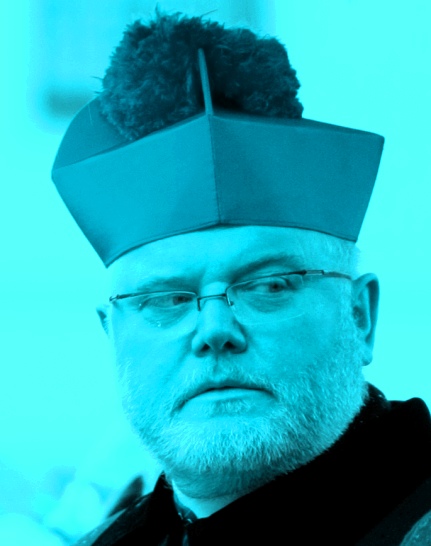
Cardinal Reinhard Marx

Time passes and the old defenders of the faith and the dissenters are passing from the world. Today there are new faces about whom we must become familiar. One of these is Cardinal Reinhard Marx. He is now on everyone’s radar. What are we to think?

Why do I feel that high-ranking dissenters are seeking to hijack the Church? The mission of the Church is that of Christ: to preach the truth and to bring people to repentance and faith. We should neither excuse sin nor allow people to be deceived as to their standing before almighty God. We are called to be a sign of contradiction to the world, not to pamper it. This twisted business about “the family” makes me angry. There I have said it.

maraz

German Cardinal Criticizes Roman Catholic Church for Negative Tone Toward LGBT People

German Catholic Church Has A Lot Of Money – As In The Diocese of Cologne Might Be Richer Than The Vatican

Cardinal Marx on Francis, the Synod, Women in the Church and Gay Relationships

Divided bishops water down welcome to gays and the divorced

A Courageous or Timid Church?

Msgr. Pope touches a cord on the Archdiocesan Blog that is very dear to my heart, the fact that a “timid” Church is in contradiction to its very nature as a sign of contradiction in the world.

Msgr. Pope speaks of the new secularized faith as “Sad, pathetic, wrong, and cowardly—hardly the revolutionary faith that got Paul arrested. . . . We have got to rediscover how revolutionary our Catholic faith truly is to this world gone mad. And as we proclaim healing and an allegiance to something other than this world, we will become increasingly obnoxious to the world around us. . . . No tame, domesticated Christianity will threaten or change this world. When Paul preached, the people rioted. Modern preaching too often incites only yawns and indifference.”

St. Paul and the other apostles did not qualify the Gospel and so they faced arrest, torture and martyrdom. The early Church was persecuted precisely because the truths of Christ allowed for no compromise or tolerance for participation in false worship. Even a pinch of incense to the Roman gods or to the so-called divine emperor was too much. Today’s world misconstrues the incident of the Roman coin and the likeness of the emperor. When Jesus said give to God what belongs to God and to Caesar what belongs to Caesar, he was avoiding a trick to have him either arrested by the authorities or to be rejected by the crowds as a traitor. Ours is a jealous God. What belongs to him? The answer is everything, even Caesar! Many in contemporary society play games with their Christianity. They create a false image of Christ to follow, one that would have fit in nicely with the pantheon of ancient pagan deities. Indeed, the battle over religious liberty is a symptom of this— as if believers could restrict their faith and values to the inside walls of churches and during Mass. And yet, the dismissal at the end of Mass echoes our commission to take the Good News out into the world. The ideal is not co-existence with the world or evil but rather to plant the seeds for repentance and conversion. Today many Catholics are silent upon important issues. A candidate for the office of governor in Maryland is a “practicing Catholic” and yet he is on the record as pro-abortion, yes even for allowing partial-birth infanticide. How can we reconcile this with the faith? The issues continue to mount: no fault divorce and remarriage, same-sex marriages, lack of support for parochial schools, contraception giveaways in public schools, free contraception, abortion on demand and growing sympathies for euthanasia. Sins are counted as rights and Catholics and their Church are expected to fall in line. Wimpish silence satisfied in the past, and that was bad enough, but today complicity is demanded.

St. Paul would exorcize the demonic, not try to accommodate it. Too often we hear from churchmen that we do not want to alienate politicians on “other issues” that are important to us, like the status of immigrants, or just employment, or the dismissal of capital punishment, or tax breaks for churches, etc. We cower to the power of the secular world when we should bring the authority of Christ to bear on the challenges of our day.

Christianity was persecuted by the Roman Empire precisely because it was viewed as intolerant. Today, much of the faith has lost its teeth. The enablers for the murder of children are invited without sanction to take Holy Communion. Even high level shepherds hypothesize ways to get around or to turn a blind eye to homosexuality, adultery and fornication. We are urged to find a new language, removed from that used in Scripture, so that no one might get their feelings hurt. The fact that these activities might cost people the kingdom and their share in everlasting life does not seem to measure up anymore. Who are we to judge? We are the people given the gift of the Holy Spirit and who follow the Light of the World, dispelling the darkness. What is saving faith? It is courageous obedience to God, qualified by charity. That’s who we are and what we are about!

Fr. Longenecker’s Advice to the Pope

Pope-Francis-012

An article in CRISIS Magazine that everyone should read, especially Pope Francis:

Advice for the Pope in Light of the Synod
by Rev. Dwight Longenecker

Father Longenecker writes:

“I know you mean well Holy Father, and I admire and like you, but this process on which you have led us is not helping.”

I really hate to admit it, but no rationalization can escape the truth from my respected brother priest. He is right. There have been too many rash assertions, vague sentiments and undefined gestures. A lack of specificity leads to confusion and falsehood. We need a courageous witness to the truth without compromise. When the enemies of the Catholic Church and her values say they love this Pope… something has gone seriously awry. I suspect they love the popular façade but not the substance of what this Pope and every Pope must be about as the chief guardian of the deposit of faith.

Cardinal Burke has rightly suggested that we need a clear  and definitive statement from the Pope defending the doctrine of marriage and family.  The media hype has gone on long enough.  Priests in the pastoral trenches tell us that couples are walking away from annulment cases, arguing that there is no need since the rules are going to change about divorced and remarried Catholics taking the sacraments.  Pressure is intensifying for pastors to bless same-sex unions and to witness their so-called marriages.  I cannot say what disciplines might be reformed, but I cannot foresee anything that would compromise the moral teachings of the faith.

The question was raised by a parishioner in the pews, “What are the faithful to do?”

We remain steadfast, that is what we do… and we continue to pray and support the Holy Father who is Christ’s Vicar on earth.

Pope

A gay magazine names the Holy Father man of the year?

Pope-Francis-January-2014-BellaNaija

The secular media love him too?

pope-francis-time

Even Time Magazine sings his praises?

My response was that it is going to come to a head. The Synod on the Family may be the start. The Holy Spirit will never fail the Church.

Whoopi Goldberg said during a segment of THE VIEW this month: “We are rooting for Pope Francis to make some changes in the Catholic Church. We love Franny! But he’s still got a couple of things to work on.”

President Obama stated: “He’s somebody who’s first and foremost thinking about how to embrace people as opposed to push them away…How to find what’s good in them as opposed to condemn them, and that spirit…that sense of love and unity seems to manifest itself in not just what he says but also what he does.”

Time Magazine: “Rarely has a new player on the world stage captured so much attention so quickly … He has placed himself at the very center of the central conversations of our time: about wealth and poverty, fairness and justice, transparency, modernity, globalization, the role of women, the nature of marriage, the temptations of power.”

Miscellaneous News Stories (A Recent Sampling)

Pope faces key test with vote on divorcees, gays

Pope Francis lends friendly support to Anglican Church in North America

Dissing Pope Francis—Does Cardinal Burke think he’s Pope Burke?

Pope Francis rents out Sistine Chapel for exclusive, $7,200-per-head Porsche party

Pope Francis Demotes Anti-gay Conservative Cardinal Raymond Burke

Pope Francis’ Catholic Church Teases Us With Promises Of Liberality

Why Pope Francis Is Different From His Predecessors

A Few Thoughts about the Synod Relatio & Debates

My head is spinning about some of the things that are being seriously argued at the Vatican’s Synod on the Family. I am already concerned that a Commission was established to look at streamlining the process for annulments even prior to the start of the Synod. It seems to me that if such were a concern then the bishops would then request the Holy See to do so. Will the documents which will be formulated reflect the majority view and Catholic tradition or will there be attempts to steal the show for the minority progressives?

synod-of-bishops

What is it about this new Synod document that has critics saying it signals a revolutionary shift in favor of same-sex couples? It is acknowledged that this “relatio” urges clergy to make “fraternal space” for homosexuals. But what does it say? We read:

“Homosexuals have gifts and qualities to offer the Christian community: are we capable of welcoming these people, guaranteeing to them a further space in our communities? Often they wish to encounter a Church that offers them a welcoming home. Are our communities capable of proving that, accepting and valuing their sexual orientation, without compromising Catholic doctrine on the family and matrimony?”

Are we reading the same document? All I see are questions. Hopefully they are not rhetorical. Do we eject gay brothers and sisters from our churches? No we do not. Can we invite them forward for Holy Communion? Yes, provided that they maintain chaste and celibate lives. Can we affirm or value their sexual orientation? No, we cannot do so. Such would devalue the true meaning of marriage and human sexuality. We cannot move away from the assessment of disorientation or that same-sex carnality is mortal sin.

As a so-called case-in-point of past intolerance, the news contrasted this development with the story of Barb Webb who was fired from a Catholic school when she and her partner announced her pregnancy. Similarly, her partner, Kristen Moore was asked to resign from her post as a music director at a Catholic parish. The secular media glossed entirely over the moral issues that extend beyond same sex unions, like the freezing of embryos, donated semen and IVF technologies. All these elements are reckoned as moral evils and sinful.

This relatio is being interpreted precisely as Cardinal Kasper would suggest. The doctrinal truth is eclipsed, if it remains, for the sake of a pastoral provision or slackening of discipline. The same reasoning he uses for divorced and remarried couples is being applied to active homosexuals. I find this reckoning very disturbing. Discipline can be distinguished from doctrine but discipline is always at the service of doctrine. There are doctrinal elements that cannot be ignored. It is contradictory to say that gay acts are sinful and then to value, in any way, homosexuality. It is contradictory to say that marriage is a lifelong institution and that divorce is a sin, while inviting couples to receive Holy Communion who are living in adultery. The truths of Scripture are clear and we must always be at the service of the truth on every level: doctrinally, canonically and pastorally.

The document recognizes that same-sex couples live lives where they render “mutual aid to the point of sacrifice [which] constitutes a precious support in the life of the partners.” Critics are saying that this is a crack in the door that may one day lead to full acceptance. I would say that this is not the case. The statement is one that reflects the immediate horizontal human condition but says nothing about the vertical supernatural dimension. It is a mere statement of fact that these couples support each other in their day-to-day lives. However, this does not mean that they are in right standing before God. Mortal sin is still mortal sin. I suspect that there are many “nice and pleasant” people who make good neighbors and yet will suffer damnation and hellfire. We are not saved by simply being nice but by being faithful and obedient to God. The Church can relax certain disciplines but she cannot change divine positive law. My fear is that tolerant language might enable or encourage more sinners to remain within their sins. The Church must be a place for saving truth and grace. She should never be an enabler for sinful lifestyles or blasphemous acts like receiving the Eucharist while ill-disposed or in mortal sin. This document does NOT acknowledge the “holiness” of such couples as was suggested in the Huffington Post article by Antonia Blumberg (1/13/14). It simply asks if we might tolerate with passivity and silence the situation of people living in sin.

I cannot buy this application of any “law of graduality.” No matter how slow might be the movement to holiness; the Church should never compromise on the fullness of truth. Confessors can exhibit great understanding and compassion for married couples who use artificial contraception, with the hope that they will eventually come around to the Church’s understanding of human dignity and the full value of the marital act. It is here that I can well appreciate “graduality.” However, this is not the same as cohabitating, adulterous and same-sex couples. They have no right to a shared bed.  In their regard, where there is neither contrition nor amendment of life, absolution must be withheld. Similarly, while they should attend weekly Sunday Mass, they should abstain from taking Holy Communion. The priest will not usually embarrass people in public but he fails his sacerdotal charge if he does not challenge such couples in private.

This law or better yet, theory of graduality was very much the rationale for the “open table” of Anglicanism. It was hoped that this welcoming to receive the Eucharist would draw others into greater unity. Contrastingly, the “closed table” of Catholicism sees Holy Communion as an expression of an ecclesial unity that is already realized. This is representative of the ancient tradition wherein heretics and grievous sinners were denied the sacrament or even excommunicated. The Church’s censure of interdict would also illustrate this posture. One had to be properly disposed and graced to receive the sacrament. Anything less was judged as blasphemous and scandalous. One should not pretend there is a union that is not truly there. This resonates with the current debate about divorced and remarried couples as well as with active homosexuals. We cannot allow a false compassion to tolerate normalization for the sake of public acceptance while the pastoral accommodation is deceptive to the doctrinal truth and the spiritual state of souls before God. We can move away from using pejorative biblical terms like “sodomites” and “adulterers,” but the underlying reality will remain the same. Does this really serve the summons to repent and believe?

If we change the discipline for those in serious sin and the intrinsically disordered, would we not logically have to open up Holy Communion to others (particularly Christians) who might be in ignorance of the full ecclesial reality but who live moral lives? It is a real can of worms and I would prefer to leave it closed. But that is my opinion.

The Special Synod Faces Serious Issues

We all know that there are many people who come up for Holy Communion while ill-disposed for the sacrament. This is a deeper question than the plight of divorced-and-remarried Catholics.  There is regular scandal about pro-abortion politicians taking the sacrament.  All hell broke loose when a priest denied the Eucharist to a lesbian woman at her mother’s funeral.  This does not even take into account the many communicants (unknown to the priest) who are ill-disposed by various mortal sins and lack of prayerful preparation.  There is also the question of non-Catholic participation, and their sense of alienation and not being welcome when Holy Communion is distributed.  Given these many scenarios, it seems that part of the special synod must be on the nature of the Eucharist, its reception and how we might deal with the growing tension.

Outside of Mass attendance, the special synod will necessarily have to discuss the evolving changes in the makeup of family units: one-spouse homes, broken families, children raised by grandparents, foster and adoptive parents, families with unmarried couples and illegitimate children and same-sex unions.  There are even bizarre situations, as when I had two women and a man come see me to prepare for the baptism of two children.  One belonged to the man’s wife and the other to his girlfriend or mistress.  They all lived under the same roof.  These things are less and less rare.  They make my head hurt.  How can it be fixed?  Must we live with the messiness?

Bishop Tobin on Remarried Couples & the Eucharist

pptobin280409Has anyone else read Bishop Thomas Tobin’s letter posted on the Providence Diocese’s website?  He invites discussion.  Thus, with all due respect, I would like to share my concerns.  The bishop writes:

In my personal reflection on this dilemma, I turn to the incident in the Gospels in which Jesus and His followers were walking through a field of grain on the Sabbath and because they were hungry, began to pick and eat the grain, a clear violation of an important Mosaic Law. The offense was roundly condemned by the religious experts, the Pharisees. But in response, Jesus said, “The Sabbath was made for man, not man for the Sabbath” (Mk 2:23-28).  In other words, while not denying the validity of the law, our Lord clearly placed it in a “pastoral context,” exempting its enforcement due to the human needs of the moment. Could we not take a similar approach to marriage law today?

One cannot really compare the issue of divorced-and-remarried Catholics being allowed to receive Holy Communion with the incident where our Lord’s apostles are charged with violation of the Sabbath by picking and eating the heads of grain (Mk 2:23-28).  The first is in regard to spiritual disposition and the sacrilege of taking Holy Communion while in mortal sin.  The latter simply focuses upon a pharisaical interpretation of the commandment demanding rest.  The apostles were not in any grievously sinful state.  Jesus excuses them, as a foretaste of the freedom that comes with his dispensation.  But, more than this, Jesus is God.  The lawgiver can excuse whatever laws he wills.  The Church can also make modifications, as with our keeping the Sunday Observance over the traditional Hebrew Sabbath.  However, such authority is not absolute and this juridical rendering is a far cry from trying to circumnavigate around basic objective moral norms.  The Church and the Pope do not have the authority to authorize sin and sacrilege.

What constitutes a genuine pastoral approach?  Excusing or enabling serious sin is no favor to anyone.  While we may be troubled by exclusion and feelings of hurt; how can these compare to the fires of hell and the loss of God’s friendship.  The pastoral cannot be so focused on the external situation or appearances that we neglect the internal reality.  The corollary to the assertion that “matrimony is made for man, not man for matrimony” does not find its solution in feigned second marriages but in a chaste celibacy.  Promises are made to be kept.  If the first marriage is authentic, then as long as one spouse lives, any attempted second marriage is a fiction.  That is the long-and-short of it.  There is no viable solution out of this conundrum.  This is more than “the lofty demands of the law,” but the enduring truth that the two become one flesh.  Affections might stray but one spouse continues to belong to the other.  Infidelity is stealing what is the spouse’s due and giving it to another.  There is no way that the Church could rubber-stamp such a scenario.

The bishop writes,

But at the same time, the Church has taught the pre-eminent value of receiving the Holy Eucharist, and I keep hearing the words of Jesus about the Eucharist, words that are just as valid and important as His words about marriage: “Unless you eat the flesh of the Son of Man and drink his blood, you do not have life within you” (John 6:53).

Missing from this assessment is the ancient teaching, recited in the sequence for Corpus Christi, that the same sacrament which brings life to one, brings judgment to another.  Purposely giving Holy Communion to those who are in an adulterous situation would invite condemnation upon them and ridicule upon a hypocritical Church.

Bishop Thomas Tobin states:

And I know that I would much rather give Holy Communion to these long-suffering souls (divorced-and-remarried couples) than to pseudo-Catholic politicians who parade up the aisle every Sunday for Holy Communion and then return to their legislative chambers to defy the teachings of the Church by championing same-sex marriage and abortion.

The bishop means well and he says, honestly, that he does not know the answer to the predicament; however, sympathy for small devils while castigating large ones is no answer at all.  A man can jump from one ledge to another.  If he misses by a foot or an inch, it makes no difference.  He is still just as dead.  This is the appropriate analogy here.

Bishop Tobin echoes an article in the National Catholic Reporter by Fr. Peter Daly who suggested that annulments be simplified by handling the situations entirely at the local level.  The bishop writes:

Can we eliminate the necessity of having detailed personal interviews, hefty fees, testimony from witnesses, psychological exams, and automatic appeals to other tribunals?  In lieu of this formal court-like process, which some participants have found intimidating, can we rely more on the conscientious personal judgment of spouses about the history of their marriage (after all, they are the ministers and recipients of the sacrament!) and their worthiness to receive Holy Communion?

The true Sensus Fidelium is that collection of the laity that keeps our moral laws and regularly goes to Mass.  They would be critical of this proposed solution.  The grounds for annulments often rests in ignorance, deceit, lack of proper discretion, inability to fulfill the obligations of marriage, mental problems, prior addiction, etc.  People are often blind to their own faults and shortcomings; but here the bishop is literally saying, “Physician, heal thyself!”  Would this apply for only the second marriage?  What about the third?  What part would “the other woman” play when marriages were deliberately destroyed?  Such a measure would play into the hands of selfishness.  Many of them do not understand the difference between an annulment and a divorce.  If the bishop’s notion were adopted, there would be no difference— and a basic command from Christ would be explicitly violated.

This is all quite serious.  The marriage analogy plays a crucial part in our understanding of the Church’s relationship to Christ and the sacrament of Holy Orders.  Weaken one and we hurt the others— the dominoes will begin to fall.