The blog header depicts an important and yet mis-understood New Testament scene, Jesus flogging the money-changers out of the temple. I selected it because the faith that gives us consolation can also make us very uncomfortable. Both Divine Mercy and Divine Justice meet in Jesus. Priests are ministers of reconciliation, but never at the cost of truth. In or out of season, we must be courageous in preaching and living out the Gospel of Life. The title of my blog is a play on words, not Flogger Priest but Blogger Priest.
We all know that there are many people who come up for Holy Communion while ill-disposed for the sacrament. This is a deeper question than the plight of divorced-and-remarried Catholics. There is regular scandal about pro-abortion politicians taking the sacrament. All hell broke loose when a priest denied the Eucharist to a lesbian woman at her mother’s funeral. This does not even take into account the many communicants (unknown to the priest) who are ill-disposed by various mortal sins and lack of prayerful preparation. There is also the question of non-Catholic participation, and their sense of alienation and not being welcome when Holy Communion is distributed. Given these many scenarios, it seems that part of the special synod must be on the nature of the Eucharist, its reception and how we might deal with the growing tension.
Outside of Mass attendance, the special synod will necessarily have to discuss the evolving changes in the makeup of family units: one-spouse homes, broken families, children raised by grandparents, foster and adoptive parents, families with unmarried couples and illegitimate children and same-sex unions. There are even bizarre situations, as when I had two women and a man come see me to prepare for the baptism of two children. One belonged to the man’s wife and the other to his girlfriend or mistress. They all lived under the same roof. These things are less and less rare. They make my head hurt. How can it be fixed? Must we live with the messiness?
Has anyone else read Bishop Thomas Tobin’s letter posted on the Providence Diocese’s website? He invites discussion. Thus, with all due respect, I would like to share my concerns. The bishop writes:
In my personal reflection on this dilemma, I turn to the incident in the Gospels in which Jesus and His followers were walking through a field of grain on the Sabbath and because they were hungry, began to pick and eat the grain, a clear violation of an important Mosaic Law. The offense was roundly condemned by the religious experts, the Pharisees. But in response, Jesus said, “The Sabbath was made for man, not man for the Sabbath” (Mk 2:23-28). In other words, while not denying the validity of the law, our Lord clearly placed it in a “pastoral context,” exempting its enforcement due to the human needs of the moment. Could we not take a similar approach to marriage law today?
One cannot really compare the issue of divorced-and-remarried Catholics being allowed to receive Holy Communion with the incident where our Lord’s apostles are charged with violation of the Sabbath by picking and eating the heads of grain (Mk 2:23-28). The first is in regard to spiritual disposition and the sacrilege of taking Holy Communion while in mortal sin. The latter simply focuses upon a pharisaical interpretation of the commandment demanding rest. The apostles were not in any grievously sinful state. Jesus excuses them, as a foretaste of the freedom that comes with his dispensation. But, more than this, Jesus is God. The lawgiver can excuse whatever laws he wills. The Church can also make modifications, as with our keeping the Sunday Observance over the traditional Hebrew Sabbath. However, such authority is not absolute and this juridical rendering is a far cry from trying to circumnavigate around basic objective moral norms. The Church and the Pope do not have the authority to authorize sin and sacrilege.
What constitutes a genuine pastoral approach? Excusing or enabling serious sin is no favor to anyone. While we may be troubled by exclusion and feelings of hurt; how can these compare to the fires of hell and the loss of God’s friendship. The pastoral cannot be so focused on the external situation or appearances that we neglect the internal reality. The corollary to the assertion that “matrimony is made for man, not man for matrimony” does not find its solution in feigned second marriages but in a chaste celibacy. Promises are made to be kept. If the first marriage is authentic, then as long as one spouse lives, any attempted second marriage is a fiction. That is the long-and-short of it. There is no viable solution out of this conundrum. This is more than “the lofty demands of the law,” but the enduring truth that the two become one flesh. Affections might stray but one spouse continues to belong to the other. Infidelity is stealing what is the spouse’s due and giving it to another. There is no way that the Church could rubber-stamp such a scenario.
The bishop writes,
But at the same time, the Church has taught the pre-eminent value of receiving the Holy Eucharist, and I keep hearing the words of Jesus about the Eucharist, words that are just as valid and important as His words about marriage: “Unless you eat the flesh of the Son of Man and drink his blood, you do not have life within you” (John 6:53).
Missing from this assessment is the ancient teaching, recited in the sequence for Corpus Christi, that the same sacrament which brings life to one, brings judgment to another. Purposely giving Holy Communion to those who are in an adulterous situation would invite condemnation upon them and ridicule upon a hypocritical Church.
Bishop Thomas Tobin states:
And I know that I would much rather give Holy Communion to these long-suffering souls (divorced-and-remarried couples) than to pseudo-Catholic politicians who parade up the aisle every Sunday for Holy Communion and then return to their legislative chambers to defy the teachings of the Church by championing same-sex marriage and abortion.
The bishop means well and he says, honestly, that he does not know the answer to the predicament; however, sympathy for small devils while castigating large ones is no answer at all. A man can jump from one ledge to another. If he misses by a foot or an inch, it makes no difference. He is still just as dead. This is the appropriate analogy here.
Bishop Tobin echoes an article in the National Catholic Reporter by Fr. Peter Daly who suggested that annulments be simplified by handling the situations entirely at the local level. The bishop writes:
Can we eliminate the necessity of having detailed personal interviews, hefty fees, testimony from witnesses, psychological exams, and automatic appeals to other tribunals? In lieu of this formal court-like process, which some participants have found intimidating, can we rely more on the conscientious personal judgment of spouses about the history of their marriage (after all, they are the ministers and recipients of the sacrament!) and their worthiness to receive Holy Communion?
The true Sensus Fidelium is that collection of the laity that keeps our moral laws and regularly goes to Mass. They would be critical of this proposed solution. The grounds for annulments often rests in ignorance, deceit, lack of proper discretion, inability to fulfill the obligations of marriage, mental problems, prior addiction, etc. People are often blind to their own faults and shortcomings; but here the bishop is literally saying, “Physician, heal thyself!” Would this apply for only the second marriage? What about the third? What part would “the other woman” play when marriages were deliberately destroyed? Such a measure would play into the hands of selfishness. Many of them do not understand the difference between an annulment and a divorce. If the bishop’s notion were adopted, there would be no difference— and a basic command from Christ would be explicitly violated.
This is all quite serious. The marriage analogy plays a crucial part in our understanding of the Church’s relationship to Christ and the sacrament of Holy Orders. Weaken one and we hurt the others— the dominoes will begin to fall.
Dear Fr Joe, thanks for your blog. It’s very useful even in my part of the world!
I had a query about the words, “may the Lord accept the sacrifice from your hands…” so I went to Catholic Answers and read the explanation (attached below). But my query remains: Is not “the sacrifice” Christ himself? If so, did not God send His Son to be the “sacrifice (Lamb)” for our sins? So why are we requesting God to accept “His” Son back to Him?
Unless the “sacrifice” referred to here is “our sacrifice (good works)”? Rather than “good works” (i.e., charity), I would like to think this reference to sacrifice might refer to “our life,” particularly a call to go outside our comfort zone to live a life for Christ.
Would you please clarify whether either of these is on the right track or am I completely missing the point? Cheers!
CATHOLIC ANSWERS
Question
Why do we pray in the third person instead of addressing our pleas and praises directly to God? For example, the priest says, “Pray, my brothers and sisters, that our sacrifice may be acceptable to God, the almighty Father” and we answer, “May the Lord accept the sacrifice at your hands for the praise and glory of his name, for our good and the good of all his Church.” Could we say instead, “Lord, accept the sacrifice offered for the praise and glory of your name, for our good and the good of all of your Church”?
Answer
We don’t pray in the third person. The Church’s liturgy is its official public worship of God. Since it is not private worship, the members who are present are acknowledged throughout the service. So every so often, the priest-presider will address them with, “The Lord be with you,” and the people respond, “And also with you.” We are communicating with each other. This is not a prayer.
May the Lord accept the sacrifice at your hands for the praise and glory of his name, for our good and the good of all his Church is not a prayer. It is addressed to the priest as an acknowledgement of the sacred action he is about to undertake. It is a response to his request: “Pray, brethren, that our sacrifice may be acceptable to God, the almighty Father.” Even though he has just asked the people to pray, their response is to him and is not meant to be a prayer.
The ultimate offering prayer comes later: “Through him, with him and in him, in the unity of the Holy Spirit, all glory and honor is yours, almighty Father, for ever and ever.” Only the priest says this, and the people affirm the prayer with “Amen.” Both the priest’s words and the people’s words are prayer and are addressed directly to God.
FATHER JOE:
I would take exception with the assertion that the words in question are not prayer. Even the dialogue sections between the priest and people are parts of the great prayer of worship that is the Mass. The Mass is the Church’s most important communal prayer and it contains within it all other forms of prayer: praise, thanks, contrition, petition, and in a unique manner, propitiation. Let us look at the words that confuse you:
Facing the people, the priest says: “Pray, brethren, that my sacrifice and yours may be acceptable to God, the almighty Father.”
The congregation responds: “May the Lord accept the sacrifice at your hands for the praise and glory of his name, for our good and the good of all his holy Church.
The priest then says his prayer over the offerings to which the people respond, “Amen.”
The priest is calling everyone to focus on the Eucharist. Implicit in the dialogue is the hope and expectation that God will accept us and our offering. The celebrant addresses the people but he knows full well that our offering will only be received if God sees it as pleasing and desires to accept it. We cannot force the hand of God. The people respond to the celebrant by acknowledging his priestly work in union with Christ. Yes, they are talking to the priest, but as with any intercessory prayer, its proper object is almighty God. They are making the priest’s prayer and the work of Christ into something of their own. This sacrifice is to the honor and praise of God. It is also deemed efficacious for the local church at prayer and for the universal Church. The corrected translation makes a distinction between the priest’s sacrifice and that of the people. It does not represent good works as such but targets the work of the Mass. This segment no more stands alone than any other part. It leads us to the meat of the oration, the Prayer Over the Gifts. The great High Priest of the liturgy is Jesus Christ. However, the celebrant at the altar participates or shares in this one priesthood through his ordination. While they cannot preside at the Mass, the laity is connected to Jesus and his sacrifice through their baptismal priesthood. Priests may take a stipend for a Mass they offer each day. The fruits that come to the priest may be applied to this intention, for anyone living or dead. You may note these names in the bulletin for the Masses said. This reflects the sacrifice and its benefits that come to the priest at the altar. The laity may come with their own intentions, which they are to bring to mind at the beginning of the Mass prior to the Opening Prayer or Collect. The people participate with their priest who makes possible the Mass and they benefit with fruits of grace. The reference to sacrifice is a direct acknowledgment that the Eucharist is a re-presentation of the bloody oblation of Christ on Calvary, albeit in an unbloody or clean manner upon the altar. The sacrifice of Jesus is not locked into time and place. At the words of consecration, Jesus is made REALLY present in Holy Communion— both in his full identity and person as well as in in saving activity. The only difference between Calvary and the Mass is OUR participation. Now we can offer ourselves grafted to Christ (the Lamb of God) as one perfect sacrifice to the eternal Father. The Mass surrenders to the heavenly Father the only gift that makes a difference and that earns our redemption, his Son, Jesus Christ.
The Mass enters us into Christ’s one-time offering of himself.
The General Synod of the Church of England voted on Monday to consecrate priestesses as women bishops. Well, there’s the nail to the coffin for the home of Anglicanism. Ecumenism with them will be restricted to soup kitchens, sharing contributions from C.S, Lewis, and appreciation for perfecting the English language. The bridges have been burned to most else. Since women cannot be ordained in truth, this makes arguments about their Masses and the Eucharist mute. Fake priests can only give you a counterfeit Holy Communion. When it came to morality, our ships passed in the night a long time ago. They disregard both Sacred Scripture and Sacred Tradition, wrongly approving homosexuality and dismissing the indissolubility of marriage. Abortion is reduced to a personal choice, far from the Catholic stance that sees it as an assault upon the heart of the Gospel of Life. Their last convention in the States could only agree about how terrible landmines were, as if that is a big issue in suburbia. This is what happens when morality collapses and an “everything goes” mentality takes over. Public opinion and modernity is given preference over divine revelation. Instead of obedience to God, the human becomes the measure of all things— and people are fickle and frequently wrong. The Orthodox churches are lamenting that years of work toward a common faith and even levels of recognition have been thrown upon the garbage heap. Anglicanism, except as a small group received by the Holy See, is destined not to be counted as a branch of the apostolic and “catholic” family of churches. The “reapproachment” with them since Vatican II is now a dismal failure because the Anglicanism of even half a century ago no longer exists. It has been replaced by a mutated structure that will continue to devolve and crumble. Australian Anglicans are arguing that priests might be optional and that the laity can offer the Mass. Fragmented, one segment fights with another, and there is no contemporary pretense of a world Anglican order. Certain traditionalists among them refused the offer of Pope Benedict XVI, hoping to rebuild with a union of conservative African bishops. But how long will it be until modernity will invade that new structure? Ironically, some of them attack the Anglicans who accepted the special offer from the Pope in becoming Catholics. They still buy the prejudices against Rome which were initially an element of their split. Catholicism has its dissenters; but they will have no official weight in the practice of our sacraments and doctrines. The accidentals may change, as with language, but the deposit of faith is safe and sound. As for the Anglicans, could they even agree as to what this deposit consists?
The Anglicans feel that immutable doctrine can be changed by ballot. Here is the vote approving women bishops:
House of Bishops: 37 to 2 with 1 abstention
House of Clergy: 162 to 25 with 4 abstentions
House of Laity: 52 to 45 with 5 abstentions
This move goes against the teachings and pattern passed down from Jesus. There was no woman among the twelve apostles. Jesus did not worry about stereotypes. But this one, he did not break. It was God’s will. Anglicans no longer care. I guess they would say that Jesus was wrong. Of course, this change was anticipated. A long time in the mix, the first ingredient was added back in 1994 when they began ordaining women as priestesses (women priests). Error breeds error. The United States made a woman its chief Episcopalian bishop some years ago, Katharine Jefferts Schori. Before her they elected their first gay bishop. Australian, New Zealand, and Canada also have women bishops. The show continues but it no longer matters. They can wear their pointy hats and play-act all they want— these women are neither true priests nor bishops. Both Orthodoxy and Catholicism are in agreement here. There is no third tier to the Church. Without a valid hierarchy, there can be no true priests. If there is no priesthood, then there can be no Eucharist (sacrifice of propitiation and real presence). If there is no Eucharist, the ecclesial community is not really a CHURCH. End of Story
QUESTION: As a Catholic can I receive Communion in an Orthodox Church? Aren’t our beliefs essentially the same?
ANSWER:
You cannot generally receive Holy Communion in an Orthodox church. The only exception is when it is physically impossible for you to participate at a liturgy in a Roman Catholic or Eastern rite in union with the Holy See. However, please note, that not all Orthodox churches would want Latin rite Christians taking the sacrament from them, either. We should also try to respect their laws. Having said all this, we recognize the validity of the seven sacraments in the Orthodox churches.
The Orthodox churches are national churches and Roman Catholicism has always been in tension with such embodiments of faith communities. This is true in the East and West. Gallicanism placed great stress upon the unity of the Church in France just as Anglicanism signified a juridical breech. Political reasons related to Church authority are still very much part of the problem that must be resolved. What is the extent of papal power and the unity under the Petrine see? This brings with it the debate over the status of the small Eastern rite churches in union with Rome. The Orthodox churches tend to look down upon them as traitors. The Orthodox churches regard the Pope as “the first among equals.” Such is not how we regard the universal see.
Besides ecclesiology, there are also some doctrinal interpretations which divide us. The most famous of these is the Filioque debate in the Nicene Creed: both the authority of the Pope to add to the profession of faith and the understanding of the eternal generations or relations of the divine Persons in the Blessed Trinity. Given pressure from worldly monarchs, Protestant influence and secularism, the second or penitential marriages of divorced persons is also a divide. We cannot readily forgive that for which we were willing to allow the entire English church to slip away— a marriage that is no marriage but adultery. Orthodox churches transplanted into the West are increasingly adopting elements of Lutheranism (emphasis upon Scripture over tradition and the value of faith over works) but these eccentricities are also placing stress upon their loose inner unity worldwide. Indeed, some communities have split as have several of the Russian Orthodox over the fragmentation of the old U.S.S.R. and what was seen as complicity with communism. Indeed, it appears that some prelates might have been KGB plants. Indeed, the recent news has detailed a public rift between the Orthodox patriarchs in Russian and the Ukraine.
Fr. Fernando Suarez offered a healing Mass and service at Holy Family last night. We figure about 650 people came out. He is well known in the Filipino community.
Here I am with Father Suarez on the rectory porch. I heard confessions from 4:30 to 6:30 PM and made myself available for more after Mass. Father Suarez offered the healing blessings to individuals in the church and then went over to the overflow crowd in the hall.
The success of the event was all due to the many volunteers who set up for the event, gave hospitality to the priests and organized the parking and seating. Chief among these is Monette Roxas-Tharp (pictured below) who took registrations and functioned as the parish coordinator.
I would not argue against the desire for the Society of St. Pius X to preserve its identity, as long as such does not include a persistent and deliberate opposition to the rest of the Church’s self-understanding.
I would also not argue against the discernment of a silent apostasy to which we must respond. However, we must not be deaf to the loud or blatant rebellion and dissent from various members, on the right and left, that afflicts the institution founded by Christ. The greatest threat to papal authority today is not a strained collegialism but an arrogant disobedience. Given their continued participation in this assault, I am not optimistic that the conditions demanded upon by the Society will pass muster with the Holy See.
Despite the negotiations, reconciliation will not come by spurning the directives of the Holy Father while not budging upon their own obstinacy toward an authentic Ecumenical Council of the Church, Vatican II. Any such forced reconciliation would damage real ecclesial unity. While they speak of “canonical normalization,” they cannot even concur with the living Church over which Code of Canon Law actually applies and is in force. Despite their profession in the “monarchial constitution” of the Church under the Pope, they feel they still need a “deliberative vote” before deciding if they will listen to him or not. Is it not peculiar that they attack collegialism in the universal Church but demand upon it for themselves, even arguing that it trumps papal demands? That is certainly not my idea of ecclesial obedience.
I am also not blind to the possible shades of Father Feeney in reference to the Church “outside of which there is no salvation nor possibility to find means leading to salvation.” They are usually very careful not to associate themselves with these extremists, despite a shared affection for traditionalism. While the Church is certainly the great mystery or sacrament of salvation where we encounter Christ, this would seem to invalidate even the more restrained strands of ecumenism. The Church has affirmed that elements of Catholicism with which the Protestants absconded like baptism and faith in Jesus Christ still have some pervading value. While the issue is more complicated with Jews, we acknowledge that Christ is the fulfillment of the one covenant that God first established with them (Cardinal Dulles and Cardinal Ratzinger, i.e. the Pope). The Church is necessary for salvation because there is no way to the Father apart from Jesus Christ. The Church is his Mystical Body. Thus, both are one and integral to salvation. The irony is that if the Society refuses reunion then they will be condemned by their own definition as outside that visible body “by which the supreme power of government . . . belongs only to the Pope, Vicar of Christ on earth.” The only possible solution they might find for this conundrum would be the sedevacantism that some of them apparently have already embraced. Declaring the Chair of Peter vacant, they can define themselves as the true Church and appoint one of their own bishops as the Pope, or in actuality as an anti-pope. Given online sermons and writings from various of their priests, my suspicions are that a number of them will join the Society of St. Pius V in this regard. I hope I am proven wrong.
Further, it is one thing to say that we oppose the abuses from the nebulous spirit of Vatican II; however, they continue to castigate the council itself. As I recall, the Holy See implied that such would be a deal-breaker. It is certainly okay and proper “to uphold the declarations and the teachings of the constant Magisterium of the Church.” Vatican II must be understood or interpreted in light of the traditions and constant faith of the Church. However, instead of seeing continuity, they stress a break “in regard to all the novelties of the Second Vatican Council which remain tainted with errors, and also in regard to the reforms issued from it.” While it lacks certain specificity, this statement can readily be interpreted as a general repudiation of the Church today in all her elements from the catechism to the sacraments. Is this what they meant to say?
Only one of the four traditionalist bishops of the Society of St. Pius X has shown any real interest in the overtures of Pope Benedict XVI. Bishops Bernard Tissier de Mallerais, Alfonso de Galarreta and Richard Williamson threatened internal schism within the Society, warning that any agreement with the Vatican would result in surrendering the fight against worldwide apostasy. This is strong language, literally saying that contemporary Catholicism is a false religion. Indeed, when we look at a number of their priests and apologists, they slam the whole business as capitulation to “the Modernist Pope” and “the Modernist Rome.” Some of their sermons online and various writings go so far as to call counterfeit both the “Novus Ordo” priesthood and the “new” Mass. One writer claimed that since Cardinal Ratzinger was made a bishop under the new ritual that he did not share in the episcopacy and thus could not be a genuine pope. People like that will not want to “pollute” themselves with any association with the rest of us. There is a lot of wishful thinking, but after almost a half-century separation, many of them have gotten used to their independence. Slamming the rest of the Church and slurring the Holy Father, at least in sermons and in routine discourse has become second-nature. They do not seem the least bit afraid that they might be committing blasphemy against the Holy Spirit. Even Bishop Bernard Fellay has lamented this problem. It has become a habit hard or next to impossible to break. They will not reconnect with what they see as the enemy.
Pope Benedict XVI was very kind to lift their excommunication. However, I would not be surprised if Lefebvrites should invoke its reimposition. After all, they never actually acknowledged it anyway. All it would take is the consecration of another unapproved bishop. Such would force the Church’s hand. The Society itself seems aware that their current response will not suffice for Rome. Thus, they will not be coming home any time soon. While pledging fidelity, they are not going to budge until (in their estimation) the day comes “when an open and serious debate will be possible which may allow the return to Tradition of the ecclesiastical authorities.” In other words, they are saying that they are RIGHT and Rome is WRONG and that nothing will change until the post-Vatican II leadership gives in.
(Lumen Gentium) “Each and all these items which are set forth in this dogmatic Constitution have met with the approval of the Council Fathers. And We by the apostolic power given Us by Christ together with the Venerable Fathers in the Holy Spirit, approve, decree and establish it and command that what has thus been decided in the Council be promulgated for the glory of God.”–Pope Paul VI
Given in Rome at St. Peter’s on November 21, 1964.
I will now wait for hell to freeze over.
I do not think the devil will be wearing a coat any time soon.
Responding to the Pope, here is the difficult condition laid down by the Lefebvrites for reunion: “The freedom to preserve, share and teach the sound doctrine of the constant Magisterium of the Church and the unchanging truth of the divine tradition and the freedom to accuse and even to correct the promoters of the errors or the innovations of modernism, liberalism, and Vatican II and its aftermath.”
Indeed, it looks like the devil is stoking the fire.
Archbishop Gerhard Ludwig Muller explains (July 20): “The purpose of dialogue is to overcome difficulties in the interpretation of the Second Vatican Council, but we cannot negotiate on revealed faith, that is impossible. An Ecumenical Council, according to the Catholic faith, is always the supreme teaching authority of the Church.”
FSSP transform a modernistic free-standing altar into a very beautiful High Altar. The church that this took place in is in France and is now operated by the Fraternity of St. Peter. The complete time for this “Altar-ation” was just about 15 minutes!
A number of years ago, I posted this simple video of an ugly modern communion table being transformed into a visible altar of sacrifice. The posting was a whim, a small aside. The discussion that followed floored me. This was much more important to believers than I had thought. This is all for the good.
Here is the Discussion
MARY O: Deo Gratias!
GERRY L: Amazing! That’s how it should be.
ANNA MARIA: To Mary O— A big “Amen” to your comment. I couldn’t say it better. To Father Joe— Thanks for posting this! Where there is a will there is a way. I hope we see more of this Stateside!
JOHN S: Next stop improve the music!
KAY: Amen!!!!
KRISTIE: Beautiful! And I agree; that is how it should be! Wouldn’t it be wonderful if it spread State side? Thanks Father Joe! You are awesome!
VICTORIA: Reverent…one aspect of many of the beauty of Catholicism. (I didn’t witness this reverence in the Baptist, Unitarian, Nondenominational, or Methodist churches.) I’m sooo happy I’m Home.
BOB: John S— Sanctus fumus! More Palestrina, that’s what wants here!
LADY GODLESS: Well, that was nice! It looked too much like a lethal injection gurney before.
REGINA: Fr. Joe, this is why women are not priests…I spent an hour reading your blog and it reminds me of something I already know— men have a thick skin. They are tougher than us women. I heard a caller to a secular radio station say that the gates of hell referred to in the bible would not prevail against the Church, which, as the caller pointed out, was a battering ram. I loved this insight— you are a battering ram! Keep battering those gates Father! I pray for you.
ANITA MOORE OPL: One of these days, the change will be permanent. We can look at the cost as a penance for having wrecked the old furnishings in the first place. Is it possible there are some bishops who will not get out of Purgatory until the wreckovations they ordered are undone? If so, that makes the restoration of the Churches even more urgent.
HIDDEN ONE: I know a few altars that could use that kind of treatment… at least one of which a renovation group could sneak into, remodel, and leave, likely without being noticed. *sigh*
MR. FLAPTRAP: This is the installation of the new altar at my parish, St. Raphael’s in Rockville, Md. The old altar was similar in style to the original one in this video (four round concrete legs and a slab.) The base on the new one features the three archangels named in the Bible.
FATHER JOE: Yes, I remember the before and after. There are also shots of the late Father Bill Finch who died after Mass on Holy Thursday 2009. Rest in Peace. Thank you for sharing the video.
BILL C:
I recently joined a parish where altar, tabernacle, and crucifix are in a traditional vertical line of worship as in the video. Sadly, I am aware of only a few churches in the archdiocese of Cincinnati that are configured with the tabernacle placed at the altar. I must drive farther to my new parish, but the trip is well worth it because I now experience a much deeper sense of worship, adoration, and reverence for the Eucharist.
I pray our new archbishop will institute a uniform policy to place the tabernacle at the altar in all parish churches in the archdiocese. This would be a huge achievement for the catechesis of young and old on Christ’s Eucharistic presence.
Pope Pius XII, in his 1956 Address on the Liturgy, addressed with prophetic insight what would happen only a decade later shortly after Vatican II by warning: “To separate tabernacle from altar is to separate two things which by their origin and their nature should remain united.” Indeed, Church tradition for seven centuries — from mid-thirteenth century until after Vatican II — had placed the tabernacle at the altar. Surely the Holy Spirit inspired the holy union of tabernacle and altar over so many centuries.
This is a really informative website. Keep up the good work, Fr. Joe! God bless.
JOHN: The problem today is that the priests have been formed to think that they are pastors first and the Mass means very little.
FATHER JOE: That was not my experience. Most priests I know would argue with you. The Eucharist is the center of our lives.
JOHN:
If you look at the new Code of Canon Law promulgated in 1983 by Pope John Paul II, take a look at Canon 276. This canon directly addresses the question of how Catholic priests are to pursue holiness. It lists:
First, the obligation to ‘faithfully and untiringly….fulfill the duties of pastoral ministry’; Second, the obligation to Sacred Scripture and the celebration of the Eucharist; Third, reading the breviary.
FATHER JOE: Are you being purposely deceptive? The code begins by saying, “In leading their lives, clerics are bound in a special way to pursue holiness since, having been consecrated to God by a new title in the reception of orders, they are dispensers of the mysteries of God in the service of His people.” The initial statement of the canon stresses “the mysteries of God” and the chief among these are the Eucharist and the Sacrament of Penance. Priests have been empowered by Christ to offer the sacrifice of the Mass and to forgive sins. I suspect that you have a watered down appreciation of the pastoral ministry. A man is not ordained chiefly for his own salvation but for that of others. Jesus washed the feet of his apostles and told his followers to do so for one another. The priest is the servant of God who lays down his life for others. A pastor serves God by sacrificing his life for his flock. Only priests can offer the Mass and forgive sins. This has not changed since Vatican II.
JOHN: Canon 276 sets forth a weird priority of obligations. For years Catholics (including priests) have been taught that because the Eucharist is the centre of the Church the obligation to celebrate Mass was far and away the most important in priestly life. In fact, this principle was often demonstrated by the famous example that a priest will still celebrate Mass even though there is no one in attendance.
FATHER JOE: I suspect you are not appreciating the language of the Code. It is still recommending that priests celebrate daily Mass. Most if not all priests I know do precisely that. Indeed, many of us offer the Mass several times a day.
JOHN: The obligation of all priests to pastoral duties also undermines the life of any priest living the contemplative life.
FATHER JOE: There are different codes for pastors and monks. It is a different life. Many religious priests in monasteries regularly concelebrate. Most diocesan priests are the only priest present at their liturgies. Some groups like the Trappists only ordain enough priests to care for the community. The other monks remain religious brothers. The old code also placed a pastor-priest’s salvation on the line in how he fulfilled his pastoral duties: not neglecting the needs of his people for the Eucharist and Confession and Extreme Unction. The transmission of the true faith, especially to the children is crucial in both codes. Failure to give adequate care to this would constitute mortal sin.
JOHN: Although the canon refers to all priests (not merely diocesan), one wonders how it can be applied to the many priests living in a monastery.
FATHER JOE: Particular rules of life in orders approved by the Holy See and the codes on religious take precedence since it is seen as a higher vocation.
JOHN: In fact, it is very difficult, if not impossible, to see how monks can be said to have any priestly obligation to pastoral ministry. It would also not be exaggeration to say that the Vatican II theology of the priesthood, which makes pastoral obligations intrinsic to the Sacrament of Holy Orders, undermines the life of the monk-priest.
FATHER JOE: Such ministry is in regard to the religious community. Similarly priests were sometimes given charge of a convent. Their flock would be the nuns. Pastoral ministry always exists in some form, even if it is just Mass for the dead. The word “pastoral” is a reference to the role of a priest as a shepherd. He cares for the sheep and does so according to the powers and authority given him. You are making a false case. Accidentals have changed in some cases, but the priesthood is as it has always been. The old code was even more concerned about accidentals to ministry, like tonsure and clerical property and certain rights.
JOHN:
This approach seems little else that an attempted synthesis between the Catholic diocesan priesthood and the Lutheran ministry. Further, it is a change so radical that it can be safely said that the Catholic priesthood has been turned upside-down.
On October 24, 1995, Cardinal Joseph Ratzinger, in a speech given on the thirtieth anniversary of Presbyterorum Ordinis, said that Vatican II attempted to broaden the classical image of the priesthood and to satisfy the demands proposed by the Reformation, by critical exegesis, and by modern life but from the reading of Canon 276 it seems more likely that the Council, in its ecumenical effort, embraced the Protestant ideas of ministry but unfortunately loosened its grasp of the core of the Catholic priesthood. The consequence was that Vatican II produced a document which at its core is little else than a warmed-over version of the Protestant ministry.
FATHER JOE: You mean well, but your hatred of the Church after Vatican II colors your reasoning. Catholic priests are not defined as one would Lutheran ministers. Many Lutherans believe that ordination can expire. The priesthood is forever. Catholic priests offer daily Mass. Many Lutherans do not and are only part-time ministers. Catholic priests offer a propitiatory sacrifice of the Mass (a true re-presentation of Calvary) and offer us the risen Christ in the Blessed Sacrament. Protestants have occasional communion services and give out bread and juice. Catholic priests claim to have the power to forgive sins. No Lutheran minister would say that. Look at the catechism, which is far more revelatory about the priesthood than the Code on the rights and responsibilities of the clerical state.
JOHN: These liturgical changes, which were introduced over forty years ago, can now be seen as part of the larger picture. It is no secret that vernacular liturgy, the concept of Eucharist as-meal (implicit in the Mass of Paul VI), and the use of a table in the sanctuary (rather than an altar) were applauded by most Protestant sects. In fact these liturgical changes were the companion of very serious changes to the Catholic priesthood— all under the influence of Protestant theology.
FATHER JOE: Abuses happened, but the liturgical reform and a movement to a vernacular liturgy were being explored even in the 1930′s. We saw the development of the dialogue Mass prior to Vatican II. There is no denial of sacrifice by regarding the altar as also a table. There need be no either/or. As for Protestant sects, we came to appreciate a common love for Jesus, but most of them still reject the Mass and the priesthood. The sacraments are still wholly Catholic and neither the priesthood nor the Mass has lost that spiritual efficacy given them by Christ.
JOHN: And I continue to find it so amusing how everyone thinks of Pope JPII as being so conservative where it was he who introduced a new Code of Canon Law, new Catholic Catechism, new translations of the Bible (USCCB and NAB but approved on the Vatican website and explained as such), proudly proclaimed ecumenism as the cornerstone of his pontificate and participated in false worship that in infallible councils and in encyclical after encyclical proclaimed any Catholic let alone a Pope who would do such was excommunicated.
FATHER JOE: The Old Catholics broke away from the true Church prior to Vatican II. Many Anglicans practice ancient rituals. However, like so many Latin Traditionalists, their fight over ecclesiology and the authority of the Pope makes them the REAL PROTESTANTS. You can offer the Tridentine Mass and still be a heretic, schismatic, excommunicant, and a PROTESTANT. Unlike certain churches of the East locked into a stagnant tradition; the Catholic Church has a Magisterium that is protected by the Holy Spirit. We have a teaching authority centered upon the Pope which along with the world’s bishops (in and out of council) guides the Church. A few renegade bishops and priests have no such divine protection.
JOHN: This mess will take generations to clean up and millions of souls will be lost because of those who were entrusted to save souls.
FATHER JOE: And some of the lost souls will follow the guidance of illicit bishops who deny the Jewish holocaust and who rebuke the authority of Christ’s Vicar on Earth.
ANNE W. PALMER: I cried and cried when I saw the video. Thanks be to God! I grew up with the traditional years ago. There is such a difference in realization of the sacredness of our precious Lord in the Eucharist. Vatican II was so misinterpreted, adding things that were never there in the first place. I will never understand how that happened. The video makes it so plain. Thank you for posting it. I will share it with as many as possible. By the way, the music was awesome too. I would like to know from where it came? Music also denotes the sacred and that was sacred.
JOHN: Why is my comment still awaiting moderation? [I had to find time to respond in the original discussion.] Is it that difficult or do you not want to acknowledge the new form of the priesthood, which after Vatican II saw thousands leave and starting with the late 1950′s, the “wandering eye” priest (not to be accepted as good) give way to the pedophile, gay, liberal priest who has led millions of souls to hell?
FATHER JOE: There is no new form of priesthood. That is the lie promulgated by those who misrepresent the teachings of the present-day Catholic Church under Peter’s successor. Those who give greater weight to accidentals over substance or essentials fall into grievous error, particularly in regard to ecclesiology and juridical authority. You might not like the current reformed rituals, but the sacraments are intact and the Church endures. As for pedophile priests, many of the lawsuits regard clergy who were formed by the old Latin regime. What is the old saying about people living in glass houses throwing stones?
JOHN: Our Sermon today at the SSPV chapel in Oyster Bay was just that, how the priesthood right before and after Vatican II with its changes in its form as well as intent as I have stated above, is more concerned about being “liked” and knowing the bible than about saving souls and leading those astray to find Christ.
FATHER JOE: You belong to a splinter group of a splinter group, a schism of a schism? You are being deceived. I will pray that you will return to the one holy “Catholic” and apostolic CHURCH.
BILL C:
I’m surprised more people have not responded to this topic and I would really like to know what you think. I’m 62 years old. Although I’m happy to have recently joined a parish with the tabernacle at the main altar, it makes me downright angry that so many parishes in my archdiocese displace the tabernacle. Let me give you a few examples. The parish where I grew up removed the tabernacle from the altar sometime after Vatican II and placed it in a side wing near the choir. They put the baptismal font at the altar where the tabernacle once stood.
Another parish I attended for several years was an older church with a beautiful altar having a built-in tabernacle. When it was remodeled, they put the tabernacle at a side altar outside the sanctuary, and “boarded up” the hole at the main altar with an ornamental cross display.
The last parish I attended for several years before joining my present one actually had the tabernacle as a small wall-closet outside the sanctuary. I finally had my fill of this nonsense and was delighted to find a traditional parish with the tabernacle at the main altar.
Call me “old fashioned” if you like, but to my way of thinking, Christ’s Eucharistic presence is either real or make-believe. If make-believe, then it really doesn’t matter where we put the tabernacle or whether anyone genuflects before it. But if Christ’s Eucharistic presence is real, then where on earth would you even think about placing the tabernacle — other than at the main altar.
As I pointed out in my earlier comment, Catholic tradition placed the tabernacle at the altar for 7 centuries — from mid-13th century until shortly after Vatican II. And contrary to what some Catholics mistakenly believe, Vatican II did NOT mandate or encourage the removal of the tabernacle from the altar. This nonsense resulted from liturgists who used the reform momentum of Vatican II as an excuse to radically redesign churches with the consent of some bishops who frankly were “asleep at the wheel.”
And where has this nonsense led. My observation is that most people do not genuflect when the tabernacle is absent from the altar, and if they do it’s often not even in the direction of the tabernacle. There is also a lot more talking in the pews before and after Mass. In short, reverence for the Eucharist is lacking to some extent and Mass seems more a “communal meal” and less an act of divine worship. At least, that’s my personal experience.
And, what about catechesis on Christ’s Eucharistic presence? What does it say to young and old alike when the baptismal font replaces the tabernacle at the altar, or when the tabernacle is placed at a side altar like a saint’s statue, or when the tabernacle is a wall closet outside the sanctuary?
Eucharistic adoration doesn’t make a lot of sense to me in churches where the tabernacle is displaced. After all, what is the sense of placing the Eucharist in a monstrance on the main altar when the tabernacle is not afforded the same position of honor? Isn’t the same Eucharist inside the tabernacle or am I missing something?
To reiterate the words of Pope Pius XII in my earlier post above: “To separate tabernacle from altar is to separate two things which by their origin and their nature should remain united.” Also, I think it’s hard to argue with 7 centuries of Church tradition that placed the tabernacle at the altar. Certainly, the Holy Spirit inspired the holy union of tabernacle and altar over so many centuries.
Okay, Father Joe, what do you think about all this? It troubles me spiritually to see such disconnect between my belief about the Eucharist and the placement of the tabernacle in so many churches?
FATHER JOE: In regard to our parish churches, tabernacles are best placed in the center, along with the altar. We pretty much agree. My last parish had a side tabernacle (built in 1971). I moved it to the center where it belonged.
MARY O: “I moved it to the center where it belonged.” God bless you for that, Father Joe.
Celibacy helps to make the priesthood an eschatological sign. Our Lord told us that in the kingdom to come there would be no marrying or giving in marriage. This is often misunderstood and upsets married couples, at least those who are happily married. Such does not mean an end to love. But marriage has a great deal to do with the propagation of the species. We are promised glorified bodies but all the elements of earthly love and passion will pale by comparison with the beatific vision. There will be no more sacraments for we shall see the mystery face to face. There will be no more faith, for we will know throughout our being the Greatest Good and the Absolute Truth. We will all be part of the singular marriage banquet of the Lamb of God with his immaculate bride, the Church. The Mass which priests celebrate in this world participates in this heavenly marriage, the eternal covenant of Christ. This sacred reality adds to the fitting quality of celibacy in priesthood. It is not part of the intrinsic nature of priesthood, but it comes very close.
This is the home of the AWALT PAPERS, the posting of various pieces of wisdom salvaged from the writings, teachings and sermons of the late Msgr. William J. Awalt.

























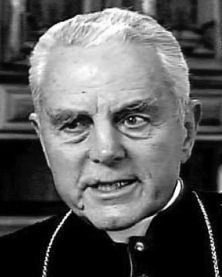
 Pope” and “the Modernist Rome.” Some of their sermons online and various writings go so far as to call counterfeit both the “Novus Ordo” priesthood and the “new” Mass. One writer claimed that since Cardinal Ratzinger was made a bishop under the new ritual that he did not share in the episcopacy and thus could not be a genuine pope. People like that will not want to “pollute” themselves with any association with the rest of us. There is a lot of wishful thinking, but after almost a half-century separation, many of them have gotten used to their independence. Slamming the rest of the Church and slurring the Holy Father, at least in sermons and in routine discourse has become second-nature. They do not seem the least bit afraid that they might be committing blasphemy against the Holy Spirit. Even Bishop Bernard Fellay has lamented this problem. It has become a habit hard or next to impossible to break. They will not reconnect with what they see as the enemy.





















 Blogger Priest