• Our Blogger

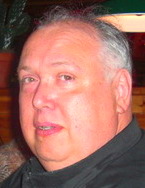
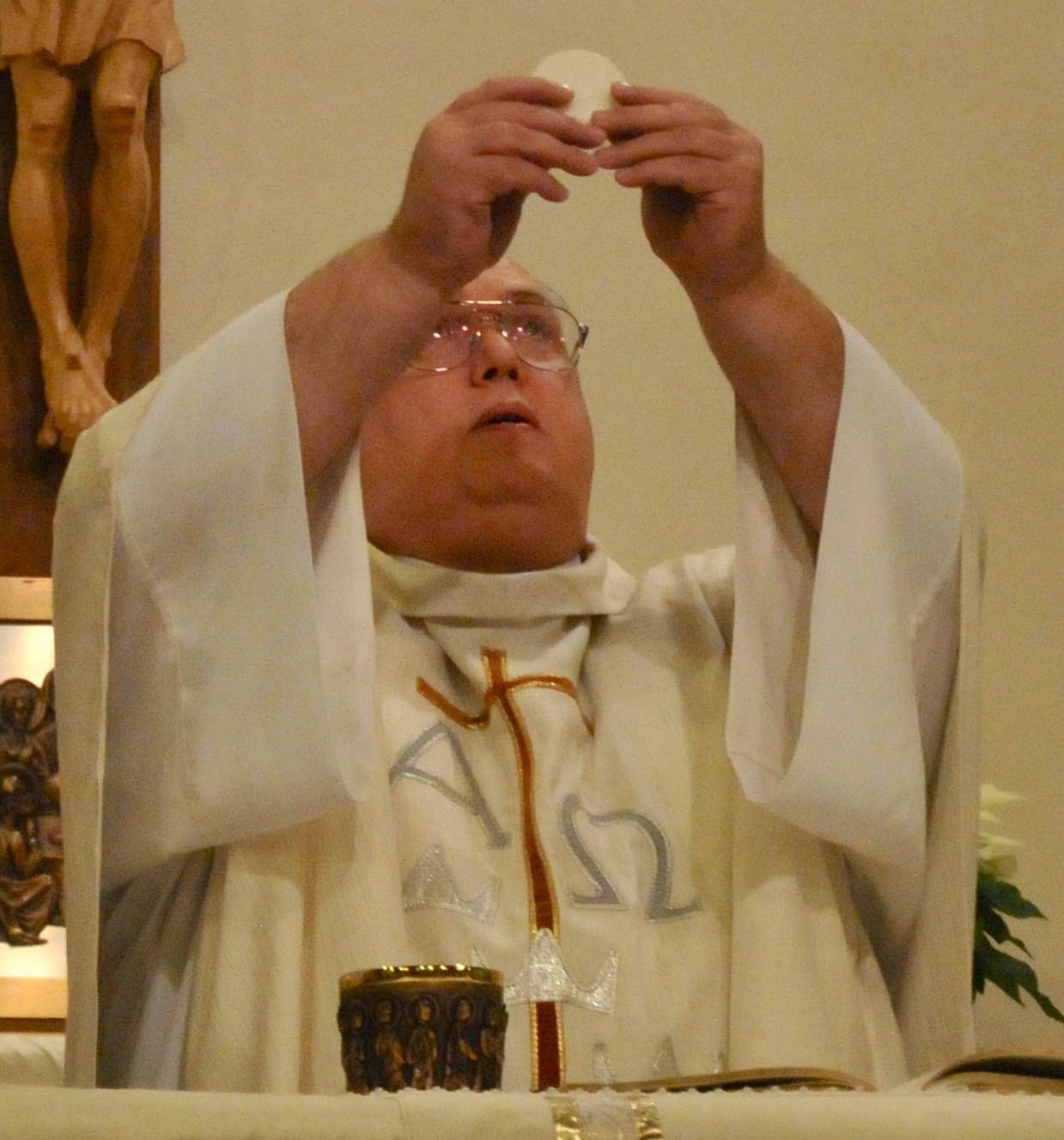
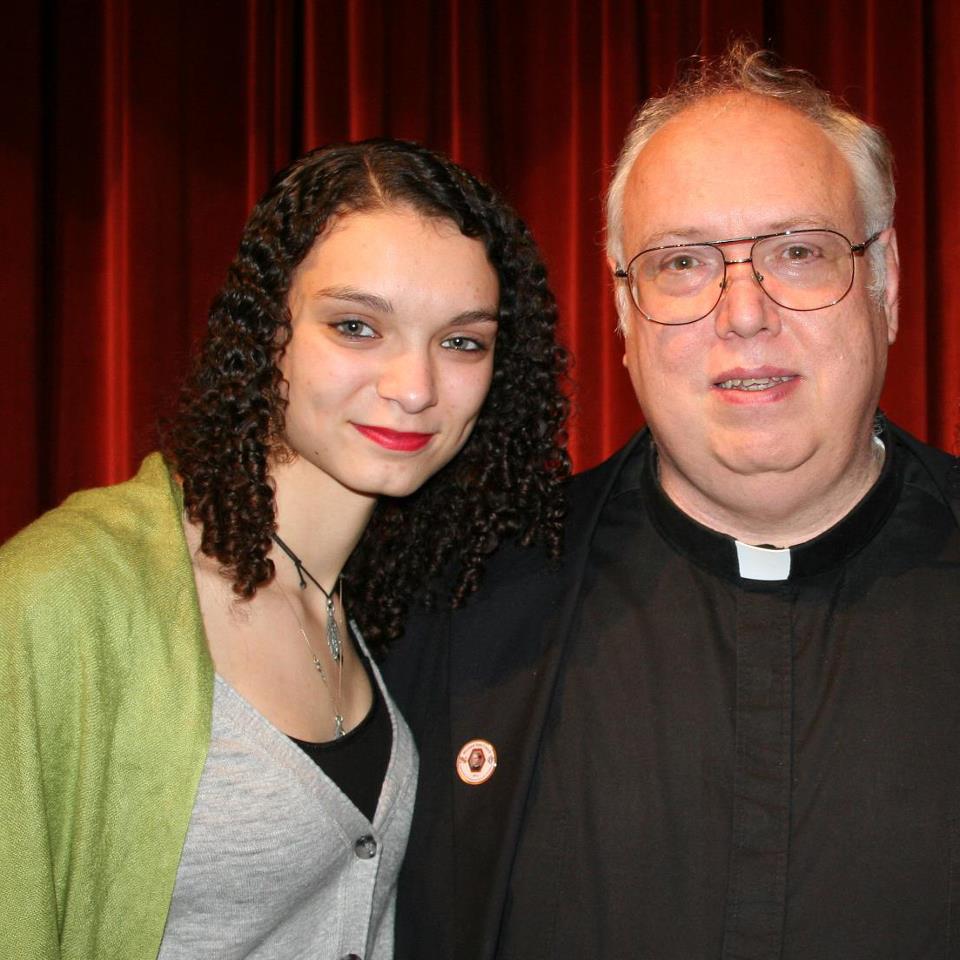
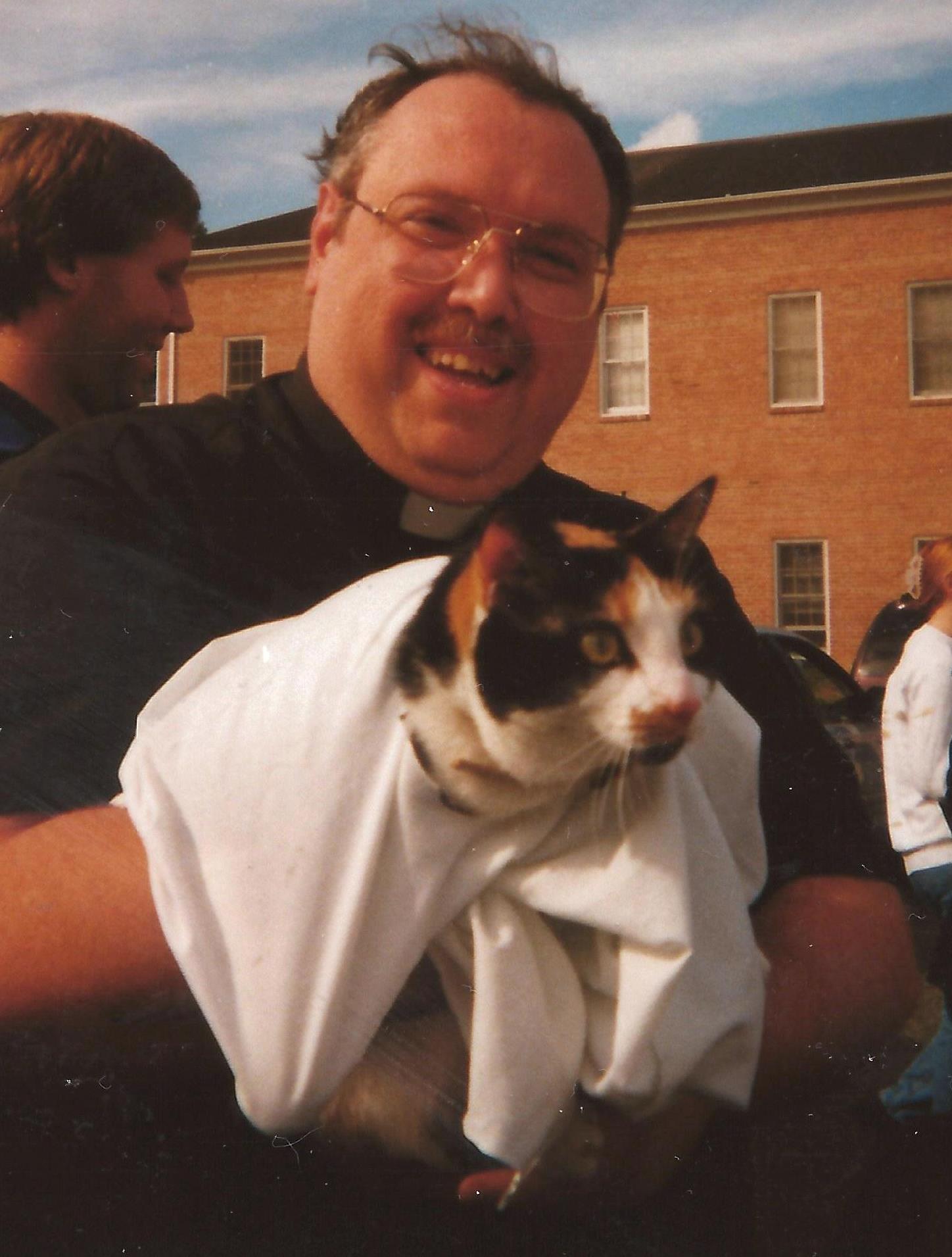
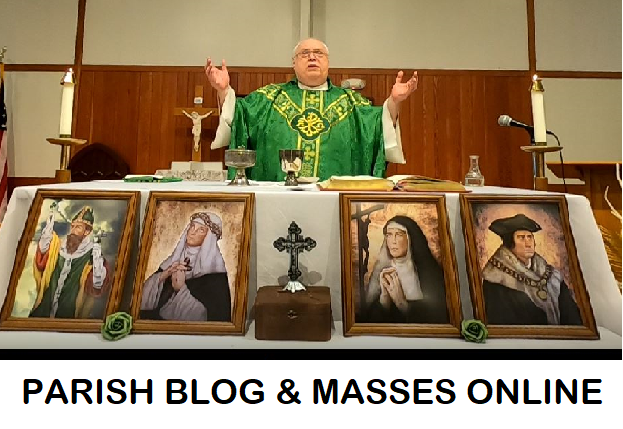
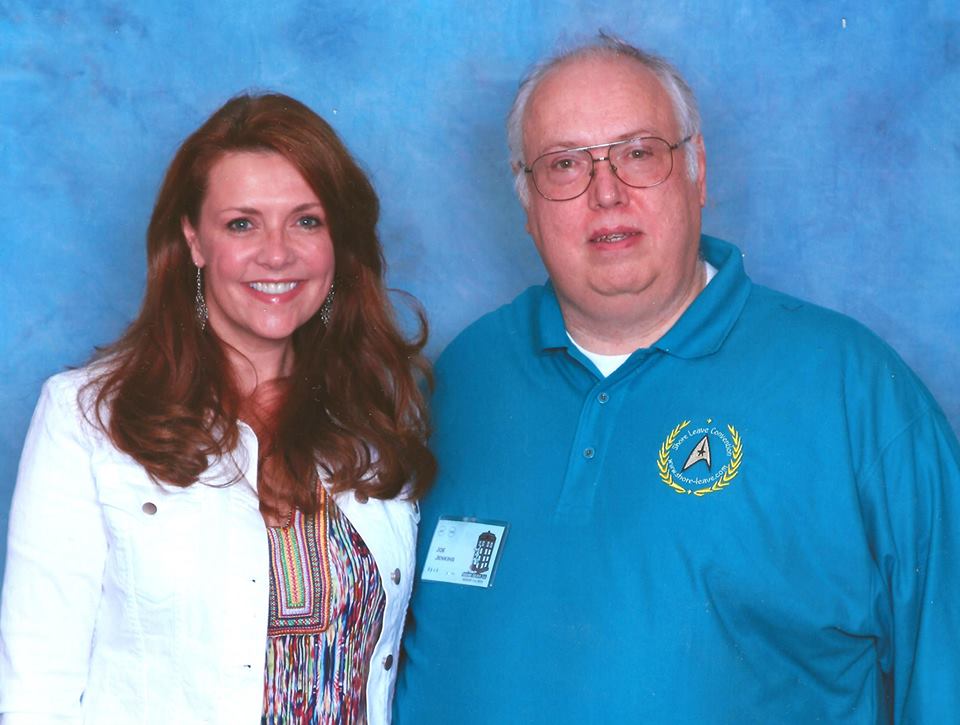
    Fr. Joseph Jenkins

  • The blog header depicts an important and yet mis-understood New Testament scene, Jesus flogging the money-changers out of the temple. I selected it because the faith that gives us consolation can also make us very uncomfortable. Both Divine Mercy and Divine Justice meet in Jesus. Priests are ministers of reconciliation, but never at the cost of truth. In or out of season, we must be courageous in preaching and living out the Gospel of Life. The title of my blog is a play on words, not Flogger Priest but Blogger Priest.

  • Archives

  • Categories

  • Recent Posts

  • Recent Comments

    Jeremy Kok's avatarJeremy Kok on Ask a Priest
    Gary Joseph's avatarGary Joseph on Old Mass or New, Does It …
    Barbara's avatarBarbara on Ask a Priest
    Anonymous's avatarAnonymous on Ask a Priest
    forsamuraimarket's avatarforsamuraimarket on Ask a Priest

The Intercession of the Saints

151063064753857

Taking the side of the Pharisees over the Sadducees, Jesus testifies to life after death.  “That the dead will rise even Moses made known in the passage about the bush, when he called ‘Lord’ the God of Abraham, the God of Isaac, and the God of Jacob; and he is not God of the dead, but of the living, for to him all are alive” (Luke 20:37-38).  While the gates of heaven were closed before the coming of Christ, our Lord speaks of a genuine communion between the living (on earth) and those heroes of faith who had come before.  Jesus will ultimately translate these souls from the limbo of the fathers into heaven.

Over the years in debates with fundamentalists about the communion of the saints, many of them insist that the saints are sleeping and others that they are alive but cannot possibly be aware of what is happening on earth.  Catholicism would argue that the heavenly saints are alive, aware of us and praying for us.  Admittedly, there is some question as to whether this awareness is part of the fabric of the afterlife or whether it is made possible through a special divine intervention.  We know that in Jesus Christ love is stronger than death.  While our loved ones are taken from our sight, we are still bonded to them in love.  This speaks to the profound mystery of the Church in pilgrimage, in purgation and in glory.

Some of our number have run the race and have won a share in the crown of Christ.  They remain in solidarity with brothers and sisters in the world who are still being tested.  “Therefore, since we are surrounded by so great a cloud of witnesses, let us rid ourselves of every burden and sin that clings to us and persevere in running the race that lies before us” (Hebrews 12:1).

I do not believe that our guardian angels and the blessed souls watch us as earthly voyeurs might watch a reality television program.  Instead, they are actively engaged.  They reach out to us with their love and worship God with orations of praise and incessant intercession.  They seek to protect us from malignant spiritual entities.  They would have us where they are.  Those in glory are not suffering amnesia about those they have left behind.  Indeed, I suspect they know us better than before because now they see us as we truly are, behind all our posturing and deception.  They cannot force us to the will of God.  But their witness and prayers may help some to find the path to eternal life.  One critic suggested that if the saints were to see their earthly family and friends sinning then it would bring them sadness— and this is contrary to heavenly joy. While it might be hard for us to understand, this is not the case.  Heaven will never be held hostage to sin or hell.  The saints cannot be sad because where they are has no room for sadness.  While they are aware of us, their sights are also always upon God.  The barrier or membrane between heaven and earth will allow such helps as happiness, counsel, and love to pass through; but never sadness, manipulation, hatred or despair.  The heavenly saints like our Lord are now impervious to pain.  This is one of the most profound mysteries for us who must still endure this veil of tears.  The saints implore grace that we might know repentance, conversion and faith.  They pray that we might be courageous in adversity.  They beseech the throne of God to be merciful to us.  Chief among the saints is Mary who loves and intercedes for us with her immaculate and “maternal” heart.

Christ is the way, literally the link between heaven and earth.  This is our lifeline.  This is the real reason why the saints are still aware of us and why we remember them as alive in the Lord.  We are not orphaned by God.  While we await the final judgment and the consummation of the world, we acknowledge that we have not been abandoned.  Christ is present in the proclaimed Word.  Christ is present in his priests who stand at the altar and who offer the forgiveness of sins.  Jesus is present in his person and in his saving activity at every Eucharist.  We receive the risen Christ in Holy Communion.  The Lord is with us when we gather to pray.  The Church is the Mystical Body of Christ.  No part of this body has been severed.  The Church is one:  the Pilgrim Church, the Church in purgatory and the Church in heaven.  We are one in the Lord.  We have been reborn and given a new identity by the power of the Holy Spirit.


The saints are calling us to the other side of the rainbow.  The Lord calls us each by name.  Heaven beckons to us.

We Will Never Exhaust the Divine Mystery

151051890275679

The souls of the dead in heaven are divinized as saints by grace but by nature are still human.  We will have a share in the risen life of Christ.  However, we will always be finite creatures.  There can be no boredom in heaven because by intellect and will we can never fully exhaust the divine mystery.  We will be drawn eternally into the depths of knowing and loving God.  This process begins in this world.  We come to the Lord with a faith realized in loving obedience.  God gives us sanctifying grace and we are made sons and daughters to the Father, kin to Christ, children of Mary and inheritors of the kingdom of heaven.  Death makes this orientation permanent.  We encounter Christ, not as strangers but as friends.  Indeed, restricting ourselves to this world, we find that all the saints of the Church demonstrated great holiness while many of their ideas, even in reference to religious faith, often fell short or were erroneous.  Error will certainly end when we pass through the door from this world to the next; but our capacity to understand and to contain the mystery of God will always be limited by our nature.  This truth applies to both angelic and human spirits.

I do suspect there is a profound openness to truth and the gift of love in heaven.  This would conflict with hell where the demons and lost souls know something of the truth but place a limit or barrier upon their knowing and loving.  We experience in this world a similar type of division and adversity where someone says, “I want nothing to do with you!  I don’t want to know anything more about it!  You mean nothing to me!  I disown you!”  The damned probably have a comparable mentality and stagnation of the heart.

Here on earth we receive the risen Lord in the Eucharist.  God feeds us.  There are no sacraments in heaven as there is no need for sacred signs.  The saints see God and the mystery directly.  There is no more faith because the saints see and know God (as well as his truths) in an immediate fashion.  There is no more hope because every aspiration has been realized.  The only theological virtue that can cross the threshold of heaven with us is love or charity.  This love draws us into the Trinitarian life.  The banquet of heaven is literally one course after another.  The pattern is established with the Pilgrim Church.  God will continue to feed us with himself.

As I said in my first paragraph, there can be no boredom in heaven.  This is a far cry from the popular image of lazy angels sitting on clouds playing harps.  The mystery of God can never be diminished.  There will always be more to know.  The more we know, the more we will love.  The more we love, the more we will want to know.  This is the pattern of the finite creature to the infinite Creator.

I can well appreciate that secular critics deny the soul and view the intellectual life as the operation of our brains.  Romantics might speak of the heart as the source of love, but in truth the brain is the place where material memories and thinking takes place.  As a Christian, I would suggest that as a composite of flesh and spirit, the efforts of the brain mimic the powers of the soul.  Brains are not all the same and all of them have limits in regard to learning and to the physical senses.  Brains can also become diseased, causing people to struggle with thinking and remembering the most basic of facts and relationships.  The brain is physical and like the rest of the body, it has parts that can break down.  Parallel to this, the human soul has no parts and is indestructible.  It grants us a self-reflective knowledge that goes beyond the ability of the brain.  We are more than thinking meat.  Memories are not merely stored as electrochemical processes used by neurons but also make lasting impressions upon the human soul.  Just as we are often surprised by the detail of dreams; I suspect we will also be surprised as to what the soul retains after death.  What would a human being be if he was never to forget and we were to ponder matters with perfect clarity?  I suspect that the material brain both enables rational knowing and reflection as well as impedes it.  (In any case, I would not want to define the soul as simply a hard drive or cloud backup of what is in our brains.  There is a constant interworking that is part of the mystery of the human mind as understood by Christian believers.)  What we now see as through a fog or veil, we will see clearly.

151051890275679 (1)

What and who we know, as well as love, survives the grave.  Indeed, it gives us our eternal orientation.  We are either like the wise virgin bridesmaids at the door with the burning lamps or like the foolish one who walk away looking for more oil.  When Christ, the divine bridegroom comes for us, he should find us alert and ready to enter into the nuptial banquet.   If we fail to remain steadfast and prepared, we might hear those terrible words of damnation, “Amen, I say to you, ‘I do not know you.’”

If pride is the overriding sin of the devils, then a lasting humility is the posture of the saints.  Compared to God we may seem insignificant, literally as nothing.  And yet, Almighty God has looked upon us as his children.  I would argue that the prayer that Jesus gave his apostles will have an eternal significance.  The word for “Father” that is used by Jesus is literally the one used by little children.  I suppose we would render it as “papa” or “daddy.”  All of us, even the greatest doctors of the Church like Augustine and Aquinas, may be counted among the babes of heaven.  We are summoned to know and to love God while in this world.  All we know is still just scratching the surface.  Eternity will allow us to continue this exploration of knowing and loving.  Humility is not just the approach of men and women in this world, but of the saints and angels in the next.  We must become like little children if we want a place in the kingdom.  Those who are bloated with pride, feeling that they are all grown up and know enough already will find themselves in hell.  Similarly, all those who place limits on love will also know the loss of heaven.


Religious Subterfuge & Dissent Against Rome

Today the Huffington Post ran the headline, “Nuns Blast Catholic Church’s ‘Doctrine of Discovery’ That Justified Indigenous Oppression.” Eyebrows were raised. What the devil were the sisters talking about? These prudential views went out with the ancient notions concerning the divine right of kings. Do the sisters understand it is 2014 and not the 1600’s?

lcwr 3The challenge to the Vatican came from Sister Maureen Fieldler. This, in itself, was an immediate bad sign that something was up. She is a widely known radical feminist and dissenter on a number of issues, such as so-called abortion rights, liberation theology, women’s ordination, religious indifferentism, etc. Given that she is disobedient to the Vatican at every turn, it was the height of arrogance that she demanded renunciation of 15th-century documents.  The LCWR would have you think that they speak for the angels, but not all angels come from heaven.  The devil can also appear as an angel of light.

The Church has already spoken to abuses in the past and the late Pope John Paul II included the rights of indigenous persons in his famous apologias. This seems sufficient. Of course, the Church would not want to renounce the courageous missionary efforts of saints or the unique value of our saving Catholic faith. These modern sisters would be oddly less celebratory of this saving inheritance.  Like secular anthropologists, they would stress the retention of isolated New World pre-Christian cultural and religious associations from the unique value of the Gospel that came with explorers from the Old World. Along these lines, the Leadership Conference of Women Religious has repeatedly compromised itself by engaging in pagan, New Age and various native spiritualties during its conferences and retreats. Indeed, along with their demand to the Pope, they are insisting that he participate in “a sacred ceremony of reconciliation.” You can bet all your donuts that these girls do not mean the Sacrament of Confession. Sorry, while they might pray to the four winds, true Catholics place their confidence in the Holy Spirit and the Church Jesus founded. Christ commanded that we take this faith to the entire world and to baptize in the name of the Trinity. We cannot and must not apologize for the command of Christ at the end of Matthew’s Gospel. It is true that colonization brought with it oppression and disease; but it also gave a new people the saving Gospel and Western civilization. We should not be so quick to idolize a multiculturalism that would utterly discount our rich history and the benefits of colonization. Would Sister Fieldler, her Loretto religious community and the LCWR have preferred that the saving faith were never proclaimed and that the missionaries had stayed at home? While the ancient Church decrees are summarized to sound like one had to convert or die, it was actually much more complex.  While Western countries sought new resources, the Church saw in civilization the opportunity to bring the true faith to the New World. While the soldiers and conquerors did not always abide by the Church’s admonitions to respect human dignity; the sword was also used to protect the colonists and those native peoples who were ordinarily endangered by more violent neighbors. In any case, the issues around this partnership of the Church and state have long been mute.

Vaguely analogous notions of intervention today are not the same as that which included the promulgation of the Gospel in days of old. Even American “Manifest Destiny'” had less to do with the Church and more about a non-denominational American sense of providence and the call to greatness.  The sisters are experts at the jargon that wins a secular modernity to its side. But when one scratches the surface, it becomes clear that there is a peculiar eccentricity to them. For instance, they would attach the anachronistic appeal to the Pope with the effort to strip the Washington football team from using the name Redskins. I suspect few reasonable people see any connection.  The Holy See has no lands of its own and no longer even makes reference to doctrines of discovery. By contrast, there are already plenty of papal declarations which speak to the rights and dignities of indigenous peoples. But the sisters are merely flexing their muscle. If they were serious, they would be reproaching secular governments and struggles in the present, as with the conflict between Russia and the Ukraine. Here at home they conveniently disguise the absurd ramifications of their stance. They want to get even with the Holy See, not a secular nation.  Remember, if one must apologize for the past then one must make restitution. Along these lines the proposal was made years ago that all whites should be taxed in the U.S. so that monetary reparations might be paid the descendants of slaves. The argument was rightly made that you cannot fault the living for the crimes of the dead. Would the United States give back all lands and territories that belonged to Native Americans, including Manhattan? Would we surrender Texas to the Mexicans? Would we hand over our territories and Hawaii to the native population as new sovereign countries? We bought Alaska from the Russians but they had essentially claimed it through colonization. Would we give it back to the Eskimos (along with the oil) and go home? And given that most of us are the sons and daughters of immigrants, where would home be? The repercussions would become rather silly. But silliness is not something new for the Loretto religious community or this organization of sisters.

Something is rotten about this business. This overture is not really about renouncing the oppression of indigenous peoples. It is payback for being put into their place by Rome. They want to show that they (the Leadership Conference of Women Religious) have the true moral high ground. This is all about politics and not at all about justice. Once we see the truth about it, the organization and its leadership are exposed as utterly pathetic and without contrition for their disobedience and heresies.

It is sick and twisted that the LCWR resolution targets the Pope. No organization has done more to make a positive difference in the lives of indigenous peoples than the Church. This effort is to take our attention away from their own shortcomings and sins. Indeed, by speaking of these ancient policies as doctrines, these dissenters can then point to the modern doctrinal debates and argue that the Church has the authority to evolve or change other teachings of faith… particularly in those doctrinal conflicts where the LCWR is on the other side. This is a measure to undermine the continuity and permanence of Catholic teachings.

The Vatican in 2012 was critical of the LCWR on a host of issues: particularly their silence on the right to life and their dissent on the nature of the family and human sexuality. These are not the sisters we fondly remember in nostalgia.  They largely refuse to wear their habits and veils, even though the late Pope John Paul II told them to do so.  They have watered down their traditionally prescribed prayer life and often do not live in community.  The feminist agenda has poisoned their hearts and minds.  Many demand that women be ordained priests and condemn what they call a patriarchal Church.  This past April, Cardinal Gerhard Ludwig Müller chastised them for failing to comply with Rome’s correctives. They even purposely honored Sister Elizabeth Johnson who was faulted by the U.S. bishops for her Christology and other teachings. [She heavily employs weak metaphors over analogies, compromising or revising the objective truth value of certain Catholic doctrines.  She was my professor at CUA and I recall that she got upset about our usage of JESUS and CHRIST.  She taught that the JESUS of history (minus miracles and messianic claims) was different from the CHRIST of faith (which is what the Church had fashioned him).  It seemed to me that this fell back into the old “two Sons” heresy.  Also, the impression was given that the human JESUS was real and that CHRIST was more symbolic of the Church’s kerygma.  We see many biblical exegetes who use similar language in their analysis of the Scriptures.]  Pope Francis backed the rebuke of the rebellious LCWR. Instead of obedience to Rome’s demands, they now seek to make demands of Rome.

The sisters of this sort are quickly dying out. The Church will probably be better off when they are gone. They will be replaced by a small but growing number of women who practice the traditional disciplines and know that humility and orthodoxy is how we approach the Magisterium and abide with the Church.  Pray for vocations… of the right kind.

Limbo in Limbo, or Suburb of Hell?

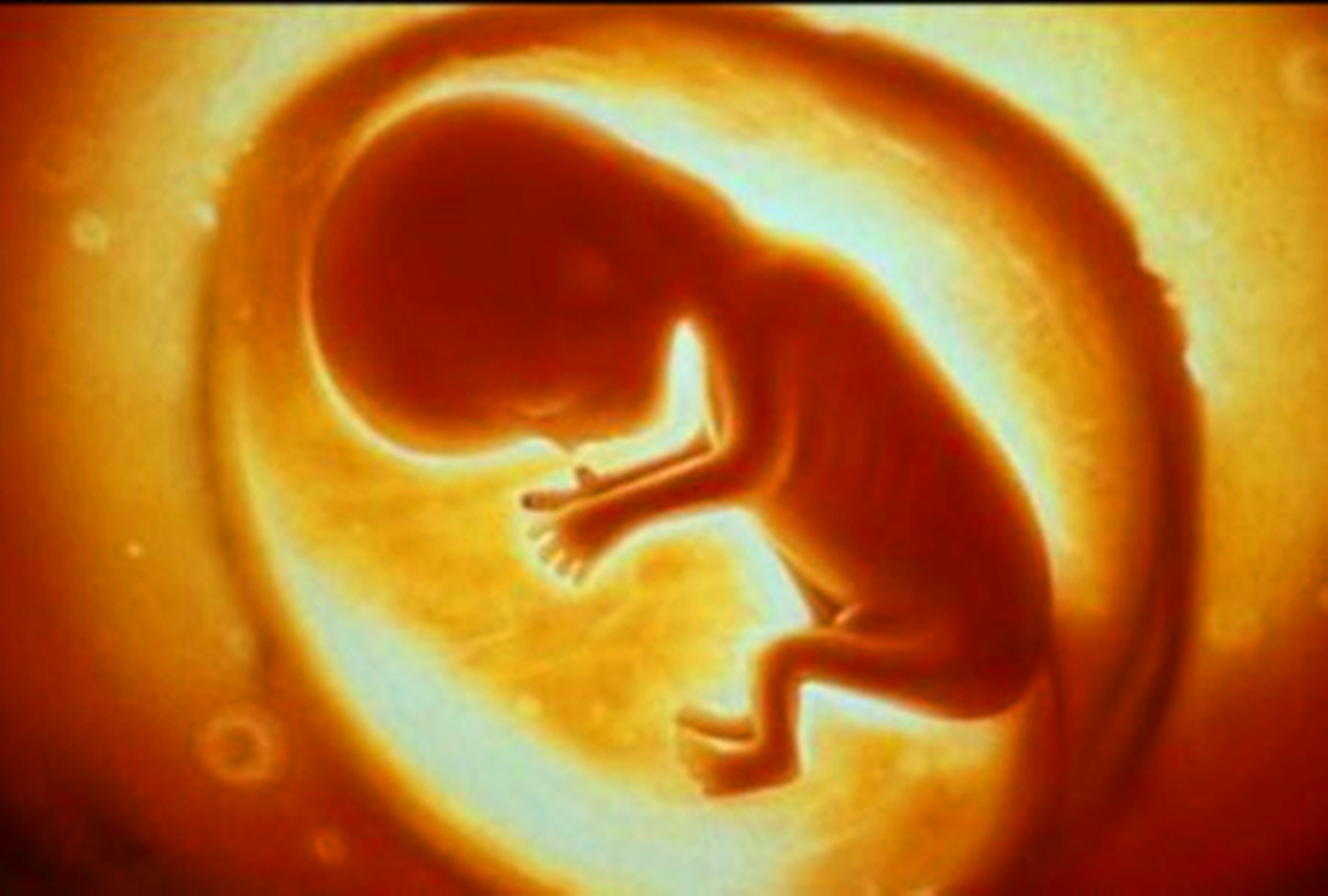
nurp-playground.gifCan children, and notably infants, go to hell?

It seems that St. Augustine (354-430 AD) and some of the early fathers of the Church thought so and for this reason they mandated infant baptism. While they were not guilty of personal sin, they still suffered from the effects of unremitted original sin. St. Augustine’s opinions held sway at the Council of Carthage (418 AD) which rejected even a limbo existence or place of happiness for unbaptized children. The Catholic Encyclopedia states: “St. Augustine thought that unbaptized infants went to hell, although he conceded that, due to their lack of personal responsibility and guilt for original sin, the pains of hell were in some way diminished for them” (vol. 8, p. 590). St. Anselm (1033-1109) sided with St. Augustine on the matter of “positive suffering” in hell for unbaptized children. Origin challenged the notion. But the problem was Jesus commanded that unless we were born again of water and the Spirit we could have no part of him.

A sentiment for infant damnation has been revisited in some of the Protestant churches, especially those with a Calvinistic flavor. We recall that Thomas Hardy’s TESS in literature was turned down by an Anglican clergyman when she begged for her child to have a Christian burial. Similarly, the Puritan Johnathan Edwards in his fiery sermons and Sir Isaac Wattes’ in song declared that “the floor of hell is paved with the skulls of unbaptized children.”

After the fathers, as the Church continued her reflection on this matter, the scholastics detailed their own theory of a LIMBO PUERORUM. St. Thomas Aquinas (1226-1274) conjectured that this limbo was a middle state of perfect natural happiness; however, they would be deprived of the Beatific Vision. Italian Jansenists would return to St. Augustine’s view at the Synod of Pistola (1786) and argue as revealed doctrine that unbaptized children are damned to the eternal fires of hell. Pope Pius VI came out with Auctorem Fidei (1794) siding with the more moderate scholastics and condemned the view that unbaptized infants suffer hell fire.

Those of us who cherished and memorized our Baltimore Catechism, remember limbo, from the Latin “limbus” meaning hem or border, as a teaching that preserved the necessity of baptism while excluding unbaptized babies from the full severity of God’s justice, since they had committed no personal sin. The universal catechism today says nothing about limbo. Rather, it states: “As regards children who have died without Baptism, the Church can only entrust them to the mercy of God, as she does in her funeral rites for them. Indeed, the great mercy of God who desires that all men should be saved, and Jesus’ tenderness toward children which caused him to say: ‘Let the children come to me, do not hinder them’ (Mark 10:4), allow us to hope that there is a way of salvation for children who haved died without Baptism. All the more urgent is the Church’s call not to prevent little children coming to Christ through the gift of holy Baptism” [CCC 1261]. 

baby4.gifThe subject of LIMBO was in the news about six years ago with a report from the Vatican’s International Theological Commission. Like so much else, it was being misreported. Various news organizations wrongly said that the Pope and the Vatican were officially nixing Limbo and yet the Holy Father was simply signing off with allowing the commission to publish its findings after years of investigation. Further, the commission did not totally close the door to the long-held theory, only that it was unlikely and seemed an overly “restrictive view of salvation”. The commission contended that there were good reasons to hope that babies who die without the benefit of baptism (might) go to heaven.

John Thavis of the CATHOLIC NEWS SERVICE reports:

http://www.catholicnews.com/data/stories/cns/0702216.htm

In a document published April 20, the commission said the traditional concept of limbo — as a place where unbaptized infants spend eternity but without communion with God — seemed to reflect an “unduly restrictive view of salvation.”

The church continues to teach that, because of original sin, baptism is the ordinary way of salvation for all people and urges parents to baptize infants, the document said.

But there is greater theological awareness today that God is merciful and “wants all human beings to be saved,” it said. Grace has priority over sin, and the exclusion of innocent babies from heaven does not seem to reflect Christ’s special love for “the little ones,” it said.

“Our conclusion is that the many factors that we have considered … give serious theological and liturgical grounds for hope that unbaptized infants who die will be saved and enjoy the beatific vision,” the document said.

“We emphasize that these are reasons for prayerful hope, rather than grounds for sure knowledge,” it added.

nurple-mothersmilk.gifThe document is not very large, only 41 pages and is entitled, THE HOPE OF SALVATION FOR INFANTS WHO DIE WITHOUT BEING BAPTIZED. Thirty experts from around the world sit on the international commission. It only has an advisory role and such documents do not represent “authoritative” teaching that mandates assent.

The question is increasingly important given that more and more couples are laxed or dismissive of baptism and because of the holocaust of abortion. Limbo was never defined Church teaching but was a highly regarded theory taught in old catechisms. It is not in the official Catechism of the Catholic Church.

The CNS article states:

The Church’s hope for these infants’ salvation reflects a growing awareness of God’s mercy, the commission said. But the issue is not simple, because appreciation for divine mercy must be reconciled with fundamental Church teachings about original sin and about the necessity of baptism for salvation, it said.

The document traced the development of church thinking about the fate of unbaptized children, noting that there is “no explicit answer” from Scripture or tradition.

“God can…give the grace of baptism without the sacrament being conferred, and this fact should particularly be recalled when the conferring of baptism would be impossible,” it said.

In this and other situations, the need for the sacrament of baptism is not absolute and is secondary to God’s desire for the salvation of every person, it said.

This does not deny that all salvation comes through Christ and in some way through the Church, it said, but it requires a more careful understanding of how this may work.

How might unbaptized babies be united to Christ?

  • A “saving conformity to Christ in his own death” by infants who themselves suffer and die.
  • A solidarity with Christ among infant victims of violence, born and unborn, who like the holy innocents killed by King Herod are endangered by the “fear or selfishness of others.”
  • God may simply give the gift of salvation to unbaptized infants, corresponding to his sacramental gift of salvation to the baptized.

Later we read:

The findings of this report should not be used to “negate the necessity of baptism, nor to delay the conferral of the sacrament.”

“Rather, there are reasons to hope that God will save these infants precisely because it was not possible to do for them that what would have been most desirable — to baptize them in the faith of the church and incorporate them visibly into the body of Christ.”

“It must be clearly acknowledged that the church does not have sure knowledge about the salvation of unbaptized infants who die,” it said.

*************************

ORIGINAL SIN
Catholic Belief by J. Faa Di Bruno, D.D.

nurple-devilchild.gifORIGINAL sin is distinguished from actual, or personal, sin in this — that actual or personal sin is the sin which we personally with our own free will commit whilst original sin is that which our human nature committed with the will of Adam, in whom all our human nature was included, and with whom our human nature is united as a branch to a root, as a child to a parent, as men who partake with Adam the same nature which we have derived from him, and as members of the same human family of which Adam was the head. The difference between original and personal sin is that the latter is committed with our own personal will, whilst original sin was committed with the will of another, and only morally our own, because it forms with that other (Adam, who is our head) one moral body — humanity.

If our hand strike a fellow-creature unjustly, though the hand have no will of its own, yet it is considered guilty, not indeed as viewed in itself, but inasmuch as it is united to the rest of the body, and to the soul, forming one human being; and thus sharing in the will of the soul with which it is connected.

In the same manner the sin committed inwardly by the human will, by a bad desire, belongs to the whole human being.

Of original sin, in which we are born, we are not personally guilty with our own personal will, but our nature is guilty by the will of Adam our head, with whom we form one moral body through the human nature which we derive from him.

It is a point of Catholic faith that original sin does not consist in what is called concupiscence, which is a propensity to evil of the inferior part of the human soul.

Sin, to be a sin in the strict sense of the word, must be within the sphere of morality, that is, must depend upon free will; and hence the noted principle in moral philosophy and theology, that there is no sin where there is no will.

Concupiscence, therefore, which is not will, but a blind, involuntary inclination of our lower nature (and therefore an irresponsible tendency to evil), is not of itself sinful unless it be consented to by the will, or rendered strong by bad and unrestricted habit.

Concupiscence is indeed sometimes called sin in Holy Scripture (Romans 7:7; Galatians 5:24), but it is called so as the holy Council of Trent explains, not in a strict, but in a wide sense, that is, inasmuch as it is a consequence of original sin, and an incentive to actual sin.

This concupiscence, or inclination to evil, still remains in those from whom the guilt and stain of original sin has been entirely washed away by the Sacrament of Baptism. Moreover, strictly speaking, no one is regarded as a sinner merely because he feels tempted to sin. This miserable propensity to evil excites the compassion rather than the anger of God; who said to Noah: “I will no more curse the earth for the sake of man; for the imagination and thought of man’s heart are prone to evil from his youth” (Genesis 8:21).

The Catholic Church teaches that Adam by his sin not only caused harm to himself, but to the whole human race; that by it he lost, the supernatural justice and holiness which he received gratuitously from God, and lost it, not only for himself, but also for all of us; and that he, having stained himself with the sin of disobedience, has transmitted not only death and other bodily pains and infirmities to the whole human race, but also sin, which is the death of the soul.
The teaching of the Council of Trent (Session 5) is confirmed by these words of St. Paul: “Wherefore as by one man sin entered into this world, and by sin death; and so death passed upon all men, in whom all have sinned” (Romans 5:12).

The Royal Psalmist (Psalm 1:7) says: “For behold I was conceived in iniquities and in sins did my mother conceive me.” (In the Hebrew text it ia in the singular, i.e., conceived me in sin.)

Upon this text St. Augustine says: “David was not born in adultery, for he was born from Jesse, a just man, and his wife. Why does he say that he was conceived in iniquity, unless because iniquity is derived from Adam?”

That the early Christians believed in original sin, can be gathered from what St. Augustine said to Pelagius: “I did not invent original sin, which Catholic faith holds from ancient time; but thou, who deniest it, thou without doubt, art a new heretic” (De Nuptiis, Book 11, Chapter 12).

It may be said that this belief is as old as the human race, for traces of this ancient tradition are spread among all nations, insomuch that Voltaire had to confess that “The fall of man is the base of the theology of nearly all ancient people” (Philosophie de l’Histoire, chapitre 17).

Besides the guilt of original sin, which is the habitual state of sinfulness in which we are born (because our human nature is justly considered to have consented in Adam to the rejection of original justice), there is also in man the stain of original sin, entailing in the human soul the privation of that supernatural luster which, had we been born in the state of original justice, we all should have had.

As neither Adam nor any of his offspring could repair the evil done by his sin, we should have always remained in the state of original sin and degradation in which we were born, and have been forever shut out from the beatific vision of God in heaven, had not God, in His infinite mercy, provided for us a Redeemer.

COMMENTS

Anita Moore OPL

Here, for what they are worth, are my own speculations on the fate of infants who die without the Sacrament of Baptism.

As for whether children can go to Hell, with or without Baptism, St. Faustina recounts in her Diary a vision in which Jesus asks her to intercede on behalf of children, because children were offending Him very much. (I wish I could cite to the exact section, but the index to the Diary is far from exhaustive.)

In an age when we assume children go to Heaven, despite the greater and greater evils perpetrated by them, should this not give us pause?

Susan

I do not believe infants cause evil. A two week old cannot commit an evil, but alas a 5 year old may be able to. It has to do with reason. A newborn infant does not have that ability. Faustina may have had to intercede on behalf of children, not infants. There is a difference.

Father Joe

Children make first penance and communion in second grade, with the Church judging that by seven to eight years old they have reached the age of reason. No one ever suggested in the debate that infants had committed personal sin. The problem was original sin (passed on from Adam and Eve) and the necessity for faith (even if from parents and godparents) and baptism. Remember, salvation is purely a gift that left to our own devices we cannot deserve or merit apart from Christ.

Susan

In my previous response I was responding to what Anita said, just clarifying that infants do not commit personal sin.

The report said, ““God can…give the grace of baptism without the sacrament being conferred, and this fact should particularly be recalled when the conferring of baptism would be impossible,” I particularly believe this to be true with the unborn that die before they even take their first breath. God is merciful and loving and as our Father I believe he welcomes these little ones who never got the chance.

Anita Moore OPL

I never said infants are guilty of personal sin. I was referring to children who have reached the age of reason.

The reality is that we do not know for certain what happens to infants who die without baptism. Maybe the reason God has kept this knowledge from us is because if we knew for certain that all who die in infancy go to heaven, we might not bother to have infants baptized.

Father Joe

Did not mean to imply you did. I was just trying to be comprehensive.

Donald E. Flood

Father Joe, the ITC report never cited, even as a reference, the Papal Bull “Effraenatam” from Pope Sixtus V, which stated the following:
“Noticing that frequently by various Apostolic Constitutions the audacity and daring of most profligate men, who know no restraint, of sinning with license against the commandment ‘do not kill’ was repressed; We who are placed by the Lord in the supreme throne of justice, being counseled by a most just reason, are in part renewing old laws and in part extending them in order to restrain with just punishment the monstrous and atrocious brutality of those who have no fear to kill most cruelly fetuses still hiding in the maternal viscera. Who will not detest such an abhorrent and evil act, by which are lost not only the bodies but also the souls? Who will not condemn to a most grave punishment the impiety of him who will exclude a soul created in the image of God and for which Our Lord Jesus Christ has shed His precious Blood, and which is capable of eternal happiness and is destined to be in the company of angels, from the blessed vision of God, and who has impeded as much as he could the filling up of heavenly mansions, and has taken away the service to God by His creature?”

http://iteadjmj.com/aborto/eng-prn.html

Clearly, Pope Sixtus V, taught, from the Chair of Peter, that abortion excludes an infant’s soul from Heaven, the Beatific Vision.

Father Joe

The document was a condemnation and censure against abortion.  Peripheral issues are connected but the issue for the Vatican is what the Pope intended to say and to define.  Not everything that Popes include in such documents have the same weight.  It is an exercise of the ordinary authority of the Holy See.  Certain juridical elements would be altered by a later pontificate.   

The Seven Beatitudes in the Book of Revelation

??????????????????????????????????????????????????????????????????????????????????????????????????????????????????????????????????????????????????????????Grace asks the following question: “Father, could you kindly explain the meanings of the Seven Beatitudes in the Book of Revelation?” Here is my reflection upon them.

Revelation 1:3“Blessed is the one who reads aloud and blessed are those who listen to this prophetic message and heed what is written in it, for the appointed time is near.”

Forming part of the greeting in this book of Scripture, it makes reference to God’s prophetic word that now is tthe appointed time.  The time is near when the Lord will appear in his glory. Like so much of this book, it strikes an apocalyptic tone. Harkening back to the Gospel message and the promises of Christ, it signifies that time is short, we must make ready for the coming of the Lord.

Revelation 14:13“I heard a voice from heaven say, ‘Write this: Blessed are the dead who die in the Lord from now on.’ ‘Yes,’ said the Spirit, ‘let them find rest from their labors, for their works accompany them.’”

The context here is the warning of three angels. Having admonished the pagan Romans to repent and worship the true God before it is too late; believers are consoled that if they remain faithful then their obedience or works will be a pleasing witness on their behalf before the divine tribunal.

Revelation 16:15“‘Behold, I am coming like a thief.’ Blessed is the one who watches and keeps his clothes ready, so that he may not go naked and people see him exposed.”

This beatitude is uttered at a more ominous part of the book. While there are certainly references to the persecution by pagan Rome, it has also been understood to point to a final reckoning. It is a time of false prophets and the infestation of demons. The antichrist wages war against the saints. After this blessing we are told that the kings will assemble in a place called Armageddon. True believers are urged to keep courage and know that even if all the powers of hell are waged against them and they only see death at every side, the Lord will come to save them. Christ has already conquered sin and death. But there will come a day when their effects will be undone. God’s people will not be abandoned.

The business about Christ coming as a thief at night is also often associated with our mortality.  Even if we are not personally alive at the end of the world, every death is the end of our mortal sojourn.  We need to be ready for our encounter before Christ and our particular judgment prior to the last or general judgment of all. 

Revelation makes allusions to the ancient plagues in Egypt at the time of Moses. But we have an even greater liberator in Jesus Christ.  We must be sentries for the Lord and stay awake. The reference to clothes is a reference to Genesis and the fall. After they had sinned, Adam and Eve hid themselves in shame because they realized they were naked. Apart from Christ we are all spiritually naked. As St. Paul tells us, we must be clothed in Christ. In the Lord there is no more shame or fear, just confidence and an ever-realized hope.

Revelation 19:9-10“Then the angel said to me, ‘Write this: Blessed are those who have been called to the wedding feast of the Lamb.’ And he said to me, ‘These words are true; they come from God.’ I fell at his feet to worship him. But he said to me, ‘Don’t! I am a fellow servant of yours and of your brothers who bear witness to Jesus. Worship God. Witness to Jesus is the spirit of prophecy.’”

This beatitude is echoed in every Mass with the final elevation of the consecrated species; the priest says: “Behold the Lamb of God, behold him who takes away the sins of the world. Blessed are those called to the supper of the Lamb.” A heavenly messenger is so filled with the divine presence that he must warn the visionary not to worship him. The scene is overwhelming. The previous verses speak of the bride who has been allowed to wear a clean linen garment, vesture which represents the “righteous deeds” or works of the holy ones or saints. This bride is the Church brought to perfection by her divine bridegroom, Christ. The wedding feast is the nuptial celebration of the heavenly kingdom. Christ is the Paschal Lamb who is now the Lamb of Victory. He has purchased the life of his bride with his own life. She has been washed clean by his blood. The angelic demand to worship God alone has been the faithful charge given the Church.

We are baptized into the spirit of prophecy, indeed we are reborn in the Spirit and anointed into Christ, priest, prophet and king. This theme of the marriage banquet and the Lamb of God is an integral element of Catholic worship. Our Lord made reference to himself as the Lamb of God, a truth realized between his Last Supper and the hill of Calvary. Every Mass is a celebration of the paschal mystery of Christ, “Behold the Lamb of God who takes away the sins of the world.” Again and again, we repeat these words every time we gather for worship. Jesus is made present and his sacrifice is realized or re-presented for believers today around the world. The mystery of Christ refuses to be locked in human history or any one place. It is a piece of eternity that intersects the linear time and world of mortal men, changing the meaning and direction of all salvation history.

Signified in his ministers, our Lord is the eternal High Priest and groom to his Church, his bride. Every Mass is a sacramental participation in the heavenly marriage banquet. The risen Christ comes to us in Holy Communion, giving us a share in the bounty from his table. One day sacred signs will pass, as will faith, and we will see face to face and know the one who has called us to share in his intimate everlasting love. This blessing is in regard to that union with God that Christ makes possible.

Revelation 20:6“Blessed and holy is the one who shares in the first resurrection. The second death has no power over these; they will be priests of God and of Christ, and they will reign with him for [the] thousand years.”

There are a number of elements that make this book difficult to interpret. It is filled with symbolism and numerology. There are references to the old pagan Rome and also to the final judgment. Chronology is often confused by exegetes, particularly those who read it with a bias against Catholicism or because they want to connect modern-day figures or countries to the symbolic elements. Keeping all this in mind, what can we say about this blessing? First, there will be no literal thousand year earthly reign of Christ. The mention of a thousand years is not literal but signifies the extended period between the chaining of Satan (Christ’s resurrection and victory over sin and death) and the end of days or end of the world. We were reborn in baptism. We were granted a share in eternal life. Becoming temples of the Holy Spirit, Christ lives in us. At the end of the first millennium, many believers took the number literally and thought that Christ would then surely come. But the Lord comes in his own good time. Second, the Church would rejoice that many more souls might be conceived and come to faith in Jesus and have a share in his resurrected life. Just as Moses prophesied when he said that he would have a nation of priests, along with prophet, we are anointed with chrism as priests. Our baptismal priesthood joins us together as a nation of priests.

Verses seven to ten which follow speak of Satan being released: “When the thousand years are completed, Satan will be released from his prison. He will go out to deceive the nations at the four corners of the earth, Gog and Magog, to gather them for battle; their number is like the sand of the sea. They invaded the breadth of the earth and surrounded the camp of the holy ones and the beloved city. But fire came down from heaven and consumed them. The Devil who had led them astray was thrown into the pool of fire and sulfur, where the beast and the false prophet were. There they will be tormented day and night forever and ever.”

There are been similar visions in the history of the Church.  Although the story circulated for years from Vatican staff to others, one of the more influential tales has to do with Pope Leo XIII.  Back on October 13, 1884, Pope Leo had concluded offering Mass. However, when he turned around, he sudden froze in place. Other authorities claimed he collapsed down the few steps and went into a death-like coma. He stayed this way for ten minutes or so. The attending clergy raced to his side in fear for his health. When he got moving again, apparently in some shock, they quickly took him to his private rooms. He sat down at his desk and wrote what has come to be called the Leonine Exorcism Prayer or the Prayer to St. Michael the Archangel. He would mandate that this prayer be appended to the “Low Mass” (unsung) of the Roman Rite.

What did the Pope experience during his mystical ecstasy? On the level of legend now, it is said that he claimed he could hear the voices of Satan and Christ in front of the altar and tabernacle. He described the voice of Satan as raspy and deep. The other was manly but soft and gentle.

Here is one version of the supposed dialogue:

The gruff voice boasted, “I can destroy your Church.”

The Lord challenged, “You can? Then go ahead and do so.”

Satan responded, “To do so, I need more time and more power.”

Jesus asked, “How much time? How much power?”

The devil said, “Allow me seventy-five to a hundred years, and a greater influence over those who will surrender themselves to my service.”

Christ consented, “So be it. You have the time; you will have the power. Do with them what you will.”

It is said the Pope claimed to have been shown a vision of demons released from Hell and with the purpose to corrupt souls and destroy the Church. Some suggest that this was all he experienced and the accompanying dialogue was a later embellishment. Fr. Domenico Pechenino, a priest who witnessed the event said as much in the 1940’s. He spoke about the look of terror on the Pope’s face, which had lost all color.

Now relegated to private devotion, although modern Popes have suggested but not demanded it’s restoration to the reformed liturgy, here is the edited or short version of Pope Leo’s prayer in vogue today:

“St. Michael the Archangel, defend us in battle, be our protection against the wickedness and snares of the devil; may God rebuke him, we humbly pray; and do thou, O Prince of the heavenly host, by the power of God, thrust (or cast) into hell Satan and (all) the other evil spirits who prowl (or wander or roam) about the world for the ruin of souls. Amen.”

What have we endured in the century since the vision? We have seen the devastation of the French Revolution, the rise and fall of European Communism, Hitler’s Germany and the extermination of six million Jews and millions of others besides, Communist dictatorships in Asia and the rise of radical militant Islam. We have seen the massive defection from faith and the eradication of Christian values from Western society. During this century homosexuality became a civil right and abortion became a legal choice. More people cohabitate and fornicate than coming to the marriage bed undefiled. Babylon has returned and the remnant of the saints is again persecuted.  While not underestimating man’s capacity for evil, it certainly seems that the demonic has had free reign to numb sconsciences and to corrupt souls. 

Revelation 22:7-9“‘Behold, I am coming soon.’ Blessed is the one who keeps the prophetic message of this book. It is I, John, who heard and saw these things, and when I heard and saw them I fell down to worship at the feet of the angel who showed them to me. But he said to me, ‘Don’t! I am a fellow servant of yours and of your brothers the prophets and of those who keep the message of this book. Worship God.’”

This blessing at the end of the book parallels similar beatitudes at the beginning and later in Revelation: 1:3 and 19:9-10. The message is essentially the same: this is a prophetic and spirit-filled message from God, it rests upon the authority of John, and an angel of God exhorts that all who receive this message abide in it seriously. The repeated stress on worship is not incidental. Along with the heavenly hosts, our very purpose and the general thrust of creation is to give glory to God. Such calls us to know, to love and to obey the Lord. Our worship in this world joins us to the communion of the saints and to the choirs of angels.

The principal activity in the heavenly kingdom is to give glory to God. Here we may find a hint to the deadly sin of Satan. He refused to bend the knee to the Son of God, the one who would be made incarnate. He could seek to slaughter the Lamb of God but he would never render worship. There is an old saying, “Pride goes before the fall.” True for men, it might have significance as well for the fallen angels or demons. And yet, the pride might not be so much between themselves as angelic creatures and the divine spirit as it is with the Second Person of the Trinity who would join himself to material creation. Knowing that angels are of a higher order or hierarchy in the created order, one could easily imagine that the devil would be incensed that an ensouled “animal” of flesh and blood should suddenly trump them and be so honored as to become God made man, reflecting the face of the Father in the Son. God became a man so that men by grace might share in divinity.

Revelation 22:12-15“‘Behold, I am coming soon. I bring with me the recompense I will give to each according to his deeds. I am the Alpha and the Omega, the first and the last, the beginning and the end.’ Blessed are they who wash their robes so as to have the right to the tree of life and enter the city through its gates. Outside are the dogs, the sorcerers, the unchaste, the murderers, the idol-worshipers, and all who love and practice deceit.”

While the reference to “dogs” was originally used by Jews about the Gentiles, here it means those outside the faith. We are called to be God’s children. “Sorcerers” are literally those seek to bypass divine providence and call upon the powers of the occult. The “unchaste” touches upon all those mentioned by St. Paul as excluded from the kingdom. Our Christianity demands a life of chaste and moderated love, safeguarding persons and not degrading others or ourselves with lust. Fornication, adultery, homosexual acts, etc. would fall into this category. “Murderers” refers to actual killers but also those who approve of taking innocent life, are passive to such acts. Those who betrayed Christians to the murderous persecution of Rome were murderers. Those who destroyed children as in abortion and infanticide (practiced by the pagans then and now) are also reckoned as murderers. The reference to “idol-worshippers” was a direct attack against the pagan religion of the Greeks and Romans. They could not worship idols of stone or the false deities they signified. Today, we would probably just argue that these deities did not exist in any form and that such worship was empty. However, it was the view of the ancient fathers that the deities of the pagans, while not gods, did have real existence as creatures, the demons. Thus, association with such false worship not only violated the Decalogue but placed one in bondage to Satan. The truth is also very important for the Church. Our Lord said that he came to testify to the truth. As for those who “love and practice deceit,” this is a stark warning to the believers of every age. We must be authentic. The word of a liar has no value. Just as the Lord keeps his promises, we must keep ours. God does not want part-time Christians. We must not simply go through the motions of discipleship. Every liar says with Peter in the courtyard of Caiaphas when asked about being a friend of Christ, “I tell you, I do not know the man!” Fortunately Peter had the opportunity to change his tune. Will we have time to do so?

As in the other beatitudes, we find the theme of Christ’s imminent return, judgment, reward to the just and punishment to evildoers. It has often amazed me that while some anti-Catholic apologists make so much of faith over works, the truth is that the two elements are intimately connected. It is not enough to say one believes. Faith needs to be realized with a movement of the will. There must be a genuine love of God that flows over into charity for neighbor. Christ is the eternal Word of God, the First and the Last. All creation must be consummated in him. The elect of God are depicted as in robes of white, washed clean by the blood of the Lamb. The damage of the old Adam has been healed by the new. Note that while original sin was connected to the forbidden fruit of a tree in the Garden, here too there is mention of a tree, the Tree of Life. This tree makes possible our return to a state of grace and communion with God. What is this Tree of Life? More recently Pope Benedict XVI has spoken about it as the saving Cross. Sin and death came into the world from a living tree; forgiveness and life were restored through the dead tree of the Cross. In other words, the saving work of Christ in his crucifixion has eternal consequences. Nothing will ever be the same. As pilgrims in this world, the fruits of that Living Tree are given to us as saving food in the Eucharist, rations from the banquet table of the Promised Shore and Kingdom. Immediately following the beatitude, there is an acknowledgment of those who are lost on the outside.

We are reminded of the foolish bridesmaids who in the parable allowed their oil to run out and were left outside the marriage banquet. We read in Matthew 25:11-13: “Afterwards the other virgins came and said, ‘Lord, Lord, open the door for us!’ But he said in reply, ‘Amen, I say to you, I do not know you.’ Therefore, stay awake, for you know neither the day nor the hour.”

There are also other teachings of Christ that refer to such judgment:

“I say to you, many will come from the east and the west, and will recline with Abraham, Isaac, and Jacob at the banquet in the kingdom of heaven, but the children of the kingdom will be driven out into the outer darkness, where there will be wailing and grinding of teeth” (Matthew 8:11-12).

“Then Jesus went from that place and withdrew to the region of Tyre and Sidon. And behold, a Canaanite woman of that district came and called out, ‘Have pity on me, Lord, Son of David! My daughter is tormented by a demon.’ But he did not say a word in answer to her. His disciples came and asked him, ‘Send her away, for she keeps calling out after us.’ He said in reply, ‘I was sent only to the lost sheep of the house of Israel.’ But the woman came and did him homage, saying, ‘Lord, help me.’ He said in reply, ‘It is not right to take the food of the children and throw it to the dogs.’ She said, ‘Please, Lord, for even the dogs eat the scraps that fall from the table of their masters.’ Then Jesus said to her in reply, ‘O woman, great is your faith! Let it be done for you as you wish.’ And her daughter was healed from that hour” (Matthew 15:21-28).

This last quotation connects with the word “dogs,” following this beatitude, actually a word that might be translated even more crudely. It would remind us that even the dogs might come inside from the cold and share from the table, if there is genuine faith, love and obedience. But the time grows short and soon it may be too late. There is urgency throughout these blessings and they are weighed against the possible terrible consequences of the curse and judgment.

Biblical Principles of Marriage

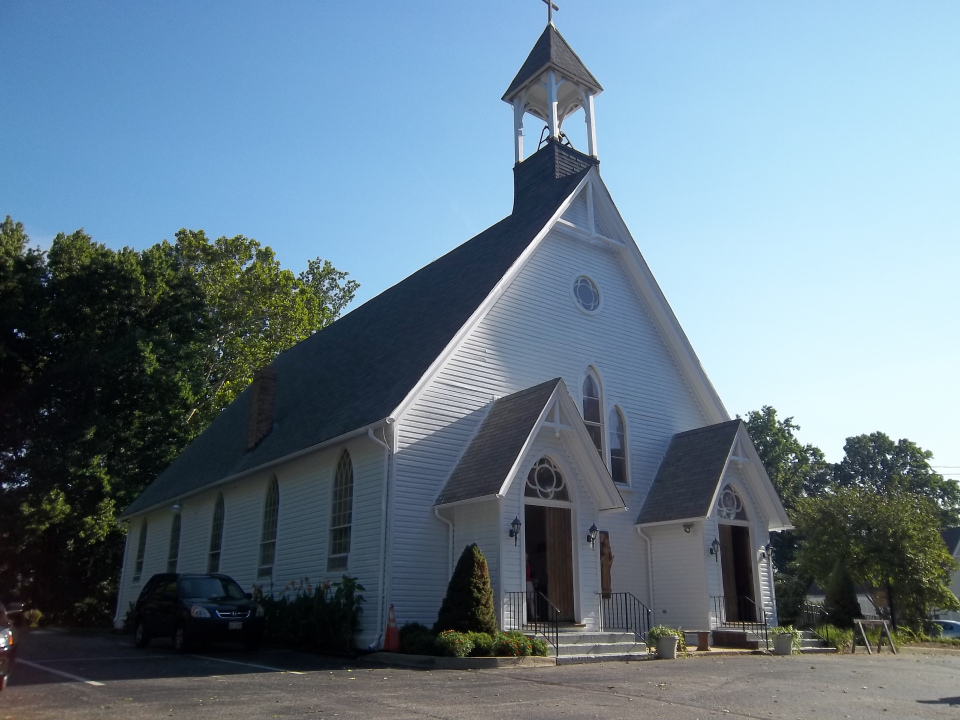
On Saturday, March 24, I gave a talk on the Biblical Foundations of Marriage at the PreCana Classes held at St. Mary of the Assumption in Upper Marlboro, MD. Some of the notes are give in the immediately previous posts. There is a joke that if you get two ministers in a room, you will get three different interpretations of Scripture. Given that biblical interpretation is so volatile these days, I first gave the gathering my five basic presuppositions. Next, I gave the ten basic principles of marriage from Scripture.

Presuppositions As we Begin

1. The Scriptures are inspired by God and teach truth.

2. We must have the mind of the Church in how Scripture is interpreted.

3. The Bible is not a marriage manual.

4. Better understanding of Scriptural truth comes through a contextual approach.

5. The truth about marriage in the Bible is revealed in a progressive way, culminating in the New Testament.

A Few Basic Biblical Principles

While the Bible is not a manual for marriage, there are some basic principles we can derive from God’s inspired Word. Here are a few:

1. Men and women were made for each other. Most men and women are called to marriage.

2. Marriage is a covenant between a man and a woman. They pledge themselves to each other in vows made in the sight of God.

3. The husband is the head of the home and the wife is its heart.

4. While the Bible speaks of the wife’s submission to her husband, there is mutuality in this surrender since the husband is commanded to practice sacrificial love for her, even offering his life as Christ did on the Cross.

5. The husband and wife are dependent co-creators with God.

6. The spouses are called to be helpmates to one another in grace and holiness.

7. Marriage is a vocation that takes precedence over other preoccupations. Your attention and energies must first be focused toward one another.

8. Marriage is a sexually intimate relationship between a man and woman.

9. Christian marriage infers a third in the marriage, Christ. Couples enter into the mystery of Christ and his Church. Our Lord identifies himself with the beloved.

10. Couples should come to the marriage bed undefiled. All sexual activity outside of marriage was regarded by the Jews as a violation of the commandment against adultery.

The Celibate Priest & the Heavenly Marriage Banquet

Celibacy helps to make the priesthood an eschatological sign. Our Lord told us that in the kingdom to come there would be no marrying or giving in marriage. This is often misunderstood and upsets married couples, at least those who are happily married. Such does not mean an end to love. But marriage has a great deal to do with the propagation of the species. We are promised glorified bodies but all the elements of earthly love and passion will pale by comparison with the beatific vision. There will be no more sacraments for we shall see the mystery face to face. There will be no more faith, for we will know throughout our being the Greatest Good and the Absolute Truth. We will all be part of the singular marriage banquet of the Lamb of God with his immaculate bride, the Church. The Mass which priests celebrate in this world participates in this heavenly marriage, the eternal covenant of Christ. This sacred reality adds to the fitting quality of celibacy in priesthood. It is not part of the intrinsic nature of priesthood, but it comes very close.

Prophecies: Malachy, Fatima & Padre Pio

GENUSLILIUM: Father, I have some important questions to ask. My first questions are about false prophets or prophecies. How do I know if they are false, or true?

FATHER JOE: You do not mean true prophets but fortune tellers and soothsayers. I would regard most if not all as false. This does not mean they are or are not sometimes pious people. As for private revelation, the Church does not require you to believe one way or the other. Just stay prepared for the coming of Christ. Either at the end of the world or upon your death, you will meet Jesus. That is for sure!

GENUSLILIUM: I am concerned about the Prophecy of St. Malachy. He had detailed visions of 112 Popes until Doomsday, also known as The Biblical Apocalypse. The current Pope, Benedict XVI is the 111th named Pope, so is it true that only 1 pope remains until the return of Jesus?

FATHER JOE: The so-called prophecies probably do not belong to St. Malachy. They are curiosities, but I put no trust in them.

GENUSLILIUM: My next question is about the prophecies from The Miracle at Fatima. I truly believe in our Blessed Mother, and I have no doubt that her appearances are true. In the third prophecy that Lucia wrote, it specifically states, according to eyewitnesses, that the Pope would betray the flock and turn his sheep over to the slaughter devised by Lucifer himself. John XXIII fainted because he thought he would be the Pope who would open the door to Satan and that he would be the long awaited anti-pope. Is this true? Please explain.

FATHER JOE:

This is not the third prophecy of Fatima and the history you cite is bogus.

“The third part of the secret revealed at the Cova da Iria-Fátima, on 13 July 1917: I write in obedience to you, my God, who command me to do so through his Excellency the Bishop of Leiria and through your Most Holy Mother and mine. After the two parts which I have already explained, at the left of Our Lady and a little above, we saw an Angel with a flaming sword in his left hand; flashing, it gave out flames that looked as though they would set the world on fire; but they died out in contact with the splendour that Our Lady radiated towards him from her right hand: pointing to the earth with his right hand, the Angel cried out in a loud voice: ‘Penance, Penance, Penance!’ And we saw in an immense light that is God: ‘something similar to how people appear in a mirror when they pass in front of it’ a Bishop dressed in White ‘we had the impression that it was the Holy Father’. Other Bishops, Priests, men and women Religious going up a steep mountain, at the top of which there was a big Cross of rough-hewn trunks as of a cork-tree with the bark; before reaching there the Holy Father passed through a big city half in ruins and half trembling with halting step, afflicted with pain and sorrow, he prayed for the souls of the corpses he met on his way; having reached the top of the mountain, on his knees at the foot of the big Cross he was killed by a group of soldiers who fired bullets and arrows at him, and in the same way there died one after another the other Bishops, Priests, men and women Religious, and various lay people of different ranks and positions. Beneath the two arms of the Cross there were two Angels each with a crystal aspersorium in his hand, in which they gathered up the blood of the Martyrs and with it sprinkled the souls that were making their way to God.”

Pope Benedict wrote about the third secret:

“A careful reading of the text of the so-called third ‘secret’ of Fatima … will probably prove disappointing or surprising after all the speculation it has stirred. No great mystery is revealed; nor is the future unveiled…. The purpose of the vision is not to show a film of an irrevocably fixed future. Its meaning is exactly the opposite: it is meant to mobilize the forces of change in the right direction. Therefore we must totally discount fatalistic explanations of the ‘secret’, such as, for example, the claim that the would-be assassin of 13 May 1981 was merely an instrument of the divine plan guided by Providence and could not therefore have acted freely, or other similar ideas in circulation. Rather, the vision speaks of dangers and how we might be saved from them…. The concluding part of the ‘secret’ uses images which Lucia may have seen in devotional books and which draw their inspiration from long-standing intuitions of faith.”

GENUSLILIUM: My other question is about the prophecies of Padre Pio. Is this real? How do we know if it’s real or false? My heart tells me its true, but I do not want to be misled.

FATHER JOE: We should not regard such things too literally. The fact of tribulation and suffering for believers requires no great stretch of the imagination. Look at the hedonism, perversity and anti-life mentality that afflicts our society. The prophecy of blood, also noted by the late Pope John Paul II, will require courage from the faithful. We need to remember the words, BE NOT AFRAID.

GENUSLILIUM: Jesus said that no man knows the hour or the day of the End of Days. Even Jesus didn’t know. Only his father did. But Jesus added that he hoped that those who will live in the Final Generation would look for the signs in the hope their suffering would not be so great.

FATHER JOE: Certainly Jesus as God is aware of such things. What was meant was that it was not for him to divulge God’s time-table while he was still in the world. I suspect that it was an element of his divine knowledge which he placed behind him (in a sense) so that he could truly be like us in all things. But ours was no amnesiac God and he could always call upon his divine knowledge.

GENUSLILIUM: It also disturbs me that people call the Catholic Church “satanic” and “demonic.” It really discourages me, because I know the Catholic Church is right because they do not make excuses for sin, or change their beliefs to fit with the “New Age.” It hurts me because immediate family members have said these things to me, and I know better. How do I respond to them without stating an argument because it always turns into one, and it makes me very upset. All I want is for me, and my children, and the ones I love to go to Heaven, how can I get through to them?

FATHER JOE: The best response any Catholic can make to such charges is the witness by fidelity and holiness of life. We leave the conversion of souls and the movement of grace in others to God.

GENUSLILIUM: Okay. Thank you Father for clearing those things up for me. It is kind of scary thinking about the whole anti-pope, 3 days of darkness, and the 112 popes left, when we are at our 111th.

Should I get blessed candles, salt and holy water because of what Padre Pio has told us? or is it not necessary?

FATHER JOE: Sacramentals are nice. People should keep holy water and blessed candles in their homes. However, I would not get all bent out of shape about apocalyptic prohesies. Remain in a state of grace and do not give in to fear.

GENUSLILIUM: If the prophecies of the 112 popes were not made by St. Malachy, who do you think could have made that up? Whoever it was was pretty accurate on the popes we have had thus far.

FATHER JOE: You can read a great deal into them. Their accuracy is arguable.

GENUSLILIUM: Do you think we are living in the Final Generation?

FATHER JOE: Me or the kids after me? Ponder your own death, not the end of the world. We know our days are numbered.

FINAL NOTE

Genuslilium gave me a list of web sites where his/her material was gathered.  One was a site on the paranormal but it was not a Christian source.  Indeed, the information seemed deiberately wrong as if one were trying to see how gullible Catholics might be.  Another site was purportedly about the Divine Mercy.  However, it was a hodge-podge of information from both approved and unapproved sources. We should be careful of sites that use the appeal of popular devotions to push an agenda of conflict with the authentic Catholic Church in union with the Holy See.  The one given to me for review demonstrated an animus against the reformed liturgy and too much gravity upon private revelation.  The third site I reviewed, and I have opted not to list them here, focused upon the prophecies of Malachy but then added its own peculiar brand of mysticism and devotionalism.  Indeed, it actually had messages from innerlocutions or visions not approved by the Church. Anyone can go online and claim that God or Mary is speaking through him or her. I would steer clear of such sensationalism. Stick with the the universal catechism and the Catholic Bible!

The Book of Revelation: A Discussion About Interpretation

The Book of Revelation is not given to easy interpretation. It cannot be deciphered in a literal or fundamentalist manner that seeks to make quick and easy contemporary correlation. We have to appreciate it as a particular form of literature that utilizes symbolic and allegorical phraseology. Similar such writings of this genre appear in Daniel, Zechariah, and Ezekiel. While many will interpret it strictly in terms of future events, it actually has a great deal to say about the crisis in the early Church and her future hope.

11:7 – “And when they have finished their testimony, the beast that ascends from the bottomless pit will make war upon them and conquer them and kill them, . . . ”

This beast was understood to be the antichrist, the one who symbolizes evil in his own person, the Roman emperor, Nero. Christians witnessed to their faith by shedding their blood. (See Rev. 13:1-8; 17:8).

11:8 – “ . . . and their dead bodies will lie in the street of the great city which is allegorically called Sodom and Egypt, where their Lord was crucified.”

While it is geographically true that Jesus was crucified in Jerusalem, this is not the thrust of the apocalyptic text here. Rather, the emphasis is upon the figurative Jerusalem that repudiates God and his witnesses. This is clearly the new “Babylon”, another code word for pagan Rome. See chapters 16 through 18. (Anti-Catholics go so far as to make the leap in logic that the beast and his city are not the pagan emperor and Rome but rather the pope and the Roman Catholic Church. Such a view violates the meaning of the text and defames the sacrifice of early Catholic Christians.) “Sodom” and “Egypt” are symbols for immorality (cf. Isaiah 1:10) and for the oppression of the people of God (cf. Exodus 1:11-14). The authority of pagan Rome crucified Christ through its emissaries. Christ is being crucified anew in his members. It is an early holocaust of the Christian believers at the hands of a bloodthirsty pagan Rome.

The Book of Revelation is composed to deal with a specific crisis. Believers of Christ are dying in droves and the inspired author is urging the Christian community not to abandon hope or to betray the Lord. Jesus’ promise comes to mind: “ . . . and lo, I am with you always, to the close of the age” (Matthew 28:20). Catholic Christians are reminded that God has not abandoned them.

Hope this breakdown helps, although it hardly exhausts the layers of meaning here.

**********          **********          **********

GIO: I don’t know. When Cardinal Ratzinger wrote about the explanation of Fatima in 2000 upon the revelation of the third secret, he compared the Angel with the fiery sword in Revelation to the Angel that the children saw at Fatima, saying something like “the risk of judgment looms over us.”

ARMANDO: Shalom! Fr. Joe, I am a devout Catholic and I’m very curious about the Catholic interpretation of the Book of Revelation. Father, can you tell me, who is the second beast? Who is this beast with a name equivalent to 666? I believe in the messages of Our Lady of Fatima. Actually, I’m praying the Rosary four times a day since I started working here in Saudi Arabia. I hope for your kind reply to these questions because I categorically don’t believe other interpretations of the Bible. I believe in the Catholic view alone, because it is the only true Church founded by Christ with its visible Head as St. Peter and His successors. May the God Abraham, Isaac and Jacob richly bless us all always! Thank you very much Father. I will include you in my prayers.

FATHER JOE: I would recommend a faithful Catholic commentary and a Catholic Bible with good footnotes. Throughout history there have been many antichrists. It refers to any and all who reject and oppose Christ and his Church. The term also signifies a false Christ or counterfeit messiah. This is not to deny the possibility of a singular apocalyptic antichrist; however, many authorities suggest that this pointed to the Emperor Nero or possibly another tyrant of pagan Rome who persecuted the early Church.

ARMANDO: May the God of Abraham, Isaac and Jacob richly bless all always! Father Joe, thank you very much! I learned just yesterday night, from Brother Michael of EWTN about the intimate relation of the Book of Revelation to the Holy Catholic Mass. It enlightened my heart and mind so much and it strengthened my Catholic faith even more. You know Father, I’m actually a Catholic Charismatic and I’ve been serving the Lord since I was 10 years old through our humble St. Joseph Chapel in Ibabao, Cuenca, Batangas, Philippines. I’ve been a choir guitarist up to the present here in the Muslim country of Saudi Arabia. We are without a Church and must worship in secret. Despite this situation, my friends and I, Filipinos and an Indian, started a small Prayer Group. We pray the Holy Rosary, singing praise and worship songs. I lead a Catholic Bible Study. You know, Father, we are very happy because there are many Catholics who turned away from our Church but now turning back again because of Catholic Life in the Spirit Seminar or CLSS. Two more questions Father: when will the 1000 years of peace happen and is Satan already loosed? Mama Mary, pray for us.

FATHER JOE: You are from the Philippines! My brother married a Filipina a few years ago and traveled to Manila to see her family. I have many Filipinos in my parish here in Maryland, USA. Many are far better educated. You can ask questions of faith and I will do my best to answer. But, please understand, I am quite fallible. The Catholic Church does not teach a millennium rule. Rather, we believe that when Jesus comes he will consummate all things to himself. As for when the second coming will happen, we cannot know for sure, despite various signs. Look at Matthew 24:36. Our Lord tells us that “no one but the Father knows the day and the hour.” As for Satan, look around the world today. He is still very much around and prowling about for souls to devour. Trust Jesus and Mary. Invoke the special aid of St. Michael the Archangel. May God bless you!

ARMANDO: Shalom again, Fr. Joe. Why is it that the Catholic Church does not teach a millennium rule since it is written in Revelation? Am I right that maybe it’s not a literal 1000 years of peace? And what are those seven plaques w/c the 7 angels brought?

FATHER JOE:

The notion of an earthly kingdom ruled directly by the Messiah finds its roots in the Jewish aspirations of a military and political leader. This imagery is picked up by the Scriptures but the time of Christ’s rule is spiritual and found in the Catholic Church and her sacraments. The new Zion or Jerusalem is, similarly, not the political state of modern Israel but the Church. Some authorities claim that a false Messiah or Christ will seek to establish an early kingdom. Here we are talking, not about Christ but about the anti-Christ. It is said that he would persecute the Church.

There are seven plagues preceding the destruction of Babylon. The imagery is borrowed from the plagues of Egypt.

[1] Men and beasts are smitten with ulcers (Exodus 9:9-10).

[2] & [3] The seas and rivers become blood (Exodus 7:17-21).

[4] The sun burns men to death.

[5] The throne of the beast causes great darkness (Exodus 10:11-29).

[6] The waters of the Euphrates are dried up and form a passage for the kings of the East (Exodus 14).

[7] Storm and earthquake destroy Babylon.

The Catholic Church gives no literal or fundamentalist interpretation to these plagues. It is enough that there will be both man-made and natural calamities.

Pope John Paul II (February 2003) identified seven deadly plagues that threaten the future of humanity:

[1] an insidious terrorism capable of striking at anytime and anywhere;
[2] the unresolved problem of the Middle East with the Holy Land and Iraq;
[3] the turmoil disrupting South America, particularly Argentina, Colombia and Venezuela;
[4] the conflicts preventing numerous African countries from focusing on their development;
[5] the diseases spreading contagion and death;
[6] the grave problem of famine, especially in Africa;
[7] the irresponsible behavior contributing to the depletion of the planet’s resources.

ARMANDO: Thanks again, little by little, the Book of Revelation is getting clearer to me. Is the “holy city Jerusalem” in Rev. 21: 10-21, the same as the New Jerusalem which symbolizes the Church? Why does it have walls, gates, foundation stones, etc?

FATHER JOE: The heavenly Jerusalem is paradise. The New Jerusalem is the kingdom breaking into the world through the Church. The Church is an extension of the Church in glory.

CATHOLIC GIRL:

Gio, during the Fatima apparitions, Our Lady gave the children a horrific vision of hell. They said that so many souls were going there so fast it was like snowflakes falling. She also told them that one of their school mates – a child – would be “in purgatory until the end of the time.” Without the Mercy of God, no one would be saved but his sword is a mighty sword of justice.

As far as Revelations, I feel that the Protestant “Tim Lehaye” books (and movies) have spread heresy into Catholic beliefs. Here in the south, it is the most argued point in adult Bible study. It is another aspect of too little knowledge of the faith. In a class I was in, where a Nun from the Seminary literally went through chapter by chapter, people walked out – and many called the Chancery swearing that SHE was the heretic. Most Catholics simply do not understand that we are not literalists as far as the Bible goes.

I often wonder why Catholics do not have more organized Bible Study (with nuns or priests as a guide). I think a lot of eyes would be opened.

ARMANDO: Father, does our Church teaches about rapture? I do not hear any priest teaching about this matter. And what is Armageddon?

FATHER JOE: The Church believes that Christ will consummate the world to himself. Rapture as understood by certain Protestants and in the LEFT BEHIND books is not part of Catholic teaching. As for the conflict against the anti-Christ, we are already in the thick of it. The Church does not insist upon a literal final battle in the Middle East. Apocalyptic literature cannot be read like a history book.

CHARLIE: It is true that the book of Revelation is complicated. I can’t stop thinking though how Revelation 17 and how the Woman fits the description of the Catholic church.

FATHER JOE: Mary and the Church is associated with this woman (with child). However, the Church is NOT the harlot or “whore of Babylon.” Be careful not to associate the Church with the anti-Christ. There have always been grave sinners in the Church; but the Church is holy because Christ is holy.

CHARLIE: It seems to me that the church is trying very hard NOT to tell us the REAL meaning of Revelation.

FATHER JOE: Give me an instance. Why is it that you, as a Catholic, would put your personal interpretation of Scripture over that of the Magisterium? If you believe that the Church is evil, why are you still a Catholic. Sorry, this does not wash! You are buying into all the conspiracy theory nonsense.

CHARLIE: With the church being around for so long and with all the scholars in the church, they could be more specific like all the other churches when it comes to interpreting Revelation.

FATHER JOE: How is the Church not specific? Apocalyptic language is inherently difficult, given our proximity in time and place from the source. Other churches, and I can just imagine what fundamentalist authorities to which you refer, make up or fictionalize their commentary. The Catholic Church is grounded on truth.

CHARLIE: I almost feel like they are hiding something.

FATHER JOE: Almost? Please, stop playing games. What have you read from Catholic sources about the Book of Revelation that makes you say this? What commentaries? What Church documents? You have cited nothing. You are imagining things. Be careful that you do not deliberately slam the Church.

CHARLIE: We need to understand more and get more input from the church on Revelation because we don’t want to fall into a trap in the end times.

FATHER JOE: [At this point it became clear that Charlie was a ringer or poser. He may have been Catholic but now he was something else. Some anti-Catholics use such deception to get under the Catholic defenses. They may cite catholic sources, but they are not really interested in the truth or discussion. They come to slam the Church and to steal believers.] Then get it already. What are you waiting for? The problem is you, not the Church. Here are a few books you might find useful. Also, look at the footnotes in a Catholic Bible.

The Book of Revelation: A Catholic Interpretation of the Apocalypse by John Tickle.

Apocalypse: A Catholic Perspective on the Book of Revelation by Stephen C. Doyle.

New Jerome Biblical Commentary (3rd Edition) by Raymond E. Brown, Joseph A. Fitzmyer, and Roland E. Murphy.

CHARLIE: Satan is a deceiver and the father of lies and we need to have a CLEAR picture of things when it comes to prophecy. Now more than ever….with the Prophecy of Saint Malachy and his clear prophecies of the popes…..which by the way are true and we see that even with his prediction of Pope Benedict and Pope John Paul II. We see clearly that we need more information on the Book of Revelation.

FATHER JOE: The prophesies of St. Malachy belong to private revelation only and are not doctrinal or required for belief. It also appears that they do not belong to St. Malachy but to some anonymous source.

CHARLIE: It says in Revelation 17 that John was amazed by what he saw and this would clearly state to me that he was AMAZED by this vision because perhaps he saw that the church which Saint Peter started was in the end corrupted and polluted by an evil power.

FATHER JOE: Jesus promised that his Church would endure until his consummation of the world.

CHARLIE: I see this clearly as the last Pope predicted by Saint Malachy which he said would lead the church to destruction. Why are none talking about this?

FATHER JOE: It is because the prophesies are not reliable. They are interesting but I place no confidence in them.

CHARLIE: You can’t wait until it happens and have people led astray to the tricks of Satan. I know in my heart the church MUST know things, but chooses to keep people in the dark….because the latter days the church would be led by forces of darkness. It clearly states this in Revelation. “Woman” in prophecy means CHURCH.

FATHER JOE: All you need is to be faithful. Worrying about such things is not from God.

JOHN: I came to this partial understanding around 1980. The two horned goat is USA and Russia. The image of the beast is the Islamic republic of Iran.

FATHER JOE: Such connections are only conjecture. I tend to give the apocalypse a historical understanding. The beast is Nero and the old pagan Roman Empire. Apostate Christians might be the other beast. Anyone who opposes Christ and his Church is an antichrist.

JOHN:

Yes, such connections are only conjecture. Some conjectures are more compelling than others. Consider, the two horned ram and angry beast allegory is first found in Daniel (well before the first century). What is this fire from heaven, but the bombs of two nuclear super powers. The foreign policy slogan of current Iran is “Neither east nor west.” Thank you for your courage, which I know can only come from our lord, Jesus Christ.

I sent the above comments (in fuller form) to Pope John Paul II in the Spring of 1980. The response received was a letter from the secretary of state of the Vatican (July 1980). Here is the text: “The Holy Father has seen the kind letter sent to him, and has asked that I express his thanks, and convey his blessing.”

CHRIS: I think an inspired interpretation of Apocalypse is Steven Paul’s Apocalypse: Letter by Letter. Very sick with cancer during the penning of his book, this staunch Catholic had an intimate understanding of Revelation and just about managed to get all his knowledge on paper before his death. I can’t recommend it enough for any Catholic who wants a clear understanding of Revelation.

FATHER JOE: I asked around about Steven Paul’s book and found that not everyone is excited about it. One critic even remarked that there are a number of factual mistakes and interpretations which are contrary to Catholic tradition. A book that I would recommend is Apocalypse: A Catholic Perspective on the Book of Revelation by Fr. Stephen Doyle.

CHRIS: Unfortunately, Steven isn’t around to answer any of his critics. Given that he was a committed Catholic I’m surprised to hear there are elements of his book which are contrary to Catholic Tradition. Do you have an example from his book that I can check out?

JOHN:

It’s my understanding that those who hold anti-Catholic interpretations use the “seven hill” phrase to justify their view.

Must the singular anti-Christ be present for the present age to end? I had thought that Khomeini was such. When popes die their personnel letters are to be burned. When Khomeini died I burned my written interpretations of Revelations. Later, I remembered it was written (by me): “the image to the beast is the beast itself, that is, the Islamic Republic of Iran.”

FATHER JOE: Deciphering possible prophecies of the eschaton and the beast is no easy business. Is there ever a singular anti-Christ? During WWII and afterwards there were many contenders. What I can tell you is that there is ONE Christ. Put your emphasis there and on your relationship with him.

JOHN: Jesus was beaten, scared, and killed. His justice is not, and will not be blind. May he grant us the mercy, grace, and courage to help the needy when we see him. I believe you, Father Joe, have the best job this world has to offer. Thank you for your courage!

NEIL: Very interesting dialogue. I’m a 2010 convert to Catholicism from practically every Protestant denomination out there. I’m quite interested in Revelation and appreciate some of the questions here. Pertaining to Revelation 17, I’ve heard the reference to the Vatican before which never made much sense. An interpretation of the new Babylon being America and the new city being New York, actually registered with me. Are you saying Father Joe that this is referring to the fallen Roman Empire instead? Glory to God!

FATHER JOE: The reference was to pagan Rome. Further connections to present-day earthly cities and nations are merely speculation.

DOLORES:

Dear Father Joe, I am currently involved in a Bible study entitled “Journey through Revelation: Apocalyptic Hope for Today,” written for Presbyterian USA women. I came across your web site while googling for a Catholic interpretation of Rev.12.

I was pleased to read all the queries and responses on the subject of Revelation. The information pretty much jibes with this study and other sources I have read. I was particularly interested in how the Catholic Church interpreted “the Woman” in Chapt.12. I had always thought she was the Virgin Mary, and you did state that in one of your responses. Most of my sources say the woman represents the Church or people of God or Israel. You also mentioned this in the same response.

We are studying Revelation, taking into consideration the time in which it was written, the type of literature that would have been familiar to the people John was writing to, the terrible persecution the early Christians were undergoing— a book of hope rather than a book of prophecy. I’m learning a lot and looking forward to the rest of the study.

I’m glad I found your website. If you have anything more to say about Mary as the woman in Chapter 12, I would be very interested to have the Church’s view. Thank you.

JOHN: I’m so glad Jesus has promised his earthly return and kingdom. The prophetic message ends with this realization. I don’t really care who lines up as the bad guys of prophesy, but that his will is fulfilled. The epistle of Barnabas and Paul’s writings seem to indicate there will be a singular anti-Christ at the end times. The hope of this Christian is to understand and live with his/her God. I am a sinner.

CHRIS: Excerpt from Steven Paul’s interpretation of Apocalypse, p.171, may be relevant to what is currently going on in North Africa/Middle East: “It has already been shown, however, that the Beast will rise from that formerly Roman territory designated as ‘the sea’; therefore, the Beast will initially seize about 60% of the ‘sea,’ not just 30% by violence, because the ‘sea’ comprises North Africa and the Middle East, i.e., about half of all that was once the Roman Empire. Of the ‘sea’s’ two main regions, the Asian is the larger and richer in oil: it includes Turkey and the small countries immediately south of the Caucasus Mountains—Syria, Iraq, Jordan, Lebanon, and Palestine. In order to seize that initial 60% of the ‘sea,’ the Beast or ‘little horn’ must take possession of some part of the Asian region along with all of the African, or he will simply take all of the Asian, or he will take much of the Asian and part of the African, such as Egypt and Libya.”

FATHER JOE: I suspect that like many before him, Steven Paul’s interpretation will be proven false. Such preoccupations detract from the true antichrists that surround us and who may even share our homes. All who are spiritually dead in mortal sin are opposed to our Lord.

DEBRA: Father, I am a revert. I am reading John’s Revelation. I have read these threads. Yours is a voice of reason and common sense. Thanks be to God for that. Please pray for me.

NEIL: Father Joe, what do you make of the locusts in Chapter 9? I’ve heard opinions that they are attack helicopters. Also, what are the Four Living Creatures mentioned in Ezekiel and Revelation? God Bless!

FATHER JOE: They might only be a blight of locusts.

JOHN: It puzzles me that Catholics, and Christians as a whole, argue over facts. For example, what does it matter weather Mary was taken up alive, bodily, or died and rose the usual way. Some things don’t affect the heart, one way or another. While it doesn’t hurt to put out a heartfelt opinion, to state it as fact, though it’s objectively non-provable, does no one good. Jesus’ resurrection is provable by its result.

FATHER JOE: Catholic Christianity treasures both faith and reason. That is why the facts about things are important and worth the appropriate discussion. Looking at your example, you seem to miss the whole point of Mary’s Assumption. Catholic doctrine is very clear: at the end of Mary’s earthly life, she remained incorrupt and was taken body and soul into heaven. The issue as to whether she “fell asleep” or “died” is not a contentious one for the Magisterium as both perspectives are acknowledged. What actually is death if one is not consumed by the grave, anyway? Her corporeal assumption is a critical point because it resonates with Christ’s resurrection and ascension. She is seen as the first fruits, or evidence that our Lord would share his life and victory with others. Mary is a figure for the Church. (It is this connection we find in the Book of Revelation.) We are also promised a share in eternal life and the restoration of our bodies and souls. This honor is granted her because of her unique role in the history of salvation. Her assumption flows from her cooperation with Christ’s redemptive work as the Mother of God and the Immaculate Conception. Our sentiments about Mary are not merely matters of the heart, but declared dogmas of the Catholic Christian faith.

Angels & Saints

Ephesians 2:19: So then you are no longer strangers and sojourners, but you are fellow citizens with the saints and members of the household of God . . .

Acts 12:7: . . . and behold, an angel of the Lord appeared, and a light shone in the cell; and he struck Peter on the side and woke him, saying, “Get up quickly.” And the chains fell off his hands.

Hebrews 1:14: Are they not all ministering spirits sent forth to serve, for the sake of those who are to obtain salvation?

Luke 15:10: “Just so, I tell you, there is joy before the angels of God over one sinner who repents.”

Those of our family of faith in heaven are actively concern about our well being. Insofar as God allows, they intercede on our behalf. We honor the saints as our friends and even name the angels among our heavenly protectors.

For more such reading, contact me about getting my book, DEFENDING THE CATHOLIC FAITH.