• Our Blogger

    Fr. Joseph Jenkins

  • The blog header depicts an important and yet mis-understood New Testament scene, Jesus flogging the money-changers out of the temple. I selected it because the faith that gives us consolation can also make us very uncomfortable. Both Divine Mercy and Divine Justice meet in Jesus. Priests are ministers of reconciliation, but never at the cost of truth. In or out of season, we must be courageous in preaching and living out the Gospel of Life. The title of my blog is a play on words, not Flogger Priest but Blogger Priest.

  • Archives

  • Categories

  • Recent Posts

  • Recent Comments

    Barbara King's avatarBarbara King on Ask a Priest
    Ben Kirk's avatarBen Kirk on Ask a Priest
    Jeremy Kok's avatarJeremy Kok on Ask a Priest
    Barbara's avatarBarbara on Ask a Priest
    forsamuraimarket's avatarforsamuraimarket on Ask a Priest

ATHEIST COMMANDMENT 4

“Every person has the right to control over their body.”

baby-girl-5683-large

This modern commandment is directly connected to the issue of legalized abortion. Atheists deny the existence of a soul. Thus it is easy for many of them to discount the embryonic as human with rights. Despite a human developmental trajectory, the unborn (at least at early stages) is judged as no more than tissue or at most, only a human being “in potency.” This commandment would have more credibility if there were respect for the body and/or the separate but dependent integrity of the unborn child. Frequently language games will be employed to avoid the truth about the child’s humanity in the womb. When it comes to issues like partial birth infanticide an irrationality takes hold. It is argued that it would be cruel to adopt a child out to strangers; and yet, with adoption they would become a loving family. The blindness of selfishness is heinous. If there be a physical defect, a strained comeback might point to a dubious or difficult quality of life. Frequently there is an appeal to overall viability although medical science is saving the lives of increasing premature babies. Certain ethicists have noted that young children (up to maybe three years of age) are not really viable without constant adult intervention. They just do not know how to care for themselves. That is why a few rogues are proposing “post-birth abortion.” Beyond the logical inconsistencies, the pro-abortion position gives rights to some and strips them entirely from other persons. The definition of a baby becomes shallow: “it is only a baby if you want it.”

pretty-girl-9917-large

Life issues are often interconnected. A consequence of this maxim would also be assisted suicide. If the person has absolute dominion over the body then he or she can terminate the life of that body whenever he or she deems to do so. With God extracted from the equation, he no longer has sovereignty and out goes the fifth commandment: “Thou shalt not kill.” Turning to lesser matters, it would also permit all sorts of bizarre tattoos and piercings. Indeed, one could turn his or her body into a for-profit advertising banner if so desired. This is really a monstrous commandment and points out that separated from God; we really do not know how to be good. Since we are our bodies, this permissive commandment would also open the door to all sorts of distortions in sexual behavior, way beyond the evils of artificial contraception and fornication. The Christian would argue that personal control of the body is not absolute. We must respect that all life belongs to God and the plan of nature by which we are made. We must also respect others, including the little people who start out in the womb.

ATHEIST COMMANDMENT 3

“The scientific method is the most reliable way of understanding the natural world.”

scientist-mad-man-laboratory-experiment-cartoon-15403-large

I have a profound respect for the utility of the scientific method; however, it would be the height of hubris for one to place it alone on the dais of truth. It has very significant limitations. I am not surprised that this “new” commandment is proposed by one of the renowned television Mythbusters. One of my favorite shows, the premise is that a “myth” or hypothesis must be testable through experiments or observations that are repeatable. The program gives one of three answers: Confirmed, Plausible or Busted. Despite a desire from certain cast members to tackle “religious myths,” the Discovery Channel has said no, if not to avoid the mockery of faith at least to preserve a large faith-based audience.

Such an approach to the natural world is often best with particularized or tightly delineated questions. The topics that concern philosophers and theologians are generally beyond the parameters of the scientific method. For instance, string theory might make good math but how would one go about proving experimentally a theory “about everything”? When researchers try, the experiments, by necessity become increasingly expansive. Astronomers and astrophysicists want telescopes that see further into the universe and into bands of light or energy that we could not normally perceive. We now think we have detected the cosmic radiation present after the Big Bang. Physicists peer in the opposite direction, looking for the God particle or the infinitesimally small, as with the massive (17 miles long) Hadron Collider. However, after all the number crunching and investigation, there is still no good science that demonstrates either a doomed or self-perpetuating cosmos without a Creator. This should force even the most hardened cynic to agnosticism, not to an atheist’s absolute denial of a deity. They will argue that the burden of proof is upon the believer. And yet, the believer looks around and sees proof everywhere; he is shocked that the atheist cannot see it. Nothing comes from nothing. If there is no Creator, then nothing should exist— not a butterfly or a smiling child— not a tick of the clock or the movement of an electron and proton— nothing, no time, no space, no matter, and definitely nothing that should be asking these questions or reflecting upon existence. But here we are. Are we just a cheap accident? That is no answer. If being and non-being is a flip of the coin, then I want to know who is supplying the change!

While the Catholic already accepts the existence of God and even says that he has intervened in human history as a caring God; nevertheless, he wants to make sense of the natural world. God can use miracles and suspend his laws but usually he does not. Otherwise, creation would be capricious and God would seemingly curse the very order he put into place. The Catholic notion of intelligent design looks at the patterns in the natural order and philosophically deduces a knowing agent. Schools often refuse to admit the view, even though it respects the scientific data associated with theories of creation and evolution. There is no empirical test to prove or disprove the existence of a divine being. Public schools, in particular, will make room for experiential science, but increasing reject not only religion but the benefits of natural reason and philosophy. This throws out the best of Western civilization and represents a type of intellectual reductionism. The same philosophy that would allow for intelligent design would also promote logical reasoning and a study of the virtues. It is no wonder, that vice and actions are increasingly separated from the concern of culpability or objective morality. Schools become hell holes because we have subtracted everything of heaven out of them.

The scientific method is a useful tool, but it is only that.  It has led to discoveries that have both improved and endangered the world.  Knowledge is gained but often without the wisdom as to how to use it properly.  Understanding the atom has made possible new sources of energy and medical treatment; it has also made possible the Bomb and the prospect of nuclear holocaust.  It is truly a two-edged sword.

It falls short in teaching us values and in answering the question about the origin of the natural order. Even if there were an infinite sequence, and eternal regression and progression, (which Thomists regard as an absurdity), the question could be raised as to whom or what put it into place. Similarly, if creation has a beginning and an end then questions emerge that beg for an answer. When the last of the energy evaporates from the one remaining black hole, what happens next? Or looking to the very beginning, where did the point or singularity come from? Compared to the claims of science, those of religion are looking more credible, even if still inscrutable. God lives outside of time and space. Even though he is the source for the natural world, there is a wall between experiential knowledge and a dimension without matter or temporal and spacial extension. He is existence or the source of all being. He creates everything from nothing. While no one is compelled to believe in a deity, similarly the notion should not be ridiculed or banned. As a believer, I contend he shares with creation the perfections that he has in infinite measure as their source. God by definition would defy being placed under the microscope or being reduced to mathematical formulae. He has called us to know him, but only the surface of this “knowing” can be scratched. The mystery remains and the response of believers is gratitude and praise. I suppose the lack of thankfulness is what most infuriates believers about atheists.

A Courageous or Timid Church?

Msgr. Pope touches a cord on the Archdiocesan Blog that is very dear to my heart, the fact that a “timid” Church is in contradiction to its very nature as a sign of contradiction in the world.

Msgr. Pope speaks of the new secularized faith as “Sad, pathetic, wrong, and cowardly—hardly the revolutionary faith that got Paul arrested. . . . We have got to rediscover how revolutionary our Catholic faith truly is to this world gone mad. And as we proclaim healing and an allegiance to something other than this world, we will become increasingly obnoxious to the world around us. . . . No tame, domesticated Christianity will threaten or change this world. When Paul preached, the people rioted. Modern preaching too often incites only yawns and indifference.”

St. Paul and the other apostles did not qualify the Gospel and so they faced arrest, torture and martyrdom. The early Church was persecuted precisely because the truths of Christ allowed for no compromise or tolerance for participation in false worship. Even a pinch of incense to the Roman gods or to the so-called divine emperor was too much. Today’s world misconstrues the incident of the Roman coin and the likeness of the emperor. When Jesus said give to God what belongs to God and to Caesar what belongs to Caesar, he was avoiding a trick to have him either arrested by the authorities or to be rejected by the crowds as a traitor. Ours is a jealous God. What belongs to him? The answer is everything, even Caesar! Many in contemporary society play games with their Christianity. They create a false image of Christ to follow, one that would have fit in nicely with the pantheon of ancient pagan deities. Indeed, the battle over religious liberty is a symptom of this— as if believers could restrict their faith and values to the inside walls of churches and during Mass. And yet, the dismissal at the end of Mass echoes our commission to take the Good News out into the world. The ideal is not co-existence with the world or evil but rather to plant the seeds for repentance and conversion. Today many Catholics are silent upon important issues. A candidate for the office of governor in Maryland is a “practicing Catholic” and yet he is on the record as pro-abortion, yes even for allowing partial-birth infanticide. How can we reconcile this with the faith? The issues continue to mount: no fault divorce and remarriage, same-sex marriages, lack of support for parochial schools, contraception giveaways in public schools, free contraception, abortion on demand and growing sympathies for euthanasia. Sins are counted as rights and Catholics and their Church are expected to fall in line. Wimpish silence satisfied in the past, and that was bad enough, but today complicity is demanded.

St. Paul would exorcize the demonic, not try to accommodate it. Too often we hear from churchmen that we do not want to alienate politicians on “other issues” that are important to us, like the status of immigrants, or just employment, or the dismissal of capital punishment, or tax breaks for churches, etc. We cower to the power of the secular world when we should bring the authority of Christ to bear on the challenges of our day.

Christianity was persecuted by the Roman Empire precisely because it was viewed as intolerant. Today, much of the faith has lost its teeth. The enablers for the murder of children are invited without sanction to take Holy Communion. Even high level shepherds hypothesize ways to get around or to turn a blind eye to homosexuality, adultery and fornication. We are urged to find a new language, removed from that used in Scripture, so that no one might get their feelings hurt. The fact that these activities might cost people the kingdom and their share in everlasting life does not seem to measure up anymore. Who are we to judge? We are the people given the gift of the Holy Spirit and who follow the Light of the World, dispelling the darkness. What is saving faith? It is courageous obedience to God, qualified by charity. That’s who we are and what we are about!

Fr. Longenecker’s Advice to the Pope

Pope-Francis-012

An article in CRISIS Magazine that everyone should read, especially Pope Francis:

Advice for the Pope in Light of the Synod
by Rev. Dwight Longenecker

Father Longenecker writes:

“I know you mean well Holy Father, and I admire and like you, but this process on which you have led us is not helping.”

I really hate to admit it, but no rationalization can escape the truth from my respected brother priest. He is right. There have been too many rash assertions, vague sentiments and undefined gestures. A lack of specificity leads to confusion and falsehood. We need a courageous witness to the truth without compromise. When the enemies of the Catholic Church and her values say they love this Pope… something has gone seriously awry. I suspect they love the popular façade but not the substance of what this Pope and every Pope must be about as the chief guardian of the deposit of faith.

Cardinal Burke has rightly suggested that we need a clear  and definitive statement from the Pope defending the doctrine of marriage and family.  The media hype has gone on long enough.  Priests in the pastoral trenches tell us that couples are walking away from annulment cases, arguing that there is no need since the rules are going to change about divorced and remarried Catholics taking the sacraments.  Pressure is intensifying for pastors to bless same-sex unions and to witness their so-called marriages.  I cannot say what disciplines might be reformed, but I cannot foresee anything that would compromise the moral teachings of the faith.

The question was raised by a parishioner in the pews, “What are the faithful to do?”

We remain steadfast, that is what we do… and we continue to pray and support the Holy Father who is Christ’s Vicar on earth.

Pope

A gay magazine names the Holy Father man of the year?

Pope-Francis-January-2014-BellaNaija

The secular media love him too?

pope-francis-time

Even Time Magazine sings his praises?

My response was that it is going to come to a head. The Synod on the Family may be the start. The Holy Spirit will never fail the Church.

Whoopi Goldberg said during a segment of THE VIEW this month: “We are rooting for Pope Francis to make some changes in the Catholic Church. We love Franny! But he’s still got a couple of things to work on.”

President Obama stated: “He’s somebody who’s first and foremost thinking about how to embrace people as opposed to push them away…How to find what’s good in them as opposed to condemn them, and that spirit…that sense of love and unity seems to manifest itself in not just what he says but also what he does.”

Time Magazine: “Rarely has a new player on the world stage captured so much attention so quickly … He has placed himself at the very center of the central conversations of our time: about wealth and poverty, fairness and justice, transparency, modernity, globalization, the role of women, the nature of marriage, the temptations of power.”

Miscellaneous News Stories (A Recent Sampling)

Pope faces key test with vote on divorcees, gays

Pope Francis lends friendly support to Anglican Church in North America

Dissing Pope Francis—Does Cardinal Burke think he’s Pope Burke?

Pope Francis rents out Sistine Chapel for exclusive, $7,200-per-head Porsche party

Pope Francis Demotes Anti-gay Conservative Cardinal Raymond Burke

Pope Francis’ Catholic Church Teases Us With Promises Of Liberality

Why Pope Francis Is Different From His Predecessors

Counseling for Catholic Marriages

Catholics with marital problems should have readily available avenues within the Church for professional counseling in the hopes of salvaging their marriages.

More can be done to prepare priests for this kind of work but I think there is also a need for full-time professionals with training in psychology and intervention-counseling. These counselors should be well-versed with the Catholic faith. If they are not on the same page with us about human sexuality and the value of marriage, then they can escalate a problem instead of being part of the solution.

  • When red lights appear in the Pre-Cana preparation, referrals can be made before marriages in the Church.
  • When problems develop within marriages, referrals can be made to facilitate healing or reconciliation.
  • When questions arise about sexual identity and remaining in good standing with the Church, referrals might be made to assist people in coping and to counteract bias from non-Catholic sources.

While there are good independent counselors who charge fees, I would also recommend that there be professionals hired directly by the Church. Their salaries might be shared between parishes as within deaneries. They would work closely with pastors, while preserving confidentiality, to either prevent bad marriages or to salvage troubled ones. Such staffing should be viewed as serious as religious education directors, office managers and bookkeepers. In any case, a public list of counselors vetted by the Archdiocese should be readily available to pastors and the people they serve.

Catholic marriage counseling is necessarily different from that which is offered by those who do not share our understanding of marriage or our views about human sexuality. These counselors need to discern how a troubled Catholic marriage might be fixed. The truths of faith are integrated into our appreciation of psychology. The goal is to have couples living a daily vocation where there is both joy and sacrificial love. Marriage is viewed as a covenant and as a permanent union. Too many quickly jump to divorce as the answer. Catholics should see that as an option generally taken off the table.

Instead of urging an immediate divorce, a separation might be promoted so as to further the conversation or to prevent verbal and/or physical abuse. If a marriage has terminal problems and cannot be salvaged, then the counselor might suggest an annulment. That is where the pastor and/or the officials on a Church Tribunal would enter the picture. However, this is inherently always a sad or tragic situation. It means that avenues to save a marriage have failed.

Right now we have noble efforts like Retrouvaille but there is a pressing need for something more clinical.

A Few Thoughts about the Synod Relatio & Debates

My head is spinning about some of the things that are being seriously argued at the Vatican’s Synod on the Family. I am already concerned that a Commission was established to look at streamlining the process for annulments even prior to the start of the Synod. It seems to me that if such were a concern then the bishops would then request the Holy See to do so. Will the documents which will be formulated reflect the majority view and Catholic tradition or will there be attempts to steal the show for the minority progressives?

synod-of-bishops

What is it about this new Synod document that has critics saying it signals a revolutionary shift in favor of same-sex couples? It is acknowledged that this “relatio” urges clergy to make “fraternal space” for homosexuals. But what does it say? We read:

“Homosexuals have gifts and qualities to offer the Christian community: are we capable of welcoming these people, guaranteeing to them a further space in our communities? Often they wish to encounter a Church that offers them a welcoming home. Are our communities capable of proving that, accepting and valuing their sexual orientation, without compromising Catholic doctrine on the family and matrimony?”

Are we reading the same document? All I see are questions. Hopefully they are not rhetorical. Do we eject gay brothers and sisters from our churches? No we do not. Can we invite them forward for Holy Communion? Yes, provided that they maintain chaste and celibate lives. Can we affirm or value their sexual orientation? No, we cannot do so. Such would devalue the true meaning of marriage and human sexuality. We cannot move away from the assessment of disorientation or that same-sex carnality is mortal sin.

As a so-called case-in-point of past intolerance, the news contrasted this development with the story of Barb Webb who was fired from a Catholic school when she and her partner announced her pregnancy. Similarly, her partner, Kristen Moore was asked to resign from her post as a music director at a Catholic parish. The secular media glossed entirely over the moral issues that extend beyond same sex unions, like the freezing of embryos, donated semen and IVF technologies. All these elements are reckoned as moral evils and sinful.

This relatio is being interpreted precisely as Cardinal Kasper would suggest. The doctrinal truth is eclipsed, if it remains, for the sake of a pastoral provision or slackening of discipline. The same reasoning he uses for divorced and remarried couples is being applied to active homosexuals. I find this reckoning very disturbing. Discipline can be distinguished from doctrine but discipline is always at the service of doctrine. There are doctrinal elements that cannot be ignored. It is contradictory to say that gay acts are sinful and then to value, in any way, homosexuality. It is contradictory to say that marriage is a lifelong institution and that divorce is a sin, while inviting couples to receive Holy Communion who are living in adultery. The truths of Scripture are clear and we must always be at the service of the truth on every level: doctrinally, canonically and pastorally.

The document recognizes that same-sex couples live lives where they render “mutual aid to the point of sacrifice [which] constitutes a precious support in the life of the partners.” Critics are saying that this is a crack in the door that may one day lead to full acceptance. I would say that this is not the case. The statement is one that reflects the immediate horizontal human condition but says nothing about the vertical supernatural dimension. It is a mere statement of fact that these couples support each other in their day-to-day lives. However, this does not mean that they are in right standing before God. Mortal sin is still mortal sin. I suspect that there are many “nice and pleasant” people who make good neighbors and yet will suffer damnation and hellfire. We are not saved by simply being nice but by being faithful and obedient to God. The Church can relax certain disciplines but she cannot change divine positive law. My fear is that tolerant language might enable or encourage more sinners to remain within their sins. The Church must be a place for saving truth and grace. She should never be an enabler for sinful lifestyles or blasphemous acts like receiving the Eucharist while ill-disposed or in mortal sin. This document does NOT acknowledge the “holiness” of such couples as was suggested in the Huffington Post article by Antonia Blumberg (1/13/14). It simply asks if we might tolerate with passivity and silence the situation of people living in sin.

I cannot buy this application of any “law of graduality.” No matter how slow might be the movement to holiness; the Church should never compromise on the fullness of truth. Confessors can exhibit great understanding and compassion for married couples who use artificial contraception, with the hope that they will eventually come around to the Church’s understanding of human dignity and the full value of the marital act. It is here that I can well appreciate “graduality.” However, this is not the same as cohabitating, adulterous and same-sex couples. They have no right to a shared bed.  In their regard, where there is neither contrition nor amendment of life, absolution must be withheld. Similarly, while they should attend weekly Sunday Mass, they should abstain from taking Holy Communion. The priest will not usually embarrass people in public but he fails his sacerdotal charge if he does not challenge such couples in private.

This law or better yet, theory of graduality was very much the rationale for the “open table” of Anglicanism. It was hoped that this welcoming to receive the Eucharist would draw others into greater unity. Contrastingly, the “closed table” of Catholicism sees Holy Communion as an expression of an ecclesial unity that is already realized. This is representative of the ancient tradition wherein heretics and grievous sinners were denied the sacrament or even excommunicated. The Church’s censure of interdict would also illustrate this posture. One had to be properly disposed and graced to receive the sacrament. Anything less was judged as blasphemous and scandalous. One should not pretend there is a union that is not truly there. This resonates with the current debate about divorced and remarried couples as well as with active homosexuals. We cannot allow a false compassion to tolerate normalization for the sake of public acceptance while the pastoral accommodation is deceptive to the doctrinal truth and the spiritual state of souls before God. We can move away from using pejorative biblical terms like “sodomites” and “adulterers,” but the underlying reality will remain the same. Does this really serve the summons to repent and believe?

If we change the discipline for those in serious sin and the intrinsically disordered, would we not logically have to open up Holy Communion to others (particularly Christians) who might be in ignorance of the full ecclesial reality but who live moral lives? It is a real can of worms and I would prefer to leave it closed. But that is my opinion.

Relationship between Discipline & Doctrine

It is unusual to hear a debate between bishops aired in the press and public forum. Continue to pray for all the participants in the Vatican Synod of the Family.

Cardinal+Walter+Kasper-300x229

Cardinal Kasper:

“Nobody denies the indissolubility of marriage. I do not, nor do I know any bishop who denies it. But discipline can be changed. Discipline wants to apply a doctrine to concrete situations, which are contingent and can change.”

archbishop_wuerl_elect

Cardinal Wuerl:

“The reception of Communion is not a doctrinal position. It’s a pastoral application of the doctrine of the Church. We have to repeat the doctrine, but the pastoral practice is what we are talking about. That’s why we are having a synod. Just to repeat the practice of the past without trying to find a new direction today is no longer tenable.”

“That’s going to be the challenge, and I think that’s what the Holy Father is calling us to do. He’s saying, we know this, we believe this, this is what is at the heart of our teaching. But how do you meet people where they are? And bring them as much of that as they can take, and help them get closer?”

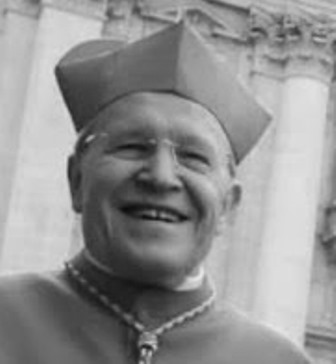
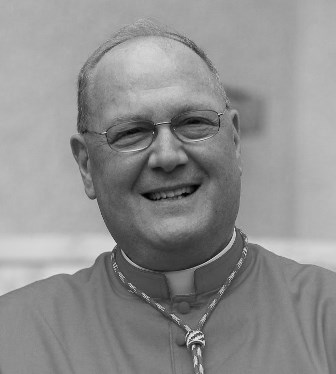
235148-cardinal-timothy-dolan

Cardinal Dolan:

“When we talk about some time of renewal and reform of our vocabulary, we don’t mean to soften or to dilute our teaching, but to make it more credible and cogent,” he said. “It’s not a code word for sidestepping tough things; it’s more a methodology.“

Cardinal_Burke

Cardinal Burke:

“There can’t be in the Church a discipline which is not at the service of doctrine.”

“The reformers were saying: ‘Oh, we’re not questioning the indissolubility of marriage at all. We’re just going to make it easy for people to receive a declaration of nullity of marriage so that they can receive the sacraments.’ But that, is a very deceptive line of argument which I’ve been hearing more now in this whole debate.”

cardinal_pell

Cardinal Pell:

“As Christians, we follow Christ. Some may wish Jesus might have been a little softer on divorce, but he wasn’t. And I’m sticking with him.”

“We’ve got to be intellectually coherent and consistent.  Catholics are people of tradition, and we believe in the development of doctrine, but not doctrinal backflips.”

“Communion for the divorced and remarried is for some — very few, certainly not the majority of synod fathers — it’s only the tip of the iceberg, it’s a stalking horse. They want wider changes, recognition of civil unions, recognition of homosexual unions. The church cannot go in that direction. It would be a capitulation from the beauties and strengths of the Catholic tradition, where people sacrificed themselves for hundreds, for thousands of years to do this.”

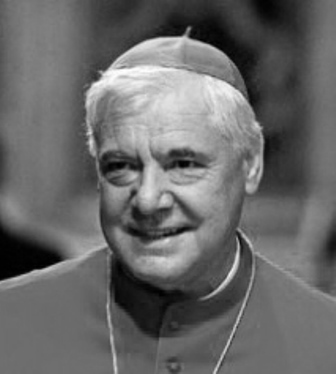
muller_CNS

Cardinal Müller:

“One cannot declare a marriage to be extinct on the pretext that the love between the spouses is ‘dead.’  Indissolubility does not depend on human sentiments, whether permanent or transitory. This property of marriage is intended by God himself. The Lord is involved in marriage between man and woman, which is why the bond exists and has its origin in God. This is the difference.”

40 Days for Life

1623499_10152389086228435_6405787881628128483_n

From September 24 through November 2, you’re invited to join other Christians for 40 Days for Life – 40 days of prayer and fasting for an end to abortion.

You’re also invited to stand and peacefully pray during a 40-day vigil in the public right-of-way outside Metropolitan Family Planning, 5915 Greenbelt Road, College Park, MD.

If you’d like more information – and especially if you’d like to volunteer to pray, please contact: Tom Trunk at 240-593-6982 or 40daysforlifeMD@gmail.com.

Visit the website at http://www.40daysforlife.com/collegepark.

995654_10152389086403435_3154736698291955115_n

Father Joseph Jenkins, our Council Chaplain and the Pastor of Holy Family Parish was scheduled to lead the Rosary in front of the Greenbelt Abortion Clinic on the first day of the prayer vigils, Wednesday, September 24 at 1:00 PM. He was accompanied by Jim Murry, PGK, PFN. He was joined by other Council Knights, Jimmy Cardano, DGK and Roger Doucet, Fraternal Benefits Advisor. Various others had come from other councils and parishes. People came and left, although numbers swelled into the 20’s at one point. A young woman came over and told us that the happiest day of her life was when she had an abortion and that she did not regret it. We did not debate her but simply let her know that we were praying for the unborn children, including hers, and for the conversion of the hearts and minds of mothers and fathers to the Gospel of Life. It was clear to see that she came over to incite some negative action. Instead, we extended love and prayers. After the Rosary was offered, Father Jenkins offered an extemporaneous prayer, invoking the grace and aid of the Holy Spirit upon the prayer champions for life and for this woman in particular. That she might come to repentance and instead of dispairing when her eyes are opened, that she might find hope in Christ’s mercy. A few people beeped their car horns at us. In the past we have had people shout and gesture obscenities. Our reaction is always non-violence. We hate no one and do not want to hurt anyone.

10687224_10152389086133435_5082848636921992979_n

Every year when we do this prayer of protest there are women who will also tell us that we made them rethink what they were doing and turn around. Babies are saved. Father Jenkins also made mention of SPIRITUAL ADOPTION and how our prayers are an expression that all children are miracles and wanted. We are Christians proclaiming the Gospel of Life. There is no such thing as a pro-abortion Christianity. We witness to life. The Council Knights and their families were urged to come throughout the month and to offer their prayers and rosaries, both outside the clinic and wherever else they find themselves. We should pray unceasingly against the scourge in our society. Father Jenkins was very defiant and exclaimed, “When the child in the womb is not safe, none of us are safe!”

10646862_10152389111343435_5212637509183644445_n

Bishop Tobin on Remarried Couples & the Eucharist

pptobin280409Has anyone else read Bishop Thomas Tobin’s letter posted on the Providence Diocese’s website?  He invites discussion.  Thus, with all due respect, I would like to share my concerns.  The bishop writes:

In my personal reflection on this dilemma, I turn to the incident in the Gospels in which Jesus and His followers were walking through a field of grain on the Sabbath and because they were hungry, began to pick and eat the grain, a clear violation of an important Mosaic Law. The offense was roundly condemned by the religious experts, the Pharisees. But in response, Jesus said, “The Sabbath was made for man, not man for the Sabbath” (Mk 2:23-28).  In other words, while not denying the validity of the law, our Lord clearly placed it in a “pastoral context,” exempting its enforcement due to the human needs of the moment. Could we not take a similar approach to marriage law today?

One cannot really compare the issue of divorced-and-remarried Catholics being allowed to receive Holy Communion with the incident where our Lord’s apostles are charged with violation of the Sabbath by picking and eating the heads of grain (Mk 2:23-28).  The first is in regard to spiritual disposition and the sacrilege of taking Holy Communion while in mortal sin.  The latter simply focuses upon a pharisaical interpretation of the commandment demanding rest.  The apostles were not in any grievously sinful state.  Jesus excuses them, as a foretaste of the freedom that comes with his dispensation.  But, more than this, Jesus is God.  The lawgiver can excuse whatever laws he wills.  The Church can also make modifications, as with our keeping the Sunday Observance over the traditional Hebrew Sabbath.  However, such authority is not absolute and this juridical rendering is a far cry from trying to circumnavigate around basic objective moral norms.  The Church and the Pope do not have the authority to authorize sin and sacrilege.

What constitutes a genuine pastoral approach?  Excusing or enabling serious sin is no favor to anyone.  While we may be troubled by exclusion and feelings of hurt; how can these compare to the fires of hell and the loss of God’s friendship.  The pastoral cannot be so focused on the external situation or appearances that we neglect the internal reality.  The corollary to the assertion that “matrimony is made for man, not man for matrimony” does not find its solution in feigned second marriages but in a chaste celibacy.  Promises are made to be kept.  If the first marriage is authentic, then as long as one spouse lives, any attempted second marriage is a fiction.  That is the long-and-short of it.  There is no viable solution out of this conundrum.  This is more than “the lofty demands of the law,” but the enduring truth that the two become one flesh.  Affections might stray but one spouse continues to belong to the other.  Infidelity is stealing what is the spouse’s due and giving it to another.  There is no way that the Church could rubber-stamp such a scenario.

The bishop writes,

But at the same time, the Church has taught the pre-eminent value of receiving the Holy Eucharist, and I keep hearing the words of Jesus about the Eucharist, words that are just as valid and important as His words about marriage: “Unless you eat the flesh of the Son of Man and drink his blood, you do not have life within you” (John 6:53).

Missing from this assessment is the ancient teaching, recited in the sequence for Corpus Christi, that the same sacrament which brings life to one, brings judgment to another.  Purposely giving Holy Communion to those who are in an adulterous situation would invite condemnation upon them and ridicule upon a hypocritical Church.

Bishop Thomas Tobin states:

And I know that I would much rather give Holy Communion to these long-suffering souls (divorced-and-remarried couples) than to pseudo-Catholic politicians who parade up the aisle every Sunday for Holy Communion and then return to their legislative chambers to defy the teachings of the Church by championing same-sex marriage and abortion.

The bishop means well and he says, honestly, that he does not know the answer to the predicament; however, sympathy for small devils while castigating large ones is no answer at all.  A man can jump from one ledge to another.  If he misses by a foot or an inch, it makes no difference.  He is still just as dead.  This is the appropriate analogy here.

Bishop Tobin echoes an article in the National Catholic Reporter by Fr. Peter Daly who suggested that annulments be simplified by handling the situations entirely at the local level.  The bishop writes:

Can we eliminate the necessity of having detailed personal interviews, hefty fees, testimony from witnesses, psychological exams, and automatic appeals to other tribunals?  In lieu of this formal court-like process, which some participants have found intimidating, can we rely more on the conscientious personal judgment of spouses about the history of their marriage (after all, they are the ministers and recipients of the sacrament!) and their worthiness to receive Holy Communion?

The true Sensus Fidelium is that collection of the laity that keeps our moral laws and regularly goes to Mass.  They would be critical of this proposed solution.  The grounds for annulments often rests in ignorance, deceit, lack of proper discretion, inability to fulfill the obligations of marriage, mental problems, prior addiction, etc.  People are often blind to their own faults and shortcomings; but here the bishop is literally saying, “Physician, heal thyself!”  Would this apply for only the second marriage?  What about the third?  What part would “the other woman” play when marriages were deliberately destroyed?  Such a measure would play into the hands of selfishness.  Many of them do not understand the difference between an annulment and a divorce.  If the bishop’s notion were adopted, there would be no difference— and a basic command from Christ would be explicitly violated.

This is all quite serious.  The marriage analogy plays a crucial part in our understanding of the Church’s relationship to Christ and the sacrament of Holy Orders.  Weaken one and we hurt the others— the dominoes will begin to fall.

Religious Subterfuge & Dissent Against Rome

Today the Huffington Post ran the headline, “Nuns Blast Catholic Church’s ‘Doctrine of Discovery’ That Justified Indigenous Oppression.” Eyebrows were raised. What the devil were the sisters talking about? These prudential views went out with the ancient notions concerning the divine right of kings. Do the sisters understand it is 2014 and not the 1600’s?

lcwr 3The challenge to the Vatican came from Sister Maureen Fieldler. This, in itself, was an immediate bad sign that something was up. She is a widely known radical feminist and dissenter on a number of issues, such as so-called abortion rights, liberation theology, women’s ordination, religious indifferentism, etc. Given that she is disobedient to the Vatican at every turn, it was the height of arrogance that she demanded renunciation of 15th-century documents.  The LCWR would have you think that they speak for the angels, but not all angels come from heaven.  The devil can also appear as an angel of light.

The Church has already spoken to abuses in the past and the late Pope John Paul II included the rights of indigenous persons in his famous apologias. This seems sufficient. Of course, the Church would not want to renounce the courageous missionary efforts of saints or the unique value of our saving Catholic faith. These modern sisters would be oddly less celebratory of this saving inheritance.  Like secular anthropologists, they would stress the retention of isolated New World pre-Christian cultural and religious associations from the unique value of the Gospel that came with explorers from the Old World. Along these lines, the Leadership Conference of Women Religious has repeatedly compromised itself by engaging in pagan, New Age and various native spiritualties during its conferences and retreats. Indeed, along with their demand to the Pope, they are insisting that he participate in “a sacred ceremony of reconciliation.” You can bet all your donuts that these girls do not mean the Sacrament of Confession. Sorry, while they might pray to the four winds, true Catholics place their confidence in the Holy Spirit and the Church Jesus founded. Christ commanded that we take this faith to the entire world and to baptize in the name of the Trinity. We cannot and must not apologize for the command of Christ at the end of Matthew’s Gospel. It is true that colonization brought with it oppression and disease; but it also gave a new people the saving Gospel and Western civilization. We should not be so quick to idolize a multiculturalism that would utterly discount our rich history and the benefits of colonization. Would Sister Fieldler, her Loretto religious community and the LCWR have preferred that the saving faith were never proclaimed and that the missionaries had stayed at home? While the ancient Church decrees are summarized to sound like one had to convert or die, it was actually much more complex.  While Western countries sought new resources, the Church saw in civilization the opportunity to bring the true faith to the New World. While the soldiers and conquerors did not always abide by the Church’s admonitions to respect human dignity; the sword was also used to protect the colonists and those native peoples who were ordinarily endangered by more violent neighbors. In any case, the issues around this partnership of the Church and state have long been mute.

Vaguely analogous notions of intervention today are not the same as that which included the promulgation of the Gospel in days of old. Even American “Manifest Destiny'” had less to do with the Church and more about a non-denominational American sense of providence and the call to greatness.  The sisters are experts at the jargon that wins a secular modernity to its side. But when one scratches the surface, it becomes clear that there is a peculiar eccentricity to them. For instance, they would attach the anachronistic appeal to the Pope with the effort to strip the Washington football team from using the name Redskins. I suspect few reasonable people see any connection.  The Holy See has no lands of its own and no longer even makes reference to doctrines of discovery. By contrast, there are already plenty of papal declarations which speak to the rights and dignities of indigenous peoples. But the sisters are merely flexing their muscle. If they were serious, they would be reproaching secular governments and struggles in the present, as with the conflict between Russia and the Ukraine. Here at home they conveniently disguise the absurd ramifications of their stance. They want to get even with the Holy See, not a secular nation.  Remember, if one must apologize for the past then one must make restitution. Along these lines the proposal was made years ago that all whites should be taxed in the U.S. so that monetary reparations might be paid the descendants of slaves. The argument was rightly made that you cannot fault the living for the crimes of the dead. Would the United States give back all lands and territories that belonged to Native Americans, including Manhattan? Would we surrender Texas to the Mexicans? Would we hand over our territories and Hawaii to the native population as new sovereign countries? We bought Alaska from the Russians but they had essentially claimed it through colonization. Would we give it back to the Eskimos (along with the oil) and go home? And given that most of us are the sons and daughters of immigrants, where would home be? The repercussions would become rather silly. But silliness is not something new for the Loretto religious community or this organization of sisters.

Something is rotten about this business. This overture is not really about renouncing the oppression of indigenous peoples. It is payback for being put into their place by Rome. They want to show that they (the Leadership Conference of Women Religious) have the true moral high ground. This is all about politics and not at all about justice. Once we see the truth about it, the organization and its leadership are exposed as utterly pathetic and without contrition for their disobedience and heresies.

It is sick and twisted that the LCWR resolution targets the Pope. No organization has done more to make a positive difference in the lives of indigenous peoples than the Church. This effort is to take our attention away from their own shortcomings and sins. Indeed, by speaking of these ancient policies as doctrines, these dissenters can then point to the modern doctrinal debates and argue that the Church has the authority to evolve or change other teachings of faith… particularly in those doctrinal conflicts where the LCWR is on the other side. This is a measure to undermine the continuity and permanence of Catholic teachings.

The Vatican in 2012 was critical of the LCWR on a host of issues: particularly their silence on the right to life and their dissent on the nature of the family and human sexuality. These are not the sisters we fondly remember in nostalgia.  They largely refuse to wear their habits and veils, even though the late Pope John Paul II told them to do so.  They have watered down their traditionally prescribed prayer life and often do not live in community.  The feminist agenda has poisoned their hearts and minds.  Many demand that women be ordained priests and condemn what they call a patriarchal Church.  This past April, Cardinal Gerhard Ludwig Müller chastised them for failing to comply with Rome’s correctives. They even purposely honored Sister Elizabeth Johnson who was faulted by the U.S. bishops for her Christology and other teachings. [She heavily employs weak metaphors over analogies, compromising or revising the objective truth value of certain Catholic doctrines.  She was my professor at CUA and I recall that she got upset about our usage of JESUS and CHRIST.  She taught that the JESUS of history (minus miracles and messianic claims) was different from the CHRIST of faith (which is what the Church had fashioned him).  It seemed to me that this fell back into the old “two Sons” heresy.  Also, the impression was given that the human JESUS was real and that CHRIST was more symbolic of the Church’s kerygma.  We see many biblical exegetes who use similar language in their analysis of the Scriptures.]  Pope Francis backed the rebuke of the rebellious LCWR. Instead of obedience to Rome’s demands, they now seek to make demands of Rome.

The sisters of this sort are quickly dying out. The Church will probably be better off when they are gone. They will be replaced by a small but growing number of women who practice the traditional disciplines and know that humility and orthodoxy is how we approach the Magisterium and abide with the Church.  Pray for vocations… of the right kind.