• Our Blogger

    Fr. Joseph Jenkins

  • The blog header depicts an important and yet mis-understood New Testament scene, Jesus flogging the money-changers out of the temple. I selected it because the faith that gives us consolation can also make us very uncomfortable. Both Divine Mercy and Divine Justice meet in Jesus. Priests are ministers of reconciliation, but never at the cost of truth. In or out of season, we must be courageous in preaching and living out the Gospel of Life. The title of my blog is a play on words, not Flogger Priest but Blogger Priest.

  • Archives

  • Categories

  • Recent Posts

  • Recent Comments

    Anonymous's avatarAnonymous on Ask a Priest
    Michael J's avatarMichael J on Ask a Priest
    Jeremy Kok's avatarJeremy Kok on Ask a Priest
    Mike Zias's avatarMike Zias on Ask a Priest
    Jeremy Kok's avatarJeremy Kok on Ask a Priest

Heated Conversation Over Annulment Article

wedding125

This morning I was alerted on Facebook to a commotion on the Internet regarding an article by a brother priest of the Archdiocese of Washington.  Another priest, Msgr. Charles Pope, who authors the Archdiocesan blog noted:

“I was saddened to see that a priest of my Archdiocese wrote a rather harsh article on Church Marriage teaching. I do think we need to look to clarify the annulment process but I guess I would reform it in very different ways than Fr. Peter Daly says. Anyway, Ed Peters does a pretty good job here of answering my brother priest.”

I said my prayers, offered Mass and then tracked down the article and Dr. Peters’ response.  CATHOLIC WORLD REPORT aligned itself with Dr. Ed Peters as did Father John Zuhlsdorf on his blog.

Doctor Peters versus Father Daly

The first thing that Google found was the site for the canonist Dr. Edward Peters.  He offered a stinging rebuke to Fr. Peter Daly’s NATIONAL CATHOLIC REPORTER article on reforming annulments.  While the issues at stake were vitally important, saying that it was harsh would be an understatement.  Castigating my brother priest as sarcastic and childish, he critiqued Father Daly’s article, saying:

  • He violates the “heart of Church teaching on the permanence of marriage.”
  • He is “repackaging common historical errors, irrelevant platitudes and bad theology.”
  • His dismissals of the juridical are “complaints about Christ’s economy of salvation.”
  • Fr. Daly does not want reform of annulments but their “abandonment.”

Wow, regular readers are aware that I routinely struggle with a pugnacious manner of my own, but goodness, Dr. Peters certainly pulled no punches!

I guess I was going about this backwards.  What did my priest friend say that merited such rebuke?  I tracked down Fr. Daly’s article at the newspaper site.

Oh boy, what can I say?  As another parish priest, I will share my (personal) position, hopefully with an ample supply of charity.   So what did he write to cause all the Internet chatter?  The article is entitled, “Pope Francis Should Consider the Church’s Outdated Annulment Process” (January 13, 2014) by Fr. Peter Daly.

True Sensus Fidelium

He admits that the catalyst for the article was the recent request from the Holy See for input in the upcoming special Synod on the Family.  Along with many others, he is excited by the apparent new openness of the Magisterium to hear from the rest of the Church, the rank-and-file priests in the trenches and the laity in the pews.  (Some critics are arguing that the survey was only addressed to the bishops but this is not strictly true.  The bishops sent the questions to priests and the faithful for collaboration.  Several dioceses placed the questions online for quick electronic responses.  Deadlines were give clergy and laity as to when to send in their answers.)  He stamps this change of direction as a miracle and writes:

“In our top-down hierarchical church, the concept of the sensus fidelium has been pretty much a dead letter since the Second Vatican Council. Usually Rome talks and we listen. But now he wants to hear from us. Thank you.”

Certainly, there is much to be said about listening, but we all still have different roles to play and ultimately the response of sheep to a shepherd is that of obedience.  As for the sense of the faithful, we must be wary of the fact that many if not most today are formed more by a secular, hedonistic and materialistic world than by the Gospel.  Only those believers who maintain the core truths, worship, and conscientiously live out their discipleship are truly agents of sensus fidelium.  You cannot transmit or develop what you really do not have.  I would suggest that fallen-away uncatechized Catholics and the majority of dissenters do not qualify despite the fact that someone spilled water over their heads decades ago to appease aging grandparents.

The Protestant Practice & the Orthodox Model Fall Short

Father Daly takes the survey from Rome and narrows his focus to the question of annulments.  His response is blunt:  “scrap our current annulment process and look east to see what our Orthodox brothers and sisters are doing.”  As a priest in good standing, he rightly asserts that Jesus did not approve of divorce and remarriage.  (I have often been amazed at the mental gymnastics that certain Protestant churches must employ to get around this restrictive teaching, especially in the Gospel of Matthew.  They make wiggle-room where there really is none.  But is Father Daly trying to force wiggle-room?)  He also knows full well that the current annulment process is an effort to respect this teaching while showing compassion to our people.

He brings up the Orthodox churches of the East which allow second Penitential Marriages as a possible solution.  But many of us fault it as a negative symptom of national churches.  Remember that Roman Catholicism was willing to allow the entire English church to slip away over the issue of marital permanence and King Henry VIII.  Would we now backtrack and say we were just kidding about the gravity of this issue?  Neither Sir Thomas More nor Bishop John Fisher can be given back their heads; and neither can we really turn back the clock on licit and valid marriages.  Along with certain Protestant notions about faith, authority and Scripture that are trying to get a foothold in the Eastern churches, especially those transplanted into the West, this issue of second marriages may be a greater hurdle to ecclesial reunion than either the Filioque Clause or Papal Primacy.

The annulment process might need to be reworked, but I do not believe the Orthodox provide a viable alternative.  Although not as shallow as our Anglican friends, the Orthodox might hide a false caricature of marriage behind elaborate ceremony and the pretension of sorrow.  True contrition means reform or change of life.  The so-called Penitential Marriages just give the couple their own way while feigning some degree of anxiety in conscience about it.  Father Daly insists that the matter should rest entirely with one man, the priest on the ground.  But he and I know that priests are not the same and there are some who may wrongly replace the Gospel with their own opinions and sentiment.  The Tribunal seeks an objective reality.  Is the prior bond a true or false marriage?  There are the judges, an advocate and the defender of the bond.  Beyond these five or more people, the judgment rendered will be reviewed again by another Church court.  They study the facts of the case and hopefully are neither susceptible to the manipulation of money nor to a false compassion.

I must admit that I am devilishly amused by Father Daly’s Episcopal priest-friend finding delight that the Catholic Church’s stand on divorce and remarriage will always give cause for the “Episcopal church.”  The shadow of the reformation still falls upon us.  His friend may be right.  Indeed, I would add (perhaps without charity) that until the final judgment, there will be a place for the Episcopalian church so long as sinners cling to a counterfeit priesthood and Mass, the fantasy of priestesses, the blessing of same-sex unions, the promotion of contraception and tolerance for abortion, the marrying of adulterous couples and the reception of renegade Catholic priests who want to bed their paramours.  Goodness me, I really have to work harder on my ecumenism!  But I would rather be a member of the Church that goes to heaven than the “church of anything-goes.”

The Pastoral versus the Legal?

Father Daly writes:

“The problem with the process in the Roman Catholic church is that it takes what ought to be a pastoral matter and turns it into a legal one. It is complicated, often unfair, and frequently unintelligible to the participants. Some tribunals are easy. Some are hard. It can be very capricious.”

(Is the use of the small “c” in Church an editorial liberty taken by his newspaper?)  As a civil lawyer, Father Daly has a point.  The subjective elements in how many cases are handled can be very worrisome.  Although I would usually be cold water to Father Daly’s hot, we agree upon this much.  The annulment process is not easy.  Formal cases require people to revisit all the pain and betrayal that poisoned their unions.  Adequate grounds have to be discerned in the muddle of mutual allegations and tears.  Witnesses are gathered.  Interviews are given.  Essays are written.  Then a thousand dollars and a year later a verdict hopefully emerges from the backlogged Tribunal.  That verdict is then reviewed by a second court that can approve or send it back.  Most applicants I have assisted seem to get declarations of nullity, but not all.  Sometimes I have to scratch my own head about the grounds.  But I am not a canon lawyer and would not want to be.  I pray for those who must spend so much of their lives and ministry ruminating over the dark side of life and marriages gone sour.

Father Daly desperately wants to be welcoming to those attracted to Catholicism.  While I have serious disagreements with him, he obviously cares and grieves about those estranged by marriages gone bad and new bonds that are not recognized.  My heart also bleeds for the few who wanted to save their marriages— angry and weeping daily at what they see as complicity in allowing their spouses to marry again in the Church.  Annulments are very staggering in principle and practice.  We are saying that couples previously regarded as married, even before a priest in Church, are not really married and that there is no sacrament.  Some defect invalidated the meaning of their marital act (sleeping together, i.e. sexual congress), having children and living a common life.  They said in their vows before God and to each other that they would forever be faithful and endure all hardships for each other.  But now we hear that someone lied or was incapable of living out the vocation or was mentally ill or had no intention of being faithful or practiced deceit or really did not understand what he or she was doing (after a six month wait and pre-Cana instruction).  One or both of the spouses want out.  It may be a year or twenty years later, but they feel entitled to start over.  Father Daly and I both help such people to begin again, although I am left troubled in conscience by many cases.  People even joke these days, “Promises are made to be broken.”  However, I was raised to believe that vows were made to be kept— in marriage and in the priesthood— even unto the Cross.

I certainly understand the RCIA dilemma for divorced and remarried candidates but there is no good way around it.  Fr. Daly argues that “All the annulment process does is put a road block in their way to entering the church.”  I would contend instead, that the barrier is their failed marriage and their attempt to bypass divine law in marrying again.  The annulment is the Church’s way of respecting the indissolubility of the sacrament while trying to help a couple out of the mess of their own making.  The process has its faults and is not perfect.  But, we would have them authentically married and delivered from the bondage of grievous sin.  It is not just or charitable to ignore a problem that damages their relationship with God and his Church.  They may not subjectively be aware of how much they need this healing.  We should not side-track or halt this process.

Speaking about non-Catholics having to get annulments before entering the Church, he writes that the process is “painful and pointless.”  I have to admit that this use of the word “pointless” makes me cringe.  It may be that the good Father is employing a degree of hyperbole.  He writes:

“They have to find witnesses, get records, take statements, dig up old contacts, and open old wounds. All of our language is legal, not pastoral. We speak of petitions, tribunals, witnesses, advocates, petitioners, defendants and evidence. It is Kafkaesque. It turns pastors into bureaucrats, to no purpose.”

I certainly appreciate his frustration and empathy for the people he serves.  But I would not say it is pointless or lacking purpose.  How else might we make something that is wrong into something right?  It is a difficult business but life is hard and frequently a real mess.  There was a time when divorce was illegal and annulments were rarely or not granted.  I am sure that Father Daly would not have us backtrack.  At least we are trying.

Father Daly says that he has taken “the pastoral route” for the elderly and terminally ill— in other words, he has invoked internal forum.  I have no comment about this.  It is the business of the confessional.  As long as a couple is not engaging in sexual congress and there is no danger of scandal, the priest may have certain discretion.  But I would be very careful about how far I would stretch this pastoral stratagem.  Dr. Edward Peters seems to read more into it; he wonders what he means and warns that if he married such people then these rites are “gravely illicit” (Canon 1085 § 2), “possibly invalid” (Canon 1085 § 1) and/or “sacrilegious” (Canon 1379).  He states that it would be an “abuse of ecclesiastical power” (Canon 1389).  I suspect that all Fr. Daly is doing is helping sick and elderly people to face their last days in right relationship with God.  I would not make more of it than that.

God Opposes Divorce & Remarriage

While all must follow natural and divine positive law, only Catholics are obliged to follow “man-made” Church laws.  (Of course, some Church laws reflect God’s explicit providence and cannot be abrogated.)  Heterosexual marriages between Protestants are acknowledged as sacraments, no matter if witnessed before a minister or civil magistrate.  Marriages with those not baptized are natural bonds but are also generally regarded as fully binding (with the possible exception of referral to the Pauline and Petrine privileges).  Homosexual unions between anyone, anywhere, are not true marriages.  A Catholic must pledge his or her marriage vows before a priest or deacon.  This law could change but it is unlikely and probably unwise to tamper with it.  Divorce is forbidden by Jesus (Matthew 19:3-9):

Some Pharisees approached him, and tested him, saying, “Is it lawful for a man to divorce his wife for any cause whatever?” He said in reply, “Have you not read that from the beginning the Creator ‘made them male and female’ and said, ‘For this reason a man shall leave his father and mother and be joined to his wife, and the two shall become one flesh’? So they are no longer two, but one flesh. Therefore, what God has joined together, no human being must separate.” They said to him, “Then why did Moses command that the man give the woman a bill of divorce and dismiss [her]?” He said to them, “Because of the hardness of your hearts Moses allowed you to divorce your wives, but from the beginning it was not so. I say to you, whoever divorces his wife (unless the marriage is unlawful) and marries another commits adultery.”

Nevertheless, there is the irony that no Church annulment case can precede until after a civil divorce.  While some authorities, even clergy, would wrongly argue against the view that divorce is a sin— such is the case, at least for the party or parties who damage the bond and force the separation.  Spouses have vocational obligations or responsibilities toward one another.  Separation does not immediately dispense culpability for marital duties.  Divorced persons should not date.  Rather they should live chastely with no corner given to possible adultery.  Nevertheless, in practice, most annulments come after couples are civilly married and are sexually intimate.  The mess can get messier.

The husband as head of the home expects a certain level of obedience.  That is why he is also regarded as the final authority when it comes to the discipline of children.  The wife must be respected as the heart of the home.  I tell every man who gets married, that his primary duty in life is to make his wife happy.  I tell the ladies that their devotion to the husband must be that of a best friend, and that she is literally his home.  Together they are responsible for their common life, with all its struggles, joys, sorrows, affection, accomplishments and failures.  They are ordered by nature and their vocation to give intimate friendship to one another where there is the satisfaction of sexual passion and openness to procreation.  It is the duty of a husband and wife to become lovers and parents.  The husband is commanded to treat his wife in a generous and honorable way.  They must work together as partners in insuring the goods of the family, materially, emotionally and spiritually.  Husbands and wives are called to be help-mates to one another.  It is grievously wrong to steal the affection and support owed to a spouse and to give it to another.  Mutual respect and esteem should properly be realized.  Indeed, if there is a separation, one of the duties is not to get married again.  A man who walks out on his wife deprives her of his support and a possible family.  Many such women in the time of Jesus were then forced into adultery to find a means of taking care of themselves.  A woman who abandons her husband will deprive him of the friendship owed him, including the physical intimacy to which men are strongly oriented.  How many stories have we heard about men who turned to mistresses when their wives became to their overtures?  Women who use sex (deprivation) against innocent husbands sin mortally.  This would also apply the other way around.  A woman neglected by her husband might be tempted to fulfill her yearning for affection and friendship elsewhere.  Divorce is not recognized by the Church.  Neither separation nor divorce exonerates or frees the spouse from the various inherent duties of marriage.  While extending marital benefits to the spouse would become impossible or absurd in breakups; still no such recourse can be made to others to procure or to offer these benefits.  Doing so is the commission of adultery, even if tender and loving.

An Administrative Law of the Church for Good Order

The “loophole” for Catholics is really nothing of the kind.  Catholics married outside the Church are not married.  That is why a declaration of nullity is short paperwork.  When convalidations take place we are at pains to emphasize that the new ceremony is not a renewal of promises previously made before a Justice of the Peace.  Instead, even if only five people are in the chapel, this convalidation is the true marriage— not the big expensive affair at the rented mansion or before the judge at the seaside garden of a rich friend.

Fr. Daly laments that these quick annulments or declarations seem unjust.  I can top this.  A couple came to me where the bride-to-be was the “other woman.”  She joked that she stole the Catholic boy from a life of sin so that he could marry in the Church.  This woman deliberately made a play for the civil husband of another woman.  Now she justified it in light of the quick declaration of nullity from the Archdiocese. Her attitude sickened me.  I felt compromised by my association with them.

The priestly critic sees no sense in Church legalities about marriage.  But it is not silly.  The Church has a right to regulate her sacraments.  Given that society and the Church no longer share a common vision of marriage, it seems to me that the Church’s legal appreciation of marriage is more important than ever before.  The pastoral cannot trump objective truth.  The priest might want to give the couple a second chance but it is not for him to decide.

The canonist is not dealing with law like a civil lawyer.  Society today deems law as capricious and open to constant revision.  The Church lawyer must acknowledge laws for the good order of the Church, divine positive law and natural law.  The Church could remove the requirement that Catholics must be married before a priest or deacon.  However, it would only complicate the question about true and false marriages.  But the Church cannot dissolve marriages simply on the say-so of forgiving and caring priests.  The priest has the power to absolve sin.  He does not have the authority to redefine right and wrong in marrying people who are already married, divorce decree or no decree.  If God has made a couple one flesh, and it is fully a sacramental reality, then neither a parish priest nor the Pope has the authority to say otherwise.  The priest is a servant of the Gospel, not its master.  We stand under God’s Word, not above it.  When it comes to marriage we must not by the lie that annulment is a Catholic divorce.  The only reality akin to divorce in regard to the Catholic understanding of marriage is death.  Couples are married,  “until death do they part.”  Annulments are simply a limited means of intervening in cases where a prior bond is determined in justice not to be fully real and binding.  If genuine, no act of charity and compassion could intervene.  It is here that Dr. Peters would interpret Fr. Daly’s argument as one against marital permanence.  The good priest acknowledged Christ’s teaching and the understanding of the Church; however, his solution would utterly compromise the doctrine of marriage.

The Plight that Faces Us

Father Daly writes:

“Nobody is deterred from getting divorced and remarried by our annulment process. But many people are deterred from coming into or back to the church by our annulment process. It is spiritually counterproductive.”

The numbers may be few but I would not say “nobody.”  I have known people who broke off relationships because they loved the Lord and his Church more than a romantic entanglement.  Admittedly I am confused by some of my brother priest’s opinions.  People may not understand the annulment process but all we are doing is asking people to keep their promises.  Everyone on their marriage day thinks with the Catholic Church and they vow to be faithful to each other, for better or worse, for richer or poorer, until death do they part.  It is only later when something goes wrong that people want out.  If we close our eyes and mouths to believers who marry outside the Church then do we become accomplices in their sin?  We need to invite them into seeing the annulment process as a stage of healing.  We must also invoke courage and strength when no annulment is possible and any second or third marriage attempt is a form of adultery.  Filling our churches with couples locked into lives of mortal sin is not the answer and would also be “spiritually counterproductive.”

Closing Thoughts

I have long since lost the argument in the Archdiocese about withholding communion, particularly to the enablers of abortion.  I have personally wept over the sacrilege against the sacrament and the prospect of bringing the full weight of judgment to communicants ill-disposed to receive our Lord.  Father Daly writes:  “To our faithful, the real scandal is not the fact that divorced and remarried people might receive Communion, but that sincere people who really desire the Eucharist are kept from it by a legalistic, complicated, capricious and alienating annulment process.”  I think the world of this priest, and I could never challenge his legal knowledge and writing skills.  He was ordained a month after me back in 1986.  He is a beloved and successful pastor.  Family members attend his church and adore him.  He remains in my daily prayers.  I see many of the problems and issues he sees; but I cannot agree in all his assessments and proposed solutions.  I am a parish priest and would not trust myself to write off a command from the mouth of Christ.  I could not do it.  As for Holy Communion, I urge everyone to go to Mass; however, I also ask that each of us reflect upon our worthiness for the Eucharist.  If we are living in an objectively immoral situation and mortal sin, it would be sacrilege to take the sacrament.

The Mass is also a testimony to a marriage banquet.  Christ is the groom and the Church is his bride.  Jesus will never break his promises to his bride.  We should keep our promises.  Christ who is ever faithful was brought to his Cross by all our broken promises.  Yes, even in the face of abuse, betrayal and abandonment, we should remain faithful.  I suspect that the answer for which we are looking in this debate rests with an imitation of Christ and a deeper awareness and resolve to practice sacrificial love.

Can the Most Wicked Be Forgiven?

devils summer-picnic-outdoors-clip-art_420988

Mike asked a few questions about forgiveness that I have heard from others and are worth sharing.

1.  I have been wondering about forgiveness in general. Are there any sins so bad that they will never be forgiven, regardless of how much you repent and accept Jesus?

As long as you are alive, there is hope. If you are sorry, you can be forgiven. However, after death, our orientation and choice becomes permanent.  Of course, we are creatures of habit.  The longer we wallow in our sins, the less able and willing we might be to crawl out of the hole we have made for ourselves.  God wants to save us; but, we must also want to be saved.

2.  As an extreme hypothetical, if Lucifer suddenly repented and asked for forgiveness from God, would he be forgiven?

This is regarded as a nonsense question. It contains within itself a self-contradiction. The devil is a pure spirit. He lives outside of time. He has turned away from God. He cannot turn back. He hates God. This status is forever. Hell is more than a place. It is also a disposition. That is why the devil can say, “I am hell.” We should not feel sorry for or romanticize about the devil. We in our mortality are capricious in our choices. But the angels and the souls of the dead live in eternity. All they know is the eternal now. They are what they are. There is neither the desire nor the opportunity to change. Just as the saints are safely in their heaven forever and ever; so too are the damned fixed in their perdition, lost forever. The fallen angels define something of their angelic natures by their rebellion. They cannot be remade.

3.  Does God’s forgiveness only apply to humans, in other words?

Yes, only “living human beings” can avail themselves of God’s mercy. The demons would have none have it. Indeed, they hate the Divine Mercy, itself.

Another question came from Sarah.  She writes:

I did the Blasphemy Challenge years ago and regret it now that I’m re-discovering faith. Was it an unforgivable sin?

As long as there is breathe in your body, sin can be forgiven.  The atheists who promoted the “challenge” did not understand hyperbole and the correct reading of Scripture.  Sin is only unforgiveable when there is no sorrow for sin and repentance.  One cannot simultaneously reject God’s mercy and invoke it through contrition.  Are you sorry for your sins?  The Divine Mercy is ready and desirous of forgiving you.

VIDEO – Confession Explained

Computerized Automated Confessionals?

Obviously, this YouTube video is a pretense. No one in the Church would allow such a thing, even as a trick:


It reminds me of the computer Jesus confessor in the movie, THX 1138:


What Makes Catholicism So Special?

bvm_001

MARTA:  How long has Catholicism been around?  Why confess sin to a priest? How does Catholicism differ from Christianity?

FATHER JOE:

The Catholic Church is the “church” established by Jesus. All the bishops and priests are direct successors of the original apostles.  Jesus gave the Church and his apostles the power to forgive sins. Since priests cannot read minds and hearts, people confess to them so that the priests can give proper counsel and penance along with their absolution.  Catholicism is the original and most complete form of Christianity. East and West were one for a thousand years. Protestant churches only go back four or five centuries.

LILIANA:  With respect, I think what you say is contradictory; we should address God “directly” in prayer in the name of Jesus. The Bible doesn’t say we need saints.  God doesn’t need secretaries.  Everything is possible for him and he can listen to millions of people anytime.

FATHER JOE:

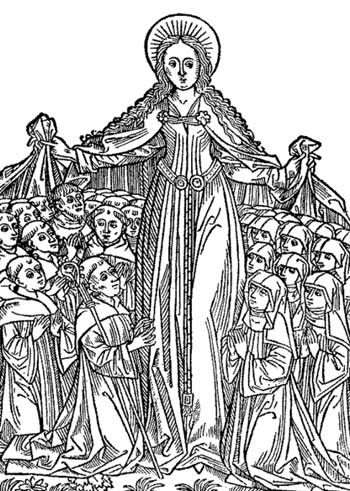
There is nothing contradictory about it. Such comes from an understanding of the Church as the new People of God and our relationship with one another and Christ. Those who discount the sacramental meaning of the Church and our corporate faith tend to make religion overly individualistic. We pray together, and for each other, as Jesus admonished; but we do not exclude the communion of the saints from our prayer. The Queen of the saints is Mary.

You really miss the point. It has nothing to do with what God needs, but about what we need as human beings and as a social people.

Responding to an Attack Upon Catholicism

PAUL:  You people are very sick.

FATHER JOE:  You are very angry and judgmental about Catholicism.  Are you a fallen-away Catholic?  Many Catholics find comfort and helpful guidance in Catholic faith and values.  You are too quick to tear down and attack that for which you seem to lack authentic understanding. Sin is the sickness, not religious faith.  You are no better than the people you ridicule.  You are also a weak sinner who needs Jesus and his mercy. 

PAUL:  The Catholic Church has made so many “rules” that do not even exist in the Bible.

FATHER JOE:  The Catholic Church has rules for good order, but the commandments and the ecclesial precepts find their basis in the Decalogue given to Moses and the two commandments of love from Christ.  We also believe in natural law.  God gave us reason to appreciate the harmony and order of his creation.  Values that reflect divine positive law and natural law are not capricious.

PAUL:  Since when do “men” speak for God or Christ?

FATHER JOE:  As for men speaking for God, such is the witness of the Old Testament prophets and the New Testament apostles.  Our Lord, himself, while critical of the hypocrisy of Pharisees, admonished the Jewish people to do as they say and not as they do.  Jesus establishes a new covenant people and gives the Church’s leadership something of his authority.  The Church is entrusted with the Gospel and even collects the books and letters that would constitute the New Testament and the complete Christian Bible.  Men in the Church have also been responsible for the translation of the Scriptures.  Apart from the community, and men wise in the ways of God, you would not even know God’s Word.  If men and women did not pass on the faith, you would not know Jesus or the story of salvation.  The Catholic Church was preaching the Good News before there was a complete Christian bible and while the Gospels were only an oral tradition.  

PAUL:  Where in the Bible does it say one should confess sins to another man, say a few Hail Marys, Our Fathers (and of course put some $$$ in the box!) to be forgiven? PLEASE show me this. IT does not exist.

FATHER JOE: 

Jesus, being God, knew the hearts of men.  Nevertheless, sinners still needed to repent and believe.  Priests have the authority to forgive sins, but few have the power to read souls or minds.  That is why the confession of sins is crucial, making possible an adequate penance and counsel.  The prayers or acts of penance and/or mortification show God our thankfulness for his mercy and make a certain degree of reparation for temporal punishment due to sin.  There is precedent for confession in the Old Testament: Leviticus 5:5, Leviticus 26:40-42, Hosea 5:15, Job 33:27-28, Joshua 7;19, Jeremiah 3:13, and Proverbs 28:13.

Tithing or support for the Church is a Christian obligation; however, it is not normally an element of penance arising from the Sacrament of Confession.  The Lord gives priests something of his authority so that they might perpetuate his ministry of reconciliation. We read in 2 Corinthians 2:10-11:  “Whomever you forgive anything, so do I. For indeed what I have forgiven, if I have forgiven anything, has been for you in the presence of Christ, so that we might not be taken advantage of by Satan, for we are not unaware of his purposes.”  St. Paul goes on to write:  “And all this is from God, who has reconciled us to himself through Christ and given us the ministry of reconciliation, namely, God was reconciling the world to himself in Christ, not counting their trespasses against them and entrusting to us the message of reconciliation” (2 Corinthians 5:18-19). Another important text is 1 John 19: “If we acknowledge [confess] our sins, he is faithful and just and will forgive our sins and cleanse us from every wrongdoing.”   There is also James 5:16: “Therefore, confess your sins to one another and pray for one another, that you may be healed. The fervent prayer of a righteous person is very powerful.”  Looking at the Gospels, texts like Matthew 16:19 and Matthew 18:18 are important.  Often cited is John 20:21-23:  “(Jesus) said to them again, ‘Peace be with you. As the Father has sent me, so I send you.’ And when he had said this, he breathed on them and said to them, ‘Receive the Holy Spirit. Whose sins you forgive are forgiven them, and whose sins you retain are retained.’”

PAUL:  What good does it do me to pray to Mary? She cannot save ANYONE. Only Christ can forgive your sins. Pray to him, not some guy in a fancy box who will then give you his recommended “Penance.” How ridiculous!

FATHER JOE:  Yes, only Christ can forgive sins, but the ministry of Jesus is perpetuated and mediated within the saving community of the Church.  Penitents receive absolution from a priest, but the proper object of the prayers is always God.  Indeed, even prayers to Mary and the other saints, while they invoke intercession and solidarity, are still directed to God.  Those who have already made it to the promised shore continue to love and pray for us.  The graces from the deposit of the saints can also be accessed.  Nothing is lost.  Christ is present and his saving work is active in his Mystical Body, the Church.  Confession is a sacrament that can be conducted behind a screen or face-to-face.  There is nothing ridiculous about this.  Indeed, it is beautiful.  God loves us and gives us all we need for spiritual perfection.

PAUL:  Catholics need to read their own Bible and quit making up their own human rules!

FATHER JOE:  Catholics have wonderful bibles and the Scriptures are proclaimed at and substantiate the Mass and Reconciliation.  Human rules or disciplines in the Church amplify the law of God and give order to our Christian discipleship.  Such is the mandate given to the apostles and their successors as our lawful shepherds.

PAUL:  Please tell me where in the Bible sins are labeled as “mortal”? — MORE Catholic rubbish.

FATHER JOE:  For someone who argues “sola scriptura,” you seem to be in great ignorance of biblical truths.  It is sad that someone who claims to be a Christian would insult learned believers who take their faith seriously.  The Bible teaches degrees to sin.  All sin, even “venial” or lesser sin, is disobedience and a failure to love as we should.  However, certain sins are most grave and bring upon us the sentence of death, in other words, these are “mortal” sins which kill the soul and breech our relationship with God.  The Old Testament admits to degrees of sin (see Genesis 18:20).  The New Testament amplifies this truth (see John 19:11).  Just as our Lord could raise the dead, the absolution in the sacrament of penance can restore a contrite soul back to life.  “If anyone sees his brother sinning, if the sin is not deadly, he should pray to God and he will give him life. This is only for those whose sin is not deadly. There is such a thing as deadly sin, about which I do not say that you should pray. All wrongdoing is sin, but there is sin that is not deadly” (1 John:16-17).

PAUL:  Just step into our church, sit down and let us read you a few verses, then we’ll pass the basket around again for a few more of your hard earned dollars… I have been to Rome and viewed all the wealth the Catholic Church has managed to gather from “devout Catholics.”

FATHER JOE:  Participation at church is more than just going through the motions.  Most parishes and Catholic pastors struggle to be good stewards of the resources given us by God’s good people.  We do not preach a prosperity gospel but witness in a way that brings the truth to ignorance, healing to the hurting and hope to the oppressed.  The Church is a treasury of the Western world’s history and culture.  But she is also the refuge of a billion people in this world and many more in the next who count Jesus Christ as both their personal and corporate Savior.  The Pope intervenes annually for the poor and collections are taken the world over to cover the shortfall.  Would you have us sell all our churches for secular condos and for shopping malls?  Your bigotry betrays your reason.

PAUL:  My wife was refused entry into the famous “Vatican” because her shoulders were not completely covered. Christ said bring ALL sinners, He has no Dress Code for his house! I found it very funny how a young girl in line ahead of us (most likely 8 years of age and obviously a virgin) was allowed in without her shoulders covered at all, yet a married woman was not! MORE Catholic B.S.!

FATHER JOE:  The dress code for the Vatican and meeting the Pope is well documented.  The problem was that you and your wife did not respect the Holy Father enough to make proper preparations.  Comparing the status of an adult woman with a child and then making a comment about her sexual condition shows the great depth of your spiritual sickness and moral depravity.  All churches have dress codes of one sort or another, the same for synagogues and mosques.  Would you have churches allow people to enter with vulgar tee-shirts or naked?  As for our Lord, he told a parable that you have evidently forgotten:   “But when the king came in to meet the guests he saw a man there not dressed in a wedding garment. He said to him, ‘My friend, how is it that you came in here without a wedding garment?’ But he was reduced to silence. Then the king said to his attendants, ‘Bind his hands and feet, and cast him into the darkness outside, where there will be wailing and grinding of teeth.’  Many are invited, but few are chosen” (Matthew 22:11-14).  Every Mass is a sacramental participation in the heavenly marriage banquet.  Our dress and posture should show the proper respect, not simply to the Pope, but to almighty God.  Tell your wife to cover up next time.   

PAUL:  NO ONE could ever convince me that this cult called Catholicism is true followers of Christ. The weak minded will believe ANYTHING these “men” tell them and empty their pockets if they are convinced it will get them to Heaven.

FATHER JOE:  If you believed Catholicism was a cult then why would you even try to enter the Vatican?  Were you up to no good?  The weakness of argument and mind is yours.  You throw out straw man arguments that are parroted from old anti-Catholic sources.  I hear a lot of prejudice and anger speaking, but little in the way of reasoned argument.  Typical of your type, you falsely characterize Catholic beliefs and then you attack what you yourself have fashioned.  No one can buy his or her way into heaven.  The Catholic Church has taught for 2,000 years that Jesus is the Way and the Truth and the Life.  Jesus is the anointed one or Christ.  He is the Lamb of God who takes away the sins of the world. 

PAUL:  All people really need to do is READ THE BIBLE THEMSELVES and understand that ALL MEN ARE CREATED EQUAL!

FATHER JOE:  The Bible was once used in arguments for slavery.  You cannot use the Bible like a moral manual.  However, I will admit the there is much in the Scriptures, particularly in the message of Christ, which stresses the inherent worth and dignity of all men and women.  St. Paul makes mention that in Christ there is neither free nor slave, Jew nor Gentile, male nor female… all are called to the saving grace of our baptismal faith.  Man was made in the image of God.  The forgiveness of sins restores our full likeness.

PAUL:  Just because some guy wears a fancy robe (and a KKK hat) doesn’t make him (or her) any “holier” than anyone else on this planet. Nor does it give him (them) the divinity to make some “new heavenly rules”!

FATHER JOE:  The racist KKK is also historically anti-Catholic and you are mouthing many of their old slanders against the Catholic Church.  The robes do not give our shepherds their authority.  It is given to them by Christ.  They share in the apostolic succession that keeps us in both historical and spiritual unity with Christ.  The apostles passed on their authority and we still proclaim the ancient faith.  Christianity did not begin as a book religion.  As I have written before, the Church was proclaiming the Gospel and baptizing new believers even before there was a New Testament.  The Magisterium does NOT invent new heavenly rules.  Rather, the Church passes on what she has been given.  The problem is not that Catholicism added anything; rather, it is that anti-Catholic fundamentalists like you have subtracted out elements of the faith given us by Jesus Christ.

PAUL:  Personally I follow the guidance delivered by The Bible, not a bunch of men and women who think they are “cleaner than the rest” because they supposedly don’t have sex (let’s not talk about the altar boy molestation that has occurred time and time again and mostly hidden or covered up by the Great Catholics!)

FATHER JOE:  The scandal of abuse by clergy is indeed a terrible business.  But most priests are good men who love the Lord and try to make a positive difference in the lives of the people they serve.  Speaking for myself, my one great ambition is to go to heaven and I would like to take a few of my friends with me.  We have different roles to play in the body of the Church.  We need each other.  We all need Jesus.  Priests do not imagine themselves as “holier than thou.”  Even the Pope regularly goes to confession.  We acknowledge in the sacrament, and at the beginning of every Mass, that we are sinners in need of a redeemer.  LORD, HAVE MERCY ON US.  CHRIST, HAVE MERCY ON US.  LORD, HAVE MERCY ON US.  A priest who hears confessions and offers absolution is humbled that God would make him into an instrument of healing and mercy for others.  The priest Confessor counts himself as the first among sinners.  He is not perfect either.  That is why all priests are to be guarded about hypocrisy and self-righteousness.  As for the Bible, you speak as if I and all Catholics are ignorant about God’s Word.  That is not true.  Of course, we could all know it better.  I think you have a long way to go before you can make a claim upon teaching biblical truth.  Why do I say this?  Not only do you show your lack of biblical formation again and again, you demonstrate nothing of the heart of Christ’s message.  There is nothing of charity in what you say.  Without charity, you have nothing.  I tell you this because, even though you have upset me, I am required to forgive and share the sacrificial love of Jesus.  I want you to be in good standing with the Lord.  You do not seem to have any awareness that attacking the Church, which is all the Christian people and not just buildings or clerics, you attack Jesus Christ.  

PAUL:  Jesus said it is good if a man CAN abstain, he never said you MUST abstain to spread his word, another Catholic “invention.”

FATHER JOE:  No, it is your invention.  One does not have to be a celibate priest in order to spread God’s Word.  The Roman Catholic Church prefers a celibate priesthood, although various Eastern rites of the Catholic Church have married clergy.  Our deacons are also given Holy Orders and the vast majority of these Catholic ministers are married men.  They witness marriages, perform baptisms, offer funeral services, work as chaplains and bring Holy Communion to people.  They do the very things we see Protestant ministers doing and more.  We also have religious brothers, sisters and members of the laity who teach the faith and proclaim the Gospel by word and witness in the larger community.  Further, there are growing numbers of Catholic lay evangelists, who are married and single.

PAUL:  I have also never seen anything in the Bible that said masturbation is a “Mortal Sin.” Wow! I guess this means that about 99% of all men will rot in Hell— ANOTHER Catholic rumor.

FATHER JOE:  Do you have a hang up about sex, Paul?  Sexual sins are serious because we are corporeal beings.  Our bodies are not robotic appendages or extensions, but are intimate elements of our identity as persons.  Masturbation as a sin constitutes serious matter, but all good confessors also give weight to issues like habit, passion, an erotic society and media, etc.  Anything that takes away freedom necessarily affects the consent.  As a priest my concern about any of the sins is not to steer people toward hell but to direct them to heaven.  You may have passed over into the dark area of blaspheming against the Holy Spirit.  I would plead that you be careful about this.  The Old Testament and the rabbinic tradition placed a great emphasis upon fertility and the blessing of posterity.  Masturbation is a trespass against this good of God.  Masturbation or Onanism is condemned by God (see Genesis 38:9).   Complicating matters further, it is a matter of course that masturbation is inextricably connected to lust and adultery in the heart.  Such is also condemned by God (see Matthew 5:28-29).           

PAUL:  I am sorry, but the God I believe in would rather a man touch himself then take advantage of another.

FATHER JOE:  This is why I am worried about you.  Men can struggle with chastity and still not take advantage of others.  The lines of dichotomy that you draw are false.

PAUL:  All the Catholic Church wants is MORE Money. You have to make your monthly payment to get to their heaven…

FATHER JOE:  Up until a few months ago, I was driving a 1995 used car.  Now I have moved up to a 2002 used car… still nine years old!  I wear shoes until there are holes in them.  I think I live fairly simply.  Compared to the Protestant ministers in my neighborhood, I am probably the poorest man among them.  Most Catholic priests would be in this category.  Yes, we ask for donations, but to pay the bills.  We also feed the poor and help those who are hurting.  Money is raised not to buy anyone’s way into heaven but to help relieve the hell that people suffer here on earth.  You have it all wrong.  Your false judgment against “all” the Catholic Church is nothing less than a sin.

PAUL:  I went to Catholic school for the first five years of my education. It finally reached a point where my mother could not afford the tuition. She was told by the clergy that she would go to hell because she removed my sister and I from the school… Pretty cool huh? What a bunch of sickos….

FATHER JOE:  Given how you have misrepresented so much else, I have a hard time believing what you write about this anonymous priest.  The poor man may have had a bad day or what you say is an exaggeration, but such a tale is hardly a good reason to turn against the Church.  I was turned down for Catholic school entirely.  Sister told my mother that I was “sickly and stupid,” and so I went to public schools all the way through High School.  I failed first grade and the public school teacher wanted to send me away to a special school for “retarded” children.  Yes, that was the word she used.  Another teacher came to my rescue and helped me to stay in the school the following year.  I did not give up on life or learning.  Neither did I turn away from the Church.  I became a priest.  I am sorry that you did not have such strength of conviction or faith.

PAUL:  Oh and one more thing (sorry, I forgot!). The God I believe in would rather a couple use a condom to prevent the spread of disease and an unwanted child. There are enough sick people and starving children on this planet.

FATHER JOE:  Men and women are not simply animals in heat.  The marital act is non-contraceptive intercourse between a husband and wife.  Regardless of age and fertility, it is that TYPE OF ACT that is open to the generation of new human life.  Condomistic intercourse is not the marital act.  Not only is it closed to the gift of children, it also places a barrier between the spouses in terms of their mutual fidelity.  The natural law is circumvented in regards to the giving and receiving between spouses.  They are to surrender everything they are to the other and become one flesh… not one flesh divided by a piece of latex.  This is not simply a mechanistic reservation, condomistic intercourse is an entirely different TYPE OF ACT from the marital act, an act that renews the marital covenant, a covenant elevated by Christ to a sacrament which points to his unity with his bride, the Church.  If marital couples are faithful to each then there is no chance of HIV or other sexually transmitted diseases.  As for the contraceptive intent, it is the handmaid of abortion.  You display this slippery slope in your language about “an unwanted child.”  No child should be unwanted.  Once we start thinking like that, we become enemies of the Gospel of Life proclaimed by Jesus and the Church.  If couples hate, or do not want children, then they should not get married.  Couples who are not married have no right to the sex act.  Our Lord prophesied during his passion about such an attitude as you display.  “A large crowd of people followed Jesus, including many women who mourned and lamented him. Jesus turned to them and said, ‘Daughters of Jerusalem, do not weep for me; weep instead for yourselves and for your children, for indeed, the days are coming when people will say, ‘Blessed are the barren, the wombs that never bore and the breasts that never nursed.’ At that time people will say to the mountains, ‘Fall upon us!’ and to the hills, ‘Cover us!’ for if these things are done when the wood is green what will happen when it is dry?’” (Luke 23:27-31).    

PAUL:  Sex is a wonderful experience shared between two people in love. But according the Catholic’s way of thinking you need to have a newborn at least once a year because birth control is a MORTAL SIN… How stupid is that?! They just want MORE Catholics to send them more money!

FATHER JOE:  The marital act is indeed a beautiful expression of love between a husband and wife; however, not every form of sexual expression is legitimate or worthy of our humanity.  But I guess you have a problem with any restrictions.  Once again, though, you falsify the Catholic stance toward the propagation of the species.  Natural family planning can help couples space births and to have children.  As long as it is used unselfishly, such family planning has value.  Artificial contraception is deemed immoral but there is no Church requirement that people reproduce like rabbits.  Next, you connect the matter of sex to money… the two topics that seem to obsess you.  The Church embraces millions upon millions who have little voice except that of the Church seeking justice.  She does not write them off or give preference to the rich.  Indeed, despite how they tax the resources of the Church, the late Pope John Paul spoke about the vast multitudes of the poor as the true treasure of the Church.  The Church has a preferential option for the poor.   

PAUL:  I pity you all for being so brainwashed. But then again look at the other cults of the world (including the one run by Jim Jones) who have convinced weak minded individuals to follow them!

FATHER JOE:  You would compare the Church to a cult where a madman murdered his followers?  The Church does not brainwash people or seduce weak minds.  But the enemies of the Church do precisely this, and it appears to me that you are one of their victims. 

PAUL:  Stand up for yourselves people and pray. God WILL listen to you. Some people do need a little guidance along the way but NEVER believe things “men” speak of. There is no need to obey rules made up by a cult intent on controlling your life. Read your Bible and you will learn what GODS will is, not some guys making up the rules as they go…. Catholicism = The Earth’s Greatest Cult (good luck with that!)

FATHER JOE:  Our good Catholic people do pray, sometimes standing and sometimes on their knees.  Catholics are increasingly knowledgeable of their bibles and have the wisdom of the saints, the Church fathers and theologians and biblical exegetes.  We are not afraid of learning.  Ours is an informed faith.  These sources of Christian doctrine are far more reliable than that of one ignorant and angry anti-Catholic fundamentalist.  You offer no reasons why anyone should follow you over the 2,000 year old institution established by Christ.  Do you belong to a church or are you a cult of one.  If Catholics read the Bible and study their faith, then the ignorance, prejudice and treachery of men like you is immediately exposed.  Catholicism = Christianity, pure and simple!  

Is the Roman Catholic Church Christian?

One of the most unintelligible and repugnant of slurs is the accusation that the Roman Catholic is not a Christian. Such a mentality fails to appreciate the historical evidence which details the Catholic Church as the first and the legitimate Christian community established by Christ. The alternative to such thinking would be that Christianity disappeared entirely for 1,500 years only to reappear with the Protestant Reformation. Would our Lord abandon his Church and allow the truth to be eclipsed throughout the centuries? Of course not— there is no logic to such a view. The Lord promised that he would never abandon his Church, even unto the end of the world.

One anti-Catholic proponent declared that practically all the “precepts” of the Roman Catholic faith contradict the Scriptures. However, a thoughtful reading of the Bible will reveal that quite the opposite is true: the Bible validates the Catholic religion. While the critic uneducated to Catholic terminology and faith might use the word “precept” to include all things Catholic, it is actually understood in the Church as an ecclesial positive law. Just as civil society needs laws by which civilization may be maintained, so too does the community of the Church need laws for good order and to insure the furtherance of the Christian life.

The first precept stipulates: “You shall attend Mass on Sundays and holy days of obligation.” It is very much related to the commandment to keep holy the Sabbath Day. Coincidentally, it was the Catholic Church which transferred the commemoration of this day from Saturday to Sunday. Thus, there is at least one matter where many anti-Catholics acknowledge the authority of the Pope over their lives and religious observance. We are called to worship on the Lord’s Day. What is so terrible about this? Nothing! Those who hate the Mass forget that Jesus told his friends at the Last Supper to repeat it in memory of him.

The fourth precept is very much like it: “You shall keep holy the holy days of obligation.”

The second precept stipulates: “You shall confess your sins at least once a year (if you are in serious sin).” Coincidentally, it was the Catholic Church which allowed such repeated penance to be practiced so that fallen away Christians might be allowed reentry into the faith community. Initially, serious sin after baptism cast a member from the community as not one of the elect. Thus, the practice of Catholics in repentance and seeking reconciliation with God and with the Church after conversion and initiation can be traced back to the Catholic leadership’s use of the keys to the kingdom. What is so terrible about encouraging a prodigal son or daughter to come home? Nothing! Those who hate Confession forget that Jesus gave the power to forgive sins to his Church.

The third precept stipulates: “You shall humbly receive your Creator in Holy Communion at least during the Easter season.” Coincidentally, even the narration of the Last Supper in 1 Corinthians is a recounting of the manner in which the Pauline Eucharist was celebrated. Did the Lord not say that unless you ate his flesh and drank his blood, you could have no part of him? Thus, the renunciation of the Lord’s Supper by many anti-Catholics is disobedience to a direct command from Christ and is a rejection of an apostolic testimony from the Scriptures. What is so terrible about fulfilling a mandate from Christ? Nothing! Those who ridicule the host as a “wafer God” blaspheme against the Lord.

The fifth precept stipulates: “You shall observe the prescribed days of fasting and abstinence.” Did the Lord not fast? Did not John the Baptizer mortify his flesh? They most certainly did. Knowing the value of discipline as a help to Christian character and as an inducement to selfless prayer, the Church recommends such austerity. What is so bad about imitating our Lord? Did he not say that a day was coming when the bridegroom would be taken away– a time for fasting? He sure did. Those who reject such penance are often the first to run away from any suffering inherent in following Christ.

The Catholic faithful are also duty bound to support the Church, materially and spiritually. Do not even non-Catholic churches take up donations and free-will offerings? Sure they do. Most of what is collected in Catholic Churches goes back into the work of the Gospel.

Anti-Catholic cults have some nerve calling the universal Church of Christ a cult. The so-called compassion such enthusiasts exhibit in stealing away Catholic membership is merely a symptom of their egoism. Instead of conforming themselves to Christ, they refashion Christ to themselves and to their message. Theirs is often a messianic cult of personality. Beware if such people tell you that they really care. The true prophet is humble and is always alert not to allow his own message to displace or overshadow that of Christ– even when it is a truth we personally would rather not hear. The Good News of Christ can be consoling; however, it can be very challenging as well. Sometimes the Church is attacked, not for what she believes but for what individuals and/or groups within her did in the name of religion. Often the abuses of the Inquisition or Crusades are listed as prime examples. Much of the Inquisition was the work of various governments and in some cases the Holy See pleaded for clemency and mercy. Further, many Protestant groups were also quite good at killing Catholics when they happened to stand in the way of their objectives– as in England. Such is not just the failure of religion; it is the failure to give Christianity a chance. Many figures for the death tolls are thrown around but they are also largely exaggerated. We must not lose sight of the fact that there were also positive objectives to movements which might have gotten out of hand. The threat of Islam was very much like that of Communism during the Cold War. The Inquisition was to insure that the Catholic Christian faith was safe in Western Europe. The Crusades were to give free access to the Holy Land for Christian pilgrims. The latter task met with limited success but resulted in an agreement where such pilgrimages continued into modern times. Another consequence of the Crusades, now recognized in Israeli law, is the right of Christians, albeit Catholics, to maintain many of the important religious sites in the Holy Land. All are welcome to these sites. Many missionaries and the Franciscans in particular have sacrificed much to insure this right of Christians. Long before the non-Catholic churches and cults came into existence, the Catholic Church was conducting operations which would come to the benefit of all Christians. It should also be noted that the Catholic Church is today at the forefront for the defense of human and religious rights. The understanding of such liberties, as with many doctrinal matters, sometimes only becomes clear over time and after a certain development. The greatest holocausts in all history are happening right now, especially with abortion; we are hardly in a position to pass judgment on the past. While suffering and death was once counted in hundreds and thousands, it is now numbered in the millions. The mindset of both Catholics and Protestants in days gone by was that the murder of the soul was as serious, if not more so, than the murder of the body. This perspective was what led to a severity toward which we would cringe today. Oddly enough, the love of God and the desire for the salvation of others was often still an ingredient. Hopefully, Catholics and Protestants can learn from the past; however, such has yet to be demonstrated.

Of course, anti-Catholic critics only want to fight the old battles all over again. One of their heroes is John Wycliffe (c. 1325-1384). He challenged the property rights of well-to-do clerics who fell from a state of grace, claiming that such resources then fell to the secular prince or monarch. Such anticlerical views ironically made him popular with poor priests. However, he got into real hot water over unorthodox views toward the Eucharist. He never meant to deny the doctrine of the Real Presence of Christ in Holy Communion, as the anti-Catholics do as a matter of course. Many of his views were ultimately judged heretical; but, he could hardly be the poster boy for the fundamentalists today. Indeed, he was quite devout until he had a stroke while at Mass. He believed in an ordained priesthood along Catholic lines but insisted upon evangelical simplicity. Another of their heroes is William Tyndale (c. 1494-1536). Leaning toward the humanism of Erasmus, he engaged in several debates with St. Thomas More over Christianity and the Catholic faith. More was a devout Catholic and Tyndale, while he had started out that way, had gravitated toward Protestantism. Both men would find themselves facing execution. Influenced by Martin Luther, Tyndale made a translation of the New Testament. It is interesting that Tyndale’s views were so unorthodox that not only did Catholics find him suspect, but the Lutherans forced him to leave England for Germany. He was not above breaking the law to bring about reformation. Regarding many matters, the views of these two men would be closer to Catholicism than to any anti-Catholic fundamentalism.

The issue with these two men and the Catholic faith was not their stress on the Scriptures, but upon interpretations which ran contrary to the consensus of the Church throughout the centuries. This is still the state of affairs; although anti-Catholics often paint a stark picture of deviation between Scriptural revelation and doctrinal truth.

Confession to a Priest & Petitioning Saints

ANTI-CATHOLIC ASSERTION

Sins and needs are to be confessed only to God.

[Confession to God] If we acknowledge our sins, he is faithful and just and will forgive our sins, and cleanse us from every wrongdoing (1 John 1:9).

[The Our Father] “And forgive us our debts, as we forgive our debtors” (Matthew 6:12).

[One Mediator, not the saints, the Pope, or the priests] For there is one God. There is one mediator between God and the human race, Christ Jesus, himself human, who gave himself as ransom for all (1 Timothy 2:5). But if anyone does sin, we have an Advocate with the Father, Jesus Christ the righteous one (1 John 2:1).

CATHOLIC TRUTH

Two practices are involved under this heading: the confession (of sins) to a priest and the making of petitions to Mary and the saints. While they are very different topics, they are often linked in attacks because both involve the approach to someone other than Jesus. Catholics go to a living priest for the Sacrament of Penance. We pray to the living saints in heaven for their intercession and prayers to God. The fundamentalist has trouble with intermediaries. He insists that we must go directly to Jesus and to Jesus alone. Outside of the sacraments, some insist that we cannot even ask the living (in this world) for solidarity in prayer. Their view of a personal and privatized faith becomes so extreme that every believer becomes an isolated Church of one. Catholicism recognizes that we are not alone. Our priests perpetuate the ministry of Jesus and apply his mercy to our lives precisely as members of the Church, something larger than ourselves. Our recourse to the communion of the saints testifies to our confidence in the resurrection. Death does not destroy the bonds forged in life. Indeed, the saints are alive and remain members of the Church who have made it. They live in glory. They are where we hope to go. They have become what we seek to be. Jesus uses human priests to bring his forgiveness to the Church. Jesus allows the saints in heaven to pray for and with the Pilgrim Church on earth.

The use of 1 Timothy is quite interesting because the anti-Catholic apologist affirms the value of good works in fidelity and love to Christ: “But whoever keeps his word, the love of God is truly perfected in him. This is the way we may know that we are in union with him: whoever claims to abide in him ought to live [just] as he lived” (1 Timothy 2:5-6). I would suspect that he would not like this message very much. As usual, none of his citations contradict Catholic faith. Sins can be forgiven, even outside of the sacrament of Confession. However, one must still admit sinfulness, be sorry, and offer an act of contrition. The sacrament is a special and certain way we receive God’s mercy. The Church reserves to herself the confession of certain serious sins so that we may assuredly be forgiven, receive the graces to amend our life, repair the rift caused by sin in the Mystical Body, and receive appropriate counsel. Because of his configuration to Christ, the absolution of the priest in Confession resonates in perfect harmony with the expiation of the Cross. Christ forgives our sins. He has extended something of this authority to his Church as an element of his abiding and healing presence. The anti-Catholic critic has trouble with Confession for the same reason that he cannot abide the general ministry of priests, the authority of the Pope, and the intercession of the saints: his is an intensely privatized faith which makes no concession to a church other than periodic fellowship. Churches, as long as they are not Romanized, are interchangeable and maybe even considered unnecessary. Such is a theology incompatible with the Scriptural view of the Church as the new People of God or the new Israel or Jerusalem.

[Precedent in the Old Testament] The Lord said to Moses: “Tell the Israelites: If a man (or woman) commits a fault against his fellow man and wrongs him, thus breaking faith with the Lord, he shall confess the wrong he has done, restore his ill-gotten goods in full, …” (Numbers 5:5-7). He who conceals his sins prospers not, but he who confesses and forsakes them obtains mercy (Proverbs 28:13).

[David confessed his sins to Nathan the prophet and was given assurance of pardon] Then David said to Nathan, “I have sinned against the Lord.” Nathan answered David: “The Lord on his part has forgiven your sin: you shall not die” (2 Samuel 12:13).

[Responding to John the Baptizer] Then there went out to him Jerusalem, and all Judea, and all the region about the Jordan; and they were baptized by him in the Jordan, confessing their sins (Matthew 3:5-6).

[Responding to the Apostles] Many of those who had become believers came forward and openly acknowledged their former practices (Acts 19:18).

[Ordained ministers exert Christ’s forgiveness over sins] So we are ambassadors for Christ, as if God were appealing through us. We implore you on behalf of Christ, be reconciled to God (2 Corinthians 5:20). He therefore said to them again, “Peace be to you! As the Father has sent me, I also send you.” When he said this, he breathed upon them, and said to them, “Receive the Holy Spirit; whose sins you shall forgive, they are forgiven them; and whose sins you shall retain, they are retained” (John 20:21-23). “Amen I say to you, whatever you bind on earth shall be bound also in heaven; and whatever you loose on earth shall be loosed also in heaven” (Matthew 18:18). And all this is from God, who has reconciled us to himself through Christ and given us the ministry of reconciliation, namely, God was reconciling the world to himself in Christ, not counting their trespasses against them and entrusting to us the message of reconciliation (2 Corinthians 5:18-19).

I will address the matter of Mary and the saints elsewhere.

For more such reading, contact me about getting my book, DEFENDING THE CATHOLIC FAITH.

Priests Forgiving Sins

ANTI-CATHOLIC ASSERTION

Our sins are forgiven already in Christ, we have no need of confessing our faults to any mere man. We can appeal directly to Jesus our Savior and be forgiven.

Mark 2:5-11: “Why does this man speak thus? He blasphemes, who can forgive sins, but God.”

CATHOLIC TRUTH

Such was the verdict of the Scribes in repudiating Christ’s role as the Messiah, his testimony and authority, and ultimately his divinity. Little did they know— Christ was indeed the unique Son of God who had come to save his people. Similarly, those who discount the role of priests today stand in the role of the ancient Scribes in discounting the full ramifications of God coming upon us. Christ’s ministry of forgiving sins is perpetuated in the Church, particularly in the priests who have been specially configured to Christ for this purpose. If Christ’s mercy were a one-time deal or a general affair, then why did he spend so much time going out to individuals, liberating them from demons and forgiving their sins? Why then would he give Peter the power of the keys and explicitly tell him and the other apostles that they might loosen and bind from sin? “‘I will give you [Peter] the keys to the kingdom of heaven. Whatever you bind on earth shall be bound in heaven; and whatever you loose on earth shall be loosed in heaven’” (Matthew 16:19-20). When speaking about the referral of a sinful brother to the Church, Matthew repeats this teaching: “‘Amen, I say to you, whatever you bind on earth shall be bound in heaven, and whatever you loose on earth shall be loosed in heaven’” (Matthew 18:18). Only God can forgive sins, but he has made priests living vehicles, instruments of his mercy. After his death, the resurrected Lord appeared to his disciples, and the context makes clear that we are talking about his apostles in the locked upper room. Christ extends his peace to them: “‘As the Father has sent me, so I send you.’ And when he had said this, he breathed on them and said, ‘Receive the holy Spirit. Whose sins you forgive are forgiven them, and whose sins you retain are retained’” (John 20:21-23).

Acts 10:43: “To Him all the prophets bear witness, that through His name all who believe in Him may receive forgiveness of sins.”

CATHOLIC TRUTH

These words belong to Peter and come just before he is challenged for entering the homes of uncircumcised Gentiles and the issue of their baptism. People given the saving faith of Jesus come to baptism which brings forgiveness of sins. The sacramental life, and especially confession, makes possible our steadfastness in God’s grace and mercy. The absolution prayer used by the Church today acknowledges that it is “through the death and resurrection of his Son” that reconciliation is made with God. Further, the Holy Spirit continues to work among us “for the forgiveness of sins.” Then it takes note that Christ continues his saving work “through the ministry of the Church,” and we invoke the Almighty to shower upon the penitent his “pardon and peace.” Speaking in the first person, as he does at the altar during the Mass consecration, the priest absolves the person of his sins in the holy and triune “name” of God.

For more such reading, contact me about getting my book, DEFENDING THE CATHOLIC FAITH.

Only Priests Can Offer Absolution

2 Corinthians 5:20: So we are ambassadors for Christ, God making his appeal through us. We beseech you on behalf of Christ, be reconciled to God. (see longer quote below)

John 20:21-23: Jesus said to them again, “Peace be with you. As the Father has sent me, even so I send you.” And when he had said this, he breathed on them, and said to them, “Receive the Holy Spirit. If you forgive the sins of any, they are forgiven; if you retain the sins of any, they are retained.”

Matthew 18:18: “Truly, I say to you, whatever you bind on earth shall be bound in heaven, and whatever you loose on earth shall be loosed in heaven.”

2 Corinthians 5:18-20: All this is from God, who through Christ reconciled us to himself and gave us the ministry of reconciliation; that is, God was in Christ reconciling the world to himself, not counting their trespasses against them, and entrusting to us the message of reconciliation. So we are ambassadors for Christ, God making his appeal through us. We beseech you on behalf of Christ, be reconciled to God.

The power to forgive sins is reserved to priests. As long as there is a need for the forgiveness of sins, the priests of the Catholic Church will continue to possess this power from Christ. Christ would not abandon his Church. As long as his Church exists, so will his mercy. The tragedy today is that may opt to remain in their sins. One of the greatest spiritual powers of every priest is neglected. The graces of this sacrament cannot be exaggerated.

For more such reading, contact me about getting my book, DEFENDING THE CATHOLIC FAITH.