• Our Blogger

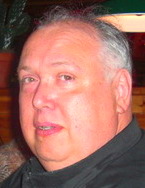
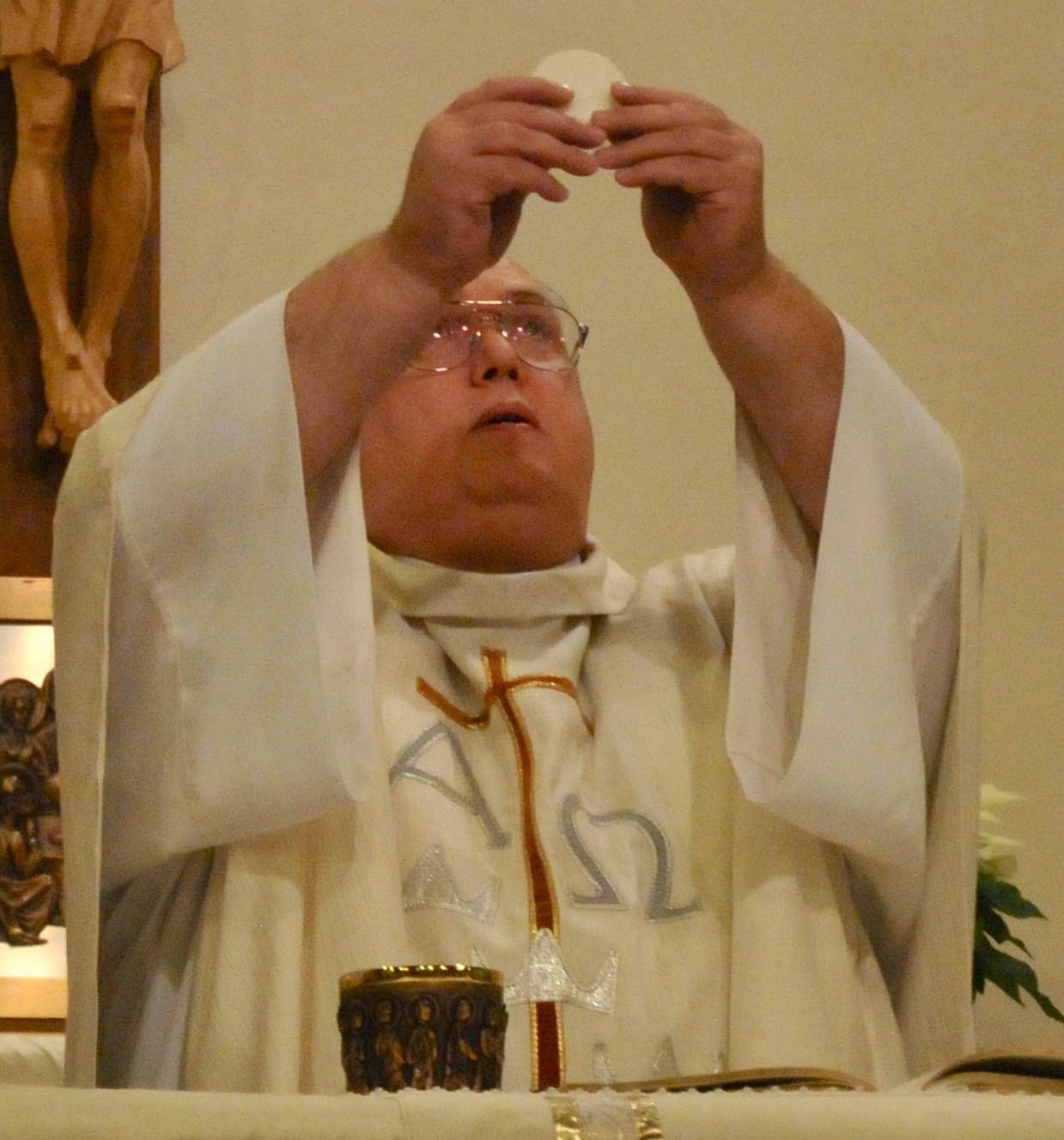
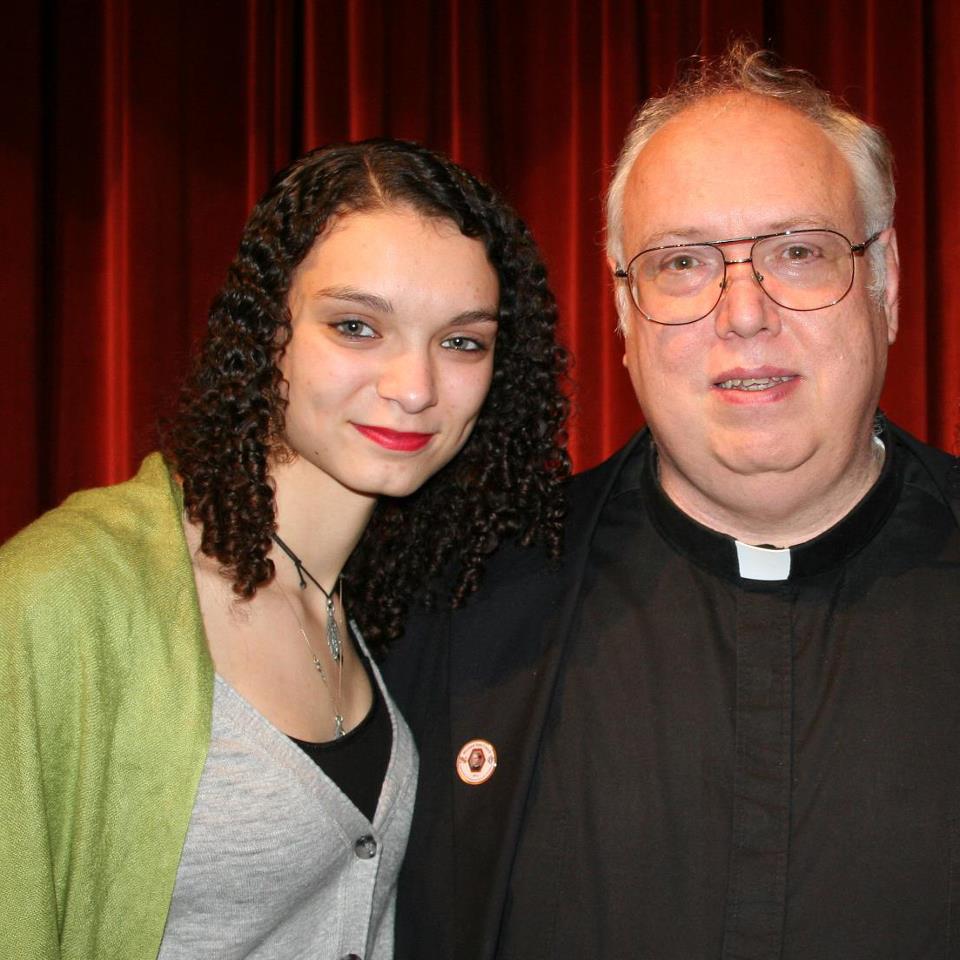
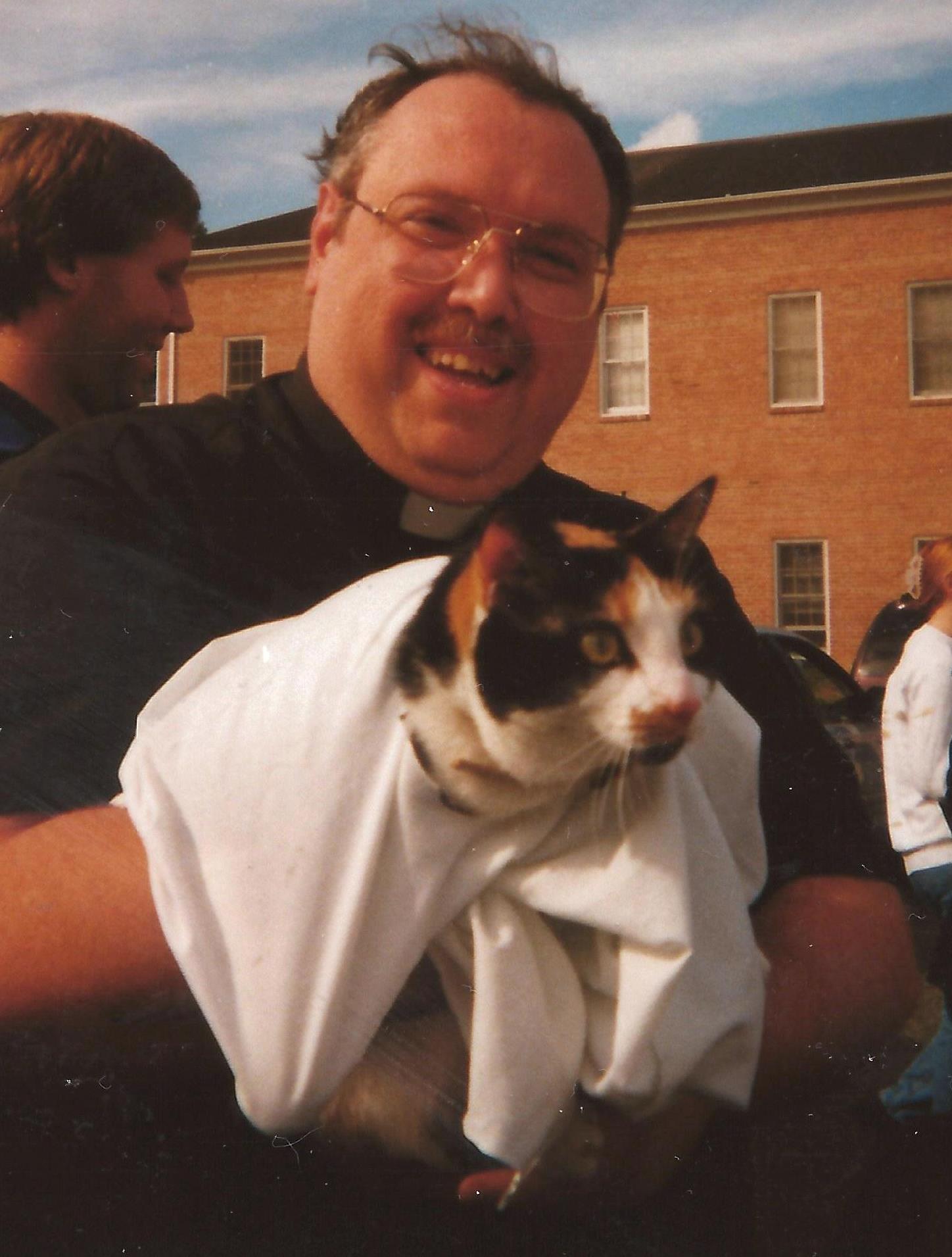
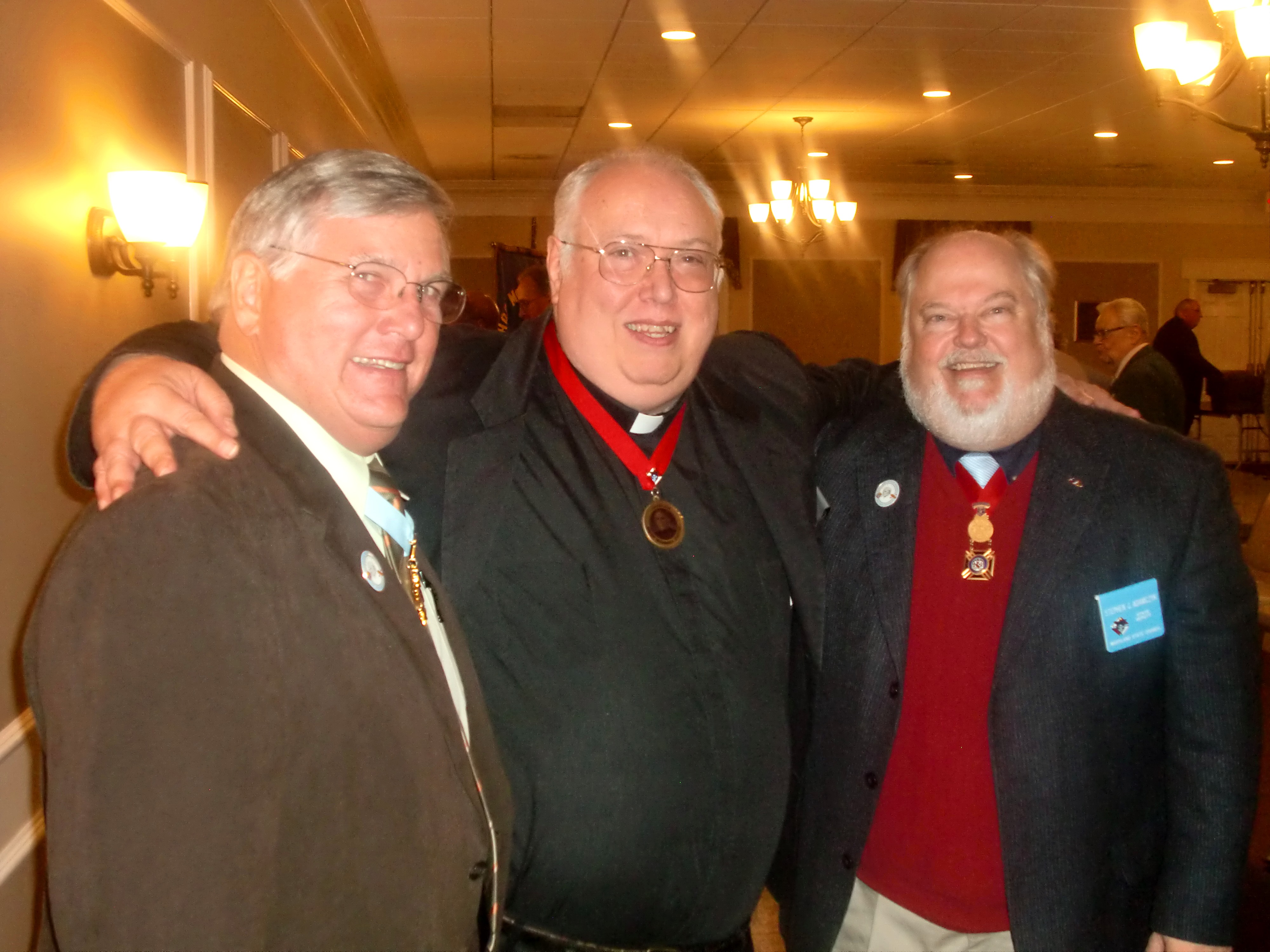
    Fr. Joseph Jenkins

  • The blog header depicts an important and yet mis-understood New Testament scene, Jesus flogging the money-changers out of the temple. I selected it because the faith that gives us consolation can also make us very uncomfortable. Both Divine Mercy and Divine Justice meet in Jesus. Priests are ministers of reconciliation, but never at the cost of truth. In or out of season, we must be courageous in preaching and living out the Gospel of Life. The title of my blog is a play on words, not Flogger Priest but Blogger Priest.

  • Archives

  • Categories

  • Recent Posts

  • Recent Comments

    Anonymous's avatarAnonymous on Ask a Priest
    Michael J's avatarMichael J on Ask a Priest
    Jeremy Kok's avatarJeremy Kok on Ask a Priest
    Mike Zias's avatarMike Zias on Ask a Priest
    Jeremy Kok's avatarJeremy Kok on Ask a Priest

ATHEIST COMMANDMENT 6

“Be mindful of the consequences of all your actions and recognize that you must take responsibility for them.”

Praying-Skeleton-4870-largeThis is not so much a commandment as it is a quality of good character. All of us need a level of integrity in how we approach the world and behave. This does not tell us what to do. Rather, it is a premeditation and a later resolve to carry through and accept what comes. I was surprised to see this one on the list because it is the edict that atheists and secularists so often seek to escape.

Notice what is left unsaid.

1. How does one judge the consequences?

2. How far can one go to change the consequences?

3. Should the weight of the consequences upon the agent and others be equally measured?

4. Do others have a right to weigh in upon the consequences of acts that one proposes to perform?

5. As long as one will accept responsibility for acts, what determines that these acts are good and moral?

6. What exactly does it mean to take responsibility… obedience, dissent, not getting caught?

The Church urges this dictum when it comes to sexual activity between men and women. Couples should first be married and they should be mindful that this activity is how lovers become mothers and fathers. Sexual intercourse is geared to fecundity and fertility. Of course, the critic objects to this necessary connection. He would prefer a reflection so that an escape clause or out might be found. Thus, as an example, sexual acts might be manipulated or the faculty of generation destroyed through contraception. Instead of avoiding such acts that are inherently life-giving, the act is distorted into one where bonding and pleasure are now the only ends. If the contraception should fail, the traditional believer would say then the child should be welcomed. However, here the so-called commandment is violated or expanded again to include abortion. In truth, responsibility for acts is avoided.

As a Catholic, a difficulty I see is the ingredient of atheism itself. What if Christians should be right about the last things: death, judgment, heaven and hell? Then there are obviously consequences for our actions that the non-believer has failed to evaluate. The tragedy here is that there will be an eternity to suffer remorse.

ATHEIST COMMANDMENT 3

“The scientific method is the most reliable way of understanding the natural world.”

scientist-mad-man-laboratory-experiment-cartoon-15403-large

I have a profound respect for the utility of the scientific method; however, it would be the height of hubris for one to place it alone on the dais of truth. It has very significant limitations. I am not surprised that this “new” commandment is proposed by one of the renowned television Mythbusters. One of my favorite shows, the premise is that a “myth” or hypothesis must be testable through experiments or observations that are repeatable. The program gives one of three answers: Confirmed, Plausible or Busted. Despite a desire from certain cast members to tackle “religious myths,” the Discovery Channel has said no, if not to avoid the mockery of faith at least to preserve a large faith-based audience.

Such an approach to the natural world is often best with particularized or tightly delineated questions. The topics that concern philosophers and theologians are generally beyond the parameters of the scientific method. For instance, string theory might make good math but how would one go about proving experimentally a theory “about everything”? When researchers try, the experiments, by necessity become increasingly expansive. Astronomers and astrophysicists want telescopes that see further into the universe and into bands of light or energy that we could not normally perceive. We now think we have detected the cosmic radiation present after the Big Bang. Physicists peer in the opposite direction, looking for the God particle or the infinitesimally small, as with the massive (17 miles long) Hadron Collider. However, after all the number crunching and investigation, there is still no good science that demonstrates either a doomed or self-perpetuating cosmos without a Creator. This should force even the most hardened cynic to agnosticism, not to an atheist’s absolute denial of a deity. They will argue that the burden of proof is upon the believer. And yet, the believer looks around and sees proof everywhere; he is shocked that the atheist cannot see it. Nothing comes from nothing. If there is no Creator, then nothing should exist— not a butterfly or a smiling child— not a tick of the clock or the movement of an electron and proton— nothing, no time, no space, no matter, and definitely nothing that should be asking these questions or reflecting upon existence. But here we are. Are we just a cheap accident? That is no answer. If being and non-being is a flip of the coin, then I want to know who is supplying the change!

While the Catholic already accepts the existence of God and even says that he has intervened in human history as a caring God; nevertheless, he wants to make sense of the natural world. God can use miracles and suspend his laws but usually he does not. Otherwise, creation would be capricious and God would seemingly curse the very order he put into place. The Catholic notion of intelligent design looks at the patterns in the natural order and philosophically deduces a knowing agent. Schools often refuse to admit the view, even though it respects the scientific data associated with theories of creation and evolution. There is no empirical test to prove or disprove the existence of a divine being. Public schools, in particular, will make room for experiential science, but increasing reject not only religion but the benefits of natural reason and philosophy. This throws out the best of Western civilization and represents a type of intellectual reductionism. The same philosophy that would allow for intelligent design would also promote logical reasoning and a study of the virtues. It is no wonder, that vice and actions are increasingly separated from the concern of culpability or objective morality. Schools become hell holes because we have subtracted everything of heaven out of them.

The scientific method is a useful tool, but it is only that.  It has led to discoveries that have both improved and endangered the world.  Knowledge is gained but often without the wisdom as to how to use it properly.  Understanding the atom has made possible new sources of energy and medical treatment; it has also made possible the Bomb and the prospect of nuclear holocaust.  It is truly a two-edged sword.

It falls short in teaching us values and in answering the question about the origin of the natural order. Even if there were an infinite sequence, and eternal regression and progression, (which Thomists regard as an absurdity), the question could be raised as to whom or what put it into place. Similarly, if creation has a beginning and an end then questions emerge that beg for an answer. When the last of the energy evaporates from the one remaining black hole, what happens next? Or looking to the very beginning, where did the point or singularity come from? Compared to the claims of science, those of religion are looking more credible, even if still inscrutable. God lives outside of time and space. Even though he is the source for the natural world, there is a wall between experiential knowledge and a dimension without matter or temporal and spacial extension. He is existence or the source of all being. He creates everything from nothing. While no one is compelled to believe in a deity, similarly the notion should not be ridiculed or banned. As a believer, I contend he shares with creation the perfections that he has in infinite measure as their source. God by definition would defy being placed under the microscope or being reduced to mathematical formulae. He has called us to know him, but only the surface of this “knowing” can be scratched. The mystery remains and the response of believers is gratitude and praise. I suppose the lack of thankfulness is what most infuriates believers about atheists.

ATHEIST COMMANDMENT 2

“Strive to understand what is most likely to be true, not to believe what you wish to be true.”
man-enthusiastic-arms-15696-large

What seems “likely true” might not always be the case. The pagan worldview had to surrender to the Judeo-Christian. Many presumed that the world was flat, that the earth was central with a revolving sun, etc. The majority held a view that was challenged by Copernicus and later by Galileo, both Catholics and the former, a monk. When science widely advocated spontaneous generation, Louis Pasteur discerned a small invisible world where contamination and vaccination was possible. When science took for granted a Newtonian view of the world, modern physics would largely rewrite the book. We strive to understand what is true, but that which is most likely can shift and change.

I am not convinced that all atheists are so objective. It seems to me that some of them fervently resist any and all assaults against their denial of a God and/or Creator. In other words, while they would applaud the rejection of God by believers; they would not permit any data on their radar that would imply his existence. Science is a wonderful area of investigation and knowledge; but scientists (religious and atheists) can and do battle with each other over what they “believe” and “wish” to be true. Indeed, these arguments can become very passionate: everything from a closed to an open universe to warm-bloodied dinosaurs over cold reptilian. Data is interpreted in a way that favors their views or hypotheses.

Nevertheless, Catholic believers are also called to be rationalists. We do not subscribe to the faulty proposition held by certain Protestants of a “blind faith” or “faith over reason.” Indeed, it is because of this philosophical demarcation that certain Fundamentalists hate and attack Catholicism. Catholicism proposes “faith seeking understanding.” While the fundamentalist argues for a literal six days of creation and a world that is six thousand years old; Catholicism accepts the reckoning of time from archeologists and physicists, unperturbed at the prospect of millions of years of evolution and a cosmos that is 13.8 billion years old, as long as one might posit intelligent design. The difference with the atheist is that the informed Catholic has a profound respect for divine revelation and refuses to invalidate his subjective experience of a relationship with a living God. Indeed, he feels that we are wired for God and have an inherent capacity to acknowledge the divine transcendent… a reality he tries to convey not only in Scripture and ritual but in poetry and art. I suppose we would argue that there is something measured here that is just as real as in the scientist’s mathematical formulae and in Hubble’s distant astronomical images. There is a sense of awe which many of us refuse to associate with chaos or chance but rather see the finger of God and providence. The proposition here seems to imply that it is a matter of “either/or” while the Catholic Christian would say it is a matter of “and.” Catholicism is the religion of the “great and.” It is not faith alone or the Bible alone or Jesus alone or even empirical science alone. Catholicism is the religion that speaks to faith and works; the Bible and sacred tradition; Jesus and Mary and the saints, etc. She is the religion that fostered great scientists, even as she stumbled sometimes to see the tapestry where science might be interwoven with faith. She embraces all that is good and true and claims it for her own. That is why the Church has the Vatican Advanced Technology Telescope (VATT) on top of Mount Graham in Arizona. That is why our universities foster some of the best scientific research in the world. That is why the Pontifical Academy of Sciences includes believers and non-believers alike who further the advancement of the mathematical, physical and natural sciences and the study of related epistemological problems.

I suppose we need that child-like faith which trusts that what we believe can also be true. Atheists sometimes witness to this truth in their romantic liaisons and families. Cold science might argue for finding the optimum physical specimen for reproduction. However, most fall in love and embrace a mystery with their hearts even as their heads insist it is all just chemistry and sparking synapses. I suspect the transcendent shows itself even as certain critics contend that it cannot exist.

A Courageous or Timid Church?

Msgr. Pope touches a cord on the Archdiocesan Blog that is very dear to my heart, the fact that a “timid” Church is in contradiction to its very nature as a sign of contradiction in the world.

Msgr. Pope speaks of the new secularized faith as “Sad, pathetic, wrong, and cowardly—hardly the revolutionary faith that got Paul arrested. . . . We have got to rediscover how revolutionary our Catholic faith truly is to this world gone mad. And as we proclaim healing and an allegiance to something other than this world, we will become increasingly obnoxious to the world around us. . . . No tame, domesticated Christianity will threaten or change this world. When Paul preached, the people rioted. Modern preaching too often incites only yawns and indifference.”

St. Paul and the other apostles did not qualify the Gospel and so they faced arrest, torture and martyrdom. The early Church was persecuted precisely because the truths of Christ allowed for no compromise or tolerance for participation in false worship. Even a pinch of incense to the Roman gods or to the so-called divine emperor was too much. Today’s world misconstrues the incident of the Roman coin and the likeness of the emperor. When Jesus said give to God what belongs to God and to Caesar what belongs to Caesar, he was avoiding a trick to have him either arrested by the authorities or to be rejected by the crowds as a traitor. Ours is a jealous God. What belongs to him? The answer is everything, even Caesar! Many in contemporary society play games with their Christianity. They create a false image of Christ to follow, one that would have fit in nicely with the pantheon of ancient pagan deities. Indeed, the battle over religious liberty is a symptom of this— as if believers could restrict their faith and values to the inside walls of churches and during Mass. And yet, the dismissal at the end of Mass echoes our commission to take the Good News out into the world. The ideal is not co-existence with the world or evil but rather to plant the seeds for repentance and conversion. Today many Catholics are silent upon important issues. A candidate for the office of governor in Maryland is a “practicing Catholic” and yet he is on the record as pro-abortion, yes even for allowing partial-birth infanticide. How can we reconcile this with the faith? The issues continue to mount: no fault divorce and remarriage, same-sex marriages, lack of support for parochial schools, contraception giveaways in public schools, free contraception, abortion on demand and growing sympathies for euthanasia. Sins are counted as rights and Catholics and their Church are expected to fall in line. Wimpish silence satisfied in the past, and that was bad enough, but today complicity is demanded.

St. Paul would exorcize the demonic, not try to accommodate it. Too often we hear from churchmen that we do not want to alienate politicians on “other issues” that are important to us, like the status of immigrants, or just employment, or the dismissal of capital punishment, or tax breaks for churches, etc. We cower to the power of the secular world when we should bring the authority of Christ to bear on the challenges of our day.

Christianity was persecuted by the Roman Empire precisely because it was viewed as intolerant. Today, much of the faith has lost its teeth. The enablers for the murder of children are invited without sanction to take Holy Communion. Even high level shepherds hypothesize ways to get around or to turn a blind eye to homosexuality, adultery and fornication. We are urged to find a new language, removed from that used in Scripture, so that no one might get their feelings hurt. The fact that these activities might cost people the kingdom and their share in everlasting life does not seem to measure up anymore. Who are we to judge? We are the people given the gift of the Holy Spirit and who follow the Light of the World, dispelling the darkness. What is saving faith? It is courageous obedience to God, qualified by charity. That’s who we are and what we are about!

Counseling for Catholic Marriages

Catholics with marital problems should have readily available avenues within the Church for professional counseling in the hopes of salvaging their marriages.

More can be done to prepare priests for this kind of work but I think there is also a need for full-time professionals with training in psychology and intervention-counseling. These counselors should be well-versed with the Catholic faith. If they are not on the same page with us about human sexuality and the value of marriage, then they can escalate a problem instead of being part of the solution.

  • When red lights appear in the Pre-Cana preparation, referrals can be made before marriages in the Church.
  • When problems develop within marriages, referrals can be made to facilitate healing or reconciliation.
  • When questions arise about sexual identity and remaining in good standing with the Church, referrals might be made to assist people in coping and to counteract bias from non-Catholic sources.

While there are good independent counselors who charge fees, I would also recommend that there be professionals hired directly by the Church. Their salaries might be shared between parishes as within deaneries. They would work closely with pastors, while preserving confidentiality, to either prevent bad marriages or to salvage troubled ones. Such staffing should be viewed as serious as religious education directors, office managers and bookkeepers. In any case, a public list of counselors vetted by the Archdiocese should be readily available to pastors and the people they serve.

Catholic marriage counseling is necessarily different from that which is offered by those who do not share our understanding of marriage or our views about human sexuality. These counselors need to discern how a troubled Catholic marriage might be fixed. The truths of faith are integrated into our appreciation of psychology. The goal is to have couples living a daily vocation where there is both joy and sacrificial love. Marriage is viewed as a covenant and as a permanent union. Too many quickly jump to divorce as the answer. Catholics should see that as an option generally taken off the table.

Instead of urging an immediate divorce, a separation might be promoted so as to further the conversation or to prevent verbal and/or physical abuse. If a marriage has terminal problems and cannot be salvaged, then the counselor might suggest an annulment. That is where the pastor and/or the officials on a Church Tribunal would enter the picture. However, this is inherently always a sad or tragic situation. It means that avenues to save a marriage have failed.

Right now we have noble efforts like Retrouvaille but there is a pressing need for something more clinical.

A Few Thoughts about the Synod Relatio & Debates

My head is spinning about some of the things that are being seriously argued at the Vatican’s Synod on the Family. I am already concerned that a Commission was established to look at streamlining the process for annulments even prior to the start of the Synod. It seems to me that if such were a concern then the bishops would then request the Holy See to do so. Will the documents which will be formulated reflect the majority view and Catholic tradition or will there be attempts to steal the show for the minority progressives?

synod-of-bishops

What is it about this new Synod document that has critics saying it signals a revolutionary shift in favor of same-sex couples? It is acknowledged that this “relatio” urges clergy to make “fraternal space” for homosexuals. But what does it say? We read:

“Homosexuals have gifts and qualities to offer the Christian community: are we capable of welcoming these people, guaranteeing to them a further space in our communities? Often they wish to encounter a Church that offers them a welcoming home. Are our communities capable of proving that, accepting and valuing their sexual orientation, without compromising Catholic doctrine on the family and matrimony?”

Are we reading the same document? All I see are questions. Hopefully they are not rhetorical. Do we eject gay brothers and sisters from our churches? No we do not. Can we invite them forward for Holy Communion? Yes, provided that they maintain chaste and celibate lives. Can we affirm or value their sexual orientation? No, we cannot do so. Such would devalue the true meaning of marriage and human sexuality. We cannot move away from the assessment of disorientation or that same-sex carnality is mortal sin.

As a so-called case-in-point of past intolerance, the news contrasted this development with the story of Barb Webb who was fired from a Catholic school when she and her partner announced her pregnancy. Similarly, her partner, Kristen Moore was asked to resign from her post as a music director at a Catholic parish. The secular media glossed entirely over the moral issues that extend beyond same sex unions, like the freezing of embryos, donated semen and IVF technologies. All these elements are reckoned as moral evils and sinful.

This relatio is being interpreted precisely as Cardinal Kasper would suggest. The doctrinal truth is eclipsed, if it remains, for the sake of a pastoral provision or slackening of discipline. The same reasoning he uses for divorced and remarried couples is being applied to active homosexuals. I find this reckoning very disturbing. Discipline can be distinguished from doctrine but discipline is always at the service of doctrine. There are doctrinal elements that cannot be ignored. It is contradictory to say that gay acts are sinful and then to value, in any way, homosexuality. It is contradictory to say that marriage is a lifelong institution and that divorce is a sin, while inviting couples to receive Holy Communion who are living in adultery. The truths of Scripture are clear and we must always be at the service of the truth on every level: doctrinally, canonically and pastorally.

The document recognizes that same-sex couples live lives where they render “mutual aid to the point of sacrifice [which] constitutes a precious support in the life of the partners.” Critics are saying that this is a crack in the door that may one day lead to full acceptance. I would say that this is not the case. The statement is one that reflects the immediate horizontal human condition but says nothing about the vertical supernatural dimension. It is a mere statement of fact that these couples support each other in their day-to-day lives. However, this does not mean that they are in right standing before God. Mortal sin is still mortal sin. I suspect that there are many “nice and pleasant” people who make good neighbors and yet will suffer damnation and hellfire. We are not saved by simply being nice but by being faithful and obedient to God. The Church can relax certain disciplines but she cannot change divine positive law. My fear is that tolerant language might enable or encourage more sinners to remain within their sins. The Church must be a place for saving truth and grace. She should never be an enabler for sinful lifestyles or blasphemous acts like receiving the Eucharist while ill-disposed or in mortal sin. This document does NOT acknowledge the “holiness” of such couples as was suggested in the Huffington Post article by Antonia Blumberg (1/13/14). It simply asks if we might tolerate with passivity and silence the situation of people living in sin.

I cannot buy this application of any “law of graduality.” No matter how slow might be the movement to holiness; the Church should never compromise on the fullness of truth. Confessors can exhibit great understanding and compassion for married couples who use artificial contraception, with the hope that they will eventually come around to the Church’s understanding of human dignity and the full value of the marital act. It is here that I can well appreciate “graduality.” However, this is not the same as cohabitating, adulterous and same-sex couples. They have no right to a shared bed.  In their regard, where there is neither contrition nor amendment of life, absolution must be withheld. Similarly, while they should attend weekly Sunday Mass, they should abstain from taking Holy Communion. The priest will not usually embarrass people in public but he fails his sacerdotal charge if he does not challenge such couples in private.

This law or better yet, theory of graduality was very much the rationale for the “open table” of Anglicanism. It was hoped that this welcoming to receive the Eucharist would draw others into greater unity. Contrastingly, the “closed table” of Catholicism sees Holy Communion as an expression of an ecclesial unity that is already realized. This is representative of the ancient tradition wherein heretics and grievous sinners were denied the sacrament or even excommunicated. The Church’s censure of interdict would also illustrate this posture. One had to be properly disposed and graced to receive the sacrament. Anything less was judged as blasphemous and scandalous. One should not pretend there is a union that is not truly there. This resonates with the current debate about divorced and remarried couples as well as with active homosexuals. We cannot allow a false compassion to tolerate normalization for the sake of public acceptance while the pastoral accommodation is deceptive to the doctrinal truth and the spiritual state of souls before God. We can move away from using pejorative biblical terms like “sodomites” and “adulterers,” but the underlying reality will remain the same. Does this really serve the summons to repent and believe?

If we change the discipline for those in serious sin and the intrinsically disordered, would we not logically have to open up Holy Communion to others (particularly Christians) who might be in ignorance of the full ecclesial reality but who live moral lives? It is a real can of worms and I would prefer to leave it closed. But that is my opinion.

Relationship between Discipline & Doctrine

It is unusual to hear a debate between bishops aired in the press and public forum. Continue to pray for all the participants in the Vatican Synod of the Family.

Cardinal+Walter+Kasper-300x229

Cardinal Kasper:

“Nobody denies the indissolubility of marriage. I do not, nor do I know any bishop who denies it. But discipline can be changed. Discipline wants to apply a doctrine to concrete situations, which are contingent and can change.”

archbishop_wuerl_elect

Cardinal Wuerl:

“The reception of Communion is not a doctrinal position. It’s a pastoral application of the doctrine of the Church. We have to repeat the doctrine, but the pastoral practice is what we are talking about. That’s why we are having a synod. Just to repeat the practice of the past without trying to find a new direction today is no longer tenable.”

“That’s going to be the challenge, and I think that’s what the Holy Father is calling us to do. He’s saying, we know this, we believe this, this is what is at the heart of our teaching. But how do you meet people where they are? And bring them as much of that as they can take, and help them get closer?”

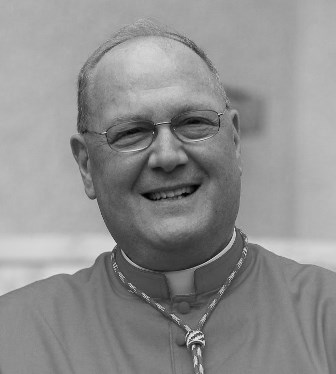
235148-cardinal-timothy-dolan

Cardinal Dolan:

“When we talk about some time of renewal and reform of our vocabulary, we don’t mean to soften or to dilute our teaching, but to make it more credible and cogent,” he said. “It’s not a code word for sidestepping tough things; it’s more a methodology.“

Cardinal_Burke

Cardinal Burke:

“There can’t be in the Church a discipline which is not at the service of doctrine.”

“The reformers were saying: ‘Oh, we’re not questioning the indissolubility of marriage at all. We’re just going to make it easy for people to receive a declaration of nullity of marriage so that they can receive the sacraments.’ But that, is a very deceptive line of argument which I’ve been hearing more now in this whole debate.”

cardinal_pell

Cardinal Pell:

“As Christians, we follow Christ. Some may wish Jesus might have been a little softer on divorce, but he wasn’t. And I’m sticking with him.”

“We’ve got to be intellectually coherent and consistent.  Catholics are people of tradition, and we believe in the development of doctrine, but not doctrinal backflips.”

“Communion for the divorced and remarried is for some — very few, certainly not the majority of synod fathers — it’s only the tip of the iceberg, it’s a stalking horse. They want wider changes, recognition of civil unions, recognition of homosexual unions. The church cannot go in that direction. It would be a capitulation from the beauties and strengths of the Catholic tradition, where people sacrificed themselves for hundreds, for thousands of years to do this.”

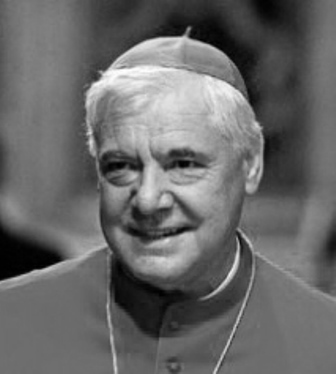
muller_CNS

Cardinal Müller:

“One cannot declare a marriage to be extinct on the pretext that the love between the spouses is ‘dead.’  Indissolubility does not depend on human sentiments, whether permanent or transitory. This property of marriage is intended by God himself. The Lord is involved in marriage between man and woman, which is why the bond exists and has its origin in God. This is the difference.”

Marriage Still Matters

wedding_16Numbness in conscience inflicts many of the members of our modern society. It is as if people have lost the capacity to distinguish between right and wrong. The values of traditional faith and Scripture are not taken into consideration as credible when moral decisions are made. Further, there is a rupture between our nature and the laws that can be discerned by reason. This leads to a profound disconnect from objective reality. Instead, the notion that man is the measure of all things is extended to a fanciful absurdity. The unborn child in the womb is denied the personhood that comes along with his very presence. The purpose of the marital act is reduced to recreation with the reproductive ends subtracted by contraception. The bodies of men and women are complementary and yet same-sex attraction is made into a legal right even though it is a fiction and not fact. The aberration is counted as normal and any emphasis upon genuine normalcy is discounted as intolerance. The institution of marriage is bombarded by all sorts of threats: divorce, adultery, fornication, cohabitation, etc. Any stigma or embarrassment for having children outside of wedlock is measured as insensitive and mean-spirited. Marriage is regarded as a mere piece of paper, even by Catholics who were taught that it was a sacrament to give grace.

What a mess with which we are living!

Msgr. Pope rightly laments on his blog that many regard “living” in sin as “no big deal.” The misnomer here is that one does not really LIVE in sin; instead, one begins to DIE in sin. Sin by its very definition brings forth suffering and death. It alienates us from the one who created us and from the life present in the soul.

Pastors are challenged when they preach about sin and punishment. They are challenged for stressing judgment when our Lord was apparently all about mercy and love. However, the dispensation of Christ is neither magic nor capricious. You have to love in return. You have to want to be forgiven. Too many live as if there will be no judgment and no hell. While the catechism teaches about the universal call to salvation, this is not the heresy of universalism. God’s gifts can be ignored or rejected. Using a medical analogy, a doctor might be able to treat you but you must be willing to seek him out. The divine physician would heal our souls, but millions prefer the spiritual sickness that comes with hedonism, greed or a spiritual ennui.

I like straight talk and yet such is almost always found offensive by someone. People these days do not like to be told their business. There is an arrogance to sin today that has smothered the guilt that once brought contrition and repentance. Do you want proof? Tell a couple who are having sex outside of marriage that unless they repent they will go to hell. See how they respond. “What we do is none of your business! Who are you to talk to us that way? You can go to hell, yourself! Who are you to judge? We love each other, what is so wrong with that? Who is being hurt by what we do?” The fact that it violates God’s Word is given little or no measure in their evaluation. What they are really saying is this: “No one can tell us what to do, not you and NOT God!”

Msgr. Pope gives us a list of Scriptures that we would do well to review.  If we believe that the Bible is God’s Word, then we should take to heart the saving message:

  • Matthew 5:27-30; 15:19-20
  • Mark 7:21
  • 1 Corinthians 6:9-11, 15-20
  • Galatians 5:16-21
  • Ephesians 5:3-7
  • Colossians 3:5-6
  • 1 Thessalonians 4:1-8
  • 1 Timothy 1:8-11
  • Hebrews 13:4
  • Revelation 21:5-8; 22:14-16

No Where to Run, the Church & the World

It is argued that the Catholic Church has lost the contraception fight and now must move on. Similarly, I am today hearing the same said about other issues. Pope Francis is asked about homosexuals and he says, “Who am I to judge?” Critics rashly interpret this as a change in the Church’s stance and a leading gay magazine names the Pope as “Man of the Year.” A special synod is called on the family and revisionists suggest a coming change regarding the reception of Holy Communion by divorced and remarried Catholics. But the Pope is still Catholic and I think the dissenters are in for a big surprise. It may be that we cannot judge the souls of individuals, but we can make moral distinctions between right and wrong. Those who commit serious sin are not in a proper disposition for the sacraments. The Pope is the servant of the Word, not its master. He cannot invalidate either divine positive law or natural law. Of course, what might happen is that many Catholics will become accustomed to an ever permeating silence— about birth control, about gay relationships, about invalid marriages, and God-forbid, even about the murder of unborn children. Here again with this last point, too many make too much of papal remarks about there being other moral concerns beyond abortion. The fact is the Church is facing conflict from every angle, including the martyrdom of Christians by ISIS swords.

An essential thrust to Vatican II was a dialogue with the world, not so that the Church might be converted to the world but that the world might be more receptive of Christ’s kingdom. Many of us feel that this remains an important mission for the Church. However, critics can rightly point at instances of impotency and weakness toward a hostile world that seems to be more successful than we are at winning hearts and minds. The Church faces a mocking atheistic secular modernity on one hand and a radical militant Islamic extremism on the other. The Church is not only caught in the middle but old friends have changed alliances.

Can the Church engage cultures that feign courtesy when we are on the same side of its agenda but otherwise find ourselves targeted for extinction? Fight against the death penalty for the guilty and we are applauded; but then we are commanded to lay down our arms in the battle against aborting children and euthanizing the sick and elderly. The bishops are praised for supporting healthcare but condemned for not wanting to provide free contraception and abortifacients. The Church was once rendered accolades for her orphanages and adoption services; but today is shut down for refusing adoptions to homosexuals and lesbians. The Islamic world once protected Christian minorities, and utilized them in government and in schools of higher learning; after all, they were the one minority that was so small it would never be a threat to the ruling powers. But today, fanatics will not rest until every drop of Christian blood is spilt or the men are converted. From the Islamic East to the Secular West, there is nowhere to run and no place to hide. It is for this reason that I fear silence. Peace today will only lead to worse wars tomorrow. Silence will be interpreted as assent, or worse still, retreat.

We Awaken to the Problem

The defection from faith is an important issue and why for the past two years I invited a young FOCUS missionary named Katie to give her appeal in the parish. Along with other young adults, FOCUS ministers to our youth on college campuses. The statistics are frightful. Some 80% of our youth fall way while at college. These young adults put their careers and much about their personal lives on hold so that they might make a difference for others.

students

I think in truth the issues began long before our teens headed off for college or entered the work force. Minimally Catholic kids suddenly find that they do not have the watchful eyes of parents upon them. Quickly, they are influenced by peers who have no quarter in their lives for organized religion or traditional values. Liberal faculties deride Christianity and mock the sacraments as the domain of ignorance. Professor Paul Zachary Myers is the most blatant on this list, urging college students to steal consecrated hosts so that he can document on the Internet his desecration of the Eucharist. This is not representative of a civil debate about belief; rather, it is an emotional and militant attack upon people of faith.

College campuses will sometimes have Newman Centers and/or Catholic Student Associations. But many of the Catholic students fail to get involved. The attendance of Catholic students at Mass, even at Catholic schools is often pathetic. The best numbers I have heard are at places like St. Francis in Steubenville, Ohio and Ave Maria in Florida. I know one school where the chaplain schedules Masses at midnight so that students will have less competition for their time. One is more likely to see lewd photos on Facebook than posts about religious epiphanies and retreats or time before the Blessed Sacrament. Of course, many parents might not know because they are quickly blocked from seeing what is actually going on.

I am not saying that efforts to evangelize in college are in vain. Rather, I am suggesting that more could have been done (or done differently) earlier to minimize the damage later on. Catholic schools could also be more proactive with single-sex dorms, expectations about participation at Mass, and an uncompromised message about fidelity to the faith and the living out of the commandments. However, we have a problem— when honors are granted to those who seek to strip the Church of her religious liberty— when organizations that promote a homosexual agenda and lifestyle are given funds and recognition— when health service referrals include artificial contraception and abortions— and when crucifixes are removed from classroom walls so as not to offend— then we have become our own worst enemy.