• Our Blogger

    Fr. Joseph Jenkins

  • The blog header depicts an important and yet mis-understood New Testament scene, Jesus flogging the money-changers out of the temple. I selected it because the faith that gives us consolation can also make us very uncomfortable. Both Divine Mercy and Divine Justice meet in Jesus. Priests are ministers of reconciliation, but never at the cost of truth. In or out of season, we must be courageous in preaching and living out the Gospel of Life. The title of my blog is a play on words, not Flogger Priest but Blogger Priest.

  • Archives

  • Categories

  • Recent Posts

  • Recent Comments

    Jeremy Kok's avatarJeremy Kok on Ask a Priest
    Gary Joseph's avatarGary Joseph on Old Mass or New, Does It …
    Barbara's avatarBarbara on Ask a Priest
    Anonymous's avatarAnonymous on Ask a Priest
    forsamuraimarket's avatarforsamuraimarket on Ask a Priest

What Does a Priest Think About Space Aliens?

my-alien-hiAnthony came to me with questions for a school project.  They have to do with the possible existence of “outer space” aliens.
1. Do you believe that life exists on other planets in the universe?  Why or why not?

This question requires certain specificity in both the asking and in responding.  First, what do you mean by life?  Catholicism has always taught that there is extraterrestrial life and that it is sentient.  However, this is in reference to angelic beings:  both the good angels and the demons.  They are spiritual creatures, not a composite of soul and meat like us.  (Please note that atheistic authorities would object that we are only “thinking meat” and that there is no spiritual component.  It is somewhat ironic that these same “experts” would insist that there must be life elsewhere in the universe, although there is no proof at present.  Further, they suffer from a type of terrestrial racism because they suppose that all alien life must be akin to us, either biological or by extension, mechanical.)

Second, if you mean to exclude angelic creatures, then as a reasonable man I am well aware of both the Drake Equation and the Fermi Paradox.  Half of all stars in the universe may have earth-like planets, but this in itself only gives us a probability, not a certainty.  We suppose an understanding of the conditions for life, like water, but what if we are too restrictive?  Might there be a world where the climate is hellish and the denizens breathe sulfur?  We know that there are micro-organisms on our planet that are dependent upon methane.

Third, even if 100,000 planets in our own galaxy might sustain life as we know it, would such life exist by necessity and/or would it be sentient?  While I think it likely that there is something “out there” even if microbial, there is no corresponding guarantee that it would be sentient.  Catholicism associates consciousness with self-reflective thinking.  The scholastics viewed this as not merely a property of the brain but of the soul.  We might live in a universe of plants, bugs and cattle.  The reason no one answers our calls into space might be because of the distances, but such could also be due to the fact that no one is listening or that no one cares to respond.  Intelligence could be of two orders, if it exists:  one would be like the ant or bee.  They know a genuine sophistication and a civilization (of sorts) might develop.  But they would be largely robots.  Concepts like freedom or compassion might be meaningless to them.

The second scenario would allow for genuine sentience and such creatures, if they exist, would be ensouled.  Here I think of C.S. Lewis and his creatures of Mars who had not fallen from grace and the Venusians who were just now facing their moral test in the garden.  Would such creatures suffer from original sin?  If so, then how and would Christ’s redemptive work include them?  What this means is that they would be asked if they are redeemed or damned.

A recent suggestion for the celestial silence is the theory that instead of federations of planets, star faring societies tend to wipe out the competition before they can become a threat.  If true, then there might be an armada of asteroids being directed to us and our sun as I speak.  There is no guarantee that aliens will be benevolent.

To answer your question, personally, I do not know if there is alien life.  Mathematical probabilities might be wrong.  We could possibly be alone in the material universe.  I do not know God’s mind about this.  Of course, given the various string theories, might life still exist in another universe?  Hum, where is heaven and hell, precisely?  The speculation about other dimensions in science may bring us back to the truths in religion.

2. How would you react, if actual proof of alien life were discovered?

It represents no challenge to faith.  The Creator made it all.  I would probably respond by saying a loud and drawn out, Wooooow!

3. Should humans travel into space?

Certainly we should not neglect the issues of earth by doing so; but, yes, I think that missions into space are part of our developmental trajectory as a species.  It reflects an important element of man’s intelligent curiosity.  There are things to know and resources to exploit.  I think there should be a chaplain on the International Space Station.  Indeed, I would argue for permanent bases on the moon before we tackle the more difficult task of establishing settlements on Mars.  There is no world in our solar system apart from earth that is hospitable to human life.  Whether or not Mars or one of the moons of the gas giants can be terraformed is a topic for science fiction and the distant future.

Priestly Celibacy: Making Too Much of Mind Over Matter

I have rewritten this post several times, struggling to express something that is hard to define.  Christian celibacy emphasizes mind and will over attraction, passion, instinct, etc.  But none of us exist outside of the human family and all men and women are creatures of God. Both the celibate and the atheist might place too much emphasis upon the mind. It can become a form of idolatry.

Neither an extremist celibacy that hates our biological nature nor an atheistic materialism that denies the spiritual component to our identity should be given the upper hand.  It is curious that this latter group might look down upon our physicality, giving the gravity to the mind even as we tamper to improve, manipulate or mechanically duplicate elements of our constitution.  Ours is the age of computers and robots.  But the minds of men are more than electrical brains and the body a masterpiece beyond that of any fabricated automaton.  We might suppose that the mind can do all things; that whatever we can imagine, we can make real.  And yet there is also a reductionism:  there is a scientific empiricism that impugns other types of truth and which looks upon human genius as something which might be replicated in the mechanical.

We were made for God. This is a truth of our nature. Atheists will sometimes embrace an exaggerated science as a place-holder for where God belongs. They will leap to assumptions or rally around conflicting math or parade man’s growing understanding of both the universe, large and small, or point to man’s technological breakthroughs.  Science rests upon all sorts of philosophical presuppositions. It can act as a kind of religion for those who explicitly claim no religion.  Science might overreach itself, arguing that no restraints should be placed upon what the mind can conceive, even the horrific.  Some critics warn that we are playing God.

I am reminded of the controlling “IT” in Madeleine L’Engle’s A Winkle in Time.  A warning, for sure, it portrays a dark disembodied Mind which takes over everything, exerting a powerful telepathic bondage over people. Do not get me wrong, the mind is a wondrous gift. Look at all the technology and breakthroughs that have been made possible by human genius. But we can wrongly regard the gift of the mind as if it is the giver of all gifts.  We have fashioned weapons of war that could destroy the planet and all life upon it.  Separated from will or love, the mind can be a cruel task master.

Christian celibacy is not simply the victory of the mind over the flesh. If the bestial is close to the animals, a narcissistic mental egoism is reflective of the devil. If thinking heads could be severed from their bodies so that they could devote themselves to mental deliberations unfettered by physical desires, this would not constitute an effort at perfect celibacy. True celibacy is neither the destruction of our sexual faculties nor the negation of our gender-identity. Rather, it takes all that makes us human and makes of it a sacrificial gift to God.  Men and women are human beings, not angelic ones.

The fiction that man is a mind distinct and locked in a human body can lead to a terrible separatism.  We are our bodies.  According to their natures, both angels and men must surrender and conform to God’s loving providence. If the will is poisoned by hatred or by the wrong kind of love, then the mind alone cannot straighten us out.  We would be given over to the demonic.

An emphasis upon the mind does not necessarily mean that one is good or holy.  The two components of the human soul are also found in angelic beings:  intellect and will.  But men also have physical bodies and we cannot pretend otherwise.  These bodies are liable to original sin, weakness and corruption.  They also possess certain positive abilities and attributes which must be acknowledged or integrated so that we might be holistic persons.

Priestly Celibacy: In the Face of Atheism

Atheists claim to be the ultimate integralists in that they deny the spiritual component in the human being. They have a high appreciation of the mind but define it wholly in terms of the brain which they regard as the most important organ in the human body. They are right to say that people are their bodies. They are wrong to claim that these bodies are not animated by souls. We are, in their estimation, thinking and loving meat. They propose a high or lofty estimation of man; but they demean him as entirely an animal or a biological machine. The intellectuals among them would consequently equate or compare human knowing with the ever-increasing computational power of computers. As materialists, they would likely suppose that a day will come when a technological invention will rival or surpass the human mind. Science fiction has already given us such characters in Space Odyssey’s Hal and Star Trek’s Data. The critique I would render is that to surmise such is a form of errant reductionism. We should not reduce the human mind to computation, no matter how complex. Machines like animals might mimic man and his sentience, but without the infusion of a soul by God, that is all they will ever do. We mistakenly try to close the gap by restricting the abilities of the human mind, denying its self-reflective knowledge, literally bending back unto itself— which would be impossible without the soul.

Why this apparent aside in a reflection about priestly celibacy? It is simply to acknowledge the unbelieving and even hostile environment where the priest finds himself. It comes down to a fundamental element. If there were no God and nothing of man that could survive death, then the very institution of the priesthood would be ludicrous. It would be an utter waste of time, resources and energy. Celibacy would be the tree topper on a Christmas tree voided of meaning. This touches the essential demarcation where people of faith and those without part ways. Without the gift of faith, the testimony of Scripture will not move atheistic critics. The Church has placed great confidence in reason and philosophy but not all atheists are all that reasonable. They reject logic and philosophical proofs as language games. “Show me heaven with my telescope. Reveal to me the Eucharistic change under the microscope. Where is God in a world where the innocent suffer and evil flourishes?” When it comes to a discipline like mandatory celibacy, they would argue that it is a waste of the only life a person will ever have. A priest-friend many years ago was taken in by such assertions, and by the inherent skepticism that permeated his graduate studies in anthropology. “Given that there are so many religions, how could we be certain that any are true? Would it not be easier to say that they are all equally false?” He left the ministry and got married. After an accident, he felt abandoned. He stopped believing entirely.

It occurred to me, ever since, that men seeking ordination must be totally certain of the Church’s claims. Dismissal from the seminary is no cause for lasting shame; defection from the priesthood brings with it a lasting stigma and possible scandal.  A good priest can work miracles of faith, even if he cannot clearly see the fruits.  A bad priest is a devil that can do incalculable harm to souls.  The priest will face fire from every side. Only if he is absolutely convinced of his faith and calling can he endure both the emotional assaults and the possible challenges from the various academic disciplines. He must be smart, holy and loving.  Our men must be celibate priests in a world that has stopped believing and where many believers have become practical atheists, living as if there is neither divine judgment nor resurrection.

Waiting on the HHS Mandate & the Church

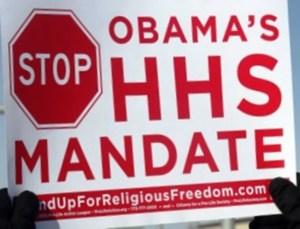
Obama's HHS Mandate

Statement of Archdiocese of Washington
in Response to the Finalization of the HHS Mandate

June 28, 2013 – After almost two years and over 400,000 public comments, the government today finalized the HHS mandate. We have begun to review the 110-page final rule to determine whether or not it addresses our longstanding concerns. Our review and analysis of the complex rule should help us answer important questions concerning who determines which institutions are religious and, therefore, exempt, who is forced to have this coverage, and who must provide it. The new regulations are being closely studied and a more comprehensive statement will follow at a later date.

Timothy Cardinal Dolan:  “Although the Conference has not completed its analysis of the final rule, some basic elements of the final rule have already come into focus.”  He said the U.S. Conference of Bishops “has not discovered any new change that eliminates the need to continue defending our rights in Congress and the courts.”  He argues that the HH Mandate still threatens the Church’s ability “to carry out the mission and ministry of Jesus Christ.” 

A FEW PERSONAL COMMENTS

We are still waiting anxiously for the response of the U.S. Bishops to the latest accommodations in the HHS Mandate from the Obama administration.  The deadline of August is rapidly coming upon us and what happens next could be devastating to our hospitals, schools and charity works.  It troubles me that the Catholic Health Association acts unilaterally without regard to the decisions of the USCCB.  The latest version of the mandate exemption is being studied by our shepherds and yet the CHA has already come out in support of the measure.  This is not new given that they supported it even when the bishops did not a year ago.  I am just a poor priest, but my reading of the mandate makes me think that this latest revision is merely another round of the shell game we suffered before.  There is still nothing on the table for commercial operations that have a mission paralleling the Church’s.  Individual Catholics and those having businesses must participate.  There is the plight of notable Catholic organizations like EWTN and the Knights of Columbus.  The administration staunchly insists that employees MUST have free birth control pills and coverage for abortifacients and sterilization.  When it comes to the question as to who will pay, the government is creative but consistent:  whoever pays, it will NEVER be the person who wants sex but not pregnancy.  The administration will officially redefine the meaning of the marital act, bloodying the hands of all with the sacrifice of innocent children.  Saying that we will not have “to contract, provide, pay or refer for contraceptive coverage” is a legal fiction.

Distinctions are being made that are somewhat hard to follow.  First, there is FULL EXEMPTION from the contraceptive mandate.  This is in regard to Internal Revenue Code, Section 6033(a)(3)(A)(i) or (iii), which “refers to churches, their integrated auxiliaries, and conventions or associations of churches, as well as to the exclusively religious activities of any religious order.”  Second, there is the NON-EXEMPTION in reference to non-profit faith-based groups not directly affiliated with the Church, such as certain hospitals, schools and charities.  These groups are being offered an “accommodation.”  Third, there is NON-EXEMPTION with no accommodation.  This would include large apologetic efforts, television, radio stations, and even small operations like a privately own Catholic gift shop.  This group would be treated as any secular operation and would have to fully comply with the mandate.

It is thrown into the faces of the bishops that most Catholic women have used or are using artificial contraception.  In other words, the administration is saying that Catholic women are more in sync with President Obama and HHS Secretary Sebelius than with their bishops.  How can the bishops then speak on their behalf?  The bishops counter that even if all lay Catholics dissented, they would still be obliged to uphold Christian faith and morals.  The Affordable Care Act will deliver contraceptive services, including those prescribed by a medical provider, “without charging cost sharing, like a co-pay, co-insurance, or a deductible.”  Organizations like Planned Parenthood must view this as the ultimate anti-Christmas; instead of a special birth, they will celebrate the avoidance of birth with a fortune in free-bees.  Of course, nothing is really free.  Someone always pays.  Already the agenda of the HHS on behalf of so-called reproductive or preventative services, as well as gay, lesbian, bi-sexual and transgendered health issues, is costing the American tax-payer billions of dollars. The 2013 HHS budget is $80.1 billion!

The HHS has not budged an inch.  It is dedicated to the promulgation of free contraceptive services without cost-sharing while posturing that concessions have been made to non-profit religious organizations.  But saying it does not make entirely it so.  Even if it were completely true and reserved to non-profits, it would demand that those who operate for-profit religious operations must forfeit their religious liberty and rights of conscience.  That is a dangerous and despicable double or even triple-standard.  Churches are fully exempt, other non-profit religious organizations have an accommodation and for-profit companies (even religious ones) have no protection at all.  The Church should speak out for her rights and for those of others, both organizations and individuals.  Concessions from tyrants when others suffer, as we have seen in Latin and Central America, can taint the witness of the Church and make us bedfellows with the oppressor.

In any case, reserving ourselves to religious non-profits, we are told that churches that object to contraceptive coverage on religious grounds would “not have to contract, arrange, pay, or refer for such coverage for their employees or students.”  This sounds good. Similarly, we are told that the definition of a religious employer no longer insists upon the following details:  (1) Have the inculcation of religious values as its purpose; (2) Primarily employ persons who share its religious tenets; and (3) Primarily serve persons who share its religious tenets.  This seems to answer many of the concerns of Cardinal Dolan and Wuerl.  But wait a minute, then are the contraceptive services still available and who pays?  Is this administration really going to sit back and allow a large number of Church employees to go without contraceptive coverage?  I suspect that soon after the mandate takes effect, select people who work for the Church in various capacities will come forward in a staged manner to demand the “same rights” that are given other Americans.  The convoluted and unclear language will be exploited and the Church will be further painted as anti-woman and anti-choice.

When speaking about non-exempt non-profit religious organizations, we are told:  “Under an accommodation, an eligible organization does not have to contract, arrange, pay or refer for contraceptive coverage.  At the same time, separate payments for contraceptive services are available for women in the health plan of the organization, at no cost to the women or to the organization.”  Who makes these separate payments?  Is it the insurance carrier itself?  These self-certified groups must notify the health insurance issuer and these plans “must then provide separate payments for contraceptive services for the women in the health plan of the organization, at no cost to the women or to the organization. As explained in the final rules, issuers will find that providing such payments is cost-neutral.”  Cost neutral, are they serious?  If such were really the case then we could have all insurance carriers supply contraceptives with no business, government and employee co-pay.  But it is not true.  Insurance companies are already starting to complain.  In any case, some religious non-profits are self-insured.  This issue remains unsettled.  What insurance carrier is going to come forward and just take upon itself the financial burden of contraceptives without other more traditional coverage and money from health plans?  It makes absolutely no business sense!

Money from the religious employer and payments from the employees fund the various health insurance plans.  It goes into a single pot.  There is a string of probable culpability:  money is passed from the Church employer (matched by the employee) to the insurance carrier to the supplier of the offensive services.  I suspect that churchmen are arguing about the question of remote culpability.  However, this still seems very immediate to me.  Even if the funds come only from the employee’s matching contribution— that money originated with the salary/benefits of the employer.  Does government expect insurance carriers to come forward and to offer such services without payment or contract selection from the non-profit religious organization?  I doubt that will happen.  Compliance is literally getting someone else to do the dirty work for us.  Cardinal Dolan sees the problem when he states that the revision “seems intended to strengthen the claim that objectionable items will not ultimately be paid for by the employer’s premium dollars,” and yet it remains “unclear whether the proposal succeeds in identifying a source of funds that is genuinely separate from the objecting employer, and if so, whether it is workable to draw from that separate source.”  If there is only one plan, then nothing has changed:  the religious employer will be funding abortion inducing drugs and contraception.  Groups that think this is acceptable are guilty of muddled thinking.  Segregating the funds in the books is merely an accounting trick.  The moral problem remains.

Self-insured operations will have a “third party administrator” to “provide or arrange separate payments for contraceptive services for the women in the health plan of the organization, at no cost to the women or to the organization. The costs of such payments can be offset by adjustments in Federally-facilitated Exchange user fees paid by a health insurance issuer with which the third party administration has an arrangement.”  Okay, we are back to the days of “voodoo economics.”   It is argued that no reimbursement is necessary because the decreased pregnancy and birthing expenses will offset the benefits from contraception.  Contraceptives may be cheap and yet when that gal from Georgetown paraded her fake $300 plus dollars a month bill for contraception, the administration was cheerleading how expensive it was!  They want it both ways and I doubt “for-profit” insurance companies are going to give away anything for free.  The money will be moved around, but someone else is going to pay for it.  It might be called “administrative fees” or some other euphemism, but it will still be money trading hands for immoral services.  Back in 2012, a national survey of pharmacists found that most thought this idea was ridiculous and would not work.  The government is going to take fees (a tax) from the insurance issuer which it will return to pay for the contraception, abortifacients and sterilization.  They are going to pay them with their own money!  Congratulations to the Obama administration, it has invented the perpetual motion machine!  But wait a minute, it never worked before, why will it work now?  Making payments to one insurance carrier and pretending that magical money will come down from another to pay for the objectionable coverage is ridiculous.  It is utterly detached from reality.

Further, who pays the third party administrator who acquires outside coverage?  Does that not make him or her part of the religious operation?  Is this person not operating for the religious entity or in the Church’s name?    The problem of self-insured entities is not cleanly resolved by the change in the mandate.  If the insurance agent pays out, even if selected by a third party, is the religious employer still guilty of enabling immoral services?

While not necessarily under the direct supervision of a bishop or religious order, the non-exempt non-profit organizations are an integral element of the Church.  The formal dedication of a “third party” administrator to handle the claims for contraception is still a bad solution. It is like someone hiring a hit man and saying, “Take care of the problem but spare me the details.  If you are caught, I will deny even knowing you.”  We would be hiring someone to sin on our behalf, to maintain clean consciences.

The Church cannot preach and teach one message from the pulpit and in our schools and then do the opposite on such an important matter.  Such hypocrisy would bring down any such house of cards.  I suspect that some in the government administration precisely want this to come about.  They have tried one tactic and now here is another.  Throughout there has been one common thread:  the redefinition of the Church.  The administration wants to redefine the Church as something akin to HHS itself.  It wants to compromise our voice and moral witness, converting us to the cause of a secular humanistic modernity.  Already, the administration is counting on the fact that most Catholics currently regard the Church as outdated and out-of-touch.  This is a test after many years of moral and political passivity.

Speaking about the multiple standards of full exemption, an accommodation and no protection at all, Cardinal Dolan said that the bishops “are concerned as pastors with the freedom of the Church as a whole – not just for the full range of its institutional forms, but also for the faithful in their daily lives – to carry out the mission and ministry of Jesus Christ.”  We are still dealing with the very definition of what constitutes the Church.  The Church is not merely a house of worship or our hospitals, schools and affiliated charities.  Most of the Church consists of the laity.  They are the main ones who seek to evangelize and live out their Christian discipleship in the world.  The Pharisees in Christ’s time took for granted that they could satisfy the demands of the Law while the average believer because of the demands of the state and his need for bread could not.  Bishops and priests would share the same posture if they preached something that they knew that the government would not allow our Catholic “business” men and women to live out.  The laity are also part of the Church, and the largest part at that.

The administration will not allow employees to opt-out of the program.  The CHA does not seem to understand this fact.  Maybe they do not want to admit it?  However, even if such were permitted, it bypasses an important objection, that such a “reproductive choice” is offensive in itself and we do not want it covered for any employee, the spouse or teenaged children.  You can say that you “opt-out” but can change your mind at any time.  There is one plan and it still includes the offensive services.  This opens up several frightful possibilities.  Even if the employee is a faithful Catholic, his or her family covered by the family plan remains eligible for the immoral services.  With or without parental consent, the employee’s daughters could get free abortion pills or get sterilized under the new plan.  I suspect schools will now be able to pass the condom costs, with the addition of birth control pills, to the insurance providers of parents or guardians.

Everything about this provision in the mandate speaks to our hedonistic culture of death.  If we really cared about women and families, the emphasis would be upon prenatal care and helping parents with the rising costs of child delivery and health.  But it is deemed cheaper to kill children in the womb.  Ours is a world that worships the barren womb and medicates against the child as if the baby were a disease.  The administration would have people mutilate themselves and take poison to murder the unborn.  Instead of rewarding sacrifice and genuine responsibility, we enable selfishness and moral degeneracy.

There has been much talk about the rights and choices of women under the HHS Mandate.  Less discussed is the fact that it covers men as well.  Male contraceptives are not as readily available, given trust issues, but the word is that more are coming.  Further, there is the issue of men having vasectomies.  This whole topic just gets more complicated and serious with scrutiny.

The only really good solution would be for the Obama administration to scrap the provision for what they call “preventative” services.  If people wanted they could shop around and get coverage in private plans; I suppose the government could subsidize these.  Unfortunately, that would mean that tax dollars would continue to be used for offensive services.  As soon as morality clauses in religious-based contracts were enforced with firings over revealed abortifacient use or involvement in condom campaigns, I am sure we would be back in the courts.  While we do not and cannot police the lives of people who work for us; nevertheless, they parade their sins on Facebook.  Returning to the matter at hand, real exemption means that the bishops and Church organizations should have no involvement whatsoever with insurance bookkeeping gimmicks or third party administrators.  But the government has a decadent culture on its side and will not bend. Strangely, even some religious people who disagree with the Church on contraception also feel that this is an important religious liberty battle.  I have heard the elderly complain that there is not enough money for their life-saving prescriptions; they wonder, how then can the government find money to give compromised women free birth control pills!  They cannot believe it.  Admittedly, it is quite bizarre.  The administration does not even want co-pay with the delivered contraceptives and abortifacients, something one must still do for blood pressure and heart medicine.  This illustrates the moral sickness and sex-on-the-brain attitude of the HHS and this administration.

The Marriage Crisis

I regularly follow the wisdom on Msgr. Charlie Pope’s blog for the Archdiocese of Washington.  Recently, he posted on the following question:  “In the wake of the Supreme Court decisions of this week, are we coming to a point where we should consider dropping our use of the word “marriage?”  A number of Catholic voices are arguing that we should disengage ourselves both with the word “marriage” and from allowing clergy to function as civil magistrates in witnessing them for the state.  Certainly I am sympathetic with what they hope to accomplish.  However, I am already on the record, from past discussions, as opposed to such a retreat.  Both sides can play word-games.  Towards the end, he poses a second question, “Should the Catholic Bishops disassociate Catholic clergy from civil ‘marriage’ licenses?”  Again, I appreciate the underlying reasoning; we want to avoid guilt by association and giving apparent approbation.  My fear is that any such move would be contrary to a well-ordered or structured society (which is a good in itself).  It would also constitute a retreat that opponents in the public forum would exploit.  It seems to me that our laity would bear the blunt of the suffering and challenge that would come from such a move.

thCAB3DHYP

I am not blind to the dire crisis we face.  It is true that marriage as an institution has been largely redefined by our society.  The movement on behalf of same-sex unions is a case in point; of course, if left unchecked it will not stop there.  Next we will see the return of polygamy.  Despite the many scandals faced by the Church, there are even depraved people pushing for pedophilia and pederasty.  There is already a bizarre effort in Australia for a man to marry his pet goat, the degradation of bestiality.  The U.S. bishops reminded us in their failed initiative that marriage is in trouble.  While I am hesitant to criticize our holy shepherds; the fact is that marriage has been in trouble for some time now and we were largely silent.  Contraception nullifies the consummation of the marital act.  Millions of abortions seek to erase through murder the fruit of marital love.  No-fault divorce allows for quick separations and remarriages.  Prenuptial Agreements insert doubt against the vows and a lack of trust from the very beginning, thus making those marriages null-and–void.  Couples fornicate and cohabitate, essentially saying that you do not have to be married to have sex.  Well, when you separate sex and marriage, you also set the stage for infidelity and adultery.  Once sex is disconnected from marriage it is very hard to reattach it with any kind of necessity.  Our society is saturated by an erotic and pornographic media that destroys courtship and sexualizes relationships.  This dilemma is so pervasive that the inner person has lost any sense of propriety or decency.  Viagra gives the old stamina to neglect their coming judgment and condoms give the young license under the illusion of protection.  Wedding dresses that once expressed modesty and femininity are increasing replaced with skimpy gowns akin to those on television dance contests.  Ours is the generation where all rights, even the right to life, are supplanted by the emerging and absolute right to have sex with anyone regardless of promises and unions.  The children are caught up in the middle of this whirlwind.  This is so much so that we even dress our little girls like the prostitutes that walk the street.

Much Ado about a Word

Msgr. Pope makes the accurate observation that the Church and society-at-large mean very different things by the word, “marriage.”  Of course, this is also the situation with many other terms as well.  While language is fluid and hard to control; it can certainly be manipulated.  Look at the word GAY.  This expression for joy or happiness has become the source for giggling when used in old songs.  It has now been exclusively usurped by the homosexual community.  Another word in peril is RELATIONSHIP.  When we hear teens or young adults use it these days, they generally mean a sexual friendship with a certain degree of exclusivity.    The word that most troubles and saddens me today is LOVE.  What precisely does it mean anymore?  We do not want to cast it off and so the dictionary definition gets longer and longer.  Look at how we use it.  “I love my car.  I love my dog.  I love my job.  I love my house.  I love donuts.  I love strippers.  I love my wife.  I love my children.  I love God.”  Then we have expressions like, “Let’s make love,” a euphemism for sex.  We give it so many meanings that the word begins to mean nothing.

What does the word MARRIAGE mean?  Is it just a civil contract to make having sex easier or more convenient?  If that is all it is, it is no wonder that couples are cohabitating without it.  Some states have argued for different types of marriage contracts, one more easily dissolved than the other.  There was even an effort to impose marriage licenses with term limits.  If after five years, if the spouses were unhappy, they could opt not to renew.  The marriages would then automatically expire.  The divorce epidemic, something which Protestant churches pamper by their failure to enforce Christ’s command in Matthew against divorce, has given us what is essentially serial or progressive polygamy, one spouse after another.  Proponents of “open” marriages suggest that couples should still be able to have sex with others outside their bond.  I know one instance where a man lives with both his wife and his mistress in the same house.  The girls share him.  Largely gone is the Catholic-Christian equation that marriage is an exclusive relationship between one man and one woman who are called to be faithful to each other until the death of one of the spouses.  Marriages are rightly directed toward the good of the spouses and the generation of new human beings, children.  Stripping marriage of its propagative element is to make marriage wholly something else.  Even infertile couples must express their union in that act which by nature is directed to the generation of new human life.  That is why something like condomistic intercourse is intrinsically evil, even in marriage, yes, even among older infertile couples.  Too many couples feign the marital act and live in relationships that are not true marriages.  The large cases of annulments are cases in point.  People can share their bodies like cats and dogs but they are ignorant of the true parameters of marital love and union.  Although a natural right, they have made themselves ill-disposed to the sacrament.  Required six-month waiting periods and marriage preparation are attempts to remedy the dark situation.  However, couples frequently go through the motions and tell the moderators and clergy what they want to hear.  I recall one priest praising a couple he was working with for doing all the right things before marriage.  On the way out one evening, I overheard the prospective groom tell his girl, “What a jerk!”  Later I found out from parishioners that they had been cohabitating the whole time and only went to the priest’s Masses once-in-a-while to fool him about their religiosity.  They spent a fortune on the wedding and we never saw them again.  I heard a few years later they divorced because “they grew apart.”  When Catholics marry outside the Church, in the eyes of God they do not get married at all.  However, Catholics who marry in the Church might also start their unions with deception.  Planting lies today often leads to weeds tomorrow.

I will echo Msgr. Pope in giving the definition of MARRIAGE from the universal catechism:

[CCC 1601]  The matrimonial covenant, by which a man and a woman establish between themselves a partnership of the whole of life, is by its nature ordered toward the good of the spouses and the procreation and education of offspring; this covenant between baptized persons has been raised by Christ the Lord to the dignity of a sacrament.

What are we to do when the definition given to marriage in no way parallel’s the understanding of the Church?

Msgr. Pope proposes that we stop using the word “marriage” and substitute instead, “holy matrimony.”  He explains:

“The word ‘matrimony’ also emphasizes two aspects of marriage: procreation and heterosexual complementarity. The word comes from Latin and old French roots. Matri = ‘mother’ and ‘mony,’ a suffix indicating ‘action, state, or condition.’ Hence Holy Matrimony refers to that that holy Sacrament wherein a woman enters the state that inaugurates an openness to motherhood. Hence the Biblical and Ecclesial definition of Holy Matrimony as heterosexual and procreative is reaffirmed by the term itself. Calling it HOLY Matrimony distinguishes it from secular muddle that has ‘marriage’ for its nomen.”

He readily admits that there are problems with trying to regulate language in such ways.  If I recall correctly, I was among those unconvinced and “perturbed that we were handing over our vocabulary to the libertines.”

We can play word games but our opponents are not fools.  They were not happy with the notion of “civil unions” and wanted “marriage.”  Don’t be surprised that they will also be speaking of their bonds in terms of “holy matrimony.”

Marriage is a natural right.  Opting to use another word is not going to change this fact.  Homosexuals and lesbians can feign marriage and the state might recognize it; but, in truth such unions are a violation of the natural law.  The debate or argument is best sustained by retention of the vocabulary.  We must insist that same-sex marriage is a fiction.  Surrendering the word would only grant them the false sense that they had succeeded in making their argument.

If we cannot even defend a word like “marriage,” then how can we defend all the ideas behind it?  This conflict is not just about marriage; it is a fight over the hearts and minds of people.  So-called same sex-marriage is just one weapon in the enemy’s arsenal.  The goal of our critics is to redefine the Church out of existence.  The government administration wants to become the sole arbiter of marriage; but more than this— it views Catholic Charities, Catholic schools, and Catholic hospitals as standing in its way.  Threats to close would only make them nationalize these institutions and they would argue that such is a “necessity” for “the public good.”  This is the goal of our antagonists.  If American society is to be remade then the Church must either change to insignificance or be destroyed.  This is the fight we face.

Ministers of the State or of the Church

My initial sentiments emerged as an aside to the courageous crusade of Bai Macfarlane against No-Fault Divorce.  The question arose as to whether clergy compromised themselves by acting as witnesses for the state, signing the marriage licenses and returning them to the courts.  Msgr. Pope continues to sign them, he says, out of holy obedience to the Archbishop.  Speaking for myself, I think we would forfeit too much by surrendering this privilege to the state.  I suspect that problems might escalate instead of get better.  Further, if the Church should opt out, would not our couples still have to get their civil licenses before Church weddings? He seems to think not, arguing that they should “in no way consider themselves as wed, due to a (meaningless) piece of paper from a secular state that reflects only confusion and darkness rather than clarity and Christian light.”  I recall arguing with a hippie years ago who regarded the marriage license as just a piece of paper.  In response, I cited that it came along with the Church sacrament and that it also respected the state’s right to regulate marriages as an integral building block to society.  The state is taking a wrong turn with these same sex unions but we should still take advantage of our rights as citizens.  That piece of paper says that as a member of society, I still have a voice and that marriage is an institution that must be acknowledged, regardless as to whether others are given such acknowledgment wrongly (in the past because of divorce and today also because of same-sex unions).  Opting out will undermine a structured society, its institutions, and the protections and rights we take for granted.

I have immigrants in my parish from Asia and Africa.  Their home nations do not give the privilege that our clergy enjoy in being able to witness marriages.  Some of them have only known tribal weddings.  Others have licenses from a judge or notary public.  While they should have immediately had their marriages solemnized by a priest, they put the process off.  Children were conceived.  Time went by, maybe years, and now they all need Church convalidations.  Would we reduce all marriages in the Church to convalidations?

If we attempt to marry people in Church who are not legally married; we will be facing all sorts of headaches.  We would be opening the door to rampant bigamy where people would be civilly married to one person and married in the Church to another— without the recourse to the legal fiction of divorce.  At present the state recognizes all Church unions even though the Church does not acknowledge every civil union.  The last thing we should want is to segregate the Church into her own private ghetto where there are “us” and “them.”  We have every right to a place in the public forum and should fight for it.  Our married couples have every right to the protections insured by law (tax incentives, inheriting property, healthcare and insurance, custodial issues with offspring, hospital visitation and the right to make medical decisions for a sick spouse, and sharing a name).  Marrying couples without civil licenses would once have opened our couples to prosecution for cohabitation.  Even if this is a bygone concern, there is still the prospect of scandal.  Some will view “married in the Church” but “not in the state” as NOT being married at all.  The children from such unions could be labeled as “bastards” by our critics.

The Church has a responsibility to be fully integrated into civil society as a constitutive part.  There will be conflicts but accommodations will have to be made that will not compromise our message and mission.  Maybe there is a need for different types of licenses from the state for religious weddings, distinguishing them from civil ones?  Indeed, there are different theologies between the churches.  Some view the clergy person as the one who performs the marriage.  Catholics view the spouses as the ministers of the sacrament to which the priest witnesses.  Episcopalians and others will probably even allow and celebrate same-sex unions.  We may become a minority voice in this society but we should not allow that voice to be silenced.  Taking our toys and going home angry will not fix the situation.  The retreat of the Church would be precisely what our enemies want.  I fear that it would further erode the foundations of our civilization.  Caesar’s empire might be pagan, but the Christian and the Church still have obligations to maintain a society that would protect our rights and freedoms.

I would maintain the status-quo with priests witnessing marriages for the state.  However, there may come a day when that is taken away from us.  We can cope with that when it comes.  Civil disobedience might then take many forms, some of which could be extremely bizarre.  One priest suggested that all our religious houses claim same-sex unions so as to get the marriage benefits and healthcare.  I know one case already where a married couple got divorced but still live together so as to have better retirement benefits.  I suspect that laws will be passed to force couples and the Church to behave.  How far do we want to press it?  Speaking for myself, I really hate retreating.

The Larger Challenge

It is my hope that we will have courageous shepherds and a supportive flock.  I foresee priests facing fines and jail time for hate-speech in regard to teaching and preaching against homosexuality.  After all, the Church’s language about marriage in the recent Supreme Court case was appraised as bigotry.  Hum, we might have to take priests entirely out of the marriage scenario if all our clergy are locked up.  Already, while the Church is currently protected, and we cannot be forced to marry homosexuals, organizations like the Knights of Columbus are not safeguarded.  At this writing the free-standing Knights of Columbus halls in Maryland have been notified that due to their state charters they must rent for the wedding receptions of homosexuals and lesbians.  The pressure is already on.

Our public schools are teaching that any reservation about homosexuality is discrimination.  What will our children then think of their churches?  Must we extract all our children from the public schools?  Who will pay to place them into Catholic institutions?  Homeschooling is an option for some but not for all.  Where are we going from here?  If the government and the media are more successful than the Church in forming consciences and teaching values; then what avenues are left?  The issue is far more complex than any nomenclature of marriage or whether priests are authorized as civil magistrates.  The question is how does the Church function and survive in a non-Christian society?

Catholics did not unanimously support the U.S. bishops in the Marriage Matters campaign.  Indeed, large numbers were vocal in opposition.  We hesitate to name names and are always fearful of our tax-exemption status.  But if we are going to be shunned in a matter similar to racists over the issue of homosexual acceptance; then we will no doubt forfeit such benefits in the days ahead.  I know I sound pessimistic and cynical.  But that is what I see coming.  The Church waited too long to find her teeth.  She is an old dog grown weak from inactivity and abandoned by her pups.  There are wolves coming.  They want the Church out of the way.  Look at the various initiatives of the current administration.  Starting with appointments in religious churches and schools, then forcing churches to violate their basic principles and next pressing upon us what was once an unthinkable depravity— all these are attempts to redefine the Church out of existence.  The president’s view of religion is seen through the prism of secular humanism.  Anything else is judged as extraneous and must go.

There are some who are pawns to those who hate the Church.  Others actually think that they are catalysts for positive change in the Church and society.  Look at all the Catholic politicians who oppose the U.S. bishops and who dissent on Church teaching.  The chief advocates in Maryland and in Washington are baptized Catholics.  Like Msgr. Pope, I have my opinions; and like him, in obedience we both defer to the Archbishop and the national shepherds of our Church.  We share our ideas, pray for courage and know that God will not abandon his children.

Would a Good God Command the Murder of Children?

BOYCE: How can God command his followers to kill children (1 Samuel) and still be the moral authority?

FATHER JOE:

“Thus says the LORD of hosts: I will punish what Amalek did to the Israelites when he barred their way as they came up from Egypt. Go, now, attack Amalek, and put under the ban everything he has. Do not spare him; kill men and women, children and infants, oxen and sheep, camels and donkeys.” (1 Samuel 15:2-3).

The Amalekites (descendants of Esau) had long been a dreaded enemy of God’s people. The curse of God against them in Exodus 17:14 was not unlike other biblical condemnations; i.e., the primordial Flood or the curse against the cities of Sodom and Gomorrah. The judgment of God targets not merely individuals, but as with divine favor, the larger community. Catholicism has retained this appreciation in regard to faith; it is both personal and corporate. We are all connected. The Amalekites resented the favor that God had shown Israel.

Some critics make a modified utilitarian argument, arguing that God orders or permits such taking of human life for a greater good. In this case, it would be the survival of his Chosen People. Less convincing but not discounted is the argument that the destruction of a people is for their own good, saving the souls of children by having them die before being corrupted by sin.

What are my thoughts about this? First, all life belongs to God since he is its author. This is the pervading truth that we must understand. It is on this account that God’s taking of our life is not reckoned as evil. Second, God meets us where we are. In other words, God does not reveal himself to us all at once but in a progressive fashion, over time, and culminating in Jesus Christ. The early Jews were little different from their blood-thirsty neighbors, and yet they were the people that God had chosen for himself and from which the Messiah or Christ would emerge.

The Egyptians had employed infanticide against the Jews and Moses was spared. Herod ordered the execution of the first born of Israel, and both Jesus and John the Baptist were spared. Just as in the argument about divorce and remarriage, our Lord tries to correct that which in their “hardness of hearts” they failed to understand. When God intervenes, he does so upon the side of life and justice.

The genuine Christian sensibility, and that of most post-Holocaust Jews, will never be comfortable with certain Old Testament scenes where the Chosen People interpret their own bloodlust as part of the divine will. The psalms used in the breviary and liturgy are edited so that we might not have to bless the one who bashes children to death against the rock (Psalm 137:9). We find this attitude abhorrent, and yet, rationalizations and modern deceits based upon human selfishness and not fidelity to God would tolerate and promote the murder of millions of children annually through abortion. Here is where many of the atheistic critics of religion on this point show their hypocrisy. Catholic teaching has developed over the centuries so as to emphasize that all human life is incommensurate and that innocent life must be protected.

Atheism, Blessing without a Source?

13579584379185

My priest friend Msgr. Pope has an interesting blog article in response to Susan Jacoby’s New York Times article, “The Blessings of Atheism.”

I would urge people to read Msgr. Charles Pope’s critique on the Archdiocesan Blog.

I was “taken aback” by the very notion of atheistic blessings, since I have always envisioned it as the path to despair and senselessness. The catalyst for her article was the murder of the Newtown children and teachers. She tells us that she is sick of all the God-talk and that some must believe, as she does, that this is the only life we will ever know. An associate of hers contended that this is precisely the limitation of non-belief or rather false-belief. I would concur with the criticism, because nothing then remains of hope.  (It may be argued that we all believe in something, even atheists; it is just that they are blind to their almighty suppositions.) What would she have us say to the grieving parents? “Sorry, your children had their lives violently stolen from them and now they are only worm food.” No, a thousand times no, if such were the case there would be no real justice. An afterlife and the existence of God are two intimately connected corollaries. Such belief, which is more rational than not, preserves both the realization of mercy and of justice. Sometimes the wicked flourish and the good suffer. There must be some opportunity to balance the scales. Christians thus look to God as the Divine Judge and the Divine Mercy. Somehow, some way, God will make it right. Otherwise, if everything we know is simply a mad cosmic accident, then it might be better had we never existed or became aware. But God does exist and he is not a monster.

Msgr. Pope is somewhat more sympathetic to atheism than I am, although he would concur that such a view fails to suffice and that Christianity offers something richer. I would add that true faith gives us something more satisfying and real. Atheists might laugh at this because they image theists as battling science and truth. They rank religious faith with fairytales and the made-up world of comic strips. They make no distinction between Santa Claus, the Easter Bunny, the Great Pumpkin and Jesus Christ. Although, having said this, they would allow depictions and songs for all of these in public places and schools, except for Jesus. Because people take this last “myth” seriously, they would contend that it should be restricted or even wiped out. Although it can function for social benefit, religion and its charity always come with strings attached: about human dignity, the sanctity of life, sexual morality, and so much more. Atheists repudiate standards based upon biblical commandments and many are increasingly resistant to claims from natural law, which they view as a back door ploy to sneak religious values back into the picture.

Do atheists have any lessons to teach us? Yes, although maybe not as they intend. Catholicism argues for intelligent design. We would agree with atheists against certain religious fundamentalists that there can be no blind trumping of science by faith. Catholics would speak of faith seeking understanding and the complementarity of truth: theological, philosophical and scientific. Atheists can also help us to avoid a Pollyanna faith where we too easily extricate ourselves from the problem of pain and death with a “pie-in-the-sky” solution. I remember a woman who had lost her baby. A well-meaning friend tried to console her at the wake by saying, “We just have to accept it. It was God’s will.” Yes, it is true that the mysterious providence of God allows moral and natural evil. But just because he may somehow make the crooked lines straight in the end will not take away this woman’s immediate pain. Often a sympathetic presence is more needed than jargon that makes matters worse. The mother in this episode exploded in a tirade of anger and tears against God. On a similar occasion, a mourner told the child of the diseased mother during the viewing, “Doesn’t she look good? She looks more like she is sleeping than dead.” The person really did not know what to say and so she said something stupid. We live in a world more enraptured by appearances than by the truth. But death illumines such a preoccupation as the ultimate absurdity. What does it mean to look good when you are DEAD? Atheists can motivate us to be “real” in our attitude toward questions of meaning and life. Many people SAY they believe but for all PRACTICAL purposes, they live as if there is no God and judgment.

While some atheists might adopt Ayn Rand’s philosophy of selfishness, others would contend that if this is our only life then we should make it count for something. We should leave this world better than how we found it. It is on this level that Popes going back to John XXIII have argued we should find common ground with “people of good will.” Nevertheless, this good will is often absent. Jacoby attacks religion, but where are the meeting houses where atheists weekly assemble to promote humanism and works of charity? No, instead when they congregate it is to mock religion with obscenities, throw out slurs, and deify a science that cannot ultimately save us.

There are serious pitfalls to atheism: notably that they deny God, any direction he might offer and the graces that can sustain and strengthen us. Separated from the true faith, compassion itself can become a type of tyranny. Abortion is the solution to an unwanted pregnancy. Euthanasia is the option for those in great pain or for whom life no longer satisfies. Human life and meaning itself is reduced to pragmatic utility. Relationships become transitory and morality is what we determine or legislate upon. Atheism can become just as intolerant as the religions about which it laments.

I wonder sometimes if religious people have had a hand in the emergence of atheism. In light of the world’s absurdities, have we cast real light or just fed people pablum instead of real food? Has our own hypocrisy as Christians distorted the kerygma of faith, making it unappealing for inquirers? Have we so stressed the stigma of guilt for sin that instead of seeking mercy and healing, critics would brush aside the moral categories all together? If there is no God then there is no moral law and no sin. If there is no sin, then there is no need for remorse, contrition or change.

Jacoby traced her own atheism to a friend’s drawn-out death from polio in the 1950’s. Msgr. Pope is on the mark that she did not answer but eradicated a question that did not make sense to her (why would God allow this?) But, no matter if one believes or not, it is foolishness to brush aside the existential questions.

Nothing comes from nothing, but the fact that I am asking questions is proof that there is something. What is existence and why are we here? Did someone make us? If so, where is he now? Why is there suffering and death? What is the purpose of things? Where are we going? What is evil and what is its source? Is there justice and what is it? Can we be happy and for how long? I want food and drink and I can satisfy both desires. But I also want to live and to know reunion with those who have died; why would I have this desire if its object could not be obtained? I want to know; why would I have this desire if the source of all meaning would always be denied me?

I think Jacoby fails to appreciate that the Christian solution to the problem of pain and death is not a pact answer. It is not resolved in any simple mathematical or doctrinal or philosophical formula. We find the answer in the weaving of our lives into the great story of Christ. We have in Jesus a God who is in solidarity with the mess where we find ourselves. He knows loss, betrayal, pain and death. The innocent Lamb of God suffers death so that we might have a share in his risen life. He does not take away our troubles, nor does he simply make a promise for a better tomorrow. He is with us, right now, saying, “Father, if it is your will, let this cup pass from me. But not my will, but thy will be done.” He is the one betrayed with a kiss, denied by his chief apostle, condemned by his people, scourged as a criminal and crucified on the dead tree of the Cross. He does not take away all our troubles, but he shares them and gives us hope. We are not alone. We are not abandoned. He is with us facing the gunman’s bullets. He is with us in the iron lung dying from polio. He is with us in the AIDs hospice. He is with us homeless on the street. He is with us facing cancer. Because of the incarnation, Christianity gives a unique religious answer to the problem of suffering and death. United to Christ, these dark mysteries are overcome by enduring them with courage and faith. We do not seek suffering and pain for their “own” sake. Such would be a moral sickness; but such is the human condition, something Christ has made his own so that we might know his divinity and life.

The rest that comes with death is freedom from mortal strife; it is not oblivion. We will be more than just fading memories in the heads of people who will also die. I wonder if atheists ever tell their loved ones, “I will love you, forever!” If so, do they mean to be liars? If the grave is the end of the story then love dies there, too. The Christian faith contends that just as love is eternal, so is life.

Faith & Values in the News

Religious Banners Removed at Catholic School

God forbid that young people at school events should get a taste of traditional American liberties, like freedom of religion and freedom of speech… NOT!  Schools can teach science and the faith of atheism but are to make no mention a Creator.  Schools can teach safe “promiscuous” sex and give away condoms, but not a penny is available for abstinence education.  Schools are forbidden to teach the 10 Commandments and then wonder why youth misbehave and get in trouble with the law.  All manner of vulgarity is tolerated but not a bible verse on a sheet… yep, these girls are real trouble-makers, but the right kind.  When Islamic religious fanatics burn the flag, destroy property and commit murder… we target our sights upon peaceful Christian cheerleaders at a school football game.  Ah, the world is insane!

Muslim Prayer Room Opens at Catholic High School

How many Catholic chapels are there in Islamic schools?  Where does courtesy end and religious indifferentism begin?  How does one reconcile this with the insistence that “Catholic identity” is not at risk in our parochial schools?  Do the Jewish children get their private prayer space as well?  What about the Wiccans and Satanists?  Do they get chapels to honor the goddess and/or the horned beast?  Certainly, we would not want to discriminate or be judgmental… would we?  Ah, the plight of radical tolerance!

7-Election 2012

It does not look good for Romney… vote with a cup of coffee.  The trouble is that the Tea Party is into another type of drink!

Ex-Priest Sues the Catholic Church to Clear His Name

If what he says is true, I really feel sorry for this guy and there needs to be justice.

The New York Times Remembers Sister Mary Rose

Rest in peace, Sister, and many thanks for saving children and Covenant House.

Children Freak When Disney Channel Cartoon is Interrupted by Porn

If trash television were not trasmitted at all then such accidents would not happen.  The truth is that our children are exposed to unhealthy and vulgar images all the time.  We cannot trust television to babysit our children.  It is a compromised media.  The providers are more interested in making money, even with virtual prostitution, then in helping parents to raise kids of good moral character and virtue.  In any case, if adults are themselves corrupted by this media, then how can they pass on anything of value without the poison of hypocrisy?

Dr. Stephen Hawking & Life After Death

I am increasingly amazed and impressed by Msgr. Charles Pope’s expertise and the range of his wisdom on the ADW Blog.  As someone who has long been intrigued by the complementarity of truth between science, philosophy and theology, I read with great interest his response to Dr. Stephen Hawking’s atheistic and mechanistic view of creation and reality.  Dr. Hawking is very much in the news because he has pontificated that there need be no God and no afterlife.  He suggests that religious believers are just poor people who are afraid of death.  It should be noted that there is no evidence that he has studied religion with any depth and neither is he a philosopher.  Dr. Hawking is a scientist.  His world is that of numbers and that which can be viewed in a telescope.  Msgr. Pope rightly suggests that he is no more qualified to speak on religious questions than the good priest would be to lecture on string theory.  Dr. Hawking has jumped to a conclusion without sufficient study and reflection.  Coincidentally, the great expert on black holes has suffered professional setbacks lately for espousing scientific opinions (within his field and about evaporating black holes and alternative dimensions) with little or no hard science to back up his claims.  He looks impressive in his chair and linked to a computer and voice synthesizer, but the researcher may be slipping more and more into science fiction and fantasy.  What I am trying to say is what Msgr. Pope says so much clearer than I could; Dr. Hawking is not infallible and has a personal opinion about religious faith that should not muster great weight or concern.  The media treats him much in the way they reported on the late Dr. Albert Einstein– with exaggeration and almost cultic worship.

Msgr. Pope notes that the famous scientist views his brain much as a computer and that when it stops functioning, that will be the end of him.  This is not so much a scientific view (as it cannot be proven) but a philosophical one.  Here too Dr. Hawking is outside his area of expertise.  I would also suggest that something of his fatalism is due to his personal condition.  He has remarked that he feels like a brain trapped in a useless and dying body.  Separatists identify the person with the mind and view it  (much like a computer) in opposition to the rest of the “robotic” body.  This is not a true Christian or Catholic perspective.  We regard the human person as a whole and the mind is not merely “thinking meat.” The Church speaks of human beings as spiritual-corporeal-composites.  The body breaks down but the soul has no parts and is immortal.  God has promised us restoration of the body and soul.  While it is true that some fear death, Christians also believe that love is stronger than death and place their confidence in a personal and corporate relationship with Christ.  The Church proclaims that Christ is risen and that he desires to share his life with us.  God has even planted a desire in us for happiness, reunion and life.  This yearning is neither accidental nor capricious.

Dr. Hawking has given a heroic witness of living and working through terrible adversity.  But his answer that people should live their full potential and forget about an afterlife is no real answer.  It is unfortunate that a man who has pursued truth would dismiss the genuine journey of others to find ultimate meaning.  If the good doctor had lived at an earlier time in history there would not have been the technology to keep him alive and to allow him to work or communicate.  Others in our own time have disabilities of both the mind and body.  If human life is only valued in terms of utility and there is no higher value then the recourse of people with his mindset would be a massive campaign of euthanasia and suicide.  Those suffering severe retardation and in coma could not actively engage in any effort for the good life or for any potential, earthly rational or otherwise.  Indeed, dissenters have argued to strip the title “human” from any entity that does not have a clearly rational potential.  Does the media really understand what kind of nightmare world that Dr. Hawking’s views would create?  Msgr. Pope sees these very same danger signs.  Such ideas were tested before by the likes of Margaret Sanger and Adolf Hitler; ironically they would result in a eugenics that would have cost Dr. Stephen Hawking his mortal existence.

The Greatest Food of All

John 6:26-32: Jesus answered them, “Truly, truly, I say to you, you seek me, not because you saw signs, but because you ate your fill of the loaves. Do not labor for the food [meat] which perishes, but for the food [meat] which endures to eternal life, which the Son of man will give to you; for on him has God the Father set his seal.” Then they said to him, “What must we do, to be doing the works of God?” Jesus answered them, “This is the work of God, that you believe in him whom he has sent.” So they said to him, “Then what sign do you do, that we may see, and believe you? What work do you perform? Our fathers ate the manna in the wilderness; as it is written, ‘He gave them bread from heaven to eat.'” Jesus then said to them, “Truly, truly, I say to you, it was not Moses who gave you the bread from heaven; my Father gives you the true bread from heaven.”

More important than any miraculous food (John 6:11 to 13) or the manna in the desert (Exodus 16:31), the Eucharist is highlighted as our saving food. If there were no change in the elements of bread and wine into the real body and blood of Christ, then our Lord has played us for fools. Such is not the case. There is no deception on Christ’s part. A rejection of the Eucharist, by both liberal modernists and by fundamentalist Christians signifies a lack of faith; indeed, it is the intrusion of a sometimes-subtle atheism.

For more such reading, contact me about getting my book, DEFENDING THE CATHOLIC FAITH.