The blog header depicts an important and yet mis-understood New Testament scene, Jesus flogging the money-changers out of the temple. I selected it because the faith that gives us consolation can also make us very uncomfortable. Both Divine Mercy and Divine Justice meet in Jesus. Priests are ministers of reconciliation, but never at the cost of truth. In or out of season, we must be courageous in preaching and living out the Gospel of Life. The title of my blog is a play on words, not Flogger Priest but Blogger Priest.
“What if money didn’t matter?” But the truth is— it does matter. Human work is ideally self-expressive but it is also a basic given of human existence and survival. Even if money did not exist and we returned to a bartering society, we would still have to work (and often in what we do not enjoy doing).
“For you know how one must imitate us. For we did not act in a disorderly way among you, nor did we eat food received free from anyone. On the contrary, in toil and drudgery, night and day we worked, so as not to burden any of you. Not that we do not have the right. Rather, we wanted to present ourselves as a model for you, so that you might imitate us. In fact, when we were with you, we instructed you that if anyone was unwilling to work, neither should that one eat” (2 Thessalonians 3:7-10).
Alan Watts (the narrator) was an Episcopalian priest who popularized Zen Buddhism for the West. Hidden in the perspective here is a rejection of any Catholic absolute morality. He favored certain drug usage as consciousness changing. However, he did admit to a social responsibility, particularly in regards to environmentalism. Ultimately, his philosophy was pantheistic and not compatible with true Christianity. While the presentation seems to imply a radical individualism, in actuality, he saw each and every living and non-living thing as an element of a forgetful universe coming to know itself. He died in 1973 after an excessive bout with alcoholism. He was married three times and his son, Mark Watts, is responsible for the promotion of his audio, video and films.
What he really asks is this: what would you like to do if you could avoid responsibility? We must often sacrifice and do what is hard so that we can pay bills and support our families. It is wonderful if we can live our dreams and pursue what we desire, but such must reflect positive values (like honesty, truthfulness, self-control, etc.) and the reality of the existence given to us. I might desire to be a ballerina, but such is ill-conceived or ludicrous if I am a man built like a sumo wrestler. I might want to write bad poetry all day but such is both impractical and immoral if my family should then go homeless and my children starve. Do not be taken in by the British accent (as if that can change foolishness into wisdom) and the hollow play to modern selfishness.
You cannot do whatever you want. Instead, the question for Christians is what would God have me do? The evangelical pursuit of poverty is to seek spiritual perfection, not personal gratification. That is where the video message goes wrong. The message is very seductive. But its application could become destructive to society and to the individual. It might even be judged as demonic and an application of the moral code of that arch-Satanist Aleister Crowley, “Do What Thou Wilt.”
Are any of us really surprised by decreasing Mass attendance? While I would not want to fall prey to any kind of faithless cynicism, I am often more astonished about why people continue to practice their faith. We are suffering from several generations of poor catechetical formation and Catholics who have lost a sense of their faith identity. The Ordinaries of the Archdiocese of Washington have honestly faced the problem. Offering remedies, I am reminded of Cardinal McCarrick’s vibrant preaching and Cardinal Wuerl’s effectiveness as a teacher of faith. They have prescribed what they could to help: breaking open the Scriptures, stirring the people to holiness, and showing how the faith has meaning and importance in their lives. Priests have sought to imitate this pattern in their religious education programs and in the messages from the pulpit.
However, there are many baptized Catholics who rarely or no longer attend Mass. Some shop around and find religious meaning in other churches. Many, perhaps the larger share, drop out entirely. Children might go to Catholic schools, but the majority is missing from the pews on Sunday. When I was at St. Mary’s in Upper Marlboro, MD, in the 1990’s, I polled the sixth grade about their Mass attendance. One week only two kids out of thirty-five had gone to church— and everyone was from a home with at least one Catholic parent. Of these two, one had gone to the Evangelical church of her father. Only one went to Sunday Mass. I am making no exaggeration. This is the state of affairs and things have worsened in light of the scandals. Those upon whom we had only a tenuous hold are escaping the grasp of the Church.
I recall being party to a group of priests discussing the situation. What could we do to turn matters around? A number of the guys mentioned accidentals: music, welcoming, fellowship, good preaching, etc. We seemed to forget that the exodus escalated back in the 1960’s when the ancient form of the liturgy with its ritual beauty and religious chant was shelved for experimental forms. Faithful Catholics remained with the Church despite bland prayers and trite music. However, as that generation has aged and died off, younger people found Catholic worship to be a poor imitation of what Protestants can offer. Even our small African-American churches with their Gospel Masses have borrowed the music and style of the Protestant Black churches. If our accent is simply upon such accidentals and entertainment, we are bound to fail. The new mega-churches put on a much better show and without the restraints of Catholic ritual or the appeals to a moral code that has been rejected out-of-hand. One of these local Protestant churches can hold 10,000 people and the number of annual converts dwarfed what the entire Archdiocese brought in through the RCIA. Of course, we have more than a “come-on-down” attitude. We require months of study and reflection. Some say that we make it too hard to be a Catholic. And yet, others like the fact that we insure people know what they are embracing.
While certainly we should make our churches welcoming places where the liturgies are well done and the preaching is moving and authentic, we will have to find new and more aggressive ways of reaching the hearts and minds of people who no longer enter our doors. If people truly believe that every Mass is a sacramental encounter with the living Christ, then we would not have the current decline in participation. People do not understand the Eucharist at the heart of our faith. It is here where we find Jesus most present, the one who gives meaning to our lives as well as mercy and healing. We need to rediscover our own evangelistic spirit and promote in every forum possible a genuine Christian formation. A corrective will be truly holy priests who offer reverent liturgies where we discover and celebrate the mystery of God. The corrected translation of the prayers is a great help. The poison of dissent and spiritual laziness, even among priests, must be rooted out. When the tides of change, indifference and pain assault us all, the ark of Peter is the only sure refuge. Shepherds must make a courageous stand for the Gospel of Life, without compromise, so as to compel people to make a choice for Christ’s kingdom or for the secular castles in the sand. Priests must also inform and empower the laity to render a credible witness. They can reach people where the clergy are unable to go. Our Lord, himself, sent out the seventy to spread the saving Word.
Discussion on the Post
AMBER:
Your entry brought to mind my thankfulness for my Protestant beginnings. I “get it” (so to speak) and will work diligently to be sure my children are properly taught the faith. I do not want them to grow up and become complacent. I think, while the Church should play a role in this, the parents are the key to ensuring that our children continue in the faith when they are no longer under our roof.
The parish I attend is wonderful in many ways but the music is seriously lacking and I very much miss the music from my Protestant church. How I would love to attend a Mass in which we have the richness of classical baroque… something that moves the soul to a deeper meeting with God.
Unfortunately, many Protestant churches have replaced the altar for a stage and communion for a sermon… and they are missing the essentials of worship… to meet our Lord in the Eucharist… and to be in His presence.
I could never go back.
COLOSSUS:
Father Joe, you say a lot here that has been on my mind lately. I’m 42, a lifelong Catholic, and am only now beginning to realize how central the faith is to everything.
“Poor catechetical formation,” that says just about everything. I am going through reading the actual Catechism (the JP II revision) and find that it offers a coherent, well-reasoned, and deep view of the world. I am exploring the Tridentine Mass and daily/nightly prayer in both English and Latin.
It is as if I have lived my whole life inside a bank and have been complaining of poverty, without ever having asked “By the way, what’s in the vaults?”
I am enjoying your site, too!
CLIFF:
Part of the problem lies in some of standards of our CCD instruction. In our parish I would venture to say that more than half don’t even know their basic prayers or even how to say a rosary. The other thing is what they learn (or do not learn) from their parents. If they don’t attend Mass or practice their faith, what can you expect from their children?
MARY:
I served as an extraordinary minister for several years at our church. When you have to prepare the hosts for Mass you really notice the attendance dropping. We have over 50 ministries at our church and are considered a “thriving” parish. However I have noticed that the “wine was running short.” I asked the pastor, of all the groups that get together at the parish, are there any who pray for the people of the parish? He said no. This disturbed me greatly. Nothing happens without prayer. God wants to pour out his grace on His people. He gave us the free will to choose. All we have to do is ask. I
We see in God’s creation an example of how the enemy robs our life from us. Many plants that are edible have poisonous look-alikes. One is life giving and one brings only death.
For a long time I have been walking around in a “false humility and a false spirit of poverty.” In the spiritual world these things misrepresent true humility and truly being poor in spirit. One is life giving the other brings only death. Just like the plants. God is not as concerned about the people who do not attend church. He is more concerned about the ones that do, and consider themselves to be righteous. Like I use to.
The Catechism of the Catholic Church lists four reasons why God became man:
To reconcile human beings to God the Father
That we might know God’s love
To be our Model of holiness
To make us partakers of the Divine nature
Jesus had to die so that He could be resurrected so that we can share in that divine nature.
You never know that Jesus is all you need until Jesus is all you have. I had to lose everything before I realized that. I lost my son, my sanity, my job, even my husband for a time. How many others are out there walking around like me? I seemed alright on the outside, but on the inside I was dying. My son’s body was the seed that had to be planted in the ground so that new life could spring up in me. For me it is not the end of the story…it is only the beginning.
Maybe the people who are not attending church are doing so because they see this in the people who do? Which brings me back to the original question I asked the pastor… who prays for the people of this parish?
FATHER JOE:
The pastor prays daily for his parishioners and each Sunday at Mass for the people of the parish. Many are included in the petitions of the General Intercessions. Some parishes have special prayer groups. We should all pray for each other.
BRETT:
No, it is not in the Eucharist where we find Jesus most present. It is in the soup kitchens, the palliative care wards, the prisons and the refugee camps where He walks tall through the actions of those who may never darken a church’s door but live out the word of God through their daily lives. Feeding the hungry, clothing the homeless and visiting the lonely— THAT is where Jesus is most present.
FATHER JOE:
Such a reductionist view of Christianity might satisfy the horizontal litmus test of the Obama administration; however, it would not exhaust the vertical mystery of faith that true Christians maintain. Our intervention in the world is not our starting point. It begins with a personal and corporate faith in Jesus Christ. The love of God always precedes the love of neighbor. We are to love and worship the Lord with our whole hearts, minds and souls. Only then can we love neighbor as we should. Christianity and our relationship with Jesus cannot be reduced to social work. Our love for God spills over into our love of neighbor. Look at the late Mother Teresa. She was dedicated to the poor, the sick and the oppressed. And yet, they also spent hours before the Blessed Sacrament and participated at daily Mass. She writes: “I encourage you to make your Holy Hour through Mary, the cause of our joy, and you may discover that nowhere on earth are you more welcomed, nowhere on earth are you more loved, than by Jesus, living and truly present in the Most Blessed Sacrament. The time you spend with Jesus in the Blessed Sacrament is the best time that you will spend on earth. Each moment that you spend with Jesus will deepen your union with Him and make you soul everlastingly more glorious and beautiful in Heaven, and will help bring about an everlasting peace on earth.”
I would like to preface my comments by saying that I was raised Catholic. I was baptized, received communion and was confirmed. I am confused on the Church’s stance on fertility treatments to conceive a child. Why is it not okay to use fertility treatments to “artificially” create life but it is strictly enforced to use “modern medicine” and any means necessary to artificially pro-long life, i.e. feeding tubes, ventilators etc.?
RESPONSE:
First, certain fertility treatments are permitted by the Church. This would include medications to induce ovulation, increase sperm count, etc. Second, it is judged wrong to manipulate the elements of life through artificial insemination or in vitro technologies to create new human persons. The reasoning for the prohibition has to do with the meaning of the marital act and the dignity of human persons. The child should never be reduced to a commodity. Further, the Church views every fertilized embryo as a human person with an immortal soul. The freezing of human beings and/or the mass destruction of embryos that are part of this process is judged as the killing of persons.
You make the false presumption that the Church would agree without qualification about technologies that keep people alive. Pope Paul VI established that we are not morally obliged to use every extraordinary means to prolong human life. What the Church would insist on is that we provide necessary hydration and nutrition. Also, we should not employ “active” euthanasia as in suffocating someone with a pillow or injecting them with a deadly poison. Feeding tubes should not be judged as medicinal; however, the stomach can reach a point where because of swelling and infection, such processes of feeding will no longer work. A person may also suffer great discomfort and pain, making such a procedure difficult or impossible to employ. Painkillers like morphine might also inadvertently speed up death, but are permissible as long as out immediate intent is to relieve suffering or pain. The rule about ventilators is also not absolute, especially if there has been liquefaction of the brain. Although, I must say, there is a serious debate among ethicists as to what signifies true death of the human being. The late Pope John Paul II resisted extraordinary means at the end of his life. The Church has no issue with a terminally ill person who wants to die at home or in their own bed. While the Church has important ethical principles, each case varies from another and needs specific attention.
Proposition condemned: “That heretics be burned is against the will of the Spirit.” (Exsurge Domine). Self-defense of a Catholic community especially is protected by this, not sure about aggression. Capital punishment for heresy is not contrary to Catholicism.
RESPONSE:
It would certainly be contrary to notions about freedom of conscience and religious liberty taught since Vatican II. Even prior to that, many theologians seriously questioned any use of force that was contrary to human dignity and the rights of the individual. The view once held by certain Protestants and Catholics was that physical intimidation and even the prospect of death could be used to compel conversion. The idea, even reckoned by Sir Thomas More, who would face execution himself, was that the one who threatened or murdered the soul was more dangerous than the villain who could destroy the body. Today, capital punishment is generally rejected since it perpetuates a culture of death and there are other reliable ways to punish criminals.
Pope Leo X released his papal bull on June 15, 1520. A somewhat confused or hastily drawn up document, it listed 41 propositions that Martin Luther was commanded to retract under pain of excommunication. Dr. Johann Maier von Eck and a committee assembled the document and the Pope released it as his own. Cardinal Cajetan was concerned about the lack of theological reflection and that minor matters were lumped together with more serious ones. Luther argued against the burning of heretics although other Protestants and even princes that favored his views also resorted to the death penalty. The Pope was also a secular ruler at that time and churchmen resisted the notion that such a penalty could not be exercised. However, the fact that just authority may have such authority is a separate question from whether or not it should be exercised. Today the consensus, even among the Catholic hierarchy, is closer to Luther than Eck or Pope Leo X. Luther cites St. Jerome and the bull makes no reference to it. But of course, this was one question, and one that was disputed even in orthodox circles. The tragedy is that the tone of this document closed the door to any further dialogue with Luther, a man whose temperament needed few excuses to argue and ridicule. He declared the Pope to be the antichrist. The Reformation split had begun.
In any case, a censure of something scandalous like this does not fall under the protection of papal infallibility. Popes can require religious assent even of propositions that have yet to be proven as absolutely true. This would certainly have been the Pope’s right toward an Augustinian priest who had pledged obedience. There are a number of factual mistakes in the bull where caricatures of Luther’s teachings are presented but they fall short of the mark. In retrospect, the Church probably should have taken more time to research the dissenter’s idea. Of course, it was a political climate inhospitable to civil and rational debate. They probably felt they had to act quickly.
This ad brings to the fore a concern that I have sought earnestly to expose. Couples say they are in love and yet they treat each other as disposable commodities. They have sex and cohabitate, treating the beloved like a used car taken out for a test drive. What a terrible way to treat persons!
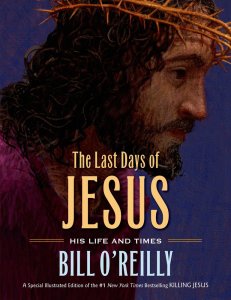
Let me begin by saying that I admire Bill O’Reilly and often enjoy his program on FOX News. One can also tell in his writings, especially about Lincoln and Kennedy, that he was probably a first class high-school history teacher. Having said this, I fear that writing about Jesus may have placed him somewhat at a disadvantage. Jesus was a man but so much more. When we miss that element of more, history itself becomes falsified or distorted. Like any good researcher, he relies heavily upon sources. And yet, religion more than any other field, is subject to a vast range of opinion and much of it unreliable or biased. Of course, his task from the very beginning may have been handicapped. Can people of faith ever approach Jesus as if that faith does not matter and does not speak to the truth?
The book for young readers, The Last Days of Jesus by Bill O’Reilly alternately embraces a biblical literalism as with the Nativity narratives, harkens to pious tradition as with the association of Mary Magdalene with the prostitute, and is permeated with a modern agnostic historical-criticism as with the avoidance of the miracles and resurrection of Christ. The book often reads like a disjointed commentary on various biblical texts. O’Reilly connects Mary Magdalen with the prostitute or sinner woman in Scripture. This is a correlation disputed by many modern exegetes and even by the authorities he cites in the back of the book. (He recommends these sources for further reading but they are not written for young readers.)
This work is the offspring to the adult book, Killing Jesus: A History. The difficulty in the focus upon our Lord in the former work is transplanted into the latter. The emphasis is placed upon “the man” Jesus of Nazareth and not upon Jesus as the Christ, Messiah or Savior. Taken too far and this ushers us back to the ancient heresy of Nestorianism where the divine unity is shattered and we begin to speak of two sons, Jesus the Man and Christ the God. Nestorius was condemned for preferring the Marian titles “Mother of the Christ” and “Mother of the Man” to the label, “Mother of God.” Subtracting his godhood entirely would restore the ancient heresy of Arianism. Any history that subtracts the divinity and its attributes becomes a falsification of the past. Those who would utterly restrict themselves to Christ as a human creature have already adopted a methodical atheism. In his usual gentle way, Raymond Arroyo brought this up on his television EWTN interview with O’Reilly. O’Reilly elaborated with him, too, that he purported to give a historical accounting of Jesus, not a spiritual one. My concern as a priest is simple: is such a rendering really possible and does it not malign the spiritual as if it is somehow unreal? (I do not question or doubt O’Reilly’s word that he remains a Catholic and a believer.)
When speaking about the incident where our Lord as a boy is teaching the teachers in the Temple, we must be careful not to speculate too much about what Jesus knows and feels (see page 36). There is a real debate about the psychology of Jesus. While he has human experiential knowledge, he is reckoned by the Church as a divine person. Thus, he knows what he needs to know. While he might pocket elements of his divine knowledge, it is always there. Even for ourselves, as human beings, we do not focus upon everything we know at any given moment. Further, when Jesus had disappeared from the caravan, he was puzzled that they had to search and did not know that he had to be in his “Father’s house.” Notice in the conversation between Jesus and Mary that Joseph is silent. He well appreciates that as the foster father of Christ, his role is reserved to protector or guardian of the Holy Family. He is already beginning to decrease and will never appear again in the Gospels. Christ will be obedient to them but given his true identity, such is by choice and not necessity.
We cannot know for sure why Jesus does all that he does. We cannot begin to imagine how infused science might have impacted upon Jesus’ knowing. But the question keeps arising, what did Jesus know and feel? Did Jesus know only “a little Hebrew”? Jesus seemed very learned and probably spoke to Pilate in Latin. Greek was also a popular language. We know our Lord spoke Aramaic. He was raised as a Jew in a Jewish community. It is true that he had experiential knowledge, but it would be wrong to infer that he had nothing of the divine. Ours is not an amnesiac deity. He always knows who he is.
Does O’Reilly come close to heresy? If so it is probably inadvertent and has to do with the selection of words. I am troubled how he speaks about the agony in the garden. We all know what our Lord does and says but O’Reilly writes, “It is a moment of anguish and despair” (page 190). Anguish, yes, but despair, no! Despair is a sin against hope and such would be impossible for the God-Man. As with the temptations, our Lord could be tempted but he could not fall. God cannot be placed in opposition to himself. There is no historical Jesus or strictly human Jesus that has ever existed. He is an exegetical fiction. His angst is not despair but the genuine sign that the incarnation was real. No human being in his right mind wants to be tortured and murdered. Our human nature rebels at the prospect and that is what happens here. Nevertheless, in the face of this sorrow, he reaffirms the mission given him by his Father. This is more than asking for strength. Jesus is not going to run away. He knows what is coming. He demonstrates what true fidelity means. He shows us the true face of courage.
It was not so much that Christians were embarrassed by the Cross (see page 258); rather, the difficulty had to do with a Greek philosophical bias against such vulnerability, especially from one purported to be divine. It was a stumbling block to conversions. Christians were aware that the Cross was a sign of contradiction and yet the symbol of Christ’s role as our sin-offering; he dies on our behalf. As we see in the Good Friday liturgy, the Cross appeared to be Christ’s defeat and yet it becomes a sign of his victory. It is precisely this demarcation in the text between the so-called historical Jesus and the Christ of faith that skews a proper understanding of what Jesus is about. Of course, such falls in line with the atheistic agenda of the Jesus Seminar (which the book recommends as a source).
The author writes, “But Jesus has committed a grave offense—he interrupted the flow of funds from the temple to Rome when he flipped over the money changer’s tables” (page 197). I am not sure that there is much evidence for such a financial collusion. The text infers at this point that the financial pressure and greed from the Pharisees is what brought Jesus to trial. However, later on the text rightly narrates it as blasphemy. Does O’Reilly view the allegation of blasphemy as a trumped charge to indict Jesus? Again, I think a narrow vision damages the full truth. The Pharisees and scribes are true believers and zealots. Yes, they do not want anyone to erode their authority. Yes, the turning over of the money-changing tables did not win him friends among them. However, they were also appalled by his healings on the Sabbath and references to him as God’s Son. Monotheism and the Law were principal elements of their religion and they failed to see how Jesus could fit into this picture.
I seriously doubt that this book will find a place in parish catechesis programs. Too much is missing. Even if one were to restrict an evaluation to our Lord’s social mission, the outreach of Christ to the poor, the sick, the oppressed, the weak and to women, is largely neglected. And yet, it was precisely this preferential option for the poor, the suffering and sinners that made the religious leadership hate Jesus all the more. They may have been afraid of an uprising but they also resented that he was winning the hearts of the people, especially the rabble. God did not only bless the religious elite or the rich and powerful. God also loved those who were lost, afraid and weak. We would not want to cast Jesus as an Obama-like social worker; but neither would we image him as a modern-day Republican hardliner or fiscal conservative.
The Lord’s Supper is essentially reduced to an interchange about Judas and the betrayal. Totally absent is how Jesus will take the Seder and change the rubrics to refer to himself as the new sacrificial Lamb of God. I find this odd because he immediately connects this meal with the coming ordeal of the Cross. I suspect it is subtracted because it refers to sectarian topics like the priesthood and the Mass. However, it also removes the sense that Jesus will not simply have his life taken from him; rather, he will lay it down.
As with the Pharisees, the principal motivation for Judas is depicted as greed and yet many biblical authorities suggest that it was far more complex. It may be that Judas was impatient and wanted to force Jesus’ hand— to compel him to act as the Messiah and bring about insurrection. This other element is breeched quickly on page 177.
The incident of the tax and the coin is reduced to Jesus not offending Rome but giving it deference. Here too the situation is far more complex. Yes, it is a trap but a question is asked. Often the more liberal voices will speak about how this supports dividing our loyalties between Caesar and God. This is the thinking of politicians who claim to be good Catholics but enable the murder of children through the administration’s reproductive services policies. The fact is that Jesus neither falls for the trap nor answers the question. He never really says one should pay the tax. If he says not to pay then he can be painted as an enemy of Rome. If he says pay, then he can be judged as a traitor to his own people. All he does is point to a coin with the emperor’s face on it and says give to God what belongs to God and give to Caesar what belongs to Caesar. In truth, everything belongs to God. The Scriptures are clear, ours is a jealous God.
Is Jesus “a revolutionary with a band of disciples and growing legion of followers” (page 162)? The text itself admits that Jesus did not intend to establish a new government or overthrow the Romans. He often steers away from the title of Messiah because it is so generally misinterpreted in military terms. Nevertheless, our Lord did come to establish a new People of God or a Church. This theme is generally omitted from the text. Note that when Jesus asks the question about his identity, he applauds Peter for seeing the truth, “You are the Messiah, the Son of the living God” (page 127). However, absent in the text is the Lord’s offer of a new identity upon Peter as ROCK and that upon this ROCK he would build his Church. (A brief mention of the renaming appears on page 97 but minus the connection to the Church.) Our Lord next prophesies his coming passion and death. He will die for the Church. He will pass on something of this authority to the Church. Without this appreciation, a major theme that leads to his sacrifice is omitted. Certain religious revisionists propose that references to the Church were later written into the biblical accounts; however, the teaching Church would argue that such reflected the mind of Christ and were part of these events.
When it comes to the miracles, the text speaks of “stories” of Jesus doing so (page 119) and that he “apparently” healed a man’s withered hand. The miracles are viewed by Christianity as proofs to Christ’s divinity and mission. Along with the resurrection, their subtraction or reduction to conjecture immediately eliminates any arguable profession of divinity. Except for how Jesus has been “used” by people in history, the assessment of our Lord would be that he was a failed prophet who was executed as a criminal and later had his body stolen and probably destroyed. O’Reilly never says this, and as a Catholic would probably not hold such a view, however, it is what the text tends to communicate. While Jesus does use “logic and words of Scripture to upend” the arguments of the Pharisees, the primary mode of communication is through stories and actions. He tells parables and he works miracles. Much of his attraction comes down to these two operations. They are elements largely missing from the book’s overall assessment of Christ.
The Afterword itself, after mentioning the story of the Jewish leadership that Jesus’ body was stolen, gives the various views about our Lord held by Christians, Jews, Buddhists, Hindus, and Muslims. The implication within this religious indifferentism is that all the interpretations might be fanciful. Of course, restricting oneself to the natural elements throughout would seem to invalidate the supernatural altogether. It ends with the empty tomb and the simple line, “To this day, the body of Jesus of Nazareth has never been found.” While we have a curt ending in the Gospel of Mark, the Christian testimony is far richer. I have serious reservations about an agnostic or atheistic retelling of the story of Jesus that subtracts the miraculous. Who is to say that these things are not based upon real history?
Why do we ask saints to pray for us if they are dead?
RESPONSE:
Why do we believe that Jesus can save us if he is dead? It all comes down to the resurrection. We believe that Jesus conquered sin and death and that he gives us a share in his risen life. The dead are not really dead, but alive.
Notice that even prior to his redemptive work, Elijah and Moses appeared with Jesus in the transfiguration. We read in Mark 12:26-27: “As for the dead being raised, have you not read in the Book of Moses, in the passage about the bush, how God told him, ‘I am the God of Abraham, [the] God of Isaac, and [the] God of Jacob’? He is not God of the dead but of the living. You are greatly misled.”
Christians believe that the redemptive work of Christ merits a place for the saints in heaven with God. The whole meaning of the communion of the saints is that they (as the Church in heaven) are alive, loving and praying for the pilgrim Church on earth. They are still apart of us.
I was diagnosed as bi-polar when I was 15 years old. I have been on medication for the last 16 years to control my disease. I have always wanted children; however, as I mature, I have realized that being on medication while pregnant is not wise. Neither would I want to bring a child into a situation that could be potentially unstable. So recently, I have been thinking about whether or not I should indeed have a child. If this is the course of action I choose to take, is it accurate that in the eyes of the Church I should never be allowed to get married, to share my life with someone, or enjoy the marital bed all because I chose not to have children?
RESPONSE:
I know bi-polar people who have children and do quite well. You are correct that there are certain medications that can make pregnancy problematical. I have seen this especially with paranoid schizophrenics. As for your question, unless you are married then it is entirely academic as you cannot morally have children as a single person. The Church views marriage as having two purposes: the propagation of the human race and the fidelity of the spouses. Older couples might be infertile but they can still get married. The marital act must still be that type of act that generates new human life even if such an eventuality is unlikely or impossible. Younger couples must want to have children in order to get married in the Church. The priest will ask this question as part of the prenuptial investigation. Rejecting the possibility makes marriage impossible. Indeed, if there is deceit about this, it is grounds for the annulment of a bond. Depending how long you wait to get married, the issue may become academic as the clock is always ticking on female fertility. You can be happy unmarried and there are joys other than those of the marriage bed.
It’s hilarious how either you are completely indoctrinated about the history of the Jesuits/Catholic church and their many atrocities toward humanity or just an agent of disinformation. I suspect the latter. The Nazis modeled the SS from your precious Jesuits.
“Above all I have learned from the Jesuits. And so did Lenin too, as far as I recall. The world has never known anything quite so splendid as the hierarchical structure of the Catholic Church. There were quite a few things I simply appropriated from the Jesuits for the use of the [Nazi] Party.–Adolph Hitler
FATHER JOE:
It may be that Hitler envied the organization of the Jesuits and the Church. However, he planned to replace Catholicism and Christianity with a church of his own making, one based upon his racist ideology. Again, I am surprised that you would give him so much attention and credibility. What is your source for this quote?
It amazes me that there are still people who swallow anti-Catholic bigotry and parade their ignorance as legitimate scholarship and learning. Christians are just as much sinners as anyone else and in the history of the world there is plenty of blame to go around. The late Pope John Paul II offered his “mea culpas” as a magnanimous gesture from the Church for healing. However, instead of reciprocity, the world is still in denial and the atrocities of the third millennium are much as they were before. However, in the face of injustice and a culture of death, the Church is frequently the lone voice crying out for the oppressed and the unborn. At a time when religious liberty is threatened, she is the advocate for the poor and the hurting. The Church proclaims the Gospel of Life and Catholic believers even sacrifice their lives in the cause of freedom and in the defense of human dignity. Your blindness to this reality is what makes your apologetic so very tragic and disappointing. You inadvertently place yourself on the side of a darkness that seeks to overwhelm the light.
Heinrich Luitpold Himmler was raised a Catholic and yet he turned his back on the Church and Christianity. Focusing on a Germanic mythology, he embraced the occult while trying to strip away elements of Catholicism to make his new religion. While some claim that the Society of Jesus (Jesuits) was his model for the SS, it was actually the ancient Teutonic Knights. Hitler, himself a superstitious man, placed little confidence in Himmler’s mysticism and may have made a joke of calling him his “Ignatius of Loyola.” This may be where the confusion with the Jesuits started. But other than the elements of order and obedience, there were no similarities. The Jesuits defended the papacy and the Catholic faith. Himmler’s SS was the start of a so-called humanistic religion which worshipped Hitler.
THOMAS:
Since you are obviously educated in the art of logical fallacies, I was wondering if you will use ad hominem, guilt by association, begging the question or straw man. Maybe a combination of these and others? My guess is you will delete this post.
FATHER JOE:
Logical reasoning is not fallacious. You rely upon the actual tactics of the Nazis, telling the BIG LIE with the expectation that gullible people will believe it. There is no need for me to resort to an “ad hominem” argument in that you have sufficiently disgraced yourself without my assistance. I am unsure with whom you associate, but I can well imagine given the venom of your attack and style. The straw man is entirely yours. You create a false caricature of Catholicism (and the Jesuits) which you immediately impugn or tear down. I have read your quotes, and yet many of them are attributed to men who shared your uniformed biases against Catholicism. You even cite Hitler, as if a man who orchestrated the art of deception and murder could be trusted in anything he says.
THOMAS:
Here are a few quotes for you to deny.
“The Jesuits are a MILITARY organization, not a religious order. Their chief is a general of an army, not the mere father abbot of a monastery. And the aim of this organization is power – power in its most despotic exercise – absolute power, universal power, power to control the world by the volition of a single man. Jesuitism is the most absolute of despotisms – and at the same time the greatest and most enormous of abuses.”–Napoleon Bonaparte
FATHER JOE: Napoleon, like you, would also have his issues with the Church. He falsely viewed the Jesuits in terms of the very things which he coveted: power and empire. Napoleon was keenly concerned about the loyalty of hearts and minds. He dreaded competition from the Jesuits or the Church. The Jesuits were not a military organization, but a religious order founded by a former military man who put aside the sword. What is your source for this quote?
THOMAS:
“It is my opinion that if the liberties of this country – the United States of America – are destroyed, it will be by the subtlety of the Roman Catholic Jesuit priests, for they are the most crafty, dangerous enemies to civil and religious liberty. They have instigated MOST of the wars of Europe.”–Marquis de Lafayette
FATHER JOE: Lafayette shared the prejudices of many in France against the Jesuits. Indeed, such biases would lead Rome to suppress the Jesuits. All 23 priests in the thirteen colonies were former Jesuits. The irony was that they were defenders of the papacy. Lafayette was impressed by the Protestants in America and successfully worked for their co-existence with Catholics in France. What is your source for this quote?
THOMAS:
“The Jesuit Order at last reached the pinnacle of its power and prestige in the early eighteenth century [i.e., the early 1700s]. It had become more influential and more wealthy than any other organization in the world. It held a position in world affairs that no oath-bound group of men has ever held before or since… ‘Nearly all the Kings and Sovereigns of Europe had only Jesuits as directors of their consciences[i.e., as confessor-priests], so that the whole of Europe appeared to be governed by Jesuits only.’” (1927 / using a short quote by Jesuit Cordara)–Boyd Barrett (Ex-Jesuit)
FATHER JOE:
The situation with the ex-Jesuit Boyd Barrett was tragic because he very much believed in the Church and in his priesthood. He expressly wrote against condemning the Jesuit order and the Church as you and other anti-Catholics delight in doing. However, he suffered at the hypocrisy he found and in the hardness of hearts which can afflict the men placed over us. His book, The Jesuit Enigma (New York, 1927) both celebrates the saintly achievements of his order as well as laments its failures. Given his testimony, this would also include the shabby treatment shown its loyal sons. He writes (page 335-36): “Twenty years had passed since I had entered the Society of Jesus, believing in the description given of it by the Jesuit General Roothan, as ‘a splendid abiding-place of science, piety and virtue ; an august temple extending over the earthy consecrated to the glory of God and the salvation of souls’ I had given the best years of my life to the Society, striving as faithfully as I could to realize the ideal of the perfect Jesuit, ‘one who, having shed all personal interests and affections, clothes himself with Christ, and shows himself in labor, patience, charity and the love of truth the servant of God, fighting with the arms of Justice through days of ill-fame and days of honor.’”
You should note that The New York Times would carry a beautiful story about him, entitled, “EX-PRIEST EXPLAINS RETURN TO CHURCH; Dr. E. Boyd Barrett Says 22 Years of Brother’s Prayers Brought Reconciliation.” The article begins, “Dr. E. Boyd Barrett, who left the Roman Catholic Church and the Jesuit Order in 1924 after twenty years of education for and in the priesthood, publicly announced his reconciliation with the church yesterday.” Praise God!
THOMAS:
“All these things cause the Father-General [of the Jesuits] to be feared by the Pope and sovereigns… A sovereign who is not their [the Jesuits’] friend will sooner or later experience their vengeance.” (1852)–Luigi de Sanctis (Official Censor of the Inquisition)
FATHER JOE: Luigi de Sanctis left the priesthood and got married. As an Italian Protestant, he co-founded the Evangelical Christian Church and became a leading anti-Catholic apologist. I would hardly regard his criticisms of the faith as wholly credible. He leagued with the Waldensians. The pertinent book here is Popery and Jesuitism at Rome in the 19th Century, published in London, 1852. He found a market in Protestant England for speaking against the Church, the Jesuits and sacraments like Confession. He was a scandal to all those Jesuits martyred because they ministered and brought the faith back to England.
This is the home of the AWALT PAPERS, the posting of various pieces of wisdom salvaged from the writings, teachings and sermons of the late Msgr. William J. Awalt.

























 Blogger Priest