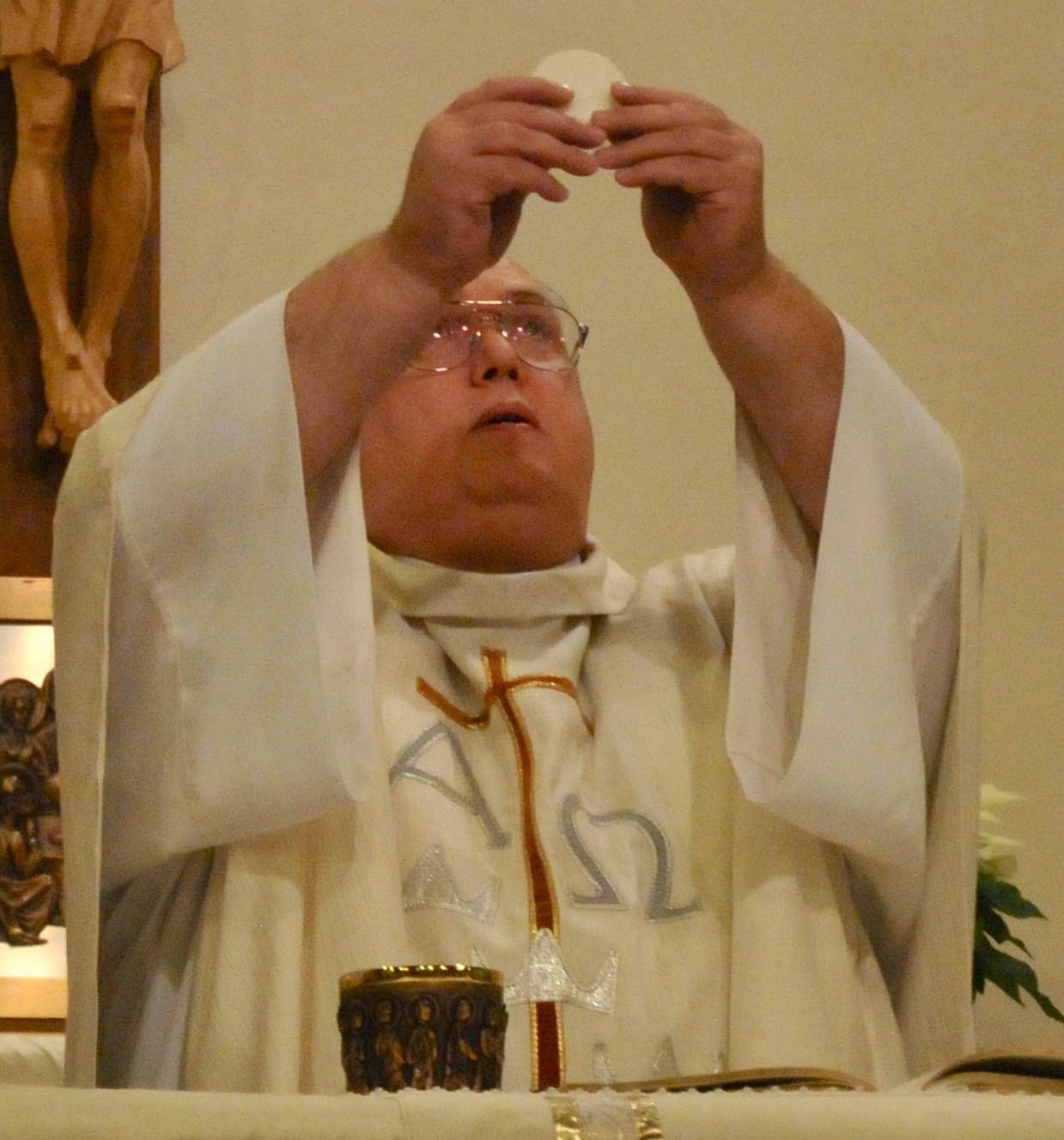
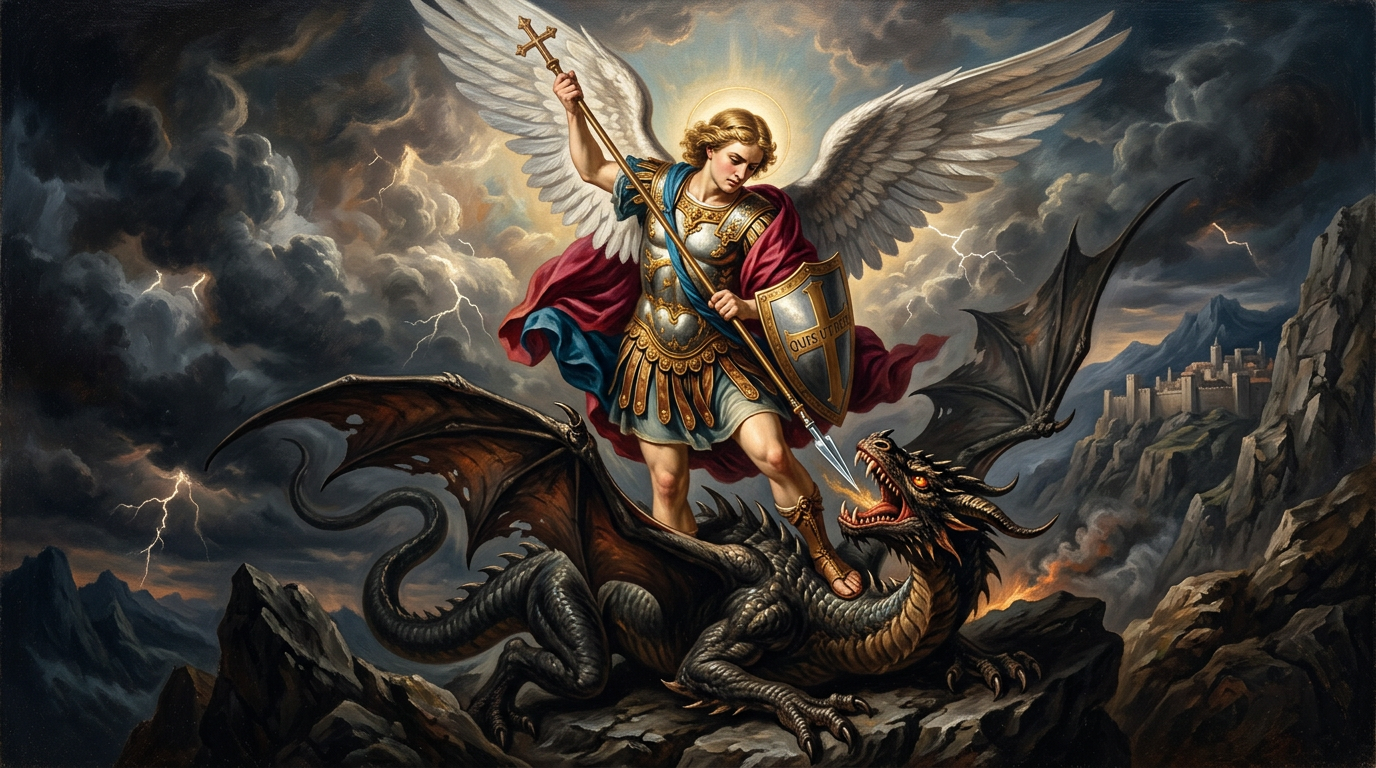
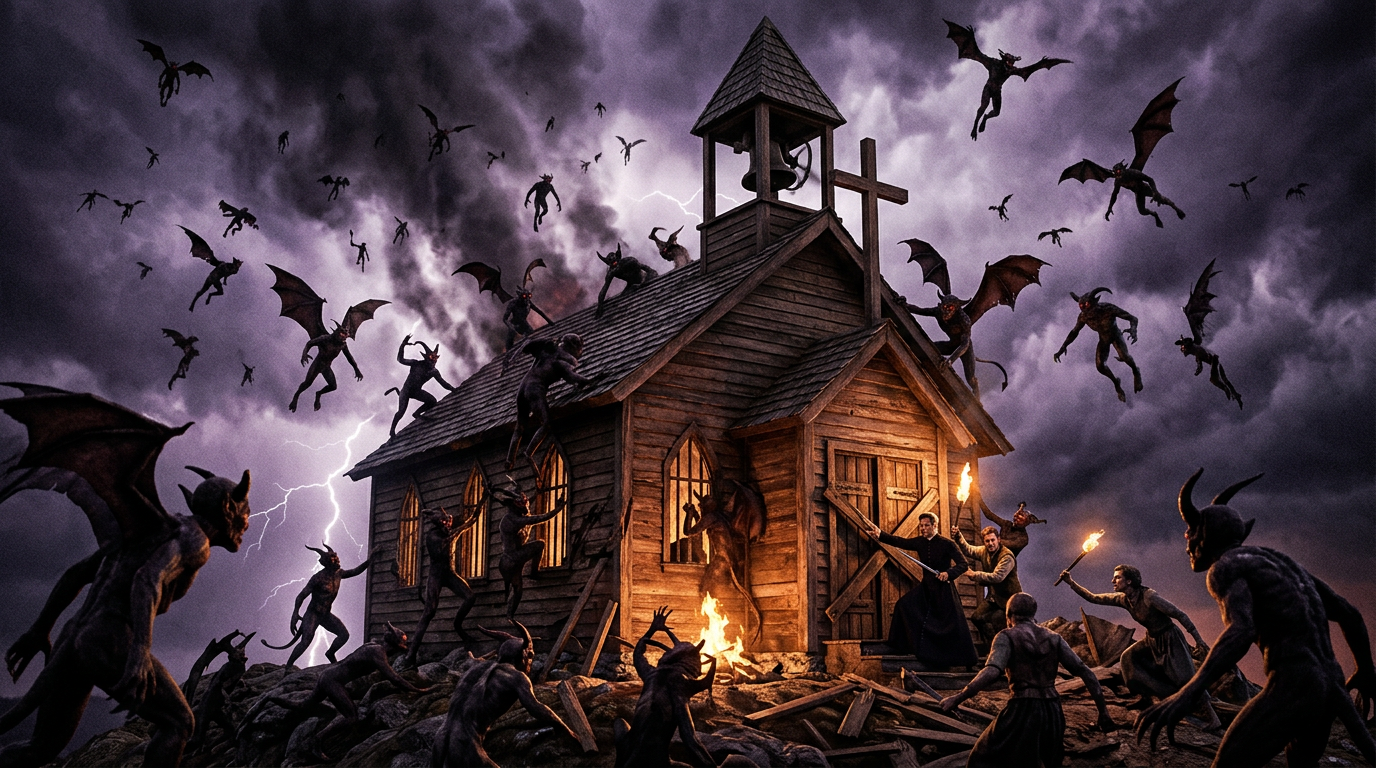
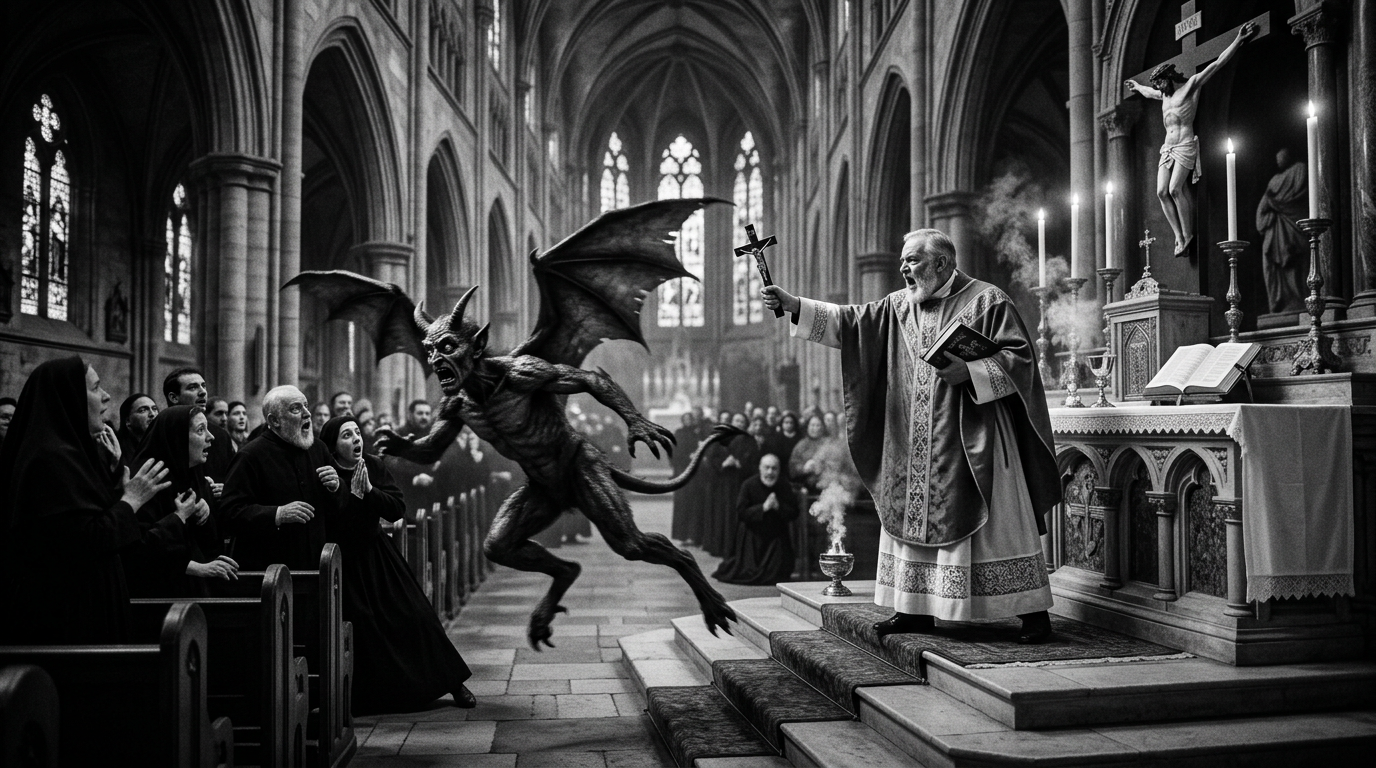
An important theme for this blog is the scene in the New Testament where Jesus can be found FLOGGING the money-changers out of the temple. My header above depicts a priest FLOGGING the devils that distort the faith and assault believers. The faith that gives us consolation can and should also make us very uncomfortable. Both Divine Mercy and Divine Justice meet in Jesus. Priests are ministers of reconciliation, but never at the cost of truth. In or out of season, we must be courageous in preaching and living out the Gospel of Life. The title of my blog is a play on words, not Flogger Priest but Blogger Priest.
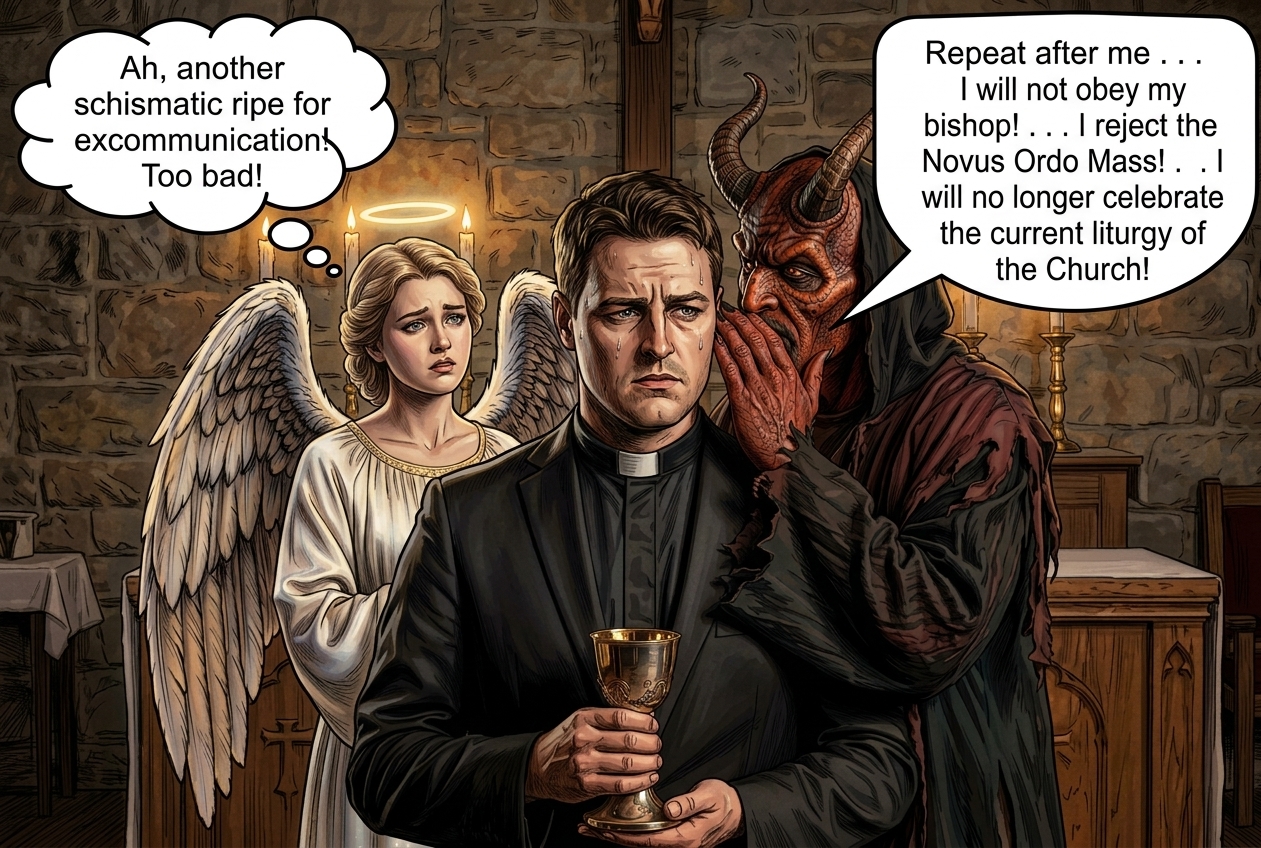
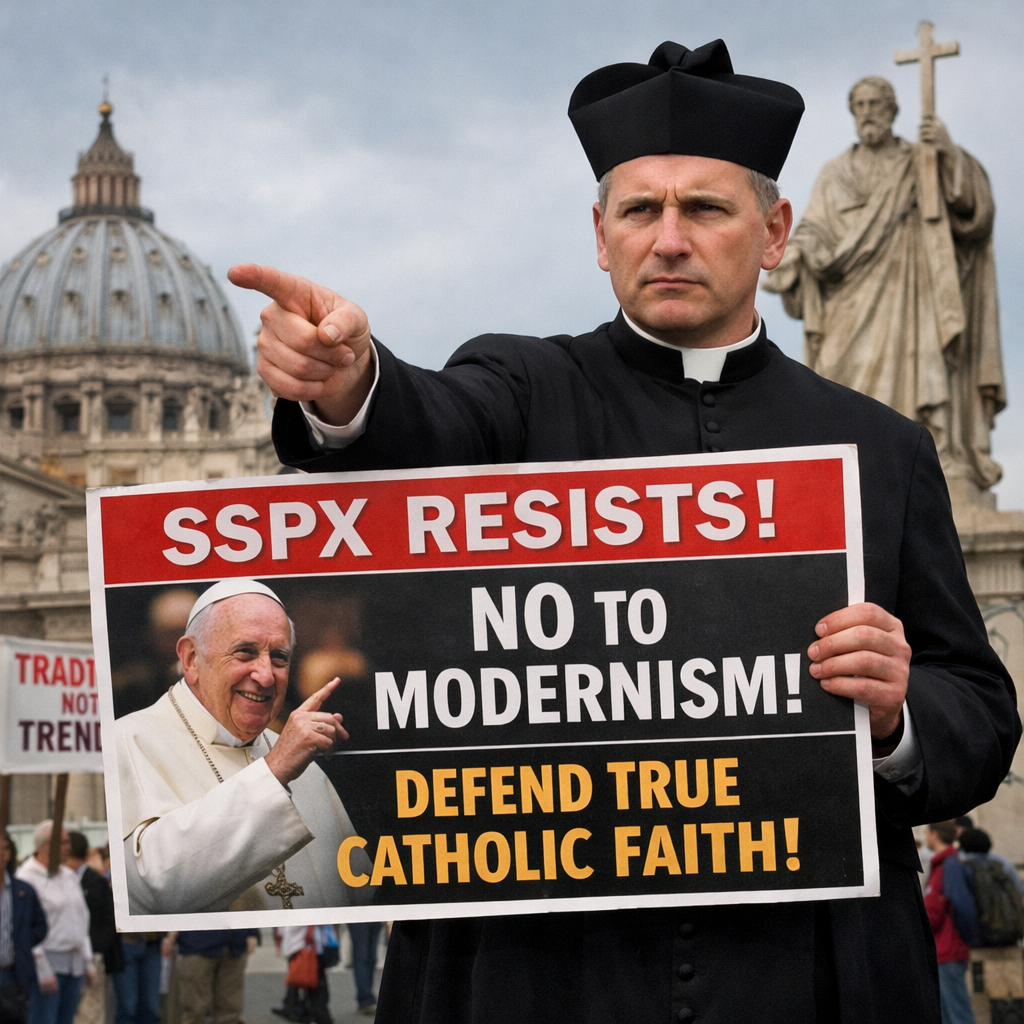
No matter whether one prefers the traditional or reformed liturgy, it infuriates me that a shepherd like Archbishop Bernard Hebda should be ridiculed for disciplining a disobedient priest. Ordained in 2024, Father Philip Conklin was the assigned parochial vicar of two parishes. However, he took a leave of absence in March of this year and quickly affiliated himself with the schismatic Society of St. Pius X. The priest is now recruiting funds online for his canonical defense. The archbishop has informed Fr. Conklin that he is not permitted to exercise any public ministry. The matter is largely academic, given that the SSPX also regards his ordination as suspect. The good archbishop has responded to the negative press by asserting his good will toward the renegade priest and his family, stating, “This is a painful situation that merits our fervent prayers for Father Conklin, for his family and for the parishes of Saint Michael and Saint Mary. Please know of my prayers for all of you and your loved ones.”
Ordained in 2024, this priest knew full well that he would be expected to celebrate the Novus Ordo. If that was not his intent, then he should never have presented himself to the archbishop for ordination. I have no problem with the faithful sympathetic toward the traditional liturgy; but none of us should have anything to do with those who ridicule the reformed Mass under Pope Paul VI. Only two years a priest and already this priest is fed up with the post Vatican II Mass. He writes: “I simply couldn’t do the deficient, abuse-ridden liturgy anymore. My conscience ate at me more week after week.” Lacking a love for the normative Mass of the Roman Rite, how is it that he was approved for ordination? I suspect the real problem was deception on his part. I was ordained forty years ago, and I still find the Novus Ordo liturgy enriching and spiritually powerful. It is our participation at the banquet of the Lamb and in the oblation of Calvary. The fault here was not the liturgy but, in the heart and soul of this renegade clergyman. He defames both the holy liturgy and his own priesthood. His online appeal for funds disgusts me as he makes it an occasion to broadcast his scandal of disobedience.
No amount of funds will save him as the canonical case is clear. Diocesan priests make two fundamental promises, one to obedience and the other to celibacy. In truth, the promise that has all the gravity is obedience. The man is configured to be an “Alter Christus” at the altar and in the confessional. Our Lord extends his authority to men to act in the person of Christ. The priest is also a ministerial extension of his bishop, something this man obviously forgot about soon after ordination. If proven that he should not have been ordained, he will be laicized. It is tragic but for the best.
Having read Kevin Wells appeal to a SSPX priest to join the Novus Ordo Church out of a desire to care for souls, I penned the following reflection. He spoke from the heart but I suspect his cry will either go unanswered or be rebuked.
First, we need to appreciate that designations like traditionalist Catholics and Novus Ordo Catholics lack real substance. One is a Catholic or not, nothing more. There is the living Catholic Church under the Pope, and then there are those who are outside of it. We might debate the extent that a Protestant is affiliated with Catholicism through baptism and shared elements of the faith; but no Lutheran, Methodist or Presbyterian would regard himself as in any way a Catholic by extension. Nevertheless, the SSPX tries to make this argument because if they admit formal separation from the See of Peter then their house of cards comes tumbling down. They would either have to go the route of the sedevacantist breakaway churches and appoint their own Pope or to adopt the stance of conciliarism and shared communion as manifest between Orthodox autocephalous churches.
Second, the failure of any reconciliation rests squarely with the SSPX. They would arrogantly usurp for themselves an authority that belongs exclusively to the Holy See. Their path to reconciliation and regularization would be as follows:
The Pope would have to renounce Vatican II, especially teachings about ecumenism, religious liberty, freedom of conscience, and the inherent dignity of persons.
All liturgical changes would have to be repealed.
There would have to be a massive number of excommunications and expulsions to purge the Church.
Indeed, all new ecclesial initiatives would be revoked, including the permission for the Divine Mercy devotion as it was suspect and forbidden prior to Vatican II.
Such was never going to happen. Despite posturing, reunion with the SSPX was never in the picture. Despite high hopes for individual clergy, it is unlikely, except for maybe a few seeking incorporation into the Fraternity of St. Peter.
The fact that a priest cares for souls is the bottom line and should not be regarded as something exceptional. But this movement of the will and heart must also be in sync with a proper understanding of the truth by the mind. Otherwise, any fruits will be seriously inhibited or even blocked. A Protestant minister might be on fire to save others from perdition and to foster a saving faith relationship with Jesus. But he has neither the Mass rendered by priests nor the absolution given to these same ministers of Christ’s reconciliation. His efforts may bear some small fruit, but they are handicapped by his own deficiencies.
Many in the traditionalist camp would stamp such a Protestant minister and his flock as likely damned for being outside the boundaries of the visible Catholic Church. Opposed to religious liberty, they would like to erase the public non-Catholic churches and schools. Indeed, they eye with suspicion the Novus Ordo liturgy as dangerous and the orders of its priests as suspect. They renounce by “association” the larger Church for its ecumenism toward so-called “separated brethren.” They subscribe to a methodology of fear— risk no change, stay separate or risk going to hell— distrust the Pope, avoid Protestant contamination, and oppose the world.
If a traditionalist priest disavows the priesthood and ministry of priests in the juridical Church under the Holy Father, then why would he be concerned about his fatigue and making “the good fight”? As far as he is concerned, despite the many protestations to the contrary, the Novus Ordo priest is not his brother but the enemy. Note that the SSPX tells its lay participants that it would be better to miss Mass entirely than to attend a Novus Ordo liturgy. The living Church in union with Pope Leo XIV would regard this attitude as blasphemous. The SSPX clergyman with this sentiment might desire to save souls but despite all the trappings of tradition, he has become what he most detests, a Protestant. The ancient faith and the efficacy of the liturgy may still be fortuitous to believers, but not because of the rebel priest but despite his failings. Wherever we find the Pope, we find the Catholic Church. This is the quandary around which the traditionalists must dance. They acknowledge the validity of the Pope in theory, but in practice his authority over them is rejected. What is the old saying about a duck? Well, right now it is quacking away!
The true Church must courageously engage the world in the time and place where she finds herself. Confident in the charism of indefectibility, she must not retreat from the world like the SSPX. The living Church applies social teachings to the world as it is (not as it was). She acknowledges the organic development of doctrine from seeds planted in the Gospel. Saving revelation has ended with the apostle John, however teachings are not stagnant but grow in our understanding. However, the SSPX goes further in the wrong direction, rejecting (in practice if not in principle) the current Pope as the chief lawgiver and rejecting the historical fact that each successor of Peter is the living and breathing embodiment of the Roman rite. The way he says Mass is the way the rest of the Western Church says Mass. We follow living popes, not dead ones.
The charge of Modernism targeted against the post-Vatican II Church is particularly upsetting and wrong-headed. Modernism came into existence by priests who regularly celebrated the Traditional Latin Mass. Fr. Alfred Loisy even acknowledged that the rubrics of the old Mass allowed him to robotically celebrate the liturgy daily out of habit long after he had stopped believing. Further, it troubles me that anyone would caricature the Novus Ordo Mass as leaving the flock starving. It is the unbloody or clean re-presentation of the sacrifice on Calvary. It is a sacrifice that honors God and makes propitiation or satisfaction for sin. The Eucharist is the substance of the real body and blood of the risen Christ, whole and complete, given as our saving food. Accidentals have changed and no liturgy is perfect. But the substance remains. The Church saw revolutions, heresy and Mass defections before, even when the rituals of sacrifice were untouched. The problem is not the Mass but a secular world that is increasingly hostile to people of faith. While the Lord gave us the great commission, too many have allowed themselves to be converted by the atheistic and materialistic hedonism of our times. For all we know, the current situation might have been worse without Vatican II. But about this, we cannot know for sure. We live in an age where there is much dissent from the left and right. Violence against the Church from the right is somewhat surprising, but perhaps more perilous than that on the left or from progressives. But neither side can stand any attempted middle-course. That is what defines the post-conciliar Church. This tension needs to end. An ancient motto from the 17th century comes to mind, quoted by Pope St. John XXIII in his 1959 encyclical Ad Petri Cathedram, “In essentials unity, in non-essentials liberty, in all things charity.”
The SSPX argues that the contemporary liturgical forms have done the following: (1) Obscured the sacrificial and propitiatory character of the Mass, (2) Fostered a democratic conception of worship, and (3) Protestantized liturgical expression.
A Mass with an Obscured Sacrificial & Propitiatory Character
The claim that the Novus Ordo Missae obscured the sacrificial and propitiatory character of the Mass is refuted by the text of the liturgy itself and official Church teaching. There is no refutation of Trent, rather, the reformed Mass retains, amplifies, and explicitly declares these realities throughout its revised structure.
The sacrificial nature of the Mass is proclaimed multiple times in every Novus Ordo liturgy. Most notably, in the Orate Fratres, the priest explicitly invites the faithful to pray: “Pray, brethren, that my sacrifice and yours may be acceptable to God, the almighty Father.”
Further, the exact words of consecration restore an explicit expression of Christ’s sacrificial purpose. Take note of the phrase, “This is my body, which will be given up for you.” It directly emphasizes Christ’s redemptive offering.
The Roman Canon and the Eucharistic Prayers composed after Vatican II, all definitively state that the Church is offering Christ the holy Victim to God the Father.
Vatican II’s “Sacrosanctum Concilium,” affirms the teachings of Trent. So as there can be no confusion, it teaches that Christ is present offering Himself in the person of the priest, just as He did on the Cross.
The Catechism of the Catholic Church ensures that there can be no confusion on this matter. The Mass is identical with the oblation of Christ on Calvary. This sacrifice is “truly propitiatory” and is offered for the living and the dead.
A Democratic Conception of Worship
While the people are not mere spectators to the liturgy, they participate through a unity with the celebrant and thus with Christ whom he signifies. Proof of the hierarchical nature of the Church and the necessity of a priest at the altar is proven by the Church’s own official texts and the directives for pastoral implementation. The argument that the Novus Ordo introduced by Pope Paul VI in 1969 fostered an overly “democratic” conception of worship is a frequent point of critique among liturgical traditionalists. However, it is false in that the missal preserves the hierarchical nature of Catholic liturgy while furthering an ancient ideal of “active participation.” There is no majority rule. The role of the ordained priest is still essential— no priest, no Mass. The priest is sacramentally configured to act “in persona Christi” at the altar. Only the priest can confect or consecrate the Eucharist. He is more than a master of ceremonies. He is celebrant of Mass. Only a priest can offer Mass. Indeed, only a man in holy orders is permitted to proclaim and to preach the Gospel. Liturgical actions, prayers and rubrics are established by the universal Church, not through the popular vote of a congregation and not through the intimidation of a breakaway group like the SSPX. The liturgical reforms did not simply create something new but sought to recover something ancient to better confront modernity.
Participation of the laity at Mass is both external (responses and prayers) and internal (the right disposition). The notion of the faithful offering themselves with Christ was championed by Pope St. Pius X. It was not a notion new with Vatican II. There is a profound collaboration between the ordained priest and the laity who share a baptismal priesthood. Note that at baptism, children are anointed, “priest, prophet, and king.” This participation makes full discernment of the various presences of Christ: in the Word proclaimed, in the priest at the altar, in the Mystical Body of the Church, and in the sacrament. The orchestration of liturgy involves many playing their roles. But the ordering is not democratic but hierarchical. Christian worship is structured as a prayer to God the Father, through the sacrifice of Christ and made effective by the power of the Holy Spirit. Despite many cosmetic changes, the core structure of the Novus Ordo is the same as in the traditional Latin Mass. There is, in truth, no new or old Mass. The Mass is the Mass. The Second Eucharistic Prayer is rooted in the ancient liturgy of Hippolytus. Ancient texts went into the composition of the Third Eucharist Prayer as well. We do not celebrate ourselves in the Novus Ordo liturgy. Rather, we worship almighty God. We acknowledge his sovereignty over mankind. We invoke the Lord’s mercy upon us.
Protestantized Liturgical Expression
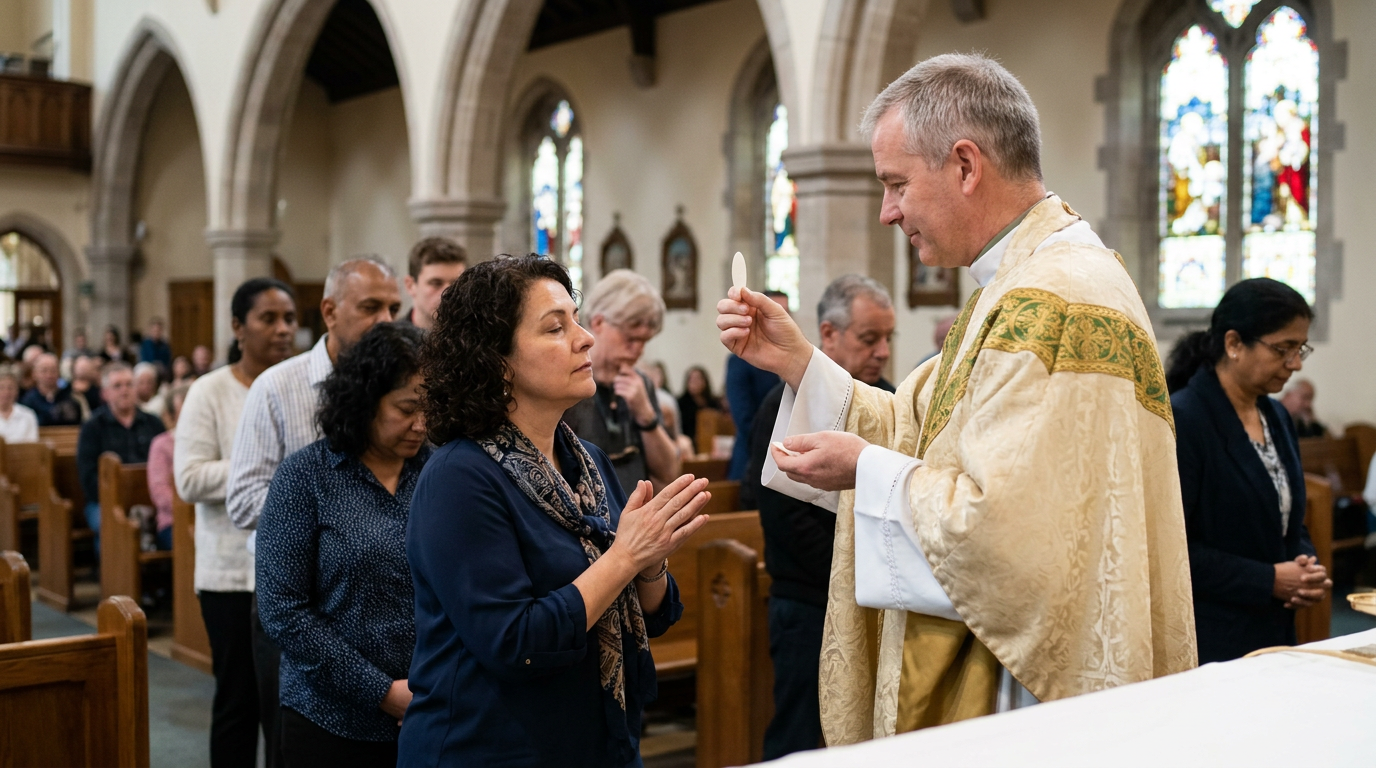
The argument that the Novus Ordo (promulgated by Pope Paul VI in 1969) “Protestantized” the Mass is a frequent criticism from traditionalists. However, our liturgical history and magisterial documents refute this stance. Indeed, the Vatican II rites sought to restore ancient Catholic traditions, not to succumb to Protestantism. The Protestants of the reformation rejected the Mass as a propitiatory sacrifice. This hallmark of the Catholic Mass remains essential. While the number of Eucharistic Prayers were expanded, all of them explicitly state that the Mass is a sacrifice. Note Eucharistic Prayer III: “Look, we pray, upon the oblation of your Church and, recognizing the sacrificial Victim by whose death you willed to reconcile us to yourself. . .” By comparison, Protestant reformers like Martin Luther and Thomas Cranmer obliterated all mention of sacrifice from their liturgies. Simplification of the rites was not to make them Protestant. Rather, it was an effort to return to the primary sources and to the ancient Church fathers. There was a heavier emphasis upon Scripture in the reformed Mass. The full expression of the Sign of Peace and the option for Communion in the Hand were recovered, practices that disappeared in the Middle Ages (see St. Augustine and St. Cyril of Jerusalem). Transubstantiation was reaffirmed, something rejected by the Protestants. Liturgically, we can look to the genuflections after the consecrations and the significance of the “Amen” as a response to “The Body of Christ,” at communion time. Indeed, Eucharistic Adoration was raised from a faith devotion to an official liturgy of the Church. Even the purification of the vessels affirms the real presence of the Eucharist. The use of the vernacular made the prayers more accessible to the congregation and the priest was often turned around toward the people; however, this was to further participation, not to reduce the sacrifice to a mere community meal. The Mass is still wholly Catholic!
This statement is taken from the SSPX Profession of Faith . . .
Here we begin to see a problem with the SSPX stance. What is said about the Eucharist as the substantial presence of the complete risen Christ is true. It is what we believe. But then there is a not-so-subtle opinion, more subjective than measured by immutable doctrine. The SSPX rejects the reformed liturgy as a “practice which weakens faith in the Real Presence, the respect due to the Eucharist,” and “trivializes Holy Communion.” The SSPX statement even makes liturgical architecture into a matter of faith, given what they define as the “sacred character of the sanctuary.” As a priest aware of the sacred beauty of the Tridentine Mass, I can attest disagreement to their negative assessment against the Missal of Paul VI. The reformed liturgy cannot be defined by abuses in its administration. No matter whether the priest faces away (East) or in the direction of the people, he is still facing and offering his ministrations at the altar. Certain cathedral churches with central altars, always had people behind and in front and on the sides or the celebrant. The priest raises his eyes to heaven and that is where we should set our sights. While communion on the tongue is normative, for the first thousand years the preferred manner was in the hand. Either option is permitted today. It is preferred that tabernacles be central to the worship space, but even if this is not so, the real presence of Christ is still honored. Indeed, in such cases the gravity given the altar of sacrifice is highlighted in terms of worship. It is okay that SSPX members prefer the older forms. However, it is wrong that they would condemn and force the rest of the Church to abandon the reformed liturgy. I would argue fidelity about essentials and freedom about accidentals. They would interpret their 600,000 lay worshipers as the faithful remnant against the one-and-a-half billion Catholics in juridical union with the Holy See. They would insist that their rebellious two serving bishops should be able to dictate to the 5,600 faithful bishops of the Catholic Church who are one with the Pope. No way— it will never happen. No matter whether they appreciate it or not, they malign our legitimate pastors, the faith of our people and the presence and activity of Christ in our reformed sacraments. Their own profession of faith will come back to condemn them.
This statement is taken from the SSPX Profession of Faith . . .
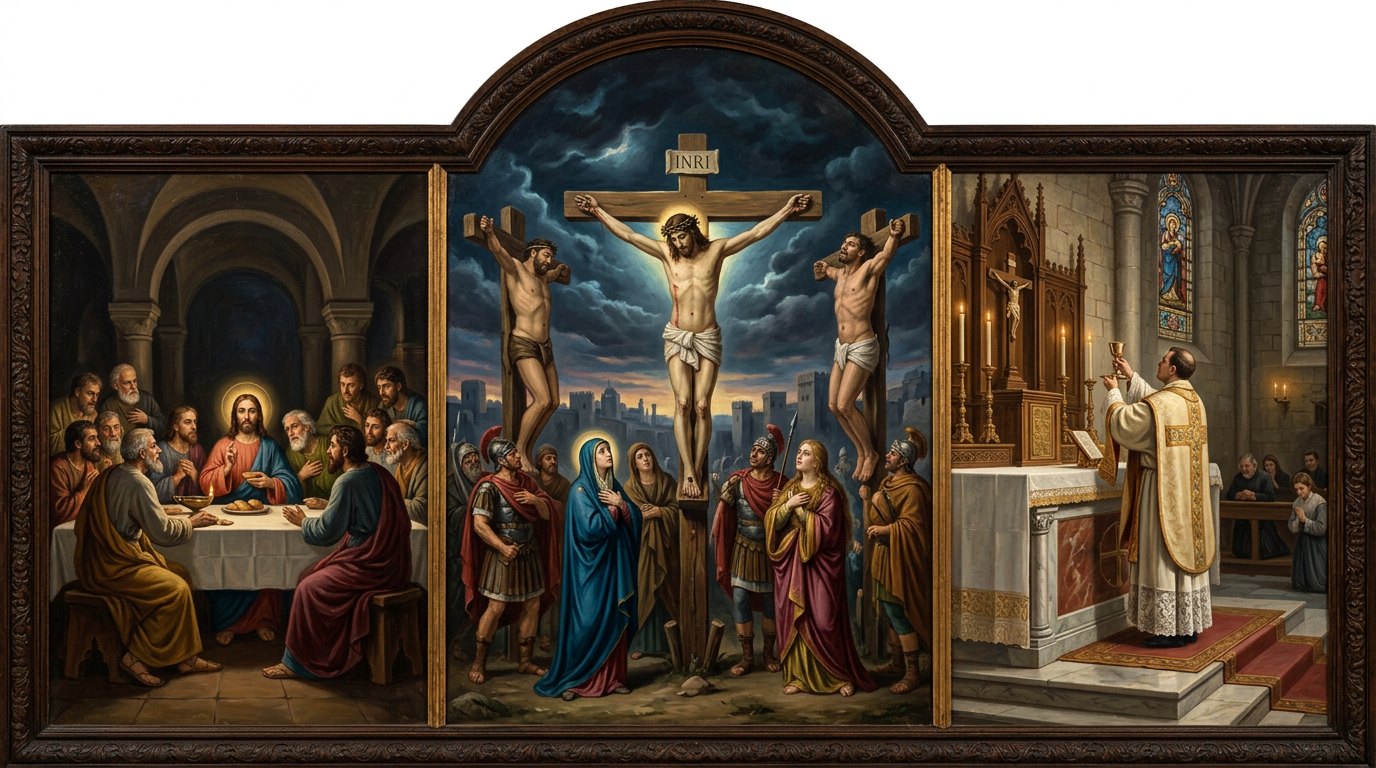
Yes, the Mass is the unbloody re-presentation of Calvary. Yes, it is truly a sacrifice. However, I suspect that the SSPX is reading the word “memorial” in a secular fashion, for instance as a statue or monument or plaque might memorialize a person or a moment in history. This is not how the fathers of Vatican II would interpret the word. The remembrance or memorial of the Mass is an “anamnesis” wherein that which is recalled is made truly present. It is not a nostalgic remembrance at all. Jesus at Calvary is more than a historical event. The Holy Mass makes the oblation of Calvary immediate and present. Thus, we could clarify that the Mass is a command performance that Jesus tells us at the Last Supper to do in “remembrance” of him— the paschal meal of the new covenant and the real propitiatory sacrifice of his Passion. The Supper or Mass is entwined with Christ’s paschal mystery, the Cross. It is not simply a symbolic remembrance, but a liturgical ritual that realizes the one-time sacrificial action of Christ on Calvary. Jesus is the priest and victim on Calvary, and he is the priest at the sacrifice of the Mass. It is the same priest, the same victim and the same event.
Given the upcoming episcopal consecrations by the SSPX and their return to excommunication and full schism, the matter of misogyny among the Latin traditionalists has again raised its ugly head. (A popular Catholic woman commentator was essentially told to keep to her place and to stay off social media when she voiced her opinion against their intransigence and prospective act of rebellion.) While they might claim otherwise, many of their apologists regularly denigrate women by clearly designating them as inferior to men. This mindset frequently images women as either mothers or whores. Certain SSPX publications have criticized the entry of women into higher education and into the general workforce. The patriarchal vision keeps the woman at home as a domestic— having babies, cooking, cleaning and always ready to please her husband.
The late Bishop Richard Williamson, who was expelled from the SSPX as an antisemitic holocaust denier, even denounced the Church’s honoring of women as doctors of the Church. He argued that females should never have authority over men. Despite his excesses, he well summarize the position of many Latin traditionalists that nothing should distract women from their primary purpose as mothers. It is argued that women are conditioned for submission. They are told that they must acquiesce to the ideas and decisions of their fathers and later their husbands. Women are judged as too emotional in their deliberations for leadership, except for maybe over small children. Historically, even women religious were subjugated and sometimes looked upon with suspicion. While we may have a fond nostalgia based upon the movie, “The Bells of St. Mary’s” with Bing Crosby and Ingrid Bergman, in truth many parish schools employed the consecrated women religious teachers as slave labor. They wore men’s shoes because they were lasting and tough. Hours were long, convents were alternately cold or hot, and food was often gifted from generous families. Parochial schools were inexpensive because the nuns were not paid. No one heard complaints because the long-suffering women embraced it as spiritual mortification and sacrifice. I recall years ago a community of cloistered Dominican nuns that struggled to remain solvent and literally sustained themselves from the leftover scraps of food discarded from the local House of Studies where the religious priests resided. The archdiocese became aware of their dire straights and gave them the job microfilming confidential documents. The accompanying small income gave them back something of their dignity. Speaking for myself, one of the best spiritual directors I ever knew was a religious sister who was hired as a cook for my college seminary. She proved to be a wise and compassionate sage who quietly and unofficially saved the priestly vocations of boys growing into men. She also made the best bread pudding!
While I certainly believe in modesty, for men and women, I would leave the intricacies of dress to them. It is unseemly for men to orchestrate such matters, as if women are paper dolls to be attired as we wish. In practice, dress codes can be quite strict: chapel veils or head coverings in church, wearing skirts or dresses instead of pants, and covering bare shoulders. Clergy used to joke that Irish brides were covered from head to foot while the Italians had visible cleavage threatening to burst free.
While the late Pope John Paul II affirmed the male-only priesthood, all hell broke loose when girls were given formal approbation as altar servers. A number of critics still denounce women who function as readers at Mass and who assist as extraordinary ministers. While I would also lament the inclusion of female servers or acolytes, we should never demean these handmaids of the altar who give of themselves much as the Blessed Mother did as a child in the temple.
Where do I stand in all this? I have long argued for a distinction between secular feminism and a Christian variation where women are prized for their feminine genius. Within their maternal love, they contribute a unique receptivity, sensitivity, and charity to human congress. There is no need for competition or war between the sexes. However, there should be a profound collaboration with respect for the gifts given them by God.
We should not confuse feminine empathy with being emotionally unstable. There is nothing weak or diminutive about gentleness and compassion. A failure to appreciate the difference likely speaks to the arrogance that saturates so many of the deliberations and stances of the SSPX and other traditionalists to the living Magisterium.
We should not confuse feminine physicality with being weak in body and mind. Indeed, given the potential for motherhood has given women a higher tolerance than men for pain. Women know a unique tenderness but even the Blessed Mother did not shy away from Calvary when most of Christ’s apostles were in hiding. The Christian woman is strong, enduring her own pain and facing the hurt of others.
We should not confuse feminine sensitivity and passion with a lack of mental sharpness. The list of women who have contributed to faith and western culture is impressive, names like Edith Stein, Elizabeth Anscombe, Sigrid Undset, Flannery O’Connor, Dorothy L. Sayers, Dorothy Day, etc. Indeed, even Alice von Hildebrand, who argued for traditional women’s roles, was herself groundbreaking as a professor of philosophy.
The post-Vatican II Church has rightly been responsive to the contributions of women even as society parades a false freedom that coarsens relationships behind manipulation and vulgarity. One of the fruits of this new sensitivity is the acknowledgment of women as Doctors of the Church: Saint Teresa of Ávila, Saint Catherine of Siena, Saint Thérèse of Lisieux and Saint Hildegard of Bingen. The late Pope Benedict XVI had a special fondness and esteem for Saint Hildegard.
Advocates for women in holy orders often wrongly speak about it in terms of entitlement and social justice. But the gift of ordained ministry belongs entirely to Christ and his Church. It can be given but can never be taken or merited. Granted that Jesus never appointed any women as his apostles, we are not at liberty to make a change that would jeopardize holy orders, the forgiveness of sins and the Eucharist. While men are called as pastors over faith communities, why cannot the laity, men and women alike, assist with administration, theological reflection and even in governance? The Vatican itself has moved in this direction with the leadership of the Dicastery for Institutes of Consecrated Life and the governance of the Vatican City State. Women today serve the Church as chancellors, business managers, canon lawyers, bookkeepers, secretaries, teachers, liturgical directors and musicians, extraordinary ministers, readers, servers, ushers, etc. Altar Guilds populated by women care for our churches and set up for Masses. Some continue to answer God’s as nuns and religious sisters.
Of course, how could any Catholic be anti-woman when the greatest “human person” who ever lived was the Virgin Mary?
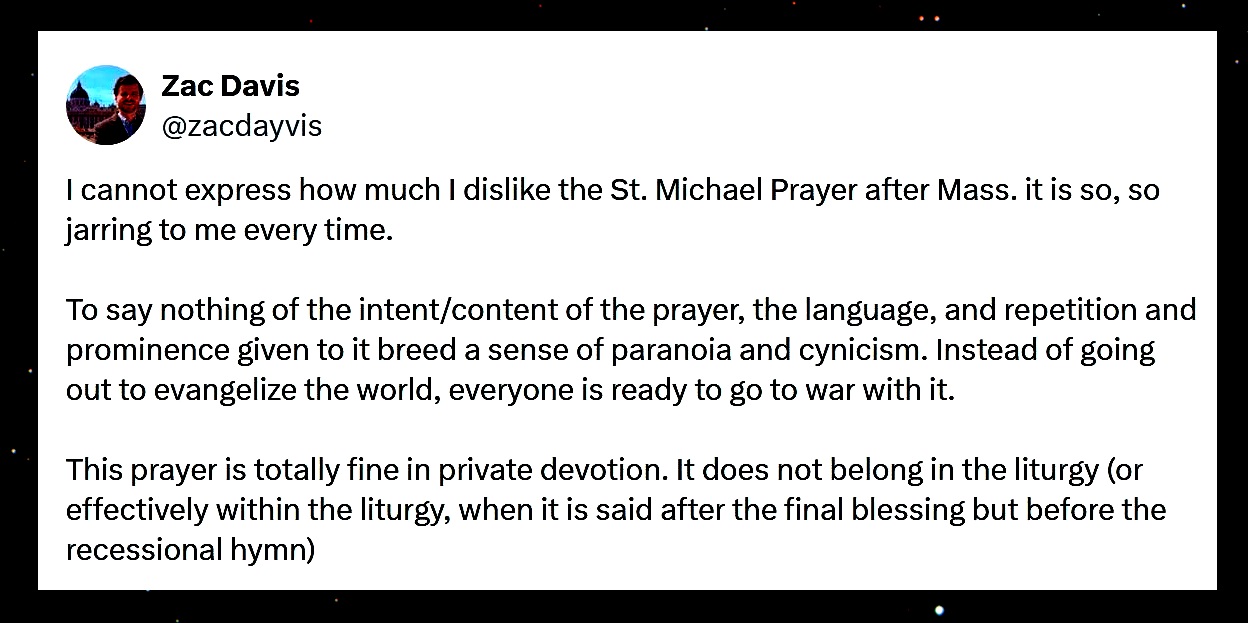
Zac Davis, the associate editor at America Magazine writes:
(1) Does the Devil Exist & If So What or Who Is He?
How can a man of Zac Davis’s learning and standing write something so incredibly dismissive of what may be the greatest deliverance prayer of the Church? His progressive dissent on LGBTQ issues aside, does he not believe in the existence of spiritual beings, good and demonic? This question is not entirely rhetorical because certain theologians deny the existence of angels and devils, arguing instead that they are metaphors or vague forces but not personal powers and principalities. This is crucial because the devil would prefer us to believe that he does not exist. It makes it easier for him to hide. The devil is a spiritual roach, nesting in the dark cracks of the world, shunning the light.
Davis would contend that the “concept” of a devil might have a helpful function in terms of regular “spiritual discernment,” but he would brush aside the notion of any literal “warfare.” Rather than speaking at length about a personal devil, he writes about temptation and the “spirit of the world.” Distancing himself from the artistic renditions of Satan as a horned devil, he would suggest imaging the devil as “a deceptive force” or compulsion not to be one’s true self.
(2) Is Not the Church Militant Called to Spiritual Warfare?
Despite what he says about the prayer being acceptable for private devotion, it is not an oration you would ever hear from his lips. His comment here is utterly disingenuous. Let it be clear, his objection to the Prayer of St. Michael is not just when it is associated with Mass, but at any time or place. As in his quote, he views spiritual warfare as breeding a sense of “paranoia and cynicism.” He says that we should be looking for good in the world instead of seeking where to wage war. This seems incredibly naïve in my estimation. We do not have to go looking for evil, it quickly comes looking for us. He would have us go into spiritual battle unarmed and with eyes closed. Despite his analysis, the Prayer to St. Michael does not imply absolute antagonism between the Church and the world. Instead, like the surgeon who removes cancer to save a patient, the Church would seek to save the world by divulging the devil’s hiding places and purging him from his nests. Spiritual warfare is not contradictory to John 3:17, where we are taught, “For God did not send his Son into the world to condemn the world, but that the world might be saved through him.” We may be Christ’s Pilgrim Church, but we also remain the earthly Church Militant. The Church is our spiritual oasis and our headquarters in a war with powers seen and unseen. We call upon St. Michael, a general in God’s forces, and yet, as in Jeremiah 20:10-13, the LORD is our Great Champion. If God is on our side then whom shall we fear?
(3) Is the Prayer to St. Michael a Liturgical Prayer or Not?
While the critic argues that the Prayer to St. Michael does not belong to the liturgy, those who know the history of the prayer could argue otherwise. After having a terrifying vision of demons swarming to attack the Church, Pope Leo XIII in 1886 mandated the Prayer to Saint Michael at the end of the Catholic Low Mass. It was composed precisely as a prayer to be said by congregants at the end of liturgy. It remained an element of the Mass until 1965 when it was discontinued as part of the Vatican II reforms. Its reintroduction today is not a capricious act by believers but came at the behest of the late Pope John Paul II.
(4) Does the Prayer Target the World or the Church?
Pope Leo XIII received a private revelation that the devil would be permitted a time of testing where he would numb consciences to the truths of faith and morality. Thus, it is, that today we have Catholics who make a mockery of faith and cannot distinguish between right and wrong. Many who supposedly share our faith, never go to Mass, celebrate the deadly sins, and jubilantly enable the infanticide or abortion of children nine months in the womb, ready to be born. They are spiritual victims of this infestation. Remember that even Pope Paul VI lamented, “from some fissure, the smoke of Satan has entered the temple of God.” Pope John Paul II knew that the deliverance prayer annoyed those in our midst who were under demonic oppression. We cannot proclaim the Gospel of Life if we succumb to a culture of death. The oration to St. Michael invokes both angelic and divine power to shield us and to work as a bulwark against demonic oppression. The devil would cloud minds from the truth and harden hearts to real love and compassion. This critic says it places us into an adversarial position against the world. This is not the true focus. The prayer targets the Church. We cannot be sent out on mission to bring Christ’s light if we are compromised by the darkness.
(5) Is the Recitation of the Prayer Outside Liturgical Norms?
Davis writes that the Prayer to St. Michael “does not belong in the liturgy.” If we were to restrict ourselves to the current liturgical rubrics, then what he says is correct. Indeed, he cites it as a violation when recited “after the final blessing but before the recessional hymn.” Believe it or not, many bishops agree with his stance and as priests we have been told that we are not to initiate the prayer at any time during the Mass. However, the animus that Davis has for the prayer carries him away into absurdity. Let me explain. There is a loophole in that lay congregants can say the prayer just as they might say a rosary immediately following Mass. Many of us as pastors have coordinated the effort with our flocks prior to the service. We get parishioners to lead the prayer. Prayer cards are passed out. Our good people are not blind. Given the scandals with clergy and liturgical abuses, Mass-goers want to say this deliverance prayer. As for the closing or recessional hymn, the critic has spoken either from ignorance or prejudice. It is entirely inconsequential because the Roman Rite (including the Novus Ordo) has no closing or recessional hymn. We add it on Sundays and omit it on weekdays as entirely a matter of custom. The Mass ends with the words of dismissal recited by the priest or deacon. And the liturgists are correct, at that point he shuts his mouth. But the congregation is entirely free to recite the Prayer to St. Michael, share the Rosary, or sing a closing hymn.
As for why anyone might oppose this prayer, I would continue with a reading from John’s Gospel:
“And this is the verdict, that the light came into the world, but people preferred darkness to light, because their works were evil. For everyone who does wicked things hates the light and does not come toward the light, so that his works might not be exposed. But whoever lives the truth comes to the light, so that his works may be clearly seen as done in God” (John 3:19-21).
I cannot fault the Pentagon for the reduction in recognized religions as the numbers had become unmanageable. We also had the problem of sharing an altar used for Mass and Protestant communion services with witches who conducted a so-called Black Mass. However, they were told that it could not be conducted in the nude as that violated the military code of conduct. The pentagram was the emblem for their chaplains. Both the Catholic and Protestant community subsequently had to rededicate the altar after its desecration. This sinister group were not regular worshipers but rather liked giving the finger to traditional believers.
The Department of Defense has significantly narrowed the number of religious affiliations it officially tracks for U.S. troops, cutting the list from more than 200 faiths down to just 31. It is unfortunate that it has caused backlash from the Church of Jesus Christ of Latter-day Saints (LDS) or Mormons as they were no longer classified as Christian. Given the influence of evangelicals, I am surprised that Catholics were also not given a separate designation; however, there is a strong Catholic presence among officers, especially in the Navy.
The Catholic Church would be more restrictive than the federal government about this. While we do not regard the Mormons as true Christians, we also reject the Jehovah Witnesses, Quakers and Christian Scientists. We would generally accept Pentecostals if they were baptized with water in the name of the Trinity, and not merely in Christ’s name. Due to vast variations, we would be uncertain about so-called non-denominational Christians and non-specified faith communities.
The thirty-one faiths retained are as follows:
No Religion (NR)—around 29% of U.S. adults are religiously unaffiliated.
Agnostic (AN)—around 0.5% of Americans.
Christian—Evangelical (EV)—almost 25% of U.S. adults.
Christian—Catholic (CA)—around 20% of Americans.
Christian—Non-Denominational (ND)—around 6% of Americans.
Christian—Methodist (ME)—approximately 3% of Americans.
Christian—Pentecostal (PE)—around 3% of Americans.
Christian—Lutheran (LU)—approximately 1% of Americans.
Christian—Baptist (BA)—approximately 1% of Americans.
Christian—Presbyterian (PR)—about 1% of Americans.
Christian—Episcopal/Anglican (EA)—around 1% of Americans.
Christian—Church of Christ (CC)—approximately 1% of Americans.
Christian—Church of God (CG)—around 1% of Americans.
Christian—Orthodox (OX)—around 1% of Americans.
Christian—Assemblies of God (AG)—around 1% of Americans.
Christian—Church of the Nazarene (CN)—around 0.6% of Americans.
Christian—Seventh Day Adventist (SA)—approximately 0.5% of Americans.
Christian—Jehovah’s Witnesses (JW)—less than 1% of Americans.
Christian—Reformed (RE)—over 0.03% of Americans.
Christian—Brethren (BR)—slightly more than 0.03% of Americans.
Christian—Quaker (QU)—over 0.03% of Americans.
Christian—Scientist (SC) No data.
Christian—Other (CO) No data.
Church of Jesus Christ of Latter-day Saints (CJ)—around 1% of Americans.
Judaism (Jewish) (JU)—about 2% of Americans.
Islam (Muslim) (IS)—around 1% of Americans.
Hindu (HI)—about 1% of Americans.
Buddhism (BU)—approximately 1% of Americans.
Baha’i Faith (BH)—more than 0.05%.
Sikh (SI)—around 0.02% of Americans.
Other Religions (OR) No data.
The doctrines proposed by the Mormons or the Church of Jesus Christ of Latter-day Saints are radically distinct from the basic tenets of Christianity. It is true that they have a high regard for Jesus, but their Christology is a strange variation of the early heresy of Adoptionism. While Catholicism defines the godhead as ONE divine nature (God) in three divine Persons, Mormons divide the Holy Trinity into three distinct deities. Catholicism teaches that God exists from all eternity outside of time and space as a perfect spirit and as the source for existence itself. He is the Creator of all. However, Mormonism teaches that God the Father was once a man who underwent an “exaltation” and that he still has a physical body. Jesus is defined as his glorified offspring. Teaching eternal progression, they believe that as offspring of God the Father and a Heavenly Mother, we can become gods, ourselves. This religion is polytheism. Genuine Christians are monotheists.
Two Utah lawmakers were angry about the non-Christian designation, even though it is theologically accurate. However, if other “churches” that were not Christian could be so designated by the military, then one must wonder about credibility or competence in making such official categorizations. Given the importance of the Mormons to the Republicans, it does not surprise me that today the broad CHRISTIAN designations have been quickly removed.
The Christian humanism of Catholicism is an acknowledgment of God’s handiwork and the beauty of creation. Although humanity is fallen, there remains beauty to men and women as made in the “image of God.” As the stewards of creation, human beings are a composite of flesh and spirit. While we share with animals a material body, we have infused souls that possess intellect and will. We can know and love. Beyond the sentiment or appetites of beasts, we are self-aware and know that we know. Further, God has wired us for himself, and we reach out toward the divine and to each other. What we know— we can love. While it might sound ridiculous or dare I say blasphemous, even the man who is damned remains a masterpiece of intelligent design. As if this were not enough, the incarnation of Christ grants our human nature a far greater dignity. Creatures of God properly become his children. Divine grace restores what was lost and adds a unity with the living Word as the center of creation— we abide in the “sure and certain” hope of our salvation as adopted sons and daughters of the Father, kin to Christ and children of Mary. We are remade into the “likeness of God” wherein the heavenly Father sees his Son in us.
Pope Leo XIV’s encyclical, MAGNIFICA HUMANITAS, is addressed as a caution, not simply to believers, but to a larger world that does not share our faith or understanding of Christ. While targeting the challenges posed by artificial intelligence, it is a warning for us all not to lose sight of the humanity we all share. The Holy Father has not authored a treatise into the many intricacies of Christian anthropology. No one should interpret the encyclical as a denial of the Christocentric focus of the Church’s teachings. Indeed, the Pope writes in the very first paragraph of his letter, the following: “Whenever humanity is in danger of marring its true identity, we Christians lift our eyes to the Incarnate God, knowing that it is ‘only in the mystery of the Word made flesh that the mystery of humanity truly becomes clear.’ In Jesus Christ, this humanity in its grandeur becomes the Way, the Truth and the Life, opening the path for each of us to grow toward fullness.”
Certain dissenters on the left will not like the reference to the Tower of Babel since it insinuates a confrontation with modernity, which many of them make into an idol. Apologists for the hardliner traditionalists will reject it just as they did Vatican II, Pope Paul VI’s DIGNITATIS HUMANAE (religious liberty), Pope John Paul II’s EVANGELIUM VITAE and Pope Francis’ DIGNITAS INFINITA. One of the great failings of schismatic traditionalists is their resistance to granting human dignity an incommensurate value. The universal catechism offers us a wonderful corrective: “Being in the image of God the human individual possesses the dignity of a person, who is not just something, but someone. He is capable of self-knowledge, of self-possession and of freely giving himself and entering into communion with other persons. And he is called by grace to a covenant with his Creator, to offer him a response of faith and love that no other creature can give in his stead” (CCC 357).
Human dignity is rooted first in creation. This is a hallmark of the Gospel of Life. Made in the image of God, this standing comes with conception and cannot be stripped away from living persons. Second, the incarnation of Christ takes this dignity to the next step, elevating our common humanity. The offer of his life is expressive of the value that the Lord places in us. Jesus desires that we might share in his divine love and life.
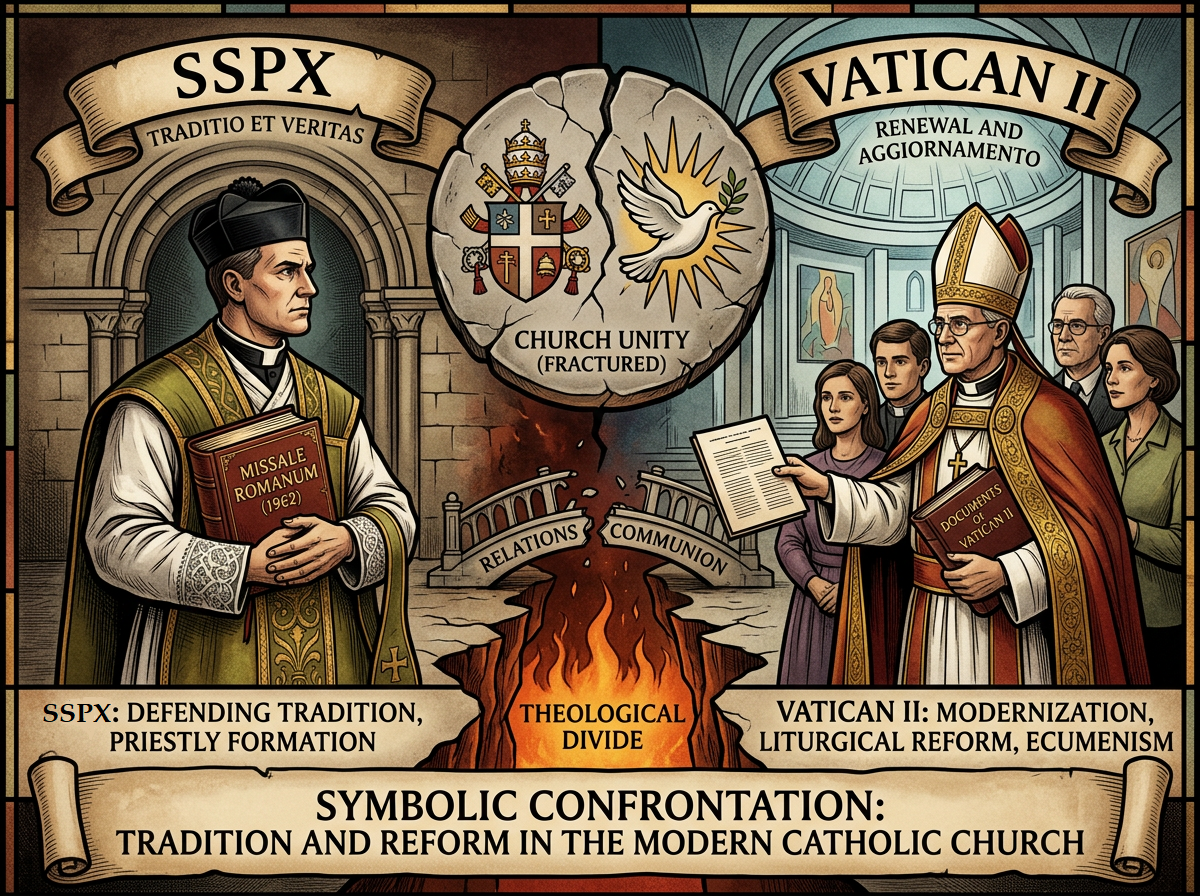
The SSPX has from its beginnings been guilty of presumption in judging the Holy See and the heavy consensus of the many bishops who participated at Vatican II. Why they cannot see their terrible arrogance about this is a matter hard to understand. They suggest that there has been a break with the past when the best minds in the Church demonstrated organic development regarding essentials and needed changes to accidentals to respond to modernity. Had the issue only been the liturgy this impasse would have ended long ago. But it is so much more, particularly about ecclesiology and soteriology. They would reduce the magisterium to a political congress to which they alone would have an absolute veto. No, this cannot be permitted and their upcoming consecration of bishops will signify not merely the widening of a rift but the formal institution of a new offshoot or ecclesial reality like the Anglicans and the Greeks before them. They hide behind the abandoned artifacts of history, heralding tradition, while refusing to honestly engage with a changing world. They feign fidelity while dissenting from the authority of the living magisterium.
It is ironic that they appeal to “conscience” for their fractured communion when they formally reject the expansion of its definition at Vatican II. They accuse the Holy Father and the post-Vatican II Church of heresy, “destroying Catholic faith and morals.” If the reforms attest to the movement of the Holy Spirit, then they commit blasphemy against the Holy Spirit, a sin regularly committed in their attack against the Novus Ordo Mass as evil and dangerous. They spurn canon law as being used to undermine the holy faith. The law of just authority applies to all except themselves.
Fidelity to the Catholic faith is more than “devotion,” it is measured by obedience to the Pope and the living magisterium. The declaration reverses reality and presumes that the SSPX is the true Church to which the Holy See must be in communion. This is utter nonsense! What are their “indispensable” faith capitulations for juridical reunion?
One Covenant That Does NOT Include the Jews, YES or NO?
It is true that the Catholic faith is the one true Church instituted by Christ. But the SSPX refuses to acknowledge contemporary Jews as children of Abraham. As far as they are concerned, the old covenant first established with them as God’s people was rendered “definitively null and void” some two thousand years ago. The implication of their faith profession is that they are guilty of deicide and that by extension the Moslems (along with them) are now children of Satan who reject Christ as the Messiah. It is no wonder that this negative assessment includes allegations of collective guilt as enemies of the Church for the death of Christ, antisemitic slander about clandestine Jewish influence for world dominion and even denial of the Holocaust atrocities. The SSPX thoroughly rejects the Nostra Aetate declaration and interfaith dialogue.
The Catholic Church neither believes that God has severed his covenant with the Jews nor that there are two covenants, one for Jews and the other for Christians. The relationship with the Jews remains because God keeps his promises. The old covenant is fulfilled by the new in Jesus Christ. The Church is the New Israel and as such we would reject Zionism. Just as many of the Jews accepted Christ in the ancient church of Jerusalem, we pray that many of our Jewish brothers and sisters will today come to know and love him. The Jews are our elder brethren in faith, the first called, and they are still beloved of God. We read in Romans 11:25-29:
“I do not want you to be unaware of this mystery, brothers, so that you will not become wise in your own estimation: a hardening has come upon Israel in part, until the full number of the Gentiles comes in, and thus all Israel will be saved, as it is written: ‘The deliverer will come out of Zion, he will turn away godlessness from Jacob; and this is my covenant with them when I take away their sins.’ In respect to the gospel, they are enemies on your account; but in respect to election, they are beloved because of the patriarchs. For the gifts and the call of God are irrevocable.”
While we can argue a movement from the natural religion of Judaism (belief in the one true God) to a supernatural religion in Catholicism (the revelation of the Trinity), we share a common faith patrimony. The Christian Savior will always be the Jewish Messiah. None of this detracts from “Jesus” as the saving name— that none are saved apart from him— that he is our one Mediator and Savior— that none come to the Father except through him. We are redeemed by the saving work of his Cross which is re-presented to us in an unbloody fashion by the Eucharist. The significance of Christ and the sacraments remain what it has always been, but the SSPX declaration would intimate a change where there has been none.
Devaluation of Mary’s Role in Salvation, YES or NO?
While there has been a warning about misunderstanding certain Marian titles, it is still acknowledged that Mary cooperates in a unique way with the redemptive work of her Son. Nothing has changed in our teachings.
No Salvation Outside the Catholic Church – YES or NO or Qualified?
The SSPX profession next makes a subtle nod to Fr. Feeney’s literal interpretation of “Extra Ecclesiam nulla salus,” or no salvation outside the Church. Despite SSPX protestations to the contrary, this dogma of faith remains intact. Just as none are saved apart from Christ, the Church as his mystical body is also necessary for salvation. However, the SSPX would reject any nuances to this teaching. This would appreciably leave as damned, all non-Catholic “Christians” as well as all “Jews, Muslims, pagans, and atheists.” By contrast, we would resist making a verdict and leave ultimate judgment to God regarding those not in formal communion “through no fault of their own.” We would insist that the negative judgment is upon those who die knowing that the Catholic Church is the true Church and still refused to get baptized and join her. There is also ambiguity because of the reformation and Protestant faith communities. If their baptisms are judged as valid then are they not affiliated with the Catholic Church, even if tenuously? Will Jesus renounce those who have faith in him and love him? When the Protestant reformers broke away, they purloined many essential elements of the true Church. Would there not be salvific value to these elements, like baptism and the Bible, for those who were born into these sects? The SSPX says no, “Outside the Roman Catholic Church, and without the profession of Faith that she has always taught, there is neither salvation nor remission of sins.” Vatican II’s Lumen Gentium says yes, clarifying that those who, through no fault of their own, do not know the Gospel of Christ or his Church, but who nevertheless seek God with a sincere heart, may yet achieve eternal salvation. Ignorance does matter. God is neither capricious nor monstrous in his providence. Any who are saved are saved through the Church. About this there is no debate— where the SSPX and the Vatican part ways is over whether all the saved must be a visible part of the Church during their mortal lives.
Who is the Real Threat to the True Church?
The declaration asserts, “The denial of even a single truth of the Faith destroys faith itself and renders radically impossible all communion with the Catholic Church.” Given the SSPX misinterpretations, made clear by the Vatican, I would concur that the SSPX is not spiritually prepared for full reunion with the Church established by Christ. When they consecrate their illicit bishops, they will enter formal schism and face excommunication. While they may consider themselves to be the true Church, in fact they will stand condemned by their own reasoning— placing themselves outside the Barque of Peter.
The Pope is the Guardian of the Deposit of Faith, YES or NO?
The great commission has never been renounced. Continuity with our traditions has been maintained. The SSPX “doth protest too much.” We give no quarter to false worship and the reformed liturgy is both licit and valid as are all the seven sacraments. The Pope continues his role in history as the guardian of the deposit of faith. Unfortunately, some would wrestle this role away from him.
The Mass is an Unbloody Sacrifice for the Forgiveness of Sins
The Mass remains essentially a sacrifice for atonement or propitiation and yet this does not make it any less a sacred meal where the Lamb of God must be eaten. We would also affirm the real presence of the Eucharist.
We May Not Bless Gays but Should We Hate Them?
Threaded among the many things we have in common are the matters of ambiguity and deliberate misrepresentation. Outreach to gays can mandate no violation of the moral law and it is true that their unions “can in no way be blessed by ministers of the Church. This was recently reaffirmed by Pope Leo XIV. But we have always regularly blessed groups and individuals without interrogations about their state of life and sins. Blessings may be affirmations as over Christian marriages, but they might also be appeals for repentance, conversion and healing. The declaration makes no mention of this.
Should We Rescind Religious Liberty?
The SSPX declaration also makes more of a variable social teaching than I suspect it was supposed to mean. We read: “The submission of institutions and nations, as such, to the authority of Our Lord Jesus Christ flows directly from the Incarnation and the Redemption. Therefore, secularism of institutions and nations constitutes an implicit denial of the divinity and universal kingship of Our Lord.” What are we to make of this? The separation of church and state in the United States has allowed the Church to flourish. The right to religious liberty has protected the Church even as it has made space for others to freely exercise in conscience what they believe. Can we ignore a world that has changed around us? What sense would it make to speak of the divine right of kings when there are none? Should our teachings not reflect interaction with the current real world and not one that has disappeared? Many Americans might love the old Mass, but they would not be so happy to see their Protestant neighbors forcibly divested from their churches and forced to worship underground. Ecumenism does not mean we are all the same. It opens doors for Catholic reunion, yes; but it also allows separated brethren (not just heretics) to work together with us for a better world that reflects shared values about justice and charity.
Which Roman Catholicism is Truly Protestant?
The SSPX has long argued against what is seen as the Protestantism of Roman Catholicism. However, maybe they need to look at themselves? Davide Pagliarani’s declaration finishes with, “With the help of Our Lord, we would rather die than renounce them” (the listed articles of faith). I am reminded of Martin Luther at the Diet of Worms. He said, “My conscience is captive to the Word of God. I cannot and I will not recant anything, for to go against conscience is neither right nor safe. God help me. Amen.” He concluded, “Here I stand, I can do no other!”
This is the home of the AWALT PAPERS, the posting of various pieces of wisdom salvaged from the writings, teachings and sermons of the late Msgr. William J. Awalt.