














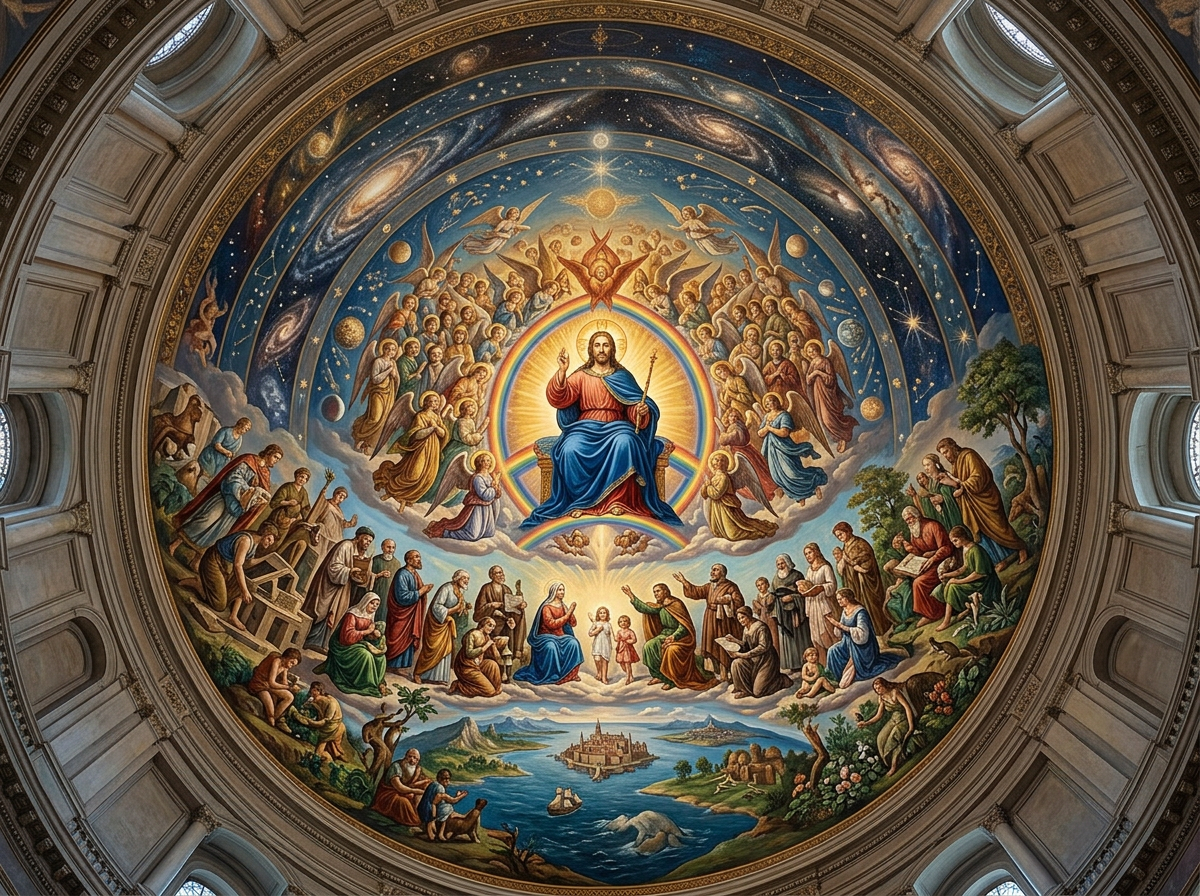
The Christian humanism of Catholicism is an acknowledgment of God’s handiwork and the beauty of creation. Although humanity is fallen, there remains beauty to men and women as made in the “image of God.” As the stewards of creation, human beings are a composite of flesh and spirit. While we share with animals a material body, we have infused souls that possess intellect and will. We can know and love. Beyond the sentiment or appetites of beasts, we are self-aware and know that we know. Further, God has wired us for himself, and we reach out toward the divine and to each other. What we know— we can love. While it might sound ridiculous or dare I say blasphemous, even the man who is damned remains a masterpiece of intelligent design. As if this were not enough, the incarnation of Christ grants our human nature a far greater dignity. Creatures of God properly become his children. Divine grace restores what was lost and adds a unity with the living Word as the center of creation— we abide in the “sure and certain” hope of our salvation as adopted sons and daughters of the Father, kin to Christ and children of Mary. We are remade into the “likeness of God” wherein the heavenly Father sees his Son in us.
Pope Leo XIV’s encyclical, MAGNIFICA HUMANITAS, is addressed as a caution, not simply to believers, but to a larger world that does not share our faith or understanding of Christ. While targeting the challenges posed by artificial intelligence, it is a warning for us all not to lose sight of the humanity we all share. The Holy Father has not authored a treatise into the many intricacies of Christian anthropology. No one should interpret the encyclical as a denial of the Christocentric focus of the Church’s teachings. Indeed, the Pope writes in the very first paragraph of his letter, the following: “Whenever humanity is in danger of marring its true identity, we Christians lift our eyes to the Incarnate God, knowing that it is ‘only in the mystery of the Word made flesh that the mystery of humanity truly becomes clear.’ In Jesus Christ, this humanity in its grandeur becomes the Way, the Truth and the Life, opening the path for each of us to grow toward fullness.”
Certain dissenters on the left will not like the reference to the Tower of Babel since it insinuates a confrontation with modernity, which many of them make into an idol. Apologists for the hardliner traditionalists will reject it just as they did Vatican II, Pope Paul VI’s DIGNITATIS HUMANAE (religious liberty), Pope John Paul II’s EVANGELIUM VITAE and Pope Francis’ DIGNITAS INFINITA. One of the great failings of schismatic traditionalists is their resistance to granting human dignity an incommensurate value. The universal catechism offers us a wonderful corrective: “Being in the image of God the human individual possesses the dignity of a person, who is not just something, but someone. He is capable of self-knowledge, of self-possession and of freely giving himself and entering into communion with other persons. And he is called by grace to a covenant with his Creator, to offer him a response of faith and love that no other creature can give in his stead” (CCC 357).
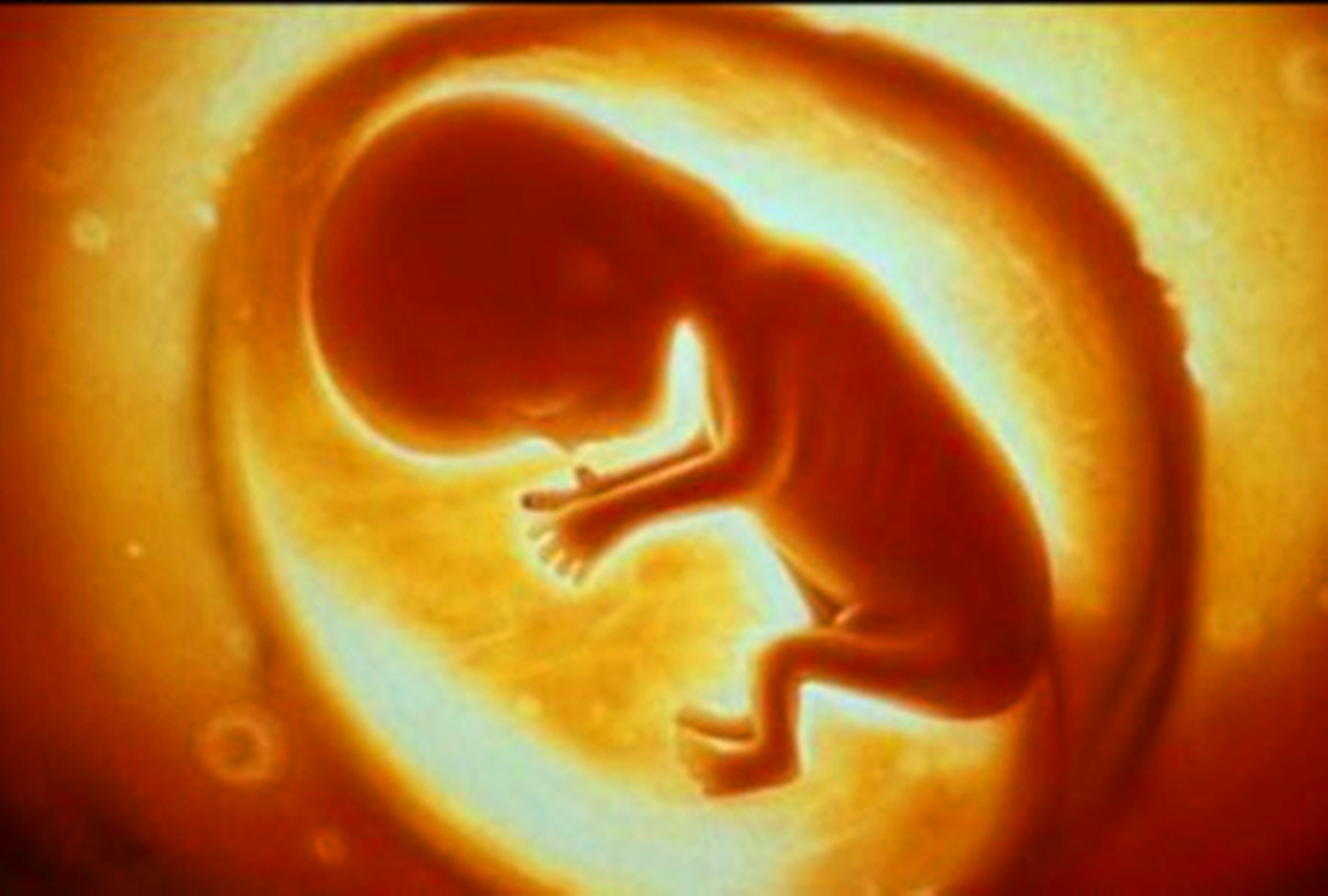
Human dignity is rooted first in creation. This is a hallmark of the Gospel of Life. Made in the image of God, this standing comes with conception and cannot be stripped away from living persons. Second, the incarnation of Christ takes this dignity to the next step, elevating our common humanity. The offer of his life is expressive of the value that the Lord places in us. Jesus desires that we might share in his divine love and life.
Filed under: Uncategorized | Tagged: Bible, christianity, Creation, dignity-of-person, Faith, God, humanity, Jesus |


















Leave a Reply