
• Our Blogger

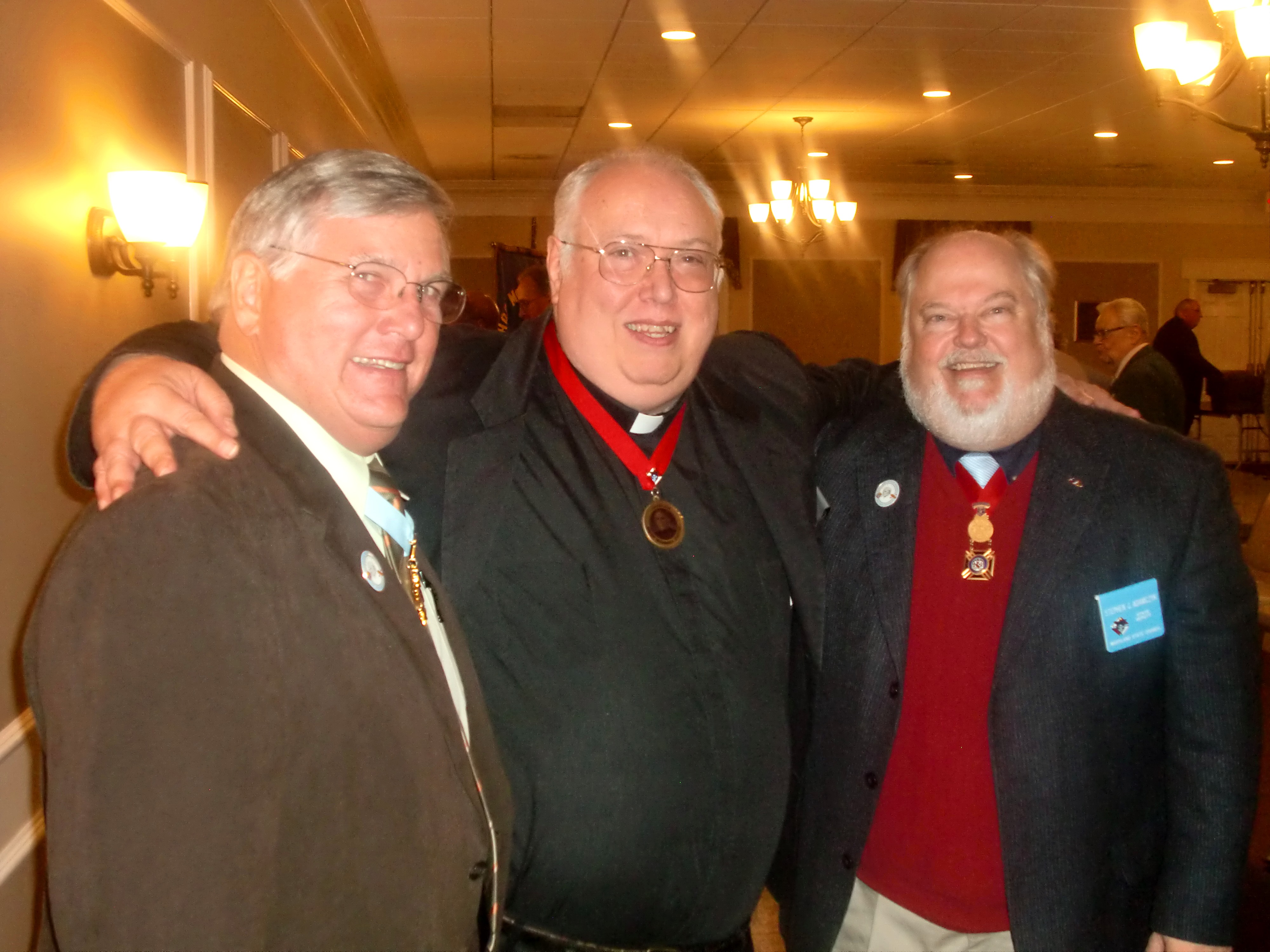
    Fr. Joseph Jenkins

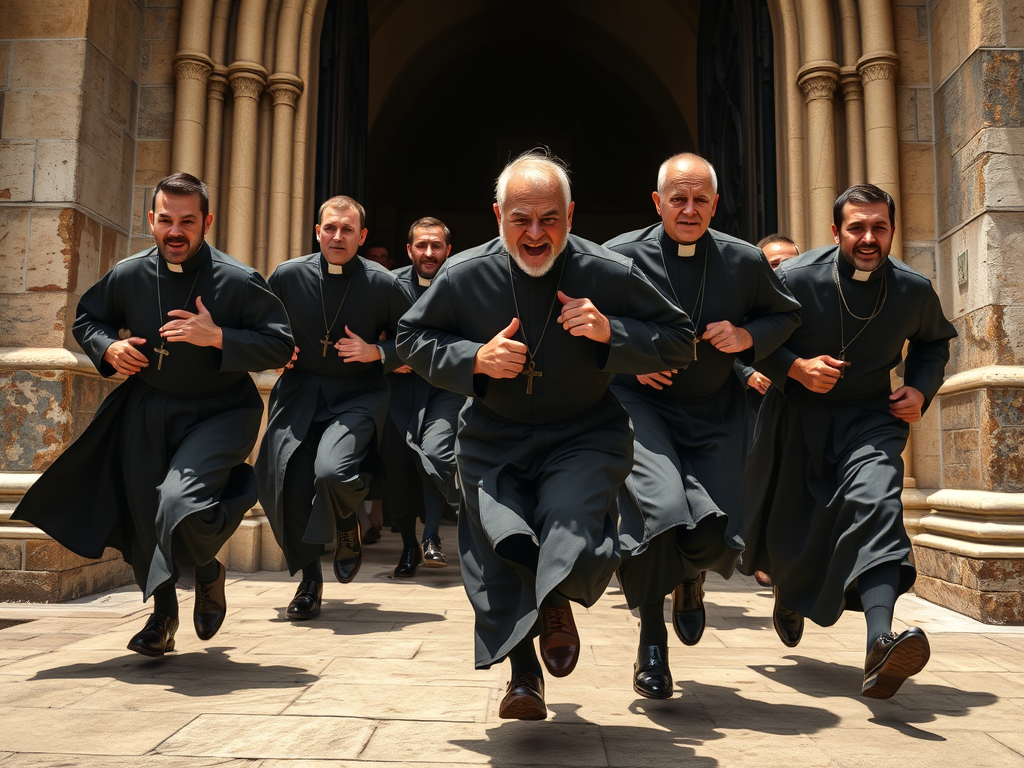
  • An important theme for this blog is the scene in the New Testament where Jesus can be found FLOGGING the money-changers out of the temple. My header above depicts a priest FLOGGING the devils that distort the faith and assault believers. The faith that gives us consolation can and should also make us very uncomfortable. Both Divine Mercy and Divine Justice meet in Jesus. Priests are ministers of reconciliation, but never at the cost of truth. In or out of season, we must be courageous in preaching and living out the Gospel of Life. The title of my blog is a play on words, not Flogger Priest but Blogger Priest.

  • Archives

  • Categories

  • Recent Posts

  • Recent Comments

    Father Joe's avatarFather Joe on The Prayer to Saint Michael at…
    Inveilis's avatarInveilis on Ask a Priest
    Joanne M Rowan's avatarJoanne M Rowan on Reflecting Upon SSPX Dissent…
    Joanne M Rowan's avatarJoanne M Rowan on The SSPX Makes It Itself Out M…
    Jeremy's avatarJeremy on Ask a Priest

An Appeal to Reconciliation for the Good of Souls

Having read Kevin Wells appeal to a SSPX priest to join the Novus Ordo Church out of a desire to care for souls, I penned the following reflection. He spoke from the heart but I suspect his cry will either go unanswered or be rebuked.

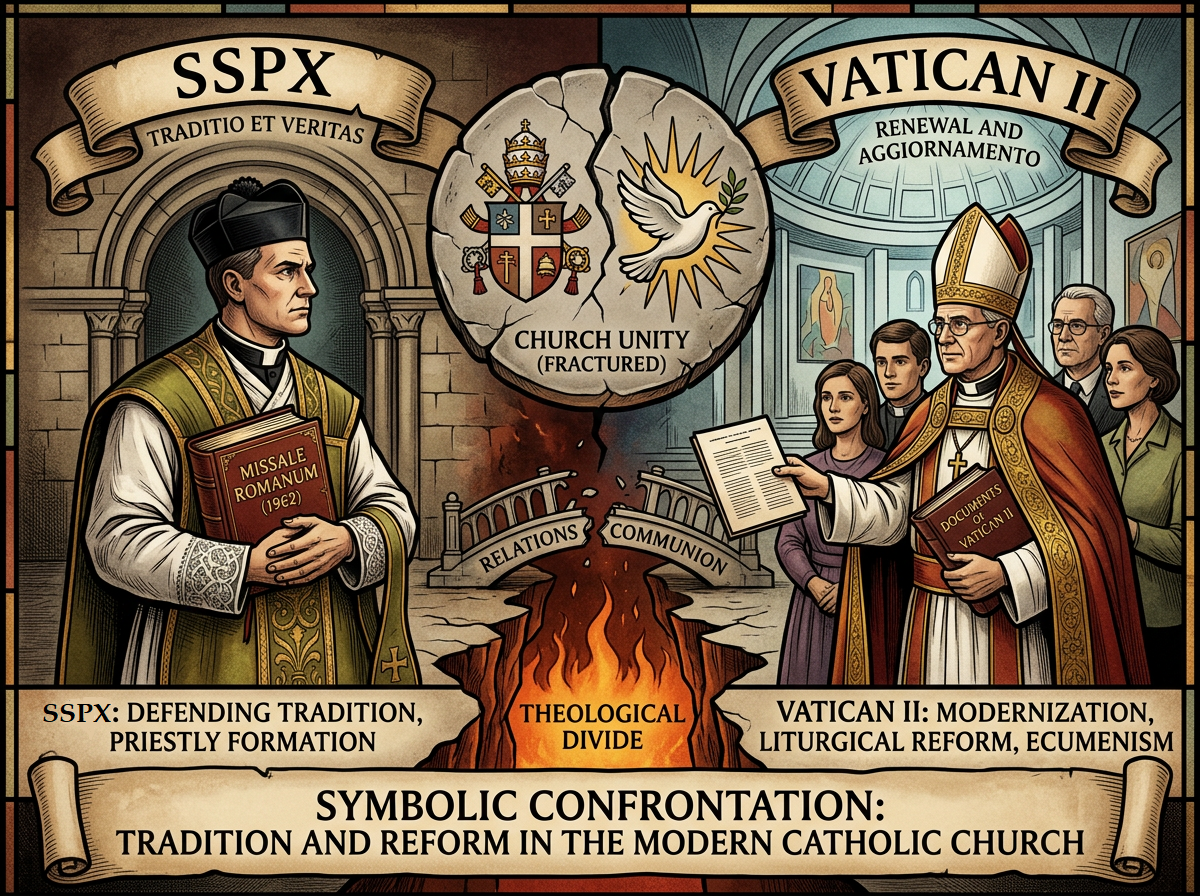
First, we need to appreciate that designations like traditionalist Catholics and Novus Ordo Catholics lack real substance. One is a Catholic or not, nothing more. There is the living Catholic Church under the Pope, and then there are those who are outside of it.  We might debate the extent that a Protestant is affiliated with Catholicism through baptism and shared elements of the faith; but no Lutheran, Methodist or Presbyterian would regard himself as in any way a Catholic by extension. Nevertheless, the SSPX tries to make this argument because if they admit formal separation from the See of Peter then their house of cards comes tumbling down. They would either have to go the route of the sedevacantist breakaway churches and appoint their own Pope or to adopt the stance of conciliarism and shared communion as manifest between Orthodox autocephalous churches.

Second, the failure of any reconciliation rests squarely with the SSPX. They would arrogantly usurp for themselves an authority that belongs exclusively to the Holy See. Their path to reconciliation and regularization would be as follows:

  • The Pope would have to renounce Vatican II, especially teachings about ecumenism, religious liberty, freedom of conscience, and the inherent dignity of persons.
  • All liturgical changes would have to be repealed.
  • There would have to be a massive number of excommunications and expulsions to purge the Church.  
  • Indeed, all new ecclesial initiatives would be revoked, including the permission for the Divine Mercy devotion as it was suspect and forbidden prior to Vatican II.

Such was never going to happen. Despite posturing, reunion with the SSPX was never in the picture. Despite high hopes for individual clergy, it is unlikely, except for maybe a few seeking incorporation into the Fraternity of St. Peter. 

The fact that a priest cares for souls is the bottom line and should not be regarded as something exceptional. But this movement of the will and heart must also be in sync with a proper understanding of the truth by the mind. Otherwise, any fruits will be seriously inhibited or even blocked. A Protestant minister might be on fire to save others from perdition and to foster a saving faith relationship with Jesus. But he has neither the Mass rendered by priests nor the absolution given to these same ministers of Christ’s reconciliation. His efforts may bear some small fruit, but they are handicapped by his own deficiencies.

Many in the traditionalist camp would stamp such a Protestant minister and his flock as likely damned for being outside the boundaries of the visible Catholic Church. Opposed to religious liberty, they would like to erase the public non-Catholic churches and schools. Indeed, they eye with suspicion the Novus Ordo liturgy as dangerous and the orders of its priests as suspect. They renounce by “association” the larger Church for its ecumenism toward so-called “separated brethren.” They subscribe to a methodology of fear— risk no change, stay separate or risk going to hell— distrust the Pope, avoid Protestant contamination, and oppose the world.
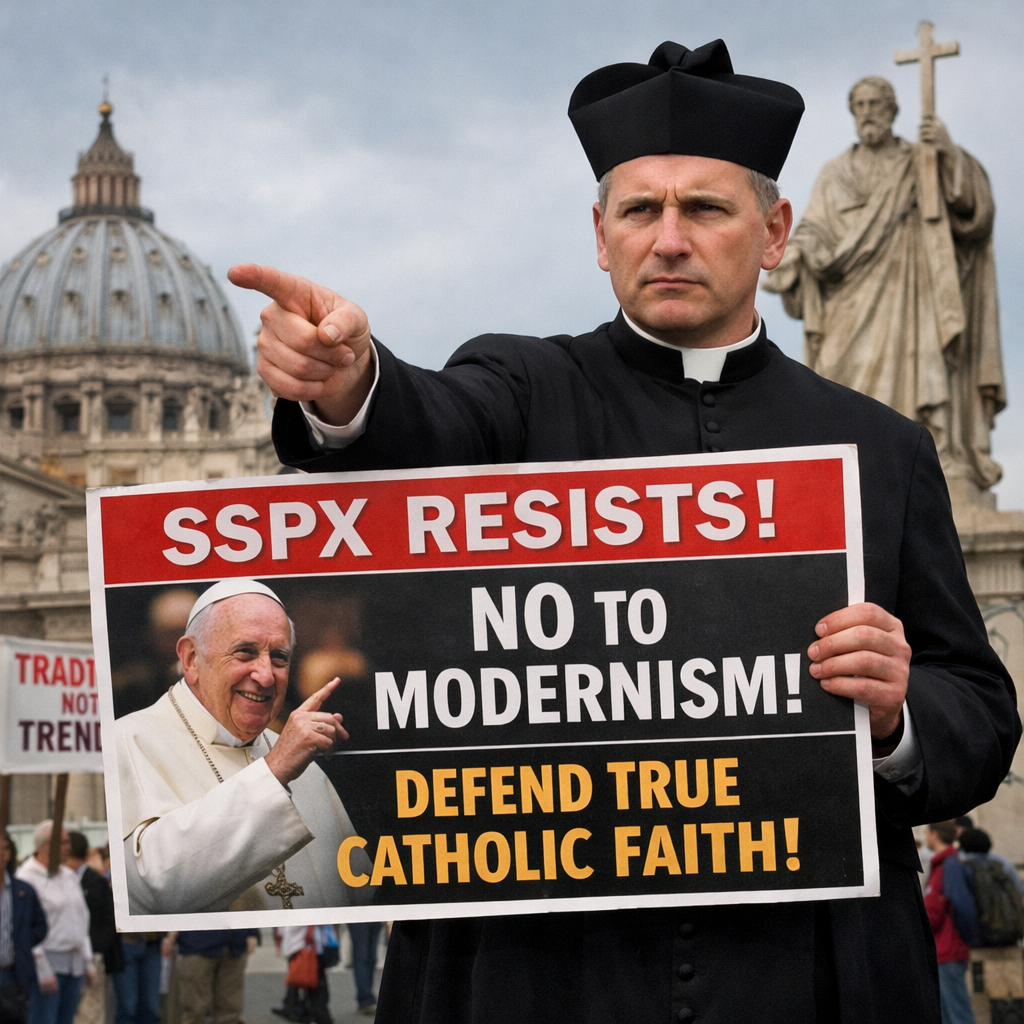
If a traditionalist priest disavows the priesthood and ministry of priests in the juridical Church under the Holy Father, then why would he be concerned about his fatigue and making “the good fight”? As far as he is concerned, despite the many protestations to the contrary, the Novus Ordo priest is not his brother but the enemy. Note that the SSPX tells its lay participants that it would be better to miss Mass entirely than to attend a Novus Ordo liturgy. The living Church in union with Pope Leo XIV would regard this attitude as blasphemous. The SSPX clergyman with this sentiment might desire to save souls but despite all the trappings of tradition, he has become what he most detests, a Protestant. The ancient faith and the efficacy of the liturgy may still be fortuitous to believers, but not because of the rebel priest but despite his failings. Wherever we find the Pope, we find the Catholic Church. This is the quandary around which the traditionalists must dance. They acknowledge the validity of the Pope in theory, but in practice his authority over them is rejected.  What is the old saying about a duck? Well, right now it is quacking away!  

The true Church must courageously engage the world in the time and place where she finds herself. Confident in the charism of indefectibility, she must not retreat from the world like the SSPX. The living Church applies social teachings to the world as it is (not as it was). She acknowledges the organic development of doctrine from seeds planted in the Gospel. Saving revelation has ended with the apostle John, however teachings are not stagnant but grow in our understanding. However, the SSPX goes further in the wrong direction, rejecting (in practice if not in principle) the current Pope as the chief lawgiver and rejecting the historical fact that each successor of Peter is the living and breathing embodiment of the Roman rite. The way he says Mass is the way the rest of the Western Church says Mass. We follow living popes, not dead ones.

The charge of Modernism targeted against the post-Vatican II Church is particularly upsetting and wrong-headed. Modernism came into existence by priests who regularly celebrated the Traditional Latin Mass. Fr. Alfred Loisy even acknowledged that the rubrics of the old Mass allowed him to robotically celebrate the liturgy daily out of habit long after he had stopped believing. Further, it troubles me that anyone would caricature the Novus Ordo Mass as leaving the flock starving. It is the unbloody or clean re-presentation of the sacrifice on Calvary. It is a sacrifice that honors God and makes propitiation or satisfaction for sin. The Eucharist is the substance of the real body and blood of the risen Christ, whole and complete, given as our saving food. Accidentals have changed and no liturgy is perfect. But the substance remains. The Church saw revolutions, heresy and Mass defections before, even when the rituals of sacrifice were untouched.  The problem is not the Mass but a secular world that is increasingly hostile to people of faith.  While the Lord gave us the great commission, too many have allowed themselves to be converted by the atheistic and materialistic hedonism of our times. For all we know, the current situation might have been worse without Vatican II.  But about this, we cannot know for sure.  We live in an age where there is much dissent from the left and right. Violence against the Church from the right is somewhat surprising, but perhaps more perilous than that on the left or from progressives. But neither side can stand any attempted middle-course. That is what defines the post-conciliar Church. This tension needs to end. An ancient motto from the 17th century comes to mind, quoted by Pope St. John XXIII in his 1959 encyclical Ad Petri Cathedram, “In essentials unity, in non-essentials liberty, in all things charity.”

The SSPX is Racing Away from the True Church

Father Etienne Ginoux’s rebuttal to Cardinal Sarah is more of the same disheartening SSPX apologetics, not only for the illicit episcopal consecrations but also for the Society’s widening departure from Catholic unity.  But it is nonsensical to imagine that the SSPX can preserve doctrinal integrity when it pits itself against the living Magisterium of the one true Church instituted by Christ and protected by his grace and the guiding hand of the Holy Spirit.  The Pope and other churchmen are not impeccable and certainly there is no guarantee that every loose opinion or practical judgment will be infallible. However, despite the presence of weak men, and even the intrusion of ambiguity, the charism of truth remains with the Catholic Church.  Sacred Scripture and Tradition are the sources of Christian revelation that are handed down to us through the teaching authority appointed by our Lord— through the ordinary and extraordinary teaching authority of the successors of Peter (the Popes) and the bishops in union with him. Our doctrines are preserved and develop through their transmission by the Holy Father and through the many ecumenical councils where bishops gathered to formulate truth and to establish discipline for the Holy Church.  Vatican II was one of these councils. While it may sound cynical, I suspect that SSPX intransigence is largely due to its origins of rebellion and over a half century of stubborn juridical autonomy from the Holy See. The Lefebvrites are reluctant to hand over what they have built, especially to a larger Church in which they no longer have supernatural faith and to a leadership they mistrust. Despite what the SSPX would have us believe, the Church today may face many afflictions, but she is not ready for hospice and is certainly not dead. Indeed, the emergency crisis of faith does not require the poison of illicit consecrations but rather the medicine of obedience and fidelity.

Schismatic groups represent a lesser share of the overall Latin Mass community than they would make out. The SSPX has 103 chapels in the U.S., compared to the some 500 non-SSPX parishes that offer the TLM. Before the 2021 restrictions took effect, more than 800 parishes offered the TLM. The crisis in the Church does not demand what the SSPX plans to do. We must not catch the disease of atheistic or secular humanism from the left nor an inflexible legal dogmatism on the right. Both the schismatic anachronists and the heretical progressives suffer from a profound wariness, a deficiency of trust and faith in the Pope and the living magisterium. They are opposite sides of the same coin and that coin is the price of departure from Catholic unity.

Of course, as with the “churches” of the Eastern schism and the “ecclesial communities” of the Protestant reformation, once union is broken, time only cements the separation. An individual here or there or a few lesser groups might return to Catholic unity, but generally the fracture persists and there is a continuing divergence in teaching or beliefs.  Reconciliation may yet be possible, but it is unlikely. While the SSPX level the charge of doctrinal “rupture” upon the leadership of the Catholic Church, the real estrangement or even schism rests upon them.          

Cardinal Sarah writes: “How many souls are at risk of being lost because of this new division?” Father Etienne Ginoux of the SSPX returns, “One might rightly ask whether it is truly the souls of the faithful who attend the chapels of the Society that are in danger, or whether we should fear more for the salvation of those who follow the ‘prelates who renounce teaching the deposit of faith’ or the ‘wolves in sheep’s clothing’ — denunciations that come from the cardinal himself.” This is his rationale for the excommunications and disobedience to the Pope should the pending consecrations take place. While currently lacking juridical standing, what is left unspoken is that should the SSPX sever its ties with the Vatican, the bishops involved will be excommunicated and schism will be threatened. You cannot save the Church by leaving the Church. Fundamental to all the other amassing errors of the SSPX is their divergent ecclesiology.  

I am reminded of the Protestants, particularly those that followed Martin Luther. The errant Augustinian friar never intended to establish a new church, but like the SSPX, sought to reform the Catholic Church. He also did not trust the Pope.  It is ironic that the SSPX which so thoroughly spurns the “heretics” should mimic their disobedience and rebellion. The fealty that SSPX past generations gave the Pope will likely dissolve altogether in the next. There can be little to nothing of allegiance with the loss of respect.     

Seeking to rationalize disobedience and rebellion, Father Ginoux offers a litany of complaints against the Holy See. His argument is that a Church that has compromised itself cannot demand compliance. No reconciliation on these matters will make any difference because they are “excuses” for an autonomy that has become habitual.  Nevertheless, what are some of these matters?

He first mentions the opening of Eucharistic communion to remarried divorcees and yet what has changed in general practice? While we do not interrogate communicants or violate the seal of confession, there is no encouragement for those in mortal sin to receive the Eucharist (this includes adulterers, fornicators, and active homosexuals).  Despite talk and speculation, nothing has changed. All are still urged to be in a state of grace to receive the sacrament. Those who are not Catholic or spiritually prepared are asked to make a good act of contrition and pray for spiritual communion. Divorced Catholics desiring to regularize their situations may explore the possibility of an annulment and con-validation. We do not interrogate believers or risk breaking the seal of confession for would-be communicants. We do not lock out those in bad marriages from attending Mass. We do not refuse to baptize children from questionable or compromised unions. Despite speculation and questionable statements from certain churchmen, where is the codification of change on this matter? It is nowhere to be found. 

While there is a certain ambiguity over the possibility of blessing same-sex couples, these irregular unions are not directly blessed or affirmed, rather individuals are blessed and we prayerfully ask that they might know contrition, repentance and healing. The Church does not bless sin. The Holy See has directed that the so-called blessings cannot be directed toward any validation or solemnization of unions. Fr. James Martin, SJ, might be given a certain deference for his work as a priest to an alienated population, but he is not the Pope.  Indeed, Pope Leo XIV recently met with and praised those who continue the COURAGE ministry that urges celibate love, charitable service and prayer from those with the same-sex disorientation. This is where we find the mind of the Church.    

God does not directly will religious pluralism as such would constitute the sin of indifferentism.  Our Lord instituted the Catholic Church as the true faith, and we should work and pray for the day that all might be one. While other churches or faiths might have elements of the truth mixed with error, we have an obligation as missionary disciples to bring others to the truth and Catholic unity.

The titles of Mary are not so much questioned as there is a concern about misunderstanding. The sole Mediator of Christianity is Jesus Christ.  But Mary as the Mediatrix of All Graces always directs her children to Jesus. As some of the fathers have speculated, she functions as the neck of the Mystical Body with Christ as the head and the rest of us as the body.  All graces pass through the neck to the body!  Mary is also called Co-Redemptrix. But this must be properly defined. She cooperates with the saving work of her Son.  Jesus is the redeemer who buys us back from the devil at the price of his bruised flesh and saving blood.  As the first disciple of her Son, Mary cooperates with his saving work.  She is there at the nativity and at the cross and after the resurrection. Jesus gives himself to the Father. At the nativity God comes down from heaven and she holds him in her arms. At Calvary, the dead body of her Son is placed in her arms and taking a priestly stance, she offers him back to the Father. She joins her suffering to the Lord’s passion. The terms may or may not be employed, but nothing changes in terms of Marian agency. 

The so-called emergency in the Church is real, but if the SSPX goes ahead with illicit episcopal consecrations, it will prove itself as not part of the solution but of the problem. I suspect the future will find them as a breakaway church and one that disavows ecumenical dialogue and collaboration. They will become a spiritual ghetto outside the Catholic Church.