• Our Blogger

    Fr. Joseph Jenkins

  • An important theme for this blog is the scene in the New Testament where Jesus can be found FLOGGING the money-changers out of the temple. My header above depicts a priest FLOGGING the devils that distort the faith and assault believers. The faith that gives us consolation can and should also make us very uncomfortable. Both Divine Mercy and Divine Justice meet in Jesus. Priests are ministers of reconciliation, but never at the cost of truth. In or out of season, we must be courageous in preaching and living out the Gospel of Life. The title of my blog is a play on words, not Flogger Priest but Blogger Priest.

  • Archives

  • Categories

  • Recent Posts

  • Recent Comments

    Father Joe's avatarFather Joe on The Prayer to Saint Michael at…
    Inveilis's avatarInveilis on Ask a Priest
    Joanne M Rowan's avatarJoanne M Rowan on Reflecting Upon SSPX Dissent…
    Joanne M Rowan's avatarJoanne M Rowan on The SSPX Makes It Itself Out M…
    Jeremy's avatarJeremy on Ask a Priest

The Prayer to Saint Michael at the End of Mass

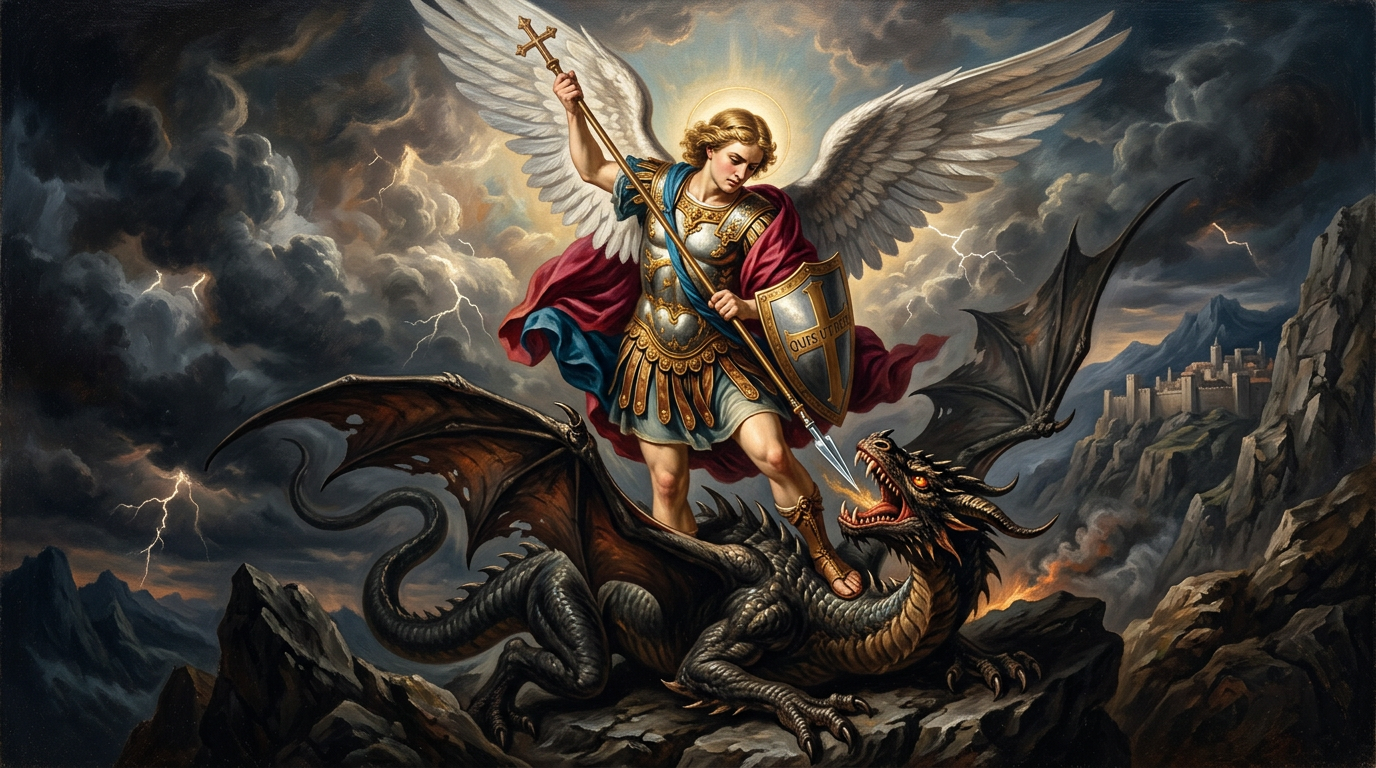
Archangel Michael with sword and shield fighting a dragon on rocky terrain

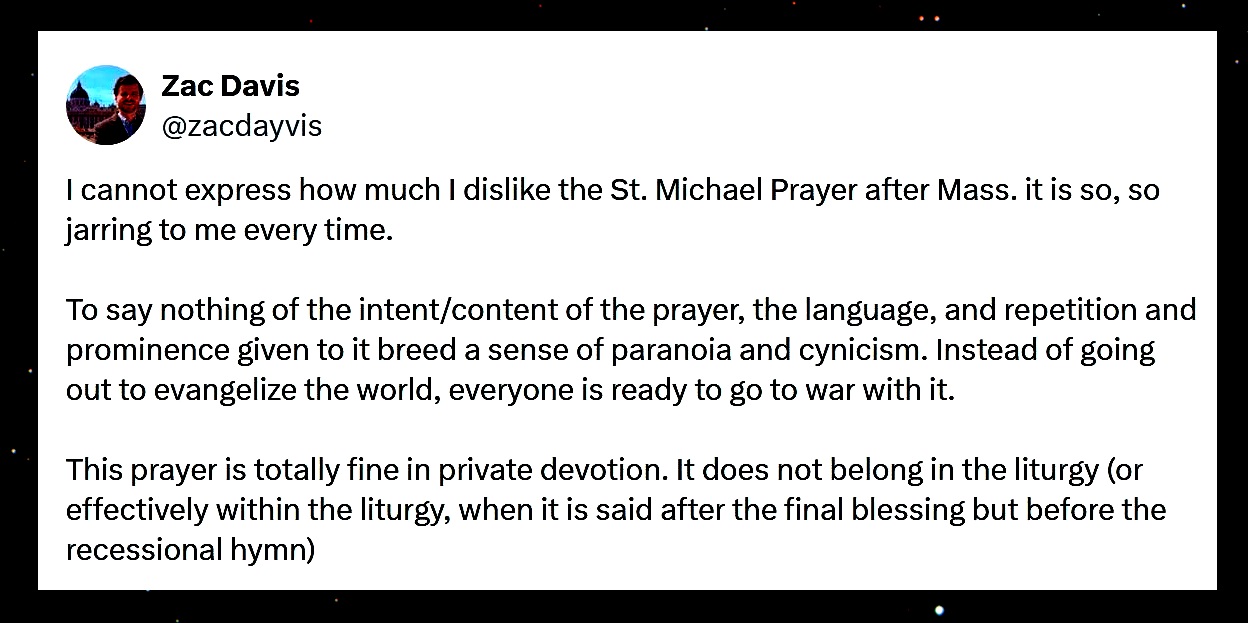
Zac Davis, the associate editor at America Magazine writes:
(1) Does the Devil Exist & If So What or Who Is He?

How can a man of Zac Davis’s learning and standing write something so incredibly dismissive of what may be the greatest deliverance prayer of the Church? His progressive dissent on LGBTQ issues aside, does he not believe in the existence of spiritual beings, good and demonic? This question is not entirely rhetorical because certain theologians deny the existence of angels and devils, arguing instead that they are metaphors or vague forces but not personal powers and principalities. This is crucial because the devil would prefer us to believe that he does not exist. It makes it easier for him to hide. The devil is a spiritual roach, nesting in the dark cracks of the world, shunning the light.
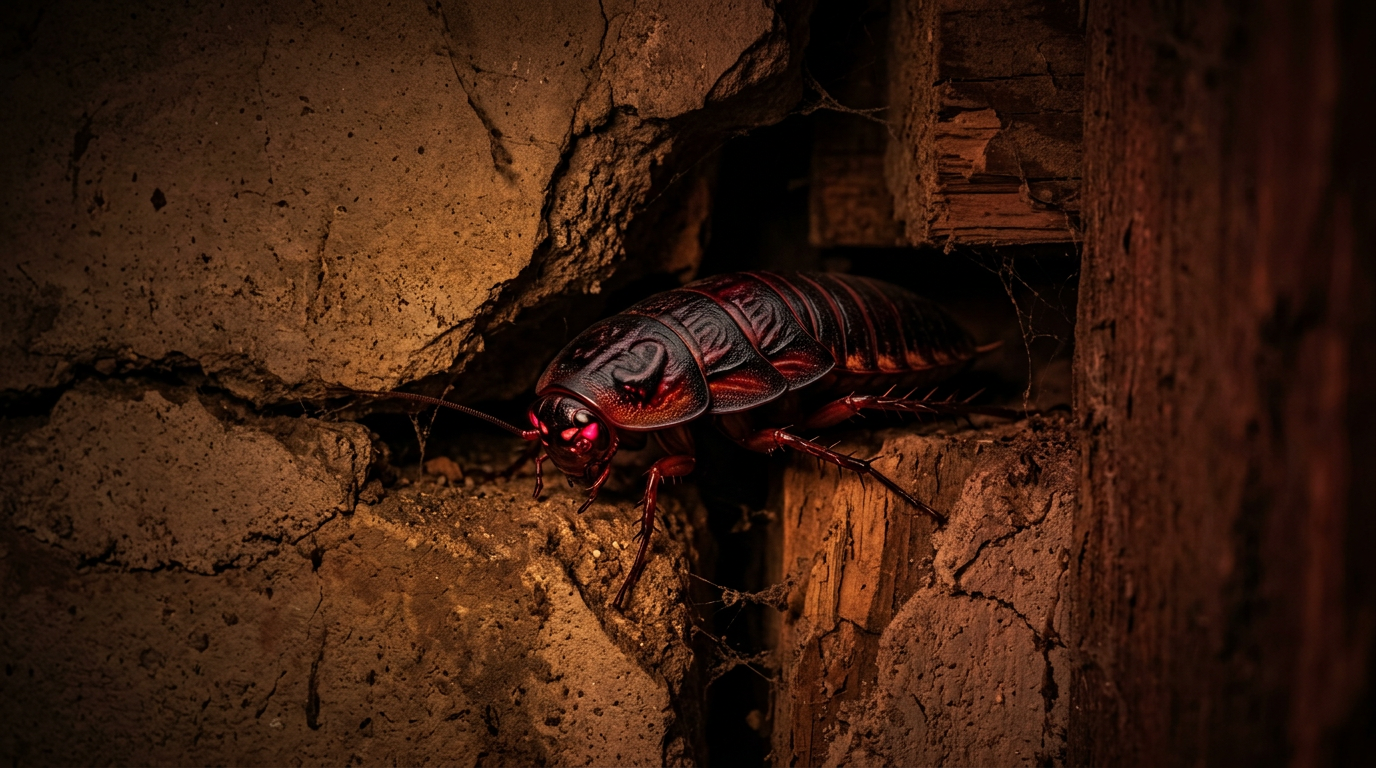
A cockroach resting in a crack between rough, earthy surfaces

Davis would contend that the “concept” of a devil might have a helpful function in terms of regular “spiritual discernment,” but he would brush aside the notion of any literal “warfare.” Rather than speaking at length about a personal devil, he writes about temptation and the “spirit of the world.” Distancing himself from the artistic renditions of Satan as a horned devil, he would suggest imaging the devil as “a deceptive force” or compulsion not to be one’s true self.  

(2) Is Not the Church Militant Called to Spiritual Warfare?

Despite what he says about the prayer being acceptable for private devotion, it is not an oration you would ever hear from his lips. His comment here is utterly disingenuous. Let it be clear, his objection to the Prayer of St. Michael is not just when it is associated with Mass, but at any time or place. As in his quote, he views spiritual warfare as breeding a sense of “paranoia and cynicism.” He says that we should be looking for good in the world instead of seeking where to wage war. This seems incredibly naïve in my estimation. We do not have to go looking for evil, it quickly comes looking for us. He would have us go into spiritual battle unarmed and with eyes closed. Despite his analysis, the Prayer to St. Michael does not imply absolute antagonism between the Church and the world. Instead, like the surgeon who removes cancer to save a patient, the Church would seek to save the world by divulging the devil’s hiding places and purging him from his nests.  Spiritual warfare is not contradictory to John 3:17, where we are taught, “For God did not send his Son into the world to condemn the world, but that the world might be saved through him.” We may be Christ’s Pilgrim Church, but we also remain the earthly Church Militant. The Church is our spiritual oasis and our headquarters in a war with powers seen and unseen. We call upon St. Michael, a general in God’s forces, and yet, as in Jeremiah 20:10-13, the LORD is our Great Champion. If God is on our side then whom shall we fear?
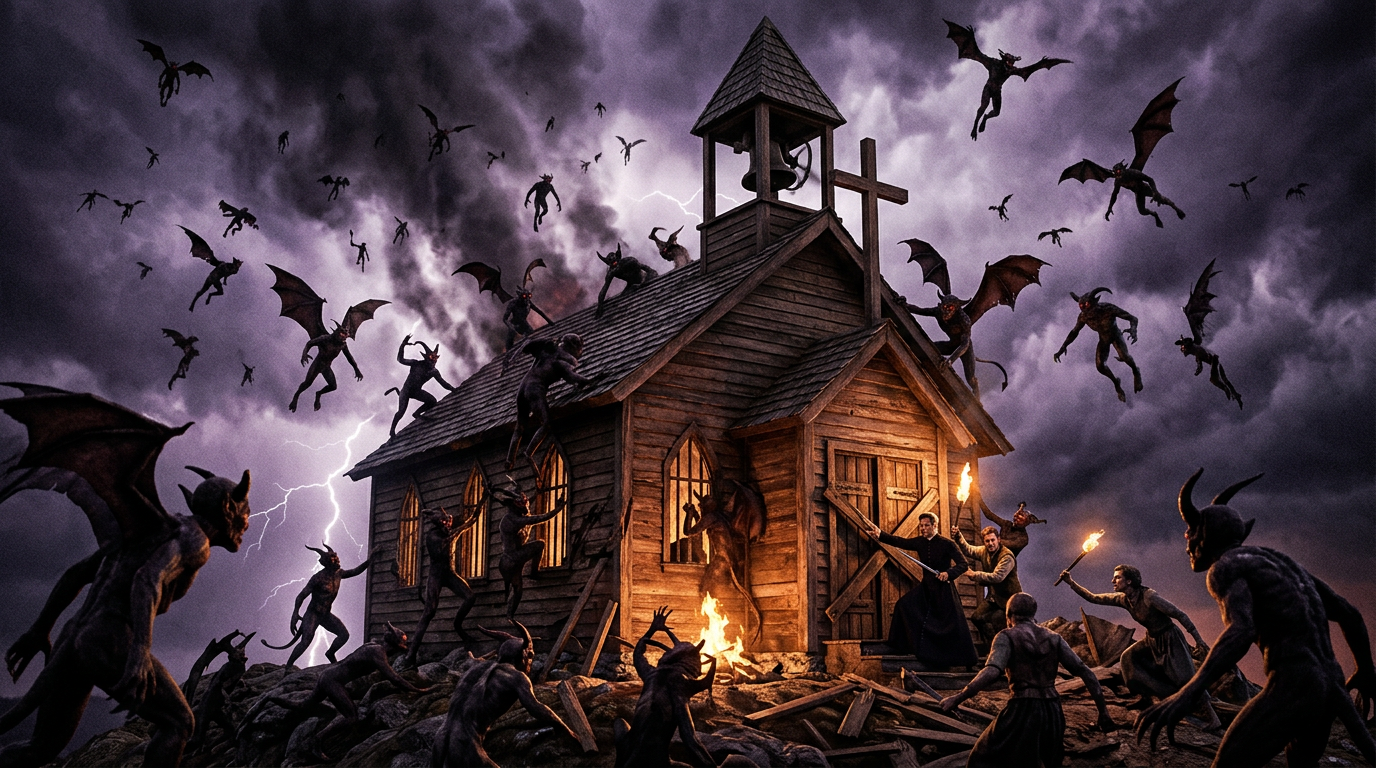
Winged demons attacking a small wooden church with people defending using torches

(3) Is the Prayer to St. Michael a Liturgical Prayer or Not?

While the critic argues that the Prayer to St. Michael does not belong to the liturgy, those who know the history of the prayer could argue otherwise. After having a terrifying vision of demons swarming to attack the Church, Pope Leo XIII in 1886 mandated the Prayer to Saint Michael at the end of the Catholic Low Mass. It was composed precisely as a prayer to be said by congregants at the end of liturgy. It remained an element of the Mass until 1965 when it was discontinued as part of the Vatican II reforms. Its reintroduction today is not a capricious act by believers but came at the behest of the late Pope John Paul II.
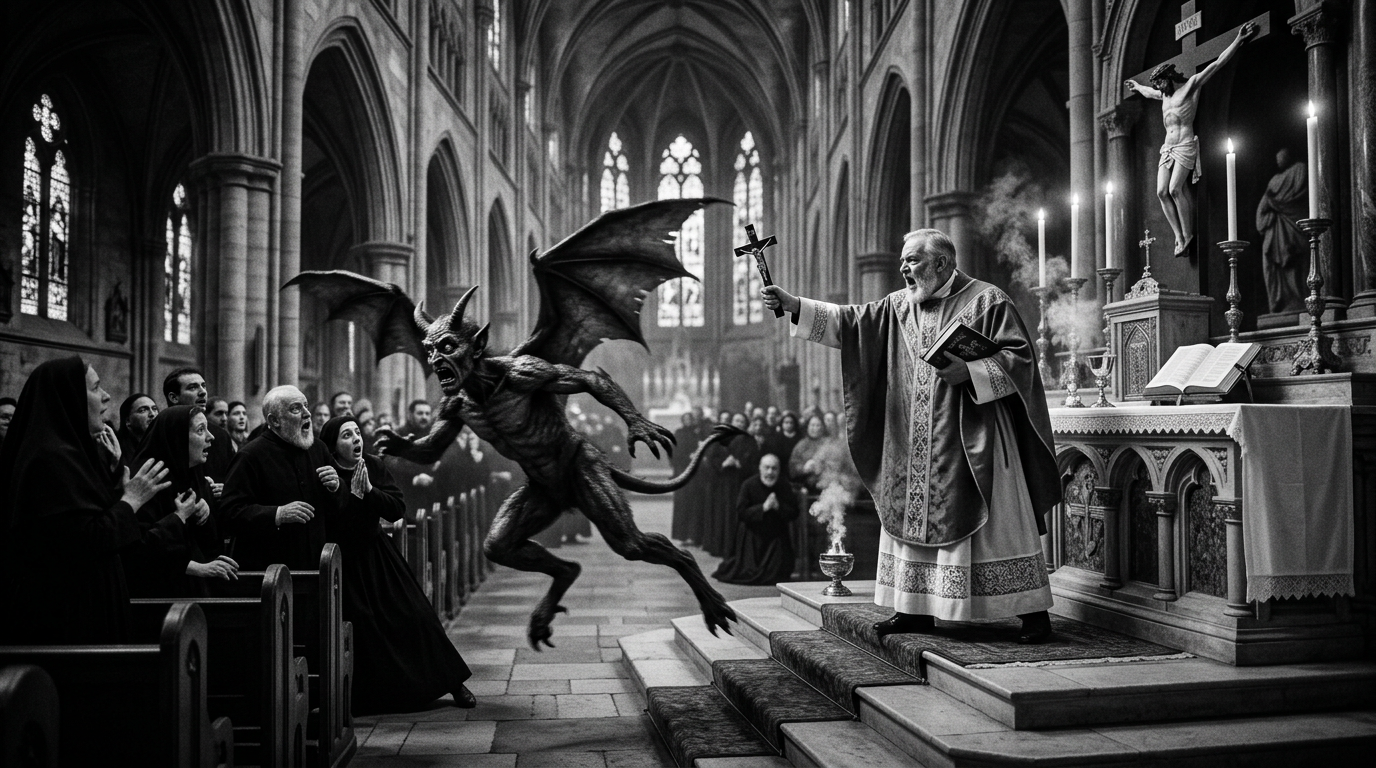
Priest holding crucifix confronting winged demon in cathedral with frightened congregation.

(4) Does the Prayer Target the World or the Church?

Pope Leo XIII received a private revelation that the devil would be permitted a time of testing where he would numb consciences to the truths of faith and morality. Thus, it is, that today we have Catholics who make a mockery of faith and cannot distinguish between right and wrong. Many who supposedly share our faith, never go to Mass, celebrate the deadly sins, and jubilantly enable the infanticide or abortion of children nine months in the womb, ready to be born. They are spiritual victims of this infestation. Remember that even Pope Paul VI lamented, “from some fissure, the smoke of Satan has entered the temple of God.” Pope John Paul II knew that the deliverance prayer annoyed those in our midst who were under demonic oppression. We cannot proclaim the Gospel of Life if we succumb to a culture of death. The oration to St. Michael invokes both angelic and divine power to shield us and to work as a bulwark against demonic oppression. The devil would cloud minds from the truth and harden hearts to real love and compassion. This critic says it places us into an adversarial position against the world. This is not the true focus. The prayer targets the Church. We cannot be sent out on mission to bring Christ’s light if we are compromised by the darkness. 
Red demon with horns holding a globe and crumbling cathedral model at sunset

(5) Is the Recitation of the Prayer Outside Liturgical Norms?

Davis writes that the Prayer to St. Michael “does not belong in the liturgy.” If we were to restrict ourselves to the current liturgical rubrics, then what he says is correct. Indeed, he cites it as a violation when recited “after the final blessing but before the recessional hymn.” Believe it or not, many bishops agree with his stance and as priests we have been told that we are not to initiate the prayer at any time during the Mass. However, the animus that Davis has for the prayer carries him away into absurdity.  Let me explain. There is a loophole in that lay congregants can say the prayer just as they might say a rosary immediately following Mass. Many of us as pastors have coordinated the effort with our flocks prior to the service. We get parishioners to lead the prayer. Prayer cards are passed out. Our good people are not blind. Given the scandals with clergy and liturgical abuses, Mass-goers want to say this deliverance prayer. As for the closing or recessional hymn, the critic has spoken either from ignorance or prejudice.  It is entirely inconsequential because the Roman Rite (including the Novus Ordo) has no closing or recessional hymn. We add it on Sundays and omit it on weekdays as entirely a matter of custom. The Mass ends with the words of dismissal recited by the priest or deacon. And the liturgists are correct, at that point he shuts his mouth. But the congregation is entirely free to recite the Prayer to St. Michael, share the Rosary, or sing a closing hymn.
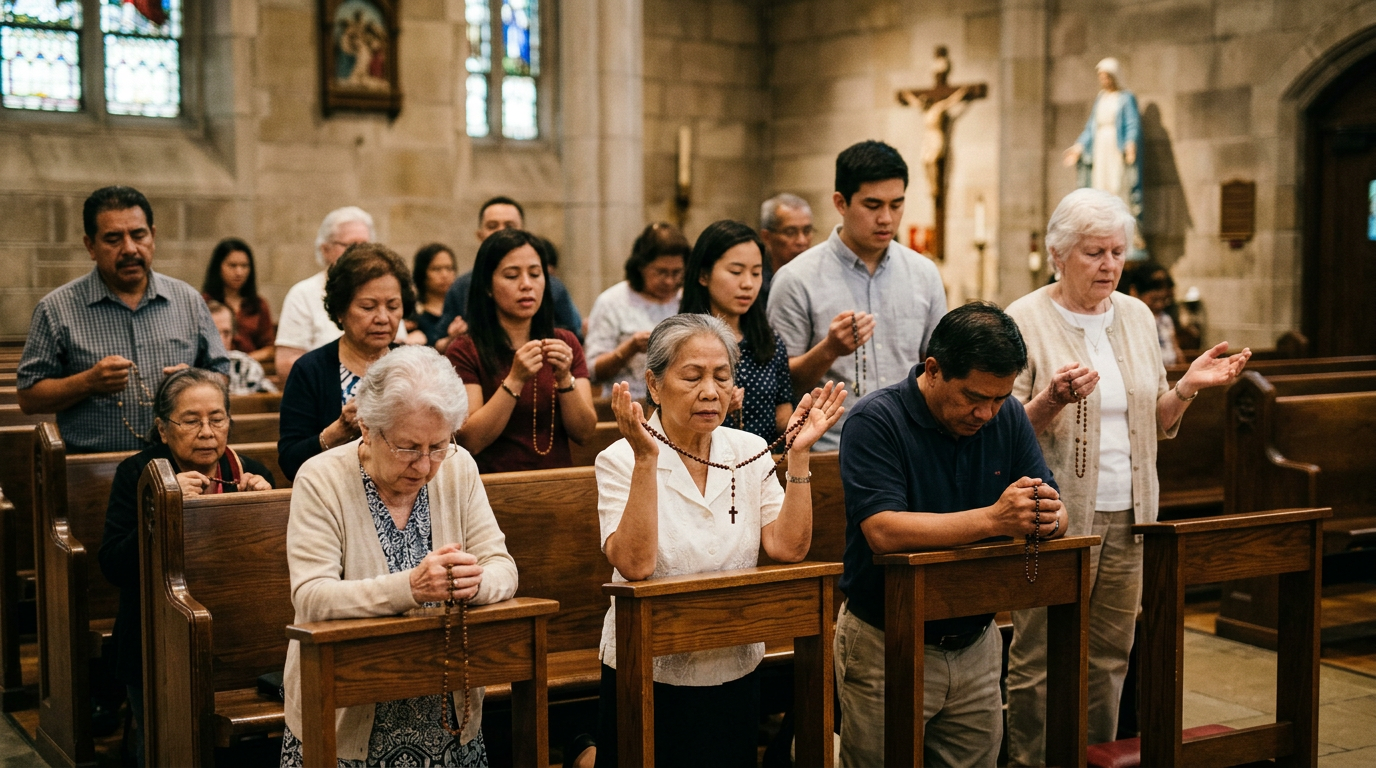
People praying with rosary beads inside a church

As for why anyone might oppose this prayer, I would continue with a reading from John’s Gospel:

“And this is the verdict, that the light came into the world, but people preferred darkness to light, because their works were evil. For everyone who does wicked things hates the light and does not come toward the light, so that his works might not be exposed. But whoever lives the truth comes to the light, so that his works may be clearly seen as done in God” (John 3:19-21).

Prayers to the LORD or to ARES, the God of War?

People kneeling and praying before a bronze statue of Donald Trump in Spartan armor.
Slaves kneel in prayer before an idol of the pagan war god in Spartan armor.

As a contract priest to the Coast Guard for thirteen years and as a chaplain to the Knights of Columbus for over thirty, I can attest that there is sometimes a confusion in the minds of believers between the virtue of patriotism and the sin of nationalism.  True patriots support their country when she is right and correct her when she is wrong. But nationalism is always unhinged and argues instead, “My country, right or wrong!” The distinction often shows itself in language. We are “Catholics in America,” part of a worldwide family that crosses borders.  This aids us in appreciating the brotherhood of man.  A spirit of nationalism is intimated in the expression, “American Catholics,” as if there is a national church distinct from international believers and even separate from Rome. Given that the current Pope is also an American, there are critics, especially in politics, who are perturbed that he does not subscribe to “America First” in his thinking and preaching.  Despite the jargon of the current populism, Americans may be blessed by God, but they are not morally superior to others. The United States had Catholics involved with its beginnings, but in large part was the product of English values and a Protestant mindset.  The Bible was given place of honor, but the individual was placed over it, not the Church.  Individualism was prized. A desire for separation from the home country and freedom resulted in a revolutionary war.  The conflict over the rights of states versus the federal government, along with making people of dark skin into commodities and not full persons, resulted in still another conflict, the civil war. Catholics found themselves mixed up with all this as well, and yes, sometimes infected with a Protestant over a Catholic perspective about things.  When she could, the universal Church looked the other way; but there were levels of dissent that could not be excused. We seem to have forgotten that many Catholics came to this country as unwanted and reviled immigrants.  Catholic churchmen like Bishop Hughes of New York opposed the public schools because he saw them as efforts to proselytize Catholics. Public schools in the United States, particularly in the 19th and early 20th centuries, frequently employed the King James Version (KJV) Bible as the primary text for reading instruction and moral education. Catholicism was distrusted. Bigots contended that so-called “papists” were conspiring to take over the nation for the Pope.  It was a lie of course, but disinformation existed long before there was an internet.     

It may be that some of our early worries were well founded because increasing numbers of Catholics sound like these Protestants of old in how they rebuke the Pope and dismiss the bishops of the Church. Indeed, I am shocked that some who currently tout themselves as solid Catholics have compromised their faith by embracing the fundamentalist mindset given place of honor in the Trump Administration. This sect views the state of Israel as the fruit of prophecy, thus negating any rights of Palestinians to their homeland. The Evangelical Protestant perspective in vogue here refashions Christianity into a BOOK religion. This is idolatry because we encounter Christ not in the dead words on a page but in the living Word proclaimed. There is nothing of the Church as “the great mystery” because the sacraments are rejected as sources for grace. They focus upon a rigid Old Testament morality as a model for today. The defense of Israel thus becomes paramount. They are quick to excuse atrocities in Gaza and the systematic destruction of Iran.

A wimpish Congress has largely surrendered its role in governance to executive orders, first in the Biden administration and now with Trump. Subordinates that disagree with the supreme leader or who prove ineffective in fulfilling autocratic demands are quickly dismissed or replaced. Here I am thinking of figures like Pam Bondi, General Randy George, and Carrie Prejean Boller. Boller was fired for stating, “I am a Catholic, and Catholics don’t embrace Zionism.” What she says about the faith is true as the New Israel or Kingdom is not the middle eastern political state, but the universal or world-wide Catholic Church. But as I said, the fundamentalist Protestant has no such notion for the Church as essential for salvation. Boller was roundly condemned as antisemitic and eliminated. Those who speak for our pretentious potentate must pander to incur his favor, either that or to fall upon their swords. Note that everything they say, from news briefings to prayer services, begin with heaping blame upon his predecessor and other enemies and next extolling praise and thanks upon him for his accomplishments. They even make up new awards to pamper his enlarged ego. Everything must be “bigger,” “greater,” and “like nothing before.” It is quite literally, too much.

Catholics should rightly be hesitant to embrace the archaic Protestant ethos which traditionally ruled this nation despite the constitutional separation of church and state. Make no mistake about it, these new Protestants like those of old distrust Catholics. (Note that Defense Secretary Pete Hegseth held a Protestant-only Good Friday service at the Pentagon in-house chapel, specifying that there would be no Catholic services (like stations or veneration of the cross). While the constitution forbids the establishment of a national religion, this restraint is being severely strained, and I would not be surprised if it is challenged.  What perplexes me is how these fundamentalists will carve a place for Jews in this proposed Christian state given their political mating with diehard Jewish defenders of Israel? A common hate or indifference for the Moslem or Palestinian (which includes Catholics and other Christians) might wear thin.   

The Pope has been the target of “correction” from Karoline Leavitt (a Catholic), Pete Hegseth (a Christian nationalist), and Franklin Graham (a Baptist evangelist). Graham, true to form, cites David in the Old Testament, in defense of what the Pope rejects as prayers for blood. The Pope is concerned that anyone would adopt a diplomacy based upon the threat of military intervention. He is not of the mind that President Donald Trump is specially chosen or elected by God as a new David or even as a son of David, a title that belongs to Jesus Christ.  The Holy Father’s position was the whole point of our opposition against Putin’s invasion of Ukraine. Ironically, Trump gained office by opposing the military malfeasance of the Democrats. Catholics and others also found appealing his defense of religious liberty. Almost the entire pro-life movement applauded his stance against abortion. Many worried about rising crime rates and the danger of open borders. But throughout, the bishops warned us about the mistreatment of immigrants. Many of us wanted justice, but not devoid of compassion and charity. Despite promises that we would not police the planet, the president has ordered the invasion of Venezuela and the kidnapping of a head of state, collaborated over the destruction of Gaza, bombed Iran and killed its leadership, and now threatens Cuba with demands for regime change. Like the man or not, this administration is on the warpath. Islamic extremists pursue Jihad or holy war. Now evangelicals invoke God in favor of the president’s aggressive policies. Indeed, even worse, Paula White speaks of God and then praises Trump as if he is another Jesus Christ. Enough is enough!

The Pope may be an American, but he is also “Peter” and he governs a people for Christ the world over. The foot-washing on Thursday reminded us that he is “the servant of the servants of God.” He represents the Prince of Peace where “an eye for an eye” was replaced by the Lord who forgives his murderers. Why are we surprised that Pope Leo XIV preaches peace? Pope John Paul II did the same when we invaded Iraq.

Catholic morality views biblical laws through the prism of tradition, natural law, and the guidance of the Magisterium. We are not obliged to follow obsolete Levitical ceremonial or civil laws. We also speak about the theory of just war and proportional force. Military action might sometimes be required, but only in desperation and when diplomacy has failed. The American system is based upon checks and balances that seem to be currently bypassed for political expediency. This is dangerous. How long and far should such go on? Americans have been known, at least in our popular mythology, as on the side of “might for right,” not that of “might makes right.” There is an important difference. Gaza has suffered 169,000 injured (many requiring amputations) and 90,000+ dead (of which 20,000 were children). The current action in Iran has resulted in the deaths of 3,531 people, of which 1,607 were civilians and 244 were children. When politicians and aberrational Protestant clergy thank God for military victories and the death of enemies, why is the Pope such a lone voice in the wilderness shouting, no! Catholics who realize their faith with charity and who pray for the dead should cry out as well. Indeed, true believers among Catholics, Protestants, Jews and others need to speak with one voice for PEACE.

As one who regularly seeks to discern spirits, there was something intensely unsettling about a recent prayer service in Washington orchestrated by Paula White. Might there be something demonic taking place that threatens to spill over to the rest of the country and to infect our churches? Silence as much as wrongful praise might compromise us. I am no YES man, even to lawful authority. While I feel that obedience is the most crucial and most difficult promise a priest makes, my personality or character cringes against blind obedience. It is not in my makeup to join the lines of doting sycophants to any man, no matter how charismatic or popular. Over the years I have periodically gotten into trouble for speaking my mind and failing to toe the line. The most painful incident was when I argued with Cardinal McCarrick over his silence or even praising certain politicians opposed to the sanctity of life. He refused to change about this, saying that we might need them on other issues. I was later disciplined for being outspoken. It wounds me still because I love the Church. We belong to Christ, even when men in the Church fail and disappoint us. We belong to Christ and should not suffer bondage to any party or mere mortal. Too many fail to understand the lesson of the coin, as there can be no divided loyalty. Caesar may have his likeness on a coin, but Christ’s likeness alone must be inscribed upon human hearts. Yes, even Caesar belongs to God. There is no comparison. We must be careful of idolatry in all its devious forms.

U.S. Defense Secretary Pete Hegseth prayed at a recent Christian worship service for the military:

“Let every round find its mark against the enemies of righteousness and our great nation. Give them wisdom in every decision, endurance for the trial ahead, unbreakable unity, and overwhelming violence of action against those who deserve no mercy.”

This might make a good pagan prayer to the false god Ares or Mars, but it is no prayer to the true God revealed in Jesus Christ. The Holy Father is under attack for his corrective response:

“God rejects the prayers of warmongers. . . This is our God: Jesus, king of peace, who rejects war, whom no one can use to justify war. He does not listen to the prayers of those who wage war, but rejects them. ‘Even though you make many prayers, I will not listen: your hands are full of blood’ (Isaiah 1:15).”

Tradition teaches that Pilate constantly washed his hands, particularly after the death of Christ. He lamented, will I ever get my hands clean? That should again be the question, today.