• Our Blogger

    Fr. Joseph Jenkins

  • The blog header depicts an important and yet mis-understood New Testament scene, Jesus flogging the money-changers out of the temple. I selected it because the faith that gives us consolation can also make us very uncomfortable. Both Divine Mercy and Divine Justice meet in Jesus. Priests are ministers of reconciliation, but never at the cost of truth. In or out of season, we must be courageous in preaching and living out the Gospel of Life. The title of my blog is a play on words, not Flogger Priest but Blogger Priest.

  • Archives

  • Categories

  • Recent Posts

  • Recent Comments

    Josh's avatarJosh on Mixed Signals about Homosexual…
    gjmc90249's avatargjmc90249 on Marian Titles & the Mantle…
    Jeremy Kok's avatarJeremy Kok on Ask a Priest
    Anonymous's avatarAnonymous on Ask a Priest
    forsamuraimarket's avatarforsamuraimarket on Ask a Priest

We Awaken to the Problem

The defection from faith is an important issue and why for the past two years I invited a young FOCUS missionary named Katie to give her appeal in the parish. Along with other young adults, FOCUS ministers to our youth on college campuses. The statistics are frightful. Some 80% of our youth fall way while at college. These young adults put their careers and much about their personal lives on hold so that they might make a difference for others.

students

I think in truth the issues began long before our teens headed off for college or entered the work force. Minimally Catholic kids suddenly find that they do not have the watchful eyes of parents upon them. Quickly, they are influenced by peers who have no quarter in their lives for organized religion or traditional values. Liberal faculties deride Christianity and mock the sacraments as the domain of ignorance. Professor Paul Zachary Myers is the most blatant on this list, urging college students to steal consecrated hosts so that he can document on the Internet his desecration of the Eucharist. This is not representative of a civil debate about belief; rather, it is an emotional and militant attack upon people of faith.

College campuses will sometimes have Newman Centers and/or Catholic Student Associations. But many of the Catholic students fail to get involved. The attendance of Catholic students at Mass, even at Catholic schools is often pathetic. The best numbers I have heard are at places like St. Francis in Steubenville, Ohio and Ave Maria in Florida. I know one school where the chaplain schedules Masses at midnight so that students will have less competition for their time. One is more likely to see lewd photos on Facebook than posts about religious epiphanies and retreats or time before the Blessed Sacrament. Of course, many parents might not know because they are quickly blocked from seeing what is actually going on.

I am not saying that efforts to evangelize in college are in vain. Rather, I am suggesting that more could have been done (or done differently) earlier to minimize the damage later on. Catholic schools could also be more proactive with single-sex dorms, expectations about participation at Mass, and an uncompromised message about fidelity to the faith and the living out of the commandments. However, we have a problem— when honors are granted to those who seek to strip the Church of her religious liberty— when organizations that promote a homosexual agenda and lifestyle are given funds and recognition— when health service referrals include artificial contraception and abortions— and when crucifixes are removed from classroom walls so as not to offend— then we have become our own worst enemy.

The Situation We Face

Holy-Spirit-Clip-Art-20

I have been giving some thought to the pressing issue of keeping our young people Catholic and in the Church. Before I lay fault at the proper doorposts, it must be said that many of our parents are faithful in raising their children in the faith and insuring the opportunity for the sacraments. When their kids abandon the faith and Mass attendance, these good people are the first ones who feel guilty and wonder if there be more they could have done. But they did their duty and there comes a point where we have to let go and trust the Holy Spirit. Similarly, there are pastors and catechists who try program after program in hoping that the next one might turn matters around. They join their tears to those of heaven praying that prodigals might come home and that the children might be counted among the saints. Too many have forgotten God. Too many have turned their backs on the practice of their faith.

I would not want to condemn anyone, even parents who are themselves “fallen away” Catholics. God will be their judge. But of course, we can target many sources for the current problem. Whole generations of Catholics were poorly catechized. Poor text books and an air of dissent infected the Church. I recall tried-and-true books being thrown away because they represented the thinking of “the old pre-Vatican II Church.” And yet, this mentality betrayed a false dichotomy. There are no two churches. The accidentals may change but the deposit of faith is faithfully transmitted generation after generation in the one true Church instituted by Jesus Christ. The later publication of the universal catechism was an attempt to correct any false thinking about this issue. Our appreciation of doctrine can develop but the public revelation is fixed. What is objectively true will always be true. The false “spirit of Vatican II” has been exposed and in many circles has increasingly lost sway as a general segment returned to orthodoxy. This is cause for hope.  Those resisting it have necessarily found themselves set adrift.  The truths of faith were never denied by the Magisterium, but progressive theologians and their enthusiasts wrestled to place the whim of men over the wisdom of God.

There is no denying that the dominoes began to fall. The damage was done.  Religious relativism, a false view of universal salvation, and the moral failure of churchmen to live out the faith compounded the situation. People fell away from the Church. The stakes did not seem as high as they once did. Meanwhile, the world was changing and Western Christian culture was collapsing. The process had begun prior to Vatican II. Indeed, the Enlightenment and later the French Revolution were signposts to what was fast approaching. Pope Pius IX promulgated his Syllabus of Errors. Pope Pius X confronted Modernism. When Vatican II arrived, many had hoped that there might be a dialogue with the modern world. Unfortunately, the world did not play fair and the council was unable to forestall the many negative agencies poised against her. A secular humanism was quickly taking hold. Man would be regarded as the measure of all things. The degree of hubris involved here would have been unthinkable in much of our earlier history. The “God is Dead” movement of the 1960’s and 70’s was thought by many as the final result of this movement. But there was more to come. Today many do not consider God as dead but rather, while rejecting the incarnation, declare that Man is God. The love of science, which in its place is a good thing, becomes a kind of idolatry where technology and the media are secular sacraments. There is the fantasy and/or pseudo-science that even death will one day succumb to man’s genius. Paralleling all this there has been the ascendance of a new paganism, expressed through heightened eroticism (homo- and heterosexual) and a general vulgarity in speech, music and behavior. Pleasure is sought as an ends to itself, not as an element of a greater good.

What does the baptized Catholic believe today? It is amazing how many false assumptions are made about the faith. While the Church teaches intelligent design and the complementarity between science, theology and philosophy; many view Catholicism through the prism of Protestant fundamentalism. Enthusiasts for evolution ridicule the Church for a literalism which she does not profess. Neither does Catholicism embrace a blind faith, which is rightly decried as mindless. While recognizing mystery, we espouse a faith seeking understanding and as a true companion to human reason. The Church argues for modesty and yet is not puritan in her aesthetic appreciation for the human body and the beauty of sexual love as a part of the divine plan. Nevertheless, some critics (even Catholics) mock the Church as if it is a Calvinist congregation or one knotted to Jansenism. The Church seeks to work with non-Catholics for a better world and for the remittance of human suffering; however, despite false allegations from traditionalists, lays hold to no ecumenism that would compromise her singular faith claims. It has also been a sad discovery that many Catholics suffer an impoverished understanding of the Trinity, the meaning of the incarnation, the value of the Mass, the mystery of the real presence in the Eucharist, the nature of the afterlife and the prayers for the dead, etc. Indeed, some believers deny the existence of hell despite the biblical testimony and the presence of evil that demands the full measure of divine justice. The occult has also infected believers, substituting magic for supernatural faith. It is ironic that atheism and the occult should simultaneously infect members of the Church. We need to do all we can to correct the errors of our times. There is no reincarnation. There is no parallel oriental bad force that counterbalances the good. We do no become angels after death as popularized in movies. The dead human body is a corpse. The human soul is a ghost. We are promised restitution in the resurrection of the dead. I cannot begin to say how many Catholics do not know the truth about these matters. Yes, even those in the pews need correction and a renewed formation. But, other than with preaching how do we do this? Many will not attend special classes or even online workshops. They fail to attend bible study or instruction classes. As for those not in the pews, is there any way left to bring them and their children home? How can the message of the Church compete with the many voices of the world?

Father Joe with Richard Dean Anderson

Father Joe with the actor Richard Dean Anderson, alias MacGyver (series of the same name) and Jack O’Neill in Stargate SG-1:

mcgiver3


Father Joe at Shore Leave 2014

I attended the Shore Leave Convention this past weekend.

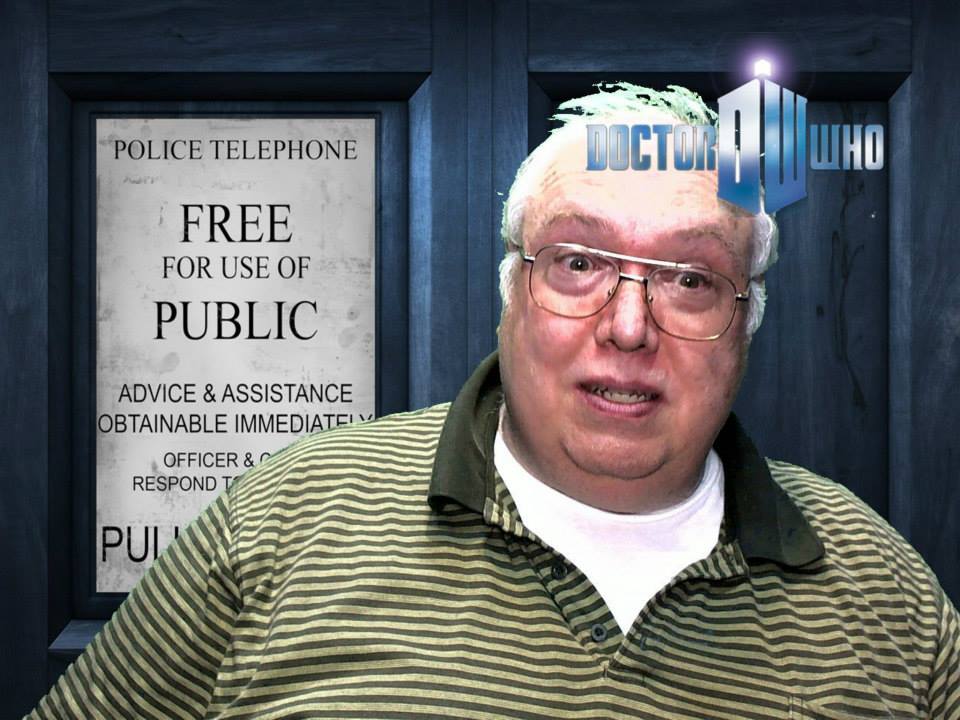
tardis1

Oh no!  The Daleks are coming after me!  Where’s Doctor Who?

10352611_723964020972690_3313376420525489732_n

I took a three day holiday… only to be sucked into a swirling vortex with the TARDIS!

10561586_723964074306018_8095547906274853020_n


Eighteenth Sunday in Ordinary Time

[112] Sunday, August 3, 2014
1 Isaiah 55:1-3 / Psalm 145 / 2 Romans 8:35, 37-39 / Matthew 14:13-21

These words in the first reading were written toward the end of the Babylonian exile. God’s people looked forward to a restoration and the coming of the Messiah. Much in these oracles will find fulfillment in Christ. We read, “All you who are thirsty, come to the water!” Jesus invites the Samaritan woman at the well to receive his water and never to thirst again. When facing the prospect of arrest from the Pharisees, he tells his listeners, “Let anyone who thirsts come to me and drink. Whoever believes in me, as scripture says: ‘Rivers of living water will flow from within him’” (John 7: 37-38). The first reading emphasizes the gratuity of God— toward the poor, the hungry, and to a people lost in the desert. They are now invited home. Jerusalem shall be rebuilt. God will keep his promises. Basic longings will be satisfied. Of course, God has something planned for them way beyond any political restoration or earthly riches. More than a new temple in Jerusalem, we would have in Christ a King who ushers in a heavenly kingdom. The prophet told them not to waste their time and energies on that which does not satisfy. The emphasis is upon the Giver, and our coming to the Lord “heedfully” or freely. It is God, himself, who satisfies our basic longings. Prophesy is fulfilled. Jesus proclaims the truth to which the crowds “listen” with hope. At the Last Supper, Jesus speaks of his oblation and Eucharist as a new and “everlasting covenant.” Second Isaiah spoke about how the Messiah would come that they “may have life.” Jesus, of the line of David, conquers the grave and gives us a share in his life.

The responsorial reaffirms the how God provides for the needs of his people. He gives “them their food in due season.” Jesus uses references to water to speak about new life in him. He also institutes the Eucharist to feed his people the bread of life. We were made for God. Our drink and food is literally the Lord, himself. Just as we are told that nothing compares to the gift of God, who satisfies every need; the second reading stresses that nothing, not even death, can separate us from the love of Christ. People might give up on God but the Lord never gives up on us.

Jesus is the living compassion of God. The Gospel says that “his heart was moved with pity” for the crowd and he responds by healing their sick. The people of old wandered the desert seeking a promised land; here the Lord enters the desert to abide with his people and to feed them. There is a two-fold movement. We approach the Lord and he comes to meet us. He feeds their bodies. But this feeding points to the more profound food of the Eucharist. Here he multiplies fish and bread. In the sacrament he extends his very self. All receive the same, the fullness of Christ. Notice that God’s bounty is overflowing. Similarly, we reserve the Blessed Sacrament in out tabernacles. God continues to abide with us.

People want so many things and are often satisfied with that which has little or no real value. During the days of the Confederacy, there were a number of wealthy men in the south. But what would a million dollars mean to them after the Civil War? Their bills would have no monetary value. Many became bankrupt. Today a person might want a fancy car or an 80 inch SMART television screen. But what value would these things have if there should be no gasoline or if a solar flare should destroy our electrical plants? A horse and a book might then have more immediate value. And yet, these too could be stripped from us. Today we have brothers and sisters who face persecution and the prospect of death for the “crime” of being a Christian. Many become martyrs because they trust that God will not abandon them. The treasure of Christ is the one prize that time, misfortune, death or evil men cannot take away from us.

Father Joe with Silas Weir Mitchell

Father Joe with Silas Weir Mitchell from the NBC television show, Grimm:

10565047_10152288821143435_8415372353726597479_n

Infant Baptism & Coerced Baptism

baptism-clipart-with-bkgrnd

Questions from Dina:

Why does it make sense to baptize a child who doesn’t know what is happening, or what about forced baptism over the centuries? Why does either have an effect? In one case the baby knows nothing and int he other you have an unwilling “convert” who wants nothing to do with the Catholic faith?  Thanks!

Response from Father Joe:

We do not force baptisms upon adults. Missionaries often endured great hardships and even suffered martyrdom in bringing the faith to others around the world. Unwilling converts cannot be validly baptized or received into the Church. This has always been the case. The situation with children depends upon several points:

1. The apostolic and patristic tradition of baptizing whole households, including the children of believers.

2. While a child has not yet reached the age of reason, parents may profess faith on behalf of a child with the expectation that they will raise the child in the faith and insure the sacraments of penance, holy communion and confirmation. There are three sacraments of initiation, not one: BAPTISM, EUCHARIST, and CONFIRMATION. At confirmation that person will make for himself the profession and promises made by parents at baptism.

3. The Church is the sacrament of salvation. Catholics are called both to a CORPORATE faith in Jesus as well as a PERSONAL one. This corporate element, linked to the communion of the saints, is why parents can profess faith for a child. We do not come to the Lord alone.

4. After the age of reason, an unbaptized child must take catechesis and make the baptismal promises himself.

5. The sacraments, including baptism, do what they are intended to do. They were instituted by Christ for his Church.

6. Baptism is more than an acknowledgment or affirmation of saving faith, it accomplished the following:

  • Makes one a temple of the Holy Spirit;
  • Accesses sanctifying grace;
  • Conforms a person to the likeness of Christ;
  • Washes away sin (original sin);
  • A person is spiritually adopted as a son or daughter of our heavenly Father;
  • Incorporates us into the Catholic Church;
  • We become a Christian; and
  • We enter the doorway to the sacramental life.


Can a Catholic Witness at a Gay Marriage?

CHARLES:

I’m in a dilemma and need some guidance. I have a friend whom I’ve known practically my whole life. He is more of a brother to me than my actual brothers. He is gay, and I do accept that, even if I don’t necessarily agree with it. Anyway, we live in a state where same sex marriage is legal and he and his partner have decided to go to the court house to “make it legal.” He has asked me (as his best friend) to be his witness at the ceremony. If I support my friend, is it a sin? He really does not have anyone else in his life other than his partner and me. I do want to help him. Thank you.

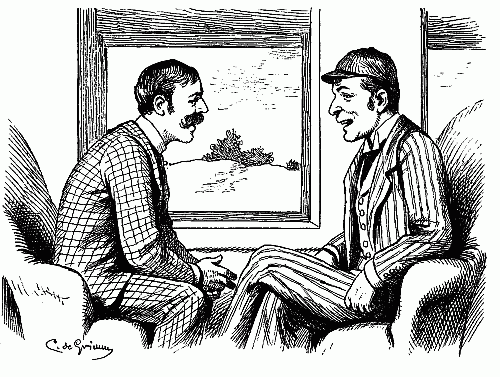
two-men-one-in-checkered-suit-other-in-striped-suit-and-cap-having-heart-to-heart-talk-pen-ink-drawing

FATHER JOE:

A sense of brotherhood is a special gift of friendship and this is commendable. But given that the Church does not recognize same-sex unions, it would be difficult for you to take an active part in the ceremony without compromising yourself. The very nature of a witness is to signify that a true marriage did indeed take place. Catholics would struggle with several points of the scenario you mention:

1. While a Catholic could witness to a heterosexual marriage between two non-Catholics (not married before) before a civil magistrate; it would be problematical if there is a prior bond or if one or both are Catholics. (Catholics must be married before a priest or deacon).

2. The Church would not recognize a same-sex marriage as valid. Does it give scandal if a Catholic witnesses something which the Church would judge as invalid and sinful?

I suspect it is point two that brings you to ask the question here. Is there a way to let your friend know that you love him even if you cannot publicly affirm his lifestyle and bond? Would he judge that as a personal renunciation? Could you explain that you have wrestled with the issue and feel that it would call into question certain moral values of your own?

There is probably no good answer.  The best response might be to say, that as much as you would like to do so, you are unable to participate.  Certainly you would not want to be hurtful. But evidently you are a practicing Catholic and this might give public scandal (giving recognition) and/or be interpreted as formal dissent from Church teaching.

A Response to Grace on Faith, Jesus & Salvation

GRACE:

Allow me to make reference to the Old Testament and sin offering. A sinner would go to the Jewish priest with a lamb without blemish. He MUST lay his hand on the lamb. This signified a transferring of sin to the lamb and acquiring the lamb’s innocence. The lamb had to die. Sin must DIE. Under the New Covenant, Jesus is the Lamb of God. The Messiah is our offering. HOWEVER, one cannot physically lay hands on the lamb of God. This is how one lays hands on Jesus and acquires His righteousness: whoever BELIEVES/FAITH that He is the son of God becomes righteous. This is unmistakably the most fundamental building block of Christianity!

When a believer in faith bows down in prayer they have instant access to God, justified by Jesus. When I ask someone else to intercede, I have downplayed the biggest sacrifice; the very reason God became man. It was so that whoever believed should not perish. Otherwise, I have put my FAITH in something other than His dying for my sins. In effect, I have said that even though Christ did die for my sins and I am justified before God. It is still not good enough. So stop going to saint Mary! Worthless are cries of please intercede! JESUS said “I AM THE WAY THE TRUTH AND LIFE NO ONE COMES TO THE FATHER EXCEPT BY ME.” That truth was absolute. There is no negotiating it. When He said on the Cross “IT IS FINISHED,” He meant just that.

FATHER JOE:

You call into question the following:

1.  The manner in which Jesus offers a sacrifice of propitiation as the Lamb of God.

2.  The extension of the paschal mystery into the life of the Church and the sacraments.

3.  The participation in the one-time suffering and death of Jesus.

4.  The definition of saving faith as combined with obedience (works) and accessed first through baptism.

5.  The inner unity of Jesus as a divine Person but made fully human.

6.  The significance of the Church, communion of the saints and intercessory prayer.

What you initially discuss is an appreciation of substitution. The blood of the lamb is sacrificed so that the believer might be spared, as with the Jews when the first born of Egypt suffered the angel of death.

You assert that with Jesus as “the Lamb of God,” no one could physically lay hands upon him. This is false and calls into question the graphic truth of the incarnation. It is a variation upon the heresy of the Nestorians.  The Second Person of the Trinity takes to himself human flesh, he becomes Man. Thus he is able to lay down his life, enduring the indignity of the scourging and crucifixion. Jesus really did die on the Cross. The Mass is an unbloody but real re-presentation of this saving mystery. We are born again by water and the spirit. As God’s people, we come back again and again to the Lord so that our sins might be washed away and that we might be filled with grace. There is a spiritual operation here connected to Calvary, the last Supper and the sacraments.

Faith and baptism allows us to be engaged by the Paschal Mystery of Christ, his suffering, dying, rising and ascension. Our belief or faith is equivalent to obedience. God’s response is the gift of salvation for the redeemed. Christ is obedient to the Father even unto the Cross. He calls us to imitate his fidelity by taking up our crosses and following him.

Intercession to saints or to the Church is an acknowledgement that ours is both a personal and a corporate Lord and Savior. We gather to pray as the Church and our Lord tells us that he is present. There is no competition or downplaying the oblation of the Cross. Far from it, our unity with each other is expressive of the reality of the Church that Jesus instituted. You deny this truth from God’s Word and embrace a Baptist tradition that denies the ongoing nature of faith, obedience and the need for communion with the Church. You short-change revelation and deprive yourself of the full benefits of Christ oblation. You say you are justified before the Lord and yet this too may be a sinful presumption. You cannot save yourself. Only God can save you. Many will cry, “Lord, Lord,” and Jesus will respond, “I tell you, I do not know you.” The Church is the Body of Christ. If you attack the Church, you assault Jesus.

Mary intercedes, but by always beseeching us to follow her Son. She beckons that we might know and love him. All prayer, even intercessory, finds God as its proper object. The saints pray with and for us. We are not alone.

The saving work of Jesus is accomplished in that Jesus will never suffer and die again. But the saving power and effects of his work are still being realized in the lives of believers. It is in this sense that it will not be finished or over until the consummation of the world to Christ. The story of salvation is still being told in our lives.

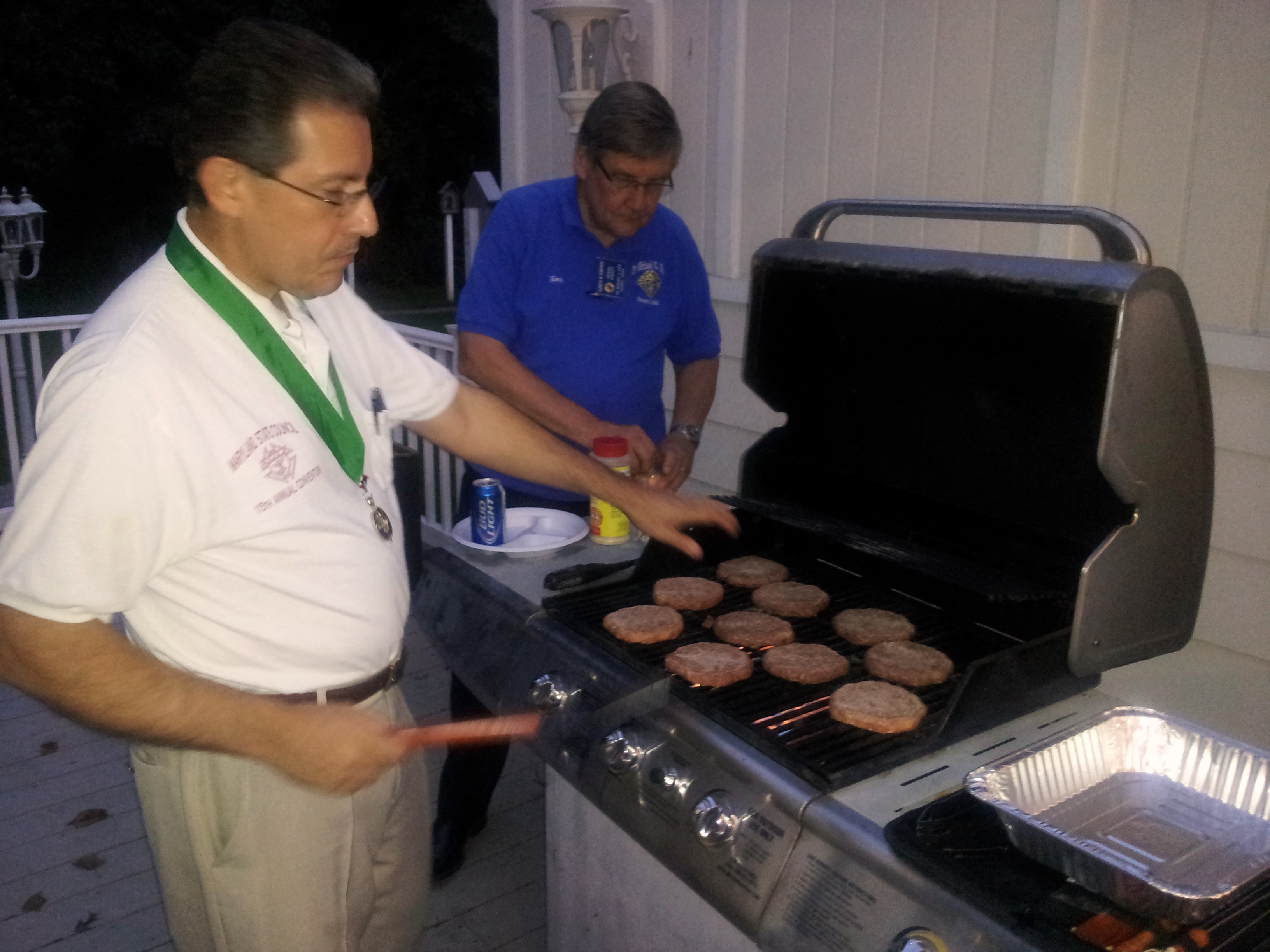
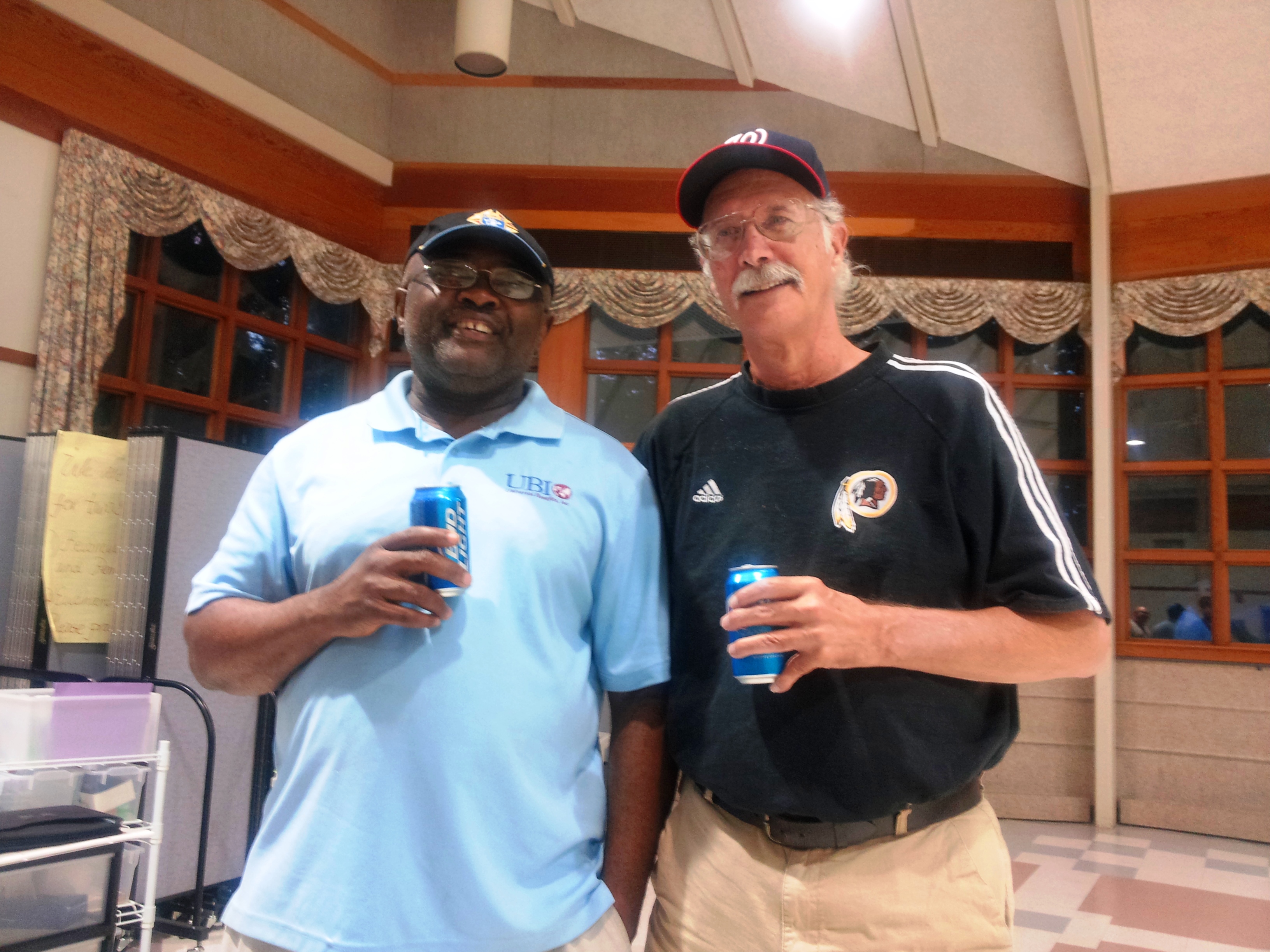
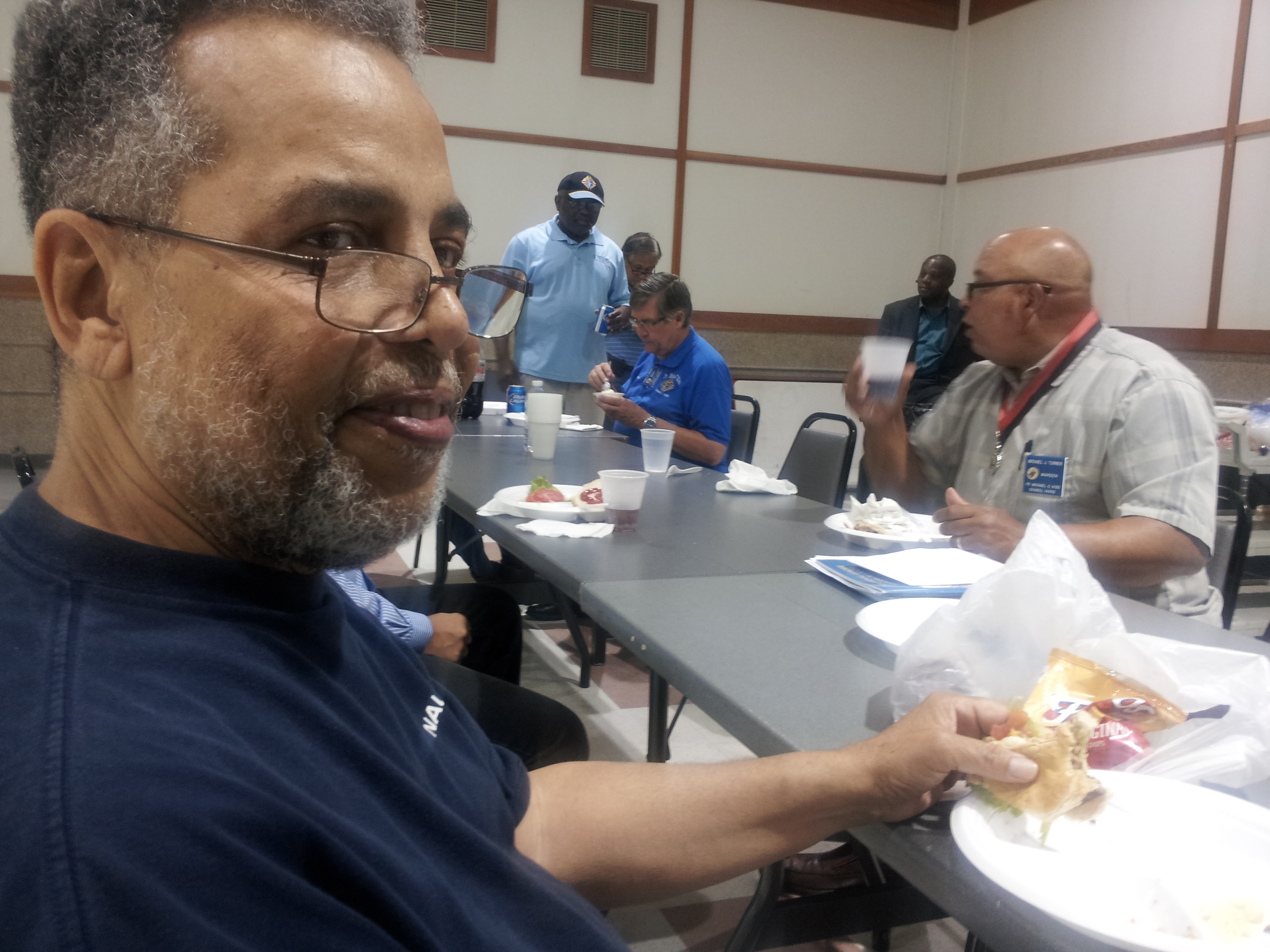
Knights of Columbus Cookout

Held after our Social Meeting 7-21-14

20140721_204231

20140721_203843

20140721_211340