


• Our Blogger

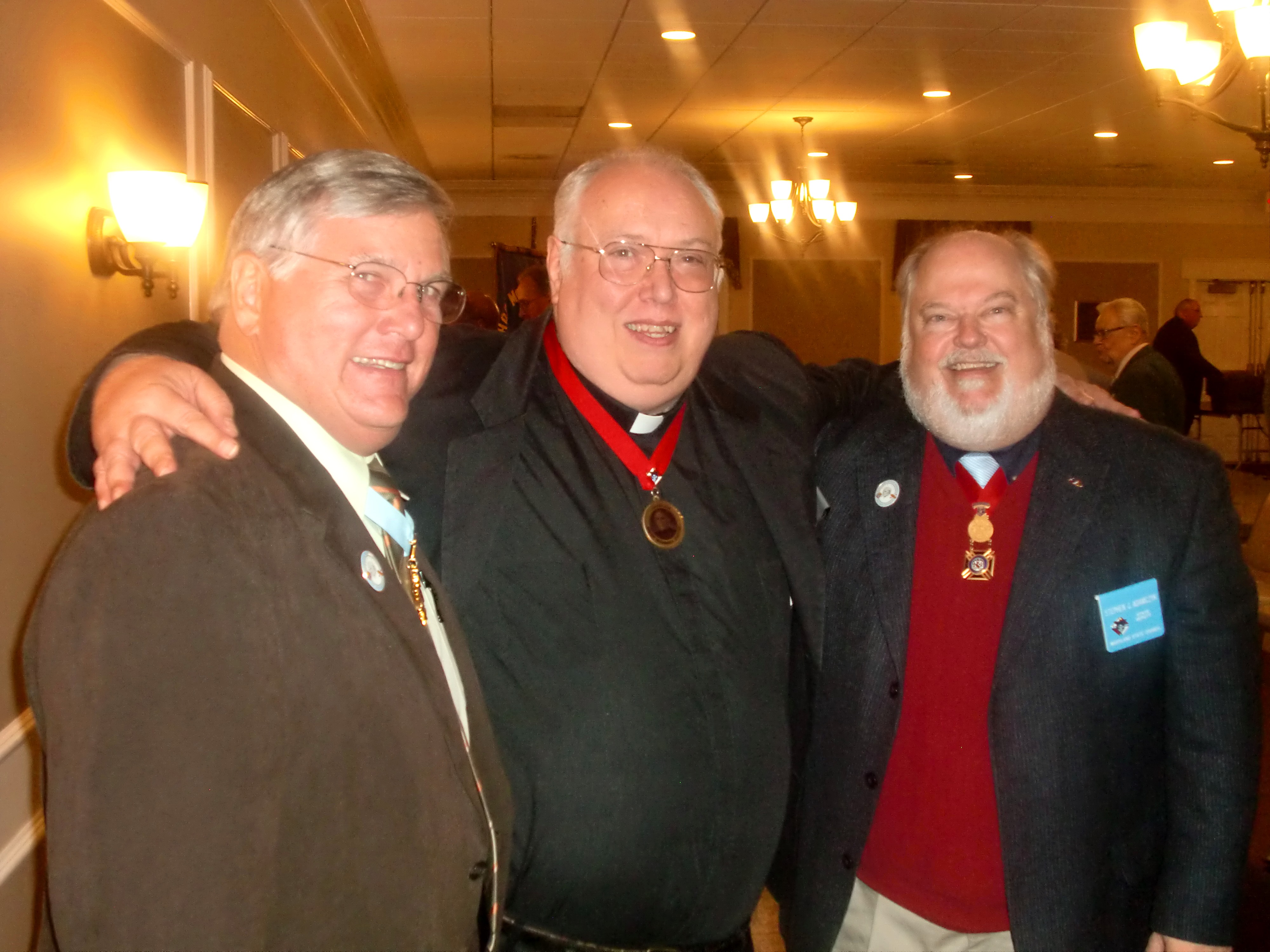
    Fr. Joseph Jenkins

  • The blog header depicts an important and yet mis-understood New Testament scene, Jesus flogging the money-changers out of the temple. I selected it because the faith that gives us consolation can also make us very uncomfortable. Both Divine Mercy and Divine Justice meet in Jesus. Priests are ministers of reconciliation, but never at the cost of truth. In or out of season, we must be courageous in preaching and living out the Gospel of Life. The title of my blog is a play on words, not Flogger Priest but Blogger Priest.

  • Archives

  • Categories

  • Recent Posts

  • Recent Comments

    Barbara King's avatarBarbara King on Ask a Priest
    Ben Kirk's avatarBen Kirk on Ask a Priest
    Jeremy Kok's avatarJeremy Kok on Ask a Priest
    Barbara's avatarBarbara on Ask a Priest
    forsamuraimarket's avatarforsamuraimarket on Ask a Priest

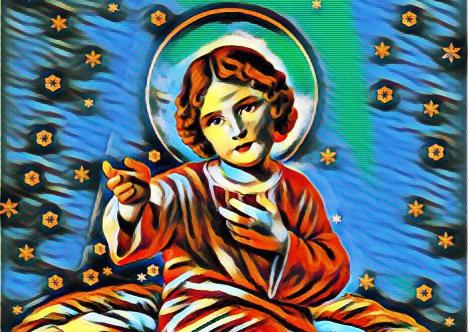
Unity in the Divine Child

151638944140765637

There was a popular movement in psychology advanced a few years ago for people to come into contact or to know their “inner child.” All sorts of self-help books were published that promoted this Jungian archetype.  But I would like to suggest a spiritual dynamic to the hidden child in all of us.  When we recalled our earliest experiences, there was a profound innocence and trust.  Most parents protected their children from the dark side of life and from evil.  That time of innocence resonated with the holiness and perfection of God.  It was easy to believe.  We trusted our parents and felt safe.

While we may not fully maintain our innocence, we should never forget that God is our heavenly Father and that we will always be his children.  What the world strips away, God can restore.  I suspect our yearning and pursuit for holiness is also a remembrance of what we were.  When an infant is baptized, the minister of the sacrament will speak of the child as a young saint in our homes.  Our life and discipleship seeks a recovery of this spiritual trust and perfection.  As Christians, we remember the Christ Child in the manger.  God enters the human family as weak and vulnerable and yet there is something powerful about the child. What will this child become?  What shall he do? How will he change the world?  Everything that God assumes in Jesus Christ takes on an eternal dimension.  God is the everlasting child.  Our restoration into the likeness of grace signals a profound unity with the divine child.  Jesus speaks about this mystery as being “born again.”

Our Lord tells us that to follow him we must become like little children.  All the sacraments, not just baptism, make this possible.  When the old man in sin enters the confessional box, a child with his conscience made clean exits to offer his penance.  The body grows old but the soul is made ever-new.  The burden of the world is cast aside.  Of course, God’s mercy does not leave a vacuum but rather fills with grace what was once possessed by iniquity.

The little-known but courageous figure of Shimei cursed and threw stones at King David, shouting, “Get out! Get out! You man of blood, you scoundrel! … And now look at you: you suffer ruin because you are a man of blood.” Faulted for the blood of Saul, David’s rule was now challenged by his son.  David stayed the hand of his henchman, ready to kill the courageous and vocal critic.  He acknowledged the possible judgment of God upon him. (see 2 Samuel 16:5-14)

Like David, we are all men and women of blood.  Our innocence is spoiled by our sins.  We look upon the crucifix and must acknowledge that we have blood on our hands.  We are the murderers of Christ.  We are all guilty.  Our maturity in years does not necessarily mean that we have grown in the Lord.

I recall a frustrating teacher in school who told his pupils that they all began as “A” students with 100%.  However, with every test and assignment, the points began to be subtracted.  It was only with extra-credit assignments that lost ground might be regained.  When it comes to our heavenly report card, it is only by divine mercy and grace that we might be restored to an earlier purity and perfection.

Darkness & Light

151629497947268592

We find it much easier to appreciate Lent than Easter.  We might get glimpses of Easter but for many it requires an exercise of the imagination where we negate the things of darkness so as to envision the light.  Critics might contend that this is a rather backward way of dealing with things.  Usually it is harder to see in the dark than in the light.  Lent is the season that commemorates the struggle that all mortal creatures must endure.  We know all too well the jagged edge of existence: suffering, betrayal, loss, sadness, sickness, pain, grieving and death.  Many might suppose that these elements epitomize that which is most real.  The cynic or pessimist thus might categorize contentment, belonging, comfort, happiness, fidelity, peace and life as either fleeting or as aberrational to human existence.  Those who deny the Easter mystery might abandon themselves either to despair or to a libertine search for pleasure, making no distinction between the joys that comes with the acquisition of a real or an apparent good.  Of course, they would also be quick to mention the price that one pays to be happy or to anesthetize from pain.  Alcohol brings the hangover and drugs a case of withdrawal.  Sex results in pregnancy and sometimes in venereal diseases.  Gambling brings a thrill but often empties bank accounts.  Sloth weakens muscles and often incurs in homelessness. Gluttony brings to the fore the full ramifications of gravity.  What we do not know and what many disbelieve is the prospect of eternal life, joy, reunion, and contentment.  Those who reject the resurrection necessarily repudiate heaven.  They might reject hell but if life be hard they might accept the existence of more of the same.  Easter requires us to look beyond what we know.  Heavenly happiness is usually reckoned as an extrapolation from transitory pleasure to something lasting and complete.

There is a peculiar commonality between children and the elderly.  The child may be gullible but often easily trusts that there is a world unseen from which God calls us and out of which he sends his angels to watch over us.  We must be cautious that children will be able to distinguish the matters that are real and those which are fanciful like Santa Claus and the Easter Bunny.  The elderly may be discouraged but there is still a profound turning toward the divine mystery.  They are aware that there are more days behind them than before them.  Time in this world is running out and urgency strips away the distractions that many pursue.  They prepare for the world to come and desire to experience the unseen realities that were first presented to them as children.  Is there an ageless guardian angel still by their side?  Will God give back all that the world and evil men have taken away?  Trusting that God is a loving Father, many begin to yearn for the beatific vision and the reunion on the other side of the grave.


The Sacred Encounter

151619993427506274

I am troubled that our young people have an intensely truncated sense of history and reality.  They cannot imagine a world without digital phones, tablets, home computers, widescreen HD televisions, video game consoles, and the internet.  Despite tremendous access to information, their focus has narrowed and there is an almost pejorative view of the past and the historical elements of our culture and values.  Current sports figures, musical performers and media actors are idolized while true heroes are neglected or forgotten.  Figures that tout atheism will point to science as the enlightenment of the future while lamenting religion as the superstition of the past.

Given this as the problem we face with secular history and a deficient assessment of Western culture, the situation is no better when it comes to salvation history and our encounter with Christ in Scripture.  A history book or biography tells us about someone.  The Bible actually introduces us to someone.  There is an important difference but the difficulty is the same— few are opening the books.  I use the image of a book, but the issue remains even if we are talking about a lecture or the proclamation of the Word from a pulpit.  Many of our brothers and sisters are becoming comfortable with a truncated view of history and the meaning of life within our society.  They are getting their religious views from authorities fascinated by scandal but not with any dimension of sacred truth.  Those who excuse themselves from the pews and who gather dust on their bibles, have little to nothing by way of a living relationship with the Lord.

What do such people say about Jesus?  Some even question whether he existed or not.  Others suspect that he was a nice man who was wrongly put to death.  They view the sepulcher as the end of the story.  The dead stay dead.  The rest is the stuff of fairytales.  Certain secular humanists will laud Jesus as one who wanted to make a difference for the oppressed and the poor.  They define him as a well-meaning social worker or community activist.  However, if they were to look closely at Jesus, their verdict would have to change.  He told people to love their enemies and to forgive those who hurt them..  He claimed the power to forgive sins.  His assertions would even including making himself out as God.  If these non-believing critics were honest, then their assessment would be that Jesus was either a stark raving madman or and outright liar.  They have left themselves no middle ground.  The believer holds out another possibility— that Jesus is as he claims— the Son of God and the Savior of the world.

Men are born, live and die.  Every biography seeks to fill in the bits in-between.  But this pattern is broken with Jesus.  “In the beginning was the Word, and the Word was with God, and the Word was God” (John 1:1). The story of Jesus begins before he is conceived in the womb and the Word became flesh.  He would be born and soon thereafter heralded by shepherds, magi and angels.  He would live as other men had lived.  However, one day he would put the quiet life behind him and engage in three years of provocative and supernatural ministry.  He would be embraced by some and rejected by others.  He would reach out to the weak, vulnerable and denigrated.  He would forgive sins and heal bodies.  He would be betrayed, tortured and murdered.  He would die but he would refuse to stay dead.  He promises his friends a share in his victory and life.  He promises to send the Holy Spirit and that he will never abandon us.

Jesus keeps his promises.  We are not orphaned.  He comes to us in his proclaimed Word and in the administration of the sacraments.  Indeed, he is present as the mystical body of the Church.  Other historical figures come and go.  But Jesus still makes possible a real and saving encounter.  His disciples do not know Jesus as a figure locked in past history.  Rather, Jesus is really present and maintains a spiritual relationship or friendship with his own.  There are no aging bones or blackened ashes of Christ.  There are no relics as we have from the saints.  Jesus has awakened from his sleep and calls out to us.  His message is still that of love.  Indeed, if his resurrection were not real then love would be a lie and life a mere taunting respite from endless death.  We look upon crosses in our churches and appreciate that this mystery of redemption has changed all human history, sacred and secular.  Jesus dies once-and-for-all and never again, and yet this mystery holds us in suspension at Calvary where we also offer ourselves.  We come to the cross or its great sacramental exemplar the altar and we bend the knee.  While the spiritually blind are oblivious to its meaning, we know the truth.  This is the watershed event for all time.  Nothing will ever be the same again.  Flowering horizons come not merely with computers, telescopes and mathematics, but with ancient parables, heartfelt prayer and a man who was so much more on a dead tree.

The Mystery of Love & Life

151614890559937666

We all want to love and to be loved.  We are drawn to Christ because he exhibits a perfect love to which we yearn and yet are unable to find in our ordinary personal experience.  Our own efforts fall short and too often what we call love is a mere posturing with hidden pragmatic and selfish motivations.  The Christian definition of love seems oddly connected to two apparent contradictions:  joy and sacrifice.  We seek happiness and yet all that appetite and passion has to offer is a fleeting exhilaration.  This is even true in the lives of human lovers.  The body can only hint at the happiness the spirit might know.  Ordinarily we regard sacrifice as loss and not as gain. We strive to escape its grasp.  It is most often associated with pain and injury.  Jesus demonstrates one who embraces the darkness, not in despair but as a witness to hope and a light we would not otherwise see.  While he agonized in the human flesh, his divinity transformed the Cross from a sign of defeat into one of victory.  It is in our participation or personal offering in that oblation that we might begin to find the consolation and joy that has for so long eluded us.  It is the path or doorway to an eternal elation of the soul— where we can know the prospect of no more sorrow, no more pain, no more sickness and no more death.  The union begins as a seed with Calvary and blossoms as a flower on Easter morning.  We die with Christ so as to live with him.  Our hearts bleed for a love that is perfect, lasting and real.  It is only when our hearts are joined to the Sacred Heart of Jesus and the Immaculate Heart of Mary that this love can be realized.  Hearts must be pierced so as to allow divine grace to enter inside.  At Christmas true Love is born into our world.  That same Love on Good Friday ruptures the membrane or wall separating this world from the next.  It forces its way to where none have gone before.  The dead are given entry into heaven and Easter joy invites all to a share in the life of the kingdom.  We shall abide within the Trinity, where the angels and saints see God face-to-face.  Everything changes with the mystery of Christ.  Nostalgic and pious memory is replaced with the appreciation that God knows our names. We are listed in the roll book of heaven.  We do not have to fear the oblivion of the grave.  The grave no longer means eternal silence but rather our participation in the chorus of heaven.  The love for which we yearn is real and attainable.  It is measured by the infinite sacrifice of the Cross and yet its joy eternally resounds with a share in the divine love and life.  The love that we crave is only consummated or genuine in union with Christ and in the accompanying communion of the saints.


[65] Second Sunday of Ordinary Time

Readings: 1 Samuel 3:3-10, 19 / Psalm 40 / 1 Cor. 6:13-15, 17-20 / John 1:35-42

151603719451959562

The first reading can be divided into three segments: (1) the triple call of Samuel; (2) God reveals his presence in response to Samuel’s readiness; and (3) Samuel would proclaim what he had heard, “…not permitting any word of his to be without effect.” (The liturgical selection skips where he informs Eli of God’s message.) We find this same pattern in our vocation as believers.  Three times Samuel is called and he fails to recognize that the source is not Eli but almighty God.  Eli has to assist him and tells him to respond, on the fourth time, “Speak, LORD, for your servant is listening.” Every Christian believer is summoned to be a prophet and that requires that we too might discern the voice of God.  Against the loud noise of the world, that divine voice might come across as a whisper.  As such we must be attentive and listen closely.  Also, like Samuel we might get confused between the call of God and that of men.  We need to know the difference lest we find ourselves seduced by the world and listening to the wrong voices.  These voices appeal to selfishness and sin.  What do they tell us? “If it feels good then do it.  You owe nothing to anyone.  No one can tell you what to do.  Life is short so always make yourself number one.  Get what you can no matter who it hurts.” The voice of God by contrast is barely audible.  What does God say? “Love one another as I have loved you. There is no greater love than to lay down your life for your friends.  If you desire perfection than sell all you have, give to the poor and then follow me.  Forgive all wrongs. Love those who hate you.”  I suspect that many of us sometimes listen to the wrong voices.  But ours is a jealous God and he does not want to share us.

Note also that Samuel kept going back to sleep.  Our Lord speaks about such sleep as the weakness of a fallen nature.  “The spirit is willing but the flesh is weak.” As prophets we are beckoned as sentinels or watchmen for the Lord.  We are called to be awake so as to hear the Lord and to be attentive when he comes.  God reveals his presence to Samuel.  As prophets who await the second coming, we also discern the presence of God. We draw others to the presence and saving activity of Christ in the proclaimed Word and in the sacraments, especially the Eucharist.  What we receive from the Lord, we must share with others.  As Christians, formed within the body of Christ by the saving truths of Scripture and Tradition, we must proclaim our faith and values to others both inside and outside the Church.  As the second reading reminds us, we “are not [our] own, [we] have been purchased at a price,” and while in the flesh or the body mimic the angels in glorifying God.

The psalm reiterates our divine calling. God takes the initiative and sows the seed of faith within us.  God places the “new song” upon our lips, giving us his mind and the words to say.  God is the one who opens our ears so that we might hear and obey him. God has planted his “law within [our] hearts.”  All this must be appreciated in the context of gift.  It is not enough to encounter God.  Rather, we must have a relationship with him.  We cannot speak his Good News if we do not know him.  Of course, faith is about more than knowing the catechism. God wants our hearts.  Any who would be counted a disciple must love the Lord.  This is what transforms fidelity from an arduous and reluctant duty to an eager and joyous service.  We should not grumble in our fidelity, rather it should by an expression of adamant praise.

Just as Eli alerted Samuel to the calling and presence of God. John the Baptizer points Jesus out to his disciples as “the Lamb of God.” They immediately follow him. Andrew brings his brother Simon to Jesus, telling him, “We have found the Messiah.” When Jesus asks as to what they are seeking, they merely ask where he is staying. Jesus responds, “Come, and you will see.” Our Lord gives the same summons to you and me.  We are invited into the story of Jesus, the very story of salvation.  He wants us to walk with him and to listen to him.  He reveals himself in the Scriptures, the teachings of the Church and in the quiet whisper we hear at prayer. A whisper is a quiet or breathy way of talking.  Breathing is intimately connected to life.  Stop breathing and you die.  The breath of God brings forth creation itself in the book of Genesis.  The breath of Christ makes possible forgiveness, healing and eternal life.  Note that in the liturgy the priest breathes into the chalice as the wine will be transformed into the saving blood or presence of Christ.  The whisper of God is literally God breathing his life into us.

Notice in the Gospel reading that Jesus immediately gives Simon a new name, Cephas or Peter or Rock.  While it says something singular about this apostle, we can also infer something about ourselves. Any who would respond to the calling of God are not left unchanged.  This is a truth we see again and again in Scripture. One of the most striking examples is Moses when he comes down the mountain after conversing with the Almighty: “As Moses came down from Mount Sinai with the two tablets of the covenant in his hands, he did not know that the skin of his face had become radiant while he spoke with the LORD. When Aaron, then, and the other Israelites saw Moses and noticed how radiant the skin of his face had become, they were afraid to come near him” (Exodus 34:29-30). Particularly in our faith and baptism we are born again—no longer just creatures of God but adopted sons and daughters to the Father, temples of the Holy Spirit, filled with sanctifying grace and transformed into the likeness of Christ.

  • Do we take time each day to pray and quietly listen for the Lord?
  • Have we made our lives too busy for God to reach us?
  • Are we truly prophets of the Lord or do we belong to the world?
  • Do we take guidance from our pastors and other faithful believers?
  • When was the last time that we witnessed for Christ and his Church?
  • Do we see our obedience to the commandments as a joy or as a burden?

[20] The Epiphany of the Lord

Readings: 1 Isaiah 60:1-6 / Psalm 72 / Ephesians 3:2-3, 5-6 / Matthew 2:1-12

151533419237291466

We are fascinated by the story of the three wise men that came to pay homage to Christ, the newborn king.  Just as shepherds symbolized the Jewish people who had long awaited the coming of the Messiah; the magi represented the Gentiles, who would be included within the saving intervention of the Christ.  The healing of a broken world would begin.  The three magi have been called astrologers and later tradition referred them as kings.  All earthly kings would be called to imitate the magi in bending the knee to the Christ Child.

We know little to nothing about the magi.  They are men cloaked in mystery.  Learned scribes, they have interpreted the ancient scrolls and prophecy.  They follow a star and come to the scene of the nativity.  Their benevolence is proven when by night they steal their way out of Bethlehem, suspicious of the intentions of the elder Herod.  The warning they receive would be verified when Herod, fearful of being displaced by the newborn king, orders the massacre of the Holy Innocents. The gifts they bring were the typical offerings made to royalty or even to a deity.  Just as today, gold was a precious metal.  Frankincense was also employed by royalty and increasingly in worship as incense. Kings were typically anointed and myrrh was oil frequently used for this purpose.  Isaiah’s prophesy would be fulfilled:  “Caravans of camels shall fill you, dromedaries from Midian and Ephah; all from Sheba shall come bearing gold and frankincense, and proclaiming the praises of the LORD.”

The magi came guided by a star, but the one who would one day be called the Star of the Sea, and who always summoned her children to Christ, was the Blessed Virgin Mary.  They first visited Herod, and while he did not know where the promised one might be, it was apparent that he was familiar with the ancient foretelling.  However, he was more a political animal than a man of faith.  He allowed himself to be a dupe for Rome so as to maintain his kingdom; there was no way that he was going to allow his precarious situation to be disturbed by a new born king, especially not one augured to topple their enemies and to restore the Davidic kingdom. Note the odd disparity, these three foreigners had spent several years seeking the child of promise; and yet old Herod, a member of God’s chosen people, neither sought nor wanted any part of him.  This would remain the situation three decades later with another Herod and a crowd that would shout to the Roman procurator, “We have no God but Caesar!”

The telling intrigues us; but we do much to fill in the gaps.  The Scriptures do not define the visitors as kings.  Indeed, we are not given a number. Nevertheless, the legacy of tradition and imagination gives us three magi, even giving them names.  Melchior of Persia carries the valuable gold. Gaspar (or Kaspar) of India offers frankincense. Balthasar of Arabia brings the myrrh.  If the shepherds represent the Jewish poor, these men signify the Gentile rich. Traditionally, a spiritual meaning is given to the gifts.  Gold represents Christ’s royal identity.  He will combine the Davidic kingship with the royal household of heaven.  Frankincense is connected to priestly sacrifice.  Christ would be the one true priest who would offer not the grain of the field or animals but his very self as the victim to atone for sin.  While oil is used both to anoint kings and those called to priestly service, myrrh may have also prefigured Christ’s death and the anointing of the body. It is argued that the anointing comes with the birth because Jesus is born to die for you and me.  It is also conjectured that the myrrh and anointing would have to come early in the story of Christ because there is no opportunity at the end when he rises from the dead.  Similarly he is anointed in Bethany just prior to his betrayal by Judas.  After his death, we read the following: “When the sabbath was over, Mary Magdalene, Mary, the mother of James, and Salome bought spices so that they might go and anoint him. Very early when the sun had risen, on the first day of the week, they came to the tomb. They were saying to one another, ‘Who will roll back the stone for us from the entrance to the tomb?’ When they looked up, they saw that the stone had been rolled back; it was very large. On entering the tomb they saw a young man sitting on the right side, clothed in a white robe, and they were utterly amazed. He said to them, ‘Do not be amazed! You seek Jesus of Nazareth, the crucified. He has been raised; he is not here. Behold, the place where they laid him.’” Our Lord begins his life in the stable of the nativity, little more than a cave on the side of the hill.  He rises to eternal life in another cave, a tomb that could not contain him.  As a vulnerable and dependent child others came to him.  As the immortal and risen Christ he will go out to the entire world in Word and Sacrament.  Present to all who would receive him in faith and grace, he would no longer appear to us face-to-face; however, we will never be orphaned and he promises to come again in glory.

What happened to the gifts? We do not know. While it is probably more representative of human fancy than historical truth, certain stories are told.  One tale was that Joseph used the gold at the time of their flight into Egypt, both for the expense of the journey and to pay off or bribe one of the soldiers involved with the martyrdom of the Holy Innocents.  If they treasured the frankincense or incense, they may have presented it as a gift to the priest at the temple when Jesus was twelve years old.  As for the myrrh, it would seem likely that it was used to anoint Joseph’s body for burial. His calling as the Lord’s earthly foster father had come to an end. Joseph was a good man but even good men might sometimes get in the way, especially the one who was the protector of the Holy Family.  He would have to leave the world before our Lord could begin his three years of ministry, a final journey that would take him to the Cross.  Celebrating the Epiphany, I have a few questions we might reflect upon:

  • Do we seek Christ and always answer the summons to worship him at Mass?
  • Angels and then shepherds announced the Good News; have we done our part to transmit our saving faith to others?
  • We gave and received gifts at Christmas; what (if anything) did we give Jesus?
  • Would we let go of everything to possess Christ as our treasure, or are there things we would be unwilling to surrender?
  • Old Herod placed his politics and self over faith and the Lord; where do we place the priority in our own lives?
  • Do we discern the presence of Christ in the likeness of others, especially children, born and unborn?
  • Are men inspired by Joseph to be responsible for their actions, faithful to their duties and respectful of women as he was to Mary?
  • Do women realize their high calling in emulating Mary’s assent to God and her maternal love?

The Heat & Controversy Continues…

threebishops

The three bishops essentially cite Pope John Paul II. The argument seems more and more with the historical Magisterium itself and settled doctrine. Here is one instance:

“The other principle is that of truth and consistency, whereby the church does not agree to call good evil and evil good. Basing herself on these two complementary principles, the church can only invite her children who find themselves in these painful situations to approach the divine mercy by other ways, not however through the sacraments of penance and the eucharist until such time as they have attained the required dispositions” (John Paul II, Apostolic Exhortation Reconciliatio et Paenitentia, 34).

When it comes to the “ordinary magisterium” and opinions that conflict with settled doctrine, filial correction is an act of loyalty. Indeed, silence would be the act of betrayal.

While annulments are now free (they used to cost a thousand dollars or more) this is the first year in the Archdiocese of Washington (so I am told) that we have not had a backlog of cases. Many couples in irregular unions now feel that annulments are unnecessary and that they can freely return to the sacraments. I have had several people in my parish drop writing their cases while citing news about the Pope and “changes that are coming.” Misunderstandings abound… but there is also legitimate confusion where there should be clarity.

There are a number of voices that interpret any criticism or request for clarification as disloyalty to the Pope and as dissent.  However, one cannot be a dissenter when he or she stands with the long-standing and immutable doctrines of the Catholic faith.  One critic said that we should immediately discount the remarks of these “no name” bishops.  But note that they quote the saintly Pope John Paul II of living memory!  Further, Bishop Athanasius Schneider is not a “no name” bishop. He is a man dedicated to Catholic truth and one who has paid his dues in terms of faith witness. Although he is German, his family was sent to a gulag by Stalin. His mother was imprisoned and martyred in 1963 for helping and sheltering other Christians and a Ukrainian priest. He grew up in the outlawed underground Catholic Church and took his early sacraments in secret. He is the auxiliary bishop of Astana, Kazakhstan and titular bishop of Celerina. He has added his voice to many others in regard to the interpretation of Amoris Laetitia. While whole conferences of bishops have offered correctives, as in Poland, there are notable names daily added to the list as having serious concerns. The names (to name a few) include Cardinal Burke, Archbishop Chaput, Archbishop Sample, the Confraternity of Catholic Clergy, and two respected Catholic philosophers, John Finnis and Germain Grisez.

Popes can interpret but they cannot reverse or make up new Church teachings. The case must be made, as Cardinal Wuerl suggests, that Church praxis and discipline can change without altering Church doctrine. However, it has not yet been made and many of us cannot imagine how it might be done. One cannot legitimately silence a debate or discussion with ecclesial authority when the overwhelming gravity seems entirely with traditional and perpetual teaching. Those who claim to be following the Holy Father are suggesting that we can invite those in adulterous unions to receive the sacraments, including both the Eucharist and confessional absolution. A number of priests feel, as I do, that this would make us accomplices in the mortal sin of others (who are neither contrite nor who have a firm purpose of amendment).

Marco Tosatti’s sensational blog, in my estimation goes too far. He writes:

“La mia fonte in Vaticano mi ha confidato che ieri sera Bergoglio si è trattenuto a Santa Marta con diversi ‘addetti stampa’ vaticani e ‘consiglieri’ vari per una riunione sul come affrontare questo nuovo ‘imprevisto’ della Correzione dei Vescovi di Astana. La fonte mi ha detto che Omissis era furibondo. E’ andato su tutte le furie. Perchè non sopporta nessuna opposizione. Lo hanno sentito urlare: ‘Se ne pentiranno! Se ne pentiranno amaramente!’. Riferito ovviamente ai coraggiosi Vescovi che hanno ‘osato’ contraddire il neovangelo della neochiesa: l’Amoris Laetitia.”

This is really more gossip and possible calumny than information that furthers the discussion. I just cannot imagine the vindictiveness that the blogger suggests. Absent is the charity exhibited by the many bishops and priests wanting clarification while rightly professing fidelity and respect to the Holy See.

The best posture is to pray for the Holy Father and for faithful and loyal clergy who are trying to safeguard the truth while showing real compassion to sinners. Pray for the couples and families as well… many of us want to bring them spiritual medicine, not placebos.

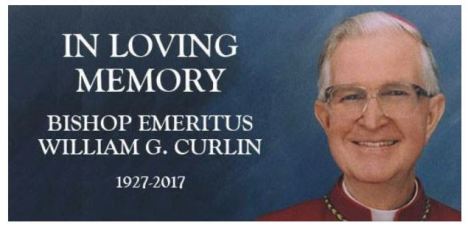
Bishop William Curlin Dies: Rest in Peace

curlin

Bishop Emeritus William G. Curlin, the third bishop of the Diocese of Charlotte, passed away Dec. 23:

The reception of the body and a vigil prayer service will take place at St. Gabriel Church, 3016 Providence Road in Charlotte, at 7 p.m. Monday, Jan. 1. The Mass of Christian Burial will be celebrated at 11 a.m. Tuesday, Jan. 2, also at St. Gabriel Church. Following the funeral Mass, Bishop Curlin will be buried at Belmont Abbey in Belmont.

Bishop, then Msgr. Curlin was our Vocations Director for Washington. He was the pastor of Old St. Mary’s in Chinatown. He accepted me into the seminary back in 1978. God bless him.

Eternal rest, grant unto him, O Lord, and let perpetual light shine upon him.

Merry Christmas!

christmas

Lunch with Santa 2017

Is There a Pressing Need to Change the Our Father?

ourfather

The Greek verb is εἰσφέρω which is usually rendered as “lead into” or “bring in.” While I see no serious problem with the proposed revised translation, “do not let us fall into temptation,” I am at a loss to any pressing need for dismissal of the traditional rendering. The word “lead” acknowledges the mystery of divine providence and election. God writes his straight lines with our crooked ones. God never intends evil, but the fact that we live in a broken world means that we face many temptations and must take up our crosses to follow Jesus. We can ask that God might excuse or protect us from being brought before temptations that we might find too terrible to bear. But the Pope’s translation might be inferred as divine intervention or as an imposed moral restraint that would violate the person’s human will and freedom. I would suggest an in depth catechesis upon the Lord’s Prayer before any change in the traditional English rendering.

Given all the issues that face us, do we really want to open this can of worms?