
• Our Blogger

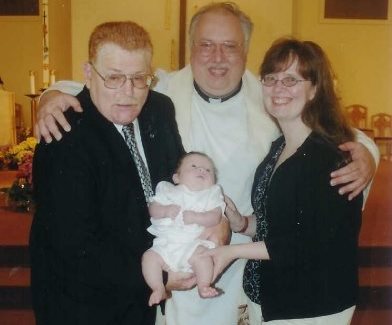
    Fr. Joseph Jenkins

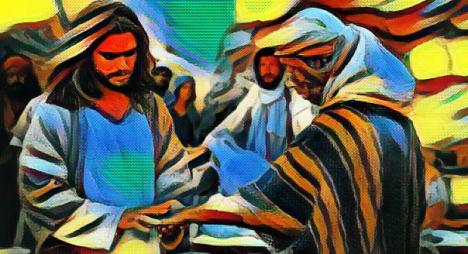
  • The blog header depicts an important and yet mis-understood New Testament scene, Jesus flogging the money-changers out of the temple. I selected it because the faith that gives us consolation can also make us very uncomfortable. Both Divine Mercy and Divine Justice meet in Jesus. Priests are ministers of reconciliation, but never at the cost of truth. In or out of season, we must be courageous in preaching and living out the Gospel of Life. The title of my blog is a play on words, not Flogger Priest but Blogger Priest.

  • Archives

  • Categories

  • Recent Posts

  • Recent Comments

    Barbara King's avatarBarbara King on Ask a Priest
    Ben Kirk's avatarBen Kirk on Ask a Priest
    Jeremy Kok's avatarJeremy Kok on Ask a Priest
    Barbara's avatarBarbara on Ask a Priest
    forsamuraimarket's avatarforsamuraimarket on Ask a Priest

[23] First Sunday of Lent

15188060042474533

Readings: Genesis 9:8-15 / Psalm 25 / 1 Peter 3:18-22 / Mark 1:12-15

Noah plays the part of a new Adam.  Just as in the creation story, Adam is given charge over creation and names every living thing; Noah preserves the animals from destruction and he and his family will make a new beginning.  The spirit of God hovers over the waters of creation and he breathes life into all living beings.  Whereas life comes from the waters, so too does death.  The covenant that God established with Noah includes the promise that God will never again wipe out the world through a flood.  This pattern is revisited with Christ and the new covenant:  we die with Christ in the waters of baptism so that we might live or rise with him.  The rainbow is left as a sign of God’s covenant with Noah.  The sign of the cross will be the mark or lasting sacramental of Christ’s saving covenant.  Baptism makes us adopted sons and daughters of the Father, brothers and sisters to Christ, heirs of the kingdom and members of the Church.  The Church is often reckoned as or compared to the Ark of Noah.  Salvation is found in Christ and in his Church.  As pilgrims who must sail through the dangerous storms of this world, our Lord guides and protects us as our captain in his boat or ship.  Our rations are signified by the Eucharist, food taken from the Promised Shore.  The story of Noah, like the story of salvation in Christ is both about judgment and mercy.  Even if many are lost, some will be saved.  Those who listen to the Lord will be spared.  Those who turn away will face his terrible justice.

The psalm asserts, “Your ways, O Lord, are truth and love to those who keep your covenant.”  Those who claim God will in turn be claimed by him.  It is as simple as that.  Covenants are contracts but also much more.  Jewish covenants were made in blood.  An animal would be slain and blood sprinkled.  It was understood that if one broke a covenant, a promise would become a curse.  Literally placing one’s life and that of the family on the line, one implored that if this covenant were broken then “let happen to me” what was suffered by this sacrificed lamb or goat or bull.  Jesus would be the Lamb of God who “lays down his life” for sinners.

Despite our infidelity, Jesus is faithful.  He takes upon himself the sins of the world.  He dies that we might live.  The psalm asserts that “truth” comes with the covenant.  God reveals himself and establishes a relationship with us.  Jesus is the revelation of the Father, showing us the face of God.  The psalm also states that the covenant expresses love.  It is love that calls us into existence.  It is for love that God saves a remnant in the days of Noah.  It is love that is nailed to a tree and that proves stronger than the grave.

The second reading from Peter’s epistle speaks of Christ’s singular oblation for sinners.  Jesus heals the breech between heaven and earth with is death, rises from the dead and then he preaches “to the spirits in prison.” These are the righteous dead in the limbo of the fathers.  This number includes Adam, Noah, Abraham, indeed all the ancient patriarchs and prophets.  They have waited from the beginning of the world for the promised Messiah— the one who would be reckoned as the Way and the Truth and the Life. Peter says that the story of Noah prefigures “baptism, which saves you now.”

As a contrast to the rain and waters in the story of Noah, our Lord experiences the heat and dust of the desert for forty days.  Gone is the life-filled garden of the first Adam.  Death has entered the world.  Our Lord is tempted by the devil.  Fortunately, this time we have an Adam who will not fall.  Jesus begins the work for which he comes into the world.  He comes to Galilee preaching the Good News:  “This is the time of fulfillment. The kingdom of God is at hand. Repent, and believe in the gospel.” All of salvation history converges upon Christ and his three years of ministry:  teaching, healing, and forgiving.  God will keep his promise to send a Savior.  He comes not to rescue the righteous or the good, but sinners or the bad.  Despite our infidelity, age after age, God is forever faithful.

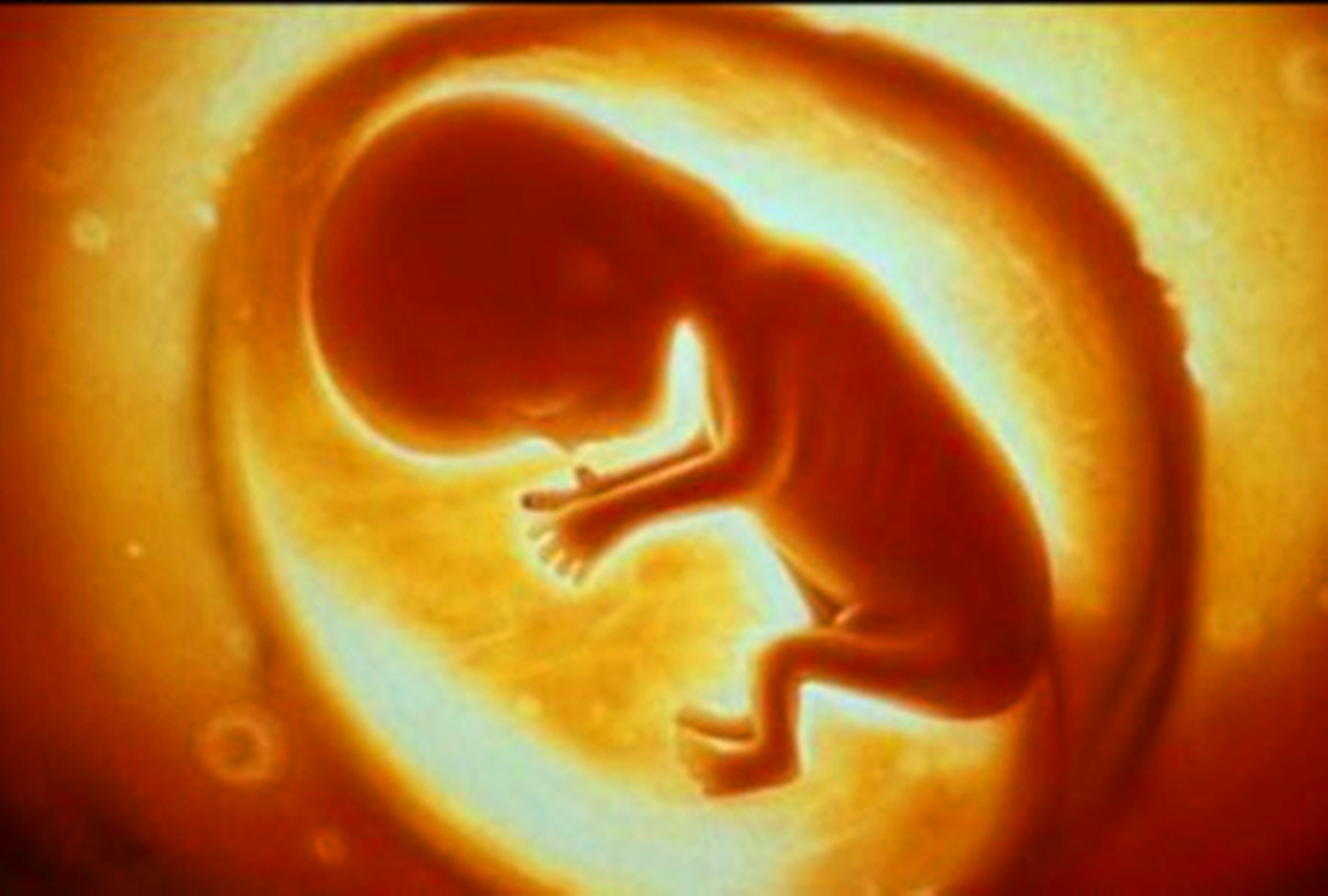
We came into existence wounded in the womb.  Our ancestors through sin contracted suffering and death.  All inherited these painful mysteries and needed healing.  We were the purloined property of a fallen angel.  While our Lord ransomed us back from the devil, Satan still takes delight in tormenting our wound, introducing a spiritual infection and distracting us from the divine physician.  Indeed, some have become so duped that they forget God and no longer believe that Satan exists.  History is only transformed if we turn to our saving God; otherwise, we find ourselves contaminated by an essential malignancy.  It is only with the Lord that we can find spiritual healing and life.  While frustrated in his temptation of Christ, the same demon makes his appeal to us.  While he has lost an entitlement to the world and to the race of men, he can still exploit his eternal spite.  Jesus may have won the war, but the devil can yet abscond with his particular casualties.  Christ might claim you but you are not safe until you claim him.  Satan would have us mingle with the indifferent crowd, only believing in the strength of what flesh might attain apart from Christ.  He tells us to gorge ourselves with earthly riches and proximate pleasures.  “Do not worry about what is right or wrong, no matter whether it be in reference to stolen goods, oppressed immigrants or aborted children.  The only choices that matter are the ones that satisfy your needs.” The demon tempts and mocks us all while hiding at the periphery of our life and awareness.  Like the roaches that scurry when the lights are turned on, we need to allow Jesus who is the Light of the World to dispel all that hides in the darkness.  Repentance makes room for believing and loving as we should.

  • As people of the covenant, do we keep our promises to God and others?
  • Do we sufficiently ponder the price that was paid for our sins?
  • Do we go to confession and is our contrition perfect or imperfect?
  • Have we read the Gospels or any book about the life of Christ?
  • Do we take seriously the discipline about fasting and abstinence?


Who Can Be Saved?

I am a bit perplexed by recent soteriology debates.  One group assumes a form of universalism wherein most if not everyone will ultimately be saved.  This contingent hopes that hell is the afterlife’s ghost town, populated by a few like the devil, Judas and Herod and maybe with a Nero, a Hitler and a Stalin.  The other side contends, much in line with Scripture and the private revelations of saints that only a few will be saved and that hell is a crowded abode of souls anguishing in eternal hell-fire.  While we can hope the devil is lonely, it seems to me that we should merely acknowledge the reality of heaven and hell and leave it entirely to God’s merciful providence and justice as to where he will assign us.  Nothing about God’s generous mercy will be compromised if most souls should be damned.  After all, we have always spoken about salvation as a gift which we cannot merit and do not deserve.  I would not be surprised if God should save many that men would count as condemned.  We are fortunate that God and not men make such determinations as we struggle to love and forgive as we should.  Those who count baptism and Church membership as sure signs of being saved should be on guard against the “yeast of the Pharisees.”

Jesus tells us: “Not everyone who says to me, ‘Lord, Lord,’ will enter the kingdom of heaven, but only the one who does the will of my Father in heaven. Many will say to me on that day, ‘Lord, Lord, did we not prophesy in your name? Did we not drive out demons in your name? Did we not do mighty deeds in your name?’ Then I will declare to them solemnly, ‘I never knew you. Depart from me, you evildoers’” (Matthew 7:21-23).

Is it not enough that we admit our sinfulness, ask for forgiveness, and invoke divine grace through faith in Christ— walking in right relationship with God and striving to take a few of our family and friends to heaven with us?

We come into this world wounded in the womb.  We cannot save ourselves.  The world would beguile us with false treasure and empty assurances of safety and success.

Jesus speaks to us the uncomfortable truth: “‘Amen, I say to you, it will be hard for one who is rich to enter the kingdom of heaven. Again I say to you, it is easier for a camel to pass through the eye of a needle than for one who is rich to enter the kingdom of God.’ When the disciples heard this, they were greatly astonished and said, ‘Who then can be saved?’ Jesus looked at them and said, ‘For human beings this is impossible, but for God all things are possible’” (Matthew 19:23-26).

Jesus gives us hope but not what some posit as an absolute assurance.  If he were to do any other, then malice could wrongly find excuse for the exploitation and satisfaction of vices.  Except for the Christ as the source of holiness and the virgin preserved from sin; there are some questions that must not be answered on this side of the grave.  It is so terribly hard to be good.  It is easy to love those who love us and to want those things that give us immediate pleasure.  More difficult is trying to love those who are hard to love and embracing those things wrapped with the crown of thorns.  As believers we have moments of grace that seem to enthrall or intoxicate us.  We feel as the great saints must have felt within the intensity of their mysticism.  But the joy is fleeting.  The veil comes down.  Suddenly the moment is gone.  We have lost the oasis and only have the dry sand of the desert.  The sense of loss is terrible and we are tempted to fill the vacuum with something less, anything that will take away the terrible sting of loss.  Once we have had a taste of genuine joy, we want more and we want it in never-ending abundance.

Our primordial parents brought death into the world.  Does this mean that in the evolution and battle of life that they were immortal?  It is true that they could have been.  No matter how the first man or woman was formed, it was their choice in sin that damaged the immediate trajectory of creation.  Even if mortal or physical death had remained, great theologians have speculated that it would have been entirely redefined— nothing as we now experience it.  The door between this world and the next closes abruptly.  We cannot see clearly to the other side.  There is so much pain and isolation.  We are afraid.  We are also naked and we know that we are naked.  Had our first parents remained in the full flower of grace, death might have been no more a struggle than our walking from one lit room into another.  They journeyed with God as a people in perpetual contemplation, desiring to cross the threshold from this world to the next with a hope to fully possess God and to have him possess them.  Unfortunately, they broke this peace for themselves and for all who would follow.  That peace is only restored in Christ.

[77] Sixth Sunday in Ordinary Time

151836448978737067

Readings: Leviticus 13:1-2, 44-46 / Psalm 32 / 1 Corinthians 10:31-11:1 / Mark 1:40-45

The Levitical law about lepers was intended to protect the community from contagion; however, the individual sufferer was both physically ostracized and stigmatized as one who was punished by God.  The leper lost everything:  his place in the community, his job, his family, etc.  Indeed, failure to abide by the regulations about proximity could result in his execution.  By appearance and by proclamation, “Unclean, unclean!” he announced his coming into the local vicinity.  Sometimes the healthy villagers or families had locations where food was left for the afflicted.  Later, those suffering from leprosy would also ring a bell, particularly if they had trouble speaking.  Just as the Jewish priest passed sentence for the expulsion, if cleansed a similar process of washing and examination might allow a (former) leper to return to his family and community.  Lepers often traveled alone although some gathered for companionship or formed their own colonies.  Most were intensely afraid of any association with them.

The situation with leprosy reminds me of what was encountered by those afflicted with AIDs in the early 1980’s.  As a priest working at a hospice in Washington, DC, I quickly saw the cancer patients outnumbered by those dying from AIDs.  There were few drugs to treat it back then and the disease quickly killed its victims.  Many of the patients I visited were young men in their 20’s.  Certain rigid fundamentalists asserted that it was God’s condemnation upon the homosexual community.  Even children and others who contracted the disease through blood transfusions were vilified and segregated.  The virus was found in all the fluids of the body, even sweat and tears.  I recall one young man who wept when I anointed him with the holy oil.  Everyone who approached him was dressed up like an astronaut and wore rubber gloves.  Much to the chagrin of the staff I insisted on applying the oil with my bare hand.  When I asked the poor man why he cried, he responded, “Father, everyone is afraid to come near me.  You are the first person to actually touch me with his bare hand in over a year.”  I was summoned to another dying patient by his parents.  As I approached the door, a young man stood before me and angrily shouted, “I am George and I am his boyfriend!  What do you think about that?  He was angry and wanted a fight.  I was not going to give it to him.  I replied, “My name is Father Joe and I am so sorry about the situation.  I have come to bring the mercy and healing of Jesus, not to debate.”  I prayed with him and the poor man’s parents.  I gave him the Last Rights.  Upset at the situation and anger at the Church seemed to disappear.  This was the real face of the Church.  Jesus did not put conditions on his love.  Our Lord said that he came not for the righteous but for sinners.  He did not shy away from others but deliberately went out to the poor, the sick, the sinners and the marginalized.  How could I or any priest do any differently?  St. Paul said in the second reading today, “Be imitators of me, as I am of Christ.”  This was the manner in which we bring salvation to others.  When family and friends learned of my hospice ministry, I was assigned my own plate, fork, spoon and a cup (with my name on it).  Because of my ministerial association with modern-day lepers, many became afraid to immediately relate with me.  Fortunately, such a hysterical response has long since subsided; but it is nothing that I will ever forget.  I took comfort from the Scriptures, knowing that our Lord was condemned and spurned because of his outreach to God’s alienated people.

The responsorial exhorts, “Blessed is he whose fault is taken away, whose sin is covered… ‘I confess my faults to the LORD.’”  We are all sick.  We are all sinners.  Nevertheless, we often look down upon others as less or as more afflicted than ourselves.  Believers are always tempted to be like the self-righteous Pharisee, seeking to justify ourselves as better than others or at least not as sinful as someone else.  But sin is sin, no matter if great or small.  We are all broken and need healing.  The Church, like Christ, does not close her doors to those afflicted by sin.  Yes, we have strong views about right and wrong.  We should never compromise our moral truths.  But likewise, we should appreciate that we have all fallen short.  We live in a messy world.  We invite God’s grace to forgive and to transform us.  This process begins in the here-and-now but for some it will not be complete until the purification in the life to come.  As vehicles or prophets of grace, we need to open the doors of the faith to all who are searching for meaning and reconciliation with God.  This is a hallmark of Pope Francis’ notion of accompaniment.

The leper in the Gospel takes a terrible chance, as does our Lord.  He approaches Jesus and begs to be healed.  This “approach” itself is forbidden by their law.  Our Lord is not worried about such things.  We read, “Moved with pity, he stretched out his hand, touched him, and said to him, ‘I do will it.  Be made clean.’” The Scriptures are deliberate here.  Our Lord “touched” the untouchable leper.  He made himself unclean in the sight of the religious leadership.  This is a whole magnitude more serious than eating and drinking with tax collectors.  Even the religious leadership would partake of Matthew’s food and hospitality, although without sitting at the same table with him and other condemned sinners.  The leper was absolutely off limits.  Jesus tells the man to show himself to the Jewish priest.  This is the same process we read about in the first reading.  This man is not merely physically healed, but this act of mercy restores him socially to his community and family.  It is no wonder that he could not keep secret about this great blessing in his life.  However, word of the event causes the crowds to balloon.  Such intervention would also further harden the hearts of those who oppose Jesus.  They are more concerned about rules and their standing in the Jewish community than about the plight of the poor and hurting.

  • Are there people with whom we refuse to associate?
  • Have we ever felt abandoned or rejected?
  • Are we ever afraid to become involved or to witness Christ to others?
  • Have we belittled others through stereotypes and bigotry?


[74] Fifth Sunday in Ordinary Time

15177789398859516

Readings: Job 7:1-4, 6-7 / Psalm 147 / 1 Corinthians 9:16-19, 22-23 / Mark 1:29-39

Job speaks of life as “drudgery” or as a battle to survive.  Like “hirelings” we must work to live and to put food on the table.  This is not our true home and we are wayfarers in a foreign land.  We are a “slave” to the mortal condition, longing for leisure and comfort from our toil.  One might summarize his remarks thusly:  life is hard and life is short. When he speaks about the lack of hope and that he “shall not see happiness again,” he is speaking about the fleeting joy or satisfaction this world offers.  Job is not spurning God but he does indicate that there is something about the mystery of pain that remains unintelligible.  Any of us who have endured loss or grown old or know sickness and pain can add our voices to the truth of what Job says.  We get older and know that there are more days behind us than before us.  We appreciate that our bodies fail us and there are some ailments from which we will not recover.  Pain becomes the constant companion to many of us.  While as Christians we trust that the Lord can restore all that the world takes away, the world will not let go of us until it has killed us.

The Book of Job is not a testament to despair, but rather is a witness of faith against the harsh truth of existence in the mortal world.  I am reminded of St. Teresa of Avila and her appraisal as a Christian of hardship. She was on her way back to the convent during a torrential storm.  She tumbles down an embankment into a pool of mud.  Dragging herself out, she looks up to heaven with this address to the Almighty:  “If this is how you treat your friends, it is no wonder that you have so few of them!” Perpetually in conversation with God, her assessment is no affront to the deity, but is a tenacious expression of an existential truth in facing the mystery of suffering.

Visitors to his home attempt to convince Job that his dire plight must be a punishment for some crime or sin.  The Jews saw this view as safeguarding God’s goodness and divine justice.  Suffering is perceived as self-inflicted or as the price for sin.  That assessment also feeds into our notion of original sin.  God as the creator is good and in no way can be the source of evil.  Sin is the consequence of our violation of freedom— a transgression of the moral law— and is an offense against God, the divine lawgiver.  It follows that God as the just judge rewards good and punishes evil.  This reckoning of the moral order would have us interpret suffering as “justified evil.”  However, the story of Job, while not invalidating this stance, shows that it is overly simplistic.

Pope John Paul II writes in Salvifici Doloris that Job is “the story of this just man, who without any fault of his own is tried by innumerable sufferings… loses his possessions, his sons and daughters, and finally he himself is afflicted by a grave sickness.” Job honestly reflects upon his life and upon the good he has done.  He can see no grounds upon which he deserves the punishment that comes to him.  “In the end, God himself reproves Job’s friends for their accusations and recognizes that Job is not guilty. His suffering is the suffering of someone who is innocent and it must be accepted as a mystery, which the individual is unable to penetrate completely by his own intelligence.”  The notion of an innocent victim will find its prime paradigm in Jesus Christ.  The setting for the testing of Job is one that emerges from the devil’s provocation.  “And if the Lord consents to test Job with suffering, he does it to demonstrate the latter’s righteousness.”  Francis Bacon once wrote, “In order for the light to shine so brightly, the darkness must be present.”

While life can be hard and suffering comes to all, we are admonished not to despair.  The psalm tells us, “He heals the brokenhearted and binds up their wounds.”  The Church realizes this promise by extending the message and mission of Jesus.  Our souls are healed and we know forgiveness.  One day we will be restored, body and spirit.  While we live in a world where some seem to suffer more than their lot, we are also told that “The LORD sustains the lowly; the wicked he casts to the ground.”  The innocent might sometimes suffer and the wicked may appear to flourish.  But God sees everything, and the innocent will be gifted with mercy while evil doers will merit justice.  The early Jews largely defined divine reward as wealth, power, property and children in this world.  The question of Job and suffering would move them to consider life after death.  There has to be an existence where the scales are balanced in favor of the innocent.

Most eulogies celebrate life and leave unspoken certain truths that make us fearful.  We selectively remember someone as fun to be around or who knew how to have a good time or who did not make too many demands upon us.  Nothing is said about a general lack of charity or a failure to sacrifice for others or one too self-preoccupied to worry about anyone else.  We extract a list of secular virtues that would make one well-remembered in this world but still largely unknown in the next. We mention his favorite food, that he was a fan for the local football team, and that his dog will miss him.  “We will never forget him.  He will always remain in our memories.” That is what we tell ourselves. Of course, life goes on and a short time later most would have put him out of mind.  His name will go unspoken.  Photos will be filed away in an album that will one day be opened by relatives not yet born.  They will look at his picture and wonder, who is that?  People of faith tend to focus on the positive.  They figure that we might as well imagine he is in heaven so as not to distress his family and friends.  After all, if he is in hell, who among us  will know until we are dead?  Catholics might pray for his soul as one in purgatory, but are fearful of asking others to pray with them since it means that judgment after death is real.  We are attracted to Christ as the Divine Mercy, but not so much to the Lord as Divine Justice.  Nevertheless, they are both truthful assessments about his identity. Love is stronger than death.  Love is forever and in Christ it has conquered the grave.  God will love us forever and thus he gives us a share in his life.  This is the great consolation for believers.  But we must not forget that just as the beatific vision and the joy of the saints is eternal, so is hell-fire.

St. Paul tells the Corinthians, “To the weak I became weak, to win over the weak. I have become all things to all, to save at least some.” The Christian kerygma is one that challenges basic Jewish presumptions about social position reflecting divine favor.  The apostle is literally saying that he is making himself a slave for others.  He is fulfilling the summons of Christ to take up the cross in following him.  That is fundamental to the sacrifices made by priests and religious to celibacy, poverty and obedience.  They embrace for the kingdom that which is traditionally regarded as punishment or curse.  The Christian meaning of suffering would forever be associated with the Paschal Mystery of Christ.  If we die with Christ then we can live with him.  We offer ourselves as grafted to the crucified Savior.  We take all the struggle, sickness, pain, loss, and hurt we experience and make them redemptive in the Lord.  Catholicism emphasizes that even the dark things of life can come to God’s glory.

It was this message about suffering that was a hallmark in the witness of the late Mother Teresa.  It was also a truth about which her critics despised and maligned her.  Those who saw no value in pain hated Mother Teresa.  They are the same voices that speak in favor of abortion and euthanasia, today.

Turning to the Gospel, Jesus heals Simon’s mother-in-law. Later, we are told that “the whole town was gathered at the door. He cured many who were sick with various diseases, and he drove out many demons, not permitting them to speak because they knew him.”  Everyone he healed would get sick and die.  All his miracles and healings pointed to the lasting healing of the soul, in the forgiveness of sins.  He will give us a share in his Easter mystery.  Jesus is the revelation of the Father, the face of God.  When our Lord acts, it is always to heal and to liberate.  All who suffer can find solidarity in Christ.

  • When we cannot escape pain, do we become frustrated and angry?
  • Have we ever embraced suffering and discomfort as mortification and penance?
  • How do we take up our crosses in following Jesus?
  • Can we add our struggle to the passion of Jesus as an offering to the Father?
  • Do we place our hopes in what this world offers or in the kingdom of Christ?
  • If we should die today, are we prepared for judgment?
  • Have we experienced cases where the wicked flourished and the innocent suffered?
  • While we believe that the scales of justice will be balanced in the world to come, what is our obligation to building up the kingdom in the here-and-now?


A Cold Wind Blows Against the Cross

151768519222713340

The Cross of Jesus literally marks the spot.  It pierces the icy heart of a fallen creation. Our Lord enacts his claim upon the world with two pieces of wood.  Nothing would ever again be the same.  However, not everyone would be saved.  God come down from heaven had infinite power; but the price of freedom was that this deity would become small and vulnerable.  He would compress himself into the finite.  The mysteries of sin and death had been conquered but not undone.  During the time of unraveling there would still be iniquity, sickness and suffering.  The world’s harmony would remain broken, at least until the day of final consummation.

All would one day be light except for one very tiny corner, a crack where the irreformable would hide as specks in the shadow.  Life is eternal.  Ours is not a deity who forgets or annihilates his creation.  The blessed see God and know his joy.  The damned cower blind in the darkness and suffer hell-fire.

Our Lord came with a message about God’s love and the brotherhood of man.  The angels once sang songs to the newborn Prince of Peace. A promise of peace was extended to men of good will.  But this did not mean that all men who came to the manger would be good.  Indeed, it would be even less so when men came to Calvary.  Christ would die for sinners.  But would sinners live for Christ?  We have all played the part of betrayer, some like Peter who would reconcile and others like Judas who would despair.

After a few generations the Roman Empire became Christian.  But was the empire truly converted or was it the faith that was compromised?  The floodgates opened and the Church blossomed.  However, the world did not suddenly become a heaven on earth.  Some teachings were thrown aside, especially those about putting away the sword, about loving our enemies and about forgiving those who hurt us.  Hypocrisy was frequently the poison to the potion of faith.

I suspect our Lord shivered on the Cross, knowing the cold indifference and duplicity of men who would claim to belong to him.  All in his name, but really due to the hardness of hearts, many would be spurned, tortured and murdered as heretics, apostates and infidels.  Victims would be burned at the stake and heads chopped off.  Crusades would be fought against those who refused to accept Christ and wars enacted against those Christians who broke away from Holy Mother Church.  That cold wind that blew upon Golgotha must have been a terrible wind, indeed.  Naked to the cold, our Lord would die, not for the innocent, but for the guilty.

The true face of the Church would not show itself with earthly kings and the sword; rather, it would emerge in the witness of unarmed missionaries and those risking their own wellbeing in caring for the sick and suffering.  The model of Christ is not that of a king dressed in splendor but one attired in work clothes.  Even these would be reduced to rags as he is the king who lays down his life for his subjects.  He makes himself the slave of all and summons his followers, especially the one called ROCK to be the servant of the servants of God.

The Real Meaning of Power

151699366594120136

The world is so very wrong about power.  From swords and spears to guns and bombs, the world has always been wrong.  Julius Caesar, Alexander the Great, Genghis Khan, Napoleon and more recently Hitler, Hirohito, Mussolini, Stalin, and Mao— the names change and the kingdoms rise and fall but they all measured power in terms of violence and intimidation.  However, power is ultimately not measured by blood that is stolen but by blood that is freely surrendered.  Real power is eternal.  Genuine authority and power is not taken by the military arms of short-lived empires but by an eternal kingdom that is inaugurated with a naked and vulnerable child in the straw of a manger.  The great I AM becomes one of us to save us.  No longer the apparition of a bush on fire, he is a human-boy-child with all the fire of God’s love within him.  The LIGHT OF THE WORLD comes to dispel the darkness.  Finite power can destroy, divide, wound and kill.  Infinite power can create, atone, heal and resurrect.  While secular history is filled with kings willing to allow their subjects to die for their ambitions of dominion; sacred or salvation history gives us a king who both makes his subjects members of his royal household and then lays down his life on their behalf.

There are no self-made men.  We imagine that we are substantial and strong.  But in truth, we are next to nothing.  We emerge from nothingness and are utterly dependent.  Most are born and die and the world takes little notice.  However, the Child of Bethlehem is of another sort.  He resembles us but he is the eternal Word.  Before anything was created, he was with God and was God.  He is existence or being itself.  He is the eternal entering into the ephemeral.  He is a sublime innocence that like a blanket will put to sleep and cover all the sins of the world.  What he will accomplish in a few moments in time will have eternal consequences.  All who would approach the divine Child must become children themselves.

We read in Matthew 18:1-5: “At that time the disciples approached Jesus and said, ‘Who is the greatest in the kingdom of heaven?’ He called a child over, placed [him] in their midst, and said, ‘Amen, I say to you, unless you turn and become like children, you will not enter the kingdom of heaven. Whoever humbles himself like this child is the greatest in the kingdom of heaven. And whoever receives one child such as this in my name receives me.’”

Do we really appreciate the full importance of this direction from Christ?  We must reflect the innocence of the Christ Child.

My father shocked me with a question after my confirmation.  He asked me, “Do you understand the full meaning and consequences of your confirmation?” I asked what he meant.  He responded, “Confirmation means that you can now go to hell.”  I did a double-take… what did he mean?  No one before or since had described the sacrament in this way to me.  As was common years ago, the sacrament was described in terms of maturity in our holy religion, of becoming an adult fully initiated into the faith of the Church.  He said children can only commit little venial sins.  Adults are the ones who can commit mortal sins.  Most priest-confessors would probably agree.  Adults are guilty of far greater transgressions than failing to take out the trash, stealing a cookie or pulling a sibling’s ponytail.  All of us must return to the innocence of childhood if we want a place in Christ’s kingdom.  I suppose that is why our Lord spoke about faith and regeneration as being “born again.”  The old man or woman must be put aside for the new child born in Christ’s likeness.  While we might be adults in years, we must become spiritual children.  Paradise is populated entirely by children.

If we grow old in the world, maybe souls grow younger in purgatory— perfected by the fire of God’s grace?  Nothing of cynicism or sin can enter through the gate of heaven.  Any who would cling to earthly power would similarly be barred. The path to paradise is strewn with earthly weapons rendered as harmless and worldly treasures subtracted of any and all value.  Like a child entering this world, we must enter the next naked except for the wedding garment of the Lamb.


Christmas Poems from Fourth Graders

christmaSt. Mary of the Assumption School – December 1996

These poems are a testimony to faith and to the children’s joy found in Christmas. Every child is a reflection of the child of Bethlehem, precious and irreplaceable. The birth of our Savior is celebrated each year in the love we share with our children.

Melanie T

Christ our Savior,
Christ our Lord,
Christ our Lord is born.

A star shines over Him in Bethlehem,
Marks the great place of his birth
In a manger– in a barn.

Shepherds came from countries afar;
Kings came bearing great gifts;
Angels came singing their songs of love.

People came from countries afar,
Bearing great gifts,
Following the bright star.

Cameron T 

Once there was a woman named Mary
Who was highly favored by God.
God sent an angel to Mary
And asked her to be the Mother of God.

On to Bethlehem, Mary went
To be taxed with Joseph her husband.
The journey was long and hard for Mary.
No space was to be found
And Mary was ready to give birth to God’s Son.
Only a manger was available so
God’s son was born in a lowly place, filled with grace.

Choirs of angels announced the event
And people came from near and far.
Wise men were guided by a star.
All came to give homage to the Son of God.

Gregory R 

In a manger far away
Lay a child on the hay.
Sleeping peacefully through the night,
He will be our guiding light.

Shining above is a star,
watching over from afar.
Three kings have come with gifts in a jar,
Following the yonder star.

Not many people are aware,
That God’s Son, Jesus, is there.
Jesus will always care,
And we are thankful He’s always there.

Angela G 

Christmas is that time of day
When all the children want to play.
They play and play around
Until they fall on the ground.

In a manger far away
Lay a baby in the hay.
He will sleep all through the night
Until he sees a bright light.

While Jesus sleeps and children play–
Yes, that’s what happenss on Christmas day!

Steven B 

O joy! Christmas day!
O dear! My brother Roy,
He’s not up.
O joy! We will open presents!
O dear! My mom isn’t present,
To watch us open the presents,
O dear!

Carrie F 

There lay a manger in a barn
With a baby so nice and warm.
The glorious day this child was born,
We call it Christmas.

When Christmas comes
We shouldn’t think of gifts.
We should think of Jesus;
This gives our spirits a lift.

Christmas is a time of joy;
We go to church and pray
And sing and celebrate
The birth of Christ.

This festive time brings lots of cheer.
We think of those we hold so dear;
Of Christ’s birth, Mary and Joseph, too.
I love this time of Christmas!

Ryan T 

The North Star lit the night sky.
The wise men followed the bright star.
They traveled long and far
And brought gifts for our Savior.

Our Savior was born in a manger
One sweet night.
It became known as Christmas.
To celebrate his coming, we sing songs of joy
And under our tree, maybe a toy,

He died on a cross for our sins.
He hoped one day to bring out the angel within.
Today we continue the teachings that he began.

Freddie C 

There was a star in the sky so very high.
The kings had just said, “Hi” to little Jesus.
As he was lying in a manger.
The new strangers gave Jesus gifts.
While he lied there, everything was quiet,
Not even a sniffle.
This day is known as Christmas.
It is much fun, like no other day.

Maureen S 

It was Christmas Eve, a dark cold night,
Snowflakes were falling like angels in flight.

The Christmas tree with lights all a glow
Filled the room with warmth and only Santa would know.

The presents were wrapped with neatness and delight.
It made us know St. Nick’s flight was just right.

As Christmas day comes to an end,
We know the joy and loving will happen again.

Mary W 

Oh Christmas Day!
What a wonderful way
For God to say he loves us.
To give us his only Son
Was a true sign of his affection for us.

Joe M 

Christmas is the time of year
When everyone is full of cheer.
Yet we should never forget the true meaning of this day
That started with a baby laying in the hay.
The brightest star showed wise men where to come;
They traveled by star instead of by sun.
Little did they know our savior would be lost;
He saved us all by dying on the cross.
We celebrate Christmas, the day God became man.
I celebrate his birthday because I am his biggest fan.

Matthew S 

Baby Jesus will be born tonight,
But some of the inns will put up a fight.
All they say is go away
And find some other place to stay.

They found a stable nice and warm
And that is where Baby Jesus was born.
Three wise men from near and far
Decided to follow a bright star.

They did not rest until they were there
To see this occasion that was rare.

Christmas comes just once a year,
That is why Baby Jesus is so dear.
Although his birthday is once a year,
You should have it in your heart all year long.

Scottie C 

Away in a manger,
Tucked away from danger,
There he lay,
Tucked away in the hay.

As the shepherds arrive,
They lay down by his side.
Kings come each with a great gift
That will surely be left.

The light of the star
Has guided the visitors far.
As they watch the Baby Jesus
He gets up and sneezes.

Tommy A 

When I think of Christmas time,
I don’t think of presents, not me.
I think of the birth of Christ
And of the many people of earth.

I think of sparkling trees, wreaths
And tales galore of Santa’s lore.
Decorations fill the house and lawn,
Lights, of Christmas spirit fill the air.

I think of love spoken near and far
And gifts donated to the poor.
The songs of carolers singing out
The magic, the wonder, of a child of God.

Chris D 

In the manger there he lay
All bundled up in cloth and hay,
Little Jesus there he lie
While three wise men by his side.

Bearing wonderful gifts they did,
Looking at him in that little crib.
What a wonderful sight it was,
The newborn king, there he was.

Christmas is a wonderful thing
Because it is so pleasing.
It is so pleasing because
It’s the birthday of King Jesus.

Carrie T 

Roses are red,
Violets are blue,
I like Christmas
And so should you.

Christmas spirit
Should be remembered
All year through.

Keep Jesus in your heart,
So don’t think about
A pretty shopping cart.

The wise men brought gifts
And followed the star.
We give gifts,
Right where we are.

Christmas is filled with love
And shared with family
Friends, and God above.

Bethany F 

Christmas is a time to share.
Christmas is a time to care.
You wish you were a holiday prayer.
So God could be with you everywhere.

Then you would go with Him anywhere,
To be with Him side by side.
So that you can see Him every time,
Just keep on praying and you’ll find Him high.

Up above the world so high,
You know you don’t want to die.
Christmas is a time of love,
So love the Lord to get above.

Erica D

Joseph and Mary went on a caravan,
So they could get to Bethlehem.
They traveled both day and night,
But they did not worry with fright.
They asked many if they had a place to stay,
But they all answered, “No, you cannot stay.”
Someone let them use his barn
With animals who meant no harm.
There little baby Jesus was born
And the Noel angel played its horn.
While the three wise men followed a star,
They wondered how long and how far.
When they reached the barn,
They layed their gifts for the baby,
Who deserved the myrrh, frankencense and gold.
Then everyone was happy with love and merrimas
For on every Dec. 25, they call this Christmas.

Richard N

Jesus was born in Bethlehem.
Kings and shepherds came to praise him.

His birth gave peace and joy
To every man, woman, girl, and boy.

On Christmas eve we pray for nice weather
So family and friends can get together.

We gather around the Christmas tree
To open presents happily.

Michelle G

At the time when Jesus was born,
There wasn’t a lot of corn.
The name of this time of year is all around the bus,
And it is called Christmas.
This is the time of year when little ones look for Santa,
Especially little Tana.
This is the time of year,
When we get liitle gadgets and gears.
We have a big pine tree in our family room,
Which we like to groom.
This is the time of year
When sugar plums and candycanes dance in our heads,
As our parents tuck us in our beds.
And in the morning,
It won’t be boring,
Because we open presents
And they don’t have any dents.

Patrick C

Christmas is a time of joy,
Children think it’s about a toy.
Christmas is a time of play,
Christmas is Jesus’ birthday.

Christmas is not just for decoration,
Christmas is a time for celebration.
Christmas is a time for thanks,
Not a time to pull some pranks.

Christmas is a time of joy
For every girl and boy.
Christmas is a time for fun,
Christmas is for everyone.

Christopher B

Stars are shining,
Christmas is here.
Baby Jesus is born a’near,
Born in a stable, let’s say a prayer,
Let’s celebrate with holy praise.

Joyous love we have for you
To celebrate all year through!

Steven C

Once upon a midnight cherry
To Mrs. Claus, he said, “Bye deary.”
Over many a house and chimney of brick and stone,
He flew and chuckled, eyes a twinkling–
Suddenly he got an inkling–
As of many children thinking,
Thinking of their Christmas joys,
“Tis some children,” Santa muttered,
“Thinking of their Christmas joys,
Only this, some girls and boys?”

Bridget L 

On Christmas day,
There he lay,
Baby Jesus in the hay,
With the shepherds by his side watching over him.

Then everyone says our Savior is born,
So let’s go to seek
The special Lord– the Lord is born–
Let’s give him thanks and praise.

Then the wise men come on their camels
Bringing their gifts, following the yonder star.
They each bring a special gift: frankencense, myrrh, and gold.

Andrew G

Christmas is near,
Santa is near.
Christmas is near,
Jesus is near.

Time to put up the Christmas set,
Time to put up the Nativity Set,
Time to see the North Star,
But most important, the Christmas Star.

On Christmas, kids might have joy
For a Christmas toy.
But Christmas is about the day
Jesus is born and love us he may.

Robbie C

In a manger a child lay
Asleep in the hay,
Sleeping peacefully through the day,
He will be our guiding light.

Shining above is a star,
Watching over from afar.
Three kings have arrived from far,
Who came by the light.

People are not aware
That the Son of God is here.
His Son will care for us
And we are thankful he is here.

[71] Fourth Sunday in Ordinary Time

This homily will not be preached Sunday as it will be replaced by the message for the Cardinal’s Appeal…

151666742263228944

Readings: 1 Deuteronomy 18:15-20 / Psalm 95 / 1 Corinthians 7:32-35 / Mark 1:21-28

Moses tells his people that prophets like him will be taken from their number and will lead them.  If we are to properly understand what he is saying, then we must look to the prior verses not included here against false worship and divination.  We read: “Let there not be found among you anyone who causes their son or daughter to pass through the fire, or practices divination, or is a soothsayer, augur, or sorcerer, or who casts spells, consults ghosts and spirits, or seeks oracles from the dead” (verses 10-11). Moses is emphasizing several important points:

  • They must not corrupt their faith with the worship of other or false gods.
  • They do not have to look outside of themselves as the chosen people for prophets (God speaks to them through their own).
  • They trust the providence of God and do not seek forbidden knowledge.

Echoing the commandments, any violation of these points is condemned as an abomination before the Lord.  Fearful of any direct confrontation with almighty God, the people will be guided by the Lord through his intermediaries.

This pattern is still pursued today in the Christian community.  The new People of God or the Church is called by God and given shepherds who govern and speak in Christ’s name, empowered to extend the ministry or work of Jesus.  The Mass is our great worship where the sacrifice of Calvary is re-presented in an unbloody manner at our altars.  The bishops in union with the Pope constitute the authentic teaching authority of the Church.  We are anointed at baptism into a nation of prophets.  It is that commission that makes us missionary disciples.  Outside the Catholic community, there is no guarantee to any message proclaimed and no assured efficacy to divine mysteries or sacraments.  Catholic Christians, like their Hebrew counterparts of long ago, are warned to steer clear of false worship and the occult.

True religion signifies the end of magic.  Judaism (a natural religion) and Catholic Christianity (a supernatural religion) are both instigated by the same one true God.  We are forbidden to engage in voodoo, oriental mysticism, new age religion, naturalist religion, and conventional witchcraft or Satanism.  Divination of the future is interpreted as a distrust of God’s will for us.  Black magic or spells is condemned because one invokes the demonic spirits.  Similarly necromancy is condemned; an important admonishment when there is a new fascination with ghost hunting.  Christians are warned to avoid Quiji boards, tarot cards, palm readers, and séances.  All of it violates the first commandment of the Decalogue.

The Canaanites worshipped Molech, a false deity judged by the fathers of the Church as a bloodthirsty demon.  Indeed, sometimes his name is still mentioned in Christian circles in regard to the sins of abortion and infanticide. Molech demanded child sacrifice.  Heated with fire, the idol was a bronze statue into which the victims were thrown. The pagans believed that favors and special protection could be merited by such sacrifices.  Might the abortion of millions of children constitute the return of the demon Molech’s reign?  Just another name for Satan, it may be that the devil hides his thirst for human blood behind the semantics employed to disguise the true nature of abortion.  Consciences are numbed to the terrible truth that we are murdering our children.  There is no pro-Choice or pro-abortion Christianity.  Such opposition to the Gospel of Life is not only immoral but renounces the Christ and the God of Abraham.  It assumes the mantle of idolatry. The responsorial psalm also speaks of the need to replace rebellion with fidelity and idolatry with right worship.  Our minds must be opened and our hearts softened to the truth. We are admonished, “Harden not your hearts as at Mariah….” God’s people of old turned away as faithless, fearful and selfish. People today are also tempted away from true faith.  They are afraid to take responsibility for their actions, even parenthood.  They give preeminence to their own wants, even over the needs of others, as with the dignity of persons and the sanctity of life.

The second reading mentions some of the fears or anxieties that can afflict us. While they should be an occasion for heightened fidelity, the opposite is what often occurs.  People forget the goodness that God has shown them. Others get angry or doubt when God does not answer their prayers as they would like.  They wrongly postulate prayer as a demand instead of as a humble request.  It is just such a situation that led people of old astray.  St. Paul urges that believers should be “free of anxieties,” as the concerns of the world might distract us from the Lord and from his service.

The Gospel chronicles our Lord’s visit to the synagogue in Capernaum. He encounters someone possessed by a demon.  Jesus immediately rebukes him, “Quiet! Come out of him!” The “unclean spirit” makes a loud cry and leaves.  The onlookers are amazed both at his power and that he speaks with authority.  As prophets, we can invoke this same authority and power in casting out the demon that secretly devours the lives of our children in abortion.  As prophets, we can proclaim that Jesus is Lord and invite others into the Catholic community of faith.  We are summoned to speak the truth about justice and charity to an oppressive and selfish world.

  • Do we place confidence in the Lord who calls us to take up our crosses and to follow him?
  • Are we prophets— faithful, courageous and strong in proclaiming the truth?
  • Have we been the voice for the voiceless, especially the marginalized and the unborn?
  • Do we avoid the occult and any “false gods” that would compromise our witness?
  • How have we sought to bring the light of Christ against the darkness or demonic in the world?

[68] Third Sunday in Ordinary Time

Readings: 1 Jonah 3:1-5, 10 / Psalm 25 / 1 Corinthians 7:29-31 / Mark 1:14-20

151639485336432204

Jonah has barely begun his cry of prophetic warning when the people of Nineveh repent and all of them “great and small put on sackcloth.”  Why is there such an immediate reaction? It may be that they had heard the prior story of the prophet Jonah.  The reputation of Nineveh as a wicked city is so severe, that Jonah seeks to flee his divine summons.  Trying to flee by sea, God brings forth a great storm and acknowledging his fault, Jonah has the sailors throw him into the sea.  What we learn here is that the failure of Jonah to be the prophet he has been called to be will result in the death or destruction of others.  He will be held accountable.  Jonah calls upon the Lord and he is swallowed by a great fish.  Later, he is spat upon the shore to continue the mission given him.  Jesus would speak about this as the one sign given in his own regard.  The water symbolizes death and the big fish represents the tomb.  Just as the sea and fish could not destroy Jonah, so too would the sea and the tomb not be able to contain Jesus.  God shows his power.  The people of Nineveh, either out of fear or love of the Lord, would change their ways.  Similarly, after Christ’s victory over death, the apostles would go out to the nations and many would come to repent and to believe.

We are told that the citizens of Nineveh put on sackcloth.  Sackcloth and ashes were signs of humiliation and repentance.  As a coarse material made from goat’s hair, sackcloth was uncomfortable to wear.  Symbolizing desolation or dying to self, many Christian believers would later employ it as a tool for penance.  We would have to die to our old ways and life so as to be reborn and to live for Christ.  Here in the story of Jonah, sackcloth and ashes served as a public sign of repentance before God.  We were told that they even went to the extreme of placing sackcloth on their animals.  They hoped that God might look down upon them, and seeing this incredible expression of contrition and remorse, grant them mercy from the impending judgment.  Of course, God can read our hearts and would not be fooled.  The outward sign rendered by the people of Nineveh worked because the external sackcloth and ashes signified an inward change or disposition.  They were truly sorry for their sins.  We read: “When God saw by their actions how they turned from their evil way, he repented of the evil that he had threatened to do to them; he did not carry it out.” Similarly, we as Christians should know that as long as there is breath in our bodies, there is no sin that God cannot forgive.  All that is required is a contrite heart and a firm purpose of amendment.

The psalm brings to this theme of repentance and mercy another important component— the change of one’s life.  We read: “Teach me your ways, O Lord. Good and upright is the LORD; thus he shows sinners the way.” Left to ourselves and we do not really know how to be good.  God gives us guidance by his commands.  Without God we would be uncertain as to right and wrong.  Strip the commandments about honoring God from the Decalogue and the remaining laws would become capricious.  If there is no God and judgment, then why follow the rules?  If there is no life beyond the grave, then why sacrifice for others? Love of God for some and fear of God for others is what marks the path between virtue and vice. The second reading emphasizes the shortness of life and thus infers the gravity of the coming judgment.  This world is “passing away,” now is the appointed time.

The Gospel reading has Jesus taking up the cry of John the Baptizer, “This is the time of fulfillment. The kingdom of God is at hand. Repent, and believe in the gospel.” The message of Jonah is now extended to the whole world.  Our Lord calls the apostles to himself because they will be his voice to the nations.  Simon, Andrew, James and John are summoned.  They all immediately leave their nets and our Lord tells them that they will be made into “fishers of men.”  Jonah is thrown into the sea, not simply as bait for a big fish but that the citizens of Nineveh would repent and believe.  Our Lord would make himself the bait in his paschal mystery to draw all men and women to himself.  The apostle Paul would literally speak about the resurrection of Christ as “the hook” of Christianity.  The center of the Christian kerygma is the person of Jesus.  He is the kingdom of God breaking into our world.  The calling of the apostles as “fishers of men” is often associated with the need for priestly vocations.  However, every one of us has been called in baptism as a “missionary disciple.”  Evangelism is not solely the responsibility of bishops, priests, deacons and a few Catholic lay evangelists.  It is an obligation for all who claim to be Christian.  Given this as the situation, the following points are essential:

  • We need a living personal and communal relationship with Jesus.
  • We need a faith informed by Scripture and the teaching Church.
  • We need an apostolate of service that expresses genuine charity for others.
  • We need to be regularly nurtured and healed by the sacraments.
  • We need prayer for spiritual life just as breathing gives physical life.

Why is all this essential?  While almighty God can use broken instruments and even wicked people, to bring about his providence; the truth is that he rarely does so. It is hard to impossible to give what you do not have.  If you do not know where to throw the net or if there is no bait for the hook, it is doubtful that you will catch anything.  The fisherman or –woman, who never makes a catch, may also go hungry.  The faith like love is only real when it is shared or given away.  We must possess Christ if we would give him to others.  We may all be sinners, but when the wounded are contrite, God can bring his healing to us and to all whom we meet.

  • Are the five elements here realized in your life?
  • Can you list any people who are believers because of how God has used you?
  • As a sign of Jonah, how have you died so as to rise in the Lord?
  • Have you promoted or supported vocations to the priesthood?

The Gift of Christ in Holy Communion

151647482936907000

The sacrament of the Eucharist is neglected because many fail to fathom its mysterious depths and meaning.  Even parents allow their children to be spiritually malnourished.  Too many stay away.  Too many no longer believe.

Fortunately, there are some parents mindful of their duty.  They believe and extend what they believe to their children.  The greatest gift they will ever give will be their saving faith in the Eucharist.  Theirs is not a transitory love but a love that embraces the Cross and eternity.

What happens in Holy Communion?    We receive the one who is the Holy of Holies.  God comes to us that we might be made more authentically human.  Indeed, that which is human is divinized and made more than it was before.  Christ grants an apportionment in his living presence that we might have a share in his resurrected life and become flesh-and-blood tabernacles to the divine presence and the grace that perdures.  The Eucharist both directs our attention to worshipping almighty God and invites the sacrament to transgress into the dark and thick boundaries of our inner life.

While we accept the sacrament in time, it touches eternity.  What we have done, we have done.  Harsh words can never be taken back.  Uncharitable acts can never be rescinded.  Much in the way of our history is irreparable.  We cling in conscience to the mercy that God promises and extends.  We can be saved, but not because we are good (left to ourselves) but because God is good.  Memory that sorely needs to be healed and often torments, transports us to those first recollections of kneeling at the altar rail.  We see in the mind’s eye the child we once were, receiving with faith and incalculable innocence, the Blessed Sacrament.  Where did time go? How could we be so foolish? Why did we listen to bad companions?  When did concupiscence get the upper hand and make us slaves to the flesh, inner contradictions to our very selves? Eyes have seen what they should not have seen.  Can these eyes still look with adoration upon the upraised host?  Hands have corrupted us by signs and deeds; how can we still extend them to Christ or to a neighbor in the sign of peace? Lips have exchanged veracity for deception; can they yet proclaim the truth that Jesus is Lord?  Our bodies have embraced lust and deadly sins; can they once again manifest tenderness and real love?

We need medicine from heaven.  We require the real food or rations from the Promised Shore.  Any particular Holy Communion is every Holy Communion— Sunday after Sunday, on weekdays, on holy days, at funerals, at weddings, etc.  There is an eternal dimension to Holy Communion—the hundreds, the thousands, the tens of thousands of receptions.  While the fallen away and spiritually starving can count on their fingers how many times they have taken Holy Communion; those who go to Mass daily might receive over 25,000 times in a lifetime.  Their response to the minister’s words, “The body of Christ,” becomes an eternal AMEN.  It is their yes to the self-donation and surrender of God’s Son.  It is their acceptance of divine mercy.  It is the password for entry into the eternal banquet of heaven.  Akin to vows, we become engaged actors in the marriage of the Lamb.  Always it is the one Christ who suffers and dies once and for all.  It is the risen Christ, body and soul, humanity and divinity.

The eternal now of God simultaneously targets the elderly man from his wheelchair cradling the sacrament in his hand and finds him still as a young child receiving the Eucharistic Christ on the tongue at the altar rail.  Everything that Jesus is encounters everything that we are and all that we will become. The mind’s eye recalls good parents kneeling beside us as we prayed and took Holy Communion.  They made possible that day and all the days since.  They showed us the way by word and example.  We know in faith that they have exchanged their pew for a chair at the banquet table of heaven. We remember them, we pray for them and desire to go where they have gone. They directly see the divine mystery that we know behind sacred signs.