• Our Blogger

    Fr. Joseph Jenkins

  • The blog header depicts an important and yet mis-understood New Testament scene, Jesus flogging the money-changers out of the temple. I selected it because the faith that gives us consolation can also make us very uncomfortable. Both Divine Mercy and Divine Justice meet in Jesus. Priests are ministers of reconciliation, but never at the cost of truth. In or out of season, we must be courageous in preaching and living out the Gospel of Life. The title of my blog is a play on words, not Flogger Priest but Blogger Priest.

  • Archives

  • Categories

  • Recent Posts

  • Recent Comments

    Barbara King's avatarBarbara King on Ask a Priest
    Ben Kirk's avatarBen Kirk on Ask a Priest
    Jeremy Kok's avatarJeremy Kok on Ask a Priest
    Barbara's avatarBarbara on Ask a Priest
    forsamuraimarket's avatarforsamuraimarket on Ask a Priest

A Church for Sinners

Many years ago I was counseling a man who had stopped going to church. He said that he did not have to go to services to pray and that the churches were filled with hypocrites anyway. I admitted that there was some truth to his accusation; but I then asked him to honestly tell me whether or not he was really praying alone either. He paused. Hesitantly, he said, no. I then quite pointedly inquired about who he thought should go to church? He wondered what I meant. I responded that Christ came for sinners and that we have tried ever since to fill our churches with them, this priest included. The poor man began to see his own hypocrisy. The only difference between him and churchgoers was that we admitted we were sinners and therefore sought God’s forgiveness. Jesus spoke directly to this when he said, “The healthy do not need a doctor; sick people do. I have not come to invite the self-righteous to a change of heart, but sinners” (Luke 5:31-32). There is no shame in admitting that we are not perfect, only in trying to hide our frailties behind the lies of pride and deceit. I wish I could tell you that this revelation changed the life of this man. But, I have no inkling. He did not come back into the worship space where I presided. The blinders immediately came back down and he rationalized away everything I said. I pray for him, just as we all should. And yet, there is some sadness in knowing that when our family in faith comes together, he and so many others are not present. No one, anywhere, can ever take their place here and so we are the poorer. We desperately need the witness and solidarity of one another. With this in mind, I would sincerely encourage the constant support of one another, not with the badgering of a people who think they are better than others but with the example of a faith lived out both in our particular churches and in the world outside. The Pharisees and the scribes to whom Jesus spoke did not realize that they most of all needed Christ’s forgiveness and healing. Let it be a lesson about which we shall always be mindful.

For more such reflections, contact me about getting my book, CHRISTIAN REFLECTIONS.

Our True Treasure

A few years ago, I recall watching a re-run episode of the old series, The Twilight Zone, which I think might help us to appreciate God’s Word. In it, three robbers made an incredible heist of gold bars. It was worth a fortune. However, the gold was too hot to handle. So, one of the men, being a scientist, devised a way for them to go into suspended animation or sleep, to wake up healthy and rich a hundred years hence. They bet their lives on this proposition for wealth. A hundred years later, they awaken from their slumber. Sometime during their stasis, a rock had fallen and had broken a glass cylinder containing one of their friends. He was dead. There were only two left; so much the better. They would be richer for it — they thought. The remaining two men exited their cave in the desert with their loot. The sun was hot. Civilization was no longer where it used to be. The truck they had counted upon broke down. They fought with each other. Greed set in. The water became scarce. A tussle broke out and suddenly, there was only one man left. He laughed. He was rich beyond avarice. He carried the heavy bars in the hot desert sun. Just when he thought he was finished, he met a couple of people in some kind of futuristic hot-rod. He fell to the ground. “Water, water,” he begged, “Give me some water and I’ll make you rich beyond your dreams!” He held out the gold. One of the people whom he met pitied the dying man but found him very curious. For everyone knew that in the latter twenty-first century, gold was easily accessible and virtually worthless.
The story may be science fiction, but the plight is one which has always faced us. It is the need for the proper priorities in our lives — and in the case of the Scriptures, the rightful place of God. Reading Isaiah 55:1-3, the question is asked, “Why spend your money for what is not bread; your wages for what fails to satisfy?” We can be like Midas and have everything we touch turn to gold, but if that is our only treasure, we’ll starve and die. We as Christians also believe that unless the body and blood of Christ nurtures us as our spiritual food, our souls will weaken and possibly die. Isaiah uses the image of our natural need for food and drink to make more clear how we need the life-giving nourishment of God. Without him, we are nothing. Without him, our other treasures are valueless. Without him, we cannot be totally the people we are called to be. Without him, we are deranged ants going nowhere, fools without a purpose. Without him, no amount of food or water will keep us alive, for death comes for us all.

In Romans 8:35,37-39, the theme is continued, Paul shows in his questions how absurd it should be that anything might separate us from Christ. Christ, unlike gold or earthly wealth — Christ, unlike power or prestige — Christ, unlike fads and fashion — Christ does not lose his value for us. Paul says that neither death nor life, neither human nor angelic power, neither present nor future, neither persecution nor hunger — shall separate us from the love of God that comes to us in Christ Jesus.

We are called to him, to drink and eat of the presence of his love. But, do we always accept the invitation? We might ask ourselves a lot of questions to find out. When we travel, do we attempt to locate churches where we might fulfill our obligation for Sunday Mass? Do we faithfully fulfill it at home? If we have children, have they received the sacraments, learned their prayers, and studied their catechism? When we go to Mass, are we in a state of grace to receive communion or might we still need Confession? Do we needlessly avoid communion when we might be permitted to receive it? Do we pray at home? Do we share our faith with friends? In the day-to-day living, do we live lives of charity to help clothe and feed others — not only materially, but spiritually with Christ? All these things and more are among the questions we might ask. I think a sign of Christ’s priority in our lives is revealed in how readily we want to share him with others. Some people might be more willing to offer a cigarette or a piece of gum than Christ. That shows sometimes just how low on the list we place him. The irony is, that each and every one of us is on the top of Christ’s list. He underwent all the pains of our treachery for each and every one of us personally. By name he calls us. By name he dies for us. By name, he now calls us forward and even offers his own flesh as our food and his blood as our drink.

We notice in Matthew 14:13-21 the multiplication of the loaves and fishes; it says that everyone ate their fill. No one was forgotten. So it is at our altar table. We might try to bring someone to Mass who has been away for awhile or who is searching for meaning and might find it in the midst of the Church community.

For more such reflections, contact me about getting my book, CHRISTIAN REFLECTIONS.

Discernment of Spirits

We are called to pursue something of a personal discernment in regards to our sinful nature. Look at 1 Corinthians 2:10-16. The selection begins, “The Spirit scrutinizes all matters, even the deep things of God.” It is a wonderful and insightful depiction of the interior life. We as Christians do not simply follow laws in blind obedience. We are called not to go through the motions of faith; quite contrarily, we are to be filled within by God’s Spirit.

It is difficult for me to convey what I mean here. On the spiritual level, we need to be in communication with the Spirit of God. God helps us to see our failings as well as offers us gifts to transcend them. We pray. In the quiet of prayer our open hearts are clasped by a heart greater still.

We reflect upon our life and ask God for a deeper share in his, by instructing, loving, forgiving, and healing. Anything that would contend against these values of Christ would be from the spirit of the world and not from God. The world’s spirit cannot understand us because it is too restless. It hides sin behind deceit and rationalization.

It is no friend of the truth. It loves its own ends without full consideration of others. It seeks revenge instead of forgiveness and will not admit wrongs. And, instead of healing, it will step on anyone or anything to get what it wants.

In the quiet of our life, we need to know that other Spirit which seeks peace. The fruits for these two rivals in our loyalties are so different, that it should not take long to begin the work of distinguishing one spirit from the other. However, it may take a whole lifetime to detach one. The spirit of the world will not readily leave and it is greedy to possess us. It wants to dull or deafen our consciences with the noise of sin and distraction.

Like the demonic in the Gospel (see Luke 4:31-37), we need Christ’s help in destroying it and demanding it to come out. We cannot do it alone. Christ’s voice alone is loud enough to restore order and peace. He has been given this authority to liberate us and to fill us with God’s Spirit. In this way, we can put on the mind of Christ and not the mindlessness of the world. Consequently, our continuing reflection must rely upon a profound trust in Jesus Christ and his grace in us.

For more such reflections, contact me about getting my book, CHRISTIAN REFLECTIONS.

Facing the Sins of Our Lives

The message which emerges from our Gospel is sometimes quite unsettling. Take for instance Mark 7:1-8;14-15;21-23. Preachers might even be afraid to bring further attention to it because of the possible angry reactions it might evoke. None of us, myself included, like to be reminded of how imperfect, weak, and sinful we are. We create all kinds of barriers in our lives to protect ourselves from this realization. We try earnestly to project images of wholesomeness and sanctity, even when we realize that we have a long way to go.

We need to be careful not to become a people of pretense, but rather a people of true purity and holiness. This is not some goal reserved to those of past history or to those outside our materialism in poorer nations as in Eastern Europe or Latin America. We here in the capitol of one of the richest, most technological, and powerful nations in the world, we too need to place our trust completely in God, despite the distractions. Christ condemns the Pharisees by using the words of the prophet Isaiah against them, “This people pays me lip service, but their heart is far from me.” Our hearts need to belong to God. It is the only response from us that makes sense. After all, Christ in the Mass comes to live in our hearts by way of the sacrament of his very self, the Eucharist. How contradictory is this miraculous gift to the kind of sad things by which many people are enslaved.

The Lord gives us a long grocery list of the type of wicked designs which emerge from the core of the heart, things which would never allow room for Christ’s presence to reside there. In our prayer and in the sacraments, especially reconciliation, we need to root out these foreign loyalties so that there will be room for Christ to live in us. But to do this, we must also be sensitive to that which does not belong to God.

We need to be on the alert lest we deaden ourselves to the tragic infestation of sin. Throughout this great land, people of all ages flaunt a lifestyle of fornication that Christ noted as the first wicked design to condemn on his list. Perhaps this shows us how serious it is? Elsewhere in Scripture, it is said that no fornicator can have any part of the Kingdom of God. The Church could no more retract this teaching than it could reject Christ’s divinity or his resurrection. People, especially the young, give away their very persons before they even know what they are relinquishing. Our identity is a precious gift. Christ would have any who would share it in the most intimate way, to do so within the secure confines of a holy marriage — a life open to fidelity and receptive to new life.

Also on the list is adultery. If marriage is that special covenant by which the deep relationship of Christ is revealed in regard to his bride the Church, then this is a most serious transgression indeed. It is idolatry. Instead of loving Christ in your spouse, you have turned elsewhere. It undoes everything the Christian is about.

The other sins Christ mentions are also things which should send off warning lights in our lives.

Theft — how many ways, both petty and major, have we stolen during our lives? How often have we taken more than what was our due? How often have we even robbed others of their good name and dignity?

Murder — how many have never lifted a hand to prevent a young woman from destroying her unborn child? How many of us in our words and actions have killed the spirit of such women by not forgiving them afterwards? How many times have we killed others by taking away their hopes and dreams, making them a walking dead?

Greed and Envy — why must we always keep up with the Joneses and decide to insure our lifestyle even at the cost of having children? How often have we made material things into our goal instead of Christ and salvation?

Maliciousness — why is it that sometimes we look back on our behavior and try to justify our meanness?

Deceit — from the white lie and minor alteration to the black and complete dishonesty, how can we justify this as a people who follow a Savior called, “the Way, the Truth, and the Life?”

Sensuality — while not denying our sexuality, why is it so often used as bait for sinful pleasure instead of as an integral part of us? Why do we allow the passions such a free reign in our life, forgetting to mortify ourselves?

Blasphemy — how can it be that our faith and God can be insulted and so many of us fail to be agitated? Why is it that blasphemous movies can be made which distort the image of Christ as a wimpish fool and mock the priesthood and so few seem concerned?

Arrogance and Obtuse/Insensitive Spirit — why is it today that the Word of God and Tradition as interpreted by the teachers in the Church can all be ridiculed with impunity?

How is it that we can show disrespect to sacred images, articles, places, and persons? Why is it that so many of our brothers and sisters can make time for television, movies, dances, sports and other such things, and find no time for God or the Mass? Why is it that we can become callous and cold, even to the needs of others?

If these things convict us of sin, then we must be willing to recognize it and to ask for God’s pardon. He loves us all more than we will ever know. With the gift of his pardon, we will also receive his grace to avoid sin and to become more like that figure in the psalm “Who walks blamelessly and does justice; who thinks the truth in his heart and slanders not with his tongue. Who harms not his fellow man, nor takes up a reproach against his neighbor; . . .” (see Psalm 15:2-3; 3-4; 4-5).

I know a young girl who has just returned to college. To use an old term, she really is a “nice girl.” Some of her friends, especially a few boys she really likes have mocked her values and have alienated themselves from her because of what she believes. She went to church Sunday and they made fun of her. She is decent and they harass her. She called home to her folks and asked, “Mom, why are they doing this to me?” She asked this in tears because she had thought these people were her friends.

We need to pray for such young people who struggle courageously to maintain their faith and values. We know how deeply it can sometimes hurt. It would be good for us in word and example to continue our prophetic witness of Christ’s kingdom breaking into the world; and to pray for ourselves and such young people who need our love and encouragement.

For more such reflections, contact me about getting my book, CHRISTIAN REFLECTIONS.

Conscience and Conduct

Many parishes celebrate “Come Home for Christmas” and “Come Home for Easter” reconciliation services. Of course, Confession is available all year long. Priests delight in being ministers of reconciliation. The Christian regularly needs to examine his conscience and behavior.
We do this, not in light of some nebulous feeling or even according to the values of the majority of our peers; we do so in comparison to the standard of Christ and his Church. In season and out, popular or not, the truth is proclaimed.

The first realization which must dawn upon us is that we are all sinners. From the last harsh word we uttered to the little lies we tell; from our lack of preoccupation in the liturgy to our passivity regarding the murder of the child in the womb — we are sinners. We need to be honest to ourselves and to God about that fact. In our consciences, we very often try to run away from this reality; after all, it is an admission of imperfection. However, humility requires this acknowledgment, even if satanic pride would deny it.

I use the word “satanic” here because I believe it is all too easy in our lax consciences to reduce all sin to the level of a simple fault, a mistake, or a stumble. All of these words fail to take into consideration that sin is more than our merely tripping over our own feet. We sin because there is a part of us that chooses to do it, likes doing it, wants to do it some more, and will seek to hide it. There is a malicious and wicked quality to it. Sometimes we might be so good at hiding our sins that we even hide them to ourselves. We rationalize that “everybody’s doing it” or “that I am not a saint.” And yet, if we are following in Christ’s footsteps, it was for going against the former that Jesus was put to death and for the latter that he allowed his passion and death. We are all called to be holy and his grace can make this seemingly impossible goal obtainable.

This leads us to our second realization, that if we are sinners, we have not been left to despair and to die in our sins; Jesus offers us the grace of his presence, a presence of healing, peace, and forgiveness. Here too our consciences must not collapse between the tension of either being lax or scrupulous. Our appreciation of sin and the sense of guilt or remorse which brings us to confess and seek pardon is a noble human gesture. However, once that forgiveness of God is given, we must forgive ourselves as well. We need to believe that God does what he claims to do. When Christ forgives our sins through the instrumentality of the priest, healing us and dissolving our breach with God and the community, the slate of our lives is wiped clean. Like a newborn baby we are made new. Temporal punishment may remain and so we are given a penance; but our standing in the Church and before God is healed and restored.

Although the seal of confession prevents me from naming particulars, the habit (no matter how rare these days) of keeping mental or written lists containing hundreds of particular sins, big and small, throughout the week, demonstrates an obsession with one’s sins, a sense of inferiority and depravity. We need to believe that God has made us wondrous creatures to behold, a little less than angels. When I was a teenager, I was so scrupulous that I even thought my feelings, beyond my control, were sins calling for remission.

Our sexuality, one of God’s greatest gifts to us, is sometimes cursed among supposedly chaste people because of the intensity of an attraction to others. Can we not praise God for his creation and leave evil thoughts behind? Even at Saint Peter’s in Rome itself, the beauty of the human form is displayed in great works of art. Having said this, it occurs to me that sexuality is one of those issues which we have to keep in tension. If we are not to be scrupulous about it, we must also not be lax. The commandments of Scripture and the natural law more than suggest an objective norm in living out our sexuality, reserving its fullest expression to marriage and in mandating that it always nurture fidelity and new life. I could have spoken at length this way about any of an assortment of concerns and sinful extremes, but it does seem that sex is the most popular topic these days.

If the lax conscience sins by presumption of God’s will and mercy; the scrupulous sins by questioning and even rejecting his forgiveness. We may fall into certain regular or habitual sins that need to be confessed; but, why tell the same sin committed many years and tears ago, over and over again? [I am not talking here about a general confession which seeks to examine the general thrust or orientation of our life.] Could it be that sometimes we do not believe that God can do what he claims? God does not forgive as we often do. Frequently, our offer of forgiveness is tainted by a threat or warning, “Okay, I’ll forgive you this time, but next time, pow!” When God forgives, he acts like he forgets. The all-knowing God puts our sins behind him, and no longer looks upon them. Perhaps we would do better if we tried to forgive in the same way? Years ago, I was watching the 700 Club on TV and there was an interview with a couple whose teenage son was ruthlessly murdered by another boy for what little pocket change he carried. In our own hearts, how many of us would have wanted to respond with violence in kind? They did not; instead, this young murderer, an orphan of the streets, was regularly visited in jail by only two people, the murdered boy’s parents. They prayed and even forgave him. The youth accepted Christ. They fought for his release and when that day came, they took him home and made him their own. How many of us could have done that? Perhaps that shows how much more conversion we still need?

We killed God’s Son by our sins, and yet he forgives us. Oddly enough, no matter how prayerful and devout, the failure to forgive ourselves may be the most dangerous kind of sin of all. How some people must hate themselves! I mean that. Only hate could make people rehearse their past transgressions in their minds over and over. Have they grown to desire the pain it brings? I do not know. If the lax have made themselves fools to their passions of self-love; the scrupulous have become slaves to their own self-loathing. Christ would have us be free. He would have us responsibly love ourselves as precious in his eyes because he has first loved us. Indeed, unless we love ourselves in this way, what becomes of the commandment, “To love your neighbor as yourself?”

I would like to say a few more precise things about conscience. It is neither the comical stereotype of an angel whispering on one shoulder and a devil on the other nor an arbitrary feeling that something is either good or bad. Conscience is an attempt of the mind to make an appropriate judgment about whether an action is either right or wrong. True judgment demands knowing the facts and deliberation over them prior to action. Odd as it may seem, we are obliged to follow our conscience even when a false judgment is made. However, as soon as we learn otherwise, we must accordingly adjust to agree with a now properly formed conscience. Judgment can be flawed for all sorts of reasons; we might be perplexed, coerced, scrupulous, lax, etc. We suspend judgment when in doubt and do not act until a certain conclusion has been reached. The Church maintains that conscience needs to be properly informed and a judgment must be made according to the appropriate law, i.e. natural law, Ten Commandments, and the law of love.

In all visible creation, only human beings have been called by God to accept responsibility for their actions. Neither pre-programmed robots nor animals of blind instinct; we have been given free will and an intellect capable of discerning God’s design from the natural order and revelation. Unhealthy extremes in conscience would include the static which would have the Church spoon feed everything, dismissing the enlightening power of God’s Spirit and responsibility; and the dynamic conscience which would go to the other side in embracing revolution or even rebellion in actions. These are the people who think the Church and its bishops are always wrong until they say something about which they agree. No one can tell them what to do, even God and his Church! The true path of conscience is between these two and is surmised by a 1973 document from the Canadian Bishops: “We can qualify this as the dynamic Christian conscience. This is the conscience which leads us to have a responsible attitude to someone, to Jesus, to the community, to the Church, etc. Every person who fits into this category feels a responsibility for a progressive search and striving to live out a life ideal according to the mind of Christ” (Statement on Formation of Christian Conscience #22).

We need to examine our consciences. Look at the blind spots in your life. Only you can make the resolution to change for the better. The power to loose and bind from sin, given to the Apostles, is not a principle of enslavement but of freedom. “The truth will make you free” (John 8:32).

For more such reflections, contact me about getting my book, CHRISTIAN REFLECTIONS.

Teachings About Divorce

This is a reflection upon a two page document sent to me from Bai Macfarlane entitled INCONSISTENT INFORMATION ABOUT DIVORCE, VARIETY OF TEACHINGS:

Father Christopher J. Rossman

Divorce in itself is not a grave (mortal) sin, however. Jesus says, “… whoever divorces his wife (unless the marriage is unlawful) and marries another commits adultery” – Matthew 19:9. It’s not the divorce that is a grave sin rather someone engaging in another relationship after the civil divorce. … If one civilly divorces and remains unmarried and chaste no grave sin is committed and the person is not prevented from receiving the sacraments.

I suspect that what Father Rossman means is that while we are dealing with grave matter, the subjective element depends upon a number of factors. While it might be misunderstood and painful to hear, divorce as such is a sin. Yes, I know there are some who would argue otherwise, including clergy; but we cannot allow pastoral considerations and human sentiment to cloud the truth about the matter. I would take exception to redirecting the focus from divorce to adultery; while the offenses are often related (as in the Gospel of Matthew), they are also substantially different. It is not enough to say that as long as the divorced person does not have sexual relations with a person other than the spouse, that the divorce is an insignificant or neutral matter. Pastors may make an accommodation for divorced people to receive the sacraments; but to be quite frank, they often do not even ask the priest if it is okay. It is possible that some divorced people need both Confession and efforts at restitution before the regularization of their status in the Church. Often the fault for the failure of marriages rests with both parties; but it can also be the case that one is innocent of wrongdoing. A person who loves his or her spouse and is faithful to marital obligations would certainly not be culpable of sin if there should be spousal abandonment. The person who selfishly walks away from marriage is guilty of sin and I would argue that the gravity is probably mortal. Those persons who through temptation and/or bad counsel lead others to divorce would also acquire guilt. What makes separation and divorce so very problematic is that spouses have a pledged duty to fulfill the obligations of procreation and fidelity. Spouses have a right to the emotional, physical and spiritual satisfactions of marital love. Those who use sex as a weapon of manipulation in marriages are sinning in a way akin to divorce. Divorce here is understood as more than a legal status; but as the separation of spouses and as their estrangement from the supports proper to this state. A person might divorce his or her spouse and remain both chaste and celibate; however, a sin is committed because the spouse still has needs and a right to a shared life and sexual intimacy. The sin of divorce is precisely this depravation. Arising from this, our Lord intimates about how a man who divorces his wife can be guilty for his own and for the spouse’s adultery, both in actuality and potentially.

There are cases where marriages are defective and for that reason we have an annulment process. But I would urge couples not to date or to pursue romantic entangles until or unless they are free to do so. It may be that some divorced people can never remarry because the first bond is genuine. Are there reasons why a divorce should be pursued? The various grounds for annulments represent a partial list. It might also be the case that a spouse is abusive, violent and dangerous. I knew a case where a woman had to separate from her spouse because he was a bad drunk. He regularly beat her and threatened to kill her and the children. She wanted to preserve the marriage but the value of life and the safety of her children came first. She did not remarry.

Tribunal of the Archdiocese of Atlanta

Please remember that a divorce alone would not affect, or hinder in any way, your participation in the Catholic Church. A divorced Catholic is free to receive the sacraments. … However, if you are divorced and remarried without a Decree of Invalidity (and your former spouse is still living) a problem does arise.

Here too the issue of divorce seems confused with adultery, however, I suspect it is simply the bottom line  regarding the law of the Church. Legal norms in the Church have always tended to be minimalistic.  A divorced spouse may be the innocent party or he or she might be the source or agent of the breakup. Beyond civil divorce there are some who remain together but live as if they are divorced. These spouses tolerate living together but are both emotionally and physically living distinct lives remote from each other. This is wrong for many of the same reasons why separation and civil divorce are offensive.  Those working in a tribunal would hope that people from failed marriages would first seek out their priestly confessors. Before calling it quits, couples should do all they can to work out their problems and, if possible, save their marriages. They should also invoke divine grace and assistance.  Attempting (another) marriage without ecclesial approbation is a decisive civil act that places one in conflict with Church teaching and discipline.  Here is an explicit and verifiable act with a written record to which the sanctions of Church law quickly respond.  However, this does not mean that the couple’s faith and discipleship was not already in trouble.  Spouses are supposed to be the first of helpmates in supporting each other in becoming saints.  If a marriage falls apart, it is obvious that this goal and preoccupation for mutual holiness has also collapsed. 

In the Know with Fr. Joe. (America’s Catholic Television Network)

If you are divorced and not remarried, you can receive communion.

This says what the others said, and it is frequently the practice. But just as many priests lament that so many come up for communion without recourse to the sacrament of penance, similarly divorced believers should change their lives and seek out a priest prior to receiving communion.

North American Conference of Separated and Divorced

There are no laws preventing a divorced Catholic who has not remarried from active participation within a parish. This includes receiving Eucharist and Reconciliation, or participating as a Lector, Eucharistic Minister, Parish Council member, etc. You do not need absolution prior to fully participating.

Reception of communion is not just a legal issue but a spiritual one. Is the person properly disposed for the sacrament? If not, then he or she desperately needs to seek out the counsel, and if possible, the absolution of a priest.  

As an aside, the new guidelines reserve the title Lector to those men formally installed and the term Eucharistic Minister to bishops, priests and deacons. Other ordinary ministers would be installed Acolytes. Those who read at Mass are now called Readers.  The laity who assist with communion are called Extraordinary Ministers of Holy Communion.  No other terms are currently permitted.

Catholic Answers. Jim Blackburn , Staff Apologist

However, in other cases [for the one in grave fault who destroyed marriage], —as with all serious sin—a divorced person should go to confession immediately, prior to receiving Communion.

Yes, this is exactly the case.

EWTN – Pennsylvania Bishop Pastoral Letter. July 29, 1994

Therefore, it is helpful to keep in mind several distinctions among divorced persons whose previous marriage(s) have not been declared sacramentally invalid by the lawful authority of the church. Such distinctions include first of all those who have not remarried, as well as those who have remarried and seek to live in complete continence. These persons are eligible to receive the Eucharist according to the regular norms of the church.

It might seem that the minimalism of law or norms in this instance is based more upon what one does not do than on what one actually does. Instead of placing a lot of moral weight on divorce, it shifts to the avoidance of adultery.  The issue of spousal support and intimacy is not addressed, just the fact that there is no sexual activity. I have to admit that, while the canonists may be correct, such understandings leave me very uncomfortable. The statement here says that remarried couples who “seek to live in complete continence” are eligible to receive the Eucharist. Okay, norms are fulfilled, but serious questions remain. Human laws, even in the Church, may not always satisfy all the prescriptions of divine law. This allowance is probably in reference to those brother-sister internal forum situations known privately to the pastor. I can certainly understand how an older couple might be given such an allowance given mistakes that were made and the approaching proximity of their departure from this veil of tears. But, it could be sorely abused as well. The potential exists for egregious scandal.  We only have a couple’s word that they are not sexually involved. Further, what about all the other satisfactions of married love: a shared life, kisses and small embraces, holding hands, bodies resting next to each other on a couch, intimate words and romantic encounters. Continence might not be breeched and yet all these sweet elements still properly belong to someone else, a true spouse forgotten or ignored. I have encountered men who have wept daily at the loss of knowing that the love of their lives is now in another man’s arms. The Church should not forget these poor souls and the lonely pain they feel.

Diocese of Bismark, ND

Can a divorced Catholic receive the sacraments? Yes. There is nothing in the Church’s law that prevents a divorced Catholic from receiving the Eucharist and other sacraments of the Church. A divorced person is fully and completely a member of the Church.

This explanation is much like the ones that have come before. Tribunals are only concerned about the canonical norms. However, in practice many questions must be asked. There is much public debate today about the scandal of sin or complicity in regards to the reception of communion. The American Life League regularly petitions the bishops to tell pro-abortion Catholic politicians not to receive the Eucharist. Similarly, like all believers, divorced Catholics must seriously examine their conscience before partaking of the bread of life. Are they living chastely? If not remarried, are they cohabitating? That is sin or at least the occasion of sin. As far as I know, no one denies that divorced persons are still members of the Church. That does not mean that our relationship with Christ and his Church is everything it should be. Our Lord identifies himself with the beloved in marriage. Marriage is a sacrament which points to Christ’s covenant with his Church. Jesus keeps his promises and will never divorce himself from the Church. Divorce is a fractured sign of this mystery. How can it not touch our relationship with the Church? If Christ will never abandon us then should we not also keep our promises, even when it takes us to the Cross?

EWTN, Colin B. Donovan, STL

By itself civil divorce is not an obstacle to Communion. As a civil action all it does is settle the civil legal effects of marriage (distribution of property, custody of children etc.). … those who are actually responsible for the breakup of the marriage and the failure to be reconciled when possible are indeed guilty of sin and have an obligation to repent and confess their sin before receiving Communion, as would any grave sinner.

Yes, this is precisely the true Catholic answer to the question!

Diocese of Lacross, WI.

Divorce does not mean one can no longer receive Holy Communion. A Catholic is barred from receiving Communion only if he or she goes on to remarry after a divorce, while their previous spouse is still living, and no annulment has been granted in regards to a prior marriage.

This is consistent with the other answers given. However, a number of things are presumed: that there is no attempted marriage and/or ongoing cohabitation and adultery. It is peculiar that no one talks about the wrong of neglecting marital duties. Refusing the sexual advances and the various acts of marital support and intimacy are also sinful. Might such neglect constitute serious sin and inhibit one from receiving communion?

Diocese of Charleston

A divorced Catholic who is neither remarried nor cohabiting is free to receive the sacraments and to be involved in life of the parish. In many cases such individuals can help their fellow parishioners who may be going through or have gone through the pain of marital separation or divorce.

I suspect this response is alluding to organizations of Separated and Divorced Catholics. It is true that they can help people through their pain. However, I often worry that they can inadvertently create other problems. People in these situations are very vulnerable. Acts of kindness can lead to special friendships and intimacy. My suggestion would be that such support should be limited to people of the same sex to avoid the possibility of romantic entanglements. I would also resist efforts to automatically minimize the value and authenticity of failed marriages. Some situations cannot be fixed. This is the hard truth we need to face.

Diocese of Arlington. Catholic Herald. Fr. William P. Saunders

Another question arises concerning the status of a divorced person in the Church. Since divorce involves a civil decree by the state and is not recognized by the Church, a divorced person remains in good standing and may receive the sacraments. However, if a divorced person remarries without a Declaration of Nullity, then strictly speaking, an act of adultery is committed: since the first marriage still is presumed valid, remarriage without an annulment places the person in a state of mortal sin and prevents him from receiving Holy Communion. Therefore, the Church encourages a divorced person who may think he may one day remarry to see his parish priest and pursue the annulment process.

Yes, admittedly this is the practice in the United States. Are we too quick to encourage the annulment process? Tribunals will not even begin the investigation until a divorce decree is acquired. Many couples do not seek marriage counseling or some time has elapsed when they finally contact a priest. Often one spouse wants to salvage a marriage and the other does not. Many annulments are pursued after people have become entangled in new romantic relationships. In other words, many if not most annulments are responses, not to divorce, but to what are externally regarded as adulterous situations. Due to weakness and passion, there is often already a second marriage although conducted civilly or in another religious denomination. I heard a priest once joke that we have to teach our people that Catholic divorce is not annulment but murder. The bond is “unto death do we part.” The six month preparation period is precisely to stress the permanence of the bond. However, even at the initial stage, many couples are already brushing aside Catholic teaching by living together and having sexual relations. It is my contention that the disregard for virginity prior to marriage is a poison leading to infidelity and divorce later on. Annulments cannot be assured. I have had a few denied. There were no grounds. It is quite rare that these adulterous couples would then separate or not seek marriage outside the Church. Tell them to separate and they look at you with shock and bewilderment. All the Church is doing is trying to keep them to their word. They promised fidelity to a spouse and before Almighty God. Promises are meant to be kept.

Archbishop of Cagyan de Oro City, Philppines

Archbishop Antonio J. Ledesma of Cagyan de Oro City has strongly criticized a proposed bill that would legalize divorce in the Philippines and said that the move would destroy the moral fiber of Philippine society. “Legalizing something that is immoral will not make it right, but will instead make it worse,” said Archbishop Ledesma.

Similar arguments were made in Ireland. But secularism seems to be winning. Here we do see a “disconnect” from the practice in other nations. Tribunals in the West require a divorce before permitting annulment applications. Meanwhile, in the Philippines, the Church is arguing against legalized divorce. This is the traditional stance and it best reflects Catholic teaching about the indissolubility of marriage. Divorce is not regarded as an option. For better or worse, marriage is for keeps!

Archbishop of Malta and Bishop of Gozo

[From the Archbishop of Malta] As there are those who promote divorce in a pluralistic society, the Church’s mission is to promote the stability of marriage, insisting on the moment of consent as the focal point of one’s commitment. In divorce there is a shift from this focal point towards each moment which is presented as giving the spouse a potential right to consider his/her consent and commitment thus ending one’s marriage.

The philosophical interpretation of the archbishop is on the mark. Sacraments represent special moments where promises or vows can be renewed but not denounced. A person is baptized and becomes a child of God and member of the Church. A man is ordained and he is forever configured to Christ the high priest. A couple is married and the two become one flesh. There is a new and enduring reality. Christianity believes that there are particular moments when we take a stand and define ourselves. Secular society today runs away from perpetual commitments and consistency. No lines are drawn and change is embraced where people are constantly redefining themselves and their lives. These views are incompatible. One promotes order or structure and obedience; the latter brings about chaos and confusion. Christians are people of the promise in a world of broken promises.

Prefect of Divine Worship and the Discipline of the Sacraments, Roman Curia, Francis Cardinal Arinze

Divorce tears marriage apart. It desolates both husband and wife. It leaves the children not only in tears but also in misery. We do not deny that there can be serious disagreement between husband and wife, but divorce is not the solution. When husband and wife have a disagreement, they should reflect, pray, sit together and discuss. Accept fault where you are wrong, ask for pardon, or consult a priest or other spiritual adviser, but do not divorce.

Cardinal Arinze, as always, is quite right. The problem that pastors face is that the couples we marry, and the many that get divorced, are only superficially Christian. Large numbers are ignorant of their faith and those who are informed lack a basic conviction to live out their Christianity. If there is rebellion and sin at the beginning of a bond, why should we think it would not show its face when the marriage falls apart? They do not see what is wrong with fornication and later explain away culpability for adultery and divorce. We hear things like this: “Our love died. We grew apart. We married too young. God would not want us to stay in a loveless marriage. I have fallen in love with someone else. It was good while it lasted. It is time to move on. We only stayed together for the children. We are not the same people anymore.” None of these reasons is sufficient for divorce. How many have the mentality that divorce should not even be placed upon the table as an option? Unfortunately, very few think this way. Often it is as if they speak an entirely different language from the priest.

[CCC 2385]

Divorce is immoral also because it introduces disorder into the family and into society. This disorder brings grave harm to the deserted spouse, to children traumatized by the separation of their parents and often torn between them, and because of its contagious effect which makes it truly a plague on society.

[CCC 2384]

Divorce is a grave offense against the natural law. It claims to break the contract, to which the spouses freely consented, to live with each other till death.

The universal catechism also condemns divorce. It is wrong in itself and it acts as a poison to marriage and the family throughout society. The bond of marriage is a facet of the natural law. Men and women were created to enter into a lifelong union. Unlawful marriages by people who are not free violate both natural law and divine positive law. Civil law once reinforced this basic truth, but not so any longer. Indeed, no-fault divorce and attempts to redefine marriage for same-sex couples shows how the corruption is escalating.

Our Faithful High Priest

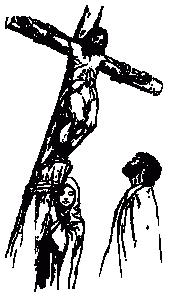
Jesus is our High Priest. Unlike the Jewish priests, he was not given his role by human authority and neither did he have any personal sin for which he needed to make an offering. Jesus took upon himself the punishment that was rightfully ours. Certainly his death on the Cross brings immediately to mind the great offense of our sins. We did not deserve such a Savior who would make himself priest and saving victim. Looking upon the Cross should serve as a remedy for our pride and lust, unless we have desensitized ourselves to human suffering. Jesus repairs the damage inflicted by Adam and Eve. His death will render satisfaction for all the sins of their children.
The question is asked, if Jesus died for all, why do we still experience suffering and death? Why are we still punished for original and personal sin? The reason is simple. Christ has won the victory and yet in time we must become receptive of the fruits of his self-offering. It is still possible to reject the saving work of Christ. The providence of God determines who will accept the merits of Christ’s passion. As a people of faith we cry out for the blood of Christ to wash us and to make us new. Such is human freedom that we must will to be saved. We need to cooperate with Christ in breaking the bonds of our enslavement. If we fail to make use of his grace to do so, the fault is ours.

Jesus could surrender himself as a sin-offering because he had been made man; he had the authority to efface our sins because he was almighty God. A wrong against an infinite being could only find reparation from one of equal dignity. While God could have magnanimously forgiven us; he opted to fulfill the demands of divine justice. It is for this reason that in Jesus, both mercy and justice meet.

Christ suffered in his humanity while his divinity gave infinite value to his passion. This is at the heart of Christ’s identity as the God-Man. Jesus bought us back from the devil, literally redeemed us. Christ’s Cross merits all necessary graces. Just as the blood of a paschal lamb delivered the Hebrews from death; Jesus is the new Lamb of God who takes away the sins of the world and gives us a share in eternal life.

Jesus truly died. He was not play acting as some contend. His soul separated from his body, although his divinity remained with both. The soul of Jesus descended to the dead, the limbo of the fathers or righteous dead of the Old Testament. As the one high priest, he does this to lead the righteous into paradise. His death had unbarred the gates of heaven and now they were free to go to their just reward. Meanwhile, Christ’s body was taken down from the Cross and placed into a borrowed tomb. We know what happens next. Jesus rises body and soul from the grave.

Jesus continues to be our one high priest and mediator to the Father. All Catholic priests participate in this one priesthood, acting at the altar in the person of Christ, head of the Church. His sacrifice is re-presented upon our altars and his grace is infused into men’s souls. Jesus is present to us, albeit invisibly, and he sits at the right hand of the Father as our eternal advocate.

Jesus has made peace to God on our behalf. This reconciliation is sealed in his blood. He has redeemed us and he pleads our cause. His one sacrifice brought with it all the sacrifices of the old law and alone appeased the throne of heaven, the almighty Father. This restoration of the primal unity between God and man will be consummated at the end of the world.

For more such reflections, contact me about getting my book, CHRISTIAN REFLECTIONS.

More Voices from the Other Side: Divorce & Remarriage

This is a follow up post to a previous one focusing on “the other side” of divorce and upon those spouses who wanted to preserve their unions. The issue of Church censure, annulments and remarriage weigh heavily in the discussion. Here are a number of voices in dialogue about this important matter. The first respondent begins by remarking upon Karl’s charges against the last two popes for not doing enough.

FATHER LONE RANGER:

Pope John Paul II and Pope Benedict XVI are part of the problem? I do not think so. They have sought to address the problem of invalid annulments, but many canonists will not listen to them. The Holy Father has wanted to prevent scandal and so there is a great deal of communication that is never made privy to the general public. The issue is and was extensive dissent, not simply among ragtag theologians, but wholesale among bishops and chancery clergy.

Why does the problem remain? Liberal theologians are also often canonists and the same passivity that the Church exhibits towards politicians and morals is also revealed when facing distraught divorced people who want to erase a mistake and marry again. For all practical purposes, the Church is involved with a silent schism and the Pope knows that if he pushes too hard, the bulk of the American Church will defect, bishops and all. It will be England and Henry VIII revisited with a vengeance.

[At this point he offers a prayer for Karl.]

Dear God, we ask you to bring healing to Karl and justice to the cause that he feels so deeply. Easy divorce is a violation that attacks at the heart of the marriage bond. Vows are made and should be kept. Marriages are not ended by judicial decree or even by Church courts, but by the death of a spouse. Then and only then is a true marriage ended, and yet, even here, there is no end to the love that a husband and wife share. Bless Karl in his life, and watch over and protect his five children. The fruit of married love is real and everlasting (Holly, Mary, Margaret, Monica and Karl Michael). May the good Lord envelop Karl in his loving embrace and give him peace. Amen.

Sign the petition against No-Fault Divorce:
http://www.catholicmarriagepetition.org/index.htm

MARY:

Many of us have been abandoned by our spouses. Life is tough, Karl. But we are not living for joy & happiness on this earth. We are trying to get to HEAVEN …. There is justice after this life if not during. This is why we pray & pray for conversion in our unfaithful spouses so that their hearts will be softened and they return to Christ before their death and be able to obtain heaven. And we pray and pray for ourselves …for the grace to be faithful to God’s Law (especially that of living a chaste life, which is so very lonely) and the grace to imitate Christ in His meek carrying of His cross. And we pray for our children that their hearts not be hardened by the pain of loss they suffer or by being witnesses to bad example (most likely) from both parents.

No, Karl, life is not fair. I also lost a son in a car accident. Does this give me the right to rage against God at the injustice? To rage against others who have not lost children simple because they do not share this particular cross? …To ignore my surviving children, and my other duties because of my pain? My answer to these questions has been NO! You might be surprised how others answer these questions…peek in on a support group for bereaved parents, you may be shocked. As sad as these situations may be or should I say as sad as the sufferings we all face in life may be, we must be willing to do what we can to correct injustice on this earth without going against God’s Law (because the end never justifies the means). Then, we must accept our fate as God’s Will for us and continue to serve Him in love.

WI CATHOLIC:

Although I do not fight in the same way or anger as Karl does, I have to agree with him on nearly everything he has said about the lack of help/assistance for those of us who believe/KNOW that we ARE in a Valid Marriage no matter what a civil divorce court has said, or the world has said… OR Tribunals have said.

I have been told to “Trust the Holy Spirit” and petition the Tribunals, with the additional statements that the alcoholism is a clear indication of NULLITY, and would be adequate grounds to a Null Decision.

Point One: I do not believe alcoholism (sickness and heath, better or worse, good times and bad) are grounds for determining that our marriage was NULL on the day we appeared before God and Man and pledged our vows “all the days of my life.”

Point Two: I am not able to sign the basic forms that are needed to petition due to the fact that I must state that I believe my Marriage to have been Null from the beginning. I do NOT believe that.

Point Three: In a Church which teaches/has always taught that ALL marriages are VALID until proven beyond doubt that they were not, before a Tribunal, I cannot buy into the fact that the Tribunals are being led by the Holy Spirit when the first contact with Respondents is to call my spouse my “FORMER SPOUSE.” Sorry, but the Civil Law means nothing, and my spouse is still my spouse regardless of that decree. CIVILLY he may not be, but in my Church, he is! To me, and to many other faithful spouses who live their vows regardless of what MAN says, in obedience to what GOD says (Jesus Himself four times in the Gospel, as well as in Church teachings)–this is a slap in the face, and a clear indication where “the spirit” lies… and discernment can lead one to believe that it may well be a “false spirit of compassion” that rules the day in our US Tribunals that seems to favor those who destroy the marriage, often by adultery/divorce/civil marriage to the “lover”/and finally, a petition to annul the first marriage in favor of the second, which was based on adultery to begin with.

Point Four: Sites with an appealing name such as “Save Our Sacrament” are not pointed out to be dissident. “Internal Forum” is blatantly featured, in spite of the fact that it is NOT to be used for Marriage/Divorce, and no one in the hierarchy calls them on it publicly. No one preaches the Truth on Internal Forum in the local parishes where it is “taught” by priests, etc. It is allowed to stay online for years (as in St Anthony Messengers article by Fr John Catoir on the topic). THIS is SCANDAL.

http://www.saveoursacrament.org/

S.O.S. is a member of Catholic Organizations for Renewal (COR).

http://www.cta-usa.org/COR.html#list

Yet, the very cry of most of us who do NOT want NULL verdicts, but the TRUTH of the VALIDITY of our marriages is corrupted by this website. What is promoted there is not saving the Sacrament. It is watering down Truth to fit society’s plunge into the Pit. It is, essentially, what Henry VIII said/taught after Rome refused to grant a NULL verdict about his marriage to Catherine of Arragon.

I do love my Church, and there is no place else I would go. I could not leave Him (The Eucharist) any more than I can quit my vows. To do so would be doing to HIM what my spouse did to ME so long ago— Desertion— forced unilateral divorce— attempting to say that something that EXISTS never really did in the first place.

Yet my Church, which used to defend those of us who remain faithful till death, vehemently, has done this to us by allowing the US Tribunals to grant so many NULL verdicts and to tell us that this is “right” and “true” and “spirit-led.”

If there is a schism here in the US, it will ONLY be VISIBLE evidence of what is already happening! “My people PERISH for lack of KNOWLEDGE!” …of TRUTH. Truth needs to be preached, and to be acted on, or “the spirit of compassion” (which I firmly believe is a False spirit) will continue to overtake Truth. While the Gates of Hell will not prevail against His Church—many of the members of that Church may end up on the other side of those very Gates.

In our situation, the civil wife KNOWS the Truth, and told our children that they (civil wife and my spouse) cannot go to Communion because according to the Church, they are living in sin—her words in the very beginning of that “marriage.”

Another in our family, an in-law, was told by her priest-friend that as long as SHE knew in her heart that the first marriage wasn’t valid, she could avoid the Tribunal and still receive Communion…and she does on the rare occasion she attends Mass.

No one refutes this from any pulpit in our area (and I would be willing to bet, in few nationally). In fact, I have heard only ONE sermon on Jesus’ words on divorce (I believe they show up once every three years in the Gospel readings of Sunday Mass, though it MAY be twice) in all the years since our separation in the early 80′s! And that was watered down….

Karl has very valid points. His anger is, in many ways, justified.

Too many are willing to compromise to “protect the feelings” of those in the pews who may need to hear Truth in order to save their very souls. It is Truth that sets us free, not compromise, not justifying Sin and condoning it with an official “verdict” that is based on today’s psychiatric diagnoses.
His People Perish for Lack of Knowledge… and Hell is for Eternity.

FATHER JOE:

The bit about “sickness and heath, better or worse, good times and bad” are not in reference to things that would invalidate a marriage in the present. If you become a drunk after you are married, there are no grounds for invalidation. If you develop psychosis after marriage, you are still married. If a man has a fishing accident with a hook while on honeymoon and castrates himself, as long as there has been a consummation, he is truly married. But, if any of these things happen prior to the marriage day, then the couple is out of luck. Annulments are granted because people conceal problems from the priest and sometimes try to do so even from themselves. An annulment means they should NEVER have gotten married in the first place and that the sacrament or natural bond is not really present. There is a legal union (both in the Church and in civil society) and for that reason children remain legitimate even after an annulment.

Alcoholism can vary by degrees; however, a person who is grossly incapable of dealing with his own life can hardly make a marital commitment to another. Like paralysis, certain maladies can make the fulfillment of marital duties impossible or highly improbable. If such is the case before the vows are taken and on the appointed day for a marriage, the bond could indeed be invalidated. Indeed, if priests are aware of a problem like alcoholism, we are forbidden to marry the couple. I ask about addictions and diseases prior to witnessing marriages. If they lie to me that deceit can also invalidate the marriage. People have a natural right to marriage, but some like me freely renounce that right and others are incapable of it because of either faulty intention, dishonesty, impotence, addiction, hatred (rejection) of children, physical incapacitation, sexual corruption, or mental aberration.

A person who is HIV positive cannot be married lawfully in the Church to a non-infected person because non-contraceptive intercourse required for consummation is possibly deadly to the spouse. A paralyzed man cannot engage in the marital act and get married, with the possible exception of those with artificial intervention to restore potency. Couples who are sterilized are routinely required to attempt surgical reversals in order to have a sacramental wedding. People who are mentally deranged and/or who take drugs for mental diseases are not normally able to marry. Medication to control various mental illnesses would deform a fetus. Alcoholism or any other kind of serious drug addiction invalidates the marriage vows and bond. A heroin fiend cannot truly fulfill his vows and is lying to his beloved and the priest. The same goes for gross alcoholism. It is a sickness, but there is a moral element related to it. I knew a man who was an active alcoholic who had his prior bond annulled on the grounds that his addiction made him incapable of marriage. He then wanted to get married again but a “monitum” prohibited any priest or deacon from marrying him until a doctor certified that he had found sobriety. He remained a drunk and so he could not marry again. The last time I saw him, he was begging for money on the streets.

You write: “I am not able to sign the basic forms that are needed to petition due to the fact that I must state that I believe my Marriage to have been Null from the beginning. I do NOT believe that.” Fine and good, you should not sign them if you disagree. Indeed, if such is your conviction, you should never remarry even if the spouse does so, in or out of the Church. Marriage is a one-time sacrament. I cannot say that the Tribunals are always right about these things. The culpability is more upon them than any individuals they mislead. However, the process, while imperfect, is an attempt to protect the indissolubility of marriage while being compassionate to those who might have grounds for nullity.

I am not familiar with the website SAVE OUR SACRAMENT although I am familiar with internal forum between couples (usually elderly) and the pastor. They are required to live as brother and sister and they are not to advertise the nature of their relationship so as to avoid scandal. I worked with just such a couple many years ago who were in their 90′s. They have since passed away.

If your husband has civilly remarried, he is not in good standing with the Church. He is still required to go to Sunday Mass and to make sure that any children receive the sacraments. However, as long as he cohabitates with this other woman, the status is regarded as adultery and no personal sentiment or feeling on his part would allow him to receive communion. Indeed, he cannot receive absolution from a priest, either. He is apparently in a state of mortal sin. His in-laws are grievously wrong to tell him otherwise. They are numbing his conscience and that of his civil-wife to the fact that their eternal salvation is at stake.

I cannot speak about your case because I do not know the particulars. Since there is a civil marriage, I take it that no annulment was granted. If you felt that the first marriage was the valid one, then you are right to oppose the annulment, although they are sometimes granted despite opposition. If your husband and his civil-wife were really good Catholics, they would not want to live in an adulterous relationship. If you really loved someone, would you do something that would deprive them of the Eucharist and maybe even cost them their salvation in Christ? I asked this of a priest who left and attempted marriage. He said he loved the girl. I argued that he did not love her enough and that he was selfish. Better for a priest to suffer in his loneliness than to cost another the gift of sanctifying grace and the reception of the Blessed Sacrament. He did not know what to say. He knew I was right. He said he would get laicized. But at that time he was still married to the Church and what if she should die before laicization was granted? He would have to live with the terrible possibility that he sent to hell the person he most loved in the whole world.

I preach upon this subject of divorce and annulments, as well as upon the crisis of premarital sex and cohabitation. Not all priests are silent. I am sorry about your pain. You can pray for him and continue to witness to your vows. We all want joy, but often what we get is the Cross.

WI CATHOLIC:

I have reconciled myself to living my vows alone till one of us dies. Our civil-forced-divorce was way back in 1985, and I have long been able to praise Him and to forgive my spouse. I pray for him and for the civil wife all the time. (She and I have spoken; she has been praying for my health recently, much to the chagrin of xxxxxxxxx). My primary desire is his salvation and sobriety, as well as mine. Hers is secondary. Reconciliation at this stage is totally up to God Himself.

Yes, it is MY understanding also what counts is prior to marriage, and the wedding day itself, not what is diagnosed 10 plus years after the marriage. But that is not what happened in our area, and it is not what I have been told by at least three priests. I have been me telling THEM this fact.

I can believe that you do teach on the subject, Father Joe, because you are one of the rare ones who speaks of this topic ONLINE, too. But in most places, it is avoided like the plague.

Civil divorce is taken as proof that the marriage was not a marriage most of the time now, or “it would not have ended up in the divorce courts.” But this is not true.

We are still a largely forgotten group of very Faithful Catholics, most often looked upon as pitiable, rigid, angry, bitter… even “pus-filled.” I assure you, most of us are not. When WE plead, “Save our Sacrament,” WE are begging the Church to stand with us regarding the validity of our marriages. We are not looking for a “way out,” but help to work toward reconciliation, healing, and maintaining the validity and permanency that Jesus Himself insisted upon.

As for Internal Forum, I cannot begin to claim the education others have, but I have spent the past 25 years learning as much as possible. One source:
Joseph Cardinal Ratzinger, Cardinal Prefect of the Vatican’s Congregation for the Doctrine of the Faith (CDF), and now Pope Benedict XVI writes forcefully on the subject of the indissolubility of marriage. He concludes such a statement regarding the International Theological Commission’s Propositions on the Doctrine of Christian Marriage:

I would underscore that what is at stake in respect to the teaching of the indissolubility of marriage is nothing less than the Church’s fidelity to the radicalism of the Gospel. “The severity does not derive from a purely disciplinary law or from a type of legalism. It is rather a judgment pronounced by Jesus Himself (Mk 10:6ff). Understood in this way, this severe norm is a prophetic witness to the irreversible fidelity of love that binds Christ to His Church. It shows also that the spouses’ love is incorporated into the very love of Christ (Eph. 5:23-32).”[6]

In short, because marriage is an irrevocable covenant established by God, it is not a mere personal and private act. Marriage consent pertains to the common good and directly effects the Church. Subsequently, a mere personal and private act cannot substitute for a judgement of marriage nullity. In determining such a grave matter, only the Church herself, acting in the name of Christ, has competence to pass judgement.

http://www.cuf.org/Faithfacts/details_view.asp?ffID=54

God bless! (I can still understand Karl’s anger and frustration.)

KARL:  Hang in there, WI Catholic, I do love the Catholic Church, just can’t live with her.

WI CATHOLIC:  Thank you, Karl. God bless you!

Our Pro-Life Commitment

The Cemetery of the Innocents

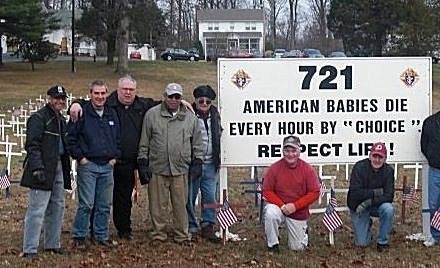
frjoeprolife

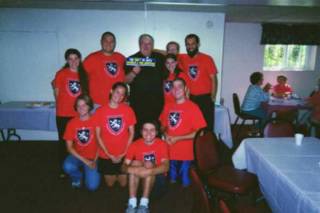
Here is a picture of me and the Knights of Columbus who set up 721 crosses that represent the children lost to abortion in one hour of one work day.  This MEMORIAL OF THE INNOCENTS was set up at Holy Family Church in Mitchellville in 2009 and every year since then.  We often have it up until the annual March for Life in Washington, DC.  We received a lot of support although there were a few complaints.  One lady argued against putting such a thing up at Christmas time.  I explained that Advent and Christmas was the perfect time.  During Advent we recall the Christ-child in the womb and on Christmas he is born.  We are reminded that every child is a reflection of the Christ-child.  Another person argued that it was insensitive as she was a pro-choice Catholic.  I told her that she was deceived.  There is no such thing as a pro-abortion Christian; abortion attacks the central mystery of the Incarnation.  Abortion is murder and as such it is a repudiation of Christ’s Gospel of Life.

One of my favorite memories is working with the American Life League back in 2005 and the CRUSADERS FOR LIFE.  Here is a reposting of the news around that event at my old parish, Holy Spirit Church:

A.L.L. Crusaders Come to Washington 2005

A dozen young people from colleges across the country walked from Augusta, Maine to Washington, DC in “Defense of the Catholic Church” and to spread the message that you cannot be Catholic and pro-abortion. Nevertheless, while many have applauded young people for taking up the “right to life” cause, this group of remarkable crusaders was purportedly banned from speaking in churches by several dioceses like Philadelphia and Baltimore.

Myself, Dr. Grier & a Crusader

10_10

The American Life League ran a series of stinging ads challenging the American bishops to enforce canon law and to protect the Eucharist from sacrilege when pro-abortion politicians and others (who have made such “public” stands) take it upon themselves to receive Holy Communion. The young people have shown no spite or anger, only sadness that some of the nation’s shepherds have chosen to remain on the sidelines. One priest remarked that the ads in protest were so severe that the American Life League owed the leaders of the Church an apology. However, others thought that these good men should at least have shown the same respect and hospitality to the young marchers for life as they have in the past to the high profile anti-life politicians. While they were able to find lodging in the city, they attended 9:00 AM Mass at Holy Spirit Church on Friday, July 30 and were invited to say a few words afterwards. I contacted the archdiocese’s Pro-Life Office several weeks earlier about the matter to insure a level of approbation and to insure proper discretion.  (Although the ads pained him, to his credit, Cardinal McCarrick did not formally forbid the young people to speak in his churches. Throughout, nothing the young people said violated the archdiocese’s rules against participation in partisan politics– they did not name politicians by name, did not tell people for whom they should vote, and spoke with respect in regard to the Church’s shepherds.)  Following the celebration, a reception was held in the Parish House were the young people had a hearty breakfast and got to meet parishioners. Also in attendance was SK Reginald Grier, a parishioner, a fourth degree Knight of Columbus and volunteer member of the archdiocesan Office for Black Catholics. John Stakem, a Knight of Columbus from St. Pius X Council, and past parishioner was present, too. John Stakem and Joseph Markauskas were long-time pro-life volunteers and were involved with the local pregnancy center. Joe and Betty Markauskas had even offered to give the young people housing while in town. We were very pleased that the director for the Forestville Pregnancy Center was present, Chyllene McLaughlin, along with her assistant. We wanted to communicate to these young people that they were not alone. Holy Spirit Parish, the Knights of Columbus, and the Pregnancy Center in the larger pro-life community, was very much behind them.

ALL Crusaders at Holy Spirit Parish

13_13

May God bless them for their sacrifices and may their witness bear fruit.

DISCUSSION

FRANK:  News releases indicate that the Church after Vatican II had converted the Kennedys and other Catholic politicians into believing that the liberal backing of the culture of death is acceptable.

FATHER JOE:  What news releases were these? Cite them; I would like to read further. As far as I recall, John Kennedy was chastised by churchmen for his liberal response about how little his faith would inform his work as president. As for the other Kennedys and the issue of abortion, I fail to see how Vatican II can be blamed for their pro-abortion stances. I have read and studied all the Vatican II documents and post-conciliar documents. Nothing comes to mind that would condone such thinking against the Gospel of Life. Are we throwing mud again? Give me specifics, please.

FRANK:  Having attended the seminaries after Vatican II where the divinity of Christ was challenged, as well as the papacy, and all that was to be infallible before the “Catholic reformation” of 1962-1965; what is your take on recent developments and the continued blasphemies to this day condoned by the Church where the USCCB still can’t come to a consensus to deny our Lord to baby-killing Catholic politicians?

FATHER JOE:

Certainly there was a heightened stress upon the humanity of Christ in many theological schools after Vatican II. However, I do not recall ever being taught that Jesus was not a divine Person.

Fr. Patrick Granfield taught my class on the papacy at Catholic University and his lectures defended the Holy Father’s authority with a great deal of explanation.

Those things that were changed were not deemed infallible but rather mutable accidentals. This thinking was even shared by Pope Pius XII prior to Vatican II on matters like the prehistoric generation of human beings and the liturgy.

A revision of the liturgy was in the working stages going back to the 1930′s and 40′s. The reformed liturgy we have now has lasted a few decades and will probably remain for many more, although with the old liturgy alongside and with continuing adaptations by the Holy See. We have had to suffer the experimental phase, but Pope Benedict XVI said that such has come to an end.

As for the passivity of churchmen in reference to Holy Communion and the standing of pro-abortion politicians, such is also not attributable to Vatican II. The Church has gone through periods in the past where it was the lackey for parliaments, kings and queens. The Popes made clear statements from the 1600′s onward that slavery was detestable and should be abandoned. However, Catholics owned slaves in the colonies and later in the United States of America. The Jesuit landowners of Maryland had slaves. Bishops were often mute on the subject, except for admonishing their baptism in the faith. Dissent is not something new but something very old.

PADRE XYZ: 

Father Joe, Your welcome to the pro-life young people did not go unnoticed. I know it cost you personally.  I think you can be rude and you definitely lack tact, but it did take some nerve to stand virtually alone and make the challenge against silence or business as usual.  You honestly shared your heart to the bishops and your brother priests.

You asked…

Would you give communion to Nazis who promoted the murder of Jews?

Would you give communion to White Supremacists who incited the lynching of Blacks?

Why should we prize the life in the womb any less or their murders as somehow less grievous?

Silence befell all the big guns. You lost a lot of friends that day. If you had career hopes in the church, they were suddenly shattered. Hushed and whispered voices were the only response, “How do we shut this priest up?”

You became an embarrassment. I could not do what you did. You angered a lot of people. You took a promise of obedience and you were reprimanded for your slight as an act of betrayal. Some of us witnessed it, although you were left unnamed.

You changed after that, became quiet, even sullen. It was as if something died in you. You gained weight.

I know you were disappointed in me. But to be frank, I was afraid. Who are we to question the shepherds over us? What happens if we tell the majority of Catholic politicians they are no longer welcome at the altar?

Take care of yourself.

FATHER JOE:  I was going to erase this comment. I still might. If you are who I think you are, email me. Peace!

(I am not really brave.  I speak my mind and I love the Church.  When all is said and done, I do as I am told.  I am the Church’s man.  Some would contend that I am too conservative or right wing.  But how can we be too committed to the Gospel of Life?  Every day I work to control my temper.  As long as I can remember, I have been very passionate about our faith and its values.  Am I ambitious?  Like most priests, it is nice to know that one is appreciated and that one’s talents are acknowledged.  However, by comparison to most priests that I know, my rating would be very low.  It is not false humility but the truth when I say that I count myself as the least of my brothers.  As for the bishops, it must be a frightful responsibility they carry.  Who would want it?  They are criticized from every side.  It is easy for us to judge, but we do not walk in their shoes.  Pray for priests and pray, especially for our bishops.  They are Christ’s apostles in the world today.)

DR:  I nominated you for a pro-life blog award (FATHER JOE Blog).

JOHN:  Fr. Joe, abortion is murder. These babies can’t speak for themselves. Other bishops have stood up and said priests should not give communion to pro-choice politicians as they have the power to stop the murder (Bishop Burke-former bishop of St. Louis archdiocese and Bishop Finn of Kansas City diocese, for instance.) I’m glad priests like you and Fr. Frank Pavone speak out on this issue. It’s a serious matter and it should be treated as such. Thanks for all you do.

LENBER:

“President Bush has had a very cozy relationship with the Vatican, and set a presidential record by meeting with the Pope six times.”

Very cozy indeed, sometimes for the good, and at other times for utterly and criminally contra-productive [things], such as siding with Bush in Criminal Wars (for the Vatican just Abortion is a Crime) or siding with Israel on their Criminal Occupation of Palestine.

All Thanks to Vatican II Double Crossers.

FATHER JOE:  I am not sure I would coin the Bush Doctrine or International efforts in such negative terms. However, as for the Pope, you seem to be terribly deceived. The Vatican opposed the invasion of Iraq. Tarek Aziz (the former president) was a Catholic. He made a retreat in Rome and saw the Pope (John Paul II) the week prior to the invasion. The state of Israel is also not entirely happy that the Vatican, again and again, sides with Palestinians (who are largely Islamic but include an ancient Christian community). Formal recognition and diplomatic ties were held up because of Vatican concerns for the Palestinian people. The late Arafat, at the end of his life, remarked that he saw the Vatican as his ally in the conflict for Palestinian rights. Zionism was condemned by both the UN and by the Church. Arafat used to attend the Christmas Mass in Bethlehem with his wife (who is a Christian). The Catholic Church is no one’s stooge, not for Bush and not for Israel. The Holy Father (both JPII and BXVI) has spoken to President Bush, (he meets a lot of people) and they share much in regard to the unborn, however on matters like the Middle East and capital punishment, there is a great divide.

MICHAEL:

Tomorrow marks the 36th anniversary of Roe v. Wade.

Think of the millions of lives that were snuffed out in this “free” country.

May God have mercy on us!

GENUS LILIUM:

I am completely against abortions. I have children and I have learned that some vaccinations are grown off of human diploid cells from aborted fetal tissue, not to mention all the other chemicals, heavy metals, and animal products. That seems like it might be a problem to me. Now that I know this, would it be wrong for me to continue to vaccinate my children? Is it just a money scheme? I really don’t want that stuff in my kids.

Questions & Answers About Indulgences

What exactly are the eternal punishments due to sins?

When we speak of eternal punishment, we are referring to the everlasting pains of hell.

What then are the temporal punishments due to sin?

Punishments, which take place in the temporal realm or in time, are basically the ills and struggles of mortal life. We all know sickness and dying. We experience loss and grieving. We face man’s inhumanity to man as well as natural disaster. The pains of purgatory would also be added to this list.

In what ways are the temporal punishments due to sin forgiven?

There are many ways, including penance, prayer, good works, and indulgences.

Can it really be shown that Jesus gave his apostles the power to grant indulgences or to remit the temporal punishment due to sin?

Yes, this power is found in the sacred charge given Peter by Jesus: “I will give you the keys of the kingdom of heaven, and whatever you bind on earth shall be bound in heaven, and whatever you loose on earth shall be loosed in heaven” (Matthew 16:19). The authority is given to Peter from Christ to remit whatever it is that hinders people from the gate of heaven.

Is it lawful for the Catholic Church to charge money for granting indulgences?

No, it is not. Such trafficking in indulgences is an abuse that has always been condemned by the Church.

But, did not the Pope charge money for the indulgences sold to help build St. Peter’s in Rome?

The charge behind this question is a gross distortion of the facts. The conditions placed upon those desiring such an indulgence were clearly enumerated: they were first to make a good confession, and only then as an act of penance, they might offer some money to the building of the great church. However, no one was obliged to make this payment, as there were many other ways to have temporal punishment forgiven.

Wait a minute, how can this be true? The Dominican monk, Tetzel, told the crowds that the payment of a dollar could gain an indulgence of past and even of future sins.

Well, if the monk really said this, then he was sorely mistaken. Such behavior would have been in contradiction to Church teaching. Reputable authorities give a different picture of Tetzel. Indeed, in 1517, he published a thesis upon the subject wherein he writes that to gain an indulgence there must be sorrow for sin, a good confession, Holy Communion, fasting, and church visitation. He also writes that the indulgence does not forgive sins, but only the temporal punishments of past sins, and not of future sins.

Why does God not forgive sins directly, without priestly and papal mediation?

Such is well within the prerogatives of God; however, he wisely created the ministry of priests. First, the priest functions in Christ’s name and corrects the sinner from his evil ways. Second, the priest imposes a penance upon the sinner, just as our Lord would do if he still visibly walked the earth. Third, the encounter with a minister of the Church amplifies the certainty of God’s friendship and mercy; one does not have to endure a life of uncertainty about the forgiveness of one’s sins.

Could it be that indulgences might forgive the temporal punishments imposed by the Church, but not those put into place by God?

No, the authority here is absolute. “Whatsoever you shall loose on earth, shall be loosed in heaven.” This power granted the Church through Peter makes no distinctions.

What does the term “treasury of the merits of the Church” mean?

This has to do with the infinite merits of Christ, the “superabundant merits” of the Virgin Mary and those of the saints. Our Lord gave the Church the power to distribute these merits to penitent sinners and to remit to them the temporal punishments due to sin.

Will not people abandon a spirit of penance if they see that temporal punishments can be forgiven easily?

No, because to gain an indulgence, such a contrite heart, free from sin, and averse to evil inclinations, must be present. Such a disposition can quite easily shorten the time of penance.

For more such material, contact me about getting my book, CATHOLIC QUESTIONS & ANSWERS.