• Our Blogger

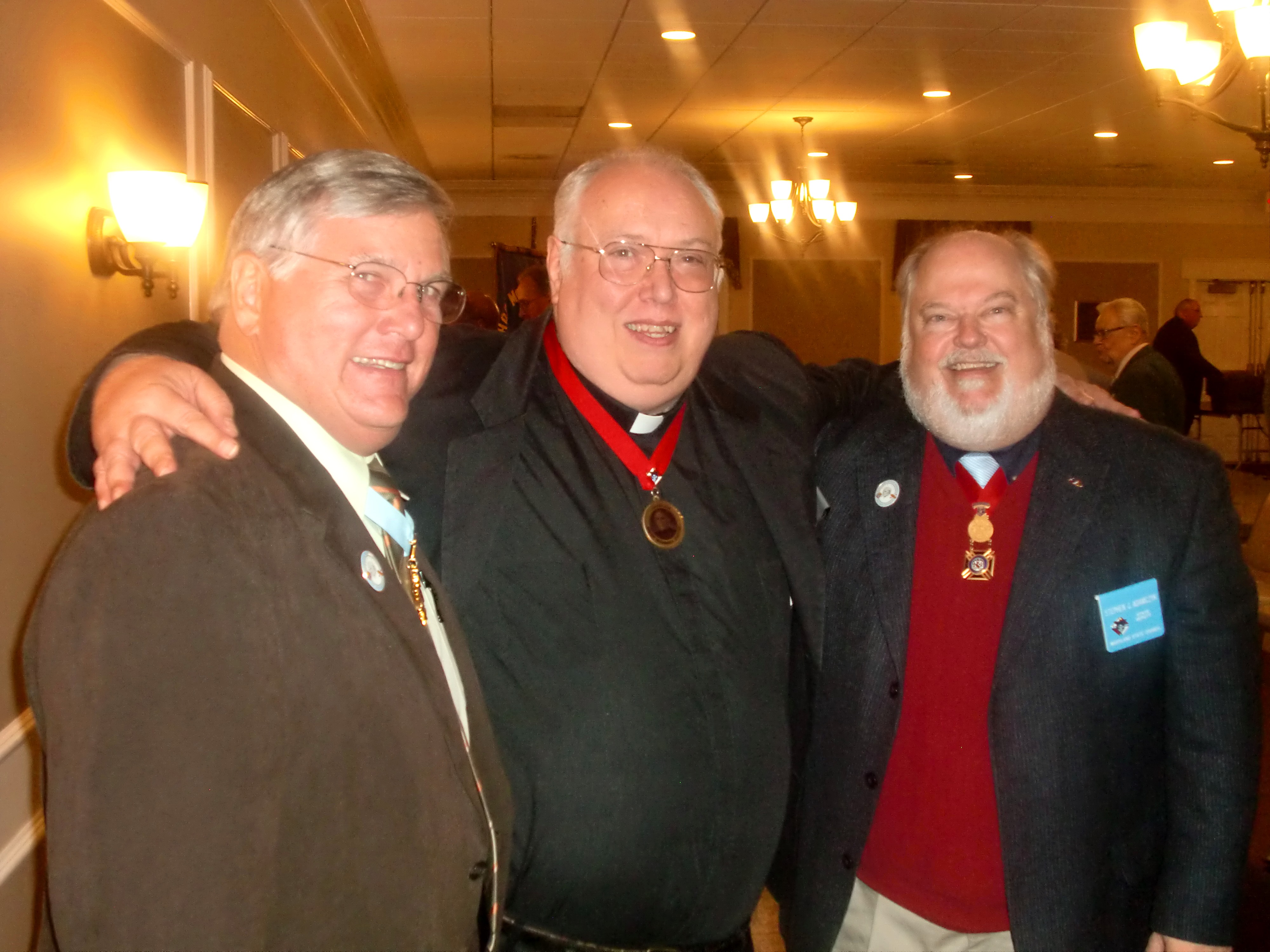
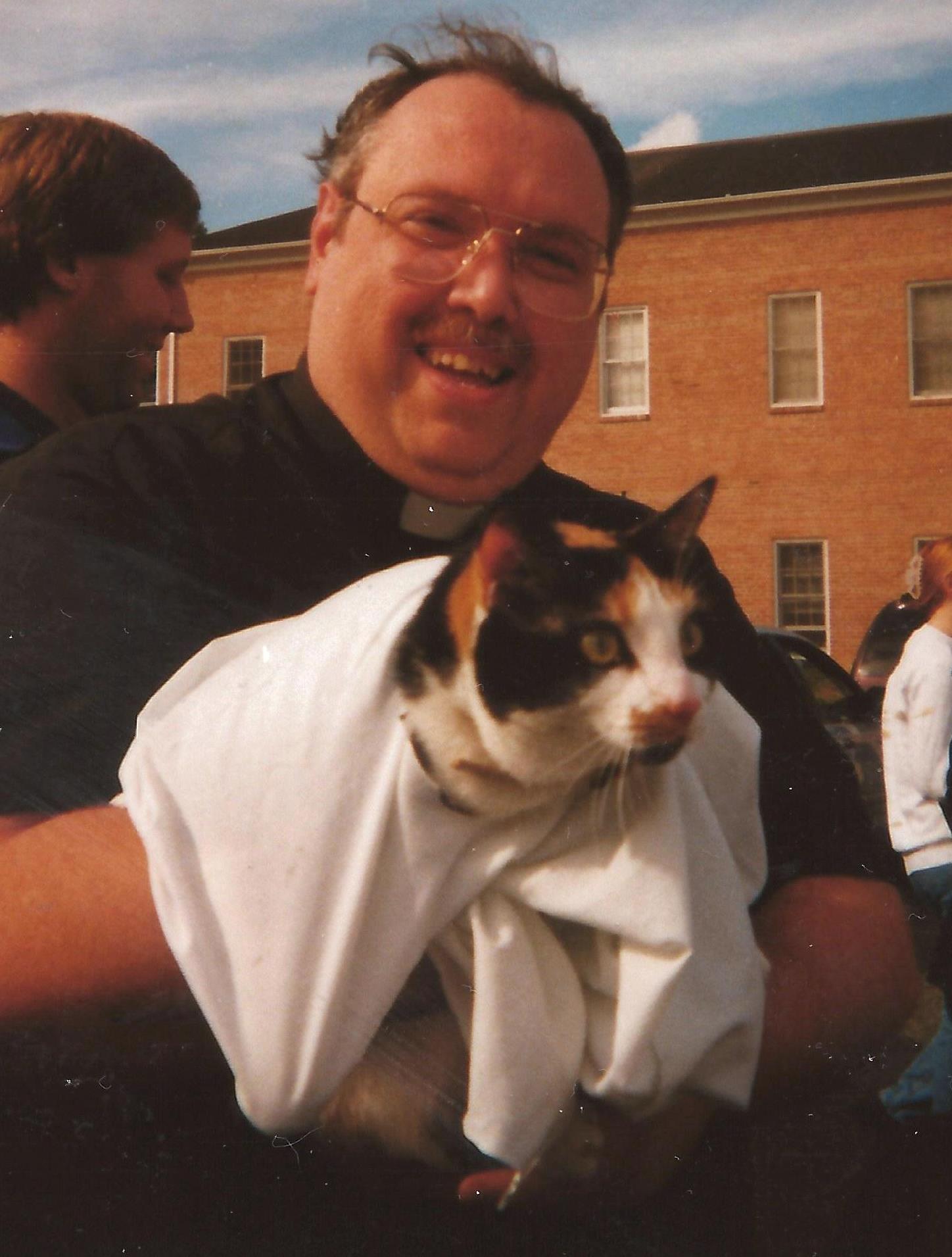
    Fr. Joseph Jenkins

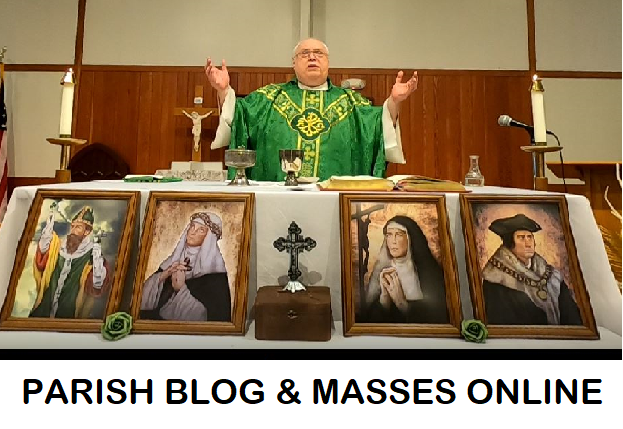
  • An important theme for this blog is the scene in the New Testament where Jesus can be found FLOGGING the money-changers out of the temple. My header above depicts a priest FLOGGING the devils that distort the faith and assault believers. The faith that gives us consolation can and should also make us very uncomfortable. Both Divine Mercy and Divine Justice meet in Jesus. Priests are ministers of reconciliation, but never at the cost of truth. In or out of season, we must be courageous in preaching and living out the Gospel of Life. The title of my blog is a play on words, not Flogger Priest but Blogger Priest.

  • Archives

  • Categories

  • Recent Posts

  • Recent Comments

    Barbara King's avatarBarbara King on Ask a Priest
    Ben Kirk's avatarBen Kirk on Ask a Priest
    Jeremy Kok's avatarJeremy Kok on Ask a Priest
    Barbara's avatarBarbara on Ask a Priest
    forsamuraimarket's avatarforsamuraimarket on Ask a Priest

Transformation from Modern to Traditional Altar

FSSP transform a modernistic free-standing altar into a very beautiful High Altar. The church that this took place in is in France and is now operated by the Fraternity of St. Peter. The complete time for this “Altar-ation” was just about 15 minutes!

A number of years ago, I posted this simple video of an ugly modern communion table being transformed into a visible altar of sacrifice. The posting was a whim, a small aside. The discussion that followed floored me. This was much more important to believers than I had thought. This is all for the good.

Here is the Discussion

MARY O: Deo Gratias!

GERRY L: Amazing! That’s how it should be.

ANNA MARIA: To Mary O— A big “Amen” to your comment. I couldn’t say it better. To Father Joe— Thanks for posting this! Where there is a will there is a way. I hope we see more of this Stateside!

JOHN S: Next stop improve the music!

KAY: Amen!!!!

KRISTIE: Beautiful! And I agree; that is how it should be! Wouldn’t it be wonderful if it spread State side? Thanks Father Joe! You are awesome!

VICTORIA: Reverent…one aspect of many of the beauty of Catholicism. (I didn’t witness this reverence in the Baptist, Unitarian, Nondenominational, or Methodist churches.) I’m sooo happy I’m Home.

BOB: John S— Sanctus fumus! More Palestrina, that’s what wants here!

LADY GODLESS: Well, that was nice! It looked too much like a lethal injection gurney before.

REGINA: Fr. Joe, this is why women are not priests…I spent an hour reading your blog and it reminds me of something I already know— men have a thick skin. They are tougher than us women. I heard a caller to a secular radio station say that the gates of hell referred to in the bible would not prevail against the Church, which, as the caller pointed out, was a battering ram. I loved this insight— you are a battering ram! Keep battering those gates Father! I pray for you.

ANITA MOORE OPL: One of these days, the change will be permanent. We can look at the cost as a penance for having wrecked the old furnishings in the first place. Is it possible there are some bishops who will not get out of Purgatory until the wreckovations they ordered are undone? If so, that makes the restoration of the Churches even more urgent.

HIDDEN ONE: I know a few altars that could use that kind of treatment… at least one of which a renovation group could sneak into, remodel, and leave, likely without being noticed. *sigh*

MR. FLAPTRAP: This is the installation of the new altar at my parish, St. Raphael’s in Rockville, Md. The old altar was similar in style to the original one in this video (four round concrete legs and a slab.) The base on the new one features the three archangels named in the Bible.

FATHER JOE: Yes, I remember the before and after. There are also shots of the late Father Bill Finch who died after Mass on Holy Thursday 2009. Rest in Peace. Thank you for sharing the video.

BILL C:

I recently joined a parish where altar, tabernacle, and crucifix are in a traditional vertical line of worship as in the video. Sadly, I am aware of only a few churches in the archdiocese of Cincinnati that are configured with the tabernacle placed at the altar. I must drive farther to my new parish, but the trip is well worth it because I now experience a much deeper sense of worship, adoration, and reverence for the Eucharist.

I pray our new archbishop will institute a uniform policy to place the tabernacle at the altar in all parish churches in the archdiocese. This would be a huge achievement for the catechesis of young and old on Christ’s Eucharistic presence.

Pope Pius XII, in his 1956 Address on the Liturgy, addressed with prophetic insight what would happen only a decade later shortly after Vatican II by warning: “To separate tabernacle from altar is to separate two things which by their origin and their nature should remain united.” Indeed, Church tradition for seven centuries — from mid-thirteenth century until after Vatican II — had placed the tabernacle at the altar. Surely the Holy Spirit inspired the holy union of tabernacle and altar over so many centuries.

This is a really informative website. Keep up the good work, Fr. Joe! God bless.

JOHN: The problem today is that the priests have been formed to think that they are pastors first and the Mass means very little.

FATHER JOE: That was not my experience. Most priests I know would argue with you. The Eucharist is the center of our lives.

JOHN:

If you look at the new Code of Canon Law promulgated in 1983 by Pope John Paul II, take a look at Canon 276. This canon directly addresses the question of how Catholic priests are to pursue holiness. It lists:

First, the obligation to ‘faithfully and untiringly….fulfill the duties of pastoral ministry’; Second, the obligation to Sacred Scripture and the celebration of the Eucharist; Third, reading the breviary.

FATHER JOE: Are you being purposely deceptive? The code begins by saying, “In leading their lives, clerics are bound in a special way to pursue holiness since, having been consecrated to God by a new title in the reception of orders, they are dispensers of the mysteries of God in the service of His people.” The initial statement of the canon stresses “the mysteries of God” and the chief among these are the Eucharist and the Sacrament of Penance. Priests have been empowered by Christ to offer the sacrifice of the Mass and to forgive sins. I suspect that you have a watered down appreciation of the pastoral ministry. A man is not ordained chiefly for his own salvation but for that of others. Jesus washed the feet of his apostles and told his followers to do so for one another. The priest is the servant of God who lays down his life for others. A pastor serves God by sacrificing his life for his flock. Only priests can offer the Mass and forgive sins. This has not changed since Vatican II.

JOHN: Canon 276 sets forth a weird priority of obligations. For years Catholics (including priests) have been taught that because the Eucharist is the centre of the Church the obligation to celebrate Mass was far and away the most important in priestly life. In fact, this principle was often demonstrated by the famous example that a priest will still celebrate Mass even though there is no one in attendance.

FATHER JOE: I suspect you are not appreciating the language of the Code. It is still recommending that priests celebrate daily Mass. Most if not all priests I know do precisely that. Indeed, many of us offer the Mass several times a day.

JOHN: The obligation of all priests to pastoral duties also undermines the life of any priest living the contemplative life.

FATHER JOE: There are different codes for pastors and monks. It is a different life. Many religious priests in monasteries regularly concelebrate. Most diocesan priests are the only priest present at their liturgies. Some groups like the Trappists only ordain enough priests to care for the community. The other monks remain religious brothers. The old code also placed a pastor-priest’s salvation on the line in how he fulfilled his pastoral duties: not neglecting the needs of his people for the Eucharist and Confession and Extreme Unction. The transmission of the true faith, especially to the children is crucial in both codes. Failure to give adequate care to this would constitute mortal sin.

JOHN: Although the canon refers to all priests (not merely diocesan), one wonders how it can be applied to the many priests living in a monastery.

FATHER JOE: Particular rules of life in orders approved by the Holy See and the codes on religious take precedence since it is seen as a higher vocation.

JOHN: In fact, it is very difficult, if not impossible, to see how monks can be said to have any priestly obligation to pastoral ministry. It would also not be exaggeration to say that the Vatican II theology of the priesthood, which makes pastoral obligations intrinsic to the Sacrament of Holy Orders, undermines the life of the monk-priest.

FATHER JOE: Such ministry is in regard to the religious community. Similarly priests were sometimes given charge of a convent. Their flock would be the nuns. Pastoral ministry always exists in some form, even if it is just Mass for the dead. The word “pastoral” is a reference to the role of a priest as a shepherd. He cares for the sheep and does so according to the powers and authority given him. You are making a false case. Accidentals have changed in some cases, but the priesthood is as it has always been. The old code was even more concerned about accidentals to ministry, like tonsure and clerical property and certain rights.

JOHN:

This approach seems little else that an attempted synthesis between the Catholic diocesan priesthood and the Lutheran ministry. Further, it is a change so radical that it can be safely said that the Catholic priesthood has been turned upside-down.

On October 24, 1995, Cardinal Joseph Ratzinger, in a speech given on the thirtieth anniversary of Presbyterorum Ordinis, said that Vatican II attempted to broaden the classical image of the priesthood and to satisfy the demands proposed by the Reformation, by critical exegesis, and by modern life but from the reading of Canon 276 it seems more likely that the Council, in its ecumenical effort, embraced the Protestant ideas of ministry but unfortunately loosened its grasp of the core of the Catholic priesthood. The consequence was that Vatican II produced a document which at its core is little else than a warmed-over version of the Protestant ministry.

FATHER JOE: You mean well, but your hatred of the Church after Vatican II colors your reasoning. Catholic priests are not defined as one would Lutheran ministers. Many Lutherans believe that ordination can expire. The priesthood is forever. Catholic priests offer daily Mass. Many Lutherans do not and are only part-time ministers. Catholic priests offer a propitiatory sacrifice of the Mass (a true re-presentation of Calvary) and offer us the risen Christ in the Blessed Sacrament. Protestants have occasional communion services and give out bread and juice. Catholic priests claim to have the power to forgive sins. No Lutheran minister would say that. Look at the catechism, which is far more revelatory about the priesthood than the Code on the rights and responsibilities of the clerical state.

JOHN: These liturgical changes, which were introduced over forty years ago, can now be seen as part of the larger picture. It is no secret that vernacular liturgy, the concept of Eucharist as-meal (implicit in the Mass of Paul VI), and the use of a table in the sanctuary (rather than an altar) were applauded by most Protestant sects. In fact these liturgical changes were the companion of very serious changes to the Catholic priesthood— all under the influence of Protestant theology.

FATHER JOE: Abuses happened, but the liturgical reform and a movement to a vernacular liturgy were being explored even in the 1930′s. We saw the development of the dialogue Mass prior to Vatican II. There is no denial of sacrifice by regarding the altar as also a table. There need be no either/or. As for Protestant sects, we came to appreciate a common love for Jesus, but most of them still reject the Mass and the priesthood. The sacraments are still wholly Catholic and neither the priesthood nor the Mass has lost that spiritual efficacy given them by Christ.

JOHN: And I continue to find it so amusing how everyone thinks of Pope JPII as being so conservative where it was he who introduced a new Code of Canon Law, new Catholic Catechism, new translations of the Bible (USCCB and NAB but approved on the Vatican website and explained as such), proudly proclaimed ecumenism as the cornerstone of his pontificate and participated in false worship that in infallible councils and in encyclical after encyclical proclaimed any Catholic let alone a Pope who would do such was excommunicated.

FATHER JOE: The Old Catholics broke away from the true Church prior to Vatican II. Many Anglicans practice ancient rituals. However, like so many Latin Traditionalists, their fight over ecclesiology and the authority of the Pope makes them the REAL PROTESTANTS. You can offer the Tridentine Mass and still be a heretic, schismatic, excommunicant, and a PROTESTANT. Unlike certain churches of the East locked into a stagnant tradition; the Catholic Church has a Magisterium that is protected by the Holy Spirit. We have a teaching authority centered upon the Pope which along with the world’s bishops (in and out of council) guides the Church. A few renegade bishops and priests have no such divine protection.

JOHN: This mess will take generations to clean up and millions of souls will be lost because of those who were entrusted to save souls.

FATHER JOE: And some of the lost souls will follow the guidance of illicit bishops who deny the Jewish holocaust and who rebuke the authority of Christ’s Vicar on Earth.

ANNE W. PALMER: I cried and cried when I saw the video. Thanks be to God! I grew up with the traditional years ago. There is such a difference in realization of the sacredness of our precious Lord in the Eucharist. Vatican II was so misinterpreted, adding things that were never there in the first place. I will never understand how that happened. The video makes it so plain. Thank you for posting it. I will share it with as many as possible. By the way, the music was awesome too. I would like to know from where it came? Music also denotes the sacred and that was sacred.

JOHN: Why is my comment still awaiting moderation? [I had to find time to respond in the original discussion.] Is it that difficult or do you not want to acknowledge the new form of the priesthood, which after Vatican II saw thousands leave and starting with the late 1950′s, the “wandering eye” priest (not to be accepted as good) give way to the pedophile, gay, liberal priest who has led millions of souls to hell?

FATHER JOE: There is no new form of priesthood. That is the lie promulgated by those who misrepresent the teachings of the present-day Catholic Church under Peter’s successor. Those who give greater weight to accidentals over substance or essentials fall into grievous error, particularly in regard to ecclesiology and juridical authority. You might not like the current reformed rituals, but the sacraments are intact and the Church endures. As for pedophile priests, many of the lawsuits regard clergy who were formed by the old Latin regime. What is the old saying about people living in glass houses throwing stones?

JOHN: Our Sermon today at the SSPV chapel in Oyster Bay was just that, how the priesthood right before and after Vatican II with its changes in its form as well as intent as I have stated above, is more concerned about being “liked” and knowing the bible than about saving souls and leading those astray to find Christ.

FATHER JOE: You belong to a splinter group of a splinter group, a schism of a schism? You are being deceived. I will pray that you will return to the one holy “Catholic” and apostolic CHURCH.

BILL C:

I’m surprised more people have not responded to this topic and I would really like to know what you think. I’m 62 years old. Although I’m happy to have recently joined a parish with the tabernacle at the main altar, it makes me downright angry that so many parishes in my archdiocese displace the tabernacle. Let me give you a few examples. The parish where I grew up removed the tabernacle from the altar sometime after Vatican II and placed it in a side wing near the choir. They put the baptismal font at the altar where the tabernacle once stood.

Another parish I attended for several years was an older church with a beautiful altar having a built-in tabernacle. When it was remodeled, they put the tabernacle at a side altar outside the sanctuary, and “boarded up” the hole at the main altar with an ornamental cross display.

The last parish I attended for several years before joining my present one actually had the tabernacle as a small wall-closet outside the sanctuary. I finally had my fill of this nonsense and was delighted to find a traditional parish with the tabernacle at the main altar.

Call me “old fashioned” if you like, but to my way of thinking, Christ’s Eucharistic presence is either real or make-believe. If make-believe, then it really doesn’t matter where we put the tabernacle or whether anyone genuflects before it. But if Christ’s Eucharistic presence is real, then where on earth would you even think about placing the tabernacle — other than at the main altar.

As I pointed out in my earlier comment, Catholic tradition placed the tabernacle at the altar for 7 centuries — from mid-13th century until shortly after Vatican II. And contrary to what some Catholics mistakenly believe, Vatican II did NOT mandate or encourage the removal of the tabernacle from the altar. This nonsense resulted from liturgists who used the reform momentum of Vatican II as an excuse to radically redesign churches with the consent of some bishops who frankly were “asleep at the wheel.”

And where has this nonsense led. My observation is that most people do not genuflect when the tabernacle is absent from the altar, and if they do it’s often not even in the direction of the tabernacle. There is also a lot more talking in the pews before and after Mass. In short, reverence for the Eucharist is lacking to some extent and Mass seems more a “communal meal” and less an act of divine worship. At least, that’s my personal experience.

And, what about catechesis on Christ’s Eucharistic presence? What does it say to young and old alike when the baptismal font replaces the tabernacle at the altar, or when the tabernacle is placed at a side altar like a saint’s statue, or when the tabernacle is a wall closet outside the sanctuary?

Eucharistic adoration doesn’t make a lot of sense to me in churches where the tabernacle is displaced. After all, what is the sense of placing the Eucharist in a monstrance on the main altar when the tabernacle is not afforded the same position of honor? Isn’t the same Eucharist inside the tabernacle or am I missing something?

To reiterate the words of Pope Pius XII in my earlier post above: “To separate tabernacle from altar is to separate two things which by their origin and their nature should remain united.” Also, I think it’s hard to argue with 7 centuries of Church tradition that placed the tabernacle at the altar. Certainly, the Holy Spirit inspired the holy union of tabernacle and altar over so many centuries.
Okay, Father Joe, what do you think about all this? It troubles me spiritually to see such disconnect between my belief about the Eucharist and the placement of the tabernacle in so many churches?

FATHER JOE: In regard to our parish churches, tabernacles are best placed in the center, along with the altar. We pretty much agree. My last parish had a side tabernacle (built in 1971). I moved it to the center where it belonged.

MARY O: “I moved it to the center where it belonged.” God bless you for that, Father Joe.

The PATHEOS Portal

http://www.patheos.com/Library/Roman-Catholicism.html

The PATHEOS portal advertises itself as “hosting the conversation of faith,” however— it does more than this, it seeks to reframe and/or to delineate religious truth. While several good Catholic blogs are hosted; it seeks neutrality with other religious or non-religious systems that is not possible without compromise and contradiction. For instance, while admitting that Catholicism “traces its history to Jesus of Nazareth,” which it defines as merely an “itinerant preacher,” the quick facts given stipulate the following:

  1. The Roman Catholic Church formed between the 3rd to the 5th centuries C.E.
  2. The bishops formed a “universal” church.
  3. The exact date of the beginning of the Roman Catholic Church is indeterminable.
  4. Many historians suggest that Pope Leo I (440-461) is the first to claim universal jurisdiction over the worldwide Church, thus initiating the rise of the papacy, a uniquely Roman Catholic structure.

While the nomenclature of “Roman Catholic” and “Pope” develops over time, the Church is directly instituted by Jesus Christ, God-made-man. The apostles were bishop-priests. There was no generic first and second century Christianity. Those who accepted Christ in faith and baptism were Catholic Christians. All the apostles and disciples were Catholic. The Virgin Mary was a Catholic. Jesus calls Simon ROCK or Peter and says that he will build his Church on this ROCK. He gives Peter the keys to the kingdom and universal jurisdiction as his visible shepherd. While there is certainly development, all the important elements go back to Christ and the apostles. Anti-Catholic critics have long contended for the late institution of the Church. Revisionist Catholics, even in academia, spout similar nonsense.  These are not credible historians, no matter what alphabet soup follows their names. It seems to me that while individual voices at PATHEOS are orthodox, the site is tainted by a religious relativism that spills over into the section about Catholicism. Might this represent the wrong type of ecumenism about which Pope Benedict XVI has warned us? I think so. There is no sense of the supernatural nature of Mother Church. Dissenting voices are given as much legitimacy as those which speak the truth. There is no imprimatur or protection to insure against misleading statements. Attempting to appease many authorities, there is a definite religious indifferentism and denominationalism. Both are contrary to Catholic teaching and are affronts to the truth.

Mark Shea has a good article on his blog (hosted at PATHEOS) entitled, “Why it’s Our Ruling Class vs. the Rest of Us.”  It alerts us to media consolidation and control of information, even religious information.  I did not even know that PATHEOS existed until after I looked at the post and had my eye drawn away to the ads and links.  I found it very unsettling and confusing.  I hope over time the problems can be fixed, but I fear a continuing tension and struggle over what is or is not genuine Catholicism.  

Was Peter, the First Pope, Married?

peter333QUESTION:

You claim that Peter was the first Pope, and yet Scripture attests that he was married. Since this great apostle could be married, why not all bishops and priests?

RESPONSE:

Restricting ourselves to the Gospels, no doubt you are referring to Peter’s mother-in-law. We read in Luke 4:38-39: “After he left the synagogue, he entered the house of Simon. Simon’s mother-in-law was afflicted with a severe fever, and they interceded with him about her. He stood over her, rebuked the fever, and it left her. She got up immediately and waited on them.” See the story again in Mark 1:30.

The Catholic Church does not deny that Peter was married. However, note her general absence in the New Testament texts. We do not even know her name. We only encounter the mother-in-law, never his wife or any children. Indeed, throughout the Gospels and the Acts of the Apostles, references are made to Peter’s activities and travels; but, only a vague intimation by Paul in 1 Cor. 9:5 that he had a right to travel with his “believing wife.” If it were not for this mention in the epistle, one might suppose that Peter was a widower. Tradition suggests that his wife was martyred. It is peculiar that although the wife would ordinarily have cared for the needs of guests, Peter had to rely upon his wife’s mother.

However, granting that she was still around (somewhere); she evidently assumed a secondary role in his life behind his leadership of the infant Church. Indeed, her insignificance in the biblical witness would seem to provide weight to the supporters of priestly celibacy. Like Peter, bishops and priests might do better to serve God’s people without the distraction of wives and children. Jesus gives his sheep to Peter. Pastors similarly love Christ and care for their flocks. This is the emphasis of Catholic ministry, our family in faith.

This post was never meant to be a defamation against Peter’s wife.  I have also edited it to avoid any peripheral discussion about whether or not the tradition can be trusted regarding her martyrdom; given that some authorities speculated that she might have died earlier and/or that there might have been a second bond.  It is probably best that we accept the tradition at face value.

Here are early testimonies for the martyrdom of Peter’s wife:

CLEMENT OF ALEXANDRIA (died around 215 AD)

(THE STROMATA, 7:11)

So then he undergoes toils, and trials, and afflictions, not as those among the philosophers who are endowed with manliness, in the hope of present troubles ceasing, and of sharing again in what is pleasant; but knowledge has inspired him with the firmest persuasion of receiving the hopes of the future.

Wherefore he contemns not alone the pains of this world, but all its pleasures.
They say, accordingly, that the blessed Peter, on seeing his wife led to death, rejoiced on account of her call and conveyance home, and called very encouragingly and comfortingly, addressing her by name, Remember the Lord. Such was the marriage of the blessed and their perfect disposition towards those dearest to them.

Thus also the apostle says, that he who marries should be as though he married not, and deem his marriage free of inordinate affection, and inseparable from love to the Lord; to which the true husband exhorted his wife to cling on her departure out of this life to the Lord.

Was not then faith in the hope after death conspicuous in the case of those who gave thanks to God even in the very extremities of their punishments? For firm, in my opinion, was the faith they possessed, which was followed by works of faith.

EUSEBIUS (around 265 AD to 340 AD)

(ECCLESIAL HISTORY, 3:30)

1. Clement, indeed, whose words we have just quoted, after the above-mentioned facts gives a statement, on account of those who rejected marriage, of the apostles that had wives. Or will they, says he, reject even the apostles? For Peter and Philip begot children; and Philip also gave his daughters in marriage. And Paul does not hesitate, in one of his epistles, to greet his wife, whom he did not take about with him, that he might not be inconvenienced in his ministry.

2. And since we have mentioned this subject it is not improper to subjoin another account which is given by the same author and which is worth reading. In the seventh book of his Stromata he writes as follows: They say, accordingly, that when the blessed Peter saw his own wife led out to die, he rejoiced because of her summons and her return home, and called to her very encouragingly and comfortingly, addressing her by name, and saying, ‘Remember the Lord.’ Such was the marriage of the blessed, and their perfect disposition toward those dearest to them. This account being in keeping with the subject in hand, I have related here in its proper place.

DISCUSSION

GERRY:

Thanks for all your insights, Fr. Joe. They are priceless! I’d like to let you know that I look forward to reading the “feeds” from your blog site. God Bless!

KARL:

Who would sit in judgment for all the annulments? Certainly the Pope does not have the time and men who cannot keep their houses in order (like those divorced and seeking annulments) certainly should not sit in judgment of each other and their wives.

What would happen to a bishop who abandoned his wife? Should he continue to serve as a bishop? Who would pay for the divorce, alimony and child support settlements? Who would get the Cathedral, the wife?

Anyone who thinks it is wise to have a married clergy is likely naive, foolish or has difficulty keeping their mind off their private parts. Oops, or Orthodox or one of the Uniate Rites.

ALEXANDER ROMAN:  As a Ukrainian Catholic, I wanted to take great exception to a comment on that refers to Eastern Catholics as “uniates.” That term is pejorative and offensive – that it is used by a Latin Rite Catholic is not helpful.

FATHER JOE:

Churches of the East do not permit dating priests. They have to be married before ordination. Only single men become bishops. There is a different sense of priesthood between those who are celibate and the ones who are married. The first married Episcopalian priest in the U.S. who became a Catholic priest is now divorced. His wife left him, saying that nothing in the Episcopal church prepared them for what his life would be like. She gave him an ultimatum, leave the Catholic priesthood or she would leave him. He is now a divorced and celibate priest.

CATHOLIC GIRL:

Catholics and Protestants arguing for a married Priesthood (or worse those who propose that Mary was not a perpetual Virgin) miss the point with their literal interpretations.

Catholics are not literalists (although most Protestants are). We hold the Bible as no more or less important as Church tradition and teaching. Remember who put the Bible together – the Catholic Church. Who better to understand and interpret the meaning?

The important part of the message about St. Peter is that he – Peter – represents the Church. Christ was returning to the Father and so he gave Peter a duty as the first Pope and left us with the Church as the visible symbol of his love. He specifically said that he would be with the Church until the end of time and gave it the “keys to heaven,” what they bind on Earth is bound in Heaven.

He knew Peter was not perfect – after all, he denied he knew Christ three times. He did expect and continues to expect that we follow him and that means that unmarried persons should remain celibate – as he did.

Only the Catholic Church has the keys to the kingdom. Pope Benedict says that the tradition will not be changed. The Church isn’t a democracy and those that don’t agree are simply not Catholic. So he’s the boss and that discussion is closed!

MARK:

The Church has never taught the two sacraments are incompatible; neither did Our Lord. That the Church has chosen to promote celibacy in the model of Christ should be sufficient for the discussion.

“In essentials, unity. In non-essentials, liberty. In all things, charity.”—St Augustine

FATHER JOE:

It is probable that his wife later suffered martyrdom but her absence from the Scripture texts is still a significant fact. Except for the fact that Peter had the right to bring her along, there is little or nothing that can be cited to show that his wife actually did participate in his most important missionary journeys.

You are right that the sacrament of marriage and that of holy orders are not intrinsically incompatible with each other; although, there is early evidence of tension. Many of the Popes and saints over the centuries have written about celibacy in the priesthood and religious life as if it were the best course to pursue. Could it be said that just as there was an organic development of doctrine, that celibacy for priests reflects a positive evolution in discipline as well, also under the guidance of the Holy Spirit? I think so. Indeed, there is growing evidence that priests who were married during the apostolic and patristic age were expected to practice perpetual continence after ordination.

ANGELA:

I personally believe that leaders of the church should be able to get married if they want; but I think it is great when they are capable of remaining celibate. I guess I feel if God has called you to become a priest, then he has also called you to become celibate since that is in accordance to what priesthood is.

I no longer attend a Catholic church, although I grew up in one. I have met some great priests and some not so great. I have also met some great married pastors and some not so great. It does talk about how it is better for a man to remain celibate unless you are incapable. I believe if a man can do this successfully he will be greatly rewarded.

Unfortunately, if a man is choosing to go into the priesthood and have lust issues, they may want to consider what going into the priesthood really means. He should either first address such issues or consider the possibility that maybe God wants him to be a leader of men in a different way that allows marriage. He should not necessarily change denominations if he feels his faith corresponds more greatly with Catholic belief systems; but there are so many ways to be a shepherd among men and yet be married.

That being said, I still admire the man and woman who can devote their hearts, minds, and souls solely to God and remain pure in heart, mind, body and soul.

JAKE:

Peter was a [expletive deleted] and his wife was well to be rid of him. Peter is well said to be the founder of the ‘mother of [expletive deleted] church’. Women were nothing more than cattle in the [expletive deleted] bible and the men, including jayzus were perverted [expletive deleted] [expletive deleted]. The catholic church is indeed the true church of jayzus. If priests aren’t [expletive deleted] each other, they are [expletive deleted] innocent children and being paid by stupid people to do so.

FATHER JOE:

I must report your IP number (Atlanta) to the authorities for misuse of this forum. Sorry, but you forced my hand.

JAKE:

Peter=child molester
jayzus=[deleted pejorative word for homosexuals]
catholic church=mother of [plural expletive deleted]

FATHER JOE:

Jake=Bigot

LUCIA:

It is an interesting topic and one I am not sure I yet fully understand. It is my understanding that the vows of celibacy from the priesthood all the way to the pontiff are a matter of the disciplines of the Church. Its necessity is established by the Authority of the Church based on the inspired judgments of the Church.

Thus it is possible that the Church can change its mind on this point for its own reasons, or make exceptions to the rule. For example I know that in cases of Eastern Catholics, those from the predominantly Orthodox regions which are now in full communion with Rome, there are exceptions allowing married priests. None of this creates a problem.

So to my thinking, if as Clement of Alexandria and Eusebius relate, Peter was in fact married as an apostle/bishop it doesn’t matter. If the Church then later decided that it would require celibacy of priests and all the clergy in the higher ranks as well then that is the rule. The rule established by the authority of the Church. If Peter was not married as a bishop likewise it remains a discipline the Church has established and maintained for good reason. And one which, in limited cases to which it makes exception.

Do I understand correctly? Thanks.

FATHER JOE:

Sounds like you do. Priests promise celibacy when they are ordained transitional deacons.

MD:

Lucia has the simplest answer but the most profound.

CO:

First of all, the Bible refers to Peter’s mother-in-law. My assumption is that there is a wife and the Scriptures do not tell me different…meaning, he was married. My concern, however, is the belief that he was the first Pope. If you are basing it on the fact that Jesus said that on this Rock I will build my church, and he was speaking to Peter, Christ is the Rock, not Peter. Peter in the original Greek is petros, which in interpreted… “pebble.”

FATHER JOE:

Actually, in common usage the word PETROS could mean more than pebble. The reason why that word is used instead of the more common Greek word for ROCK is because Greek words have gender. Peter is given the male version of the word. In itself it is a transliteration of the Aramaic which makes no distinctions about ROCK. Peter is literally a chip off the old block, Jesus Christ, who is the foundation stone of the Catholic Church. Peter is Rock because Jesus is ROCK.

Responding to Lies Told by the Darkness

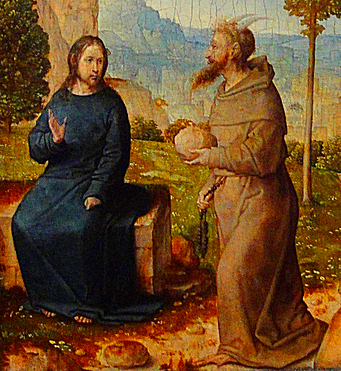
The demonic will lie to us, offering a feigned friendship and understanding. Evil is all about seduction, not about well-being and advancement. What is the darkness really saying behind the duplicity and rhetoric?

The Darkness

You are no good.

You are stupid.

You are fat and ugly.

No one loves you.

You are worthless.

You are hopeless.

You can’t do anything right.

No one wants to be around you.

No one cares about you.

We would all be better off with you gone.

You are bad and beyond forgiveness.

You deserve every bad thing that happens to you.

Everyone hates you.

You would be better off dead.

A Response

Enough! Everything that God creates is good. You have value in God’s eyes. Indeed you are precious and irreplaceable. Your worth is immeasurable.

Some are smart about the things of the world but ignorant about the truths of eternity. We know that God loves us and has called us to a relationship with his Son. We should all be, as St. Paul taught, fools for Christ.

God calls us marvelous to behold, no matter what the standard of beauty in the world might be. Nothing else matters.

God loves us and his Church does, too. We must never buy the deceit that we are not lovable.

We have value because God gives us worth. People might not recognize it, but everyone is important. There are no disposable people. Everyone matters.

Our hope is in the Lord. Despair is from the evil one and is poison to faith. There is no Christianity without hope. It is one of the three things that last: FAITH, HOPE and LOVE.

We might make mistakes and fail, but the good Lord will give us strength. Jesus, himself, was judged a failed prophet by the world, a criminal handed over by his own people to be put to death. But the world was wrong. We can share in Christ’s victory.

God wants you near him and the Church wants you, too. She invites you to worship with the community and to know fellowship with other believers. You are not alone.

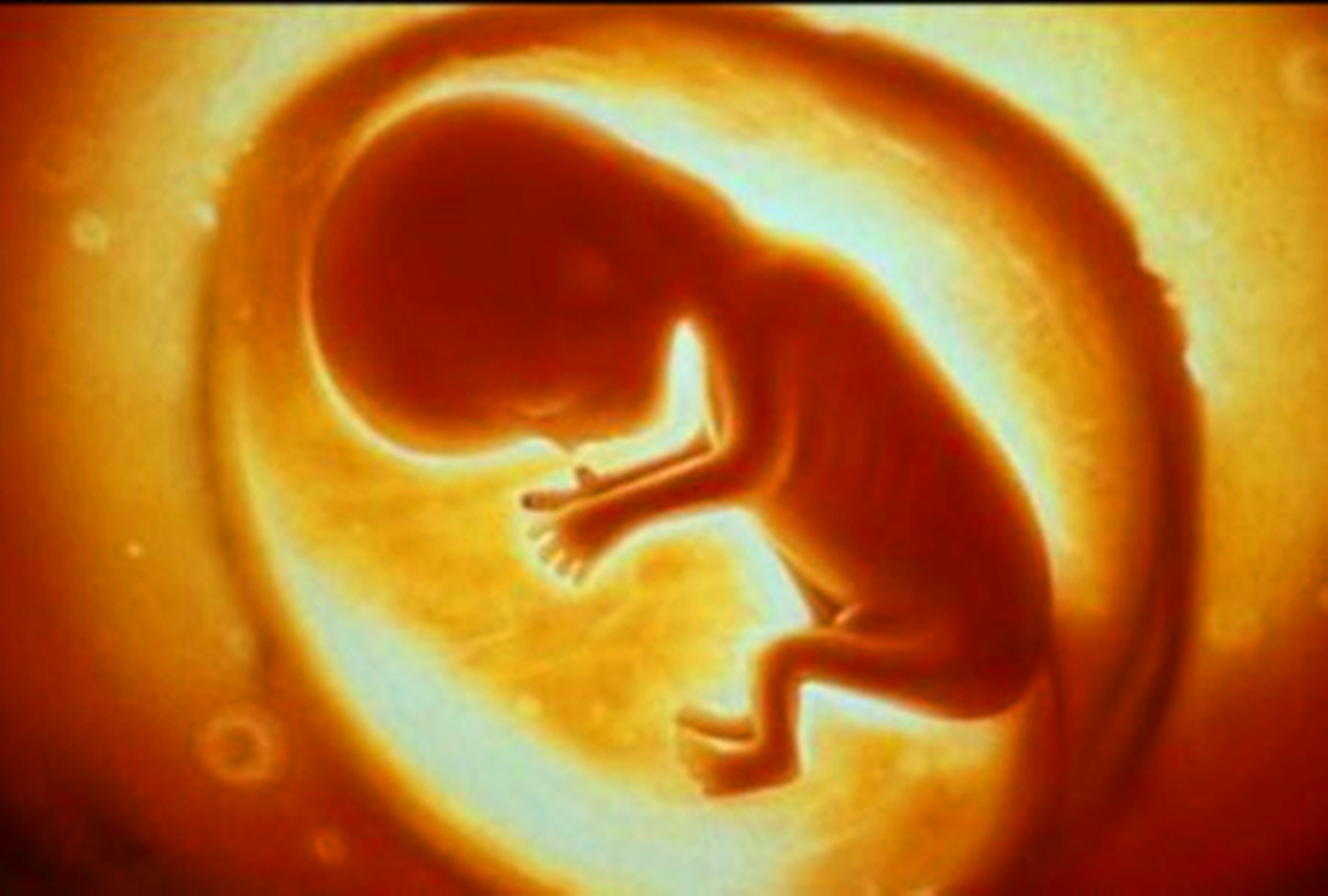
Jesus cared so much for you that he laid down his life and died for you. Yes, by name, he shed his blood that you might know him and his saving mercy. The Church also cares, from the moment you were conceived in the womb, she was the advocate for your life.

We would be diminished by your loss. You need the Church and we want you. Christ wants you as a friend in his service. We are all family.

We are all sinners but the mercy of God is infinite. All that is required is a contrite heart and a disposition for faith and conversion. God wants to pour his life into us.

It is not a matter of what we deserve but rather the generosity of God. He gives us his gifts freely. No one merits salvation; grace is a gratuity from the Lord.

God loves you. The Church and the saints love you. There are probably many who love you in this world but you do not always see it. You are surrounded by love.

Life is God’s gift. He alone is the one to number our days. We need to respect this gift in us and others. We know that when our time in this world grows short, we have an eternity with the Lord waiting for us. The saving work of Jesus is a testimony that love is stronger than death.

Prophecies: Malachy, Fatima & Padre Pio

GENUSLILIUM: Father, I have some important questions to ask. My first questions are about false prophets or prophecies. How do I know if they are false, or true?

FATHER JOE: You do not mean true prophets but fortune tellers and soothsayers. I would regard most if not all as false. This does not mean they are or are not sometimes pious people. As for private revelation, the Church does not require you to believe one way or the other. Just stay prepared for the coming of Christ. Either at the end of the world or upon your death, you will meet Jesus. That is for sure!

GENUSLILIUM: I am concerned about the Prophecy of St. Malachy. He had detailed visions of 112 Popes until Doomsday, also known as The Biblical Apocalypse. The current Pope, Benedict XVI is the 111th named Pope, so is it true that only 1 pope remains until the return of Jesus?

FATHER JOE: The so-called prophecies probably do not belong to St. Malachy. They are curiosities, but I put no trust in them.

GENUSLILIUM: My next question is about the prophecies from The Miracle at Fatima. I truly believe in our Blessed Mother, and I have no doubt that her appearances are true. In the third prophecy that Lucia wrote, it specifically states, according to eyewitnesses, that the Pope would betray the flock and turn his sheep over to the slaughter devised by Lucifer himself. John XXIII fainted because he thought he would be the Pope who would open the door to Satan and that he would be the long awaited anti-pope. Is this true? Please explain.

FATHER JOE:

This is not the third prophecy of Fatima and the history you cite is bogus.

“The third part of the secret revealed at the Cova da Iria-Fátima, on 13 July 1917: I write in obedience to you, my God, who command me to do so through his Excellency the Bishop of Leiria and through your Most Holy Mother and mine. After the two parts which I have already explained, at the left of Our Lady and a little above, we saw an Angel with a flaming sword in his left hand; flashing, it gave out flames that looked as though they would set the world on fire; but they died out in contact with the splendour that Our Lady radiated towards him from her right hand: pointing to the earth with his right hand, the Angel cried out in a loud voice: ‘Penance, Penance, Penance!’ And we saw in an immense light that is God: ‘something similar to how people appear in a mirror when they pass in front of it’ a Bishop dressed in White ‘we had the impression that it was the Holy Father’. Other Bishops, Priests, men and women Religious going up a steep mountain, at the top of which there was a big Cross of rough-hewn trunks as of a cork-tree with the bark; before reaching there the Holy Father passed through a big city half in ruins and half trembling with halting step, afflicted with pain and sorrow, he prayed for the souls of the corpses he met on his way; having reached the top of the mountain, on his knees at the foot of the big Cross he was killed by a group of soldiers who fired bullets and arrows at him, and in the same way there died one after another the other Bishops, Priests, men and women Religious, and various lay people of different ranks and positions. Beneath the two arms of the Cross there were two Angels each with a crystal aspersorium in his hand, in which they gathered up the blood of the Martyrs and with it sprinkled the souls that were making their way to God.”

Pope Benedict wrote about the third secret:

“A careful reading of the text of the so-called third ‘secret’ of Fatima … will probably prove disappointing or surprising after all the speculation it has stirred. No great mystery is revealed; nor is the future unveiled…. The purpose of the vision is not to show a film of an irrevocably fixed future. Its meaning is exactly the opposite: it is meant to mobilize the forces of change in the right direction. Therefore we must totally discount fatalistic explanations of the ‘secret’, such as, for example, the claim that the would-be assassin of 13 May 1981 was merely an instrument of the divine plan guided by Providence and could not therefore have acted freely, or other similar ideas in circulation. Rather, the vision speaks of dangers and how we might be saved from them…. The concluding part of the ‘secret’ uses images which Lucia may have seen in devotional books and which draw their inspiration from long-standing intuitions of faith.”

GENUSLILIUM: My other question is about the prophecies of Padre Pio. Is this real? How do we know if it’s real or false? My heart tells me its true, but I do not want to be misled.

FATHER JOE: We should not regard such things too literally. The fact of tribulation and suffering for believers requires no great stretch of the imagination. Look at the hedonism, perversity and anti-life mentality that afflicts our society. The prophecy of blood, also noted by the late Pope John Paul II, will require courage from the faithful. We need to remember the words, BE NOT AFRAID.

GENUSLILIUM: Jesus said that no man knows the hour or the day of the End of Days. Even Jesus didn’t know. Only his father did. But Jesus added that he hoped that those who will live in the Final Generation would look for the signs in the hope their suffering would not be so great.

FATHER JOE: Certainly Jesus as God is aware of such things. What was meant was that it was not for him to divulge God’s time-table while he was still in the world. I suspect that it was an element of his divine knowledge which he placed behind him (in a sense) so that he could truly be like us in all things. But ours was no amnesiac God and he could always call upon his divine knowledge.

GENUSLILIUM: It also disturbs me that people call the Catholic Church “satanic” and “demonic.” It really discourages me, because I know the Catholic Church is right because they do not make excuses for sin, or change their beliefs to fit with the “New Age.” It hurts me because immediate family members have said these things to me, and I know better. How do I respond to them without stating an argument because it always turns into one, and it makes me very upset. All I want is for me, and my children, and the ones I love to go to Heaven, how can I get through to them?

FATHER JOE: The best response any Catholic can make to such charges is the witness by fidelity and holiness of life. We leave the conversion of souls and the movement of grace in others to God.

GENUSLILIUM: Okay. Thank you Father for clearing those things up for me. It is kind of scary thinking about the whole anti-pope, 3 days of darkness, and the 112 popes left, when we are at our 111th.

Should I get blessed candles, salt and holy water because of what Padre Pio has told us? or is it not necessary?

FATHER JOE: Sacramentals are nice. People should keep holy water and blessed candles in their homes. However, I would not get all bent out of shape about apocalyptic prohesies. Remain in a state of grace and do not give in to fear.

GENUSLILIUM: If the prophecies of the 112 popes were not made by St. Malachy, who do you think could have made that up? Whoever it was was pretty accurate on the popes we have had thus far.

FATHER JOE: You can read a great deal into them. Their accuracy is arguable.

GENUSLILIUM: Do you think we are living in the Final Generation?

FATHER JOE: Me or the kids after me? Ponder your own death, not the end of the world. We know our days are numbered.

FINAL NOTE

Genuslilium gave me a list of web sites where his/her material was gathered.  One was a site on the paranormal but it was not a Christian source.  Indeed, the information seemed deiberately wrong as if one were trying to see how gullible Catholics might be.  Another site was purportedly about the Divine Mercy.  However, it was a hodge-podge of information from both approved and unapproved sources. We should be careful of sites that use the appeal of popular devotions to push an agenda of conflict with the authentic Catholic Church in union with the Holy See.  The one given to me for review demonstrated an animus against the reformed liturgy and too much gravity upon private revelation.  The third site I reviewed, and I have opted not to list them here, focused upon the prophecies of Malachy but then added its own peculiar brand of mysticism and devotionalism.  Indeed, it actually had messages from innerlocutions or visions not approved by the Church. Anyone can go online and claim that God or Mary is speaking through him or her. I would steer clear of such sensationalism. Stick with the the universal catechism and the Catholic Bible!

Original Sin & Mary’s Birthing of Jesus

Back in my college seminary days, I remember watching with a large number of other men the wonderful television miniseries, JESUS OF NAZARETH. During the scene where Mary gave birth to Jesus, a group of the guys verbally objected that it was not right and that Mary did not experience birth pangs. They reminded everyone in the room that the pain of labor was a consequence of the fall and original sin. Since Mary was sinless, they argued, the whole birthing process should have been easy and free of any sort of distress. A number of the Church fathers concurred about the ease of Mary’s birthing of Jesus. One compared it to water passing through a straw. Nevertheless, the girl on the screen was pushing, grunting and screaming. The more liberal guys disagreed with the conservative ones and before long there was a very loud and vocal debate going on. I had very little theological training at the time and just wished they would be quiet so that we could enjoy the movie. We had to ask them to take it outside the room. I fully accept Church teaching about Mary, but at the time I wondered about it quietly to myself. This was a new question for me.

Published in 1566, The Catechism of the Council of Trent had this to say about the question:

“Besides, what is admirable beyond the power of thoughts or words to express, He is born of His Mother without any diminution of her maternal virginity, just as He afterwards went forth from the sepulcher while it was closed and sealed, and entered the room in which His disciples were assembled, the doors being shut; or, not to depart from everyday examples, just as the rays of the sun penetrate without breaking or injuring in the least the solid substance of glass, so after a like but more exalted manner did Jesus Christ come forth from His mother’s womb without injury to her maternal virginity. This immaculate and perpetual virginity forms, therefore, the just theme of our eulogy. Such was the work of the Holy Ghost, who at the Conception and birth of the Son so favored the Virgin Mother as to impart to her fecundity while preserving inviolate her perpetual virginity.”

 “The Virgin Mother we may also compare to Eve, making the second Eve, that is, Mary, correspond to the first, as we have already shown that the second Adam, that is, Christ, corresponds to the first Adam. By believing the serpent, Eve brought malediction and death on mankind, and Mary, by believing the Angel, became the instrument of the divine goodness in bringing life and benediction to the human race. From Eve we are born children of wrath; from Mary we have received Jesus Christ, and through Him are regenerated children of grace. To Eve it was said: In sorrow shalt thou bring forth children. Mary was exempt from this law, for preserving her virginal integrity inviolate she brought forth Jesus the Son of God without experiencing, as we have already said, any sense of pain.” [Part 1, Article 3]

Other than these few paragraphs, the Church gives us little further guidance on this question, placing the stress upon Mary’s perpetual virginity and sinlessness. While we can speculate, I would not want to say anything that would harm true faith and the devotional life of believers. Jesus was sinless and yet he would pay the terrible price for our sins in his flesh through his passion and death. His death would make possible our rebirth in him.

Although Mary’s integrity is not compromised, this in itself does not mean that Mary’s lifelong participation excluded elements of the pain and struggle connected to his saving activity. If not the birthing itself, certainly there was the struggle of the journey and anxiety to find a place for the birthing. What they did find was no more than a cave or barn. She might have straw but no fine bed to rest upon. Mary certainly suffers at the Cross, even if vicariously, witnessing her Son’s saving sacrifice. This notion of suffering through another’s pain is worthy of reflection.  I am told that men sometimes have phantom birth pangs when their wives go into labor. Might Mary’s birthing possess solidarity with the Cross on a level about which we do not know? She does not share original sin with her sisters in the world, but helped her cousin Elizabeth with her birthing of John the Baptizer. She knew well what other women endured in bringing new life into the world.  Might she have offered up her miraculous pregnancy and birthing on their behalf?  If there were no physical pain, she might have endured something on an intentional and/or a spiritual level. Further, if she knew anything about the high calling and work of her Son, then there must have been both joy and the beginnings of that piercing into her immaculate heart. After all, Jesus was born to die. The powers of the world would conspire against her Son from the very beginning of his life among men.  Soon after his birth, Joseph would spirit them off to Egypt with Herod hot on their heels, seeking to kill the newborn king.

Mary offers up her flesh in her pregnancy and in birthing Christ. Yes, she is sinless, but the whole reason for this favor was the incarnation. She opened her heart to sinners and desired their salvation. The Sorrowful Mother probably knew a measure of suffering at both the end and beginning of this story. If so, it would not be because of any sin or fault on Mary’s part, just as Jesus did not deserve the agony of the Cross. All that Jesus was and would be was present throughout. Death was also a consequence of sin, but both John Cardinal Newman and the late Pope John Paul II thought that Mary, though never corrupted by the grave, did indeed die. In this regard she stood with Christ and the rest of humanity. By contrast, along with those of us who find the notion of birth pangs difficult to reconcile with Mary’s sinlessness, the Eastern churches would prefer to speak of Mary “falling asleep” and being translated into heaven.

The text from Genesis is clear: sin, suffering and death are on our side of the equation. We read in Genesis 3:16: “To the woman he said, I will greatly multiply your pain in child bearing; in pain you shall bring forth children.” Based upon her not suffering from concupiscence or any other consequence of original sin, magisterial teachers would contend that she had a painless delivery. This was the assessment from the Church fathers of Trent.  There is even the stress upon a spiritual or supernatural birth over a natural birth. While some might find that this challenges credulity, there are stories about ordinary women (not so holy) who have had easy deliveries. Given this case for them, then why not something unique for Mary? If God could conceive a child in her by the power of the Holy Spirit, he could certainly bring that child of promise forward in a manner that would leave Mary’s bodily integrity intact and free from the usual distress of delivery.  I suppose if the incarnation were to occur today we would insist upon St. Joseph documenting the whole event with a video camcorder. Thankfully, the truths of Scripture and Sacred Tradition are of an entirely different order than the voyeurism reported by the network news or by reality television programs.

There are certain dangers or risks in talking about Mary’s virginity. First, there is the invading atheism where critics scoff at the miraculous. Second, and this flows from the first point, people might easily mock the teaching and women might despair of any real association with Mary. While the marital act consummates and renews their marriage covenants, women often have mixed feelings about the sexual gymnastics required to get pregnant. They are intensely aware of how it is a means to an ends. Not only is Mary removed from such a repetitive duty, it is also insisted that Jesus was born with no trauma to her body. As one woman I know asked, then how is Mary really like the rest of us who are mothers? If the authorities are right, then Jesus exits the womb as easily and mysteriously as he enters the locked upper room after his resurrection. The current universal catechism also insists that Mary’s virginal integrity is unassailed (not mentioning birth pangs):

The deepening of faith in the virginal motherhood led the Church to confess Mary’s real and perpetual virginity even in the act of giving birth to the Son of God made man. In fact, Christ’s birth did not diminish his mother’s virginal integrity but sanctified it.’ And so the liturgy of the Church celebrates Mary as Aeiparthenos, the ‘Ever-virgin’” (CCC #499).

SOLT Press Release on Father Corapi

The Society of Our Lady of the Most Holy Trinity has put out an official press release on the FATHER CORAPI SCANDAL. Fr. Gerard Sheehan, the superior writes:

“While SOLT does not typically comment publicly on personnel matters, it recognizes that Fr. John Corapi, through his ministry, has inspired thousands of faithful Catholics, many of whom continue to express their support of him. SOLT also recognizes that Fr. Corapi is now misleading these individuals through his false statements and characterizations. It is for these Catholics that SOLT, by means of this announcement, seeks to set the record straight.”

While I can appreciate the need for a statement, I must admit that I am surprised at the bluntness and the depth of revelation. He remarks about the investigative process and what they discerned from emails, witnesses and other sources that has been going on during the time of the priest’s public ministry:

  • Fr. Corapi already handed in his resignation in early June.
  • He paid $100,000 to silence the woman making charges.
  • Other witnesses were similarly silenced and Fr. Corapi refused to release them for testimony to the investigative team.
  • He had violated his promise of poverty by holding legal title to over one million dollars in real estate, luxuary cars, boats, etc.
  • He cohabitated in two states with a known prostitute, recently began sexting one or two women and resorted to repeated drug and alcohol use.

I would not normally even post about such matters, but I can well appreciate the frustation of his superior.  Fr. Corapi is a powerful communicator and people love him.  If he is guilty of such things and is falsely placing the blame on the leadership of the Catholic Church, then public correction needs to be made.  Having said this, I think that the leadership in SOLT must be faulted for allowing this situation to grow so out of hand.  They should have reigned him in years ago.  Their passivity has now made for a far worse and more scandalous situation.  The press release continues:

“SOLT has contemporaneously with the issuance of this press release directed Fr. John Corapi, under obedience, to return home to the Society’s regional office and take up residence there. It has also ordered him, again under obedience, to dismiss the lawsuit he has filed against his accuser.”

A letter of resignation would not release him from his priestly promises and those made to SOLT. A good priest does as he is told. This is a bad situation all around. I wonder how Fr. Corapi will respond? I suppose die-hard fans will contend that the evidence is contrived and that the priest is innocent. And indeed, I would still argue that if he is innocent then he should make his case and work with the process. It is unfortunate that Fr. Corapi has forced this whole matter and scandal into the public forum. But souls are at stake and this delicate situation is about more than one man. If he is guilty, then he should demonstrate sorrow and contrition, placing his ministry and future into the hands of his lawful superiors. It would be a wonderful teaching moment and maybe the highpoint of his ministry.  Christ is speaking to him through his superiors.  That is how priestly obedience works. But will he listen? Will he fight for his priesthood?  This battle cannot be won with militant rhetoric or tactics of subterfuge.  He can only find victory by being a faithful son of the Church and a humble priest.  He must be courageous and forthright about any revelations exposed by the truth.  He must reckon himself as any confessor to be the first among sinners, “Mea culpa, mea culpa, mea maxima culpa.”  Things will never be the same but God may not be finished with him yet.  I pray that Fr. Corapi will make the right choice and work with God’s grace in this.

An element which really upsets me about this situation is how one segment of the Church is set against another. Father Corapi comes under investigation and the priest comes out with a statement that the bishop and his superior have a right to do what they do; but next he talks about the real enemies of the Church and we all know he is targeting those who put him on administrative leave. Then he claims obedience but his personal corporation makes a statement that they are under no one’s thumb and the ministry media business will continue as if nothing has happened. By the beginning of June he submits his resignation and tells his fans weeks later that the Church has forced him out. Bishop Michael Mulvey and his lawful superior, Fr. Gerard Sheehan, SOLT, seek to clarify matters but then there is the public intervention on his behalf of the founders of SOLT, Father Flanagan and the Bishop Emeritus of Corpus Christi, Bishop Rene Gracida. Critics and fans of the priest can now take their pick and decry the other side as wrong-headed or evil. The impression is given that the Church is fighting with herself. Despite the lament of Fr. Corapi that this is a plot of the liberals who are out to get him, the battleground that emerges is between very conservative or orthodox churchmen and laity. Liberal revisionists are no doubt having a delight in watching the so-called “religious right” of the Church rip itself apart over the media priest. This has all the makings of a new voyeuristic television program called THE BATTLING BISHOPS. Since the clarification released from SOLT, I notice now that Bishop Gracida seems to have shifted somewhat from supporting Fr. Corapi to attacking SOLT for allowing the situation to develop in the first place. However, it seems to me that the stage was set by those who initially allowed Fr. Corapi to set up his independent operations. In other words, there is blame enough to go around. It is troubling that Bishop Gracida took a public stand against a man’s lawful superiors even though he admits that he has not talked with the priest for years! Now Fr. Corapi is telling his fans on Twitter to look forward to an important announcement on Thursday.  Enough already!  I discern a manipulation of good men behind all these tensions that is due to evil human machination and/or to the intrusion of something devilish.

Phil Lawler at CATHOLIC CULTURE succinctly tells it as it is:

Like the late Father Marcial Maciel, the disgraced founder of the Legion of Christ, John Corapi has worked for years as a celebrity priest: encouraging a cult of personality, setting his own agenda, raising large sums of money that he spent at his own discretion, and—most dangerous of all—accountable to no one. It was a formula for disaster, and now the disaster has occurred. Again.

I would beg people to separate the truths Father taught from the possible failings of the messenger. All are tempted, but the devil delights in targeting priests; while he could not seduce the high priest Christ, he often settles for corrupting those men who participate in his priesthood. Pray for priests, pray for Father Corapi and pray for “the little ones” who might despair of their faith.

I am done with this topic, but will give Father Corapi the last word:

FINANCES…”From the earliest days (more than twenty years ago) the Founder of the Society of Our Lady, Fr. James Flanagan, encouraged me to support myself and the Church as well.”

IMPROPRIETY…”I have never had any promiscuous or even inappropriate relations with her.”

INVESTIGATION…”As standard practice, my legal counsel advised me not to cooperate with the investigation until I was able to determine that the Commission’s process was fair and I had adequate rights to defend myself.”

HUSH MONEY…”I never paid anybody off to remain silent.”

RESIGNATION…”I resigned because the process used by the Church is grossly unjust, and, hence, immoral. I resigned because I had no chance from the beginning of a fair and just hearing.  As I have indicated from the beginning of all this, I am not extinguished!”

CLICK HERE  to read the SOLT press release.

CLICK HERE  to read my post on this matter last month.

A good friend feels that this topic and the argumentation associated with it is not good for me. It is true that I find it very upsetting. I love the priesthood and the Church. I get defensive when they are threatened. I also worry deeply about the good of souls. It is true too that the plight of a brother priest is always felt very personally. Many of the comments, moderated and mostly not posted, are unreasoning and angry. So I am going to end it here.  Orignally I posted a video here that gave Father Corapi the last word, albeit with an advertisement tagged to it.  However, he has liquidated his business and removed all signs of his web presence.  He is gone from sight, but maybe not from our minds and hearts.  Keep him and the people he impacted in prayer.

Mary the Woman

Both at Cana and at the Cross, Jesus uses a peculiar form of address for his Mother. When the wine runs out, his Mother lets him know and he curtly tells her, “Woman, how does your concern affect me? My hour has not yet come” (John 2:4). She simply tells the stewards to do as he says and he turns water into wine. At the Cross, he addresses Mary again as THE WOMAN, saying, “Woman, behold your son,” and next to John, “behold your mother”(John 19:26-27). Everything has come to pass, from his first sign at Cana to the sign of the Cross at Calvary. The hour has finally come. Now he will not change water to wine but offer an oblation that will be renewed in wine and bread transformed into his body and blood. Jesus is offering his life for his bride the Church. He goes to his own marriage banquet, the supper of the Lamb. Mary is not a mere spectator. She is a player in the divine drama with a purpose. There may seem to be some confusion in Christ’s words, but I suspect that our Lord says many things with the few spoken words remaining to him. Certainly, Mary beholds the spectacle and her eyes are steadily upon her beloved Son, Jesus. But our Lord is also directing her eyes away to John, who is our emissary at the Cross.

Mary must be there for the believing community. They will need her. Jesus also directs John’s gaze to Mary. Christ is entrusting his Mother to John and the early Church.

Mary is the Signpost to Jesus

Mary always brings us back to her Son. The Eastern churches have such a high appreciation of this truth that all icons of Mary have her holding the child, Jesus. A possible exception to this was brought to my attention with an icon of Mary in an Eastern chapel at the Basilica Shrine of the Immaculate Conception in Washington, DC. However, looking closer we find that Jesus is still present, albeit through a stole she holds emblazoned with the Greek, Alpha and Omega. Jesus is the beginning and end of all things. The stole signifies Christ the High Priest. He is our Mediator. No one comes to the Father except through him.

It has been argued in Catholic circles that just as the titles and history around Mary have insured an orthodox Christology; so too is Mary and our devotion toward her necessary for a full and genuine Christian faith. A priest friend long involved with Lutheran-Catholic dialogue was challenged about this in an ecumenical setting. He said no slight was intended toward our Protestant brothers and sisters. Nevertheless, he insisted that Mary still had to figure in the equation of faith. Catholics would give her direct recognition; but my friend insisted that any good Lutheran who loved Jesus Christ still gave Mary a degree of unspoken or indirect honor. Jesus will always be the Son of Mary.

A genuine love of Jesus makes room for love of Mary.

Mary’s Titles Inform Our Own Calling

I would go to some lengths to show how Mary is singularly honored by God; in truth, a number of her titles and benefits could be applied to others, even if only analogously or in a lesser and contingent fashion. Mary is rightly called the Mother of God and such a title is strictly reserved to her; but every child reflects the Christ Child and every pregnancy shares “in potency” the promise of a Messiah. Other titles would be more easily shared, like that of the Daughter of the Father and the Temple of the Holy Spirit. Our baptism and faith makes us adopted sons and daughters of the heavenly Father. Granted the gift of sanctifying grace, we are also made into temples of the Holy Spirit. Of course, Mary is the great precursor, for both the whole Church and her individual members.

Before the Spirit of God descended upon the apostles in the upper room, the Holy Spirit had already intervened in her life, preserving her from sin and conceiving the Christ. Mary is the Spouse of the Holy Spirit. She is also called the Ark of the Covenant. Just as the sacred tablets of stone revealed God’s law, this time around he reveals his loving mercy.

The New Covenant is literally the flesh and blood of Christ. He is the Covenant. Similarly, we are to be bearers of Christ for our world today.