
• Our Blogger

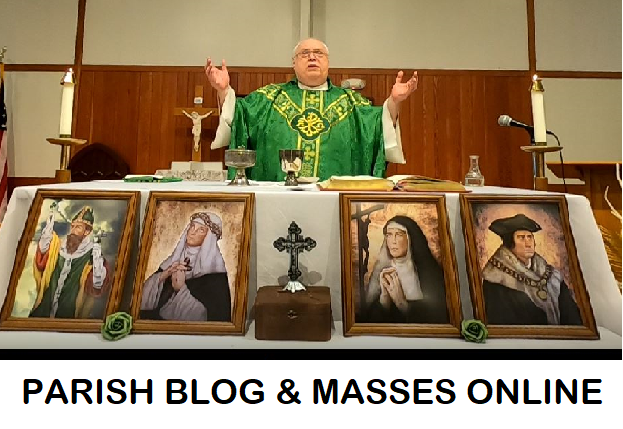
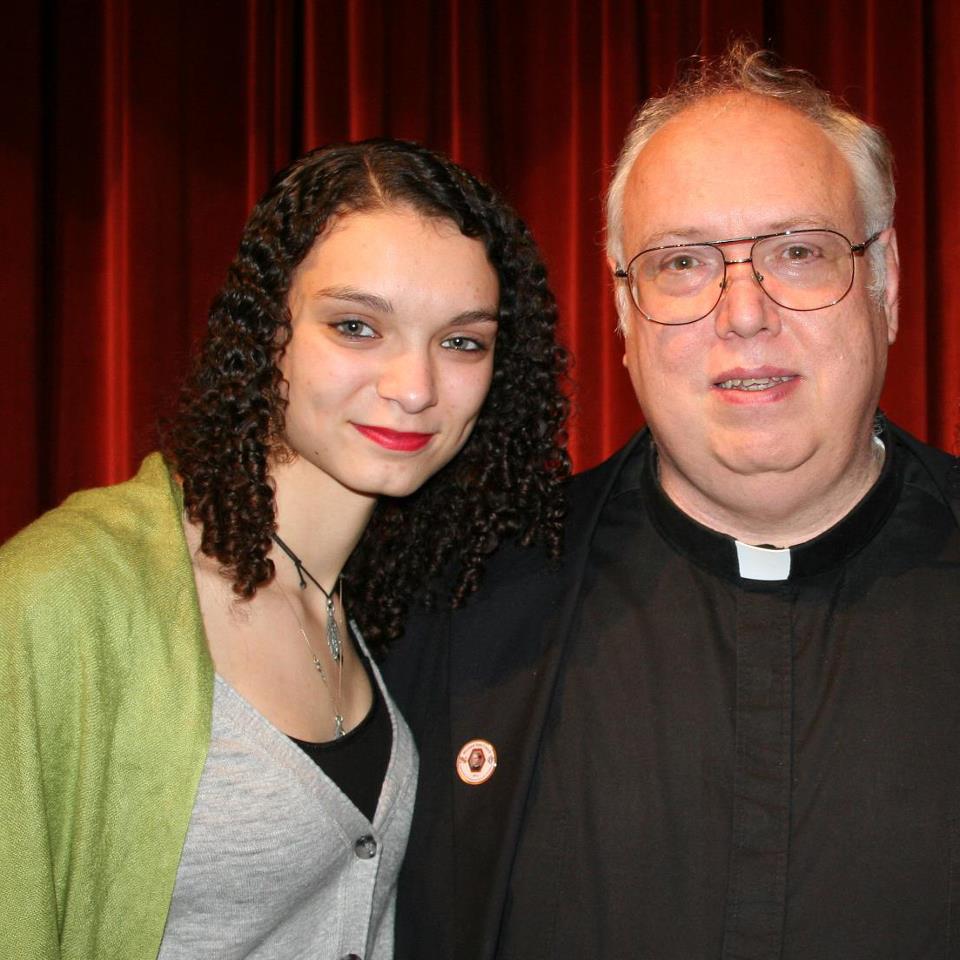
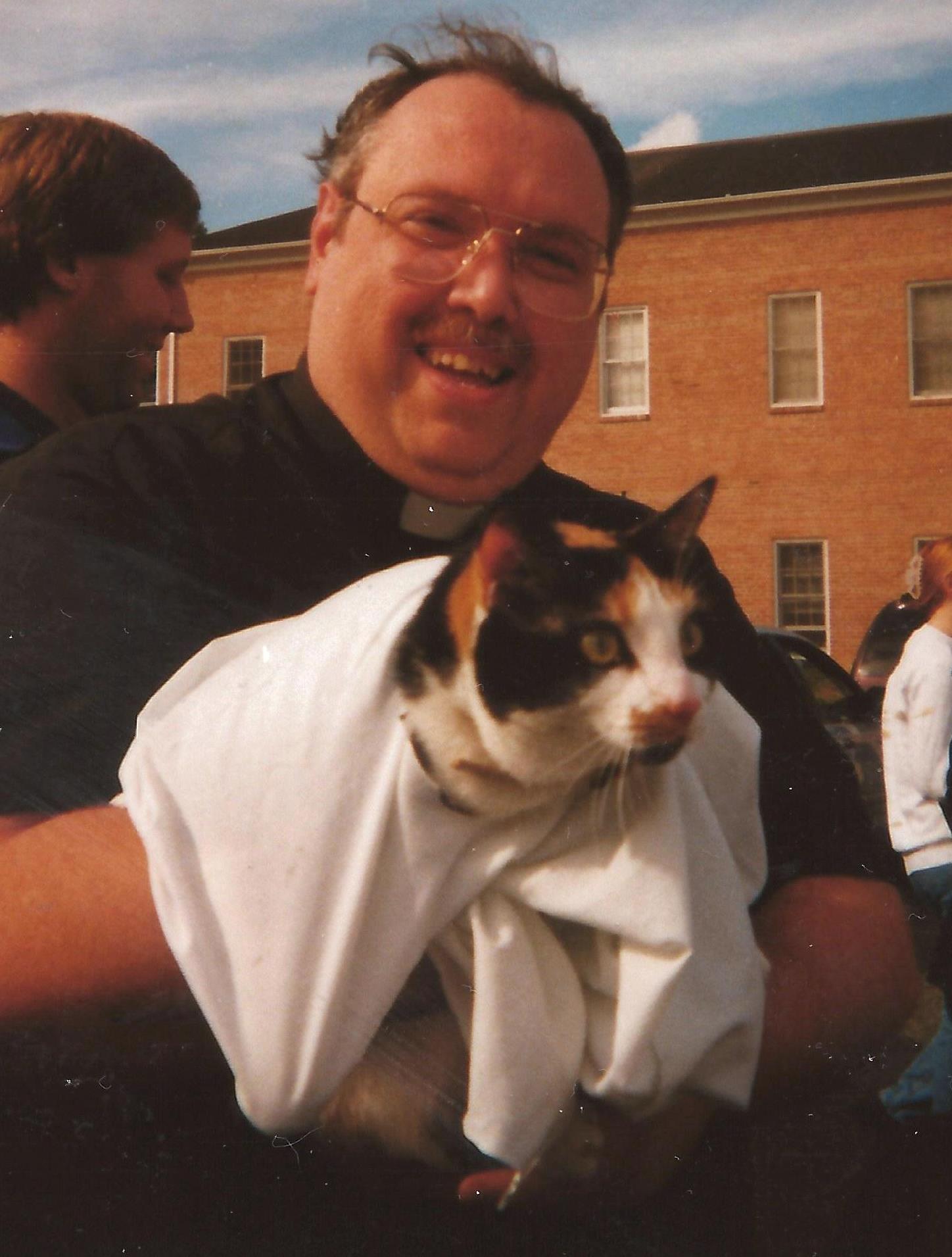
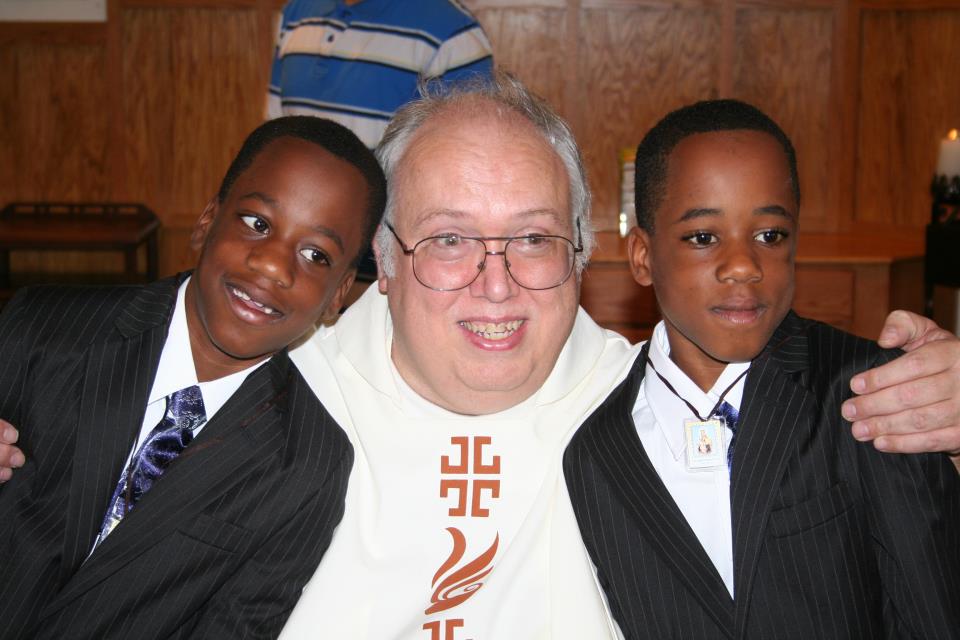
    Fr. Joseph Jenkins

  • The blog header depicts an important and yet mis-understood New Testament scene, Jesus flogging the money-changers out of the temple. I selected it because the faith that gives us consolation can also make us very uncomfortable. Both Divine Mercy and Divine Justice meet in Jesus. Priests are ministers of reconciliation, but never at the cost of truth. In or out of season, we must be courageous in preaching and living out the Gospel of Life. The title of my blog is a play on words, not Flogger Priest but Blogger Priest.

  • Archives

  • Categories

  • Recent Posts

  • Recent Comments

    Barbara King's avatarBarbara King on Ask a Priest
    Ben Kirk's avatarBen Kirk on Ask a Priest
    Jeremy Kok's avatarJeremy Kok on Ask a Priest
    Barbara's avatarBarbara on Ask a Priest
    forsamuraimarket's avatarforsamuraimarket on Ask a Priest

Marriage & Willingness for Children

QUESTION (Deirdre):

I was diagnosed as bi-polar when I was 15 years old. I have been on medication for the last 16 years to control my disease. I have always wanted children; however, as I mature, I have realized that being on medication while pregnant is not wise. Neither would I want to bring a child into a situation that could be potentially unstable. So recently, I have been thinking about whether or not I should indeed have a child. If this is the course of action I choose to take, is it accurate that in the eyes of the Church I should never be allowed to get married, to share my life with someone, or enjoy the marital bed all because I chose not to have children?

RESPONSE:

I know bi-polar people who have children and do quite well. You are correct that there are certain medications that can make pregnancy problematical. I have seen this especially with paranoid schizophrenics. As for your question, unless you are married then it is entirely academic as you cannot morally have children as a single person. The Church views marriage as having two purposes: the propagation of the human race and the fidelity of the spouses. Older couples might be infertile but they can still get married. The marital act must still be that type of act that generates new human life even if such an eventuality is unlikely or impossible. Younger couples must want to have children in order to get married in the Church. The priest will ask this question as part of the prenuptial investigation. Rejecting the possibility makes marriage impossible. Indeed, if there is deceit about this, it is grounds for the annulment of a bond. Depending how long you wait to get married, the issue may become academic as the clock is always ticking on female fertility. You can be happy unmarried and there are joys other than those of the marriage bed.

What is with the Angels in the Cherubic Hymn?

QUESTION:  The Catholic Melkites include in their liturgy a Cherubic Hymn where the Cherubim are called “many eyed” and the Seraphim are “six winged” and soaring on their “pinions”. Can you please take some time and explain some of the meaning?

ANSWER:

As for the Cherubic Hymn, the emphasis is that we enter into the angelic praise and glory to Almighty God. The Sanctus serves a similar purpose in the Roman Catholic liturgy: Holy, Holy, Holy. The more traditional Trisagion is found in our Good Friday Liturgy and is a component of the Divine Mercy Chaplet.

“We, who mystically represent the Cherubim, and chant the thrice-holy hymn to the life-giving Trinity, let us set aside the cares of life that we may receive the King of all, who comes invisibly escorted by the Divine Hosts.”

Holy God, Holy [and] Mighty, Holy [and] Immortal, have mercy on us.

Glory be to the Father, and to the Son, and to the Holy Spirit, both now and ever and to the ages of ages. Amen.
Holy and Immortal, have mercy on us.

Holy God, Holy and Mighty, Holy and Immortal, have mercy on us.

While the gravity is with God and not the angels, the description of the angels is taken from Isaiah 6:1-3.

“In the year King Uzziah died, I saw the Lord seated on a high and lofty throne, a with the train of his garment filling the temple. Seraphim were stationed above; each of them had six wings: with two they covered their faces, with two they covered their feet, and with two they hovered. One cried out to the other: ‘Holy, holy, holy is the LORD of hosts! All the earth is filled with his glory!’”

The references to wings and eyes are all symbolism. Seraphim are pictured with six wings and are associated with the purification that comes from fire. Cherubim are imaged as with four wings and many eyes or faces. They are understood as all seeing. Catholic tradition places seraphim at the first rank of the angelic hosts and cherubim at the second. St. John of the Cross writes that the seraphim covering its face with its wings symbolize “the darkness of the intellect in God’s presence.” He continues that the covering of the feet symbolizes “the blinding and quenching of the affections of the will because of God.” It thus constitutes humility of the creature before the Creator.

“With the two remaining wings they flew, indicating both the flight of hope toward things that are not possessed and the elevation above all earthly or heavenly possessions that are not God” (The Ascent of Mount Carmel, II, 6.5).

What Does 1 John 5 Mean?

QUESTION: The reading 1 John 5:14-21 has come up again in the liturgical readings (January 11, 2014) and it confuses me. What does it mean not to pray for the sin that leads to death?

ANSWER:

What we ask should be in conformity with the divine will. Divine providence cannot be circumvented.

We can intervene for the venial sins of our brothers and sisters. That is a basic component of intercessory prayer. If the person is disposed to mercy, then God hears and answers such prayers.

Mortal sin is more serious and requires the immediate contrition of the sinner. The Church also employs the mediation of priestly absolution in the sacrament of Penance.

The one who belongs to God is in genuine friendship with him. Mortal sin signifies a breech. It forfeits the life of grace.

We are commissioned to abide in God and to spread the Good News.

What to Do about Fleeting Bad Thoughts?

QUESTION:  I have horrible fleeting thoughts against God, Jesus, the Holy Mother, and the Holy Spirit– of cursing and blasphemy. It makes me very anxious and I have no peace. What can I do?

ANSWER:

I would recommend that you speak with your local priest. There are too many details not available to me: (1) your age and state of life; (2) the culture and influences to which you are exposed; (3) the level of your religiosity; (4) life experiences and possible trauma; (5) your health and mental stability; and (6) the possibility of spiritual oppression or obsession.

We are constantly afflicted with fleeting bad thoughts and urges but we can redirect our attention and quickly dismiss them. If they are not directly intended and do not reflect our core preoccupation then I would just quickly disregard negative thoughts and images as insignificant. Scrupulosity about them gives them a certain negative hold upon us.

Christ & the Davidic Kingship?

QUESTION:  Regarding the Old Testament promises with respect to the Davidic Dynasty and the Lord decreeing that David’s throne would be established forever how are we to understand the prophecy when there was a time when Judah fell and the Jews went into exile (725-585 BC)? While I wholeheartedly believe that Christ would inherit the throne of David, there was no one sitting on the throne of David. How could it be a continuous succession? Some how would it just continue in perpetuity, despite the gaps? Could the Papal throne on the earth today be understood to be part of the fulfillment of the Davidic throne established forever or does that only apply to Jesus in heaven?

ANSWER:  Gaps in mortal rule are obvious, although the line of David continued among God’s people as did divine providence. The everlasting rule is made manifest in Christ. Jesus is a king with two crowns: as divine he invites us into his heavenly kingdom; as man he fulfills the messianic prophecy of the human and Davidic kingdom. Jesus joins these two kingdoms into one. Every year we have a feast where we celebrate Christ the King. Just as David had a steward who was the keeper of the keys; Peter or the Pope fulfills this role for Christ. Jesus gave him and the Church the keys to the kingdom of heaven.

Should We Be Specific in Confession?

QUESTION:  If one confesses to the mortal sin of looking at pornography but refrained from mentioning that it was of the homosexual kind, did the penitent commit still another sin? What if he was afraid that the priest would look upon him differently?

ANSWER:  The person should probably be more specific, but given doubt and fear, confessing to the sin of pornography was probably sufficient. People should not be afraid of their priests.  A rule of thumb is to confess “species and number.”

Communion in Orthodox Churches? Same Catholic Faith?

QUESTION:  As a Catholic can I receive Communion in an Orthodox Church? Aren’t our beliefs essentially the same?

ANSWER:

You cannot generally receive Holy Communion in an Orthodox church. The only exception is when it is physically impossible for you to participate at a liturgy in a Roman Catholic or Eastern rite in union with the Holy See. However, please note, that not all Orthodox churches would want Latin rite Christians taking the sacrament from them, either. We should also try to respect their laws. Having said all this, we recognize the validity of the seven sacraments in the Orthodox churches.

The Orthodox churches are national churches and Roman Catholicism has always been in tension with such embodiments of faith communities. This is true in the East and West. Gallicanism placed great stress upon the unity of the Church in France just as Anglicanism signified a juridical breech. Political reasons related to Church authority are still very much part of the problem that must be resolved. What is the extent of papal power and the unity under the Petrine see? This brings with it the debate over the status of the small Eastern rite churches in union with Rome. The Orthodox churches tend to look down upon them as traitors. The Orthodox churches regard the Pope as “the first among equals.” Such is not how we regard the universal see.

Besides ecclesiology, there are also some doctrinal interpretations which divide us. The most famous of these is the Filioque debate in the Nicene Creed: both the authority of the Pope to add to the profession of faith and the understanding of the eternal generations or relations of the divine Persons in the Blessed Trinity. Given pressure from worldly monarchs, Protestant influence and secularism, the second or penitential marriages of divorced persons is also a divide. We cannot readily forgive that for which we were willing to allow the entire English church to slip away— a marriage that is no marriage but adultery. Orthodox churches transplanted into the West are increasingly adopting elements of Lutheranism (emphasis upon Scripture over tradition and the value of faith over works) but these eccentricities are also placing stress upon their loose inner unity worldwide. Indeed, some communities have split as have several of the Russian Orthodox over the fragmentation of the old U.S.S.R. and what was seen as complicity with communism. Indeed, it appears that some prelates might have been KGB plants. Indeed, the recent news has detailed a public rift between the Orthodox patriarchs in Russian and the Ukraine.

Priestly Celibacy – Do People Believe It?

There are a number of excellent books written by priests about the value of celibacy; and yet, the public seems to give a heightened weight to criticism of celibacy from either fallen-away priests or from critical laity. Why is this? Given society’s addiction to all things sexual, heterosexual and homosexual, I suspect it is because celibacy is viewed as either a fiction or as an aberrant perversion. The fact that it is a natural lifestyle and one chosen by St. Paul and our Lord is readily dismissed. I recall many years ago taking weekly communion to the elderly Catholic residents of Judiciary House in NW Washington, DC. The maintenance man, himself a senior citizen, saw my collar and remarked that we both wore uniforms. Making small talk, he asked, “Is it true?” “What?” I returned. Incredulously, he queried, “Is it true that you guys never get some?” It was not the kind of question I expected, given that we were standing on a public sidewalk in front of the building where he worked. Pedestrians were passing by on every side of us. I repeated his question, trying to figure how to respond. Did I misunderstand him? No, he did indeed mean sex. I answered, “Yes, it is true; we take promises of perpetual celibacy.” He shook his head. He could not believe it. He walked away unconvinced and mumbled to himself, “How can you live and not get some? A man has to get some? I know I have to get some.” If such average working men were dubious about this a quarter of a century ago, today many would accuse priests of hypocrisy and outright deception. This incident happened before the floodgates opened with the so-called pedophile crisis. The failure of a few has damaged the witness of many. Celibacy, once respected as a sacrifice signifying devotion to God and to the service of his people, is now regarded as expendable or worse, as a sign of sexual deviancy and secret sin. We have our work cut out for us if we hope to correct the false label stamped upon the celibate priesthood. Celibacy is very personal and private to the priest; nevertheless, we must be courageous and extroverted in demonstrating both its viability and utility.

How is Praying to a Saint NOT Like Praying to God?

bvm_047QUESTION:  Do Catholics pray to God, Jesus, Mary, Saints, and all of the above? How is praying to a saint different than praying to God? My Christianity claims that God will listen to all prayers. If Catholics believe that (do they?), why are they praying to saints?

Some of these concerns I have already briefly addressed. Over the last two thousand years, Catholic Christians have done much discernment regarding prayer and spiritual matters. Obvious structures in our prayers have been formulated. Note that at Mass, most orations are addressed to God as Father. Oftentimes prayers will end with a statement that it is offered “through” Christ our Lord and with some possible mention of the Holy Spirit. Jesus is again and again affirmed as the one Mediator to the Father. We also believe in the Trinity: that God is Father, Son, and Holy Spirit. This is important because certain modern-day Arians and Messianic Jews deny the divinity of Christ— a fact that would immediately alter prayer. God does listen to all prayers and as I have said before, the invocation of a saint to pray with us to God does not negate this reality. All prayer is properly addressed to God. If a prayer is answered, it is because of the intervention of God. Mary and the Saints have no power of their own– they are creatures; however, God has chosen to work closely with and in us. Your question here would better be rendered: what are the four purposes of prayer?

Adoration – Proper worship of God due to Him as our Creator.

Thanksgiving – Gratefulness to God for His gifts to us.

Reparation – To obtain pardon for sins and to do penance.

Petition – We ask for spiritual and physical goods.

I hope this helps to alleviate the confusion that many have about the oldest form of Christianity and our prayer practices. And, again, I do hope those who come here are sincere. Sometimes anti-Catholic fundamentalists ask questions, not because they honestly want to understand the faith, but because they hope to trip up ignorant Catholics as part of a proselytization effort.  I would urge a certain civility in debates and discussions.

Intercession of Mary & the Saints

bvm_024QUESTION:  Why must Mary intercede? And what if she doesn’t want to? Does that mean your prayers are not heard by Jesus? I guess this question goes for praying to all the Saints.

Why? How can she not? If you are watching a football game and the receiver gets the ball, are you not rooting him on to victory? The crowd becomes like one unified whole— shouting, singing, doing the wave, etc. This analogy offers but a pale point of reference to the role of Mary and the saints. We are all in this together— the journey from mortal to eternal life. The very definition of a saint makes what the division you suggest impossible. The sanctity of heaven implies the utter transformation of one into a new Christ— of one mind and will with our Lord. What he wants, they want. A little girl in church was asked one time for the definition of a saint. She looked at the figures in the stained-glass windows and replied, “Saints are those who allow the light to shine through.” Quite right! And the Light of the World is Christ, dispelling the darkness of ignorance, sin, and death. This process of conversion begins in this life; we can and should be perfected in holiness by the grace of God. We can be ever remade into Christ’s image. Heaven simply brings this development to its full conclusion. People who knew Mother Teresa said that to be near her was almost like being in the presence of Jesus— so fully did she manifest the living Christ in her faith and life. We can also become saints if we allow God to so work in our lives. We need to seek a restoration of all things in Christ, including ourselves. The question about division between the saints and Jesus says less about the heavenly hosts than about ourselves— our own brokenness and bondage to sin— our own refusal to fully embrace the Gospel of Life. Sometimes selfishness and hatred invade our prayers; such is never the case for Mary and the Saints. They are immaculate windows to the divine. Further, they are a part of us. The Church in Glory is inextricably united to the earthly Church in Glory and the Church in Purgation. The Mystical Body (Eph. 1:23; 1 Cor. 12:27) remains intact. The saints intercede for us precisely as perfectly conformed elements in this wondrous union. Death is not the end of love. This is at the heart of Christ’s resurrection— his Father’s Love (the Holy Spirit no less) restored him back to life. The family of God in heaven has not forgotten those of us still facing the trial. Love compels them to remember us and to pray for us.