• Our Blogger

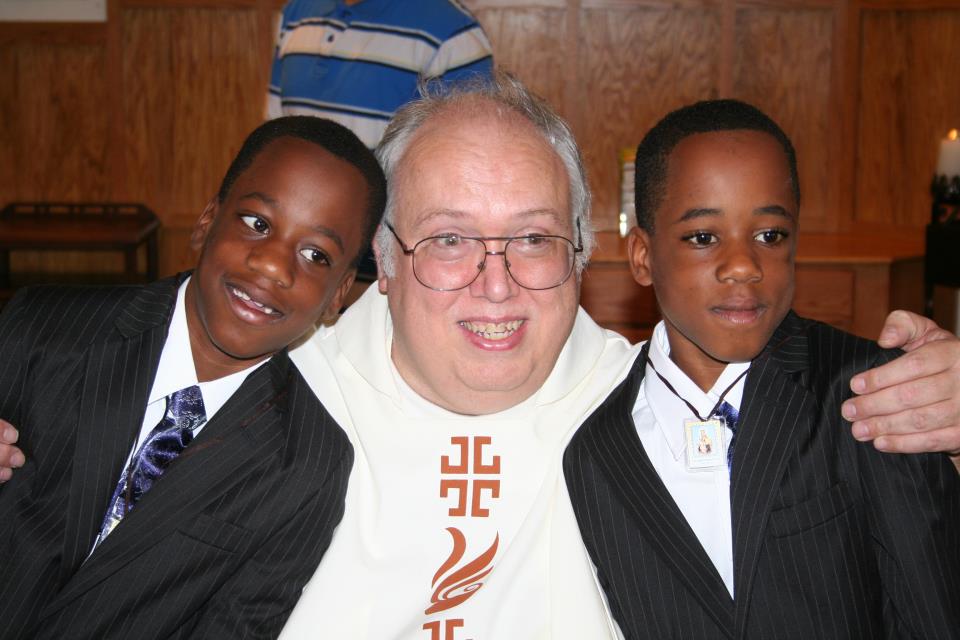
    Fr. Joseph Jenkins

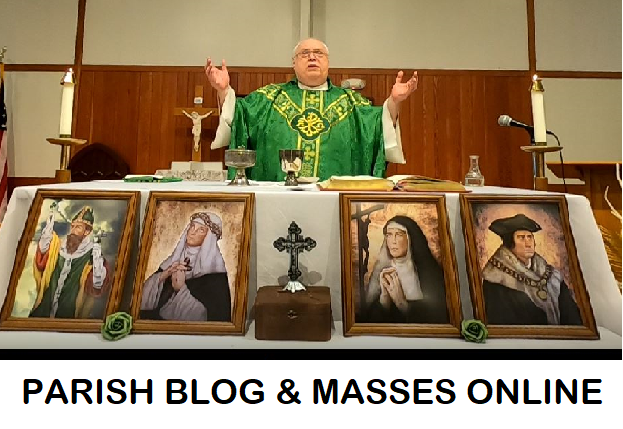
  • The blog header depicts an important and yet mis-understood New Testament scene, Jesus flogging the money-changers out of the temple. I selected it because the faith that gives us consolation can also make us very uncomfortable. Both Divine Mercy and Divine Justice meet in Jesus. Priests are ministers of reconciliation, but never at the cost of truth. In or out of season, we must be courageous in preaching and living out the Gospel of Life. The title of my blog is a play on words, not Flogger Priest but Blogger Priest.

  • Archives

  • Categories

  • Recent Posts

  • Recent Comments

    Barbara King's avatarBarbara King on Ask a Priest
    Ben Kirk's avatarBen Kirk on Ask a Priest
    Jeremy Kok's avatarJeremy Kok on Ask a Priest
    Barbara's avatarBarbara on Ask a Priest
    forsamuraimarket's avatarforsamuraimarket on Ask a Priest

Question 5 – Extraordinary Synod on the Family

5. On Unions of Persons of the Same Sex

a) Is there a law in your country recognizing civil unions for people of the same-sex and equating it in some way to marriage?

Yes, such is the case in many states and the Bishops and the Maryland Catholic Conference lost the fight in Maryland despite an aggressive Marriage Matters campaign.

b) What is the attitude of the local and particular Churches towards both the State as the promoter of civil unions between persons of the same sex and the people involved in this type of union?

There is a real culture war and increased tension between conservative and liberal churches. Prince George’s is heavily Democratic and yet the voters just barely opposed the same-sex legislation. However, the high numbers in favour in other areas like Baltimore and Montgomery County carried the day for those proposing same-sex marriages. The Black churches leaned against the proposal while the liberal white churches and reformed synagogues were in favour. The Episcopal churches also largely supported the change.

c) What pastoral attention can be given to people who have chosen to live in these types of union?

That is the question right now, is it not? The Pope’s assertion about who is he to judge has fuelled speculation of a shift in attitude in the Catholic Church toward homosexuals. My late cousin (Fr. John Harvey) was the founder of COURAGE, an organization that urged homosexuals to embrace celibate love, service to others and prayer. He took a great deal of ridicule from the renegade DIGNITY group that argued for the acceptance of homosexual acts. We can urge them to go regularly to confession and Mass. But it seems to me that we cannot rubberstamp sin. Complicating the issue, homosexuals identify themselves chiefly by their orientation. Thus they reject the “hate the sin but love the sinner” scenario. They contend that if you judge “how they love” then you judge them and that this is hate speech.

d) In the case of unions of persons of the same sex who have adopted children, what can be done pastorally in light of transmitting the faith?

Boston and Washington, DC shut down their adoption services. What else can we do? I fail to see how we might deliberately place children into homosexual and lesbian households. There may be no pastoral answer that suffices. Having said this, other organizations are going to make this happen. Lesbians are also going to get themselves inseminated (they often abort male children). If they come to us it seems that we should reach out to them with compassion and understanding of human weakness and the need for love. Life is messy and we may have to get our hands dirty. Some situations are going to defy correction or fixing. News stories of parochial schools firing lesbian teachers or expelling children with “two daddies or two mommies” only seems to make matters worse. But how should we proceed?

Question 6 – Extraordinary Synod on the Family

6. The Education of Children in Irregular Marriages

a) What is the estimated proportion of children and adolescents in these cases, as regards children who are born and raised in regularly constituted families?

This is essentially a census question. “Married straight couples with families now make up less than half of U.S. households, marking the first time the group has dropped below 50 percent since census data on families was first collected in 1940.” This is quite a jump. Out of the additional 11 million households since 2000, traditional husband-wife family households now comprise just 48 percent. The majority of homes have a single head, nonrelated persons and solitary residents. While other groupings have gone up, husband-wife homes went down by 5 percent.

Women are increasing leading households and/or living alone. The number of unmarried women heads among black Americans was 30 percent, three times higher than other ethnic groups. “Unmarried straight couples living together increased by 40.2 percent between 2000 and 2010, four times the national average. That’s still no comparison to the rise in the number of same-sex couples living together, which grew 80.4 percent over the same period.”

Today more couples cohabitate than are married and over 40 percent of all births are illegitimate. Many children are also being raised by one parent. The incidence of single African-American mothers is so high it has become a stereotype.

b) How do parents in these situations approach the Church? What do they ask? Do they request the sacraments only or do they also want catechesis and the general teaching of religion?

There are many children not receiving the sacraments or catechesis. Priests are not always receptive to such families when they request the sacraments for their children. I know priests who refuse to baptize babies if the parents are not married in the Church. It has angered them that I will do so. I admonish the family to get married and to live a Christian life. I tell them that baptism is not the end of something but the beginning. They are urged to witness and to share the faith. If they promise to try, and only God knows if they lie, then I will baptize the child. However, I will not baptize an illegitimate child at Mass, only in a separate service. Sometimes there is a residual faith that moves them to make the request. There might also be guilt. Grandparents might also be exerting pressure. This can become complicated when parents do not share the Catholic faith. What do you do when a Jewish or Moslem father threatens legal action should the mother get the child baptized or bring him to Mass for first communion? I took some heat a few years ago for baptizing a child who belonged to a lesbian couple. A homosexual neighbour donated the semen for one of the party’s insemination. This little girl was being raised with “two mommies.” The grandparents begged me to help. I talked to the ladies and made it clear that the Church could not and would not recognize their lifestyle. I then asked if they would pledge themselves to regular Sunday Mass attendance (without taking Holy Communion) and to raising their little girl in the Catholic faith? They said YES and the grandparents assisted. I did not want to punish the child for the parents’ sins. I baptized her. She has since attended Catholic schools, although the grandfather has passed away.

There are way too many cases where children attend catechesis simply so that they might get the sacraments. There is even a joke about it. “Confirmation is the sacrament you receive before leaving the Church.” The kids can be blunt about it. They want to get over with it. How do we set parents and youth afire with love for Christ?

c) How do the particular Churches attempt to meet the needs of the parents of these children to provide them with a Christian education?

Like so many questions in this survey, any answer given must stretch or correct the question. First, many parents are no longer even asking the basic questions of meaning, do not identify with any institutional church and are not concerned about the religious instruction of children. Second, those who are interested frequently want to minimize the impact and time involved with any religious formation. Everything else takes priority. Third, since only a very few Catholic students might be given entry into parochial schools, one would think that the emphasis would be upon parish catechesis. However, the opposite is true. Catholic school children are treated as the elite and the rest are the poor step-children. Millions of dollars go to the schools and scraps are given to parish programs. The Church does not invest proportional time, money or resources to children outside our parochial schools. Sacramental schedules follow the school year regardless of children who must get along with an hour a week of religion. We confirm children in eighth grade because that is when they leave Catholic grammar schools; and yet, the process is mostly mechanical regardless of preparedness. Efforts to raise the age for confirmation to tenth grade are struck down because such would take jurisdiction away from the Catholic school system and place it back in parish programs open to all children. Catholic schools are valuable but are becoming too expensive for many poor and immigrant Catholic families. This is causing an irony where well-to-do non-Catholics are attending parochial schools to bypass a failing public school system while Catholic children are excluded for financial reasons. This compromises the basic mission of our parishes and schools.

d) What is the sacramental practice in these cases: preparation, administration of the sacrament and the accompaniment?

Children from school and parish-based programs are lumped together for sacraments. No reconciliation is made of the fact that some get religion five days a week and the rest only once a week for an hour. As soon as the child reaches a certain age and grade they are given first communion or confirmation. Children get first confession and Holy Communion but then drop from religious education programs until junior high years. Young teens get confirmed and then, along with parents, disappear from the pews. I know this sounds terribly cynical but it is the common experience to which many pastors and catechists can attest.

Efforts that focus upon collaboration with parents suffer from the poor formation of adults who are neither informed nor motivated to assist with religious studies and homework.

Question 7 – Extraordinary Synod on the Family

7. The Openness of the Married Couple to Life

a) What knowledge do Christians have today of the teachings of Humanae vitae on responsible parenthood? Are they aware of how morally to evaluate the different methods of family planning? Could any insights be suggested in this regard pastorally?

When was the last time the average Catholic heard a homily on Humanae vitae? We had a Dominican priest speak about it here at Holy Family Parish a few years ago and I got a letter of complaint and another one went to the Archdiocese. The dissenters count on silence and threaten to hold back financial support otherwise. Many priests also dissent (although they are an aging group) and one told me to my face that he assured penitents that taking the pill was responsible parenthood and not a sin. I chastised him in private and when he refused to change his errant ways I reported him to the Archdiocese. What happened? Nothing, he remained in place with a good size parish and school until he died a year ago. All most people know about the teaching is what the news media and biased family and friends tell them. Kids often stop taking catechesis in eighth grade and the more complicated topics like birth control are not age appropriate. Do our marriage preparation efforts bring it up? Humanae vitae requires a basic shared appreciation of Christian anthropology: the nature and purpose of the conjugal act, a respect for the dignity of persons, acknowledgment for the design of the Creator and his providence, and the inseparability of union and an openness to procreation. A general shallowness makes it difficult or impossible for many people to comprehend the Church’s argument. While fidelity was once procured because of a profound sense of duty and obedience; such comes across today as arbitrary and overly complicated. We cannot blindly trust in a deontology toward authority when Church leadership has been compromised and maligned. High school and young adult catechesis has to be broadened and made attractive. There is just no way to communicate a cohesive understanding of human personhood and values to children and disinterested adolescents. A grade-school catechesis does not prepare Catholic adults for responding as people of faith in the modern world.

b) Is this moral teaching accepted? What aspects pose the most difficulties in a large majority of couple’s accepting this teaching?

Do we even have to ask this question? The teaching is broadly rejected. Contraception is the easy way out and now with the HHS Mandate, it is free. Ours society takes pills for everything. We are conditioned to be pill takers. NFP would demand a degree of responsibility and abstinence that some find difficult. Not only are we dealing with sexual addiction, but there is a basic disconnect between the marital act and having babies. Fertility is increasing looked upon as a disease and pregnancy is the expensive curse that results. Contraception permits irresponsibility and the treatment of bodies as toys for recreation. The dignity of the human person is undermined.

c) What natural methods are promoted by the particular Churches to help spouses put into practice the teachings of Humanae vitae?

Various forms of NFP are promoted. Critics often confuse them with the older form of Rhythm which often failed because it wrongly treated all female cycles as the same.

d) What is your experience on this subject in the practice of the Sacrament of Penance and participation at the Eucharist?

Some would throw in my face that Father So-&-So said it was okay. At one time there was some debate. However, now it is almost never mentioned. They have been told that it is all up to their consciences. Of course, the clergy who told them this neglected to mention the need for a properly formed conscience. I doubt that many would even understand the meaning of a dynamic Christian conscience. It needs to be formed in such a way that any judgment made conforms to the truth and respects the Church. The same can be said about the Eucharist. Almost everyone receives, even those in bad marriages and in serious sin.

e) What differences are seen in this regard between the Church’s teaching and civic education?

The Church still generally teaches the orthodox position, but not everywhere. I know one girls’ high school where the religious sister said that she could not formally teach them about contraception but she could pass around a picture book (for educational purposes) with all the available forms of birth control imaged. Civic education is at least more honest, even if more hostile to the faith. Not only is artificial contraception taught, but condoms and similar services are rendered to students. Indeed, my public high school (Suitland, MD) regularly had the school nurse walking kids down to the local abortion clinic during our one hour lunch break. There is also disagreement on other topics like homosexuality and what constitutes tolerance.

f) How can a more open attitude towards having children be fostered? How can an increase in births be promoted?

Such can only be promoted if Catholics themselves are willing to be a real sign of contradiction. I know one couple with five or six children who are even harassed by parents and siblings for having “too many children.” They argue the economic issue and a lifestyle they are sacrificing. They speak about the environment and accuse them of being selfish for placing such an increased burden upon an already crowded world. Instead of converting the world, Catholics are increasingly trying to live traditional values within a self-imposed ghetto of like-minded “home-schooling” friends. Meanwhile, pressure is building to force them and others to conform to the contemporary hedonism. Benefits are being stripped from those who refuse to attend traditional schools. This has often landed families and home-schooling organizations in the courts. Some jurisdictions have attempted to outlaw home-schooling or to interfere with the curriculum. Is there a way to encourage larger and more faithful families without resorting to an isolation that might later make us more vulnerable to a hostile society? It seems to me that proper formation must come along with an aggressive evangelization. The Catholic/Christian message must be given its place in the public forum. That would also include the usage of all the modern technological ways that people communicate, today.

Question 8 – Extraordinary Synod on the Family

8. The Relationship between the Family and the Person

a) Jesus Christ reveals the mystery and vocation of the human person. How can the family be a privileged place for this to happen?

While Catholic teachings are often reduced to negativity or what couples cannot do, the Church actually speaks to the dignity of persons and our calling as disciples:

“Finally, let the spouses themselves, made to the image of the living God and enjoying the authentic dignity of persons, be joined to one another in equal affection, harmony of mind and the work of mutual sanctification. Thus, following Christ who is the principle of life, by the sacrifices and joys of their vocation and through their faithful love, married people can become witnesses of the mystery of love which the Lord revealed to the world by His dying and His rising up to life again” (GS 52).

While the institution of marriage and family life has weathered many social changes; there are still wonderful and moving examples of living out our discipleship in the modern world. Our people do not deal well with disconnected dogmatism and lack the jargon for theological discourse. What they need are inspiring stories where people of faith witness the Gospel. At the same time we must be wary that there are social and political forces around us that are neither sympathetic to either divine-positive or natural law nor desirous of real dialogue or collaboration with the Church. They would force our hands and redefine for us both faith and family. The task before us is how we might effectively (and not in a belligerent manner) promote the sanctity of life, exclusive heterosexual marriage and the importance of permanence in regard to promises. Again, I would recommend testimonies where we see exemplified mutual respect and unconditional love.

b) What critical situations in the family today can obstruct a person’s encounter with Christ?

The situations are numerous but would include: lack of prayer or knowing how to pray; absence from the Sunday observance; extended 6 to 7 day work weeks, even Sunday; poor formation and general religious ignorance; negative influences which overwhelm Church formation; the substitution of technology for immediate human and family contact; a hostile media; lacklustre sermons and unhappy or disinterested priests, etc.

c) To what extent do the many crisis of faith which people can experience affect family life?

The critical situations are epidemic. Father Peyton, “the Rosary priest,” always insisted that “the family that prays together stays together.” Families need to be the “little Church” where people learn about Jesus, say their prayers and participate weekly at Mass together. Most families today are lapsed from the Sunday Mass. Parents are not reading bible stories or the tales of the saints to their children. The television becomes the new tabernacle where minds and hearts are directed away from the Lord. Preaching is never heard but thousands upon thousands of secular messages flood the senses in programing and commercials. Computers and the internet is another challenge. Hours are spent with the new media but only a few seconds or no time at all is given to prayer or in quality family life. Adding to the challenge is a general religious ignorance. The new evangelization has already focused on this concern but too many of our people have yet to be reached. Do our people really have a personal and corporate relationship with Jesus Christ? Do husbands see themselves as intimately connected to Christ as the priests of their homes? Do wives view themselves in light of the mystery of Mary and the Church? Do they see the child as a great gift and as a reflection of the Christ Child? We have our work cut out for us.

Phil Robertson & St. Paul Banned from A&E Network

A&E says it is a supporter of the LGBT community and will not tolerate a negative view about homosexuality.  Because of this, Phil Robertson is no longer welcome on the show “Duck Dynasty” and has been cast out from his television family.  But what the network is really saying is that upon this issue there can be no freedom of speech and that while gays are welcome, traditional Christians are NOT.

ph

We should not go out of our way to be mean-spirited or hateful; but the issue here is with inspired Scripture and Christianity.  The faith and God’s Word might challenge us on many subjects.  We might personally have hoped that Scripture or Church teaching were different on this or that subject.  But the creature cannot dictate to the Creator what should or should not be.

What the article should have been labeled is this:  “St. Paul Banned from A&E for His Homophobic Remarks!” Or, to take it one step forward,

MSN News – ‘Duck Dynasty’ star suspended over anti-gay comments

The Raw Story –  Conservatives rally around suspended ‘Duck Dynasty’ star

FOX News – A&E suspends ‘Duck Dynasty’s’ Phil Robertson

NBC – Catholic Governor Defends Robertson

“Duck Dynasty” star Phil Robertson has been suspended from the A&E reality series, following anti-gay remarks he made in an interview with GQ magazine.

Robertson caused controversy with his comments, in which he grouped gays with “drunks” and “terrorists,” and said that they won’t “inherit the kingdom of God.”

Asked what he considered sinful, Robertson told the magazine, “Everything is blurred on what’s right and what’s wrong. Sin becomes fine,” he said in the interview. “Start with homosexual behavior and just morph out from there. Bestiality, sleeping around with this woman and that woman and that woman and those men.”

New American Bible (Catholic Translation):

1 Corinthians 6:9-10

“Do you not know that the unjust will not inherit the kingdom of God? Do not be deceived; neither fornicators nor idolaters nor adulterers nor boy prostitutes nor sodomites nor thieves nor the greedy nor drunkards nor slanderers nor robbers will inherit the kingdom of God.”

Romans 1:26-27

“Therefore, God handed them over to degrading passions. Their females exchanged natural relations for unnatural, and the males likewise gave up natural relations with females and burned with lust for one another. Males did shameful things with males and thus received in their own persons the due penalty for their perversity.”

1 Timothy 1:8-11

“We know that the law is good, provided that one uses it as law, with the understanding that law is meant not for a righteous person but for the lawless and unruly, the godless and sinful, the unholy and profane, those who kill their fathers or mothers, murderers, the unchaste, sodomites, kidnapers, liars, perjurers, and whatever else is opposed to sound teaching, according to the glorious gospel of the blessed God, with which I have been entrusted.”

Can the Most Wicked Be Forgiven?

devils summer-picnic-outdoors-clip-art_420988

Mike asked a few questions about forgiveness that I have heard from others and are worth sharing.

1.  I have been wondering about forgiveness in general. Are there any sins so bad that they will never be forgiven, regardless of how much you repent and accept Jesus?

As long as you are alive, there is hope. If you are sorry, you can be forgiven. However, after death, our orientation and choice becomes permanent.  Of course, we are creatures of habit.  The longer we wallow in our sins, the less able and willing we might be to crawl out of the hole we have made for ourselves.  God wants to save us; but, we must also want to be saved.

2.  As an extreme hypothetical, if Lucifer suddenly repented and asked for forgiveness from God, would he be forgiven?

This is regarded as a nonsense question. It contains within itself a self-contradiction. The devil is a pure spirit. He lives outside of time. He has turned away from God. He cannot turn back. He hates God. This status is forever. Hell is more than a place. It is also a disposition. That is why the devil can say, “I am hell.” We should not feel sorry for or romanticize about the devil. We in our mortality are capricious in our choices. But the angels and the souls of the dead live in eternity. All they know is the eternal now. They are what they are. There is neither the desire nor the opportunity to change. Just as the saints are safely in their heaven forever and ever; so too are the damned fixed in their perdition, lost forever. The fallen angels define something of their angelic natures by their rebellion. They cannot be remade.

3.  Does God’s forgiveness only apply to humans, in other words?

Yes, only “living human beings” can avail themselves of God’s mercy. The demons would have none have it. Indeed, they hate the Divine Mercy, itself.

Another question came from Sarah.  She writes:

I did the Blasphemy Challenge years ago and regret it now that I’m re-discovering faith. Was it an unforgivable sin?

As long as there is breathe in your body, sin can be forgiven.  The atheists who promoted the “challenge” did not understand hyperbole and the correct reading of Scripture.  Sin is only unforgiveable when there is no sorrow for sin and repentance.  One cannot simultaneously reject God’s mercy and invoke it through contrition.  Are you sorry for your sins?  The Divine Mercy is ready and desirous of forgiving you.

A Rebuttal to Sex and the Single Priest

priest_1THE NEW YORK TIMES, December 1, 2013

Sex and the Single Priest by BILL KELLER

Given that he long ago quit the Church, it is more than disingenuous for Bill Keller to cite the ancient corpse of his own Catholicism as grounds for critiquing priestly ministry or to belittle the celibate love realized by the majority of our clergy.  He admits that he surrendered “citizenship” in the Catholic kingdom and is no longer “subject to [the Church’s] laws.  Nevertheless, he would urge change to a law that speaks to priestly character and service like no other.  It would seem to me that he forfeited long ago any right to participate in this inner-church discussion about priestly celibacy and the prospect of married priests.

The catalyst for his article is his tenuous tie to a religious sister from his school days; and not surprisingly one that met and married a priest.  She gave up her veil and he took off his collar 41 years ago.  The writer of the editorial is very sympathetic to them and their story.  He is far less so to good priests and nuns who kept their vows.  While he contends that the couple remained within the embrace of Catholicism while he did not; I would argue that both defected, although his was the more honest breech.  John and Roberta Hydar simply went from being young dissenters to elderly ones.  He remarks that they participate in a spin-off community where priests are married, same-sex marriages are solemnized and women are ordained.  In other words, theirs is a faith community which claims a false Catholic pedigree and lives a lie— women playing priests, defrocked clergy feigning legitimacy without faculties, and blessing what God has deemed as perversion.  This is his ideal for the Church, even though he has personally stopped believing.  Note how quickly the spurning of the Church’s authority leads not only to violations of discipline but also to heretical teachings and practices.

Keller categorizes faithful Catholic priests as lonely men.  Certainly the celibate must be comfortable with “aloneness,” but this is not the same as loneliness.  Married men and women are not exempt from sometimes feeling lonely.  Such feelings are part of the human condition.  The Hydars recognize that change will not come in time for them.  However, I would argue that the types of change they anticipate will never occur.  The Church will never rewrite the moral code.  Such subjectivism flies into the face of divine sovereignty.  Further, their ecclesiology is not one of humility or dialogue but of arrogance and intimidation.  They and their associates mold themselves into their own magisterium, albeit without any protection from the Holy Spirit.  Roberta employs the jargon-expression that exposes their hypocrisy.  She says that “there is no stopping Her by the institutional church.”  One can make distinctions, but there is no real division between the Church as an institution and as a community of saving fellowship.  The Pope, cardinals, bishops, priests, deacons, men and women religious and the laity are all part of a single pie.  It cannot be sliced or diced.  There is no dissection.  Separated from Peter or the Pope and we have no Church.  The true “sensus fidelium” is not found in dissenters but rather in the men and women who give religious assent and filial obedience.

Despite words and symbolic gestures, the writer is not optimistic that Pope Francis will bring about substantial changes.  Given that he means a reversal to Church stances, I think he is correct.  Ultimately the progressive voices will be disappointed.  Artificial contraception, homosexual relations and priestesses will never find acceptance in the Church of Christ.  That is not to say that they will fail in finding a home somewhere else.  There are plenty of faith institutions founded by men and swayed by the fads of the day.

But next Keller hits the nail on the head when he states that celibacy is a separate case.  As a discipline this could be changed.  It may not be retroactive and these men would still have to profess an orthodox faith.  That would exclude many of the dissenters; but, they still have the freedom to jump ship for the passing raft of Anglicanism.

He speaks about the urgency to change the discipline without any appeal to the supernatural.  Rather, he references that mandatory celibacy is driving away good prospects, that the shortage is immediate and dire, that we need clergy with firsthand experience with family issues, and that we must counteract the clericalism that has enabled and sought to cover-up pedophilia.  After colluding with an ex-nun and an ex-priest, Keller next quotes Thomas Groome, another former priest, who observes that celibate priests are viewed by most people as “peculiar” and “not to be trusted.”  He says that of the hundreds of priests he has known; only three or four have lived a rich and “life-giving” celibacy.  Of course, the problem may have been that as an unhappy priest, himself, he hanged around with other discontents.  Most priests I know are happy and faithful to their promises.  This article is biased or tilted against orthodoxy from the very beginning.

Keller then tells us that celibacy is not a doctrine (true) but blasts it instead as “a cultural and historical aberration.  Nothing could be further from the truth.  Historical studies reveal that many early priests lived in perfect continence with their wives.  The periodic celibacy of the Jewish priests became perpetual for Catholic priests.  Except for the national churches of the East, celibacy quickly became the ideal in the West.  We see decree after decree in its favor reaching a climax with the First Lateran Council (1123 AD).  Priestly celibacy was no oddity but the norm and a signature element in priestly character or identity.  It signified total dedication to God and to his Church.  His very flesh became an eschatological sign.  Celibacy was not a refusal to love but a more expansive way of loving, close to the heart and witness of Christ.  The aberration was the married priest, but without any negative judgment against the validity of his share in holy orders.  The crimes and scandals of our times are not due to celibacy but rather to a refusal to be faithful to this solemn promise or vow.  The charge that celibacy was instituted simply to safeguard Church properties against children and inheritance is a slur with only isolated substance.  The resources of the Church had to be protected, for sure, but the greater possession of the Church was the priest, himself.  Why demand celibacy only to those men who would be candidates for the episcopacy?  Roman Catholicism requires and both God and his people deserve such a single-hearted loving from all priests.

Keller says that the Church looks the other way in regard to priests who attempt marriage in parts of Africa and Latin America.  I cannot say for sure if there is a hesitance to censure these reprobates; but regardless, they are not free to marry and they place both themselves and their love-interests in mortal sin.  Why should we reward rebellion and sin?  The truth and objective morality is not open to the democratic process or human capriciousness.  This is not dissimilar from the “everyone’s doing it” argument that we so often hear in regard to fornication, cohabitation and artificial contraception.  It has also been employed in regard to self-destructive behaviors like drug use.  It is the poorest possible argument.  Indeed, it is no argument at all.

Archbishop Pietro Parolin could certainly state that priestly celibacy would be open for discussion; however, this should not imply that any change is in the offering.  Indeed, I would not be surprised if there is a tightening regarding future Catholic Anglican-use priests (particularly sons of the current married clergy) and a reiteration that the Catholic Eastern rites should not ordain married men for priestly service in this hemisphere.  Pope Francis is all about poverty; celibacy more than any other trait points to the rich man who was asked to put aside everything to follow Jesus.  Like the apostles, we leave everything and everyone else behind.  This mandated a special suffering for the married apostles.  In light of Christ’s example and the preference of St. Paul, the Church would spare its priests from struggling with divided loyalties and hearts.  It is sufficient that we have many married deacons.  There is no need to open the priesthood to married men. It is a fallacious assertion that it will turn around the shortage in vocations.  Many Protestant communities have married clergy and they also suffer from a lack of good vocations.  Married ministers have also not preserved them from scandals.

Keller returns to his dissenting couple and John (the ex-priest) says that most of those who left ministry would have stayed if celibacy had been made optional.  However, even in the Eastern model, men are married before ordination, not afterwards.  Had it been permitted, he and the thousands who left with him could still not get married and continue to serve as priests.  Note that the married Episcopalian priests who become Catholic clergy are ordained “absolutely” because Anglican orders are neither accepted by Catholicism as valid nor licit.  Priests who promised celibacy would be expected to keep their promises; just as married men would be required to keep their nuptial vows as they entered holy orders.  It would not be retroactive.  Another wrinkle in John Hydar’s contention is that a majority of those priests who left ministry for marriage have since divorced and many are remarried.  Why should we think that men who cavalierly break one promise will keep another?  In any case, John and many like him also espouse a false ecclesiology where legitimate authority is undermined.  They campaign for doctrinal heresies like priestesses.  Some of these men who left have seen their wives ordained so that they can feign the sacraments beside them.  There is no way for them to come back.  There is no viable path for them, except after a heartfelt repentance demonstrated by public renunciation of their falsehoods and their counterfeit ministry.  Such might allow them back into the pews but they would never again stand before the altar.  That ship has forever sailed.

Optional celibacy and married priests may become a future eventuality; but I hope not.  The writer laments that Roberta Hydar passed from cancer.  She will never see that day.  We can pray for her soul.  However, I would submit that most of the priests and the women for whom they left are elderly now.  It may be the wisdom of the Church that they pass away and their small pseudo-churches with them before the Church further explores this issue.  If we see optional celibacy, the candidates with be committed and obedient Catholics, homeschoolers, with large families, filled with traditional piety and practicing timeless objective morality.  They will be the right kind of men.  Their wives will accept the headship of their husbands and suffer much in knowing that their husbands belong more to the Church than to them.

The history of celibacy in the Church is no aberration.  Rather, it is a calling intimately connected with the vocation of priesthood.  It is a discipline that has doctrinal implications in the bridal imagery of Christ the groom to his bride the Church.  Every priest at the altar enters into this mystery.  Celibacy best preserves its meaning and realizes it.  Celibacy is not a man-made construct.  As with the transmission of the deposit of faith and the efficacy of the sacraments, the legacy of priestly celibacy represents a significant movement of the Holy Spirit in the life of the Church.  Christ does not fight his Church.  If a man is truly called, God will give him the gift of celibacy.

Abuse & the Fourth Commandment

Lynne asked questions about the fourth commandment, honoring your father and mother.  I offered a brief response.

1.  Father, can you kindly explain the fourth commandment in regards to parents who are abusive, not necessarily physically, but mentally or spiritually? 

2. How does one actually honor such parents?

If parents are honored then they must be honorable. No one can be obliged to suffer abuse or to be party to sin. While the commandment urges obedience to parents, it also demands that parents should be moral and nurturing in their relations with offspring.

Originally the commandment was addressed more to adults than to parents. God let his people know that we have obligations to parents as they grow older. Just as they cared for us, we should look to their needs when time and sickness should reduce their resources and abilities.

Mental and spiritual abuse should be regarded seriously, just as we would visible physical abuse. However, parents are within their rights to demand upright moral behavior and proper religious formation of the young. As long as offspring live under the roof of their parents, there is a certain level of subservience to them. That is why adults move out and start their own lives. Similarly, elderly parents who live with their children may have to tolerate how things are done differently in their homes.


Happy All Hallows’ Evening

FamilyFunNight03

I was recently involved with a FACEBOOK discussion on the topic of Halloween.  A college student was challenged by his roommate that the celebration was “evil.”  His friend was a “born again” Christian.  He asked friends to shed light on the question.

A Catholic Reflection on Halloween

Halloween in a pluralistic society means various things to different people.  Indeed, given the contemporary fascination with vampires, werewolves, witches, ghosts and zombies, it might seem that Halloween is now a year-long celebration.  But the question at hand is a narrow one, does Halloween place superstition above authentic faith?  The dialogue is not only between Christians but must confront the values and meanings imposed by a liberal secular humanism and the emergence of modern paganism.

Questions of sectarian faith aside, we have also connected Halloween to the fall harvests, thus the symbols of pumpkins, apple bobbing, corn mazes, hay rides, scarecrows, owls, etc. Such a feast provides a fun dress up for children and the giving of candy, which reinforces the joy of childhood and the solidarity of the community in caring for them.

The Tension over Halloween

Certain reformed Protestants often object to Halloween because of its apparent preoccupation with the dead and their souls.  Remember, such believers reject purgatory and prayers for the dead. Other groups deny even the soul and hell, like Seventh-day Adventists.  Obviously, as Catholics, we cannot play along with arguments focused against our holy faith.  While we might regard ghosts as souls in purgatory, in their estimation the whole business is either a fantasy or a devilish deception.  Since Christ has destroyed death, any preoccupation with it is negatively judged as “popery.”  But Catholicism stresses both a personal and a corporate faith.  The saints live in a communion with Christ and one another.  The souls in purgatory are still part of the Church.  We pray for the poor souls just as we ask the heavenly saints to pray for and with us.  The bond of our unity is Christ, himself.

The so-called pagan foundation of Halloween (as in Samhain) is a modern exaggeration. The roots are actually Christian, or Catholic. The name Halloween is a derivation of All Hallows’ Evening or Eve. Neo-pagan religion, perverse occultists, and New Age believers would attempt to make it something else.  Catholic immigrants from countries like Mexico are also introducing the similar “Dia de los Muerto.”

Some have the peculiar notion that All Hallows’ Eve is a night where spirits or ghosts enact violence.  This is nonsense!  It is the made-up stuff of the occult and/or horror movies.  It probably has roots in the pranks played by juveniles while dressed up and moving from house to house.

Puritans and/or Calvinists associated prayers for the dead with witchcraft and necromancy.  Their religious descendants are still among us.  Today when we think of Puritans, the legacy of Plymouth Rock is tarnished by the legendary Salem Witch Trials.  Religious hysteria brought about the condemnation and execution of innocent women.  Each year witches, real and imaginary, pilgrimage to Salem, Massachusetts. Tourism soars as revelers come to celebrate the holiday.  This has even precipitated seasonal tension between Wicca or naturalistic pagans and those who perpetuate the caricature of witches on brooms. I recall that the Salem Knights of Columbus hall had to cancel contracts when they realized that renters were using their facility for genuine witchcraft, not the make-believe variety.  It is precisely because of such fears that a number of Christian communities have now utterly rejected Halloween.  Of course, certain Christian cults reject any holiday or special day that is not clearly scripturally based.  Others object just to be different from Catholics or to illustrate their disdain for Rome’s authority.  That means that a number of these faith communities do not celebrate Christmas, Easter or the Sunday Observance.

The fundamentalist Christian critic insists that Halloween is a capitulation of the Christian commission.  This seems to be a bit of a stretch, at least in terms of boys dressed as cowboys and girls as princesses.  My only regret is that I would have children yearn for Holy Communion as much as they race to fill their Halloween bags with candy.

While some Protestants politely agree to disagree with Catholicism and about the celebration of Halloween; other Christian groups condemn the festive day as devilish and pass out anti-Catholic “Chick Tracts” to the trick-or-treaters.  Still other Christians, like most Catholics, see nothing inherently wrong with children dressing up and collecting candy.  Certain Catholics and Protestants will pass out alternative treats, like crosses, prayer books, religious stickers, etc.  Concerned about the direction that Halloween is taking, a number of Catholic families and churches urge the children to dress up as saints.  I recall one little boy who was quite upset when Sister at school told him that he could not dress as a monster.  When Halloween came she pulled him aside, angry with his costume.  She lamented, “I thought I told you that you had to be a saint?”  He answered, “I am a saint, Sister— I’m John the Baptist… after the beheading!”

The weekend of our Halloween Party at Holy Family Parish, a lady rebuked me after Mass for celebrating the “devil’s holiday.”  If such were true then Christians could have no part of it.  But the case cannot currently be made.  Baptist and Catholic churches both have Halloween parties and trunk-or-treat activities in their parking lots.  As Christians our strength is in the Lord.  The children of light are in conflict with the darkness.  But the game is fixed.  There may be casualties who reject the Lord but the victory over sin and death is already accomplished.  We need no longer be the devil’s property.  We have been redeemed or purchased at a great price.  Jesus dies that we might live.  Prayer and the life of charity are the essential ways that we confront darkness.  God made the pumpkins, the spiders, the bats, the owls and us.  He made candy sweet and gave innocence to children.  God gave us the day and the night. Halloween belongs to God.

The negative critic feels that Halloween gives the devil a foothold in the lives and hearts of Christians.  However, as in our recent parish Halloween party, I saw selfless volunteers running games, cooking, and distributing goodies to children out of a Christian love for youth and their families.  The devil will have nothing to do with real love.

A Christian Understanding of the Symbols of Halloween

Some authorities trace the carved pumpkin to Irish folklore about a drunk who trapped the devil in a tree and carved a cross upon it.  Having made a deal with the devil never to be tempted again by drink, Jack was denied entry into heaven.  He was given a cinder of fire in a turnip for light.  Supposedly the turnip became a pumpkin in America.  The jack-o’-lantern became a visible against compromise with the devil.  It also serves the same function as the gargoyles on the Gothic cathedrals of Europe. They became a type of sacramental to invoke divine protection.

Scary costumes, like the carved pumpkins, fulfill a similar purpose.  These were cultural or folkloric ways in which simple people sought to ward off evil.  While it may be a bit silly, the notion that people had was that evil or dark spirits would be encouraged to pass over their homes and leave their communities undisturbed.  The assumption was that the demons might be fooled by the caricatures of themselves (kids in costume) into supposing that the area was already infested or occupied.  There is no real doctrinal weight to such a practice… just a desire to be holy and not molested by evil.  Today most people just dress up for fun.

The practice of trick-or-treating probably finds its roots in All Souls Day.  There used to be processions or parades on November 2nd.  Christians would beseech “soul cakes” (dried raisin/square bread) in return for saying prayers for dead family members.  They were mostly collected by children and the poor.  Each cake represented a soul being released from purgatory.  Dressing up and singing was often parting of “souling” from house to house.

Some Christians are unhappy with the symbolism of Halloween.  I recall one person angrily upset about skulls or skeletons.  However, this prejudice fails to appreciate that the skull is embraced by Catholicism as both an immediate sign of death and of our dependence upon God. It is used by the Knights of Columbus, in depictions of the crucifixion and even decorates certain European churches.   We do not worship death but are ever mindful of the price paid for our redemption.  Further, our time in this world is short.  The theme of death or mortality is one to which we return on Ash Wednesday. “Remember, O man that thou art dust and unto dust thou shalt return.”

It is unfortunate that venerable Christian symbols should be confused by the ignorant and bigoted as satanic.  I was in one parish where a shrine to St. Peter was vandalized, not by crazy kids or occultists, but by Christian fundamentalists.  They ripped the inverted cross from the ground and argued that it was a sign of Satan and of the antichrist.  You still hear such foolishness about the upside-down cross on the back of the papal chair.  But the bigots misinterpret an ancient symbol of martyrdom.  St. Peter did not feel worthy to die like his Lord so he asked his executioners to crucify him with his feet in the air and his head toward the ground.  Critics make a mockery of an inspiring witness to Christ.

Catholics also venerate the relics of the holy dead, wear medals and scapulars, carry and say rosaries and use holy water.  These are not talismans or the accidentals for magic.  Rather, they are visible signs of our faith in the incarnate God, the God made visible in Jesus Christ.

Keep Christ in Halloween

We read in Philippians 4:8-9:  “Finally, brothers, whatever is true, whatever is honorable, whatever is just, whatever is pure, whatever is lovely, whatever is gracious, if there is any excellence and if there is anything worthy of praise, think about these things. Keep on doing what you have learned and received and heard and seen in me. Then the God of peace will be with you.”  Christians are committed to the pure and the good.

This might make us reflective of the spiritual elements attached to the secular commemoration of Halloween. We cannot buy the entire package. However, it may yet be reclaimed for Christ. The Christian effort is to Christianize the world, not to run away or hide in a spiritual ghetto. Certainly, there is innocence about children dressing up and finding delight in sweets. My growing reservation is about where adults are taking the festivity. Catholics and significant numbers of other Christians offer alternatives to trick-or-treat and spend All Hallows’ Eve at church worshipping God and recalling the witness of the saints in Christ. I agree with the criticism that there are sinister undercurrents that are seeking to hijack the expanding season of Halloween. As a child I dressed as a clown, a cowboy, an astronaut and as a superhero. It troubles me to see children attired today as characters from “R” rated horror movies. Why do they even know anything about these murderous and blasphemous characters? I am repulsed “personally” by the sleazy costumes that cast derision upon priests and nuns. Adult costumes, especially for females, increasingly celebrate vulgarity and eroticism. If Christians cannot redirect the fun away from these elements then it is true (I would agree) we might have to opt out entirely. It may be that Halloween is escalating in the direction of the occult and vulgarity.  Maybe we as good Catholics and Knights need to campaign for Halloween as we would for Christmas?  We also need to keep Christ in Halloween.  All Saints’ assures us that we can have a share in Christ’s life and in the kingdom.  All Souls’ reminds us that while we are sinners, God is infinitely merciful.  What he has started in us, he will finish.

Priestly Celibacy: Relating to Women

How should the celibate priest relate to women? This question is not simple given that there is an active national debate about how men behave (or misbehave) around women. Some guys treat every woman as chiefly a sexual object. We see this in the proliferation of pornography which focuses upon the desires of men. The sin of fornication is increasingly regarded as a necessary rite of passage and the way to measure the success of the dating experience. Cohabitation now statistically outnumbers married couples. Adultery is a chief cause for separation and divorce. Women complain about harassment, gender stereotypes and abusive and/or forced seduction. It is into this environment that celibate priests are called to respect women, who usually make up the majority of their congregations; however, there can be no romantic associations.

As an effort to safeguard or to insure celibacy, a number of priests in the past were trained to keep women at a distance. This did not mean that they hated women; however, they may have looked upon females with suspicion and tagged them as dangerous. It has been known that some priests have narrowed their friendships to other priests or a few men while treating their flocks (men and women alike) as souls to save but nothing more. We might say that they have attempted to strip gender from the perception of their congregations; but in truth, they have endeavored to neuter themselves. I have never known it to work well.

Priests must acknowledge they are men, not robots. Men relate to women differently than they do to other men. This does not have to be a bad element. Women can bring out a sensitive and courteous side in men. Look at how gentlemen treat their mothers and daughters. Women by their witness and interaction can assist the priest in extracting or bringing to the surface his sympathetic side and gentleness. The failure to properly acknowledge and treat women will result in a coarsening of priestly manners. He becomes distant, authoritarian and legalistic.

While celibate, priests are increasingly surrounded by women. Women are both employees of the Church and volunteers. I am not speaking here simply of housekeepers and cooks. Married and single women are catechists, youth ministers, liturgical musicians, readers, extraordinary ministers of Holy Communion, altar servers, secretaries, parish business managers, parish associates, etc. This is in addition to traditional service in altar guilds, rosary groups, sodalities, etc. Women work and are present in rectories, parish schools, and in our churches (both in the pews and assisting the priest at the altar). Most parish priests find themselves more surrounded by females than males. Women among the laity have increasingly taking up the slack from the diminishing numbers of women religious, although nuns and sisters will always have an important part to play in the life of the Church. I make these lists to demonstrate that the priest does not and cannot escape the presence of women. They are integral components of the Church. The celibate priest, as the Church’s man, must be comfortable working with and for them. They will be his coworkers and friends. Having said all this, he should be ever cognizant of the boundaries that must never be crossed. He has to be prepared to exhibit a certain distance or even coldness if a certain boundary line of intimacy is skirted. Some women will fall in love with priests. He must let them know by word and manner that he is not interested. Priests will also find themselves falling in love; it is here that clergy need to be reminded of their celibacy so as to create the necessary space for fidelity in their vocation. His priestly work and the life of prayer and worship are his shield from falling. Nurturing his friendships within the presbyterate is also encouraged; there is a certain solidarity and understanding among men who share the same life and dedication to the Lord.