• Our Blogger

    Fr. Joseph Jenkins

  • The blog header depicts an important and yet mis-understood New Testament scene, Jesus flogging the money-changers out of the temple. I selected it because the faith that gives us consolation can also make us very uncomfortable. Both Divine Mercy and Divine Justice meet in Jesus. Priests are ministers of reconciliation, but never at the cost of truth. In or out of season, we must be courageous in preaching and living out the Gospel of Life. The title of my blog is a play on words, not Flogger Priest but Blogger Priest.

  • Archives

  • Categories

  • Recent Posts

  • Recent Comments

    Anonymous's avatarAnonymous on Ask a Priest
    Michael J's avatarMichael J on Ask a Priest
    Jeremy Kok's avatarJeremy Kok on Ask a Priest
    Mike Zias's avatarMike Zias on Ask a Priest
    Jeremy Kok's avatarJeremy Kok on Ask a Priest

The Devil Dances on the Graves of Priests

suicide

I have this mental image of the devil dancing wildly on the graves of priests? Why is this? Do the eyes of the soul see the true agent behind our many troubles? Within a lifetime we have witnessed a terrible collapse of the Church… almost unbelievable scandal, massive defection, the end of a society with Christian values and a priesthood that has gone from being deeply revered to widely scorned. The character John Adams in the musical 1776 sings, “Is anybody there? Does anybody care? Does anybody see what I see? … Come what may, come what may– Commitment!” Many good priests share such sentiments, albeit for the Church. We will continue to love and care for our people. We will pray for the children who were catechized and forgot us. We will do our duty.

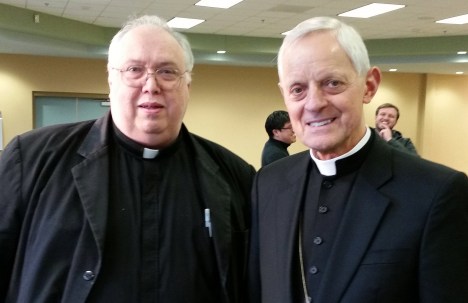
Cardinal Wuerl at Deanery Meeting

joedonald

Cardinal Wuerl attended a meeting of all the priests in the PG County Deaneries. He took this photo with me. Father LaHood was our gracious host at St. Mary of the Assumption.

Responding & Praying for a Critic of Catholicism

12141688_10153221335963435_4058820126349508462_ndf

PAUL:

You know Father Joe, you sound a lot like the secular scientist Richard Dawkins who if you don’t just take his word as fact without any REAL evidence, then “you’re stupid!”

You have only church practices to back your claim about Mary’s holiness.

If I’m not wrong, doesn’t God say, “There is none righteous, not a single one”? Doesn’t he say, “All have fallen away”?  Doesn’t he say, “All have fallen short of the glory of God”?  Now I’m sure you’ll have a very convincing argument for Mary’s not being included there but is that based on biblical teachings or the churches practice?

What did Christ day about the teachers of the law? Be careful to judge others Father Joe lest you be judged likewise!

There’s only 1 Judge I know. I’d appreciate you not praying for me thanks as you’ll probably go in front of a statue of Mary to do so. It’s no wonder Jesus called the teachers hypocrites!

P.S. If you can’t reply without so much anger in you, maybe it’s time for you to shut down your blog eh? FATHER and LEADER of the flock!

FATHER JOE:

Ignorance is not the same as stupidity, or at least it need not be.  We can be properly informed and grow in the truth.  Dawkins negates any philosophy or religion that falls outside of his limited scope for truth.  Dawkins does not deny all evidence, but he does throw out much of the richness that belongs to human culture and genius.  I throw nothing out.  We can be informed through science, philosophy and religion.  We can be edified by mathematics or a poetic sonnet.  We can learn from dissertations or from fanciful myths.  I believe that God speaks to us in natural law and in his revealed Word.  How is it then that I am like Dawkins?  Indeed, would you not be the one to show him essential agreement and kinship in discounting Sacred Tradition and the teaching role of the Magisterium?

Actually, in regard to Mary’s holiness, we have the testimony of Scripture, as I have earnestly attempted to demonstrate to you.  You are the one who would question Mary’s divine election as the immaculate Mother of our Savior.  Why would you question God’s providence or his power to give his Son a pure vessel through which to enter our world?  Original sin was passed to us through human generation.  It would make no sense for Christ as the All Holy One to take his humanity from sinful flesh.  The privilege of the Immaculate Conception was not simply to honor Mary but to protect the divine dignity of Jesus Christ.  Mary is hailed by an angel as “full of grace.”  She is the most favored daughter of God chosen to be the holy Mother of the Messiah.

Yes, all have fallen short of the glory of God.  Yes, we are sinners.  It was precisely for this reason that Mary calls Jesus her Savior.  However, in her case there is prevenient grace.  Mary is preserved from sin by the same saving Cross that transforms us through faith and baptism.  Mary does not save herself.  Jesus does for her what he will do for us who believe in him.

The testimony of Scripture comes to us through a living Church.  It must be understood within the context of the tenets and worship of that faith community.  Your rejection of the Church and her traditions results in numerous false interpretations.  However, I doubt you will appreciate how the disjointed interpretations you give are severed from any kind of logical or authentic hermeneutics.

Our Lord criticized the Pharisees and Scribes as blind guides and hypocrites, but he did not deny that they received their authority from God.

“The scribes and the Pharisees have taken their seat on the chair of Moses. Therefore, do and observe all things whatsoever they tell you, but do not follow their example. For they preach but they do not practice” (Matthew 23:2-3).

The Pope sits in the cathedra or chair of St. Peter, to whom our Lord gave the keys of the kingdom and renamed as the ROCK upon which he would establish his Church.  The Magisterium is composed of those bishops who teach in unity with him Priests are also given apostolic orders and are charged to teach what the Church teaches.  Thus, you may not think much of me, but if you were consistent, you would take seriously to observe what the Catholic Church teaches.  Instead, you ridicule the messengers and reject the message.  If you do so from ignorance then you may still be open to Christ’s mercy.  If you do so from enmity, then the warning about judgment also applies to you.

Christ will judge souls, but the teaching Church and her ministers are charged to proclaim the truths of faith.

Why would you reject my offer of intercessory prayer for you?  Is it just because of an expressed malice against Mary?  I fear that a proper discernment of spirit would disclose a poorly disguised diabolical oppression.  On this account I will redouble my efforts.

“Dear Lord Jesus, you made yourself a slave so that men might be free.  You were renounced by the crowd so that we might be claimed by God as his children.  You were mocked by the soldiers and crowned with thorns all so that we might be made members of your kingdom.  You suffered the scourging and passion so that a broken world might be healed.  You died on the Cross so that we might live.  Dear Jesus, you are the SAVING NAME, and we ask you to open the eyes and to soften the heart of Paul who has commented on this Blog.  Let him know the love you have for him.  Forgive his sins and join him ever closer to the family of faith.  We offer this prayer in Jesus’ Name, the one who is the Son of God and the Son of Mary.  Amen.”

Again, I will extend to you the Peace of Christ.

Finding Hope & Not Despair in the Synod

I am troubled that otherwise orthodox Catholic critics are suggesting that the Synod on the Family in Rome will signal a fall into apostasy.  While there may be a number of wrong-thinking priests and bishops, I have confidence that nothing of the Church’s doctrinal integrity will be sacrificed to pastoral expediency.

While the deposit of faith is both fixed and develops, there can be no revocation of objective truths.  Those couples living in second marriages or irregular unions cannot be uncritically invited to receive Holy Communion.  They may come up without our invitation; but we cannot encourage people to commit either mortal sin or sacrilege against the Eucharist.  No degree of penance would suffice unless there is genuine repentance and a firm amendment of life.  Any projected change in discipline or a so-called pastoral provision cannot justify regularizing church life for recalcitrant adulterers.

Despite the derision by angry critics that many priests are spineless wimps, most men in ministry are dedicated and courageous in their service.  Priests who seem to turn a blind eye to scandalous behavior are often in the dark or uncertain about the marital status of others.  The opposite may also be true.  Their apparent passivity may consist of knowing too many facts about which they are duty bound to keep within professional secrecy and/or the seal of Confession.  A priest may do nothing by word or gesture or intimation based upon what he learns in the sacrament of Penance.  This is the case even when absolution is withheld.  Such a predicament does not prevent others from condemning faithful priests who are already suffering when they must treat adulterers, active homosexuals and child-murderers as if they are Catholics in perfectly good standing.

Of course, it is no wonder that many of the laity might expect churchmen to invite blasphemy against the Eucharist when ministers are generally forbidden by their bishops to refuse the sacrament to others for fear of negative publicity or scandal.  We have witnessed for many years the tension of various pro-life groups with certain U.S. Bishops demanding that they turn away from the altar pro-abortion politicians and others who enable the murder of the unborn.  This conflict has yet to be resolved and continues to alienate those who should be on the same side and working together.  In any case, there is a vast difference between a general passivity and a universal invitation.

The Holy See and the Church are servants of the Word, not its master.  The words of St. Paul about fornicators, homosexuals and adulterers cannot be stripped from Scripture or from the constant tradition of the Church.  Similarly, the notion of the “closed-table” finds it roots in St. Paul and the censures of the early Church:  “And therefore, if anyone eats this bread or drinks this cup of the Lord unworthily, he will be held to account for the Lord’s body and blood. A man must examine himself first, and then eat of that bread and drink of that cup; he is eating and drinking damnation to himself if he eats and drinks unworthily, not recognizing the Lord’s body for what it is” (1 Cor. 11:27-29).  While there are different theologies in the Church, they must speak to the same doctrinal truths.  Disciplines and pastoral practices are not geared to circumvent doctrine but to help express and realize them.

What can we expect from the Synod on the Family in Rome?  Compromise would precipitate acceleration in the breakdown of marriages.  I foresee a reaffirmation of the timeless faith with suggestions to redouble our efforts to welcome and bring healing into the lives of our people.  Let us trust our bishops.  Let us work with our people and not against them.  Let us put aside the silly sensationalism in the news and give the living Church the opportunity to teach and minister as she should.  There will be discussion and debate in Rome.  But we have confidence in the Holy Spirit and the Magisterium.  The process can be messy but so is life.  The truth will prevail.

Synod of the Family: Revisionist Proposals, part 2

men_1_sm

Cardinal Christoph Schönborn of Vienna echoes a few points that will no doubt be discussed at the upcoming Synod on the Family.  (No disrespect is intended to this brilliant man who was the secretary that helped assemble the universal catechism.)

A stable gay relationship is “an improvement” over temporary relationships.

This position reminds me of what my old professor taught at CUA many years ago. It was wrongly argued that Fr. Charles Curran supported the promiscuous lifestyle that was lived out by so many homosexuals. In fact, he only argued, (while still wrongly), that the Church should support homosexuals who lived out faithful monogamous relationships. The difficulties I saw were the twofold condemnations from both natural law and divine positive law. There is no Scriptural qualification that same-sex behavior is okay if not promiscuous. Today, no matter what label we might impose upon it, we have no authority to change reality or what actually constitutes marriage. How then is a stable relationship better? Is it better concealed? Does it inhibit the transfer of deadly viruses? Is there a value in how it mimics heterosexual bonds? Spiritually, I am concerned about the forgiveness of sins and saving souls. Given that homosexual acts constitute the matter of mortal sin, is one not damned with either one partner or dozens of partners? Jumping from one ledge to another on a mountainside might make an appropriate analogy. One might miss the ledge by five feet or one inch, but the resulting fall is the same. Where is the improvement?

Sharing a life, “they share their joys and sufferings, they help one another. They took an important step for their own good and the good of others, even though it certainly is an “irregular” situation in the Church’s eyes.

The irregularity is not simply in the eyes of the Church. This makes the situation sound like it can be corrected with the quick change of an ecclesial rule or guideline. The problem is too deep for such a shallow response.

A shared life might precipitate a degree of needed solidarity and intimacy, but is that enough? I remember a college reporting to alumni that they had a very loving and supportive community. However, this did not dispel fears that the school had lost its Catholic identity. The ancient pagans had instances of wonderful comradery and unity; however, this affiliation was not Christian. Are we not facing a similar situation here?

I have known homosexuals who struggled with their sexuality and were discrete about their disorientation. They regularly went to Confession and those with partners tried earnestly to make the walk of faith with their special friend. Sometimes they failed. But they respected the teachings of the Church and loved the Lord. I knew men and women who took care of their beloved friend even as he or she was dying from diseases like AIDs or cancer. They lamented militants spitting the host into the face of churchmen like the late Cardinal O’Connor in New York. They retreated with disgust from vulgar exhibitions in rallies and parades. They were faithful to love while knowing that there was something broken in their attractions and genital life. Many joined Fr. John Harvey’s COURAGE and sought to share love in celibate service to others and in prayer to God. I lament that we seem to pamper those who demand approbation while neglecting these heroic men and women.

While a negative verdict from the Church about homosexual acts remains, “the Church should not look in the bedroom first, but in the dining room! It must accompany people.”

The negative verdict arises from the sources of revelation. How should one surmount a consistent teaching from both the Old and New Testaments that later finds confirmation in two thousand years of Christian tradition? Until recently, homosexual acts were criminalized in many places. This assertion about accompanying people sounds nice, but are we all walking in the same direction? I would not want to go to hell with other sinners just to appease the niceties of toleration and good manners.  Would the good Cardinal make the same argument if we were discussing polygamy and mistresses? What about those who promote promiscuity, prostitution and orgies? What about the practitioners of bestiality, pedophilia and pederasty? No, I suspect then he would want to put his foot down. I am left wondering.  Could it be that some churchmen just do not believe that homosexuality is all that serious a sin? Our Lord’s house or mansion has many rooms; what we do matters in all the rooms of his house!  No one should be excused from the need for contrition and repentance. Do we really want to throw away this vital component to heralding the Gospel and transformation in Christ?

Pastoral accompaniment “cannot transform an irregular situation into a regular one, but there do exist paths for healing, for learning.”

This leaves me befuddled. He says the irregular situation remains but there are “paths for healing, for learning.” What does this mean? How will making them comfortable with error bring them to the truth?  Or is he addressing the Church?  Is the Church supposed to learn that we were mistaken about a basic issue of human sexuality? Is it wrong to expect the homosexual or lesbian to embrace a non-genital way of loving? Are not our ears being bombarded by the same deviant sex advocates who are demanding acceptance and approval, not just toleration? When asked about the issue, Pope Francis responded, “Who am I to judge?” What he meant was that only God can judge the individual soul. However, as the Vicar of Christ, he can affirm (as he did recently) what is viewed as right and wrong by our Lord and his Church. As sinners, we all need to grow in the truth and to experience genuine forgiveness and healing.

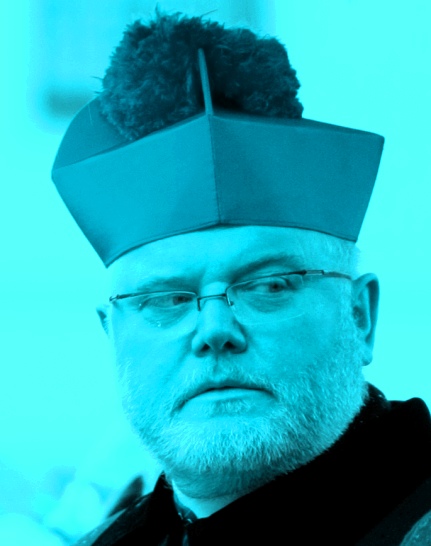
Cardinal Reinhard Marx

Time passes and the old defenders of the faith and the dissenters are passing from the world. Today there are new faces about whom we must become familiar. One of these is Cardinal Reinhard Marx. He is now on everyone’s radar. What are we to think?

Why do I feel that high-ranking dissenters are seeking to hijack the Church? The mission of the Church is that of Christ: to preach the truth and to bring people to repentance and faith. We should neither excuse sin nor allow people to be deceived as to their standing before almighty God. We are called to be a sign of contradiction to the world, not to pamper it. This twisted business about “the family” makes me angry. There I have said it.

maraz

German Cardinal Criticizes Roman Catholic Church for Negative Tone Toward LGBT People

German Catholic Church Has A Lot Of Money – As In The Diocese of Cologne Might Be Richer Than The Vatican

Cardinal Marx on Francis, the Synod, Women in the Church and Gay Relationships

Divided bishops water down welcome to gays and the divorced

King Henry VIII is Guilty as Charged

142712494785399

P. MCCOY: Catholics should quit telling the lie that Henry VIII wanted a divorce; he wanted an annulment because he WAS married to his sister Catherine.

FATHER JOE: Since an annulment was not possible, what you are arguing is semantics. The fact remains that he put her aside and many others as well in his search for a fertile mate that would give him an heir and satisfy his lusts. Further, she was not his sister but the widowed wife of his brother Prince Arthur (he died five months into the marriage).  In other words, she was his former sister-in-law.

P. MCCOY: It doesn’t matter what she said; people have all kinds of reasons to lie-hers was a unhealthy fondness for her brother-in-law. You had an unscrupulous Pope giving her a dispensation to marrying her brother instead of persuading her to return to Spain and marry a non-relative, live as an lay widow, or enter the monastic life.

FATHER JOE: Actually, it was a marriage that the British crown initially wanted as it shored up tensions with Spain. Catherine was more the pawn here. The fact remains that the King wanted a male heir and that he wanted to advance the standing of his mistress Anne Boleyn and the rights of succession to any sons she might give him.

P. MCCOY: The Pope who refused the annulment request did out of fear of being slaughtered by Catherine’s nephew Emperor Charles V than having the courage to correct a prior mistake.

FATHER JOE: Annulments can be given or withheld for many reasons, but in this case fear or no fear, the Church acted rightly. Catherine was his wife. This was more a matter of divine than Church law. The case made was deemed insufficient for an annulment and no one deserves such Church intervention. In this case, it would have corrupted Church authority and sent Catholicism down the slippery of slope of scandal with all the so-called wives or paramours of Henry VIII.

P. MCCOY: But had Henry VII been more assertive, he would have sent his daughter-in-law on the first ship back to Spain right after Prince Arthur’s funeral. He would have then immediately arranged for a marry by proxy for Henry with a princess from various Catholic kingdoms: German city/ provincial states, choices of the Italian city states (a Medici or a d’Este would have made excellent English Queens!), Norway, Denmark or Sweden-OR, in a tribute to the illustrious Henry V, he could have married a French princess of the House that England was having friction with at the time. A Navarre princess could have made a good union too.

FATHER JOE: Science fiction might have us delight in alternative histories, but such armchair speculation really has little meaning in objective reality. It is like saying that Judas might have made a great saint had he repented instead of despairing and committing suicide. It makes for a quaint aside but the errant apostle is none the better and the fires of hell remain just as hot. No matter what prospects the reign had in Henry VIII’s regard, the trajectory of history remains unchanged: he became increasingly self-obsessed, exploitive of resources and Satan’s minion against the monasteries and the true Church.

P. MCCOY: Without the threat of incest gad flying him and realizing that he was not “god”, Henry VIII probably would have accepted the idea of a Queen ruling England after him. The Medici line would have raised up an exceptionally savvy and politically experienced and well supported by her Medici relatives English Queen!

FATHER JOE: Henry VIII had a contemptable view of women and would never have been satisfied with a woman on the throne. His life readily illustrates that females were merely a means to an ends— to satisfy the lust of his loins and to act as hens for his eggs. When the chicken failed to put out, he deemed it was time to have its head removed.

A Few Thoughts about the Synod Relatio & Debates

My head is spinning about some of the things that are being seriously argued at the Vatican’s Synod on the Family. I am already concerned that a Commission was established to look at streamlining the process for annulments even prior to the start of the Synod. It seems to me that if such were a concern then the bishops would then request the Holy See to do so. Will the documents which will be formulated reflect the majority view and Catholic tradition or will there be attempts to steal the show for the minority progressives?

synod-of-bishops

What is it about this new Synod document that has critics saying it signals a revolutionary shift in favor of same-sex couples? It is acknowledged that this “relatio” urges clergy to make “fraternal space” for homosexuals. But what does it say? We read:

“Homosexuals have gifts and qualities to offer the Christian community: are we capable of welcoming these people, guaranteeing to them a further space in our communities? Often they wish to encounter a Church that offers them a welcoming home. Are our communities capable of proving that, accepting and valuing their sexual orientation, without compromising Catholic doctrine on the family and matrimony?”

Are we reading the same document? All I see are questions. Hopefully they are not rhetorical. Do we eject gay brothers and sisters from our churches? No we do not. Can we invite them forward for Holy Communion? Yes, provided that they maintain chaste and celibate lives. Can we affirm or value their sexual orientation? No, we cannot do so. Such would devalue the true meaning of marriage and human sexuality. We cannot move away from the assessment of disorientation or that same-sex carnality is mortal sin.

As a so-called case-in-point of past intolerance, the news contrasted this development with the story of Barb Webb who was fired from a Catholic school when she and her partner announced her pregnancy. Similarly, her partner, Kristen Moore was asked to resign from her post as a music director at a Catholic parish. The secular media glossed entirely over the moral issues that extend beyond same sex unions, like the freezing of embryos, donated semen and IVF technologies. All these elements are reckoned as moral evils and sinful.

This relatio is being interpreted precisely as Cardinal Kasper would suggest. The doctrinal truth is eclipsed, if it remains, for the sake of a pastoral provision or slackening of discipline. The same reasoning he uses for divorced and remarried couples is being applied to active homosexuals. I find this reckoning very disturbing. Discipline can be distinguished from doctrine but discipline is always at the service of doctrine. There are doctrinal elements that cannot be ignored. It is contradictory to say that gay acts are sinful and then to value, in any way, homosexuality. It is contradictory to say that marriage is a lifelong institution and that divorce is a sin, while inviting couples to receive Holy Communion who are living in adultery. The truths of Scripture are clear and we must always be at the service of the truth on every level: doctrinally, canonically and pastorally.

The document recognizes that same-sex couples live lives where they render “mutual aid to the point of sacrifice [which] constitutes a precious support in the life of the partners.” Critics are saying that this is a crack in the door that may one day lead to full acceptance. I would say that this is not the case. The statement is one that reflects the immediate horizontal human condition but says nothing about the vertical supernatural dimension. It is a mere statement of fact that these couples support each other in their day-to-day lives. However, this does not mean that they are in right standing before God. Mortal sin is still mortal sin. I suspect that there are many “nice and pleasant” people who make good neighbors and yet will suffer damnation and hellfire. We are not saved by simply being nice but by being faithful and obedient to God. The Church can relax certain disciplines but she cannot change divine positive law. My fear is that tolerant language might enable or encourage more sinners to remain within their sins. The Church must be a place for saving truth and grace. She should never be an enabler for sinful lifestyles or blasphemous acts like receiving the Eucharist while ill-disposed or in mortal sin. This document does NOT acknowledge the “holiness” of such couples as was suggested in the Huffington Post article by Antonia Blumberg (1/13/14). It simply asks if we might tolerate with passivity and silence the situation of people living in sin.

I cannot buy this application of any “law of graduality.” No matter how slow might be the movement to holiness; the Church should never compromise on the fullness of truth. Confessors can exhibit great understanding and compassion for married couples who use artificial contraception, with the hope that they will eventually come around to the Church’s understanding of human dignity and the full value of the marital act. It is here that I can well appreciate “graduality.” However, this is not the same as cohabitating, adulterous and same-sex couples. They have no right to a shared bed.  In their regard, where there is neither contrition nor amendment of life, absolution must be withheld. Similarly, while they should attend weekly Sunday Mass, they should abstain from taking Holy Communion. The priest will not usually embarrass people in public but he fails his sacerdotal charge if he does not challenge such couples in private.

This law or better yet, theory of graduality was very much the rationale for the “open table” of Anglicanism. It was hoped that this welcoming to receive the Eucharist would draw others into greater unity. Contrastingly, the “closed table” of Catholicism sees Holy Communion as an expression of an ecclesial unity that is already realized. This is representative of the ancient tradition wherein heretics and grievous sinners were denied the sacrament or even excommunicated. The Church’s censure of interdict would also illustrate this posture. One had to be properly disposed and graced to receive the sacrament. Anything less was judged as blasphemous and scandalous. One should not pretend there is a union that is not truly there. This resonates with the current debate about divorced and remarried couples as well as with active homosexuals. We cannot allow a false compassion to tolerate normalization for the sake of public acceptance while the pastoral accommodation is deceptive to the doctrinal truth and the spiritual state of souls before God. We can move away from using pejorative biblical terms like “sodomites” and “adulterers,” but the underlying reality will remain the same. Does this really serve the summons to repent and believe?

If we change the discipline for those in serious sin and the intrinsically disordered, would we not logically have to open up Holy Communion to others (particularly Christians) who might be in ignorance of the full ecclesial reality but who live moral lives? It is a real can of worms and I would prefer to leave it closed. But that is my opinion.

Relationship between Discipline & Doctrine

It is unusual to hear a debate between bishops aired in the press and public forum. Continue to pray for all the participants in the Vatican Synod of the Family.

Cardinal+Walter+Kasper-300x229

Cardinal Kasper:

“Nobody denies the indissolubility of marriage. I do not, nor do I know any bishop who denies it. But discipline can be changed. Discipline wants to apply a doctrine to concrete situations, which are contingent and can change.”

archbishop_wuerl_elect

Cardinal Wuerl:

“The reception of Communion is not a doctrinal position. It’s a pastoral application of the doctrine of the Church. We have to repeat the doctrine, but the pastoral practice is what we are talking about. That’s why we are having a synod. Just to repeat the practice of the past without trying to find a new direction today is no longer tenable.”

“That’s going to be the challenge, and I think that’s what the Holy Father is calling us to do. He’s saying, we know this, we believe this, this is what is at the heart of our teaching. But how do you meet people where they are? And bring them as much of that as they can take, and help them get closer?”

235148-cardinal-timothy-dolan

Cardinal Dolan:

“When we talk about some time of renewal and reform of our vocabulary, we don’t mean to soften or to dilute our teaching, but to make it more credible and cogent,” he said. “It’s not a code word for sidestepping tough things; it’s more a methodology.“

Cardinal_Burke

Cardinal Burke:

“There can’t be in the Church a discipline which is not at the service of doctrine.”

“The reformers were saying: ‘Oh, we’re not questioning the indissolubility of marriage at all. We’re just going to make it easy for people to receive a declaration of nullity of marriage so that they can receive the sacraments.’ But that, is a very deceptive line of argument which I’ve been hearing more now in this whole debate.”

cardinal_pell

Cardinal Pell:

“As Christians, we follow Christ. Some may wish Jesus might have been a little softer on divorce, but he wasn’t. And I’m sticking with him.”

“We’ve got to be intellectually coherent and consistent.  Catholics are people of tradition, and we believe in the development of doctrine, but not doctrinal backflips.”

“Communion for the divorced and remarried is for some — very few, certainly not the majority of synod fathers — it’s only the tip of the iceberg, it’s a stalking horse. They want wider changes, recognition of civil unions, recognition of homosexual unions. The church cannot go in that direction. It would be a capitulation from the beauties and strengths of the Catholic tradition, where people sacrificed themselves for hundreds, for thousands of years to do this.”

muller_CNS

Cardinal Müller:

“One cannot declare a marriage to be extinct on the pretext that the love between the spouses is ‘dead.’  Indissolubility does not depend on human sentiments, whether permanent or transitory. This property of marriage is intended by God himself. The Lord is involved in marriage between man and woman, which is why the bond exists and has its origin in God. This is the difference.”

Commission to Reform Annulment Process

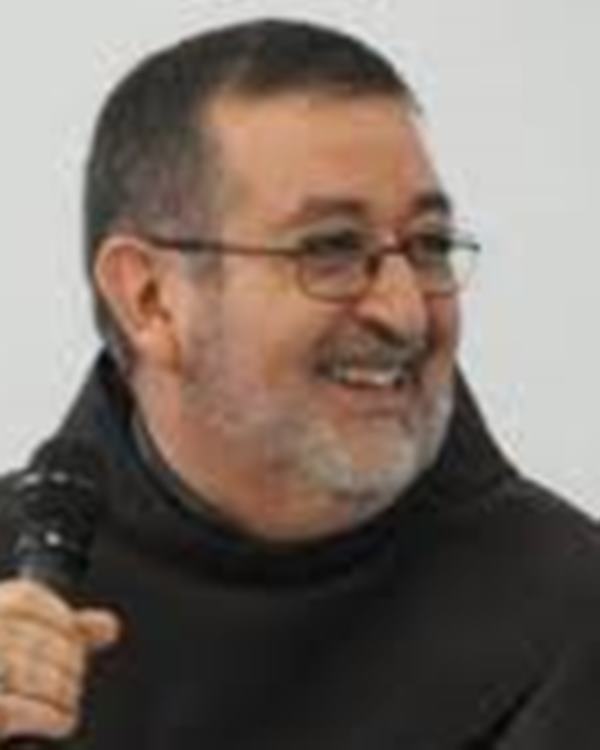
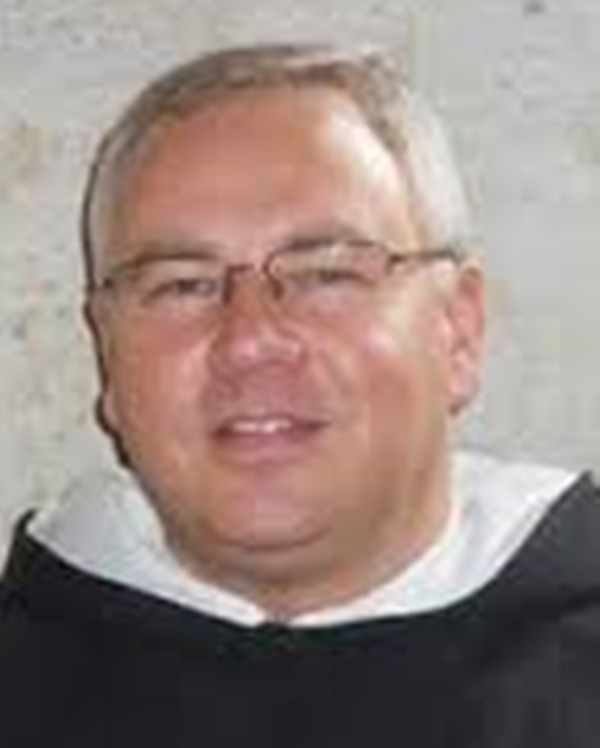
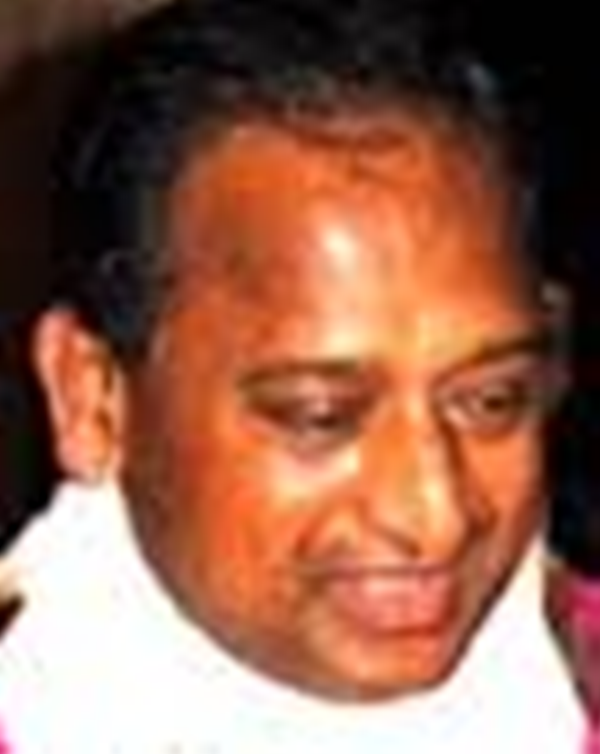
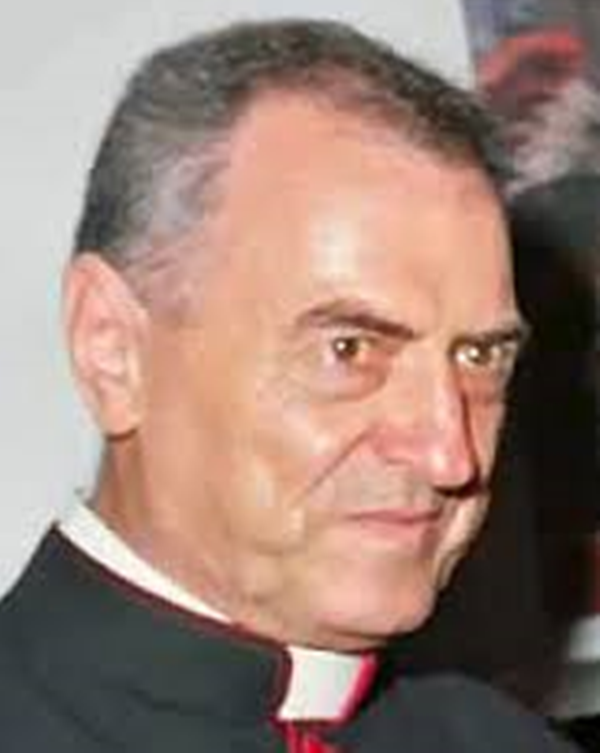
Alejandro W. Bunge Archbishop Luis  Francisco Ladaria Ferrer, SJ Bishop Dimitri Salachas

Cardinal Francesco Coccopalmerio Fr. Jorge Horta Espinoza, O.F.M. Konštanc Miroslav Adam, O.P.

Leo Xavier Michael Arokiaraj Msgr. Pio Vito Pinto Msgrs. Maurice Monier

 Nikolaus Schöch, O.F.M. Prof. Paolo Moneta

FROM LEFT TO RIGHT  (Notice they are mostly clerics and no women.)

Row 1 – Msgr. Alejandro W. Bunge / Archbishop Luis  Francisco Ladaria Ferrer, SJ / Bishop Dimitri Salachas

Row 2 – Cardinal Francesco Coccopalmerio / Fr. Jorge Horta Espinoza, O.F.M. / Fr. Konštanc Miroslav Adam, O.P.

Row 3 – Msgr. Leo Xavier Michael Arokiaraj /  Msgr. Pio Vito Pinto / Msgr. Maurice Monier

Row 4 – Rev. Fr.  Nikolaus Schöch, O.F.M. / Prof. Paolo Moneta

Pope Francis Establishes Commission to Reform Marriage Annulment Process

(Vatican Radio) The Holy See Press Office on Saturday announced Pope Francis has decided to establish a Special Commission  for the study of the reform of the matrimonial processes in canon law. The decision was made on August 2, 2014.

This Committee will be chaired by Msgr. Pio Vito Pinto, Dean of the Roman Rota.  The other members are:  and will be composed of the following members: Cardinal Francesco Coccopalmerio, President of the Pontifical Council for Legislative Texts; Archbishop Luis  Francisco Ladaria Ferrer, SJ, secretary of the Congregation for the Doctrine of the Faith; Bishop Dimitri Salachas, Apostolic Exarch of the Greek Byzantine Catholic Church; Msgrs. Maurice Monier, Leo Xavier Michael Arokiaraj and Alejandro W. Bunge, Prelate Auditors of the Tribunal of the Roman Rota; the Rev. Fr.  Nikolaus Schöch, O.F.M., Substitute Promotor of Justice of the Supreme Tribunal of the Apostolic Signatura; Fr. Konštanc Miroslav Adam, O.P., Rector of the Pontifical University of Saint Thomas Aquinas (Angelicum); Fr. Jorge Horta Espinoza, O.F.M., Dean of the Faculty of Canon Law of the Pontifical University Antoniamum; and Prof. Paolo Moneta, formerly professor of Canon Law at the University of Pisa.

The work of the Commission will start as soon as possible and will have as its goal to prepare a proposal of reform of the matrimonial process, with the objective of simplifying its procedure, making it more streamlined, and safeguarding the principle of the indissolubility of matrimony.