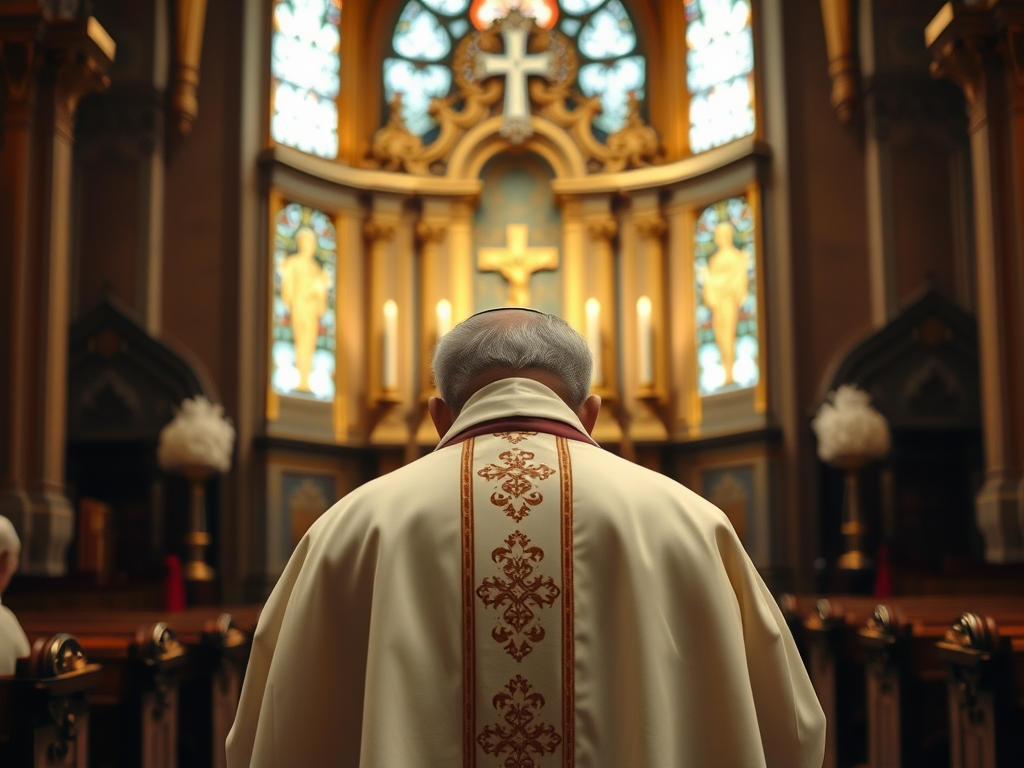
An important theme for this blog is the scene in the New Testament where Jesus can be found FLOGGING the money-changers out of the temple. My header above depicts a priest FLOGGING the devils that distort the faith and assault believers. The faith that gives us consolation can and should also make us very uncomfortable. Both Divine Mercy and Divine Justice meet in Jesus. Priests are ministers of reconciliation, but never at the cost of truth. In or out of season, we must be courageous in preaching and living out the Gospel of Life. The title of my blog is a play on words, not Flogger Priest but Blogger Priest.
Having read Kevin Wells appeal to a SSPX priest to join the Novus Ordo Church out of a desire to care for souls, I penned the following reflection. He spoke from the heart but I suspect his cry will either go unanswered or be rebuked.
First, we need to appreciate that designations like traditionalist Catholics and Novus Ordo Catholics lack real substance. One is a Catholic or not, nothing more. There is the living Catholic Church under the Pope, and then there are those who are outside of it. We might debate the extent that a Protestant is affiliated with Catholicism through baptism and shared elements of the faith; but no Lutheran, Methodist or Presbyterian would regard himself as in any way a Catholic by extension. Nevertheless, the SSPX tries to make this argument because if they admit formal separation from the See of Peter then their house of cards comes tumbling down. They would either have to go the route of the sedevacantist breakaway churches and appoint their own Pope or to adopt the stance of conciliarism and shared communion as manifest between Orthodox autocephalous churches.
Second, the failure of any reconciliation rests squarely with the SSPX. They would arrogantly usurp for themselves an authority that belongs exclusively to the Holy See. Their path to reconciliation and regularization would be as follows:
The Pope would have to renounce Vatican II, especially teachings about ecumenism, religious liberty, freedom of conscience, and the inherent dignity of persons.
All liturgical changes would have to be repealed.
There would have to be a massive number of excommunications and expulsions to purge the Church.
Indeed, all new ecclesial initiatives would be revoked, including the permission for the Divine Mercy devotion as it was suspect and forbidden prior to Vatican II.
Such was never going to happen. Despite posturing, reunion with the SSPX was never in the picture. Despite high hopes for individual clergy, it is unlikely, except for maybe a few seeking incorporation into the Fraternity of St. Peter.
The fact that a priest cares for souls is the bottom line and should not be regarded as something exceptional. But this movement of the will and heart must also be in sync with a proper understanding of the truth by the mind. Otherwise, any fruits will be seriously inhibited or even blocked. A Protestant minister might be on fire to save others from perdition and to foster a saving faith relationship with Jesus. But he has neither the Mass rendered by priests nor the absolution given to these same ministers of Christ’s reconciliation. His efforts may bear some small fruit, but they are handicapped by his own deficiencies.
Many in the traditionalist camp would stamp such a Protestant minister and his flock as likely damned for being outside the boundaries of the visible Catholic Church. Opposed to religious liberty, they would like to erase the public non-Catholic churches and schools. Indeed, they eye with suspicion the Novus Ordo liturgy as dangerous and the orders of its priests as suspect. They renounce by “association” the larger Church for its ecumenism toward so-called “separated brethren.” They subscribe to a methodology of fear— risk no change, stay separate or risk going to hell— distrust the Pope, avoid Protestant contamination, and oppose the world.
If a traditionalist priest disavows the priesthood and ministry of priests in the juridical Church under the Holy Father, then why would he be concerned about his fatigue and making “the good fight”? As far as he is concerned, despite the many protestations to the contrary, the Novus Ordo priest is not his brother but the enemy. Note that the SSPX tells its lay participants that it would be better to miss Mass entirely than to attend a Novus Ordo liturgy. The living Church in union with Pope Leo XIV would regard this attitude as blasphemous. The SSPX clergyman with this sentiment might desire to save souls but despite all the trappings of tradition, he has become what he most detests, a Protestant. The ancient faith and the efficacy of the liturgy may still be fortuitous to believers, but not because of the rebel priest but despite his failings. Wherever we find the Pope, we find the Catholic Church. This is the quandary around which the traditionalists must dance. They acknowledge the validity of the Pope in theory, but in practice his authority over them is rejected. What is the old saying about a duck? Well, right now it is quacking away!
The true Church must courageously engage the world in the time and place where she finds herself. Confident in the charism of indefectibility, she must not retreat from the world like the SSPX. The living Church applies social teachings to the world as it is (not as it was). She acknowledges the organic development of doctrine from seeds planted in the Gospel. Saving revelation has ended with the apostle John, however teachings are not stagnant but grow in our understanding. However, the SSPX goes further in the wrong direction, rejecting (in practice if not in principle) the current Pope as the chief lawgiver and rejecting the historical fact that each successor of Peter is the living and breathing embodiment of the Roman rite. The way he says Mass is the way the rest of the Western Church says Mass. We follow living popes, not dead ones.
The charge of Modernism targeted against the post-Vatican II Church is particularly upsetting and wrong-headed. Modernism came into existence by priests who regularly celebrated the Traditional Latin Mass. Fr. Alfred Loisy even acknowledged that the rubrics of the old Mass allowed him to robotically celebrate the liturgy daily out of habit long after he had stopped believing. Further, it troubles me that anyone would caricature the Novus Ordo Mass as leaving the flock starving. It is the unbloody or clean re-presentation of the sacrifice on Calvary. It is a sacrifice that honors God and makes propitiation or satisfaction for sin. The Eucharist is the substance of the real body and blood of the risen Christ, whole and complete, given as our saving food. Accidentals have changed and no liturgy is perfect. But the substance remains. The Church saw revolutions, heresy and Mass defections before, even when the rituals of sacrifice were untouched. The problem is not the Mass but a secular world that is increasingly hostile to people of faith. While the Lord gave us the great commission, too many have allowed themselves to be converted by the atheistic and materialistic hedonism of our times. For all we know, the current situation might have been worse without Vatican II. But about this, we cannot know for sure. We live in an age where there is much dissent from the left and right. Violence against the Church from the right is somewhat surprising, but perhaps more perilous than that on the left or from progressives. But neither side can stand any attempted middle-course. That is what defines the post-conciliar Church. This tension needs to end. An ancient motto from the 17th century comes to mind, quoted by Pope St. John XXIII in his 1959 encyclical Ad Petri Cathedram, “In essentials unity, in non-essentials liberty, in all things charity.”
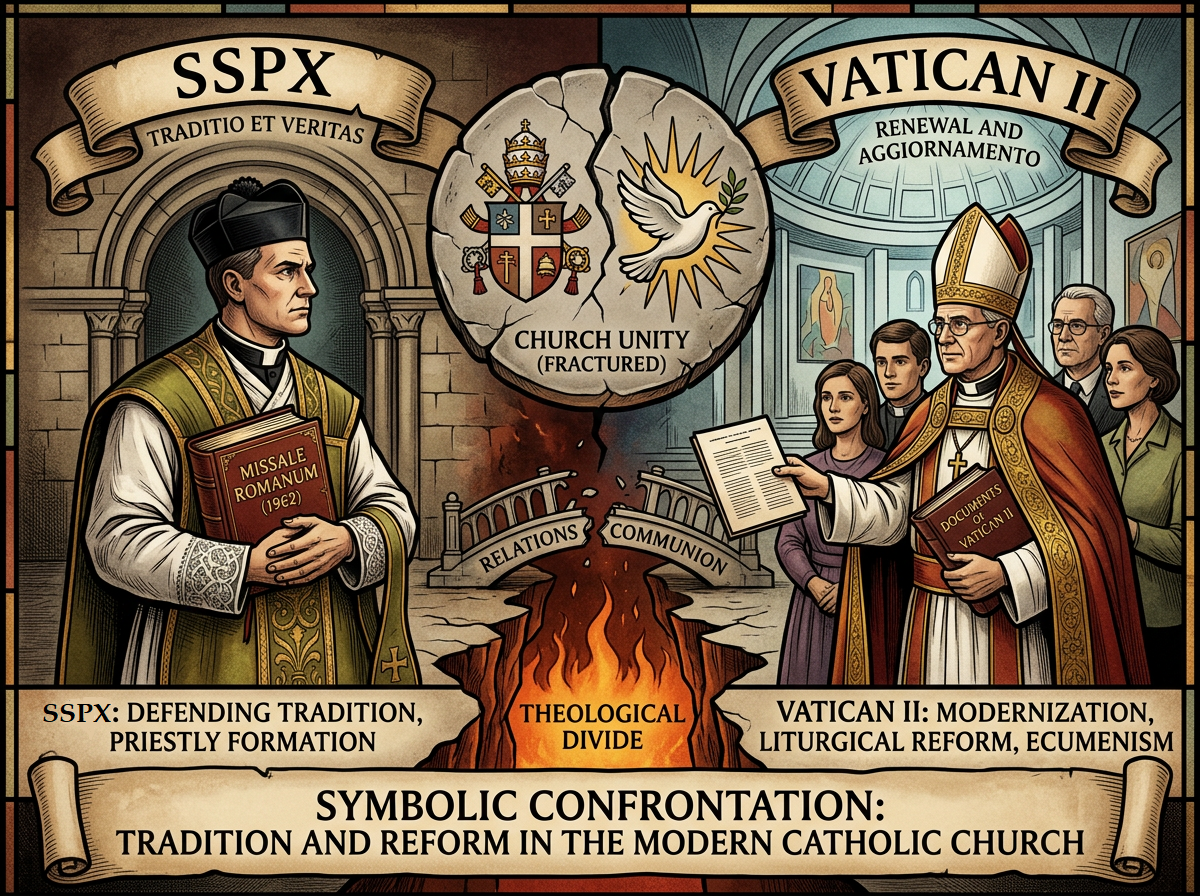
When mention is made of the Society of Saint Pius X (SSPX), what comes to the mind of most is their insistence upon celebrating the Tridentine Mass. However, their divide with the Vatican is far more serious and complicated. If the problem were simply an attachment to the older ritual, there would be no excommunications and schism. The proof of this is the regularized status of the Fraternity of St. Peter. They offer the pre-Vatican II Mass exclusively and without hindrance. The crisis with the SSPX is over the direction and teachings of Vatican II.
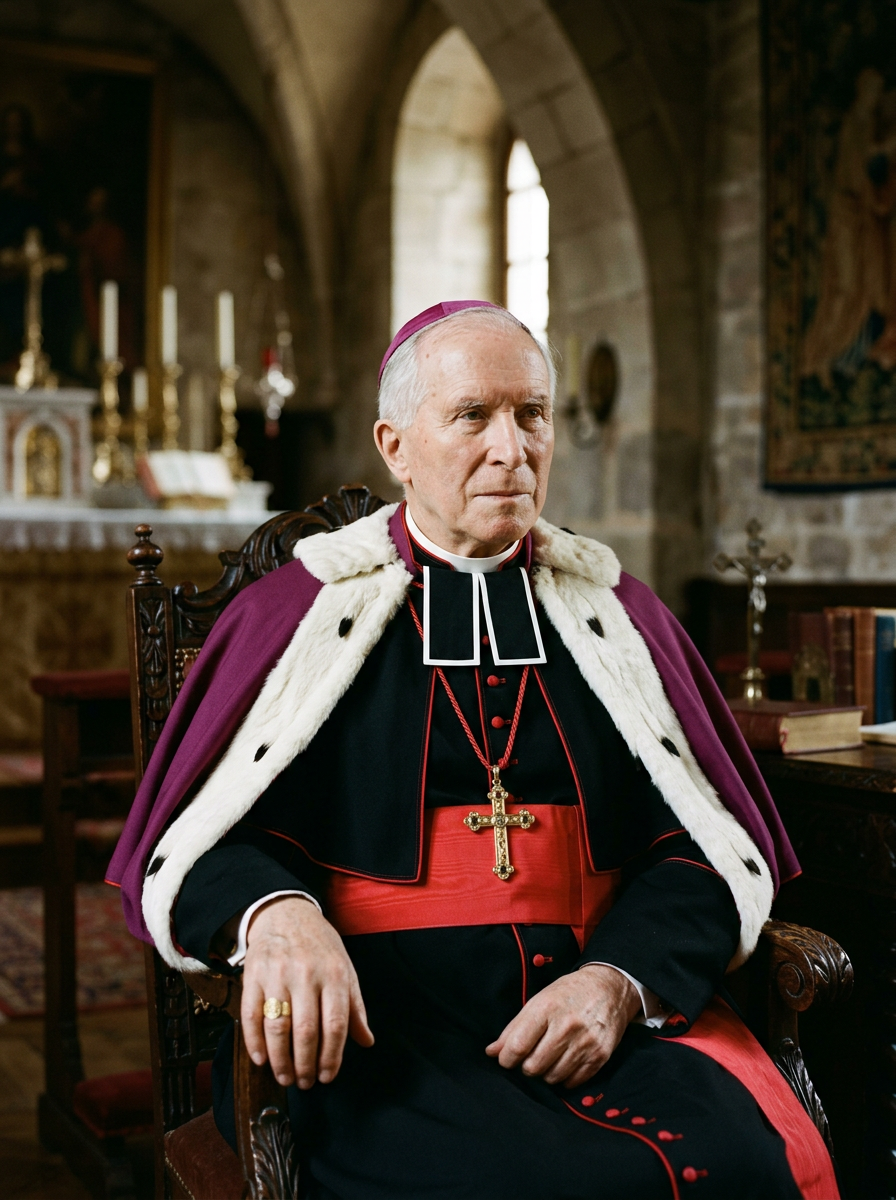
A growing number of living Catholics were not around or were small children prior to Vatican II (1962-1965). At the request of Archbishop Marcel Lefebvre, the Society of St. Pius X was established and canonically erected as a “pious union” on an experimental basis for six years by Bishop François Charrière of the Diocese of Lausanne, Geneva, and Fribourg in Switzerland on November 1, 1970. His successor, Bishop Pierre Mamie, petitioned Rome and formally suppressed the SSPX’s canonical status on May 6, 1975. Archbishop Lefebvre refused to shut down the operation for the formation of seminarians and restructured the SSPX as a clerical or priestly organization. While Archbishop Lefebvre signed 14 of the 16 conciliar documents from Vatican II, he later renounced the Council and accused the post-Vatican II Church of modernism, liberalism, and adopting the “spirit of the modern world.”
The point of contention continues to be an interpretation of centuries old tradition and the extent of ongoing development. There are five areas of friction:
(1) HUMAN DIGNITY – As the root premise from which flow as corollaries the other areas of objection from the SSPX, we must begin with the most foundational principle of Catholic social doctrine. At the core of our belief in what Pope John Paul II called the Gospel of Life, is the conviction that every person is created in the image of God and as such, possesses an inherent, inalienable and incommensurate value that defeats every effort at quantification. Everyone has worth, even prior to the indwelling of divine grace. Even in the womb, human life is precious and irreplaceable. This valuation stems from humanity’s place as the steward of creation. This dignity is damaged by the primordial fall and sin but not destroyed. Human worth is not a measure that society can assign or reward to those it most favors. It is given immediately by God at the moment of conception. Most recently, this teaching emerges in Dignitas Infinita (2024) wherein Pope Francis speaks of “infinite dignity” grounded in the created order as a facet of our very being. He lists the violations against this dignity as including poverty, war, human trafficking, abortion, euthanasia, and gender theory. Vatican II’s Gaudium et Spes (1965) makes human dignity a central component to Catholic teaching and outreach. This conviction places us at odds with any discrimination based on gender, ethnicity, color, social status, or religion. Such bigotry contradicts the will of God. Vatican II’s Dignitatis Humanae (1965) connected this dignity to freedom of conscience and religious freedom. Evangelium Vitae (1995) written by Pope St. John Paul II, focused on the value and inviolability of every human life, objecting to abortion, euthanasia, and the death penalty. Pacem in Terris (1963) written by Pope St. John XXIII associated dignity and human rights with the pursuit of peace while respecting truth, justice, charity, and liberty.
The Society of Saint Pius X (SSPX) contends that human nature alone does not inherently possess any dignity that grants inalienable rights. Let that sink in, especially the consequences. They argue that true dignity belongs to the Christian, achieved exclusively through divine grace, rather than merely by being a human created in the image of God. It is no wonder that traditionalists constitute hawks in terms of military intervention around the world and are often rabid defenders of the death penalty. They refuse to acknowledge any doctrinal development about capital punishment. Indeed, some will even advocate for the Church’s past passivity for slavery, echoing ancient arguments— punishment for conquered peoples, a means to pay back debts, a manner to civilize savages with the faith and Western civilization. Indigenous culture is devalued. The traditionalist fraternity finds itself in conflict, not just with liberalism but with the Catholic mainstream.
The conciliar popes see human dignity as inherently rooted in creation itself, in nature (see CCC 1700). Human rights are first based upon natural dignity. By contrast, Archbishop Marcel Lefebvre stated, “There is not a dignity of man; there is only the dignity of the Christian.” The SSPX argument is that Original Sin damages or corrupts human nature. The mainstream would also agree that it has been wounded, but not that it has become devalued. The SSPX repudiates the notion that unbaptized human beings (unregenerated and still in sin) possess any inherent incommensurate natural dignity. Where does the truth stand? There is no rift with tradition. But this is the great conflict that makes the regularization of the SSPX impossible. Our tradition is that human dignity is damaged but not destroyed. The “supernatural” or divine grace builds upon the “natural.” Baptism and saving faith transform creatures of God into adopted sons and daughters of the Father. Made in the “image of God,” divine grace makes possible our rebirth into the “likeness of Christ.” The implications of this even speak to the Church’s new interest in ecology. Why? It is because any abuse or neglect of our environment works to impoverish human persons. Our Christian anthropology looks to a creation where man stands at the center. The consequences of this understanding impact upon our understanding of the incarnation. Jesus comes into the world to save us and yet he also comes to resolve a metaphysical conflict. Christ as the Word is also the saving plan and the center of creation. You cannot have two centers. Thus, the Word becomes man. The consequence for fallen man is decisive; grace builds upon nature. While we would not reject the wonder that is man, a notion that comes down to us from the Enlightenment, it is that good seed from the natural order that grows by God’s intervention into something even more marvelous. Potency is actualized. Wired for God, that immeasurable dignity is used by God as a building block for his incarnation and the new man in baptism. That which is beyond evaluation is granted something of the infinite goodness that belongs to God.
(2) RELIGIOUS LIBERTY– The Council established religious freedom as a basic human right (see Dignitatis Humanae). No one should be compelled to violate his or her conscience about faith. But the response of the SSPX is an explicit objection. In its estimation, all must be subject to the Kingship of Christ and error has no rights. These traditionalists would reject religious liberty as an American imposition upon the universal Church.
Prior to the revolutionary War, Maryland as a colony had issued the Edict of Toleration (1649). This decree grated religious freedom for Trinitarian Christians. Maryland Catholics invited the Puritans persecuted in Virginia to join us in our colony. However, in 1654, Puritan rebels seized control of Maryland and revoked the colony’s groundbreaking Act of Religious Toleration. They quickly enacted sweeping penal laws that banned Catholic worship, prohibited Catholics from voting or holding public office, and severely restricted the religious freedoms of Jews, Quakers, and other dissenters.
As citizens, we know that freedom of religion is protected under the first amendment of the U.S. Constitution. It also established the separation of church and state. While we had to suffer the bigotries of the political Know Nothings and the prejudice of various early hate groups. The enactment of religious liberty would give us an even playing field wherein the Church in the United States could flourished.
American enthusiasts for the liturgies and spirituality of the SSPX might be less than pleased with this mentality toward our non-believing and Protestant neighbors. Our forefathers, Catholic and Protestant alike, came to this country to escape the oppression of state religions where institutionalized favoritism to one church came at the cost of persecuting all others. More than once the tables turned in Europe, and the Catholic Church suffered much in what were regarded as states favorable to Rome. But princes rose and fell and along with this movement also went the fortunes of the Church. One can certainly argue as a philosophical notion that the ideal state is one where there is harmony with the Church and concurrence with the truth. This is an ancient tradition. However, in practice, the subjective assessments of men lead to division. This particularly became the case after the reformation. The old mind about such matters allowed a king to steal the Church away in England where he made himself the head over the Pope. Even agreements of the Church to preserve peace in Europe often tolerated believers following the local prince, either into Catholicism or into the Protestant sects. The American notion of religious liberty severed this ability of the state to violate conscience and to compel a certain form of worship. Vatican II gives an emphasis to the nation of the new Israel or Christ’s reign over earthly kingdoms. Catholicism unlike the churches of the East is no national church. There is no American Catholicism or French Catholicism but rather as Roman it is, like the empire of old, international in scope. One can speak of the Catholic Church in America but never of an American Catholic Church. This distinction is often lost. Again, while in principle it would make sense that the Catholic political heads should have the moral duty to favor Catholicism and restrict error; the capriciousness of men and the changing state of the world made such imposition difficult or impossible to maintain. What was given by one monarch could just as easily be stripped away by the next. Did we really want to continue in a society where Catholics and Protestants conspired against one another and where both suspected the Jews of dark machinations? Certain Catholic traditionalists have argued, not only for the suppression of Jews to ghettos, but that Protestants should be restricted to home churches and forfeit their worship sites and schools. This is the mindset of the SSPX. But the world has moved on from such anachronism, or has it? It is precisely the mindset of militant Islam that forbids conversion to Christianity and in places like Saudi Arabia has outlawed the Church, altogether. The trouble with the shoe on the other foot is when it comes down to being kicked around. The Church’s teachings upon such matters must reflect the realities of the modern world. It makes no sense to speak of the divine rights of kings when such despots have disappeared. Toleration of false religions is not to posit faith or confidence in those creeds; no, it is rather a common respect for persons and a desire to live together in peace as brothers and sisters of a common homeland. This liberty allows us to persuade and to seek conversion through charity and dialogue, not through intimidation as through edict or decree.
(3) ECUMENISM – The Vatican Council urged dialogue over anathema. Pope John XXIII saw ecumenism as a manner to draw fallen away children back to the fold of Mother Church, not with scolding and threat of punishment but with affirmation of shared beliefs and the compelling power of the truth (see Unitatis Redintegratio, 1964). While we could never engage in non-Christian prayer, we might sometimes pray side-by-side and work together to improve the society in which we must live as neighbors. The SSPX wrongly condemns such efforts as the sin of indifferentism. But there is no pollution of true faith. Further, no one questions the ancient teaching from the Fourth Lateran Council of 1215: “There is but one universal Church of the faithful, outside which no one at all is saved.” The dogma of “Extra Ecclesiam nulla salus” is straightforward, since there is no salvation apart from Christ, and given that the Church is his mystical body, then the Church is the necessary vessel or great sacrament of salvation in Christ. It is for this reason that we seek to attract all to the safe harbor of salvation— the Catholic Church. However, teaching must be applied in a way that respects changing circumstances around us. While the great schism between the East and West had occurred in 1054 AD, the reformation rebellion did not occur until 1517 when Martin Luther nailed his Ninety-five Theses to Castle Church in Wittenberg, Germany. This signified a great fracturing of the Church in the West. The reformers absconded with many Catholic beliefs and most importantly, with the sacrament of baptism. Unfortunately, they forfeited the crown treasures of Priesthood, Eucharist and Penance. Many through no fault of their own have been born into the Protestant confessions. They are baptized, read the Bible, love Jesus and know him as the Second Person of the Trinity and the Word incarnate, and seek to keep the commandments. The SSPX would contend that these saving elements are for nought. But our hearts will not let us believe that a good God would spurn their cry. The post-Vatican II Church would argue that these elements cry out for Catholic unity. Our Lord will not abandon those who love him and place their faith in his saving Cross. While our unity is not what it should be, it is not utterly severed. The Catholic Church reaches out to them and intercedes for them to almighty God. We need to trust that the Church’s collective trust in Jesus and cry to heaven will grant hope and might be efficacious. The mystery of the keys may be impenetrable, but it is real and the authority is given to Peter. Unfortunately, the SSPX gives lip service to Rome but nothing of true respect and subservience.
The SSPX is frequently tagged for being antisemitic. Whether they are or not, it is a question I would leave to others. However, they are on the record for questioning whether the Jews today are one and the same with the Jews of old. They would insist that their covenant ended with the coming of Christ and that those Jews who failed to convert to Christianity are no longer the People of God. This is not the view of the living Magisterium (see Nostra Aetate, 1965 on relations with non-Christian religions). Yes, it is true that the Catholic Church does not subscribe to Zionism, as the prophesied new Israel or new Jerusalem is not the political state of Israel but is rather the Church, herself. We believe that Jesus Christ is the consummation of the old covenant, but that God keeps his promises, and the Jews remain God’s own and our elder brothers and sisters in faith. There are not two separate covenants but one. The old becomes something new in Jesus Christ. The natural religion of the Jews with its belief in one true God is given a further revelation in the new dispensation of God as a Trinity. This belief of one God in three divine Persons raises Christian faith to a supernatural religion. No matter whether all Jews know it or not, Jesus is the Messiah and our Savior. We believe that Jesus is the ultimate term of salvation. None are saved apart from him. But we also appreciate that God’s grace cannot be utterly contained. God will save whomever he wills. We leave judgment to God. The SSPX would outrightly condemn much of the planet to perdition. By contrast we do not teach universalism (that all will be saved). Indeed, even Catholics with a soured faith and in mortal sin might forfeit heaven. However, if we walk with the Lord, people of faith live in the sure and certain hope of their salvation in Christ. We pray and intercede for others. Again, we do not usurp a prerogative that belongs to the Almighty— we leave judgment to almighty God.
(4) LITURGICAL REFORM & THE NOVUS ORDO MISSAE –
Vatican II called for a renewal of the liturgy. After much consultation and work, the reformed Mass of Paul VI was promulgated in 1969. While Latin was to have a preferred place, the vernacular quickly displaced it. Many lamented the loss of the many chants and our legacy of hymnody. While Society of Saint Pius X has objected to the changes, it has become abundantly clear that they would resist even the most modest alterations. They contend that the Novus Ordo obscures the sacramental aspect of the liturgy and waters down Catholic elements to appease Protestants. They will go so far as to castigate the reformed Mass as dangerous. It is my argument that they trespass in their critique into the moral area of blasphemy against the Holy Spirit. If they believed that holy orders were truly conferred to priests of the living Church, why do they insist upon re-ordination when received into the SSPX? If they really believe the Novus Ordo Mass is valid then how can they urge against attendance, especially since the fruits prevail over any subjective aesthetic? No, they speak out of both sides of their mouths. Their arrogance destroys the humility necessary for a theologian and the posture of a Catholic who is one with Peter.
The changes in the liturgy were the result of a liturgical reform that in theory and small steps went back many decades prior to Vatican II— dialogue Masses, experiments with the orientation of the priest, the use of the vernacular, expansion of the Scriptures, the introduction of microphones, the permission for missal translations for the people, the reduction of duplication (as with the double Confiteor), etc. What surprised many people was the wholesale rewrite of the offertory and the addition of Eucharistic prayers. The latter is why some have suggested that the new liturgy signified a new rite and the loss of the Roman rite. However, the Roman Canon is still retained, and the liturgical pattern of the Roman rite remains the guide for our worship. What is this pattern?
THE STRUCTURE & ELEMENTS OF THE NOVUS ORDO (ROMAN RITE)
First, there are the Introductory Rites: 1. Introit (Antiphon /Hymn) & Kissing Altar, 2. Sign of the Cross & Greeting, 3. Confiteor & Kyrie Eleison & Absolution, 4. Gloria (Glory to God), and 5. Collect (Opening Prayer).
Second, is the Liturgy of the Word: 1. Reading(s), 2. Responsorial Psalm, 3. Alleluia or Gospel Verse, 4. Gospel, 5. Homily, 6. Creed (Profession of Faith), and 7. Prayer of the Faithful.
Third is the Preparation of the Gifts (Offertory): 1. Bringing Up the Offertory Gifts, 2. Blessing of the Bread, 3. Mixing Water into the Wine, 4. Blessing of the Chalice, 5. The Lavabo (The Washing), 6. The Orate Fratres (Pray Brethren), and 7. Prayer over the Gifts.
Fourth is the Liturgy of the Eucharist: 1. Introductory Dialogue & Preface, 2. Sanctus & Benedictus, 3. Eucharistic Prayer (Canon), and 4. Closing Doxology & Amen.
Elements of the Eucharistic Prayer or Anaphora: 1. Appeal to the Father or Plea for Acceptance, 2. Epiclesis (Invocation of the Holy Spirit), 3. Consecration (Words of Institution), 4. Memorial Acclamation, 5. Anamnesis (Memorial Prayer), and 6. Oblation to the Father.
Intercessions in Variable Order: 1. Intercession of the Saints, 2. Intercession for the Church, 3. Intercession & Memento for the Living, and 4. Intercession & Memento for the Dead.
Fifth is the Rite of Holy Communion: 1. Our Father, Deliver Us Prayer & Doxology, 2. Sign of Peace, 3. Fraction & Commingling, 4. Agnus Dei (Lamb of God), 5. Secret Prayer for Priestly Worthiness, 6. Ecce Agnus Dei (Behold the Lamb of God), 7. Communion & Antiphon (Hymn), and 8. Prayer after Communion.
Sixth, there are the cursory Concluding Rites: 1. Final Blessing and 2. Dismissal.
Finally, there is a truth that many seem to have historical amnesia about. Ultimately what makes the Roman rite, the Roman rite? There are many other liturgies that go back into antiquity. What gives singular value to this one ritual? The answer is simple and straightforward. The priests of the West wanted to do as the Romans do. In other words, they desired to imitate Peter or the Pope in Rome. The Holy Father is the living embodiment of the Roman rite!
The Holy Father is obligated to maintain the Church’s inheritance, but he can also rescue eclipsed traditions from the Church’s past treasure and build upon new insights that will add to the richness of faith for future generations. The Novus Ordo (the Vatican II Ordinary Form of the Roman Rite) restored several ancient liturgical elements that had been lost, obscured, or marginalized over time. These included expanded readings from Scripture (especially the Old Testament), the Prayer of the Faithful Bidding Prayers, multiple Eucharistic prayers, and concelebration. While many complain about the editing, the short Second Eucharistic Prayer borrowed from the Apostolic Tradition of Hippolytus. Communion in the hand was restored as an option that was normative for the first eight hundred years of the Church’s history.
Repeatedly, the hardliner traditionalists struggle with transition or development. One often feels more comfortable and secure with a staid tradition and dead popes than with a living tradition and breathing popes! Pope Francis was the symbol for everything a lover of tradition fears— novelty and uncertainty. I suppose that is why so many are hoping and praying that when the new cat, Pope Leo XIV, makes his final leap from the altar, that he will land on his feet and put all things right again— please, pretty, please!
(5) COLLEGIALITY & CHURCH AUTHORITY – Ultimately the fight between the SSPX and the Vatican is over ecclesiology or authority. The SSPX abhor Lumen Gentium (The Dogmatic Constitution on the Church) promulgated by Pope Paul VI on November 21, 1964. The document fundamentally reshapes the Church’s self-understanding in the modern world. Who speaks for the Church? Is it one dead archbishop and a few illicitly manufactured bishops against the thousands of bishops at Vatican II who remain in full union with Rome? Did our Lord promise Peter and his Church the gift of indefectibility or not? The SSPX has gotten so used to having its own way that it no longer knows how to concede to the papacy. It is an organization born from rebellion and its identity is tied up with its position as the opposition to reforms of any sort. It sees itself as the bastion of orthodoxy against a larger and universal Church which it has condemned as in the grips of the heresy of modernism. If it would not concede to Pope Benedict XVI, then it was highly unlikely that it would acquiesce either to Francis or now to Leo XIV. I suspect that is why the current Pope has said that it is time to let them go their way. We might get a few stragglers to return but like the Anglicans, they are set on their own path. Sadly, they will do so without Peter, which means that they have left the boat established by Christ on the sea of salvation history. Their stance over the last half century is becoming increasingly untenable. Do not be surprised when the day comes that one of their prelates will arise and be declared the great antipope of their confession.
While there is legitimate confusion about what constitutes the current synodal way, especially with the inclusion of select laity, the SSPX were not entirely happy with the college of bishops helping the Pope to govern the global Church, either. But the Church has grown too big for the small structures of the past to suffice. He needs people of varying expertise and learning. Mistakes will be made but the Church will be richer for the talents and wisdom of its saints, and yes even sinners who might become saints. While the SSPX might object that collegiality diminishes the supreme and monarchical authority of the Pontiff; it makes an exception for itself and has become querulous or whiny about being rebuffed by Rome. The SSPX tends to view sacred tradition as immutable and as a product from heaven against the dictates of shifting cultural opinions. However, just like Sacred Scripture, that is both the work of men and that of divine inspiration; tradition is a mixture of providence within the framework of human history. There is always both an immutable and a mutable component. The Church tolerated slavery but the egalitarian component of baptism and an extended reflection upon the dignity of the human person made such a concession or passivity to evil into something that could no longer be sustained or tolerated. The Church granted the state the right to execute the most dangerous criminals but here too, with the development of a more corrective penal system, the necessity of such an extreme measure was increasingly questioned. Pope John Paul II, who had known men to lose their lives under both the Nazis and later under Communist rule, distrusted the judgment of those who held the reins of power to make just decisions. Indeed, given the rise of abortion where innocent children were sentenced to death, he felt that a Western world in the grips of a culture of death had sacrificed the authority to condemn the guilty. Instead of concurrence with the world, we have witnessed the Church’s continuing moral ascendance as a sign of contradiction that challenges contemporary secular culture. The Church finds herself targeted as the enemy by the left and right. She is daily combating challenges to religious liberty, freedom of conscience, and crimes against human dignity. She is a Church in conflict, not only with the modern world, but with the world of old and the hardened traditions paraded by the SSPX. Today we are seeing this same clash or friction regarding warfare. The Church looks at weapons of mass destruction and the thousands of non-combatants in harm’s way and pleads for peace. This earns praise from the weak and recrimination from the strong. The weak look to the Pope and the Church as the voice for the oppressed and the marginalized. The strong tell Catholic leaders to stay out of politics and to mind their own business, or else.
The values of the Church are what they have always been. Homosexuality is still a disorientation, but we tell these people that we love them and desire to walk with them in the hopes that together we might “together” travel the path to conversion and holiness. We recognize a messiness and brokenness that touches many marriages and families these days. Instead of condemnation, we seek to bring healing and a path to regularization. We reach out to those who live for the flesh and remind them that there is a life in the spirit where one can find true happiness and something lasting. We plead that human beings should not be reduced to commodities— not in abortion, not in sweat shops, not in human trafficking— but persons who must be valued and loved. We are condemned for taking the cause of the immigrant. We are ridiculed for seeking to advance the poor. The same voices that might praise us for speaking up for the unborn child demand our silence about the prisoners on death row. The SSPX defenders add their voices to this worldwide ridicule. Notice how incensed they became when the Vatican library offered a small room for a few Moslems to pray privately in peace. It was no temple or public worship space, but still Vatican authorities were chastised for making a concession to the “Church of Satan”!
A man who would become a special prophet for Vatican II should be mentioned. Beloved by Traditionalists because of his orthodox television programs and a classic photo book on the Mass, Archbishop Fulton Sheen became a strong supporter for the Second Vatican Council. He praised the document Gaudium et Spes as “brilliant” in his book, Treasure in Clay. He advanced with zeal the Council’s directives. He delivered a strong and supportive speech to the Council fathers in November 1964 on our missionary outreach. He adopted the reforms of the council, including the Novus Ordo. At the beginning of the Council he remarked that Pope John XXIII was calling the Church to stop hiding behind closed doors and go out into the world because it was “waiting for salvation.” As Bishop of Rochester, Sheen fully implemented the ecumenical and pastoral directives of Vatican II. In September 1968, he became one of the first U.S. prelates to invite a Protestant leader to speak from his cathedral pulpit, aiming to make his diocese a catalyst for post-conciliar renewal and ecumenism. Archbishop Fulton J. Sheen preached at televangelist Rev. Robert Schuller’s Arboretum in 1972. Traditionalists were infuriated; how dare he speak for a Dutch Reformed minister and treat his congregation as real Christians! Archbishop Sheen also frequently used the story of Lutheran Pastor Richard Wurmbrand—who endured 14 years of brutal torture and solitary confinement in Romanian Communist prisons for his Christian faith—to illustrate the reality of modern Christian martyrdom and the redemptive power of suffering. Making the case for religious liberty and ecumenism in the same breath earned contempt from the likes of the SSPX.
The SSPX argues that the contemporary liturgical forms have done the following: (1) Obscured the sacrificial and propitiatory character of the Mass, (2) Fostered a democratic conception of worship, and (3) Protestantized liturgical expression.
A Mass with an Obscured Sacrificial & Propitiatory Character
The claim that the Novus Ordo Missae obscured the sacrificial and propitiatory character of the Mass is refuted by the text of the liturgy itself and official Church teaching. There is no refutation of Trent, rather, the reformed Mass retains, amplifies, and explicitly declares these realities throughout its revised structure.
The sacrificial nature of the Mass is proclaimed multiple times in every Novus Ordo liturgy. Most notably, in the Orate Fratres, the priest explicitly invites the faithful to pray: “Pray, brethren, that my sacrifice and yours may be acceptable to God, the almighty Father.”
Further, the exact words of consecration restore an explicit expression of Christ’s sacrificial purpose. Take note of the phrase, “This is my body, which will be given up for you.” It directly emphasizes Christ’s redemptive offering.
The Roman Canon and the Eucharistic Prayers composed after Vatican II, all definitively state that the Church is offering Christ the holy Victim to God the Father.
Vatican II’s “Sacrosanctum Concilium,” affirms the teachings of Trent. So as there can be no confusion, it teaches that Christ is present offering Himself in the person of the priest, just as He did on the Cross.
The Catechism of the Catholic Church ensures that there can be no confusion on this matter. The Mass is identical with the oblation of Christ on Calvary. This sacrifice is “truly propitiatory” and is offered for the living and the dead.
A Democratic Conception of Worship
While the people are not mere spectators to the liturgy, they participate through a unity with the celebrant and thus with Christ whom he signifies. Proof of the hierarchical nature of the Church and the necessity of a priest at the altar is proven by the Church’s own official texts and the directives for pastoral implementation. The argument that the Novus Ordo introduced by Pope Paul VI in 1969 fostered an overly “democratic” conception of worship is a frequent point of critique among liturgical traditionalists. However, it is false in that the missal preserves the hierarchical nature of Catholic liturgy while furthering an ancient ideal of “active participation.” There is no majority rule. The role of the ordained priest is still essential— no priest, no Mass. The priest is sacramentally configured to act “in persona Christi” at the altar. Only the priest can confect or consecrate the Eucharist. He is more than a master of ceremonies. He is celebrant of Mass. Only a priest can offer Mass. Indeed, only a man in holy orders is permitted to proclaim and to preach the Gospel. Liturgical actions, prayers and rubrics are established by the universal Church, not through the popular vote of a congregation and not through the intimidation of a breakaway group like the SSPX. The liturgical reforms did not simply create something new but sought to recover something ancient to better confront modernity.
Participation of the laity at Mass is both external (responses and prayers) and internal (the right disposition). The notion of the faithful offering themselves with Christ was championed by Pope St. Pius X. It was not a notion new with Vatican II. There is a profound collaboration between the ordained priest and the laity who share a baptismal priesthood. Note that at baptism, children are anointed, “priest, prophet, and king.” This participation makes full discernment of the various presences of Christ: in the Word proclaimed, in the priest at the altar, in the Mystical Body of the Church, and in the sacrament. The orchestration of liturgy involves many playing their roles. But the ordering is not democratic but hierarchical. Christian worship is structured as a prayer to God the Father, through the sacrifice of Christ and made effective by the power of the Holy Spirit. Despite many cosmetic changes, the core structure of the Novus Ordo is the same as in the traditional Latin Mass. There is, in truth, no new or old Mass. The Mass is the Mass. The Second Eucharistic Prayer is rooted in the ancient liturgy of Hippolytus. Ancient texts went into the composition of the Third Eucharist Prayer as well. We do not celebrate ourselves in the Novus Ordo liturgy. Rather, we worship almighty God. We acknowledge his sovereignty over mankind. We invoke the Lord’s mercy upon us.
Protestantized Liturgical Expression
The argument that the Novus Ordo (promulgated by Pope Paul VI in 1969) “Protestantized” the Mass is a frequent criticism from traditionalists. However, our liturgical history and magisterial documents refute this stance. Indeed, the Vatican II rites sought to restore ancient Catholic traditions, not to succumb to Protestantism. The Protestants of the reformation rejected the Mass as a propitiatory sacrifice. This hallmark of the Catholic Mass remains essential. While the number of Eucharistic Prayers were expanded, all of them explicitly state that the Mass is a sacrifice. Note Eucharistic Prayer III: “Look, we pray, upon the oblation of your Church and, recognizing the sacrificial Victim by whose death you willed to reconcile us to yourself. . .” By comparison, Protestant reformers like Martin Luther and Thomas Cranmer obliterated all mention of sacrifice from their liturgies. Simplification of the rites was not to make them Protestant. Rather, it was an effort to return to the primary sources and to the ancient Church fathers. There was a heavier emphasis upon Scripture in the reformed Mass. The full expression of the Sign of Peace and the option for Communion in the Hand were recovered, practices that disappeared in the Middle Ages (see St. Augustine and St. Cyril of Jerusalem). Transubstantiation was reaffirmed, something rejected by the Protestants. Liturgically, we can look to the genuflections after the consecrations and the significance of the “Amen” as a response to “The Body of Christ,” at communion time. Indeed, Eucharistic Adoration was raised from a faith devotion to an official liturgy of the Church. Even the purification of the vessels affirms the real presence of the Eucharist. The use of the vernacular made the prayers more accessible to the congregation and the priest was often turned around toward the people; however, this was to further participation, not to reduce the sacrifice to a mere community meal. The Mass is still wholly Catholic!
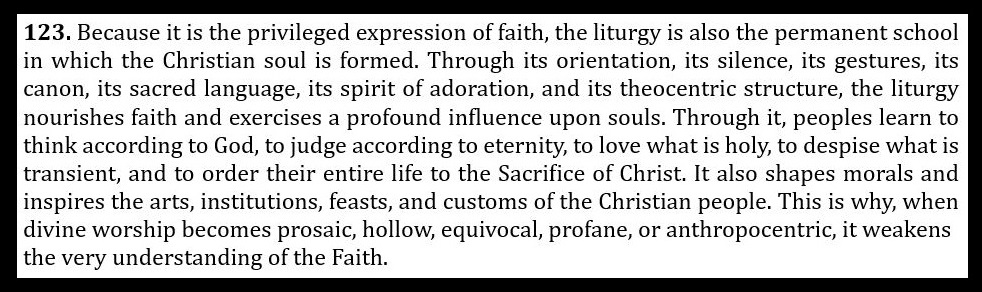
This statement is taken from the SSPX Profession of Faith . . .
Yes, I can affirm much about the opinions expressed in the statement. But, we must be careful of false caricatures. This is a serious problem. No liturgy is absolutely “perfect.” Every Mass has its supporters and detractors. When properly offered the Novus Ordo can have an order and solemnity that is every bit as meaningful as the traditional Latin Mass. Unfortunately, comparisons frequently resort to stereotypical problems or abuses. I have said it before, and I will say it again, the classical High Latin Mass is a beauty to behold. But except for the sacred silence, the Low Mass is not much to write home about. The spiritual effects are the same, but the execution is quite different. As for the Novus Ordo, there are fewer strict rubrics and over the years too many clergy took it upon themselves to improvise where they should not have done so. We must not judge a liturgy’s value based upon abuses in celebration! There should be no clown or puppet Masses. Priests should be properly attired. Sacred music should not be switched out for banal compositions with questionable theology. More needs to be done with plain chants. The discussion should continue about the orientation of the priest with a freedom to either face the people or toward the East. I read recently that there are composers developing litany chants for the Prayers of the Faithful. That is good. There is even speculation that some of the old offertory prayers might be restored for when the Roman Canon is said. The liturgy that came to us after Vatican II contains all the essential parts of the Roman Rite Mass. However, its configuration is comparatively new compared to the age of the Church. While its beginnings were abrupt, we can hope that over time it will mature and truly flourish. But such matters take time. It was for this reason that Pope Benedict XVI wanted the old and the new rituals to continue side by side, perhaps to cross-pollinate one another. However, this is anathema to the radical left and right. The left would utterly abandon the tradition and the right might make it into a cage.
The Second Vatican II shared many of these sentiments about the Eucharist and Holy Mass. It described the liturgy as the “summit” toward which the Church’s activity is directed, and the “fount” from which all her power flows. However, while the liturgy of the Church is permanent, this does not mean that all her elements or the structure of the Mass remains stagnant or immutable in its accidentals. The pious language of this professional statement sets up the SSPX argument that the Mass prior to Vatical II is essentially immutable. But all is not as it seems. This just is not the case. Further, the Mass is one element among many in the formation of believers. The old Mass formed saints but it could not forestall the emergence of great heresies like modernism or sinners who sought to manipulate or even destroy their mother, the Church. While the Missal was edited and formalized at Trent, it could not halt the reformation and a mass defection. The French revolution was not forestalled by the traditional Latin Mass. World Wars all happened during its time of greatest prominence. Vatican II and the reformed Novus Ordo liturgy are often faulted for the many challenges of modernity, but the Church was already starting to feel its effects prior to the gathering of the world’s bishops. The Second Vatican Council sought to revitalize the Mass and deepen the faithful’s connection to this divine source.
It is true that liturgy is what it is. However, we must not underestimate what we bring to it. Those who currently attend the traditional Latin Mass are particularly attuned to its rituals and meaning. But many if not most Catholics in the past attended out of duty and were detached from the liturgical actions. The reformed liturgy was to counteract this situation.
The elaborate traditional Latin Masses are a far cry from what many experienced prior to Vatican II. There were no microphones on altars. The altar servers gave the Mass responses to the priest. The boys frequently learned the required words and their pronunciation from 78 rpm records. Did they always understand the Latin. I hate to say how often the kids would garble the words and try to hide it by mumbling. The laity entered their pews and said the rosary or other personal prayers. Low Masses, especially on weekdays had no music and the priest quickly rattled off the prayers. My old pastor could say the old Mass with the long Latin Roman Canon in 12 minutes. It was far from beautiful, but men rushing to work wanted the graces. Many of the faithful attached to this liturgy were also fond of the Latin people’s missals. However, these books with translations were long forbidden by the Church. A late development, laypeople first saw the introduction of hand missals to follow along at Mass in the 1920s and 1930s. This was part of the broader liturgical movement leading up to Vatican II. Pope Pius XII explicitly promoted missals in the 1950’s.
Richness and beauty belonged to the old Mass, but it was often locked away behind the back of the priest and the silence of the altar. Clergy and professional theologians well appreciated its richness, but the liturgical movement itself was a recognition of a problem in translating this spiritual treasury to the People of God. While there were many changes in the Novus Ordo, the Roman canon was retained and new prayers were added. The short second anaphora was devised for the quick weekday liturgy so that the priest did not have to say the vernacular words of the Eucharistic prayer at machine gun speed. Prayers that belonged exclusively to servers became those of the congregation.
The Novus Ordo Mass is not dull or lacking imagination. The Scripture texts are far more representative of the Word of God, especially the Old Testament, than the old Mass. The prayers are rich and full of meaning. They are evocative, doing what they say. Few priests who regularly say Mass would say that it is hollow or empty. What the Mass is about is clear, not equivocal or vague. However, there are words and gestures that have a richness of meaning. The notion that the reformed liturgy is profane is a negative spurning that is a affront to God and a derision to the Magisterium that has approved it. It is the movement of God that makes it real. While there are elements that target the gathered community, the focus is always upon the worship of God. If the old liturgy emphasized the priest saying Mass for us; the new concentrates on how the celebrant makes possible our prayer with him. If there is anything mistaken for anthropocentric, it stems from the mystery of the incarnation where God becomes a man. The Mass never speaks to us exclusively regarding human values and perspectives. Any and every Eucharistic liturgy, calls us out of ourselves. We become what we were always intended, a parable people who put on the mind and heart of Christ. Every Mass makes possible our continuing transformation into Christ. As a priest who regularly says the Novus Ordo, my faith is strengthened, not weakened. I suspect that most who go to Mass would say the same.
I read with interest the article by Gregory DiPippo about Brian Holdsworth’s video on the Church’s liturgies. A position is critiqued that argues that it does not matter which liturgical form is followed, either ordinary (reformed) or extraordinary (TLM). But in all honesty, I know of no learned believers who hold such a position. Note that the question here is not whether either liturgy (particularly the reformed ritual) is valid, licit, or spiritually effective. Catholics in good standing hold that the Mass in either form is a re-presentation of the sacrifice of Calvary, makes Christ present in the Blessed Sacrament, participates in the marriage banquet of heaven, and is an oblation for propitiation or for the satisfaction of sin. Either form constitutes Catholic worship, although one form or the other (and even how it is conducted) impacts upon what is communicated as well as to aesthetic tastes. The tension is real because both sides in the debate feel it does matter which form is followed, at least to them.
As a priest who is familiar with the older ritual, but has always said the reformed liturgy, my preference is for the somewhat streamlined liturgy of Paul VI. However, I can lament the reduction of certain beautiful prayers, especially from the revised offertory. Having admitted this, I believe in the freedom acknowledged by the late Pope Benedict XVI in granting liberty for priests and communities to celebrate the TLM. The two forms side by side might provide for deeper insight into any future reform. Indeed, looking back, it is likely that such a strategy might have borne better fruit than the reductionist intervention imposed after the council. While what is done is done, we can pursue a more gradual organic development of the Mass in the days to come. I suspect something of the blueprint in the English-speaking world might be the providential inclusion of the Anglican returnees in their three Personal Ordinariates. Their missal savors tradition, sacred worship-language, and a profound respect for the Roman Canon.
Why does a sizable remnant prefer the Traditional Latin Mass (TLM) or Mass of Pius V? Advocates cite its perceived reverence or sense of mystery (especially with chants, Latin and sacred silence), historical continuity, and theological clarity. The concise rubrics give order to a worship that highlights the transcendent.
Those who prefer the Novus Ordo (Ordinary Form) or the Mass of Paul VI list the following: more complete biblical selections, renewed emphasis given to the homily, the restored intercessions or bidding prayers, clearer emphasis on community participation, an understandable vernacular, and an effort to connect with modern believers.
More than just subjective, the differences between the liturgies are real and objective, However, are they worth alienating whole groups in the Church? Traditional believers who argue that the reformed or “new” Mass is dangerous and refuse to attend are not being helpful and probably had a part to play in the renewed suppression of the TLM. Those who attend the reformed liturgy are also guilty of blaspheming the Holy Spirit by maligning an ancient Mass that formed and enriched the many saints.
The article sides with the advocates for the TLM and views the reformed liturgy as an orphaned child, belonging not to Vatican II and only vaguely to the Church’s patrimony. Pope Paul VI is faulted for placing his stamp of approval upon it. The author of the articles writes, “If we understand this, we can see why it is possible to question and even reject the modern rites without being disloyal to the Council.” Councils aside, popes view themselves as the Roman Rite. The late Pope Francis thought so for sure. Priests of the ancient Church imitated the papal liturgy and made it their own. If this is the case, can we really claim loyalty and reject outright the rite of the last six popes? We may each firmly believe we are right, but regardless of this, how do we move forward? I would stop worrying about the extremist fanatics and ponder the needs of the good people in the pews. If they love and feel enriched by the old Mass, then let them have it. If people prefer the new, and the celebration is reverent and sacred, then let them have their worship. Neither are second-class or bad Catholics.
We can discuss and debate the elements of liturgy. We can judge one as superior to another, or at least better in-tuned to our spiritual character. There are many rites of Mass within Catholicism. The Roman Rite is currently divided between the Traditional Latin Mass, the Novus Ordo, and (to a lesser extent) that of the Personal Ordinariate (former Anglicans). All liturgy should be reverent, giving emphasis to the sacred and focus upon the Almighty. Accidentals do matter. But the substance should not be eclipsed. There is a bottom line but all liturgies are not the same. Many today judge the Traditional Latin Mass by beautiful Gregorian chants, mysterious Latin which is the language of the Church, organized ritual and meaningful sacramentals, etc. But in days of old, there were no microphones on altars, priest often rushed through the prayers at machine-gun speed (especially on weekdays), low Masses lacked music or it was poorly done, homilies were skipped, and we simply said our rosaries or personal prayers during Mass. People grew spiritually but there was sometimes a disconnect. It was hoped that the Novus Ordo would bridge this, but problems remain and may have grown worse. Many today are quick to judge the Novus Ordo, not by reverent renderings, but by clown and puppet shows or with liturgical dancers or whatever. But these are the crazy aberrations.
My ministry is about the forgiveness of sins and helping people to get into heaven. That is really what the Church should focus upon. The Mass and the Eucharistic Christ are essential. Without the Mass, we will spiritually starve. Without the Mass, we cannot render the worship that Almighty God demands. If I were to reject a form of the Mass authorized by the Church and her popes, then my ministry would end and my flock would suffer spiritual starvation. A priest cannot reject a form of the liturgy that he is morally committed to offer. This being the case, how can any of the flock reject that Mass? I am only a poor simple parish priest in the trenches. I will leave it to better minds to ponder the important accidentals of Catholic liturgy. Meanwhile, I will daily approach the altar, knowing that I am a sharer in the Lord’s priesthood, and with the epiclesis and words of consecration, transform bread and wine into the body and blood of Christ.
This is the home of the AWALT PAPERS, the posting of various pieces of wisdom salvaged from the writings, teachings and sermons of the late Msgr. William J. Awalt.