

• Our Blogger

    Fr. Joseph Jenkins

  • An important theme for this blog is the scene in the New Testament where Jesus can be found FLOGGING the money-changers out of the temple. My header above depicts a priest FLOGGING the devils that distort the faith and assault believers. The faith that gives us consolation can and should also make us very uncomfortable. Both Divine Mercy and Divine Justice meet in Jesus. Priests are ministers of reconciliation, but never at the cost of truth. In or out of season, we must be courageous in preaching and living out the Gospel of Life. The title of my blog is a play on words, not Flogger Priest but Blogger Priest.

  • Archives

  • Categories

  • Recent Posts

  • Recent Comments

    Father Joe's avatarFather Joe on The Prayer to Saint Michael at…
    Inveilis's avatarInveilis on Ask a Priest
    Joanne M Rowan's avatarJoanne M Rowan on Reflecting Upon SSPX Dissent…
    Joanne M Rowan's avatarJoanne M Rowan on The SSPX Makes It Itself Out M…
    Jeremy's avatarJeremy on Ask a Priest

Priestly Celibacy – Eschatological Sign

When speaking about celibacy, St. Paul often becomes the point man in the argument. Nevertheless, the Gospels also give us much food for spiritual reflection.

Matthew 19:9-12 – “I say to you, whoever divorces his wife (unless the marriage is unlawful) and marries another commits adultery.” [His] disciples said to him, “If that is the case of a man with his wife, it is better not to marry.” He answered, “Not all can accept [this] word, but only those to whom that is granted. Some are incapable of marriage because they were born so; some, because they were made so by others; some, because they have renounced marriage for the sake of the kingdom of heaven. Whoever can accept this ought to accept it.”

Jesus explains that many misunderstand the true meaning of marriage. Next he talks about those who were born eunuchs, those made so by men, and those who embraced such a life for “the kingdom of heaven.” We hear angry debates these days about homosexuals and whether they were born with the disorientation or it was inflicted by others through trauma or seduction. At least for the so-called eunuch, both scenarios are true. Jesus is acknowledging that some men are naturally inclined to a negligible sexual drive. Some critics contend that he actually includes homosexuals in this category of eunuch since by nature or intervention, they can only live a moral or holy life if they abstain from improper sexual relations. Slaves who watched over harems were sometimes made into physical eunuchs by the removal of their testicles. A similar practice existed in the Western world where young boys were castrated to preserve their high pitched singing voices. Such a practice would rightfully be condemned today as a form of mutilation. Jesus did not approve of such procedures; he merely acknowledged that these interventions happened. His real emphasis was upon the spiritual eunuch or virgin or celibate. The celibate is a living and visible sign of what we shall become when this world passes away and sacramental signs make way for the beatific vision and divine unity.

Matthew 22:30 – “At the resurrection they neither marry nor are given in marriage but are like the angels in heaven.”

While we shall rise from the dead, like the angels, we will find our completion and union directly in God. There will be no more marriage or giving in marriage. We see this teaching also in Mark and Luke.

Mark 12:25 – When they rise from the dead, they neither marry nor are given in marriage, but they are like the angels in heaven.”

Luke 20:34-36 – Jesus said to them, “The children of this age marry and are given in marriage; but those who are deemed worthy to attain to the coming age and to the resurrection of the dead neither marry nor are given in marriage. They can no longer die, for they are like angels; and they are the children of God because they are the ones who will rise.”

Right now, in the mortal world, we must have children to insure the survival of the race. However, in the world to come there will be no more death. Like the angels, the number of men and women will be fixed. There will be no more propagation and thus no need for marriage. The celibate priest seeks a spiritual propagation through the conversion of souls. He finds his joy in the regeneration of new sons and daughters to the heavenly Father through spiritual adoption. Men and women will not become a homogeneous humanity in the risen life of the kingdom and neither shall we be strictly angels or ghosts. We shall share characteristics with angelic beings, no more suffering or death, friendship with God, etc.  But we shall be restored in body and soul.  Angels, properly speaking, were never born and have no physical bodies.  Just as not all angels are the same and they are ranked; it is my thought that maleness and femaleness will be ingredients in our demarcation. Of course, our matter has also been informed by our earthly life, our experiences, choices and perception. In other words, we will still have gender and our real selves will be resurrected; but it will be apart from marriage, the sexual drive and the generation of children. That plainly makes it all very different from how we currently understand, employ and struggle as physical-sexual ensouled beings. We count it as true because Christ has revealed it to us. Nevertheless, how it can be true and what it shall make of gender currently remains a puzzle to us. This is a far cry from the graphic and carnal afterlife imagined by many Moslem men in light of promises from the Koran. This makes the Catholic view one that is “in media res,” between a purely spiritual existence and one that merely mirrors, with some amplification, what we currently experience in the body.

Priesty Celibacy – Qualified to Speak on Marriage

No doubt due to the extensive infection of secular humanism, neither Christian marriage nor celibacy is popularly understood or lived out. People think they understand marriage and human sexuality when they actually do not. A person condemns celibacy because the lover left and he or she was forced to abstain. Celibacy is judged in light of their personal experience of abandonment, loneliness and sexual frustration. But, of course, what they endured was not true Christian celibacy. It is as upon the subject of spiritual poverty.  A materially rich person may live simply and exhibit tremendous generosity.  A poor person might be green with envy, dreaming dreams of wealth and a life of luxury.  His heart is troubled because he is only poor by accident or laziness.  This is all very different from a person who deliberately embraces poverty.  Celibacy can be similarly compromised.  There should be a harmony in desire and in action.

Moving on, a person might claim expertise in sexual matters, not because of any philosophical or ethical awareness, but because he has become practically proficient in the mechanics of “love-making.” I recall a person arguing that I was not qualified to prepare couples for marriage because I was not married. “What do you know?” she asked pointedly, “You have never been in love!”  She was presumptuous about my heart.  As she continued, her illogic both shocked and made me shake my head when she said, “I know all I need to know about marriage; after all, I was married three times before!” She must have thought that practice made perfect. Unfortunately, a history of failed marriages testified that she had not learned from her mistakes. It would be funny if it were not so sad.  If anyone needed the full regimen of counseling, she did.

Priestly Celibacy – The Virginity of Jesus & Mary

Part of the problem in discussions about virginity and/or celibacy is that most critics have only generic dictionary definitions about these disciplines. The Christian discipline is focused upon Jesus Christ and demands a graced calling. The discipline is not arbitrary. The consecrated virgin has a real sense of vocation to a life of purity and devotion to the Lord as a bride of Christ. The religious finds his calling within the context of community and a certain charism. The celibate priest is centered upon a drastic identification with Christ. He acts in the person of Christ. Our Lord’s celibacy is a profound mystery at the heart of his identity and mission. The celibate priest shares in this mystery. The practical living out of this gift can be assisted by temperament and personal discipline (self-control); and yet, such factors alone would not distinguish it from any secular version of celibacy. It is Christ and divine favor (grace) that makes it distinctive and meritorious. This Christian celibacy belongs to Jesus Christ. Just as the ordained man can participate in Christ’s priesthood; he can also have a share in his virginity. Christ is a divine person; but he is also a perfect man, the new Adam. Despite contemporary stereotypes, the perfect male, indeed the supreme witness of manhood, is in Christ’s virginal masculinity. This parallels the perfection of womanhood in the new or second Eve, the Blessed Virgin Mary. God’s providence is not capricious. Evidently, in the eyes of the Almighty, this quality of virginity and/or celibacy was vitally important for the incarnation. What many regard as expendable and optional was regarded by God as an important ingredient in the work of our salvation. Why is sex or the mechanism for human generation avoided at the incarnation, in the daily life of Christ and finally in his resurrectional appearance? Despite Discovery Channel sensationalists, there is not the slightest hint in the Gospels that Jesus enjoyed any sexual encounter or got married. It is against this backdrop that priestly celibacy seems not only likely but is interpreted as integral to the sacramental equation.

Many models for Jesus are put forward today. While most reflect the biblical witness, a number do not. Our Lord was not a failed zealot or revolutionary. He cannot be recast as a female Messiah as certain radical feminists seek to do. These postulations are a sampling expression of the subjective mentality today; but truth is what it is, not what we might want or imagine it to be. Jesus is not androgynous, containing within himself all male and female potentialities. Some in the East thought this was necessary given the maxim, “Whatever is not assumed is not redeemed.” But God can do as he likes and it is enough that humanity should be saved, not that every individualization of mankind should be immediately realized in the Christ. St. Thomas Aquinas was infuriated by the notion of androgyny.  The scholastics suggested that the distinction between male and female humanity might be a matter of degree, with maleness reflecting the greater or higher perfection of humanity. I think the answer rests instead with the special participation of the Blessed Virgin Mother. Together, we have the new Adam and the new Eve. Mary is preserved from sin by her Son and in turn given a singular role to play at the Cross where she surrenders Jesus, who himself, lays down his life for all of us.

Priestly Celibacy – Earthbound or Heaven Directed

We are not all the same. Personalities, drives, passions, weaknesses, temperaments, hopes and dreams vary among the members of the human family. There is a commonality with our humanity, but men and women are not like ants. We are similar but different. Siblings can grow up in the same household and yet be very dissimilar. We see this with religiosity all the time. We also experience this variation with human sexuality. I do not mean a distinction between heterosexuality and homosexuality. Rather, I mean the level of passion that drives men. Some men find it overwhelming while others know their sexual drive as a nuisance. Still others seem hardly bothered at all. Are these the “eunuchs who were so born from the mother’s womb” (Matthew 19:12)? It might seem that members of this latter group are immediately cut out for the life of a celibate priest; but there is much more entailed with a vocation to the priesthood.

There are various means of holiness and Christian discipleship. Restricting ourselves to this discussion, the Church seems to assume that virginity or celibacy is a more immediate sign of the kingdom, a more direct path than married life. While marriage signifies something of Christ’s relationship with the Church; marriage as an institution is heavily rooted in the material world. Men and women as bodily creatures are drawn to union. It is from this union that we have the creation of new corporeal beings. Husbands and wives are intensely aware of the need for shelter, clothing and food. The spouses become preoccupied with the necessary details of maintaining a home and caring for children. When they get older, one or both may have a special duty and devotion to provide for the medical and physical needs of the beloved. This may come down to providing for feeding, toilet needs and basic efforts at washing. Until death do they part, the emphasis is upon bodily persons. The celibate man, by contrast, is not preoccupied with such basic needs. He has only himself to worry about.  (Although he might embrace a life of such service to others, as with a hospice or missionary work.)  Generally speaking, though, he more easily looks toward non-material requirements and goals. No one completely escapes the reality of being earth-bound, but certainly the celibate is a powerful and evocative eschatological sign.

Father Joe with LaVar Burton & Kate Mulgrew

1175187_10151611318048435_1735850642_n

Father Joe with LaVar Burton (Star Trek Next Generation/Roots/Reading Rainbow) and Kate Mulgrew (Star Trek Voyager/Warehouse 13/A Time for Miracles – Mother Seton) at Shoreleave in 2012.

Priestly Celibacy – Sex, Death & Homosexuals

Is there any reality about which we have as many mixed feelings as sex? There may be one– death. It is a consequence of sin and yet the death of Christ merits for us eternal life. We fight death with drugs, surgery and diets; at the same time, death is the doorway through which we must pass to see the Lord and enter into the heavenly kingdom. Just as our faith stamps sacredness upon marriage and the conjugal act, this same faith gives us hope and anticipation as we confront the dark mystery of death. The presence of sex and death permeate our world. Sex usually brings to mind the beginnings of life; but a contraceptive/abortive mentality is causing a collision between the themes of sex and death. Pregnancy is reckoned a curse and the child is regarded as a disease. They were traditionally viewed as blessing and gift.

The contemporary voyeurism runs against the stream of how human sexuality is usually treated and/or exercised.  The gay rights movement has also altered the scenario, with a segment of the population making sexual orientation the chief marker for their identity.  Most men and women do not parade around the fact that they are heterosexual.  It was just taken for granted.  This is no longer the case.  Also, while homosexuals can announce that they are gay, such announcements from heterosexuals are seen as offensive; they are viewed as a repudiation of any link to homosexuality. Since the celibate lives quietly without any external expression of orientation, it is in this environment that certain critics assume he has something to hide and that this something is likely homosexuality.  I think this is quite an illogical leap; but made up statistics about the numbers of gay clergy are routinely drawn from the invisible ether.  These same critics contend that the Church has emasculated her ministers to preserve discipline and to protect Church resources.  Their view of priestly sexuality is wholly one of denial, suppression, humiliation and ambiguity.  It is noted that while many women in hospitals will cover up when a man enters the room, even for a doctor; they will often remain exposed and ignore the priest as if he has no gender at all.  He is counted as different or less than a man.  Again, there are critics who interpret the priest as a gay man who hides his sexuality because he is ashamed and hates himself.  Behind the discipline of celibacy he can pretend to be like other men.  I cannot say there are no men like this; however, it is still my contention that most priests are heterosexuals who do not hate themselves and who are in touch with their sexual identity.  They remain true to the promise of celibacy and would expect those suffering from a disorientation to do the same.

Priestly Celibacy – Adam, Standing Before God

What is wrong? Why is there this persistent bias or negativity against sexuality and its expression, in marriage or not, across religious lines, around the globe and throughout human history? Okay, I am well aware of the modern-day hedonism and about such practices in pagan Rome; but there as well there were rules for conduct and marriage was a regulated institution.  People of faith pray and hope that this slide into decadence will be aberrational and temporary.  In any case, ancient Rome also had its vestal virgins, priestesses who dedicated their lives to maintaining the fire at Vesta’s temple.  Why this emphasis upon virginity at all?  Why this anxiety about human sexuality, even in marriage?  Could it be that we are afraid should the beast in humanity return and that the order of civilization might be lost?  Promiscuity is associated with anarchy and chaos.  The devil, himself, is sometimes labeled simply as “the beast.”  The Scriptures make the distinction between the Lord of the world and Christ with his kingdom.  My suspicion is that the bias or wariness about sexual union and passion reflects something primordial, reflective of original sin and our developmental roots. The Church does not buy completely into Darwin and there is no evolution of the human spirit. But, when God had prepared a body for the first man and woman, he infused an immortal soul. Despite this tremendous honor, he was still very much like the primates around him, primitive and acting largely by instinct. It has been speculated that the sin of Adam was his refusal to step forward as a man. Suddenly, upon the world scene there was a conscious creature intensely aware of himself and of the God who made him. He was called to respond to God in kind, knowing and loving him in return. This awareness, this rationality, this “being” with self-reflective knowledge was presented with the challenge of his great dignity and calling. He stands on two feet as the human steward of creation, given the tremendous duty of representing all material creation before the throne of God. But it is too much, too hard, and he is afraid. He falls back upon all fours. The way of the mindless beast is easier. Of course, he could not so easily escape his moral obligation and authority. His fall damages him. His vision is blurred. There will be no immediate consummation. He forfeits preternatural gifts. Suffering and death enters the human world when God had promised so much more. It is this memory, buried but still present as a trace in every man and woman, that sours the milk of human sexuality. We know what it should be. But it is easier to be an animal, and so we pretend to be less than what we really are. We settle upon lesser gratuities, gifts that are damaged as we take them out of the box. What do animals do? They eat and drink. They relieve themselves. They copulate when in heat. This is the way of the animal. This is the way of men and women who have ruined themselves with debase lusts and wayward appetites. Sexual abandon brings us back to that moment after the fall. We embrace the carnal and deny the spiritual component of our nature. There are few sins that can so terribly tarnish human dignity like sexual depravity. Unfortunately, even married couples struggle to preserve the sacredness of their sexuality when their fallen nature and an erotic world conspire to bring them down.

When our Lord admonishes his listeners in the Gospel about divorce, he sternly tells them that this was not the way it was supposed to be. The Mosaic writ of divorce was tolerated because of the hardness of their hearts. Divorce is a deception that allows successive polygamy. He cites Genesis and tells them that the pledge of a man and woman in the matrimonial bond is until death do they part. When followers express surprise, it is remarked that it might be better not to marry (not to have sexual congress) at all. Jesus acknowledges that not all have this great gift of celibate love. Both celibate love and monogamous marriage between a man and woman, harken back to Genesis and the ideal or paradigm of the created order, before it all went wrong.

Marriage is both a natural institution and a sacrament.  It began in holiness.  We remember when the first Adam stood alongside Eve, one who was like him and yet different, one in whom he could see himself looking back from her eyes. She was a great gift.  They were God’s gift to each other.  As a married couple before the fall, Adam and Eve were living in friendship with each other and with God. But then sin enters the picture and chaos ensues with only the promise of God to give hope. Fidelity in marriage and in the promise of celibacy are what hold back the floodgates of wild abandon and decadence. Today, the dam is leaking and the very pillars of both discipleship and civilization are compromised.

Where is the celibate priest in all this? Genesis and the Gospels harken to us.  It all began with just one solitary man, complete in himself, living harmoniously in the garden, standing before God in right relationship. Unfortunately, he would not stand for long. The celibate priest is a symbol of this early Adam. He is unfettered by the needs of a wife and family. He is a mediator or emissary before God. Although the priest is a sinner, he brings to mind when the entire human race in one man stood before God as a saint. He also reminds us of the Christ, the second Adam, who restores what was lost. He acts in the person of Christ, our new Adam.  Reason and will take precedence over the instincts and appetites of the beast. Our challenge today is to keep hope alive and not to despair.  Just when Church teaching offers the most sublime and moving depiction of marriage, human sexuality and the theology of the body; we are shocked by the purveyors of flesh and secretly wonder if maybe the Manicheans were right, after all.

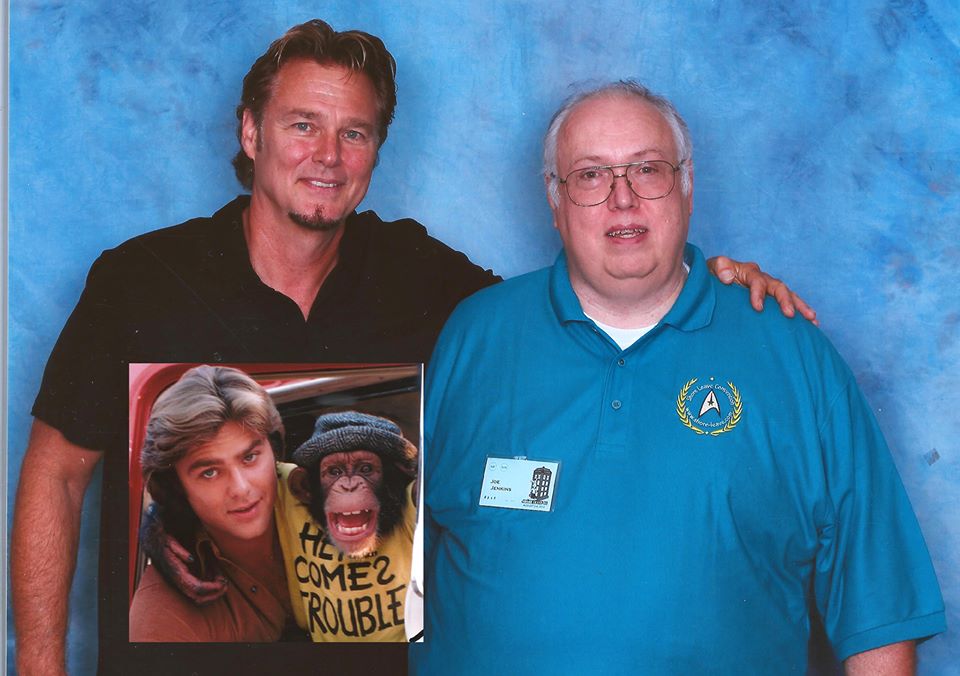
Father Joe with Hercules, Kevin Sarbo

1170803_10151611306053435_424788444_n

Father Joe with Kevin Sarbo at Shoreleave in 2010. Sarbo starred in Hercules and Andromeda.

Priestly Celibacy – Free from the Foolishness

Catholicism both applauds the handiwork of God and qualifies it with reference to original sin. Human sexuality is directly linked to divine creativity; and yet, the more sacred the gift and powerful the faculty, the more tragically it can be corrupted. The ancients of prehistory also seemed aware of the paradox. Human sexuality is exciting, wonderful and beautiful. But there is also something seriously wrong with it. Eve gave the forbidden apple to Adam, Delilah cut Samson’s hair and the sirens sought to beguile Odysseus and his crew. Women were often faulted but men had to accept the fact of their weakness, too. Sex was a weapon that no medicine could cure and no sword could defeat. We have all heard stories of “hen picked” husbands, acquiescing to every female demand to preserve peace and to pay the price of admission to the marriage bed. I even heard a woman joke about this to my face during counseling. “If he refuses to give me what I want then I keep from him what he wants, and we all know what that is!” The men who come to see me speak of constant sexual intimidation; when their wives get angry they get headaches and spurn every touch. While there will be times when married couples need to abstain because of health issues, responsible parenthood and practicality; it must be reflective of justice and mercy.

Wrongful deprivation of what is due to a spouse is a failure to fulfill a solemn duty. This is the matter of serious sin. Employing sex as a weapon from an arsenal damages the oneness and fidelity between spouses. Marriages fall apart over these sorts of shenanigans.

What the celibate priest gives up cannot be taken away from him or used against him. This gives the priest a freedom that is denied married men. He is solely responsible for his own actions. Married ministers must also suffer the scandal that sometimes stems from errant spouses or disobedient children. The celibate priest has both freedom for himself and an important level of control for what goes on around him.

Priestly Celibacy – The Celibate Caught Between Extremes

Celibacy and marriage in the Christian context speaks to human personhood. Sex is such a powerful drive that it can be corrupted and actually damage persons. When exploited, it becomes detached from the spiritual, from the self-donation and receptive activity of the marital covenant, objectifying the other instead of facilitating a subjective encounter with the beloved. Human sexuality is beautiful and profound and yet when twisted into something negative, it becomes a source of hatred, resentment, abuse, and fear. Instead of the profound, it becomes profane and hideous. One might relate this to art. While the human form and the marital embrace might be enshrined in great works of art; there is a vast gulf between this and the cheap pornography that saturates modern Western society. There is no comparison between the love of a husband and wife and that between a man who pays for a prostitute. When the body and human sexuality is reduced to a commodity, we are always contending against serious sin. Genuine bonds of marital love are an antidote to the poison. So too can we speak about priestly celibacy and consecrated virginity as beacons to the truth and healing. Embraced or offered up, human sexuality is then acknowledge as important and part of God’s plan for our holiness and happiness.

While Catholicism has not suffered the level of prudery seen in Puritan religion; she has endured the scruples of Jansenism and the Montanist hatred of the fruitful marriage bed. These matters swing from one pole to the other.  Today, while many substitute cohabitation for matrimony, there is a pervasive cynicism about marriage and its lasting vows. While in the past this might have led a person to a disavowal of marriage and all of its benefits; today men and women extract elements (sexual expression and possibly friendship) from the institution while discarding the rest. Permanence or fidelity, along with an openness to human life often accompany that which is cast upon the garbage heap. This past year, there were more couples living together than those getting married first. Children are increasingly likely to be born outside of wedlock. Half of all marriages in the United States will end in divorce. Contraception is widely used, and now made free by the HHS Obama healthcare mandate. One-and-a-half million abortions take place in our country alone annually. Everything seems to be infected by a manipulative eroticism: television and the Internet bring pornographic images into homes, sexual messages are salted throughout advertising, clothes (even for children) are sleazy and skimpy, and people make out in public with little or no reprimand. There was a time when many people took seriously the notion that sexual expression was reserved to husbands and wives in their bond of matrimony. Celibacy then was not such a giant leap since all single people were expected to be chaste. There was a general expectation that boys would misbehave and “sow their oats,” but this was regarded as a brief departure from the overall plan. It was still anticipated that they would settle down with “a nice girl,” meaning a virgin, remain faithful and raise a family. Feminism, instead of urging the boys to keep their purity like most girls, now recommends that girls be sexually active as well. Increasingly, this makes the celibate into an aberration that is misunderstood and suspected.