• Our Blogger

    Fr. Joseph Jenkins

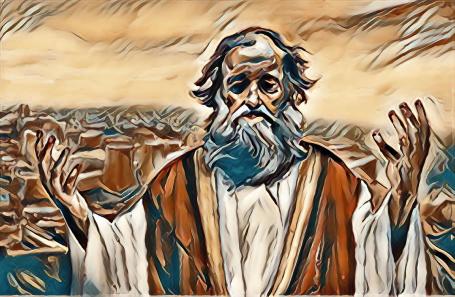
  • An important theme for this blog is the scene in the New Testament where Jesus can be found FLOGGING the money-changers out of the temple. My header above depicts a priest FLOGGING the devils that distort the faith and assault believers. The faith that gives us consolation can and should also make us very uncomfortable. Both Divine Mercy and Divine Justice meet in Jesus. Priests are ministers of reconciliation, but never at the cost of truth. In or out of season, we must be courageous in preaching and living out the Gospel of Life. The title of my blog is a play on words, not Flogger Priest but Blogger Priest.

  • Archives

  • Categories

  • Recent Posts

  • Recent Comments

    Father Joe's avatarFather Joe on The Prayer to Saint Michael at…
    Inveilis's avatarInveilis on Ask a Priest
    Joanne M Rowan's avatarJoanne M Rowan on Reflecting Upon SSPX Dissent…
    Joanne M Rowan's avatarJoanne M Rowan on The SSPX Makes It Itself Out M…
    Jeremy's avatarJeremy on Ask a Priest

The Church & Tactics of Deception

153676726048592070

This questioning comment was recently posted:

Dear Fr. Joe,

I am a political activist and I am trying to see what tactics I can use that would still be considered moral under Catholic teaching. What I seek to accomplish may appear quite odd and perhaps even sinister to many who are not acquainted with the nature of politics. Nonetheless, I simply wish to spread views that support Catholic social teaching and to make enemies of the faith look bad through the manipulation of public opinion and perspective. The most effective way to do this is a duel tactic involving evangelizing those who have a chance to convert and to make the enemy look bad through the usage of sock puppet accounts and Astroturfing.

What I wish to ask is if Online Sock Puppetry, Astroturfing, False Flagging, and overall Psychological Operations and Covert Actions are sinful?

Sock Puppetry is when I make an alternative account online that either spreads my views or is a strawman of my ideological opponents without people knowing it is me using this alternative account. Astroturfing is when I pay people to protest or support me in a way to make it appear my belief system is more popular than it actually is without them knowing they are paid protesters. False flagging is if an operation or action is done in which observers blame someone who didn’t do it because the action implied that it came from them, most often an outright verbal lie is never told as people assume who the perpetrator is. (Imagine someone drawing a swastika on a Synagogue and people assume a Nazi drew it instead of another person attempting to get attention and sympathy for Jews there).

For all of these I know they appear bad and deceptive, but why I am asking this is due to the fact that I never see the Church ever condemn these actions, especially if they are done by many corporations and government intelligence agencies. A person told me that though misleading, these actions are not intrinsically the same as the sin of lying as many of them can be pulled off without necessarily telling someone a falsehood but simply through concealment it leads people to incorrect conclusions in matters not critical to the faith.

With all Due Respect,
Romanicus

FATHER JOE:

Wikipedia definitions:

“Astroturfing is the practice of masking the sponsors of a message or organization (e.g., political, advertising, religious or public relations) to make it appear as though it originates from and is supported by grassroots participants.”

“A sockpuppet is an online identity used for purposes of deception. The term, a reference to the manipulation of a simple hand puppet made from a sock, originally referred to a false identity assumed by a member of an Internet community who spoke to, or about, themselves while pretending to be another person.”

First of all, any who would be political activists should do so under their own names and not under any form of alias.

Second, we do not need pro-faith vigilantes (with secret identities) distorting or manipulating messages within the public forum.

The first might be criticized as a capitulation to fear. The latter lacks transparency and does a disservice to the truth. The manipulation of persons is from the evil one. The Gospel of Christ and our values must be witnessed in the light of day. Yes, that makes one an easy target for the enemies of the Church. But that cannot be helped. It makes a person into a genuine sign of contradiction within a non-Christian culture. Our Lord knew this and commanded us to take up our crosses and follow him.

The faith is a gift freely given and it must be freely received. We transmit our holy religion and its values both through our witness and in our proclamation.

A Scandal that Calls for a New Reformation

153508226949038595

“Christ himself, the model of priests, taught first by the example of his deeds and then by his words: Jesus began to do and then to teach. Likewise, a priest who neglects his own sanctification can never be the salt of the earth; what is corrupt and contaminated is utterly incapable of preserving from corruption; where sanctity is lacking, there corruption will inevitably find its way.”

– St. Pius X

We are taught as Catholics that the Church is holy because Christ is holy.  This is what gives truth value to the second mark of the Church mentioned every time we recite the Creed at Sunday Mass.  The Church is holy and it is by means of the teachings of faith and the sacraments that we can be made holy by grace.  This is what we believe and yet has there ever been a time when it was so very hard to believe? The Church is also composed of sinners; indeed, we are all sinners needing a Savior.  But when it comes to our priests and bishops, we like to imagine that they have a direct line to heaven.  They make little money, forsake a spouse and family and are at the immediate beck-and-call of their flocks.  The lesson that Jesus gives his apostles with the Holy Thursday foot washing is that the greater they would become, the more they would have to humiliate themselves as the servants of all.

Catholicism insists that both bishops and priests should remain celibate— placing the love of the Mystical Body or the Church ahead of all other loves.  At a time when most churches compromise on the moral teachings of Christ; the Catholic faith remains resolute about purity prior to marriage, about the permanence of marriage, about marriage as only a relationship between a man and a woman, about the nature of the marital act as open to the generation of children, and about the sanctity of human life.  The loftier the moral message, the further the messenger might fall when he is exposed as duplicitous.

Our priests witness the marriages of couples in love, consecrating unions with the favor of God and of his Church.  They baptize babies, transforming them from mere creatures of God into adopted sons and daughters of our heavenly Father.  They absolve penitents from their sins, literally stealing the damned from the devil. At Mass they celebrate the sacrifice of Calvary so that we might offer ourselves with Jesus, the Lamb of God, as an acceptable oblation to the Father.  They give us Holy Communion, rations from that promised shore to which we travel as spiritual pilgrims.  Along with bishops, they offer confirmation, completing our baptisms so that we might be enriched by the gifts of the Spirit and made living temples of God.  They anoint the sick, perpetuating the ministry of Jesus in bringing healing to the hurting among us.  They bury the dead, preaching a message of hope that in Jesus love is stronger than death and victorious over the grave.  The priest is at the center of everything Catholic.  That is what makes the current scandal especially devastating.  The faithful are rightly disappointed and upset. Our shepherds are facing a crisis in holiness.

Contagious Scandal & the Loss of Reputation

Any one priest signifies every priest.  This collective appreciation has made the present crisis a damning one.  When the laity look at their priests, they immediately wonder, “Could he be one of those priests?” While regarding only a few, these dark revelations of sin and crime are sufficient in damaging overall trust.

Men presumed as truthful revealed as duplicitous liars.

These are the same men appointed as preachers of the Gospel.  The priest and pastor is the chief catechist of every parish and is entrusted with the faith formation of his people.  What becomes of the message or the Good News when the messenger becomes a witness of bad or scandalous news?  What becomes of his credibility when the mouthpiece of God not only stumbles in his witness but is unveiled as an agent of the devil’s anti-gospel? How can such a man speak to us about the truth when he has failed to put on the mind of Christ?

Men presumed as merciful exposed as sources for sin.

These are the men chosen to give flesh to the Divine Mercy in the ministry of the church.  Who would want to go to confession to such rogues?  Many might think that their sins pale in comparison to such reprobates.  While the efficacy of the sacraments is assured; it is understandable that the faithful would feel stained or polluted by association with these men.  Is it all just empty words and gestures? Compounding the problem, they sometimes substitute malice for mercy and draw others as accomplices into their lives of sin.  How can such men draw us into the love of God when they do not have the heart of Christ?

Men presumed as healers caught as sadistic destroyers.

Jesus condemned the pharisees for placing unnecessary burdens upon good people.  As an antidote he delivered the freedom and healing that belongs to the children of God.  Priests were called to mend souls and to give hope, not to breach their victims from the family of God or to give them cause for despair.  The miscreants in the news destroyed innocence and purposely misdirected the faith trajectory of people’s lives.  They placed their own sexual gratification over sacred promises and the good of persons.  How could they live with themselves, exchanging the joy of right relationship with God for a cruel transitory delight toward others?  Even if there were a failure to love, did they not fear God?

Men presumed as pure are brought to light as defiled.

Priests are commissioned as eschatological signs of Christ’s kingdom.  This is a basic premise behind the promise or vow of celibacy.  Celibacy is not the same as chastity or virginity.  Rather, it is a wondrous way of loving others.  We are corporeal-spiritual composites, creatures of spirit and flesh.  The purity of the body is supposed to immediately signify the virtuous nature of the soul, the existential resolution as one who loves the Lord so tremendously that it spills over in concern for the neighbor.  As opposed to the pattern of the rich man going away sad because of his many possessions, it is the follower of Jesus who seeks to abandon earthly satisfaction so as to be rich in Christ.  What happened to this singleness of purpose in these men?  How is it that they could be satisfied with the carnal man when they were pledged to something greater, the one who lives in the Spirit?

Men presumed as holy are divulged as devils.

We are all called to be saints.  That is our fundamental purpose in life.  Christ as the new Adam comes into the world to restore an innocence that was lost by sin.  The priest is charged as an instrument of the Lord to dispense the divine mysteries in making this objective possible.  His ministrations allow us to enter in the saving paschal mystery.  Here is where the sins of these men become a kind of blasphemy against all that is holy and good.  Instead of realizing their role as sharers in Christ’s priesthood and extending his saving works, they look to the wimpish failure of the first Adam; indeed, worse than this, they play the role of the serpent.  Do they not see how they have been thoroughly soiled as slaves to the devil?  Have they stopped believing entirely?

We are told that a priest, even in mortal sin, can validly administer the sacraments.  This is one of the great absurdities of faith and yet one necessary to insure the efficacy of the sacraments in the life of God’s people.  Of course, while a bad priest might do some good, his bad character often sours the milk and corrupts or tears down what is built up.  This dissimulation probably constitutes a special wound in the Sacred Heart of Jesus.  Our Lord is pained by the priest who is a cheat or hypocrite, even as he is supposed to be “another Christ” at the altar.

It remains a conundrum that a priest might take his people to the very gates of heaven but himself be unable to enter.  While we might think that the graces of priesthood would make it easier for him to go to heaven; certain authorities have argued that it makes the prospect of hell more pressing and dangerous.  Why?  The more one is given, the more for which one will be held accountable.  The priest knows better and cannot claim ignorance.  Everything needed for salvation is immediately available.  That makes any neglect inexcusable.  Further, because he has been configured to Christ by his ordination, the devil targets him for every temptation and assault.  At his altar, at his desk, in his car and in his bed he is always in the midst of a fierce battle with the prince demon of perdition.  Priests who forget this will immediately stumble.  The senses are especially targeted.  The scandals of late all appeal to the flesh and sexuality.  The sins committed are virtually unimaginable.  Minds are clouded.  Hearts are hardened.  The devil will take any crack he can find to pierce the priest’s soul— smoking, drunkenness, gluttony, sloth, anger, jealousy, whatever.  The devil may have failed in his temptation of Christ; but starting with his apostles and coming down through history to his priests and bishops of today, he has found men who sometimes falter and even become his property.  Judas may not be the only bishop-priest in hell.

It is a terrible business when the weak link of faith is the shepherd. The weapons to hurt souls and to attack the Church then come from the very hands of the priest— hands that were consecrated for the chalice and the host.  We as Catholics become our own worst enemies.  It is at such times that we must remember that our faith is placed ultimately not in men but in God.  We should also recall the saints, for theirs is the true legacy of the Church.  Instead of running away, it becomes all the more imperative for God’s people to keep the faith and to demand fidelity and holiness of their priests.  All sins might be forgiven, but the sins against innocence must not be forgotten.  A reform of the Church will mean that some higher churchmen will have to step down, certain priests will have to be removed from ministry and others will have to embrace a heroic apostolate of penance and sanctity.  This is not a time for window dressing but of a true moral reform, to deal both with a hostile secular modernity and a rigid clericalism that makes careerism and a fear of scandal into higher imperatives than protecting God’s flock from the robber and the wolf.

If we enter into the light (not afraid of what will be unmasked) and not in the darkness (where the roaches of sin hide), then we will truly walk with Christ.  As opposed to the clamoring enemies of the Church who see the current scandal as the death knell for Catholicism, maybe it is an unavoidable summons to “grow up” and to become a more effective and genuine witness for Christ in the modern world?  Divine providence is most unfathomable when God draws something of the good from the misdirected evil of men.

Novena for St. Ann

The Feast Day for Saints Joachim & Ann is July 26

153115812951608086St. Ann, Mother of the Immaculate Conception

 GOD OUR FATHER, the beauty and the order of your creation was willfully damaged by those who rejected your friendship. Undeterred by this ingratitude, your Son entered our world on a mission of mercy and healing. He walked among us as a divine physician seeking the lost and the strayed, curing the sick and the handicapped, mending broken hearts and restoring broken friendships, comforting the distressed and bringing peace of mind to the victims of sin. With the exception of sin, he too was the victim of suffering and anxiety. He knew fatigue and hunger and loneliness. In taking flesh and blood from the children of Eve, he honored Mary and Ann as mother and grandmother. From them he inherited eyes which behold the ills of man and hands which constantly reach out to bring healing to mind and body. In this novena of prayer, dedicated to Saint Ann, the friend of the sick, we ask her intercession to strengthen our faith that miracles of healing may continue to testify that the compassionate Jesus still walks among us. We ask him to bless us, today and forever. Amen.—Bishop Raymond J. Boland (1978)

DAY 1 – Wednesday, July 18 – Embrace me as a brother to your grandson, Jesus.

Glorious Saint Ann, by the special bond of affection uniting you still with your child, our blessed Mother, and with her divine Son, we call on your powerful aid to meet today’s pressing needs. We freely acknowledge our own sinfulness and unworthiness, and yet we count on your help, and promise ever to be grateful to you and faithful to God’s will for us. Amen.

DAY 2 – Thursday, July 19 – Teach me the value of prayer.

Dearest Saint Ann, teach me the value of prayer. When I pray humbly, earnestly, God’s hand stretches out to me; it takes hold of my hand, my mind, my will and helps me up the steep path that leads me to the goal he has set before me. Amen.

DAY 3 – Friday, July 20 – Show me the light of Christ so as to find my way.

Saint Ann, when I lose my way and lose sight of my Lord, show me how I can find him again; tell me where he wishes me to walk through life; help me discover in Christ’s teaching the light that will reveal to me the Father’s will, which is made manifest through his commandments, through my duties toward him and toward my neighbor and through the various circumstances in which I am called to work out my destiny. Amen.

DAY 4 – Saturday, July 21 – Obtain for me strength and courage over all temptations.

Saint Ann, when I lose heart before the hardships of life and the constant obstacles that I have to overcome, when I feel helpless before my bad inclinations, before my repeated struggles against the evil one and against a world that is constantly pulling me away from you, obtain for me from God, who is the source of all strength, the courage to remain faithful to him, never to pull my hand out of his hand and to overcome the countless temptations of the world, the flesh and the devil. Amen.

DAY 5 – Sunday, July 22 – Grant me a consuming love for God and neighbor.

Saint Ann, first of all, let me always keep burning in my heart the eternal flame of God’s love; let the unquenchable fire of God’s love for me forever keep alive in me a consuming love for the Lord and for my neighbor. Amen.

DAY 6 – Monday, July 23 – Help me to prize heavenly joy over earthly consolation.

Dearest Saint Ann, whenever I am unhappy, inspire me to pray for happiness, for my share in the happiness of this earth; but, first of all, for the endless happiness that God has prepared for those who serve him with loving and prayerful hearts. Amen.

DAY 7 – Tuesday, July 24 – Draw me deeper into the mind and heart of Christ. 

Each passing day is a step forward on our earthly pilgrimage. Saint Ann, let each new day bring us deeper into the Lord’s knowledge and love. This is the goal of all Christian life on earth: that every passing day and every passing year should show us better the dazzling face of our God and urge us toward him in more faithful service. Amen.

DAY 8 – Wednesday, July 25 – Teach me how to bear suffering as God’s will. 

Saint Ann, the afflictions that befall our persons, families, cities and nations will be unbearable, unless you teach us how God’s merciful designs for man are attained through suffering. Keep reminding us that the only way that leads man to God and happiness is the way of the cross. Amen.

DAY 9 – Thursday, July 26 – Teach me how to desire equity and justice for all.

Saint Ann, teach us how to love one another. Love alone can do away with the evils of disputes, riots and wars. Love alone can inspire men with a sense of equity and justice. It will tear down the barriers that divide men according to languages, colors and creeds, and will inspire mankind to live in mutual understanding. Amen.

Prayer of Consecration to Saint Ann

Blessed Saint Ann, who did give birth to the Mother of God: illustrious Grandmother of Jesus Christ, I choose you this day for my Patron and my Mother. I offer and consecrate myself entirely to you and I recommend to your eternal solicitude and your holy protection my body and my soul, the necessities and vicissitudes of my existence, my life and my death. I am determined, and I promise, to serve you and to honor you for love of Mary, your most holy Daughter, and to propagate according to my powers devotion to you. / On your part, O my sweet Mother, O my holy Patron, deign to receive me into the number of your servants and children. Obtain for me the grace to imitate so perfectly the virtues which have made you pleasing in the sight of God that I may merit the favor of Jesus and Mary. Obtain for me a happy death and at my last hour receive my soul into the arms of your love. Help me during my life by the sufferings, by the merits and mercies of Our Lord Jesus Christ, to obtain such perfect remission of my sins that my soul on leaving its body may go quickly to join you in eternal rest. Amen.

NOTATIONS:

Two-side Parish Bulletin Insert, click HERE.

The version of the devotion is here somewhat abridged.  For a pdf file of the complete booklet, click HERE.

Manner of Receiving Holy Communion

downloadQuestion 260

Hello Father, I recently had my civil marriage convalidated; thus I am now able to receive Communion. I have not received Communion in over 25 years. I already went to confession. My question is, after I place the holy host in my mouth and make the sign of the cross, what am I supposed to do? I remember receiving Communion in my mouth and never touching it. I also remember going back to my place and kneeling in prayer for a brief moment. But nowadays, my daughter who is 13 years old places the host in her mouth, returns to her place in the pew and just stands there. She made her first Communion when she was 8. What is the correct thing to do?

Response

After reception and making the sign of the cross, the communicant goes back to his or her pew and kneels in prayer. The pattern is simple and unchanged. I am not sure why your daughter fails to kneel. Are there kneelers in your church?

Have a Happy & Holy Easter!

As I ponder the mystery of the season, there are twelve themes that I would put forward for reflection and prayer:

152262581477942353

(1) A new day has dawned. (The LIGHT of Christ casts aside the darkness.)

(2) The promise of old has been fulfilled. (The long-awaited Jewish Messiah is the Christ and Savior of the entire world.)

(3) The breech is healed. (Jesus is the New Adam and the bridge between heaven and earth— he is the way to the Father.)

(4) The salvific work of Christ has redeemed us from the devil. (Our Lord paid the price that we could not pay.)

(5) While the primordial trespass brought suffering and death into the world– Christ’s fidelity ushers forth healing and life. (The damage from the primordial garden is repaired and we are called to faith and hope in Christ.)

(6) Nothing will ever be the same again. (The course of human history has changed; Christ’s victory changes everything.)

(7) Death is conquered if not entirely undone. (The war is over but a few battles must still be fought because of our fallen nature and the spite of the devil.)

(8) We no longer need fear the specter of death. (Jesus tells us, “Be not afraid.”)

(9) The grave will not consume us. (Neither the grave nor hell is the end of the story for those who walk with Christ.)

10) No one need live in vain. (Our Lord reveals to us the loving face and mercy of God.)

(11) Like the apostles we are called as witnesses to the saving truth. (Both faith and charity, if real, must be given away or shared.)

(12) Christ becomes the pattern of our discipleship: we must die with Christ if we hope to live with him. (The paschal mystery calls to us as missionary disciples.)
Have a blessed Easter!

—Father Joe Jenkins

[35] Fifth Sunday of Lent

152158488016964075

Readings:  Jeremiah 31:31-34 / Psalm 51 / Hebrews 5:7-9 / John 12:20-33

Our first reading selection today is taken from what is called the Oracles of the Restoration of Israel and Judah.  Jeremiah’s writings would be an inspiration for the prophet(s) Isaiah; indeed, they proved more beneficial after his death in that they gave hope to a vanquished people.  He promoted religious reform and fought the idolatry that plagued Judah.  With the apostasy and fall of the nation, he suffered arrest, imprisonment, public disgrace and exile.

The prophet speaks of an impending new covenant, different from before, in that faithfulness will replace their current infidelity.  God’s law will not be upon tablets of clay or rock that might be lost or broken, but rather placed within them and written “upon their hearts.”  The words once spoken to Abraham will be made everlasting:  “I will be their God, and they shall be my people.”  While arguably ambiguous, it sounds like the language of grace.  It deeply resonates with Christ’s words about his new and everlasting covenant.  Just as the admonition of the Gospel was “repent and believe,” i.e. “obey,” the prophet writes in the persona of the Almighty, “I will forgive their evildoing and remember their sin no more.”  Our Lord came into the world for the forgiveness of sins.  He heals the breach between God and man.  The new Israel and the New Judah is the Church.

The responsorial similarly speaks of God’s law imprinted upon human hearts:  “Create a clean heart in me, O God.”  The two-fold commandment of Christ emphasizes the love of God and of neighbor.  We are to have the Lord’s heart in the priorities we set for ourselves, in regard to that which we love and in how we demonstrate or witness compassion, generosity and forgiveness.  Jeremiah was of the priestly class— priests offered sacrifice— they sought to make atonement for sin.  The prophet lamented how hard-hearted were both the rulers and the people that followed them.  They invited their doom by forfeiting divine favor and protection.  No doubt our Lord had Jeremiah in mind when he spoke about how the leaders and crowd even rejected him.  We read in Matthew 23:37-39:

“‘Jerusalem, Jerusalem, you who kill the prophets and stone those sent to you, how many times I yearned to gather your children together, as a hen gathers her young under her wings, but you were unwilling! Behold, your house will be abandoned, desolate. I tell you, you will not see me again until you say, ‘Blessed is he who comes in the name of the Lord.’”

God is faithful.  Both God and man will be faithful in Christ.

What is a clean heart?  It is pure for sure, but it is also undivided.  It is a heart with a single purpose.  Do we want this heart?  If so then I would recommend the prayer that the apostle Paul gave the Ephesians:

“For this reason I kneel before the Father, from whom every family in heaven and on earth is named, that he may grant you in accord with the riches of his glory to be strengthened with power through his Spirit in the inner self, and that Christ may dwell in your hearts through faith; that you, rooted and grounded in love, may have strength to comprehend with all the holy ones what is the breadth and length and height and depth, and to know the love of Christ that surpasses knowledge, so that you may be filled with all the fullness of God. Now to him who is able to accomplish far more than all we ask or imagine, by the power at work within us, to him be glory in the church and in Christ Jesus to all generations, forever and ever. Amen” (Ephesians 3:14-21).

The second reading presents Christ as the one High Priest of Christianity.  Our Lord did “offer prayers and supplications with loud cries and tears” to the Father on our behalf.  Jesus is faithful to his mission given him by the Father unto the Cross.  He does what no other priest had ever accomplished, he offered perfect atonement and “became the source of eternal salvation for all who obey him.”  When our Lord beseeches us to take up our crosses and follow him, he is appealing to us as his priestly people in baptism.  It is within the oblation of Christ that our sacrifices and self-offering can be made to the Father.  This merits for us a share in the Lord’s reward or victory.  Every disciple is to believe, love and serve with a priestly heart.  The measure of all love is in terms of surrender or sacrifice.  We belong to the Lord.  He is a jealous God.  He will not share us.  He abides in us by grace so that we might live in him forever.

There are several times (both explicitly and in veiled symbolic language) that Jesus prophesies about his coming betrayal, passion and death.  He asserts in today’s Gospel, “The hour has come for the Son of Man to be glorified. Amen, amen, I say to you, unless a grain of wheat falls to the ground and dies, it remains just a grain of wheat; but if it dies, it produces much fruit.”  After making a reference to his coming death, his attention turns to his followers.  “Whoever loves his life loses it, and whoever hates his life in this world will preserve it for eternal life. Whoever serves me must follow me, and where I am, there also will my servant be. The Father will honor whoever serves me.”  How would you advertise for such an ordeal?  Imagine you were reading the HELP WANTED ads and your eyes ran across the following:

“WANTED… men and women willing to give up family, position, wealth and power… yes, absolutely everything so as to follow a prophet who claims to be God.  Note that you must be willing to follow him in being betrayed, mocked, tortured and murdered.  He promises to give you eternal life.”

Sounds crazy, does it not?  Who would answer such a thing?  And yet, that is precisely the call of the Gospel.

  • What does it mean to have a sacrificial “priestly” heart?
  • What must we do to show that we belong to the Lord and his kingdom?
  • How might we be prophetic instruments in bringing reform to our society?
  • Have you ever prayed for someone or something to the point of tears?

Clarity in a Sea of Confusion

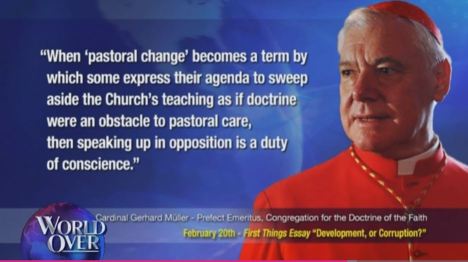
muller

Dr. Dolores B. Grier, Rest in Peace

28377466_10155447127123435_1767984721393134454_n

Sir Knight Reginald Grier informed us that his sister, Dr. Dolores Bernadette Grier, died in New York City on February 22, 2018, her birthday. She was 91 years old.

The late Cardinal O’Connor of New York appointed Dr. Dolores Bernadette Grier as the first lay woman to be a vice chancellor of the archdiocese. Dolores Grier’s appointment as vice chancellor for community relations in 1985 was national news as she achieved several firsts. Not only was she the first lay woman, but she also was the first black American in the U.S. to be appointed a vice chancellor. She also became the first lay woman named to any chancery post in the archdiocese.

When Grier was a teenager she converted to Roman Catholicism. She graduated with a master’s degree in social work from Fordham University. In 1980 she heard a “persuasive, dynamic speech in defense of all human life from conception” by the Rev. Jesse Jackson and credits this speech with bringing her into the pro-life movement. She lamented in her book, DEATH BY ABORTION, the course Jackson took in his career by saying, “Regrettably, Rev. Jackson joined the Democratic political party and adopted its pro-abortion/pro-choice platform. Too many legislators, Republican and Democratic, have chosen to walk on the ‘comfort zone’ bridge of pro-choice, thus turning their backs on the unborn human beings, perhaps because they are not yet voters or members of a political action group.”

In 1993 the New York City branch of the NAACP selected her to be the recipient of the Women’s History Month award, she refused it and membership because of the organization’s pro-choice stance on abortion. “As president of the Association of Black Catholics,” she wrote, “I believe abortion to be a racist weapon of genocide against black people. It has been thrust upon black women as a solution to their economic crises, confusion and concern.”

She had a television program on BLACK CATHOLICS and was a long-time EWTN spokesperson and close friend of the late Mother Angelica. She was a nationally known African American pro-life activist and non-fiction author. She also orchestrated the PROUD TO BE ROMAN CATHOLIC effort in New York. Dr. Grier sat on the Board of Advisors of the Catholic League and was founder of Black Catholics Against Abortion. She wrote, “Yesterday they snatched babies from our arms and sold them into slavery, today they snatch them from our womb and throw them into the garbage.”

I met her on several occasions and she was a wonderful lady and true disciple of Christ. Rest in peace.

[26] Second Sunday of Lent

151976741619345650 (1)

Readings:  Gen. 22:1-2, 9a, 10-13, 15-18 / Ps. 116 / Romans 8:31b-34 / Mk. 9:2-10

An important traditional demarcation of the ancient Jews from their pagan neighbors was the repugnance they felt toward human sacrifice.  Rather, they offered the grains of the field or animals like goats, sheep, bulls and birds.  However, more recent archeological evidence shows that the early Jews did at one time offer the oblation of human beings.  The remnant texts that point to such behavior are the testing of Abraham and the story of Jephthah’s daughter. The story of Jephthah’s daughter can be found in Judges 11:29-40.  Like our passage today, it is deeply disturbing.  The Hebrew general pledges that the first who steps out the door of his home, he will sacrifice. He immediately laments his pledge because out steps his young daughter. She requests a short time to mourn her virginity and then we are told he did as he promised. Unlike the story of Abraham and Isaac, it appears that God does not stay his hand. The young girl had courage and her father kept his promise to God; but as Christians, we are aware that some promises should not be made. The child mourns that she will never know the joys of being a wife and mother. It is a poignant and terrible story.

Just as the story of Abraham and Isaac prefigures God’s surrender of his Son; the story of Jephthah’s daughter is connected to the Virgin Mary.  Mary gives herself to perpetual virginity and undergoes a vicarious martyrdom in witnessing the passion and death of her Son. Jephthah was a great Jewish general. He was successful against tremendous odds. He was victorious not because of his oath, but in spite of it. As St. John Chrysostom would tell us, his repugnant act would move the Jews to renounce all such blood-oaths from that time forward. Regarded as a testing of Abraham’s faith, a messenger from heaven intervenes and God directly prohibits the sacrifice of Isaac.  This would plainly show that God does not delight in such sacrifices.

Abraham certainly did not comprehend the command to sacrifice Isaac.  It seemed to violate providence, itself.  The patriarch was elderly and his son was the child of promise from which he was supposed to generate many descendants.  He did not understand but he remained faithful.  It is that element and not the shocking act that we should fully reflect upon.  God stays the hand of Abraham but he would not spare his own Son, the child promised from the dawn of creation.  Our heavenly Father did not directly will that his Son should be tortured and murdered; but he did desire faithfulness.  Jesus is faithful to his mission unto the Cross.  Abraham substitutes the oblation of a ram.  When God spared us (signified by Isaac), Jesus substitutes himself for us as the divine Lamb of God.  The sacrifice is no longer a ram caught in the briars but a Savior crowned with thorns.

The sacrifice of human beings by the pagans would be regarded by the early Christian community as a feeding the bloodlust of demons. We might think that we are morally better and enlightened, but over a million unborn children are aborted in the United States annually.  Many ministers regard this as a return of the demonic sacrifices of old.  Are we feeding demons the blood of our children?

The responsorial speaks to our conviction as believers during the season of Lent: “O LORD, I am your servant; I am your servant, the son of your handmaid; you have loosed my bonds. To you will I offer sacrifice of thanksgiving, and I will call upon the name of the LORD.” Catholics readily make the connection between Christ as the suffering servant and Mary who declares herself as “the handmaid of the Lord.”  Jesus offers his life that we might be released from the bonds of Satan.  Our Lord will pay the price of his life to set us free.  Mother and Son will meet on Calvary.  The sacrifice of Jesus will do what all prior oblations failed to do— make true and lasting atonement for sin.

The second reading reiterates today’s theme:  “If God is for us, who can be against us? He who did not spare his own Son but handed him over for us all, how will he not also give us everything else along with him?”  Paul is speaking about the gift of hope that comes with faith.  The victory over sin and death has already been won.

The Gospel reading gives us the scene of the Transfiguration.  Our Lord is dressed in dazzling white and beside him stands Elijah and Moses.  This signifies that Jesus is the fulfillment of the LAW and the PROPHETS.  The transformation in Jesus might be interpreted as a sign of things to come, notably the resurrection.  Lest it should be misunderstood, Jesus tells his three apostles not to speak about what they have seen until “the Son of Man had risen from the dead.”  We are told that they questioned what was meant by “rising from the dead.”  The apostles really could not get their heads around our Lord’s prophesies about his passion and death.

There is an important but sometimes overlooked element to the reading that we today should take to heart.  The heavenly Father’s voice beckons from the cloud, “This is my beloved Son. Listen to him.”  Jesus is the ultimate term for salvation.  It is his sacrifice that is saving.  Given that he buys us back with his own life, we belong to him.  If that be the case, then it must be realized with faith and an abiding obedience.

  • What sacrifices have you made in your life to realize your discipleship?
  • Do you appreciate that every Mass is a re-presentation of the oblation of Calvary?
  • Have you placed limits on your faith and what you would do in response to God’s calling?
  • How have you died for Christ and others, brushing aside selfishness?
  • Do you listen and obey God’s Son or have you substituted other authorities?
  • Do you put a premium upon human life, both in and out of the womb?

[23] First Sunday of Lent

15188060042474533

Readings: Genesis 9:8-15 / Psalm 25 / 1 Peter 3:18-22 / Mark 1:12-15

Noah plays the part of a new Adam.  Just as in the creation story, Adam is given charge over creation and names every living thing; Noah preserves the animals from destruction and he and his family will make a new beginning.  The spirit of God hovers over the waters of creation and he breathes life into all living beings.  Whereas life comes from the waters, so too does death.  The covenant that God established with Noah includes the promise that God will never again wipe out the world through a flood.  This pattern is revisited with Christ and the new covenant:  we die with Christ in the waters of baptism so that we might live or rise with him.  The rainbow is left as a sign of God’s covenant with Noah.  The sign of the cross will be the mark or lasting sacramental of Christ’s saving covenant.  Baptism makes us adopted sons and daughters of the Father, brothers and sisters to Christ, heirs of the kingdom and members of the Church.  The Church is often reckoned as or compared to the Ark of Noah.  Salvation is found in Christ and in his Church.  As pilgrims who must sail through the dangerous storms of this world, our Lord guides and protects us as our captain in his boat or ship.  Our rations are signified by the Eucharist, food taken from the Promised Shore.  The story of Noah, like the story of salvation in Christ is both about judgment and mercy.  Even if many are lost, some will be saved.  Those who listen to the Lord will be spared.  Those who turn away will face his terrible justice.

The psalm asserts, “Your ways, O Lord, are truth and love to those who keep your covenant.”  Those who claim God will in turn be claimed by him.  It is as simple as that.  Covenants are contracts but also much more.  Jewish covenants were made in blood.  An animal would be slain and blood sprinkled.  It was understood that if one broke a covenant, a promise would become a curse.  Literally placing one’s life and that of the family on the line, one implored that if this covenant were broken then “let happen to me” what was suffered by this sacrificed lamb or goat or bull.  Jesus would be the Lamb of God who “lays down his life” for sinners.

Despite our infidelity, Jesus is faithful.  He takes upon himself the sins of the world.  He dies that we might live.  The psalm asserts that “truth” comes with the covenant.  God reveals himself and establishes a relationship with us.  Jesus is the revelation of the Father, showing us the face of God.  The psalm also states that the covenant expresses love.  It is love that calls us into existence.  It is for love that God saves a remnant in the days of Noah.  It is love that is nailed to a tree and that proves stronger than the grave.

The second reading from Peter’s epistle speaks of Christ’s singular oblation for sinners.  Jesus heals the breech between heaven and earth with is death, rises from the dead and then he preaches “to the spirits in prison.” These are the righteous dead in the limbo of the fathers.  This number includes Adam, Noah, Abraham, indeed all the ancient patriarchs and prophets.  They have waited from the beginning of the world for the promised Messiah— the one who would be reckoned as the Way and the Truth and the Life. Peter says that the story of Noah prefigures “baptism, which saves you now.”

As a contrast to the rain and waters in the story of Noah, our Lord experiences the heat and dust of the desert for forty days.  Gone is the life-filled garden of the first Adam.  Death has entered the world.  Our Lord is tempted by the devil.  Fortunately, this time we have an Adam who will not fall.  Jesus begins the work for which he comes into the world.  He comes to Galilee preaching the Good News:  “This is the time of fulfillment. The kingdom of God is at hand. Repent, and believe in the gospel.” All of salvation history converges upon Christ and his three years of ministry:  teaching, healing, and forgiving.  God will keep his promise to send a Savior.  He comes not to rescue the righteous or the good, but sinners or the bad.  Despite our infidelity, age after age, God is forever faithful.

We came into existence wounded in the womb.  Our ancestors through sin contracted suffering and death.  All inherited these painful mysteries and needed healing.  We were the purloined property of a fallen angel.  While our Lord ransomed us back from the devil, Satan still takes delight in tormenting our wound, introducing a spiritual infection and distracting us from the divine physician.  Indeed, some have become so duped that they forget God and no longer believe that Satan exists.  History is only transformed if we turn to our saving God; otherwise, we find ourselves contaminated by an essential malignancy.  It is only with the Lord that we can find spiritual healing and life.  While frustrated in his temptation of Christ, the same demon makes his appeal to us.  While he has lost an entitlement to the world and to the race of men, he can still exploit his eternal spite.  Jesus may have won the war, but the devil can yet abscond with his particular casualties.  Christ might claim you but you are not safe until you claim him.  Satan would have us mingle with the indifferent crowd, only believing in the strength of what flesh might attain apart from Christ.  He tells us to gorge ourselves with earthly riches and proximate pleasures.  “Do not worry about what is right or wrong, no matter whether it be in reference to stolen goods, oppressed immigrants or aborted children.  The only choices that matter are the ones that satisfy your needs.” The demon tempts and mocks us all while hiding at the periphery of our life and awareness.  Like the roaches that scurry when the lights are turned on, we need to allow Jesus who is the Light of the World to dispel all that hides in the darkness.  Repentance makes room for believing and loving as we should.

  • As people of the covenant, do we keep our promises to God and others?
  • Do we sufficiently ponder the price that was paid for our sins?
  • Do we go to confession and is our contrition perfect or imperfect?
  • Have we read the Gospels or any book about the life of Christ?
  • Do we take seriously the discipline about fasting and abstinence?