• Our Blogger

    Fr. Joseph Jenkins

  • The blog header depicts an important and yet mis-understood New Testament scene, Jesus flogging the money-changers out of the temple. I selected it because the faith that gives us consolation can also make us very uncomfortable. Both Divine Mercy and Divine Justice meet in Jesus. Priests are ministers of reconciliation, but never at the cost of truth. In or out of season, we must be courageous in preaching and living out the Gospel of Life. The title of my blog is a play on words, not Flogger Priest but Blogger Priest.

  • Archives

  • Categories

  • Recent Posts

  • Recent Comments

    Barbara King's avatarBarbara King on Ask a Priest
    Ben Kirk's avatarBen Kirk on Ask a Priest
    Jeremy Kok's avatarJeremy Kok on Ask a Priest
    Barbara's avatarBarbara on Ask a Priest
    forsamuraimarket's avatarforsamuraimarket on Ask a Priest

Does God will a Plurality of Religions?

157333249285949947 (3)

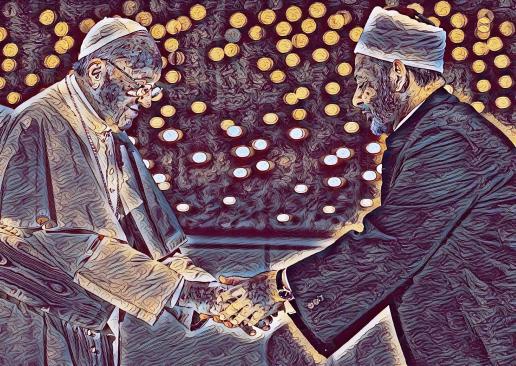
Back in February, the Catholic Pope Francis and the Sunni Muslim Sheik Ahmed el-Tayeb signed the “Document on Human Fraternity” in the hope of improving interfaith relations. Hopefully, we are all for fraternity and peace in the family of man. However, this does not mean that we must sidestep or renounce basic tenets of the Catholic faith. Our approach to Islam should not be to become less Catholic but rather to be more Catholic. It is here where a problem arises in the document. It states:

“Freedom is a right of every person: each individual enjoys the freedom of belief, thought, expression and action. The pluralism and the diversity of religions, colour, sex, race and language are willed by God in His wisdom, through which He created human beings. This divine wisdom is the source from which the right to freedom of belief and the freedom to be different derives. Therefore, the fact that people are forced to adhere to a certain religion or culture must be rejected, as too the imposition of a cultural way of life that others do not accept.”

We might certainly say that the elements of color, gender, race and even language enrich humanity and find their source in God. This last element would include the value of Latin which so many progressives renounce for a one-sided adulation of the vernacular in worship. However, there is a problem when one says that God desires a “pluralism” and “diversity” of religions. I am reminded of the Protestant reformer Martin Luther on his deathbed. Instead of a reform of Catholicism there had been a widespread revolution and defection. While it may be mythical, it is purported that he said, “My God, my God, what have I done? There are now as many religions as there are heads!” The plurality of religions is not from the active will of God. Instead, it is a consequence of original sin. It is a diversity that is affirmed by obstinacy toward the true God.

The German princes and the King of England did not break from Rome because of doctrine, at least not at first, but for purposes of enhancing wealth and power. The division expanded through ignorance, prejudice, and a selfish egoism. When it came to non-Christians, Mohammad was rejected by the Eastern monks as intellectually ill-equipped to benefit from their teaching and spirituality. Their lack of charity fueled his anger and drove him to create a new religion to challenge Christianity. He deliberately amalgamated the teachings of the Jews, Christians and the local tribal cults. His purported revelations in the Quran often corrupted these elements or misconstrued the purloined doctrines.

An instance of this is his rejection of the Christian Trinity as the Father, the Son (Jesus) and the Virgin Mary. Not only did he wrongly substitute the Blessed Mother for the Holy Spirit, he fails to understand the Church’s teaching that there is ONE divine Nature but THREE divine Persons. God cannot be the source of error and here is a factual error in faith. Mary is a blessed creature of God (not divine) and Jesus is indeed the second Person of the Blessed Trinity.

While Islam went through an intellectual period, it ultimately became a religion that made converts not by persuasive arguments but by sharpened swords. The Muslims were correct that there was one God. A number of the popes have assumed that this was the same God of the Jews and Christians. Many of us have remained unsure.

Are they really children of Abraham? I pray it might be so but it seems to me that their origins are from a man more than from the living God. God does not teach error. God does not will religious division. We should never forget what Jesus said to the Father:

“Consecrate them in the truth. Your word is truth. As you sent me into the world, so I sent them into the world. And I consecrate myself for them, so that they also may be consecrated in truth. ‘I pray not only for them, but also for those who will believe in me through their word, so that they may all be one, as you, Father, are in me and I in you, that they also may be in us, that the world may believe that you sent me. And I have given them the glory you gave me, so that they may be one, as we are one, I in them and you in me, that they may be brought to perfection as one, that the world may know that you sent me, and that you loved them even as you loved me’” (John 17:17-23).

Continuing my reflection upon the “Document on Human Fraternity,” the Church can speak of “justice based on mercy,” but Islam understands justice only within the framework of sharia law. Again, I think the East and West may be speaking at cross-purposes. The document should have included a dictionary.

The dialogue for tolerance and peaceful coexistence implies that we are on the same page when it comes to definitions. What does the word “peace” actually mean? Does it mean the peace that comes with unity in Christ? Does it mean an end to violence between people who either hate or feel threatened by one another? Does it mean a truce from violence until one or the other has the upper hand? Does it signify what is defined by the very word, “Islam”— submission to Allah as taught by Muhammad the prophet? The ultimate peace, in this context, mandates the rule of Islam and the supremacy of their religion, deity and laws. I am reminded that Pope Benedict XVI was rewarded with death threats from millions when he asserted that Muslims had to disavow “holy war” or the sword as a means to this Islamic “peace.”

The dialogue among believers presumes that all the religion understand and aim for the same moral virtues. I am not sure this is the case. I am not saying that faithful Catholics are always the victims or the peacemakers. We have often taken up the sword instead of the cross as Jesus commanded. The martyrs of faith, and notable among these are the missionaries, are a testimony of how devoted we should be to the TRUE faith. Here is the whole point. The Roman Catholic Church is the house that Jesus built. Jesus is God come down from heaven to save us. He enters the human family to do so and thus he elevates and graces our humanity. The apostles are sent out to the whole world to proclaim the faith and to baptize in the name of the Trinity. Ours is a supernatural faith. The religion of the Jews is established by God and has a special standing; however it remains a natural faith. All other religions, including Islam, may have facets of the truth but they are intermingled with many errors. False religion may reflect how we are wired for God. There is an innate yearning for the transcendent. However, this is not sufficient to lend them absolute legitimacy. We must accept that in the world millions upon millions of people are spiritually formed by lies. It is only in the Catholic Church where we are molded by the truth. We express that truth every time we come to Mass and recite (as a community) the Creed.

God’s providence allows for the consequences of sin which includes the many false religions and the fracturing of Christianity. But, God does NOT directly will this plurality in faith. Such a view would conflict with the very first laws of the Decalogue:

“I am the LORD your God, who brought you out of the land of Egypt, out of the house of bondage. You shall have no other gods before me. You shall not make for yourself a graven image, or any likeness of anything that is in heaven above, or that is in the earth beneath, or that is in the water under the earth; you shall not bow down to them or serve them” (Exodus 20:2-5; cf. Deuteronomy 5:6-9).

This law is so central that we find it in the Gospels when Jesus is tempted by Satan. Jesus rebukes the devil: “Get away, Satan! It is written: ‘The Lord, your God, shall you worship and him alone shall you serve’” (Matthew 4:10).

The document goes to speak about the freedom of religion as a basic human right but while such toleration is exhibited in the West, it is often absent in many if not most countries with Muslim majorities. Beyond toleration, the document goes on to say that Christians and Muslims should acknowledge the other’s religion as “willed by God in his wisdom.” If we are speaking of what God wills to allow or permit, then yes; however, God is not the author of error and sin. Abraham is the common father in faith for Christians and Jews, but outside of this historical intervention by God it cannot be said that God truly spoke to Muhammad or that he willed the multiple deities of the Hindus or any of the lesser cults. This emerged as a point of conflict at the recent Amazonian Synod.

The Holy Father (Pope Francis) who is regarded by critics as the master of confusion, has offered the “possible” corrective that “. . . from the Catholic point of view, the document does not deviate one millimeter from Vatican II.” The Second Vatican Council teaches:

“The Catholic Church rejects nothing that is true and holy in these religions. She regards with sincere reverence those ways of conduct and of life, those precepts and teachings which, though differing in many aspects from the ones she holds and sets forth, nonetheless often reflect a ray of that Truth which enlightens all men. Indeed, she proclaims, and ever must proclaim Christ ‘the way, the truth, and the life’ (John 14:6), in whom men may find the fullness of religious life, in whom God has reconciled all things to Himself” (Nostra Aetate 2).

Notice that the compliment toward non-Christian religions is limited or somewhat back-handed. Obviously the Catholic Church would not reject anything that is “true and holy” wherever it is found. An analogy would be a thief who swallowed a diamond. The diamond still has value and is precious even if one has to finger through the manure pile to find it. Another analogy would be the separation of the wheat from the chaff. That which is the true bread must be winnowed from that which has no value.

See also DOCUMENT ON HUMAN FRATERNITY.

A Dark Flipside to Religious Liberty?

157333249285949947 (5)

Alongside an atheistic secular humanism we are challenged to coexist with a diverse plurality of religions and denominations. We must pray that our own promulgation and defense of religious liberty will not come back to haunt us. Few are asking whether this liberty should be without boundaries. Is it possible that such freedom might follow a peculiar circular evolution or devolution? Is it possible that this liberty might set the stage for later repression of the very ones that first promoted it as an ideal? Look at the history of the thirteen colonies in early America. Maryland was established as a haven for English Catholics to celebrate their faith and to live their lives in peace. An Anglican and a Catholic priest came to this new land as friends who respected each other. The goodwill shared between believers led to the Edict of Toleration 1649. It mandated liberty for all true Christians (believing in the Trinitarian God). When it was observed that Protestant Puritans in Virginia were being persecuted; the Catholics of Maryland invited them into the Maryland colony. Within a short time, the Protestants seized power and penal laws were enacted to repress the Catholic faith and to persecute believers. Good intentions do not always insure beneficial results.

The Rise of a False Ecumenism

157333249285949947 (6)

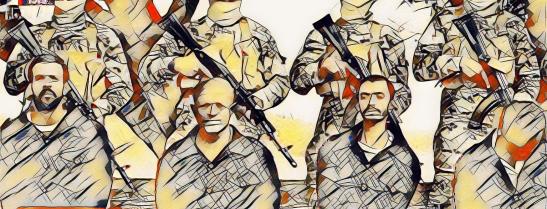
I have to scratch my head in confusion and disbelief when I hear or read much about what is happening in the Church, today. Certain traditionalists have long warned us about the dangers of ecumenism and we dismissed their concerns. We argued that a true ecumenism spoke from the heart and not with a stick so that separated brethren might come home to Catholicism. We have seen some returnees, but more so from those who intellectualize their faith than those who “feel” their religion and enjoy fellowship. When it came to non-Christian religions, the attitude was one of peace or seeking understanding or working together for a better and more humane world. Despite arguments that Islam was a religion of peace, extremists have used violence to suppress the Christian faith and to persecute Christian minorities. Will any of us ever forget the photo of brave Christian men standing loyal to the Lord even as Muslim extremists held knives to their throats? But, alas, we are quick to forget and to forgive— even when there is no sign of contrition or sorrow. A Europe that has renounced her Christian roots will stand no chance against the invasion of Muhammad’s followers.

See also DOCUMENT ON HUMAN FRATERNITY.

The Holy Father & His Sons

156780875895068094 (13)

I posted some time back that I was distressed that the Holy Father would constantly bombard with insults men who earnestly struggled to be good and faithful priests. It was my hope that the pendulum was finally and decisively moving to the other side with the papal letter to priests on the 160th anniversary of the death of the Curé of Ars. Indeed, I even printed a copy for myself feeling that these encouraging words from the heart of Pope Francis were long overdue. But I guess old ways are hard to change.

Why would Pope Francis admit in public that he feels it is an honor to be attacked by Americans, when the most critical voices profess genuine loyalty to him and only beseech clarity and orthodoxy from the Holy See? Does he not understand that he has disparaged a church that has endured vile bigotry, fought back dissent, defended the sanctity of life even against her own, and is even now in a knock down fight with a modernity that has already vanquished much of Europe? Unmatched by any other entity except for maybe the U.S. government, the Knights of Columbus and Catholic Charities reaches out a helping hand in charity and proclaims a message of freedom— not asking for thanks— but deserving at the very least a certain level of recognition and respect. The Vatican would be in a shambles and there would be no “Peter’s Pence” if Americans did not shove money into the papal pockets as fast as the Pope took it out.

American Catholics love the Holy Father.  While many of our brethren have fallen away, there are still millions of us who keep the faith even when it takes us to the cross.  As for the priesthood, we have our share of sinners and saints, but most of our men daily lay down their lives for their flocks.  They try to help people while not compromising the Gospel.  This is not rigidity but an effort at humble service rooted in charity and in truth.  We preach both repentance and the forgiveness of sins.  If we pamper sin we might make friends and even fill a few more pews, but the lie would deny salvation to souls and make us accomplices in sin.  This is not the form of accompaniment demanded by Christ.

My priest colleague and old friend, Msgr. Charles Pope has an ever widening media footprint and he has taken some negative feedback recently for saying that which needs to be said. Knowing him and his profound loyalty to Christ and to the holy pontiff, it must have been the most painful statement of his life.

The Holy Father stated:

“I would like to emphasize an attitude that I do not like, because it does not come from God: rigidity. Today it is fashionable, I do not know about here, but in other parts of the world it is fashionable, to find rigid people. Young, rigid priests, who want to save with rigidity, perhaps, I don’t know, but they take this attitude of rigidity and sometimes – excuse me – from the museum. They are afraid of everything, they are rigid. Be careful, and know that under any rigidity there are serious problems.”

Monsignor Charles Pope wrote on social media:

“Santo Padre, I’m not feeling the love here, I don’t feel accompanied by you. Make room in your heart for me and others like me. I am not a young priest, but I know you don’t like my type of priesthood. Further I am an American and this mere fact seems to also make me troublesome in your eyes. I am not afraid of everything as you state, but I do have concerns for the ambiguity of some of your teachings and severity of some of your actions. Yet when we, your less favored sons, ask you questions, you will not answer or clarify. In all this I am still your son and share the priesthood of Jesus with you. I await the solicitude and gentle care from you that you say I, and others like me, lack. Meanwhile I must honestly and painfully say that I am wearied from being scorned and demonized by you. Respectfully, Carlo.”

If there should be any backlash for such courageous honesty, I hope it will be measured by justice and respect for the truth. The saints are weeping.

A Priest Trying to Understand the Pope

Pope Urges an End to Insults… YES!

Tension Between Homosexuality & Christianity

155794015975802306

The traditional Christian view is that homosexual acts are grievously sinful.  This was expressed recently by Vice President Pence and it precipitated an immediate response from the mayor of South Bend, Indiana, Pete Buttigieg.  Making an assessment of his own same-sex “marriage” to Chasten Glezman, he states:  “Being married to Chasten has made me a better human being because it has made me more compassionate, more understanding, more self-aware and more decent. My marriage to Chasten has made me a better man. And yes, Mr. Vice President (Pence), it has moved me closer to God.”

What should be the response of a traditional Christian who is well aware that the revelation of God in Scripture and in creation, itself, stipulates that homosexuality is a grievous sin and that it can cost us a share in Christ’s kingdom?  Some churchmen contend that the Church herself can overrule the testimony from the Bible; however, the Pope and Magisterium may interpret Scripture and Tradition but do not have the authority to revoke or reverse revealed doctrines.

Some authorities claim that the harsh stand against homosexuality in the Bible reflects not the mind of God but the bigotry of men. If this be entirely the case then the whole question of biblical inerrancy is called into question. What is or is not inspired by God then becomes dubious.

Some authorities assert that there are certain teachings and practices in the Bible and in the life of the Church where we see a development over time in our understanding, as with the institution of slavery.  While this is true, critics would quickly add that such development must be organic or natural (as when various biblical themes interplay against each other) and cannot be forced. Those who would promote a radical anti-patriarchal feminism have sought to fabricate a new divine archetype.   There is a return to the goddess or the Lord (in some cases) is viewed less as a man and more as an androgynous human. Could the God proposed by Buttigieg be of this sort— a deity fashioned precisely for homosexuals?  The problem in both cases is the forfeiture of what is real and the substitution of human fancy.  While there are subjective elements to our discipleship, Catholic Christianity demands attention for what is objectively real.  This is a necessary symptom of our belief in the incarnation and resurrection.  Either Jesus is God made man or we are still in our sins.  Only God has the power to save us.  Either Jesus rose from the dead or we are the greatest of fools who will be soon forgotten in our graves.  None of this can be left to empty myth or to a sentimental feeling or to a drunken hallucination.  Either the story of salvation is true or we are lost and the Gospel is a lie.

If he has not fashioned a new god, could it be that Buttigieg is ignorant of his deity’s demands?  Could he be in psychological denial as to what the Judeo-Christian faith and its deity demand?  Could he have bought into the notion that biblical moral teachings are somewhat capricious and that all that matters is that we try to be “kind” or “compassionate” or “nice”?  Some politicians think that they can legislate morality at will to satisfy their current agenda.  Unless one has the gift of reading souls, no one can truly know whether Buttigieg is closer to God or not.  This is despite the fact that those of us who believe in an objective order would insist that homosexual acts constitute the matter of mortal sin.  How can one be close to God if one has severed his personal and communal relationship with Christ through sin?  Sin is a declaration of the person to God and to his fellow men— he is saying not merely that he hates God but that he is indifferent to him and toward anything he commands.

I cannot say I have heard much rhetoric of an alternative deity as I have from the camp of radical feminists.  This group hates men and raises abortion to the level of an infernal sacrament.  It is for this reason that many Christians view abortion as the return to the practice of human sacrifice.  The innocents are being devoured by demons (masquerading as deities).

When we see rallies for militant homosexuals, they are also often associated with the new atheism and its tendency toward sacrilege and the vulgar or profane.  Homosexuals have a widespread tendency toward promiscuity and multiple partners.  The Christians among them seem to yearn for a particular friendship.  Many have noted that while of the same gender, men and women alike in these same-sex bonds seem to mimic heterosexual polarities:  one is more manly or dominant and the other is more feminine or passive.  Most Christians who struggle with homosexuality tend to stay clear of much of the more blatant and overt shenanigans.  They are not cross dressers and the notion of spitting the sacred host into the face of priests (as was done to the late John Cardinal O’Connor is repugnant to them). They tend to steer away from public expressions of intimacy.  They deplore violence and emotionally are easily hurt.  They love the Church but often feel that the Church does not want them. They struggle with the judgment that they are welcome but only as long as they remain chaste and celibate.  While it might sound like a stereotype, they are attracted to ritual and sacred music.  They delight in liturgies that are aesthetically beautiful and which raise hearts to heaven.  As a group they are attracted to churches with set ceremonials and find comfort in familiarity.

Catholicism cannot affirm disordered homosexual acts as akin to the marital act between a man and woman.  The Church does not have the authority to ratify as good or neutral what is deemed by both divine positive law and natural law as wrong and sinful.  As with our COURAGE program, we can assist them to live out a chaste celibate love.  We can partner with them in prayer and service.  They should not define themselves principally by the same-sex attraction with which they struggle.  They may not be called to marriage but they are called to holiness.  They should not engage in homosexual acts but they are called to love and to have friendships.  There is a place for them in the Church.  It is best that homosexuals not enter the priesthood; however, priests can rightly model for them lives of celibate service.  God will give his children the gifts and the strength they need to be good and holy.

What can we affirm?  First, we should accept as genuine the religious sense that they have.   They should seek to remain in a state of grace so as to make the most of faith study, prayer and the sacraments.  Second, love needs to be expressed and our parishes have many initiatives where they can participate.  They have generous and selfless hearts.  Third, the church would be the first to promote friendship or brotherhood or sisterhood.  Love does not have to be sexual.  The sacrifice of Jesus shows us the true depths of a love and passion that eclipses all other loves, including the passionate intimacy of spouses.  The covenant of lovers points toward that greater covenant that is merited by the blood of the Cross.       

There is something of a mystery when we speak of the God who has revealed himself and the God we know.  The saving acts of God take place in history but the presence of God is not locked in the past. As Catholics, we would make a case for the Christian deity or the Trinity.  We would insist that God is real and one; that he is the author of all things; that he cares about us; that he has inserted himself into human history; that he has shown his face to us; that he has redeemed us from the folly of sin and death; and that he has established a community of faith to proclaim the truth and to perpetuate his saving work in Christ.  We argue from faith, philosophy and even science that God objectively exists apart from whatever many might subjectively believe or not believe.  While Christians would seek to live in peace with others, we would not personally tolerate or regard as also real the various opposing notions of deities or the negation of atheism.  Tension often arises because belief is not easily captured between church walls but tends to saturate the society in which one lives, influencing human values and how people would express them.

Many early Christians became martyrs in the pagan Roman Empire because they refused to worship mythical deities or the emperors.  These deities were interpreted by the ancient Church fathers as false gods or worse as demons in disguise. When we read the later pagan authors, they blamed the fall of the empire upon the rise of Christianity and how it had reinvented or replaced the deities they previously followed.  Their arguments were somewhat pragmatic because even during its heyday, many Romans went through the prescribed motions but really placed no faith in the false deities and their “soap opera” lives.  But the acceptance of Christianity had a profound impact upon the values of Rome.  There was a definite moral shift.  Today, many are again recreating our understanding of a deity while growing numbers are complaining that the whole notion of a God has served its purpose and should now be discarded.  As before, many say they believe but in truth there is nothing about their behavior that would convict them as Christ’s disciples.

Within the context of Christianity, many would say that revisionists have no right to reinvent God and to modify or to reverse his moral teachings.  Leaning toward the subjective, they would counter the argument by a preponderance of questions.

For further reading…

National Catholic Register
Pete Buttigieg is Wrong — God Still Forbids All Homosexual Acts

Catholic Bytes

pod

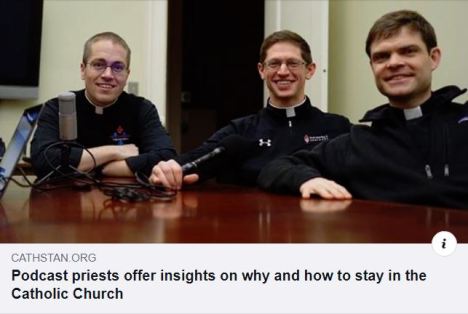
“It is of course horrible and scandalous what some in the Church have done and utterly reprehensible, but I can’t get past the fact that despite all the failings of the clergy, that Jesus Christ’s love for us is real and I need to cling to it with all my strength,” said Father Conrad Murphy.  (CLICK the picture to read the article.)

CATHOLIC BYTES

Prophets are Set on Fire by God

February 10, 2019

[75] Fifth Sunday in Ordinary Time

Isaiah 6:1-2a, 3-8 / Psalm 138 / 1 Corinthians 15:1-11 / Luke 5:1-11

154956830224228680 (4)

The setting for the first reading is the temple, imaged as the place where God is both present and honored.  This is not dissimilar to how we regard the “real presence” of Christ in our churches.  Notice Isaiah speaks of seeing the train of God’s garment but no description is given about the deity.  Exodus 33:20 affirms that none could see the face of God and live.  This perspective will change with the coming of Christ who is regarded by Christians as giving a human face to God; he is the revelation of the Father.

Who or what are the Seraphim? While our angelic hierarchy differs from the Jews, the Seraphim are regarded in Christian tradition as angels of the highest rank. Angelology regards these six winged angels as essentially composed of fire and light.  It is in this sense that they share a special affinity with the LORD who is the greatest fire of all.  These angels are in close proximity to God.  They always keep their sights upon him. (A basic tenet of Scholastic philosophy is that when the veil is lifted between creatures and the absolute Good, which we associate with God, all are compelled to embrace it.  It is for this reason that we come to God in the mortal world by faith and not through sight.  At death our status becomes fixed, either sharing the beatific vision in heaven or rebelling to face the pains of hell.  Along these lines, some thinkers propose that a veil or cloud existed between God and his angels.  Tradition suggests that a third of the angels rebelled against God.  Existing outside of time their decision in obedience or rebellion is immutable.  The Seraphim bask in the light or fire of the absolute Good or the divine mystery.  Literally, “to see God” is “to worship God.”  That is why the catechism speaks of the angels and saints giving eternal glory to God in heaven.  The eyes of the saints are locked in awe upon the divine mystery forever.)

The prophet Isaiah acknowledges that he is a man of unclean lips and immediately in response a seraph comes to him with an ember taken with tongues from the altar.  We read, “He touched my mouth with it, and said, “See, now that this has touched your lips, your wickedness is removed, your sin purged.”  The prophet is not only chosen but he is enabled for his mission.  Isaiah receives his calling to which he accepts in the context of this worship.  Turning to Catholicism, the priest or bishop is ordained within the rituals of the Eucharistic liturgy.  Lay men and women are to live out their prophetic role in taking into the world that which they are given at every Mass, the message and risen person of Christ.

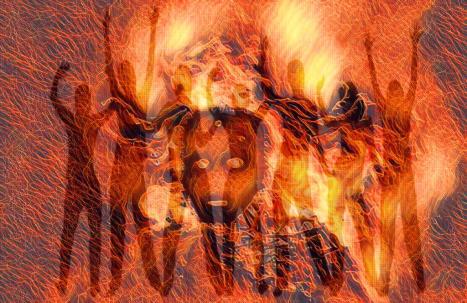
Notice the connection with worship to the fire of incense.  Just as we as Catholics speak of the Mass as our earthly participation in the marriage banquet of heaven; here there is a profound association or parallel between the worship of the temple where God is present and the heavenly adoration rendered by his angels.  The Seraphim offer a resounding hymn of praise, “Holy, holy, holy is the LORD of hosts.  This formula of worship, called the Trisagion, becomes an important element of Christian worship, East and West.  Some of the ancient Church fathers would even discern something of the Trinitarian personhood of God in the hymn.  The word holy is more than a descriptive adjective— it is the very name of God as all HOLY.  Isaiah associates holiness with the ember that touches his lips.  He is essentially burned by the fire of God.  Fire destroys the old to make room for the new.  There is no space between us and the HOLY God for sin.  Christians associate this fire with the purification of souls in purgatory that approach the throne of God.  As for believers in this world, there is an expression for fervent believers that carries forth this theme— that they are “on fire” for Christ and the Gospel.

The responsorial furthers the topic of collaboration between men and angels in giving glory to God. The posture of all creation, material and spiritual, is one of dependence upon God.  When we as Christians envision the communion of the saints, we list righteous men and women as well as angelic beings.  The pure spirits may stand before us in the natural hierarchy; however, we attain our own privileged status in grace because the LORD becomes a member of the human family.  While the angels might differ from us more than any hypothetical and fictional space alien; they have become our protectors and friends in the family of faith.  The word “angel” means messenger.  While we retain our human nature, those called by the LORD in the race of Adam are also messengers of God’s truth and mercy.  Note how Jesus and his apostles go out to the world.

The apostle Paul is a type of Isaiah.  He says that he gives what he has received— in other words, the message of the saving death and resurrection of Christ.  Those who receive this message are admonished to hold fast to the faith so as not to believe in vain. He does not hesitate to mention his own witness as one who persecuted the Church and now, by God’s grace, to be the hardest working of the apostles.  He attributes his success to the grace of God.  God formed him so that he might also make disciples of others.  This is not unlike the angel’s gift of a burning ember upon the lips of Isaiah.  God forms us and makes us into his instruments. The alleluia verse and gospel reading bring forward the theme:  “Come after me and I will make you fishers of men.”  Following the pattern of Isaiah, both Paul and the apostle Peter respond to the LORD’s call.  Isaiah confesses to being a man of “unclean lips.”  Paul acknowledges his past persecution of Christians.  Peter says, “Depart from me, Lord, for I am a sinful man.”  There is in each case a sense of unworthiness.   Jesus calls his first apostles, not within the confines of the religious temple, but while they are in their boats. There is no hesitation on their part.  Jesus tells them not to be afraid, the same words that he shares at the end of the Gospel.  Just like the great catch of fish, it is understood that God’s grace will allow an even greater catch for souls.

Document on Human Fraternity


157333249285949947 (8)

The “Document on Human Fraternity” was signed today (Feb. 4, 2019) between Pope Francis and the Sunni Muslim Sheik Ahmed el-Tayeb. The document seems to falter in asserting that God desires or wills a plurality of religions.  It states that the Church has “esteem” for Muslims.  Really, is this so?  We fought nine brutal and bloody crusades to repulse their influence and to free the Holy Land. Most students of religion know that Islam reveres Jesus as a prophet.  Why would we praise in this document such a concession when such would be condemned of any breakaway Christian sect?  If Jesus is not God then we are still in our sins.  Yes, it is also true that they honor the Blessed Virgin Mary as the mother of a prophet.  However, do they truly love her?  Do they appreciate that she is the unique handmaid of the Lord and that the Holy Spirit overshadowed her and that the incarnation took place in her womb?  No, they do not.  Mary is NOT the mother of a prophet; rather, she is the Mother of God!  While fragments of the truth are found, can it really be said that they are saving truths?  No, this is not the case even though God saves whom he wills.  But it may be that all this is the peculiar language of a political or diplomatic statement, not to be understood doctrinally.

The Muslims of Turkey still refuse to return the ancient imperial church of Hagia Sofia to Christians.  This would be a great “practical” first start toward healing with the Church, both East and West.  But I am doubtful we will witness such a concession any time soon.

Again, the various religions may reflect an innate yearning for God and in antiquity may have foreshadowed the coming revelation; however, it is only Jesus that is the Way and the Truth and the Life.

Unlike the Bible where verses that espouse violence are historically conditioned and sequestered, the Quran leaves such admonitions open to the present.  Moderate Muslims might argue their abrogation but many other believers seem to have a fundamentalist view that cites violence or jihad as constitutive of their faith.  Who determines the current interpretation.  Unlike Catholicism, Islam has no worldwide magisterium.

What do readers think about the passages below?  It all sounds good but will it be translated into acts that make a positive difference?

SELECTIONS FROM THE DOCUMENT

In the name of God who has created all human beings equal in rights, duties and dignity, and who has called them to live together as brothers and sisters, to fill the earth and make known the values of goodness, love and peace.

In the name of innocent human life that God has forbidden to kill, affirming that whoever kills a person is like one who kills the whole of humanity, and that whoever saves a person is like one who saves the whole of humanity.

In the name of the poor, the destitute, the marginalized and those most in need whom God has commanded us to help as a duty required of all persons, especially the wealthy and of means.

In the name of orphans, widows, refugees and those exiled from their homes and their countries; in the name of all victims of wars, persecution and injustice; in the name of the weak, those who live in fear, prisoners of war and those tortured in any part of the world, without distinction.

In the name of peoples who have lost their security, peace, and the possibility of living together, becoming victims of destruction, calamity and war.

In the name of human fraternity that embraces all human beings, unites them and renders them equal.

In the name of this fraternity torn apart by policies of extremism and division, by systems of unrestrained profit or by hateful ideological tendencies that manipulate the actions and the future of men and women.

In the name of freedom, that God has given to all human beings creating them free and distinguishing them by this gift.

In the name of justice and mercy, the foundations of prosperity and the cornerstone of faith.

In the name of all persons of good will present in every part of the world.

In the name of God and of everything stated thus far; Al-Azhar al-Sharif and the Muslims of the East and West, together with the Catholic Church and the Catholics of the East and West, declare the adoption of a culture of dialogue as the path; mutual cooperation as the code of conduct; reciprocal understanding as the method and standard.

Protection of Worship Sites – The protection of places of worship – synagogues, churches and mosques – is a duty guaranteed by religions, human values, laws and international agreements. Every attempt to attack places of worship or threaten them by violent assaults, bombings or destruction, is a deviation from the teachings of religions as well as a clear violation of international law.

Renouncing Terrorism – Terrorism is deplorable and threatens the security of people, be they in the East or the West, the North or the South, and disseminates panic, terror and pessimism, but this is not due to religion, even when terrorists instrumentalize it. It is due, rather, to an accumulation of incorrect interpretations of religious texts and to policies linked to hunger, poverty, injustice, oppression and pride. This is why it is so necessary to stop supporting terrorist movements fueled by financing, the provision of weapons and strategy, and by attempts to justify these movements even using the media. All these must be regarded as international crimes that threaten security and world peace. Such terrorism must be condemned in all its forms and expressions.

Equal Rights & Duties of Citizens – The concept of citizenship is based on the equality of rights and duties, under which all enjoy justice. It is therefore crucial to establish in our societies the concept of full citizenship and reject the discriminatory use of the term minorities which engenders feelings of isolation and inferiority. Its misuse paves the way for hostility and discord; it undoes any successes and takes away the religious and civil rights of some citizens who are thus discriminated against.

Rights of Women – To recognize the right of women to education and employment, and to recognize their freedom to exercise their own political rights. Moreover, efforts must be made to free women from historical and social conditioning that runs contrary to the principles of their faith and dignity. It is also necessary to protect women from sexual exploitation and from being treated as merchandise or objects of pleasure or financial gain. Accordingly, an end must be brought to all those inhuman and vulgar practices that denigrate the dignity of women. Efforts must be made to modify those laws that prevent women from fully enjoying their rights.

Rights of Children – The protection of the fundamental rights of children to grow up in a family environment, to receive nutrition, education and support, are duties of the family and society. Such duties must be guaranteed and protected so that they are not overlooked or denied to any child in any part of the world. All those practices that violate the dignity and rights of children must be denounced. It is equally important to be vigilant against the dangers that they are exposed to, particularly in the digital world, and to consider as a crime the trafficking of their innocence and all violations of their youth.

Rights of the Elderly & Disabled – The protection of the rights of the elderly, the weak, the disabled, and the oppressed is a religious and social obligation that must be guaranteed and defended through strict legislation and the implementation of the relevant international agreements.

Where is Love?

February 3, 2019

[72] Fourth Sunday in Ordinary Time

Jeremiah 1:4-5, 17-19 / Psalm 71 / 1 Corinthians 12:31-13:13 / Luke 4:21-30

154956830224228680 (6)

How well does God know any of us?  We are told in the first reading that God knew us before we were formed in the womb.  Like Jeremiah, we too have been dedicated to the Lord and appointed as prophets to the nations.  As signs opposed, the Lord says, “Be not crushed on their account.”  We must not surrender our commission.  We must not give up hope.  This message of protection and a fortified city fits in neatly with the psalm’s admonition to take refuge in the Lord.  The Lord will give comfort and save us.

The Lord manifests for us throughout the Gospel what it means to be a sign of contradiction.  Today’s reading has Jesus speaking at his hometown’s synagogue.  The men there know him or at least they think they do.  They know his family and have seen him grow up in their midst.  These were the neighbors and friends that he most loved.  Their amazement at his words makes them question.  “Is this not Joseph’s son?”  Our Lord challenges them to the full truth of his identity.  Indeed, he would invite them to a new way of thinking and loving.  But he knows their hearts.  He relates how Elijah was only received by a single widow in Zarephath and that Elisha cleansed only the one leper, Naaman.   Those who reject the prophets are convicted by their sins.  His listeners become immediately aware that Jesus is placing them under the same conviction.  They have hardened their hearts.  They will not accept the one who is truly in their midst.  These people who mean so very much to Jesus become angry, so much so that they seek to put him to death.  But it is not yet the appointed time.  Jesus has the power and is in charge.  He passes “through the midst of them” and leaves them with murder in their hearts.  There is a sad poignancy here that resonates with the garden when Jesus is betrayed by a kiss from one he loves.

We all like to be liked.  I know that I do.  But sometimes we must speak the truth in love, no matter what the cost.  The commandment of love takes precedence over being liked.  Our Lord says that we must take up our crosses to follow him.  This is precisely done in assuming his likeness, Jesus, the sign that is opposed.  Priests often embrace this role, even before their congregations, and sometimes with their knees shaking. The collect to the Mass today is beautifully expressed:  “Grant us, Lord our God, that we may honor you with all our mind, and love everyone in truth of heart.”  Ah, if only every priest lived out this as an element of his celibate or single-hearted call to service!  Now a minister must speak the truth at a time when the moral authority of churchmen has been direly compromised.  The two-fold commandment of love from Christ is the solution to all our ills and evils— not that it allows us escape from the Cross but rather that it allows our Lord’s victory to be illumined without blemish.

Too many people say they love others when they really do not know what love is.  Others corrupt the very meaning of love.  The parish church gives us many symbols of love, if we have eyes to see.  There is the poor box, a source of material charity for those in need.  We see a statue in the back with Joseph holding the baby Jesus and a picture of the Holy Family up front with Mary holding her child.  They are witnesses to love within the family.  Mary is the handmaid of the Lord.  Joseph is the protector of the Holy Family.  Families are called to nurture the love of fidelity and the love that gives life in children— receiving them as gifts from God, nurturing them, teaching them, clothing them, sheltering and protecting them.  Spousal and parental love finds its deepest meaning in the crucifix that we find in the center of the church.  True love is always sacrificial.  The beloved means more to us than we do to ourselves.  There is a mutual surrender.  That flies in the face of the self-absorption that mutates love into something foreign from the heart of God— treating children as mere commodities, reducing the miracle of marital intimacy to lust where bodies are interchangeable and both infidelity and pornography poison hearts and minds.  Genuine love always raises up the sanctity of life and the dignity of persons.  If it does not do this then it is counterfeit, not true love at all, not love “in truth of heart.”

 The apostle Paul writes to the Corinthians about true love.  Again and again, he asserts that without love we are nothing— just making noise— utterly impoverished.  It bears repeating:  “Love is patient, love is kind. It is not jealous, it is not pompous, it is not inflated, it is not rude, it does not seek its own interests, it is not quick-tempered, it does not brood over injury, it does not rejoice over wrongdoing but rejoices with the truth. It bears all things, believes all things, hopes all things, endures all things. Love never fails.”

These words inspire and move the soul.  However, when we seek to show the practical ramifications, the prophets of this genuine love will quickly find rocks thrown in their direction.  Many wrongly love themselves more than others.  I hesitate to trespass into the area of partisan politics.  But this topic compels me to stressed again that we must belong to Christ before any political party and/or social or humanitarian movement.

“Grandma is taking her time dying and she is so very uncomfortable in the hospital. Plus it is so expensive; there will be nothing left for us when she finally dies.  She has lived long enough.  Let us be compassionate and pull the plug or have poison placed in her IV.”  Is it an impossible scenario?  It is happening right now.  “Those people are uneducated mongrels.  How did they enter this country anyway?  They are all rapists and drug addicts.  We should send them back from whence they came!  At least give them contraceptives so that we will not have to suffer their mangy litters!”  Racism and prejudice of this sort is always a form of hatred.  Nationalism is a similar ailment.  Love can be misplaced. The Lord shows us how to love.

Someone complained to me that her party has no pro-lifers.  Well, I said, maybe it is time for you to run?  We should not be lemmings marching mindlessly into the sea.  When we had the Cemetery of the Innocents display in front of the parish grounds, I received a call from a person complaining about “that Republican display.”  I tried to explain to her that as a Christian community we love both the parents and the child.  We believe in women’s rights and some of those women are in the womb.  Finally I told her that as far as I knew most of the men and women who put up the display were themselves registered Democrats.  Despite the propaganda, one party does not own this issue, even if extremists and their money have taken over much of the leadership.  Of course the Knights of Columbus led this effort, and they are regularly derided despite their good works.  Speaking for myself, I would rather be a good Christian or Catholic before being labeled a good (or bad) Democrat or Republican.

This past week many of us were in shock at the news regarding recent abortion legislation.  A Democratic sponsor of a Virginia abortion proposal acknowledged it could allow women to terminate a pregnancy up until the very moment before birth (during dilation), for reasons including mental health.  Similarly the governor of New York (a so-called Catholic) signed a bill that essentially removed all restrictions from abortion.  Doctors were no longer required and children that somehow survived abortions could now be killed afterwards.  Again, children could be destroyed up to the moment of birth.  Many are demanding the excommunication of the governor.  Why is it that some people cannot see that it is wrong to kill a fully formed baby ready to be born?  Where is maternal love?  What will the future hold?  Can it get still worse?   Alberto Giubilini and Francesca Minerva write in the Journal of Medical Ethics: “When circumstances occur after birth such that they would have justified abortion, what we call after-birth abortion should be permissible. … We propose to call this practice ‘after-birth abortion’, rather than ‘infanticide,’ to emphasize that the moral status of the individual killed is comparable with that of a fetus … rather than to that of a child. Therefore, we claim that killing a newborn could be ethically permissible in all the circumstances where abortion would be. Such circumstances include cases where the newborn has the potential to have an (at least) acceptable life, but the well-being of the family is at risk.”  They write that “There is nothing magical about passing through the birth canal that transforms it from a fetus into a person.”  Certain ethicists would extend the time range where one might destroy the unwanted child to as much as three years of age outside the womb.

Where is love in all this?  It is in Christ that we can find the true meaning of love in a world that has forgotten.  Love and life are as two sides of a coin.  Christian couples are drawn to each other in love and that love brings forth new life.  Christ is the love that conquers the grave and grants us a share in eternal life.  We must witness to the truth of this love.

Anniversary of St. Joseph on the Hill (Oct. 14, 1990)

Editorial Notation:  Given that St. Joseph’s Parish celebrated its 150th anniversary in 2018, how is it that Msgr. Awalt preached in 1990 for is 100th anniversary?  It is all a matter as to when one starts counting. The parish actually started in 1868. The old temporary church was built in 1870. St. Joseph’s School was built in 1890 and was used as the church while the present structure was being completed.  That is why there was a celebration in 1990 (associating the church with the school).  The current church was dedicated on January 18, 1891 by James Cardinal Gibbons.

The Setting

This homily was given at St. Joseph’s Church on Capitol Hill at the 12:00 Noon Mass on Sunday, October 14, 1990 by Monsignor William J. Awalt.  It was based on the readings of the day:  the 28th Sunday after Pentecost, Cycle A.  To understand the references, it must be read in conjunction with these Scripture readings:

  • Isaiah 25:6-10
  • Phil. 4:12-14, 19—20
  • Matt. 22:1-14

The occasion was the 100th Anniversary Celebration of St. Joseph’s Church, commemorating the contribution of the German people to parish life.

It was noted by the homilist that any positive effect from his words would rightly be attributed to three elements:  (1) the grace of the occasion, (2) the inspiring remembrance of contributions from German immigrants, and (3) the inherent efficacy of the Word of God proclaimed at Mass.

The Homily

As one comes up the River Rhine in Germany, toward the City of Cologne, a mammoth and beautiful church dominates the skyline. In admiring what is the Cathedral Church of Cologne, one might entertain the question, “Haven’t I seen something like this before?” Smaller, but inspired by that cathedral, is St. Joseph’s on Capitol Hill. This church was a gift of the German people who settled this area around the time of the Civil War, a very small replica of the cathedral that many left behind.

St. Joseph’s Parish was started to accommodate the German-speaking Catholics who thought it was too far to go to the German National Parish, St. Mary’s, at Fifth and G Streets, NW.  They dreamed of making this parish a national church for German Catholics of the United States. St. Joseph’s then became the second national church for Germans under the Jesuit, Father Wiget, who was Swiss, but like so many others, spoke German. The first three pastors were German. To find additional German-speaking priests, St. Joseph’s parish was staffed from the nearest source in Buffalo, New York. Cardinal Gibbons, whom a few might still remember, laid the cornerstone in 1868. The foundations are 7 feet thick, perhaps the reason they ran out of money for the superstructure in the way they envisioned it. The Cathedral of Cologne was 600 years being built. St. Joseph’s, a very small replica of the cathedral, was finished in two years. The total cost of the second structure on the old foundation was $68,854.52. One estimate is that 20,000 people from nearby and from Baltimore attended the dedication ceremonies. The parish was staffed by German-speaking priests from the Jesuit mission out of Buffalo, with the assistants more or less coming from the Maryland/New York Province.

In 1886, eighteen years after the cornerstone was laid, Father Valentine Schmitt, from the Archdiocese of Baltimore-Washington, a German-speaking priest, was to become pastor.  At his request, St. Joseph’s ceased to be a national German parish— one of the conditions of his coming here as pastor. The present church was built between 1890 and 1891, hence our celebration today and throughout this year.

The German people and their priests built this church on a hill, nothing compared to the Bavarian Alps, but a hill nonetheless, especially if taken in perspective with the other sections of DC like Swampoodle and Foggy Bottom. This hill today is known as Capitol Hill. From the point of view of our faith, this building is the more important building on the HiII. The mountain, mentioned in the first reading, Isaiah 2526-10, was not so much a topographical detail as a place where the Lord dwells: hence, Mt. Sinai, Mount of the Transfiguration, and Mount Calvary. The mountains are the places where God dwells and where God works. This use of the mountain was our human language trying to express the divine presence, transcendence and dwelling. Again, we speak of God “coming down” to earth and Jesus as “going up” to heaven; poor language attempts to express the Incarnation and the Ascension. The mountain and the hill are viewed as God’s dwellings. Ours is the great God who is not just one of us, except when Christ takes upon himself a human nature from Joseph’s spouse, Mary.  Here on the Hill, God has dwelt in a special way these many years; among his assembly, the parishioners, in the Eucharist, and in the proclamation of His Word.  St. Joseph’s Parish (the Church on Capitol Hill) is still a sign of God’s continued dwelling with His people.

I cannot point to anything extraordinary among the German people of those years other than that which is outstanding in itself, their fidelity, their obedience, and their observance of the law, both civil and religious. In that, they were like their patron, St. Joseph. They lived their lives as the yeast, the salt, and the leaven of the Gospel here at St. Joseph’s.  St. Joseph, himself, seems to come across in the Gospel, as we say today, “as laid back.”  But do not mistake that for indifference, weakness, or unfaithfulness. From the obscurity of the hidden life of Nazareth, St. Joseph under Leo the XIII becomes the patron of the universal Church. That makes sense. He, who is the protector of Mary, his wife, and the child, Jesus, is the protector of what we have called the family recently, the domestic Church. Now he is the protector of the Church Universal which is Christ extended into time. As Mary is patroness of the sister German parish and is Mother to us all; so too is Joseph charged with being Protector of the Holy Family and with us.

Scripture called Joseph the Just Man. That did not mean that he simply paid his bills.  The word “just” in this context meant he was an observer of the law. What a happy coincidence that a just man should be patron here on the Hill where our legislators are called upon to be men who enact just laws.  Joseph knew the law; e.g. that Jewish marriages take place in two stages: first, the betrothal and then the marriage.  In prayer he was given an answer to his dilemma.  He presumed that Mary was to be subject to the law because she was pregnant with the Christ Child before they came together. This also made her subject to the penalty that came with breaking the law.  Joseph’s answer was not to evade the law; rather his discovered in prayer that the law did not apply to the Blessed Virgin Mary— his wife that he had yet to take into his home.  He observed the law even when it was inconvenient.  Rome spoke: that everyone must go to the place of their origin to register for the census. The civil law was inconvenient for his wife was pregnant and near her time of delivery. Yet, he obeyed the law. For this just man knew that all authority came from God. Because he complied, we have the Christmas hymn, “0 Little Town of Bethlehem.”

Joseph knew the law. He fled the jurisdiction of Herod to go to Egypt when Herod wanted to kill the child.  Then from Egypt he took his family to another jurisdiction in the north, Nazareth.  In this he was not unlike the early parishioners of this parish. They came to a strange land, not knowing the language, and not having security.  Joseph, in all this, was a good patron for the German immigrants. Joseph taught Christ as the child grew in wisdom and age. He worked with his hands. He was a skilled laborer, probably something like a skilled cabinetmaker.  He was much in demand, for Herod had taken 1,500 carpenters to Jerusalem to work on the temple.  Joseph took Jesus to the temple on the Hill of Jerusalem to teach the child to pray. In this relationship of Joseph to Jesus, this wonderful experience of father and son, perhaps the seed of the prayer, “Our Father,” was planted.  Jesus saw a reflection of the heavenly Father in his protector, Joseph.  Jesus taught us to call God our Father by the affectionate name, “Abba.”  The German immigrants, like Joseph, kept the law, said their prayers, did their work, went to church, raised their families, and were good husbands and wives. What better patron could there be for these hard-working faithful people from Germany to choose than Joseph, protector of the Church?

Joseph died (as all of us will) before Christ entered into His public life of teaching, dying and rising from the dead.   We do not know much about Joseph during that private, hidden family life of thirty years. If Joseph were a German, I am sure, among his last words would have been that phrase that is so often on the lips of the German people, “auf wieder sehen” (till we meet and see each other again.  This is more than a perfunctory goodbye.  As Christians we believe we have here no lasting city in this world, but that “auf wieder sehen” in German is an expressed belief in eternal life and reunion. The Germans have a saying, “Those who live in Christ have not seen each other for the last time.”  Joseph, had he been German, could well have said this to his Holy Family. Those who preceded us in this parish could easily say that to us today, meaning, “I will see you again,” anticipating reunion, resurrection, family joy, and happiness. Joseph was a humane, compassionate, obedient, respectful, hard-working, powerful, and patient man.  He was one who found his place and his holiness in a simple or ordinary way of life.  What a patron for the Germans— indeed, for all of us!

One of my favorite insights into Joseph as a father, as a family man, a husband, and as the protector of Mary and Jesus, is a short literary piece dealing with the time between Jesus’ death and His resurrection, as the souls of the just throughout the ages wait patiently with Joseph for the news of their redemption. The piece is called “Limbo.”  It brings out the humanity of Joseph, patron of this parish and this Church. It is very characteristic of so many cultures and nationalities but also of the German parishioners who preceded us.

LIMBO by Sister Mary Ada

The ancient greyness shifted
Suddenly and thinned
Like mist upon the moors
Before a wind.
An old, old prophet lifted
A shining face and said:
“He will be coming soon.
The Son of God is dead;
He died this afternoon.”

A murmurous excitement stirred
All souls.
They wondered if they dreamed—
Save one old man who seemed
Not even to have heard.

And Moses standing,
Hushed them all to ask
If any had a welcome song prepared.
If not, would David take the task?
And if they cared
Could not the three young children sing
The Benedicite, the canticle of praise
They made when God kept them from perishing
In the fiery blaze?

A breath of spring surprised them,
Stilling Moses’ words.
No one could speak, remembering
The first fresh flowers,
The little singing birds.
Still others thought of fields new ploughed
Or apple trees
All blossom-boughed.
Or some, the way a dried bed fills
With water
Laughing down green hills.
The fisherfolk dreamed of the foam
On bright blue seas.
The one old man who had not stirred
Remembered home.

And there He was
Splendid as the morning sun and fair
As only God is fair.
And they, confused with joy,
Knelt to adore
Seeing that he wore
Five crimson stars
He never had before.

No canticle at all was sung.
None toned a psalm, or raised a greeting song.
A silent man alone
Of all that throng
Found tongue—
Not any other.
Close to His heart
When the embrace was done,
Old Joseph said,
“How is Your Mother,
How is Your Mother, Son?”

You heard in the Gospel today, God’s invitation not just to the chosen race, but to all mankind to come to the feast. The words used at the Mass before Holy Communion, “Happy are those who are called to His banquet” refer to the eternal banquet in heaven. Our communion is our food for the journey to that eternal banquet. With the invitation goes the clothing to be worn, freely given so that all are dressed alike at the feast, as was the custom. All are clothed with the same gift, God’s grace, freely given. During this year you heard about the Spanish, the Italians, the Afro-Americans, and now the Germans, all God’s children building up a living parish for these last 100 years. We are put on earth to be one family and yet look how we get along sometimes.  But God is optimistic. God keeps issuing the invitation and expects us to come and be together forever.

God invites us to his celebration. Don’t be too busy. Find time whether you are enacting laws, raising a household, earning a living, and making time for the kids.  Spend time with the Lord in prayer.  Accept one another regardless of culture, race, or economic condition. Christ sends out his invitation to all.  Put on the clothing of His grace. Freer accept one another. You’ll be surprised who is sitting next to you at the eternal banquet in heaven as you both turn to each other simultaneously and say, “I’m surprised to see you here.”

This is the mountain where God meets His people under the guidance and the example of St. Joseph.  Accept one another.  Invite others to come to the banquet. Be a living invitation to one another, calling them by your lives to come to the banquet. Remember you may be the only Gospel which that person may hear or encounter.

You cannot invite or come to the celebration if your heart is heavy.  God promises to wipe away the tears from all faces when the celebration begins.  But the celebration has already begun.  This Eucharist today is a foretaste of the final banquet. We don’t have to wait for God to come with the Kleenex.  God is here with us, waiting for us to start drying the tears of the grieving, the sick, the poor, the alienated, the lonely; and we do not have to look far to find them.  All of us:  Italian, German, Spanish, Back, Asian, all are invited as we have been for the last 100 years to God’s mountain on Capitol Hill on our way to the holy mountain where God will provide for all people. Let us go to the feast together.

“AUF WEIDER SEHEN”

Monsignor William J. AwaIt
Pastor, St. Ann’s Parish
Washington, D. C.