• Our Blogger

    Fr. Joseph Jenkins

  • An important theme for this blog is the scene in the New Testament where Jesus can be found FLOGGING the money-changers out of the temple. My header above depicts a priest FLOGGING the devils that distort the faith and assault believers. The faith that gives us consolation can and should also make us very uncomfortable. Both Divine Mercy and Divine Justice meet in Jesus. Priests are ministers of reconciliation, but never at the cost of truth. In or out of season, we must be courageous in preaching and living out the Gospel of Life. The title of my blog is a play on words, not Flogger Priest but Blogger Priest.

  • Archives

  • Categories

  • Recent Posts

  • Recent Comments

    Father Joe's avatarFather Joe on The Prayer to Saint Michael at…
    Inveilis's avatarInveilis on Ask a Priest
    Joanne M Rowan's avatarJoanne M Rowan on Reflecting Upon SSPX Dissent…
    Joanne M Rowan's avatarJoanne M Rowan on The SSPX Makes It Itself Out M…
    Jeremy's avatarJeremy on Ask a Priest

Married Priests & Women Deacons?

157358893444805185 (1)

Ordination of Married Men in the Amazon

111. Many of the ecclesial communities of the Amazonian territory have enormous difficulties in accessing the Eucharist. Sometimes it takes not just months but even several years before a priest can return to a community to celebrate the Eucharist, offer the sacrament of reconciliation or anoint the sick in the community. We appreciate celibacy as a gift of God (Sacerdotalis Caelibatus, 1), to the extent that this gift enables the missionary disciple, ordained to the priesthood, to dedicate himself fully to the service of the Holy People of God. It stimulates pastoral charity and we pray that there will be many vocations living the celibate priesthood. We know that this discipline “is not required by the very nature of the priesthood… although it has many reasons of convenience with it” (PO 16). In his encyclical on priestly celibacy, St. Paul VI maintained this law and set out theological, spiritual, and pastoral motivations that sustain it. In 1992, the post-synodal exhortation of John Paul II on priestly formation confirmed this tradition in the Latin Church (PDV 29). Considering that legitimate diversity does not harm the communion and unity of the Church, but expresses and serves it (LG 13; SO 6) which testifies to the plurality of existing rites and disciplines, we proposed to establish criteria and dispositions on the part of the competent authority, within the framework of Lumen Gentium 26, to ordain priests suitable and esteemed men of the community, who have had a fruitful permanent diaconate and receive and adequate formation for the priesthood, having a legitimately constituted and stable family to sustain the life of the Christian community through the preaching of the Word and the celebration of the Sacraments in the most remote areas of the Amazon region. In this regard, some were in favor of a more universal approach to the subject.

Female Diaconate 

103. In the many consultations carried out in the Amazon, the fundamental role of religious and lay women in the Church of the Amazon and its communities was recognized and emphasized, given the multiple services they provide. In a large number of these consultations, the permanent diaconate for women was requested. For this reason the theme was important during the Synod. Already in 2016, Pope Francis had created a “Study Commission on the Diaconate of Women” which, as a Commission, arrived at a partial result based on what the reality of the diaconate of women was like in the early centuries of the Church and its implications for today. We would therefore like to share our experiences and reflections with the Commission and await its results.

My initial concern about the Amazonian synod was that it was a setup to compel the larger Church to permit married priests and to allow for the ordination of women as deacons. The former is certainly possible but the importance of celibacy should not be regarded lightly or merely as a convenient accidental to preserve Church property or to fill vacancies in parishes. The celibate love of the priest is a profound imitation of Christ that makes him into an eschatological sign of the kingdom. With or without a synod, the pope could allow a few stable married men, probably in their 70’s, to be ordained so as to insure the Mass and sacraments. However, any wholesale allowance in the Amazonian churches would likely impact the universal Church. As for the prospect of women deacons, there are three degrees to the one sacrament of holy orders and St. Pope John Paul II has defined infallibly that the Church has no authority to ordain women. Despite the prudential service of women “deaconesses” in the early Church; the ordination of women has always been prohibited.

Final Synod Document

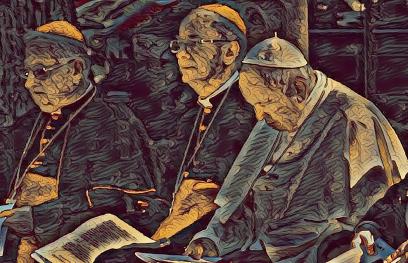
Instead of the Amazonian or world bishops coming together in a democratic fashion, the attendees were appointed by the Holy See. The orchestration of the event was obvious and one might argue that this made any results or recommendations a foregone conclusion. It seemed that certain progressive German bishops ran the show, despite their having no direct investment in the Amazonian churches.  Some have suggested that given the charges of syncretism and idolatry leveled at the peripheral activities around the synod deliberations, any conclusions from the conferences forfeit credibility and importance for any later papal exhortation or summary based upon them.  Is this true?

The Amazon Synod & Charges of Idolatry

157358893444805185

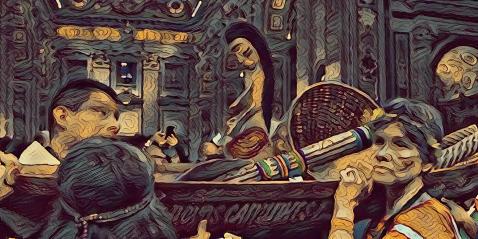
The worship of anyone or anything other than almighty God is a violation of the first commandment. As with all transgressions, while objectively wrong the subjective culpability is judged by God alone. This is why the Holy Father says there was no “idolatrous intent” even if the situation got out of hand. Nevertheless, if the indigenous shaman and her friends out of ignorance truly did not know better, those Catholic clerics (who would certainly know right from wrong) might be more culpable. I suspect this is why many critics are demanding correction, repentance and reparation for the public and objective grave sins likely committed at the Amazonian synod.

Regardless of intention, the placing of idols in a church is sacrilegious act offensive to God. Those demanding recantation point to the following:

  • The pope allowed and attended an act of idolatrous worship of “pachamama,” a pagan goddess.
  • The Vatican Gardens as well as the graves of the martyrs and of the church of the Apostle Peter were desecrated.
  • The pope participated in this idolatry by blessing the “pachamama” image.
  • The pope prayed with an idol (naked woman with child) placed in front of the altar at St. Peter’s and joined in procession with it.
  • After wooden images were taken from Santa Maria Church and thrown into the Tiber by outraged Catholics, the pope apologized for their removal.
  • A new profanation was committed when another wooden image of “pachamama” was returned to the church.
  • At the closing Mass, the pope accepted a bowl (of plants) used in the idolatrous worship of “pachamama” and placed it on the altar.
  • The pope called the images “pachamama” in his apology for their removal: a name for a false goddess of mother earth (in South America).

Beginning with St. Paul, the early Church fathers taught that sacrifices made to pagan idols were actually oblations made to demons. Christians were urged to have no part in them or even to take of the food that was subsequently shared with the poor.

“No, I mean that what they sacrifice, they sacrifice to demons, not to God, and I do not want you to become participants with demons. You cannot drink the cup of the Lord and also the cup of demons. You cannot partake of the table of the Lord and of the table of demons” (1 Corinthians 10:19-21).

I will have to give some serious reflection to this matter before writing further.  My suspicion is that the Holy Father’s compassion for wayward children was given precedence over their errant behavior.  Note that when initially presented with the statue he crossed himself instead of the image.  When pressed to bless and receive it, did he truly bless it or was it a simple exorcism?  When he takes it notice that the statue is quickly passed off to an attendant.  


When is Freedom Not Freedom?

157333249285949947 (7)

As Americans the notion of individual freedom is very precious to us. But even we acknowledge that such liberty is not absolute. Further, one might speak about freedom but in action place an entire people in bondage (slavery) or strip the most vulnerable as having any rights at all (unborn children). People can believe as they want; however I suspect that there would be some friction if certain citizens decided to shake off the yoke of repression as an indigenous people and returned to the religion of the Aztecs, killing children as a sacrifice to their idols. (I guess the legal way around this would be only to use the recent kills from abortion clinics.) Christians understand freedom as the opportunity to work with grace and to do what is good in the sight of God. Fortunately, the deity of the Church is satisfied with the sacrifice of Christ and is not looking for other “physical” victims. In any case, who determines what is good or evil? Catholicism would argue that one is not truly free in committing evil. Such choices place one into spiritual bondage. Look at these freedoms closely. Is one free to believe that the world is flat and sits on the back of a large cosmic turtle? Would we not call this DELUSION? Atheists sometimes view any deity as ridiculous and promote the parody of the Flying Spaghetti Monster. Is one free to believe that there is no God? The catechism speaks of atheism as a sin. How is true freedom promoted by sinning? One may have freedom of expression or speech but even civil law stipulates against crying out, “Fire!” in a crowded theater. The liberties of one should not run over the rights of others. This principle is violated in slavery as it is in abortion and the mistreatment of laborers today. Contemporary Catholicism speaks a great deal about freedom of conscience; however, conscience must be properly informed and rational. There should always be a connection to the objective and real. That is in part where the fight is today regarding sexual behavior. Catholicism argues both for natural, divine-positive and Church law. Islam contends for Sharia law. Secular society makes up its laws according to the fads and fashion of the day; it equates right and wrong with political activism as realized in legislative and judicial power. Today we see a usurpation of both the laws of nature and of God as in measures promoting abortion, physician assisted suicide and relativizing gender identity.

See also DOCUMENT ON HUMAN FRATERNITY.

Aggressive Evangelism to the East

157333249285949947

Rather than trying to get Islam to join the apathy and passivity of the West; we should readily confront it for what it is. We must be aggressive as they are aggressive. If there is to be true liberty, then Christianity must be allowed its place in both Western and Eastern society. Give us an even playing field or do not expect reciprocity. Many of us are confident that if there is no threat of violence or intimidation, Catholicism will always win the day in seeking the hearts and minds of believers. The Muslims are certainly not wimps in trying to spread their faith. There is bound to be conflict and challenge. What many of us are saying is that we should only be open to Islamic indoctrination to the extent that Catholic or Christian evangelism is allowed in the non-Christian nations. I am not afraid to say that it is my fervent hope and prayer that everyone might be Catholic. Our missionaries should have no closed doors placed before them. We should be strong in seeking to convert others to the truth. A reluctance to witness the faith in this manner implies that we have nothing to offer and that the faith does not matter. A hesitance to share the faith is a failure to love God and our neighbor. Is there any sin that is more serious?

See also DOCUMENT ON HUMAN FRATERNITY.


Toleration vs. Missionary Witness & Martyrs

157333249285949947 (1)

Seemingly in contradiction to the “Document on Human Fraternity,” (focusing on Catholic-Muslim relations) did not the Catholic Church and/or the leaders of Catholic states seek to impose the true faith in the lands discovered in the New World? Here at home I think about the North American Martyrs, Jesuits like the Holy Father, but men who did not hesitate to proclaim Catholicism to the most bloodthirsty among the natives of America and Canada. I think of the saints that died trying to bring the faith to the nations of Asia. Are we now to belittle their contribution? While certain elements of the faith might be enculturated; nevertheless, the kerygma brings about both individual and communal transformation. Idols are destroyed. Pagan rituals are replaced with the Mass. The immorality of non-Christian orgies is rejected and prayer and processions with the sacrament or statues to holy personages are substituted. Magic and superstition comes to an end or is suppressed. True faith and worship is given its place. The values of the Gospel will utterly transform and give a new meaning to the culture. Despite what this document says, many of us are proud of what Christianity has achieved and would make no apologies. This document seems to say that we are sorry for converting people and trying to change the world.

When speaking of good relations between the East and the West, it is stated that the Christian West can find in the Muslim East remedies for the “spiritual and religious maladies” of materialism. Given that we are speaking here about false religion, how would Islam help Christians to return to orthodoxy and the salvation of their souls? We certainly would not want to reduce the developed nations of the West to the status of third world countries. While Christians need the faith set aflame, I doubt the fanaticism of Islam is something that many Christians would want to embrace. Note while materialism is listed as the one fault of the West, it is compared to the “weakness, division, conflict and scientific, technical and cultural decline” of the East. Given all these faults, how is it that the East is supposed to help the West?

See also DOCUMENT ON HUMAN FRATERNITY.

Divine Wisdom Insures Oneness in Faith

157333249285949947 (2)

Often omitted in critiques of the “Document on Human Fraternity” (February 4, 2019) is the part about divine wisdom as the “source” to be “different” in what one believes. When individuals are labeled “different” it usually implies that the person is “touched” or somewhat out of sync with reality. Real faith or belief brings a profound unity with God and with the world he has made.  God has given us various avenues for truth. Speaking for myself, I cannot hold that God is the author of sloppy thinking, denial of proven scientific discoveries and an assortment of religions that disagree with each other more than finding any consensus. It seems to me that God gave us philosophy and logic so that we might rationally consider the ultimate questions. God gave us science and experimentation so that we might understand something of his creation and the objective or real world. God gave us a definite religious faith so that we would appreciate that we are not cosmic accidents but children of a loving and omnipotent Father.

As a Catholic I believe without question that God established covenants and led his people through the patriarchs and prophets. God sent his Son so that he might reveal his face to mankind and save us from our sins. Christianity has an answer that satisfies the soul. The message of Christian faith might be denied or distorted but it makes sense in a way that no religion can except possibly for Judaism. The Christian faith is a narrative that interacts with the stories of each and every man and woman. Here we are talking about the definite story of salvation. Revelation comes to the Church through the movement and inspiration of the Holy Spirit. The truths of God are entrusted to the Catholic Church.  What God gives her, she dispenses to the children.

The document comes very close to mouthing the sentiments of Pilate.  He was loyal to the emperor and respectful toward the pagan deities of Rome, yes even when he placed no faith in them.  He had seen too much.  Cynicism had taken ahold of his soul.  All these different nations and people he encountered each claimed that their religion was the true one.  The Jews went so far as to fight among themselves.  The situation with Jesus took him by surprise.  His wife had dreamed about this man and she begged him not to have anything to do with his condemnation.

“So Pilate said to him, ‘Then you are a king?’ Jesus answered, ‘You say I am a king. For this I was born and for this I came into the world, to testify to the truth. Everyone who belongs to the truth listens to my voice.’ Pilate said to him, ‘What is truth?’” (John 18:37-38).

The truth of Christ would break through a world of lies.  Pilate, himself, is touched by this mystery.  However, he was afraid of the crowd.  Maybe on some level he understood that if he allowed the truth of Christ to penetrate his soul then nothing would ever be the same?  The acceptance of Christ always shines a light upon the confusion and deception that surrounds us.  Christianity refused to compromise with pagan Rome and so the age of the martyrs began.  Christianity was not a religion tolerant of others.  The truth is what it is.  You cannot be a Christian and eat the meat of idols!  Ours is a jealous God!  Jesus is the SAVING NAME.  “There is no salvation through anyone else, nor is there any other name under heaven given to the human race by which we are to be saved” (Acts 4:12).

See also DOCUMENT ON HUMAN FRATERNITY.

Does God will a Plurality of Religions?

157333249285949947 (3)

Back in February, the Catholic Pope Francis and the Sunni Muslim Sheik Ahmed el-Tayeb signed the “Document on Human Fraternity” in the hope of improving interfaith relations. Hopefully, we are all for fraternity and peace in the family of man. However, this does not mean that we must sidestep or renounce basic tenets of the Catholic faith. Our approach to Islam should not be to become less Catholic but rather to be more Catholic. It is here where a problem arises in the document. It states:

“Freedom is a right of every person: each individual enjoys the freedom of belief, thought, expression and action. The pluralism and the diversity of religions, colour, sex, race and language are willed by God in His wisdom, through which He created human beings. This divine wisdom is the source from which the right to freedom of belief and the freedom to be different derives. Therefore, the fact that people are forced to adhere to a certain religion or culture must be rejected, as too the imposition of a cultural way of life that others do not accept.”

We might certainly say that the elements of color, gender, race and even language enrich humanity and find their source in God. This last element would include the value of Latin which so many progressives renounce for a one-sided adulation of the vernacular in worship. However, there is a problem when one says that God desires a “pluralism” and “diversity” of religions. I am reminded of the Protestant reformer Martin Luther on his deathbed. Instead of a reform of Catholicism there had been a widespread revolution and defection. While it may be mythical, it is purported that he said, “My God, my God, what have I done? There are now as many religions as there are heads!” The plurality of religions is not from the active will of God. Instead, it is a consequence of original sin. It is a diversity that is affirmed by obstinacy toward the true God.

The German princes and the King of England did not break from Rome because of doctrine, at least not at first, but for purposes of enhancing wealth and power. The division expanded through ignorance, prejudice, and a selfish egoism. When it came to non-Christians, Mohammad was rejected by the Eastern monks as intellectually ill-equipped to benefit from their teaching and spirituality. Their lack of charity fueled his anger and drove him to create a new religion to challenge Christianity. He deliberately amalgamated the teachings of the Jews, Christians and the local tribal cults. His purported revelations in the Quran often corrupted these elements or misconstrued the purloined doctrines.

An instance of this is his rejection of the Christian Trinity as the Father, the Son (Jesus) and the Virgin Mary. Not only did he wrongly substitute the Blessed Mother for the Holy Spirit, he fails to understand the Church’s teaching that there is ONE divine Nature but THREE divine Persons. God cannot be the source of error and here is a factual error in faith. Mary is a blessed creature of God (not divine) and Jesus is indeed the second Person of the Blessed Trinity.

While Islam went through an intellectual period, it ultimately became a religion that made converts not by persuasive arguments but by sharpened swords. The Muslims were correct that there was one God. A number of the popes have assumed that this was the same God of the Jews and Christians. Many of us have remained unsure.

Are they really children of Abraham? I pray it might be so but it seems to me that their origins are from a man more than from the living God. God does not teach error. God does not will religious division. We should never forget what Jesus said to the Father:

“Consecrate them in the truth. Your word is truth. As you sent me into the world, so I sent them into the world. And I consecrate myself for them, so that they also may be consecrated in truth. ‘I pray not only for them, but also for those who will believe in me through their word, so that they may all be one, as you, Father, are in me and I in you, that they also may be in us, that the world may believe that you sent me. And I have given them the glory you gave me, so that they may be one, as we are one, I in them and you in me, that they may be brought to perfection as one, that the world may know that you sent me, and that you loved them even as you loved me’” (John 17:17-23).

Continuing my reflection upon the “Document on Human Fraternity,” the Church can speak of “justice based on mercy,” but Islam understands justice only within the framework of sharia law. Again, I think the East and West may be speaking at cross-purposes. The document should have included a dictionary.

The dialogue for tolerance and peaceful coexistence implies that we are on the same page when it comes to definitions. What does the word “peace” actually mean? Does it mean the peace that comes with unity in Christ? Does it mean an end to violence between people who either hate or feel threatened by one another? Does it mean a truce from violence until one or the other has the upper hand? Does it signify what is defined by the very word, “Islam”— submission to Allah as taught by Muhammad the prophet? The ultimate peace, in this context, mandates the rule of Islam and the supremacy of their religion, deity and laws. I am reminded that Pope Benedict XVI was rewarded with death threats from millions when he asserted that Muslims had to disavow “holy war” or the sword as a means to this Islamic “peace.”

The dialogue among believers presumes that all the religion understand and aim for the same moral virtues. I am not sure this is the case. I am not saying that faithful Catholics are always the victims or the peacemakers. We have often taken up the sword instead of the cross as Jesus commanded. The martyrs of faith, and notable among these are the missionaries, are a testimony of how devoted we should be to the TRUE faith. Here is the whole point. The Roman Catholic Church is the house that Jesus built. Jesus is God come down from heaven to save us. He enters the human family to do so and thus he elevates and graces our humanity. The apostles are sent out to the whole world to proclaim the faith and to baptize in the name of the Trinity. Ours is a supernatural faith. The religion of the Jews is established by God and has a special standing; however it remains a natural faith. All other religions, including Islam, may have facets of the truth but they are intermingled with many errors. False religion may reflect how we are wired for God. There is an innate yearning for the transcendent. However, this is not sufficient to lend them absolute legitimacy. We must accept that in the world millions upon millions of people are spiritually formed by lies. It is only in the Catholic Church where we are molded by the truth. We express that truth every time we come to Mass and recite (as a community) the Creed.

God’s providence allows for the consequences of sin which includes the many false religions and the fracturing of Christianity. But, God does NOT directly will this plurality in faith. Such a view would conflict with the very first laws of the Decalogue:

“I am the LORD your God, who brought you out of the land of Egypt, out of the house of bondage. You shall have no other gods before me. You shall not make for yourself a graven image, or any likeness of anything that is in heaven above, or that is in the earth beneath, or that is in the water under the earth; you shall not bow down to them or serve them” (Exodus 20:2-5; cf. Deuteronomy 5:6-9).

This law is so central that we find it in the Gospels when Jesus is tempted by Satan. Jesus rebukes the devil: “Get away, Satan! It is written: ‘The Lord, your God, shall you worship and him alone shall you serve’” (Matthew 4:10).

The document goes to speak about the freedom of religion as a basic human right but while such toleration is exhibited in the West, it is often absent in many if not most countries with Muslim majorities. Beyond toleration, the document goes on to say that Christians and Muslims should acknowledge the other’s religion as “willed by God in his wisdom.” If we are speaking of what God wills to allow or permit, then yes; however, God is not the author of error and sin. Abraham is the common father in faith for Christians and Jews, but outside of this historical intervention by God it cannot be said that God truly spoke to Muhammad or that he willed the multiple deities of the Hindus or any of the lesser cults. This emerged as a point of conflict at the recent Amazonian Synod.

The Holy Father (Pope Francis) who is regarded by critics as the master of confusion, has offered the “possible” corrective that “. . . from the Catholic point of view, the document does not deviate one millimeter from Vatican II.” The Second Vatican Council teaches:

“The Catholic Church rejects nothing that is true and holy in these religions. She regards with sincere reverence those ways of conduct and of life, those precepts and teachings which, though differing in many aspects from the ones she holds and sets forth, nonetheless often reflect a ray of that Truth which enlightens all men. Indeed, she proclaims, and ever must proclaim Christ ‘the way, the truth, and the life’ (John 14:6), in whom men may find the fullness of religious life, in whom God has reconciled all things to Himself” (Nostra Aetate 2).

Notice that the compliment toward non-Christian religions is limited or somewhat back-handed. Obviously the Catholic Church would not reject anything that is “true and holy” wherever it is found. An analogy would be a thief who swallowed a diamond. The diamond still has value and is precious even if one has to finger through the manure pile to find it. Another analogy would be the separation of the wheat from the chaff. That which is the true bread must be winnowed from that which has no value.

See also DOCUMENT ON HUMAN FRATERNITY.

A Dark Flipside to Religious Liberty?

157333249285949947 (5)

Alongside an atheistic secular humanism we are challenged to coexist with a diverse plurality of religions and denominations. We must pray that our own promulgation and defense of religious liberty will not come back to haunt us. Few are asking whether this liberty should be without boundaries. Is it possible that such freedom might follow a peculiar circular evolution or devolution? Is it possible that this liberty might set the stage for later repression of the very ones that first promoted it as an ideal? Look at the history of the thirteen colonies in early America. Maryland was established as a haven for English Catholics to celebrate their faith and to live their lives in peace. An Anglican and a Catholic priest came to this new land as friends who respected each other. The goodwill shared between believers led to the Edict of Toleration 1649. It mandated liberty for all true Christians (believing in the Trinitarian God). When it was observed that Protestant Puritans in Virginia were being persecuted; the Catholics of Maryland invited them into the Maryland colony. Within a short time, the Protestants seized power and penal laws were enacted to repress the Catholic faith and to persecute believers. Good intentions do not always insure beneficial results.

The Rise of a False Ecumenism

157333249285949947 (6)

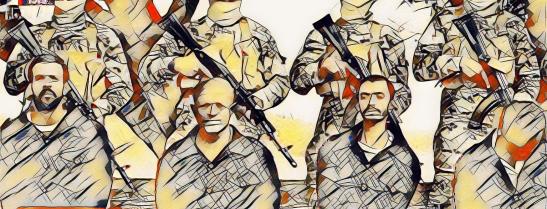
I have to scratch my head in confusion and disbelief when I hear or read much about what is happening in the Church, today. Certain traditionalists have long warned us about the dangers of ecumenism and we dismissed their concerns. We argued that a true ecumenism spoke from the heart and not with a stick so that separated brethren might come home to Catholicism. We have seen some returnees, but more so from those who intellectualize their faith than those who “feel” their religion and enjoy fellowship. When it came to non-Christian religions, the attitude was one of peace or seeking understanding or working together for a better and more humane world. Despite arguments that Islam was a religion of peace, extremists have used violence to suppress the Christian faith and to persecute Christian minorities. Will any of us ever forget the photo of brave Christian men standing loyal to the Lord even as Muslim extremists held knives to their throats? But, alas, we are quick to forget and to forgive— even when there is no sign of contrition or sorrow. A Europe that has renounced her Christian roots will stand no chance against the invasion of Muhammad’s followers.

See also DOCUMENT ON HUMAN FRATERNITY.

The Holy Father & His Sons

156780875895068094 (13)

I posted some time back that I was distressed that the Holy Father would constantly bombard with insults men who earnestly struggled to be good and faithful priests. It was my hope that the pendulum was finally and decisively moving to the other side with the papal letter to priests on the 160th anniversary of the death of the Curé of Ars. Indeed, I even printed a copy for myself feeling that these encouraging words from the heart of Pope Francis were long overdue. But I guess old ways are hard to change.

Why would Pope Francis admit in public that he feels it is an honor to be attacked by Americans, when the most critical voices profess genuine loyalty to him and only beseech clarity and orthodoxy from the Holy See? Does he not understand that he has disparaged a church that has endured vile bigotry, fought back dissent, defended the sanctity of life even against her own, and is even now in a knock down fight with a modernity that has already vanquished much of Europe? Unmatched by any other entity except for maybe the U.S. government, the Knights of Columbus and Catholic Charities reaches out a helping hand in charity and proclaims a message of freedom— not asking for thanks— but deserving at the very least a certain level of recognition and respect. The Vatican would be in a shambles and there would be no “Peter’s Pence” if Americans did not shove money into the papal pockets as fast as the Pope took it out.

American Catholics love the Holy Father.  While many of our brethren have fallen away, there are still millions of us who keep the faith even when it takes us to the cross.  As for the priesthood, we have our share of sinners and saints, but most of our men daily lay down their lives for their flocks.  They try to help people while not compromising the Gospel.  This is not rigidity but an effort at humble service rooted in charity and in truth.  We preach both repentance and the forgiveness of sins.  If we pamper sin we might make friends and even fill a few more pews, but the lie would deny salvation to souls and make us accomplices in sin.  This is not the form of accompaniment demanded by Christ.

My priest colleague and old friend, Msgr. Charles Pope has an ever widening media footprint and he has taken some negative feedback recently for saying that which needs to be said. Knowing him and his profound loyalty to Christ and to the holy pontiff, it must have been the most painful statement of his life.

The Holy Father stated:

“I would like to emphasize an attitude that I do not like, because it does not come from God: rigidity. Today it is fashionable, I do not know about here, but in other parts of the world it is fashionable, to find rigid people. Young, rigid priests, who want to save with rigidity, perhaps, I don’t know, but they take this attitude of rigidity and sometimes – excuse me – from the museum. They are afraid of everything, they are rigid. Be careful, and know that under any rigidity there are serious problems.”

Monsignor Charles Pope wrote on social media:

“Santo Padre, I’m not feeling the love here, I don’t feel accompanied by you. Make room in your heart for me and others like me. I am not a young priest, but I know you don’t like my type of priesthood. Further I am an American and this mere fact seems to also make me troublesome in your eyes. I am not afraid of everything as you state, but I do have concerns for the ambiguity of some of your teachings and severity of some of your actions. Yet when we, your less favored sons, ask you questions, you will not answer or clarify. In all this I am still your son and share the priesthood of Jesus with you. I await the solicitude and gentle care from you that you say I, and others like me, lack. Meanwhile I must honestly and painfully say that I am wearied from being scorned and demonized by you. Respectfully, Carlo.”

If there should be any backlash for such courageous honesty, I hope it will be measured by justice and respect for the truth. The saints are weeping.

A Priest Trying to Understand the Pope

Pope Urges an End to Insults… YES!