• Our Blogger

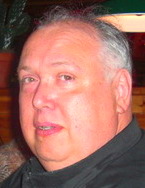
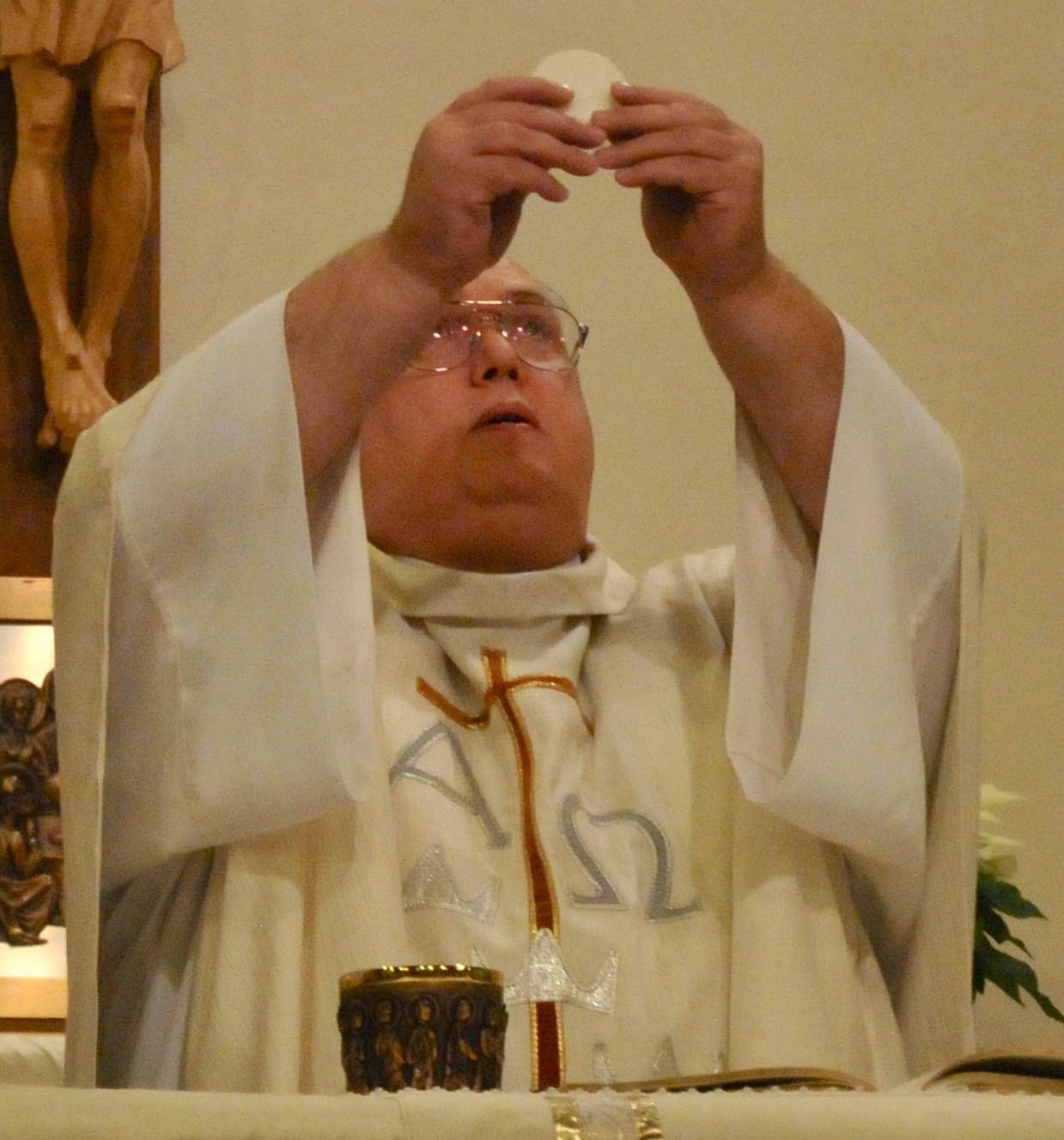
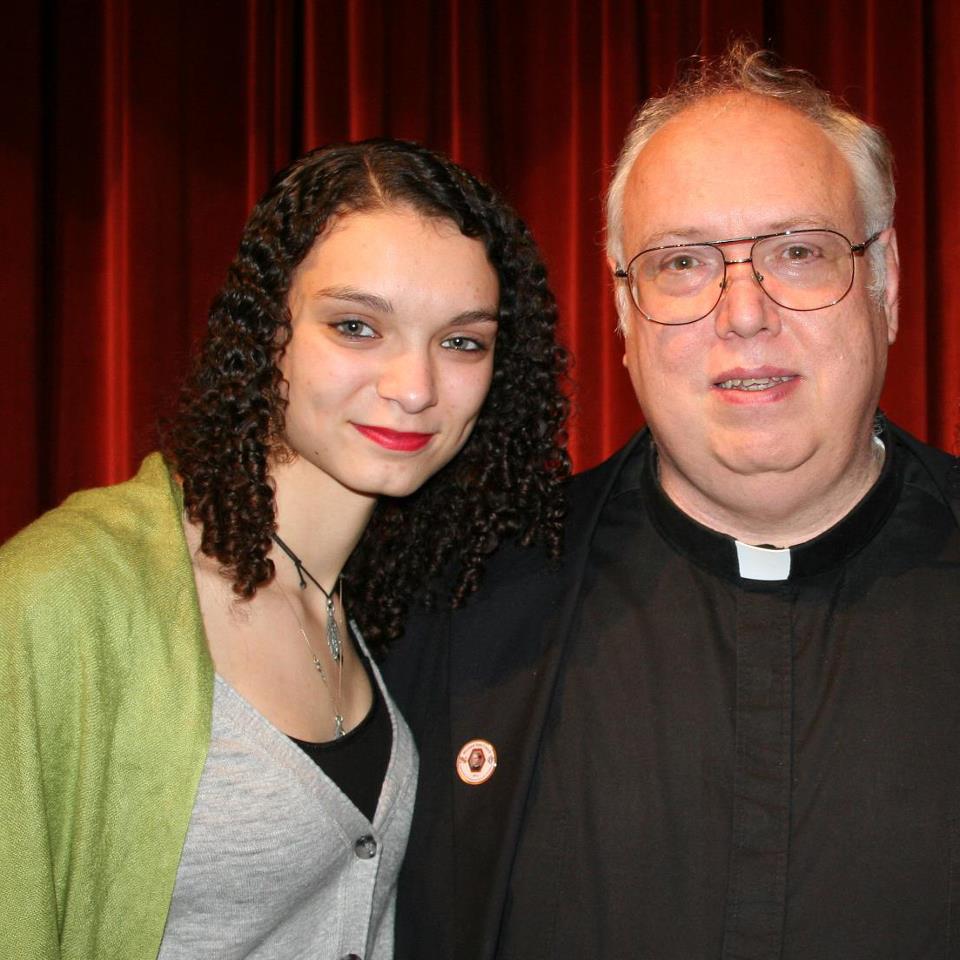
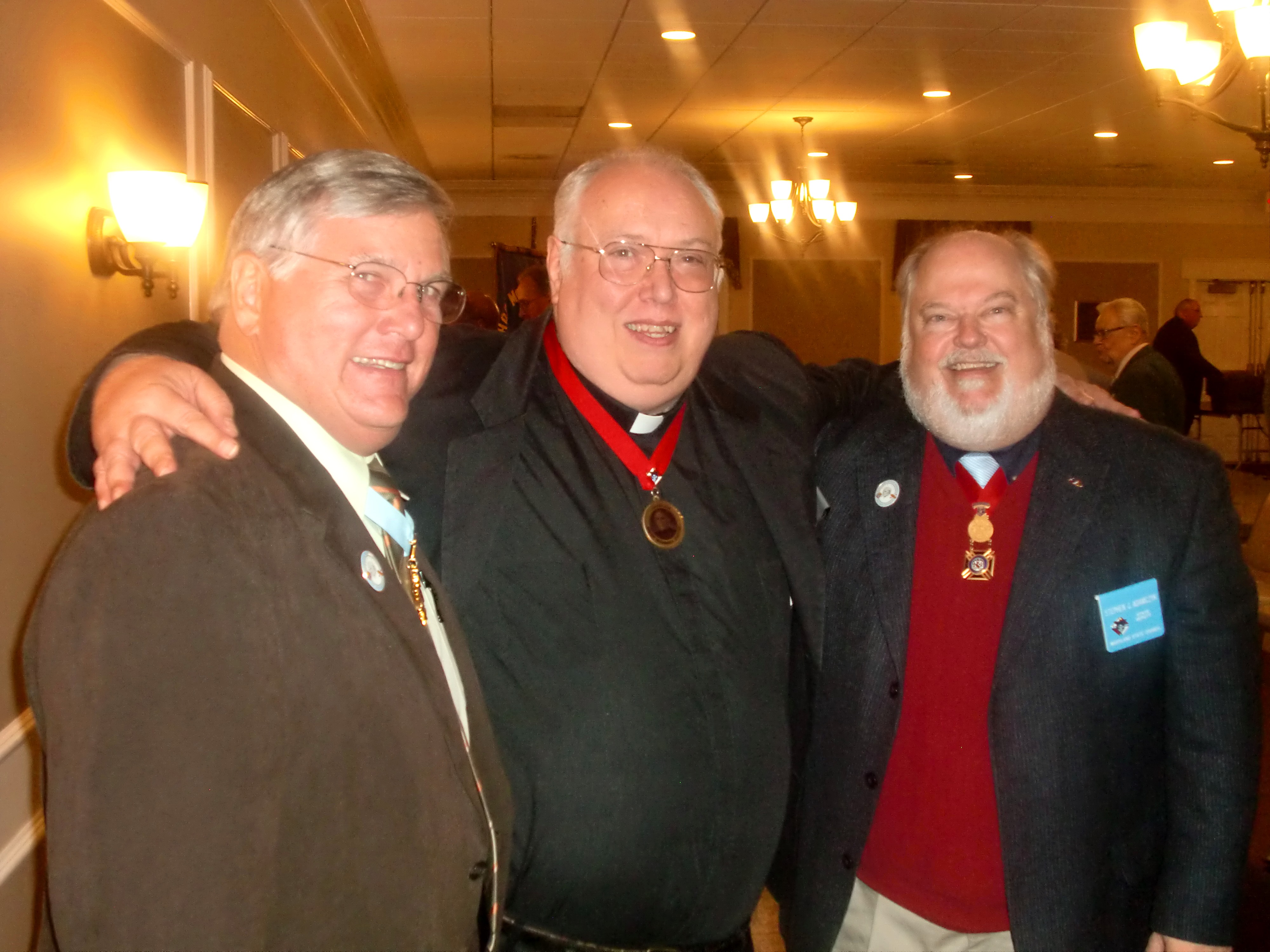
    Fr. Joseph Jenkins

  • The blog header depicts an important and yet mis-understood New Testament scene, Jesus flogging the money-changers out of the temple. I selected it because the faith that gives us consolation can also make us very uncomfortable. Both Divine Mercy and Divine Justice meet in Jesus. Priests are ministers of reconciliation, but never at the cost of truth. In or out of season, we must be courageous in preaching and living out the Gospel of Life. The title of my blog is a play on words, not Flogger Priest but Blogger Priest.

  • Archives

  • Categories

  • Recent Posts

  • Recent Comments

    Barbara King's avatarBarbara King on Ask a Priest
    Ben Kirk's avatarBen Kirk on Ask a Priest
    Jeremy Kok's avatarJeremy Kok on Ask a Priest
    Barbara's avatarBarbara on Ask a Priest
    forsamuraimarket's avatarforsamuraimarket on Ask a Priest

Can a Priest Deny Sacraments to a Gay Man in the Hospital?

The news was on fire this morning about a DC priest who purportedly refused to give Last Rights to a gay heart-attack patient at the Washington Hospital Center.

Oh boy, here we go again! This man condemns the priest but we only have his side of the story.

I suspect there is a lot more to the story than what we are hearing.  A priest was requested and Father Brian Coelho came to the bedside of the patient, Ronald Plishka.  The priest followed the ritual by offering the Sacrament of Penance prior to the Anointing of the Sick and Holy Communion.  If a patient is unconscious, the priest will often presume contrition and a desire for the sacraments, giving absolution even without auricular confession.  In this case, the patient was alert and responsive.  The patient seemed to want to make small talk and remarked about how as a homosexual person he was so happy that the Pope was accepting of gay people.  But he next asked if this admission bothered the priest, almost as if he were baiting him.  The priest said it did not but offered to pray with him.  Nothing more was said about Extreme Unction and Viaticum.  While left unsaid in the article, this intimates that this dialogue took place as part of a Confession.

Because the disagreement probably happened during Confession, the priest is silenced by the seal and cannot share his side of the story. Indeed, he would face automatic excommunication if he says anything… something I hope that Church authorities appreciate. Even they cannot question the priest.

Instead of a civil conversation, the patient rejects the offer of prayer and tells the priest “to get the [deleted] out of here!”  That in itself probably demonstrates an improper disposition for God’s mercy.  Then the doctors came in to calm him down.

We should pray for all the parties involved. 

What Does 1 John 5 Mean?

QUESTION: The reading 1 John 5:14-21 has come up again in the liturgical readings (January 11, 2014) and it confuses me. What does it mean not to pray for the sin that leads to death?

ANSWER:

What we ask should be in conformity with the divine will. Divine providence cannot be circumvented.

We can intervene for the venial sins of our brothers and sisters. That is a basic component of intercessory prayer. If the person is disposed to mercy, then God hears and answers such prayers.

Mortal sin is more serious and requires the immediate contrition of the sinner. The Church also employs the mediation of priestly absolution in the sacrament of Penance.

The one who belongs to God is in genuine friendship with him. Mortal sin signifies a breech. It forfeits the life of grace.

We are commissioned to abide in God and to spread the Good News.

How is Praying to a Saint NOT Like Praying to God?

bvm_047QUESTION:  Do Catholics pray to God, Jesus, Mary, Saints, and all of the above? How is praying to a saint different than praying to God? My Christianity claims that God will listen to all prayers. If Catholics believe that (do they?), why are they praying to saints?

Some of these concerns I have already briefly addressed. Over the last two thousand years, Catholic Christians have done much discernment regarding prayer and spiritual matters. Obvious structures in our prayers have been formulated. Note that at Mass, most orations are addressed to God as Father. Oftentimes prayers will end with a statement that it is offered “through” Christ our Lord and with some possible mention of the Holy Spirit. Jesus is again and again affirmed as the one Mediator to the Father. We also believe in the Trinity: that God is Father, Son, and Holy Spirit. This is important because certain modern-day Arians and Messianic Jews deny the divinity of Christ— a fact that would immediately alter prayer. God does listen to all prayers and as I have said before, the invocation of a saint to pray with us to God does not negate this reality. All prayer is properly addressed to God. If a prayer is answered, it is because of the intervention of God. Mary and the Saints have no power of their own– they are creatures; however, God has chosen to work closely with and in us. Your question here would better be rendered: what are the four purposes of prayer?

Adoration – Proper worship of God due to Him as our Creator.

Thanksgiving – Gratefulness to God for His gifts to us.

Reparation – To obtain pardon for sins and to do penance.

Petition – We ask for spiritual and physical goods.

I hope this helps to alleviate the confusion that many have about the oldest form of Christianity and our prayer practices. And, again, I do hope those who come here are sincere. Sometimes anti-Catholic fundamentalists ask questions, not because they honestly want to understand the faith, but because they hope to trip up ignorant Catholics as part of a proselytization effort.  I would urge a certain civility in debates and discussions.

Intercession of Mary & the Saints

bvm_024QUESTION:  Why must Mary intercede? And what if she doesn’t want to? Does that mean your prayers are not heard by Jesus? I guess this question goes for praying to all the Saints.

Why? How can she not? If you are watching a football game and the receiver gets the ball, are you not rooting him on to victory? The crowd becomes like one unified whole— shouting, singing, doing the wave, etc. This analogy offers but a pale point of reference to the role of Mary and the saints. We are all in this together— the journey from mortal to eternal life. The very definition of a saint makes what the division you suggest impossible. The sanctity of heaven implies the utter transformation of one into a new Christ— of one mind and will with our Lord. What he wants, they want. A little girl in church was asked one time for the definition of a saint. She looked at the figures in the stained-glass windows and replied, “Saints are those who allow the light to shine through.” Quite right! And the Light of the World is Christ, dispelling the darkness of ignorance, sin, and death. This process of conversion begins in this life; we can and should be perfected in holiness by the grace of God. We can be ever remade into Christ’s image. Heaven simply brings this development to its full conclusion. People who knew Mother Teresa said that to be near her was almost like being in the presence of Jesus— so fully did she manifest the living Christ in her faith and life. We can also become saints if we allow God to so work in our lives. We need to seek a restoration of all things in Christ, including ourselves. The question about division between the saints and Jesus says less about the heavenly hosts than about ourselves— our own brokenness and bondage to sin— our own refusal to fully embrace the Gospel of Life. Sometimes selfishness and hatred invade our prayers; such is never the case for Mary and the Saints. They are immaculate windows to the divine. Further, they are a part of us. The Church in Glory is inextricably united to the earthly Church in Glory and the Church in Purgation. The Mystical Body (Eph. 1:23; 1 Cor. 12:27) remains intact. The saints intercede for us precisely as perfectly conformed elements in this wondrous union. Death is not the end of love. This is at the heart of Christ’s resurrection— his Father’s Love (the Holy Spirit no less) restored him back to life. The family of God in heaven has not forgotten those of us still facing the trial. Love compels them to remember us and to pray for us.

Praying to Mary

bvm_028QUESTION:  Why do you have to ask Mary to take your prayers to Jesus? Can’t you just go straight to Jesus?

Of course, one can and should address Jesus directly in prayer; however, this does not negate Mary’s role. The question is a good one and possesses some complexity. All of the attributes of mercy and love attributed to Mary find their ultimate source in the Lord. The unity between the Mother and her divine Son is very intimate and unbreakable. Even when we address our prayers to Jesus or show him homage, we are also honoring his Mother and invoking her assistance. Mary rejoices when we come to her Son, no matter what the path. The Dominican priest, Fr. Jelly wrote that in this sense, even the most fundamentalist of Protestants are showing their respect to Mary in their devotion to Christ. Conversely, God is honored when we honor Mary. God loves us to honor Mary as a Father is pleased when his daughter is honored.  Every honor we give to Mary is reflected back to God since we honor her for what He has done for her, with her, and through her. When we honor her, we honor Him. When Catholics address Mary, it is because there is something about her maternal qualities which soothe our souls and remind us of the great company of heaven— the home to which we hope one day to enter. Even in human families, the love and help of parents could just as well come from one parent or the other; but sometimes we want the strength of our fathers and at other times the feminine touch of our mothers. Mary is a creature, not God like her Son, and yet her abiding proximity and union to Christ makes her a fitting figure for our prayers. We reverence her, as we do all the saints, but true worship is addressed to God alone. Otherwise, we would fall into idolatry. Christ is our only mediator (1 Tim. 2:5-6) with the Father, but Mary can intercede (pray for us) with her Son Jesus. Jesus worked his first miracle at her request (Jn. 2:1-12). Just as we can ask other members of the Church on earth to pray for us (1 Tim. 2:1; 2 Tim. 1:3; Phil. 4:22), so too, can we ask members of the Church in heaven to pray for us (Rv. 5:8; 6:9-11; 7:10-12; 8:2-6; Mt. 22:31, 32).

We are also called to imitation of Christ. Did Jesus follow the commandments? Sure. Including the fourth commandment? Yes. Then if Jesus honored Mary his Mother and took her direction seriously, would this commandment be abrogated in heaven? Further, if Mary is given to us as our Spiritual Mother, are we not to pay the same respect to her as he did– imitating Christ even in this? Yes. The honor we give Mary our Spiritual Mother in no way subtracts from the worship we give to God any more than honoring our earthly mother does. In fact, it conforms to God’s holy will, and we who are adopted sons of God honor her whom the Son honored.

Going to the Desert

Although a priest, I remain very much an introvert, struggling always with the public dimension of my ministry. Clergy friends who are extroverts seem energized by the crowds and speaking in public. By contrast, I quickly feel my batteries draining. While the Eucharist is my life, my favorite times are with small associations or alone in prayer. Looking to the two sisters of Lazarus, I am much more like the passive listener Mary than the active worker Martha. Jesus also took time to climb a mountain or to seek a place of solitude for communion with his Father and to reflect upon what must be done. Both elements need to be nurtured in the disciple, but I am aware of where my strengths and weaknesses are found. There is an essential part of me that longs constantly for the desert. I suppose I have always found sympathy for the Christian hermit, although his vocation is immensely misunderstood. He does not hate people or company. He merely wants to strip away the distractions so that he can be more present and aware of the divine mystery. He knows that as long as he has God, he is not really alone. A privilege that a priest has is that he can enter an otherwise locked church and spend time with our Lord in the Blessed Sacrament any time he wants. It is quiet and often dark. He can talk to God and God can speak to him.

I love praying in a darkened church. While the sacred space is in twilight, there is an irony because the one who is the Light of the World often brings great illumination to the soul. As we begin to see God more clearly, such times of personal prayer can allow us to better focus on the meaning and struggles of our lives. Here I am mindful of St. Anthony and the temptations and conflict he had in the desert with the devil. The more real that God is for us, the less the devil hides in the cracks. Many people rush through their lives with blinders on. They miss opportunities for grace, fail to discern the hand of God and, walk straight into traps planted by the evil one.

As a sickly child, I watched a lot of television. One show that both intrigued and frightened me was called THE NIGHT STALKER with the late Darren McGavin. There is an image from the Firefall episode that has long stayed with me. A man who was being chased by a demonic doppleganger took refuge in a church. The creature could not come in after him but taunted the man from up in one of the windows. That scene has become a metaphor of so many things for me. We seek sanctuary in the church. We run to Christ when there is nowhere else to run. And here is the secret; there is never anywhere else to flee. We beseech God’s help and that of his holy angels against the devil who is prowling throughout the world seeking souls to devour. It is when we draw the closest to God that the devil’s hiding places are uncovered and his part in our life becomes apparent. Of course, this allows us to invite God in and to root the devil out. This is where we find our personal battle with powers and principalities. It also reveals a lie. While the devil is at the windows wanting in, he seeks to desecrate our churches and communities of faith by infesting us. We battle Satan both from without and from within. He sneaks into the churches and even dishonors the Blessed Sacrament by luring us into unrepented mortal sin. Clergy and laity alike must always take sin very seriously. Too many have become comfortable and tolerant of it. All sin is part of that millstone that would bury us in the deep water. All sin is an injury. Mortal sin is death, itself. How can we proclaim the Gospel of Life if we are spiritual corpses? Jesus has come that we might have life and have it to the full.

It sometimes seems to me that a practical atheism has possessed people, including many laity and a few clergy of the Church. I experienced the intellectual side of this phenomenon in seminary where the historical method was abused to dismiss the miracles of Christ and one theologian went so far as to say that the discovery of Christ’s bones would not disturb him because the resurrection was merely a warm feeling in the bosom of the apostles anyway. Well, it would bother me because there are no bones and there never will be. Another theological teacher convinced his seminary students that angels had no metaphysical existence but were merely extensions of God’s power and presence. This reduced guardian angels and the devil himself to empty metaphors. While those who warn about the dangers of Modernism are often interpreted as fanatics; I saw firsthand that their concerns had genuine substance. If the clergy themselves do not believe then how can we expect an informed faith by many in the flock? Many people go through the motions of faith, but scratch the surface and there is a skeptic and/or materialist. They do what they want and no one will tell them what to do, even God and his Church. If the divine is eclipsed then there is no standard to follow and no judgment that can reach us after death. Going to the desert means breaking through all this nonsense. We face our mortality and sinfulness, knowing that there will come a reckoning. We embrace the reality of God and acknowledge that he is the Master of our lives.

Mass as Sacrifice & Eucharist as Really Jesus

ANTI-CATHOLIC ASSERTION

Jesus, once and for all, died for sins. This saving act is never to be repeated. He now sits at the right hand of God and does not reappear to us in the Mass as a corpse’s blood and flesh.

Jesus dies once:

But this one [Jesus] offered one sacrifice for sins, and took his seat forever at the right hand of God; now he waits until his enemies are made his footstool. For by one offering he has made perfect forever those who are being consecrated. The holy Spirit also testifies to us, for after saying: “This is the covenant I will establish with them after those days, says the Lord: ‘I will put my laws in their hearts, and I will write them upon their minds,’” he also says: “Their sins and their evildoing I will remember no more.” Where there is forgiveness of these, there is no longer offering for sin (Hebrews 10:12-18).

Christ upon the Cross:

Therefore, when Jesus had taken the wine, he said, “It is consummated (finished)!” And bowing his head, he gave up his spirit (John 19:30).

Remembrance, not the forgiveness of sins:

For I received from the Lord what I also handed on to you, that the Lord Jesus, on the night he was handed over, took bread, and after he had given thanks, broke it and said, “This is my body that is for you. Do this in remembrance of me.” In the same way also the cup, after supper, saying, “This cup is the new covenant in my blood. Do this, as often as you drink it, in remembrance of me.” For as often as you eat this bread and drink the cup, you proclaim the death of the Lord until he comes (1 Corinthians 11:23-26).

CATHOLIC TRUTH

The Mass is a sacrifice and Holy Communion (through transubstantiation) is the actual body and blood of Jesus Christ.

It is true that Jesus died once and for all. His saving death is unique and the risen Lord will never die again. This is also Catholic doctrine. Further, the Catholic Church also agrees that Holy Communion is not the flesh and blood of a dead Christ. However, everything else is misunderstood by the anti-Catholic critic. The Mass is a real sacrifice in that it resonates in perfect harmony with Calvary. Each celebration of the Mass is not a new slaughter of Christ Jesus. Sometimes, when spoken about as a repetition of the Cross, this confusion arises. The Mass is a sacramental (use of sacred signs) and unbloody re-presentation of the sacrifice of Christ. Like a time machine, we are transported to Calvary and are present at the one saving act of all history. The only thing missing at the Cross was our own self-offering with and in Jesus. The appearances of bread remain, but the sacred elements constitute the risen Lord— body and soul, humanity and divinity– without division or diminishment. There is but one high priesthood in Christianity, that of Jesus Christ. Every ordained priest allows his very self to be appropriated by Christ in a participation in the one priesthood which offers true worship. If the Mass and Calvary are one and the same, then of course it is a sacrifice of propitiation, one which forgives sins. The covenant of Christ is not a stagnant affair locked in past history, the remembrance of the Eucharist makes present what it celebrates. It is a renewal of the new covenant in Christ’s body and blood. The Hebrew notion of “anamnesis” is not like our impoverished nostalgia-type of remembrance. The words of institution said by the priest at Mass, recall the saving supper of the Lamb and make him present— both in his person (his identity) and in his saving activity. The sacrifice of Calvary, re-presented to us throughout time and place, calls us all to unity in the Lord. The Lord himself tells us that unless we eat his body and blood, we can have no part of him. Paul’s words from 1 Corinthians are not merely an academic exercise in studying the institution narrative of the Lord’s Supper. These words were familiar to St. Paul because they constituted the liturgical tradition he had received. These are the words with which St. Paul, an apostle and priest of the new dispensation, offered the Eucharist. Note that after mentioning the Lord’s command to repeat his new ritual, St. Paul talks about our need to be worthy in its reception. Otherwise, we would be held accountable. Unless there is a “real presence” of Christ in the consecrated bread and cup, such a warning would be incoherent. He forewarns them against any further abuse at the Lord’s Supper, including overeating. (Remember, in the early Eucharist, the Lord’s Supper was attached to a regular meal.) It is precisely because of the efficacy of the Eucharist in regard to the forgiveness of sins, (the realization of divine mercy), that St. Paul talks immediately about judgment if we neglect or abuse the privilege.

We must properly understand 1 Corinthians 11:23-27. Look at the last verse; it only makes sense if the Eucharist really is the risen Christ:

Therefore whoever eats the bread or drinks the cup of the Lord unworthily will have to answer for the body and blood of the Lord (1 Corinthians 11:27).

Self-examination is necessary if we are to appreciate the command to unity which flows from Jesus’ giving of himself and our requirement to repeat his sacrifice with the same spirit of self-donation:

For anyone who eats and drinks without discerning the body, eats and drinks judgment on himself (1 Corinthians 11: 29).

Incense

Rev. 8:3: And another angel came and stood at the altar with a golden censer; and he was given much incense to mingle with the prayers of all the saints upon the golden altar before the throne; and the smoke of the incense rose with the prayers of the saints from the hand of the angel before God.

Psalm 141:2: Let my prayer be counted as incense before thee, and the lifting up of my hands as an evening sacrifice!

Incense is only one of the many ceremonials in Catholic ritual and worship that are validated by the Bible. The fragrant smoke proved quite practical in outside processions against the pungent smells of the city streets. Sanitation not being what it is today, incense was very helpful on this account in old Rome. While there are references to the use of incense in the Bible, some of the early Christians avoided it because of cost and because it was also used by the pagans. After paganism was extinguished, this was no longer a concern. The smoke of the incense is a symbol of our prayer and our offering. It rises into the air just as we hope that our prayers will be taken up to the throne of God for a hearing.

For more such reading, contact me about getting my book, DEFENDING THE CATHOLIC FAITH.

Questions & Answers About Prayer, Fasting & Blessings

What is the prayer book from which priests and religious read?

Called the Liturgy of the Hours or the Breviary, it is one of the principal ways, along with the Mass, that the Church seeks to pray unceasingly throughout the world. Priests and religious use the Breviary as a staple in their prayer life. It is a form of prayer mandated for them and optional for the laity. It structures prayer during the day: Office of the Readings, Morning Prayer, Daytime Prayer, Evening Prayer, and Compline.

What constitutes this book?

It consists of Scripture lessons, readings from the Church fathers and saints, prayers composed by the Church, and most prominently, the psalms. The psalms are recited and chanted because they were the prayers Jesus would have known by heart and prayed daily. The psalms consecrate the Breviary as the prayer book of Christ. There are also hymns in the book. Several editions and translations exist. In the United States there is both an edited one volume and a complete four volume set.

What is the purpose?

It insures prayer and gives unity to the Church’s prayer all over the world. When used by priests, it allows them to imitate Christ in rendering constant intercession for the people.

What is the origin of the Angelus prayer?

Churches would call people to prayer three times a day by ringing the church bell. This was introduced by Pope Urban II in 1095 AD to invoke Mary’s protection upon the crusaders. After the conflict, it was retained as a special way to thank God three times a day for the blessings of redemption merited through Christ.

What is the Rosary?

What is it not? The Rosary is a collection of many prayers into one; and yet, it is a simple prayer, introduced by St. Dominic in the thirteenth century and highly approved by the Church. It is called the Rosary because it is composed of a series of beautiful prayers and meditations about the principal stages in Christ’s life, which are strung together one after the other like a garland, in other words, like so many beautiful and fragrant roses. Christ’s life is divided into the joyful, sorrowful, glorious and luminous mysteries.

Why do Catholics repeat the same prayers in the Rosary? Is it not vain repetition?

Is it vain repetition to breathe one breath after another? Does a lover ever tire of telling his beloved, “I love you”? No, there is nothing vain here. Like the angels who eternally praise God as “Holy, Holy, Holy,” we say certain holy prayers and praises over and over. The core prayer is the HAIL MARY, sandwiched between an OUR FATHER at the beginning of each decade and closed with a GLORY BE and an optional FATIMA ASPIRATION. There are five events recalled and meditated upon. The opening prayer is the APOSTLES’ CREED and after an OUR FATHER, three HAIL MARYs are said (for an increase of faith, hope, and charity). The Rosary concludes with the HAIL HOLY QUEEN.

Outside the Rosary, other prayers of importance for the Catholic would be the ACT OF CONTRITION, the REGINA CAELI (substituted for the Angelus during the Easter season), GRACE BEFORE & AFTER MEALS, the STATIONS OF THE CROSS, and various novenas and litanies, etc.

Why do Catholics also do things like fast?

Actually, there is far less of it than there used to be. Fasting and abstinence (avoiding meat) was once much more strictly regulated. Unfortunately, many people have misunderstood the change regarding Friday abstinence. It was not utterly revoked. Rather, one could substitute another form of penance or mortification. Many people either did not know this or simply failed to sacrifice something else. Catholics fast because Jesus fasted (Matthew 4:12). Indeed, he told us to fast (Matthew 1:16,18). Also, St. Paul fasted (2 Corinthians 4:10) and the other apostles did so too (2 Corinthians 6:5). Good people under both the old and the new dispensation have fasted as a sacrifice to God, to firm up their discipline, and to prolong their life (1 Corinthians 9:27).

Why do Catholics abstain from meat on the Fridays of Lent and are asked to render some similar penance on Fridays throughout the year?

It is not because meat is bad, but precisely because it is good. We abstain as a small sacrifice in remembrance of the death of our Lord on a Friday. Today, the Church requires that Catholics abstain from meat on Ash Wednesday and all Fridays of Lent. On Ash Wednesday and Good Friday, Catholics are both to abstain from meat and to fast.

What is a blessing?

It is a holy action whereby the priest invokes the divine blessing on persons or things, just as Jesus did when he blessed children, bread, fish, and other objects.

What does the Church bless through her ministers?

The Church blesses houses, fields, persons, and about any object that can benefit people.

Why does the Church use holy water?

It is a suitable substance, reminding us of our baptism and faith, to bless people and things. It is a wonderful symbol (sacramental) to wash us from venial sin and to protect us against the evil spirit.

When do Catholics use holy water?

Catholic Christians sign themselves with the water upon entering and leaving the church. They also use it at home: upon rising and retiring, before prayer time, upon going out, etc.

Why are people sometimes sprinkled with holy water at Mass?

It is because we should be cleansed and sanctified when we enter into God’s house and his abiding presence there. We also recall our baptism.

For more such material, contact me about getting my book, CATHOLIC QUESTIONS & ANSWERS.