The blog header depicts an important and yet mis-understood New Testament scene, Jesus flogging the money-changers out of the temple. I selected it because the faith that gives us consolation can also make us very uncomfortable. Both Divine Mercy and Divine Justice meet in Jesus. Priests are ministers of reconciliation, but never at the cost of truth. In or out of season, we must be courageous in preaching and living out the Gospel of Life. The title of my blog is a play on words, not Flogger Priest but Blogger Priest.
The General Synod of the Church of England voted on Monday to consecrate priestesses as women bishops. Well, there’s the nail to the coffin for the home of Anglicanism. Ecumenism with them will be restricted to soup kitchens, sharing contributions from C.S, Lewis, and appreciation for perfecting the English language. The bridges have been burned to most else. Since women cannot be ordained in truth, this makes arguments about their Masses and the Eucharist mute. Fake priests can only give you a counterfeit Holy Communion. When it came to morality, our ships passed in the night a long time ago. They disregard both Sacred Scripture and Sacred Tradition, wrongly approving homosexuality and dismissing the indissolubility of marriage. Abortion is reduced to a personal choice, far from the Catholic stance that sees it as an assault upon the heart of the Gospel of Life. Their last convention in the States could only agree about how terrible landmines were, as if that is a big issue in suburbia. This is what happens when morality collapses and an “everything goes” mentality takes over. Public opinion and modernity is given preference over divine revelation. Instead of obedience to God, the human becomes the measure of all things— and people are fickle and frequently wrong. The Orthodox churches are lamenting that years of work toward a common faith and even levels of recognition have been thrown upon the garbage heap. Anglicanism, except as a small group received by the Holy See, is destined not to be counted as a branch of the apostolic and “catholic” family of churches. The “reapproachment” with them since Vatican II is now a dismal failure because the Anglicanism of even half a century ago no longer exists. It has been replaced by a mutated structure that will continue to devolve and crumble. Australian Anglicans are arguing that priests might be optional and that the laity can offer the Mass. Fragmented, one segment fights with another, and there is no contemporary pretense of a world Anglican order. Certain traditionalists among them refused the offer of Pope Benedict XVI, hoping to rebuild with a union of conservative African bishops. But how long will it be until modernity will invade that new structure? Ironically, some of them attack the Anglicans who accepted the special offer from the Pope in becoming Catholics. They still buy the prejudices against Rome which were initially an element of their split. Catholicism has its dissenters; but they will have no official weight in the practice of our sacraments and doctrines. The accidentals may change, as with language, but the deposit of faith is safe and sound. As for the Anglicans, could they even agree as to what this deposit consists?
The Anglicans feel that immutable doctrine can be changed by ballot. Here is the vote approving women bishops:
House of Bishops: 37 to 2 with 1 abstention
House of Clergy: 162 to 25 with 4 abstentions
House of Laity: 52 to 45 with 5 abstentions
This move goes against the teachings and pattern passed down from Jesus. There was no woman among the twelve apostles. Jesus did not worry about stereotypes. But this one, he did not break. It was God’s will. Anglicans no longer care. I guess they would say that Jesus was wrong. Of course, this change was anticipated. A long time in the mix, the first ingredient was added back in 1994 when they began ordaining women as priestesses (women priests). Error breeds error. The United States made a woman its chief Episcopalian bishop some years ago, Katharine Jefferts Schori. Before her they elected their first gay bishop. Australian, New Zealand, and Canada also have women bishops. The show continues but it no longer matters. They can wear their pointy hats and play-act all they want— these women are neither true priests nor bishops. Both Orthodoxy and Catholicism are in agreement here. There is no third tier to the Church. Without a valid hierarchy, there can be no true priests. If there is no priesthood, then there can be no Eucharist (sacrifice of propitiation and real presence). If there is no Eucharist, the ecclesial community is not really a CHURCH. End of Story
Let me begin by saying that I admire Bill O’Reilly and often enjoy his program on FOX News. One can also tell in his writings, especially about Lincoln and Kennedy, that he was probably a first class high-school history teacher. Having said this, I fear that writing about Jesus may have placed him somewhat at a disadvantage. Jesus was a man but so much more. When we miss that element of more, history itself becomes falsified or distorted. Like any good researcher, he relies heavily upon sources. And yet, religion more than any other field, is subject to a vast range of opinion and much of it unreliable or biased. Of course, his task from the very beginning may have been handicapped. Can people of faith ever approach Jesus as if that faith does not matter and does not speak to the truth?
The book for young readers, The Last Days of Jesus by Bill O’Reilly alternately embraces a biblical literalism as with the Nativity narratives, harkens to pious tradition as with the association of Mary Magdalene with the prostitute, and is permeated with a modern agnostic historical-criticism as with the avoidance of the miracles and resurrection of Christ. The book often reads like a disjointed commentary on various biblical texts. O’Reilly connects Mary Magdalen with the prostitute or sinner woman in Scripture. This is a correlation disputed by many modern exegetes and even by the authorities he cites in the back of the book. (He recommends these sources for further reading but they are not written for young readers.)
This work is the offspring to the adult book, Killing Jesus: A History. The difficulty in the focus upon our Lord in the former work is transplanted into the latter. The emphasis is placed upon “the man” Jesus of Nazareth and not upon Jesus as the Christ, Messiah or Savior. Taken too far and this ushers us back to the ancient heresy of Nestorianism where the divine unity is shattered and we begin to speak of two sons, Jesus the Man and Christ the God. Nestorius was condemned for preferring the Marian titles “Mother of the Christ” and “Mother of the Man” to the label, “Mother of God.” Subtracting his godhood entirely would restore the ancient heresy of Arianism. Any history that subtracts the divinity and its attributes becomes a falsification of the past. Those who would utterly restrict themselves to Christ as a human creature have already adopted a methodical atheism. In his usual gentle way, Raymond Arroyo brought this up on his television EWTN interview with O’Reilly. O’Reilly elaborated with him, too, that he purported to give a historical accounting of Jesus, not a spiritual one. My concern as a priest is simple: is such a rendering really possible and does it not malign the spiritual as if it is somehow unreal? (I do not question or doubt O’Reilly’s word that he remains a Catholic and a believer.)
When speaking about the incident where our Lord as a boy is teaching the teachers in the Temple, we must be careful not to speculate too much about what Jesus knows and feels (see page 36). There is a real debate about the psychology of Jesus. While he has human experiential knowledge, he is reckoned by the Church as a divine person. Thus, he knows what he needs to know. While he might pocket elements of his divine knowledge, it is always there. Even for ourselves, as human beings, we do not focus upon everything we know at any given moment. Further, when Jesus had disappeared from the caravan, he was puzzled that they had to search and did not know that he had to be in his “Father’s house.” Notice in the conversation between Jesus and Mary that Joseph is silent. He well appreciates that as the foster father of Christ, his role is reserved to protector or guardian of the Holy Family. He is already beginning to decrease and will never appear again in the Gospels. Christ will be obedient to them but given his true identity, such is by choice and not necessity.
We cannot know for sure why Jesus does all that he does. We cannot begin to imagine how infused science might have impacted upon Jesus’ knowing. But the question keeps arising, what did Jesus know and feel? Did Jesus know only “a little Hebrew”? Jesus seemed very learned and probably spoke to Pilate in Latin. Greek was also a popular language. We know our Lord spoke Aramaic. He was raised as a Jew in a Jewish community. It is true that he had experiential knowledge, but it would be wrong to infer that he had nothing of the divine. Ours is not an amnesiac deity. He always knows who he is.
Does O’Reilly come close to heresy? If so it is probably inadvertent and has to do with the selection of words. I am troubled how he speaks about the agony in the garden. We all know what our Lord does and says but O’Reilly writes, “It is a moment of anguish and despair” (page 190). Anguish, yes, but despair, no! Despair is a sin against hope and such would be impossible for the God-Man. As with the temptations, our Lord could be tempted but he could not fall. God cannot be placed in opposition to himself. There is no historical Jesus or strictly human Jesus that has ever existed. He is an exegetical fiction. His angst is not despair but the genuine sign that the incarnation was real. No human being in his right mind wants to be tortured and murdered. Our human nature rebels at the prospect and that is what happens here. Nevertheless, in the face of this sorrow, he reaffirms the mission given him by his Father. This is more than asking for strength. Jesus is not going to run away. He knows what is coming. He demonstrates what true fidelity means. He shows us the true face of courage.
It was not so much that Christians were embarrassed by the Cross (see page 258); rather, the difficulty had to do with a Greek philosophical bias against such vulnerability, especially from one purported to be divine. It was a stumbling block to conversions. Christians were aware that the Cross was a sign of contradiction and yet the symbol of Christ’s role as our sin-offering; he dies on our behalf. As we see in the Good Friday liturgy, the Cross appeared to be Christ’s defeat and yet it becomes a sign of his victory. It is precisely this demarcation in the text between the so-called historical Jesus and the Christ of faith that skews a proper understanding of what Jesus is about. Of course, such falls in line with the atheistic agenda of the Jesus Seminar (which the book recommends as a source).
The author writes, “But Jesus has committed a grave offense—he interrupted the flow of funds from the temple to Rome when he flipped over the money changer’s tables” (page 197). I am not sure that there is much evidence for such a financial collusion. The text infers at this point that the financial pressure and greed from the Pharisees is what brought Jesus to trial. However, later on the text rightly narrates it as blasphemy. Does O’Reilly view the allegation of blasphemy as a trumped charge to indict Jesus? Again, I think a narrow vision damages the full truth. The Pharisees and scribes are true believers and zealots. Yes, they do not want anyone to erode their authority. Yes, the turning over of the money-changing tables did not win him friends among them. However, they were also appalled by his healings on the Sabbath and references to him as God’s Son. Monotheism and the Law were principal elements of their religion and they failed to see how Jesus could fit into this picture.
I seriously doubt that this book will find a place in parish catechesis programs. Too much is missing. Even if one were to restrict an evaluation to our Lord’s social mission, the outreach of Christ to the poor, the sick, the oppressed, the weak and to women, is largely neglected. And yet, it was precisely this preferential option for the poor, the suffering and sinners that made the religious leadership hate Jesus all the more. They may have been afraid of an uprising but they also resented that he was winning the hearts of the people, especially the rabble. God did not only bless the religious elite or the rich and powerful. God also loved those who were lost, afraid and weak. We would not want to cast Jesus as an Obama-like social worker; but neither would we image him as a modern-day Republican hardliner or fiscal conservative.
The Lord’s Supper is essentially reduced to an interchange about Judas and the betrayal. Totally absent is how Jesus will take the Seder and change the rubrics to refer to himself as the new sacrificial Lamb of God. I find this odd because he immediately connects this meal with the coming ordeal of the Cross. I suspect it is subtracted because it refers to sectarian topics like the priesthood and the Mass. However, it also removes the sense that Jesus will not simply have his life taken from him; rather, he will lay it down.
As with the Pharisees, the principal motivation for Judas is depicted as greed and yet many biblical authorities suggest that it was far more complex. It may be that Judas was impatient and wanted to force Jesus’ hand— to compel him to act as the Messiah and bring about insurrection. This other element is breeched quickly on page 177.
The incident of the tax and the coin is reduced to Jesus not offending Rome but giving it deference. Here too the situation is far more complex. Yes, it is a trap but a question is asked. Often the more liberal voices will speak about how this supports dividing our loyalties between Caesar and God. This is the thinking of politicians who claim to be good Catholics but enable the murder of children through the administration’s reproductive services policies. The fact is that Jesus neither falls for the trap nor answers the question. He never really says one should pay the tax. If he says not to pay then he can be painted as an enemy of Rome. If he says pay, then he can be judged as a traitor to his own people. All he does is point to a coin with the emperor’s face on it and says give to God what belongs to God and give to Caesar what belongs to Caesar. In truth, everything belongs to God. The Scriptures are clear, ours is a jealous God.
Is Jesus “a revolutionary with a band of disciples and growing legion of followers” (page 162)? The text itself admits that Jesus did not intend to establish a new government or overthrow the Romans. He often steers away from the title of Messiah because it is so generally misinterpreted in military terms. Nevertheless, our Lord did come to establish a new People of God or a Church. This theme is generally omitted from the text. Note that when Jesus asks the question about his identity, he applauds Peter for seeing the truth, “You are the Messiah, the Son of the living God” (page 127). However, absent in the text is the Lord’s offer of a new identity upon Peter as ROCK and that upon this ROCK he would build his Church. (A brief mention of the renaming appears on page 97 but minus the connection to the Church.) Our Lord next prophesies his coming passion and death. He will die for the Church. He will pass on something of this authority to the Church. Without this appreciation, a major theme that leads to his sacrifice is omitted. Certain religious revisionists propose that references to the Church were later written into the biblical accounts; however, the teaching Church would argue that such reflected the mind of Christ and were part of these events.
When it comes to the miracles, the text speaks of “stories” of Jesus doing so (page 119) and that he “apparently” healed a man’s withered hand. The miracles are viewed by Christianity as proofs to Christ’s divinity and mission. Along with the resurrection, their subtraction or reduction to conjecture immediately eliminates any arguable profession of divinity. Except for how Jesus has been “used” by people in history, the assessment of our Lord would be that he was a failed prophet who was executed as a criminal and later had his body stolen and probably destroyed. O’Reilly never says this, and as a Catholic would probably not hold such a view, however, it is what the text tends to communicate. While Jesus does use “logic and words of Scripture to upend” the arguments of the Pharisees, the primary mode of communication is through stories and actions. He tells parables and he works miracles. Much of his attraction comes down to these two operations. They are elements largely missing from the book’s overall assessment of Christ.
The Afterword itself, after mentioning the story of the Jewish leadership that Jesus’ body was stolen, gives the various views about our Lord held by Christians, Jews, Buddhists, Hindus, and Muslims. The implication within this religious indifferentism is that all the interpretations might be fanciful. Of course, restricting oneself to the natural elements throughout would seem to invalidate the supernatural altogether. It ends with the empty tomb and the simple line, “To this day, the body of Jesus of Nazareth has never been found.” While we have a curt ending in the Gospel of Mark, the Christian testimony is far richer. I have serious reservations about an agnostic or atheistic retelling of the story of Jesus that subtracts the miraculous. Who is to say that these things are not based upon real history?
QUESTION: What kind of sin is it if one curses Jesus as Satan? Is it an unforgivable sin?
ANSWER: Sin is only unforgiveable if we are unrepentant when we die. The condemnation of the divine as satanic is a serious sin: “The scribes who had come from Jerusalem said, ‘He is possessed by Beelzebul,’ and ‘By the prince of demons he drives out demons.’ Summoning them, he began to speak to them in parables, ‘How can Satan drive out Satan? If a kingdom is divided against itself, that kingdom cannot stand. And if a house is divided against itself, that house will not be able to stand. And if Satan has risen up against himself and is divided, he cannot stand; that is the end of him. But no one can enter a strong man’s house to plunder his property unless he first ties up the strong man. Then he can plunder his house. Amen, I say to you, all sins and all blasphemies that people utter will be forgiven them. But whoever blasphemes against the holy Spirit will never have forgiveness, but is guilty of an everlasting sin.’ For they had said, ‘He has an unclean spirit’” (Mark 3:22-30).
QUESTION: Regarding the Old Testament promises with respect to the Davidic Dynasty and the Lord decreeing that David’s throne would be established forever how are we to understand the prophecy when there was a time when Judah fell and the Jews went into exile (725-585 BC)? While I wholeheartedly believe that Christ would inherit the throne of David, there was no one sitting on the throne of David. How could it be a continuous succession? Some how would it just continue in perpetuity, despite the gaps? Could the Papal throne on the earth today be understood to be part of the fulfillment of the Davidic throne established forever or does that only apply to Jesus in heaven?
ANSWER: Gaps in mortal rule are obvious, although the line of David continued among God’s people as did divine providence. The everlasting rule is made manifest in Christ. Jesus is a king with two crowns: as divine he invites us into his heavenly kingdom; as man he fulfills the messianic prophecy of the human and Davidic kingdom. Jesus joins these two kingdoms into one. Every year we have a feast where we celebrate Christ the King. Just as David had a steward who was the keeper of the keys; Peter or the Pope fulfills this role for Christ. Jesus gave him and the Church the keys to the kingdom of heaven.
Bob brings up an interesting inquiry regarding the Apostles’ Creed. He writes:
“During the celebration of the Mass and reciting the Creed we say, ‘He descended into hell.’ The classroom posters for the children say, ‘He descended unto the dead.’ Now I was taught that our Lord Jesus descended into hell to show Satan and his followers that he is the Light of the World and that he has the power over sin and death; but based on research, professors of theology are using the Greek word “Hades” meaning place of the dead and as I remember it was similar to purgatory. Please give your thoughts on this.”
Sorry to say, it sounds like Bob and others were taught wrong. The current translation of the Creed at Mass uses the word HELL. The poster has the previous liturgical translation of the Creed, UNTO THE DEAD. It changed with the newer and corrected translation of the Roman Missal. A translation that was popular in Anglican circles rendered it as UNTO THE QUICK. Hell is a more literal translation; unfortunately, it can also be misunderstood. It refers not to the hell of the damned but to the more generic abode of the dead, what the Church termed as THE LIMBO OF THE FATHERS. Such a place no longer exists. Sin had breached humanity from God; the gates of heaven were closed with the sin of Adam and Eve. None could enter true heaven until the coming of the Christ. The righteous dead (Jews and Gentiles) awaited their Savior. Jesus descends into hell or unto the dead or into the limbo of the fathers so that they might now be translated into heaven. The Eastern churches have an icon where Jesus flies from the flames carrying Adam and Eve out by the hair. Jesus is the Way and the Truth and the Life. There is no way to the Father except through him. He is the bridge or “pontifex.” His saving Cross makes possible our passage. We have been redeemed by the Lord. He pays the price for our entry. It is an affirmation that none are saved apart from Christ. As I said, the limbo of the fathers is not hell of the damned, not heaven of the saints and not purgatory. Those three realities still exist. However, at the final consummation and judgment, purgatory will also cease to be. The poor souls would have completed their passage to the heavenly shore. Then there will be two realities, heaven (the victory of love) and hell (the frustration of hatred and the wrong kind of loving).
Is celibacy an obsolete construct? Could it be abandoned without damaging the body of the Church? My response is that it is more pertinent and valuable in our age than in any preceding it. We need this sign of contradiction so that we might not be swallowed up by the hedonism of our day.
The theme of availability which is furthered by celibacy is usually crudely understood as one having the time to respond at a moment’s notice to the urgent needs of our people. While this is certainly a partial definition, it has a far more pervasive scope. The premise that “no wife and no children” equates to a freedom to serve fails if the celibate fills the vacuum with selfish preoccupations. He must be wary of becoming the proverbial old and angry bachelor. He must place the needs of his people and the demands of God before strictly personal pursuits that give pleasure. A physical creature of desires and passions, he might place the love of entertainment or traveling or drinking or eating before his role as servant. He might also begin to waste time with unhealthy rumination about his choices, resenting the decisions he made or faulting the Church for his unhappiness. (I think this is where we discover a number of aging dissenters and those who abandon their ministry and/or break their promises.) Availability is not simply time management or sitting around like Bruce Wayne waiting for the Bat signal to call him to the rescue. The celibate priest makes Christ available to the People of God. While a husband and wife encounter the Lord through the symbolism of their bodies; the priest is wedded to the Church and facilitates our meeting with Christ through his priesthood and in the Eucharist, the Body and Blood of Jesus Christ. This assignment or coming together is best furthered when there is no distraction. Just as the maleness of the priest speaks to his role as an icon for Christ, so too in a lesser manner does his celibacy resonate with the life of our Lord. He has nowhere to rest his head. He looks around at the vast crowds of searching humanity and laments that they are like lost sheep needing a shepherd. Even when he seeks out deserted places to pray, they find him out and he responds with teaching them of God’s love, healing, forgiving and feeding them. He also fights for them, knowing that the devil is like a prowling beast, ready to devour them. The urgency of the priests who share in the high priesthood of Christ is that they must be ever on guard to do battle. Indeed, the battle never stops. He crushes sin with the extension of his hand and the words of absolution in the Confessional. He makes present the saving presence and sacrifice of Christ at the altar. On the road or in a chapel, he says his prayers, giving God his due and interceding for his flock. Alone in his bed he clutches his rosary, still throwing himself completely into the burning hearts of Jesus and Mary. He begs that he might be consumed so that souls might be saved. Not in an exclusive relationship to one person, but to the Mystical Body of Christ, his whole life finds meaning with the proclamation, “I am totally yours!”
QUESTION:Do Catholics pray to God, Jesus, Mary, Saints, and all of the above? How is praying to a saint different than praying to God? My Christianity claims that God will listen to all prayers. If Catholics believe that (do they?), why are they praying to saints?
Some of these concerns I have already briefly addressed. Over the last two thousand years, Catholic Christians have done much discernment regarding prayer and spiritual matters. Obvious structures in our prayers have been formulated. Note that at Mass, most orations are addressed to God as Father. Oftentimes prayers will end with a statement that it is offered “through” Christ our Lord and with some possible mention of the Holy Spirit. Jesus is again and again affirmed as the one Mediator to the Father. We also believe in the Trinity: that God is Father, Son, and Holy Spirit. This is important because certain modern-day Arians and Messianic Jews deny the divinity of Christ— a fact that would immediately alter prayer. God does listen to all prayers and as I have said before, the invocation of a saint to pray with us to God does not negate this reality. All prayer is properly addressed to God. If a prayer is answered, it is because of the intervention of God. Mary and the Saints have no power of their own– they are creatures; however, God has chosen to work closely with and in us. Your question here would better be rendered: what are the four purposes of prayer?
Adoration – Proper worship of God due to Him as our Creator.
Thanksgiving – Gratefulness to God for His gifts to us.
Reparation – To obtain pardon for sins and to do penance.
Petition – We ask for spiritual and physical goods.
I hope this helps to alleviate the confusion that many have about the oldest form of Christianity and our prayer practices. And, again, I do hope those who come here are sincere. Sometimes anti-Catholic fundamentalists ask questions, not because they honestly want to understand the faith, but because they hope to trip up ignorant Catholics as part of a proselytization effort. I would urge a certain civility in debates and discussions.
QUESTION:Why must Mary intercede? And what if she doesn’t want to? Does that mean your prayers are not heard by Jesus? I guess this question goes for praying to all the Saints.
Why? How can she not? If you are watching a football game and the receiver gets the ball, are you not rooting him on to victory? The crowd becomes like one unified whole— shouting, singing, doing the wave, etc. This analogy offers but a pale point of reference to the role of Mary and the saints. We are all in this together— the journey from mortal to eternal life. The very definition of a saint makes what the division you suggest impossible. The sanctity of heaven implies the utter transformation of one into a new Christ— of one mind and will with our Lord. What he wants, they want. A little girl in church was asked one time for the definition of a saint. She looked at the figures in the stained-glass windows and replied, “Saints are those who allow the light to shine through.” Quite right! And the Light of the World is Christ, dispelling the darkness of ignorance, sin, and death. This process of conversion begins in this life; we can and should be perfected in holiness by the grace of God. We can be ever remade into Christ’s image. Heaven simply brings this development to its full conclusion. People who knew Mother Teresa said that to be near her was almost like being in the presence of Jesus— so fully did she manifest the living Christ in her faith and life. We can also become saints if we allow God to so work in our lives. We need to seek a restoration of all things in Christ, including ourselves. The question about division between the saints and Jesus says less about the heavenly hosts than about ourselves— our own brokenness and bondage to sin— our own refusal to fully embrace the Gospel of Life. Sometimes selfishness and hatred invade our prayers; such is never the case for Mary and the Saints. They are immaculate windows to the divine. Further, they are a part of us. The Church in Glory is inextricably united to the earthly Church in Glory and the Church in Purgation. The Mystical Body (Eph. 1:23; 1 Cor. 12:27) remains intact. The saints intercede for us precisely as perfectly conformed elements in this wondrous union. Death is not the end of love. This is at the heart of Christ’s resurrection— his Father’s Love (the Holy Spirit no less) restored him back to life. The family of God in heaven has not forgotten those of us still facing the trial. Love compels them to remember us and to pray for us.
QUESTION:Why do you have to ask Mary to take your prayers to Jesus? Can’t you just go straight to Jesus?
Of course, one can and should address Jesus directly in prayer; however, this does not negate Mary’s role. The question is a good one and possesses some complexity. All of the attributes of mercy and love attributed to Mary find their ultimate source in the Lord. The unity between the Mother and her divine Son is very intimate and unbreakable. Even when we address our prayers to Jesus or show him homage, we are also honoring his Mother and invoking her assistance. Mary rejoices when we come to her Son, no matter what the path. The Dominican priest, Fr. Jelly wrote that in this sense, even the most fundamentalist of Protestants are showing their respect to Mary in their devotion to Christ. Conversely, God is honored when we honor Mary. God loves us to honor Mary as a Father is pleased when his daughter is honored. Every honor we give to Mary is reflected back to God since we honor her for what He has done for her, with her, and through her. When we honor her, we honor Him. When Catholics address Mary, it is because there is something about her maternal qualities which soothe our souls and remind us of the great company of heaven— the home to which we hope one day to enter. Even in human families, the love and help of parents could just as well come from one parent or the other; but sometimes we want the strength of our fathers and at other times the feminine touch of our mothers. Mary is a creature, not God like her Son, and yet her abiding proximity and union to Christ makes her a fitting figure for our prayers. We reverence her, as we do all the saints, but true worship is addressed to God alone. Otherwise, we would fall into idolatry. Christ is our only mediator (1 Tim. 2:5-6) with the Father, but Mary can intercede (pray for us) with her Son Jesus. Jesus worked his first miracle at her request (Jn. 2:1-12). Just as we can ask other members of the Church on earth to pray for us (1 Tim. 2:1; 2 Tim. 1:3; Phil. 4:22), so too, can we ask members of the Church in heaven to pray for us (Rv. 5:8; 6:9-11; 7:10-12; 8:2-6; Mt. 22:31, 32).
We are also called to imitation of Christ. Did Jesus follow the commandments? Sure. Including the fourth commandment? Yes. Then if Jesus honored Mary his Mother and took her direction seriously, would this commandment be abrogated in heaven? Further, if Mary is given to us as our Spiritual Mother, are we not to pay the same respect to her as he did– imitating Christ even in this? Yes. The honor we give Mary our Spiritual Mother in no way subtracts from the worship we give to God any more than honoring our earthly mother does. In fact, it conforms to God’s holy will, and we who are adopted sons of God honor her whom the Son honored.
This is the home of the AWALT PAPERS, the posting of various pieces of wisdom salvaged from the writings, teachings and sermons of the late Msgr. William J. Awalt.
























 The General Synod of the Church of England voted on Monday to consecrate priestesses as women bishops. Well, there’s the nail to the coffin for the home of Anglicanism. Ecumenism with them will be restricted to soup kitchens, sharing contributions from C.S, Lewis, and appreciation for perfecting the English language. The bridges have been burned to most else. Since women cannot be ordained in truth, this makes arguments about their Masses and the Eucharist mute. Fake priests can only give you a counterfeit Holy Communion. When it came to morality, our ships passed in the night a long time ago. They disregard both Sacred Scripture and Sacred Tradition, wrongly approving homosexuality and dismissing the indissolubility of marriage. Abortion is reduced to a personal choice, far from the Catholic stance that sees it as an assault upon the heart of the Gospel of Life. Their last convention in the States could only agree about how terrible landmines were, as if that is a big issue in suburbia. This is what happens when morality collapses and an “everything goes” mentality takes over. Public opinion and modernity is given preference over divine revelation. Instead of obedience to God, the human becomes the measure of all things— and people are fickle and frequently wrong. The Orthodox churches are lamenting that years of work toward a common faith and even levels of recognition have been thrown upon the garbage heap. Anglicanism, except as a small group received by the Holy See, is destined not to be counted as a branch of the apostolic and “catholic” family of churches. The “reapproachment” with them since Vatican II is now a dismal failure because the Anglicanism of even half a century ago no longer exists. It has been replaced by a mutated structure that will continue to devolve and crumble. Australian Anglicans are arguing that priests might be optional and that the laity can offer the Mass. Fragmented, one segment fights with another, and there is no contemporary pretense of a world Anglican order. Certain traditionalists among them refused the offer of Pope Benedict XVI, hoping to rebuild with a union of conservative African bishops. But how long will it be until modernity will invade that new structure? Ironically, some of them attack the Anglicans who accepted the special offer from the Pope in becoming Catholics. They still buy the prejudices against Rome which were initially an element of their split. Catholicism has its dissenters; but they will have no official weight in the practice of our sacraments and doctrines. The accidentals may change, as with language, but the deposit of faith is safe and sound. As for the Anglicans, could they even agree as to what this deposit consists?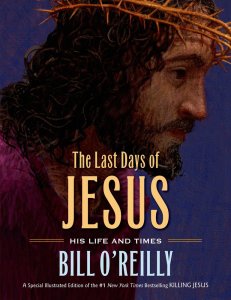






















 Blogger Priest