• Our Blogger

    Fr. Joseph Jenkins

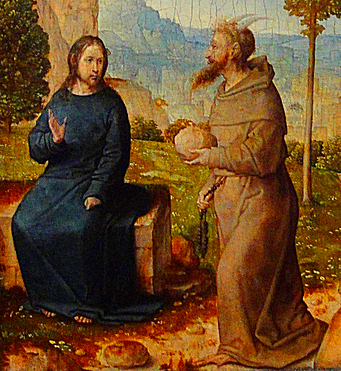
  • The blog header depicts an important and yet mis-understood New Testament scene, Jesus flogging the money-changers out of the temple. I selected it because the faith that gives us consolation can also make us very uncomfortable. Both Divine Mercy and Divine Justice meet in Jesus. Priests are ministers of reconciliation, but never at the cost of truth. In or out of season, we must be courageous in preaching and living out the Gospel of Life. The title of my blog is a play on words, not Flogger Priest but Blogger Priest.

  • Archives

  • Categories

  • Recent Posts

  • Recent Comments

    Barbara King's avatarBarbara King on Ask a Priest
    Ben Kirk's avatarBen Kirk on Ask a Priest
    Jeremy Kok's avatarJeremy Kok on Ask a Priest
    Barbara's avatarBarbara on Ask a Priest
    forsamuraimarket's avatarforsamuraimarket on Ask a Priest

SOLT Press Release on Father Corapi

The Society of Our Lady of the Most Holy Trinity has put out an official press release on the FATHER CORAPI SCANDAL. Fr. Gerard Sheehan, the superior writes:

“While SOLT does not typically comment publicly on personnel matters, it recognizes that Fr. John Corapi, through his ministry, has inspired thousands of faithful Catholics, many of whom continue to express their support of him. SOLT also recognizes that Fr. Corapi is now misleading these individuals through his false statements and characterizations. It is for these Catholics that SOLT, by means of this announcement, seeks to set the record straight.”

While I can appreciate the need for a statement, I must admit that I am surprised at the bluntness and the depth of revelation. He remarks about the investigative process and what they discerned from emails, witnesses and other sources that has been going on during the time of the priest’s public ministry:

  • Fr. Corapi already handed in his resignation in early June.
  • He paid $100,000 to silence the woman making charges.
  • Other witnesses were similarly silenced and Fr. Corapi refused to release them for testimony to the investigative team.
  • He had violated his promise of poverty by holding legal title to over one million dollars in real estate, luxuary cars, boats, etc.
  • He cohabitated in two states with a known prostitute, recently began sexting one or two women and resorted to repeated drug and alcohol use.

I would not normally even post about such matters, but I can well appreciate the frustation of his superior.  Fr. Corapi is a powerful communicator and people love him.  If he is guilty of such things and is falsely placing the blame on the leadership of the Catholic Church, then public correction needs to be made.  Having said this, I think that the leadership in SOLT must be faulted for allowing this situation to grow so out of hand.  They should have reigned him in years ago.  Their passivity has now made for a far worse and more scandalous situation.  The press release continues:

“SOLT has contemporaneously with the issuance of this press release directed Fr. John Corapi, under obedience, to return home to the Society’s regional office and take up residence there. It has also ordered him, again under obedience, to dismiss the lawsuit he has filed against his accuser.”

A letter of resignation would not release him from his priestly promises and those made to SOLT. A good priest does as he is told. This is a bad situation all around. I wonder how Fr. Corapi will respond? I suppose die-hard fans will contend that the evidence is contrived and that the priest is innocent. And indeed, I would still argue that if he is innocent then he should make his case and work with the process. It is unfortunate that Fr. Corapi has forced this whole matter and scandal into the public forum. But souls are at stake and this delicate situation is about more than one man. If he is guilty, then he should demonstrate sorrow and contrition, placing his ministry and future into the hands of his lawful superiors. It would be a wonderful teaching moment and maybe the highpoint of his ministry.  Christ is speaking to him through his superiors.  That is how priestly obedience works. But will he listen? Will he fight for his priesthood?  This battle cannot be won with militant rhetoric or tactics of subterfuge.  He can only find victory by being a faithful son of the Church and a humble priest.  He must be courageous and forthright about any revelations exposed by the truth.  He must reckon himself as any confessor to be the first among sinners, “Mea culpa, mea culpa, mea maxima culpa.”  Things will never be the same but God may not be finished with him yet.  I pray that Fr. Corapi will make the right choice and work with God’s grace in this.

An element which really upsets me about this situation is how one segment of the Church is set against another. Father Corapi comes under investigation and the priest comes out with a statement that the bishop and his superior have a right to do what they do; but next he talks about the real enemies of the Church and we all know he is targeting those who put him on administrative leave. Then he claims obedience but his personal corporation makes a statement that they are under no one’s thumb and the ministry media business will continue as if nothing has happened. By the beginning of June he submits his resignation and tells his fans weeks later that the Church has forced him out. Bishop Michael Mulvey and his lawful superior, Fr. Gerard Sheehan, SOLT, seek to clarify matters but then there is the public intervention on his behalf of the founders of SOLT, Father Flanagan and the Bishop Emeritus of Corpus Christi, Bishop Rene Gracida. Critics and fans of the priest can now take their pick and decry the other side as wrong-headed or evil. The impression is given that the Church is fighting with herself. Despite the lament of Fr. Corapi that this is a plot of the liberals who are out to get him, the battleground that emerges is between very conservative or orthodox churchmen and laity. Liberal revisionists are no doubt having a delight in watching the so-called “religious right” of the Church rip itself apart over the media priest. This has all the makings of a new voyeuristic television program called THE BATTLING BISHOPS. Since the clarification released from SOLT, I notice now that Bishop Gracida seems to have shifted somewhat from supporting Fr. Corapi to attacking SOLT for allowing the situation to develop in the first place. However, it seems to me that the stage was set by those who initially allowed Fr. Corapi to set up his independent operations. In other words, there is blame enough to go around. It is troubling that Bishop Gracida took a public stand against a man’s lawful superiors even though he admits that he has not talked with the priest for years! Now Fr. Corapi is telling his fans on Twitter to look forward to an important announcement on Thursday.  Enough already!  I discern a manipulation of good men behind all these tensions that is due to evil human machination and/or to the intrusion of something devilish.

Phil Lawler at CATHOLIC CULTURE succinctly tells it as it is:

Like the late Father Marcial Maciel, the disgraced founder of the Legion of Christ, John Corapi has worked for years as a celebrity priest: encouraging a cult of personality, setting his own agenda, raising large sums of money that he spent at his own discretion, and—most dangerous of all—accountable to no one. It was a formula for disaster, and now the disaster has occurred. Again.

I would beg people to separate the truths Father taught from the possible failings of the messenger. All are tempted, but the devil delights in targeting priests; while he could not seduce the high priest Christ, he often settles for corrupting those men who participate in his priesthood. Pray for priests, pray for Father Corapi and pray for “the little ones” who might despair of their faith.

I am done with this topic, but will give Father Corapi the last word:

FINANCES…”From the earliest days (more than twenty years ago) the Founder of the Society of Our Lady, Fr. James Flanagan, encouraged me to support myself and the Church as well.”

IMPROPRIETY…”I have never had any promiscuous or even inappropriate relations with her.”

INVESTIGATION…”As standard practice, my legal counsel advised me not to cooperate with the investigation until I was able to determine that the Commission’s process was fair and I had adequate rights to defend myself.”

HUSH MONEY…”I never paid anybody off to remain silent.”

RESIGNATION…”I resigned because the process used by the Church is grossly unjust, and, hence, immoral. I resigned because I had no chance from the beginning of a fair and just hearing.  As I have indicated from the beginning of all this, I am not extinguished!”

CLICK HERE  to read the SOLT press release.

CLICK HERE  to read my post on this matter last month.

A good friend feels that this topic and the argumentation associated with it is not good for me. It is true that I find it very upsetting. I love the priesthood and the Church. I get defensive when they are threatened. I also worry deeply about the good of souls. It is true too that the plight of a brother priest is always felt very personally. Many of the comments, moderated and mostly not posted, are unreasoning and angry. So I am going to end it here.  Orignally I posted a video here that gave Father Corapi the last word, albeit with an advertisement tagged to it.  However, he has liquidated his business and removed all signs of his web presence.  He is gone from sight, but maybe not from our minds and hearts.  Keep him and the people he impacted in prayer.

Polygamy OUT, Monogamy IN

Msgr. Pope writes a good post on his blog about the seeming conflict between the monogamous plan of creation in Genesis and the practice of polygamy by the ancient patriarchs.

Msgr. Pope’s Blog Article: Don’t Do Polygamy

In passing, he notes that marriage is defined by God as a relationship between a man and a woman. The core purposes of marriage are also espoused:

  1. Adam is lonely and is given a helpmate who complements him in a shared nature.
  2. Adam and Eve are told to be fruitful and multiply.

The unitive meaning (fidelity) and procreation are stressed. There is nothing capricious about this bond. It is expected that it will be lasting and life-long. They are no longer two, but one.

But as we hear from our Lord in the Gospel of Matthew, there is a problem with their hardness of hearts. The early believers are much like their pagan neighbors. The marriage bed is compromised with many would-be spouses and Moses would even allow a writ of divorce. This is not the way things were supposed to be.

It may be that primitive men of faith lacked the capacity to receive the fullness of truth and God tolerated or even used a situation that would later be remedied. Further, as with various Islamic men today, such extended households were usually reserved to the wealthy and/or to the leadership. Most men had their hands full caring for one wife and family. By the time of Jesus, polygamy was frowned upon and the sin of adultery was attached to any who would compromise a singular union. We must learn from God’s Word, not by extracting isolated proof texts but by an integral approach which respects progressive revelation. The people of God grow in the ways of God and the fullness of truth.

Msgr. Pope argues that the rivalries between the wives and the place of their children are illustrative that polygamy was always frowned upon by God. It is fraught with problems. I would concur, although even having one wife can be a source of both joy and heartache, going back to Adam, the first man. When ladies lament that they feel sorry for priests and wish we could get married, I often respond (somewhat tongue-in-cheek), “Why would I want to get married; I have enough penance in my life!”

Today, our society is indeed returning to the transgressions and abuses of the past. Divorce and remarriage, or the practice of cohabitation and fornication, is essentially serial or successive polygamy. Similarly, just as certain Greeks tolerated and institutionalized homosexual liaisons, there are efforts today to condone and legalize same sex civil unions. When will we learn?

Pic:  Adapted from National Catholic Register Blog, America’s Most Complete Catholic News Source.

Father Kidd Council Does It Again!


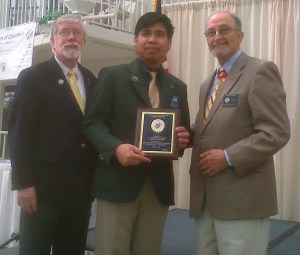
Geony Provido, the Grand Knight of Father Michael C. Kidd Council, received various awards for our local council’s accomplishments at the Maryland State Convention of the Knights of Columbus. Geony produced masterful reports and did an exceptional job for the 2010-2011 Fraternal Year. Congratulations!

Responding to an Attack Upon Catholicism

PAUL:  You people are very sick.

FATHER JOE:  You are very angry and judgmental about Catholicism.  Are you a fallen-away Catholic?  Many Catholics find comfort and helpful guidance in Catholic faith and values.  You are too quick to tear down and attack that for which you seem to lack authentic understanding. Sin is the sickness, not religious faith.  You are no better than the people you ridicule.  You are also a weak sinner who needs Jesus and his mercy. 

PAUL:  The Catholic Church has made so many “rules” that do not even exist in the Bible.

FATHER JOE:  The Catholic Church has rules for good order, but the commandments and the ecclesial precepts find their basis in the Decalogue given to Moses and the two commandments of love from Christ.  We also believe in natural law.  God gave us reason to appreciate the harmony and order of his creation.  Values that reflect divine positive law and natural law are not capricious.

PAUL:  Since when do “men” speak for God or Christ?

FATHER JOE:  As for men speaking for God, such is the witness of the Old Testament prophets and the New Testament apostles.  Our Lord, himself, while critical of the hypocrisy of Pharisees, admonished the Jewish people to do as they say and not as they do.  Jesus establishes a new covenant people and gives the Church’s leadership something of his authority.  The Church is entrusted with the Gospel and even collects the books and letters that would constitute the New Testament and the complete Christian Bible.  Men in the Church have also been responsible for the translation of the Scriptures.  Apart from the community, and men wise in the ways of God, you would not even know God’s Word.  If men and women did not pass on the faith, you would not know Jesus or the story of salvation.  The Catholic Church was preaching the Good News before there was a complete Christian bible and while the Gospels were only an oral tradition.  

PAUL:  Where in the Bible does it say one should confess sins to another man, say a few Hail Marys, Our Fathers (and of course put some $$$ in the box!) to be forgiven? PLEASE show me this. IT does not exist.

FATHER JOE: 

Jesus, being God, knew the hearts of men.  Nevertheless, sinners still needed to repent and believe.  Priests have the authority to forgive sins, but few have the power to read souls or minds.  That is why the confession of sins is crucial, making possible an adequate penance and counsel.  The prayers or acts of penance and/or mortification show God our thankfulness for his mercy and make a certain degree of reparation for temporal punishment due to sin.  There is precedent for confession in the Old Testament: Leviticus 5:5, Leviticus 26:40-42, Hosea 5:15, Job 33:27-28, Joshua 7;19, Jeremiah 3:13, and Proverbs 28:13.

Tithing or support for the Church is a Christian obligation; however, it is not normally an element of penance arising from the Sacrament of Confession.  The Lord gives priests something of his authority so that they might perpetuate his ministry of reconciliation. We read in 2 Corinthians 2:10-11:  “Whomever you forgive anything, so do I. For indeed what I have forgiven, if I have forgiven anything, has been for you in the presence of Christ, so that we might not be taken advantage of by Satan, for we are not unaware of his purposes.”  St. Paul goes on to write:  “And all this is from God, who has reconciled us to himself through Christ and given us the ministry of reconciliation, namely, God was reconciling the world to himself in Christ, not counting their trespasses against them and entrusting to us the message of reconciliation” (2 Corinthians 5:18-19). Another important text is 1 John 19: “If we acknowledge [confess] our sins, he is faithful and just and will forgive our sins and cleanse us from every wrongdoing.”   There is also James 5:16: “Therefore, confess your sins to one another and pray for one another, that you may be healed. The fervent prayer of a righteous person is very powerful.”  Looking at the Gospels, texts like Matthew 16:19 and Matthew 18:18 are important.  Often cited is John 20:21-23:  “(Jesus) said to them again, ‘Peace be with you. As the Father has sent me, so I send you.’ And when he had said this, he breathed on them and said to them, ‘Receive the Holy Spirit. Whose sins you forgive are forgiven them, and whose sins you retain are retained.’”

PAUL:  What good does it do me to pray to Mary? She cannot save ANYONE. Only Christ can forgive your sins. Pray to him, not some guy in a fancy box who will then give you his recommended “Penance.” How ridiculous!

FATHER JOE:  Yes, only Christ can forgive sins, but the ministry of Jesus is perpetuated and mediated within the saving community of the Church.  Penitents receive absolution from a priest, but the proper object of the prayers is always God.  Indeed, even prayers to Mary and the other saints, while they invoke intercession and solidarity, are still directed to God.  Those who have already made it to the promised shore continue to love and pray for us.  The graces from the deposit of the saints can also be accessed.  Nothing is lost.  Christ is present and his saving work is active in his Mystical Body, the Church.  Confession is a sacrament that can be conducted behind a screen or face-to-face.  There is nothing ridiculous about this.  Indeed, it is beautiful.  God loves us and gives us all we need for spiritual perfection.

PAUL:  Catholics need to read their own Bible and quit making up their own human rules!

FATHER JOE:  Catholics have wonderful bibles and the Scriptures are proclaimed at and substantiate the Mass and Reconciliation.  Human rules or disciplines in the Church amplify the law of God and give order to our Christian discipleship.  Such is the mandate given to the apostles and their successors as our lawful shepherds.

PAUL:  Please tell me where in the Bible sins are labeled as “mortal”? — MORE Catholic rubbish.

FATHER JOE:  For someone who argues “sola scriptura,” you seem to be in great ignorance of biblical truths.  It is sad that someone who claims to be a Christian would insult learned believers who take their faith seriously.  The Bible teaches degrees to sin.  All sin, even “venial” or lesser sin, is disobedience and a failure to love as we should.  However, certain sins are most grave and bring upon us the sentence of death, in other words, these are “mortal” sins which kill the soul and breech our relationship with God.  The Old Testament admits to degrees of sin (see Genesis 18:20).  The New Testament amplifies this truth (see John 19:11).  Just as our Lord could raise the dead, the absolution in the sacrament of penance can restore a contrite soul back to life.  “If anyone sees his brother sinning, if the sin is not deadly, he should pray to God and he will give him life. This is only for those whose sin is not deadly. There is such a thing as deadly sin, about which I do not say that you should pray. All wrongdoing is sin, but there is sin that is not deadly” (1 John:16-17).

PAUL:  Just step into our church, sit down and let us read you a few verses, then we’ll pass the basket around again for a few more of your hard earned dollars… I have been to Rome and viewed all the wealth the Catholic Church has managed to gather from “devout Catholics.”

FATHER JOE:  Participation at church is more than just going through the motions.  Most parishes and Catholic pastors struggle to be good stewards of the resources given us by God’s good people.  We do not preach a prosperity gospel but witness in a way that brings the truth to ignorance, healing to the hurting and hope to the oppressed.  The Church is a treasury of the Western world’s history and culture.  But she is also the refuge of a billion people in this world and many more in the next who count Jesus Christ as both their personal and corporate Savior.  The Pope intervenes annually for the poor and collections are taken the world over to cover the shortfall.  Would you have us sell all our churches for secular condos and for shopping malls?  Your bigotry betrays your reason.

PAUL:  My wife was refused entry into the famous “Vatican” because her shoulders were not completely covered. Christ said bring ALL sinners, He has no Dress Code for his house! I found it very funny how a young girl in line ahead of us (most likely 8 years of age and obviously a virgin) was allowed in without her shoulders covered at all, yet a married woman was not! MORE Catholic B.S.!

FATHER JOE:  The dress code for the Vatican and meeting the Pope is well documented.  The problem was that you and your wife did not respect the Holy Father enough to make proper preparations.  Comparing the status of an adult woman with a child and then making a comment about her sexual condition shows the great depth of your spiritual sickness and moral depravity.  All churches have dress codes of one sort or another, the same for synagogues and mosques.  Would you have churches allow people to enter with vulgar tee-shirts or naked?  As for our Lord, he told a parable that you have evidently forgotten:   “But when the king came in to meet the guests he saw a man there not dressed in a wedding garment. He said to him, ‘My friend, how is it that you came in here without a wedding garment?’ But he was reduced to silence. Then the king said to his attendants, ‘Bind his hands and feet, and cast him into the darkness outside, where there will be wailing and grinding of teeth.’  Many are invited, but few are chosen” (Matthew 22:11-14).  Every Mass is a sacramental participation in the heavenly marriage banquet.  Our dress and posture should show the proper respect, not simply to the Pope, but to almighty God.  Tell your wife to cover up next time.   

PAUL:  NO ONE could ever convince me that this cult called Catholicism is true followers of Christ. The weak minded will believe ANYTHING these “men” tell them and empty their pockets if they are convinced it will get them to Heaven.

FATHER JOE:  If you believed Catholicism was a cult then why would you even try to enter the Vatican?  Were you up to no good?  The weakness of argument and mind is yours.  You throw out straw man arguments that are parroted from old anti-Catholic sources.  I hear a lot of prejudice and anger speaking, but little in the way of reasoned argument.  Typical of your type, you falsely characterize Catholic beliefs and then you attack what you yourself have fashioned.  No one can buy his or her way into heaven.  The Catholic Church has taught for 2,000 years that Jesus is the Way and the Truth and the Life.  Jesus is the anointed one or Christ.  He is the Lamb of God who takes away the sins of the world. 

PAUL:  All people really need to do is READ THE BIBLE THEMSELVES and understand that ALL MEN ARE CREATED EQUAL!

FATHER JOE:  The Bible was once used in arguments for slavery.  You cannot use the Bible like a moral manual.  However, I will admit the there is much in the Scriptures, particularly in the message of Christ, which stresses the inherent worth and dignity of all men and women.  St. Paul makes mention that in Christ there is neither free nor slave, Jew nor Gentile, male nor female… all are called to the saving grace of our baptismal faith.  Man was made in the image of God.  The forgiveness of sins restores our full likeness.

PAUL:  Just because some guy wears a fancy robe (and a KKK hat) doesn’t make him (or her) any “holier” than anyone else on this planet. Nor does it give him (them) the divinity to make some “new heavenly rules”!

FATHER JOE:  The racist KKK is also historically anti-Catholic and you are mouthing many of their old slanders against the Catholic Church.  The robes do not give our shepherds their authority.  It is given to them by Christ.  They share in the apostolic succession that keeps us in both historical and spiritual unity with Christ.  The apostles passed on their authority and we still proclaim the ancient faith.  Christianity did not begin as a book religion.  As I have written before, the Church was proclaiming the Gospel and baptizing new believers even before there was a New Testament.  The Magisterium does NOT invent new heavenly rules.  Rather, the Church passes on what she has been given.  The problem is not that Catholicism added anything; rather, it is that anti-Catholic fundamentalists like you have subtracted out elements of the faith given us by Jesus Christ.

PAUL:  Personally I follow the guidance delivered by The Bible, not a bunch of men and women who think they are “cleaner than the rest” because they supposedly don’t have sex (let’s not talk about the altar boy molestation that has occurred time and time again and mostly hidden or covered up by the Great Catholics!)

FATHER JOE:  The scandal of abuse by clergy is indeed a terrible business.  But most priests are good men who love the Lord and try to make a positive difference in the lives of the people they serve.  Speaking for myself, my one great ambition is to go to heaven and I would like to take a few of my friends with me.  We have different roles to play in the body of the Church.  We need each other.  We all need Jesus.  Priests do not imagine themselves as “holier than thou.”  Even the Pope regularly goes to confession.  We acknowledge in the sacrament, and at the beginning of every Mass, that we are sinners in need of a redeemer.  LORD, HAVE MERCY ON US.  CHRIST, HAVE MERCY ON US.  LORD, HAVE MERCY ON US.  A priest who hears confessions and offers absolution is humbled that God would make him into an instrument of healing and mercy for others.  The priest Confessor counts himself as the first among sinners.  He is not perfect either.  That is why all priests are to be guarded about hypocrisy and self-righteousness.  As for the Bible, you speak as if I and all Catholics are ignorant about God’s Word.  That is not true.  Of course, we could all know it better.  I think you have a long way to go before you can make a claim upon teaching biblical truth.  Why do I say this?  Not only do you show your lack of biblical formation again and again, you demonstrate nothing of the heart of Christ’s message.  There is nothing of charity in what you say.  Without charity, you have nothing.  I tell you this because, even though you have upset me, I am required to forgive and share the sacrificial love of Jesus.  I want you to be in good standing with the Lord.  You do not seem to have any awareness that attacking the Church, which is all the Christian people and not just buildings or clerics, you attack Jesus Christ.  

PAUL:  Jesus said it is good if a man CAN abstain, he never said you MUST abstain to spread his word, another Catholic “invention.”

FATHER JOE:  No, it is your invention.  One does not have to be a celibate priest in order to spread God’s Word.  The Roman Catholic Church prefers a celibate priesthood, although various Eastern rites of the Catholic Church have married clergy.  Our deacons are also given Holy Orders and the vast majority of these Catholic ministers are married men.  They witness marriages, perform baptisms, offer funeral services, work as chaplains and bring Holy Communion to people.  They do the very things we see Protestant ministers doing and more.  We also have religious brothers, sisters and members of the laity who teach the faith and proclaim the Gospel by word and witness in the larger community.  Further, there are growing numbers of Catholic lay evangelists, who are married and single.

PAUL:  I have also never seen anything in the Bible that said masturbation is a “Mortal Sin.” Wow! I guess this means that about 99% of all men will rot in Hell— ANOTHER Catholic rumor.

FATHER JOE:  Do you have a hang up about sex, Paul?  Sexual sins are serious because we are corporeal beings.  Our bodies are not robotic appendages or extensions, but are intimate elements of our identity as persons.  Masturbation as a sin constitutes serious matter, but all good confessors also give weight to issues like habit, passion, an erotic society and media, etc.  Anything that takes away freedom necessarily affects the consent.  As a priest my concern about any of the sins is not to steer people toward hell but to direct them to heaven.  You may have passed over into the dark area of blaspheming against the Holy Spirit.  I would plead that you be careful about this.  The Old Testament and the rabbinic tradition placed a great emphasis upon fertility and the blessing of posterity.  Masturbation is a trespass against this good of God.  Masturbation or Onanism is condemned by God (see Genesis 38:9).   Complicating matters further, it is a matter of course that masturbation is inextricably connected to lust and adultery in the heart.  Such is also condemned by God (see Matthew 5:28-29).           

PAUL:  I am sorry, but the God I believe in would rather a man touch himself then take advantage of another.

FATHER JOE:  This is why I am worried about you.  Men can struggle with chastity and still not take advantage of others.  The lines of dichotomy that you draw are false.

PAUL:  All the Catholic Church wants is MORE Money. You have to make your monthly payment to get to their heaven…

FATHER JOE:  Up until a few months ago, I was driving a 1995 used car.  Now I have moved up to a 2002 used car… still nine years old!  I wear shoes until there are holes in them.  I think I live fairly simply.  Compared to the Protestant ministers in my neighborhood, I am probably the poorest man among them.  Most Catholic priests would be in this category.  Yes, we ask for donations, but to pay the bills.  We also feed the poor and help those who are hurting.  Money is raised not to buy anyone’s way into heaven but to help relieve the hell that people suffer here on earth.  You have it all wrong.  Your false judgment against “all” the Catholic Church is nothing less than a sin.

PAUL:  I went to Catholic school for the first five years of my education. It finally reached a point where my mother could not afford the tuition. She was told by the clergy that she would go to hell because she removed my sister and I from the school… Pretty cool huh? What a bunch of sickos….

FATHER JOE:  Given how you have misrepresented so much else, I have a hard time believing what you write about this anonymous priest.  The poor man may have had a bad day or what you say is an exaggeration, but such a tale is hardly a good reason to turn against the Church.  I was turned down for Catholic school entirely.  Sister told my mother that I was “sickly and stupid,” and so I went to public schools all the way through High School.  I failed first grade and the public school teacher wanted to send me away to a special school for “retarded” children.  Yes, that was the word she used.  Another teacher came to my rescue and helped me to stay in the school the following year.  I did not give up on life or learning.  Neither did I turn away from the Church.  I became a priest.  I am sorry that you did not have such strength of conviction or faith.

PAUL:  Oh and one more thing (sorry, I forgot!). The God I believe in would rather a couple use a condom to prevent the spread of disease and an unwanted child. There are enough sick people and starving children on this planet.

FATHER JOE:  Men and women are not simply animals in heat.  The marital act is non-contraceptive intercourse between a husband and wife.  Regardless of age and fertility, it is that TYPE OF ACT that is open to the generation of new human life.  Condomistic intercourse is not the marital act.  Not only is it closed to the gift of children, it also places a barrier between the spouses in terms of their mutual fidelity.  The natural law is circumvented in regards to the giving and receiving between spouses.  They are to surrender everything they are to the other and become one flesh… not one flesh divided by a piece of latex.  This is not simply a mechanistic reservation, condomistic intercourse is an entirely different TYPE OF ACT from the marital act, an act that renews the marital covenant, a covenant elevated by Christ to a sacrament which points to his unity with his bride, the Church.  If marital couples are faithful to each then there is no chance of HIV or other sexually transmitted diseases.  As for the contraceptive intent, it is the handmaid of abortion.  You display this slippery slope in your language about “an unwanted child.”  No child should be unwanted.  Once we start thinking like that, we become enemies of the Gospel of Life proclaimed by Jesus and the Church.  If couples hate, or do not want children, then they should not get married.  Couples who are not married have no right to the sex act.  Our Lord prophesied during his passion about such an attitude as you display.  “A large crowd of people followed Jesus, including many women who mourned and lamented him. Jesus turned to them and said, ‘Daughters of Jerusalem, do not weep for me; weep instead for yourselves and for your children, for indeed, the days are coming when people will say, ‘Blessed are the barren, the wombs that never bore and the breasts that never nursed.’ At that time people will say to the mountains, ‘Fall upon us!’ and to the hills, ‘Cover us!’ for if these things are done when the wood is green what will happen when it is dry?’” (Luke 23:27-31).    

PAUL:  Sex is a wonderful experience shared between two people in love. But according the Catholic’s way of thinking you need to have a newborn at least once a year because birth control is a MORTAL SIN… How stupid is that?! They just want MORE Catholics to send them more money!

FATHER JOE:  The marital act is indeed a beautiful expression of love between a husband and wife; however, not every form of sexual expression is legitimate or worthy of our humanity.  But I guess you have a problem with any restrictions.  Once again, though, you falsify the Catholic stance toward the propagation of the species.  Natural family planning can help couples space births and to have children.  As long as it is used unselfishly, such family planning has value.  Artificial contraception is deemed immoral but there is no Church requirement that people reproduce like rabbits.  Next, you connect the matter of sex to money… the two topics that seem to obsess you.  The Church embraces millions upon millions who have little voice except that of the Church seeking justice.  She does not write them off or give preference to the rich.  Indeed, despite how they tax the resources of the Church, the late Pope John Paul spoke about the vast multitudes of the poor as the true treasure of the Church.  The Church has a preferential option for the poor.   

PAUL:  I pity you all for being so brainwashed. But then again look at the other cults of the world (including the one run by Jim Jones) who have convinced weak minded individuals to follow them!

FATHER JOE:  You would compare the Church to a cult where a madman murdered his followers?  The Church does not brainwash people or seduce weak minds.  But the enemies of the Church do precisely this, and it appears to me that you are one of their victims. 

PAUL:  Stand up for yourselves people and pray. God WILL listen to you. Some people do need a little guidance along the way but NEVER believe things “men” speak of. There is no need to obey rules made up by a cult intent on controlling your life. Read your Bible and you will learn what GODS will is, not some guys making up the rules as they go…. Catholicism = The Earth’s Greatest Cult (good luck with that!)

FATHER JOE:  Our good Catholic people do pray, sometimes standing and sometimes on their knees.  Catholics are increasingly knowledgeable of their bibles and have the wisdom of the saints, the Church fathers and theologians and biblical exegetes.  We are not afraid of learning.  Ours is an informed faith.  These sources of Christian doctrine are far more reliable than that of one ignorant and angry anti-Catholic fundamentalist.  You offer no reasons why anyone should follow you over the 2,000 year old institution established by Christ.  Do you belong to a church or are you a cult of one.  If Catholics read the Bible and study their faith, then the ignorance, prejudice and treachery of men like you is immediately exposed.  Catholicism = Christianity, pure and simple!  

Can Catholics Kill Protestants? And Other Fables

There are some charges beyond ridiculous. One of these is that the Canon Law of the Catholic Church advocates the killing of Protestants. Again, the anti-Catholic loves sensationalism and scare tactics. It is not unlike the BIG LIE tactics of the WWII Nazi propaganda machine. The Church is not only blamed for the Dark Ages and the Inquisition but probably for everything from bad breath to smelly feet. Instead of pictured as a loving mother, the anti-Catholic calls the Church of Rome a “monster,” “the beast” or “the harlot.” He cannot tolerate her authority or the possibility that there is a claim to truth beyond his control. Such a belligerent stance often puts the anti-Catholic bigot in the embarrassing position of castigating even those policies and persons with whom he would have an affinity, if he truly loves the Lord. Thus, he takes public positions against pro-life endeavors which he probably favors all because they originate with the Catholic Church. He also suggests that the likes of Mother Teresa are burning in hell because they did not espouse fundamentalist propositions; indeed, Mother Teresa closely associated the Eucharist with her charity endeavors. He becomes the very thing he says he hates about the Catholic Church, intolerant and dishonest.

EXCOMMUNICATION – Turning his attention to this subject, the anti-Catholic denies the Church any authority to discipline her membership. However, he ignores the fact that many Protestant communities shun and expel those who do not follow the party line. In ancient days banishment was preferred to taking the life of an unbeliever. Communion in the Catholic Church implies uniformity in worship and belief. If such a unity is imperiled by heresy and/or irregular worship, the Church has the obligation to protect the integrity of the faith. One critic compared this policy to the work of Hitler or the Red Scare. However, there is no comparison. The substance of what is being protected is the truth, not egregious deceits as in totalitarianism. Further, one may still dissent, but one may not do so upon a serious matter and pretend to be a good Catholic Christian. The two matters which bring automatic excommunication are harming the person of the Pope and deliberately procuring an abortion. Would the anti-Catholic argue contrarily for violence or for excusing the murder of babies? I hope not.

PROSCRIPTION FROM OFFICES – This only pertains to ecclesiastical offices these days as most governments in the West are secular. Should a person continue as a pastor of souls if he is leading them into error or causing scandal by his conduct? I think not. In ancient days, this concern was tied up with the tension with kings over authority and interference in Church matters. While this point is now more historical than current, the Pope has insisted that Catholic priests and male and female religious not hold political positions in civil governments. Would the anti-Catholic who feels this infringes upon private rights really want a Catholic clergyman as his Senator or President? I doubt it. He makes a lot of noise for nothing!

CONFISCATION OF GOODS – This notion is quite archaic and no longer applies except in cases where goods belonging to the Church have been illicitly procured. Would the anti-Catholic want a disgruntled pastor to sell his church from under him or leave it to children with no interest in religion? No. It was the same issue with the Catholic faith. The temporal goods of the Church belong to the People of God. I would readily compare the few hundred dollars a month most of our priests get to the high salaries of many evangelical and fundamentalist ministers any day! Who is it who is really getting rich on religion? On top of this most priests have to maintain their own car, pay insurance, and pay the same taxes as all the rest of us. Religious clergy even take a vow of poverty. Mother Teresa’s sisters only possess two habits each and a bucket to wash them in. Millions upon millions go to charity and the Vatican often suffers a short-fall in funds. Where is this rich Vatican government that anti-Catholics shout about? Should the Church sell off her holdings of art to private collectors and deprive the world of what she safeguards for all humanity? The argument of the anti-Catholic bigot on this score is a tumbling house of cards.

EXECUTION – Anti-Catholics play this tune for all they can get out of it. Again, nations, Protestant, Catholic, Moslem, and Secular have often used religion to their own ends. The complicity of certain ones in the membership (or in leadership) is not grounds for damning the entire Church fellowship. In ancient times, the people themselves would often drag out and lynch heretics. The Church encouraged the rule of law to bring order and justice to the situation. Oftentimes confiscation of property and banishment was the punishment. However, over time the death penalty did encroach upon the scene. Further, until recent times, the Papacy actually retained a substantial territory, the Papal States. Consumed by the Italian unification movement, all that remains is the small Vatican City. The civil legislation of the old Papal States must be reckoned on the same level as other nations. Countries in the past and in the present have sometimes allowed the death penalty for threats to society. Records indicate that such executions in papal lands dealt with capital crimes like murder. Today, the Church has discerned a development in doctrine that would rescind this right of the state to take life since it adds to the current culture of death. Incarceration and rehabilitation are preferred avenues for criminals. However, this is again in reference to what we would all discern to be crimes against society. The irony here is that while many fundamentalists side with Catholics against abortion, they are frequently strong advocates of capital punishment in our own nation. This brings us back to the ludicrous assertion that Catholics are given liberty to kill Protestants. It just is not so. Alongside fundamentalists who want free access to the people inside the old Soviet Union, the Catholic Church has joined her voice in defending the sanctity of conscience and religious liberty as a constitutive right of the human person.

Development along these lines does not impinge upon the charism of infallibility regarding faith and morals given the Church. While the Church is holy because of the abiding presence of Christ, her members are always sinners in need of their redeemer, Christ. Regarding matters of science and practical matters of government, the Church has had to feel her way through time just like other organizations. The Church may be infallible, but she is not always impeccable. Anti-Catholics often fail to make this distinction.

One anti-Catholic had to go all the way to Gratian’s Decretals of the 12th century (one of the earliest attempts to codify the laws of Christendom) in order to discredit the Catholic Church. His own denomination did not yet exist; indeed, the Protestant Reformation had yet to happen. Nevertheless, he belittles the Church for oppressing his compatriots during that time.

Utterly desperate to show that Catholics can kill Protestants with impunity, one anti-Catholic bigot cites the St. Bartholomew Day Massacre. The king’s sister, Margaret of Valois, married an important Protestant leader, Henry of Navarre. Her mother and her family secretly arranged for his assassination. When it failed, they convinced the king that there would be a Huguenot reprisal. They decided to strike first but the government could not retain the violence. Religious war broke out and upon his conversion to Catholicism, Henry of Navarre became king, himself. Unfortunately, another religious war would follow. The anti-Catholic bigot gives few of the facts and condemns the whole Catholic Church for what was a French civil war.

The typical bigoted anti-Catholic’s views which I have largely reviewed here always end with a terrible bluntness. He says that unless one leaves the Catholic Church, one must be damned to hell. He tells the Catholic to run, but only gives him a religion which judges itself by its hate of Catholicism. That is no choice. The Catholic should stay home and explore his own spiritual roots. Our history may have some blemishes, but it also contains many jewels. It is the Church of the saints and the family of God established by Jesus.

Good Works an Element of Salvation

ANTI-CATHOLIC ASSERTION

Good works have NO part to play in our salvation.

[Blood of Christ saves] … and the blood of his Son Jesus cleanses us from all sin (1 John 1:7).

[Faith alone saves] And they said, “Believe in the Lord Jesus and you will be saved” (Acts 16:31). They are justified freely by his grace through the redemption in Christ Jesus, whom God set forth as an expiation, through faith, by his blood, to prove his righteousness because of the forgiveness of sins previously committed, through the forbearance of God — to prove his righteousness in the present time, that he might be righteous and justify the one who has faith in Jesus. What occasion is there then for boasting? It is ruled out. On what principle, that of works? No, rather on the principle of faith. For we consider that a person is justified by faith apart from works of the law (Romans 3:24-28).

CATHOLIC TRUTH

Good works have a part to play in our salvation.

But what is it that fundamentalists think they understand? Fundamentalists tend to say that good works are the fruits which come from being saved. They would insist that they are not a means to salvation. If a person is one of the elect, it will be manifested by his good works as one filled with Christ’s spirit. Thus, in their estimation, it is not the works, but the blood of Christ which earns salvation.

Sometimes Catholics quote James 2:20 in their defense that “faith without works is useless”; however, what this means is that the type of faith which is saving is one which manifests the work of God. Note that James 2:19 has the demons believing and trembling. Theirs is not a saving faith. Many say they believe in Jesus and yet they refuse to follow him. Theirs is not a saving faith. A person of true faith experiences the indwelling of the Holy Spirit and good works will find expression in his life. Such works are a confirmation of true faith. Going even further, faith is professed by an act of will that uses words and works. The model of Abraham is recalled in James 2:21-23 in which he believed in God to the extent of being willing to sacrifice his son, Isaac. God came first and he trusted that God could still keep his promises, no matter what.

This last Scripture text (Romans) might be a bit misleading. The works mentioned here are not those which constitute an element of our faith in Christ. The argument here is not entirely different from the circumcision debate at the council in Jerusalem. The tension is not between faith and good deeds but Christian faith and the Jewish law. This contrast becomes clear if we read further: “Does God belong to Jews alone? Does he not belong to Gentiles, too? Yes, also to Gentiles, for God is one and will justify the circumcised on the basis of faith and the uncircumcised through faith. Are we then annulling the law by this faith? Of course not! On the contrary, we are supporting the law” (Romans 3:29-31). The interpretation given by fundamentalists to James makes me cringe. James says quite bluntly, “Do you want proof, you ignoramus, that faith without works is useless? (James 2:20). Mentioning Abraham, it was not that his works were just a fruit of his faith; rather, they were a vital ingredient of it. “You see that faith was active ALONG WITH his works, and faith was COMPLETED by the works” (James 2:22). The reformer, Martin Luther admitted that the Letter of James could not be reconciled with his view that we were saved by faith alone. Consequently, he omitted this letter from his bible. Others readmitted this wonderful Catholic testimony back into the Protestant bible. The anti-Catholic’s stereotype of the Church’s view of justification is inexact and misleading. Regarding the need for a faith which ushers in saving grace, there would be concord. Further, it is obvious that a true faith will show itself with good fruits. Again, there is no argument here, except in the critic’s own mind. The citation from James here is not entirely as the fundamentalist describes. It appears that James is indeed offering a correction to an exaggeration of the Pauline view. The Catholic Church herself admits that good works cut off from faith and sanctifying grace would avail us nothing. The one extreme would contend that good deeds earn salvation; the other, that faith in the Lord (dedicating themselves to trust in God through Jesus) would suffice. Paul actually steers a middle course by speaking about the importance of faith lived out in love (Galatians 5). Dynamic faith is not only a profession in words but an interior disposition actuated by the grace of God and substantiated by the life of charity. The Catholic stress on the incarnation is crucial here. If Christ is alive inside of us, then the good deeds we perform are ultimately the works of Christ. Because they are the extension of the Lord’s saving activity, they have merit. Justification is intimately bound up with our entry into God’s community of faith, the Church. Baptism is the entry into this life and the sacraments are the essential means of our growth. Faith and works (in love) are two sides of the same coin; there may be some tension between these elements, but no strict division.

THE UNIVERSAL CATECHISM ON FAITH & WORKS:

[CCC #1814] Faith is the theological virtue by which we believe in God and believe all that he has said and revealed to us, and that Holy Church proposes for our belief, because he is truth itself. By faith “man freely commits his entire self to God” (DV 5). For this reason the believer seeks to know and do God’s will. “The righteous shall live by faith.” Living faith “work[s] through charity” (Romans 1:17; Galatians 5:6).

[CCC #1815] The gift of faith remains in one who has not sinned against it (Trent). But “faith apart from works is dead” (James 2:26): when it is deprived of hope and love, faith does not fully unite the believer to Christ and does not make him a living member of his Body.

[CCC #1816] The disciple of Christ must not only keep the faith and live on it, but also profess it, confidently bear witness to it, and spread it: “All however must be prepared to confess Christ before men and to follow him along the way of the Cross, amidst the persecutions which the Church never lacks” (LG 42). Service and witness to the faith are necessary for salvation: “So every one who acknowledges me before men, Ia lso will acknowledge before my Father who is in heaven; but whoever denies me before men, I also will deny before my Father who is in heaven” (Matthew 10:32-33).

[Blood of Christ saves if we walk in God’s ways (good works with faith) in the community of the Church] But if we walk in the light as he is in the light, then we have fellowship with one another, and the blood of his Son Jesus cleanses us from all sin (1 John 1:7)

[Faith (in Jesus), charity (in caring for injuries and feeding the hungry) and the certain hope of salvation (in baptism) comes to us as a Christian family] And they said, “Believe in the Lord Jesus and you and your household will be saved.” So they spoke the word of the Lord to him and to everyone in his house. He took them in at that hour of the night and bathed their wounds; then he and all his family were baptized at once. He brought them up into his house and provided a meal and with his household rejoiced at having come to faith in God (Acts 16:31-34).

[Remarking about Abraham] See how a person is justified by works and not by faith alone. And in the same way, was not Rahab the harlot also justified by works when she welcomed the messengers and sent them out by a different route? For just as a body without a spirit is dead, so also faith without works is dead (James 2:24-26).

[Faith, Hope, and Love] For through the Spirit, by faith, we await the hope of righteousness. For in Christ Jesus, neither circumcision nor uncircumcision counts for anything, but only faith working through love (Galatians 5:6).

Mary & Tradition: Offensive to God?

Recently, I was shockingly dismayed by the citation of Jeremiah 7:18-20 against the Catholic practice of honoring the Virgin Mary. The passage reads:

The children gather wood, their fathers light the fire, and the women knead their dough, to make cakes for the QUEEN OF HEAVEN, while libations are poured out to strange gods in order to hurt me. Is it I whom they hurt, says the Lord; it is not rather themselves, to their own confusion? See now, says the Lord God, my anger and my wrath will pour out upon this place, upon man and beast, upon the trees of the field and the fruits of the earth; it will burn without being quenched.

Because of a similarity in the title, “Queen of Heaven,” this quotation was used against the Mother of Jesus. Talk about silly! The anti-Catholic bigot often mixes his apples and oranges in trying to discredit Catholic teachings and practices. The citation has nothing whatsoever to do with Mary. There is no violation of the worship which is due to God alone. The text in question has to do with Ishtar, the Assyro-Babylonian goddess of fertility. This pagan worship was initiated under Manasseh and was restored after the death of Josiah. Pagan worship, then as now, is considered an abomination by Jews and Christians alike, including the first Christians, Catholics. Such a citation has no other objective than to play on the ignorance of others. Indeed, it violates the commandment regarding the bearing of false witness against another.

Why do we call Mary the Queen of the Saints? The answer is simple. Jesus came to proclaim the Good News of the Kingdom. His ministry, his parables, indeed, his very own person, is the breaking of the kingdom into our world. Jesus is hailed as Messiah upon his entry into Jerusalem and marked as King upon his Cross at Calvary. If Jesus is our king, then what is Mary? Obviously, she is the Queen-Mother. The rejection of this title for her is a repudiation of the royal lordship of Christ himself! This knocks down another straw man argument, that the Mary of Catholic faith and piety is not the Mary of the Bible. The anti-Catholic apologist goes so far as to insert the Virgin Mary into any Scripture text or historical chronicle regarding a pagan goddess, as in the quoted passage. This distortion of God’s Holy Word has only one objective, and that is to deceive. Irrational prejudice and the lack of any authentic argumentation propel such a polemic.

Anti-Catholics also suffer from an intensely privatized faith. They cannot stand the fact that alongside our worship of God and trust in our one Mediator, Jesus Christ, that we also address ourselves to our beloved family members who have gone ahead of us into the next life. Mary and the saints are still members of the Church, and having made it to the promised shore, we remember them and they pray for our ultimate salvation. However, tell this to an anti-Catholic bigot, and he will explode— you’re only suppose to pray to Jesus! He forgets that Jesus founded a Church, not simply a multitude of unrelated and separate personal relationships. Such people claim that there is no evidence for talking with others beyond this world. And yet, in the Transfiguration itself, Moses and Elijah appear with Jesus and he apparently enters into dialogue with them. Peter wants to set up three booths, so that this moment can be preserved and that they too might commune with the great prophet and deliverer. But, the image disappears. The transformation of Christ hints at his resurrection, the time when the righteous will be given a share in his life and when the Spirit of God will give birth to the Church. Our unity with the saints is in Christ. Attention paid to members in the Mystical Body of Christ is not detraction from the Lord.

One critic listed 1 Timothy 2:5 as a repudiation of the Catholic practice of calling upon Mary and the saints. It reads as follows:

For there is one God. There is also ONE MEDIATOR between God and the human race, Christ Jesus, himself human, who gave himself as ransom for all.

This says absolutely nothing about the Catholic prayer practice. We also believe that Christ is the one Mediator between ourselves and God. He makes possible our prayer being received by the Father. His is the acceptable sacrifice. He is the ransom that buys us back from the devil and opens up the gates of heaven. All this is Catholic doctrine; however, you would not know it from reading those who oppose us. This citation, almost creedal in composition, comes within a contention that “supplications, prayers, petitions, and thanksgivings,” particularly those in a liturgical context, are to be offered for all, even for the pagan. Throughout the centuries, the Church has continued to remember in prayer the non-believer and to invite him into her ranks. The presence of Jesus can be found in the Church, making her a singular vehicle for salvation.

An anti-Catholic critic also quoted Mark 7:9 and Mark 7:13 against the role of tradition as understood in the Church. However, since the Catholic Church precedes and was party to the composition of the Scriptures, particularly the New Testament, the continuing role of living tradition makes perfect sense. The Catholic Church assembled the books of the Bible and established by her God-given authority the Scriptural canon. Except for a few subtractions, the Protestant churches retained this canon. We even have a letter from a bishop of Rome (the Pope) written before the last of the New Testament had been composed! The citations from Mark say nothing against the living tradition of the Catholic Christian community following Christ:

And he said to them, “Well do you NULLIFY the commandment of God, that you may KEEP your own tradition!”

“You make void the commandment of God by your tradition, which you have handed down; and many such like things you do.”

These words do not convey our Lord’s full view regarding tradition. First of all, he was speaking about his own Hebrew tradition, particularly the heavy yoke of many laws placed upon the shoulders of everyday people. This sort of tradition protected the status-quo: the Pharisee could fulfill the various rubrics, with a few well-chosen exemptions, but the poor hard-working people would find it difficult to impossible. The Lord came to proclaim liberation; obviously such bondage would run against the grain of this message. However, the Lord also followed certain other traditions, and obviously the commandments, as a good Jew. The same could be said for his family who followed the ritual in regards to sacrifice and his Presentation at the temple. Prior to the verses mentioned here, we read: “For, letting go the commandment of God, you hold fast the tradition of men, the washing of pots and of cups; and many other things you do like these.” The Lord’s concern here is very specific, and does not speak to the living tradition of making manifest the Gospel in our daily lives. The verses following have Jesus challenging the Jewish dietary regulations. He is concerned that people put so much emphasis on external observance that they fail to nurture any genuine faith and love of God in their hearts— a love which spills over in our treatment of one another. All this is lost on the one who hates the Church and her practices; hatred by definition makes the truth of the Gospel obscure.

The new universal catechism represents no retreat from the orthodox positions of the Catholic Church; indeed it is an amplification and succinct summary of the ancient faith given us by God. While it was hoped that this wonderful work would break new ground among the Church’s enemies, they distort and manipulate it just as they do the Bible. This is most sad. One critic dismissed the whole catechism by quoting Acts 4:12:

[Speaking of Jesus] “There is no salvation through anyone else, nor is there any other name under heaven given to the human race by which we are to be saved.”

He contended that the matter could not be made any clearer. Again, remember, he was dismissing the importance of the Church and the Virgin Mary. A sure sign that his categorization is “all wet” is the fact that the universal catechism cites the verse from Acts three times: CCC #432, #452, #1507. It sure does not seem that the Church is avoiding it to me.

[CCC 432] The name “Jesus” signifies that the very name of God is present in the person of his Son, made man for the universal and definitive redemption from sins. It is the divine name that alone brings salvation, and henceforth all can invoke his name, for Jesus united himself to all men through his Incarnation, so that “there is no other name under heaven given among men by which we must be saved.”

What in this statement does the fundamentalist find disagreeable? That Jesus is God? That his alone is the saving name? What?

How about this other reference in the universal catechism?

[CCC 452] The name Jesus means “God saves.” The child born of the Virgin Mary is called Jesus, “for he will save his people from their sins” (Mt. 1:21): “there is no other name under heaven given among men by which we must be saved.”

Oops! Perhaps here is the trouble? The catechism mentions the Virgin Mary as his Mother! Sometimes anti-Catholic bigots talk as if they are embarrassed that Jesus had a mother. Any good mother can tell us, that motherhood does not end with birthing a child. A true mother’s heart always beats in harmony with that of her child— the joys and sorrows of his life are also her own. Such is the measure of maternal love. Jesus is and always will be, the Son of Mary, and she will always be, the Mother of our Savior.

To this day, the efficacy of the sacraments and the ministry of the Church, hinges upon the powerful and saving name of Jesus. Those who hate and oppose the teachings and work of the Church will discover themselves in opposition to Jesus, himself.

[CCC 1507] The risen Lord renews this mission [“In my name … they will lay their hands on the sick, and they will recover” (Mk. 16:17-18)] and confirms it through the signs that the Church performs by invoking his name. These signs demonstrate in a special way that Jesus is truly “God who saves.”

Jesus continues his work among us. This is most important. Some treat the mystery of Christ as if he is dead and gone. The name of Jesus still commands authority and power. All the mysteries of the Church, the role of Mary and the saints— everything— is founded on the Lord. We celebrate the Immaculate Conception, as an honor given Mary so that the Savior might enter the world through a sinless vessel.

We remember Mary as a special intercessor, just as at Cana, because we know that she is of one heart and mind with her Son. We love her just as Jesus loved her. She is acclaimed as the Mother of God, a title which protects the truth of her Son’s divinity. She is the Mother of the whole reality of her child. Would critics separate Jesus into two sons or deny his divinity? I hope not. She suffered at the Cross. What, not in the Bible? Come, let us be reasonable. What loving mother could see her innocent child betrayed, scourged, and crucified— and not be moved? To the very depths of her being she was devastated; she is indeed the Sorrowful Mother. We turn to her, not because she is more compassionate than God, but because she is a wonderful window to the Divine Mercy which is Christ. What, our family does not make possible our salvation? Well, maybe not a family of mere flesh and blood; but we are members of a spiritual family, looking to God as our Father, Jesus as our elder brother, and Mary as the new mother of many sons and daughters. This family relationship, the Church, grafts us to Christ himself and grants us the sure and certain hope of our salvation.

We would ask that those imprisoned in a religion of bigotry and deceits to come out into the light and to join the faith community established by Jesus himself, the Catholic Church:

“Therefore, come forth from them and be separate,” says the Lord, “and touch nothing unclean; then I will receive you and I will be a father to you, and you shall be sons and daughters to me, says the Lord Almighty.” (2 Corinthians 6:17-18)

Did Jesus Renounce His Mother?

Anti-Catholics often misunderstand or narrowly interpret passages so as to ridicule Catholic teachings. They are quite fond of doing this in regard to the Virgin Mary. A favorite such passage is Matthew 12:46-50:

While he was still speaking to the crowds, his mother and his brethren were standing outside, seeking to speak to him. And someone said to him, “Behold, thy mother and thy brethren are standing outside, seeking thee.” But he answered and said to him who told him, “Who is my mother and who are my brethren?” And stretching forth his hand towards his disciples, he said, “Behold my mother and my brethren! For whoever does the will of my Father in heaven, he is my brother and sister and mother.”

The anti-Catholic proponent will make many claims which run against the traditional understanding of this incident and which find little if any support from the text itself. He will suggest that these “brethren” are children of Mary, even though she is never called their mother and extended families of that time would usually include many cousins given the honor of being called a brother. Indeed, the linguistic limitations of these people would require such a designation. The critic will also contend that Mary and the family are aggravating Jesus by their attempted interruption. Instead, it seems that Jesus uses their appearance as a special opportunity to speak about a spiritual kinship which is superior to that of blood. Further, the religious bigot will suggest that Jesus is discounting the intercessory role and honor due to Mary. They will say that Jesus stretches forth his hand toward his disciples and not toward Mary, as if this supports their claim. What they fail to appreciate is the very real possibility that Mary and the brethren are counted among his many followers and/or disciples. Note that the crowd recognizes Mary and the brethren. They are familiar faces. Why have they come? They accompany Mary, who like any good mother is concerned about her Son. From Bethlehem to Calvary, she will not abandon him. Things are heating up. Not everyone is happy with Jesus. He has chastised his listeners as “an evil and adulterous generation” and the Pharisees for “blaspheming against the Holy Spirit.” They will almost certainly seek to retaliate. She does not come to silence him, but to be in solidarity with him.

Those who hate the Mother of Jesus will deny that Jesus is praising her. They refuse to understand that Mary was the first disciple of her Son. As the handmaid of the Lord, she affirmed the message of an angel and received the Savior into her womb. She is the precursor of all the disciples in hearing and doing God’s will. Oddly enough, there is another passage which proves this point and yet it is also used by certain fundamentalists to belittle Mary, Luke 11: 27-28:

Now it came to pass as he was saying these things, that a certain woman from the crowd lifted up her voice and said to him, “Blessed is the womb that bore thee, and the breasts that nursed thee.” But he said, “Rather, blessed are they who hear the word of God and keep it.”

Jesus does not mean to be demeaning of Mary’s maternity. Indeed, he is again elevating her status as the one in whom the Word has come to true fruition. It is in this regard that she is a model to others. If we receive the Good News, then we too can give birth to Jesus in each and every generation. Others will see him and know that he is really alive and meaningful through our discipleship. Also, note that as the fruit of Mary’s womb, the ultimate honor that the woman is giving is directed toward Jesus. The humility of Christ will not allow himself any idle and empty admiration. During his mortal life, he will be lifted up, not by flattery, but by our sins— and then upon a cross. He redirects their focus to his true meaning and reality, the living Word of God. He calls the crowd to receptivity and obedience.

Such questions as the relevance and role of Mary are often deliberately distorted in anti-Catholic bible study. Stock answers are prepared to beguile gullible Catholics and ignorant Protestants. Despite the widespread re-emphasis upon the Scriptures under Catholic auspices today, they will assert that such endeavors are neither serious nor encouraged. This is one of their many deceits. Lacking any definite teaching authority, they reduce the meaning of bible passages to that of personal interpretation, contend that it should be obvious to all, and then bitterly fight with their fellow fundamentalists who, with the same sincerity, disagree with them on certain texts and doctrines— so much for crystal clarity.

When rumors were flying that the Holy Father might declare Mary the co-redemptrix, anti-Catholic opponents became particularly virulent. (By the way, it was revealed that the rumors had no foundation.) However, the truth of such a teaching, even without a formal definition, is improperly defined by critics. The foes of truth contend that this title would make her an additional author of salvation. This is not the Catholic position. Rather, Mary’s role is subservient to that of her Son. Because of her unique position as the one first touched by the redemptive power of Christ’s Cross, her sinless maternity resonates with the saving work of her Son. She offered herself to God as the vessel of our salvation. She surrenders her Son at Calvary. His pain is her pain. She was intimately united to her Son in faith, hope, and love. One could even contend that she died a kind of vicarious martyrdom at the crucifixion. The knife long prophesied, pierced her heart. Her participation in the saving work of her Son was quite unique. Further, she continues to perform a role as our Spiritual Mother, given to us through our emissary John at the Cross. The Mother of the redeemer became the Mother of the redeemed. While on a different level, we are also called to participate in extending the message and work of Christ.

Mass as Sacrifice & Eucharist as Really Jesus

ANTI-CATHOLIC ASSERTION

Jesus, once and for all, died for sins. This saving act is never to be repeated. He now sits at the right hand of God and does not reappear to us in the Mass as a corpse’s blood and flesh.

Jesus dies once:

But this one [Jesus] offered one sacrifice for sins, and took his seat forever at the right hand of God; now he waits until his enemies are made his footstool. For by one offering he has made perfect forever those who are being consecrated. The holy Spirit also testifies to us, for after saying: “This is the covenant I will establish with them after those days, says the Lord: ‘I will put my laws in their hearts, and I will write them upon their minds,’” he also says: “Their sins and their evildoing I will remember no more.” Where there is forgiveness of these, there is no longer offering for sin (Hebrews 10:12-18).

Christ upon the Cross:

Therefore, when Jesus had taken the wine, he said, “It is consummated (finished)!” And bowing his head, he gave up his spirit (John 19:30).

Remembrance, not the forgiveness of sins:

For I received from the Lord what I also handed on to you, that the Lord Jesus, on the night he was handed over, took bread, and after he had given thanks, broke it and said, “This is my body that is for you. Do this in remembrance of me.” In the same way also the cup, after supper, saying, “This cup is the new covenant in my blood. Do this, as often as you drink it, in remembrance of me.” For as often as you eat this bread and drink the cup, you proclaim the death of the Lord until he comes (1 Corinthians 11:23-26).

CATHOLIC TRUTH

The Mass is a sacrifice and Holy Communion (through transubstantiation) is the actual body and blood of Jesus Christ.

It is true that Jesus died once and for all. His saving death is unique and the risen Lord will never die again. This is also Catholic doctrine. Further, the Catholic Church also agrees that Holy Communion is not the flesh and blood of a dead Christ. However, everything else is misunderstood by the anti-Catholic critic. The Mass is a real sacrifice in that it resonates in perfect harmony with Calvary. Each celebration of the Mass is not a new slaughter of Christ Jesus. Sometimes, when spoken about as a repetition of the Cross, this confusion arises. The Mass is a sacramental (use of sacred signs) and unbloody re-presentation of the sacrifice of Christ. Like a time machine, we are transported to Calvary and are present at the one saving act of all history. The only thing missing at the Cross was our own self-offering with and in Jesus. The appearances of bread remain, but the sacred elements constitute the risen Lord— body and soul, humanity and divinity– without division or diminishment. There is but one high priesthood in Christianity, that of Jesus Christ. Every ordained priest allows his very self to be appropriated by Christ in a participation in the one priesthood which offers true worship. If the Mass and Calvary are one and the same, then of course it is a sacrifice of propitiation, one which forgives sins. The covenant of Christ is not a stagnant affair locked in past history, the remembrance of the Eucharist makes present what it celebrates. It is a renewal of the new covenant in Christ’s body and blood. The Hebrew notion of “anamnesis” is not like our impoverished nostalgia-type of remembrance. The words of institution said by the priest at Mass, recall the saving supper of the Lamb and make him present— both in his person (his identity) and in his saving activity. The sacrifice of Calvary, re-presented to us throughout time and place, calls us all to unity in the Lord. The Lord himself tells us that unless we eat his body and blood, we can have no part of him. Paul’s words from 1 Corinthians are not merely an academic exercise in studying the institution narrative of the Lord’s Supper. These words were familiar to St. Paul because they constituted the liturgical tradition he had received. These are the words with which St. Paul, an apostle and priest of the new dispensation, offered the Eucharist. Note that after mentioning the Lord’s command to repeat his new ritual, St. Paul talks about our need to be worthy in its reception. Otherwise, we would be held accountable. Unless there is a “real presence” of Christ in the consecrated bread and cup, such a warning would be incoherent. He forewarns them against any further abuse at the Lord’s Supper, including overeating. (Remember, in the early Eucharist, the Lord’s Supper was attached to a regular meal.) It is precisely because of the efficacy of the Eucharist in regard to the forgiveness of sins, (the realization of divine mercy), that St. Paul talks immediately about judgment if we neglect or abuse the privilege.

We must properly understand 1 Corinthians 11:23-27. Look at the last verse; it only makes sense if the Eucharist really is the risen Christ:

Therefore whoever eats the bread or drinks the cup of the Lord unworthily will have to answer for the body and blood of the Lord (1 Corinthians 11:27).

Self-examination is necessary if we are to appreciate the command to unity which flows from Jesus’ giving of himself and our requirement to repeat his sacrifice with the same spirit of self-donation:

For anyone who eats and drinks without discerning the body, eats and drinks judgment on himself (1 Corinthians 11: 29).

Is the Roman Catholic Church Christian?

One of the most unintelligible and repugnant of slurs is the accusation that the Roman Catholic is not a Christian. Such a mentality fails to appreciate the historical evidence which details the Catholic Church as the first and the legitimate Christian community established by Christ. The alternative to such thinking would be that Christianity disappeared entirely for 1,500 years only to reappear with the Protestant Reformation. Would our Lord abandon his Church and allow the truth to be eclipsed throughout the centuries? Of course not— there is no logic to such a view. The Lord promised that he would never abandon his Church, even unto the end of the world.

One anti-Catholic proponent declared that practically all the “precepts” of the Roman Catholic faith contradict the Scriptures. However, a thoughtful reading of the Bible will reveal that quite the opposite is true: the Bible validates the Catholic religion. While the critic uneducated to Catholic terminology and faith might use the word “precept” to include all things Catholic, it is actually understood in the Church as an ecclesial positive law. Just as civil society needs laws by which civilization may be maintained, so too does the community of the Church need laws for good order and to insure the furtherance of the Christian life.

The first precept stipulates: “You shall attend Mass on Sundays and holy days of obligation.” It is very much related to the commandment to keep holy the Sabbath Day. Coincidentally, it was the Catholic Church which transferred the commemoration of this day from Saturday to Sunday. Thus, there is at least one matter where many anti-Catholics acknowledge the authority of the Pope over their lives and religious observance. We are called to worship on the Lord’s Day. What is so terrible about this? Nothing! Those who hate the Mass forget that Jesus told his friends at the Last Supper to repeat it in memory of him.

The fourth precept is very much like it: “You shall keep holy the holy days of obligation.”

The second precept stipulates: “You shall confess your sins at least once a year (if you are in serious sin).” Coincidentally, it was the Catholic Church which allowed such repeated penance to be practiced so that fallen away Christians might be allowed reentry into the faith community. Initially, serious sin after baptism cast a member from the community as not one of the elect. Thus, the practice of Catholics in repentance and seeking reconciliation with God and with the Church after conversion and initiation can be traced back to the Catholic leadership’s use of the keys to the kingdom. What is so terrible about encouraging a prodigal son or daughter to come home? Nothing! Those who hate Confession forget that Jesus gave the power to forgive sins to his Church.

The third precept stipulates: “You shall humbly receive your Creator in Holy Communion at least during the Easter season.” Coincidentally, even the narration of the Last Supper in 1 Corinthians is a recounting of the manner in which the Pauline Eucharist was celebrated. Did the Lord not say that unless you ate his flesh and drank his blood, you could have no part of him? Thus, the renunciation of the Lord’s Supper by many anti-Catholics is disobedience to a direct command from Christ and is a rejection of an apostolic testimony from the Scriptures. What is so terrible about fulfilling a mandate from Christ? Nothing! Those who ridicule the host as a “wafer God” blaspheme against the Lord.

The fifth precept stipulates: “You shall observe the prescribed days of fasting and abstinence.” Did the Lord not fast? Did not John the Baptizer mortify his flesh? They most certainly did. Knowing the value of discipline as a help to Christian character and as an inducement to selfless prayer, the Church recommends such austerity. What is so bad about imitating our Lord? Did he not say that a day was coming when the bridegroom would be taken away– a time for fasting? He sure did. Those who reject such penance are often the first to run away from any suffering inherent in following Christ.

The Catholic faithful are also duty bound to support the Church, materially and spiritually. Do not even non-Catholic churches take up donations and free-will offerings? Sure they do. Most of what is collected in Catholic Churches goes back into the work of the Gospel.

Anti-Catholic cults have some nerve calling the universal Church of Christ a cult. The so-called compassion such enthusiasts exhibit in stealing away Catholic membership is merely a symptom of their egoism. Instead of conforming themselves to Christ, they refashion Christ to themselves and to their message. Theirs is often a messianic cult of personality. Beware if such people tell you that they really care. The true prophet is humble and is always alert not to allow his own message to displace or overshadow that of Christ– even when it is a truth we personally would rather not hear. The Good News of Christ can be consoling; however, it can be very challenging as well. Sometimes the Church is attacked, not for what she believes but for what individuals and/or groups within her did in the name of religion. Often the abuses of the Inquisition or Crusades are listed as prime examples. Much of the Inquisition was the work of various governments and in some cases the Holy See pleaded for clemency and mercy. Further, many Protestant groups were also quite good at killing Catholics when they happened to stand in the way of their objectives– as in England. Such is not just the failure of religion; it is the failure to give Christianity a chance. Many figures for the death tolls are thrown around but they are also largely exaggerated. We must not lose sight of the fact that there were also positive objectives to movements which might have gotten out of hand. The threat of Islam was very much like that of Communism during the Cold War. The Inquisition was to insure that the Catholic Christian faith was safe in Western Europe. The Crusades were to give free access to the Holy Land for Christian pilgrims. The latter task met with limited success but resulted in an agreement where such pilgrimages continued into modern times. Another consequence of the Crusades, now recognized in Israeli law, is the right of Christians, albeit Catholics, to maintain many of the important religious sites in the Holy Land. All are welcome to these sites. Many missionaries and the Franciscans in particular have sacrificed much to insure this right of Christians. Long before the non-Catholic churches and cults came into existence, the Catholic Church was conducting operations which would come to the benefit of all Christians. It should also be noted that the Catholic Church is today at the forefront for the defense of human and religious rights. The understanding of such liberties, as with many doctrinal matters, sometimes only becomes clear over time and after a certain development. The greatest holocausts in all history are happening right now, especially with abortion; we are hardly in a position to pass judgment on the past. While suffering and death was once counted in hundreds and thousands, it is now numbered in the millions. The mindset of both Catholics and Protestants in days gone by was that the murder of the soul was as serious, if not more so, than the murder of the body. This perspective was what led to a severity toward which we would cringe today. Oddly enough, the love of God and the desire for the salvation of others was often still an ingredient. Hopefully, Catholics and Protestants can learn from the past; however, such has yet to be demonstrated.

Of course, anti-Catholic critics only want to fight the old battles all over again. One of their heroes is John Wycliffe (c. 1325-1384). He challenged the property rights of well-to-do clerics who fell from a state of grace, claiming that such resources then fell to the secular prince or monarch. Such anticlerical views ironically made him popular with poor priests. However, he got into real hot water over unorthodox views toward the Eucharist. He never meant to deny the doctrine of the Real Presence of Christ in Holy Communion, as the anti-Catholics do as a matter of course. Many of his views were ultimately judged heretical; but, he could hardly be the poster boy for the fundamentalists today. Indeed, he was quite devout until he had a stroke while at Mass. He believed in an ordained priesthood along Catholic lines but insisted upon evangelical simplicity. Another of their heroes is William Tyndale (c. 1494-1536). Leaning toward the humanism of Erasmus, he engaged in several debates with St. Thomas More over Christianity and the Catholic faith. More was a devout Catholic and Tyndale, while he had started out that way, had gravitated toward Protestantism. Both men would find themselves facing execution. Influenced by Martin Luther, Tyndale made a translation of the New Testament. It is interesting that Tyndale’s views were so unorthodox that not only did Catholics find him suspect, but the Lutherans forced him to leave England for Germany. He was not above breaking the law to bring about reformation. Regarding many matters, the views of these two men would be closer to Catholicism than to any anti-Catholic fundamentalism.

The issue with these two men and the Catholic faith was not their stress on the Scriptures, but upon interpretations which ran contrary to the consensus of the Church throughout the centuries. This is still the state of affairs; although anti-Catholics often paint a stark picture of deviation between Scriptural revelation and doctrinal truth.